Pete’s Dragon (2016) ☆☆☆(3/4): A boy and his big, furry green friend

petesdragon05

“Pete’s Dragon”, the remake of the 1977 Disney film of the same name, is admirable for many reasons. It takes its time to establish fantasy elements inside its ordinary background, and its simple but thoughtful fairy tale comes to grow on us under its gentle, relaxed mood. While equipped with the unadulterated sincerity reminiscent of “E.T. – the Extra-Terrestrial” (1982), the movie is also immersed in awe-inspiring mythic quality as looking around its vast forest landscapes, and the overall result soothed and delighted me with wondrous visual moments I am willing to revisit someday for appreciating more of the efforts put into the film.

The early scenes in the movie are about how a young boy named Pete (Levi Alexander) comes to encounter his unlikely friend in some remote forest area. When he and his parents are going to somewhere by their car, an accident suddenly happens on the road, and Pete is left alone by himself while his parents are dead as a result. Not long after wandering into the forest, he comes across a grave danger, but then he is fortunately saved by a big, furry green dragon living in the forest.

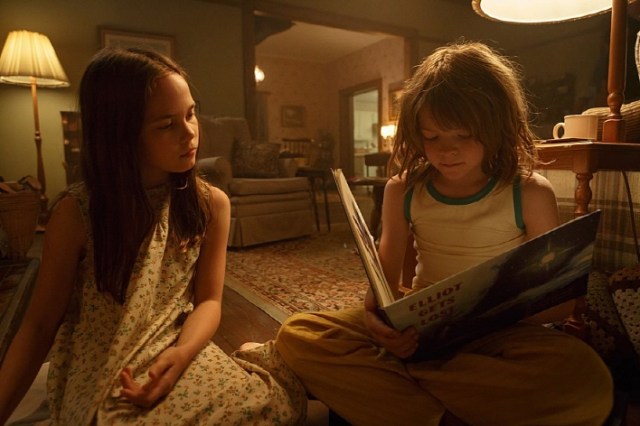
Pete names the dragon Elliot, which comes from his favorite children book. Many of you will probably be reminded that Elliot is also the name of the young hero in “E.T. – the Extra-Terrestrial”, and Pete’s first response to his dragon friend is not that far from the innocent fear and curiosity shown from the early key scenes of that great film. While understandably intimidated at first, he sincerely approaches to Elliot, and Elliot, whose puppyish features remind me of that fluffy dragon in “The NeverEnding Story” (1984), softly responds with his gentle sound and docile yellow eyes.

Six years later, Pete, now played by Oakes Fegley, looks a lot like Mowgli’s American cousin besides growing up a lot. He and Elliot have lots of fun together in the forest, and we see him enjoying his flight high above the forest thanks to Elliot, who also can make himself invisible at any moment. They live together in a cavern under a big old tree, and Pete feels safe and protected during night as being surrounded by his friend’s soft green fur.
petesdragon03

However, their peaceful forest life is disrupted when their area is invaded by a bunch of workers from a nearby lumber mill owned by Jack (Wes Bentley), and Pete finds himself brought back into his former world shortly after his accidental encounter with Jack’s young daughter Natalie (Oona Laurence, who is as plucky as she was in “Southpaw” (2015)). As Elliot tries to bring back Pete, he happens to draw the attention of Jack’s brother Gavin (Karl Urban), who becomes determined to catch Elliot after his rather unpleasant first encounter with Elliot.

Instead of having the plot merely driven by this conflict situation, the director David Lowery, who wrote the screenplay with Toby Halbrooks, focuses more on mood and characters while maintaining the leisurely narrative pace of his movie. While Pete temporarily stays at Jack’s house, Natalie and Grace (Bryce Dallas Howard), Jack’s girlfriend who works as a forest ranger, gradually come closer to him, and there is a warm, tender domestic scene where we see a certain possibility being developed among Jack and others who genuinely care about him.

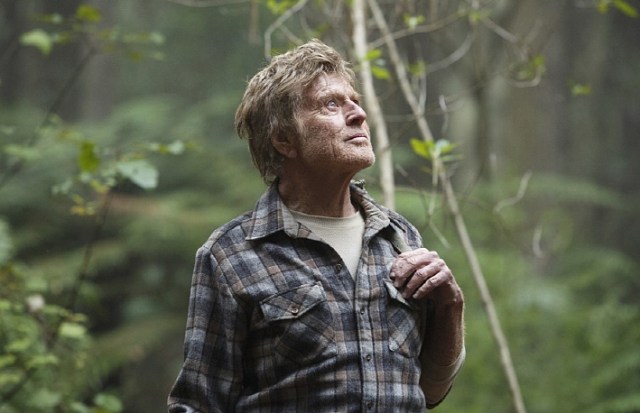
Grace initially believes that Elliot is just Pete’s imaginary friend, but it does not take much time for her to realize that dragon really exists as her old father has told her and others for years. Robert Redford, who looks a bit shabbier than usual, effortlessly holds our attention as his character recollects one unforgettable experience he still vividly remembers, and Lowery wisely stays on Redford’s performance rather than inserting flashback shots. When Grace’s father describes how magical that moment of his was, we have no doubt about that, as watching Redford’s wrinkled face enlivened on the screen.

petesdragon01

Even while they are separated from each other, the strong relationship between Pete and Elliot remains to be the heart of the film, and Lowery and his crew did a superb job of creating a believable CGI creature to interest and engage us. While he has occasional small moments of lightweight humor, Elliot is also an active part of the drama in the movie just like Pete and other substantial human characters, and there is a sublime moment when Elliot silently watches Pete from his hidden position. Elliot’s wordless gestures convey to us a lot about how he feels about what he has just glimpsed, that makes this moment quietly poignant in the end.

Compared to Lowery’s previous work “Ain’t Them Bodies Saints” (2013), “Pete’s Dragon” looks more mainstream with its considerably bigger budget, but he does not forget the importance of good story and character. Although the movie becomes a bit more action-oriented during its third act, it still stays with what has been established up to that point, and that is the main reason why the climax sequence works on the emotional level. The cinematographer Bojan Bazelli did a stellar job of establishing the mysterious and enchanting atmosphere in those beautiful forest scenes in the film, and the composer Daniel Hart’s folkish score is effectively used along with several nice songs on the soundtrack. Besides looking convincing with his CGI co-star, Fegley gives a likable lead performance, and it surely helps that he is surrounded by a group of reliable veteran performers besides Redford.

After the disappointing summer blockbuster season of this year which is filled with lots of noises and explosions which did not leave much impression on us, “Pete’s Dragon” feels refreshing in comparison for its distinctive style and personality which will leave lasting impressions on you. Because I have not watched the 1977 version yet, I cannot tell you whether the remake version is better or not, but this is surely as satisfying as “The Jungle Book” (2016), another recent successful remake done by Walt Disney Studios. I must say that I am usually skeptical about remakes, but, seriously, I will not complain as long as they can be as good as these two exemplary examples.
petesdragon02

Posted in Movies | Tagged , , | Leave a comment

Things to Come (2016) ☆☆☆1/2(3.5/4): Things to Go – and Things to Come

thingstocome04

French film “Things to Come” is brimming with the sense of life moving forward for not only its middle-aged heroine but also others around her. Regardless of whether she likes it or not, things are bound to change as life goes on, and the movie is both humorous and touching in its sensitive and thoughtful observation of how she slowly comes to accept that undeniable fact of life as going through what may be another turning point in her life.

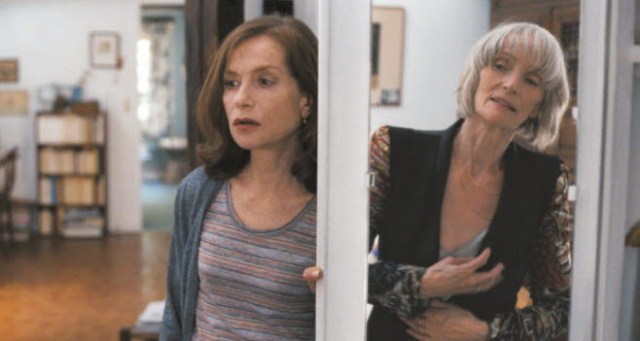
For Nathalie Chazeaux (Isabelle Huppert), life has been so far nice and comfortable. She is a respectable philosophy teacher who has taught at an urban high school for many years, and her philosophy textbook has been regarded as a standard one for many schools in France. While we learn that she was once a wild leftist, that was a long time ago, and she is now living comfortably with her husband Heinz (André Marcon) in their cozy middle class apartment decorated with their many philosophy books on bookshelves.

She is a passionate and dedicated tutor always ready to impart her lessons to her young pupils, and she is certainly one of those inspiring teachers who cannot be easily forgotten by their pupils even after they graduate. She is firm, confident, and commanding during her philosophy class, and she is surely unflappable when she confronts a bunch of students demonstrating in front of their school. They think she must join them for protesting against what is unfair for her and other teachers in their opinion, but she does not give a damn about their cause mainly because 1) all she cares about is teaching and 2) she regards their demonstration with sardonic skepticism as a seasoned intellectual who, as she admits at one point, had a fair share of disappointment and disillusionment during that wild time in her past.

The movie lets us observe how this satisfying daily life of hers are slowly disrupted bit by bit through a number of unexpected changes. Her aging neurotic mother Yvette (Édith Scob) has been recently more difficult than usual, and that leads to an amusing incident involved with a fire brigade brought to Yvette’s apartment due to her hilariously desperate attempt to draw the attention of her daughter and others. This tendency of hers does not stop even after Nathalie finally decides to send her mother to a modest asylum for the aged, and then Nathalie finds herself taking care of her mother’s old, fat black cat Pandora even though she has a cat allergy.

thingstocome01Meanwhile, she also must deal with the end of her long married life with Heinz, who decides to leave his wife shortly after their daughter tells him that she knows about her father’s ongoing affair with some other woman. While she is not that mad about her husband’s infidelity, Nathalie is displeased to see many familiar things in her married life going away as a consequence. For instance, she will probably never come to their family summerhouse in Brittany where she has put considerable efforts into its lovely flower garden for years, and she and Heinz come to have a pretty awkward moment when they happen to be together at the summerhouse for different purposes.
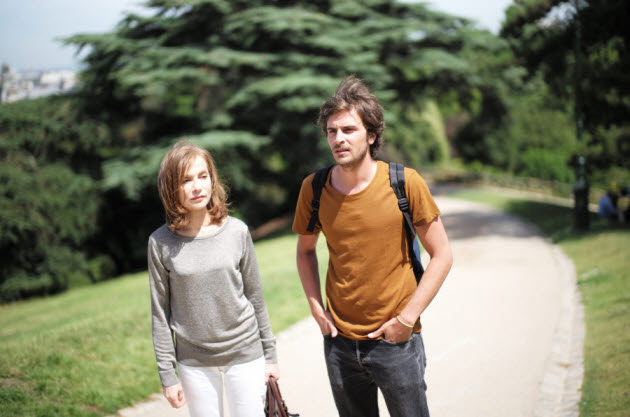
And there is Fabian (Roman Kolinka), Nathalie’s favorite pupil who now becomes a philosophy scholar with his own reputation. Their mutual affection is clearly shown right from their casual meeting, but there is also the gap between them, and that looks more evident when Nathalie later visits a rural commune where Fabian lives with his few peers as following his philosophical/political belief which his mentor does not wholly agree with. While being far from her private matters for a while, Nathalie becomes more relaxed than usual, but then, as spending time with Fabian and other young people, she is painfully reminded of the changes she cannot stop or avoid. She is no longer young now, and her academic position is being pushed behind, as reflected by one funny scene where she is told by her publishers on how her proud textbook has been less popular during recent years.

As leisurely doling out small but crucial human moments one by one via its loose, episodic narrative, the movie effortlessly moves around humor and sadness. The scenes between Nathalie and her mother may feel broad at first, but their dysfunctional relationship turns out to be deeper than it seemed. Although he has already been estranged from her, Heinz and Nathalie still know well each other as a couple who lived together for more than 20 years, and their later scene around the ending has a small moment of poignancy as they regard each other as ex-spouses. While visiting Fabian’s place again, Nathalie comes to have what may be the most open-hearted moment between her and her No.1 student, but the following bittersweet scene indirectly reflects how their paths will only be more apart from each other.

thingstocome03

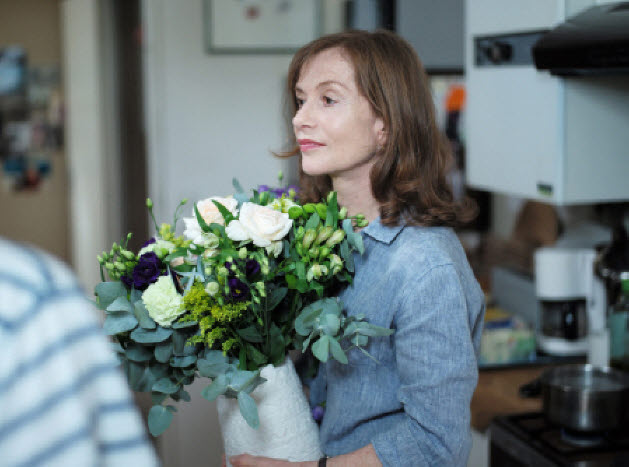
It goes without saying that Isabelle Huppert is perfectly cast in the movie, and she is captivating as usual in her flawless performance, which embodies her character’s personal crisis and following emotional journey while never spelling them out too loud. During one brief scene, her character apparently feels sad and devastated, but then she cannot help but amused by what she has just noticed, and we can only admire how Huppert deftly handles this complicated human moment without any false note.

Huppert is surrounded by good supporting performers who respectively bring life and personality into their distinctive characters. While André Marcon, whom I recently noticed from another recent French movie “Marguerite” (2015), is somehow likable and sympathetic with his mostly passive, reserved attitude, Roman Kolinka is an effective counterpart to Huppert during their several key scenes, and Édith Scob definitely has a lot of fun with her colorful character. In case of that cat in the movie, this chubby feline came to earn my affection along the story, and it eventually gets the honor of sharing the bed with Huppert at one point.

The director/writer Mia Hansen-Løve, who won the Silver Bear award for her film at the Berlin International Film Festival early in this year, did a superlative job of presenting her characters with authentic traits and details, and I was not surprised to learn later that her story was inspired by her mother who was a philosophy teacher. The class scenes in the movie are handled with considerable intelligence, and we can feel the real process of teaching as we watch Nathalie and her students. Some of the dialogues may feel too metaphysical as several famous philosophy figures are mentioned, but we always get the sense that characters know well subjects they talk or discuss about, and even I found myself becoming curious although I usually prefer physical science to metaphysics.

The French title of “Things to Come” is “L’Avenir”, which means “The Future”. As more conscious of her future than before, our heroine becomes more aware of things to go in her life, but then she also comes to see things to come, and that is why the last scene of the movie is quietly powerful with what is shown on the screen. Again, Huppert does not signify much, but the plain but graceful final note of her performance speaks volume, and that is more than enough for us.

thingstocome02

Posted in Movies | Tagged , , , | 1 Comment

Goodnight Mommy (2014) ☆☆☆(3/4): Are you really our mommy?

goodnightmommy01

Creepy, insidious, and disturbing in its cold, austere approach, Austrian film “Goodnight Mommy” is definitely not a pleasant experience in contrast to its innocuous title. As its decidedly baffling first half sets the unnerving undertone around the isolated background of the story, the movie keeps us wondering about what exactly is going on among its few main characters. When we are about to guess the answer for that, the movie has already gripped us tightly around that point, and it throws a number of gut-chilling scenes to strike us as mercilessly following its vicious narrative logic.

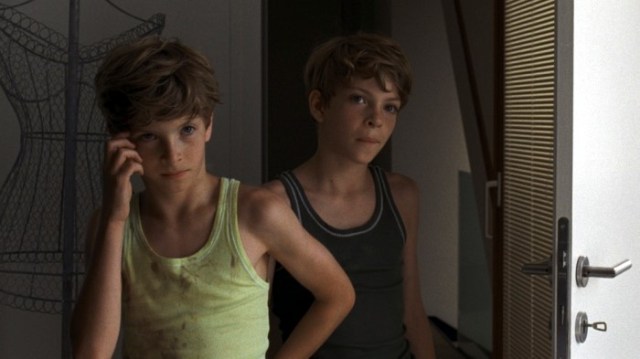
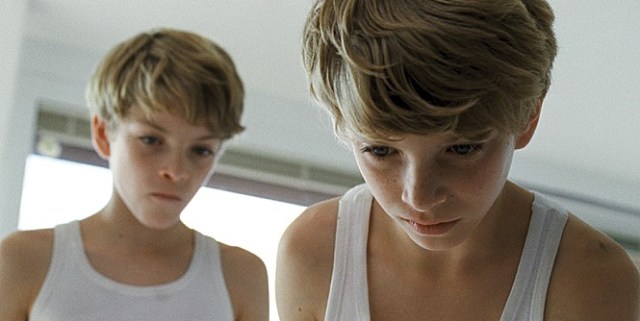
After the opening scene accompanied with a sweet, gentle lullaby, we meet young twin brothers named Elias and Lukas (Elias and Lukas Schwarz). Like many young twins, they are inseparable from each other, and we watch them happily spending time together during their first scene, which looks simple and innocent at first but then feels rather odd and uncertain.

And this is just our first taste of the subtly awkward ambience to hang around the screen. While their mother is currently absent (their father is never mentioned, by the way), the twins are left alone in their posh lakeside house located in some remote rural area, and there is not even any adult to take care of these kids instead of their mother as they freely go around the surrounding area. You may wonder: what kind of mother can possibly allow that?

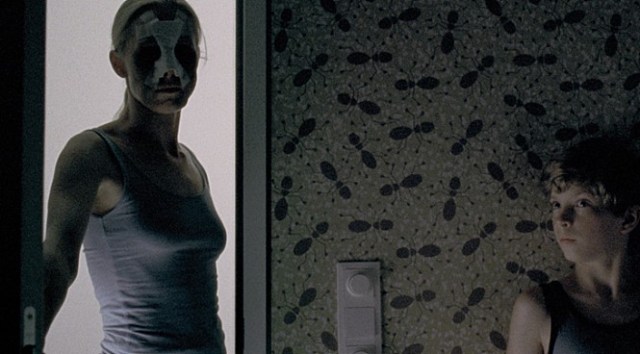
Well, we soon see their mother, and the movie strikes another nervous chord during her first appearance. For a rather unspecified reason, she recently received a facial plastic surgery, and her face is still covered with bandages when she returns to the house. She seems to need more private time for her rest and recovery, and she prefers to be alone in her quiet bedroom while not interacting much with her boys.

goodnightmommy03

She sometimes spends time with Elias and Lucas, but the strained relationship between her and the twins feels palpable. During one particular scene where they play a guessing game, it initially looks like they are having a small family fun together, but then their playtime begins to feel awkward mainly due to the introverted attitude of Lucas, who always has Elias talk on his behalf while not willing to talk directly to their mother. Their mother tolerates this for a while, but then she becomes impatient and angry later, and that leads to one of the most hurtful moments in the movie.

Around that point, the twins begin to believe that their mother is replaced by an imposter, and I must confess that this reminded of my old childhood suspicion on my own mother. Thanks to many Korean folk tales I devoured when I was young, I once thought she was a thousand-year-old fox with nine tails, and I actually believed that she would snatch my liver at night while my father went out for business. After all, didn’t we all experience doubts on our parents when they became more distant and stricter than usual?

The movie lets us understand the twins’ growing suspicion as mostly sticking to their viewpoint, and there are indeed several weird things about the mother. For example, why does she order lots of frozen food enough to sustain her and her kids for at least one year? And why does it look like that she is madder at Elias than Lucas, despite that maddening failure to communicate between her and Lucas?

However, because of the detached attitude of the movie, we watch their increasingly ominous situation from the distance while not particularly siding with either of them. The mother does look fishy and elusive at times, but we also come to sense more of something unwholesome about the twins as they become obsessed with their suspicion toward the mother. There is a creepy scene in which the twins go inside a hidden underground place harboring some unpleasant things, and then there comes a ghastly moment involved with one of their pet cockroaches.

goodnightmommy02

I was involved in how the directors/writers Veronika Franz and Severin Fiala gradually dial up the level of tension and dread under their calm, confident direction. The slick, bloodless modern interior design of the house in the movie constantly conveys to us the stark, isolated mood surrounding the characters, and this queasy impression is further extended to one scene unfolded in a small nearby town, which also feels odd and strange with its barren, silent atmosphere.

When the twins eventually decide to do something about their domestic matter, the movie becomes more tense and disturbing as expected, and Franz and Fiala skillfully balance the resulting moments between sheer terror and admirable restraint. As far as I could see from the movie, these cringe-inducing scenes are thoughtfully handled while not demanding too much to its young actors, and Elias and Lucas Schwarz, who had no previous acting experience before their audition, are believable as much as their adult co-star Susanne Wuest, who is excellent in her difficult role.

“Goodnight Mommy”, which was the Austrian entry for the Best Foreign Language Film at the 2016 Academy Awards, is not for everyone to say the least, but this cold-blooded psychological thriller is worthwhile to watch for its competent filmmaking and good performance. If you are ready for something challenging, you will probably find it interesting and compelling despite its numerous uncomfortable moments – and you may also appreciate how its surprisingly sentimental final moment avoids being a mere sick joke as striking the right balance between despair and sentimentality.

goodnightmommy04

Posted in Movies | Tagged , | Leave a comment

The Lovers and the Despot (2016) ☆☆1/2(2.5/4): Kidnapped by their North Korean fan

thelovesandthedespot01

I and most South Korean people are familiar with a bizarre real-life story presented in documentary film “The Lovers and the Despot”. It was one of the most infamous things committed by the North Korean dictatorship during last 66 years, and what two South Korean celebrities experienced during their harrowing captive status in North Korea was full of absurd moments which could only happen in a morbid, deranged communist society like North Korea’s.

Unfortunately, the documentary does not fully delve into its rich story material. Although the story itself is compelling for its bountiful absurdities and ironies to be explored, the documentary merely scratches the surface while somehow distancing itself from two of its central figures and the complex nature of their uneasy human/political/business relationship, and it only shows and tells what I already knew too well.

During the 1950-60s, South Korean director Shin Sang-ok was one of the leading filmmakers in his country, and his actress wife Choi Eun-hee and his family members told us a number of interesting episodes around that time. Choi tells us how they became more than mere collaborators as working together, and their surviving children also have their own stories to tell as remembering how they grew up under their famous parents before Shin and Choi eventually divorced due to Shin’s affair with a younger actress who became his second wife.

Around the 1970s, both of their careers took a downturn. As Shin’s brother says, Shin was not good at handling business matters, and his movie production studio went downhill as suffering from financial problems during that time. After her divorce with Shin, Choi tried to go her own way as an actress, but she also had a money problem just like her ex-husband.

thelovesandthedespot02

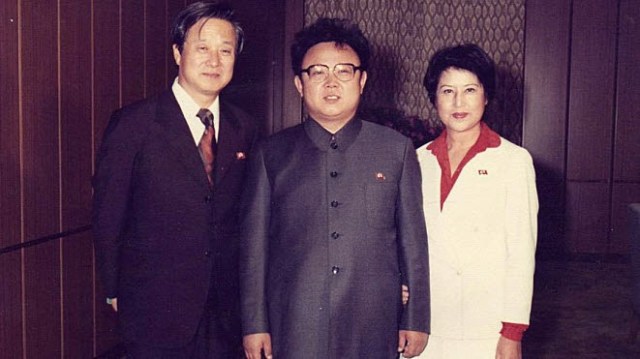
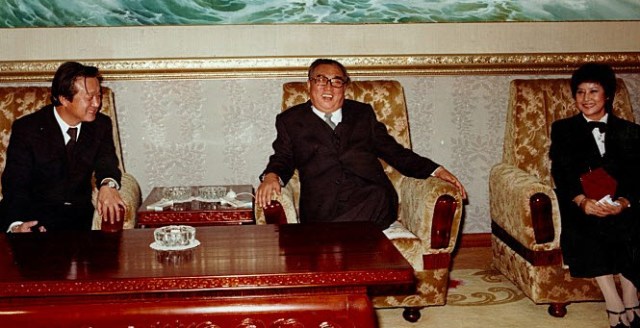
Meanwhile, Kim Jong-il, the son of Kim Il-sung, was becoming his dictator daddy’s heir apparent in North Korea, and he was eager to do something to distinguish himself. As some of you probably know, Kim was a big movie fan, and, as heard from his private conversations secretly recorded by Shin and Choi, he really wanted to improve the local movie business, which, as he petulantly pointed out, had only produced bland, monotonous flicks without much fun and entertainment for their target audiences.

Kim ordered his men to kidnap Choi and Shin, and Choi and the archival recordings of Shin’s testimony tell us how they were suddenly kidnapped by North Korean agents in Hong Kong during 1978. Choi was lured first by a North Korean spy who promised her a good career opportunity in Hong Kong, and she describes to us that terrifying moment when she belatedly realized the trap she walked into. After her disappearance was reported, Shin went to Hong Kong for finding his ex-wife, and he also walked into the trap ready for him in the end.

8 days after her kidnapping, Choi found herself at a North Korean port as being released from her drugged state, and that was when she met Kim Jong-il for the first time. She was afraid of what could possibly happen to her, but then she eventually came to adapt herself to this fearful new environment. Kim treated her like a very important guest, and she did whatever she was expected to do because, well, there was no possible way out for her.

What Shin went through in the meantime was less gentle to say the least. He was sent to a concentration camp, and it was only after 5 years that he and Choi had a tearful dramatic reunion at Kim’s birthday party. As rekindling their mutual love, Shin and Choi both saw that the only way to get any chance for escape was giving what Kim wanted from them, so they soon resumed their careers as fully supported by their No.1 North Korean fan, who was happy to provide whatever the couple needed for making movies.

thelovesandthedespot03

As Choi admitted, this filmmaking period of theirs was a highlight point for both of them in spite of being trapped inside their gloomy circumstance. They made more than 15 movies during a few next years, and she recollects that fantastic moment when one of her movies made during that period received the huge standing ovation at the Moscow International Film Festival. As getting more favors from Kim, Choi and Shin were eventually allowed to go outside North Korea for boosting and promoting the North Korean movie business, and that was the point when they finally found a golden opportunity they had been desperately waiting for.

The directors Ross Adamo and Robert Cannan juggle interviews, archival clips, and grainy reenactment footage to propel the narrative of their documentary, but the final result feels more like a passable DVD supplement feature for a movie inspired by the incident. That fascinatingly enigmatic and eccentric personality of Kim Jong-il only gets a brief explanatory scene, and you will not get any clear, helpful information on Shin’s filmmaking career, which is not so familiar even to many of contemporary South Korean audiences. In case of the climactic moment involved with Shin and Choi’s escape attempt, this is too short to generate additional narrative tension, and the movie also omits several interesting things in Shin’s life and career, including his second wife who took care of their two kids alone after the kidnapping incident or a notable fact that he made an anti-North Korean movie right after returning to South Korea (A small note: that movie was based on the bombing incident of KAL 858 in 1987, and its crude, atrocious bombing sequence made some 9-year-old kid terrified of boarding airplanes for years).

Right after I watched ”The Lovers and the Despot” during this Thursday evening, I asked an older audience whether he learned anything new from it, and he flatly replied that there was nothing new for him although he had a fairly good time with it. The documentary may satisfy you if you just want facts, but it could be more insightful and amusing if its makers reached for more from their foreign perspective.

thelovesandthedespot04

Posted in Movies | Tagged , , , , | Leave a comment

Can I Pull This Off?

closed01

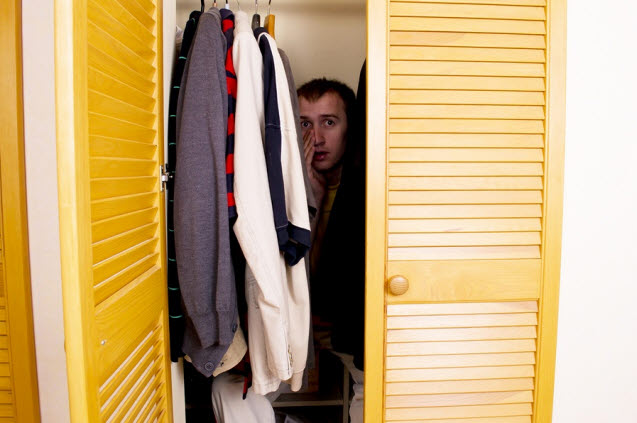
As many of you know, I came out of my closet a few days ago. Not long after my essay was posted at my blog page, numerous online friends of mine and many others read it and then gave me lots of kind, encouraging words. Many of them said I was brave and courageous, and I was a bit baffled by these comments: Why did they say this? I did what I thought I had to do, and this did not require much from me. This is a right thing to do, and I felt no hesitation in doing that.

How naïve I was around that point. Boosted by those positive comments, I notified what I wrote to several family members including my own father because I thought they deserved to know the truth no matter how much my mother tried to cover up what had been repressed inside her son. This turned out to be rather reckless, and it irreversibly resulted in the ongoing situation where I really need bravery as well as prudence. For sorting out all the tumultuous feelings swirling around me and my close family members, I decide to write down the problems I am dealing with as well as the prices I will probably have to pay for being true and honest to myself in public.

First, I have to admit my potential errors in the judgment of the first conversation between me and my mother, who is probably struggling with her own anger and anguish at this point in some Buddhist temple. As far as I remember, she did say that we would never talk about my sexuality or that brief homosexual relationship during my adolescent years, but I do not remember whether she really said that she would not talk about this to my father. She later said that she told me she would tell him, but, seriously, I really cannot remember.

I do not think she lied, and I guess it is because of how my brain sometimes misinterprets what others tell me during conversations. My boss often points out how I usually misinterpret his intentions while mostly fixated on words but not the whole context, and I must confess that this personal flaw of mine, which is probably due to my Asperger’s Syndrome, caused several problems at my recent workplace.

closed03

In case of that conversation in question between my mother and me, I felt hurt by the words she chose during the conversation. She described my sex partner as a corruptive bad influence, and she also regarded my homosexuality as something aberrant and transitional. All I wanted was a little sign of support for who I have been and will always be, and, to be frank with you, I would have kept my mouth shut even for the rest of my life and gone along with whatever she wanted from me, if she had given that with some understanding. But, as she did with my depression and Asperger’s syndrome, she belittled this matter, and that was painful and infuriating for me although I did not signify anything in front of her. In addition, she might have suggested that I may have a matchmaking meeting in the next month if I want, but, as far as I remember, her suggestion felt pretty much like a demand.

After ending the relationship with the girl I met through a recent matchmaking meeting, I wrote the essay, and then, after posting it on the blog, I notified this on the message board of a well-known South Korean movie website. After checking several positive comments posted there, I decided to show it to my father and other family members yesterday. Driven by my growing impulse initiated by my first successful attempt of coming out of the closet, I felt confident about this action of mine: I cannot be stopped, and my mother has to deal with that now.

But then my younger brother instantly called me to chide me for how thoughtless and reckless I was. My former grade school teacher showed some sympathy, but she worried about how much my mother would be hurt by this. My father said what others said did not matter, but he was clearly upset as reflected by his text message. One of my relatives was also upset too, and she sent rambling text messages on how my mother would be hurt by my wrong action.

During the night, my mother and I had a long, torturous argument in my room. She kept saying about how this would lead to a social humiliation for her and my father. I angrily responded that I did it because I was disappointed with her and I had a spite, or resentment, against her. She replied that I am a bad, ungrateful son who does not appreciate all those things she and her husband did for me, and she even sarcastically said that I might kill her out of more spite someday. Yes, I once hoped that my parents would never return from their recent summer vacation because of my growing frustration with them, and I did have some dark revenge fantasies when I was young, but, nevertheless, I always found that I loved and cared about my parents for what they provided to me and my brother for last 33 years. I still do, and her acrimonious words still hurt my mind even at present.

closed04

After I and my mother incessantly scratched and accused each other so much for about 2 hours, I escaped into my work till AM 4:00, and the next morning was a rather tense, silent period of repressed anger and blame. I could not sleep due to suicidal thoughts, and this led me to another good-willed but suffocating repression by my mother in the past. I confessed I considered killing myself several times, but she simply told me not to think ever about that, while not having any meaningful conversation. As I laid on the bed with tears and heartaches, my bedroom felt like a prison guarded by my parents, and getting up and then jumping from the veranda fence of our 14th floor apartment looked like, well, an easy way out. If it had not been for all those good words from you guys, I might really have succumbed to that dark impulse arresting me during that morning.

Depression, Asperger’s syndrome, suicidal tendency, and homosexuality are virtually social stigmata here in my society, and I have never had a serious conversation with my parents because they simply think I am an immature, spoiled son who needs to grow up more. During my long graduate years, I disappointed my adviser a lot with many failures, and my parents had to wait and wait for my graduation. While I graduated with a Ph.D degree, I am not that distinguished as a biological science researcher due to my terrible curriculum vitae devoid of any publication record, and that was another source of frustration to them, though I have recently settled in a rather good job position during this year thanks to the help from my parents’ generous acquaintance.

I am currently checking whether I can live apart from my parents if the upcoming conversation between me and my father does not go well. Considering the current status of my banking account, it seems I can do that, but I am also well aware that this can be a permanent separation in the worst case. I have no close friend and relative around me for now, and my current job may be terminated if a lab project I am handling does not go well. In the other words, I will not possibly have any financial protection after moving out from our family home.

During this afternoon, I had a conversation with the aforementioned relative. She said that things may turn out to be all right if I just apologize to my parents and then delete my posted essay, which, according to her, may jeopardize the possible marriage of my brother in the future. I could not believe what she said to me; my brother will be in troubles just because I willingly revealed my true self in public?

closed06

I could not tell her that I will delete my essay. This essay means so much to me in the ways she and my family will probably never understand to my deep sadness, and so do all the precious comments I am still grateful for. Many of you are strangers, and your kindness and understanding mean a lot to me, and I do not think I can betray what you gave to me, let alone my little pride and dignity. The essay did come from my real feelings, and I do not want to deny or lie about that. I must admit that I was quite unwise in some of my actions as others around me said, but what I did is neither crime nor sin, and I do not think I can possibly conform to their pressuring prejudice that my homosexual tendency is aberration or transitional immaturity.

So I make up my mind on what I am going to do when my father is finally ready to open my mouth during this night. I will accept some compromises but that will come with one condition I cannot give up. While making it clear to them that there was some serious misunderstanding in my position, I will apologize to my parents as sincerely and earnestly as I can for inadvertently hurting their feelings through my hurried actions, and I will promise that I will keep my mouth shut about myself while they will have some time to think and I will keep trying matchmaking, but I will say no if they ever demand me to delete the essay. That’s the final line. Period.

It is probably ridiculous to them that I caused this big trouble just because I wanted some encouraging words. I have wanted to shout out my repressed feelings for years, and I feel freer than before, but then now I have to take the inevitable responsibility for that. I think I am ready to see what will happen next, but, folks, I am still shaking with fear and doubt. Wish me a luck. I really need that now.

closed05

Posted in Personal | Tagged , | 3 Comments

Out of the Closet step by step

large

On August 26th, 2016, I did something I had not felt any need to do during nearly 20 years. I told some of colleagues at my workplace that I am gay, and that was the beginning of what I have been doing during last several weeks. I told this to my mother, younger brother, uncle, and several relatives. I also confided this to a few of my Internet friends/acquaintances, one former laboratory colleague, and my current psychiatrist.

And I also told this to a girl introduced to me through my mother, who always wants me to get married as soon as possible. She was the 9th or 10th girl I met through my mother’s matchmaking service (I lost my count, but, paraphrasing Osgood Fielding III in “Some Like It Hot” (1959), Mama is keeping the score), and we had a nice time together when we met each other for the first time during the afternoon of August 15th. Time flied as we kept talking, and I came to like her as someone to talk with, if not someone to marry.

I was glad to hear later that she did have a good time with me even though I told her many problematic things about myself including my long history of depression as well as autistic spectrum, but then I came to feel guilty about meeting her again as we agreed on the next meeting in Seoul on August 27th. Maybe I could just marry her without saying anything, but, in one way or another, my homosexuality will be exposed to her once I begin to live with her under the same roof, so I decided that I had to come out to her for preventing a bigger emotional disaster.

I also became determined to go further from that because I did not want to step back from my decision like a coward. I planned the procedure to ensure the irreversibility of my actions step by step. First, after some momentary hesitation, I revealed myself to three colleagues during that Friday afternoon, and, to my relief, they were all right with me although the mood became a bit more solemn than usual. Second, I came out to two of my online peers right after that, and the result was both positive and encouraging. I became more sure about what I was going to do, though I was too nervous to sleep well during the night as worrying about what might happen during my meeting with her on the next day.

coming-out-the-closet4

I am still wondering about whether the second meeting really went well for me as well as her. At least, it looked all right on the surface as far as I can remember. We had a lunch together, and I came out to her in the middle of our lunch. She coolly responded to that with the signs of genial understanding, and we even watched a movie together after the lunch. We corresponded with each other a few times during the next week, but then she did not answer my messages. She said she was busy, so I stepped back a little, but then she seemed reluctant to contact me again although she did not express anything to notice. After several failures to get any response from her, I sent a text suggesting the end of our brief relationship a few days ago, and the reply came from her sooner than I expected. I still have no clear idea on what she thought or how she felt, but I understand and respect her decision. I hope she did not feel hurt as much as I feared – and I really wish that she will soon find someone to make her happy and satisfied.

Before leaving Seoul on that day, I came out to my brother and uncle. On the next day, my mother came to learn of what her son had kept to himself for more than 20 years. She was understandably shocked and devastated. She even needed my help as we walked out of a local downtown cafe. She drank heavily during the next evening. In her drunken state, she kept reminding me that I am a good man capable of doing the right thing. In the other words, she wanted me to be changed; she even said to me that I should have a therapy while not telling anyone else about my homosexuality.

However, I know who I am. I know I cannot be changed, considering what I have observed from myself since the first sexual experience during early 1997. Even before that, I often found myself being stimulated by images of male bodies, and the photograph of a bodybuilder in some elementary science book on human body is still vividly remembered in the corner of my mind. I was baffled by those cheap adult magazines featuring semi-naked women because I did not see why they were necessary, but, as entering the adolescent years, I often took a sneak look at fitness books and magazines at the corners of local bookstores whenever nobody was around me. Although I did not discover the pleasure of masturbation yet around that point, I was quite excited while not so sure about whether this excitement was originated from the aspiration or attraction toward masculinity: Do I just want to be big and strong like those brawny dudes? Or…

I had one funny episode to tell you. On one day in 1996, I had my usual private fun time with those books filled with bodybuilder photographs at a local bookstore, and then I went to a nearby hall where arts exhibitions were frequently held, for doing a routine homework for the arts class in my middle school. One exhibition site was full of photographs of sexy female nude models, and I calmly observed their naked bodies because my heart had already been excited and then exhausted. In my report, I dutifully wrote a forthright description of what I experienced: “Probably because I had just seen those muscular guys and been fortified by them, I did not embarrass myself in front of those naked women photos.” Strangely, the teacher did not reprimand me for that, and I remained quite clueless as a consequence.

coming-out-the-closet1

Because of various books I absorbed, I was well aware of homosexuality even before adolescence, but I seldom thought about my sexuality until I had the first (and only so far) sexual relationship in my life. At first, it was merely touching each other’s genitalia, but he and I soon moved onto the next base within a few minutes. When I watched one dramatic scene in Andrew Ahn’s “Spa Night” (2016), I observed its passive hero’s more active behavior with some personal understanding. When he asked me to do something more than touching, I instantly went for that as if some button had been pushed inside me, and I recognized that familar headlong feeling from the aforementioned scene in the movie.

Our clandestine relationship, hidden from our families and schoolmates who had no idea about that mainly because we were two of heavier boys in the neighborhood, was continued for several months. When it was over, we had no hard feeling between us, for our relationship was mainly driven by mutual urge rather than romantic feeling. Although we often talked about moving onto girls, I must admit that I enjoyed having sex with him, and the only thing I regret is that we did not use condoms (Fortunately, we did not suffer from any kind of sexually transmitted disease).

During my high school and college years, I concentrated my attention more and more on study, books, and movies, with no particular interest in dating girls or boys. But, yes, I had to take care of my certain private matter sometimes. I discovered some ways which are definitely familiar to many of you, and I often used them to relieve myself with necessary caution (My paranoid advice: once you are going to do it, you should always be ready to cover up and then flush away your trace to avoid any suspicion or embarrassment).

My graduate years in the campus of Korean Advanced Institute of Science and Technology were frustrating and demanding, but that long period was also a good excuse for me whenever my parents or others asked me when I would marry. I often wondered whether I could marry a girl while repressing my homosexuality, but I have never felt attracted to any particular girl during last 20 years, and I am willing to lead an asexual lifestyle for the rest of my life due to practical reasons. After all, it is difficult to have any reliable homosexual relationship in South Korea due to social prejudice and discrimination, and I am not so eager to date a guy or a girl even at this point, while usually occupying myself with science, literature, and movie.

coming-out-the-closet2

I preferred to reveal myself as little as possible for avoiding potential troubles in my social/academic life, but then my parents kept talking about my marriage especially after I graduated with my Ph.D degree. Even after I came out to her, my mother remains persistent, and she is ready to introduce me to another girl in the next month. I was once disappointed with her when she said that depression and autistic spectrum could be cured by willpower and then recommended me to stop my medication. I was more disappointed with her when she suggested that I could be cured of “sexual immaturity”. She also said that schoolmate of mine corrupted me, but I am reminded now that she and other family members did not mind how the naughty husband of one of her nieces used to be on the verge of sexual molestation whenever he was with me alone in the room (I can assure you that nothing traumatic happened to me, though I have personally despised him as remembering more about what an indecent guy he was).

She does not want any more people to know about my homosexuality, but, because of something which feels like a belated adolescent rebellion, her previously obedient, dutiful, and faithful son is now coming out of his good old closet further. I was relieved to see that many people around me did not have any problem with what I told them. My brother and uncle accepted it without much fuss, and so did a number of people in my daily life. In addition, I had my first gay bar experience in that famous Itaewon-dong area in Seoul, and I had a pretty good night there although I only drank and talked for hours. And now you know that I am gay.

While I did not tell him because my mother pleaded to me, my own father is bound to know this someday, and I worry about that from time to time. He will definitely have a long, difficult time just like my mother, and I know I must tell him soon, considering how long my mother has been in futile denial since I shook her up with the truth about me. Regardless of how they are going to regard me, I am fine with who I am, and that is all I can say to them.

So far, the sky does not fall onto me yet. Thank you very much for reading my inconsequential babbling to the end, folks.

coming-out-the-closet3

Posted in Personal | Tagged | 5 Comments

Where to Invade Next (2015) ☆☆☆1/2(3.5/4): Moore Invasion

wheretoinvadenext02

Michael Moore’s documentaries are not exactly ‘neutral’ or ‘unbiased’, but he has always presented his messages in not only entertaining but also enlightening ways. Sure, he is sometimes unfair to his targets to be criticized or ridiculed while also being too blatant at times in front of his camera, but his documentaries have always been both funny and thought-provoking, and they make us reflect on their social issues conveyed via his smart, cheerful mix of sharp humor and down-to-earth sincerity.

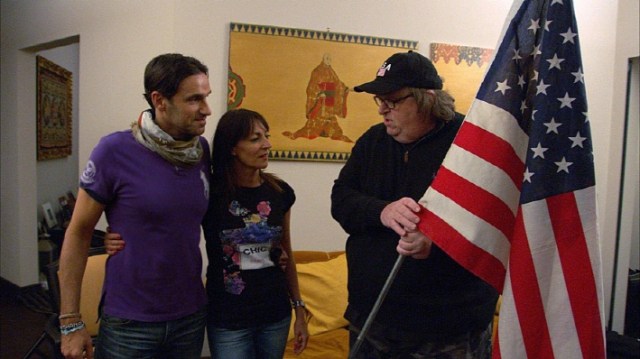
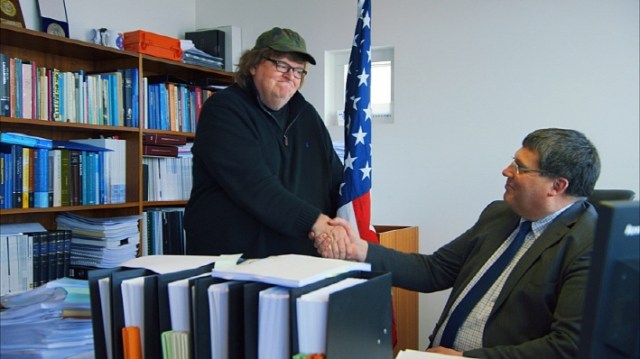
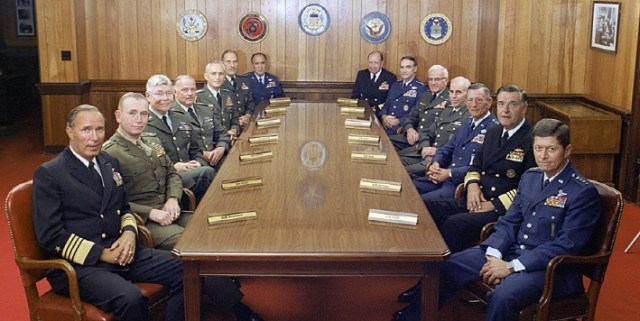
His new documentary film “Where to Invade Next” makes his intentions downright clear to his audiences during its fictional prologue part which feels likes a humorous nudge to his detractors and nitpickers. He tells us that he was invited to the Pentagon and suggested his wacky idea to the members of the Joint Chiefs of Staff (fact check, anyone?). Instead of their troops, he is going to ‘invade’ a number of European countries and a Northern African country one by one for getting what their country needs now, and this certainly means that we are going to watch how these countries have been doing better than US in many social aspects.

Moore’s first target to invade is Italy, and he meets a plain middle-class couple living there. While receiving an additional wage besides their monthly salary, this couple also have several weeks of paid vacation in every year, and they can even save their remained paid vacation days for the next or other year. We learn that 5-month maternity leave is taken for granted in Italy, and this can be applied even to male employee if he is going to take care of his baby instead of his wife. Moore emphasizes the staggering difference in worker benefits between Italy and his country; as dryly mentioned by him, even 2-week vacation is rather rare in US – and paid vacation is out of the question.

wheretoinvadenext05

Moore also looks around a couple of local factories, and he is impressed by their working environment. Their employees are treated far better than average American factory worker, and they and their employers confirm to us that this has worked well for both sides. At one point, we see an employee going outside for having a lunch at his family home, and he does not have to hurry at all. In case of a factory cafeteria for some other employees, this place looks quite good, especially if you pay attention to the quality of meals served to them.

Speaking of meals, another impressive segment in the documentary is involved with the high-quality lunch course served to kids in one public elementary school in France. We see how kids have their lunch together, we look at their weekly lunch schedule which is commendable to say the least, and we hear about why good eating is important for kids besides nutritional benefits. Maybe these meals just look delicious on the surface, but they do look a lot better than those hideous meals in American school cafeterias (To think I thought the cafeterias in my university in Daejeon were crummy….).

In case of education, Moore looks around many things worthwhile to observe from France, Slovenia, Finland, and Germany. The frank and open-minded sex education in French school has led to decreased adolescent pregnancy, and Moore makes a sarcastic comment on many Americans still believing that abstinence works better than proper sex education. The college education in Slovenia is free for everyone including foreign students, and we meet a couple of American students benefiting a lot from this. While Finish students study less than many other countries’ students, they are actually better students in comparison, and a group of teachers and the minister of education tell us how the hell this is possible. In Germany, that atrocious history of the Holocaust is a mandatory study subject for young students, and this induces Moore’s reflection on how his country has often been reluctant to face and admit the darkest chapters of its history.

wheretoinvadenext03

We also come to learn that Portugal has reduced drug-related crimes considerably through the decriminalization of drugs, and that makes a revealing contrast to the War on Drugs in US, which has been as futile as the War on Terror while only causing more damages to cripple the American society for many years. During the part in which Moore visits two Norwegian prisons, he has a few things to surprise me although I previously heard about the more humane treatment of criminal prisoners in Norway. While they are certainly not allowed to leave their prison until their release, prisoners can have more freedom in their closed environment if they behave well enough as model prisoners, and every prisoner has each own private space which does not look like your typical American prison cell at all. Around the end of this segment, that horrible guy responsible for the 2011 Utøya attacks is mentioned, and we learn that he will be released around 20 years later because that is the maximum level of imprisonment period according to the Norwegian law (like many other European countries, they do not have death penalty in Norway, by the way).

In Tunisia, there is an interesting feministic story about how women’s rights came to be guaranteed in the new constitution shortly after its democratization in 2011, and then we see how far Iceland has socially advanced with feminism as the first democratic country to elect a female president in the world. After the catastrophic financial crisis in 2008, the Icelandic government promoted more female inclusion in financial business, and we are told that the resulting gender balance in business environment was crucial in Iceland’s exceptional economic recovery later. I cannot help but think of the last sentence of Goethe’s “Faust”: “Eternal Womanhood draws us on high.”

wheretoinvadenext04

Needless to say, all these things mentioned above and other things presented in the documentary may look too ideal to some of you. I enjoyed the documentary a lot while noting down some active thoughts in my mind, but I also felt skeptical during my viewing because I have constantly heard the current news about how many of European countries are struggling with various social matters including a recent immigrant problem. They may be wonderful in some aspects as shown in the documentary, but they are also problematic in other aspects because, well, there is no such thing like a perfect society. In fact, Moore frankly admits to his audiences that his documentary is set to focus more on better sides than worse sides from the start.

Nevertheless, this ‘biased’ aspect does not affect at all the main point he makes to his audiences in “Where to Invade Next”. As he sharply points out at the end of the documentary, these countries have been pushing social ideas which have actually existed inside the history of the American society, and, considering all the sound and fury shaking up the upcoming US presidential election in this year, I guess American people should really think more seriously about what made their country a great social role model to other countries – and what they must do for preserving and enhancing that.

wheretoinvadenext01

Posted in Movies | Tagged | Leave a comment

The Shallows (2016) ☆☆☆(3/4): Blake Lively Vs. Shark

theshallows04

“The Shallows” is an efficiently terrifying thriller about one of the worst circumstances which may come upon you while you are alone at sea. Considering other similar films such as “Open Water” (2003), its tense marine survival drama is not exactly refreshing, but the movie is taut and suspenseful enough to hold our attention before eventually arriving at the obligatory ending, and it surely helps that its simple plot is supported by its commendable lead performance.

Blake Lively plays a young medical student named Nancy, and we get bits of her personal background while she talks with a local guy who is kindly driving to a relatively unknown beach located somewhere in Mexico. She is supposed to go there with her friend today, but her friend happens to have a problem, so she comes alone to this rather remote beach which was a special place for her recently diseased mother.

Things look fine and sunny when she arrives at the beach. There are a couple of guys who have already had a pretty good time for hours, and Nancy soon enjoys herself along with them. Although her mother’s recent death still remains as something she has not completely gotten over with, she feels better as riding on the surfs, and we are served with a montage of dynamic surfing shots as crisp as your average nature documentary footage.

After these two guys leave, Nancy is left all alone by herself on the beach. She decides to spend a bit more time at the sea, and this decision soon turns out to be a big mistake. Not long after swimming away a little far from the shore, she notices an unusual thing, and then she belatedly realizes that there is a huge white shark around her – and it is already determined to attack her as swiftly approaching to her.

theshallows06

She manages to evade the shark, but the circumstance is quite grim for her. Being above the water thanks to a nearby rock, she is safe at least for now, but her temporary shelter is too far away from the shore, and she is likely to be eaten by the shark no matter how much she tries to swim fast. Furthermore, her left leg was severely injured during the first shark attack, and she must do something about this serious bleeding injury of hers.

As time goes by, her chance of survival is decreased more and more. Without anything to eat, she naturally becomes tired and hungry, and there is also the matter of periodical tidal changes which she must be careful about. The shark keeps swimming around her as waiting for any chance to attack, and that leads to a couple of frightening sequences which make us dread for what is about to happen in front of Nancy’s helpless position.

But she still has a small but precious possibility of survival, and she finds herself rising to the challenge a lot more than she ever imagined. As a woman with considerable medical knowledge, she concocts a crude but practical way to suture her injury although it does not entirely prevent the bleeding (If you cringe at her bloody surgery process, you will cringe further for a good reason whenever her injured leg is put into the sea). As spending more hours at her solitary spot, she becomes more acutely aware of her surrounding, and it looks like a rusty buoy near the rock can be utilized for her advantage – if  she can manage to outwit her opponent.

There are many scenes where Lively has to carry the movie alone on the screen, and she did the job fairly well in her convincing physical performance. While I could spot a number of scenes which are apparently helped by CGI and studio shooting, I had no problem with believing in every minute of her character’s desperate situation at the sea, and Lively is particularly good during a calmly emotional scene where her character prepares herself for what may be the last minutes of her life.

theshallows02

The director Jaume Collet-Serra, who previously made “Non-stop” (2014) and “Run All Night” (2015), skillfully modulates the level of tension along the plot while providing good moments of shock and suspense. I enjoyed a marine variation of one familiar horror movie cliché during the early part of the movie, and I also liked the way the movie partially applies a familiar approach of found footage genre to one of its key sequences. The shark in the movie may not be as memorable as its senior in “Jaws” (1975), but it certainly looks terrifying – especially when it fully reveals its gruesome glory along with big sharp teeth.

The most amusing thing in the movie is an injured sea gull which becomes a sort of companion to Nancy. Even around the final act, they simply regard each other as a human and an animal who happen to be stuck together at the same spot, but we come to care about this bird as much as Nancy, and it eventually becomes the other important character of the story besides Nancy and her toothy foe.

During its short running time (86 minutes), “The Shallows” does everything it modestly aims to do, and the result is a lean, efficient thriller on the whole. I must point out that its finale is a bit contrived and I do not think its sentimental last minute is necessary, but it delivers its goodies along with several unexpected things to scare and entertain us, and I am fine with that.

theshallows03

Posted in Movies | Tagged , , | Leave a comment

A Tale of Love and Darkness (2015) ☆☆1/2(2.5/4): Looking at her from the distance

ataleofloveanddarkness04.jpg

Israeli film “A Tale of Love and Darkness” is frequently frustrating in its distant attitude toward its sad, depressing human tale. Here is a woman who has probably been quite unhappy throughout her gray, melancholic life which has not given any opportunity for fulfilling whatever she hopes and desires in her elusive heart, but the movie merely watches the slow, suffocating progress of her mental deterioration from the distance, while we are only left with a vague, incomplete idea of who she really is.

Maybe the problem is inherent in how the movie approaches to its story, which is based on the autobiographical novel of the same name written by Amos Oz. As old Amos in the movie reflects on his childhood years, the story is shown mainly through the limited viewpoint of his younger self, and the movie mostly keeps itself within this narrative limit while letting too many things remained in ambiguity and enigma, and this weakness is further accentuated by its unfocused storytelling and weak characterization.

It is Jerusalem in 1945, and the situation is not that good for not only young Amos (Amir Tessler) and his parents but also many other Jewish people who have tried to settle in Palestine. As the British reign of Palestine is about to be ended, Jewish people hope to establish their independent nation in the region where their ancestors once resided, but there has been the considerable objection from the neighboring Arab countries as well as the British government, and nothing is certain at present.

Nevertheless, Amos’ father Arieh (Gilad Kahana) is hopeful about the possible birth of a nation for him and his people. He tries to gain some reputation as a literature novelist to represent his future country, but his plan does not go well although he manages to publish his first book, which turns out to be far less popular than his close friend’s relatively less sophisticated book.

ataleofloveanddarkness01

While he may be more academically knowledgeable, it is indirectly implied that his wife Fania (Natalie Portman) could be a better storyteller than her husband. She always has stories to tell for her son’s bedtime, and Amos loves to be with his mother and hear her stories during their intimate time on the bed, which probably influences him as much as his father’s endless fascination with the linguistic connections among different Hebrew words.

She may have her own aspiration like her husband, but we come to see that there are not many chances in her drab, isolating domestic life. She has not been that close to her mother or other family members for the reasons which remain mostly unspecified even during a painful scene in which she argues with her mother, and her husband does not help her much while usually occupied with his own business. When his parents visit their small apartment, Fania has no choice but to endure her mother-in-law’s thinly veiled criticism on the beet soup she has just cooked, and her husband is oblivious to how humiliating this situation is for his wife.

As blatantly reflected by the scene involved with Amos’ experience with one Arab family, the situation becomes very violent outside not long after the establishment of Israel is finally permitted at the UN General Assembly in 1947. The war with Arab countries soon begins, and everyone around Amos’ family has to go through a difficult time as enduring the everyday terror and anxiety of the ongoing war. While Arieh becomes more occupied with defending his country, Amos also comes to have his own little war experiences as loud explosions are frequently heard from somewhere not so far from their neighborhood.

ataleofloveanddarkness03

The movie briefly makes a thoughtful observation on its dark, turbulent historical background which is still influencing both Israel and Palestine even at this point, but it does not reach to that elusive darkness hovering inside the mind of Fania, who seems to be more agitated and disturbed by the gloomy and uncertain wartime situation day by day. We can only assume that she had some terrible experiences in her Eastern European hometown during the World War II, and then we also come to wonder about how much some of her stories reflect her early life, but the movie does not give us much information about that except the recurring image of an anonymous good-looking guy she probably met a long time ago.

As Fania becomes more withdrawn from us as well as her husband and son even after the subsequent cease-fire, Amos’s coming-of-age story comes to draw more of our attention, and young actor Amir Tessler does more than holding his own place next to his more prominent co-star. While he usually looks quiet and passive in his low-key performance, Tessler gives us the believable impression of a smart, observant child with growing interest in storytelling, and he has a good scene when Amos happens to find a clever way of dealing with his school bullies through a story he improvises on the spot.

As shown from her sincere performance, the first-time director Natalie Portman, who also adapted Oz’s book for her movie, did as much as she could do with the story she is clearly passionate about. Although she fails to make it into something to engage us, the technical aspects of her directorial debut work are solid on the whole, and she is as competent a filmmaker as Angelina Jolie. I cannot recommend “A Tale of Love and Darkness” due to the bafflement and dissatisfaction which lingered on me after the screening, but let’s hope this is a modest start for better things to come from her.

ataleofloveanddarkness02

Posted in Movies | Tagged , , , | Leave a comment

Café Society (2016) ☆☆☆(3/4): ….And life goes on anyway

cafesociety02

As I was watching Woody Allen’s new movie “Café Society” during this Friday evening, I was reminded again of how many of Allen’s recent films have been less anxious compared to his earlier movies. While his characters struggle with their tricky matters of heart as usual, his storytelling has taken a more relaxed attitude in comparison, and that notable trend change is exemplified well in “Café Society”. Besides having a lively fun with its gorgeous backgrounds evoking good old classic Hollywood movies, the movie leisurely observes the fleeting romance between its two main characters from the beginning to the end, and it is poignant at times as calmly and softly arriving at the bittersweet acceptance of things which will never be regained.

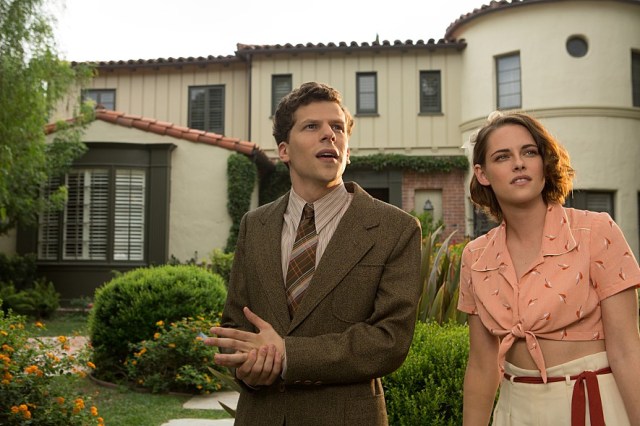
Along with Allen’s deadpan narration, the first half of the movie takes us into the Golden Age of Hollywood during the late 1930s. Bobby Dorfman (Jessie Eisenberg) is a young man eager to get into movie business, and he luckily has someone who can really help him when he flies from New York City. His uncle Phil (Steve Carell) is the boss of an influential Hollywood agency who has numerous connections around Hollywood, and, after some delay, he comes to give his meek nephew a chance although he is not particularly interested in promoting his nephew’s career. Carell, who replaced Bruce Willis during the production, is suitably dapper and intense in comical ways, and I was tickled by his precise comic timing during the scene in which his character alternatively handles two different businesses at a cloakroom.

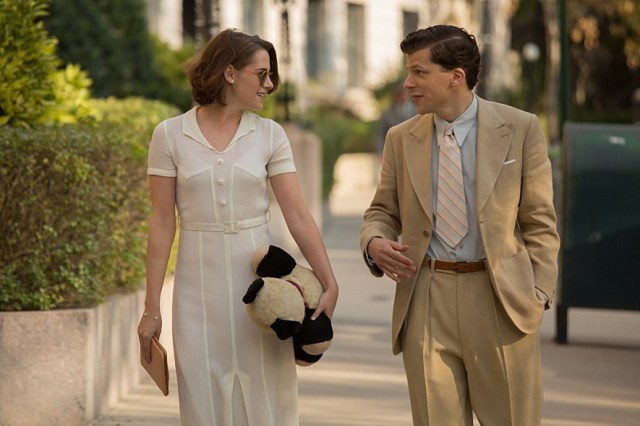
While busily operating around the upper echelon of Hollywood, Bobby meets Veronica “Vonnie” Sybil (Kristen Stewart), a young secretary working for Phil. As they are mutually attracted to each other, Bobby begins to consider the possibility of his life with Vonnie, but, alas, it turns out that she is already in the relationship with someone else. Although she likes Bobby, Vonnie cannot easily walk away from her current relationship, and their situation becomes more complicated when she has to make a very important decision for her life. While Jessie Eisenberg is a good Woody Allen surrogate as he demonstrated in “To Rome with Love” (2012), Kristen Stewart, who previously performed along with Eisenberg in “Adventureland” (2009), is brimming with unadorned charm in her amiable performance, and their gentle chemistry on the screen carries a number of lovely scenes such as when Bobby and Vonnie walk around the Beverly Hills neighborhood strewn with the residences of many Hollywood stars.

cafesociety05

Around the second half, the movie shifts its focus from Hollywood to New York as Bobby eventually goes back to his hometown alone and then works for his gangster brother Ben (Corey Stoll), who has gained his notoriety as steadily and ruthlessly rising in his criminal business. Although his character is usually around the fringe of the story, Stoll always draws our attention with his droll, straightforward performance, and he serves us small dark laughs whenever the movie shows how Ben deals with his business problems.

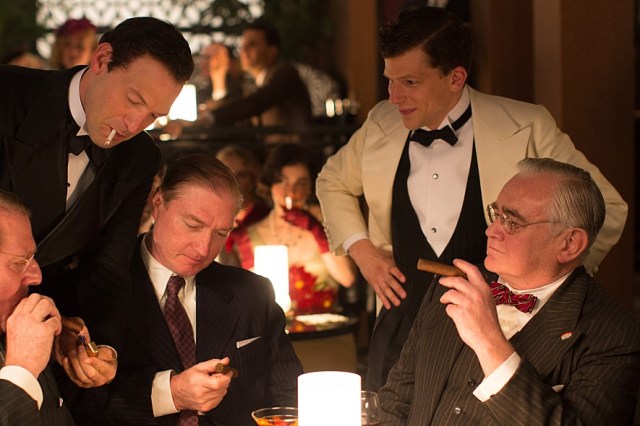
Like his other family members, Bobby does not have much problem with how Ben earns his money, and he becomes the manager of a Manhattan night club recently acquired by his brother. Under his management, the club is quickly turned into one of the most popular spots among the rich socialites of the city, and every night at the club is filled with various figures known well around the city for their fame – or their infamy, shall we say. (The title of the movie is an old term which was used to describe high society people who usually enjoyed their gala night hours together at high profile cafés and restaurants).

Everything seems to be working out well for Bobby especially after his eventual marriage with a girl who instantly becomes the new love in his life during their accidental encounter, but then the past comes back to him when he happens to come across Vonnie again. Although they are well aware of how much they have been changed in their respective lives, there are still old feelings remained inside them, and their past romantic memory is awakened as they come to spend more time together in New York.

cafesociety01

As his screenplay lightly treads along with them, Allen and his cinematographer Vittorio Storaro delight us with a series of splendid visual moments. While technical details have not been exactly strong features in Allen’s works, Allen tries a more visual approach here than usual in his first trial with digital camera, and this notable change contributes considerable smooth liveliness to his film. The camera fluidly looks around Bobby and other characters during many of the club scenes in the movie, and we gladly observe their fun and excitement. The scenes between Bobby and Vonnie in Hollywood look intimate under the warm, sunny nostalgic mood we can expect from the romanticized version of Hollywood during the 1930s, and the equivalent scenes in New York are also filled with their own romantic atmosphere, which is presented best during a wistful moment tenderly unfolded at Central Park during early morning.

Although some of its elements do not work as well as intended (the parts involved with Bobby’s family members often look as if they belonged to a different movie), “Café Society” is still entertaining to watch. Its production design and costumes are classy to say the least, and I enjoyed the good supporting performers including Blake Lively, Parker Posey, Paul Schneider, Sheryl Lee, and Anna Camp, who only appears in one scene but is unforgettable none the less as an inexperienced prostitute as clumsy and confused as Bobby.

Around its finale, the movie has one of its minor characters quote Socrates along with his own comment on the quote: “Socrates said, “The unexamined life is not worth living.” But the examined one is no bargain.” As its two main characters look back on what they had and then lost, they feel a whiff of bliss as remembering that good time, but they are also reminded that life is a costly one-way road for everyone – and it goes on anyway regardless of whether they like it or not.

cafesociety06

Posted in Movies | Tagged , | Leave a comment