Chocolat (2016) ☆☆1/2(2.5/4): A pair of different clowns

chocolat02

Inspired by the career of two real-life clowns who were famous around the early 20th century, French film “Chocolat” is an old-fashioned show business melodrama which is a little too rote and predictable at times. It often works whenever it focuses on the dynamics between its two different main characters on the ring, but it also feels incoherent and superficial as trying to deal with too many story elements within its 2-hour running time, and it is a shame that the movie does not put enough trust on its two lead performers.

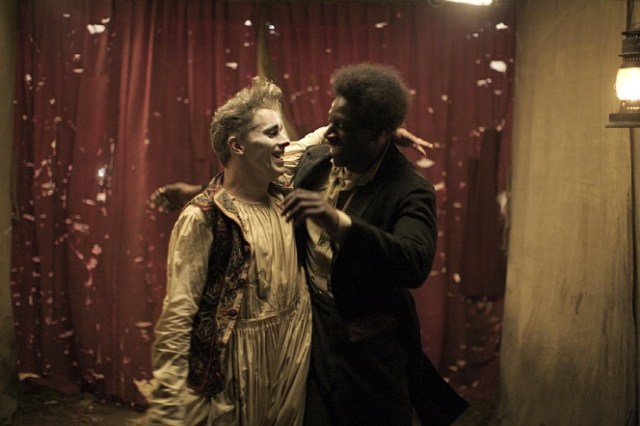
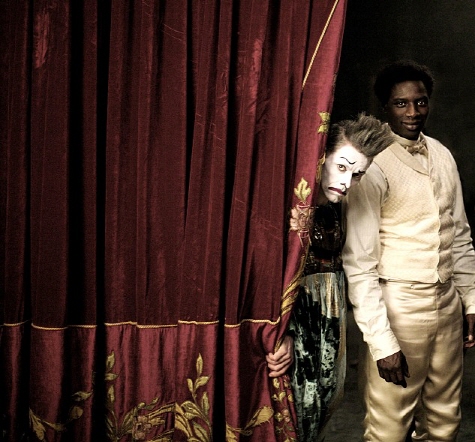
James Thierrée, a veteran circus performer who is also Charlie Chaplin’s grandson, plays George Footit, a struggling clown looking for any opportunity from a local circus trope in the northern area of France in 1898. While he fails to impress the manager of the trope despite his good efforts, Footit later notices a negro guy named Kananga (Omar Sy) during the circus performance. Kananga merely plays a menacing cannibal in front of the audiences, but Footit sees more potential from him, and that is how he come to get an idea of pairing himself with Kananga.

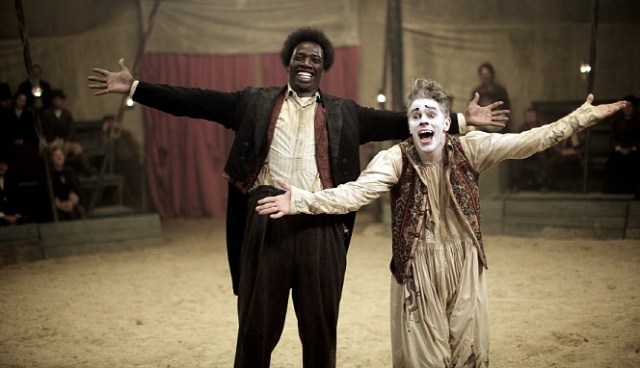
After Footit persuades Kananga to work with him, they soon find themselves on the ring for their first trial. The beginning is not exactly promising to say the least, but then they get better than expected once they find how to click together well with each other on the ring. While Footit plays a dominant white guy who is easily exasperated, Kananga plays a submissive black guy who gets frequently slapped and kicked, and their broad tactics are effective enough to draw good laughs from their audiences.

chocolat03

Although this is a bit uncomfortable to watch for us due to its inherent racial undertone, Thierrée and Sy have good comic chemistry between them, and it is entertaining to watch how agilely they interact with each other on the ring. While Thierrée is effortless in his physical movements as ably supporting his co-star, Sy is ebullient with his likable screen persona previously demonstrated in “The Intouchables” (2011) and “Samba” (2014), and the screen is filled with energy and tension as they bounce along with each other on the ring.

As their popularity increases day by day, Footit and Kananga now present themselves as ‘Footit and Chocolat’, and then they are approached by Joseph Oller (Olivier Gourmet), the manager of Nouveau Circus in Paris. Of course, they do not hesitate to accept Oller’s proposition at all, and Kananga is especially excited by the prospect of more fame and success to come. As they become more successful and famous as promised by Oller, he becomes far more extravagant than before, and he also gets involved with a local mob thanks to his gambling habit.

In contrast, Footit is serious about work and business as before, and we see the growing conflict between him and Kananga as Kananga continues to enjoy his rising status as the first famous black entertainer in France. With his growing ego, Kananga becomes less willing to be slapped and kicked by Footit, and that leads to one tense moment on the ring when he commits something quite unexpected to the shock of his partner.

And he becomes more aware of how much he is discriminated just because of his skin color. At one point, Kananga is arrested by the police because he does not have an identification document, and there is a brutal scene where he is cruelly abused by police officers in a prison. While being incarcerated in the prison, he meets a fellow negro inmate named Victor (Alex Descas), and that incidental encounter makes him a little more serious than before.
chocolat04

Later in the story, Kananga attempts to perform the lead role of William Shakespeare’s “Othello” for being regarded as a serious artist, but the director Roschdy Zem, who also adapted Cyril Gely’s screenplay with Olivier Gorce and Gérard Noiriel, fails to generate enough dramatic momentum to hold our attention. The movie simply goes through expected high and low plot points without adding any dramatic depth to story and characters, and the following stage performance sequence feels rather insipid despite the active reaction from the audiences in that sequence.

Furthermore, the movie is hampered by its scattershot narrative which looks around numerous things but then leaves most of them underdeveloped. When a certain fact about Footit’s private life is revealed around the middle of the story, we can see how that can be juxtaposed with Kananga’s social position in interesting ways, but the movie never delves deep enough into that aspect. It is also disappointing that many of supporting characters in the film remain on the level of caricatures while being no more than storytelling tools, and Clotilde Hesme is stuck with a thankless job of playing Kananga’s love interest. She tries as much as she can with her bland character, but we never get the full understanding of why her character keeps sticking to her lover to the end with lots of care and patience.

Anyway, Sy and Thierrée still are the best part of “Chocolat”. While Sy acquits himself well despite a number of heavy-handed scenes he is forced to handle, Thierrée brings real melancholy and poignancy to that familiar cliché associated with clown, and I enjoyed their duo performance although I did not like the movie enough for recommendation. In my trivial opinion, these two talented performers could make their characters as real as the archival footage shown at the end of the movie, and it is too bad that they are not allowed to do that even during the finale.

chocolat01

Posted in Movies | Tagged , , , | Leave a comment

On the Beach at Night Alone (2017) ☆☆☆(3/4): As she wanders (and drinks)

Onthebeachatnightalone05

Alternatively playful and melancholic, South Korean film “On the Beach at Night Alone”, the latest work from Hong Sang-soo, gives us a somber character study which amusingly resonates with what happened in its auteur’s personal life. To be frank with you, I have no idea on how much the movie actually reflects the relationship between him and his lead performer, but all I can tell you for now is that Hong gives us another interesting human comedy while also drawing what may be remembered as one of the best performances in his lead performer’s career.

Kim Min-hee, who previously appeared in Hong’s “Right Now, Wrong Then” (2015), plays a young performer named Young-hee, and the first part of “On the Beach at Night Alone” revolves around how Young-hee spends some time in Hamburg, Germany along with her friend Ji-young (Seo Young-hwa). While they go around various places including a public park and a bookstore, they constantly talk with each other on several things including love and life, and we get bits of information about what happened to Young-hee in South Korea before she came to Hamburg. After her affair with a married movie director became known in public, she flied to the city for having her own quite private time, and it certainly helps that she is a mere foreign visitor in the city.

As she emphasizes during one scene, Young-hee wants to make a fresh start as simply being herself, but she also finds herself still attached to the matter she wants to put behind herself. It turns out that she is waiting for that movie director to come to the city for meeting her, and she remains unsure about her feelings while more aware of the uncertainty in front of her.

While steadily maintaining the grey melancholic mood around her, the movie throws one particularly offbeat element onto the screen, and you will be as baffled as I was during the last shot of its first part. Regardless of whether that weird moment symbolizes anything, it reminds me of how Hong’s movies often caught us off guard with odd moments such as that memorably hilarious encounter between one of the main characters in “Hahaha” (2010) and a historic figure from the past.

Onthebeachatnightalone01

In the second part, Young-hee is back in South Korea, and the first shot of this part shows us her watching a movie alone in the darkness of an arthouse movie theater in Gangneung, a coast town located in the east region of South Korea. Right after the movie is over and she comes out of the screening room, she encounters Cheon-woo (Kwon Hae-hyo), and then they spend some time together at a nearby cafe run by Myeong-soo (Jeong Jae-young), another guy in her life besides Cheon-woo and the aforementioned movie director. Not long after Cheon-woo leaves, Myeong-soo arrives to meet Young-hee, and their conversation leads to one of the funniest moment in the movie as it gradually reveals what a pathetic dude Myeong-soo is.

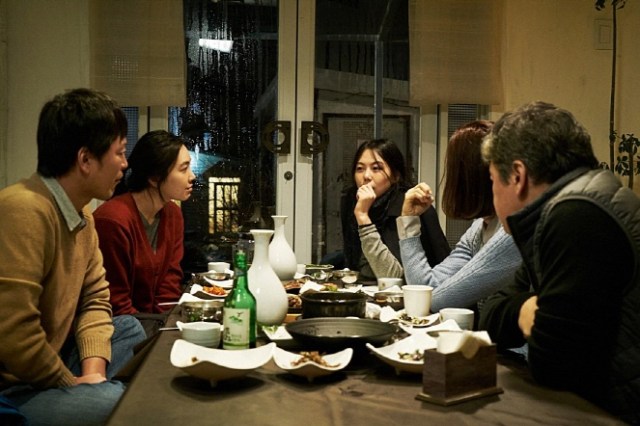
Young-hee and these two guys later have a dinner along with two other characters, Do-hee (Park Ye-joo) and Joon-hee (Song Seon-mi). As they become quite drunk together, the mood casually swings between jolliness and awkwardness, and Kim, who deservedly received the Silver Bear for Best Actress award for her charming performance here in the film, and the other performers in this sequence are spontaneous with Hong’s smooth handling of several comic moments including the one which will surely take you back to Kim’s previous performance in “The Handmaiden” (2016).

As we are amused by her comical interactions with other characters around her, we also come to feel the growing discontent and loneliness inside Young-hee. Her affair with that movie director is over now, but that past still sticks around her like a stigma as being mentioned by others, and she cannot help but be brutally frank about her bitter feelings in front of others as driven by alcohol. As watching how her character looks more isolated along the narrative, I was reminded of how Kim was unfairly treated by South Korean media and public after her affair with Hong was exposed around the time when the movie was completed.

Onthebeachatnightalone04

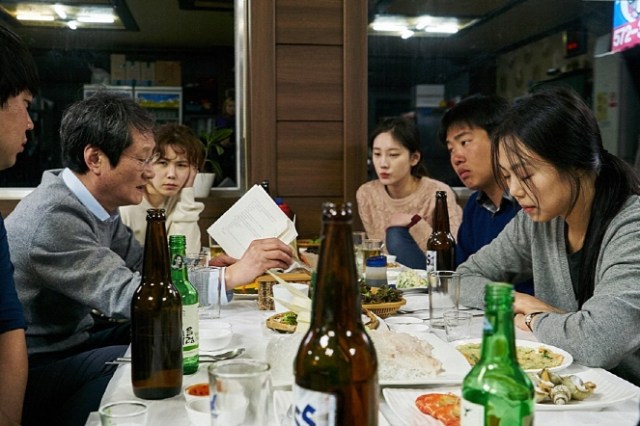
In case of Hong, it seems he also wants to talk about his feelings, and that is mainly expressed through a character played by Moon Seong-geun during another sequence accompanied with lots of booze to drink. The moment when that character blurts out a passage from some book is rather blatant, but it is so scathingly funny that I found myself quietly laughing along with several audiences around me during the screening I attended on this Thursday evening.

Anyway, Hong gives his talented lead actress a number of wonderful moments to shine, and I enjoyed how Kim ably embodies her character’s complex emotional state without missing any beat. There is a plain but lovely scene in which Young-hee quietly sings a song by herself, and Kim’s expressive face is more than enough to convey us her character’s thoughts and feelings.

Although things remain uncertain for its heroine even during the last scene, “On the Beach at Night Alone” is tentatively optimistic in the end, and I feel the same about Hong and Kim. While Hong is already preparing to release his another new film around this year, Kim has received lots of acclaim as the movie is being shown in South Korea at this point, and we will see her appearing along with Isabelle Huppert in that new film by Hong. I hope Young-hee will be able to move on like they do.

Sidenote: The title of the movie comes from a poem by Walt Whitman, by the way.

Onthebeachatnightalone03

Posted in Movies | Tagged , , | 1 Comment

A cat in the cafe (2017/03/22)

null null null null null null null null null null null null null null null null null null null null null null null null null null null null null null
This white furry creature is quiet and sweet on the whole…
Posted in Photos | 1 Comment

The Light Between Oceans (2016) ☆☆(2/4): A tepid melodrama between love and guilt

thelightbetweenoceans01

While it is filled with melodramatic elements ready to be utilized, “The Light Between Oceans” feels tame and bland in its frustratingly low-key approach, and it remains inane and tedious even as it doles out several plot turns one by one later in the story. I appreciated the good efforts from its cast and crew which are evident on the screen, but I hardly cared about its story and characters on the whole, and I accordingly felt bored as merely observing its limp plot process.

The first part of the movie is about how its despondent hero comes to settle in a remote island far off the west coast region of Australia. It is around the time when the World War I was being over, and Tom Sherbourne (Michael Fassbender) wants to have some quiet peaceful time alone due to his 4-year battlefield experience. When he applies for the job of lighthouse keeper on that island, he does not mind at all that he will have to spend no less than 6 months alone in the island, and he is even not so disturbed by the fact that his predecessor was put into a hospital after having a nervous breakdown.

After several months, Tom comes to extend his stay on the island. While he is fine with being alone in the island as before, he finds himself getting close to Isabel (Alicia Vikander), a young woman living in a nearby port town. Right from when they come across each other for the first time, Isabel is attracted to him even though she knows nothing about him, so she actively approaches to him, and their first date is quickly followed by a clichéd montage sequence accompanied with their letters to each other being read loud and clear on the soundtrack.

As time goes by, Tom finds himself more opened to Isabel, and he eventually comes to propose to her. When they finally live together after getting married, his life on the island feels far less lonely than before and Isabel soon becomes pregnant, but, alas, their happiness does not last that long. During one dark, stormy night (I am not kidding), she happens to suffer a miscarriage while her husband is not around her due to his lighthouse work. They try again later, but she comes to suffer another miscarriage, and she is naturally devastated by this repeated misfortune of hers.

thelightbetweenoceans02

And then an incident happens not long after her second miscarriage. A small boat is drifted to the shore of the island, and there is a young baby girl in the boat besides the corpse of a man who seems to be her father. Tom is supposed to report this to the authorities, but Isabel has a different idea. She wants to raise that baby as her own daughter, and Tom reluctantly follows her wish although he knows well that they can go to jail for that. He buries the corpse somewhere in the island, and then the baby girl is introduced as their daughter to others including Isabel’s parents.

It is not much of a spoiler to tell you that Tom and Isabel come to face the consequence of their action. Via a rather unbelievable coincidence, Tom happens to encounter a grieving woman named Hannah (Rachel Weisz), and then he comes to realize that he and his wife may be responsible for Hannah’s misery. When Isabel also comes to learn about that, she becomes conflicted just like her husband, but she does not want to give up her happiness even though it is based on a totally wrong deed.

I guess we are supposed to understand and emphasize with Tom and Isabel at this point, but the adapted screenplay by the director Derek Cianfrance, which is based on the novel of the same name by M.L. Stedman, fails to provide enough emotional ground to engage us. As hampered by its clumsy manipulation of plot and characters, the movie gets worse especially during its last act decorated with a couple of shamelessly soapy moments, and the finale is utterly insipid to say the least.

thelightbetweenoceans03

The main performers in the film try their best with their respective roles. While he is surely well-cast here as a flawed man with dark streaks, Michael Fassbender does not have much to do except looking glum or conflicted, and this is a major step down from his recent Oscar-nominated performance in “Steve Jobs” (2015). In case of Alicia Vikander, she is in a much better position in comparison, but her fine performance cannot fully compensate for many artificial moments in the film, and you may recall how she was much better in “Ex Machina” (2015) and “The Danish Girl” (2015), for which she won a Best Supporting Actress Oscar.

The best performance in the film belongs to Rachel Weisz, who effortlessly draws our attention as the most sympathetic character in the story. When the movie shifts its focus toward Hannah, we get to know a bit more about her through a flashback sequence involved with her dead husband, and we actually come to understand her more than Tom or Isabel. Weisz has a good scene with Vikander when their characters have a private moment between them for discussing their important matter, and it shows us how much the movie could be better with more human nuances.

While it is disappointing in terms of story and characters, “The Light Between Oceans” is commendable at least in technical aspects. The cinematography by Adam Arkapaw is breathtaking as required with all those wide shots of oceanic landscapes, and the movie surely looks beautiful as accompanied with the score by Alexandre Desplat, which is as lush and mellow as demanded. I do not mind tearjerkers, but the movie is not a very good one despite some nice elements to notice, so I advise you to skip it – even if you have spare time to kill.

thelightbetweenoceans04

Posted in Movies | Tagged , , | Leave a comment

Beauty and the Beast (2017) ☆☆☆(3/4): A tale as old as time…

beautyandthebeast01

This may sound contradictory to you, but the main highlights of “Beauty and the Beast”, another live action remake film from the Walt Disney Company, often feel like the weakest things in the movie. The movie is indeed enchanting and enjoyable thanks to its top-notch production quality and solid, entertaining performance, and my cranky heart was often charmed by its lovely moments, but my lucid mind kept reminding me of how many elements in the film I enjoyed were more memorable and fantastic in the 1991 animation feature film version.

Although I have never revisited the 1991 version since I watched it only once via a VHS copy in 1999 (Shame on me!), it is still vividly remembered in my mind even at this moment, and that says a lot about its undeniable visual/emotional power. Along with “The Little Mermaid” (1989), the 1991 version put the Walt Disney Company back to the top of its field, and it also got the honor of being the first animation feature film which received a Best Picture Oscar nomination (it lost to “The Silence of the Lambs” (1991), which, incidentally, can be regarded as another tale of beauty and the beast).

Compared to the 1991 version, the 2017 version is bound to look inevitably pale in comparison, because, well, nothing in live action film can surpass style and imagination of animation film. For example, I was certainly delighted by the grand gothic appearance of the castle of the Beast in the 2017 version, but then I remembered how the same castle in the 1991 version looked far more impressive on the screen. The Beast in the 2017 version surely looks hideous and menacing as require with a pair of horns on his furry head, but then he looks less scary and interesting when you compare him with his animation counterpart.

beautyandthebeast03

Nevertheless, the 2017 version diligently gives us exactly what we expect from it. After the prologue sequence showing how a cold-hearted prince was punished by an enchantress during one fateful night, the movie promptly moves forward to its first big musical sequence, and we are treated with the new rendition of that endearing Oscar-nominated song “Belle”, as watching our spirited heroine Belle going (and singing) around her village. While she may not sing as well as Paige O’Hara in the 1991 version, Emma Watson ably exudes that irrepressible pluck we saw from her performance in Harry Potter movies, and we come to root for her character more especially during a short but robust musical moment clearly influenced by “The Sound of Music” (1965).

Mostly occupied with reading books and yearning for something better for her life, Belle does not care much about marriage unlike other pretty girls in the village, but that means nothing to Gaston (Luke Evans), a virile dude with an ego as big and monstrous as Donald Trump’s. Looking pompous and despicable as required, Evans definitely has a fun time with his villain character, and he relishes his musical sequence later in the movie along with Josh Gad, who plays Gaston’s sidekick LeFou.

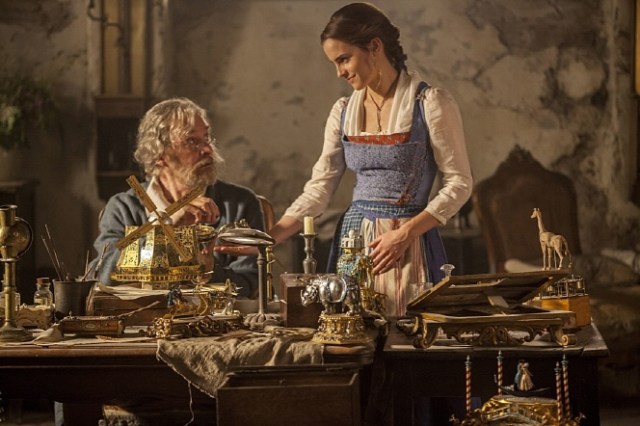
Meanwhile, Belle’s eccentric watchmaker father Maurice (Kevin Kline, who is seriously under-utilized despite his own brief musical scene) gets in a serious trouble when he is returning to the village during one night. Not long after getting lost in a nearby forest, he comes across a dark, mysterious castle, and then he soon finds himself incarcerated by the Beast (Dan Stevens), who is the cursed owner of the castle.

beautyandthebeast04

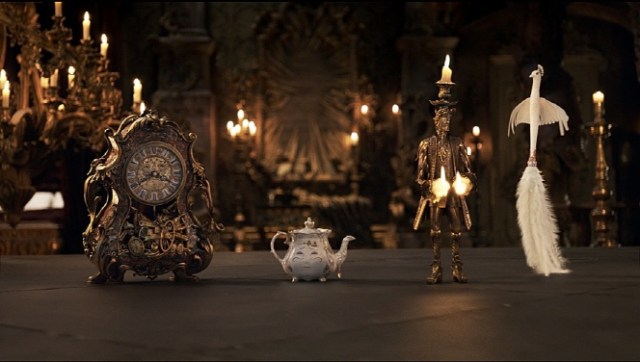
When she comes to learn of her father’s situation, Belle decides to become the Beast’s prisoner instead. Things look pretty dour for her at first mainly due to the Beast’s coarse attitude, but her warm presence comes to influence not only the castle but also its residents. The servants of the castle, who were transformed into various furnitures as their master was turned into a beast, are delighted to have a guest to be served, and that leads to another Oscar-nominated song “Be Our Guest”, which is joyously accompanied with the dazzling choreography a la Busby Berkeley and the exuberant singing voice of Ewan McGregor. While McGregor indubitably has a ball with his flamboyant character, the other colorful supporting performers in the film including Stanley Tucci, Gugu Mbatha-Raw, Audra McDonald, Ian McKellen, and Emma Thompson have each own moment to shine, and I particularly liked how McGregor and McKellen complement each other via their contrasting personalities like Jerry Orbach and David Ogden Stiers did in the 1991 version.

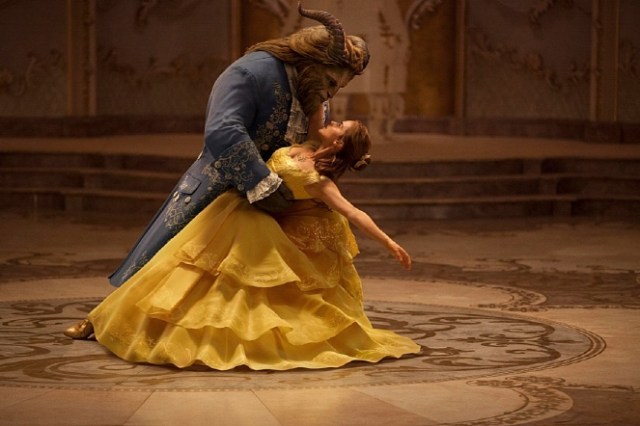
In case of the Beast, he begins to see some hope of redemption from Belle, and, yes, he comes to discover his better sides as being nicer to her than before. While his performance is mostly conveyed via CGI, Dan Stevens, who drew my attention for the first time through his creepy performance in “The Guest” (2014), is convincing in the on-screen interactions with Watson, and they click well together during the expected ballroom scene as Thompson sings Oscar-winning song “Beauty and the Beast” instead of Angela Lansbury in the 1991 version.

Under the smooth direction by the director Bill Condon, “Beauty and the Beast” keeps entertaining us although it is 45 minutes longer than the 1991 version. Most of new elements including the homosexuality of one substantial supporting character are rather unnecessary, but I enjoyed its visuals as well as performances, and the songs by Alan Menken and late Howard Ashman are appealing as before while understandably eclipsing the new songs made for the film by Menken and Tim Rice. The movie still feels redundant and overstuffed, but I was content to be its guest anyway, and you may enjoy it too.

beautyandthebeast02

Posted in Movies | Tagged , , | 1 Comment

A Stray Goat (2016) ☆☆☆(3/4): A melancholic wintry tale of two troubled teenagers

astraygoat04.jpg

I once wondered whether sad, cold independent movies about desperate people were becoming a genre of their own. Usually filled with somber wintry ambience, such movies tend to serve us with the bleak sense of harsh reality via their gloomy characters, and South Korean independent film “A Stray Goat” is no exception. Here are two troubled adolescent characters to watch, and it is surely sad to observe how fragile their relationship is in their melancholic heartless world.

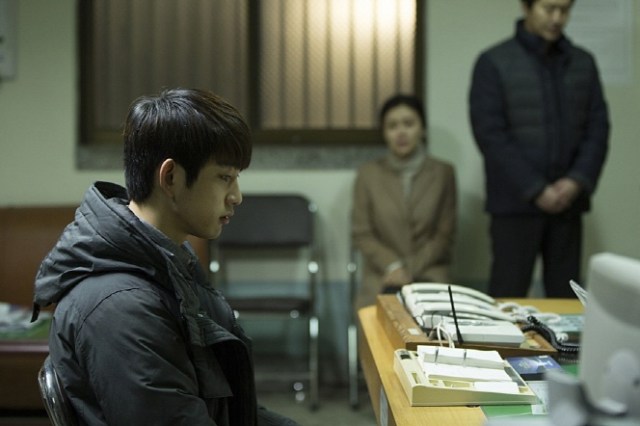
The movie opens with Min-sik (Jinyoung) moving to a rural region named Goseong along with his parents. Although it is never explained well in the film, it is implied later that Min-sik got himself in some serious trouble involved with his former high school friends, and that seems to be the main reason of their moving from Suwon to Goseong, which is incidentally his pastor father’s old hometown.

His parents hope that they will make a fresh start there, but things do not look that optimistic. While they are greeted by the deacon of their new church when they arrive in Goseong, the deacon points out that the congregation has been decreased due to some other church in the town, and Min-sik’s parents soon see how difficult it is to persuade town people to come to their church. It has been an economically hard time for many people in the town, and Min-sik’s parents gets a harsh response at one point when they sincerely approach to a woman running a cosmetic shop.

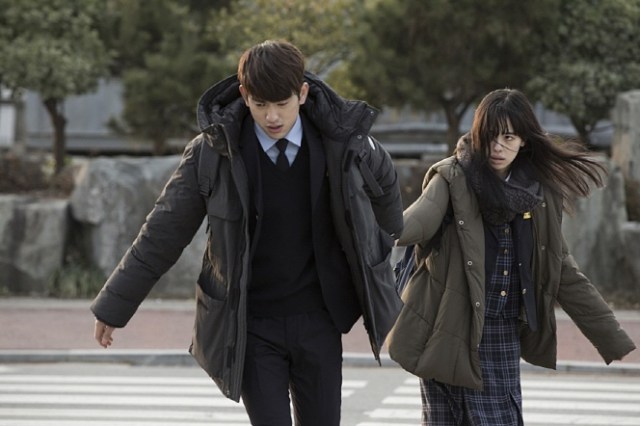
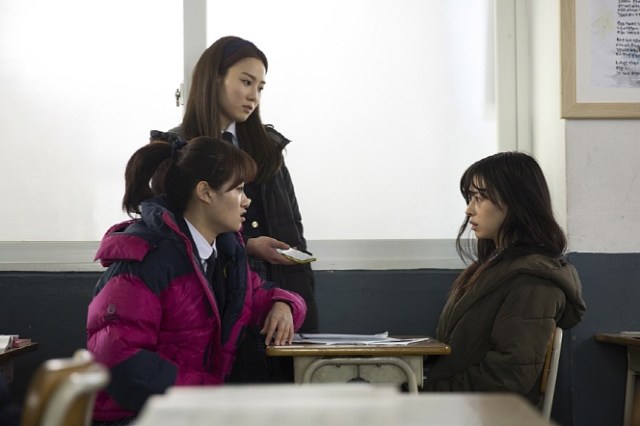
While understandably feeling awkward at a local high school, Min-sik notices a quiet pretty girl in his class who is as awkward as him. She is Ye-joo (Ji Woo), and he learns from his classmates that she is the daughter of a man who was recently arrested for a terrible murder case in the town. Although her father was subsequently released due to the lack of any incriminating evidence, many people in the town believe that he is guilty, and she has been the target of cruel bullying in the school just because of that. We often see her helplessly cornered and harassed by some of her classmates, and there is a painful scene in which she has to endure the hostile stare of her classmates in the middle of their music class.

astraygoat03

Min-sik remains mostly passive as watching her ordeal from the distance, but then he happens to get involved with her on one day. Pushed by his class friends who are no good for him at all, he intentionally approaches to Ye-joo after school, and then he holds her hand in front of other students. As demanded, he sticks to her until they eventually arrive at her house, and he even goes inside her house and meets her father.

Not long after this very awkward moment of theirs, Min-sik meets Ye-joo again. Feeling sorry for her, he shows some kindness to her, and she responds to him with a little more brightness in her detached face. He takes her to his parents’ church, and he also shows her a small stray black goat he found in a nearby forest.

However, things keep being difficult for them as before. Thanks to his bad friends, Min-sik soon gets himself in another serious trouble, and his misdemeanor certainly exasperates his parents, who are also not so pleased to see their son being with Ye-joo. As the murder case remains unresolved, Ye-joo’s father is harassed by local cops, and Ye-joo continues to be bullied by her classmates while Min-sik feels frustrated for being unable to stop that.

And it looks like they may not protect that little black goat, which turns out to be owned by a sleazy guy running a shabby Oriental medicine factory near the forest. Min-sik and Ye-joo do not want that goat to be killed for making medicine, but they do not have any money for buying it, and this circumstance ultimately leads to an emotionally devastating moment both Min-sik and Ye-joo will never forget.

astraygoat02

According to the director/writer Jo Jae-min’s interview, the story is inspired by his past experience, but I could not help but notice how much the movie resembles other South Korean film “Steel Cold Winter” (2013). Shrouded in a similar wintry atmosphere, that movie is also about the troubled young male hero’s tentative relationship with a young outcast girl, and there are other notable story elements shared between that film and “A Stray Goat”.

I have no idea on how much “A Stray Goat” is actually influenced by “Steel Cold Winter”, but I can tell you at least that I enjoyed its realistic mood and solid lead performances. While his character is a bit too bland, Jinyoung has a nice subdued chemistry with his co-star Ji Woo, and Ji has a couple of wonderful wordless scenes later in the movie. Some of supporting characters in the movie may feel too broad to you, but they are realistically banal and superficial, and it is gut-wrenching to watch at times how much they are blind to their cruelties committed to Ye-joo.

“A Stray Goat”, which is released in South Korea as “Streaks of Snow”, is not as successful as intended, but I recommend it anyway because it is a competent debut work with enough good things to compensate for its flawed aspects. While spring has come now, it is still cold outside at night, and the movie certainly made me more aware of that.

astraygoat01

Posted in Movies | Tagged , , , , , | Leave a comment

Tanna (2015) ☆☆☆(3/4): A love story on one volcanic tropical island

tanna04.jpg

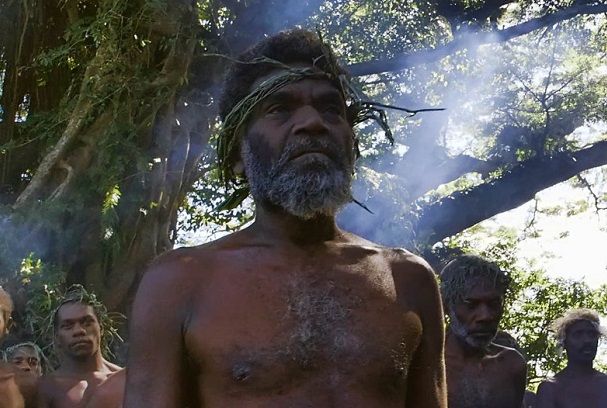
At first, “Tanna”, one of the Best Foreign Language Film Oscar nominees of this year, strikes us with its exotic tropical world and the tribal communities inside that beautiful world. Shot entirely in the island of Tanna, Vanuatu, the movie gives us a vivid, intimate look into an old way of life which has been maintained for many centuries in the island, and it becomes more engaging as it unfolds a familiar but appealing story of two star-crossed lovers.

They are Dain (Mungau Dain) and Wawa (Marie Wawa), and it initially seems nothing can prevent the growing affection between them. They grow up together in the same tribe residing in one jungle area of the island, and we observe how they and their families and other members of the tribe go through their peaceful daily life together. It is implied that the time is around the late 20th century (As mentioned at the end of the movie, the movie is inspired by a real-life story which happened in 1987), but they stick to their traditional lifestyle as their ancestors did, and that means Dain’s grandfather, who is the chief of the tribe and has also taken care of Dain since the death of his parents, will decide whom Wawa will marry.

We get to know a bit about Wawa’s family. Her little sister Seline (Marceline Rofit) is a plucky girl with tendency toward mischief, and we get a funny moment when she attempts a silly prank on some boy and then literally goes too far to the dismay of her father. Her father decides that Seline really needs to grow up more, so he asks his father, who is the shaman of the tribe, to take his daughter to Mountain Yasur, an active volcano which is a holy place for many natives in the island.

When Seline goes to Mountain Yasur along with her grandfather, the movie dazzles us with a number of magnificent views of this volcano. The volcano towering over the characters in its gray barren landscape makes a striking contrast with the green ambience of the jungle area, and we cannot help but be awed like Seline while watching the volcano constantly spewing out flecks of lava from the red, fiery bottom of the crater. As Seline’s grandfather quietly imparts his spiritual belief to his granddaughter, it certainly feels like being closer to nature and, probably, God.

tanna05

But then a bad thing happens. Two people from a neighboring tribe sneak upon them, and they attack Seline’s grandfather just because they believe he is responsible for a bad luck in their tribe. Fortunately, Seline’s grandfather survives despite his serious injury, but his tribe people are understandably agitated by this incident because this is not the first conflict with that neighboring tribe. In fact, that tribe was responsible for the death of Dain’s parents, and Dain surely wants retaliation like many other people in his tribe.

As a wise old man, Dain’s grandfather does not want any more violence, so he chooses a more civilized way to resolve the situation. He holds a joint meeting with not only that neighboring tribe but also other tribes in the island, and it is decided during this meeting that Wawa should be given as a bride as a part of the peace negotiation.

Naturally, Dain and Wawa are not so pleased about this. In their view, they must follow what their hearts desire, and the movie emphasizes with them as watching them more attached to each other despite their impossible circumstance, but the movie also understands the position of other characters around Dain and Wawa. They certainly know well how much Dain and Wawa love each other, but Dain and Wawa’s happiness can cause another conflict, and that is the last thing they want.

tanna01

The situation becomes more tense when Dain and Wawa eventually run away together and then are pursued by not only their own people but also several members of that neighboring tribe. The movie maintains its relaxed narrative pace even at that point, and we see the other interesting parts of the island as Dain and Wawa wander around the island for finding any safe shelter for them. At one point, they come into a Christian community which relatively looks modernized compared to their tribe, and that leads to one of the most amusing moments in the film.

The co-directors Martin Butler and Bentley Dean, who won the International Critics’ Week Award at the 2015 Venice International Film Festival (Dean also received the Feodora award for his terrific cinematography), did a competent job of establishing the authentic sense of places and people via their documentary-like approach, and they also draw good natural performances from their non-professional cast members. I heard that the performers in the film simply played the fictional version of themselves in front of the camera, but they feel real and convincing on the screen, and their earnest acting fits well to the simple narrative of the movie.

Overall, “Tanna” is a small arthouse film which distinguishes itself with distinctive local personality mixed with palpable realism. They are a lot different from us in many ways, but we come to see their universal human matters as getting to know about their specific world, and we are touched by their modest but poignant drama. In my inconsequential opinion, that is what a good movie can do for us.

tanna02

Posted in Movies | Tagged , | Leave a comment

Kong: Skull Island (2017) ☆☆1/2(2.5/4): Welcome to Skull Island

kong-skull-island-image

As a monster flick, “Kong: Skull Island”, another remake of the 1933 classic film “King Kong”, works to some degrees. Besides its gigantic titular monster, it serves us with various big creatures to watch, and it also shows some sense of offbeat humor to amuse us at times. In short, this is a super-size product as huge as demanded, and it will satisfy anyone who simply wants to see big monsters on the screen.

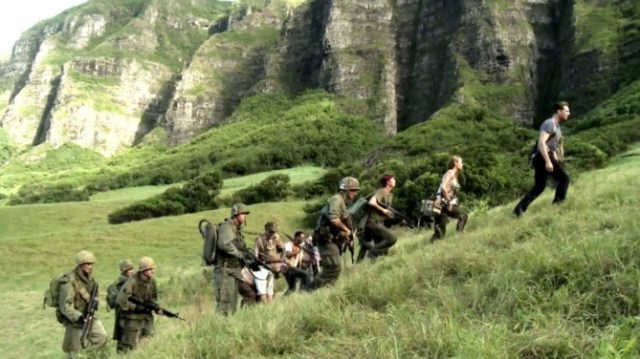
After the prologue scene set in 1944, the movie moves forward to 1973, when the Vietnam War was being over with Richard Nixon’s public announcement. After persuading Senator Willis (Richard Jenkins), William Randa (John Goodman), a senior official of a government organization called Monarch, is permitted to do the expedition of a recently discovered tropical island located somewhere in the Pacific Ocean, and it is clear from the beginning that Randa’s purpose is not just exploring the island in question. He wants to be escorted by US Army soldiers armed with weapons and helicopters, so a helicopter squadron led by Lieutenant Colonel Preston Packard (Sameul L. Jackson) is set to join the expedition, and he also hires a British tracker played by Tim Hiddleston.

Also joining the expedition is Mason Weaver (Brie Larson), a veteran war photographer searching for scoop. Nothing seems to be suspicious, and nobody stops her from accompanying Randa and his expedition team members, but Weaver senses something fishy about the expedition. After all, who can trust the government when the American society is being shaken by a certain political scandal involved with the White House?

After flying through the stormy region surrounding the island, the expedition team and Packard’s squadron finally land on the island, and then they come across what Randa is looking for. Quite bigger and taller than what was shown in the 1933 film or the 2005 remake film by Peter Jackson (I have not watched the 1976 remake film by Peter Guillermin yet), Kong here in this movie is also quite agile and ferocious in his movements, and Packard and his men soon find themselves outmatched by this humongous ape as it ruthlessly smacks down their helicopters one by one.

kongskullisland01

As the characters who survived from this spectacular clash with Kong move around in the island, the movie delights or terrifies the audiences with other creatures of the island including a huge buffalo emerging from a swamp and a big, nasty spider hiding around a forest. In case of a flock of reptilian birds, they merely look harmless during their first appearance, but then they show their vicious side at one point later in the movie.

Of course, there are also a number of monster fight sequences which will definitely excite any monster movie fan, and the director Jordan Vogt-Roberts, who previously debuted with small whimsical comedy drama “The Kings of Summer” (2013), handles well these and other big sequences decorated with lots of special effects. I like a certain sequence which took me back to that octopus scene in “Oldboy” (2003) for a good reason, and the climax sequence involved with Kong’s natural enemy species is quite intense and dynamic to say the least.

Compared to these solid visual spectacles, the story and characters of the movie feel rather small and superficial, and the talented main cast members of the movie are mostly wasted due to flat, underdeveloped characterization. Tom Hiddleston, who has shown that he can do a lot more than playing that forgettable villain in “Thor” (2011), does not have many things to do except filling his archetype role, and neither does Brie Larson, who was far more interesting and engaging in “Short Term 12” (2013) and “Room” (2015). Stuck in one-dimensional villain role, Samuel L. Jackson monotonously chews his scenes with his glaring stare, and John Goodman and Shea Whigham manage to leave some impression as ever-reliable character actors.

kongskullisland04

The best performance in the film comes from John C. Riley, who simply steals the show as a World War II pilot who has been marooned in the island for nearly 40 years. Watching his character’s first appearance along with a bunch of silent island natives, I could not help but think of Dennis Hopper’s unhinged supporting character in “Apocalypse Now” (1979), and there are in fact numerous references to that great war film or Joseph Conrad’s short story which inspired that film. It is certainly no coincidence that the name of Hiddleston’s character is Conrad, and you will be amused by the name of Riley’s character if you have ever read Joseph Conrad’s short story.

Besides Riley’s delightfully nutty supporting performance, there are also several humorous moments which function as welcoming intervals between big scenes. The period details in the film including a Nixon doll and a magnetic tape player will bring some smile into your face, and I must point out that one particular joke in the film becomes more amusing due to what happened during the 2016 World Series in US.

On the whole, “Kong: Skull Island” is not so successful compared to the achievement of “King Kong” and its 2005 remake. I enjoyed some parts of it, but I was not involved in its story and characters much, so I cannot wholly recommend it although you will not waste your money if you just demand spectacles. If so, I can assure you that, as shown from a teaser scene following its end credits, there will definitely more to enjoy for you in the future – and you will probably not be disappointed.

kongskullisland03

Posted in Movies | Tagged , | 1 Comment

Shin Godzilla (2016) ☆☆☆(3/4): Cheesy but terrifying

ShinGodzilla01

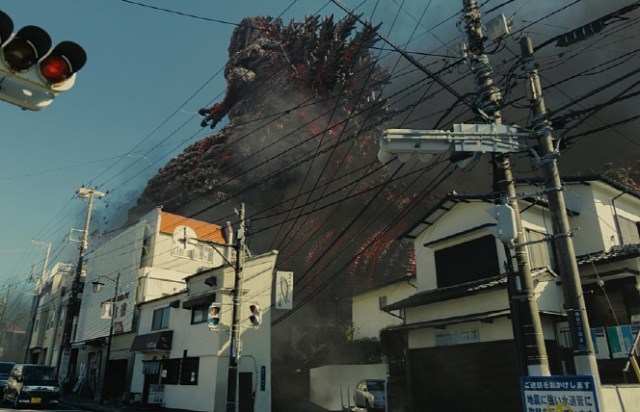
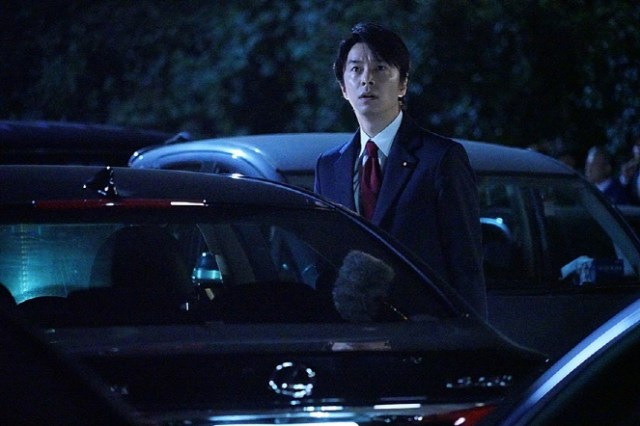
Even though it has been mostly stuck in the realm of B-monster movies for many decades since its first appearance in 1954, Godzilla has been quite an iconic monster figure to many of us. Although I have not watched any of Japanese Godzilla films, I fondly remember their several still shots which I came across during my childhood years, and those memories were revived during my viewing of “Shin Godzilla”, which stays true to its cheesy origin while surprisingly entertaining in more than one way. Unabashedly corny and preposterous, the movie frequently amuses us with its wry social/political satire on Japanese bureaucracy, and, above all, it effectively wields the terrifying glory of its monster star on the screen along with some nice surprises for us.

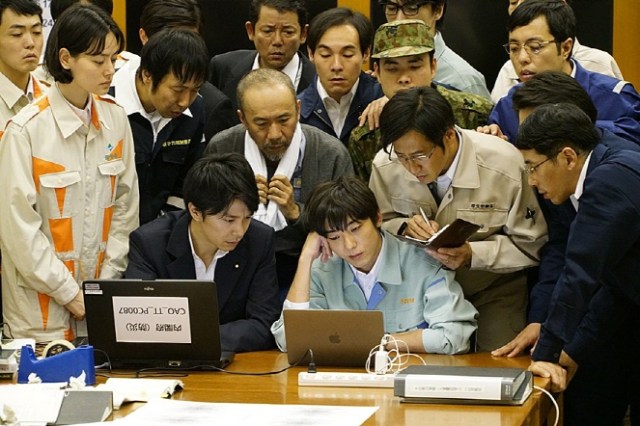
The movie begins with the early sign of a big disaster to come. After an inexplicable phenomenon in the bay of Tokyo is reported, Prime Minster and his cabinet members gather for an emergency meeting, and everything seems to be under control, but Rando Yaguchi (Hiroki Hasegawa), Deputy Chief Cabinet Secretary, thinks differently. As the sightings of a giant creature are reported on the media, he fears for the worst, but his senior officials casually dismiss his opinion.

Presenting the following progress of the situation via a deadpan docudrama style a la “The Office”, the movie has lots of fun with how its bureaucratic characters follow their protocols and procedures as usual even after it becomes clear to everyone that the giant creature is moving toward Tokyo. For example, they have to establish an emergency committee before doing anything, but then they must have a preliminary meeting before establishing an emergency committee, and that is just the beginning of many meetings among government officials to follow, which become sort of running gags throughout the film.

ShinGodzilla03

Of course, the giant creature in question is Godzilla, and the movie serves us with big moments of panic and destruction as Godzilla advances into the city. Houses and buildings are destroyed on its way, and we see many people fleeing from this seemingly unstoppable destroyer. When the Japanese and US military later try to attack Godzilla, we all know that they cannot possibly stop it with all those bullets and missiles, and Godzilla turns out to have a few tricks inside his huge radioactive body, which is later revealed to be capable of rapid evolution. When it unleashes its wrathful might onto the downtown areas of Tokyo at one point, the movie goes all the way for the sheer terror of Godzilla’s mass destruction, and it is certainly the most terrifying moment in the film.

The second half of the movie accordingly becomes more serious in comparison, but the movie continues to amuse us nonetheless. As the US government considers using a nuclear weapon to kill Godzilla, Yaguchi and others around him try to find an alternative option as soon as possible, and they particularly focus on a puzzling picture map consisting of dots and lines, left by a dead scientist who dedicated himself to the study of Godzilla before his death. Once the map is decoded in a way you have to see for yourself, there comes a rather preposterous plan to stop Godzilla once for all (is this a spoiler?), and I can assure you that you will be entertained a lot by many improbable aspects of the climactic sequence. It may not look that realistic, but being realistic is the last thing you can expect from a Godzilla film.

The performers keep their acting straight amidst heaps of cheesiness and silliness in the movie. While Hiroki Hasegawa gradually holds the center as his character becomes more prominent along the plot, the other performers including Yutaka Takenouchi and Satomi Ishihara also look serious enough as demanded, and I must confess that I was particularly tickled by a certain brief scene between the American ambassador and Ishihara’s Japanese American character, who turns out to be as ambitious as Hilary Clinton.

ShinGodzilla04

In case of Godzilla, it remains as the big main attraction as before, and I noticed how the co-director/writer Hideaki Anno, who has been mainly known for TV anime series “Neon Genesis Evangelion”, and his crew deliberately make Godzilla look as tacky and lumbering as its previous appearances in the other Japanese Godzilla movies. While it is now a CGI creature based on motion capture performance instead of being played by a guy wearing monster suit, it is presented with old-fashioned charm, and using Akira Ifukube’s scores from “Godzilla” (1954) and several subsequent Godzilla movies on the soundtrack surely adds extra amusement to that.

While it is understandably one or two steps below Gareth Edward’s “Godzilla” (2014) in technical aspects, I think “Shin Godzilla” is a better film for having some sense of fun and humor which the former sorely lacks. Although I was bothered by its nationalistic subtext a bit during my viewing, I often chuckled during its satiric scenes, and I was also terrified enough to become involved in the story rather than observing it from the distance.

According to IMDB, “Shin Godzilla” is the 31st Godzilla film, and, considering its big box office success in Japan, there will definitely be more Godzilla movies in the future. The movie shows here that there is still enough potential left with its famous monster star, and you may enjoy it even if you are not a fan of monster flicks.

ShinGodzilla02

Posted in Movies | Tagged , , | Leave a comment

Snowy Road (2015) ☆☆☆(3/4): Two girls in a sad, harrowing tragedy of war

snowyroad01

The historical subject of South Korean film “Snowy Road” is one of many sad tragedies of the World War II. During that time, numerous Korean women were forced into sex slavery by the Japanese Army, and many of them could not return to their country alive while the rest of them had to hide their painful past due to shame and fear. As told to us at the end of the movie, there are only 40 recognized survivors remaining in South Korea at present, but they have not received any proper apology or compensation yet from the Japanese government.

Although it is fictional, the movie reflects this harrowing historical fact well through thoughtful good storytelling and characterization. It has story and characters we can care about, and that makes us think more about not only the past but also the present. Never overlooking the dark, horrific aspects of its story, the movie wisely avoids being exploitative or sensational, and it eventually comes to us as a respectful tribute to the memory of those ill-fated women.

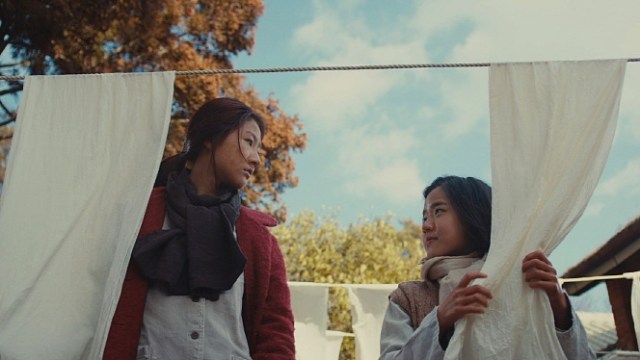
The main story of the movie is set in 1944, when Korea was going through the Japanese Occupation period. Jong-boon (Kim Hyang-ki) is a young girl living in some rural village, and we get to know a bit about her as she goes through another day in her village. She wants to attend a local school like her little brother, but their poor family cannot afford that, and her mother, who has to take care of their household alone in her husband’s absence, believes that her daughter does not need to be educated.

We also meet Yeong-ae (Kim Sae-ron), the daughter of a rich family in the village. Yeong-ae wants to be a school teacher, and it looks like she will be able to realize her dream within several years considering her solid status at the school. As watching Yeong-ae, Jong-boon cannot help but envy her, and she also finds herself attracted to Yeong-ae’s handsome older brother despite the apparent class difference between them.

snowyroad04

Jong-boon and Yeong-ae’s story is frequently intercut with the other story, which is unfolded in the present. For some reason, old Jong-boon, played by Kim Yeong-ok in this part, has used her friend’s name for 70 years, and she is still haunted by her friend’s ghost, especially after she is informed that Yeong-ae’s father has been recently recognized for his merit in the Independence Movement. Understandably, that means nothing to old Jong-boon at all, but she cannot help but think of her friend – and what happened in their old past.

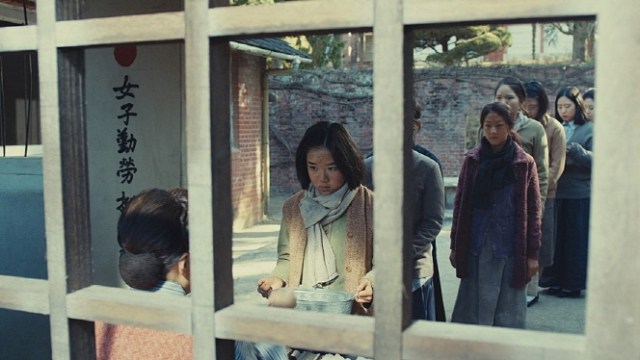
We see how Yeong-ae and Jong-boon were thrown together into a gloomy circumstance. Not long after she is approached by a suspicious guy, Jong-boon is kidnapped by him and other guys while her brother is helplessly watching all of this, and she is soon being taken to somewhere along with other unfortunate girls. After her father and brother are arrested, Yeong-ae tries hard to distance herself from this incident, and it looks like she is going to Japan along with other students, but then she ends up being locked up inside a train along with Jong-boon and others girls.

The girls are sent to a Japanese military post located in some remote place of Manchu, and each of them is promptly locked in a cell as a ‘comfort woman’, a Japanese euphemism for prostitute. The movie only shows us a bunch of Japanese soldiers waiting outside the cells during one scene, but we are chilled by the atrocity implied in this restrained moment nonetheless, and that reminds me of how exploitative and reprehensible “Spirits’ Homecoming” (2015) is in comparison, another recent South Korean film dealing with the same historical subject.

snowyroad02

Under this horrible situation, Jong-boon and Yeong-ae come to stick together more than they expected. Things do not get better for them at all, but these two different girls find some solace from each other, and there are several poignant moments as the movie observes the gradual development of their relationship. While Kim Hyang-ki, who previously appeared in “A Werewolf Boy” (2012), is engaging in her strong performance, Kim Sae-ron, who has steadily advanced since her breakthrough performance in “A Brand New Life” (2009), is equally fine as her co-performer, and it goes without saying that their duo performance is the emotional center of the film.

As another active part of the movie, Kim Yeong-ok embodies well her character’s long history, and Cho Soo-hyang also gives a small but fine supporting performance as Eun-soo, a problematic adolescent girl who lives alone next to old Jong-boon’s small residence. When Eun-soo really needs help on one day, old Jong-boon does not hesitate to help her even though she does not know her much, and that leads to an unlikely friendship between them, which eventually prompts old Jong-boon to take a decisive step for making a real peace with her past.

Directed by Lee Na-jeong, “Snowy Road” was actually a two-part TV movie broadcast in South Korea in 2015, and what I watched is the theatrical version re-edited from the original TV version. Because I have not watched the latter, I cannot tell you how these two versions are different from each other, but I am mostly satisfied with the former, and this will be a good start for you if you are interested in its historical subject which should be more widely known and discussed.

snowyroad03

Posted in Movies | Tagged , , | 1 Comment