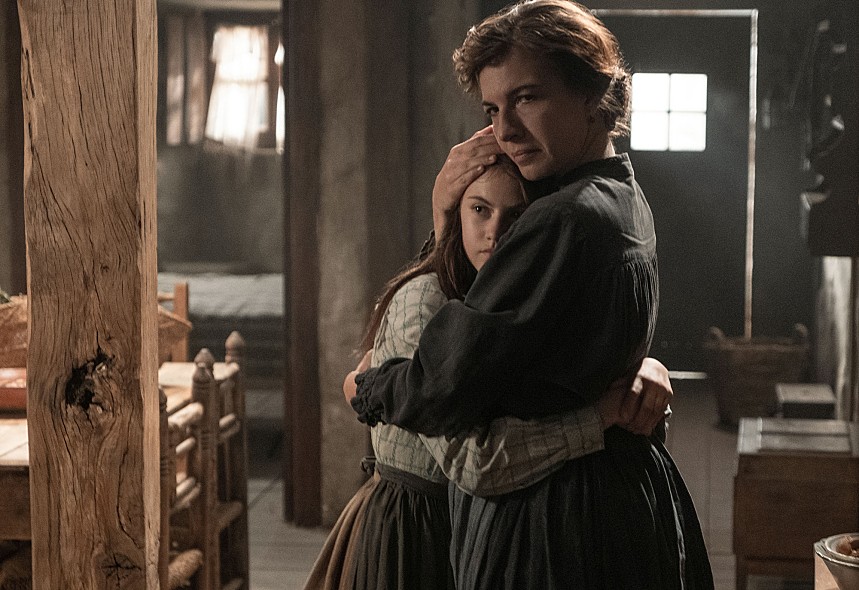
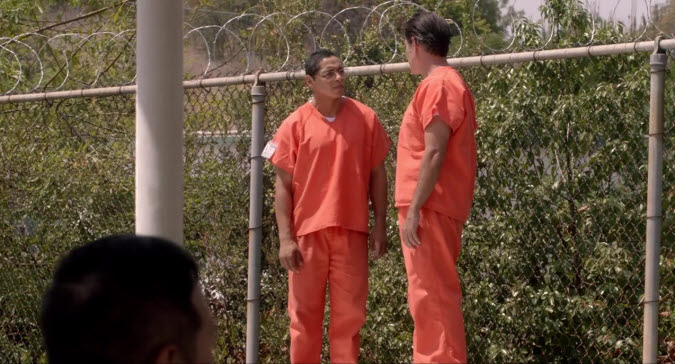
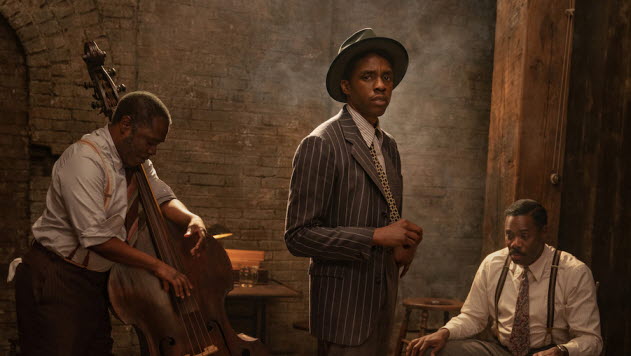
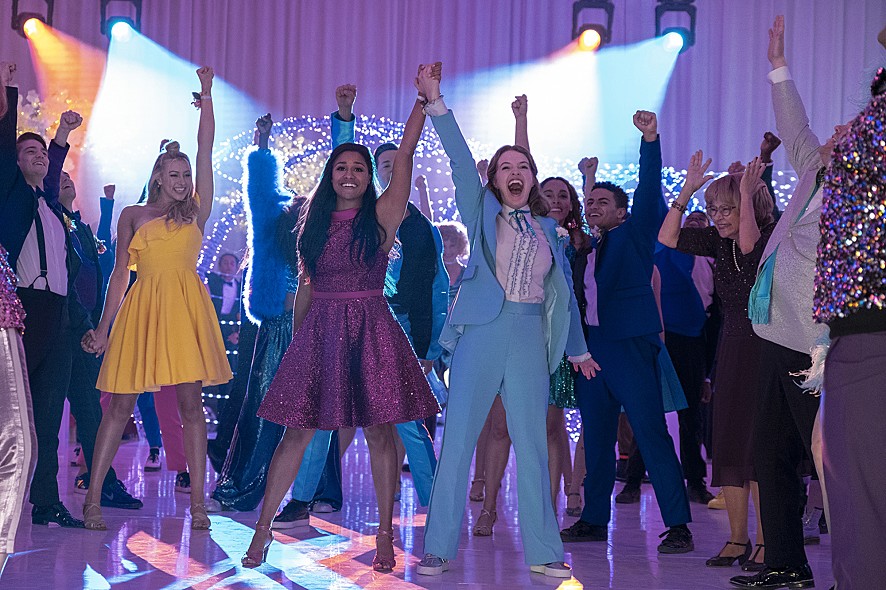
Mosul (2019) ☆☆1/2(2.5/4): Their intense personal fight against ISIS in Mosul, Iraq

Netflix film “Mosul”, which was released two days ago, is admirable to some degree but also notably flawed in some aspects. Inspired by Luke Mogelson’s 2017 New Yorker article “The Desperate Battle to Destroy ISIS”, the movie attempts to give us a close personal viewpoint on the ongoing geopolitical mess in Iraq via a bunch of local military characters, and you may appreciate its considerable attention to its local background and details, but the story itself is flat and insipid from time to time despite a number of vivid and intense moments to remember.

At the beginning, the movie gives us a brief piece of background knowledge on how much Mosul, the second largest city in Iraq, was ravaged by the battle between ISIS and the allied forces during 2016-2017. Although the battle is eventually coming to the end with the apparent defeat of ISIS while local resistance forces including armed police officers come to take the control over the city step by step, many areas of the city remain to be dangerous warzones, and the opening shot of the movie calmly looks over those ruined buildings and streets as succinctly conveying to us a grim sense of danger hovering over here and there in the city.

And then the movie promptly moves onto a perilous clash between a group of ISIS terrorists and several local police officers who happened to capture a couple of ISIS members. The situation initially looks pretty hopeless for a young police officer named Kawa (Adam Bessa) and a few other police officers who have managed to survive so far, and they soon come to brace themselves for what will be their last stand, but then, what do you know, there comes a bunch of local SWAT guys lead by an ex-cop named Jasem (Suhail Dabbach), who swiftly wipe out those ISIS terrorists within a few minutes.

As already told to us at the beginning, Jasem and his SWAT team guys are quite ruthless just like their opponents in addition to having no qualms on doing whatever is necessary for surviving on the dangerous streets and allies of Mosul day by day. Once they confirm that those two ISIS members held by Kawa and other police officers are on their list, they mercilessly execute them right in front of Kawa’s eyes. Because of their rather fragile status at present, they always need money, arms, bullets, and any other valuable commodities which can be traded with whatever they will need someday, so they do not hesitate at all taking money and some other things from their dead opponents.

Kawa feels awkward and uncomfortable about Jasem and his SWAT team, but then he finds himself being recruited by Jasem because of two reasons which make him qualified for being a new team member. He was injured a bit during that desperate showdown with those ISIS terrorists, and, above all, he lost one of his close family members, who was also a police officer and unfortunately got killed during that showdown. Although he is reluctant at first, Kawa cannot say no to Jasem mainly because he is still very angry about the death of that close family member of his.

We assume that Kawa will function as our surrogate character along the story, and Jasem and his SWAT team members including Waleed (Is’Haq Elias) are willing to teach their new team members a bit, but they never specify to him on their latest mission at all. Along with Kawa, we gradually come to gather that Jasem and his SWAT team have been trying to reach to a certain spot of the city which has been still occupied by ISIS, but the purpose of Jasem and his SWAT team members’ latest mission remains frustratingly vague and elusive, and it is no wonder that Kawa come to lose some of his patience later in the story.

In the meantime, the movie steadily maintains the level of tension around its main characters via a series of tense and gritty moments popping up here and there around them, and director/writer Matthew Michael Carnahan, who has been known mainly for his screenplays for several notable films such as “The Kingdom” (2007), “World War Z” (2013), and “Dark Waters” (2019), did a competent job of presenting these moments with palpable uneasiness and anxiety. At one point, Jasem and his SWAT team members let themselves loosen a bit while watching a TV soap drama from Kuwait, but we can sense that they are still watchful for what may happen around them at any point, so we instantly become nervous when something subsequently happens outside.

Carnahan’s screenplay often falters in character development, and it also feels heavy-handed especially during the scene where Jasem and his SWAT team members encounter another local military group led by an Iranian colonel, but his main cast members often compensate for these and other weak aspects of the film thanks to their good performance. While Adam Bessa holds the ground as your average rookie character, Suhail Dabbach is commendable with his quiet but forceful intensity, and he and the other main cast members including Is’Haq Elias are believable as comrades who have fought together for their common cause for a long time.

Overall, “Mosul”, which is co-produced by Joe and Anthony Rosso, shows some respect and sincerity to its main subjects, and that aspect is clearly reflected by having all of its dialogues delivered in Arabic as well as its authentic casting choices, but it did not engage me enough for its several notable flaws including its weak anti-climactic finale, Yes, it is surely refreshing to see a major American film presenting the ongoing geopolitical problem in Iraq mainly via the viewpoint of local characters, but I wish it could do something more than reminding us again that war is indeed hell.

Posted in Movies | Tagged , , | Leave a comment

Freaky (2020) ☆☆☆(3/4): Freaky Friday the 13th

“Freaky”, which is incidentally released “Freaky Deathday” in South Korean theaters, is a little fun horror comedy film which accomplishes its tasks as well as intended in its small genre playground. Although its juxtaposition of two familiar story promises is not exactly very fresh in my humble opinion, this latest offering from the Blumhouse Productions works enough to entertain us thanks to its clever subversion of genre elements, and I will not deny that I chuckled more than once during my viewing.

After the obligatory opening sequence where several adolescent characters are murdered by a mysterious figure one by one at a place where they happen to spend together at the night of November 11th, Wednesday, the movie moves onto the very next morning as its young heroine, Millie Kessler (Kathryn Newton), begins another usual day along with her mother and older sister. While her mother tries to be cheery and caring, both Millie and her older sister know well that their mother still does not get over the recent death of her husband, and that is why Millie has been conflicted about whether she can leave their home for her college education.

Anyway, things are miserable for this shy and introverted girl as usual when she goes to her high school. Although she has two good friends who have usually stood by her, Millie is often ridiculed and tormented by some mean students, and she is also bullied by one of her teachers, a stiff and obnoxious prick who has no qualms on humiliating her in front of other students in her class just because she happens to fail to meet his expectation.

Because the school is having its homecoming week, a big American football game is held during the following evening, and Millie attends the game as she has to perform there as the school mascot. Not long after she happens to be left alone in front of the field after everyone else is gone, a masked stranger suddenly appears in front of her, and, of course, she soon finds herself desperately running away from this apparently dangerous figure.

And then a very weird thing happens. When the figure, who is the very dude who committed all those horrible murders during the opening sequence, finally catches Millie and then promptly attempts to stab her with an ancient dagger he happened to acquire at the end of the opening sequence, both of them are suddenly thrown into a strange magical happening, and then his attempt to kill Millie is quickly thwarted by her older sister, who happens to be a local police officer and luckily arrives at the scene in time. After going through several necessary procedures under her older sister’s care at a local police station, Millie, who is still dumbfound due to her very traumatic experience, goes back to her home and then sleeps, and then, in the very next morning, she wakes up to find herself inside the body of the man who attempted to kill her at last night. 

What follows after that is a series of comic moments involved with Millie’s clumsy attempts of getting accustomed to being inside the body of the killer. Although quite panic and disoriented, Millie tries to find any possible way for getting her body back, but the situation is quite disadvantageous for her in more than one aspect, and it certainly takes lots of efforts for her to convince her two friends to help her regaining her body. Thanks to their subsequent help, it turns out that there is indeed a way to reverse the body swap between her and the killer, but that should be done before the upcoming midnight, and she will be trapped inside the killer’s body forever if she fails in the end.    

While he is initially rather bland as a murderous lunatic despite having shown us his more intense sides during recent years, Vince Vaughn goes all the way for comic modes once he begins to play the heroine of the film, and he did a hilarious job of channeling her awkwardness with her current physical status. As two good friends willing to help their best friend, Celeste O’Connor and Misha Osherovich have a good comic timing with Vaughn during their scenes, and Osherovich later gets a funny self-conscious line which may amuse you a lot.

On the opposite, Kathryn Newton, who previously appeared as the murdered daughter of Frances McDormand’s heroine character in “Three Billboards Outside Ebbing, Missouri” (2017), has a ball with handling two very different modes. As a nice high school girl with some personal issues to deal with, she is likable enough to hold our attention during her early scenes, and Katie Finneran and Dana Drori are also believable as her character’s mother and older sister. When she later has to balance her performance well between bloody horror and absurd comedy, Newton boldly goes for a number of big moments including the one when she confidently walks into the school with lots of change in attitude and appearance, and I guess we will probably see more of her considerable talent during next several years.

Overall, “Freaky” does not bring that much to its overlapped genre territories, but it is at least one or two steps up from director/co-writer Christopher Landon’s previous horror comedy film “Happy Deathday” (2017), which also tried to mix comedy and horror but was not that successful in comparison despite some good moments for laughs. Although I must point out that there are several notable flaws including the rather contrived finale, the movie is a little better than expected, so I will not grumble for now. 

Posted in Movies | Tagged , , , , , | Leave a comment

Hillbilly Elegy (2020) ☆☆(2/4): Looking back at his messy hillbilly upbringing

Netflix film “Hillbilly Elegy”, which was released on Netflix on this Tuesday after being released in theaters a few weeks ago, is so mild and bland that you may feel sorry for its several main cast members whose efforts are mostly wasted here in this insipid piece of work. While it surely intends to present some vivid slices of life from the poor Caucasian working class people of the Appalachian area, the movie is utterly deficient and problematic in terms of storytelling and characterization, and I only found my interest dwindling second by second as observing more of its many artificial aspects without much care or attention.

The movie, which is based on the acclaimed memoir of the same name by J.D. Vance, is mainly about how Vance grew up during those hard and difficult childhood years with his Appalachian family in Ohio. During the opening scene, we see young Vance, played by Owen Asztalos, spending the last day of a family meeting held in some rural area of Kentucky, and the narration from older Vance, played by Gabriel Basso, tells us a bit about the long history of his grandparents. They left the area not long after his grandmother got pregnant, but they have never forgotten their origin nonetheless, and that is probably the main reason why young Vance has felt like being connected with the area, even though he is still an outsider as reflected by a brief scene where he is cruelly bullied by several local kids.

When young Vance later returns to Ohio along with his close family members, we come to see how problematic his family has been for many years. While his grandmother Mamaw (Glenn Close) divorced and has lived separately from her husband since that, his mother Bev (Amy Adams), who was once quite promising during her high school years as she often emphasizes, has struggled with not only her poor economic status but also a lifelong addiction problem, and his older sister Lindsay (Haley Bennet, who looks quite mundane compared to her unnerving breakthrough turn in “Swallow” (2019)) certainly does not want to end up being just like her mother, though she has already been bound to be stuck in their neighborhood for the rest of her life.

Although things are not always bad for him, young Vance frequently finds himself in situations where he has to endure her mother’s worst sides fueled by her downward spiral into the bottom of addiction, and there is a painful scene where their initially cheerful moment is suddenly turned into a very disturbing circumstance, which eventually leads to his mother being temporarily arrested by the local police. Because he still cares about his mother, he decides to give another chance to her, but, like many other addicts, she soon lets down him as well as her other close family members, and that breaks his heart again.

We later get some understanding of Bev’s personal demons originated from her deeply unhappy childhood associated with her parents’ toxic and violent relationship, but the movie does not delve that deep into her struggle, torment, and guilt without any insight or empathy, and she only comes to us as nothing but a wretched bundle of clichéd behaviors we can expect from addict characters. While Amy Adams did a good job of immersing herself into one of the most unlikable roles in her admirable acting career, the movie sadly does not provide her any genuine human depth to be expressed and conveyed to us, and she only gets stuck in her shrill caricature role in the end.

On the opposite, Glenn Close is a bit better as a fragile but tough old lady with no-nonsense attitude. Discerning that her dear grandson deserves a chance for better life, Mawmaw forcefully takes young Vance away from his increasingly irresponsible mother, and she surely imbues some disciplines into her grandson as they start to live together in her residence. Although she is saddled with several blatantly sentimental moments in the film, Close lifts up these badly written scenes via her sheer talent and presence in addition to being the best thing in the movie, and that reminds us again of what a wonderful actress she has always been since she burst into the screen with her Oscar-nominated supporting turn in “The World According to Garp” (1982).

Thanks to his grandmother’s support and correction, Vance eventually becomes a promising Yale Law School student around 20 years later, but then his family remains to be a big problem in his life. After notified that his mother has just hit another bottom of addiction again, he has no choice but to go back to his hometown even though he may soon have an important job interview offered by some prestigious law firm, and he surely feels conflicted more and more as also coming to see that there is really nothing he can do for his mother.

The screenplay by Vanessa Taylor attempts to generate some dramatic contrast as alternating between Vance’s past and present, but, though Asztalos and Basso are flawlessly connected with each other in their acting, Vance is not a particularly interesting figure to observe while merely functioning as a blank backdrop for other characters. In addition, the subplot involved with his Indian American girlfriend is quite redundant to say the least, and Freida Pinto is unfortunately tasked with literally phoning in her performance throughout the film.

On the whole, “Hillbilly Elegy” is not as bad as I feared after encountering many negative reactions from critics, but this is inarguably one of the lowest points in the filmmaking career of director Ron Howard. Yes, he has been rather underwhelming these days, but let’s not forget that he is a competent Hollywood filmmaker who made a number of far better films such as “Apollo 13” (1995) and “A Beautiful Mind” (2001), and I recommend you to watch them instead of this regrettable misfire.

Posted in Movies | Tagged , | 2 Comments

Run (2020) ☆☆☆(3/4): A little thriller set between mother and daughter

You probably should know nothing at all before watching “Run”, a little thriller film which turns out to be quite smarter than it seems on the surface. Right from its very first scene, you will come to have a pretty good idea on what you are going to get, but, though it may not surprise you that much, the movie provides enough thrill and excitement to hold your attention during next 80 minutes, so I strongly suggests you not to read the following paragraphs if you really want to be entertained as much as possible.

The story of the movie mainly revolves around a woman named Diane Sherman (Sarah Paulson) and her adolescent daughter Chloe (Kiera Allen), and the early part of the movie quickly establishes how much Diane has been occupied with raising her daughter. As directly conveyed to us at the beginning of the film, Chloe has been suffering from a number of illnesses including asthma for years, and Diane has been paid lots of motherly attention to her daughter’s wellbeing in many aspects. Besides her daughter’s routine medication, she has willingly taken care of many other domestic matters including the healthy daily diet for her daughter, and she has also taught her daughter a lot of things via her exemplary homeschooling.

Although she is mostly bound to her wheelchair and home due to her physical disability, Chloe has been content and happy within her little cozy environment, and we observe what a good daughter she is to her mother. She has been a pretty good student under her mother’s thoughtful teaching, and she is now aspiring to be enrolled in a state university where she can pursue her dream of becoming a prosthetics engineer someday.

As a matter of fact, Chloe has been waiting for the reply from that state university since she sent her application form some time ago, but there has not been any letter sent to her yet. Whenever Diane checks the latest mails sent to their residence as usual, she assures to Chloe that she will promptly notify Chloe on anything important for her, and Chloe initially trusts her mother’s words, but then doubt grows in her mind after she notices something quite suspicious from her mother at one point.

Of course, this shadow of doubt in Chloe’s mind becomes larger as she comes to notice more strange things from her mother. For instance, she is perplexed to discover that one of several different pills she has taken everyday is prescribed to her mother instead of her, and her suspicion only grows more even after her mother gives her a seemingly plausible explanation on that. When she later attempts to get to the bottom of this matter, she becomes more aware of how firmly and ominously her mother has been standing between her and the world outside, and that accordingly leads to a subtly tense moment between them on the very next day.

Although what has been lurking beneath the relationship between Chloe and her mother is exposed sooner than you might expect, the screenplay by director Aneesh Chaganty and his co-writer Sev Ohanian, who also produced the film along with Natalie Qasabian, did a skillful job of dialing up and down the level of suspense along the increasingly disturbing battle of wits between its two main characters. Both of them are clever enough to sense and guess what they do not reveal to each other on the surface, and the movie deftly toys with our expectation during a number of key scenes including the one associated with Chloe’s attempt on the identification of that questionable pill.

During its second half, the movie comes to lose a bit of its narrative momentum as having nearly all of its cards unfolded to us, but it still keeps engaging us nonetheless, and we accordingly become more emotionally involved in what will eventually happen between its two main characters. While the expected climatic moment is a little too predictable in my inconsequential opinion, the movie deftly delivers an effective dramatic punch for us at least, and you may also like a little nasty touch in the following epilogue scene.

Because it is basically a two-hander piece, the movie surely depends a lot on the presence and talent of its two lead performers, who dexterously complement each other as their conflicting characters push or pull each other throughout the film. While Sarah Paulson, who has been always dependable since her breakthrough turns in TV series “American Horror Story”, has a lot of fun with her character’s shifty aspects, newcomer Kiera Allen, who is actually a physically disabled person as shown in the film (She is the first female wheelchair-using actress to appear in a suspense film since Susan Peters in “The Sign of the Ram” (1948), by the way), does more than holding her own place well in front of her seasoned co-star, and I sincerely hope that the movie will lead her to more good opportunities in the future.

On the whole, “Run” feels less refreshing and surprising compared to Chaganty’s debut feature film “Searching” (2018), but this is a smart and efficient genre piece which handles its familiar story promise quite well. In contrast to pushing one fascinating story device all the way in “Searching”, Chaganty attempts here something quite plain and basic to the core, and he admirably succeeds in addition to confirming to us that he is indeed a good filmmaker who does know how to engage and thrill us. Yes, I clearly saw through it from the beginning, but I did not mind that at all as savoring its suspenseful moments enough, and I assure you that you will appreciate the efforts and skills packed into it.

Posted in Movies | Tagged , , , | 2 Comments

Radioactive (2019) ☆☆1/2(2.5/4): A scattershot biopic on Marie Curie’s life and career

I remember well when I came to learn about the life and career of Marie Curie from a little biography book for children around 30 years ago. Although life was pretty hard and difficult for her because of a number of obstacles in front of her, this extraordinary Polish woman persisted anyway as stubbornly following her endless passion toward science, and she eventually became one of the leading scientists in her field in addition to receiving no less than two Nobel Prizes for her enormous academic contribution.

That is why I had some expectation on Marjane Satrapi’s new film “Radioactive”, which attempts to look here and there around Curie’s scientific career and contribution. As a biopic, the movie surely tries something different via its unconventional storytelling approach, and that intrigued me for a while during my viewing, but, despite the commendable performance from its lead actress, the overall result is rather scattershot and middling while not showing much beyond what I already know about its main subjects.

After the prologue scene in 1934, the movie moves back to 1893, when Curie, played by Rosamund Pike, was a young and headstrong student studying science in Paris. When Curie, who was Marie Skłodowska at that time, fiercely protests about how her ongoing study has been constantly interrupted by her insensitive male laboratory colleagues, the professor of her laboratory fires her without any hesitation, and now she has to search for any other laboratory to hire her, but, not so surprisingly, nobody is particularly willing to provide a space for her current scientific research.

While Curie becomes quite frustrated about this situation, there comes an unexpected opportunity via Pierre Curie (Sam Riley), a promising scientist who happens to have his own laboratory and turns out to be quite interested in Curie’s research. As they talk more with each other, she and Pierre find themselves clicking well with each other, and it does not take much time of her to come to work and study in Pierre’s laboratory. Although his laboratory is rather small and shabby, Curie is delighted to find where she can freely study and work at last, and Pierre, who later marries her, always stands by her as her No.1 supporter and collegue.

Their common scientific interest is focused on the possible existence of some unknown radioactive element in uranium ore, and we accordingly see how Curie and her husband diligently working on the detection and purification of that radioactive material in question. First, they needed to crush and pulverize tons of uranium ore, and the following sequence shows us how demanding this research of theirs was in more than one aspect.

However, the movie moves onto their eventual success too quickly without conveying to us much of their Herculean efforts for the successful purification of two new radioactive elements, and it also stumbles in the depiction of the relationship between Curie and her husband. Although Sam Riley did a fairly good job of supporting Pike during their several key scenes, he is mostly limited by his bland character, and that is the main reason why Pierre’s unexpected death in 1906, which was caused by a very unfortunate accident, does not feel that devastating to us.

Moreover, the screenplay by Jack Thorne, which is based on Lauren Redniss’s acclaimed graphic novel “Marie & Pierre Curie: A Tale of Love and Fallout”, frequently alternates between its main narrative and the visual presentation of several historical incidents associated with Curie’s research on radioactivity, and that is often distracting instead of widening our perspective on her scientific contribution. For example, Pierre’s Nobel Prize acceptance speech is intercut with the atomic bombing of Hiroshima in 1945, and then we later see Curie’s growing awareness of radioactive sickness being juxtaposed with the Chernobyl disaster in 1986, but these and other similar scenes feel blatant and artificial while not generating much dramatic effect.

In case of Curie’s affair with her fellow scientist Paul Langevin (Aneurin Barnard), the movie gives Pike opportunities to express more of her character’s strength and vulnerability, but this part unfortunately fizzles as the movie hurriedly moves onto her significant contribution during the World War I. Although she does not like hospital much due to her persona reason, Curie comes to apply her scientific knowledge on those injured soldiers on battlefields after persuaded by her older daughter Irene (Anya Taylor-Joy, who shines as usual despite her underwritten supporting role), and there is also a small amusing moment when Irene introduces her future husband to her mother, who is not initially amused but then instantly approves of him once she discerns how willing he is to study radioactivity along with her daughter (As many of you know, Irene and her husband also won a Nobel Prize later).

Although it has more style and personality compared to the 1943 biopic film “Madame Curie”, “Radioactive” is not successful enough in my trivial opinion due to several glaring flaws including its weak narrative structure. The movie surely has all the right stuffs for its main goal, but, to our disappointment, it is no more than an admirable failure, and that is a shame considering the sincere efforts from Satrapi and her cast and crew members.

Posted in Movies | Tagged , , , , | Leave a comment

Mank (2020) ☆☆☆1/2(3.5/4): As he writes “Citizen Kane”

David Fincher’s new film “Mank”, which is released here in South Korea today and will be available on Netflix early in December, presents a personal perspective from the writer who co-wrote the screenplay for Orson Welles’ “Citizen Kane” (1941), which is incidentally one of the greatest works in the history of cinema. As a guy who has slowly come to admire “Citizen Kane” more and more after the first viewing in 1996, I certainly observed the movie with keen interest right from the first shot, and the movie does not disappoint me at all with its admirable style and mood, even though it occasionally feels distant and detached in its bitter and sardonic presentation of some very unpleasant sides of Hollywood during the 1930-40s.

The screenplay by late Jack Fincher, who is Fincher’s father, alternates between two time periods, one of which is when Herman J. Mankiewicz (Gary Oldman) is sent to a ranch in Victorville, California in early 1940 for writing the screenplay for Welles. While he is still recovering from the injury from a recent car accident and also struggling with his alcoholism as before, Mankiewicz is willing to meet the rather early deadline set by Welles, and Welles’ close associate John Houseman (Sam Troughton) is understandably nervous about whether Mankiewicz can pull it off in the end, even though Mankiewicz will be assisted and supported by his German nurse Fraulein Freda (Monika Gossmann) and his British secretary Rita Alexander (Lily Collins) during his stay at the ranch.

Mankiewicz’s difficult struggle for what can be his comeback work is often intercut with a series of flashback scenes from the 1930s, when he was one of the most prominent screenplay writers working in the Paramount Studios. When his fellow writer Charles Lederer (Joseph Cross) comes to Hollywood after receiving Mankiewicz’s invitation, Mankiewicz gladly shows him here and there inside the Paramount studios, and there is a dryly humorous moment when Lederer, Mankiewicz, and other staff writers attend a meeting with one of the studio producers. Once one story idea is suggested, it is embellished step by step by Mankiewicz and his colleagues, and it goes without saying that Lederer gets an unenviable job of providing a finishing touch.

While Hollywood is surely a place where Mankiewicz and other writers can freely wield their talents especially after the introduction of talkies, the movie also incisively observes the less glamorous sides of Hollywood along with its hero. As the Great Depression is still continuing outside, Louis B. Mayer (Arliss Howard), the head of the MGM Studios, emphasizes to a group of many different employees of his that they all should sacrifice to some degree as a, uh, family, but Mankiewicz clearly sees through the empty words in Mayer’s speech, though he just cynically observes without saying much.

Meanwhile, Lederer introduces to Mankiewicz a certain MGM star actress who happens to be Lederer’s aunt. She is Marion Davies (Amanda Seyfried), and she and Mankiewicz quickly befriend each other during the shooting of her latest film, whose production is financed by Davies’ lover William Randolph Hearst (Charles Dance). Besides being quite rich, Hearst is very influential around the country due to his newspapers, and it goes without saying that he is not someone Mankiewicz or others in Hollywood can mess with at any chance.

Through his connection with Davies, Mankiewicz is subsequently invited to Hearst’s huge mansion, which is, as many of you know, the main inspiration for Charles Foster Kane’s mansion in “Citizen Kane”. When Mankiewicz happens to stroll along with Davies outside Hearst’s mansion at one point, they come to have a sincere and honest conversation, and this little sweet moment is enhanced further by the surprisingly sensitive orchestral score by Trent Reznor and Atticus Ross, who try here something quite different from their stark and aggressive electronic scores for Fincher’s previous films.

During the second half of the film, the gradual completion of the screenplay for “Citizen Kane” is bitterly juxtaposed with Mankiewicz’s growing disillusionment with Hollywood. For stopping a certain famous left-wing figure running for the California gubernatorial election, Mayer, who is closely associated with Hearst, is ready to do anything, and we later get a chillingly relevant subplot involved with one of Mankiewicz’s close colleagues, who comes to feel quite remorseful after making a virulent propaganda film not so different from those fake news in our time.

In case of Welles, who is embodied well by a brief but pitch-perfect performance from Tom Burke, he comes to clash a lot with Mankiewicz later in the story as arguing with him over whether Mankiewicz’s name is put on the screenplay along with Welles’. This will surely remind you of that infamous controversy on the authorship of “Citizen Kane” ignited by Pauline Kael many decades ago, but the movie sidesteps that while mostly siding with Mankiewicz.

Because of firmly sticking to Mackiewicz’s weary viewpoint, the movie is constantly accompanied with a dry sense of detachment which may frustrate you along with its rather slow narrative pacing, but it is still an impressive piece of work thanks to Fincher, who has never made a film looking bad and lousy, and his crew members. The production design by Donald Graham Burt and the costume design by Trish Summerville are top-notch in their authentic period details, and cinematographer Erik Messerschmidt serves us a number of gorgeous moments as distinctively evoking the visual textures of old classic Hollywood films during the 1930-40s.

As the center of the story, Gary Oldman, who will probably garner another Oscar nomination in the next year for this film, deftly balances his character among wit, humor, and pathos, and he is also surrounded by a bunch of good performers who dutifully fill their spots as demanded. While Charles Dance is formidably regal as Hearst, Amanda Seyfried brings considerable warmth and spirit to her rather underdeveloped role, and Lily Collins, Arliss Howard, Tom Pelphrey, Sam Troughton, Ferdinand Kingsley, Tuppence Middleton, Joseph Cross, Jamie McShane, Toby Leonard Moore, and Monika Gossmann are well-cast in their respective supporting roles.

On the whole, “Mank” will require some patience from you for several good reasons, but it is a mostly rewarding experience I am willing to examine again sooner or later. Although I am not sure whether it is another career peak in Fincher’s filmmaking career after “The Social Network” (2010) and “Gone Girl” (2014), I still admire this beautifully dispassionate work a lot despite some reservation, and it is certainly one of the most notable films of this year.

Posted in Movies | Tagged , , , , | 2 Comments

Psychomagic, A Healing Art (2019) ☆☆1/2(2.5/4): Psychomagic presented by Jodorowsky

When I heard for the first time about Alejandro Jodorowsky’s unorthodox therapy approach called ‘Psychomagic’, I simply regarded it as a merely interesting artistic element to mention in my reviews on his films. According to Jodorowsky himself, Psychomagic, which is a sort of alternative to psychoanalysis, can heal personal pain and trauma via performing symbolic acts, and you can clearly see his deep belief in Psychomagic from many keys moments of his several unforgettable cult films such as “Santa Sangre” (1989), whose poignant emotional climax has its deeply troubled hero liberated from the presence of his domineering mother via a classic case of Psychomagic therapy.
Jodorowsky’s documentary film “Psychomagic, A Healing Art” shows us how he has applied his philosophies of Psychomagic to real life, and that is surely interesting to watch to say the least, but I also cannot help but regard a number of cases presented in the documentary with a certain degree of skepticism. While those supposedly therapeutic moments in the documentary amused and intrigued me during my viewing, my skepticism on Psychomagic kept popping up throughout the documentary mainly because Jodorowsky keeps emphasizing on the positive effects of Psychomagic without any counterpoint, and he also goes a bit too far with that around the end of the documentary in my humble opinion.

After the brief introduction on Psychomagic by Jodorowsky himself, the documentary presents to us a number of different cases of success from his Psychomagic therapy. In case of one guy, he is clearly in the need of being free from his painful childhood memories of abuses from his own father, and his emotional confession on his unhappy past is followed by the scene where he lets Jodorowsky and his assistants bury himself in the ground. Once the guy is buried in the ground almost completely, Jodorowsky and his assistants cover the burial spot with lots of animal meat and organs, and we soon see a flock of vultures flying down from the sky to devour these bloody stuffs.

Once this ritual, which is a symbolic act for the death of the guy’s former self, is over, Jodorowsky has the guy naked and then drenched in milk for making the guy feel like, well, born again, and everything is over with a small act for saying goodbye to the hurtful memories of the guy’s abusive father. Some time later, the guy talks about how much he has felt better since that, and it does look like his Psychomagic therapy works as well as he and Jodorowsky hoped.

In a part featuring one problematic couple, both of them talk a lot about their inability to love well each other despite their mutual care and affection toward each other, and then we see them attempting to go through a series of acts for forming a new connection between them. Once they come to realize that they may have to end their relationship for each other’s benefit, they go through an act which seems to be inspired by one certain moment in Jodorowsky’s “Tusk” (1980), and what follows next is probably one of the most gentle moments of separation I have ever seen from movies and documentaries.

In case of a female cellist, she enthusiastically talks about how Jodorowsky’s viewpoint on menstruation helped her overcome an artistic obstacle of hers. Inspired by how Jodorowsky has some of his female patients express themselves via the blood from their menstruation (This is not a joke, I assure you), this woman applied her own menstruation blood to her cello, and she claims this symbolic act helped her subsequent performances a lot.

The most poignant case in the documentary probably comes from a 47-year-old man who has frequently suffered stutter. Once he locates a personal pain responsible for his stutter via his private session with Jodorowsky, the man subsequently subjects himself into a series of bold acts prescribed to him by Jodorowsky, and it is oddly touching to see him smoothly speaking without any inhibition despite being almost naked in public spaces.

However, I still regard this and other cases presented in the documentary with reasonable doubt. In case of one Australian dude who has been very angry about his family, Jodorowsky simply has him smash three big pumpkins respectively representing his family members, and we later see him sending some pieces of smashed pumpkin to his family via express mail. This looks quite silly to me, and I am not even so sure about whether this really works for this dude, because it is more or less than sticking pins into a voodoo doll.

It is understandable that Jodorowsky does not provide any opposite viewpoints on Psychomagic, but one scene later in the documentary suggests that Psychomagic can even cure cancer, and you may find yourself rolling your eyes during this distracting moment. A woman claims that she recovered from her cancer after receiving, uh, the positive group energy she received from many audiences in the middle of Jodorowsky’s public lecture on Psychomagic, and Jodorowsky also seems to believe that.

I still have lingering reservation on whether I should recommend it to you despite being a big fan of many of Jodorowky’s works, but “Psychomagic, A Healing Art” will surely engage you if you enjoy his works. Although I recently came to admire him less than before due to his very insensitive claim on a certain key scene in “El Topo” (1970) in the past, the documentary shows that he is still one of the most interesting filmmakers in our time, and I hope he will keep going on during his remaining years.

Posted in Movies | Tagged , , | Leave a comment

Jingle Jangle: A Christmas Journey (2020) ☆☆☆(3/4): As festive as expected

Netflix film “Jingle Jangle: A Christmas Journey” is a sweet and cheerful fantasy musical film which is surely ideal for the upcoming holiday season. To be frank with you, I am a dude a little too cranky and melancholic to enjoy its story and characters wholeheartedly, but I must admit that I could not help but amused and delighted at times by the game efforts from its cast and crew members, and I bet that you will probably have the same reaction while watching this pleasantly wholesome product.

After the opening scene where the character played by Phylicia Rashad comes to read a certain book to her two grandchildren during one winter night, the early part of the movie focuses on the unfortunate downfall of Jeronicus Jangle (Justin Cornwell), an ingenious inventor who has run a popular toy shop called Jangles and Things with lots of support from his wife and young daughter. As another Christmas season is coming, he is about to add the final touch to his latest invention, and, not so surprisingly, he succeeds as usual to his and his family’s delight.

Alas, this latest invention of his, which is a sort of clockwork version of artificial intelligence doll, turns out to be too successful. As soon as discerning its singularity being threatened by the next step of Jeronicus’ plan, it persuades Jeronicus’ dissatisfied apprentice Gustafson (Miles Barrow) to steal not only itself but also a book packed with Jeronicus’ many inventions ready to be introduced sooner or later, and Jeronicus is certainly devastated when his apprentice is gone along with that book and his latest invention.

After that incident, Jeronicus and his business have gone down during next several years. Deprived of his usual spirit and confidence, Jeronicus becomes less interested in invention, and he is further devastated when his wife dies not long after that. Although his young daughter still tries to support and motivate him, he only becomes quite more distant to his daughter, who is eventually sent away to somewhere and has been disconnected from him since that.

In the end, his glorious toy shop is turned into a shabby pawn shop, and Jeronicus, who is now played by Forest Whitaker, is a bitter gruff man who is mostly occupied with how to maintain the status quo of his pawn shop. Although he has recently tried to invent something again, there has not been much progress yet, and he is also notified that his pawn shop will be soon foreclosed by a local bank due to its dwindling business at present.

As Jeronicus is mired in despair and frustration, there comes an unexpected change via Journey (Madalen Mills), a plucky little girl who is the daughter of Jeronicus’ estranged daughter. As clearly reflected by her hair accessories, she is eager to be an inventor someday just like her grandfather, and she is ready to receive any lesson or wisdom from him right from when she arrives at his pawn shop, but Jeronicus is not particularly excited or delighted by her arrival while not showing anything in his attic laboratory.

Of course, Journey soon comes to discover what has been hidden in her grandfather’s attic laboratory, and, what do you know, she and Jeronicus’ clumsy apprentice Edison (Kieron L. Dyer) luckily find a certain crucial element to make her grandfather’s latest invention work, but then there are a couple of problems. While her grandfather remains so skeptical, Gustafson, who has built his own toy business empire via what he stole from Jeronicus, has been looking for any other thing to steal from Jeronicus, and this nefarious dude, who is now played by Keegan-Michael Key, instantly goes for that latest invention of Jeronicus once he happens to spot it.

The mood subsequently becomes a little more serious as expected, but the movie keeps sticking to its festive tone as before, and director/writer David E. Talbert did a competent job of mixing many different elements into his film. While we get several broad comic scenes including the one featuring an impromptu snowball fight, there is a fun action sequence unfolded at Gustafson’s big factory, and the movie also gives us a number of exuberant musical scenes driven by the songs written by Philip Lawrence, Davy Nathan, Michael Diskint and John Legend, who also serves as one of the producers of the film.

Talbert also draws a bunch of engaging performances from his main cast members. Justin Cornwell’s confident handling of a key musical scene early in the film makes an effective contrast with Forest Whitaker’s relatively low-key acting, and Whittaker, who once studied opera as a tenor before studying acting, has a little nice musical moment to reveal his jaded character’s longtime pathos. While young performer Madalen Mills naturally shines with irrepressible charm and spirit, Keegan-Michael Key, Anika Noni Rose, Miles Barrow, Kieron L. Dyer, Lisa Davina Phillip, and Hugh Bonneville are also solid in their respective supporting roles, and Ricky Martin gives a juicy voice performance for his little villainous CGI character.

Overall, “Jingle Jangle: A Christmas Journey” is not exactly fresh in terms of story and characters as your average Christmas season tale, but it is still an entertaining one balanced well between sweetness and darkness. I still prefer something naughtier like, say, “The Nightmare Before Christmas” (1993) or “Bad Santa” (2003), but I enjoyed this movie enough anyway, so I will not be grouchy about it for now.

Posted in Movies | Tagged , , , , | Leave a comment

The Life Ahead (2020) ☆☆☆(3/4): Sophia Loren still rules

Italian Netflix film “The Life Ahead” is a sentimental melodrama which is considerably elevated by the indelible screen presence of Sophia Loren, who is one of the legendary movie stars of the 20th Century. Even though the movie does not delve that much into her character’s long past, you can instantly get the sense of life and personality from her right from when she enters the screen, and that surely reminds us again that she still rules even as we are entering the third decade of the 21st century.

The story of the movie is mainly told via the viewpoint of a young Senegalese orphan boy named Momo (Ibrahima Gueye). Since his prostitute mother died under a rather unspecified circumstance some time ago, he has been in the custody of a kind old doctor along with other orphans, but he is not particularly happy about his recent circumstance while still struggling with the loss of his mother, and he has also kept making troubles outside despite the old doctor’s patient tolerance of that.

On one day, Momo happens to steal a valuable stuff from Madame Rosa (Sophia Loren), an old lady who happens to be one of the old doctor’s patients. After he takes Momo to Rosa’s apartment for giving her the apology from Momo, the old doctor suggests to Rosa that she should take care of Momo instead because, well, 1) the boy is in the serious need of some motherly care and 2) Rosa, who once worked as a prostitute, has been known well for taking care of the kids of fellow prostitutes in her neighborhood.

Because she has already been quite busy with taking care of two other kids and making ends meet, Rosa is initially not so eager to take Momo under her wing, but she eventually agrees to do that when the old doctor gives her an offer she cannot refuse. Not so surprisingly, Momo does not welcome this change much, but he decides to stay in Rosa’s residence after a local drug dealer, who is willing to have Momo on his payroll, advises to him that it will be easier for him to work outside if he chooses to live with Rosa for a while.

His first day at Rosa’s residence is not so pleasant to say the least, but Momo slowly gets accustomed to his new environment. Although he and Rosa do not get along that well with each other, Rosa does not interfere much with whatever he does outside, though she later introduces him to an Algerian dude who may hire Momo at his old local shop. While he surely feels awkward when he meets two other kids being taken care of by Rosa, it does not take much time for him and them to get along well with each other, and he also gets acquainted with the transgender prostitute mother of one of these two kids, who was incidentally a lightweight boxer before her gender transition (That is the main reason why nobody dares to mess with her, by the way).

Meanwhile, Momo also comes to learn of what Rosa has kept to herself for many years. She sometimes goes down to the basement of her apartment building, and he sees her spending time there without saying much. As clearly shown to us via one brief shot showing her wrist in advance, Rosa is a Holocaust survivor, and the movie and Loren wisely do not overplay that aspect while letting us guess for ourselves how much Rosa struggled and endured for survival during the World War II and its aftermath.

The movie, which is based on Romain Gary’s novel “The Life Before Us” (It was previously adapted for cinema as “Madame Rosa” (1977), which received a Best Foreign Language Oscar at that time) , sometimes falters in its depiction of the relationship development between its two lead characters, and some of its several narrative turns later in the story are not as effective as intended, but director/co-adapter Edoardo Ponti, who is the son of Loren and her late husband Carlo Ponti, keeps holding our attention via a number of genuine moments of sincerity and poignancy. When Rosa’s fragile medical condition becomes more deteriorated than before, Momo comes to care about her more than before, and we get several touching scenes as he takes some risk for letting her have some dignity before the approaching end of her life.

Even at that point, Loren, who is 86 at present, remains vivid and captivating as usual in what may be the last highlight of her exceptional acting career. Although she have not worked much since her notable supporting turn in Rob Marshall’s forgettable musical film “Nine” (2009), she demonstrates here that she is still a legend alive and well, and I can only hope that the wide availability of this movie on Netflix will lead numerous young movie fans out there to her many other highlights including Vittorio De Sica’s “Two Women” (1961), which incidentally garnered her a Best Actress Osar.

On the opposite, young performer Ibrahima Gueye holds his own place well next to Loren, and it is always interesting to watch how these completely different performers complement each other on the screen. The supporting cast members including Abril Zamora, Renato Carpentieri, and Babak Karimi are also solid on the whole, and Karimi, who previously appeared in Asghar Farhadi’s “A Separation” (2011) and “The Salesman” (2016), brings some human warmth to his rather functional role.

In conclusion, “The Life Ahead” will not surprise you much as being pretty familiar to the core, but it is still fairly enjoyable thanks to Ponti’s unadorned direction and the good performances from Loren, Gueye, and the other main cast members in the film. From its very first shot, we can clearly discern what it is going to do, but we gladly go along with that as beholding Loren, and it surely confirms to us on her enduring star qualities.

Posted in Movies | Tagged , , | 1 Comment

Martin Eden (2019) ☆☆1/2(2.5/4): He wants to be a great writer…

The hero of Italian film “Martin Eden” is probably one of the least interesting writer characters I have ever seen throughout my inconsequential moviegoing experience of around 30 years. While I admire his passion and spirit to some degree, what he says and writes throughout the film usually bored me, and then I became conflicted as alternatively amused and distracted by the deliberately artificial style and mood of the movie.

Although Jack Landon’s novel of the same name on which the movie is based is set in the American society around the early 20th century, the screenplay by director Pietro Marcello and his co-writer Maurizio Braucci moves the story and characters to Italy during an unspecified time period somewhere around the 1960-70s, and this background change feels sort of amusing at first. We observe a few notable period details from time to time, but the movie is adamantly ambiguous about its exact period background, and its soundtrack freely bounces among different music styles while supported by the eclectic score by Marco Messina and Sacha Ricci.

Anyway, our hero Martin Eden (Luca Marinelli) is your typical struggling writer character. Although he has aspired to be a great writer someday, he has still been stuck in his working class background without much progress, and he does not even get any proper education to help him taking the first step for his future writing career. At one point, he applies for college education, but his interviewers are aghast at his apparent lack of education, and I must confess that this rather silly moment somehow made me feel an urge to strike his head with a copy of William Strunk Jr. and E. B. White’s “The Elements of Style”.

On one day, Martin happens to save a rich lad from a little trouble, and this lad gladly invites Martin to his big house for introducing Martin to his family as a new friend. Being quite open-minded as he says, the lad’s parents generously welcome Martin without any hesitation, and the lad’s sister, Elena (Jessica Cressy), is instantly attracted to Martin because, well, she is enthralled by his passion and ambition besides his handsome appearance.

Elena is willing to help Martin in one way or another, and so are his parents, but Martin firmly refuses any help from them as a guy who has zealously stuck to his belief and dignity. His mind is particularly occupied with absorbing what Charles Darwin and Herbert Spencer wrote, and the movie later gives us a couple of big scenes where he attempts to defend his rather old-fashioned social/political belief in front of others around him.

Meanwhile, things get worse for Martin with more despair and frustration. After clashing hard with his brother-in-law who have provided him a place to say just because of his wife, Martin eventually decides to leave the residence of his brother-in-law and his family, and he subsequently moves to a rural town where he luckily receives the kindness of a stranger he met on a train. He continues to write as usual, but his works keep getting rejected as before, and he soon finds himself against the wall due to his increasingly poor financial situation.

Of course, there comes a precious opportunity to Martin when he meets an aging writer after attending Elena’s birthday party. While quite jaded and cynical to say the least, this old writer does not mind giving some advices and lessons to Martin, and then Martin’s writing career finally gets a breakthrough he has yearned for years.

During the last act of the movie, we observe Martin being at the top of his field some time later, but the movie never fully conveys to us what makes his works so special except throwing the fragments of his thoughts to us at times. We are merely served with a series of aimless tirades from him, and these moments only remind us more of how much he lets himself wallowed in self-pity and self-hate. As a consequence, we do not care that much about him, and the thin narrative and superficial characterization of the screenplay further exacerbate this problem.

Luca Marinelli, who recently drew our attention for his solid supporting turn in “The Old Guard” (2020), looks as dashing and charismatic as demanded by his archetype role, but his performance, which incidentally won the Best Actor award when the movie was shown at the Venice International Film Festival in last year, feels uneven and jarring particularly during the last act of the movie. In case of several other main cast members revolving around him, most of them are stuck with their flat supporting roles, and Carmen Pommella and Carlo Cecchi manage to leave some impression while Jessica Cressy and Denise Sardisco do not have much to do in contrast except functioning as two different women in Martin’s life.

Although I became more disappointed during its last hour and is accordingly baffled about some enthusiastic responses from several movie critics, the movie is not entirely without interesting stuffs to observe. I did enjoy its several anachronistic touches, and I also liked how the movie utilizes a number of old movie footage clips for reflecting its hero’s churning state of mind or whatever.

Nevertheless, I must point out to you that there are many other films about writers which are much better than “Martin Eden”. As a matter of fact, I would love to recommend you to watch “Wonder Boys” (2000) right now, and I assure you that you will get a more entertaining experience from that small gem which surely deserves more recognition and appreciation in my trivial opinion.

Posted in Movies | Tagged , | Leave a comment