Sisters on Track (2021) ☆☆☆(3/4): Running for better life

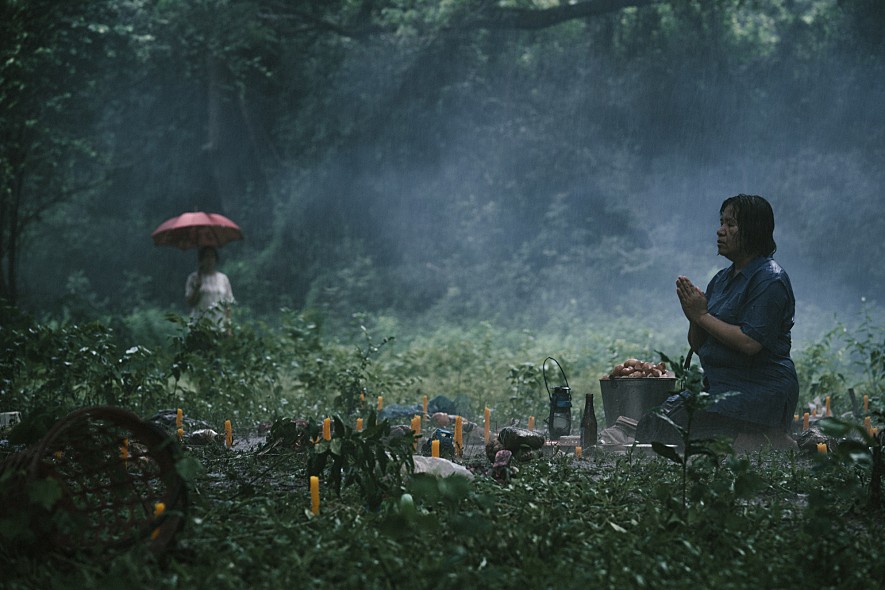
Netflix documentary film “Sisters on Track”, which was released on last Thursday, looks into one important period of three young African American girls ready to try their best with their considerable athletic ability. Although their darkest time was over, these three girls still needed to train and work harder for making their life better, and it is often touching to see the earnest efforts from them and several adults supporting them.

They are Tai, Rainn, and Brooke Sheppard, and the early part of the documentary tells us about how their life was dramatically changed in 2016. During that time, they and their mother Tonia Handy had to stay together in a homeless shelter in New York City after losing their house, but then they suddenly received lots of public attention as the girls had demonstrated their promising potentials as junior runners on tracks and fields. After their remarkable wins at the Junior Olympics in that year, the girls were named ““SportsKids of the Year” by Sports Illustrated Kids magazine, and they and their mother were also invited to a talk show hosted by Whoopi Goldberg, where they received a surprise gift from Tyler Perry’s charity foundation.

That gift in question was a nice little apartment in the city whose two-year rent was already paid off in advance by Perry’s foundation. While the girls and their mother cannot help but excited as looking around inside their new home, they are all well aware of that how quickly two years can pass, and they are certainly not going to waste this precious opportunity which may lead them to a better life in the future.

As Tonia begins to search for any suitable job to enable her to pay the rent after the following two-year period, the girls continue to focus on honing their athletic abilities more under Coach Jean E. Bell, a no-nonsense African American middle-aged lady who works as an administrative law judge in addition to devoting her remaining time to mentoring and guiding many young African American girls in the Jeuness Track Club in Brooklyn. Besides often giving these young girls tough motivation and gentle support along with her sister who has also worked as a coach, Coach Jean often have meetings with these young girls’ parents, and the parents all listen to Coach Jean’s wise and sensible advices on how to get their children more opportunities for better education and life through their children’s growing athletic abilities. If their children keep training hard under Coach Jean’s guidance, they may distinguish themselves more on tracks and fields, and that will probably lead them to those precious scholarships for good high schools and colleges.

Of course, the situation sometimes becomes problematic because of a number of setbacks in front of our three young heroines. At one point, Coach Jean sharply points out to Rainn on how Rainn has not studied well at her school, and Coach Jean gives Rainn a little but significant penalty for that. When Tai happens to make a little trouble which could result in a far more serious consequence, Coach Jean makes sure that Tai will never forget that at all, and the camera silently captures how painful this hard lesson is to Tai.

Meanwhile, another season eventually comes, and the girls and the other members of the Jeuness Track Club soon go through a number of important competitions while continuing their training as usual. Because Rainn and Tai are soon going to move onto high school education, they really need to excel themselves in these competitions for winning some prizes and then getting the scholarships, and the documentary naturally generates some suspense when Rainn late has to deal with her minor physical injury.

Behind her three girls, Tonia slowly moves forward to self-sustained status. She eventually gets a good job, and she is more determined to do her best for her dear three girls. As a woman who was pretty unfortunate in case of her boyfriends, she chose to focus more on her children, and we come to know a bit about how much her three daughter means to her. Especially after losing her only son due to a tragic incident, she and her daughters have stuck together more, and the documentary often captures how strong and loving this mother and daughter relationship is.

Directors/writers Tone Grøttjord-Glenne and Corinne van der Borch try a bit too hard during a later part where their three young heroes really have to try their best during on big competition, and the documentary also stumbles more than once as throwing sudden narrative turns around that point, but it still keeps engaging us with genuine human moments to observe and appreciate. Several scenes among our three young heroes are often sweet and playful, and you may wish more of such moments for getting to know them more. In addition, the documentary often finds some amusement from Coach Jean’s practical teaching and guidance, and we get a little humorous scene where she gives her girls a very frank and straightforward lesson on their certain developing body part.

On the whole, “Sisters on Track” is a fairly nice documentary which presents its human subjects with enough sincerity and respect. I wish it delved more into those difficulties and uncertainties they experienced during that two-year period, but the overall result is still worthwhile to watch at least, and I sincerely hope that the girls will keep running toward their bright future.

Posted in Movies | Tagged , , , | Leave a comment

Made in Rooftop (2020) ☆☆1/2(2.5/4): Two gay lads with some issues

South Korean film “Made in Rooftop” is a lightweight queer comedy drama which is a bit too corny and flamboyant for me. Maybe because I am a nerdy gay dude who is usually discreet and restrained in case of expressing personal feelings, I often found my eyes rolling as enduring a number of overtly comic or melodramatic moments in the film, and I was also disappointed with its rather thin narrative and superficial characterization.

At the beginning, the movie shows the recent breakup between Ha-neul (Lee Hong-nae) and his boyfriend Jeong-min (Kang Jung-woo). It later turns out that this is not the first breakup between them, and Ha-neul is already considering going back to Jeong-min, but, alas, Jeong-min does not allow him to enter his small one-room residence. As a result, Ha-neul is thrown into panic and disorientation as he needs to prepare for his impending job interview right now.

Anyway, Ha-neul eventually receives a sort of help from his close friend Bong-sik (Jung Hwi), who subsequently lets Ha-neul stay at his small but cozy rooftop residence for now. As a popular streamer who has many online followers, Bong-sik has enjoyed some luxuries as shown from his residence full of fancy and expensive stuffs, and Ha-neul is certainly impressed by what a cool hipster his friend is.

Promising to himself that he will have all the fun he can get before ending his life at 40, Bong-sik is not so interested in having any serious romantic relationship at present, but then he happens to have an unexpected encounter with a nice guy who turns out to be one of his longtime online followers. Because this guy actively approaches to him, Bong-sik eventually accepts the invitation to a gay bar where this guy works, and, after getting to know this guy a bit more, he agrees to have a date with this guy, though he still hesitates to open himself more to this guy.

Meanwhile, Ha-neul finds himself still conflicting over whether he can go back to Jeong-min, who, not so surprisingly, comes to miss Ha-neul a lot sooner than expected. Still angry about their strained relationship, Ha-neul chooses to reject Jeong-min’s sincere attempt to reconnect with him, but he soon regrets that a lot for what subsequently happens probably because of his choice. Quite depressed as a consequence, he comes to depend more on Bong-sik, and Bong-sik does not mind providing some solace to his friend along with his busybody neighbor living right below his rooftop residence.

And then Ha-neul belatedly comes to think of a certain important matter between him and Jeong-min. He hurriedly goes to Jeong-min’s residence, and that is how he comes to meet Jeong-min’s younger sister Jeong-yeon (Yeum Moon-keung, who wrote the screenplay along with director Kin-Jho Gwang-soo), who incidentally does not know anything about Ha-neul at all. As Ha-neul hides his relationship with Jeong-min, the mood between him and Jeong-yeon accordingly becomes more awkward, but Jeong-yeon is still willing to help him on that important matter in question anyway.

While Ha-neul tries to handle this increasingly awkward situation without getting his identity exposed to Jeong-yeon, the movie also pays attention to what is being developed between Bong-sik and the aforementioned guy. While Min-ho (Kwak Min-gyoo) becomes more willing to get closer to Bong-sik, Bong-sik turns out to have something he has hidden behind his seemingly cool appearance, and I bet that you can easily guess what he is going to tell, if, like me, you are a seasoned moviegoer quite familiar with many queer films out there.

The movie eventually let me down as resolving these two parallel conflicts in the story too easily and sentimentally, and I was also dissatisfied to see that the main characters in the film are more or less than shallow caricatures belonging to the realm of sitcom. In addition, several key scenes in the movie are blatantly silly or melodramatic to my distraction, and the certain key scene between Ha-neul and Jeong-yeon around the end of the story does not work as well as intended because of its rather stilted dialogue.

Anyway, the movie is likable to some degree because of the engaging performances from its good main cast members. Lee Hong-nae and Jung Hwi complement each other well as two different gay heroes, and I wish the movie explored more of the comic aspect of their accidental living under the same roof instead of getting melodramatic with their respective relationship problems. While Kwak Min-gyoo and Kang Jung-woo are suitably cast in their respective supporting roles, Lee Jung-eun and Yeum Moon-keung are adequate as two substantial female characters in the story, and Lee, who has been more prominent since her breakout supporting turn in Bong Joon-ho’s Oscar-winning film “Parasite” (2019), effortlessly steals the show whenever she enters the scene.

On the whole, “Made in Rooftop” is a well-intentioned but ultimately flawed work, and I cannot recommend it because it is too broad and superficial as a drama in addition to not being witty and funny enough as a comedy. If it had come around, say, 20 years ago, it certainly would have looked more notable and important to me and many other local sexual minority audiences out there, but, folks, there are much more accomplished South Korean queer films such as Park Chan-wook’s “The Handmaiden” (2016) and “Moonlight Winter” (2019), and I would rather recommend these two films instead.

Posted in Movies | Tagged , , , | Leave a comment

Vote Young Ones (2020) ☆☆☆(3/4): They did deserve every vote they got

South Korean documentary film “Vote Young Ones” closely observes a minor political campaign which was definitely an uphill to say the least. Everyone in the campaign was well aware of how disadvantaged their campaign was in many aspects from the very beginning, but they tried their best anyway for bringing any change into their society and political system, and we come to admire their diligent efforts more as being reminded of the importance of having good politicians worthy of our precious votes.

At first, we are introduced to Ko Eun-yong, a progressive thirtysomething woman who decided to run for the governor of Jeju Island in 2018 despite having no political background or experience at all. Although she was not born in Jeju Island, she came to care a lot about the island and its people after moving from Seoul to the island, and she was willing to be the main representative of her minor progressive political party while receiving lots of support from her party members including Yoon Gyeong-mi, an energetic middle-aged lady who never forgets when she was once a hardcore left-wing activist during the 1980s.

As they and a number of other party members embark on preparing for their campaign, the documentary lets us get to know a bit about many disadvantages with which they have to deal in one way or another. For example, there were two particularly strong candidates, and one of them, who was incidentally the incumbent governor at that time, already gathered a considerable amount of support via his promise on building the second airport in the island in addition to having lots of local political assets to help him win another term.

During the first days of their campaign, things look pretty gloomy as the recent opinion poll shows that the support rate of Ko and her party is only around 1%, but Ko and her campaign participants are not daunted by that poll result at all, and they all focus on how to spread more of her positive image as a fresh and youthful alternative for many voters out there. Although their campaign budget is quite smaller than the campaign budgets of those two leading candidates, they are all ready to try as much as they can, and we subsequently see them working hard outside for interacting with more potential voters.

Thanks to the strenuous efforts from Ko as well as her party members, her campaign soon comes to draw more attention from the local people and media, though her presence is still regarded to be rather inconsequential compared to two leading candidates. At one point later in the documentary, Ko confides to us on how she was sometimes insulted and humiliated by some nasty guys just for being a woman, and that certainly reminds us again of how the South Korean political system as well as the South Korean society have been quite harsh and unfair to many good female politicians out there due to that deep gender prejudice against them.

At least, Ko is allowed to participate in a number of public debates along with several other candidates. While her first encounter with the incumbent governor was not so pleasant due to an unexpected commotion caused by her former party member who was very angry at the incumbent governor for good reasons, she subsequently scores some small victory when she argues against the incumbent governor in the middle of a TV debate, and everyone in the party cannot help but become quite excited as watching the support rate of their party and candidate considerably increased.

Meanwhile, we also meet two party members respectively running for local parliament seats. Oh Soo-kyeong is an ordinary housewife on the surface, but she is ready to do her best for getting enough votes for her, and the same thing can be said about Kim Gi-hong, a transgender activist who unfortunately died several months ago. There is a brief scene showing Kim casually going here and there for getting more support from potential voters without hiding her gender identity at all, and that is poignant considering how much he struggled with hate and prejudice before her tragic death.

As the party becomes a little more prominent than before, Ko and other members become more optimistic about the upcoming election, but there are also some internal conflicts within the party. While some of them believe that they should focus more on their political advance, others insist that they should still stick to their common cause as before, and we get a quite but hurtful moment where they all come to confront the accumulating conflicts among them. They want to believe that they are still bound by their common cause as before, but they are also not so sure about whether they can stick together as well as before, and that certainly hurts everyone’s feeling.

The eventual outcome of their campaign will not surprise you that much, but director Min Hwan-ki still does not lose any of the focus on his human subjects, and there is a little touching introspective moment between Ko and Yoon around the end of the documentary. Both of them wonder more about whether their efforts are futile or not, but they followed their strong political belief anyway, and they have no regret on that at all.

Overall, “Vote Young Ones” is an earnest documentary which gradually earns our interest in its human subjects, and I must say that Ko and her party members did deserve every vote they got at the end of their campaign. They surely feel like a fresh air in contrast to the hopeless corruption and stagnation shown among many local politicians in South Korea these days, and I really hope that they and many other optimistic progressive people like them will keep going as getting more support and votes from us.

Posted in Movies | Tagged , , , | Leave a comment

In the Heights (2020) ☆☆☆(3/4): A lively musical film set in Washington Heights

“In the Heights” is a respectable musical film I admired for its considerable energy and spirit even when I observed it from the distance at times. Although I frequently noticed a number of artificial aspects from its plot and characters during my viewing, I was at least entertained by several exhilarating musical moments, and I also appreciated the commendable efforts from its engaging main cast members.

The movie, which is based on the acclaimed musical of the same name by Lin-Manuel Miranda (It won four Tonys including the one for Best Musical after it opened on Broadway in 2008, by the way), is set in Washington Heights, New York City, and the opening part introduces us to a young guy named Usnavi (Anthony Ramos), who has run a small bodega in the Latino neighborhood of Washington Heights. As he begins another hot summer day just like many others in the neighborhood, the movie cheerfully sets its tone and background as the opening musical number is played on the soundtrack, and we accordingly get a vivid and vivacious sense of locations and people in the film.

Although he has run his bodega fairly well with his young cousin Sonny (Gregory Diaz IV), Usnavi has been dreaming of going to his home country Dominican Republic and then running a little bodega once owned by his deceased father, and it looks like he will finally realize his longtime hope. Thanks to a dependable local lawyer, he succeeds in getting that store back, and, though that store was heavily ruined due a recent hurricane, he is not daunted at all as preparing to leave the Washington Heights sooner or later.

Meanwhile, we get to know several other local people around him besides Sonny. There is a sweet old lady who has been a matriarch to many residents in Washington Heights, and she and Usnavi love and care a lot about each other as living together in her residence for years. In case of Vanessa (Melissa Barrera), a young woman working in a local beauty salon, she has also been dreaming of getting out the neighborhood just like Usnavi, and it is clear to us right from their first scene in the film that she and Usnavi have been attracted to each other even though it seems that they will respectively go each own way in the end.

And there are Nina (Leslie Grace) and Benny (Corey Hawkins), who incidentally works at a local cab company owned by Nina’s father Kevin (Jimmy Smits). While her father has been quite proud of her studying at Stanford at present, Nina actually drops out for a certain issue which has frustrated her a lot, but she has not revealed that to her father yet, and she also hesitates to go further with Benny even though they are still in love with each other despite her absence during last few years.

The screenplay by Quiara Alegría Hudes, who wrote the book of the musical along with Miranda, is quite predictable in its narrative development, but the movie compensates for that via a series of energetic musical moments to be savored. In case of “96,000”, which mainly revolves around who wins a big lottery prize (You can easily guess who that is within a few minutes, by the way), it is electrifying with several exciting moments unfolded at a local swimming pool, and director Jon M. Chu, who previously directed “Crazy Rich Asians” (2018), presents this exciting musical scene with enough pizzaz. The movie later reaches to another peak moment right before a certain big incident eventually happens as announced to us in advance, and Chu and his crew members make sure that this sequence is brimming with lots of excitement and verisimilitude on the screen.

During the second half, the movie lags a bit, and I must confess that I felt a little impatient around that narrative point, but it is still buoyed by more good musical scenes to follow. I like the somber but poignant sincerity of “Alabanza”, and I was also delighted by a sudden energizing moment through “Carnaval del Barrio”. During the scene where “When the Sun Goes Down” is played on the soundtrack, the movie has some visual fun, and that makes this standard love song feel a little more special.

In addition, the movie is constantly enlivened by the presence and personality of its wonderful main cast members. Anthony Ramos, who has been mainly known for playing a supporting character in Miranda’s another hit stage musical “Hamilton”, is charming and charismatic as ably holding the center, and he and Melissa Barrera have a good chemistry during their several key scenes including the one accompanied with a bottle of Champagne. As another young couple in the story, Leslie Grace and Corey Hawkins are also convincing in their characters’ relationship development, and Hawkins, who previously drew my attention for his breakthrough turn in “Straight Outta Compton” (2015), confirms again that he is indeed a major talent to watch. Around these four principal cast members, a number of colorful performers including Jimmy Smits, Gregory Diaz IV, Daphne Rubin-Vega, Stephanie Beatriz, Dascha Polanco, and Olga Merediz have each own fun, and Merediz, who received a Tony nomination for playing her character in the 2008 Broadway production, has a nice showstopper moment when her character tells us a bit about her life.

On the whole, “In the Heights” is a mostly successful adaptation, and, though it is a little too long in my humble opinion, it is not that tiresome compared to “Mamma Mia!” (2008) or “Les Misérables” (2012) at least. I am still not so enthusiastic unlike many other critics, but I enjoyed its musical numbers anyway as admiring the skills and efforts put into this product, so I will not grumble for now.

Posted in Movies | Tagged , | 1 Comment

Dream Horse (2020) ☆☆1/2 (2.5/4): They bought a horse

“Dream Horse” is a clichéd underdog story which is mildly entertaining while not bringing anything particular new to its genre territory. While we can clearly discern what and how it is about right from the start, the movie did a fairly good job of balancing between humor and drama thanks to the good efforts from its cast and crew members, and you may come to forgive its many predictable moments to some degree.

As told to us at the very beginning, the movie is based on one miraculous real-life story about one seemingly plain thoroughbred owned by a middle-aged Welsh woman named Jan Vokes (Toni Collette) and a group of her accidental business partners, and its early part shows us how things have been gloomy and depressing for her and many others in her little rural Welsh town. Without any recent economic stimulus, the town has become shabbier day by day, and it looks like the only neat thing in the town is a local supermarket where she and other local residents work. Besides that supermarket job, she also works at a local pub, and we do not see much joy or spirit from its few usual customers including an old but colorful drinker.

Having been quite frustrated with how she has been stuck in her drab daily life which has become more barren after her kids left some time ago, Jan comes to have an idea when a local accountant named Howard Davies (Damian Lewis) and his friends come to the pub for drinking during one evening. After hearing about how he and his associates miserably failed to raise a thoroughbred for horse racing, Jan wonders whether she also can do that, and her mind immediately goes for checking whether that is actually possible for her. Although she has no experience in horse breeding, she was an expert breeder in case of other animals at least, and the financial matter can be handled via attracting the interest of several neighbors of hers who are going to chip in their earnings for her modest project along with her.

When she subsequently announces her plan to her husband Brian (Owen Teale), he is merely amused without much belief, but, as a guy who handled horses a lot during his heyday, he is willing to provide some help and support to his wife nonetheless. First, they get a cheap mare which is a bit old but still can be pregnant besides having a fairly good bloodline background, and then they move on to the next step where they have their mare have a mating with some good stallion (That also costs a lot, of course).

Meanwhile, Jan tries to gather an enough number of local investors to help her raise and train the horse to be born. Although she seems to get much attention from others at first, several neighbors of hers besides Howard eventually come to the evening meeting held by her and her husband, and they are all willing to spend some money to that horse, while fully aware that they go for dream and passion instead of profit.

Once that horse, who is subsequently named Dream Alliance, is eventually born, everything goes well for Jan and her associates. Although it is just a little adorable animal at first, it shows more potentials as it grows bigger and faster during next several years, and Jan and her associates also get a big help from a well-known horse trainer who was skeptical at first but soon senses what an excellent racehorse Dream Alliance can be.

Now many of you have already guessed the rest of the story, and the screenplay by Neil McKay duly hops from one expected moment to another without much surprise. For example, Dream Alliance certainly impresses everyone during its first horse race, and it becomes more promising via a series of horse races, but of course, there will a big setback which will lead to some dramatic conflict among Jan and several other characters around her. In case of the subplot involved with a little personal conflict between Howard and his understandably concerned wife, its eventual resolution is trite and contrived, and the same thing can be said about Jan’s strained relationship with her estranged father, who looks disinterested all the time but, this is not much of a spoiler, does care a lot about her ongoing passion project.

Anyway, the movie is breezy and enjoyable as demanded during those horse racing scenes, and cinematographer Erik Wilson vividly captures the thrill and excitement of horse racing on the screen during these good scenes. Although I am a nerdy guy who is not so interested in outdoor activities, the movie gives me some understanding on why many people enjoy watching horse racing, and I even considered going to a racetrack someday, though I am still averse to betting on any horse.

The main cast members are as fun and engaging as you can expect from them. While Toni Collette, a wonderful Australian actress who has seldom disappointed us since her breakthrough performance in “Muriel’s Wedding” (1994), is dependable as usual, Damian Lewis and Owen Teale are solid as duly standing by her, and I also enjoyed a number of colorful supporting performers in the film, who surely bring some life and personality to their respective roles.

In conclusion, director Euros Lyn gives us a competent feel-good movie, but I am still hesitating to recommend “Dream Horse” mainly because I observed its predictable narrative and rather broad characterization from the distance when I watched it at last night. I wish it were more distinctive in terms of story and characters, but I will not stop you from watching it if you have some free time to kill.

Posted in Movies | Tagged , , | Leave a comment

Hard Hit (2021) ☆☆☆(3/4): There is a bomb right under him….

South Korean film “Hard Hit” is an efficient thriller which drives along its tight plot better than expected. While surely reminiscent of many other similar thriller films including “Phone Booth” (2002), the movie quickly grabs our attention within its first 20 minutes, and it is often thrilling to see how it deftly dials up and down the level of suspense before eventually arriving at its eventual finale, which mostly works despite being rather anti-climactic compared to what has been built up so well during rest of the film.

The movie mainly revolves around Seong-gyoo (Jo Woo-jin), a promising branch manager of some prominent bank living with his family in Busan. During the opening part, we see him starting another usual busy day of his at his comfortable modern house, and the movie succinctly establishes his fairly fine relationships with his wife and their two children before he leaves the house along with his two kids by his car. While taking his two children to their respective schools, Seong-gyoo is still occupied with some very important task to be handled sooner or later, and both of his children are apparently accustomed to how busy their father often is with his work.

And then something quite unexpected happens. Shortly after finding a smartphone which does not belong to anyone in his family, Seong-gyoo receives an unknown call from that smartphone. He merely ignores the first call as being occupied with driving his car as well as his work, but someone on the other end of the line calls again, and it does not take much time for him to realize that he is in a very situation along with his two kids. That mysterious caller in question tells him that there is a bomb planted right under his driving seat, and the caller demands a considerable amount of money in exchange for letting him and his kids alive.

Seong-gyoo has some understandable doubt at first, but, to more of his horror, his opponent really means business. While his car is being constantly monitored by his opponent, the bomb does exist as he later confirms for himself, and it will be exploded if he or his children ever tries to get out of the car – or if they ever try to seek for help from anyone outside. Especially after witnessing what will definitely happen to him and his children if he is not careful at any point, Seong-gyoo becomes more panic and desperate, and he is surely willing to follow his opponent’s demand, but, of course, gathering the exact amount of ransom for him and his kids within a few hours given to him turns out to be pretty difficult even for a successful bank branch manager like him.

As Seong-gyoo keeps driving in addition to struggling to handle the situation which seems to be way over his head, more tension and pressure are mounted upon him second by second. As he frantically tries to gather any money within his reach, the circumstance becomes more complicated than before, and he also comes to draw the attention of the local police, which is certainly the last thing he wants right now.

After economically presenting its first act, the movie serves us several intense sequences packed with thrill and suspense thanks to the competent direction of director Kim Chang-joo, who has been mainly known for his commendable editing works in a bunch of notable South Korean films such as “Snowpiercer” (2013) and “A Hard Day” (2013). These key sequences are impressive for the skillfully precise control of pacing and impact, and the movie also utilizes well a number of recognizable locations in Busan for bringing some extra verisimilitude to its story.

Above all, the movie depends a lot on its lead actor’s talent and presence, and Jo Woo-jin, who has been known for his fine supporting turns in several acclaimed South Korean films including “Inside Men” (2015) and “Default” (2018), dutifully carries the film with his strong performance. While we are not so surprised by the hidden reason behind his character’s perilous plight (After all, he is your average bank guy, isn’t he?), Jo still holds our attention with his palpable presentation of fear and desperation unfolded onto the screen, and he is especially good when his character comes to face something he has overlooked for years later in the story.

Around Jo, several other main cast members of the film fill their respective spots as required. While young actress Lee Jae-in does more than holding her own place besides Jo, Jin Jyung and Kim Ji-ho are also solid as two other substantial female characters in the story, and both of them have each own moment to shine just like Lee. In case of the performer who mostly plays on the other end of the line, he is already exposed to me and other South Korean audiences via the local poster of the movie, and he is not as menacing as, say, Kiefer Sutherland’s diabolical voice performance in “Phone Booth”, but he acquits himself well at least.

“Hard Hit” is a remake of Spanish thriller film “Retribution” (2015), which I have not seen yet. I do not know whether it is better than that film, but it works well enough to engage and thrill me during its 94-minute running time, and I even did not mind some blatantly melodramatic moments during its last act, mainly because I was still paying attention to what might happen in the end. To be frank with you, I actually felt a bit uneasy when I left the screening room and then went inside my car, and that surely says a lot about what an effective thriller this movie is.

Posted in Movies | Tagged , , | Leave a comment

Scattered Night (2019) ☆☆☆(3/4): Between their divorcing parents

South Korean independent film “Scattered Night” simply but sensitively observes a growing domestic dilemma within one ordinary family to be broken in one way or another. While the situation is unavoidable to say the least, the kids must make a big inevitable decision which will surely affect the rest of their life, and the movie subtly and gradually conveys to us their emotional conflict with gentle understanding and empathy.

During its first half, the movie slowly establishes the ongoing change in the daily life of a young girl named Soo-min (Moon Seung-ah) and her older brother Jin-ho (Choi Joon-woo). Their parents recently decided to end their long married life, so they are about to sell their apartment, but Soo-min is still not accustomed to this change even when a potential buyer drops by the apartment – or when her parents frankly tell her and her older brother that they are soon going to live separately once everything is settled in their divorce process.

Regardless of whatever happened between them before their eventual decision, Soo-min’s parents are not that bitter or angry about their impending breakup, but there is one important matter still remaining unresolved between them. Although they agreed to live respectively with either of their two children, they have not decided yet on which one they will live with, and it is quite possible that they will leave the decision to Soo-min and Jin-ho.

While Jin-ho does not care that much about this matter as mostly occupied with his upcoming school examination, Soo-min is not so happy about their current circumstance. The more she reflects on this matter, the more uncertain she becomes about which parent she prefers to live with. That naturally makes her wish more that her parents will just continue to live together as before, but, of course, there is nothing she can do for stopping her parents from going through the final stage of their divorce.

And we get to know the pros and cons of two only options given to her and her older brother. While their father is not a bad dad at all, he does not know much about what his kids wants, and that aspect is evident from a little amusing scene where, after being rather indecisive about how he should spend a day with his kids, he just takes them to a local museum where he has incidentally worked for years. In case of their mother, she is planning to get a new apartment which seems to be bigger than her ex-husband’s current residence at least, but it is clear that she will be often busy with restarting her life and resuming her old professional career, though she does care about both of her children as much as her ex-husband.

As bright summer days continue as usual, Soo-min becomes more conflicted than before, and she and her older brother are sometimes baffled by how her parents try to hide their ongoing situation from others at least for now. At one point later in the story, Soo-min and her family go to her maternal grandmother’s home for having her birthday party together, and the mood feels a bit cheerful at first as everyone gladly celebrates her birthday, but then it becomes uneasy as her mother and grandmother come to clash with each other. While Soo-min’s grandmother does not seem to know about the divorce yet, Soo-min’s mother cannot help but get annoyed by the words from her mother, and that certainly makes everyone else feel very awkward to say the least.

When there eventually comes a point where Soo-min and her family must deal with their inconvenient matter in one way or another, the movie becomes a little tense than before, but directors Lee Ji-hyoung and Kim Sol steadily maintain its calm and somber atmosphere as before. During one key scene around the finale, the camera simply stays around its four main characters as if it were another member of the family, but it palpably captures the uncomfortable emotional currents among them, and we come to care more about their difficult domestic circumstance. Although I initially thought the ending is a bit too inconclusive, it mostly works on the emotional level nonetheless, and it still lingers on my mind even at present.

By the way, the movie was made mainly for the directors’ graduation at Dankook University, but the overall result is not amateurish at all while being as competent as you can expect from any good independent film, and they also draw good performances from their four main cast members, who are all believable as human characters with each own personal matters to deal with. While Kim Hye-young and Im Ho-joon hold the ground as required, Moon Seung-ah and Choi Joon-woo are engaging in their unadorned natural acting, and Moon, a young actress who has been already known to many of us for her recent supporting turn in “Voice of Silence” (2020), ably holds the center as the heart and soul of the film. Although she has so far appeared in only two feature films, this wonderful young actress is indubitably a new talent to watch, and I sincerely hope that she will impress us more in the future.

In conclusion, “Scattered Night” is another notable South Korean independent film of this year, and I admire its directors’ thoughtful handling of story, mood, and characters. In my inconsequential opinion, they are talented enough to be mentioned along with several other new notable female filmmakers in South Korea, and I will look forward to watching whatever they will do next.

Posted in Movies | Tagged , , | Leave a comment

Herself (2020) ☆☆☆1/2(3.5/4): Starting over with building a house

“Herself” is a small but genuine human drama shining with compassion and kindness. As calmly but sensitively observing one ordinary woman’s difficult situation and how hard she struggles to take care of it along with many others around her, the movie gives us a series of seemingly plain but undeniably powerful moments, and we find ourselves touched a lot by a little glimpse of hope at the end of the story.

Clare Dunne, an Irish actress who writes the screenplay along with Malcolm Campbell, plays the heroine of the film, and the movie begins with a sweet and playful moment between her character and her character’s two little daughters in their home, which is soon disrupted by the appearance of her violently abusive husband. He is quite furious to find that his wife has been saving some money which is apparently for leaving him along with their kids someday, and, once she has her daughters go outside, this bastard begins to beat and insult her without any hesitation.

Fortunately, because she indirectly instructed one of her daughters to ask others to call the police in advance, her husband is eventually arrested for domestic violence, and now she is looking for a new house to live along with her daughters, but she soon gets frustrated with how she is not helped that much by the system which is supposed to support abused women like her. While she and her two daughters are temporarily staying in a local hotel, she applies for a new house, but, despite some sincere help from a caring social worker assigned to her case, it looks like she will have to wait a lot for getting a new house, and she has no choice but to do two part-time jobs everyday for keeping herself and her two daughters afloat for now. In addition, her husband, who somehow got released later, is allowed to spend some time with their two kids every weekend, and her mind is always trembled by the memory of that traumatic moment whenever she has to face this bastard.

And then there comes a little idea to our heroine when she happens to watch an online video clip about how to build a house for oneself. Although she does not have any experience with building a house, she begins to consider this seemingly plausible option more because it looks like all she needs is a bunch of essential materials and, of course, any spot suitable for building her house.

Not so surprisingly, she is soon reminded again of her inexperience as well as her lack of skills. For example, she attempts to check out whether she can get those necessary materials from a local hardware store, but she belatedly comes to learn that she actually needs much more than she thought at first. In case of the funding for building her house, she fails to get any substantial support from the city government, and she still does not have any nice spot where she can build it.

However, she subsequently receives the unexpected kindness of several people around her. An old female doctor, for whom our heroine works as a cleaner like her mother did before, willingly provides the fund for building the house, and she even gives a small abandoned field outside her house. In case of a seasoned middle-aged professional whom our heroine came across before, he is initially reluctant, but he is eventually persuaded by her desperate plea, and he ends up doing more than giving her a number of helpful advices. When it is apparent that they do need more people to help, she actively seeks for help here and there, and, what do you know, several folks in the neighborhood actually show up for giving her any possible help.

I have no idea on whether the following construction process depicted in the film is realistic or not, but it looks pretty convincing as far as I can see. Yes, there are some mistakes and obstacles to be handled, but everything mostly goes steadily for our heroine and her new friends, and she becomes a bit more optimistic than before, while her daughters are certainly excited to see their new place being built step by step.

Of course, the mood becomes rather melodramatic later in the story due to her husband’s nasty attempt to take her daughters away from her, but the movie continues to maintain its calm attitude while firmly anchored by Dunne’s unadorned but undeniably strong lead performance. While empathizing a lot with its heroine as well as her two daughters who also have to cope with their ongoing domestic problem in one way or another, the movie also observes its various supporting characters with considerable care and attention, and it even shows some understanding on its villain, whose relationship with his father clearly conveys to us that vicious cycle of domestic violence.

The supporting cast members surrounding Dunne in the film are equally solid on the whole. While young performers Molly McCann and Ruby Rose O’Hara are believable in their several crucial scenes with Dunne, Harriet Walter, Conleth Hill, and Cathy Belton often touch us with their characters’ decency and compassion, and Ian Lloyd Anderson brings some tension to the screen as effectively delivering his hateful character’s subtle menace and threat.

On the whole, “Herself” is a precious little film which does deserve more audiences, and its poignant tale of resilience and healing has grown on me since I watched at last night. Although it is relatively modest compared to director Phyllida Lloyd’s previous films “Mamma Mia!” (2008) and “The Iron Lady” (2011), it is much better in many aspects, and it is surely one of the small gems I saw during this year.

Posted in Movies | Tagged , , | 1 Comment

Luca (2021) ☆☆☆(3/4): Pixar’s little Italian summer retreat

Pixar animation film “Luca” is a little crisp piece of work with some nice local period flavor to be appreciated. Although it is rather modest compared to Pixar Animation Studios’ more ambitious films such as “Wall-E” (2008) or “Inside Out” (2015), the film is still fairly funny and charming thanks to its solid handling of story and characters, and I willingly overlooked its several weak points as feeling enlivened and refreshed more than once during my viewing.

The story, which is clearly inspired a bit by “The Little Mermaid” by Hans Christian Andersen, begins with establishing the peaceful underwater environment of a young sea monster named Luca Paguro (voiced by Jacob Tremblay). Bored with his daily marine life mostly consisting of taking care of fishes in a family farm, Luca has been quite curious about the world above water, but he is afraid of going up there because of the danger of being exposed to humans, and his parents Daniella (voiced by Maya Rudolph) and Lorenzo (voiced by Jim Gaffigan) frequently emphasize to him on how dangerous the world above water is, though he remains very curious about it as collecting a few human stuffs fallen into the water.

And then there comes an unexpected change through Alberto Scorfano (voiced by Jack Dylan Grazer), an older sea monster boy who has lived alone on a tiny nearby island. Thanks to Alberto, Luca comes to learn that his appearance can be changed into that of a seemingly normal human boy whenever his body is dried, and he soon has lots of fun as spending more time with Alberto on the island, who is certainly willing to show and tell Luca about how awesome the world above water is in many aspects.

Of course, it does not take much time for Luca’s parents to realize what is going on, and they are not so pleased about that. They eventually decide to send their son to a rather gruesome uncle who has been living alone in a dark deep-sea area, and, needlessly to say, that is the last thing Luca wants to do right now. When Alberto suggests that they should run away to a port village not so far from their island, Luca understandably hesitates at first, but, of course, the risk of being exposed to humans at any point is more acceptable to him than staying in that deep-sea area with his horrible uncle for the rest of the summer.

Once they come into the village without getting noticed, Luca and Alberto soon find themselves amazed and excited by various human stuffs they have never seen before, and director Enrico Casarosa, an Italian animator who previously directed Pixar short film “La Luna” (2011), and his crew members delight us with vivid and colorful mood and details to be savored. The port village in the film is your typical postcard Italian village during the 1950-60s, and the references to a number of several notable films during that era such as Federico Fellini’s “La Strada” (1954) will surely bring some little smiles to you if you are a seasoned movie buff like me (I would be more delighted if they also included Luchino Visconti’s “La Terra Trema” (1948), though).

Anyway, our two boys subsequently come across a feisty girl named Giulia Marcovaldo (voiced by Emma Berman), who has been preparing a lot for winning at the upcoming local triathlon competition whose first prize is a considerable amount of money. Because they need the money for getting a motorcycle they have coveted, Luca and Alberto come to join Giulia as a team, and Giulia gladly lets them stay in a house where she and her fisherman father Massimo (voiced by Marco Barricelli) live along with a very grumpy cat.

While quite predictable at times, the film keeps engaging us as deftly swinging back and forth between comedy and drama. While the story certainly generates a number of amusing moments from how Luca and Alberto manage to maintain their disguise despite getting nearly exposed to others more than once, the situation becomes a bit more complicated as Luca’s parents also sneak into the village for finding their son, and we get several uproarious moments from their hurried search for their son. In addition to bringing some gravitas to the dynamic relationship development between Luca and Alberto, the movie also makes some wholesome points on the fear and prejudice associated with just being different, and I am pretty sure that there are many young and adult audiences who will appreciate that a lot for good reasons.

Although the final act of the story will not surprise you that much as you can already discern how and when the conflicts in the story are resolved as expected, the film does earn the whole gamut of emotions filling up the finale at least, and we come to admire more of how effortless the overall result is with the fabulous score by Dan Romer, who previously drew our attention for his rich breakthrough work for “Beasts of the Southern Wild” (2012). In case of the main voice cast members, Jacob Tremblay and Jack Dylan Grazer complement each other well with Emma Bergen holding her own place well between them, and Maya Rudolph, Saverio Raimondo, Jim Gaffigan, and Sacha Baron Cohen have each own little fun with their respective parts.

In conclusion, “Luca” looks rather subpar compared to the best works from Pixar Animation Studios, but it is at least not as bland and disappointing as “The Good Dinosaur” (2015), and it is certainly better than most of many other Hollywood blockbuster animation films out there. Pixar may take a leave this time, but, anyway, it did a good job of enticing us to be relaxed together, so I will not grumble for now.

Posted in Movies | Tagged , , | 3 Comments

Fatherhood (2021) ☆☆1/2 (2.5/4): It is hard to be a single daddy….

Netflix film “Fatherhood”, which was released on last Friday, somehow feels like an artificial product instead of being a genuine realistic human tale about the difficulties of raising a kid alone. While there are some sincere moments to be appreciated mainly thanks to the good efforts from some of its main cast members, the movie is also often hampered by its rather pedestrian narrative coupled with some broad comic moments which do not mix that well into the overall result, and we just come to observe the story and characters only with mild interest while not so impressed by it.
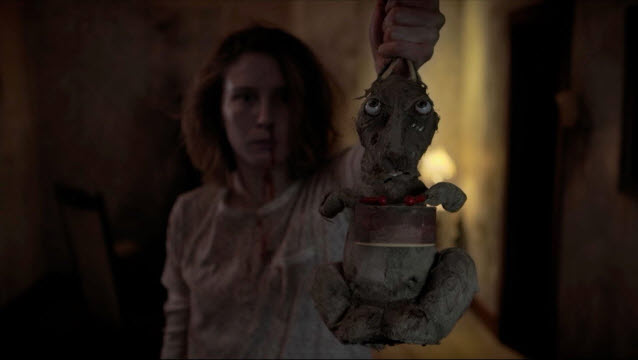
The story, which is based on Matthew Logelin’s 2011 memoir “Two Kisses for Maddy: A Memoir of Loss and Love”, mainly revolves around the daily struggles of Logelin’s fictional version from raising his young daughter alone without his dear wife. Although he has been grieving a lot over his wife’s death which happened shortly after their little daughter’s birth, Matthew, who is played by Kevin Hart with his usual comic intensity dialed down for looking as serious and ordinary as required, decides to raise his baby daughter for himself, and he remains adamant even when his decision is strongly opposed by his mother-in-law Marian (Alfre Woodard), who really wants to take her little granddaughter to her cozy home in Minnesota because she strongly believes that her little granddaughter needs a mother figure more at present.

Anyway, Marian eventually agrees to give a chance to Matthew despite her skepticism, and Matthew is ready to brace himself for the immediate challenges in raising a baby alone, but, of course, he soon finds himself in a series of difficult situations which turn out to be more demanding than he ever imagined. While he frequently has to calm down his daughter whenever she cries suddenly in the middle of night, he also has to get accustomed to changing a diaper for her everyday, and we are surely served with a few disgusting moments involved with that.

While getting some important tips and advices from those single mothers, Matthew still often finds himself quite overburdened and exhausted everyday, and that soon becomes evident to the boss and colleagues at his workplace, but, fortunately, they turn out to be more supportive than expected. In case of his boss, he lets Matthew have a more flexible work schedule in addition to allowing Matthew to bring his baby to the workplace from time to time, and there is a little amusing moment when he has to soothe his baby again in the middle of a very important presentation.

The movie could have been more interesting if it continued to explore more of many challenging aspects of its hero’s single parenthood, but then the screenplay by director/co-producer Paul Weitz and his co-writer Dana Stevens jumps forward to several years later instead. While Matthew looks more well-adjusted to his single parenthood than before, his daughter Maddy (Melody Hurd) grows up to be a smart plucky girl filled with considerable spirit and personality, and her strong personality certainly causes some stir at her conservative Catholic school when she insists on wearing pants instead of a dress just like any other female students in the school.

I must point out that this could led to illuminating some interesting issues including gender expectation, but the movie only ends up sidestepping these issues while only giving us minor moments of conflict instead, and it is also rather bland and superficial in case of the depiction of the relationship between Matthew and his daughter. It goes without saying that they do love each other as a father and a daughter, and Hart and young performer Molody Hurd did a commendable job of conveying to us their characters’ deep emotional bond, but the movie clumsily pushes their characters into several contrived moments, which do not work well as only existing for generating a mandatory conflict between them later in the story.

Moreover, several other characters in the film are mostly underdeveloped to our disappointment. For example, a subplot involved with Matthew’s possible romance with a nice woman played by DeWanda Wise is trite and predictable to the core, and Matthew’s two close friends/colleagues played by Lil Rel Howery and Anthony Carrigan are no more than unnecessary comic reliefs in the story. Yes, I know that Howery and Carrigan are talented comedy actors, but their characters often feel jarring as behaving like your average cartoonish sitcom characters, and I must confess that I rolled my eyes whenever either of their characters appeared and then said something silly or embarrassing just for giving us some cheap laughs.

At least, the movie is anchored well by Hart’s surprisingly earnest low-key performance, and his diligent acting works best whenever it is complemented by several other good performances in the film. Besides Wise, who acquits herself well despite her underdeveloped supporting character, Alfred Woodard, Thedra Porterand, and Frankie Faison bring some gravitas to the story as demanded, and they ably fill their seemingly thankless roles with each own distinctive personality and presence.

On the whole, “Fatherhood” is a well-intentioned but ultimately shallow mainly due to its maudlin handling of its story and subjects, and you may also question its certain casting choice considering that Logelin is actually a Caucasian American in real life. Sure, it looks like a nice case of color-blind casting on the surface, but, folk, does it actually lead to any substantial racial specificity in terms of story and character at all besides giving Hart a nice opportunity for some serious acting? As far as I can see from the final result, I think the answer it no, and that is another disappointment to say the least.

Posted in Movies | Tagged , | Leave a comment