Summer Is the Coldest Season (2019) ☆☆☆(3/4): That troubled summer of hers

Chinese film “Summer is the Coldest Season” is a dry but interesting coming-of-age drama about one adolescent girl struggling with her anger and grief. As she deliberately gets herself involved with a person responsible for that, the movie calmly and sensitively depicts her confusion and conflict, and we come to have more empathy and understanding on her as we get to know more of what has been troubling and tormenting her.

At first, the movie establishes how things have been hard and difficult for its young heroine’s daily life. During the opening scene, Li Jiahe (Deng Enxi) is commended by her classroom teacher for writing a very good essay based on what she saw from an abattoir for which her father works, but this smart and sensitive girl is often ostracized by many of her classmates just because of her father’s occupation, and we soon see her fighting against that via one defiant act.

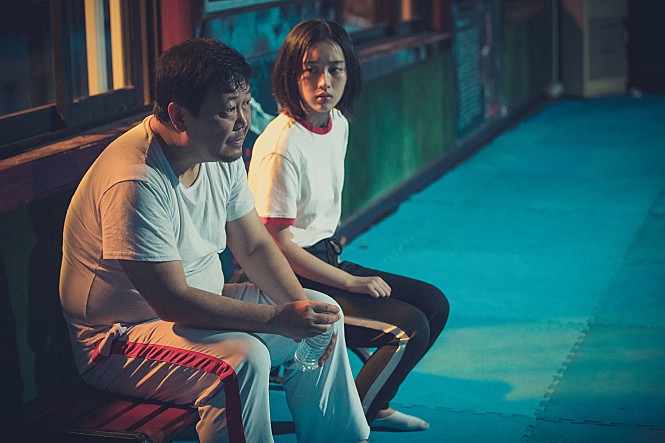
Her father is soon brought to the school for that, but there is nothing he can do except keeping saying that he is sorry and will do whatever is necessary for her, and Li Jiahe is not so pleased about that because, in her view, her father is nothing but a pathetic alcoholic loser. There was a time when he was a promising wrestling player, but he has been stuck in his menial jobs for years because he did not get college education, and that often drives him more to his alcoholism.

In case of her mother, she died due to some unfortunate incident a few years ago, and the memories of her often haunt Li Jiahe’s mind as reflected by a series of frequent flashback scenes in the film. Although life was not that good for her and her family, Li Jiahe’s mother never lost her kindness and compassion while always loving her dear daughter and her loving husband, and it goes without saying that she was the light of life for both of them before her death.

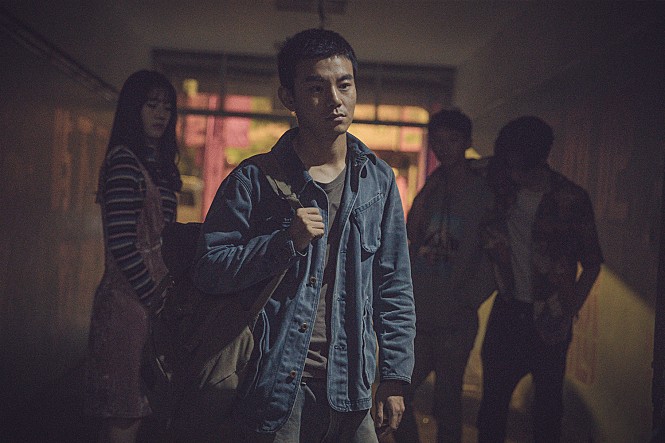
As missing her mother a lot again, Li Jiahe goes to a local amusement park where she and her mother went once, and that is where she comes across someone unexpected. That person in question is an older boy named Yu Lei (Li Gan), and he turns out to be the one who was responsible for her mother’s death. After watching him working at a local garage, Li Jiahe goes to a lawyer who handled the case in her family’s behalf at that time, and she belatedly comes to learn that Yu Lei was released much earlier than expected just because of his probation. Quite upset about this, she innocently tries to find any possible legal way to send Yu Lei back to a correctional facility, but, of course, there is nothing she can do because the case is officially closed at present.

Still feeling angry at Yu Lei, Li Jiahe also cannot help but become curious about who Yu Lei is, so she starts to watch on him without his knowledge. When he subsequently hangs around with a bunch of friends who are apparently not so good for him, Li Jiahe follows them without hesitation, and it does not take much for her to get involved with them, though it turns out that this shy introverted girl is not very good at having any fun with them.

Anyway, it looks like that Yu Lei has some interest in getting know Li Jiahe more. At one point later in the story, he invites her to his current staying place, and she comes to learn a bit more about him and his life. While never talking about how he ended up in that correctional facility, he talks to her about how he has usually been neglected by his absent parents, and she feels more conflicted as watching him earnestly hoping to have a new start for his life.

As its heroine swings back and forth between resentment and sympathy on her new friend, the screenplay by first-time director Zhou Sun steadily builds up its narrative momentum while occasionally adding more details to not only Li Jiahe and Li Gan but also several other characters in the story. We get to know more of how much Li Jiahe’s father tries to make things better for himself as well as his daughter despite his continuing despair and frustration, and the movie also provides us some lightweight moments through Li Jiahe’s occasional meetings with her best friend, who has incidentally worked at a local nail art shop instead of going to her school. In case of a certain supporting character briefly appearing later in the story, his scene is balanced well between humor and poignancy, and that gives us some understanding on Li Jiahe’s last minute decision around the end of the story.

Deng Enxi carries the film well with her quiet but strong performance, which speaks volumes during several key scenes in the film where her character is silently coping with conflicting emotions behind her phlegmatic façade. As her counterpoint, Li Gan is effective in his low-key acting while doing more than looking elusive and handsome, and Wu Guohua is also fine as Li Jiahe’s well-meaning but incompetent father.

Overall, “Summer Is the Coldest Season” is engaging enough to hold our attention thanks to its thoughtful storytelling and several good performances. Although the finale becomes a little too melodramatic compared to what has been carefully built up during the rest of the film, that is just a small weak point in my humble opinion, and Zhou made an admirable feature film debut here. She and Deng are new talents of Chinese cinema to watch, and I must say that I have some expectation on whatever they will respectively do next in the future.

Posted in Movies | Tagged , , | Leave a comment

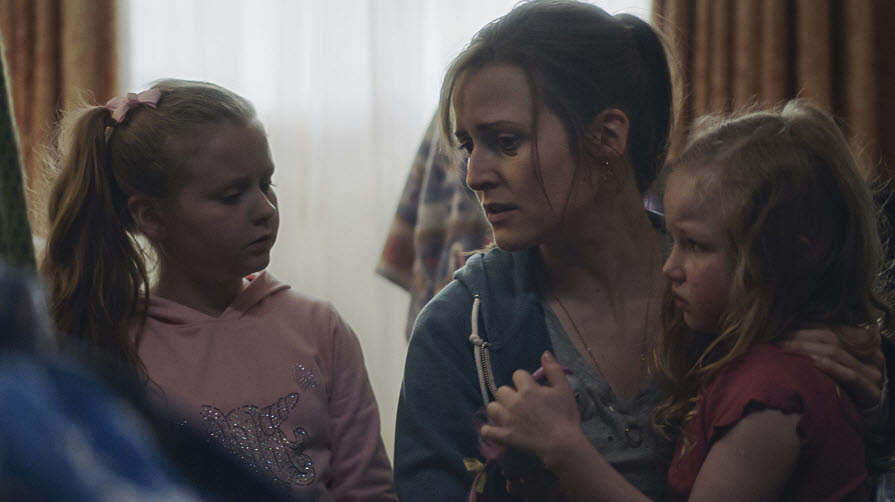
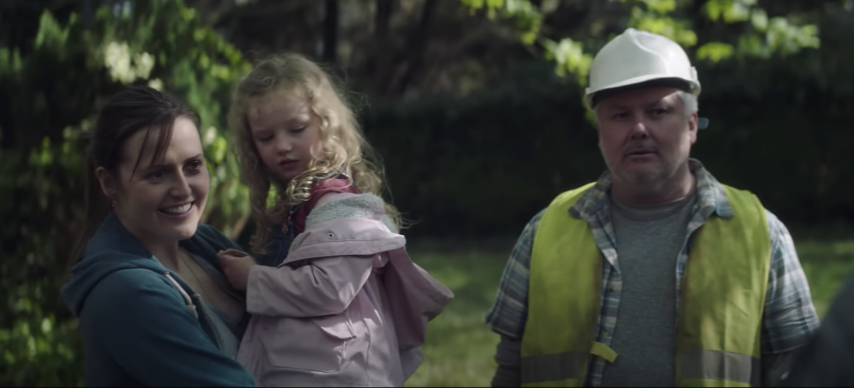
A Quiet Place Part II (2020) ☆☆☆(3/4): They must be quiet as before

“A Quiet Place Part II” is a nice sequel which expands its story and characters a bit for whatever may come next. Although it is understandably not that fresh mainly because of what its predecessor so entertainingly achieved on the screen a few years ago, the overall result is still tense and engaging nonetheless, and, again, I found myself not making any noise at all along with a few other audiences around me during the screening at last night.

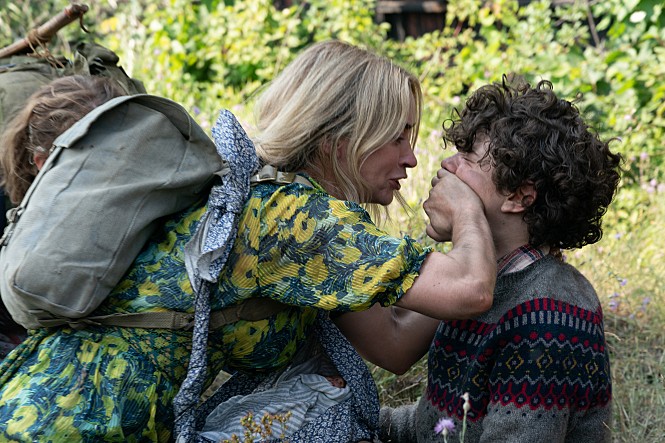
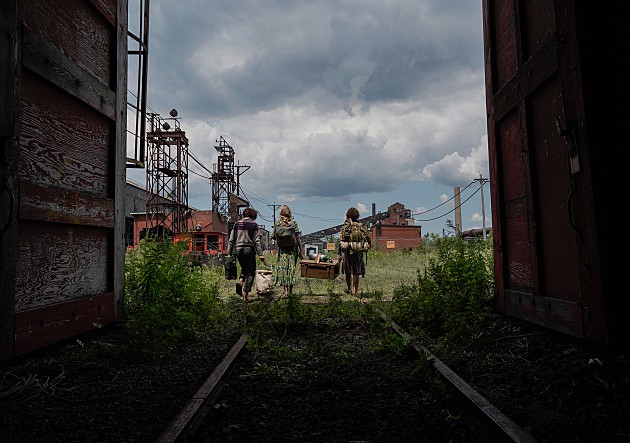
After the impressive opening sequence showing how the world was suddenly turned upside down for Evelyn Abbott (Emily Blunt) and her family as well as many other people on the Earth around one year ago, the movie promptly goes forward to the point not long after the ending of the previous film. Although she unfortunately lost her husband, Evelyn knows too well that she and her three kids must move on right now for their survival, and we see them hurriedly preparing to leave a spot where they had hidden from those alien monsters for last several months.

As many of you remember, those alien monsters are quite dangerous entities to say the least. Besides having sharp teeth and claws, they can move really quick and fast in addition to being highly sensitive to sound, and Evelyn and her kids have to be very careful about not making any loud noise. At least, they luckily happened to discover the alien monsters’ certain vulnerability, which can be quite helpful in beating the alien monsters if they can deliver this valuable piece of knowledge to other survivors who might be out there.

However, not long after they embark on their risky journey outside, Evelyn and her kids find themselves stuck in an abandoned factory where a guy named Emmett (Cillian Murphy), who turns out to be her husband’s close friend, has been hiding for a while. Although he is not so eager to help them, Emmett eventually lets Evelyn and her kids into his little private hiding place, and we get to know more about his long despair and frustration coupled with heartbreaking personal loss. While trying to survive day by day, he has already lost hope on the verge of paranoia and insanity, and we later see what might have happened to him if he had let himself mired more in despair and paranoid.

As Evelyn focuses on dealing with an immediate problem with her son Marcuse (Noah Jupe), her deaf daughter Regan (Millicent Simmonds) becomes quite determined to accomplish their mission by any means necessary. It seems that there is a safe shelter for survivors where that valuable knowledge on the weakness of the alien monsters can be effectively utilized for a good reason, and all Regan has to do is checking out a certain nearby region where that safe shelter is supposedly located.

Around that narrative point, the screenplay by director/co-producer/writer John Krasinski, who also briefly appears during the opening sequence as required, begins to accumulate more tension along the plot as its main characters struggle with their respective perilous circumstances, and we accordingly get a series of suspenseful moments where they must be really quiet as silently trembling in fear and panic. I must point out that the alien monsters are still the least interesting element in the story, but they do look scary and menacing nonetheless whenever they appear, and Krasinski and his crew members including editor Michael P. Shawver and cinematographer Polly Morgan skillfully dial up and down the level of tension as playing with our dread and expectation.

The story takes a bit of breath along with its main characters during the expected final act involved with that safe haven in question, but then, of course, the movie soon naturally returns to its usual intense mode during the following climax which effectively juggles more than one urgent situations on the screen without losing any narrative focus and momentum. In case of the final scene, it is delivered as neatly as expected with substantial dramatic impact, and you may find yourself hoping for the next sequel to follow.

Again, Krasinski draws good performances from his talented cast members. While Emily Blunt diligently holds the center as before, Millicent Simmonds, who has been more prominent thanks to the enormous success of the previous film as well as her strong performance in that film, is fabulous in her unadorned depiction of resilience and determination, and Cillian Murphy and Noah Jupe are also fine as the two other crucial characters in the story. In case of the other notable supporting performers in the movie including Djimon Hounsou, Scoot McNairy, and Okieriete Onaodowan, they are mostly stuck in their respective functional roles, but that is just a minor flaw at least.

In conclusion, “A Quiet Place Part II” is one or two steps below its predecessor, but it is still a well-made product packed with considerable skill and entertainment, and that reminded me of why I was so disappointed with “The Conjuring: The Devil Made Me Do It” (2021). While that film is as predictable as “A Quiet Place Part II” in case of how it tries to scare and shock us, it is so clumsy and ineffective that I came to observe its story and characters from the distance without much care or attention, and that makes me appreciate “A Quiet Place Part II” more for its competent direction and enjoyable mood and performances. To be frank with you, I will not mind several more sequels as long as they do it as right as this.

Posted in Movies | Tagged , , , , | Leave a comment

Climbing (2020) ☆☆☆(3/4): Her and Her

South Korean animation film “Climbing” is a dark and unnerving psychological thriller revolving around certain kinds of female fear. While you may often scratch your head for grasping what is exactly happening to its rather unreliable heroine, the film steadily engages us as firmly pushing its story toward its eventual arrival point, and there are also several striking visual moments you will not easily forget once it is over.

The heroine of the story is a young woman who has distinguished herself as a professional sport climber, and the first act of the film quickly establishes how much she has been dedicated to her profession despite some mild disturbance in her mind at present. When she wakes up at her one-room apartment early in the morning, she is greeted by her boyfriend, and he suggests that they have a little breakfast before they leave, but she flatly refuses when she checks her weight, which does not seem to be good enough for her qualification in the upcoming competition even though she looks pretty thin and lean on the surface.

At her training gym, she promptly goes through training, and we come to gather that she has been quite pressured mainly because of a junior player who is not only younger but also may beat her someday. She keeps trying nevertheless, and she does excel herself at that competition, but she is still not satisfied with the final result of her efforts.

Anyway, the mood between her and her boyfriend becomes less strained than before as he congratulates her for her supposedly good result. Although there was an unfortunate car accident which led to her miscarriage, he is still quite willing to move their relationship to the next level, so he officially proposes to her, but she does not welcome this much as she is more occupied with a bigger competition, in which, incidentally, she and her junior are supposed to participate together.

Meanwhile, something very strange begins to disturb her life and mind. Somebody suddenly calls her at night, and that person in question calls to a smartphone she has not used since that car accident. To her bafflement and confusion, the caller turns out to be none other than herself, and it seems that the call comes from a sort of parallel world where she remains pregnant after that car accident.

The story gradually comes to alternate between the two different versions of its heroine, and that is where it becomes more disturbing than before. In case of that other world where our heroine is pregnant, everything looks fine and well on the surface as she is being taken care of by her boyfriend’s mother due to the injuries she had during that car accident, but she often feels alone and isolated mainly because her boyfriend has been constantly absent due to, according to his mother, his busy work schedule.

While you can easily guess what is being hidden from our pregnant heroine, the screenplay by director/writer Kim Hye-mi continues to catch us off guard via a series of bizarre moments, and their creepy aspects are accentuated further by the deliberately stiff animation style which is based on the mix between 2D animation drawing and 3D animation rendering. For example, the characters in the film look quite broad and simple, but that enhances the nightmarish qualities of several key scenes including the one involved with the sudden hunger experienced by the heroine at one point.

The situation keeps getting more sinister than before as it become more apparent that the two different versions of the heroine in the story are somehow linked to each other both physically and psychologically, and that leads to more confusing moments between them. The one tries to focus more on her athletic career, so frequently getting disturbed by the other’s pregnancy is the last thing she wants, and her stress is increased more when she comes to learn of something about the junior, though, considering her increasingly unstable viewpoint, you may wonder whether several things witnessed by her are real or not. In case of her parallel version, she becomes more determined to keep her baby no matter what will happen to her, and she ends up conflicting more with her other version as well as her boyfriend’s mother, who, not so surprisingly, turns out to have a nefarious purpose behind her back.

I will not go into details on how these two conflicting different narratives eventually converge in the end (This is not a spoiler at all, by the way), but I can tell you instead that the movie pulls out an effective emotional climax where everything in the story makes sense to some degree. Although this is a low-budget animation film, this is still a competent piece of work packed with enough style and mood thanks to Kim’s competent direction, and I enjoyed some little nice details including the poster of a certain recent Oscar-winning documentary film associated with sport climbing.

On the whole, “Climbing” is darkly engaging to watch in my inconsequential opinion, and it is certainly another fine South Korean animation film during recent years. Like Yeon Sang-ho’s notable animation films “The Fake” (2013) or “Seoul Station” (2016), it is willing to go for something creepy and disturbing, and I surely appreciate that.

Posted in Movies | Tagged , , , | Leave a comment

Skater Girl (2021) ☆☆☆(3/4): When skateboarding comes into her rural town

Netflix film “Skater Girl”, which was released on last Friday, is a likable coming-of-age story about one young ordinary Indian girl who becomes a little more active via skateboarding. While it does not have much surprise as rolling from one predictable moment to another, the movie still engages and entertains us via its sincere storytelling coupled with some humor and thoughtfulness, and we come to root for its heroine more as she tentatively makes her small but significant forward moves along the story.

During its first act, the movie observes how things have been hard and difficult for Prerna (Rachel Sanchita Gupta) and her poor family, who live in a small rural town located in Rajasthan, India. While it is evident to us that Prerna is a smart girl who deserves to have some good education, she often has to skip her school days just because her father frequently needs someone to help his work outside, and she does not receive much help or support from her parents even when she can go to the school, though her little younger brother, who can always go to the school in contrast, is always ready to cheer her up. 

Prerna’s father, who is an old-fashioned dude with a little too much of pride, does not care that much about his daughter’s welfare while mostly occupied with maintaining his position as the man of the house. When his wife suggests that both she and Prerna should be allowed to work outside for earning more money for supporting the family, he instantly expresses a vehement opposition, and both his wife and Prerna cannot object to that at all as his obedient wife and daughter. 

And then there comes an unexpected change into Prerna’s life through Jessica (Amrit Maghera), a young Indian British lady who comes to the town for a certain personal reason. Although their first encounter is not exactly pleasant, it does not take much time for Prerna and Jessica to befriend each other, and Jessica is soon introduced to many other kids in the town as she willingly draws pictures for them. When she spots something equivalent to a skateboard at one point, Jessica shows a bit of skateboarding to Prerna and other kids, and they all become more curious about skateboarding when Jessica’s boyfriend later arrives at the town with his skateboard.

Watching how much the kids in the town are excited and intrigued by skateboarding, Jessica decides to go further for bringing some change into their life. Although she could just leave and then go back to London for accepting the promotion at her workplace, she becomes more passionate about her little project, and, thanks to her, many kids in the town besides Prerna come to have each own skateboard.

Of course, many of adults in the town do not like this change at all just because their status quo is often disrupted by the kids freely enjoying skateboarding here and there. They actually try to ban skateboarding, but the kids are not easily suppressed at all, and we accordingly get an amusing scene where the kids cheerfully demonstrate outside after inspired by a certain famous historic figure in their textbook.

After discerning how much skateboarding means to the kids in the town, Jessica embarks on building a big skatepark for them. Of course, her proposal is rejected by many local authorities and wealthy people she tries to approach, but, what do you know, there later comes a big generous help from someone who is not only very rich and influential but also understands quite well what Jessica aspires to do for those many girls out there.

Once the skatepark is built, it quickly becomes a favourite spot for many local kids, and Prerna is surely willing to enjoy skateboarding more than before, but, not so surprisingly, she soon finds herself blocked by her fear as well as her parents, who do not approve of their daughter skateboarding at all due to their conservative viewpoint. When she later becomes a bit closer to a handsome local boy who happens to be above their class, her parents become more upset, and Prerna subsequently finds herself pushed toward an unfair situation she does not like at all.  

It is not much of a spoiler to tell you that our heroine comes to make a big decision for her life around the end of the story, but the movie still holds our attention as presenting its story and characters with enough care and sensitivity, and director/co-producer/co-writer Manjari Makijany, an Indian filmmaker who previously made several short films and also worked as the assistant director in a number of notable Hollywood blockbuster films such as “Mission Impossible: Ghost Protocol” (2011) and “Wonder Woman” (2017), and her crew members provide a series of fun and exciting moments of skateboarding during the expected climatic part of the film. As a matter of fact, they actually built a real skatepark in Rajasthan for the production, and, as shown during the end of the film, this skatepark still remains a public facility accessible to children and visiting skaters even at present. 

The main cast members of the film are solid on the whole. While newcomer Rachel Sanchita Gupta gradually takes the center with her unadorned performance, the other main cast members including Amrit Maghera, Anurag Arora, Jonathan Readwin, Swati Das, and Waheeda Rehman are well-cast in their respective supporting roles, and the special mention goes to Shafin Patel, another newcomer in the film who always steals the show as Prerna’s plucky younger brother.

Overall, “Skater Girl” imbues with its familiar story with lots of charm, humor, and heart, and Makijany made a modest but commendable feature film debut here. In short, this is another admirable tale of female empowerment which reminds us again that girls can do anything just like boys, and I sincerely hope that it will reach to millions of young girls out there while using Netflix as its mighty skateboard.

Posted in Movies | Tagged , , | Leave a comment

Akilla’s Escape (2020) ☆☆1/2(2.5/4): A cycle of violence he wants to escape

“Akilla’s Escape” frustrated me more than once during my viewing. The movie tries to explore the cycle of violence over generations via two connected stories, but it is glaringly deficient in terms of storytelling and characterization in addition to often losing its narrative focus and momentum, and that is really a shame considering its several good elements including the charismatic lead performance at its center.

Saul Williams, a well-known rapper/poet whom some of you may remember for his electrifying lead performance in “Slam” (1998), plays Akilla Brown, a seasoned black marijuana dealer who has operated in Toronto, Canada for years. As marijuana is becoming legal in the country with the government gradually taking the control of his business field, Akilla has considered quitting his criminal career once for all, and Benji (Colm Feore), one of his few close colleagues who has devoted himself to cultivating the best varieties of marijuana under Akilla’s supervision, is certainly disappointed to learn of Akilla’s eventual decision to shut down their business sooner or later.

Akilla subsequently goes out for delivering his latest product to a spot belonging to his criminal organization, and, when he arrives at that spot, he comes across an unexpected incident unfolded right in front of his eyes. The spot has been just attacked by a trio of young black thugs, and they are looking for the cash stashed somewhere in the spot. While these thugs are wearing masks, it is clear that they are quite agitated to say the least, and Akilla tries to handle this sudden peril as calmly as possible – until one of these thugs comes to kill one of two organization members who happen to be at the spot.

Anyway, right after two of these thugs hurriedly depart, Akilla swiftly overpowers the third thug who was aiming at him with a shotgun, and then he tries to get things under control as soon as possible. Although two other thugs already drove away from the spot, one of them got his face exposed to the security camera, and it seems all Akilla has to do for now is handing the video file from the camera and that overpowered third thug to a guy named Jimmy (Bruce Ramsay), who is immediately ready to take care of the mess once he receives an urgent phone call from Akilla.

However, when he discovers that overpowered third thug is just a young adolescent boy named Sheppard (Thamela Mpumlwana), Akilla decides to handle the circumstance for himself just because he sees lots of his younger self from Sheppard. Although Jimmy as well as the boss are not so pleased about that, Akilla is willing to risk himself for protecting the boy, and that surely makes their night quite more complicated.

In the meantime, the movie frequently goes back to Akilla’s adolescent years in New York City in 1995. His Jamaican father was the leader of a local gang organization, and he often imparted some violent lessons of toxic masculinity to young Akilla just because he expected his son to rise from the bottom of his organization and then succeed him someday. Once he went through the initiation period, young Akilla soon participated in his father’s criminal business, but he also dreamed more of getting away from the city along with his dear mother, who had suffered a lot from her husband as holding onto her love toward her precious son.

The screenplay by director Charles Officer and his co-writer Wendy Motion Brathwaite attempts to generate some dramatic resonance as alternating between its two plot lines, but, sadly, both of them are rather thin and superficial on the whole without enough human detail and depth. The present part is often hampered by Sheppard’s frustratingly blank personality, and that is the main reason we do not care much about whatever will happen to him in the end. In case of the past part, you may initially be intrigued a bit by what exactly happened to young Akilla, but you can easily guess the answer before entering the second half of the movie, and the movie lets us down more as being pretty predictable in the delivery of a certain key scene around the end of the story.

At least, the movie is not a total dud. While cinematographer Maya Bankovic provides a number of impressive visual moments soaked in shadow and neon light, the score by Williams and his co-composer Robert Del Naja contributes extra moodiness to the overall tone of the film. Dutifully maintaining his stoic presence throughout the movie, Williams provides considerable gravitas as the emotional anchor of the story, and Thamela Mpumlwana is believable as young Akilla although he has far less things to play in the case of his other role in the film. As another crucial supporting character in the story, Donisha Rita Claire Prendergast brings some warmth her scenes with Williams, but the movie unfortunately underutilizes her, and the same thing can be said about the other substantial supporting cast members in the film including Colm Feore, Ronnie Rowe, Oluniké Adeliyi, Shomari Downer, Vic Mensa, and Theresa Tova, who manages to suggest a lot about her criminal character during her brief appearance.

Despite some admirable aspects coupled with some slick stylish touches to be appreciated, “Akilla’s Escape” does not generate much tension or interest as a genre flick while also failing to bring enough substance to its story and characters, and it only left hollow impressions on me without much satisfaction. I was not bored thanks to Williams, but I would rather recommend you “Slam” instead, and, believe me, you will have a much productive time with that little hidden gem while also appreciating Williams’ talent and presence.

Posted in Movies | Tagged , | Leave a comment

Miss Juneteenth (2020) ☆☆☆(3/4): She lives and dreams through her daughter

“Miss Juneteenth” is a plain but heartfelt drama about a hard-working mother who lives and dreams through her daughter. While this is surely a familiar type of tale to you especially you are a seasoned moviegoer like me, the movie shows considerable sincerity and sensitivity in its caring presentation of story and characters, and you will come to root for its resourceful and strong-willed heroine more than expected, while also moved by the deep emotional bond between her and her daughter.

The story mainly revolves around Turquoise Jones (Nicole Beharie), an African American single mother who has lived with her adolescent daughter Kai (Alexis Chikaeze) in Fort Worth, Texas. As shown from the occasional brief flashback scenes in the film, Turquoise was once a promising teenage girl as the winner of a traditional local black beauty contest named Miss Juneteenth, but that is a mere past for her now, and her daily life is mostly spent on working and earning enough for herself and her daughter. Besides working at a local bar everyday, she also does a part-time job at a local funeral home, but she still often has to make hard decisions as trying to pay bills coming to her house.

And then there comes a time Turquoise has waited for her daughter. Kia is about to be 15, so she is now eligible for the upcoming Miss Juneteenth contest, and Turquoise is already determined to provide a best shot for her daughter as much as she can. She has already saved around 800 dollars for buying a dress to be wore by her daughter at the contest, and she also has a plan for how her daughter should present herself well in front of those judges of the contest. All her daughter needs to do is reciting a certain famous poem by Maya Angelou well enough to impress the judges, but Kai is not particularly enthusiastic as she is more interested in being a dance team member in her high school.

Nevertheless, Kai follows her mother’s demands and instructions without much complain because she understands well how much Miss Juneteenth means to her mother. At the time when she won the contest, everything looked fine and hopeful for Turquoise, and she also received a college scholarship for winning the contest, but, for the reasons we can easily guess along the story, she subsequently screwed up her golden opportunity, and now she reaches for a sort of redemption as actively pushing her daughter toward winning the contest – and a better life for her daughter, of course.

While things seem to be going fairly well as Turquoise and Kai go through the preparation process step by step, Turquoise is reminded again and again of how her life has been disappointing for her. When she has her daughter apply for the contest, she comes across her old competitor, and that woman, who seems to have a much better life compared to her now, does not hide at all her condescending attitude to Turquoise. As she keeps going all the way for the contest, Turquois faces more financial problems, and there is a bittersweet moment when she clumsily attempts to celebrate Kai’s birthday without electricity in their house.

And there are also a couple of small complications in Turquoise’s private life. She has recently let Kai’s biological father into her life again, and, though he is not so reliable as a father or a husband, but she finds herself considering having a new start with him. In case of her estranged mother who has been a devout Christian, she turns out to have a serious personal problem behind her seemingly respectable appearance, and that is just one of many factors contributing to Turquoise’s unhappy life.

As leisurely moving from one narrative point to another, the screenplay by director/writer Channing Godfrey Peoples lets us get to know more about its heroine and her personal struggles, and it also pays some attention to the social/cultural background of the story. We come to learn more about the historical importance of Juneteenth (It is June 19th, by the way) to many African American people out there, and the mood certainly becomes quite joyous in Turquoise’ neighborhood when the Juneteenth week begins with a big parade. Peoples did a good job of imbuing the screen with a vivid sense of people and locations, and I particularly like a small but crucial scene where the owner of that local bar talks to Turquoise on why he has kept trying to run his bar for many years despite many obstacles including gentrification.

We can already discern where the story and characters are heading, and you will not be surprised about what will happen in the end, but the movie continues to hold our attention mainly thanks to the strong lead performance from Nicole Beharie, a wonderful actress who has appeared in a number of notable films including “Shame” (2011) and “Monsters and Men” (2018) since her memorable performance in “American Violet” (2008). While effortlessly embodying her character’s dogged determination and admirable resourcefulness, Beharie is superb especially when she ably conveys to us her character’s emotional conflicts without any ounce of exaggeration, and she is also complemented well by Alexis Chikaeze, who are equally solid during several key scenes of her own in addition to presenting a realistic mother and daughter relationship along with Beharie.

Overall, “Miss Juneteenth” is sometimes predictable to the care, but it has a lot of heart in addition to being equipped with fine storytelling and engaging performances, and it surely earns the quiet but undeniably poignant emotional finale. This is incidentally Peoples’ first feature film, and, considering her competent handling of story, mood, and acting, I guess I can have some expectation on whatever will come next from her in the future.

Posted in Movies | Tagged , | Leave a comment

The Amusement Park (2019) ☆☆☆1/2 (3.5/4): A little hidden masterwork by George A. Romero

Here’s what happened. In 1973, George A. Romero, who had just made “Season of the Witch” (1972) and was about to make “The Crazies” (1973) at that time, was hired to make a little educational film about elder abuse, and that film in question was shot over the course of three days with a budget of $ 37,000 at the now-defunct West View Park in West View, Pennsylvania. When his employers, the members of the Lutheran Service Society of Western Pennsylvania, subsequently saw the final result from Romero, they were so disturbed and alarmed that they eventually decided to get the outcome shelved instead of screening it in public (What the hell did they expect from the director of “Night of the Living Dead” (1968), for Christ’s sake?), and it was thought to be lost for more than 40 years before its 16mm print was finally discovered in 2017 and then went through 4K restoration process.

Although it surely looks like an old artifact from the past due to its low-budget production quality as well as its rather deteriorated condition, “The Amusement Park” is still capable of unnerving us a lot via the surreal presentation of its two deeply uncomfortable main subjects: aging and death. Yes, we are surely bound to death right from the very beginning of our life, but, as we all know too well, approaching to that final destination for all of us is usually not so pleasant at all, and many absurd touches throughout the film strike our nerve really hard as sharply and brutally reminding us of the ultimate horror of our life.

At the beginning, the movie feels like your typical education film. Its lead actor Lincoln Maazel introduces himself in front of the amusement park, and then he talks to us a bit about what the movie is about. On the surface, what we are going to get seems to be no more than the examples of what old people struggle with everyday, and using the amusement part as its main background feels like sugarcoating its main subjects.

However, Romero, who also served as the editor of his film, promptly sets an eerie surreal tone right after the introduction part. When we see Maazle’s character, this old man looks quite damaged and traumatized by whatever he experienced before, and he is sitting alone within a bright but aseptic white room while trying to maintain his composure. When someone else enters the room, that person in question turns out to look exactly identical to the old man except looking fine and cheerful in contrast, and the old man tries to warn his doppelgänger not to go outside, but his doppelgänger, who is also played by Maazle, casually ignores the warning as opening the door and then finding himself in the middle of the amusement park.

As he tries to spend some good time at the amusement park, the movie often bombards our auditory nerve with lots of jarring noises you can expect from your average day at the amusement park. As busily observing lots of people walking here and there, it deliberately puts us into a peculiar mix of excitement and disorientation, and we surely get a number of fun moments as he tries several attractions in the amusement park.

Meanwhile, we slowly come to gather that there is something really odd about this supposedly exhilarating place. You may be amused and then baffled by a series of strange signs and notices on walls, and the resulting offbeat mood is accentuated further by one particular scene involved with a dude buying various stuffs from old people in exchange of cash.

Romero does not waste time in immersing us more into an increasingly weird and nightmarish world full of dark and uncomfortable absurdities. An old couple happens to have a minor accident while having some fun with a bumper car, and their circumstance becomes quite absurd as a policeman enters the picture and then handles the situation quite seriously as if it were a real vehicle accident on street. At a diner in the amusement park, we see a rich old man getting all the services demanded by him, and the camera often looks at other old people watching that unpleasant sight with silent discontent.

The darkest moment in the film comes from a seemingly gentle soothsayer operating somewhere in the amusement park. A young innocent couple comes to this soothsayer as expecting to be told that all will be fine and well for them, but the soothsayer warns that they must behold their future to the end, and Romero pulls all the stops during the following sequence you have to see for yourself for fully appreciating its sheer horror mixed with considerable realism.

While experiencing all these and other things in one way or another, our old hero becomes more exhausted and devastated in addition to being beaten by a trio of bikers at one point. As often seeing someone dressing like death, he desperately searches for any kind of consolation, and he later gets some comfort from some little girl as reading her a fairy tale, but, of course, that does not last that long.

Observing the movie expectedly but inevitably arriving at its final moment, I came to reflect more on the current status of life. I am still 38, but, as being often reminded of getting less physically young day by day, I have been concerned a lot about what may happen to me during next 40 years, and that is the main reason why many disturbing moments in “The Amusement Park” resonated a lot with me when I watched it at last night. If I had happened to watch it around, say, 20 years ago, I would probably have been just mildly impressed by its modest technical achievements. If I actually can live long enough to watch it 20 years later, I am sure it will be much more frightening to me than before.

Posted in Movies | Tagged , , , | 2 Comments

Jakob’s Wife (2021) ☆☆☆(3/4): The preacher’s bloody-thirsty wife

“Jakob’s Wife” is a little horror comedy film about an ordinary preacher’s wife who suddenly finds herself becoming blood-thirsty under a certain insidious evil influence. While it is not particularly scary as a horror movie, the movie still works as a black comedy peppered with some bloody moments as required, and it is also supported well by two effective lead performers who wisely play as straight as demanded by their film.

Barbara Crampton, a veteran actress who has been always remembered for that morbidly naughty moment in Stuart Gordon’s cheerfully gory horror film “Re-Animator” (1985), plays Anne Fedder, a middle-aged married woman who has lived her whole life in a little quiet rural American town. As the wife of the local pastor, Anne has dutifully stood by her husband Jakob (Larry Fessenden), and we see her and many other local residents sincerely listening to Jakob’s latest sermon, but we gradually come to gather that she has been rather suffocated for merely being a preacher’s wife. She still appreciates how her husband comforted her a lot during a certain period in the past, but she has felt the growing discontent with how her life has been going, and that feeling of hers is more amplified when an old flame of hers, who is a successful businessman now, drops by the town for his latest business matter.

That dude has been interested in renovating an old abandoned factory outside the town, so he later takes Anne to that factory in question, and, as spending more time alone with him in the factory, Anne cannot help but feel tempted about getting a bit closer to him. After all, he is already willing to seduce her, and whatever is going to happen between them will be kept only between them, as long as no one is around them for now.

However, it looks like they are not alone in the factory at all, when they suddenly hear some strange noise coming from somewhere inside the factory. Anne is understandably disturbed and scared, but then they soon find two very suspicious wooden boxes, and, to their shock and horror, these two boxes turn out to contain something quite malevolent.

After a couple of terrifying moments which her mind does not completely process yet, Anne manages to return to her house alone, but it does not take much time for her to sense that something serious is happening to her right now. For instance, she somehow does not feel that hungry enough to eat meals with her husband, but there is a certain urge she cannot understand that well, and then there comes a moment of revelation when she comes to realize how unspeakable that urge is.

While understandably horrified by her big changes including the inexplicable growth of new teeth in her mouth, Anne cannot help but feel excited and liberated as reflected by a literally swirling scene accompanied with an energetic pop song being played in the background. Even though she is still scared as feeling more of the presence of a certain insidious figure, she is also empowered by the evil influence from that figure, and, despite her remaining hesitation and repulsion, she may let herself fully embrace it in the end.

Of course, it does not take much time for Jakob to realize that something is going wrong with his wife. At first, he just thinks that he and his wife are just having a little marital problem, but then there eventually comes a point where he belatedly beholds the truth about his wife, and he reluctantly takes the role of her potential savior mainly because several necessary items including holy water can come handy to him.

As Jakob clumsily tries to solve his wife’s urgent problem, the screenplay by director Travis Stevens and his co-writers Kathy Charles and Mark Steensland continues to throw one naughty moment of horror and comedy after another. There is a little amusing scene where Jakob allows a bit of transgression between himself and his wife for not only suppressing her unspeakable thirst for a while but also having some honest conversation, and the mood later becomes cheerfully darker when they luckily come across someone who can help them a bit for a reason I will let you to discover for yourself for having a good laugh.

When that insidious figure in question finally comes to reveal itself in front of our unfortunate couple later in the story, the movie begins to stumble more than once in addition to losing some of its comic momentum, but Crampton and her co-star Larry Fesseden keep carrying the film via their good comic chemistry, and they are often quite funny as looking serious in many of their absurd moments in the movie. Crampton, who also participated in the production along with Stevens, surely handles those several bloody moments with gusto, and you may chuckle a bit as watching one particular moment which will take you back to that headless figure in “Re-Animator”. On the opposite, Fesseden dutifully holds the ground for his co-star, and he is hilarious especially when his character struggles to cope with a big domestic change to be dealt with in one way or another.

Although it ends the story a little too abruptly in my inconsequential opinion, “Jakob’s Wife” is still funny and entertaining enough for recommendation mainly thanks to Stevens’ good direction and the nice comic acting from Crampton and Fessenden. I wish it could push its premise harder with more blood and comedy, but the overall result is fairly enjoyable at least, so I will not grumble for now.

Posted in Movies | Tagged , , , , | Leave a comment

Wrath of Man (2021) ☆☆☆(3/4): Gritty and remorseless to say the least

Guy Ritchie’s latest work “Wrath of Man” is gritty and remorseless to say the least. While this is surely your average revenge action flick about a taciturn tough guy with a particular set of skills, it is at least packaged with considerable style and energy, and I was sometimes amused by the fateful inevitability of its plot even while observing the expected climactic mayhem from the distance.

After the striking opening scene which efficiently sets the overall tone of the movie, the first act of the movie begins with its hero getting hired by some well-known private security company in LA. Because the company has mainly handled the delivery of millions of dollars in cash everyday, its many security trucks are often targeted by those dangerous criminals out there, and, considering his fairly good resumé, our hero surely looks like well-qualified, though he barely passes the following tests for a number of skills including shooting and driving.

As he begins his first day under the guidance of a seasoned senior employee, everyone at his new workplace is very curious about him mainly because he does not talk much about himself while showing no interest at all in socializing with his new colleagues. For example, when he happens to be provoked by some cocky employee, he responds to this jerk with some sharp replies, but then he withdraws even though he seems to be well aware of that the dude is no more than a mere loudmouth.

And then an incident happens on one day. While our hero and that cocky employee are going through another workday as usual, they are suddenly ambushed by a bunch of gun-wielding criminals wearing masks, and, not so surprisingly, our hero’s partner instantly panics and squirms, but, what do you know, our hero does not lose any of his detached attitude at all. Once he spots a slip from one of the criminals, he swiftly takes care of that criminal in question, and the same fate soon falls on other criminals at the spot. 

Now you may complain that I exposed a spoiler to you, but, don’t worry, because the hero is played by none other than Jason Statham, who has been always good at bringing genuine toughness to his roles since he drew our attention via Ritchie’s early films “Lock, Stock and Two Smoking Barrels” (1998) and “Snatch” (2000). While he can be funny and likable as shown from these two films, Statham can also be cool and intense as shown from “The Transporter” (2000) and “Crank” (2006), and his steely presence is utilized quite well here as he austerely carries the film as required.

As entering the second act mainly consisting of flashback scenes, the movie delves into the personal motive of Statham’s character, who turns out to have been quite wrathful toward whoever is responsible for the death of someone quite dear to him (Again, this is not a spoiler at all). There is a sad irony in that tragedy in fact, and that made him all the more devastated and vengeful, but, despite some help from certain people around him, he was going nowhere until he finally decided to get himself employed at that private security company with a hidden purpose behind his back. 

The screenplay by Ritchie and his co-writers Ivan Atkinson and Marn Davies, which is based on 2004 French action thriller film “Cash Truck”, subsequently takes another narrative turn as momentarily shifting its focus to the other substantial part of the story. I will not go into details for not lessening your entertainment, but I can tell you instead that I appreciate how a bunch of notable supporting performers including Raúl Castillo, Laz Alonso, and Scott Eastwood bring some personality and details to their rather functional roles. In case of Eastwood, you can promptly sense troubles from his character right from his first appearance, but then you will be surprised more as observing how nasty and treacherous his character can really be.

Around the eventual final act, we surely get lots of bangs and clashes along with lots of bullets in the air, and Ritchie and his crew members skillfully and confidently handle the actions unfolded on the screen without losing any control at all. Although you may not care that much about the fates of many of the characters in the story, the movie still holds our attention via its sheer intensity, and the resulting finale feels explosively inevitable instead of merely predictable.

With Statham holding the center as usual, several other cast members around him hold each own place well on the whole. While Josh Hartnett and Eddie Marsan bring a little sense of humor to the film, Holt McCallany, who has been more notable since his breakthrough turn in Netflix TV drama series “Mindhunters”, and Niamh Algar are also solid in their respective parts, and Andy Garcia savors every minute of his brief appearance in the film.   

In conclusion, “Wrath of Man” may not bring anything particularly new to its genre territories as reminiscent of many other gritty and violent crime films such as “Heat” (1995), but I will not deny that I was more entertained than expected when I watched it at a big Dolby Cinema screening room during this Sunday afternoon. Although I still personally think Danish film “Riders of Justice” (2020) did a better job as having more personality and humor in comparison, “Wrath of Man” is still engaging enough as packed with enough entertaining elements, and, along with Ritchie’s previous film “The Gentlemen” (2019), it surely shows us that Ritchie is indeed back in his element.

Posted in Movies | Tagged , , , | Leave a comment

Small Axe: Education (2020) ☆☆☆1/2(3.5/4): A kid stuck at the bottom of the system

As your average constant movie reviewer, I was certainly quite interested in watching Steve McQueen’s exceptional movie anthology series “Small Axe”, which happened to be selected as one of the best works of 2020 among many film critics groups in last year. Although it can be regarded as a TV miniseries and I will not be surprised if it receives several Emmy nominations later, “Small Axe” is inarguably another superlative cinematic achievement from McQueen, and I come to admire it more as appreciating its whole big picture consisting of five different dramas with each own distinctive quality.

All of these five movies are mainly about Black British People (of West Indian heritage, to be precise) and their life and culture during the late 20th century, and each of them provides each own perspective to be appreciated. While “Mangrove”, the first film which is also the best of the bunch, presents a vivid and intense race drama involved with one curry restaurant in Notting Hill of London, “Lovers Rock” provides some warmth and comfort via its little but sensitive romance drama, and “Red, White and Blue” and “Alex Wheatle” illuminate the systemic racism and injustice via their contrasting viewpoints.

In case of “Education”, the fifth film which is incidentally the shortest one in the bunch (Its running time is only 63 minutes, by the way), it looks at another case of systemic injustice through the viewpoint of one little black kid and his family. While it is often heartbreaking to see how this kid gets deprived of the opportunity for better education and life just like many other young black students during that time, we are also touched by the communal efforts for saving these unfortunate kids, and the overall result is the satisfying last chapter to follow its four predecessors.

After the opening scene which will probably take you back to your childhood memories of planetarium, the movie observes the daily life of a young black kid named Kingsley Smith (Kenyah Sandy). While it is apparent to us that he is a smart and sensitive kid who wants to be an astronaut someday, he has not been doing that well at his elementary school, and, though it looks like he really needs some extra help for learning how to read, his teachers do not help much while casually labeling him as a trouble to be discarded sooner or later.

In the end, Kingsley’s mother Agnes (Sharlene Whyte) is brought to the school principal’s office for some important discussion. Because Kingsley’s recent IQ test result turned out to be below average, the principal decided to have Kingsley transferred to a certain “special” school, and Agnes does not mind this at all mainly because she has been constantly busy with her menial job just like her husband.

When she reads a pamphlet from that special school, Kingsley’s older sister does not feel that right about it, and Kingsley soon comes to learn how horrible it is in many ways. The teachers at that special school often neglect their duties without showing much care and attention to Kingsley and many other ‘special’ kids, and Kingsley and other students simply spend time without learning or doing anything at all. Agnes is initially relieved as her son does not cause any more trouble at all, but Kingsley becomes more frustrated and despaired, and there is no one to whom he can talk about that.

Fortunately, Kingsley happens to meet someone helpful at the right time when he is aimlessly going through another frustrating school day as usual. She is a young black psychiatrist/activist who has had a keen interest on the systemic mistreatment inflicted on young black kids like Kingsley, and it does not take much time for Agnes to realize what is really happening to her son. She initially dismisses that at first, but, as a caring mother, she gradually comes to sense that she made a big mistake, and then she becomes much more active for protecting her son’s interests as much as possible.

As shifting its focus a bit toward Agnes’ viewpoint, the screenplay by McQueen and his co-writer Alastair Siddons directly tells us about how the British public education system had deliberately discriminated many black students out there for many years. As exposed by educationalist Bernard Coard’s 1971 pamphlet “How the West Indian Child is Made Educationally Sub-normal in the British School System”, there was an unofficial policy of transferring disproportionate numbers of black students from mainstream education to schools for the so-called “educationally subnormal”, and this disgraceful policy consequently contributed to a vicious cycle of poverty and the lack of education among Black British folks. The less they learned, the more likely they were bound to cheap menial jobs while not being capable of giving opportunities of better life and education to their children, and that went on and on for decades.

After directly pointing out its main issues to us, the movie resolves its character conflict a little too easily, but it still engages us thanks to the good performances from two main performers at the center of the story. While young performer Kenyah Sandy instantly earns our sympathy and empathy right from the very beginning, Sharlene Whyte is equally fine as a mother with some human flaws, and she and Sandy are particularly touching when their characters come to have an emotional breakthrough between them around the end of the film.

On the whole, “Education” may feel less special compared to the first three films of “Small Axe”, but, like “Alex Wheatle”, it works as another crucial part of the series nonetheless, and its tentatively hopeful finale lingers on you for a while as making you reflect more on the social issues presented by it and the other four films of the series. Yes, these social issues surely feel like big intractable trees, but, as suggested by the lyric of Bob Marley’s song “Small Axe”, they may fall down someday via small but persistent communal efforts functioning like small axes against them, and we see a glimpse of hope and future at the end of this very special series. After all, things do change, don’t they?

Posted in Movies | Tagged , , , | Leave a comment