Caveat (2020) ☆☆☆(3/4): Babysitting in the middle of nowhere

“Caveat” is a little spooky Irish horror film mainly driven by mood and ideas instead of plot and characters. While it is rather thin in terms of narrative and characterization, the movie is competent and skillful enough to fill its short running time (88 minutes) with a subtle sense of anxiety and dread hovering around the screen, and you will appreciate it more if you know the importance of mood and tension in good horror movies.

After succinctly setting its moody tone during the ominous prologue scene which shows us an adolescent girl searching for something in her house via a little ugly toy of hers, the movie begins the story via the viewpoint of Issac (Jonathan French), a lad who has recently suffered partial amnesia for some unspecific reason. He talks with a guy named Barret (Ben Chaplan), and, though he understandably does not remember Barret at all, Barret says that he is an acquaintance of Isaac.

Barret turns out to have an offer Isaac cannot easily refuse. Barret has a problematic niece who has been living alone in some remote place due to her mental problem, and, because her parents died and Barret is usually busy, he needs someone to babysit his niece for several days at least. Although he is initially reluctant at first, Isaac eventually accepts the offer mainly because Barret promises him to pay a lot for this seemingly simple job.

Of course, Isaac belatedly comes to realize that the job can be more demanding than expected. That remote place in question turns out to be a small lake island completely isolated from the outside world, and the house in the island does not look that cheery to say the least with its shabby and tarnished interior. While already having lots of reservation on his job, Isaac decides to do whatever he is demanded to do by Barret, and he even agrees to wear an old special harness which will limit his movement inside the house.

In case of Barret’s niece Olga (Leila Sykes), who is already introduced to us during the opening scene, she does not seem to mind Isaac’s presence that much as occasionally going through a catatonic state due to her mental illness, but Isaac cannot help but become disturbed by her eerie presence as well as the gloomy mood of the house. As he slowly gets accustomed to his limited status in the house, several strange things happen around him, and the ambient score by Richard G. Mitchell constantly conveys us to Isaac’s growing agitation about the house and Olga.

Of course, what we get here is a typical gothic haunted house tale, and the movie does not disappoint us as slowly dialing up the level of creepiness beneath the surface instead of jolting us with cheap shocks. As our hero is more unnerved by whatever is going on around him, the movie serves us a series of disturbing moments as expected, and then there comes a very effective moment when he eventually comes across a dark secret hidden somewhere in the house.

This is surely quite a familiar genre exercise, but director/writer/editor Damian Mc Carthy, who made several short films before making a feature film debut here, and his crew members did a commendable job of packing the film with enough suspense and spookiness to hold our attention. The production design by Damian Draven looks modest and barebone on the surface, but it does contribute a lot to the overall atmosphere of the film with small details to be noticed, and cinematographer Kieran Fitzgerald effectively establishes barren stuffiness around the screen. Compared to the increasingly tiresome shock and awe tactics of “The Conjuring” (2013) and its redundant sequels, what is admirably achieved in “Caveat” is more impressive and economic in my humble opinion, and I especially enjoyed how that tiny toy is effectively utilized more than once for unnerving us more along the story.

The few main characters in the movie are more or less than broad archetype, but the performers playing them fill their respective roles with enough personality and presence. While quite palpable in his character’s accumulating confusion and anxiety, Jonathan French holds the center as well as required, and he is also complemented well by Leila Sykes, who is equally fine in her mostly silent acting. Although we are frequently not that sure about what exactly makes her character tick, Sykes’s good performance always unnerves us whenever her character appears on the screen, and she is particularly good when her character begins a sort of cat-and-mouse game upon Isaac later in the story. As another crucial part of the story, Ben Caplan looks suitably sleazy and untrustworthy from the start, so we are not so surprised by what his character is hiding from Isaac – or what will befall to his character in the end.

During last several weeks, I have somehow watched a lot of recent horror movies, and “Caveat” is one of the better works in the bunch. Although the small production budget is evident from many aspects including its tiny background, Mc Carthy and his crew members do not waste any bit of their production budget on the whole, and their overall result makes me have some expectation on what may come next from Mc Carthy. As far as I can see from the movie, he is a talented filmmaker who does know how to engage and then disturb us, and I hope that he will go further with more good works to interest me and other audiences out there.

Posted in Movies | Tagged , , | 1 Comment

Black Widow (2021) ☆☆☆(3/4): Black Widow’s family reunion

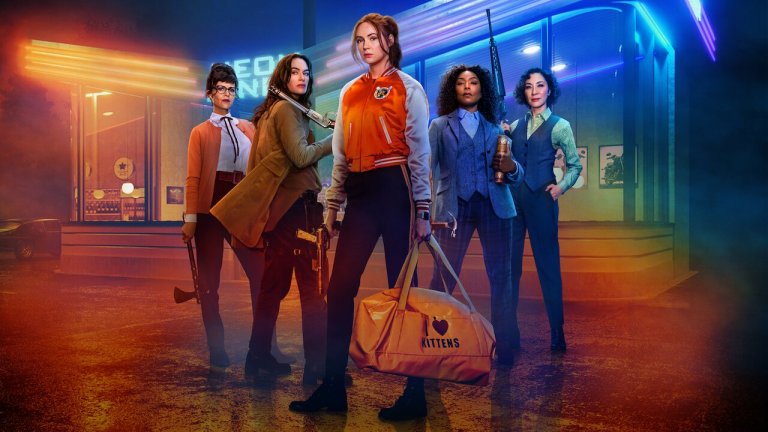
“Black Widow”, the first film in the Phase Four of Marvel Cinematic Universe, is an entertaining product which finally puts its criminally under-utilized heroine at the center after many delays. While it is occasionally limited by its obligatory connections with other MCU movies and characters, the movie shines whenever it focuses on the humor and drama generated among its heroine and several other equally strong main characters, and that aspect puts the movie a bit above the average achievement rate of MCU products.

Since she appeared in “Iron Man 2” (2010), there had been some speculation on whether Natasha Romanoff / Black Widow (Scarlett Johansson) would get her own movie like many male Avenger members during next 10 years, but she was constantly put aside without much spotlight for her, and then, as many of you remember, she was dreadfully wasted in “Avengers: Endgame” (2019) without much fanfare. At least, “Black Widow” was produced at last around the time when that bland and over-populated product came out in 2019, but, alas, its initial theatrical in 2020 was canceled due to the ongoing COVID-19 pandemic, and it had to wait one more year before eventually receiving theatrical release in this week.

Set at the time point somewhere between “Captain America: Civil War” (2016) and “Avengers: Infinity War” (2018), the movie opens with the prologue sequence showing Natasha’s old childhood past in Ohio, 1995. Along with a younger girl who was supposed to be her sister on the surface, young Natasha had a pretty good suburban life under the care of their parents, but their parents were actually undercover Russian secret agents, and we soon see them hurriedly escaping along with their “children” once their covert mission was accomplished despite being exposed to the agents of S.H.I.E.L.D. in the end. Shortly after the “family” arrived in Cuba, young Natasha and her “sister” were taken away from their “parents”, and that was the beginning of how she was turned into one of the most dangerous super-agents in the world.

Anyway, as many of you know, Natasha subsequently defected to S.H.I.E.L.D. and then became a member of the Avengers, but she now becomes a fugitive due to what happened in “Captain America: Civil War”, and she decides to hide somewhere in Norway for a while at least. Thanks to one of her hidden allies, she gets a remote spot where she can live alone without being noticed by anyone outside, and she soon begins her first day as a secret recluse, but, alas, her peace is suddenly disrupted by one unexpected incident.

Shortly after she goes to Budapest, Hungary for discerning what is really going on, Natasha comes across Yelena Belova (Florence Pugh), who was her younger sister at that time and was also turned into a lethal super-agent as going through a series of ruthless training processes along with Natasha and many other young girls kidnapped from here and there around the world. Although their reunion after so many years is not exactly cordial to say the least, Natasha comes to learn from Yelena that her dark past is still very much alive, and she and her younger sister soon embark on their perilous quest toward stopping the evil mastermind behind the creation of not only them but also many other female super-agents under his diabolical mind control.

As bumping from one spot to another on their risky journey, Natasha and Yelena fatefully come to encounter two important persons in their past: their “father” Alexei Shostakov / Red Guardian (David Harbour) and their “mother” Melina Vostokoff (Rachel Weisz), a resourceful scientist who was also a super-agent just like her two “daughters”. The eventual “family reunion” of these two people and Natasha and Yelena later in the story feels pretty awkward to say the least because both Natasha and Yelena still have emotional issues with their “parents”, and the movie deftly swings back and forth between comedy and drama as these four main characters finally come to get a chance to be a little more honest to each other.

In the meantime, director Cate Shortland, who previous drew my attention via “Berlin Syndrome” (2017), and her crew members keep things rolling while serving us a series of well-executed action sequences. Most of these sequences sometimes look as preposterous as whatever we saw from those Fast and Furious flicks, but they are accompanied with enough physical and dramatic impacts at least, and you may be also tickled by when the movie makes a self-conscious fun of a certain unrealistic physical aspect of many MCU movies.

The mood becomes all the more bombastic as expected during the mandatory climax sequence in the film, but the movie is still anchored well by the enjoyable chemistry among its four principal cast members. While Scarlett Johansson holds the center as fully exploring her character’s untouched potentials at last, Florence Pugh ably complements her co-star during many key scenes between them, and it is evident that this exceptional British actress, who has enjoyed her rapid career advance during last few years since her chilling breakthrough turn in “Lady Macbeth” (2016), savors her every juicy moment as much as her co-star. In case of David Harbour, who has been more prominent thanks to his Emmy-nominated turn in Netflix series “Stranger Things”, he skillfully handles his several undeniably hilarious moments, and Rachel Weisz holds her own place well as another crucial part of the story.

In conclusion, “Black Widow” is an engaging superhero flick to watch for a number of good reasons including the game efforts from its main cast members, and, like “Black Panther” (2018) and “Captain Marvel” (2019), it brings some fresh air into the MCU franchise in addition to being a solid start for the Phase Four of MCU. I will probably get tired again as enduring heaps of next MCU movies during next few years, but I was certainly entertained as appreciating those uplifting moments of female empowerment in the film, so I will not complain for a while.

Posted in Movies | Tagged , , , , | Leave a comment

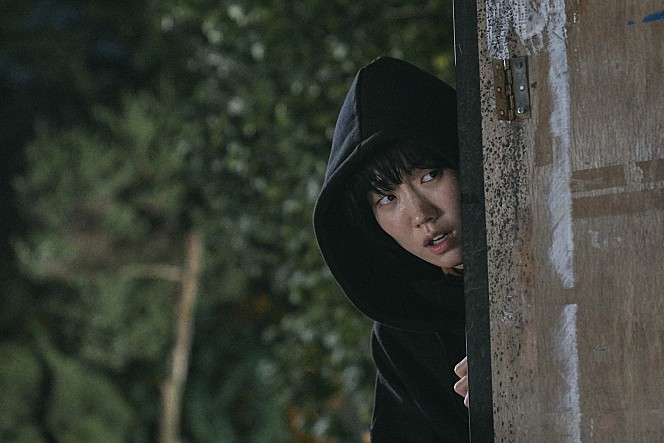
Till Death (2021) ☆☆☆(3/4): A modest chilly thriller film starring Megan Fox

“Till Death” is one of those fun thriller flicks you should watch without any knowledge on what it is about or how it is about. I enjoyed it enough despite seeing and then guessing a bit too much from its trailer and promotional poster in advance, but, though I will be very, very, very discreet in the following paragraphs, I sincerely urge you to stop reading this review right now if you really want to be entertained by this modest but effective thriller film as much as possible.

During the opening part unfolded in New York City on one cold winter day, the movie introduces its heroine and then observes her little private time with some guy with whom she has had an affair for a while. It is apparent that she has been quite unhappy in her married life, and her lover is willing to step forward more for comforting her more, but she eventually comes to change her mind and then leaves the scene.

The following scene shows more of how much she has been frustrated and suffocated due to her husband, who is incidentally a rich senior partner of some prestigious law firm in the city. Before she met him, she was just a struggling photographer without much prospect, and his every act seems to be accompanied with a cruel intention of reminding her again and again of how pathetic she would have been if it had not been for him.

Anyway, the day happens to be their wedding anniversary, so she and her husband have a fairly nice dinner together at some posh restaurant, but she is still uncomfortable as before, even when he seems to be a little more generous than before with a special necklace for her. When she happens to witness a young woman accepting the proposal from her older boyfriend at one point, she cannot help but watch her younger self from that young woman, and she becomes more anxious and awkward when her husband subsequently takes her to somewhere with her blindfolded for, well, another surprise.

 And she is surely surprised when she and her husband are almost near to their destination, which turns out to be their little lake house located at some remote rural spot outside the city. Everything seems to be prepared well inside the house for what is supposed to be a romantic night between them, and she consequently becomes a relaxed a bit while impressed by how well her husband prepared for this. In case of one small room, it is filled with the photographs from the past, and it looks like her husband is really serious about rekindling their romance, especially when he and his wife eventually come to spend the night together in the bedroom.

 Of course, the husband turns out to have a hidden motive to be sprung out in the very next morning, and our heroine suddenly finds herself stuck in a very desperate circumstance thanks to her husband. It is gradually revealed that he made sure in advance that she will be trapped in the house without any chance to get help from the outside, and she is horrified more as discovering more of how nasty and twisted her husband’s plan is in many aspects.  

This is clearly another typical “woman in danger” movie, but the screenplay by Jason Carvey, which often seems to be written right after he watched Mike Flanagan’s “Gerald’s Game” (2017), methodically corners its heroine step by step as she desperately attempts to find any possible way out, and director S.K. Dale, who made several short films before making feature film debut here, steadily increases the level of tension behind the screen. As our heroine’s chance of survival is decreased again and again, the mood gets a lot gloomier as a result, and then the situation becomes all the more urgent when our heroine must really think and act faster than before.

Although it becomes rather predictable during the last act, the movie still maintains enough tension as providing several well-executed moments including the one unfolded inside the attic of the house. Although the movie was mostly shot in Bulgaria as a matter of fact, its isolated main background looks convincing on the whole, and Dale and his cinematographer Jamie Cairney did a fairly good job of filling the screen with the chilly wintry ambience, which surely accentuates our heroine’s increasingly perilous situation.

Above all, the movie is supported well by its star performer’s strong performance. Although she has been mostly remembered for her disposable supporting performance in “The Transformers” (2007) and its atrocious 2009 sequel, Megan Fox is actually capable of giving good performance as shown from “Jennifer’s Body” (2009), and I appreciate how her real-life persona often resonates with her character’s emotional drama along the story. Considering how much she has been often disregarded and underrated by many of us just because she seems to be merely sexy without much talent on the surface, Fox seems to understand her character really well, and she willingly goes all the way along with her character as giving her best performance since “Jennifer’s Body”.

Overall, “Till Death” aims low from the very beginning, but it accomplishes its mission better than I thought, and I admire how Fox’s committed acting carries it well from the start to the beginning. I do not know whether her good efforts here in this film will lead to more good things in the future, but I think she really deserves more chances like this.

Posted in Movies | Tagged , | Leave a comment

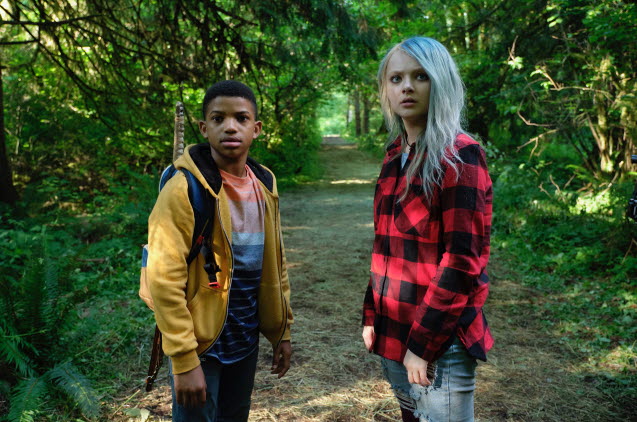
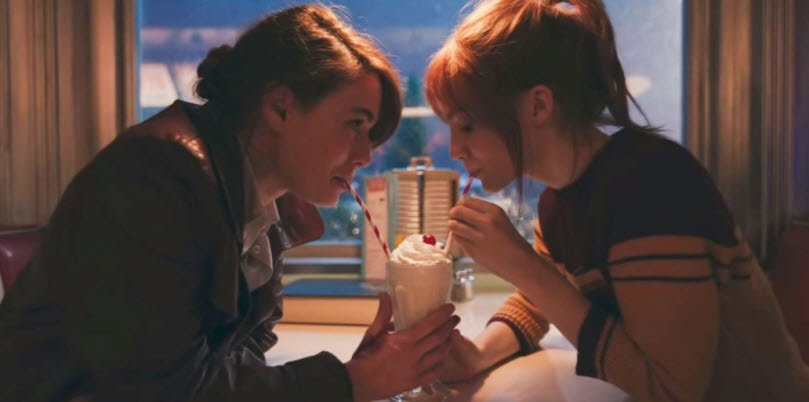
Fear Street Part One: 1994 (2021) ☆☆☆(3/4): So it begins…

Netflix film “Fear Street Part One: 1994”, the first chapter of the trilogy which was released on last Friday and will be followed by two other films during next two weeks, is a promising start packed with enough fun and horror for us. While pretty slick, witty, and playful as a genre exercise, the movie also jolts us a lot with enough blood and terror to be strewed over the screen, and you will surely have some expectation on whatever will come next after this fairly well-made product.

After the striking opening scene which is clearly influenced by Wes Craven’s classic meta-slasher film “Scream” (1996), the movie quickly establishes its deliberately artificial main background. For many decades, Shadytown, a small plain town located somewhere in Ohio, has been quite infamous for a series of various serial killing incidents, and its status as “the murder capital of the United States” has been often contrasted with its affluent neighboring town Sunnyvale, which has been ironically regarded as one of the safest places in the country. According to an old legend, Shadytown was cursed by a vengeful witch who was executed by town people in the 17th century, and many people in the town believe that this witch’s malevolent spirit has been the origin of all those serial killing incidents in the town.

Anyway, the latest serial killing incident certainly adds more infamy to Shadytown, but that is not much of a concern to a local high school student named Deena Johnson (Kiana Madeira). As it is subsequently revealed to us, she was in a secret romantic relationship with a female schoolmate named Samantha “Sam” Fraser (Olivia Scott Welch), but they recently had a breakup as Sam moved to Sunnyvale along with her mother, and Deena is still trying to process her complicated feelings toward Sam. When she happens to meet Sam again, they become more estranged from each other as clashing with each other, and Deena is certainly not so pleased to see Sam letting herself involved with one of the high school athletes in Sunnyvale.

Their conflict eventually culminates to a rather unfortunate accident, and that is when things become more serious for not only Sam and Deena but also several other kids around them including Deena’s nerdy younger brother Josh (Benjamin Flores Jr.). They all find themselves suddenly menaced by several murderous figures, and it does not take much time for them to realize that these murderous figures are under the control of that witch, whose spirit is indeed very much alive as ready to relish another bloody terror onto Shadytown.

Once it finishes establishing its background and characters, the movie, which is based on the popular book series of the same name by R.L. Stine (he is also famous for the Goosebumps series, by the way), goes all the way for fun and horror, and director/co-writer Leigh Janiack, who wrote the adapted screenplay along with Kyle Killen and Phil Graziadei, did a skillful job of balancing the story and characters between horror and comedy. While we get plenty of amusing homages and references to various horror films ranging from “Jaws” (1975) to “Halloween” (1978), the movie also gives us a number of intense and scary moments as expected, and I must confess that I winced a lot while watching a certain gruesome moment involved with a bread slicer.

Meanwhile, the movie pays considerable attention to the emotional drama between Deena and Sam. While she still resents Sam for not being franker about their romantic relationship, Deena also understands well how it is difficult for both her and Sam to be open about their relationship to others, and she eventually comes to have some honest moments with Sam as they try to survive their impending peril. At one point, they happen to have a chance to be intimate with each other again, and it is certainly refreshing to see how the movie allows its main characters to delve into their sexuality without any guilt or punishment in contrast to many other slasher flicks out there.

Besides Sam and Deena, several other characters in the film also come to us as engaging characters who gradually turn out to be more than mere plot elements. As an amateur expert on the history surrounding the town as well as the witch, Deena’s younger brother eagerly provides his older sister and others pieces of information which may help their survival, and he also shows considerable pluck just like Deena’s two close friends who happen to get involved in the situation. Around the climatic part, they are all willing to stick together along with Sam and Deena, and we naturally come to root for them more while also caring more about what will happen to them in the end.

Janiack draws good performances from her main cast members. While Kiana Madeira and Olivia Scott Welch are convincing in their characters’ rocky relationship development along the narrative, Benjamin Flores Jr., Julia Rehwald, and Fred Hechinger bring each own colorful personality to their supporting parts, and Ashley Zukerman is also fine as the sole substantial adult character in the story.

Overall, “Fear Street Part One: 1994” sets well the starting point for its trilogy, and I was entertained enough to become curious about the following second chapter, whose trailer is incidentally shown right before the end credits roll. As a seasoned moviegoer, I already have a pretty good idea of what I will get around this Friday, but I still wish I will be amused and scared as much as before at least.

Posted in Movies | Tagged , , , , , , , | 1 Comment

The Vigil (2019) ☆☆1/2(2.5/4): One very disturbing night in a Jewish household

“The Vigil” is a little spooky Jewish horror film which shows us its cards a bit too early and too much in my trivial opinion. While there are a number of effective moments which will surely unnerve you more than once, the movie often feels heavy-handed in case of connecting two very different personal traumas under its dark and insidious background, and it is also quite distracting at times due to its several blatant tactics for terrifying its audiences.

After the prologue part which explains us a bit on the traditional Jewish vigil ritual for the dead, we are introduced to Yakov Ronen (Dave Davis), a young Jewish lad who recently left his former Orthodox Jewish community in New York City for some unspecified personal reason. During the opening scene, we see him having a meeting with several other former Orthodox Jewish community members, and they are all willing to give him some help and support, but he is still nervous and unsure about what to do next for his new life.

Shortly after the meeting is over, Yakov notices that a member of his former Orthodox Jewish community is waiting outside. Despite becoming more nervous as a result, he eventually decides to confront this dude, and this dude turns out to have an offer Yakov cannot easily refuse. He urgently needs someone to keep vigil over some recently deceased person from midnight to dawn, and all Yakov will have to do for receiving 400 dollars is simply staying alone with the body of this recently deceased person during that short period.

Although he is not so eager to do this job, Yakov eventually agrees to do it because he really needs money to support him right now, and he gets to learn a bit about this dead person as going to the house belonging to this dead person and his surviving wife. He was a very old man who was incidentally a Holocaust survivor, and he managed to restart his life in New York City after the World War II, but then he somehow became very distant to his children and grandkids while adamantly leading a reclusive life along with his wife, who has been not that well during recent years due to Alzheimer’s disease.

When Yakov enters the dead man’s house, he does not feel that comfortable as watching the dead man’s body brought into the living room, and the dead man’s wife does not help him much while looking as senile as expected. Her debilitating mind does not seem to be fully aware of her husband’s passing yet, and she just mindlessly goes upstairs shortly after being introduced to Yakov.

Once he is left alone with the dead man’s body, Yakov is relieved by the following silence, but, of course, that does not last long. As time goes by, he finds himself getting more nervous and awkward than before, and then, what do you know, he begins to hear and see strange things. At one point, he sees a mysterious entity lurking at a certain dark spot inside the house, and that turns out to be a mere prelude for more disturbing stuffs to occur here and there around him.

Because his mind has still been struggling a lot with a certain trauma he experienced not so long ago, Yakov initially wonders whether he is having a sort of nervous breakdown right now, but the situation becomes more intense and terrifying for him, while the night seems to be going forever outside. It looks like there is something, yes, evil inside the house, and he becomes more convinced about that after belatedly discovering what the dead man had been obsessed with till his eventual death.

Relentlessly cornering its hero more along its simple plot, the movie also bombards us with lots of stuffs we can expect from your average haunted house horror flick. Cinematographer Zach Kuperstein makes sure that the interior spaces of the house in the movie feels constantly stuffy and ominous via dim lighting and lots of shadows, and the score by Michael Yezerski frequently grates upon our ears for generating more intensity and insidiousness on the screen.

It is not much of a spoiler to tell you that our terrified hero eventually comes to confront his own trauma as well as whatever has been menacing him, but the following moment is rather anti-climactic despite the efforts from director/writer Keith Thomas and his crew members. In case of the origin of Yakov’s personal trauma, it is inarguably tragic to say the least, but it still pales before the dead man’s unspeakable plight in the past, and the movie accordingly fails to generate any dramatic resonance between these two dark plot elements.

Anyway, the few main cast members of the film are believable in their solid acting. While Dave Davis is suitably cast as an increasingly neurotic hero with considerable mental vulnerability, late Lynn Cohen, who passed away in last year, holds her own place well beside Davis, and several other cast members including Menashe Lustig, Malky Goldman, Nati Rabinowitz, and Fred Melamed duly fill their small spots at the fringe of the story.

In conclusion, “The Vigil” is rather thin and dissatisfying in terms of story and character development, but it is not a total dud at all as filled with a substantial amount of dread throughout its short running time (89 minutes), and I appreciate the efforts and skills put into the screen. As far as I can see from the overall result, Thomas is a good filmmaker who does know how to engage his audiences via mood and ideas to be explored, and I hope that he will soon move onto better (and scarier) things to come.

Posted in Movies | Tagged , , | Leave a comment

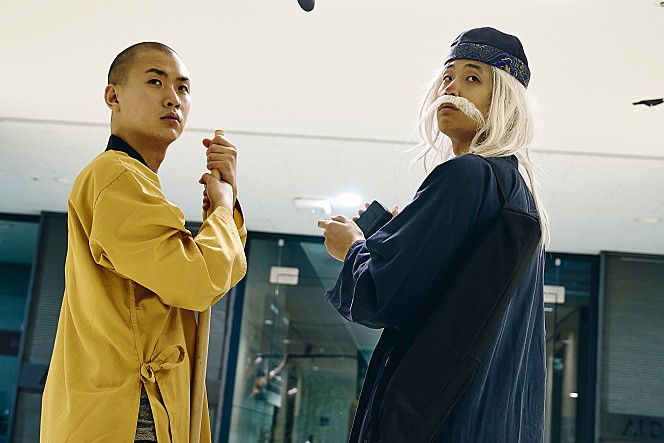
The 8th Night (2021) ☆☆☆(3/4): A grim but engaging Buddhist horror flick

South Korean film “The 8th Night”, which was released on Netflix two days ago, is a grim but engaging Buddhist horror flick with enough entertaining elements to notice. While surely looking and feeling as gloomy and solemn as your average occult movie about demon and apocalypse on the horizon, the movie is often impressive for its good mood and diligent storytelling, and it also has some surprises for us as steadily building its story and characters up to the expected finale.

During its prologue part, the movie gives the religious background of its story promise. Around several thousand years ago, a very powerful demon attempted to make the human world into total hell, but it was eventually vanquished by the divine power of Buddha, and then its two powerful magical eyes were respectively stored in two stone caskets for preventing its return in the future. These two stone caskets were separately taken to two hidden spots quite distant from each other, and their locations have been kept in secret among their guardian monks for next several thousand years.

However, one of these caskets happens to be discovered at the beginning of the story, and we see how this happening subsequently leads to the eventual return of the demon, which is quite ready to retrieve its other eye once it gets revived. After going through a series of marked human targets during the next 8 days, it will finally get its other eye and then regain all the demonic power belonging to it, and then no one will be able to stop it from bringing hell onto the Earth.

Around the night when the demon is revived, an old monk, who has guarded the other casket for many years at a temple located in a remote mountainous area of South Korea, instinctively senses its return. While he is well aware of how urgent the situation is, he cannot do anything as he does not have much time to live, so, before he eventually dies, he instructs his young pupil Cheong-seok (Nam Da-reum) to look for Jin-soo (Lee Sung-min), who was once under his tutelage but then left some time ago for some unspecified personal reason.

When Jin-soo is introduced to us, we see him silently working at an urban construction site, and he does not seem to be that religious on the surface, but it is gradually revealed to us that his soul has been silently haunted and tormented by not only personal guilt and grief but also many ghosts hovering around him. Although there may be the peace for him in the end if he dies, he cannot die for now as still believing in the cause shared between him and his ex-mentor, and those ghosts often ridicule and annoy him as whispering bad words to his ears every night.

Once he arrives in the city where Jin-soo lives, Cheong-seok clumsily searches for Jin-soo, and the movie shows a little sense of humor from the awkward interactions between Jin-soo and Cheong-seok, who cannot speak due to his longtime oath on silence and often has to depend on his notepad. While not so pleased about being accompanied with Cheong-seok, Jin-soo lets Cheong-seok join his risky mission anyway, and Cheong-seok soon comes to realize how serious and dangerous their mission really is. They must track down the demon before it comes upon its final marked human target, but they will also have to do something against their religious belief for stopping their powerful opponent, and this naturally makes Cheon-seok quite conflicted. Yes, they must prevent Armageddon by any means necessary, but can they be actually permitted to commit such an act like that?

With that difficult moral question constantly hovering over the story, the movie continues to accumulate tension on the screen as the situation becomes all the more serious for Jin-soo and Cheong-seok. As it gets transferred from one marked human target to another, the demon gets closer and closer to its final goal, and we come to learn later that a young woman named Ae-ran (Kim Yoo-jung) is a crucial factor in this circumstance, though she is rather elusive even when Cheong-seok finally encounters her later in the story.

As you have already expected, everything in the story inevitably converges upon the climatic part where we get the usual showdown between good and evil, and the movie keeps holding our attention as before under the competent direction of director/writer Kim Tae-hyung. While this part is not that flashy or bombastic on the whole, the movie never overlooks what is being at stake for its main characters in addition to bringing more human depth to them, and that is the main reason why the rather melodramatic resolution at the end of the story works.

The main cast members of the film are well-cast in their respective roles. While Lee Sung-min, who recently appeared in “The Spy Gone North” (2018) and “The Man Standing Next” (2019), holds the ground with enough raw gravitas, Nam Da-reum effectively complements his co-star with youthful innocence, and Kim Yoo-jung, Choi Jin-ho, Kim Dong-young, Lee Eol, and Park Hae-joon are solid in their substantial supporting parts.

Overall, “The 8th Night” does not break any new ground in its genre territory, but its variation of familiar genre elements is interesting to watch at least. To be frank with you, I was not that terrified during my viewing as a seasoned movie nerd, but I did enjoy its mood and details in addition to appreciating a number of skillful aspects, so I mildly recommend you to give it a chance someday.

Posted in Movies | Tagged , , , , | Leave a comment

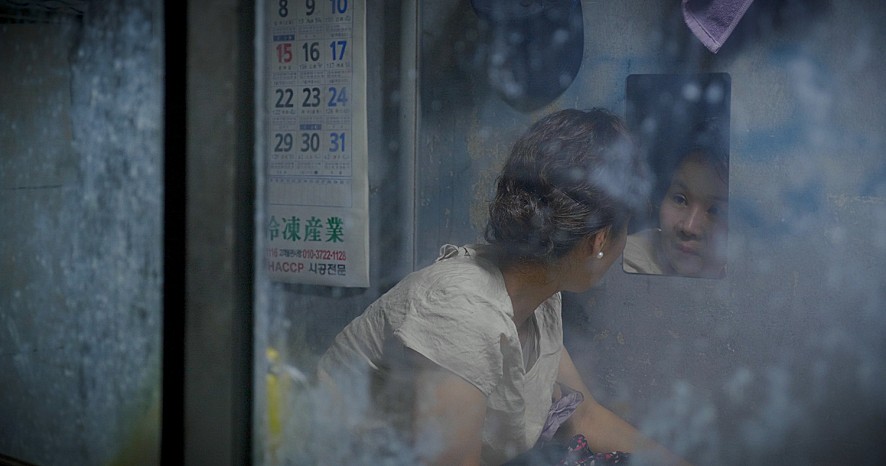
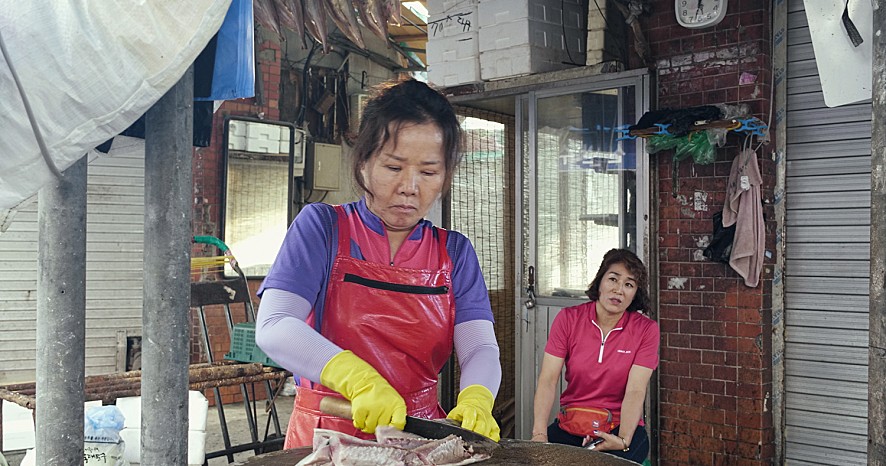
Us, Day by Day (2019) ☆☆☆(3/4): Their never-ending feminist life

South Korean documentary film “Us, Day by Day” looks into the past and present of five proud and strong women who have all led each own interesting life as feminists. As it is limited by its rather short running time (75 minutes), I wish it delved more into their lives and personalities, but the documentary still works as an earnest presentation of the history of the Korean Women’s Movement, and it is certainly something you should check out especially if you are interested in its relevant gender issues.

At first, director Kangyu Ga-ram reminisces about her old college time in the 1990s, when many youthful progressive activists in South Korean colleges found themselves rather aimless after the democratization of their country was finally attained in the late 1980s. Although she only came to realize later that a traditional music circle which she joined during her first college year was actually a political activist group, Kangyu did not mind at all while enjoying many outdoor activities along with her circle members, and that is evident from a series of old photographs of her and her circles members.

However, Kangyu’s good time in this circle did not last long because she was sexually molested by some supposedly respectable political activist. Quite shocked and devastated, she tried to seek any advice or help from others around her, but nobody could help her, and that eventually led to her leaving that circle with lots of pain and disillusionment.

Fortunately, Kangyu subsequently came across the rising feminist movements in her college, and she slowly got recovered from her trauma as learning more about feminism and gender inequality. In addition, she came to befriend several different female students from whom she came to learn one valuable thing after another, and that is the main reason why she becomes interested in observing how five certain college friends of hers have been doing during recent years.

Presented via their respective nicknames instead of their real names, her five different friends turn out to be still living through feminism. For example, “Kira” has run a small veterinary hospital in a small city not so far from my hometown Jeonju, and we see how she has had a fairly good life on the whole with her best female friend and several pets of theirs. Although she chose to pursue her current career due to feeling emotional exhaustion from handling many cases of sexual harassment, she still does not forget what she learned during that old college time, and, as observing her small local political activity, we come to admire her more.

The movie subsequently shifts its focus to “Jatury”, who has been married to a guy who was initially her best male friend. Besides running not only a small inn but also an organic vegetable delivery service along with her caring husband who seems to respect her sincerely as his equal life partner, she has also invested a considerable amount of her time to local political activities, and we see her several activities in the local women’s association. When a certain prominent politician is accused of sexual harassment and then put on a trial for that, she and her colleagues are certainly vocal about this big scandal, and they willingly do demonstrations on streets, though not many people pay attention to them.

Like her friends, Jatury still remembers well how active she and many other female college students were during the 1990s. Empowered by their feminist belief and knowledge, they were bold and forthright especially in case of exposing a very rude public ‘ritual’ of male students from a certain prestigious college in Seoul, and their efforts eventually stopped this virulent tradition of toxic masculinity once for all.

In case of “Aura”, she has steadily worked on supporting women’s rights and welfare since that time, and we observe how passionately she devotes herself to a cooperative association to provide a number of different kinds of help and service to many women out there. Not so surprisingly, she often comes across obstacles, but she is not deterred by them at all as putting more efforts on her passion project, and you can sense her indomitable energy as she enthusiastically talks in front of the camera.

The aforementioned sexual harassment scandal appears again when the movie approaches to “Omae”, who certainly knows a lot about sexual harassment as the head of a consultation office for sexual violence. Like Jaturi, she is quite outspoken as expressing her opinion and belief in public, and she and her colleagues are certainly excited when the justice they have demanded is finally served to that deplorable politician.

As the final figure in the documentary, “Flowing” also impresses us as much as others. Although she recently has to put aside her independent musician career due to a financial reason, she still cares a lot about feminism nonetheless, and we see her working at a local youth center where she can enlighten those young kids more on gender issue and sensitivity. Around the end of the documentary, we hear a piece of work composed by her for the documentary, and we come to reflect more on her and other women in the documentary as the first bar of her work is played on the soundtrack.

On the whole, “Us, Day by Day” is rather plain on the surface, but its sincerity and passion are clearly felt from its engaging human subjects, and you will surely be enlightened a bit on the Korean Women’s Movement. Many of us have been more aware of women’s movement thanks to the recent #MeToo era, but there were already many efforts and struggles before that, and the documentary certainly did a fine job of illuminating some of those admirable South Korean feminists who do deserve more credit and acknowledgement.

Posted in Movies | Tagged , , , , | Leave a comment

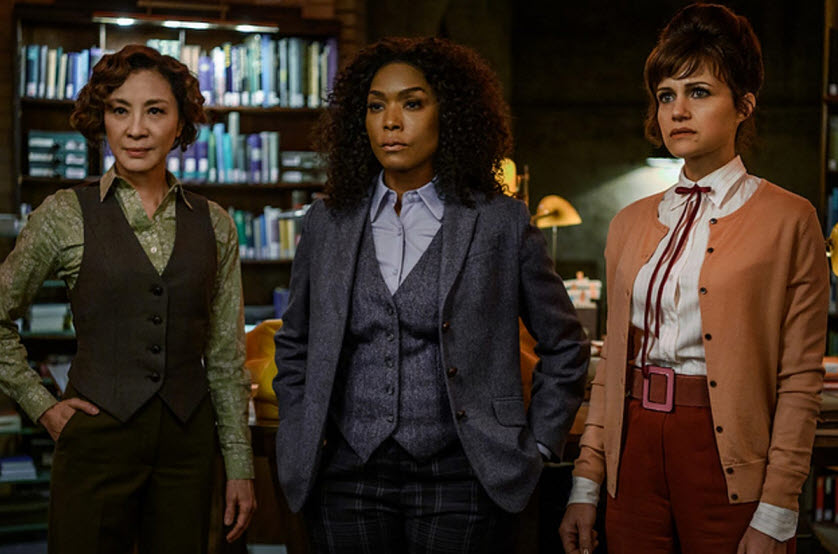
The Dark and the Wicked (2020) ☆☆☆(3/4): Something insidious at their family farm

“The Dark and the Wicked” is a simple but effective horror flick which distinguishes itself a bit with its suffocatingly insidious atmosphere. While its story promise is familiar to the core, the movie keeps holding our interest as steadily accumulating the creepy sense of fear and dread around its few main characters, and I enjoyed this process even though I could clearly discern its inevitable arrival point right from the very beginning.

The movie opens with presenting the isolated daily life of an old couple living alone in their remote rural family farm. The husband, who has been apparently very sick, is mostly unconscious on their bed while waiting to die sooner or later, and the wife usually takes cares of their house and those livestock animals in their farm for herself, unless she is assisted by her husband’s nurse or their sole farmhand guy. While it is clear to us that the wife has had a hard time due to the husband’s sickness, we come to gather that there is something strange around them, and that soon becomes quite evident when a small but very odd happening occurs around her when she is preparing the dinner at her kitchen.

The movie subsequently shifts its focus to the viewpoint of this old couple’s two adult children Louise (Marin Ireland) and Michael (Michael Abbott Jr.), who come to the farm for checking out their parents on one day. They are sincerely concerned about their parents, but they have been quite estranged from their parents since they left the farm and started to lead each own life many years ago, and they certainly feel some guilt and regret for neglecting their parents a lot during last several years.

At first, everything looks fine and normal to them except their father’s worsening health condition, but it does not take much time for both Louise and Michael to sense something bad around the farm, and the movie accordingly amplifies its creepy tone around them bit by bit. In case of one certain scene unfolded inside the house, it becomes a bit unnerving as we suddenly notice an unknown figure in the background, and then the level of suspense is dialed up step by step, or chop by chop, shall we say, till the eventual moment of shock and awe arrives in the end.

After this striking moment, the movie continues to disturb us as well as its two main characters, who subsequently learn more of what has been going on in the farm. It seems that there is a mysterious dark force hovering around the farm, and they cannot help but disturbed more as strange things keep happening around them. While Louise becomes more and more terrified of whatever is lurking somewhere around the farm, Michael tries to be sensible and rational, but he also finds himself quite unnerved by several ominous signs including a very disconcerting incident involved with one of those livestock animals in the farm (The end credits of the movie assures to us that no animal was harmed during its production, by the way).

As its two main characters get mired more in guilt, terror, and confusion along the story, director/writer/co-producer Bryan Bertino keeps delivering spooky scenes to engage and chill us more. There is a brief but undeniably chilly moment when our two main characters come to a certain place for handling their little family matter, and I also like one creepy moment associated with the telephone in the house. In case of a certain supporting character suddenly appearing out of nowhere, this character gives some explanation on what is really going on around our two main characters, but there is also something untrustworthy about this character, and you may wonder more about this character’s identity when Louise tries to contact with this character later in the story.

When it goes for full horror mode during the last act, the movie comes to lose some of its tension, but it still holds our attention thanks to Bertino’s competent direction, and it wisely sticks to its mostly restrained mode while not revealing too much to us. Yes, we certainly get more shock and terror during the expected climatic part, and these moments are all the more shocking and disturbing as dryly presented on the screen except Tom Schraeder’s moody score on the soundtrack.

Although the ending feels weak with a little too many loose ends, the movie still works to some degree as a horror tale about family relationship, and it is also supported well by the convincing performances from its main cast members. While Marin Ireland carries well several intense key scenes which depend a lot on her acting, Michael Abbott Jr. ably complements her as required, and several supporting performers in the film including Lynn Andrews, Xander Berkeley, Tom Nowicki, and Julie Oliver-Touchstone are effective in their respective small roles.

I did not like Bertino’s first feature film “The Strangers” (2008) mainly because of its barebone narrative going nowhere before predictably arriving in its hollow predictable finale, but that film showed Bertino’s considerable competence as a burgeoning filmmaker at least, and I was certainly glad to see him moving onto his second feature film “The Monster” (2016) later, which is inarguably a better film in many aspects. Although “The Dark and the Wicked” does not surpass what was accomplished in “The Monster”, the result is definitely more satisfying than “The Conjuring: The Devil Made Me Do It” (2021), so I mildly recommend you to give it a chance someday.

Posted in Movies | Tagged , , , | Leave a comment

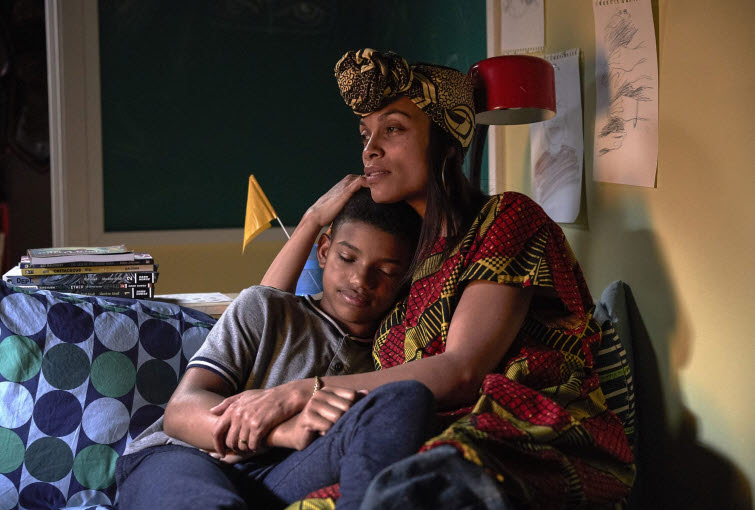
Wendy (2020) ☆☆1/2(2.5/4): A rough variation of Peter Pan tale

Behn Zeitlin’s new film “Wendy” attempts a raw and rough variation of that famous fantasy written by J.M. Barrie, and I admire that to some degree despite being frequently dissatisfied with the overall result. While it is often quite impressive for its technical aspects, the movie is unfortunately uneven and sloppy in terms of story and characters, and I became more aware of its technical aspects instead of more emotionally engaged in its story and characters during my viewing.

During its opening scene, the movie promptly establishes its vivid rural Southern background. As it closely observes how a single mother named Angela Darling (Shay Walker, who brings enough warmth and sensitivity to her thankless role) runs a shabby diner located right next to a railroad line, we gradually become immersed in the world inhabited by her and other people including her little baby daughter, and then there comes a little surprise for us when a small boy runs away from the spot right after called by some little figure on the top of a passing train.

Several years later, things remain pretty much same in the daily life of Angela and her daughter Wendy (Devin France). When another day of theirs is over, Angela spends some time with Wendy and her older twin brothers Douglas (Gage Naquin) and James (Gavin Naquin), and the affection between Angela and her children is evident as she tells them about her old wild life and how she gave it up for raising her children later.

Like her mother in the past, Wendy has aspired to get away from her small environment and then experience new stuffs out there, and, what do you know, there comes an opportunity for not only her but also her brothers in the middle of one night. Somebody on a passing train calls her from the outside, and that figure in question turns out to be the same one who took that boy away during the opening scene. Without any hesitation, Wendy quickly gets out of the house and then climbs on the passing train, and so do her brothers.

While the train keeps going, Wendy and her brothers get to know their little mysterious new friend, who can be regarded as a rural Southern version of Peter Pan. Although he cannot fly, this little dude has resided in some remote island located somewhere in the middle of the sea (The movie was mainly shot in Monteserrat, an island of the Leeward Islands in the Caribbean Sea, by the way), and Wendy and her brothers soon find themselves on a little boat sailing toward that island.

Although it does not look that fantastic compared to whatever you can imagine from Barrie’s story, the island in the film has its own natural awe and wonder, and Zeitlin and his cinematographer Sturla Brandth Grøvlen provide us a number of breathtaking landscape shots to behold. While they surely look rough as captured on 16mm film, they also feel palpable with considerable verisimilitude, and Zeitlin and his crew members deserve to be commended for constantly filling the screen with realistic mood and details to be appreciated.

Once its new background is fully established, the movie goes for some magic as expected. At one point, Wendy comes to have a chance for encountering the source of magic which supposedly keeps her new friend and several other kids in the island young forever, and this supernatural moment reminds me a lot of a similarly magical moment around the end of Zeitlin’s previous film “Beasts of the Southern Wild” (2012), which was incidentally one of the best films of 2012 in my inconsequential opinion.

However, the screenplay by Zeitlin and his co-writer Eliza Zeitlin, who also handled the production design of the film, begins to stumble when it tries to explore the less wondrous side of the island, which eventually comes to function as the main conflict in the story. After a sudden plot turn which feels too contrived, there comes a gruesome moment of physical mutilation, and this is so jarring that the movie never recovers while unfortunately turned into something closer to “Lord of the Flies” instead of Barrie’s tale. Although there is some poignancy as Wendy comes to have an important life lesson along with her new friend around the end of the story, the finale is disappointing as resolving the conflict too easily, and the following ending lacks bittersweet emotional impact it is supposed to deliver.

Anyway, Zeitlin draws good performances from his young main cast members. While Devin France’s earnest performance holds the center well, Yashua Mack complements France well on the whole, though his oddly sullen performance seems to be channeling “Beasts of No Nation” (2015) more than Barrie’s tale. In case of the other young cast members including Ahmed Cage, Krzysztof Meyn, and Gavin and Gage Naquin, they are also fine in their unadorned appearance, and it is a shame that, just like a number of adult characters at the fringe of the story, their characters are mostly underdeveloped as being no more than plot elements.

In conclusion, “Wendy” is an interesting but ultimately flawed re-imagination of Barrie’s tale, and it is a letdown compared to “Beasts of the Southern Wild”, which is more successful in generating magic realism on the screen in addition to being better in terms of storytelling and characterization. While Zeitlin is still a good filmmaker who does know how to establish mood and details on the screen, he somehow fails here to our disappointment, and I can only wish that he will soon bounce from this misfire.

Posted in Movies | Tagged , | Leave a comment

Good on Paper (2021) ☆☆1/2 (2.5/4): There is something about this guy…

Netflix film “Good on Paper”, which was released on last Wednesday, is a mildly funny comedy film which could go further with its heroine. She is definitely not someone you can easily like, but it is often amusing to see how she lets herself become blind to what is so obvious in front of her eyes, and it is a bit shame that the movie falters more than once when she finally decides to confront her impending issue with vengeance.

Iliza Shlesinger, who writes the screenplay in addition to participating in the production of the film as one of its executive producers, plays Andrea Singer, a 34-year-old female stand-up comedian who has worked mainly in LA. Although her career has been fairly successful on the whole, Andrea has been not that satisfied with her current status while hoping for bigger successes to come, and she is certainly disappointed when her audition for some movie in New York City does not go well for her.

When she is about to get on an airplane to take her back to LA, Andrea happens to encounter a plain-looking guy named Dennis Kelly (Ryan Hansen), and, what do you know, he later sits right next her seat on the airplane. He introduces himself as a Yale graduate who is now working as a successful hedge fund manager, and, as she talks more and more with him during the flight to LA, Andrea finds herself quite attracted to this total stranger.

Anyway, Andrea decides to befriend him more, and Dennis is willing to be a friend to spend time with, though they are not exactly in relationship for now. She keeps dating some other more good-looking guys for fun and, yes, sex, but she comes to like him more as spending more time with him, and she does not hesitate to give him some emotional support when he looks devastated due to a sad family incident.

When Dennis naturally becomes more serious about their relationship, Andrea is certainly willing to move their relationship to the next stage, and everything looks a bit more positive to her than before. With his considerable help and support, she focuses more on audition preparation, and she is excited when she unexpectedly succeeds in getting a big role in some silly but promising TV series to be produced sooner or later.

However, after a certain point, Andrea belatedly comes to realize that she actually does not know anything certain about her boyfriend. He is so plain and inconsequential that she has just accepted what he seems to be on the surface, but then she begins to notice a series of suspicious signs she cannot easily ignore. For instance, he said he bought a house located somewhere in Beverly Hills, but he has never taken her to his house, and she comes to wonder more about where he actually lives.

Her best friend Margot (Margaret Cho) suggests that she should delve further into this increasingly dubious matter, but Andrea keeps hesitating over what to do next, especially when Dennis gives her a plausible reason for why he has not taken to his house yet. Because she still has feelings for Dennis, Andrea tries to accept Dennis’s words, but she keeps noticing something fishy from her boyfriend – especially when they happen to spend a few days with two people who did graduate from Yale.

Because it is a comedy film instead of a thriller flick, the movie certainly goes for laugh instead of suspense, and we are accordingly served with several uproarious moments as Andrea eventually attempts to get to the bottom of her matter along with Margot, who becomes quite zealous about this as suspecting Dennis more and more. At one point, she and Andrea come to receive some help from the last person they want to get involved with, and the mood becomes quite hysterical as these three figures of strong personality clash with each other for a while.

During its eventual third act, the story becomes a bit tense as our heroine and her best friend plan to do something rather drastic for taking care of her matter once for all, and that is the point where the movie comes to lose some of its comic momentum. While it surely tries a lot of things to generate more laughs for us, it unfortunately ends up spinning its wheels instead, and the following finale feels artificial despite the feel-good last shot accompanied with a barbed act of female empowerment.

At least, the main cast members of the film are well-cast in their respective parts, and the movie shines whenever they go for the jugular. As the center of the film, Shlesinger is funny and engaging enough to hold our attention, and we come to root for Andrea more as often tickled by her comic emotional struggles along the story. Although she is on the verge of overacting more than once, Margaret Cho is effective as a comic foil for Shlesinger, and Rebecca Rittenhouse is also amusing as a cheery actress Andrea has disliked for many years just because she is much more popular than Andrea. In case of Ryan Hansen, he deftly balances his character between banality and creepiness, and I was disappointed to see the movie letting his character off the hook too easily.

In conclusion, “Good on Paper”, which is directed by Kimmy Gatewood, works to some degree thanks to several sharp comic moments generated among its principle cast members, and I did chuckle more than once, but I still think it could be funnier via pushing its story premise harder. At least, I am glad to be introduced to Shlesinger, and I sincerely hope that this good comedian will soon move onto something funnier in the future.

Posted in Movies | Tagged , | Leave a comment