Convergence: Courage in a Crisis (2021) ☆☆☆(3/4): People working on the front line against COVID-19

Latest Netflix documentary film “Convergence: Courage in a Crisis”, which is released today, is a modest but engaging assembly of personal narratives observed around the world during the ongoing COVID-19 pandemic. As busily shuffling around its multiple narratives, the documentary chillingly reminds us again of how much our world has been turned upside down since early 2020, and it will also show us how much millions of medical professionals and social workers are still fighting for us on their risky front line against COVID-19 even at this point.

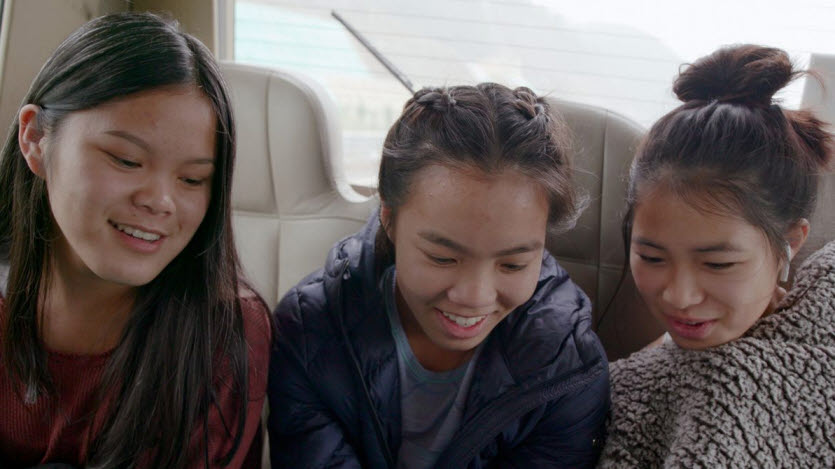
When the outbreak of COVID-19 in Wuhan, China was reported around the beginning of 2020, many of us simply regarded it as another usual flu epidemic. Of course, things soon became quite more serious than expected in Wuhan as well as the rest of the world, and a part shot by a local video blogger named Wenhau Lin gives us a close look into Wuhan during its following lockdown period just like other recent notable COVID-19 documentaries “76 Days” (2020) and “In the Same Breath” (2021). As Lin works as a volunteer driver for those hospital workers, we often see how the situation in the city gets worse day by day, and we notice how cautious Lin and many others are for avoiding infection as much as possible. They are the only ones between many citizens of Wuhan and COVID-19, and all they can do for now is preventing more infection in addition to handling numerous cases of infection here and there in the city.

Once the COVID-19 virus got spread outside China mainly thanks to many of those incompetent politicians around the word, the rest of the world was soon tumbled into the same emergency. Hassan Akkad, a Syrian refugee who recently settled in UK and then got employed in a local hospital shortly after the lockdown period, presents the daily record of what he and other hospital employees did everyday. Many of them are immigrants, and they are willing to do their best in their respective positions, but the British government does not treat them that well later just because they are non-professional employees. That leads to one angry video clip made by Akkad, which, to the surprise of him and his colleagues, goes viral on the Internet and also results in some significant change for them in public.

In case of Dr. Armen Henderson at the University of Miami Health System in Miami, US, he has been dedicated himself a lot to several social causes since the pandemic came upon his city. While he works at a local hospital during nighttime, he also does a number of social activities for many homeless people in a poor neighborhood of Miami during daytime. As many of you know, those poor homeless people are the most vulnerable persons to the pandemic, and Dr. Henderson has tried as hard as he can for helping them, but he cannot help but frustrated with the systemic racism of his society. At one point, we see a video clip showing his infuriating case of social injustice, and that certainly daunted him a lot for an understandable reason, but he has kept fighting as before because he cannot possibly stop in his dogged pursuit of justice and equality.

The part unfolded within a slum area of São Paulo, Brazil, introduces us to a woman named Renata Alves, and some of the most touching parts in the documentary come from her considerable personal dedication to her poor neighbors out there. Although there was some dark time in her past, she subsequently moved onto the next chapter of her life as helping and supporting others around her, and we often see her guiding an ambulance along the alleys and streets of her slum neighborhood.

In case of a hospital in Lima, Peru, we meet a middle-aged physician named Dr. Rosa Luz López, and we observe how her hospital is often overwhelmed by many COVID-19 patients just like thousands of hospitals around the world. At one point, we see a ward filled with several patients who were actually working there as doctors, and even Dr. López, who has managed to keep her spirit high as taking care of a lot of patients including a 15-year-old boy under a very critical condition, turns out to be not so safe from COVID-19 as shown from one moment.

The documentary also shows us how things got worse also in India and Iran, respectively. In case of Iranian couple Sara Khaki and Mohammad Reza Eyni, they were not particularly concerned at the beginning of the lockdown, but they began to hear about the death of some of people close to them, and they were naturally devastated by that. In India, we meet a couple anxiously expecting the birth of their baby, and they are quite concerned in front of the possibility of their child getting infected before coming into the world, but, to their relief, the baby turns out to be as healthy as they hoped.

As the global human community kept getting more devastated by the pandemic, the need of vaccines became more urgent, and the documentary pays some attention to the collective efforts on developing vaccines. Fortunately, thanks to the global professional collaborations around the world, several effective vaccine products were developed and then tested within a short period, and I am one of millions of people benefiting from that right now (I will get the second shot of Pfizer vaccine on next Monday, by the way).

Overall, “Convergence: Courage in a Crisis” did a fairly good job of conveying to us the global impact of the COVID-19 pandemic on personal levels, and director Orlando von Einsiedel skillfully juggles various elements provided by a bunch of his co-directors. Although I must point out that its narrative tapestry often feels rather scattershot, and this is still another interesting documentary of the COVID-19 era, and you will surely appreciate the ongoing public efforts of many medical professionals and social workers out there.

Posted in Movies | Tagged , , , , , , , , | Leave a comment

Venom (2018) ☆☆(2/4): A couple of losers

These days, some superhero movies are fairly good enough to entertain you for a while, but others are mostly bad enough to be forgotten sooner or later. While we had some notable highlights including “Wonder Woman” (2017) and “Black Panther” (2018), we also saw some glaring low points such as “Thor” (2011) and “Batman v Superman: Dawn of Justice” (2016), and I must tell you that “Venom” still belongs to the latter group even at present. Besides being your average superhero origin story, it has almost nothing to offer except the game efforts from its consummate lead actor, and it only ends up being a mere opener for its sequel, which will incidentally be released in this month.

In the beginning, the movie establishes how quickly things get pretty bad for Eddie Brock (Tom Hardy), a hot shot journalist who has been working in San Francisco since he moved from New York City some years ago. When he is assigned to reporting on the young CEO of some very powerful technology company, Brock is not that thrilled to say the least, but then he smells something fishy from a bunch of confidential documents given to his lawyer fiancée Anne Weying (Michelle Williams), who happens to be working at a law firm representing that company. Quite eager to get another hot news to be reported, Brock unfortunately tries a little too hard while interviewing that young company CEO, and, not so surprisingly, that results in not only his unemployment but also Anne’s breakup with Eddy.

Meanwhile, it turns out that that young company CEO, Dr. Carlton Drake (Riz Ahmed), has really been hiding something very serious behind his back. He and his scientists have been working on a mysterious alien parasite in their top-secret laboratory, and, like any other megalomaniac villain, he is willing to do anything for making a historical breakthrough via this mysterious alien parasite, which is named “Symbiote”. Although most of his employees dully obey his order, one of them becomes more conflicted as watching more of Dr. Carlton’s ruthlessness, so this person eventually attempts to make a contact with Brock, who has been more or less than being at the bottom of his life and career since he got fired at that time.

Thanks to this insider’s help, Brock sneaks into Dr. Carlton’s top-secret laboratory and then succeeds in recording what Dr. Carlton and his scientists have been doing, but, alas, there comes an incident which will change Brock’s life forever. He accidentally gets exposed to a symbiote which quickly goes inside his body, and, shortly after managing to escape from the laboratory, he is horrified as belatedly discovering what is happening to his body and mind. Besides often riddled with insatiable hunger, he can somehow exert incredible physical strength, and, above all, he frequently hears a strange voice inside him, which can reveal its true identity from his body whenever that seems necessary.

As Brock tries to handle his problematic situation with this Symbiote called, yes, “Venom”, the movie gives us a series of silly but amusing moments, and Tom Hardy, who also provided the voice of Venom in addition to serving as one of the executive producers of the film, has some naughty fun with the absurd comic struggles between his two characters. Like Steve Martin and Lily Tomlin in “All of Me” (1984), Brock and Venom constantly clash with each other over Brock’s body to our little amusement, and Hardy has a particularly uproarious moment when Brock desperately tries to explain his situation to Anne but then only ends up putting himself in a water tank full of living lobsters.

Anyway, Brock and Venom somehow get connected with each other as two fellow losers, and they certainly stick together when they face a matter of life and death. After finding that Brock can be a perfect specimen for his ongoing experiment, Dr. Carlton is certainly ready to dispatch a bunch of goons to retrieve Brock as well as Venom, and we accordingly get several action sequences including the one which is briskly and frantically unfolded along many tricky alleys of San Francisco.

However, the movie often loses its way as trying to do many other things besides comedy and action during its 112-minute running time. Although director Ruben Fleisher and his crew members including cinematographer Matthew Libatique did a fairly competent job on the whole in technical aspects, the movie is uneven and disjointed in terms of story and characters, and that is the main reason why its climactic part does not work as well as intended. To be frank with you, all I could see from that climactic part was nothing but heaps of CGI added during its post-production stage, and I was actually much more excited by the excerpt from a certain acclaimed superhero animation film around the end of the end credits (Hint: This animation film, which was also produced by Sony, was released in theaters not long after “Venom” came out).

Furthermore, the movie criminally under-utilizes not only Hardy but also several good performers around him. While Michelle Williams does not have many things to do because of her thankless supporting role, Riz Ahmed often stiffly struggles due to his mediocre villain character, and Jenny Slate manages to leave some impression despite her brief appearance.

In conclusion, “Venom” is disappointing for many reasons, and it felt like a tedious homework to me when I watched it yesterday for preparing for its upcoming sequel. It is not a total bore mainly thanks to Hardy’s amusing lead performance, but it could be better in my trivial opinion, and I only hope that the sequel will be a considerable improvement over this regrettable failure.

Posted in Movies | Tagged , , , | Leave a comment

Stillwater (2021) ☆☆1/2(2.5/4): An American dad stuck in Marseilles

Tom McCarthy’s latest film “Stillwater” is calm and patient in its story and character development, and I admire its thoughtful restraint to some degrees although I felt quite impatient as often noticing its weak aspects during my viewing. While it is mostly anchored well by the humble lead performance at its center, the movie is a bit too predictable and contrived especially during its last act, and I was only left with hollow impressions when the movie finally reached to its final scene, which is rather middling instead of being dramatically impactful enough to linger on our mind.

Matt Damon, who admirably manages to dial down his usual star quality a lot here in this film, is Bill Baker, a plain Oklahoma oil worker who has been quietly dealing with one serious personal matter in his barren life. He has a daughter to whom he has been not particularly close since his wife died many years ago, and Allison (Abigail Breslin) did not have much problem with going to Marseilles, France for her study four years ago, but then she was arrested and then charged of the murder of her female lover with whom she lived for a while in Marseilles. At that time, her case, which is clearly a loosely fictional version of the Amanda Knox case in 2007, drew lots of attention from the media and the public, and she was eventually found guilty as charged before being sentenced to several years of imprisonment.

Anyway, Baker does not expect anything at all when he glumly comes to Marseilles four years later just for seeing his daughter during next two weeks, but then there comes a little surprise request from Allison when they are having a brief private moment between them in the prison. All he has to do is simply delivering a letter, which is incidentally written in French, to the lawyer who handled her cast at that time, and he dutifully follows her request without any hesitation, but, after reading this letter, Allison’s lawyer flatly tells him later that whatever Allison is trying to tell via her letter will not change anything at all.

Understandably perplexed, Baker begins to delve into the case for himself, and he soon gets to know about what is written in Allison’s letter. According to a hearsay she recently acquired somehow, there is some Arab guy who told others at a party that he is actually the one who committed that murder, and this guy also happens to be the one with whom Allison happened to be right before the estimated time of the murder. Shortly after learning of this small but significant possibility of getting his daughter exonerated and then released, Baker embarks on the search for this Arab guy, but, of course, he soon finds himself being no more than a fish out of water because he is a foreigner who cannot speak French at all from the start.

Fortunately, there is actually someone who can help Baker a bit besides being a translator for him. That person in question is a struggling single mother actress named Virginie (Camille Cottin), and, though their first encounter at the hotel where both of them happened to stay was not exactly pleasant, she agrees to help Baker when he later comes to her current residence. Although her character is more or less than a convenient plot element, Cottin did a fine job of imbuing her supporting role with warm humanity and gentle charm, and young performer Lilou Siauvaud holds her small own place well around Cottin and Damon as Virginie’s little plucky daughter.

Now this looks like a familiar set up for mystery thriller plot, but the screenplay by McCarthy and his co-writers Marcus Hinchey, Thomas Bidegain, and Noé Debré takes a leisurely route instead. Like any flawed heroes of mystery drama movies, Baker comes to cause more mess and complication in his and his daughter’s situation, but he subsequently tries to compensate for what he inadvertently caused, and that is where some of the best moments in the film come. As coming to live along with Virginie and her daughter, Baker is glad to have something stable in his life through these two people who come to mean a lot to him, and he also comes to have some moments of reconciliation with his daughter, though, not so surprisingly, that is not so easy for both of them.

Unfortunately, the movie takes a left turn after this part, and that is where it comes to lose our interest as well as its narrative momentum. For example, what follows after Baker makes a very drastic decision for his daughter does not generate much tension at all while being quite flat and predictable to the core, and we are not so surprised by how his consequent circumstance is eventually resolved – or what is accidentally revealed to him around that narrative point.

At least, Damon’s understated acting dutifully carries the film to the end, and he is always engaging as tentatively responding to several main cast members surrounding him. While he and Cottin are convincing in their characters’ relationship development along the story, his several key scenes with Siauvaud are presented well with unadorned tenderness, and Abigail Breslin brings some brittle qualities to her rather perfunctory scenes with Damon.

In conclusion, “Stillwater” is not a total dud at all, and it often shows McCarthy’s strength as a good character drama movie director, but the overall result is still relatively mediocre compared to a number of better films in McCarthy’s career. Besides his Oscar-winning film “Spotlight” (2015), he also gave us “The Station Agent” (2003) and “The Visitor” (2007), and I assure you that you will a better time with any of these excellent films.

Posted in Movies | Tagged , , | Leave a comment

Petite Maman (2021) ☆☆☆1/2(3.5/4): A little fantasy from Céline Sciamma

Céline Sciamma’s latest film “Petite Maman” is so simple and modest in terms of story and characters that I was surprised by how effortlessly it engaged and then touched me a lot in the end. Yes, her movie is just about the unlikely relationship between its two young heroines, but what is achieved by Sciamma and her cast and crew members here in this film is sublime and powerful to say the least, and the movie is inarguably another distinctive work in her remarkable filmmaking career.

The story is mainly told via the viewpoint of an 8-year-old girl named Nelly (Joséphine Sanz), who recently lost her grandmother as shown from the opening scene of the film. As her mother is emptying the grandmother’s room at some facility for old people, Nelly kindly says goodbye to one old lady after another, and then we see her and her parents coming into her grandmother’s house, which is located in the middle of some remote forest area.

As staying in her grandmother’s house along with her parents for a while, Nelly encounters a number of old stuffs including the ones once belonging to her mother, and she wonders more about why her mother has not talked much about her childhood years. While she is certainly as loving and caring to her daughter as her husband, Nelly’s mother still does not seem to want to talk about her old childhood years, and Nelly cannot help but become more curious about how her mother was in the past.

And then there comes a little unexpected change. When she becomes scared of the darkness of night just like any other child around her age, Nelly comes to sleep besides her mother, and Nelly’s mother gladly gives her daughter some comfort as they eventually get asleep, but then Nelly finds in the next morning that her mother is gone for some unspecified reason. As giving her a bowl of cereal as usual, her father assures to her that everything is all right, but Nelly becomes worried about whether her mother is all right, and she comes to spend more time outside the house.

When she is around a spot which seems to be her mother’s old special place, Nelly suddenly encounters a small young girl around her age. She is Marion (Gabrielle Sanz, who is incidentally her co-star’s sister), and it does not take much for her and Nelly to befriend each other because they instinctively feel a sort of kinship between them right from the start. When Marion later suggests that they should go together to her house, Nelly does not hesitate at all, and we soon see them going to Marion’s house.

Around that point, we come to see how extraordinary Marion and Nelly’s situation is. I do not go into details more here, but I can tell you instead that Nelly come to have more curiosity on Marion and Marion’s mother, who has no problem with accepting Nelly into her house. As spending more time together, Marion and Nelly become quite close to each other like sisters, but Nelly is well aware that their good time will not last that long, and she may have to tell Marion about who she really is.

There is some suspense around Nelly’s growing conflict along the story, but the movie constantly maintains its dry and calm attitude while focusing more on the playful interactions between its two young heroines. At one point, they embark on making a small play only for themselves, and we are amused as observing how they are alternatively cheerful and serious about this little play of theirs. While they freely wield their imagination during their planning stage, they try to look as serious and convincing as possible once they play their respective roles, and Joséphine and Gabrielle Sanz will remind you of how child performers are often more natural and effortless than adult performers. Now I am thinking of what my late mentor Roger Ebert said in one certain review: “Maybe we are all born as great actors, but after a certain age, most of us morph into bad ones.”

During its last act, the Sciamma’s screenplay doles out several moments of poignancy in addition to paying some attention to a few adult characters in the story, who are as considerate and understanding as those thoughtful adult supporting characters of Hayao Miyazaki’s great animations films such as “My Neighbor Totoro” (1988), which were incidentally one of the main sources of inspiration for Sciamma. I noticed how tactfully Marion’s mother lets Marion hang around with her new friend, and I was particularly touched by how Nelly’s father gently accepts his daughter’s urgent request without any question. In case of Nelly’s mother, well, all I can tell you now is that you have to see for yourself what is tenderly exchanged between her and Nelly during the last scene.

On the whole, “Petite Maman” is a charming and lovable work which has grown on me since I watched it at a local arthouse movie theater of my hometown during this afternoon, and now I am reflecting more on how quickly my admiration on Sciamma’s works has grown during last 10 years. After drawing my attention for the first time via her second feature film “Tomboy” (2011), she impressed me more with “Girlhood” (2014), and then there came “Portrait of a Lady on Fire” (2019), which is indubitably the pinnacle of her career in addition to being one of the best films of the 2010s in my inconsequential opinion. While it is not as great as that film, “Petite Maman” is certainly another excellent film of this year, so I wholeheartedly urge you to watch it as soon as possible.

Posted in Movies | Tagged , , , | 2 Comments

All Hands on Deck (2020) ☆☆☆(3/4): A comic summer story of three different lads

French film “All Hands on Deck”, which received the Honorable Mention FIPRESI Prize when it was shown in the Panorama section at the 70th Berlin International Film Festival early in last year, is a small but crisp summer comedy about three different lads who happen to have an accidental summer vacation together. As cheerfully and humorously bouncing along them from one little comic moment to another, the movie lets us get to know more about not only them but also several other characters in the story, and it is actually a little poignant at times while never losing its lightweight touches.

During the opening part, the movie introduces us to a young black Parisian named Félix (Eric Nantchouang), and then it observes his one lucky night with a young woman named Alma (Asma Messaoudene). Although they are total strangers, something clicks between them as they dance together just like many other people around them, and Félix subsequently becomes quite determined to pursue Alma more, but, alas, she hurriedly leaves him in the very next morning because she needs to catch a train to take her to her hometown, which is incidentally some popular summer season town quite far from Paris.

Along with his best friend Chérif (Salif Cissé), Félix is going to travel to Alma’s hometown via a carpool provided by a Caucasian lad named Edouard (Édouard Sulpice), but his plan does not go that well from the beginning. Because Félix and Chérif used a fake ID for approaching to Edouard, Edouard is not so amused at all when he meets two big black guys instead of what he was actually expecting, and he does not get along with Félix that well because of their apparent difference in terms of race, class, and personality. In addition, Edouard’s car actually belongs to his mother, and we often get little laughs whenever he has to deal with his mother on the phone.

Anyway, our three main characters eventually arrive in Alma’s hometown, and they are soothed a bit by not only those nice landscapes but also the lively mood of numerous vacationers who have already enjoyed summer days there. While watching those vacationers on the screen, I could not help but reminded of how I spent summer vacations along with my family members during my childhood years, and that surely made me a bit nostalgic for a while.

In the meantime, due to an unfortunate incident which seriously damages his car, Edouard has no choice but to spend next several days along with Félix and Chérif. While Félix sleeps alone in his tent, Chérif and Edouard have to sleep together in Chérif’s tent, and we get another laugh as these two very awkward bedfellows try to be nice to each other before trying to sleep.

In case of Félix, he is looking forward to meeting Alma again, but the situation does not look that promising to say the least. When he calls Alma, she is understandably surprised and embarrassed, but she agrees to meet him outside at a local cafe. As they talk a bit with each other, it gradually becomes more apparent to us that she is not that attracted to Félix, but then she lets herself spend more time with him, and, quite oblivious to her conflicted feelings, Félix is still willing to do anything for winning her heart.

What follows next is a series of funny moments to amuse and tickle us. When Alma seems to be interested in getting to know a dashing summer camp worker after he handles her accidental injury, Félix cannot help but become jealous, and Alma becomes more distant to him as he tries to draw more of her attention. At one point, he shouts at her right in front of her house, and that consequently leads to an embarrassing circumstance among not only them but also others who happen to be around them.

The movie also pays some attention to what Chérif and Edouard respectively go through. While Edouard slowly starts to be more active and independent from his mother, Chérif comes to befriend a young married woman who happens to be only with her baby daughter, and he soon finds himself frequently functioning as her free babysitter. As he turns out to be pretty good at handling her little daughter, Héléna (Ana Blagojevic) appreciates this a lot, and they soon come to get know each other more as spending more time together than expected.

The story eventually becomes more serious as its main characters come to face reality, but it is not weighed down by this at all as keeping its plot rolling as before. The main characters are rather broad at first, but we come to like and care about them more as they come to show more depth and personality, and that is the main reason why the modest finale works with some heartfelt moments to be cherished.

Besides, the main cast members of the film are engaging in their solid comic acting. While Eric Nantchouang , Salif Cissé, and Édouard Sulpice are effective as the mismatched trio of the story, Asma Messaoudene and Ana Blagojevic are also fine in their substantial roles, and I especially enjoy several tentatively intimate scenes between Cissé and Blagojevic, whose gravitas function well as the counterpoint to the comic interactions between Nantchouang and Messaoudene.

Overall, “All Hands on Deck” is a pleasant summer movie packed with enough wit and heart, and director/co-writer Guillaume Brac did a competent job of balancing his story and characters well between comedy and drama. To be frank with you, I did not expect much at first because I thought this was just another silly French comedy film, but the movie amused and entertained me more than expected, and I certainly recommend it if you want a sort of movie vacation.

Posted in Movies | Tagged , , , | Leave a comment

Beyond Silence (1996) ☆☆☆1/2(3.5/4): As she grows up apart from her deaf parents

Before “CODA” (2021) and its 2014 French original version, there was the 1996 German film “Beyond Silence”, an extraordinary drama about a CODA (Child of Deaf Adult) girl who tries to live her own life while growing up on that thin invisible line between hearing and deafness. Although mainly focusing on her growing yearning and aspiration, the movie also shows considerable empathy and understanding on her deaf parents who have depended on her for years, and the result is alternatively amusing and touching thanks to those little but precious episodic moments generated among the main characters in the film.  

During its first half, the movie lovingly and sensitively depicts its young heroine’s daily life inside and outside her household. Since she could speak and understand sign language, Lara (Tatjana Trieb) has frequently functioned as the personal translator for her deaf parents Martin (Howie Seago) and Kai (Emmanuelle Laborit), and several early scenes of the film show us how deftly Lara helps her parents whenever her parents need to interact with others who can hear. For example, she should be a bit tactful and discreet when her parents have a meeting with a local bank employee, and she also sharply reminds the local bank employee later that her parents are the one talking to him, not her (Here is a valuable lesson for us: Always look at deaf people when you are talking with them via a translator).

In her classroom, Lara is often ridiculed for having deaf parents, and she is understandably embarrassed when her mother unexpectedly comes to the school, but she still loves her parents a lot nonetheless. When she gets scared in the middle of one thundering night, Martin and Kai gladly share their bed with their daughter even though they cannot hear anything at all, and there is a little sweet moment as Martin sincerely listens to his daughter describing how thunder actually sounds.

Martin is surely a good father as much as his wife is a wonderful mother, but we gradually come to sense his old personal pain when he and his family come to his parents’ house for the annual Christmas party. While Martin’s parents provided him and his younger sister Clarissa (Sibylle Canonica) an affluent and comfortable environment during their childhood years, his father, who incidentally happened to be a music lover, often disregarded and disapproved of Martin’s deafness, so his attention was naturally drawn more to Clarissa, who began to show considerable potential as a musician during that time. During one flashback scene, we see how young Martin felt quite isolated and frustrated as watching everyone else around him listening to his father and younger sister’s performance – and how his following unwise action led to more anger and pain which still remain hot and vivid inside him even at present.

Watching Lara beginning to show interest in music thanks to Clarissa, Martin cannot help but displeased and concerned in contrast to Kai, who has already made peace with the fact that their dear daughter will be more separated from them year by year. Although her little second daughter turns out to be able to hear just like Lara, Kai remains as warm and cheerful as before, and she also even tries to learn how to ride a bike despite her physical disadvantage associated with congenital deafness.

Meanwhile, Lara keeps honing her musical talent with a clarinet given by Clarissa. Besides having her aunt’s sincere blessing and support, she also has a school music teacher willing to teach and guide her a lot, and she eventually comes to have her first big public moment in front of many parents of her school students, though she cannot help but notice two glaring vacant seats where her parents are supposed to be. Her father still distances himself from her passion toward music, and he remains same as before even when she grows up to be a teenager eager to see get more of whatever life is going to give her.  

Inevitably, this leads to a conflict hovering over the second half of the film. When Clarissa suggests that Lara should stay along with her in Berlin during the upcoming summer while preparing for the audition to be held at some prestigious conservatory in the city, Lara, who is now played by Sylvie Testud from this point, is certainly excited. However, their plan happens to be revealed too early to everyone in the family, and Martin is naturally not so pleased at all. Although he does not stop his daughter, he feels angry and hurt again, and the gap between him and his daughter has become more widened despite their lifelong affection between them.

Anyway, the movie subsequently switches onto a more cheerful mode as Lara comes to Berlin and then enjoys many exciting things in the city. While she becomes more aware of the ongoing estrangement between Clarissa and her husband, that is the last thing for her to worry about for now, and Clarissa is ready to show her niece more of how life can be pretty fun and interesting in Berlin.

In addition, Lara happens to come across her first opportunity of romance when she is going around here and there in the city. At a local marketplace, she spots a little girl and some handsome lad having a brief conversation via sign language, and she instantly gets interested in what they are talking and doing now, but then she is surprised to discover that he is actually not deaf but the teacher of that little deaf girl. Despite their rather awkward first encounter, it does not take much time for them become attracted to each other, and Lara becomes more serious this lad even though he will soon leave for US for his study.

Leisurely moving from one episodic moment to another, the screenplay by director Caroline Link, who has been mainly known for her Oscar-winning film “Nowhere in Africa” (2001) and her co-writer Beth Serlin, wisely does not try to push its many different story elements into easy resolution. Although we get hopeful moments of understanding and reconciliation in the end as expected, the movie does not look away from many matters remained unresolved among Lara and her family members, and we are indirectly reminded that the gap between Lara and her father will be still there no matter how much they will try. Sure, they do love and care about each other as before despite their conflict throughout the story, but Martin will never fully sense and understand his daughter’s musical passion and talent as before, and this hard truth is not changed at all even after he touchingly attempts to understand her more as her father. 

The movie is carried well by two excellent performances at its center. In what may be one of the most memorable child performances during last several decades, Tatjana Trieb effortlessly occupies her every scene in the film without looking too cute or precocious at all, and she is especially wonderful in the scene where Lara shows her willy side when her class teacher tries to have some serious conversation with her parents via her translation. Kids are usually innocent, but, as many of us know, they can also be selfish enough to see chances to benefit themselves, and Lara is no exception.

As older Lara, Testud, a notable French actress who was around the beginning of her acting career when she was cast for the film, seamlessly takes over what has been developed so well by Trieb. It may take a bit of time to accept her as the older version of Trieb, but the transition between them is flawless on the whole, and, though her speaking voice in the film is actually a dubbed one, Testud is quite convincing nonetheless in her character’s steady emotional growth along the story. I must point out that her character’s brief romance in the film feels like a perfunctory subplot, but Testud shines with genuine vivaciousness during this part, and she has a fun musical moment accompanied with a certain famous song performed by Gloria Gaynor.  

The movie also depicts its several supporting characters with considerable care and attention. In addition to bringing lots of authenticity to their respective roles as real deaf performers, American actor Howie Seago and French actress Emmanuelle Laborit instantly come to us a husband and a wife who have known each other for a long time, and their casting is just one of several thoughtfully inclusive aspects of the film, which incidentally included the subtitle for deaf audiences when it was released in theaters. In case of Sibylle Canonica and Matthias Habich, who plays Clarissa’s weary husband, both of them are believable with their colorful characters’ respective human flaws, and Alexandra Bolz holds her own small place well as Lara’s plucky younger sister.  

Although it came out 25 years ago, “Beyond Silence” still feels fresh and relevant besides being a powerful mix of family drama and coming-of-age tale, and it surely deserves more attention considering how much it overlaps with “CODA” and that movie’s French predecessor in many aspects. In my humble opinion, “Beyond Silence” is a better film besides being the first in line, but I am sure that they will make a fairly interesting triple feature show, and they all certainly will make you more aware of what we usually overlook whenever interacting with deaf people.

Posted in Movies | Tagged , , , , | Leave a comment

Father (2020) ☆☆☆(3/4): A father’s way

Serbian film “Father”, which won the Audience Award and the Prize of the Ecumenical Jury when it was shown at the Berlin International Film Festival early in last year, is a dry but haunting observation of one long, grueling personal struggle against the corrupted social system. Initially watching his difficult journey from the distance, I sometimes had doubts on whether his small efforts would make any difference, but the movie let me have more empathy and understanding as duly depicting his desperate status on the screen, and I came to root more for him than expected as becoming more aware of the social injustices inflicted upon him and the people he deeply cares about.

The movie begins the story with one striking dramatic moment. A woman is hurriedly going to somewhere along with her two kids, and it soon turns out that she is going to her husband’s former workplace for protesting about how her husband has been unfairly treated by his employer. While her husband Nikola (Goran Bogdan) was let go two years ago, his employer did not give Nikola any of his delayed wage or the money to compensate for his severance, and Nikola and his wife and kids have been suffering the resulting economic hardships from this. Still mostly unemployed, he has done small menial jobs for supporting his family day by day, but that is not enough at all for him and his family, and things have recently been much worse for them as water and electricity have been cut off from their little shabby house.

Out of sheer desperation and frustration, Nikola’s wife eventually attempts to kill herself as she declared to others who happen to be at the spot. Fortunately, her attempt is failed in the end, and she is quickly taken to a local hospital, but there soon comes another bad news. A couple of social service workers subsequently drop by Nikola’s house just for checking whether he can take care of his two kids alone, and then, despite his modest efforts for improving his domestic environment a bit, they and their direct boss quickly conclude that his two kids should be put into foster care right now.

Nikola naturally resists against this rather harsh bureaucratic decision, but he is reminded again of how helpless his current status is in many aspects. He certainly wants to be stably employed as demanded, but that is nearly impossible considering the poor economic condition of his rural town, and the people working at the social service center are not particularly willing to listen to him, no matter how stubbornly he pleads with them for allowing to see his kids again.

At first, Nikola’s situation looks like a simple bureaucratic matter to be solved someday, but it later turns out that Nikola and his family are another victim of a very serious case of systemic corruption. The supervisor of his case, played by Boris Isaković (He recently played a crucial supporting role in Oscar-nominated Bosnian film “Quo Vadis, Aida?” (2020), by the way) has actually benefited a lot from taking away kids from many poor families like Nikola’s family and then throwing them into foster care, and Nikola cannot possibly sue this deplorable prick at the court because he is virtually untouchable as having many local officials in his pocket.

Nevertheless, Nikola becomes more determined to try anything for getting his kids back, so he decides to go to Belgrade for delivering his petition directly to one of the government ministers. Mainly because he cannot afford to buy the ticket for a bus to Belgrade, he chooses to travel to the city on foot instead, and it seems that all he will have to do is walking along the road to Belgrade during next several days.

Of course, this journey of his turns out to be much more challenging than expected, and the movie phlegmatically depicts a series of small predicaments experienced by Nikola during his journey. Not long after he tries to walk along a highway, he is caught by police officers, and he has no choice but to go along less convenient routes. Because he does not have any money, he has to sleep outside more than once, and that reminds us more of how desperate and helpless he really is.

In such a daunting circumstance like this, the kindness of strangers certainly feels like a blessing to Nikola. At one point, he is so exhausted that he eventually collapses on the ground, but then he is fortunately taken to a nearby hospital, and he comes to have some moment of relaxation before quickly leaving the hospital. When he finally arrives in Belgrade, he gets some unexpected help as trying to accomplish his goal, and there is a little poignant moment when he happens to get a little decent meal thanks to a small human act of generosity.

However, the system Nikola has protested against still does not move much for him, and the screenplay by director Srdan Golubović and his co-writer Ognjen Svilicić, which is inspired by the real-life story of a Serbian guy whose situation was not so different from Nikola’s in the film, still does not overlook its hero’s harsh reality out there. As the center of the film, Goran Bogdan gives a good stoic performance which subtly conveys to us his character’s emotional drama along the story, and that is the main reason why a certain dramatic moment around the end of the story works.

On the whole, “Father” is a little tough piece of work which will demand some patience from you from the beginning, but the movie is worthwhile to watch for its thoughtful handling of story, character, and social issues accompanying them, and I admire its empathic quality a lot. This is another good movie which can function as a glimpse into people different from us, and I really think you should give it a chance someday.

Posted in Movies | Tagged , , | 1 Comment

The Guilty (2021) ☆☆☆(3/4): A decent remake starring Jake Gyllenhaal

Netflix film “The Guilty”, which was released yesterday, is a decent American remake which depends a lot on the presence and talent of its lead performer just like its original version. I must tell you that there is not much difference between the movie and the 2018 Danish film of the same name which it is based on, but it is still a pleasure to watch thanks to not only its skillful aspects but also the intense and engaging performance at its center, and this is certainly another good example of remake.

The movie mainly revolves around Joy Baylor (Jake Gyllenhaal), a LA police department police officer who happens to be working the night shift at a 911 call center during one particularly busy night for everyone in the center. Due to a massive wildfire happening in the surrounding areas of the city, many of his co-workers are busy with handling numerous emergency calls, and we see Baylor handling some of these emergency calls without much care or interest. After all, this is his last night before returning to active duty, and he simply wants this night shift to be over as soon as possible.

And we gradually get to know about Baylor’s current problems. He has been facing a legal trouble which was resulted from an unspecified but apparently serious incident, and he must go through a court hearing before being back on streets. Because of his considerable stress from this difficult situation, he is not that well as shown from a brief bathroom scene early in the film, and he has also been separated from his wife and their little daughter, but he still refuses to say anything when he is approached by a LA Times journalist on the phone at one point.

After Baylor goes through several emergency calls which do not feel that serious to him at all, there soon comes another emergency call, and he phlegmatically responds to it as usual, but it does not take much for him to sense how urgent and desperate the caller really is. The caller is a woman who is being taken to somewhere by a van belonging to some guy, and she is apparently terrified as indirectly speaking to Baylor via her phone without getting noticed by that guy. After interacting with her a bit, Baylor immediately searches for any possible way to find her exact current location, but it seems that there are not many things he can do for helping her, and he naturally becomes more exasperated and frustrated as time is running out for him minute by minute.

Nevertheless, Baylor also becomes more determined to save the woman, and we see how he tries more for getting things done for her. Besides attempting to get any more valuable information from her, he also comes to do much more than what he is allowed to do at his current position, and he does not hesitate at all when he has to make one of his police colleagues do something not so recommendable to any police officer to say the least.

Intensely following its hero’s desperate attempt to save that woman, the screenplay by Nic Pizzolatto, who has been mainly known for his acclaimed HBO crime drama series “True Detectives”, reveals more of its hero’s deeply conflicted state of mind. Via a few personal moments of his, we come to sense more of how messy his life has been since that incident, and we come to understand that he is reaching for a sort of redemption while trying as much as he can for that woman.

Like its original version, the movie sticks close to its hero from the beginning to the end. Except several brief shots reflecting whatever is happening on the other end of the line, the movie makes our viewpoint as limited as its hero’s, and that generates more tension on the screen as we come to care and worry more about what may happen in the end. Director/co-producer Antoine Fuqua, who has been known for a number of notable works such as “Training Day” (2001) and “Southpaw” (2015), did a commendable job of constantly maintaining the level of suspense within the limited background of his movie, and I also like how some local aspects are incorporated into the story for extra dramatic effect.

Above all, the movie is carried well by Jake Gyllenhaal, who has seldom disappointed us since his breakout turn in “Donnie Darko” (2001). During a number of key moments in the film, he did a commendable job of making his hero’s small and big reactions quite real and convincing, and that is more than enough for us to get more involved into his character’s increasingly tense circumstance. While the very last scene of the film is rather redundant in my inconsequential opinion, this scene still works thanks to what has been developed so well by the movie and Gyllenhaal, and the movie is certainly another highlight in his long and distinguished acting career.

On the other end of the line, Fuqua has several notable performers provide voice performances to complement Gyllenhaal’s acting on the screen. While Riley Keough deserves to be praised for her excellent voice work, Ethan Hawke, Da’Vine Joy Randolph, Paul Dano, and Peter Sarsgaard are also solid in their respective roles, and you may have some fun in recognizing their voices during your viewing.

In conclusion, “The Guilty” succeeds in distinguishing itself a bit compared to its original version, and Fuqua and Gyllenhaal, who also participated in the production of the film along with Fuqua, surely did their best for making it as compelling and entertaining as possible. Although I still prefer the original version, this remake version is fairly engaging on the whole, and it will be an interesting experience one for you especially if you enjoyed the original version.

Posted in Movies | Tagged , | 1 Comment

No One Gets Out Alive (2021) ☆☆1/2 (2.5/4): Undocumented and terrified

Netflix film “No One Gets Out Alive”, which was released on this Wednesday, is a little spooky film which has enough fear and darkness but does not have enough substance for that. As trying to juxtapose one precarious life condition with some interesting supernatural elements, the movie initially drew my attention, and I appreciated its competent technical aspects, but I only came to observe its story from the distance as disappointed with its rather clumsy last act.

In the beginning, the movie establishes the desperate circumstance of Ambar (Christina Rodlo), a young undocumented immigrant who recently came to Cleveland, Ohio. As reflected by a brief flashback scene, Ambar had to give up her college education for taking care of her very sick mother some time ago, but then she came to need more money for that, so she left for US for earning enough money for her mother, but, not so surprisingly, things have been pretty hard for her in many aspects. Although there is a distant relative of hers who has settled in Cleavland and seems to be willing to help her as much as he can, he and his family do not welcome her much when she visits their house, and she feels more uncomfortable because she lied to him about a certain thing which may get her a legitimate job.

While working along with many other undocumented people in a local sweatshop, Ambar has been looking for any suitable place where she can stay for a while without getting demanded for her identification card, and a small piece of advertisement draws her attention on one day. There is an old boarding house in some shabby neighborhood of the city, and this place seems fairly good for her because it is only for female tenants in addition to not demanding much money for staying during next several weeks.

However, right from when we see this seemingly nice boarding house, we cannot help but feel some creepy vibe from the house as well as its gruff male owner, who does not look that suspicious on the surface but seems to be hiding something behind his back. As Ambar is beginning to spend her first day in a room allotted to her, she hears something strange from the room right below her room, and that sound comes from a young woman who happens to be the only other tenant in the house at present. Ambar is naturally curious about whatever is happening to this young woman, but then this young woman is disappeared before Ambar gets to know more about her, and then there later come a couple of Romanian girls, who look more cheerful compared to that disappeared young woman.

As days go by, Ambar gradually becomes more aware of the ominous aspects of the house. Whenever night comes, she experiences disturbing things including a bizarre recurring dream about some ancient stone box, and we also frequently see dark mysterious figures lurking around her without being noticed by her. Her suspicion is more increased especially after seeing the brother of the owner, and it becomes more apparent to us that the owner and his brother are hiding something inside the basement of the house.

Meanwhile, the circumstance becomes quite more difficult for Ambar outside the house. At one point, it looks like she will get some kind help for solving her current problem involved with identification card, but she eventually finds herself tumbling into a more desperate situation than before, and, to make matters worse, she cannot retrieve her deposit money from the owner. He simply tells her that he cannot give that money back to her at present, and she cannot get any possible help because of her undocumented status.

As cornering its heroine more and more along the story, the screenplay by Jon Croker, Fernanda Coppel, and Adam Nevill, which is based on the novel of the same name written Nevill, slowly reveals more of what was briefly shown to us during the opening part of the movie. It turns out that the owner and his brother have been doing something quite heinous behind their back, and that is involved with that ancient stone box, which was discovered by their archaeologist father somewhere in Central America many years ago.

During the last act, we surely come to behold the grotesque secret inside this ancient sone box, but that is where the movie begins to stumble. After spreading out everything which it has kept behind its back, the movie comes to lose its narrative momentum and tension as spinning its wheels, and we are only get served with those obligatory moments of blood and horror without much dramatic impact.

Anyway, the main cast members of the film try as much as they can with their rather underwritten roles. While she is mostly demanded to look tired or terrified throughout the film, Cristina Rodlo did a good job of conveying to us her character’s accumulating anxiety and despair, and Marc Menchaca and David Figlioli are effective in their respective supporting roles, though the movie could go deeper into their miserable domestic life for more interest and drama.

On the whole, “No One Gets Out Alive” did not scare or entertain me enough, but it works to some degrees thanks to the competent direction by director Santiago Menghini, who previously made several short films before making a feature film debut here. While I am dissatisfied with its weak narrative, I will not deny that I enjoyed its spooky aspects at least, and I will not stop you from watching it if you simply want to kill your free time at chilly autumn night.

Posted in Movies | Tagged , , | Leave a comment

No Time to Die (2021) ☆☆1/2(2.5/4): Craig carries it to the end

“No Time to Die”, the 25th film of the James Bond series, sadly does not surprise or thrill me much. While there are a number of impressive action sequences which surely deserve to be watched via big screen, the movie often lags and trudges as handling too many things together during its overlong running time (165 minutes), and the overall result is quite middling even though it is occasionally poignant as the exit chapter for its lead performer, who has always been reliable throughout last 15 years since he strikingly entered in “Casino Royale” (2006).

After the prologue part set in a certain remote place which will appear again later in the film, the movie begins the story at the point not long after the ending of “Spectre” (2015). As many of you remember, James Bond (Daniel Craig) decided to retire and then live a far less eventful life along with Madeleine Swann (Léa Seydoux) after defeating and then catching Ernst Stavro Blofeld (Christoph Waltz) in that film, and everything seems to be fine and peaceful for Bond and Swann as a bit of the song from “On Her Majesty’s Secret Service” (1969) is quoted on the soundtrack. As they promise to each other that they will be more opened to each other, it looks like Bond finally finds someone he can lean on for the rest of his life, but then something unexpected eventually happens to destroy what has been tentatively developed between them, and, after surviving the first action sequence of the film, Bond has no choice but to have Swann leave him as soon as possible.

Five years later, Bond is quietly residing alone in Jamaica with no interest in getting back in action, but then he is approached by his old CIA friend Felix Leiter (Jeffrey Wright). Leiter wants Bond to help a bit on his latest mission which happens to be involved with Blofeld’s powerful criminal organization, and Bond is not so eager to help Leiter, but then he comes to see how serious the situation really is via Nomi (Lashana Lynch), a young MI6 agent who has incidentally been the new 007 since Bond left MI6. What CIA and MI6 are respectively looking for turns out to be some deadly biological weapon recently stolen from a top-secret lab in London, and it seems that this heist is involved with Blofeld’s organization, which is still active as being run by his close associates.

Despite the stern warning from his former boss M (Ralph Fiennes), Bond eventually decides to join Leiter’s mission, and he soon goes to a city in Cuba where the top-ranking members of Blofeld’s organization will gather for their little meeting. Although he succeeds in infiltrating into the meeting along with a plucky female CIA agent named Paloma (Ana de Armas), Bond soon comes to realize that the situation is a lot more complicated than expected, and that accordingly leads to another action sequence for us.

Along with not only Nomi but also Q (Ben Whishaw) and Eve Moneypenny (Naomie Harris), Bond tries to find the mysterious mastermind behind everything, but we already know who that is. He is a dude named Lyutsifer Safin (Rami Malek), and, besides planning something diabolical via that deadly biological weapon as your average James Bond villain, he is also preparing to hurt his opponent a lot via Swann, who has been involved in the situation more than Bond thought.

Now this could be a decent setup for more intrigue and excitement for us, but, alas, the screenplay by director Cary Joji Fukunaga and his co-writers Neal Purvis, Robert Wade, and Phoebe Waller-Bridge is often murky and convoluted as dully rolling from one narrative point to another. While there are several brief moments of humor, the movie often feels heavy-handed and ponderous, and I must tell you that I checked the remaining time more than once when I was watching the film along with many other audiences at last night (Don’t worry, we all wore mask as demanded).

In addition, the movie is glaringly deficient in terms of characterization. Compared to how much “Casino Royale” and “Skyfall” (2012) delved deep into James Bond’s personal feelings, “No Time to Die” feels rather repetitive and superficial without showing us anything new about him, and it is also quite disappointing to see how it under-utilizes not only its recurring characters but also several new characters including Nomi, who could be quite more interesting as Bond’s potential successor in my humble opinion.

Anyway, if you just want action, the movie will not disappoint you at all. Besides two aforementioned action sequences, there is also a well-executed action scene unfolded in the middle of a foggy forest, and I appreciate the technical efforts put into a gritty long-take action sequence during the climactic part, which is unfolded in a remote island reminiscent of “Dr. No” (1962) and “You Only Live Twice” (1967).

And I admire how Daniel Craig carries the film to the end. I do not like all of his Bond movies (I was not so impressed by “Quantum of Solace” (2008) and “Spectre”), but he has always been dependable as bringing gritty human qualities to his character, and he surely makes an admirable exit here while completing his character’s dramatic arc over five films as required. Like his predecessors, he definitely leaves his own mark on the franchise, and I am sure he will soon move onto other good things to come into his career.
In case of the other main cast members, they acquit themselves fairly well despite mostly stuck in thankless roles. While Léa Seydoux, Ben Whishaw, Naomie Harris, Jeffrey Wright, and Ralph Fiennes do not have many things to do except merely filling their familiar roles, Ana de Armas manages to steal the show a bit despite her underwritten role, and Lashana Lynch is sadly wasted in contrast. In case of Christoph Waltz and Rami Malek, the movie is not exactly the highpoint of these two Oscar-winners to say the least, and you may come to miss more those colorful megalomaniac villains such as Auric Goldfinger.
Although it is not as boring as “Quantum of Solace”, “No Time to Die” fails to reach to the level of “Casino Royale” and “Skyfall”, so I cannot recommend it, but I must recognize how the James Bond series has tried to change itself via its last five films. Its attempt was not always successful, but that surely brought some fresh air into this 59-year-old franchise, and it is will be interesting to see whether the franchise will go further for more change and adaptation.

Posted in Movies | Tagged , | 1 Comment