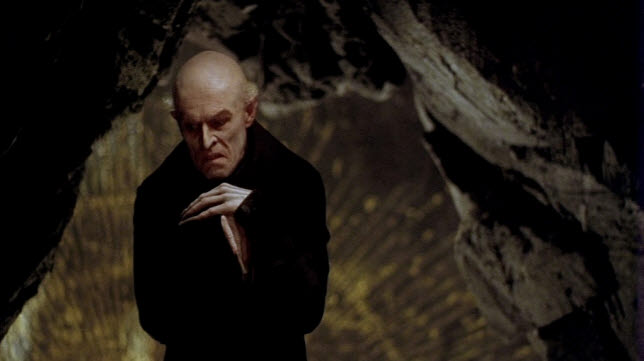
In Front of Your Face (2021) ☆☆☆(3/4): One day of hers

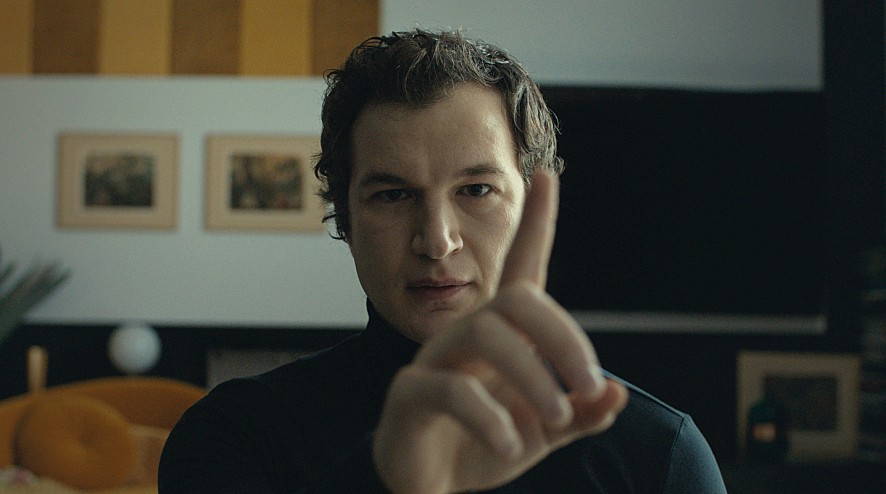
Hong Sang-soo’s latest film “In Front of Your Face” is another interesting attempt in his long and steady career. While merely observing one day of its middle-aged heroine on the surface, the movie gradually gets rather melodramatic as she becomes more reflective about her current status, and then we are later served with a dramatic moment accompanied with, as many of you have already expected, several glasses of booze.

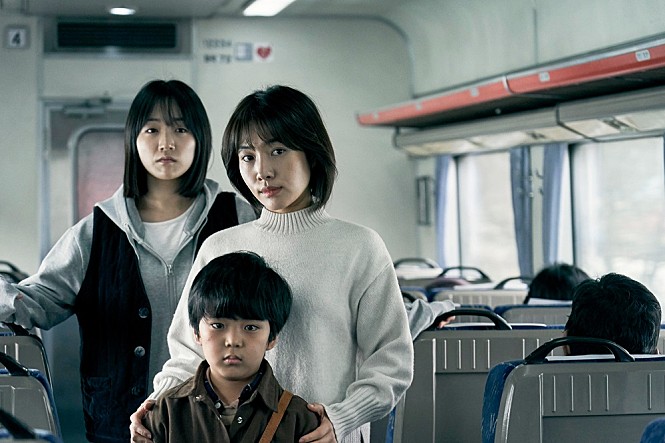
During the first act of the film, which is set in one of those satellite cities around Seoul, we are introduced to a middle-aged lady named Sang-ok (Lee Hye-young), who recently came back to South Korea after many years she spent in US. She is currently staying in a high-rise apartment belonging to her younger sister Jeong-ok (Jo Yoon-hee), and we see her and Jeong-ok later spending some time outside, but, despite their cordial conversation, we sense some emotional reservation from Sang-ok. When her younger sister suggests that Sang-ok should settle back in South Korea and then buy an apartment to live for the rest of her life, Sang-ok seems to be interested in that suggestion to some degree, but she does not agree to that suggestion nonetheless, and that leaves some awkwardness between her and Jeong-ok.

Sang-ok and Jeong-ok subsequently move around in Jeong-ok’s neighborhood. At one point, they drop by a little restaurant run by Sang-ok’s son, but he happens to be absent for a while, and they instead have a little talk with a young plucky female employee working there. In addition, they also have a little quite moment at a nearby public park, and Sang-ok becomes more reflective as serenely doing a sort of prayer inside her.

Because she happens to have an appointment for some private meeting in the afternoon, Sang-ok later goes to Seoul by a cab. When she is notified that the time and location of the meeting have been unexpectedly changed, she decides to go to some other spot in Seoul and then spend some time there before going to that meeting later. That spot in question turns out to be where she and her family once lived many years ago, and she cannot help but feel nostalgic even though this place has been changed a lot in many aspects. Now this place is turned into a little shop, but there are several things which seem to bring her back to her memories of past, and there is a little poignant moment when she happens to have a brief encounter with a little young girl. While probably seeing her younger self from that young girl, Sang-ok remains as reserved as before, but Lee Hye-young, a veteran actress who has been steadily active since she made her screen debut in 1981, subtly suggests the emotions behind her character’s phlegmatic façade.

During the last act of the movie, Sang-ok eventually attends the meeting as expected, and a filmmaker named Jae-won (Kwon Hae-hyo) is glad to meet her again after many years since they worked together once. Still remembering how wonderful she was as an actress, Jae-won soon becomes quite sentimental, and then he suggests that she should appear in his latest movie project. Although she has never acted since that old time between them, he assures her that she can be as good as she once was, and Sang-ok seems to be more interested in his offer while they talk more and more with each other.

As he frequently did in his previous films, Hong, who also handled the cinematography and editing of the film in addition to its music, continuously observes what is slowly emerging on the screen as the two characters of the movie interact more and more with each other in front of the camera. As the mood becomes a bit mellow thanks to not only a little impromptu music performance but also several shots of some Chinese liquor, Sang-ok and Jae-won are willing to be more honest to each other, and that is when Sang-ok comes to reveal a certain serious fact of hers. As Hong’s camera keeps watching her and Jae-won, we sense the growing awkwardness between them, and then we subsequently get an ironic comic moment when Sang-ok receives a voicemail in the very next morning.

While her character remains as detached as before even at that narrative point, Lee’s performance keeps holding our attention as before and she is also supported well by a few notable performers who come and go along the story. While Jo Yoon-hee complements Lee well with her relatively more cheerful performance, Kwon Hae-hyo, who have often collaborated with Hong in Hong’s several previous films such as “Hotel by the River” (2018), is effortless as he and Lee subtly push and pull each other during their key scene, and I also enjoyed the brief appearance of Kim Sae-byuk and Seo Yeong-hwa, who also appeared in some of Hong’s recent works including “The Woman Who Ran” (2020).

“In Front of Your Face” is Hong’s 26th feature film, and that reminds me again of how constantly productive he has been since his first feature film “The Day a Pig Fell Into the Well” (1996). Although I felt rather distant to his earlier films such as “Woman on the Beach” (2006), I came to appreciate his later films including “Hahaha” (2010) and “Oki’s Movie” (2010), and I also admire how he has recently tried something different via “The Woman Who Ran”, which exemplifies well his recent interesting shift toward female characters just like “In Front of Your Face” and “In Another Country” (2012).

Although I must say that it is relatively less humorous and amusing compared to his better works, “In Front of Your Face” is still another good work from Hong, and I think Hong has another fairly productive year because of this film and “Introduction” (2020). In short, I got as much as I expected, and I am ready to move onto whatever he will give us in the very next year.

Posted in Movies | Tagged , , | 1 Comment

A Leave (2020) ☆☆☆(3/4): His day off from protest

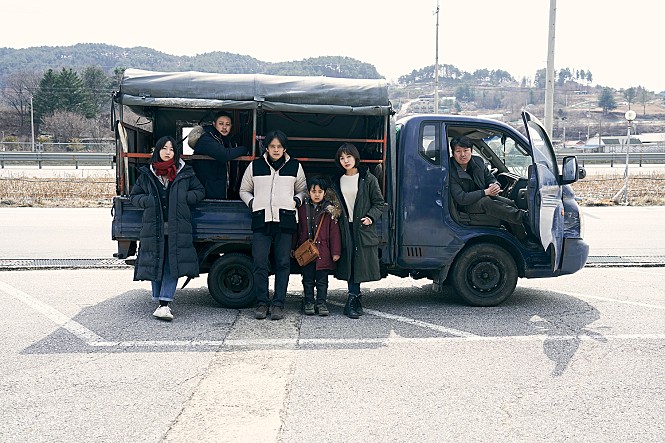
I could not help but feel worried as observing the plain ordinary working-class here of South Korean independent film “A Leave”. While he may not be that smart, he is a good man who has simply struggled to do his best under a very gloomy circumstance with no bright possibility at all, and that is why I often braced myself during my viewing, as wondering about how things may get worse for him during his ‘day off’ period.

During the opening scene, the movie gradually establishes what its hero and several other colleagues of his have been going through during last five years. Since their unjust layoff, Jae-bok (Lee Bong-ha) and his fellow labor union members have been doing a sit-in in the middle of Seoul for five years, but the result has been pretty depressing to say the least. Their union recently lost the final lawsuit requesting for the invalidation of their layoff, and, to make matters worse, their protest does not draw much attention from others, no matter how much they try to continue to speak loud and clear in public.

As Jae-bok and his two close colleagues later talk more about what they should do now, it becomes more apparent to all of them that the circumstance has become much more hopeless than before, so Jae-bok promptly decides that he should take a little break, but he is not greeted much by his two daughters when he subsequently returns to his small residence. Both of his two daughters have been pretty sick of his longtime absence in their life, and Jae-bok cannot say any excuse because he knows too well that he has not provided any necessary support or comfort to them as having always been busy with doing the protest outside along with his colleagues.

However, there is still something Jae-bok can do for both of his two daughters. In case of Hyeon-hee (Kim Jung-yeon), she is about to go to a college after recently graduating from her high school, and she needs some extra cash right now for her upcoming enrollment. In case of her younger sister Hyeon-bin (Lee Seung-joo), it turns out later that she wants to have some fancy winter clothes, and Jae-bok is certainly willing to buy that for her – if he can find any temporary job which pays him enough for that as well as that necessary extra cash for Hyeon-hee.

Of course, it turns out to be quite difficult for Jae-bok to find any suitable job for his current situation. Although he surely has considerable skill and experience to say the least, his unemployed status during next five years naturally sticks out in his résumé, and there is a little painfully awkward moment when an employment agency guy asks him a bit more about what he has been doing during that period. He could tell the truth, but his status as a protesting labor union member is certainly not something to help him get a job.

Anyway, he eventually gets employed temporarily thanks to an old friend of his, who has been running a small carpentry shop belonging to some small minor company. Instead of lending him some money, his friend suggests that he should work at his carpentry shop for a week, and Jae-bok instantly accepts his friend’s offer once he is promised to get paid enough for that.

Jae-bok’s first day at his new workplace is rather awkward as he and his friend are technically an employee and an employer now, but it does not take much time for Jae-bok to get accustomed to this new situation of his. Although he initially makes some mistakes to the frustration of his friend and a younger employee assigned to supervise him, he soon gets better in handling those tools and materials around him, and it looks like everything will go well for him as well as his friend in the end.

However, Jae-bok is reminded again of how physical laborers like him are often disregarded and neglected by their employers. After working more with that aforementioned young employee, he comes to care more about this lad than before, and he has a little moment of solidarity with this lad when this lad happens to have a little unfortunate accident later. As coming to learn more of how his younger co-worker will struggle a lot more with his difficult financial status than before, Jae-bok decides to go a bit further for helping this lad, and that leads to a little strain between Jae-bok and his friend, who is not so pleased with what Jae-bok’s younger co-worker does after getting some legal advice from Jae-bok.

The mood becomes a bit tense later in the story as Jae-bok subsequently has to make a certain hard choice, but the screenplay by director/writer Lee Ran-hee wisely maintains its calm attitude while also bringing more depth to not only its hero but also several other characters around him. As the humble center of the film, Lee Bong-ha carries the story well with his restrained but effective lead performance, and he is supported well by the other main cast members, and Kim Jung-yeon and Lee Seung-joo have a very good scene with Lee when their characters come to reveal their complex feelings toward Lee’s character.

On the whole, “A Leave” looks rather plain and simple on the surface, but it will grow on you via the quiet emotional power beneath its surface, and the result is another interesting South Korean working-class drama of this year. Things are still daunting and uncertain for its hero even in the end, and he still cares a lot nonetheless, and I assure you that you will be touched as getting to know more of this simple but undeniably decent dude.

Posted in Movies | Tagged , , | Leave a comment

The Harder They Fall (2021) ☆☆1/2(2.5/4): A black western gang war

As an experienced moviegoer, I have several valuable standards for deciding whether I am really entertained enough by a movie, and one of these standards is whether my mind gets distracted more than once even while my eyes keep noting and absorbing whatever is being shown on the screen. If my mind continues to go somewhere no matter how well-made and well-acted that movie is, it is quite clear to me that my heart is not there for that movie, and then I usually come to mull more on why I am not entertained enough by that movie – and why I accordingly cannot recommend that movie.

And such a thing happened to me while I was watching Netflix film “The Harder They Fall”, which is incidentally not the remake of the last film of Humphrey Bogart made in 1956. Mainly because of the impressive array of black performers assembled for the film, I actually had lots of expectation after watching its trailer a few months ago, but, sadly, the movie, which is released in South Korean theaters before becoming available on Netflix early in next month, somehow did not engage me enough despite a number of fairly enjoyable moments generated among its main cast members, and I will soon tell you about how the hell I got distracted a lot during my viewing.

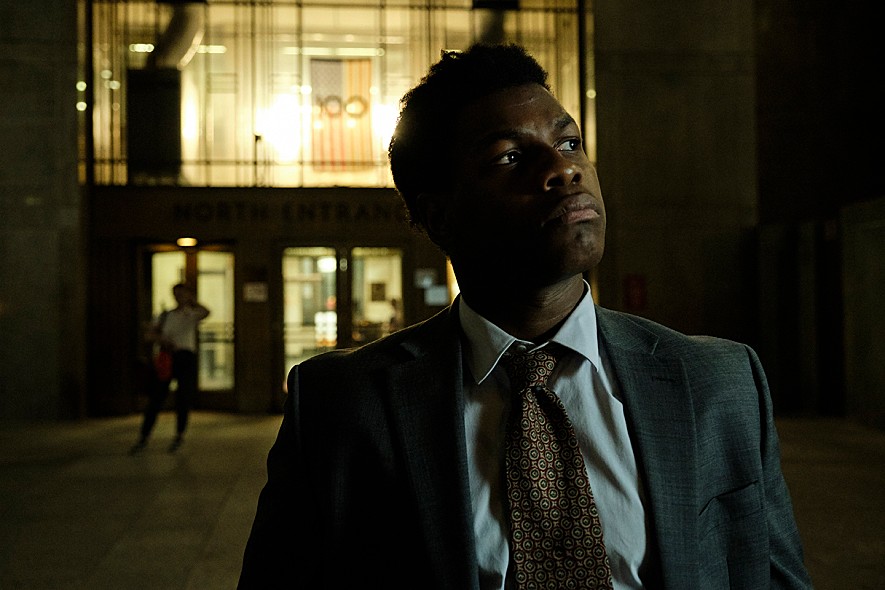
After flatly reminding us that its story is loosely inspired by real-life black outlaws in the Wild West during the 19th century, the movie introduces us to Nat Love (Jonathan Majors), a young notorious black outlaw who has usually preyed on other outlaws along with his own black gangs. Love and his gangs recently attack upon a certain other black gang group, and they happily snatch that gang group’s latest spoil after killing most of that gang group members, but it seems that they made a big mistake in this time. That spoil in question was supposed to be delivered by an infamous gang group once led by a ruthless outlaw named Rufus Buck (Idris Elba), and Buck, who has been incarcerated in a prison for years, will definitely need that spoil once he is freed through some shady arrangement between the US government and his trusted gang members including Trudy Smith (Regina King) and Cherokee Bill (Lakeith Stanfield).

Unlike others around him, Love is not concerned that much mainly because he is quite willing to settle his old score with Buck. As shown from the opening scene, Buck mercilessly killed Love’s parents when Love was very young, and Buck also gave young Love something to stay with him for the rest of his life. Love was certainly satisfied when Buck got incarcerated later, but now Buck is about to roam freely as before, and Love is determined to take a vengeance upon his old enemy for himself.

Nevertheless, Love’s close associates are already willing to stand by him even before he embarks on his journey toward revenge. Besides a cocky gunslinger named Jim Beckwourth (RJ Cyler) and a taciturn sharpshooter named Bill Picket (Edi Gathegi), there is also Stagecoach Mary (Zazie Beetz), a young but tough saloon owner who has been the object of Love’s affection for years. When this feisty lady decides to join the group, she is naturally accompanied by her right-hand lady Cuffee (Danielle Deadwyler), and Cuffee is certainly not someone to be underestimated just like her boss.

The last member to join the group is an old sheriff named Bass Reeves (Delroy Lindo). Although he initially seems to approach to Love just for warning to him a bit about Buck, Reeves soon turns out to be more reliable than expected, and he does not mind collaborating with Love and his gang members at all for catching Buck and his gang again.

As establishing its story and characters step by step during its first half, the movie humorously wields violence and brutality in a way not so different from the works of Quentin Tarantino and those countless following imitators. We are surely jolted by a series of viciously violent moments including the sequence showing how Buck’s gangs swoops on a train and then free their leader while leaving lots of dead bodies behind them, and we get often chilled and horrified by their callous attitude toward their victims who unfortunately happen to be on their way. Once he finally reveals himself on the screen, Idris Elba constantly exudes steely menace and ruthlessness, and Regina King and Lakeith Stanfield also did a good job of conveying to us their respective lethal characters’ cold-blooded sides.

However, the screenplay by director/co-producer Jeymes Samuel and his co-writer Boaz Samuel lets us down more than once around the point where Love and his gangs finally confront Buck and his dangerous associates during the second half of the film. What consequently happens between two conflicting groups is rather predictable in my inconsequential opinion, and the movie merely trudges from one expected narrative point to another while often being a bit too self-indulgent without much surprise, and I must confess that my mind became more distant and distracted as also occasionally thinking of how to make a fun of one of my old online friends.

Anyway, the eventual finale is well-executed with lots of bangs, and the main cast members are surely having lots of fun as gladly hurling themselves into actions unfolded on the screen. While Jonathan Majors is dependable as before, Zazie Beetz, RJ Cycler, Danielle Deadwyler, Deon Cole, and Delroy Lindo have each own moment, and I particularly enjoyed how Beetz holds her own spot in front of King as well as Majors did during his inevitable face-off scene with Elba.

On the whole, “The Harder They Fall” is not a boring film at all, and I appreciate its better moments including an amusing interlude scene which is literally white to say the least, but I am still hesitating to recommend it to you for becoming impatient and distracted a little too much during my viewing. Yes, the movie does have a lot of fun as rolling its wonderful cast members here and there, but I still wish I could feel more fun from that.

Posted in Movies | Tagged , , , | Leave a comment

The Last Duel (2021) ☆☆☆(3/4): He Said – His Opponent Said – and She Said

Ridley Scott’s latest film “The Last Duel” is a gritty period drama film equipped with some modern perspective to be appreciated. Often reminiscent of several notable films ranging from Akira Kurosawa’s Rashomon (1950) to Scott’s debut feature film “The Duelists” (1977), the movie observes many grim, dirty, and violent aspects of its period background with detached amusement, and it is also interesting to observe how it gradually reveals its relevant gender issues as shifting from one viewpoint to another along the story.

After the opening scene set in Paris, 1386, the first part of the movie subsequently moves back to when a soldier named Jean de Carrouges (Matt Damon) served for King Charles VI of France in the middle of the Hundred Years’ War around 20 years ago. Although he is rather reckless to say the least, de Carrouges has shown considerable bravery as battling against British soldiers along with his fellow French soldiers, and he comes to befriend a minor squire named Jacques Le Gris (Adam Driver) shortly after Le Gris happens to save de Carrouges’s life during their latest battle in Limoges.

As they fight together during next several battles, the friendship between de Carrouges and Le Gris becomes more solidified, but then there comes a change of luck which ultimately leads to lots of hostility between them. As beginning to work under Count Pierre d’Alençon (Ben Affleck), Le Gris comes to rise above many other local noble figures including de Carrouges, but de Carrouges begins to go down without much fortune for him. After losing his first wife and their son due to an unfortunate plague, he marries the only daughter of a rich but disreputable nobleman mainly for securing his family’s financial status, but, alas, he only finds himself denied of not only a considerable part of his bride’s but also his family castle just because Count d’Alençon does not like him that much, and he is certainly furious to learn that Le Gris is allowed to get both of them instead under Count d’Alençon’s order.

Anyway, as time goes by, those old bad feelings between de Carrouges and Le Gris seem to be decreased to some degree, but then something quite serious happens. When de Carrouges comes back from Paris on one day of early 1386, he notices his wife not looking that well, and she eventually reveals to him that she was raped by Le Gris while everyone else in their residence happened to be absent. Understandably infuriated, de Carrouges soon tries to do anything for getting the justice for his wife, but there are not many options from the beginning mainly due to Le Gris’s powerful protector, and that is how he comes to have a duel of fate with Le Gris as shown from the opening scene.

During its second part, the movie moves onto Le Gris’ viewpoint, and that is where the seemingly simple narrative of the first half begins to become more complex. From Le Gris’ viewpoint, de Carrouges is more pathetic compared to how he is depicted in the first half, and there is a rather amusing scene where he cannot help but explode with his petty anger toward Le Gris right in front of Le Gris and many other noblemen including Count d’Alençon, who naturally comes to dislike de Carrouges more than before.

As getting more favor from Count d’Alençon, Le Gris get himself involved with many different women unless he is not handling his lord’s financial matters, but then he comes to pay attention to de Carrouge’s wife. Just because she seems to be attracted to him during their first encounter, he becomes more obsessed with her as days go by, and that is how he comes to pay a sudden visit to de Carrouge’s residence when everyone else besides Marguerite happens to be conveniently absent.

What follows next is disturbing to say the least, but the movie later shows this moment again via the viewpoint of Marguerite, which becomes the center of the third part of the movie. What happens between her and Le Gris is pretty much same in both versions (Yes, he did rape her), but her version is more painful and harrowing to watch as the movie focuses more on her terror and humiliation during this horrendous moment.

This third part, which is written by Nicole Holofcener (The first two parts are written by Ben Affleck and Matt Damon, by the way), also pays a lot of attention to how unhappy Marguerite has actually been in her married life. While she finds some happiness and satisfaction in handling their financial matters, her husband, who is much more callous and pathetic compared to how he is depicted in the two previous parts, shows no attention or affection to her at all, and he still regards her as nothing but a walking property even after she tearfully reveals to him how she was raped by Le Gris.

Despite its rather long running time (153 minutes), the movie, which is based on Eric Jager’s book “The Last Duel: A True Story of Trial by Combat in Medieval France”, fluidly flows from one narrative point to another under Scott’s competent direction. We surely get several brutal battle scenes as expected, and then we are ultimately served with the very violent finale as promised to us from the beginning, but Scott never overlooks the human dimensions of the story especially during the third part of the film, so we brace ourselves for what will eventually happen among its three main characters, though we only come to care more about one of them as a matter of fact.

It surely helps that the four main cast members are all engaging in each own way. While Matt Damon and Adam Driver dutifully antagonize with each other throughout the film, Jodie Comer, who shows her relatively more serious side compared to her recent lightweight turn in “Free Guy” (2021), is simply terrific in her deftly modulated performance, and I sincerely hope that we will see more of her considerable talent in the future. In case of Ben Affleck, he gives his most hilarious performance since his brash comic supporting turn in “Shakespeare in Love” (1998), and you can clearly sense that he is enjoying chewing his every second on the screen.

In conclusion, “The Last Duel” is a well-made genre piece which somehow balances itself well between dark brutality and thoughtful sensitivity. Although it is not one of his best films in my humble opinion, Scott, who will soon have his 84th birthday, reminds us again that he is still a master filmmaker who has steadily entertained us during last several decades, and that is enough for me for now.

Posted in Movies | Tagged , , , , , | Leave a comment

Dune (2021) ☆☆☆(3/4): A prophecy is unfolded…

Denis Villeneuve’s latest film “Dune”, which is based on the first half of Frank Herbert’s 1965 science fiction novel, sometimes felt like a sweat to me. While the movie kept me impressed or mesmerized thanks to its sheer visual power you must experience yourself via big and wide screen, it also often looked like a long and extended preparation step for whatever will follow after its final scene, and I can only hope that its following sequel will live up to the tantalizing promise so solemnly and majestically presented on the screen during its 155-minute running time.

At the beginning, the movie promptly throws us into the plot while often giving us a bit of background information here and there. In the far future, the humanity has expanded its realm over the universe thanks to the considerable technological advances during more than 8000 years, and the realm are divided by several different powerful noble families under the absolute power of their emperor. One of these noble families is House Atreides, and, for a reason to be revealed gradually along the story, the emperor recently orders House Atreides to occupy a planet named Arrakis instead of House Harkonnen, which has incidentally ruled over Arrakis for last several decades.

Arrakis is also known as “Dune” for a good reason. This planet is full of deserts which are quite harsh for any living organism due to their aggressively hot and dry environment, and there are also a bunch of big giant sandworms which will swallow anything to be detected by them via sounds, but these hot and barren desert areas are also have been the main source of a special substance named ‘melange’, which is also called ‘spice’. Because it is absolutely necessary for interstellar navigation, spice has been one of the most valuable commodities in the whole universe, and that is how House Harkonnen has ruthlessly devoted itself to mining spice by any means necessary despite the considerable resistance from a defiant native tribe called Fremen.

As the head of House Atreides, Duke Leto Atreides (Oscar Isaac) accepts the order from the emperor without any question, but he is already well aware of a tricky circumstance into which he walks. It seems that the emperor deliberately puts him in the charge of Arrakis for some hidden purpose, and he also may have to deal with the ire of Baron Vladimir Harkonnen (Stellan Skarsgård), who is the head of House Harkonnen and is certainly not so pleased about this recent transfer of Arrakis from him to Duke Atreides.

In the meantime, the movie slowly reveals the center of the story, and that is none other than Paul Atreides (Timothée Chalamet), who is the ducal heir of House Atreides as the sole son of Duke Atreides. Mainly because of his mother Lady Jessica (Rebecca Ferguson), he has been watched by an old secret society to which his mother has belonged, and, after his clandestine meeting with the head of that secret society played by Charlotte Rampling, it looks like he is the one for which that secret society has been planning and waiting.

Now you may find yourself busy with processing what I have described during several last paragraphs, but the screenplay by Villeneuve and his co-writers Jon Spaihts and Eric Roth, which is mostly faithful to the intricate narrative of Herbert’s novel, still has a lot more stuffs and characters to dole out along its increasingly sprawling plot. Besides the Fremen clan mainly represented by its stern leader Stilgar (Javier Bardem), there are also many substantial characters including Gurney Halleck (Josh Brolin), the weapon master of House Atreides; Thufir Hawat (Stephen McKinley Henderson), the head of intelligence of House Atreides; Dr. Wellington Yueh (Chang Chen), the doctor employed by House Atreides; Duncan Idaho (Jason Momoa), the swordmaster of House Atreides; Glossu Rabban (Dave Bautista), the monstrous nephew of Baron Harkonnen; Dr. Liet-Kynes (Sharon Duncan-Brewster), the Imperial ecologist and judge of the change on Arrakis; and Chani (Zendaya), who is Stilgar’s daughter and may have an important role in Paul’s future as reflected by his recurring prophetic dreams.

I must confess that, as trying to follow and process the plot and characters, I sometime felt impatient when I watched the movie at last night, but I also admire what is so grandly and awesomely achieved under Villeneuve’s skillful direction. While the production design by Patrice Vermette and the costumes designed by Bob Morgan and Jacqueline West are top-notch to say the least, there are heaps of bleak but undeniably stunning visual moments to be savored thanks to cinematographer Greig Fraser, and I am sure that Fraser will be definitely Oscar-nominated along with several other main crew members of the film including composer Hans Zimmer, who expectedly provides another typical bass-heavy score of his for constantly emphasizing the epic scale of the movie from the beginning to the end.

The main cast members of the movie fill their broad archetype roles with each own distinctive presence. While Timothée Chalamet ably holds the center as a reluctant young man who is not so sure about himself while also afraid of his destiny to come, Oscar Isaac and Rebecca Ferguson bring some poignancy to their characters’ little private moment, and Stellan Skarsgård and Javier Bardem are reliable as usual while having some small fun with their colorful supporting roles in different ways.

In conclusion, “Dune” is an admirable opening chapter to be appreciated for its mood, visual, and performance, and I recommend it despite some reservation. Like when I watched Villeneuve’s previous film “Blade Runner 2049” (2017), I was not exactly entertained a lot even while I was excited and delighted by its technical aspects, but I am glad that I watched it on big screen at least, and I think you should also try that.

Posted in Movies | Tagged , , | 3 Comments

Take Care of My Cat (2001) ☆☆☆(3/4): Five different young women – and a little cat

“Take Care of My Cat”, which is recently re-released in South Korean theaters for its 20th anniversary, is a modest but charming coming-of-age drama going around five different young women and a little cat in Inchon. Although it is 20 years old now, the movie still feels fresh and lively thanks to not only its good direction but also the game efforts from its main cast members, and it surely deserves to be remembered as one of very few notable female South Korean films during the 2000s.

After the prologue scene showing its five main characters not long before their high school graduation, the movie promptly moves forward to several months later, and we get to know the current status of each member one by one. While Hye-joo (Lee Yo-won) is now working as a new employee in some financial company in Seoul, Tae-hee (Bae Doona) is still living with her family as occasionally doing a volunteer work for a young poet with cerebral palsy, and Ji-yeong (Ok Ji-young) has been hopelessly stuck in her grandparents’ shabby home without much chance to get employed anywhere. In case of Bi-ryoo (Lee Eun-joo) and her twin sister On-jo (Lee Eun-sil), these two vivacious girls often sell accessories on streets, and there is a small funny moment when they try to sell some of their stuffs to several kids in their neighborhood.

As Hye-joo’s birthday is coming, Ji-yeong tries to have a meeting with her four friends, but that turns out to be more difficult than expected. While Hye-joo is often busy with her work, Ji-young is not particularly willing to spend some time with her friends, but the mood soon becomes joyous nonetheless when they and other three girls manage to join together for celebrating Hye-joo’s birthday at a little nightclub.

After that narrative point, the movie leisurely moves from one small episodic moment to another as its five main characters go through each own daily life. When her problematic parents come to have a divorce at last, Hye-joo and her older sister are rather relieved to say the least, and we later see Hye-joo cheerfully moving to a new place with some help from her older sister and boyfriend. Now living closer to her workplace, she is willing to do more for getting more advance for her career, and she consequently becomes distant from her friends as focusing more on her work.

Quite bored with her current status, Tae-hee begins to consider becoming a sailor at one point, but, not so surprisingly, she is instantly rejected for an understandable reason, and that adds another frustration to her seemingly aimless daily life. That accordingly makes her lean more on the remaining friendship with her friends, but she is only reminded more of the growing distance among them since their high school graduation.

Meanwhile, Ji-yeong’s situation becomes gloomier as she faces more of her harsh reality. Although she wants to be an art designer someday, that looks like a distant dream out of her reach, and there are not many other options left to her due to the poor economic status of her grandparents, which is vividly reflected by the very bad condition of their shabby residence. It seems that the roof of their home may be collapsed at any point, but they cannot do anything due to their lack of money, and we are often disturbed by the small cracking sounds coming from somewhere above the ceiling of their home.

At least, Ji-yeong gets some consolation from a small kitten she happened to find on one day. Although it was initially given to Hye-joo as her birthday present, Hye-joo subsequently gave it back to Ji-yeong without any hesitation, and the movie accordingly serves us several sweet moments as Ji-young comes to spend lots of time with this little animal, which certainly steals the show every time with its inherent cuteness.

During its second half, the movie takes a sudden unexpected plot turn, and the mood accordingly becomes a bit darker than before, but the movie steadily maintains its lightweight attitude as usual. I particularly like a humorous scene where our five main characters happen to spend a very cold night together outside Bi-ryoo and On-jo’s house, and I also appreciate the tentative optimism of the last scene where Tae-hee finally makes a big active forward step along with one of her friends.

The screenplay by director/writer Jeong Jae-eun, who recently directed “Butterfly Sleep” (2017), depicts its five main characters with a lot of care and attention, and the main cast members of the film bring lots of life and depth to their respective roles. While Bae Doona, who has steadily advanced during last 20 years, is understandably the most prominent member in the bunch now, Lee Yo-won and Ok Ji-young are also solid as two contrasting figures in the story, and Lee Eun-joo and Lee Eun-sill are always fun to watch as constantly brimming with the joy of life. In addition, Jeong did a good job of capturing a number of locations in Inchon with considerable verisimilitude on the screen, and you may find yourself becoming a bit nostalgic if you remember how Inchon looked around that period.

On the whole, “Take Care of My Cat” is still worthwhile to watch for its youthful mood and charm, and I am more touched as reflecting more on its many intimate moments. Compared to more famous South Korean films of the 2000s such as “Memories of Murder” (2003) or “Oldboy” (2003), it may look rather plain in comparison, but its sensitive heart is still beating well even at present, and I am glad that I finally watched it after hearing about it so many times.

Posted in Movies | Tagged , , , | Leave a comment

Ten Months (2020) ☆☆☆1/2(3.5/4): A little big matter of hers

South Korean film “Ten Months” gives us a painfully funny and honest tale of one certain aspect of womanhood in the South Korea society. Duly sliding up and down along with its unlucky heroine whose life is turned upside down by the pregnancy both unexpected and unwanted, the movie ably alternates between humor and despair, and we come to empathize more with its heroine while amused or horrified by many difficult moments during her rocky emotional journey along the story.

At the beginning, the movie shows us how things have been fairly good in the daily life a young female software programmer named Mi-rae (Choi Sung-eun). Although she often has to work a lot along with several fellow programmers, she does not mind at all as hoping for a big break for her and her colleagues, and she does not lose confidence at all when her parents chide her for still getting nowhere in addition to not being married yet.

Anyway, Mi-rae has been living with a lad named Yoon-ho (Seo Young-joo), and they have getting along pretty well with each other although Yoon-ho is not particularly promising compared to her. He has been planning to develop and then merchandise a little accessory associated with smartphone, but what he makes does not seem to be that useful or convenient, and it merely looks rather amusing in my trivial opinion.

And then there comes a surprising discovery to Mi-rae on one day. Having felt not so well during last several weeks, she goes to a local drugstore for getting some medicine for that, but the pharmacist tells her that her symptoms are not so different from the ones observed from pregnant women, and Mi-rea is flabbergasted to hear that. As far as she can remember, she has never had sex during last several months, but then she finds herself not so sure about what exactly happened between her and her boyfriend during a certain drinking night, and, quite more worried than before, she naturally checks her current physical condition via pregnancy test kits. What do you know, she is indeed pregnant at present, and we get one of the funniest moments in the movie when she promptly reveals this utterly undeniable fact to her best friend.

While never losing its sense of humor, the movie lets us observe and understand more of the grim aspects of Mi-rae’s increasingly difficult situation. She has been pregnant for more than 2 months, so she must quickly decide on whether she will have an abortion right now, but there is not much help or support for her from the beginning. Her kind doctor flatly emphasizes that abortion is not legally allowed in her case, so she later goes to some clinic where she may have an abortion, but she will have to pay a lot for that – and she is definitely going to pay more if she hesitates more while her fetus keeps growing second by second.

As Mi-rae becomes conflicted more and more, her life becomes messier to her frustration. When she reveals her pregnancy to Yoon-ho, he is naturally caught off guard by that, but he tries to do the right thing from his viewpoint. Coming to believe that this can be a crucial turning point in their relationship, he later visits her parents for a certain purpose, and the misunderstanding between him and Mi-rae leads to another sharp comic moment in the film.

Considering that how willing Yoon-ho is to stand by Mi-rae, he may actually provide some stability to her current status, but, unfortunately, things get only worse for Mi-rae as days and weeks go by. When there finally comes a point where she cannot possibly hide her pregnancy from her boss, she decides to confide that to her boss, but her boss, who is incidentally male, promptly lets her go without any consideration even though she has been a crucial part of his company for years, and that reminds me again of how many female workers in South Korea lose their jobs for the same reason every year. Because of this, many of women in South Korea are not particularly willing to marry, let alone have a baby, and it is no wonder that the latest total birth rate in Seoul turns out to be no more than 0.58.

In the meantime, Yoon-ho turns out to be much less reliable than expected, and that pushes Mi-rae into more frustration and despair. Due to his big financial trouble, he has no choice but to depend a lot on his parents, who fully expect Mi-rae to become a dutiful housewife living in their country house after giving birth to her baby. Understandably horrified by this gloomy prospect waiting to engulf her sooner or later, Mi-rae comes to have more doubt on her ongoing pregnancy, and that consequently leads to more conflict between her and Yoon-ho, who has also been very miserable in his burdensome circumstance between her and his parents.

Around that narrative point, the movie is often difficult to watch as continuing to make us cringe and wince a lot, but it steadily holds our attention up to the eventual arriving point thanks to the skillful direction of director/writer Namkoong Sun, who made several short films before making a feature film debut here in this movie. Even during its gloomiest moment, the movie somehow generates humor as before while never losing its empathy toward its heroine at all, and its soundtrack, which ranges from a bunch of old-fashioned Korean songs to several familiar pieces of classic music, functions well as an effective comic/dramatic counterpoint throughout the story.

As the emotional center of the story, Choi Sung-eun, who previously appeared in “Start-Up” (2019), deftly sways back and forth between comedy and drama along with the movie, and she is also supported well by several good performers including Seo Young-joo, Yoo I-deun, Kwon Ah-reum, and Bek Hyun-jin, who is amusing as an unflappable doctor who turns out to be more compassionate than expected.

In conclusion, “Ten Months” is quite a memorable female film thanks to its sharp wit and considerable honesty, and it is certainly one of more impressive South Korean films of this year. Although this is only her first feature film, Namkoong did a very good job of presenting her story and characters with considerable care and passion, and I think it will be interesting to watch whatever will come next from this apparently talented filmmaker to watch.

Posted in Movies | Tagged , | 2 Comments

Blue Bayou (2021) ☆☆1/2(2.5/4): A sincere but contrived Southern adoptee drama

I feel rather ambivalent about Justin Chon’s latest film “Blue Bayou”, a small but intimate adoptee drama set in Louisiana. While it is surely sincere about its relevant main subject, the movie is also often hampered by its contrived and heavy-handed narrative, and I must confess that I was often distracted a lot by this serious flaw even while appreciating the considerable efforts from its cast and crew members.

The story mainly revolves around a Korean American adoptee named Antonio LeBlanc, who is played by Chon himself in the movie. Antonio has happily been living with his pregnant wife Kathy (Alicia Vikander) and his stepdaughter Jessie (Sydney Kowalske) in their shabby house located outside New Orleans, but he and his family have been in the need of more money than what he and Kathy have respectively earned outside, and he has been looking for the second job besides working at a local tattoo parlor. We see him trying his best during a brief job interview, but he is eventually rejected due to his minor criminal record, and we later learn that there is also another considerable disadvantage in his ongoing search for the second job.

Despite this continuing economic hardship of his, Antonio feels fine whenever he is with Kathy and Jessie in their home, and we get a series of sweet intimate moments as he interacts with Kathy or Jessie on the screen. As a little girl who is actually more matured than she seems on the surface, Jessie wonders whether her stepfather will pay less attention to her before when her stepsister is born, but Antonio warmly and tenderly reminds her that he will still love and care about her as before, and they later have a little exciting time together on his motorcycle.

In case of Kathy, she also loves and trusts Antonio a lot for many reasons. She appreciates how he has been a good husband and father to her and her daughter, and he is surely a better man than Jessie’s biological father Ace (Mark O’Brien), a local police officer who walked away from her and Kathy not long after Kathy was born. When Ace demands that he should see his daughter again, Kathy flatly rejects his demand mainly because Jessie does not want to see him at all, and we can easily sense a trouble coming from the distance.

And that expected trouble does come to Antonio and his family later when they happen to come across Ace and his racist partner at a local supermarket. Once Ace’s partner deliberately goads Antonio, the situation quickly becomes quite more serious, and that inevitably leads to Antonio being beaten and then arrested by Ace and his partner right in front of Kathy and Jessie.

At first, all Kathy will have to do is paying the bail for Antonio, but, alas, it turns out that Antonio is taken to Immigration and Customs Enforcement (ICE) just because he is not an American citizen technically. When he was adopted around 30 years ago, his adoptive parents did not naturalize him pursuant to Child Citizenship Act of 2000, so he is soon going to be deported just like many other similar American adoptees out there. Once he is released, Antonio and Kathy immediately consult with an experienced local lawyer, but the lawyer reminds them that there are not many options for them from the beginning. Even though they can pay for the legal service from their lawyer, there is not much chance for Antonio to remain in US, and he also may never be allowed to return to US in the worst case.

Now this is a solid setup for the personal drama mixed with important social issues, but Chon’s screenplay often goes astray during the rest of its story. There is a subplot involved with Antonio’s attempt to get the money for his lawyer by any means necessary, and that part feels rather jarring compared to the rest of the film. In case of another subplot involved with a Vietnamese American woman who happens to befriend him via their accidental encounter on the street, this part is riddled with several glaringly clumsily moments of symbolism, and we even get a blatant visual juxtaposition of life and death later in the movie.

In addition, the movie falters more during its last act, which is quite artificially melodramatic to say the least. Because I came to care about its main characters enough, I was quite annoyed with a number of contrived moments including the one involved with Ace’s partner, and that is why I only came to observe the finale from the distance while sensing its manipulative aspects. Sure, I became more aware of its social issues as watching many sad real-life cases presented right before the end credits, but I also felt considerable dissatisfaction with the movie itself, which could be better if it just focused on characters instead of pushing them into artificial melodrama to pull our heartstrings.

At least, the main cast members of the movie are solid on the whole. While Chon’s good performance humbly occupies the center, Alicia Vikander and young performer Sydney Kowalske are effortless as two most important people in Antonio’s life, and Vikander is especially wonderful when Kathy happens to sing in front of many others including her husband. While Altonio Jackson, Linh Dan Pham, and Vondie Curtis-Hall manage to bring some life and personality to their thankless supporting roles, Mark O’Brien and Emory Cohen are unfortunately stuck with their bland functional characters, and Cohen is particularly distracting in his rather blatant overacting.

Overall, “Blue Bayou” is surely well-intentioned but a bit too flawed to be compensated by its strong elements, and I hesitate to recommend it for that reason as well as the recent controversy over Chon’s artistic misappropriation in the movie (Here is the link to an article associated with that). Although he showed some promise via his first two films “Gook” (2017) and “Ms. Purple” (2019), Chon still needs to advance more in my inconsequential opinion, and I can only hope that he will move onto better things besides having some more artistic responsibility.

Posted in Movies | Leave a comment

The Killing of Two Lovers (2020) ☆☆☆(3/4): What may happen next among them

“The Killing of Two Lovers” starts with the striking opening scene as disturbing as its very title suggests. While the movie subsequently maintains its calm and detached attitude throughout the film, we come to observe its story and main characters with growing concern as wondering what may happen next among them, and we are not relieved at all even at the end of the story, which still suggests some discord and anxiety below the surface.

During the early part of the film, we get to know the current situation of David (Clayne Crawford) and his wife Nikki (Sepideh Moafi), a plain ordinary married couple residing in some small rural town of Utah. Because they recently decided to have a brief period of seperation, David is staying in his widower father’s house while she remains with their four children in their house, and they also agreed in advance that they can respectively try to see other people, but this agreement does not work as well as expected. While David is still missing Nikki, Nikki has been already dating a guy named Derek (Chris Coy), and that understandably makes David quite exasperated and agonized.

During the opening scene which I will let you see for yourself, David even considers committing something drastic to Nikki and Derek, but he eventually gives up, and then we observe more of his miserable current circumstance. Although he and his father have been getting along fairly well with each other in his father’s house, we sense some emotional distance between them even though they cordially interact with each other on the whole. When he later visits an old neighbor of his for doing some outdoor work for that neighbor, there is a brief amusing moment when that neighbor tells David about how willing she has been to flirt with his father after her husband’s recent death, and the following conversation between them reminds him again of whether he and his wife were really happy at all during all those years of their married life.

Although still feeling hurt and resentful, David tries to be nice and civil when he comes to his house for meeting his wife and kids again, and Nikki does not hide what has been going on between her and Derek, but there is one little problem for them. Their eldest daughter Jess (Avery Pizzuto) has been not so pleased about her parents’ separation, and she certainly dislikes how her mother has been ‘cheating’ on her father. At one point, she harshly responds to Derek when he drops by her house for a small congratulation on the promotion at her workplace, and David and Nikki cannot help but a bit amused as watching the incident from the distance.

As they are having a little private time between them, we see there are still some affection and understanding between David and Nikki, but we are also reminded of the considerable gap between them. Everything might have looked fine and well to them when they married not long after the end of their high school years, but they are now jaded adults facing their hard reality everyday, and Nikki may pursue her promising professional career more instead of focusing on mending her estranged relationship with David. In addition, Derek seems to be a better guy than David in several aspects, and, though she says that she is not so serious about Derek, it looks like Nikki has actually been considering leaving David for marrying Derek later.

Feeling more separated from his wife as well as his children, David clumsily tries to get closer to them as much as possible, but that unfortunately leads to more conflict between him and Nikki, and things get more complicated when he attempts to have a nice time along with their kids later in the story. As cinematographer Oscar Ignacio Jimenez’s camera steadily looks at them from the distance, the movie subtly and gradually dials up the level of tension behind the screen, and we are not so surprised when a sudden conflict is subsequently erupted on the screen.

Although its final part is rather abrupt, director/writer/editor/co-producer Robert Machoian, who previously received the Short Film Special Jury Prize for “The Minors” (2019) at the Sundance Film Festival, did a commendable job of establishing vivid local atmosphere and believable characters for his dry but engaging storytelling. While the occasional shots of wide landscapes emphasize to us a sense of isolation around the main characters, the camera also closely sticks to them during several key scenes in the film, and their tedious status is accentuated further by the screen ratio of 1.33:1.

Machoian draws the good performances from his few main cast members. While Clayne Crawford, who also participated in the production of the film along with Machoian, ably conveys to us the seething emotional status behind his character’s resigned façade, Sepideh Moafi is convincing as a woman who is emotionally confused as much as her husband, and Chris Coy and Avery Pizzuto are also effective in their respective supporting roles.

In conclusion, “The Killing of Two Lovers” is a phlegmatic but tense character drama to be appreciated for its good mood, storytelling, and performance, and Machoian demonstrates here that he is another interesting filmmaker to watch. Although I have not seen his previous works including “God Bless the Child” (2015), he is a good director as far as I can see from his achievement here in this film, and I guess I can have some expectation on whatever will come next from him.

Posted in Movies | Tagged , , | 1 Comment

Venom: Let There Be Carnage (2021) ☆☆(2/4): A couple of losers still stuck together

“Venom: Let There Be Carnage” is a jumbled mess which is alternatively silly and disappointing. While there still is what made “Venom” (2018) work to some degree, the movie frequently falters as hurriedly pushing its story and characters to the end during most of its 97-minute running time, and, again, we come to observe its many action scenes without much care or attention, as occasionally amused by the usual comic dynamics between its two main characters who often feel unhappy and miserable about being stuck together.

After the prologue scene, the movie promptly moves forward to the point not so long after the ending of “Venom”. Managing to bounce back from the bottom of his life and career thanks to his uneasy symbiosis with an alien parasite called Venom, Eddie Brock (Tom Hardy) is suddenly requested for an interview, and he is not so comfortable about his latest interviewee from the beginning for a good reason. That interviewee in question is a notorious serious killer named Cletus Kasady (Woody Harrelson), and this horrible guy, who is now incarcerated in a prison near San Francisco, is quite eager to leave some last words via Brock before eventually getting executed someday.
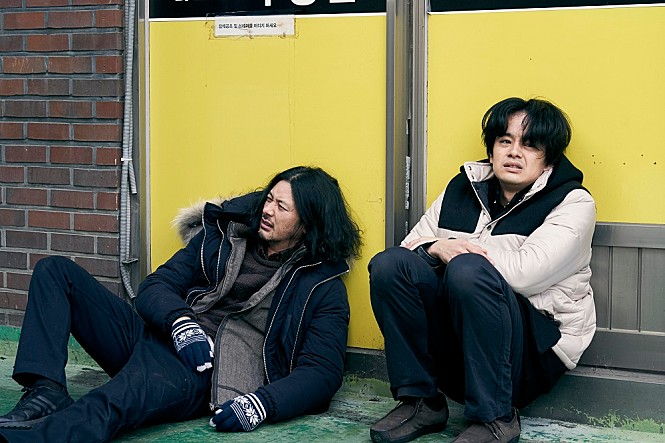
While his encounter with Kasady in the prison is unpleasant to say the least, but, thanks to Venom, Brock come to get a substantial clue leading to what Kasady has been hiding behind his back, and that certainly brings Brock back in spotlight, but then there comes a depressing news for him. His ex-friend Anne Weying (Michelle Williams) announces to him that she will soon marry her current boyfriend Dr. Dan Lewis (Reid Scott), and Brock as well as Venom feel hurt about that. After all, as many of you remember, Anne once let Venom take over her for saving Brock, and I must confess that I could help but think of ménage à trois as observing how eager Venom is about being around Anne along with Brock, though I am also well aware that their carnal threesome is out of question from the start because the movie is rated PG-13.

Understandably quite depressed, Brock lets himself become more miserable. Venom tries to cheer up Brock as much as possible, but they only end up bickering and fighting with each other just like a married couple with lots of issues, and that is where the movie gives us several amusing moments including the one unfolded in some fancy local club for sexual minority people (Well, this is San Francisco, isn’t it?),

Meanwhile, Kasady turns out to have a big nasty surprise when he is eventually executed. Not long before the time for his execution, he got infected with a bit of Venom during what was supposed to be the last meeting between him and Brock, and he and a new resulting alien parasite, called Carnage, give a night to remember for everyone around them as violently escaping from the prison.

While enjoying freedom at last, Kasady soon embarks on finding a woman he has always loved since they fell in love with each other in some horrible orphanage. Although she has been officially dead, Frances Barrison (Naomie Harris) has been actually incarcerated in a hidden high-security prison, and, thanks to his alien parasite, it does not take much for Kasady to locate where his old girlfriend has been during all those years.

It is not much of a spoiler to tell you that Brock and Venom will confront Casady and Carnage in the end, but the story is so hurriedly rolled toward that point that the eventual climatic sequence has no dramatic impact at all, and, again, we are simply served with lots of CGI accompanied with dizzy and frantic editing. Although director Andy Serkis, who previously made directorial debut with “Breath” (2017), and his crew members including cinematographer Robert Richardson and composer Marco Beltrami try as much as they can, all I can remember from the finale is no more than heaps of sound and fury without no style or substance to be savored, and the overall result is merely a teaser for whatever we will see later from a certain upcoming major superhero flick to be released around the end of this year.

Anyway, Tom Hardy, who also wrote the story with Kelly Marcel in addition to serving as one of the producers of the film, has a fun with playing his two characters in the film, and he always brings some sense of humor whenever his two characters, both of whom are your average losers in my trivial opinion, clash with each other on the screen. On the opposite, Woody Harrelson, who also provides the voice performance for Carnage, gleefully chews his every scene in the film whenever his face is not mired in CGI, and his several wildly romantic moments with Naomie Harris will surely bring your mind back to when he went on a murderous rampage along with Juliette Lewis in “Natural Born Killers” (1994). In case of several returning cast members, Michelle Williams and Reid Scott have a bit more things to do besides looking concerned for Brock as before, and Peggy Lu, who plays the Chinese owner of Brock’s frequent convenient store, has her own moment later in the story.

On the whole, “Venom: Let There Be Carnage” is a little better than its predecessor, but it does not leave much impression on me beyond its silly moments for laughs, and my mind is already ready to move onto better films out there without much regret. I did not expect much, but the movie is as bland and middling as expected, and that is all, folks.

Posted in Movies | Tagged , , , , | Leave a comment