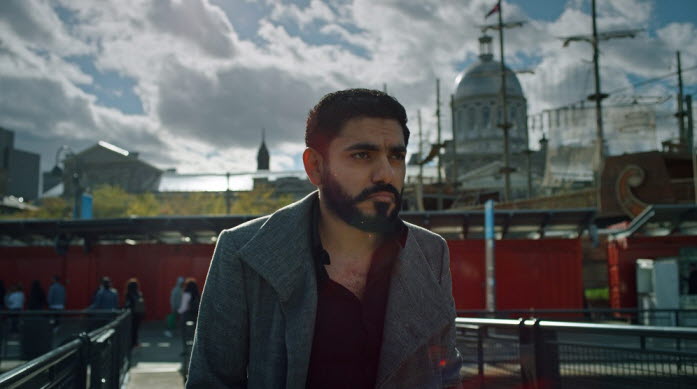
Never Gonna Snow Again (2020) ☆☆☆(3/4): An odd immigrant masseur in suburbia

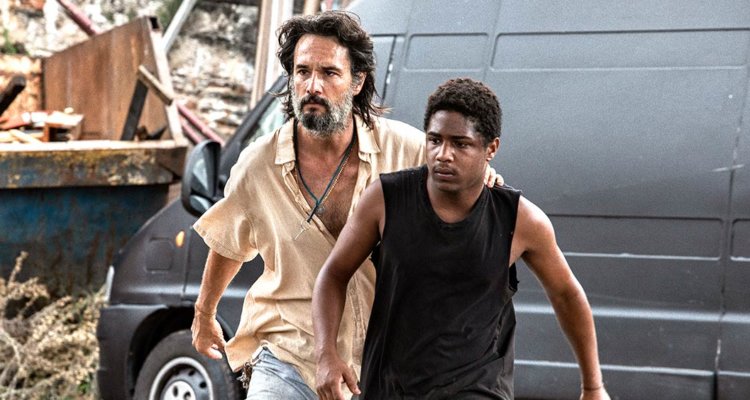
What an odd and strange film “Never Gonna Snow Again” is. The movie, which was selected as Poland’s submission to Best International Film Oscar in last year, initially baffled me a lot as I tried to figure out what and how it is about, but its decidedly calm and enigmatic mood gradually engaged me as it effortlessly glided from one curious moment to another along with its elusive hero, and it eventually came to me as a glacial but haunting fable about kindness and compassion.

During the opening scene, the movie subtly sets the tone right after its very first shot, which shows a young man coming out of some moody forest. He is a Ukrainian named Zhenia (Alec Utgoff), and he comes to Poland to work as a masseur, but there is something weird about this guy. According to his immigration papers, he was born in Pripyat, Ukraine seven years before the Chernobyl accident, and that certainly draws that attention of an old immigration official who is going to determine whether Zhenia can stay in Poland or not, but it does not take much time for Zhenia to get what he needs. He turns out to be a skillful hypnotist, and the immigration official soon becomes quite relaxed as Zhenia handles the rest of his work.

After that, we see Zhenia going to an affluent but rather isolated suburban area full of identical houses which will surely make you hum Malvina Reynolds’ song “Little Boxes”. This area may look a bit too artificial to you at first, but I must tell you that, to my little surprise, it is actually a real housing estate in Walendów, eastern Poland, and I am quite impressed by how the movie generates the sterile sense of ennui and boredom within this seemingly comfortable background. We do not see many people on quiet streets except a few passers-by, and those houses look empty sometimes even though we see some of their residents as Zhenia drops by one house after another.

In case of the first house to be visited by Zhenia, it is quite a mess to say the least. The family living there must have had some big party on the previous day, but nothing has been cleaned up yet, and the wife is stuck with this daunting mess after the husband and their son hurriedly leave, but she soon gets relieved once Zhenia begins to work on her body. As she gets more relaxed on his massage bed, he embarks on hypnotizing her, and she finds herself feel a little better in her body and mind once his job is done.

And then we see some other usual clients of his. One of them is a terminal cancer patient who has tried lots of various things for handling his gloomy circumstance along with his concerned wife, and there is a little amusing moment when he later says that he should try hypnosis someday, while having no idea on what Zhenia just did to him before he wakes up. When Zhenia later comes to the house belonging to a frigid middle-aged lady, she gradually becomes softer as talking with him, and she surely gets relaxed more when she reaches to her unconsciousness via Zhenia’s hypnosis.

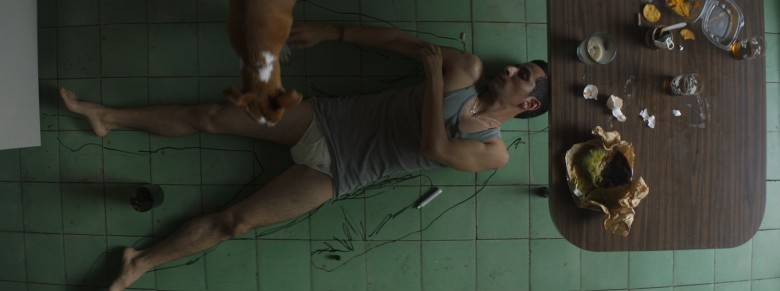
Meanwhile, the movie also pays some attention to Zhenia’s private life. He is living alone in a cheap apartment without making any connection with his neighbors except a woman who constantly struggles with handling her pet dog, and he frequently dreams about his childhood memory associated with, yes, the Chernobyl accident and what he lost during that tragic period. In addition, there is some problem with his current status as an immigrant worker, and it seems quite possible that he may be deported at any point.

Nevertheless, he keeps trying to comfort and help his suburban clients as usual, and many of them appreciate his service a lot, though some of them find themselves emotionally attached to Zhenia a little too much. There is a little humorous moment of misunderstanding involved with two of his clients, and then we get a melodramatic scene when the wife of that cancer patient comes to depend on Zhenia more than expected later in the story.

While never clarifying what its hero exactly feels and thinks, the movie continues to dole out oddly compelling moments to intrigue and fascinate us more thanks to the competent direction of co-directors/co-writers/co-producers Małgorzata Szumowska and Michał Englert, who also handles the cinematography of the film. Many of the key scenes in the movie are impressive for their precise scene composition and evocative atmosphere, and we accordingly come to accept several surreal moments including the one associated with the very title of the film.

As the center of the story, Alec Utgoff, a Russian actor whom you may recognize for his supporting turn in the third season of Netflix drama series “Stranger Things” (That actually helped him get cast for this film, by the way), diligently carries the film while deftly embodying his character’s uncanny aspects. He is also supported well by a number of different performers including Maja Ostaszewska, Weronika Rosati, Łukasz Simlat, Katarzyna Figura, Andrzej Chyra, and Agata Kulesza, who is solid as she was in Paweł Pawlikowski’s “Ida” (2013) and “Cold War” (2018).

In conclusion, “Never Gonna Snow Again” is your average arthouse film which will demand some patience from you due to its dry storytelling and slow narrative pacing, but it is still worthwhile to watch for its distinctive qualities to be appreciated. To be frank with you, I don’t think I totally get it, but it lingers on my mind even at this point, and I am willing to revisit it someday for more understanding and appreciation.

Posted in Movies | Tagged , , , , | Leave a comment

Naked Singularity (2021) ☆☆(2/4): Tepid Singularity

“Naked Singularity”, which somehow crept into South Korean theaters in last week, is not as singular as whatever it wanted to be. The movie itself is not awful at all, but it is a tedious mess of half-baked ideas which did not interest me that much throughout my viewing, and I only came to feel sorry for some of its main cast members, who, in my inconsequential opinion, are too talented to appear in this bland misfire.

At first, the movie seems to want to be as angry and absurd as Norman Jewison’s “…And Justice for All” (1979). Just like Al Pacino’s lawyer hero in that film, Casi (John Boyega) has been pretty tired of being stuck inside a problematic legal system as one of its mere cogs, but, as a public defender, he keeps getting saddled with numerous cases beyond his control. No matter how much he tries, he finds himself more frustrated and exasperated, and that makes him have more doubt and disillusionment on his life and career – especially when he gets suspended for several months just for causing the petty ire of one of his usual judges.

Meanwhile, there comes a case which looks seemingly simple at first but turns out to be quite more serious than expected. The defendant in question is a young woman named Lea (Olivia Cooke), and she gets herself into a big trouble after letting herself associated with a small-time local drug dealer named Craig (Ed Skrein). There was a vehicle which has a considerable amount of drug hidden inside it, and this vehicle unfortunately happened to be taken to a city facility where Lea works. All she will have to do is doing some inside job for helping Craig buy that car during the following auction, but things has gotten quite complicated after she got caught by two cops with a small portion of drug in her possession, and she must balance herself carefully between the police and her potentially dangerous associates.

Now this situation is pretty much like what we have seen from other countless crime movies such as Quentin Tarantino’s “Jackie Brown” (1997), but the movie, which is based on Sergio De La Pava’s novel “A Naked Singularity”, does not develop this part much as paying more attention to Casi’s increasingly peculiar state of mind. More exhausted by his jobs, he begins to see strange things popping up here and there around him, and an odd guy living in the same apartment building naturally gives him some information about a certain scientific term called, yes, Singularity. It seems that things are really falling apart as Casi has always felt for years, and the movie even gives us the countdown for whatever will happen around the end of its story, through, with occasional blackouts along the story, that only made me quietly hum a certain part of one of the highlight songs from musical film “In the Heights” (2021).

As a consequence, this quirky side of the film merely feels superficial without bringing any mood and personality to what can be regarded as a mediocre variation of those numerous heist flicks out there. Finally deciding that enough is enough, Casi embarks on a plan for beating the system in addition to benefiting himself a bit, and his close colleague Dane (Bill Skarsgård) gladly joins him without any hesitation, but they soon come to find that the situation can be way over their heads. Besides a certain local ethnic criminal organization Lea and Craig are supposed to deal with, there also come a bunch of criminals who are the original owner of that drug, and both Casi and Lea must think fast for avoiding any fatal misstep.

However, the movie fails to generate any fun or thrill even during this part. Although it muses a bit on some multiple possibilities along with Casi and Dane, we already can discern where it will inexorably arrive along with its main characters, and the following ending feels hollow and artificial without anything for us to reflect on in terms of story and characters. We do not get to know much about its main characters as they are no more than cardboard caricatures, and the story itself feels blander and emptier because of that.

If you remember his breakthrough turn in “Attack the Block” (2011), you surely know well how electrifying John Boyega can be, but I must tell you that he is far less interesting here as often being awkward with his flat role. He does try as much as he can with whatever is given to him, but he still fails to compensate for many weak aspects of the film, and I would rather recommend you to watch his powerful acting in “Red, White and Blue” of Steve McQueen’s recent anthology series “Small Axe”.

In case of the other main cast members, they have a little more advantage as the more colorful characters in the story, but they are mostly wasted on the whole. While Olivia Cooke manages to bring some pluck to her supporting role, Ed Skrein and Bill Skarsgård frequently go over the top as required, and Tim Black Nelson and Linda Lavin are sadly under-utilized despite their distinctive presence.

Directed by Chase Palmer, who wrote the adapted screenplay with David Matthews, “Naked Singularity” fails a lot in many aspects, and that often took my mind back to several recent films which did a better job in each own way. If you want a more entertaining and whimsical social satire, there is Boots Riley’s “Sorry to Bother You” (2018). If you want to a full-throttle courtroom satire drama, there is “…And Justice for All”. I assure you that you will have a more meaningful time with either of them.

Posted in Movies | Tagged , , , , | Leave a comment

Ron’s Gone Wrong (2021) ☆☆☆(3/4): His little malfunctioning friend

Animation feature film “Ron’s Gone Wrong” may aim low from the beginning, but it is more entertaining than expected. Although many of its components are familiar to the core, it fairly works well as cheerfully swaying back and forth between comedy and drama, and its wholesome message on friendship will certainly be appreciated by both of its young and old audiences out there.

During the first act of the film, we get to know the miserable current status of Barney Pudoswki (voiced by Jack Dylan Grazer), a lonely and socially awkward kid who always dreads going to his middle school everyday but virtually has nobody to lean on around him. Although his father Graham (voiced by Ed Helms) and his grandmother Donka (voiced by Olivia Colman) surely care about him a lot, Graham is usually busy with trying to sell odd stuffs to those oversea buyers, and Donka is mostly occupied with handling domestic matters in her own old-fashioned ways which incidentally embarrass Barney a lot.

Anyway, Barney has recently felt more miserable due to a certain technical trend which has swept all over his hometown. A big digital technology company has just released a new artificial intelligence device which will enable many kids out there to get a lot more friends via online services, and this awesome device, which is called the B-bot, quickly becomes quite popular among Barney’s schoolmates. As discerning that everyone at the school except him has each own B-bot, Barney becomes lonelier than before, and even his class teacher does not help him much while quite oblivious to his growing embarrassment.
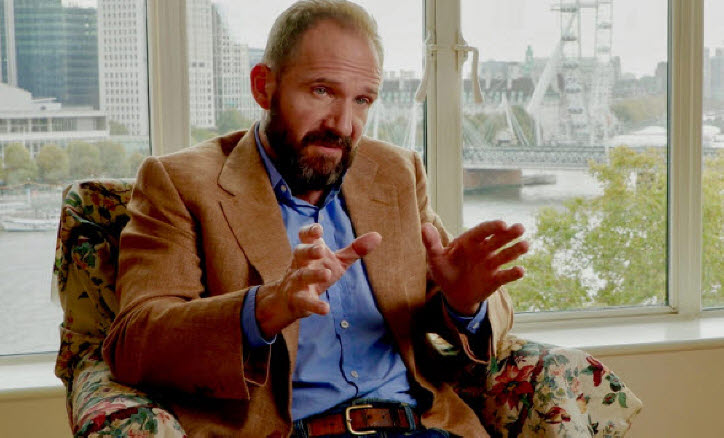
Because he is soon going to have his birthday, Barney hopes to get a B-bot as his birthday present, but he is let down by what his father and grandmother sincerely give him later. Seeing how much his son is disappointed and then humiliated for not having a B-bot, Graham decides to get it as soon as possible, and Barney is certainly delighted when his father manages to get it for him later.

However, as already shown to us in advance, this B-bot is actually a malfunctioning one supposed to be destroyed sooner and later, and we accordingly get a series of silly comic moments as Barney tries to make his B-bot work despite a number of signs of serious malfunction. For example, it calls Barney by some other name, and it also has several other problems including failing to connect with the online control system of that technology company.

Barney naturally comes to consider getting this B-bot repaired or replaced, but then he changes his mind as coming to see how singular this B-bot, named Ron (voiced by Zach Galifianakis), is compared to many other B-bots out there. Sure, it is still struggling in its ongoing learning process while not giving any online service it is supposed to provide, but Ron turns out to be a pretty good companion for Barney, and Barney is certainly happy and delighted to have a friend at last.

Of course, it does not take much time for that digital technology company to notice the singular status of Ron too. While Marc Weidell (voiced by Justice Smith), the well-meaning CEO of the company who developed the B-bot for a very sincere personal purpose, is quite interested in getting to know more about what makes Ron so special, his second-in-command Andrew Morris (voiced by Rob Delaney) has the other idea on how to deal with this matter, and he is really willing to do anything for protecting the business interest of his company.

What follows next is quite predictable, the screenplay by co-director Sarah Smith, who directed the film with Jean-Philippe Vine, and her co-writer Peter Baynham bounces along its familiar narrative with enough amount of humor and sincerity. While you will be amused a lot by a big mess which Ron and Barney inadvertently cause at Barney’s school, the dynamic development of their friendship along the story turns out to be more poignant than expected, and the film makes some sharp point on human relationship and online social media services via some of Barney’s schoolmates, who turn out to be as lonely as Barney despite many online services provided by their B-bots.

In the end, the story culminates to a big climactic part accompanied with plenty of action, but it still holds our attention as never overlooking the touching aspects of its two main characters’ relationship. Zach Galifianakis ably balances his likable deadpan voice performance between comedy and drama, and he is complemented well by the earnest voice acting by Jack Dylan Grazer. Around Galifianakis and Grazer, the film assembles a number of notable performers including Ed Helms, Justice Smith, Rob Delaney, and Olivia Colman, and Colman has lots of fun with her eccentric supporting role as she previously did with the villain character of “The Mitchells vs. the Machines” (2021), another recent animation film whose story also happens to be involved with advanced digital technology as well as human relationship.

In conclusion, “Ron’s Gone Wrong” does not bring anything new to its genre territory as reminiscent of many other kid adventure movies including “E.T. the Extra-Terrestrial” (1982), but it is still enjoyable enough for recommendation, and I think it will make a nice double feature show along with “The Mitchells vs. the Machines”. Although I prefer the latter a bit more for having more wit and energy, “Ron’s Gone Wrong” has its own endearing qualities to remember, and I am fine with that.

Posted in Movies | Tagged , , , , , , | Leave a comment

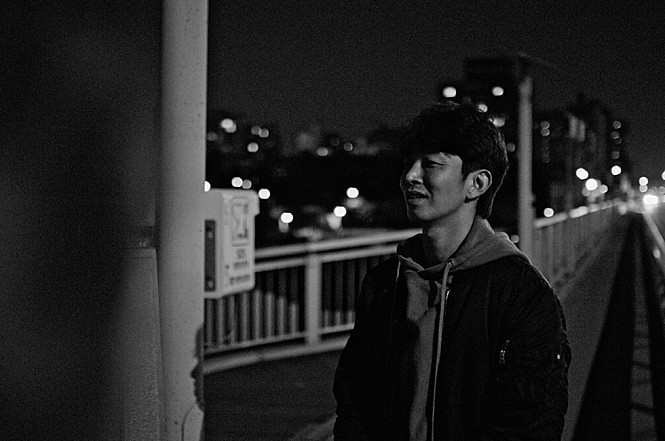
The Asian Angel (2021) ☆☆☆(3/4): Accidental travelers

“The Asian Angel” simply rolls along with its two different sets of characters and then observes what occurs between these two contrasting groups. Despite the considerable language barrier between their groups, the main characters in the film somehow manage to make some communication between them, and the movie calmly and sensitively depicts their accidental journey as alternating between amusement and poignancy.

In the beginning, we meet Tsuyoshi Aoki (Sosuke Ikematsu), a young struggling Japanese writer who has been a widower since his wife’s recent death. Because his older brother Toru (Joe Odarigi), who has been doing some small shady business in Seoul, South Korea, promised to him that things will be better for him and his young son Manabu (Ryo Sato) in Seoul, Tsuyoshi comes to Seoul along with Manabu, but the situation does not look that promising to him to say the least. While he cannot speak Korean at all, he is bothered a lot by the current political hostility between Japan and South Korea, and it also turns out that Toru is not living as well as he has boasted.

Anyway, Tsuyoshi tries to do his best under this rather depressing circumstance for himself as well as his son, and Toru seems to try more for his younger brother and nephew, but, alas, there comes a big problem. They suddenly find on one day that Toru’s South Korean associate runs away with nearly all of the money belonging to Toru, and Toru and Tsuyoshi consequently become quite despondent. When Toru suggests that they should go to a small city on the east coast for the possible avenue of profit, Tsuyoshi agrees to go along with him despite his reservation because, well, there is no choice for him at present besides that.

Meanwhile, the movie also pays attention to Choi Seol (Choi Hee-seo), a young South Korean woman who has been struggling with her sinking music career. She was once a fairly promising new singer some years ago, but, as briefly reflected by one scene showing her accidental encounter with Tsuyoshi, she has been stuck in a daunting situation without any possibility for comeback. To make matters worse, she may have to accept whatever she is demanded to do by a certain rich and powerful prick who can help her reviving his career, and that makes her much more depressed than before.

We also get to know Seol’s two siblings: her old brother Jung-woo (Kim Min-jae) and her younger sister Po-mu (Kim Ye-eun). Both Jung-woo and Seol have respectively tried their best for earning enough money for them and their dear younger sister, but these three siblings are not particularly cordial to each other even though they have lived together in a small residence. When Jung-woo, who seems rather dim but is a decent good guy nonetheless, suggests that they should visit their parents’ grave together, Seol is not so interested as being occupied with that impending matter on her life and career, but then she agrees to go along with her two siblings because, well, there is nothing else to do for her now.

Of course, Seol and her two siblings happen to come across Tsuyoshi and his two family members on a train to the east coast area, and Toru impulsively decides that he and Tsuyoshi should hang around with Seol and her younger sister for a while at least. Jung-woo does not welcome this much at first, but then he does not mind this at all mainly because Toru is willing to pay for the hotel rooms for him and his two sisters, and the mood becomes a bit more relaxed as everyone comes to enjoy a dinner together later.

After learning of Seol’s ongoing problem, Tsuyoshi comes to care more about her despite the language barrier between them, and he and his two family members come to spend more time with Seol and her two siblings on the next day. When they all happen to be stuck in some remote rural area, Seol suddenly has an unexpected medical emergency, and that reminds Tsuyoshi a lot of his dear wife’s recent death. He has not gotten over her death yet, but he also finds himself getting closer to Seol, and Seol does not mind this at all because she needs someone to lean on.

Even at that point, the screenplay by director/writer Yuya Ishii continues its leisurely stroll along with its main characters as they keep moving together from one narrative point to another. When they happen to spend another night together later in the story, the mood becomes warmer and more humorous than before, and you will be amused and then touched by when Tsuyoshi struggles to make more connection with Seol at one point. I must say that a certain plot element mentioned by the main characters more than once is blatantly symbolic, but I will not deny that I was tickled by when that plot element is fully shown on the screen around the ending of the film.

The main cast members of the movie are all solid in their humble ensemble acting. While Sosuke Ikematsu and Joe Odagiri complement well each other, Choi Hee-seo, who was memorable in “Anarchist from Colony” (2017), Kim Min-jae, and Kim Ye-eun are believable as three different siblings who do not get along that well with each other, young performer Ryo Sato holds his own small place among his adult co-performers despite mostly remaining quiet and silent throughout the film.

On the whole, “The Asian Angel” is a modest but engaging hybrid between Japanese and South Korean cinema, and I enjoyed how it gradually attains a sort of equilibrium between Japanese and South Korean characters despite some strains in the beginning. After all, it is always interesting to watch different people making connection with understanding and empathy, and the movie did that job well for us in my trivial opinion.

Posted in Movies | Tagged , , | Leave a comment

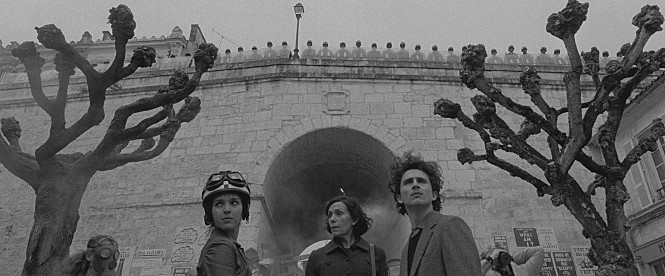
Shadow of the Vampire (2000) ☆☆☆1/2(3.5/4): Filmmaking with the Vampire

F.W. Murnau’s “Nosferatu: A Symphony of Horror” (1922) has been regarded as one of the greatest silent horror films for many good reasons, and one of them is the striking image of its titular character. Although the film itself was virtually the unauthorized film adaptation of that famous vampire novel by Bram Stoker, Murnau and his leading actor Max Schreck created one of the creepiest vampire characters in the movie history, and their result remains, shall we say, undead as residing somewhere deep beneath those countless vampire movies coming after this great film.

Inspired by the undeniably vivid and striking appearance of Schreck in “Nosferatu”, E. Elias Merhige’s 2000 film “Shadow of the Vampire” attempts to develop one darkly amusing premise: what if Murnau actually hired a real vampire as his leading actor at that time? This surely sounds pretty preposterous to say the least, but the movie handles this utterly unbelievable premise as seriously as possible for working as a deadpan one-joke horror comedy, and the overall result is further enhanced by another memorable vampire performance which deserves to be compared with Schreck’s in the 1922 movie.

At first, the movie observes the ongoing filmmaking process of Murnau, played by John Malkovich, and his cast and crew members in Berlin, 1921. While those financiers of his have been rather nervous about the production, Murnau is quite confident about completing the production according to his grand vision, and his cast and crew members dutifully follow his direction even though they are not so sure about what their movie is about, let alone how it is about. Once their job at the studio is done, they are going to shoot the rest of the film in a number of outdoor locations selected by Murnau in advance, but, to their confusion and bafflement, they are not informed much on what and how they are going to shoot the film in these locations.

Above all, they have not met its leading actor yet. All they know about Max Schreck so far is that he is very, very, very serious about playing his role as realistically as possible, and they become all the more curious about him as they later go to their first outdoor location, which happens to be located in Czechoslovakia. According to Murnau, Schreck, who is still not shown to them even at this point, has already been there for a while because of getting immersed more into the mood of the location, and it seems the location is indeed an ideal place for that. For example, the old inn in which Murnau and his cast and crew members except Schreck are going to stay has a shabby but authentic sense of history and superstition, and, besides using the inn for shooting several scenes of his film, Murnau is willing to hire several local people just for the extra authenticity from their mere presence.

When Schreck, played by Willem Dafoe, finally appears in front of everyone for shooting his first scene in the film, he does not disappoint Murnau and his cast and crew members at all. As a matter of fact, he looks so eerie and disturbing right from the beginning that nobody complains much about his rather eccentric conditions. He wants to shoot his scenes only during nighttime, and Murnau emphasizes to others that Schreck does not need any makeup because he always prepares himself in advance. Regardless of whether the camera is rolling or not, Schreck is always supposed to embody his character, and this professional commitment of his must be respected all the time.

The movie does not hide Schreck’s true identity and his unspeakable nature at all, and that is where its dark fun comes from. It soon turns out that Murnau made a heinous deal with Schreck for making him play the leading character of Murnau’s film, and Schreck is already quite excited for what he is going to get once his last scene is shot, though he still cannot help but driven by his insatiable thirst for blood. In fact, he has already been feeding on one of the key crew members, and this surely exasperates his director a lot (“Why him, you monster? Why not the… script girl?” – “Oh. The script girl. I’ll eat her later.”).

As Murnau and Shreck are constantly engaged in their morbid tug-of-war in front of and behind the camera, the screenplay by Steven Katz makes an interesting juxtaposition of vampirism and filmmaking besides becoming a deranged tale of artistic ambition and exploitation. While Schreck can be regarded as your typical troublesome star actor, Murnau comes to us as your average megalomaniac movie director willing to do anything in the name of art. And I am sure that there are millions of professionals in movie business field who will see a lot of themselves from what the other characters around Murnau and Schreck have to endure and suffer throughout the film. After all, the essence of filmmaking is sort of sucking the life and spirit of whatever is happening right in front of the camera and then immortalizing that on film, and even Schreck shrewdly recognizes this aspect when he has another argument with Murnau at one point. After watching the movie, you will probably think twice about how some famous filmmakers like David Fincher or Stanley Kubrick tend to shoot the same scene more than 100 times.

Because many real-life characters in the story except Murnau are quite unknown to many of us in comparison, the movie freely pushes its story premise while also sticking close to its original source of inspiration. Besides inserting a number of key shots from “Nosferatu”, the movie also recreates several other memorable moments of “Nosferatu” as Murnau and his cast and crew members keep making their film despite a series of unfortunate incidents. When Fritz Arno Wagner (Cary Elwes) arrives later in the story as the new cinematographer for Murnau, things get rolling more smoothly than before, and then there finally comes their leading actress Greta Schroeder (Catherine McCormack). Despite a little personal problem of hers, this young and beautiful actress is ready for her closeup, while having no idea on what her director is going to do to her during the shooting of her last scene.

As heading toward its inevitable finale a bit too hurriedly during its third act, the movie stumbles more than once, but it still holds our attention thanks to its palpably spooky atmosphere generated on the screen under Merhige’s skillful direction. He and his cinematographer Lou Bogue fills the screen a number of nice period details to be appreciated by the audiences familiar with “Nosferatu”, and the melancholic score by Dan Jones subtly suggests the darkness hovering around the characters in the film while occasionally accentuating several impressive moments in the film. One of such moments is a surprisingly poignant scene where Schreck unexpectedly gets what he has yearned for many centuries while he is playing a bit with a movie camera, and this indelible moment leaves a much more powerful impression than a similar one in Neil Jordan’s “Interview with the Vampire” (1994).

It goes without saying that the movie lives and dies with the unforgettable performance by Dafoe, who deservedly received an Oscar nomination for that. With his sharply gaunt appearance, Dafoe is born to play devilish figures to say the least, but he goes further here as fully immersing himself into his character, and he gives us a chillingly grand performance to be savored in many aspects. While deliberately exaggerated at times to our amusement, he never overlooks his character’s sheer depravity, but he also somehow earns our pity as ably conveying to us his character’s remaining humanity. When Schreck happens to discuss a bit with two other characters on Stoker’s novel, Dafoe and the movie delve quite deep into the misery and despair of being a vampire for centuries, and that will certainly remind you that being a bloodsucker forever is not as cool as shown in those Twilight flicks.

Although Dafoe virtually steals the show, the other main performers in the film are also wonderful in their respective roles. I must tell you that Murnau in real life was actually quite a nice and sensitive person, but Malkovich is often fun to watch while looking as smug and arrogant as demanded, and he and Dafoe complement well each other as carrying the film together. As Murnau‘s ever-suffering cast and crew members, Carry Elwes, Eddie Izzard, John Aden Gillet, and Udo Kier are enjoyable in their colorful supporting performance, and Catherine McCormack brings some jolliness to the film before her character belatedly comes to realize the terrifying fact behind shooting her last scene.

Although it could push its story promise further for more fun and intrigue for us in my humble opinion, “Shadow of the Vampire” is still a very compelling piece of work in addition to being one of better vampire films during recent years. It is a bit shame that Merhige mostly stepped away from filmmaking after his next feature film “Suspect Zero” (2004), but he gave us one excellent horror film to remember at least, and it will continue to be regarded as one of the highlights in Dafoe’s long and illustrious career.

Posted in Movies | Tagged , , , , , | Leave a comment

Copshop (2021) ☆☆☆(3/4): A fixer, a killer, and an officer

“Copshop” is an efficient action thriller flick which plays well with its familiar genre elements on the whole. Right from its opening part, we already have a pretty good idea on what we are going to get, but the movie deftly builds up tension and intrigue along its straightforward plot during its first half, and then we are served with a series of well-executed moments of brutal violence and action as expected during its second half.

At the beginning, we are introduced to a dude named Teddy Murretto (Frank Grillo), and he is running away by a vehicle apparently not belonging to him. When that vehicle happens to have some mechanical problem, he has no choice but to walk to a nearby desert town named Gun Creek, and then he unfortunately happens to be arrested by a young local female police officer named Valerie Young (Alexis Louder).

While Murretto is subsequently taken to the police station, it turns out that he is already being pursued by a guy named Bob Viddick (Gerard Butler), who soon lets himself deliberately arrested and then taken to the same police station while disguising himself as some pathetic drunk. Although he fails to be in the same cell along with Murretto, this wily dude, who is revealed to be hired to eliminate Murretto, has the other plan just in case, and the mood gradually becomes tense while he and Murretto talk with each other while there is no one around them except some real drunk who happens to be stuck with Viddick in the same cell and remains mostly unconscious.

Meanwhile, Young begins to gather that there is something suspicious about Murretto as she checks his criminal record, which has been somehow wiped clean for some unknown reason. In case of Viddick, she becomes very cautious about him when he later attempts to execute his plan B, and she naturally tries to find out what the hell is really going on between Viddick and Murretto, though we already come to discern that both of these two untrustworthy dudes are involved with a certain shocking incident repeatedly reported on TV.

And the tension between Viddick and Murretto is increased more and more along the story. Although they are separately locked in different cells, Viddick knows a certain weak spot of his opponent, and he toys with that a bit just for goading his opponent more. As sensing more that he must get out of the police station as soon as possible, Murretto tries to persuade Young to release him right now, but Young remains adamant as before, and then there eventually comes a point where the movie takes another plot turn.

The trailer of the movie reveals a bit too much of what will happen next after this narrative point, so I will not go more into details, but I guess I can tell you that the movie consequently enters that familiar genre territory occupied by other similar movies ranging from “Rio Bravo” (1959) to “Assault on Precinct 13” (1976). Soon finding herself cornered into a very desperate circumstance with no one to come to help her, Young comes to see that she must depend on either Murretto or Viddick, but she also cannot easily trust either of them, and the time keeps running out for her minute by minute.

In case of Viddik and Murretto, they also become quite desperate, so they respectively keep trying to persaude Young to trust either of them for a while at least. Murretto becomes a little more honest as revealing what exactly he is trying to escape, but Viddik emphasizes how unreliable Murretto is as a sleazy fixer, and Young must decide on whom she will have to release for the extra help she needs right now.

As the story eventually arrives at its climactic part, the movie expectedly throws lots of actions into the screen, and director/co-writer/co-producer Joe Carnahan, who is no stranger to action movies as shown from his several previous works including “Boss Level” (2020), and his crew members did a competent job of presenting a number of gritty action scenes with considerable visceral impact. Around the end of the story, the movie stumbles a little as losing some of its narrative momentum, but it soon recovers from that, and you will be amused a bit by the last shot which is morbidly cheerful in my humble opinion.

As the opposing main characters in the story, Gerard Butler and Frank Grillo, who also participated in the production of the film, have some fun as their characters play a sort of cat-and-mouse game during the first half of the movie. As two reliable veteran actors who have appeared in numerous action thriller films for years, they certainly do not disappoint us at all when they are required to do some action later in the story, and Alexis Louder, a promising newcomer who previously played a minor supporting character in “Harriet” (2019), holds her own place well between Butler and Grillo. As another crucial part of the story, Toby Huss is effective while casually going back between jolliness and ruthlessness as demanded, and he surely brings some twisted humor to his several key scenes in the film.

Overall, “Copshop” did not surprise me much as mostly playing according to its genre conventions, but it is still a fairly entertaining flick thanks to its good handling of suspense and action and the engaging performances from its main cast members. I was a bit disappointed because it does not reach to the level of “Assault on Precinct 13”, but, as far as I can see, it does its job as well as intended, but I will not grumble for now.

Posted in Movies | Tagged , , , , | Leave a comment

Old Henry (2021) ☆☆☆(3/4): An old farmer with the past

“Old Henry” is a familiar but solid western thriller film which turns out to be more enjoyable and interesting than expected. We can clearly see through what it is going to do along with its seemingly plain ordinary hero, and it will surely remind you of many senior western films ranging from “The Shootist” (1976) to “The Unforgiven” (1992), but it gradually engages us more via its efficient handling of story and characters, and we come to care a lot about what may happen next along the story.

Tim Blake Nelson, who has always been one of the most dependable character actors working in Hollywood during last two decades since he drew our attention via his colorful supporting turn in the Coen brothers’ “O Brother, Where Art Thou?” (2000), plays Henry McCarthy, a shabby widower farmer who has run a small farm in the middle of some remote area of Oklahoma in 1906. Since his dear wife died around 10 years ago, he has lived there alone with his young son Wyatt (Gavin Lewis), and their only neighbor is his brother-in-law, who has also run his own farm not so far from Henry’s. Although he and his son are not exactly friendly to each other, it is evident to us that Henry cares a lot about his son, and he even does not let Wyatt handle a gun even though Wyatt is now old enough for that in the standard of the American Old West.

Wyatt is understandably not so happy about his father’s insistence while also often bored with their isolated status, but something occurs to disrupt their daily life on one day. After spotting a riderless horse from the distance, he and his father promptly search for the rider in the surrounding area, and it does not take much time for them to find the rider, who has been unconscious on the ground due to his serious gunshot wound.

As looking around the spot for a while, Henry notices a bag full of money, and, while not telling anything to his son, he handles the situation as tactful as he can. First, he and his son take the injured stranger to their house, and then he comes back to the spot for not only retrieving that money bag but also erasing the traces as much as he can. Besides hiding that money bag in his secret place, he also has the injured stranger tied on a bed just in case, and Wyatt goes along with this without any question because Henry says it is just for the safety for the injured stranger.

However, Wyatt cannot help but become curious about who the injured stranger really is – and what his father does not tell him yet. After seeing his father hiding something in that secret place of his, he decides to delve more into the situation for himself, and he is certainly excited and intrigued by what he finds besides that money bag. Yes, it seems that there is the past which his father has hidden from him for years, and that eventually prompts him to do something not allowed by his father.

Meanwhile, the injured stranger turns out to be more suspicious and unreliable than he seemed at first, and that makes Henry and Wyatt’s circumstance trickier than before. When three other guys come Henry’s farm, Henry instinctively senses more trouble even while seemingly accepting what these three dudes tell him, and one of them already seems to sense something fishy about Henry.

Because what is shown in advance during the opening scene, it is not much of a spoiler to tell you that these three guys are the main villains of the story – and that our seemingly inconsequential hero turns out to be someone who may be more than a match to be handled by these three guys. At one point, we get a quiet but tense moment when he must evade these three guys in the middle of a wide space without getting noticed at all, and then we are reminded again of how much he has been underestimated by his son.

Slowly developing the dramatic tension outside and inside Henry’s house along the plot, the movie gives us several good moments to reveal more of its main characters’ life and personality. In case of the conversation scene between Henry and the injured stranger, it simply feels like an interrogation at first, but then it comes to suggest more of what these two characters have respectively kept to themselves for years, and you may not be so surprised by what is revealed around the end of the story.

The story expectedly culminates to the finale filled with lots of gunshots, but director/writer Potsy Ponciroli and his crew members including cinematographer John Matysiak and editor Jamie Kirkpatrick did a competent job of delivering this moment with enough gritty intensity. While Nelson steadily holds the center as before, Gavin Lewis, Scott Haze, Trace Adkins, and Stephen Dorff are also fine in their respective supporting parts, and Dorff, who has somehow not received enough recognition despite a number of stellar performances he gave after his breakout turn in “The Power of One” (1992), has a juicy fun with his talky but chilling villain character.

In conclusion, “Old Henry” does not surprise that much in terms of story and characters, but it attains its goals as much as it can, and Nelson demonstrates here in this film that he can be as tough and ruthless as, say, Bob Odenkirk in “Nobody” (2021). Seriously, will we ever see these two ever-reliable character actors fight with each other on the screen?

Posted in Movies | Tagged , , , | Leave a comment

Prisoners of the Ghostland (2021) ☆☆1/2(2.5/4): Cage in Sonoland

Sion Sono’s latest film “Prisoners of the Ghostland” looks like an ideal combination between two different figures who have respectively been known well for going wild and crazy in each own way. While Sono has surely impressed us with a number of loony and disturbing works such as “Cold Fish” (2010) and “Why Don’t You Play in Hell?” (2013), his leading actor Nicholas Cage has been quite bold and fearless regardless of whether his movies are good or bad, and I and others surely expected a lot from their collaboration.

However, sadly, “Prisoners of the Ghostland” turns out to be not as wild and explosive as we can hope from Sono and Cage. While they and the other cast and crew members around them are surely willing to go wild right from the start, the movie is often hampered by its uneven storytelling and weak characterization, and we are just mildly amused at times by its deliberately whimsical exaggeration of style and mood.

The movie is set in a bluntly anachronistic world located somewhere in Japan, and it promptly thrusts us into this crazy strange world where old and modern elements of the Japanese society are casually mixed along with some element from the Old American West. While there are a bunch of geishas and samurais on one hand, there are also a group of gunslingers on the other hand, and they are all ruled by a sleazy American dude who is simply called “The Governor” (Bill Moseley). When one of his “granddaughters” manages to escape at one night, the Governor is not so pleased at all, and he is already determined to get her back by any means necessary.

And he happens to have the right guy for that. That person, played by Cage, has been incarcerated for many years due to a bank robbery, which was gone horribly gone wrong for him and his accomplice as shown to us during the opening part of the film. When the Governor promises freedom to him in exchange of getting that woman back to the Governor, our nameless hero is not so eager to say the least, but, alas, he soon finds that he has no choice once the Governor has him wear a special suit which will probably take you back to the similar setting of John Carpenter’s “Escape from New York” (1981).

Even at that point, the movie does not hesitate to baffle and strike us, and we are accordingly served with small and big loony moments. While I like the striking color scheme of the bank robbery scene, I also enjoy several surrealistic moments including the sudden appearance of a rather catchy song, and Cage, who looks as straight as possible in front of all these and other crazy elements in the film, contributes extra silliness to the movie when his character decides to use a far plainer vehicle than a fancy sports car given to him for accomplishing the mission out there.

After our hero leaves for a wasteland area where that woman, who is named Bernice (Soifa Boutella), ran away, the movie becomes more decidedly unrealistic as building up another stranger world around our hero. As explained to us later in the story, there was a disastrous accident involved with the radioactive waste from some nuclear power plant, and its victims were turned into a sort of radioactive ghosts who have isolated that area from the outside world. While she succeeded in getting away from the Governor, Bernice is now trapped in this wasteland region along with many of its gloomy denizens, and the movie has some naughty fun with how these people are miserably coping with their hopeless status which may continue forever till their death. At one point, we see a bunch of them struggling to stop a big clock from working second by second, and that is certainly an amusing sight for us even though we cannot totally understand what is really the point of this Sisyphean work.

While continuing to do these and many other stuffs around here and there, the movie unfortunately comes to lose its narrative focus and momentum, and we become more aware of the contrived aspects of its story and characters. Although Cage tries his best, his character remains rather flat and bland in my humble opinion, and the movie does not even give him enough chances to go as wild and crazy as we can expect from him. Yes, I actually chuckled a bit as watching a little gory moment involved with his character’s certain body part, but the movie does not go further than that to my disappointment, and it merely comes to spin its wheels as monotonously mired in its excessive exercise in style.

In case of the other main cast members in the film, most of them are wasted in their cardboard roles. Sofia Boutella brings some spirit and personality to her superficial role, but the movie under-utilizes her to my disappointment, and the movie actually made me miss when she mercilessly wielded a pair of blades in “Kingsmen: the Secret Service” (2015). In case of Bill Moseley and Nick Cassavetes, they are as hammy as required by their caricature characters, and Tak Sakaguchi and Yuzuka Nakaya manage to leave some impression as two crucial Japanese characters in the story.

Although it is at least less boring than Sono’s previous film “The Forest of Love” (2019), “Prisoners of the Ghostland” is still a misfire which fails to be as entertaining as it could be, and my dissatisfaction with its overall result still lingers on me even at this point. The movie is as distinctive as Sono’s other works, but I would rather recommend you to watch “Why Don’t You Play in Hell?” instead, and I also want to point out that Cage was more entertainingly wild in “Mandy” (2018). Believe me, you will have a more satisfying time with either of these two better films.

Posted in Movies | Tagged , , | Leave a comment

Cry Macho (2021) ☆☆1/2(2.5/4): A leisurely sentimental drama from Eastwood

Clint Eastwood’s latest film “Cry Macho” often feels like watching an old retired master reluctantly doing another encore despite not exactly being in his best condition. Although the overall result is not without flaws to be noticed here and there, the movie shows at least that Eastwood can still work in front of and behind the camera, and that may be a consolation for you if you have admired many of his notable works as much as I have.

The movie, which is based on the 1975 novel of the same name by late N. Richard Nash, starts with establishing the shabby current status of its aging hero played by Eastwood himself. Although he was once quite a famous rodeo star in Texas, Mike Milo had to retire due to a serious back injury, and he has subsequently worked in his old friend Howard Polk (Dwight Yoakam) for years, but then there comes a point where Howard is not going to tolerate Mike’s laid-back attitude anymore. When Howard bluntly notifies that he is fired, Mike simply accepts that news, and then he goes back to his little house, which is filled with many mementos from his glorious past.

One year later, Howard unexpectedly visits Mike, and he seems to put aside the recent grudge between them just for requesting Mike to do something for him. A long time ago, Howard married some woman in Mexico and then they happened to have a son, but Howard left them when he and his wife eventually had a divorce, and now he wants to have his son back. Because he cannot go to Mexico for some business trouble, Howard asks Mike to go to Mexico City and get his son back to Texas for him, and Mike cannot say no as Howard actually helped him a lot at a certain difficult point in his life.

On the surface, the job looks like a piece of cake as Mike goes across the Mexico-US border and then drives toward Mexico City. When he eventually meets Howard’s ex-wife, she has no problem with telling him where her son is at present, and he immediately goes to a slum neighborhood where her son usually hangs around with others for cockfighting. Fortunately, it does not take much time for Mike to locate Howard’s son, and, after having a brief talk with Mike, Rafo (Eduardo Minnett) quickly agrees to go to Texas along with Mike.

Not so surprisingly, Mike soon comes to realize that the situation is more complicated than expected. When she happens to be quite pissed about Mike for a rather prosperous reason (Please don’t ask me how she can be so interested in seducing Mike, who looks like her grandfather compared to her fairly youthful appearance), Rafo’s mother, who happens to be quite affluent besides having some dangerous associates around her, turns out to be a lot more spiteful and vicious, and it also later revealed that Howard did not tell everything about his complex family circumstance.

Now this looks like a standard setup for the mix between road movie and thriller flick, but that is certainly the last thing we can expect from Eastwood. He simply lets the story roll along its predictable route, and we accordingly get a series of sensitive moments between him and Eduardo Minett as their very different characters come to connect more with each other along the story. While often annoyed with Rafo’s brash aspects besides his precious rooster for cockfighting, Mike gradually comes to care more about Rafo, and Rafo comes to learn a few lessons from Mike as Mike tells and shows him a bit about being, yes, a man.

Meanwhile, the story later comes to revolve around a small rural town due to an unexpected trouble for Mike and Rafo, and the movie becomes more relaxed and reflective than before. Thanks to a kind local woman named Marta (Natalia Traven), Mike and Rafo come to get a temporary shelter where they can stay under her protection, and it does not take much time for Mike and her to develop mutual attraction between them despite their language barrier. In addition, Mike demonstrates his particular set of skills in front of Rafo and many residents of the town, and, considering their appreciation to Mike, it seems that he and Rafo may stay a bit longer in the town.

However, what is so tenderly developed during this part is unfortunately disrupted by the jarringly uneven finale, and even Eastwood’s tactful direction does not compensate for this glaring flaw and other notable weak elements in the film. For instance, the cinematography by Ben Davis is commendable on the whole, but I must tell you that, even to a foreigner like me, many locations in the movie look more like belonging to Texas rather Mexico, and I was not so surprised at all to learn later that they actually shot the movie in New Mexico. As the center of the film, Eastwood carries the movie as much as he can, but he seems more tired and detached even compared to his previous acting turn in “The Mule” (2018), and the other cast members including Dwight Yoakam and Natalia Traven are mostly stuck in their thankless supporting roles.

On the whole, “Cry Macho” is a bit too flawed to engage me, but I also admire how Eastwood, who had the 91th birthday several months ago, has kept going as usual even while apparently going through the last phase of his filmmaking career. He is still a master in my inconsequential opinion, and I can only hope that his long and respectable filmmaking career will not be ended with this rather disappointing minor work.

Posted in Movies | Tagged , | Leave a comment

Found (2021) ☆☆☆(3/4): Finding themselves

Netflix documentary film “Found”, which was released on Netflix on last Wednesday after having a limited theatrical released in US, presents a heartfelt story of three different Chinese American adoptees who came to search for their biological mothers. As observing the daily life of each of them and the development of their accidental friendship, the documentary gives us a series of warm and intimate moments among them and their respective foster families, and there are also some poignant moments when these three young ladies later become a bit more active about finding themselves in the country they do not remember much.

At the beginning, we are introduced to Chloe Lipitz, Lily Boka, and Sadie Mangelsdorf, and the documentary shows us how different their respective family backgrounds are. While Chloe has grown up under her Jewish parents in Arizona, Lily has been living with her foster mother and her extensive Catholic family in Oklahoma, and Sadie Mangelsdorf has resided with her divorced mother and two step siblings in Tennessee. We see Chloe going through a religious ritual for her adulthood in Israel, and then we watch Lily preparing for her upcoming college enrollment, and then we observe Sadie cheerfully working along with other employees at a local fast-food restaurant.

As Chinese American adoptees, these three young ladies all have the experience of being more aware of being and looking different from many others around them. When they were just adopted from China, they simply adapted themselves to their respective new and alien environments under the loving care of their foster parents. As they grew up older, they became more conscious of being abandoned shortly after their birth, and Chloe bitterly reminisces at one point about how the casual remark from one of her schoolmates, who was incidentally her best friend at that time, hurt her a lot.

They all know well why they were abandoned shortly after being born in China. As told to us in the beginning of the documentary, the Chinese government ruthlessly forced the one-child policy upon its citizens during around 40 years for suppressing its serious population increase, and around 150,000 babies were abandoned during that period as a consequence. Many of these abandoned babies were girls because many of Chinese people preferred to have a son instead of a girl, and, once they were found abandoned, they were usually sent to local orphanages, where many of them were later adopted by foreign foster parents just like Chole, Lily, and Sadie.

Although there was not much chance from the beginning, Chloe, Lily, and Sadie submitted their samples for DNA tests to an online service company which has helped many adoptees like them, and that was how they came to befriend each other. Their test results still did not lead them to anything substantial enough to locate their respective biological parents, but the test results indicated that they were actually distant cousins, and they were all thrilled and delighted to contact with each other.

While they continue to communicate with each other, they become all the more curious about finding their roots, but not all of them are eager to do more for that. Sadie and Lily are willing to go to China for knowing a bit more about their birthplaces, Chloe is rather reluctant for understandable reasons, but she still goes along with her two friends when they put some efforts together on their journey of finding themselves and their roots.

Their cases are handled by Liu Hao, a local research officer living in Beijing, China. Liu has been quite passionate about her work because she still remembers well how unwanted she was as a daughter during her childhood years, and it is touching to see how she deftly and sensitively handles her latest cases. She approaches to those potential biological parents with caution and respect, and she listens to these people with care and empathy while also mentioning that there is not much possibility of positive result in their DNA tests. Regardless of whether any of them is actually the biological parent of Chloe or Lilly or Sadie, these people all have their own sad story to share with, and we are reminded again of how heartless the one-child policy really was.

In the end, Chloe, Lilly, and Sadie eventually take a trip to China for getting to know more of their respective birthplaces, and the most poignant moments in the documentary come from when they reunite with several orphanage nannies who took care of them and many other little orphans during that time. These remarkable women did their best despite little support and resource available to them, and they are all certainly proud and happy to see Chloe, Lilly, and Sadie returning to them for showing some gratitude.

Overall. “Found”, which is incidentally the first feature documentary film by director/co-producer Amanda Lipitz, will touch you with its numerous intimate moments, and it will bring you some smile via a series of sweet photographs shown during its end credits. Although it does not give us a wider perspective on the one-child policy like Nanfu Wang and Jialing Zhang’s harrowing documentary “One Child Nation” (2019), the documentary still works as an engaging documentary nonetheless, and it will surely make a nice double feature show along with “One Child Nation”.

Posted in Movies | Tagged , , , , | 1 Comment