Our Midnight (2020) ☆☆1/2(2.5/4): Their midnight stroll

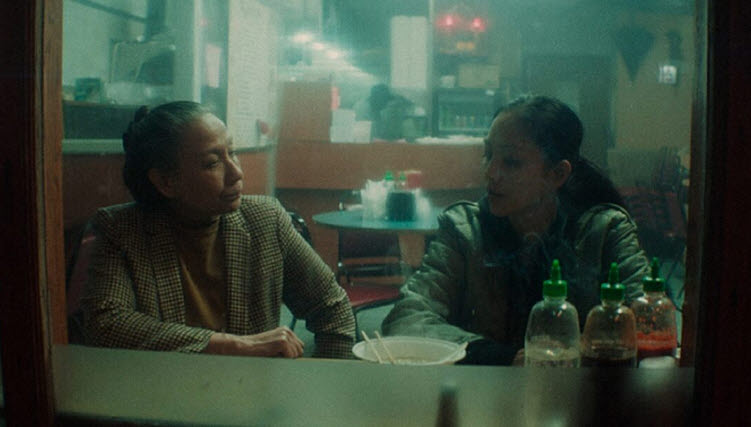
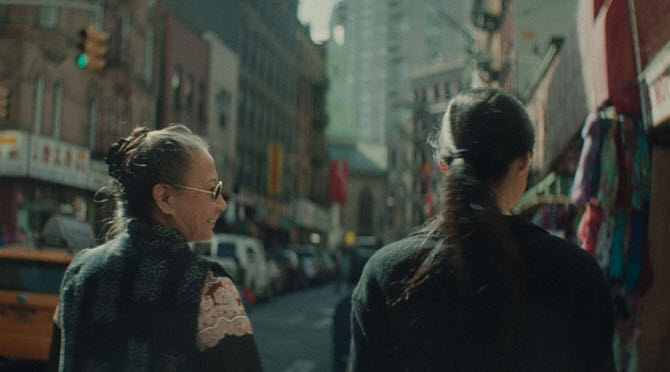
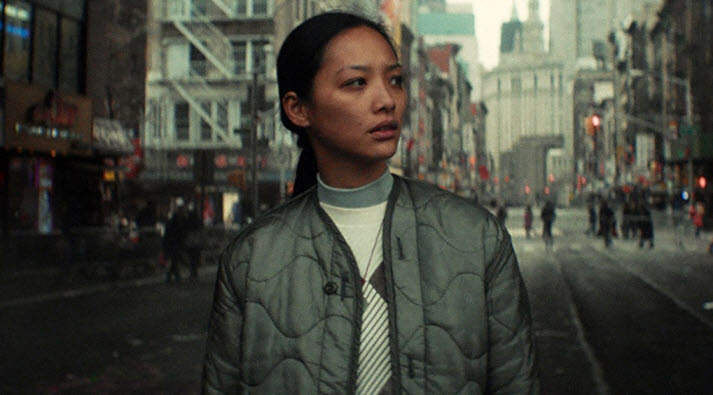
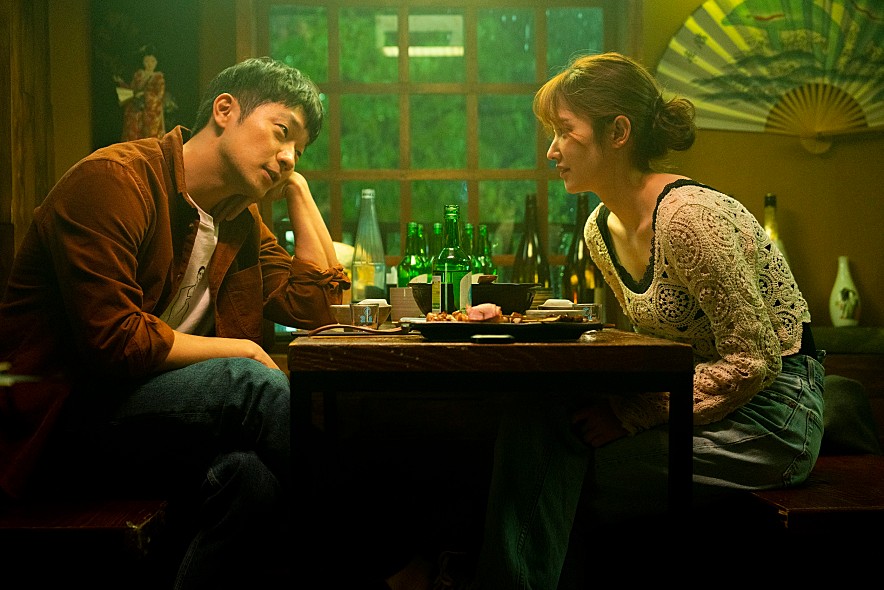
South Korean independent film “Our Midnight” gives one of the most haunting visual presentations of Seoul I have ever encountered during last several years. Although many of those locations shown in the film are not that familiar to me, they look quite vivid and mesmerizing as beautifully presented on black and white film, and it is a shame that the movie did not engage me that much in terms of story and characters.

The movie opens with the dry depiction of its hero’s miserable status of life. Ji-hoon (Lee Seung-hun) is a young struggling actor living in Seoul, and a series of brief moments show us how things have been quite frustrating for him. Besides being unemployed for a while, he has not been paid yet for his previous part-time job, and his girlfriend, who seems to have tried to support and stand by him for years, announces to him that she is going to leave him because she does not see any future between them.

While naturally quite depressed, Ji-hoon still tries to keep going on. Although he remains unemployed as before, he manages to get his delayed wage from his former employer. When he happens to meet an old school senior of his, this senior, who happens to be working as a public servant, offers a part-time job, and Ji-hoon does not hesitate to grab this offer as having been short of cash.

His job is a pretty simple one. All he has to do is patrolling on one of those big bridges on the Han River during nighttime and preventing anyone from jumping from that bridge, and his first night seems to be pretty uneventful except many cars passing by him – until he happens to notice a young woman alone at the middle of the bridge.

This young woman is Eun-yeong (Park Seo-eun), and we already got a brief glimpse on her recent trouble. She was in a relationship with one of male employees at her workplace, but something quite serious happened between them. She subsequently reported this to the police, but then she found herself becoming a pariah among her colleagues as a consequence, and she certainly feels like being on the edge when she is at the middle of the bridge.

When Eun-yeong is suddenly collapsed for no apparent reason, Ji-hoon instantly takes her to a nearby hospital, but then he comes across her again on the bridge not long after that incident. Although they do feel awkward due to that incident, it does not take much time for them to get friendly with each other, and we soon see them spending more time with each other.

After they get to know a bit about each other, Ji-hoon suggests that they should play against each other, and Eun-yeong goes along with that despite her initial reluctance. When there is no one around them at one empty spot, Ji-hoon plays her ex-boyfriend right in front of her. His fairly convincing performance initially daunts her, but Eun-yeong comes to play herself in response, and that helps her a bit on what she should do about her difficult current situation.

Once Eun-yeong becomes more relaxed than before, she and Ji-hoon go around several other different nearby places, and the movie did a good job of presenting these various places with considerable tranquil beauty. As the mood becomes more comfortable between them, Eun-yeong and Ji-hoon open themselves more to each other, and then there comes a little unexpected magical moment while Ji-hoon provides some nice amusement for Eun-yeong around an old movie theater.

Around that point, it is clear to us that the movie tries to emulate Richard Linklater’s Before Trilogy, but the screenplay by director/writer Lim Jung-eun stumbles more than once as bringing a number of unnecessary elements into its supposedly simple and free-flowing narrative. For example, a scene involved with a certain female supporting character whom Ji-hoon tries to help at a local cafe feels like an artificial counterpart to Eun-yeong’s ongoing plight, and many of supporting characters in the story are not developed enough to generate dramatic resonance during a short montage scene around the end of the film.

While gradually feeling dissatisfied with its several glaring flaws during my viewing, I also notice a number of good elements in the movie, and one of them is the solid acting of its small cast. Besides complementing each other well during their several key scenes, Lee Seung-hun and Park Seo-eun are engaging to observe in each own way, and Park is particularly good when her character firmly sticks to a certain important decision of hers despite the considerable pressure upon her. In case of the other cast members in the film, Lim Young-woo, Go Wang-jae, and Han Hae-in are well-cast in their small but crucial supporting roles, and Min Hyo-kyung’s brief but effective acting compensates for the heavy-handed aspects of her single scene.

Although I cannot recommend it because its story and characters feel a bit too thin to me, “Our Midnight” is not a bad piece of work at all, and Lim Jung-eun, who previously made several short films before making her feature film debut here, demonstrates here at least that she is a talented filmmaker who knows how to establish a good mood to engage us. The movie is still not good enough for me, but it does show considerable promise, and I sincerely hope that Lim will soon move onto better things to come.

Posted in Movies | Tagged , , , | Leave a comment

A Cop Movie (2021) ☆☆☆(3/4): An unconventional Mexican cop documentary

Mexican documentary film “A Cop Movie”, which was released on Netflix in last week, is an interesting piece of work attempting an unconventional approach to its familiar main subject. At first, it seems to be merely following the story of two different real-life police officers in Mexico City, but then it unexpectedly shifts onto a different viewpoint, and we come to see more of how problematic their system really is.

At first, the documentary introduces us to a seasoned female officer named Teresa, and the opening scene shows her going through another busy night in Mexico City. As she drives her patrol car here and there in the city, we constantly hear numerous reports and reports on her radio, and then we later see her handling a serious medical circumstance for herself. While a woman is about to give birth to her baby, no ambulance or paramedic has come yet, so, though she does not know much about how to handle such a situation like that, Teresa has no choice but to help this woman as much as she can.

While the camera is steadily around her, we get to know Teresa more as she tells us a lot about her family background. Her father is also a police officer, and she wanted to be just like her father even when she was young, but she only found herself often disregarded and underestimated by her father. Nevertheless, she did not give up at all, and she eventually went to the police academy when she was only 17, and her father came to recognize and respect his daughter around the time when she began to work outside as a police officer.

It is clear that she is proud of how she has dutifully worked for more than 15 years, but she also admits how it is often hard and difficult for her to go through one day after another. Like many other police officers, she frequently struggles with the lack of resource in the system, and she also sometimes has to accept some bribe due to her difficult economic status. In addition, it is suggested that she initially had to deal with the misogyny of many male police officers around her, and even her father clearly notified to her in advance that he did not want to get involved with any sexual harassment problem she might have.

In case of a male police officer nicknamed Montoya, he also has a fair share of problems he is willing to share with us in front of the camera. Like Teresa, he is a fairly good police officer, but he often gets frustrated with how he and many other police officers are not appreciated much by many citizens out there. During one amusing scene, we see him and several other police officers doing their job in the middle of the pride parade for sexual minority people, and the camera captures a series of silly brief moments as he is ridiculed by some participants of the pride parade.

Like Teresa, Montoya aspired to be a police officer even when he was very young. He was quite impressed by an older brother who was a police officer, and, despite his poor family background, he managed to fulfill his wish instead of becoming street criminals just like many of his neighborhood friends. At one point, he reminisces about a chance encounter between him and an old friend of his, and he muses a bit on how things could turn out to be quite different for him if he had not been determined to join the police.

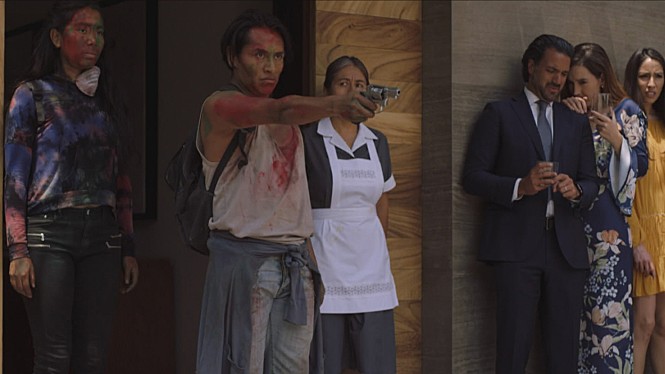
Not long after revealing the unexpected connection between its two different human subjects, the documentary catches us off guard as both Teresa and Montoya in the documentary turn out to be the performers playing their real-life counterparts, and we subsequently observe these two performers, Raúl Briones and Mónica Del Carmen, going through each own preparation period. For making their performance more convincing, they study and absorb the interview clips from their real-life counterparts, and they also go through the training session along with many real trainees before spending some time with real police officers.

While getting to know more about police officers and their system, both of these two performers certainly have lots of things to tell us. They talk about how problematic the training process is in many aspects, and they also come to have some empathy and understanding on what numerous police officers have to deal with day by day.

As they get closer to their respective roles, Briones and Del Carmen are gradually overlapped with real Teresa and Montoya, and that is why the following moment, which is the enactment of an incident which really happened to Teresa and Montoya, works well with considerable dramatic effects. Briones, Del Carmen, and several other performers in this scene did a commendable job under director/co-writer Alonso Ruizpalacios’s competent direction, and you will be more infuriated as Teresa and Montoya phlegmatically tell us how they were unjustly punished after that incident.

On the whole, “A Cop Movie”, which won the Silver Bear Award for its editing by Yibran Asuad when it was shown at the Berlin International Film Festival early in this year, is worthwhile to watch for its engaging presentation of social issues which relevant to many of us. It is always interesting to observe different worlds and people via good documentaries, and I assure you that “A Cop Movie” is one of such documentaries.

Posted in Movies | Tagged , , | Leave a comment

Finch (2021) ☆☆1/2(2.5/4): Man, Dog, and Robot

“Finch”, which was released on Apple TV+ in last week, has some good elements to engage us but does not bring enough freshness or creativity to its familiar genre territories. As your typical post-apocalyptic tale, it surely has all the bleak and stark stuffs to decorate the screen, and it is supported well by the convincing duo performance at its center, but you will not be surprised much by what happens along its predictable road movie plot.

At the beginning, the movie promptly puts us into its grim and perilous background surrounding its isolated hero. Several years ago, the Earth happened to be hit by a massive solar flare which scorched the whole planet, and the planet was turned into a very harsh place due to the following extreme climate change. Because of the absence of the ozone layer in its atmosphere, the planet is constantly exposed to lots of solar ultraviolet besides becoming quite hot during daytime, and there are also massive sandstorms frequently occurring here and there on its vast wastelands.

As a result, not only the human civilization but also the whole ecosystem of the Earth were almost wiped out, but Finch Weinberg (Tom Hanks), a middle-aged robotics engineer living in St. Louis in Missouri, has managed survive alone in an abandoned laboratory of some company for which he worked before the catastrophe happened. When he needs something for a dog which has been his only organic companion, we see him searching around in the city while wearing his protection suit, and we come to gather that this is not his first attempt of scavenging for anything valuable.

And we also get to know what Finch has been working on during last several years. He has been developing an artificial intelligence robot alone by himself, and, though he has to depend a lot on various spare parts including the certain one borrowed from his other robot, it looks like he is finally reaching to the breakthrough he has yearned for a long time. Once it can recognize Finch in addition to being able to communicate with him, his new robot begins to learn more bit by bit, and Finch is certainly delighted to say the least.

However, there comes a big trouble approaching toward Finch’s residence and its surrounding area. It turns out that three sandstorms will merge together in the area and then become a big giant sandstorm which will probably wipe out all the area, and that means Finch must evacuate within 24 hours for saving himself as well as his dog and robots. Although he cannot be sure about where he should go, he decides to leave for San Francisco, which has been a personal special place even though he has never been there throughout his whole life.

As Finch drives his modified recreational vehicle along the road to San Francisco, his dog and his new robot often lighten up the mood a bit in each own way. While his dog reminds him of why he should keep going on as before, his new robot gradually becomes somebody to depend on despite its innocent clumsiness, and Finch, who becomes quite concerned about his dog after noticing his serious health problem, already made sure that his new robot will protect his dog above all else, via giving it one additional imperative besides those famous three imperatives for robots conceived by Isaac Asimov.

As these main three characters roll along the road to San Francisco, the movie naturally doles out one episodic moment after another. There is an intense scene involved with an unexpected appearance of tornado, and that took me back to when I was amused and thrilled by the similar moments in “Twister” (1996). In case of a small poignant scene between Finch and his dog at an empty diner, and that shows more of how much he cares about his dog, and we are not so surprised when Finch tells more about his dog to his new robot later in the story.

However, the screenplay by Craig Luck and Ivor Powell subsequently becomes rather flat during its second half as beginning to lose its narrative momentum. Director Miguel Spochnick, who recently won an Emmy for HBO TV drama series “Game of Thrones”, did a competent job of making various bleak landscapes look real and vivid on the screen, but that does not compensate much for the lackluster arrival point for the story and its main characters.

At least, the two main performers of the movie did their best for carrying the movie together, and they remind us again of each own considerable talent and presence. While he is virtually doing something not so far from his Oscar-nominated performance in Robert Zemeckis’ 2000 film “Cast Away” (Incidentally, Zemeckis serves as one of the executive producers of the movie), Tom Hanks demonstrates again that he is a dependable star actor, and Caleb Landry Jones, who has been one of the most promising new talents to watch since his notable supporting performance in “Get Out” (2017) and “Three Billboards Outside Ebbing, Missouri” (2017), is alternatively amusing and touching in his voice performance. In addition, the special mention goes to the dog playing Finch’s dog, which holds its small place well between Hanks and Jones throughout the film.

On the whole, “Finch” is a fairly well-made genre piece, but it will not impress you that much if you are, like me, a seasoned movie audience who has seen countless SF movies about robots. Sure, I came to like and care about its robot character more than expected, but the story is not fresh enough to distinguish itself, and I am afraid that the movie will be soon forgotten as swept by the continuing waves of new online movies to come.

Posted in Movies | Tagged , , , , , | Leave a comment

The Dissident (2020) ☆☆☆1/2(3.5/4): Behind the assassination of one Saudi Arabian journalist

Documentary film “The Dissident” will alternatively chill and infuriate you for good reasons. While going into the details on the shocking death of Saudi journalist Jamal Khashoggi in 2018, the documentary also gives us the alarming presentation of how the Saudi government has recently tried to control and suppress local and international dissent by any means available to them, and it is really disturbing to see that the prominent figure behind everything will probably never get arrested or investigated just because of his considerable power and wealth.

At first, the documentary gives us the overview of what happened to Khashoggi in Istanbul, Turkey on October 2nd, 2018. At that time, Khashoggi was about to marry his Turkish fiancée Hatice Cengiz not long after divorcing his wife in Saudi Arabia, and he already came to the Saudi consulate on September 28th for getting the certification document on his recent divorce. Because nothing much happened on that day, Khashoggi did not worry that much when he entered the consulate alone several days later, and that was the last time when he was seen alive.

Once she sensed some time later that something went quite wrong for her fiancé, Cengiz notified Khashoggi’s disappearance to several of colleagues of his. Within a few days, lots of reporters and journalists came to gather right in front of the consulate while the Turkish government promptly embarked on the investigation of this situation, and they were all shocked to learn that what they had been dreading from the very beginning turned out to be true.

The Turkish government naturally became more determined to get to the bottom of the incident, but, of course, the Saudi consulate and government were not so cooperative to say the least. It took more than 10 days before the Turkish police were allowed to examine a room where Khashoggi died, and the investigators noticed the signs of extensive cleanup in the room, but they did discover the clues suggesting that Khashoggi was murdered in the room.

As following how more information about Khashoggi’s death was revealed via more investigation during next several months, the documentary also focuses on how Khashoggi happened to become a persona non grata to his own country. Since he rose to prominence in the 1990s, Khashoggi had been one of the leading local journalists associated with the Saudi government, and he was often one of its most vocal advocates, but his relationship with the Saudi government became quite strained when he became a supporter of Middle East democratization after the Arab Spring movement was started in 2011. When he became the Crown Prince of Saudi Arabia shortly after his father became the new king of the country in 2015, Mohammed bin Salman promised lots of changes and reforms at first, but he turned out to be more interested in being the de facto ruler of his country, and Khashoggi came to criticize Bin Salman’s ruthless pursuit of more power and wealth a lot via media outlets including his own Twitter account.

Not so surprisingly, Bin Salman and his inner circle members soon embarked on suppressing Khashoggi, and Khashoggi had no choice but to leave his country alone in June 2017, but he was not stopped at all. After settling in Washington D.C. and then hired at the Washington Post, he became more active than ever during next several months, and that certainly displeased the Saudi government.

To the Saudi government, Khashoggi was just a bigger one among many dissidents to be stopped, and a young Saudi activist named Omar Adulaziz willingly tell us about his ongoing plight. Although he fled to Canada before getting arrested, the Saudi government has kept threatening Abdulaziz in many ways, and his two brothers and many friends in Saudi Arabia have already been incarcerated even though there is not any official legal charge against them.

As trying to continue his political activities on the Internet, Adulaziz soon found himself targeted by an army of hackers and online trolls hired by the Saudi government. Because of the wide popularity of Twitter and other social media applications in the country, the Saudi government has actively tried to manipulate the public opinion among its people on the Internet, and the documentary shows us how it can do that and other insidious activities via highly advanced digital tools, which surely come handy thanks to its enormous wealth. After interacting a bit with Adulaziz, Khashoggi, who also suffered a fair share of Saudi online trolls just like Adulaziz, was quite interested in fighting against those dirty digital tactics of the Saudi government, and they were actually beginning their little but significant project before Khashoggi’s death.

After Khashoggi’s death, Adulaziz naturally becomes more alarmed than before, but he keeps trying to continue political activities with more caution. Although many prominent nations and big corporations initially expressed disgust and contempt about what Bin Salman and the Saudi government blatantly committed, Bin Salman and the Saudi government virtually got away with that while not receiving any legal or political comeuppance due to that orange-faced prick who happened to be in the White House at that time. As shown at the end of the documentary, it did not take much time for US and many other prominent nations to shake hands cordially with the Saudi government as if nothing serious had happened at all.

Directed by Bryan Fogel, who won an Oscar for his previous documentary “Icarus” (2017), “The Dissident” is an illuminating documentary on the murder of Khashoggi just like another recent documentary “Kingdom of Silence” (2020). Although that documentary is relatively plain and modest in comparison, but it complements “The Dissident” well as providing a more intimate human portrayal of Khashoggi, and they will make an interesting double feature show for you if you are interested in getting to know more about its remarkable human subject and his unjust death.

Posted in Movies | Tagged , , , , , , | 1 Comment

Coup 53 (2019) ☆☆☆(3/4): The story behind the 1953 coup in Iran

Documentary film “Coup 53” leads us into the hidden story behind the 1953 coup d’état in Iran, and it is often compelling to watch even if you already have some background knowledge on its main subject like me. Although it has been no secret that the American and British government were deeply involved in overthrowing the Iranian government at that time, the documentary delves deeper into how that actually happened, and then it sharply reminds us of how this historical incident has influenced not only the Middle East but also the rest of the world during next several decades.

At first, the documentary follows its director/co-producer/co-writer Taghi Amirani’s long personal research on the 1953 coup. As an Iranian who was born and then grew up in Iran during the post-coup period, he is clearly passionate about this project of his, and the documentary shows him visiting a number of various archival institutes including the one located in Washington D.C., where heaps of old declassified CIA documents have been stored for historical research.

While looking into the declassified CIA documents involved with the 1953 coup, Amirani notices a passage recognizing the involvement of the British Secret Intelligence Service (MI6) at that time, and he decides to go further for finding more about this rather unknown historical fact. He subsequently comes to delve into a bunch of archival interview clips and transcripts for the production of an old British TV documentary made in 1985, and, to his surprise, he comes across a transcript containing the forthright admission on the involvement of MI6 in the 1953 coup.

Although the interview clip associated with this transcript cannot be found, Amirani already knows the name of that interviewee in question. He is an MI6 official named Norman Darbyshire, and what he told besides that admission during the interview is pretty illuminating to say the least. When Iranian Prime Minister Mohammed Mossadegh embarked on the nationalization of the oil industry in his country in the early 1950s, the British government, which had benefited a lot from virtually owning the oil industry in Iran since the early 20th century, was certainly not so pleased to say the least. While Mossadegh, who was a humble but exceptional politician who could have been a shining emblem of Middle East democracy if not for the 1953 coup, simply wanted to bring back the enormous profit of the Iranian oil industry to the people of his country, this was regarded as a considerable loss of global political and economic power for the British government and its prime minister Winston Churchill, and they were willing to do anything for eliminating Mossadegh as soon as possible.

However, things did not look exactly promising for the British government at the beginning, because UN and the International court said no to its following political tactics for retrieving the Iranian oil industry. In addition, the US government led by President Harry S. Truman had no particular problem with having a good diplomatic relationship with Mossadegh, who had made pretty good impressions on many American and international politicians via his natural charisma.

However, unfortunately, the tide was soon turned opposite for Mossadegh when President Truman was succeeded by President Dwight D. Eisenhower in 1953. As beginning to play the Cold War diplomatic game with the Soviet Union, Eisenhower and his US government were compelled to go for more drastic measures for securing more political power and influence around the world, and CIA, which was led by its newly appointed director Allen Dulles at that time, soon came to work closely with MI6 once Iran was regarded as another precious geopolitical spot to be secured by any means necessary.

While meeting a wide range of various interviewees willing to tell more about the 1953 coup, Amirani also shows us how he worked closely with his co-writer/editor Walter Murch (Yes, he is that legendary editor who won three Oscars while working on many famous films including “Apocalypse Now” (1979)), and we get some glimpses on how they gathered various pieces together for the big historical picture of their documentary. Furthermore, Amirani has Ralph Finnese speak as Darbyshire in front of the camera, and Finnese’s fine delivery of Derbyshire’s words on that transcript is flawlessly mixed along with many different archival interview clips used in the documentary.

The documentary eventually culminates to that fateful day of August 1953, and Amirani did a skillful job of shuffling between archival records, interview clips, and a series of animation scenes recreating several key happenings during that day. Despite some setbacks, the coup was successful in the end because of the last-minute push from CIA and MI6, and several Iranian interviewees in the documentary emotionally reminisce about what they experienced during that tragic day for Iran. While Mossadegh was eventually ousted then jailed till his death in 1967, lots of Iranian people were killed as Mohammad Reza Pahlavi gladly seized absolute power as the Shah of Iran, and, as many of you know, his brutal regime only led to the Iranian Revolution in 1979. In case of the US government, it became more confident about overthrowing unfavorable foreign governments, and what was resulted from that still affects our world even at present.

Although it feels rather unfocused at times as popping up many different pieces of information here and there, “Coup 53” still intrigued and engaged me enough thanks to Amirani’s competent direction. It did not surprise me much, but I got informed more on its main subject in addition to being entertained by its good presentation, and that is enough for me now.

Posted in Movies | Tagged , , , , , , | Leave a comment

Mom’s Song (2020) ☆☆1/2(2.5/4): About his mother

South Korean independent film “Mom’s Song” tries to present and then develop its heroine no less than three times, and that is alternatively intriguing and frustrating. While there is some satisfaction from how it comes to focus more on the personality and humanity of its heroine step by step, what we get in the end still feels like the mere beginning of whatever could be told next, and I was also quite distracted by something unnecessary at the end of the film, which does not fit at all with what has been so caringly developed during most of its running time.

The first part of the movie is more or less than the extension of one simple circumstance between a lad named Dong-min (Sin Jeong-ung) and his divorced mother Hye-jung (Kim Hye-jung). When his mother suddenly calls him for a trivial domestic matter at one night, Dong-min, who has been living alone as studying in some college, is understandably annoyed, but he comes to a little shabby place where his mother lives alone, and she is glad to see her dear son again.

As she and Dong-min talk a bit with each other, we come to gather some background information on their family history. Despite many years between them, his father eventually walked away from Hye-jung and then recently married some other woman, and Hye-jung is still not so pleased about that although she has been busy with running a small karaoke shop for herself. We later see her taking Dong-min to her karaoke shop for getting some help from him, and then we get a little emotional moment when she does an impromptu singing in front of her bewildered son.

While spending more time with his mother, Dong-min comes to care a bit more about his mother than before, and there is a plain but warm moment when he willingly writes a letter to his younger brother as dictated by his mother. Although this moment does not last long, what is directly presented to us in the next scene implies that Dong-min and his mother becomes a bit closer to each other even though nothing much is changed in their relationship.

During its second part, the movie attempts a different variation of its heroine, who is incidentally played by Noh Yoon-jung instead. This time, Hye-jung is with Dong-min from the beginning, and they are in a hospital where his younger brother has stayed due to some unspecified injury. When we later see him being with Dong-min, he looks good enough to leave the hospital and Dong-min seems to be glad about that although he remains rather introverted as before.

Meanwhile, we also get a very awkward moment between Hye-jung and her ex-husband, who happens to come to the hospital along with his new wife for seeing his younger son. It has been several years since they had a divorce, but Hye-jung still feels bitter about their divorce, and her ex-husband does not have much to say except looking apologetic.

After that, the movie adds more things to be observed. There is a brief odd moment unfolded at a local Buddhist temple, and then we get a scene which looks like the modified version of one key scene of the first part. Again, Hye-jung suddenly calls her son at one night, but she is quite drunk at a local karaoke bar in this version, and Dong-min quickly goes there for taking her back to their residence, though he has to wait a bit as listening to her rambling on her difficult status of life. Before they eventually go back to their residence, Hye-jung sings a song, and this certainly resonates with a similar moment in the first part.

In contrast to the previous two parts, the third part of the movie is told mainly via the viewpoint of Hye-jung, who is played by Kim Hye-jung again. The scene between her and her doctor implies that she has had a serious kind of illness, but she cannot quit her current job right now as barely making ends meets everyday, and the only comfort at her workplace comes from a close colleague of hers. When we later see her having a private conversation with a sibling of hers, they come to talk about her life with her ex-husband, and, again, we come to sense some bitterness from her.

While I like this part better than the other two parts as it shows more care and attention to its heroine, director/writer Shin Dong-min inexplicably adds a personal footnote which feels rather jarring considering what we has observed from the film. Sure, the story has lots of personal elements as reflected by a number of notable personal stuffs in the film including an old video footage clip, and I understand that Shin really felt the need to do that little act of remembrance, but that is too distracting as clashing with the main purpose of his movie.

Anyway, the movie is still fairly engaging thanks to Shin’s competent direction, and his small cast members are solid in their plain but believable acting. Kim Hye-jung, who is actually Shin’s real-life mother, and Noh Yoon-jung are connected well with each other despite the considerable difference in their appearances in the film, and Sin Jeong-ung humbly complements his two different co-stars without overshadowing them at all.

Overall, “Mom’s Song” does not satisfy me enough due to its several notable weak aspects, but Shin makes a decent feature film debut here at least. As I reflect more on what I observed from his movie, I am more convinced that there are the glimpses of a more interesting story here and there in the film, and I sincerely hope that he may give us that better tale someday.

Posted in Movies | Tagged , | Leave a comment

Army of Thieves (2021) ☆☆1/2(2.5/4): Fairly simple to crack

Netflix film “Army of the Thieves”, which was released a few weeks ago, is fairly simple to crack as a typical genre product. To be frank with you, this heist flick is so generic in many aspects that I could instantly see through its rather elementary plot machinations right from the beginning, and I only came to observe its predictably perfunctory plot progress from the distance while mildly amused from time to time during my viewing.

As many of you know, the movie is a prequel to its predecessor “Army of the Dead” (2021), and it mainly focuses on one of the more colorful supporting characters in that film. He was introduced to us as Ludwig Dieter (Matthias Schweighöfer) at that time, but the movie shows that real name is actually Sebastian Schlencht-Wöhnert (Don’t ask me how to pronounce his real surname), and its early part depicts how unexciting life was for him when he worked as a mere bank employee in a plain neighborhood area of Potsdam, Germany. As a talented self-taught safecracker, he has been quite enthusiastic about a certain famous quartet of safes made by some legendary German locksmith, but nobody has yet checked a series of informative YouTube videos posted by him, and that makes him quite depressed to say the least. As a matter of fact, even the disturbing news about the recent zombie outbreak in Las Vegas does not alarm him much, though it later leads to a frightful recurring nightmare for him.

And then a little unexpected change comes into his mundane life. Somebody finally watched one of his YouTube videos and then posted a comment, and that comment leads him to an underground safecracking competition being held somewhere in Berlin. Although he is understandably quite nervous from the beginning, it does not take much time for Sebastian to get accustomed to this situation and then demonstrate his exceptional skill, and that certainly impresses the audiences including the very person who invited him to this competition via that YouTube comment.

That person in question is a young female criminal named Gwendoline Starr (Nathalie Emmanuel), and she has an offer Sebastian cannot easily refuse. She knows where three of those legendary safes are now (As some of you know, the last one was already shown to us in “Army of the Dead”), and she wants to use his particular set of skills for opening these three safes one by one before they are all retrieved and then disassembled forever. Although he naturally hesitates at first due to the considerable risk from this ambitious criminal operation, Sebastian is eventually drawn to the challenge of cracking all of these three safes, just like I cannot help but drawn to reviewing and analyzing some very challenging movies.

What follows next is an obligatory part where Gwendoline’s other accomplices are introduced to us one by one. While Korina Dominguez (Ruby O. Fee) will take care of the security systems of the places respectively containing those three safes as a very skillful computer hacker, Rolph (Guz Khan) is going to handle their vehicle for getaway as quite a skillful driver, and Brad Cage (Stuart Martin) is ready to do any physical action as your average tough guy.

As these five main characters briskly accomplish their first mission during the following part, director/co-producer Matthias Schweighöfer did a competent job of balancing this part well between humor and suspense. Although we already know how this part will end, the mood is often cheerful enough to engage us for a while, and the score by Hanz Zimmer and Steve Mazzaro, which is one of the more humorous ones from Zimmer during recent years, gladly go along with that with a few amusing musical touches besides the expected appearance of a certain famous opera piece by Richard Wagner.

Unfortunately, the screenplay by Shay Hatten, which is based on the story by Hatten and co-producer Zack Snyder, becomes rather repetitive and stale after that narrative point. When a zealous French detective enters the picture later in the story, the level of tension is accordingly increased for a while, but the movie does not surprise us much as this detective finds himself one or two steps behind Sebastian and his gangs again and again, and Hatten’s screenplay also fails to imbue enough life and personality to its main characters besides Sebastian, who come to us as nothing but mere plot elements to be moved from one narrative point to another.

Anyway, besides showing that he is a fairly good filmmaker who can handle several different action scenes as well as required, Schweighöfer demonstrates here that he is also an engaging performer to watch. Although the screenplay demands him to be neurotic too often in my humble opinion, Schweighöfer manages to hold the center before the movie eventually fizzles around the end of the story, and several other main cast members surrounding him mostly acquit themselves well even though they do not have many things to do because of their rather bland supporting roles.

On the whole, “Army of Thieves” is not as disappointing as “Army of the Dead”, but I cannot recommend it because it does not distinguish itself much compared to many better heist films out there. As far as I know, there will soon be a sequel of “Army of the Dead”, but, considering the lackluster results of “Army of the Dead” and “Army of Thieves”, I do not see why that sequel should be produced, and I really do not have much expectation on that.

Posted in Movies | Tagged , , , , , , | Leave a comment

The Night House (2020) ☆☆☆(3/4): Alone in her house

“The Night House” is a little horror film which did a rather impressive job of unnerving me from the beginning to the end. Although this is another case of woman-alone-in-terror flick, those expected moments of suspense and dread in the film are skillfully handled on the whole, and it is also supported well by the good acting from its very talented lead actress.

At first, the movie, whose story is mainly unfolded in and around a lake house located in some remote area of New York state, quickly establishes its heroine’s gloomy current status. During more than 10 years, Beth (Rebecca Hall) lived happily with her architect husband, but, alas, he recently committed suicide for no apparent reason, and she has been quite devastated and depressed to say the least. She was the one who often needed some emotional support, so he willingly provided that as a good husband, and that is why she feels more baffled and miserable while often wondering what actually drove him to killing himself.

Despite her rather fragile mental condition at present, Beth tries to go on with her life shortly after her husband’s funeral, but, of course, that turns out to be more difficult than she thought. When she returns to her workplace, everyone including her best friend Claire (Sarah Goldberg) is naturally worried about her, and Claire suggests that Beth should have a drinking night along with her and their colleagues, but the mood soon becomes quite awkward when they later come to talk about the death of Beth’s husband. Beth does not mind this at all first, but it does hurt her feelings as she and others delve more into their grim conversation subject, and she only finds herself becoming more exhausted and depressed around the time when she returns to her house.

Meanwhile, we also get to know how Beth has been often unnerved by something inside the house. Whenever she tries to sleep after some night drinking, she hears strange sounds, and she also experiences several inexplicable incidents including the text from her husband’s smartphone. As she gets more disturbed every night, she comes to feel more of the possible presence of some supernatural figure, and that may be her husband’s ghost trying to tell something important to her besides his weird suicide note left her. On the surface, it looks like he was somehow influenced badly by her occasional melancholia, but the rather unnerving words in the note indirectly suggest that she may be in some serious unknown danger.

Maybe she is simply coping with her grief and following anxiety and depression, but Beth still cannot help but notice disturbing signs popping here and there around her. The smartphone of her husband turns out to contain the photograph of a woman who happens to look quite similar to her, and Beth’s suspicion grows more when she later discovers more of what her husband was hiding from her. There are a number of old strange books about a certain subject, and then there is also a hidden house on the other side of the lake, which, to her surprise and bafflement, is almost identical to her house which was incidentally designed and built by her husband himself.

Now I will be a bit more careful in my description of the film for not spoiling your entertainment, though, if you are a seasoned moviegoer like me, you will get a pretty good idea on what is going on around our heroine. As trembling more along with its heroine, the movie provides us a number of effectively unnerving moments which often make her and us question her sanity, and director David Bruckner and his crew members including cinematographer Elisha Christian and editor David Marks ably maintain the disturbingly gray ambience hovering over the heroine. The movie frequently looks pale and gloomy even during its daytime scenes, and we are more reminded of whatever is menacing its heroine somewhere inside the screen.

Around the point where it finally reveals the origin of its heroine’s continuing terror, the screenplay by Ben Collins and Luke Piotrowski comes to lose some of its narrative momentum as heading to its inevitable finale, but the movie still keeps us on the edge while diligently doling out good scary moments as before. I particularly like how it presents some of key shots in subtle but undeniably terrifying ways, and the result deserves to be compared with the scariest moments from Leigh Whannell’s “The Invisible Man” (2020).

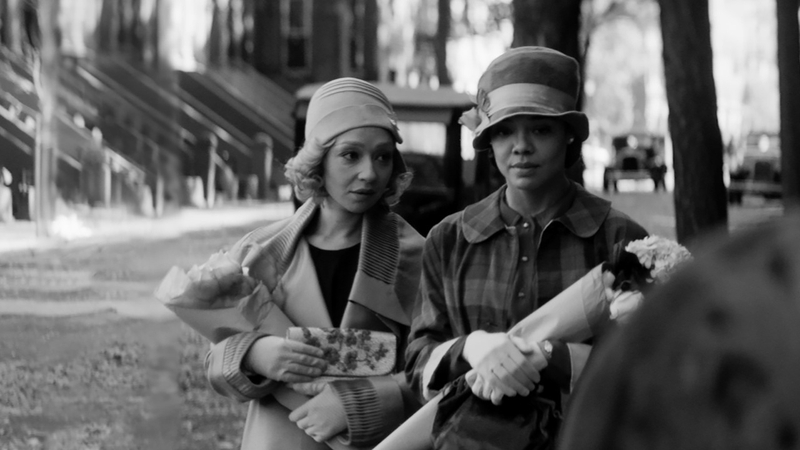
Like “The Invisible Man” depends a lot on Elizabeth Moss’ strong performance, the movie relies a lot on its lead actress, and Rebecca Hall, who will impress us more with her upcoming directorial debut film “Passing” (2021), does not disappoint us at all as giving another solid performance in her acting career. She is absolutely convincing during many scenes where she has to convey to us her character’s growing terror and dread, and she is also supported well by several good supporting performers including Sarah Goldberg and Vondie Curtis-Hall, who plays a caring neighbor living not so far from Beth’s house.

In conclusion, “The Night House” will probably not surprise you much as mostly playing within its familiar genre territory, but it is still engaging mainly thanks to a number of commendable aspects including Hall’s terrific performance. During my viewing, I did care and worry about what eventually would happen to her character in the end, and that is always a good thing to be appreciated, you know.

Posted in Movies | Tagged , , , | Leave a comment

Zola (2020) ☆☆☆(3/4): Based on one amusing Twitter tale

“Zola” is a darkly amusing cautionary tale of sexual exploitation which will definitely make you wince more than once. Cheerfully bouncing from one absurd moment to another, the movie never overlooks the seedy and exploitative aspects of what its heroine lets herself tumble into, and we come to observe its story and characters with morbid amusement and fascination even while feeling more and more uncomfortable along the story.

As some of you know, the movie is based on David Kushner’s Rolling Stones article “Zola Tells All: The Real Story Behind the Greatest Stripper Saga Ever Tweeted” and a Twitter thread from 2015 by an African American woman named Aziah “Zole” King. Although the story told via those Tweets of hers turned out to have many embellished aspects as she admitted later in Kushner’s article, it went quite viral at that time, and that was how it came to draw the attention of director/co-writer Janicza Bravo, who subsequently wrote the screenplay along with her co-writer Jeremy O. Harris.

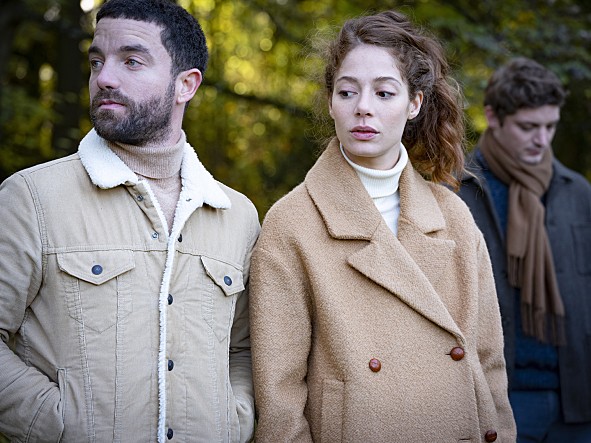
The story of the movie is mainly unfolded via the viewpoint of Zola, who is played by Taylour Paige. When she is working at a local restaurant in Detroit, Michigan, Zola happens to come across a young Caucasian woman named Stefani (Riley Keough), and they come to befriend each other quickly as spending some time together later. Because Zola is a part-time stripper just like her, Stefani suggests that they should go to a local strip club together, and their friendship seems to be solidified more as they respectively work and then earn some money at that place.

And then Stefani makes an interesting proposition to Zola. She will soon go to Florida along with her boyfriend Derrek (Nicholas Braun) and a certain friend of hers for earning more money there, and she suggests that Zola also should go there along with them. While she is reluctant at first, Zola eventually decides to accept Stefani’s suggestion, and Zola’s boyfriend does not mind this at all because, well, he has accepted how she works to earn their living everyday.

When Zola meets Stefani and two other figures on the next day, we instantly see bad signs. While Stefani shows more of her uncomfortable sides as casually using the vernaculars of African American women right in front of Zola, it is quite apparent to us that Derrek is your average hapless boyfriend who seems to have no idea on whatever Stefani is going to do in Florida. In case of the third figure, who is simply referred to as “X” (Colman Domingo) in the beginning, this African American dude looks rather fishy despite his ebullient attitude, and we come to sense that something is going on between him and Stefani.

Anyway, their drive to Florida is fairly eventful to say the least. As X is driving his car, Stefani and Derreck often attempt to brighten up the mood, and we accordingly get a dizzy sequence where they do lots of silly things in front of their smartphones. As watching all these silliness, we cannot help but notice the superficial aspects of their following online activities, which are further accentuated by that frequent notification sounds from smartphones on the soundtrack.

Once Zola and her new friends arrive in Tampa, Florida, she and Stefani promptly go to a local strip club and then do their job as planned, but, as she warned to us in advance, the situation later becomes quite problematic for Zola. She belatedly comes to learn that Stefani has been doing some other thing for getting extra cash, and, not so surprisingly, X is the one pulling the strings behind Stefani’s back.

Zola naturally tries to walk away from Stefani and others, but she only finds herself getting more involved with these increasingly untrustworthy figures. When she sees how pathetic Stefani looks, she cannot help but feel sorry for Stefani, so she decides to give Stefani some extra help, but that makes her get more involved with not only Stefani but also X. After reminded again of how dishonest both of them have been to her from the beginning, Zola feels more urge to leave right now, but X will certainly not give up any good opportunity to get more money for him, and there is a brief but chilling moment where he switches back and forth between two very different modes.

While its heroine gets mired in more seediness and exploitation, the movie hurls a number of deliberately uncomfortable moments including the one showing lots of male body parts, but it steadily maintains its gradually distant attitude in the disturbingly lightweight atmosphere, which is often emphasized by Mica Levi’s unconventional score throughout the film. In case of the main performers in the film, Paige and her fellow cast members are believable in their respective parts, and Riley Keough and Colman Domingo have some juicy fun with their broad but colorful supporting characters while Nicholas Braun manages to earn a bit of our sympathy despite constantly looking dopey and confused.

On the whole, “Zola”, which is Bravo’s second feature film after “Lemon” (2017), is as uncomfortable to watch as other similar films such as Harmony Korine’s “Spring Breakers” (2012), but it is one of the better works from its genre field thanks to its good performances and effective storytelling. It is seedy and disturbing indeed, but it is presented without enough style and mood, and that is enough for me for now.
Posted in Movies | Tagged , , | 1 Comment

Eternals (2021) ☆☆1/2 (2.5/4): The Curious Misfire of Chloé Zhao

“Eternals”, the latest offering from Marvel Cinematic Universe (MCU), is a curious misfire whose heart seems to be in some other place. Like “Black Widow” (2021) and “Shang-Chi and the Legend of the Ten Rings” (2021), it attempts to try something different from many of previous MCU flicks, and it does have all the right elements and talents for that, but the overall result is often slow and ponderous as riddled with too many obligatory instances of plot exposition, and it feels more disappointing when you consider a number of small but inspired moments generated among its diverse array of main characters.

During more than a half of its long running time (155 minutes), the movie explains a lot as gathering its many different main characters one by one along the story. Since around the birth of the whole universe, there has been a very powerful celestial entity which has controlled over thousands of different galaxies and planets, and the Earth is one of those planets. When the Earth and the humanity were threatened by vicious alien creatures called Deviants around 7000 years ago, this powerful entity sent a group of guardians called Eternals, and we get the first action scene in the film when the Eternals show themselves in front of humans at one of the first sites of human civilization history (If you have any basic knowledge about this famous site, you will have a small laugh for the rather incorrect geological details of this scene).

Anyway, as shown via a series of flashback scenes, the Eternals came to live quietly and separately for next several centuries once their job seemed to be done around the 16th century, but, of course, there comes a big trouble not long after what happened in “Avengers: Endgame” (2019). After the whole Earth is suddenly shaken up by an inexplicable global earthquake, those old foes of the Eternals appear again, and Sersi (Gemma Chan) comes to see that she and her fellow Eternals including their leader Ajak (Salma Hayek) must gather together again as soon as possible for protecting the Earth from what may be its greatest threat.

Along with Sprite (Lia McHugh) and Ikaris (Richard Madden), Sersi soon embarks on going here and there around the Earth for meeting their fellow Eternals, and director/co-writer Chloé Zhao and her cinematographer Ben Davis did a splendid job of presenting various locations with each own different mood. For example, Ajak’s residence in the middle of some remote area of South Dakota will bring you back to the memories of Zhao’s previous acclaimed works including “The Rider” (2017) and “Nomadland” (2020), and those stunning landscape shots will remind you a lot of those works of, surprise, Terrence Malick. In case of a part involved with Kingo (Kumail Nanjiani), we are served with something quite colorfully flamboyant due to his current occupation, and a part involved with Thena (Angelina Jolie) and Gilgamesh (Don Lee, who is also known as Ma Dong-Seok to me and many other South Korean cinema audiences) turns out to be surprisingly funny and poignant in the middle of somewhere in the Australian outback.

As you have already noticed, the main cast members of the film are relatively diverse and inclusive compared to many of previous MCU flicks, and this aspect brings some fresh air to the MCU franchise. I appreciated how the movie plainly and sensibly handles the deafness of Makkari (Lauren Ridloff, who is actually an accomplished deaf actress who was recently Tony-nominated for the 2018 Broadway revival of “Children of a Lesser God”), and I also enjoyed her romantic interactions with Druig (Barry Keoghan), who still loves her a lot despite their many centuries of separation. In case of Phastos (Brian Tyree Henry), this nerdy black superhero dude has been having a healthy and loving marital relationship with his husband (He is played by Haaz Sleiman, who drew my attention for the first time via his memorable supporting turn in “The Visitor” (2007)), and their little moment of affection feels natural instead of being obligatory.

However, these and other good individual moments in the film do not mesh well with what we always get from MCU flicks. There are lots of action scenes during the last hour of the film, but they feel rather bland and anonymous on the whole, and the villain figures of the story are also flat and uninteresting to say the least. All I can remember about the Deviants is that they look merely bad and hideous with lots of CGI tentacles, and what is eventually revealed during the grand finale of the film is not particularly impressive compared to what we have seen from countless MCU flicks again and again during last 10 years. It goes without saying that Zhao is a very talented director who deservedly won two Oscars for “Nomadland” early in this year, but she seems to be on autopilot whenever the movie is on action mode, and that is another disappointment in the film.

Furthermore, though Zhao and her co-writers Patrick Burleigh and Ryan and Kaz Firpo do pay much attention to building up their main characters, I must say that some of dramatic elements among the main characters do not work as well as intended. As many of you know, the movie has drawn lots of attention for having the first sex scene in the MCU franchise, but that scene is just, paraphrasing what my old friend/mentor Roger Ebert once said in a certain one-star review, your average rumpy-pumpy scene limited by its PG-13 rating, and it does not add anything particularly substantial to the developing relationship between those two main characters in question.

Anyway, the cast members of the film have a fairly good chemistry among them. As Gemma Chan dutifully holds the center as required, her fellow cast members fill their respective spots as demanded, and Angelina Jolie and Salma Hayek demonstrate again that they have lost any of their talent and presence yet. While Richard Madden and Lia McHugh are well-cast in their respective roles, Kumail Nanjiani, Don Lee, Lauren Ridloff, Bryan Tyree Henry, and Barry Keoghan contribute some colorful personality to the film in each own way, and you may be amused a bit by when Kit Harrington, who plays Sersi’s human boyfriend, briefly shares the screen with Madden, who once appeared along with Harrington in HBO TV drama series “Game of Thrones”.

In conclusion, “Eternals” does not impress me enough, but it is not the bottom of the MCU franchise at least (That is still “Thor” (2011) and its following 2013 sequel in my inconsequential opinion), and I do not deny that I had some good fun while watching and then writing about it. As movie critic Justin Chang aptly said in his LA Times review, this will probably be the least interesting work in Zhao’s remarkable filmmaking career even though it will possibly be regarded as one of the more interesting products in the MCU franchise during recent years, but she will surely move onto better things out there, and I hope that the MCU franchise will continue more genre experiments like this instead of reverting to its fed-up old ways.

Posted in Movies | Tagged , , | Leave a comment