Casting JonBenet (2017) ☆☆☆(3/4): Casting performers to play her and others

Netflix documentary film “Casting JonBenet” takes an unorthodox approach to an infamous unsolved murder case at its center. Because I am not familiar with that notorious case which happened almost 25 years ago, I was a bit disappointed to see that the documentary does not give much information except some basic details, but I was instead intrigued by its conventional approach, and that certainly distinguishes the documentary a lot from those countless run-of-the-mill true crime documentary flicks.

First, let me tell you a bit about the death of JonBenet Ramsey, who was only 6 years old when she was murdered in Denver, Colorado on the day after Christmas in 1996. At first, it seemed like she was kidnapped by somebody considering a ransom note found right after her disappearance, but then her body was found by her father in one of the basement spaces in the house, and the police as well as the media came to suspect her parents more once it became quite clear that she was hit in her head by a blunt instrument and then cruelly strangulated to the death.

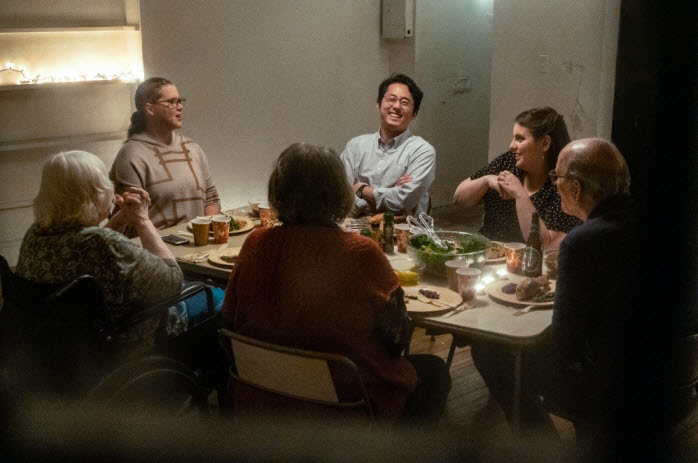
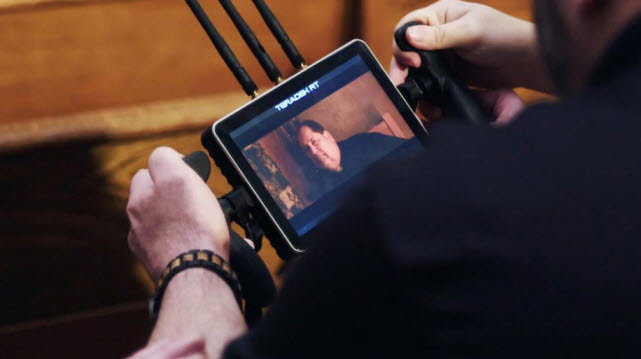
Instead of interviewing Mr. and Mrs. Ramsey or any other people associated with the case, director/co-producer Kitty Green takes a different route for re-examining the case. She held the auditions for performers to JonBenet, her parents, and several other figures associated with the case, and we observe a number of auditionees, who are mostly from Colorado, trying their best in front of the camera. I do not know how much these auditionees were aware of Green’s plan, but they all look serious as trying to get their roles, and they also come to reveal themselves more while talking a little about why they were interested in the audition.

As listening to these people, we get to know a bit more about the case. As one auditionee pointed out, there was something quite fishy about that ransom note from the beginning, and the subsequent discovery of JonBenet’s body at her house strongly suggests that her parents were involved in her death, but there was not any strong evidence to incriminate them. To make matters worse, the Denver police made lots of mistakes in handling the case and the growing attention of the media, and a former Chicago cop, who incidentally auditions for the police chief of Denver, muses a little on how that case became a sort of good lesson to him and his fellow cops in Chicago at that time.

Meanwhile, the casting of Mr. and Mrs. Ramsey turns out to be rather tricky as the auditionees have each own opinion and interpretation on Mr. and Mrs. Ramsey. While some of them think Mr. and Mrs. Ramsey are guilty as suspected, others do not think so in contrast, and they all have different opinions on whether Mr. and Mrs. Ramsey and their kids were actually happy or not. Was Mr. Ramsey, who was a wealthy and respectable man on the surface, actually a pretty horrible father and husband to his family? Was Mrs. Ramsey, who was evidently narcissistic as shown from her eager attempt to push JonBenet into following her footsteps via child beauty pageant, really an abusive mother with some personality issue?

The key moment in the documentary comes from when several pairs of auditionees try to play Mr. and Mrs. Ramsey giving a public statement. As preparing themselves, the auditionees talk about how Mr. and Mrs. Ramsey looked strained and awkward at that time, and the documentary lets us to reflect more on these personal observations for a while instead of showing us real Mr. and Mrs. Ramsey delivering their public statement. I guess they probably looked really awkward, but was it really the sign of their guilt? Or, were they just too devastated and overwhelmed to act and behave as, uh, properly as expected by many others and the media at that time?

As the investigation was going nowhere, a number of rather wild and unbelievable speculations on the case naturally followed, and we hear about some of them. While it was possible that JonBenet was merely killed by an unknown intruder, one of the auditionees in the documentary claims that she was killed by someone involved with a hidden child prostitution organization, and some other auditionee even suggests that JonBenet’s father might have prostituted his own daughter.

There is also a creepy part involved with the casting for an actor to play some crazy dude who claimed that he killed JonBenet but then was eventually released not long after his arrest. One of the actors chosen to play this crazy dude looks fairly well-cast in my inconsequential opinion, and he surely exudes enough eerie vibe as doing some good acting in front of the camera, though I guess he is a nice guy in real life.

Even in the end, “Casting JonBenet” keeps revolving around the fringe of its main subject as before, and that will probably frustrate you a lot if you expect a conventional true crime documentary, but I think that is the point of the documentary. The truth will probably remain beyond our reach forever, and we will be still drawn to many baffling aspects of the case without any satisfactory answer just like many other infamous unsolved criminal cases out there. As directing her camera toward many different human feelings and thoughts over the case, Green gives us one interesting documentary experiment to watch, and its sublime finishing touch, which you must see for yourself, will linger on you for a while after it is over.

Posted in Movies | Tagged , , , , | Leave a comment

Operation Hyacinth (2021) ☆☆☆(3/4): A grim but compelling Polish police noir drama

Polish film “Operation Hyacinth”, which was released on Netflix in last month, looks into its moody period background via a typical noir tale of obsession, confusion, and corruption. As steadily following a supposedly clean-cut young hero who becomes quite obsessed with solving one mysterious criminal case, the movie observes not only his growing personal conflict but also the oppressive system willing to crush the weak without any hesitation, and we are more chilled as the hero desperately struggles inside the system where he must pay the price in one way or another in the end.

The title of the movie comes from a secret mass operation of the Polish communist police during 1985-1987. The purpose of this operation was to create the national database of all the homosexuals and their associates in Poland, and one early scene in the film gives us a brief glimpse of how this operation was done day by day during that time. Because homosexuality was not only a taboo but also a crime, cops could arrest anyone suspected of a homosexual, and those arrested homosexuals were often mistreated by cops, while also facing the grim possibility of getting their lives and careers ruined forever.

Like many other detectives around him, Robert Mrozowski (Tomasz Ziętek) does not have much sympathy or compassion toward those arrested homosexuals, and this young detective is not so pleased when he and his older partner happen to be assigned to the case of the brutal murder of some rich gay dude shortly after closing their latest case. Although this case does not seem to help his promising career that much, Robert has no choice because his direct boss is adamant about him handling the case, and so is his father, who happens to be a very influential high-ranking official in the system.

As investigating the case more along with his partner, Robert begins to delve into a small community of gay people in the city. At first, they spy on a certain public place where those gay people often seek their clandestine pleasure at night, and then Robert decides to get closer for getting anyone who can function as an informer for him. Fortunately, he happens to come across a college lad named Arek (Hubert Milkowski), and it does not take much time for him to gain Arek’s trust after they run away together from another usual police raid.

Meanwhile, the case is suddenly closed shortly after Robert and his partner arrest a possible suspect, and Robert cannot help but wonder more about many unexplained aspects of the case. Although the case may be a part of some bigger case, it seems that his direct boss as well as his father is willing to look away, and Robert certainly feels more pressured as going deeper in the case even though he is officially off the case.

As he continues his investigation in private, Robert also gets to know Arek and other gay people more. At one point, he is invited a little private party of theirs, and, though he is rather hesitant a bit at first, but he soon finds himself swept by the (no pun intended) gay mood surrounding them, and then he feels quite conflicted while coming to care about Arek more than before. It is apparent that Arek is attracted to Robert, but Robert does not know what to do about this situation as gradually getting attracted to Arek, and it does not take much time for his fiancée, who also works in the police, to notice Robert’s growing inner conflict.

Now this will probably remind you of what Al Pacino’s character went through in William Friedkin’s notorious queer thriller film “Cruising” (1980), but, while it pays considerable attention to Robert’s sexual confusion, the movie also has other fish to fry. Constantly shrouded in stark gray ambience with lots of darkness here and there, the movie has us feel more of the oppressive social mood surrounding our hero and many other characters in the film, and the presence of the evil hidden inside the system feels more palpable to us as our hero goes further into his lonely investigation. Although he becomes more determined to get to the bottom of the case, there are people not so pleased with him snooping around here and there, and, of course, they do have the power to silence him once for all if necessary.

The screenplay by Marcin Ciaston eventually culminates to an intense climatic scene where its hero must make a big choice to affect not only himself but also several other characters around him, and director Piotr Domalewski keeps holding our attention as usual. I think the movie ends rather abruptly in the very last shot, but what is told to us next resonates a lot with what we have observed via its hero, and we are chilled as reminded of how oppressive system usually feeds on the weak for maintaining its status quo by any means necessary.

Tomasz Ziętek, who previously appeared in Jan Komasa’s Oscar-nominated film “Corpus Christi” (2019), gives a solid lead performance as the center of the story, and several other main cast members of the movie bring some extra shades to the film. While Hubert Milkowski complements Ziętek well during their several crucial scenes, Marek Kalita is unnervingly unflappable as Robert’s stern father, and Adrianna Chlebicka brings some warmth to the story as Robert’s fiancée.

On the whole, “Operation Hyacinth” is a grim but compelling genre piece to be appreciated for mood, storytelling, and performance, and it is certainly one of the better films from Netflix during this year. Yes, this is basically a standard stuff for seasoned mystery fans like me, but it did its jobs as well as intended while vividly illuminating the dark sides of the Polish society in the 1980s, and I think it will linger on my mind for a long time.

Posted in Movies | Tagged , , , , , | Leave a comment

New Order (2020) ☆☆(2/4): A messy exercise of chaos and brutality

Sometimes, I come across hollow artsy flicks hopelessly stuck in their supposedly interesting but ultimately flimsy ideas, and Mexican film “New Order” is one of such depressing cases. Sure, I understand that it intends to be an edgy political allegory about class and several relevant social subjects, and it works to some degree during its first half hour thanks to its competent filmmaking. However, as only being turned into a barebone ideological mess with some very nasty and unpleasant aspects, it did not impress me much on the whole, and I came out of the screening room only with considerable annoyance and disappointment.

The early part of the movie, which is its highpoint in my humble opinion, looks promising as reminiscent of the devastating final act of Bong Joon-ho’s Oscar-winning film “Parasite” (2019). At a big modern house belonging to some rich businessman in Mexico City, lots of affluent people gather together for the upcoming wedding ceremony of that businessman’s daughter, and the movie looks around a number of key figures including the bride and her family for a while as they and many other guests casually kill some time before the expected arrival of the judge for the wedding ceremony.

However, the judge is unexpectedly getting late due to big riots spread here and there in the city. Although the movie does not explain to us in details, it seems that those millions of poor people in the city finally become very, very, very angry about the growing social and economic inequality, and the city is accordingly thrown into sheer chaos and violence at present, but that does not worry those rich people at the wedding just because, so far, they have been safely insulated from whatever is happening outside in the city.

And there comes an old man who once worked for the rich businessman and his family. As already shown to us during the opening scene, this old man’s wife has been kicked out of a local hospital despite having been quite ill, and now he needs a considerable amount of cash right now for taking his sick wife to some private clinic where she can be admitted and then have a necessary surgery. Due to his understandably poor economic condition, he comes to ask for the emergency loan from his former employer, but, not so surprisingly, he only finds himself getting ignored again and again no matter how much he pleads to his former employer’s family members one by one. Sure, they all say they are sorry for him, but then they all casually disregard him as their minds are mostly occupied with the wedding ceremony, and that certainly makes a big and obvious point on how crass and selfish they are.

In the end, the situation is suddenly turned upside down when those rioters finally break into the house one by one. As many of wedding guests are accordingly thrown into a very grim situation, the movie delivers a series of strikingly brutal and cold-blooded moments of violence, but we observe them from the distance without much care. Yes, these rich guests may deserve to be punished, but those rioters in the film are presented as nothing but merely vicious thugs to repulse us more than once, and you may come to wonder what kind of political point the movie exactly wants to make in its supposedly neutral attitude.

Anyway, things get quite worse in the city once the military enters the picture and then goes all the way for seizing the control of the whole country. Now numerous citizens are suddenly taken away for no apparent reason, and one of them happens to be the bride of the wedding ceremony. Feeling guilty about how that old man was disregarded by her family, she decided to do the right thing for him on that day, but her following action only leads to a dire consequence for not only her but also several others in the story, and we subsequently get a number of barbaric moments of military brutality later in the film.

On the surface, these horrific scenes are effective enough to chill and disgust us, but they only feel sensational and gratuitous without any substantial narrative ground to support them due to the glaringly superficial screenplay by director/co-producer/co-editor Micheal Franco. While the bride and a few other main characters in the story are mildly sympathetic to us, they are not particularly developed well just like many other characters in the film, and that is why the finale feels rather empty and insipid despite another dose of horror and violence for us.

The cast members of the film look believable at least as they are thrown into one ordeal after another, but they are all inherently limited by their cardboard characters from the start, and I can only hope that Mónica Del Carmen, who plays the bride in the movie, and several other extra performers in those horrific scenes in the film were treated well on the set before being demanded to look really terrorized and degraded in front of the camera. They surely put 100% of themselves into these utterly unpleasant scenes, and it is a shame that their dedicated efforts do not help the movie itself much.

Overall, “New Order”, which somehow garnered the Grand Prize Jury when it was shown at the Venice International Film Festival in last year, surely has some barbed messages for our increasingly turbulent time, but it only comes to spin its wheels in the end while failing to make anything coherent enough for me to reflect on, except, probably, that the rich will always be on the top of us as usual no matter what happens in the world. After all, they are the ones with power and money, aren’t they?

Posted in Movies | Tagged , , | Leave a comment

Love Affair(s) (2020) ☆☆☆1/2(3.5/4): The things they say – and the things they do

French film “Love Affair(s)” is a funny and intelligent comedy about that complicated thing called love. As a bunch of supposedly smart and sensible characters trying to handle their unexpected romances and the accompanying personal complications, the movie busily and hilariously goes up and down along with their unpredictable and inconvenient romantic feelings, and we come to reflect more on how we all can be quite confused and conflicted in front of that irresistible human emotion.

At the beginning, we are introduced to Daphné (Camelia Jordana) and Maxime (Niels Schneider), who happen to meet each other for the first time via Daphné’s husband François (Vincent Macaigne), who is Maxime’s cousin. Because François is going to be absent for several days due to the sudden unexpected complication at his workplace, Daphné, who has incidentally been pregnant for 3 months, will have to stay alone at their rural retreat during that short period, and she is certainly delighted when Maxime comes to stay with her. Although they do not know each other much, it does not take much for them to befriend each other while they go here and there in the surrounding area, and Maxime finds himself quite comfortable as freely talking with Daphné about several things including love.

Not so surprisingly, it soon turns out that Maxime has a little painful personal story about love even though he is very reluctant to tell it to Daphné, who certainly becomes quite curious and naturally encourages him to confide everything to her. Maxime initially hesitates, but he subsequently finds himself telling her a lot more than expected as Daphné also turns out to have a rather embarrassing romantic tale of her own, and the movie accordingly swings back and forth between these two different tales.

In Maxime’s story, everything begins from his casual romantic relationship with a married woman. He does not expect much from her because she makes it pretty clear to him that she wants him mainly for carnal pleasure, but then, what do you know, he finds himself becoming quite smitten with her younger sister Sandra (Julia Piaton) when she is later introduced to him and his close friend Gaspard (Guillaume Gouix). As getting to know Sandra more, Maxime becomes more convinced about his attraction toward her, but, alas, Sandra comes to begin a serious relationship with Gaspard instead, even though they do not agree with each other that much on sex and love from the very beginning.

Now it seems that all Maxime can do is simply stepping away for respecting his friendship with Gaspard, but things become quite complicated as Sandra and Gaspard sincerely suggest that he should stay along with them at least for a while. Due to his remaining feeling toward Sandra, Maxime accepts the suggestion without much hesitation, and, of course, he consequently finds himself in a very tricky position between Sandra and Gaspard – especially when Sandra and Gaspard respectively consider ending their relationship due to their increasingly evident personal differences.

In case of Daphné, her story is less complicated in comparison, though her pursuit of love and happiness is equally eventful to say the least. While diligently working on the latest documentary of some prominent male filmmaker as his editor, she finds herself fallen in love with that filmmaker, and she is certainly excited when the filmmaker invites her to a dinner with him for something important to discuss with her in private, but, unfortunately, it turns out that she has misread the director’s attitude to her from the very start.

At least, the dinner is not a total disaster because Daphné comes across François when she is about to leave. Although he is also a married guy besides being a total stranger, Daphné cannot help but attracted to him as he earnestly approaches to her, and they soon embark on their little affair. Although it seems that their affair will last only for a short period, François finds himself becoming quite serious about his feelings toward Daphné, and both of them consequently become very conflicted because ruining his supposedly happy married life is the last thing they want at present.

As intriguing and amusing us more and more, the screenplay by Emmanuel Mouret skillfully balances these two different narratives, and then it surprises us more via some other narratives subsequently added to the whole picture. I will not go into details here for not spoiling any of your entertainment, but I can tell you that you will appreciate a lot how it deftly wields its naughty sense of humor. Like many of those classic French comedies, the movie delights in maneuvering its main characters into more human conflicts and complications to popped here and there along the story, and, to more of our amusement, the movie firmly sticks to its deadpan attitude while somberly playing a number of familiar classic pieces on the soundtrack to nice dramatic effect.

Without showing any distracting moment of self-consciousness, the main cast members play their respective roles straight as much as possible. While Camelia Jordana and Niels Schneider dutifully occupy the center, Vincent Macaigne, Jenna Thiam, Guillaume Gouix, and Émilie Dequenne come and go as required, and Dequenne virtually steals her every moment on the screen as a sort of wild card in the bunch.

On the whole, “Love Affair(s)”, whose original French title is “Les Choses qu’on dit, les choses qu’on fait” (It means “The things we say, the things we do”, by the way), is funny and entertaining with many witty and insightful human moments I am willing to revisit for savoring them more. Yes, love can be very touching, but it is also quite a funny thing, and you may find yourself reflecting on that more after having lots of laughs and chuckles from this little naughty but charming piece of work.

Posted in Movies | Tagged , | 1 Comment

The Power of the Dog (2021) ☆☆☆1/2(3.5/4): A tense western drama by Jane Campion

Jane Campion’s new film “The Power of the Dog”, which was recently released in theaters in US and South Korea before released on Netflix early in next month, is a subtly tense and captivating mix of western drama and character study. As phlegmatically observing the nervous emotional undercurrents swirling between its edgy antisocial hero and several other characters who happen to be around him, the movie slowly grabs our attention scene by scene, and then it strikes us hard with the inevitable outcome of what has been developed so carefully and organically along the story.

Mainly set in a big ranch located somewhere in the middle of Montana, 1925, the movie initially focuses on the uneasy but mostly convenient relationship between two different brothers who have ran this ranch together for many years. While Phil Burbank (Benedict Cumberbatch) is usually the one who handles those ranch employees, his younger brother Geroge (Jesse Plemons) is the one mostly tasked with assisting Phil or handling those small and big business matters of their ranch outside, and it is quite apparent to us from the beginning that Phil has dominated over his younger brother and the ranch employees as your average tough alpha male.

So far, George has not had any problem with living alone with his older brother in their big but mostly empty ranch house, but then he unexpectedly makes a sudden impulsive decision to Phil’s displeasure. When George has a meal along with Phil and their ranch employees at a nearby inn on one day, Phil happens to make a rather cruel remark on the sensitive young son of the owner of the inn, and the owner of the inn, a young widow named Rose Gordon (Kirsten Dunst) understandably feels hurt about that. As consoling her a bit later, George becomes fallen in love with Rose, and then they come to marry without telling anything to Phil in advance.

After selling her inn and then sending her son Peter (Kodi Smit-McPhee) to a college where he is going to study medicine and surgery, Rose happily enters the ranch house along with George, but it does not take much time for her to realize that she might have made a big mistake. Although George does love and care about Rose, he is often absent as handling those business matters of the ranch, and there is no one else in the ranch house except Phil and two housemaids. As the lady of the house, Rose often feels awkward when she tries to interact more friendly with these two housemaids, and she feels all the more uncomfortable because of Phil’s unspoken but palpable hostility toward her.

The middle act of the movie is often painful to watch as Rose gradually gets driven to more anxiety and desperation. At one point, she is virtually demanded to be the ideal hostess for a small social evening meeting, and she tries her best for satisfying her husband and several other guests including her parents-in-law, but, alas, she only finds herself quite humiliated in front of them to Phil’s twisted satisfaction.

Meanwhile, Peter returns from the school for spending some summer days in the ranch, and that somehow leads to more tension beneath the surface as Phil regards Peter with equal disdain and disregard. Due to his rather mild appearance and introverted attitude, Peter is often ridiculed by Phil as well as those ranch employees, and he surely feels quite miserable while also quietly angry about his mother’s continuing domestic predicament.

And then something quite unexpected is revealed around the midpoint of the story. I do not dare to go into details here, but I can tell you instead that you will come to reflect more on what the screenplay by Campion, which is adapted from Thomas Savage’s novel of the same name, has masterfully suggested and implied via small nuances and details. Although it does not spell out everything loud to us, Campion’s screenplay trusts in us to gather one subtle element after another along the narrative, and we accordingly come to understand its main characters more than expected, while also wondering more about what may happen among them in the end.

The movie quite commendable in its technical aspects. While the editing by Peter Sciberras is terse but effective with the slow but gradual accumulation of narrative momentum on the screen, cinematographer Ari Wegner serves us a number of strikingly unnerving landscape shots (The movie was actually shot in New Zealand, by the way), and their nervous ambience is further accentuated by the stark restrained score by Jonny Greenwood, who will probably be Oscar-nominated along with Sciberras and Wegner in next year.

Campion draws the strong performances from her main cast members. While Benedict Cumberbatch, who is incidentally no stranger to playing antisocial heroes, functions as the compelling dark human center of the film, Kirsten Dunst, Kodi Smit-McPhee, and Jesse Plemons are equally terrific in their respective roles, and Keith Carradine, Frances Conroy, Adam Beach, Genevieve Lemon, and Thomasin McKenzie are also well-cast in their small supporting parts.

In conclusion, “The Power of the Dog”, which won the Silver Lion for Best direction when it had the premiere at the Venice International Film Festival two months ago, may require some patience from you at the beginning, but it is an ultimately rewarding experience on the whole. In short, this is Campion’s another marvelous work which deserves to be mentioned along with “An Angel at My Table” (1990) and “The Piano” (1993), and I think you should watch it on big theater screen instead watching it at your home.

Posted in Movies | Tagged , , , | 2 Comments

The French Dispatch (2021) ☆☆☆1/2 (3.5/4): Lovely newspaper tales a la Wes Anderson

Wes Anderson’s latest film “The French Dispatch” feels like reading a fine copy of some smart and sophisticated urban magazine. As serving us everything we can expect from Anderson, the movie shows Anderson being at the top of his distinctive mastery of mood, style, and attitude as he previously did in “Moonrise Kingdom” (2012) and “The Grand Budapest Hotel” (2014), and I frequently found myself quite charmed and amused by those humorous offbeat moments in the film during my viewing.

Mainly consisting of five different parts, the movie opens with the part showing the bittersweet end of an American newspaper called, yes, the French Dispatch. Since it was founded by a Midwestern American named Arthur Howtizer Jr. (Bill Murray) in some small French town, the French Dispatch has flourished during next several decades under Howtizer’s editorship which supported many different colorful staff writers, but, alas, its era now comes to end with his sudden death just because Howtizer, who is incidentally based on New Yorker co-founder Harold Ross, already made it clear in his will that the French Dispatch should be shut down after his death.

The movie subsequently delves into the main contents of the last edition of the French dispatch one by one, and the first one involves with an eccentric travel write named Herbsaint Sazerac (Owen Wilson), who is based on New Yorker writer Joseph Mitchell. As the movie busily hops from one shot to another, Sazerac enthusiastically shows us here and there in the aforementioned French town, and this part effectively sets the overall comic tone for the following parts to come.

The second one is presented by J.K.L. Berensen (Tilda Swinton), who has lots of things to tell about a certain set of unconventional paintings from a convict artist named Moses Rosenthaler (Benicio del Toro). Before being incarcerated for a very violent act of killing, Rosenthaler showed some artistic potential as a painter, but he stopped drawing for his next 10 years in prison, and then, what do you know, he suddenly came to resume his artistic activity for no apparent reason. Although his several works did not draw much attention at first, they eventually draw the attention of a fellow prisoner who happens to be an art dealer, and that consequently leads to considerable fame and reputation for Rosenthaler, though he remains incarcerated as usual.

While generating some naughty laughs from the uneasy partnership between Rosenthaler and his art dealer, the movie also focuses on the odd romantic/professional relationship between Rosenthaler and a young female prison guard named Simone (Léa Seydoux). In addition to being Rosenthaler’s persona guard, Simone willingly lets herself function as his muse and enabler, but she often puts some distance between herself and Rosenthaler, and she makes her position perfectly clear to him during a little funny private scene between them. Looking quite mismatched from the beginning, del Toro and Seydoux ably complement each other as a sort of Beauty and the Beast, and Adrien Brody provides some extra humor around them as Rosenthaler’s neurotic art dealer.

The third one is presented by Lucinda Krementz (Frances McDormand), a middle-aged female journalist who happens to get involved with a bunch of young college revolutionaries including a lad named Zeffirelli (Timothée Chalamet). Although their first encounter via Zeffirelli’s parents is rather awkward to say the least, Krementz subsequently finds herself getting quite closer to Zeffirelli, and she gets an opportunity for the closer observation on the political activities of Zeffirelli and his comrades including his girlfriend Juliette (Lyna Khoudri), but she still keeps trying to maintain some distance between her and Zeffirelli, even when things later become quite more serious for everyone.

Although this part is the weakest one in the film in my inconsequential opinion, Anderson, who wrote the screenplay along with Roman Coppola, Hugo Guinness, and Jason Schwartzman, and his crew members keep things rolling as usual. Thanks to editor Andrew Weisblum and cinematographer Robert D. Yeoman, the movie smoothly moves among several different visual textures and screen ratios, and the resulting eclectic style is further enhanced by the commendable efforts from production designer Adam Stockhausen, costume designer Milena Canonero, and composer Alexandre Desplat.

The fourth one is presented by Roebuck Wright (Jeffrey Wright), a food journalist who is more or less than the amalgamation of James Baldwin and A. J. Liebling. His article is about one very eventful evening when he was simply supposed to enjoy a special private dinner with the police chief of the town, and I can only tell you that the movie virtually goes all the way for lots of stylish exaggeration once that special event is unexpectedly interrupted by a sudden emergency. As Jeffrey Wright dutifully holds the ground as required, a bunch of diverse performers including Mathieu Amalric, Edward Norton, Liev Schreiber, Saoirse Ronan, and Willem Dafoe willingly let themselves become many different dolls to be utilized by Anderson, and the special mention goes to Stephen Park, who has his own little priceless moment to shine around the end of the segment.

Overall, “The French Dispatch” is another typical dollhouse playing by Anderson, but it is still quite enjoyable thanks to not only its indelible mood and dexterous storytelling but also all these colorful performers assembled together for the film. Sure, we can say that Anderson virtually repeats himself only with more dolls and sets, but, as usual, he gladly shares his own fun and amusement with us from the beginning to the end, and that is more than enough for me at present.

Posted in Movies | Tagged , , | 1 Comment

Coming to You (2021) ☆☆☆1/2(3.5/4): As they stand by their sexual minority kids

I often could not help but become a bit emotional as watching South Korean documentary film “Coming to You”. Mainly focusing on two different mothers willingly standing by their respective sexual minority kids, the documentary lets the audiences have more empathy and understanding on their sincere efforts for making a better world for their kids and many other sexual minority people out there, and, as a gay man who has had his own hard moments, I was touched a lot by a series of genuine personal moments observed from these two mothers and their kids.

These two mothers are ‘Nari’ and ‘Vivian’, and the early part of the documentary shows us a bit about how active these middle-aged women have been in each own life. While Nari is a veteran firefighter, Vivian is a flight attendant, and both of them clearly love their respective jobs with considerable professional dedication. We see Nari deftly handling a number of usual routines at her workplace, and then we also watch Vivian confidently going for her another flight at the Inchon international airport.

Both of these two cool ladies love their respective kids a lot just like any good mothers, but they were all certainly shocked when their respective kids revealed their sexual identity several years ago. After many years of conflict and agony, Nari’s kid Hankyeol confessed to her that he had been quite willing to go through female-to-male transition, and it took some time for Nari to process and accept Hankyeol’s rather complex sexual identity as an asexual transgender. When Vivian’s son Ye-joon was about to leave for Canada for his study, he gave a letter to tell her everything, and Vivian also needed to some time for coming to realize that there was another side in her son she did not know that much before.

Of course, it was not so easy for both Vivian and Nari as things were accordingly changed a lot between them and their kids. As both of them frankly admit in front of the camera, they became quite concerned and agonized over this undeniable truth about their respective kids, and they even inadvertently hurt their kids’ feelings. Although she came to understand more of why her kid had been so inclined to wear male clothes during all those years, Nari still struggled a lot to understand Hankyeol’s wish to change gender, and she still feels regrettable about her rather insensitive words to her kid before finally giving Hankyeol her unconditional support.

As trying to understand their kids more, Vivian and Nari came across the association of the parents of sexual minority people, and that is where they came to realize that they are not alone at all. As meeting many other members and their various sexual minority children, they gradually opened their eyes more to sexual minority people, and they also were reminded again of why their kids needed support and love from them more than ever. Worrying more about the considerable social prejudice against sexual minority people, they came to see that their society must be changed for the equal human rights for their kids and many other sexual minority people, so they courageously step forward along with many other new colleagues of theirs.

The documentary also pays some attention to Hankeyol and Ye-joon, and their daily life shows us how much the South Korean society has been changed – and how much it still needs to advance more for numerous sexual minority people like them. Although he initially considered staying in Canada more because he feels more comfortable about his sexuality there compared to South Korea, Ye-joon eventually decided to return to South Korea because of his South Korean boyfriend, and we get a warm and heartfelt moment when he introduces his boyfriend to his parents. When he and his boyfriend later go to Busan for meeting the mother of his boyfriend, Ye-joon is naturally a bit nervous, but, what do you know, his boyfriend’s mother turns out to be more open-minded than expected – and she also comes to join the association.

In case of Hankyeol, he and his mother had to stick together more when he tried to get his new sexual identity recognized and certified by the South Korean government. Just for getting his case reviewed by the high court in Seoul, he and his mother had to prepare more than 15 different kinds of documents, and the following court decision by an apparently prejudiced judge reminds us again of how difficult it really is for many transgender people to live in the South Korean society. Nevertheless, Nari and her son were not daunted at all, and it is a little comforting to see that there was a small but significant change in the South Korean legal system not long after they finally got what they wanted.

While simply maintaining its earnest attitude, the documentary steadily engages and enlightens the audiences more, and its narrative eventually culminates to a plain but powerful moment. As already reflected by one scene showing those deplorable people openly brandishing their hate and prejudice in public, Nari, Vivian, and many colleagues of theirs still have many social obstacles in front of them, but they are determined to overcome via their love and acceptance, and their passionate public activities are quite moving to say the least.

Overall, “Coming to You” is a plain but undeniably powerful documentary, and director Byun Gyu-ri did a commendable job of presenting its relevant social issues with enough sincerity and respect. In my humble opinion, this excellent documentary should be watched by many South Korean parents trying to deal with their sexual minority kids, and I really hope that my parents, who have incidentally been still in denial for last several years since I came out of my closet in 2016, will see it someday and then reflect more on our current strained relationship. I have no problem with who I am, but can they ever recognize my sexuality? Time will tell, folks.

Posted in Movies | Tagged , , , , , , | 1 Comment

Perhaps Love (2021) ☆☆☆(3/4): It’s complicated among them

South Korean comedy film “Perhaps Love” caught me off guard for several solid moments for laughs and chuckles. Cheerfully hopping among a number of different colorful comic characters, the movie frequently shines with considerable wit and humor, and then it also somehow generates some genuine poignancy while never interrupting its lightweight overall tone.

The early part of the movie mainly focuses on how things have not been that good for Hyeon (Ryu Seung-ryong.) at present. While he has been regarded as one of the most prominent writers in South Korea since he published a very successful novel several years ago, Hyeon has not written any book yet after that novel, and that has certainly frustrated not only him but also Soon-mo (Kim Hee-won), Hyeon’s publisher who has also been his best friend.

And then there comes an unexpected change into Hyeon’s life. When he happens to drop by the house of a gay writer friend of his at one night, he meets Yoo-jin (Mu Jin-sung), a young aspiring writer who has lived with that gay writer for a while. Although their first encounter is rather brief, Yoo-jin subsequently comes to Hyeon’s apartment, and Hyeon is flabbergasted when Yoo-jin later reveals to Hyeon that he has had a crush on Hyeon for years. As a married heterosexual dude, Hyeon is not particularly interested in responding to Yoo-jin’s drunken words, but then Yoo-jin keeps approaching to him as one of students attending his college class, and Hyeon does not know what to do about this rather tricky circumstance – especially after Yoo-jin gives him a short story too good to be ignored.

Meanwhile, we also get to know the other messy side of Hyeon’s private life. As his second wife and their young daughter have been absent for last several months, he has felt rather lonely, so he drops by the residence of his ex-wife Mi-ae (Oh Na-ra), who has still corresponded with him mainly due to their problematic adolescent son Seong-kyeong (Sung Yoo-bin). Although they try to look like they are cool about each other, it does not take much time for Hyeon and his ex-wife to sense the return of their old feelings, and that accordingly leads to one of the funniest moments in the film.

In case of Seong-kyeong, this troubled kid surely has lots of emotional issues too much for any other adolescent kid around his age, and his vulnerable emotional state happens to draw the attention of Jeong-won (Lee Yoo-young), a young woman who happens to live at a residence across from Seong-kyeong’s. As spending more time with this young woman, Seong-kyeong finds himself more attracted to her, and he eventually decides to go further when his mother is going to be absent for next several days.

While he is supposed to check on Seong-kyeong in the meantime, Hyeon only finds himself getting more involved with Yoo-jin. As they come to work very closely with each other on expanding and developing Yoo-jin’s original short story, Hyeon makes it clear to Yoo-jin that he is simply having a professional collaboration with Yoo-jin without any romantic feeling, but Yoo-jin does not step back at all as showing more affection and admiration toward Hyeon, and Hyeon comes to feel more conflicted as finding himself not only rejuvenated by their collaboration but also caring a lot about Yoo-jin’s feelings.

Deftly juggling its several plotlines, the movie smoothly moves back and forth between comedy and drama, and I particularly appreciate the precise comic timing of a certain key sequence. We already get a pretty good idea of what will happen among several main characters, but we cannot help but tickled more and more thanks to the precise coming timing between the performers on the screen, and then there comes a payoff moment much more uproarious and hilarious than expected.

In addition, we also come to like and care more about the main characters of the film. While Hyeon and Yoo-jin’s strained relationship is depicted with enough sensitivity and gravitas, Mi-ae and Soon-mo come to show more of each own human depth along the story, and the same thing can be said about Seong-kyeong and Jeong-won. It goes without saying that Jeong-won is simply having a fun with attracting Seong-kyeong’s attention, but, not so surprisingly, she does care a bit about Seong-kyeong as reflected by a brief moment later in the story.

Although it comes to lose some of its comic momentum as reaching to the resolution during the last act, director Jo Eun-ji, who has been mainly known for her acting work in a number of notable South Korean films including “Forever the Moment” (2007), keeps things rolling under her competent direction, and she also draws the effortless ensemble performance from her main cast members. While Ryu Seung-ryong steadily holds the center as required, Oh Na-ra, Kim Hee-won, Lee Yoo-young, Sung Yoo-bin, and Mu Jin-sung bring life and personality to their respective characters, and Oh Jung-se, Choi Hee-jin, and Ryu Hyun-kyung are also effective in their small supporting roles.

Overall, “Perhaps Love” is one of the funniest South Korean films of this year, and Jo demonstrates well another side of her talent here just like Kim Yun-seok recently did in “Another Child” (2018). She certainly makes a fairly good feature film debut, and it will be interesting to see whether she will rise more as another notable female filmmaker in South Korea.

Posted in Movies | Tagged , , , , | 2 Comments

7 Prisoners (2021) ☆☆☆1/2(3.5/4): Exploitation at the bottom of a city

Brazilian film “7 Prisoners”, which was released on Netflix a few weeks ago, is a darkly vivid and harrowing examination of labor exploitation. As phlegmatically observing one young hero’ grim struggle to survive in the middle of one big city in Brazil, this powerful film often chills and saddens us a lot, and we come to reflect more on the big and heartless economic system which will continue to exploit not only him but also many others out there.

At the beginning, we are introduced to Mateus (Christian Malheiros), an 18-year-old lad who is going to leave his small countryside hometown for earning more money for his mother and younger siblings. Along with several other young men including a close friend of his, he will be taken to São Paulo by a local broker who is supposed to get them a job in the city, and they are all hopeful about coming back to their hometown with enough money for them and their families within a short time.

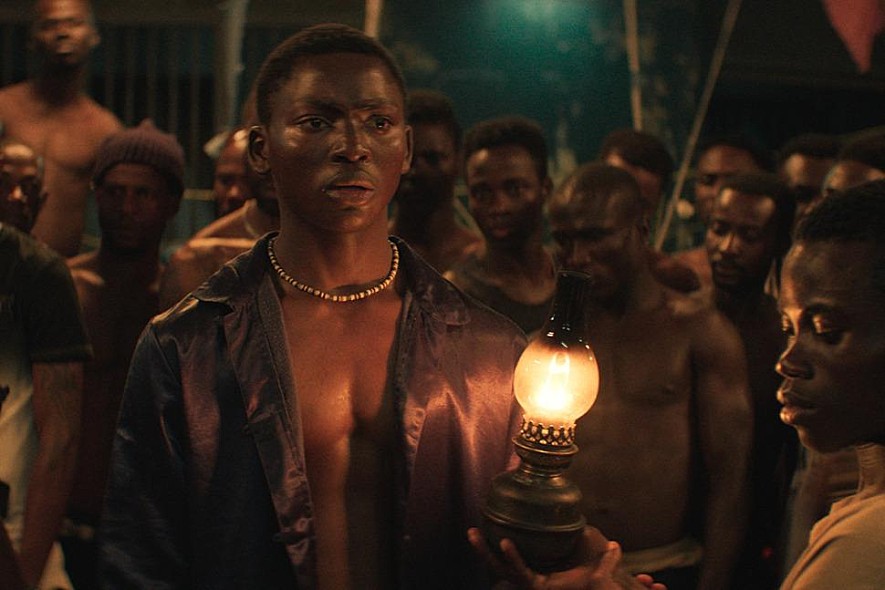
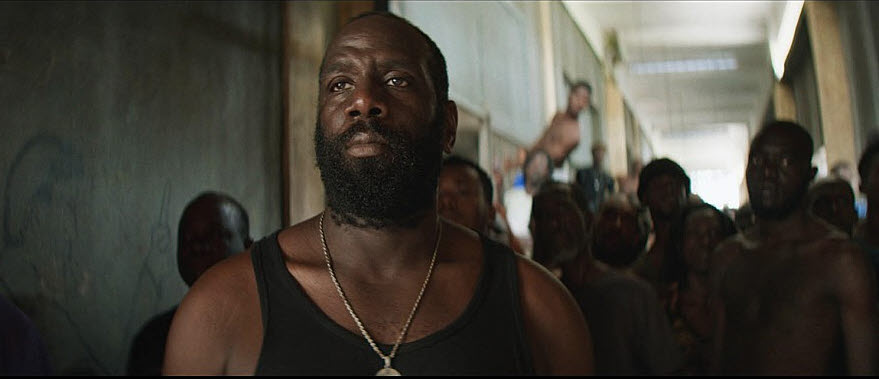
However, once they eventually arrive in a junkyard located somewhere in São Paulo, their hope is gradually broken as they find themselves becoming sort of modern slaves under the owner of the junkyard. Although Luca (Rodrigo Santoro) does not look that bad at first, this seedy dude soon gives some harsh dose of reality to Mateus and other lads, and Mateus and his fellow workers are reminded again and again of how much they are trapped in this circumstance in many aspects. Besides not getting paid at all, they are never allowed to leave the junkyard just because of a considerable amount of debt forced upon them from the beginning, and there is no one to help around them, let alone those local policemen who have been in Luca’s pocket. Besides, Luca knows about their families, and he will have their families get hurt or threatened if they ever attempt to run away.

As the most sensible one in the group, Mateus tries to cope with this daunting circumstance as much as he can. It does not take much time for this smart lad to become the de factor foremen of the group, and Luca comes to rely on him more especially after Mateus shows Luca that he and his fellow workers can work more under his conduct. After testing Mateus a bit more, Luca lets Mateus handle several other things in his shabby business, and Mateus’ status accordingly becomes a bit better than before while his colleagues are not so pleased about what is going on between him and Luca.

Mateus naturally becomes conflicted as willingly doing whatever Luca demands him to do, and his conflict grows more as seeing more of what Luca has been doing in the name of survival and business. There is a chilling scene where Mateus witnesses Luca casually handling his another exploitative business, and we are more chilled when Mateus is later tasked with doing something to make himself more distant to his colleagues, who now come to regard him with more disgust and contempt.

Yes, he could simply choose to say no to Luca, but Mateus only finds himself more hesitating while letting himself pushed to do more by Luca as usual, and the screenplay by director/co-producer/co-writer Alexandre Moratto and Thayná Mantesso steadily builds up the moral tension surrounding its hero. At one point later in the film, Mateus comes to have an unexpected moment when he must make a choice between Luca and his colleagues, and we are not so surprised by his eventual decision which eventually leads to one very bitter moment around the end of the story.

While mostly confined within a small background inhabited by Mateus and several other characters in the story, the movie, which is co-produced by Ramin Bahrani and Fernando Meirelles, also gives a wider view on the system which has constantly exploited them. During one particular scene where Luca and Mateus drop by the residence of some affluent local politician, it turns out that Luca is also more or less than another cog in the system, and we come to discern more of how vast and corrupt the system really is – and how easily Mateus is tempted to grab any opportunity for survival and benefit as conforming to the system.

Even when reaching to its logical conclusion, the movie keeps holding our attention, and Moratto, who previously made a feature film debut with “Socrates” (2018), draws good performances from his main cast members. While Christian Malheiros, who was the lead actor of “Socrates”, ably conveys to us his character’s development along the story, Rodrigo Santoro, who has been mainly known for his several notable Hollywood films including, yes, “300” (2007), is equally engaging while never making any excuse on his character’s deplorable sides, and several other cast members including Bruno Rocha, Vitor Julian, and Lucas Oranmian are also solid in their respective supporting roles.

On the whole, “7 Prisoners” is definitely not something you can casually see on Sunday afternoon, but it is still a very compelling work to be appreciated for its skillful storytelling coupled with sharp social observation. Like Meirelles’s “City of God” (2002) and Bahrani’s “Chop Shop” (2007), the movie looks deep into the life and struggle of people at the bottom of the society with considerable compassion and empathy, and it will leave an indelible impression on you once it is over. In short, this is one of the more interesting movies I saw during this year, and you should give it a chance as soon possible.

Posted in Movies | Tagged , | 1 Comment

Kim Jong-boon of Wangshimni (2021) ☆☆☆(3/4): As she keeps living

South Korean documentary film “Kim Jong-boon of Wangshimni” is a plain but intimate portrayal of one ordinary old lady who has some interesting life stories to tell. While she is the mother of a young activist who tragically died during the South Korean democratization movement in the early 1990s, that is just one aspect of her long life, and it is often touching to see this her still going on as she always did before.

During its first half, the documentary simply looks into the current daily life of its human subject. On a street near the Exit 11 of Wangshimni subway station in Seoul, there is an 82-year-old woman named Kim Jong-boon, and we observe how she earns her meager living every day. At a small stall belonging to her, she sells vegetables and several other stuffs including boiled corn and grilled rice cake, and she is surely proud of still being alive and active despite her old age.

When she is not that busy, Kim sometimes spends time with her fellow stall owners. They are as old as Kim, but they are also as lively and plucky as their old friend, and they surely have many things to tell just like Kim. Like Kim, they have worked in Wangshimni for many years, and they are certainly not going to give up as long as they are able to work and earn their living as usual. Although things become a bit more difficult for them due to the ongoing COVID-19 pandemic, they all continue to work nonetheless, and I must confess that I was a bit amused as observing how they often wear their mask rather incorrectly.

In the meantime, the documentary begins to delve into Kim’s past. She started to work on the streets of Wangshimni mainly for supporting her dear children instead of her mostly useless husband (He died more than 30 years ago, by the way), and her surviving children remember well how much their mother dedicated herself to their welfare. Although they were still poor, their mother always tried her best for providing a nice environment for all of them to grow up well and then get good education, and she was certainly delighted when one of her daughters, Gui-jeong, began to study at one of the most prestigious universities in Seoul in 1988.
Like many other college students during that period, Gui-jeong soon came to participate in the ongoing democratization movement, and some of her friends/colleagues reminisce about how active and spirited she was. The political mood of the South Korean society became relatively less perilous as the country seemed to leave behind that dark period of dictatorship during the 1960-80s, but many citizens and students still demanded more democratization on streets, and Gui-jeong was quite willing to do more for that noble cause along with many of her colleagues.

However, the South Korean government was led by President Roh Tae-woo during that time, who was the right-hand guy of his predecessor Chun Doo-hwan and incidentally died a few weeks ago without any apology on his many wrongdoings. Just like his predecessor’s government, Roh’s government was ready to suppress the public demand for more democratization by any means necessary, and that resulted in lots of public demonstrations throughout the country in 1991. During one big demonstration which was held in Seoul on one day of May 1991, many students and citizens were brutally suppressed by the police and right-wing goons , and that was when Gui-jeong’s unfortunate death happened.

When she heard about her daughter’s death, Kim was certainly devastated, but she did not stand back at all when the South Korean government tried to cover up the situation surrounding her daughter’s death. Along with many other people who also lost their loved ones due to the brutal suppression of their government, she openly demanded truth and justice in public, and it was eventually revealed later that the South Korean government was indeed responsible for Gui-jeong’s death. Gui-jeong was subsequently buried along with many other young dead activists who were killed during that time, and we see Kim and others having a small memorial meeting in front of the graves of Gui-jeong and other young dead activists.

It is still hurtful for her to be reminded of her daughter’s death, but Kim has kept living during next 30 years nonetheless. She continues to be active about remembering what Gui-jeong tried to fight for, and we see her attending a small symposium on the South Korean democratization movement during the 1980-90s. She also remains close to not only her children but also her siblings, and there is a warm scene where she spends a little nice private moment with her siblings at an apple orchard.

Above all, she has steadily worked at her stall, and we observe some friendly interactions between Kim and her usual customers. One of them is an old guy who has not been that reliable due to his constant credit problem, but Kim is still nice to this old dude despite that, and we come to sense a sort of friendship between them as they talk a bit with each other at one point.

Overall, “Kim Jong-boon of Wangshimni” is an engaging documentary thanks to the unadorned human quality of its human subject, and director Kim Jin-yeul did a good job of presenting Kim with sincere respect and admiration. To be frank with you, I did not know much about Kim’s daughter before watching the documentary, so I am glad to know more about her now, and I will certainly not forget her as well as her mother.

Posted in Movies | Tagged , , , | Leave a comment