The Guilty (2021) ☆☆☆(3/4): A decent remake starring Jake Gyllenhaal

Netflix film “The Guilty”, which was released yesterday, is a decent American remake which depends a lot on the presence and talent of its lead performer just like its original version. I must tell you that there is not much difference between the movie and the 2018 Danish film of the same name which it is based on, but it is still a pleasure to watch thanks to not only its skillful aspects but also the intense and engaging performance at its center, and this is certainly another good example of remake.

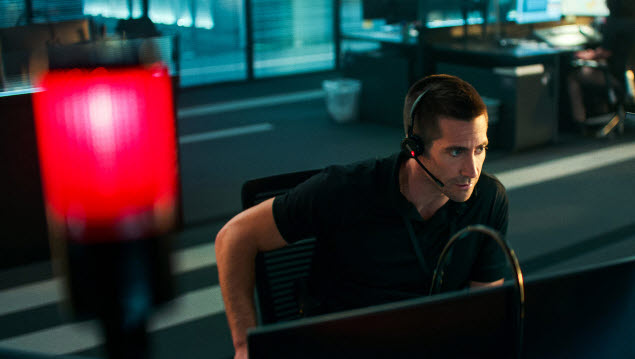
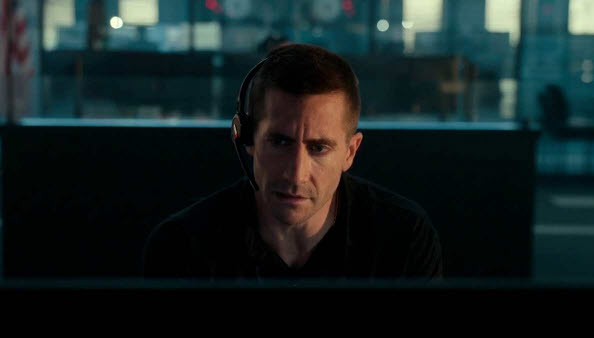
The movie mainly revolves around Joy Baylor (Jake Gyllenhaal), a LA police department police officer who happens to be working the night shift at a 911 call center during one particularly busy night for everyone in the center. Due to a massive wildfire happening in the surrounding areas of the city, many of his co-workers are busy with handling numerous emergency calls, and we see Baylor handling some of these emergency calls without much care or interest. After all, this is his last night before returning to active duty, and he simply wants this night shift to be over as soon as possible.

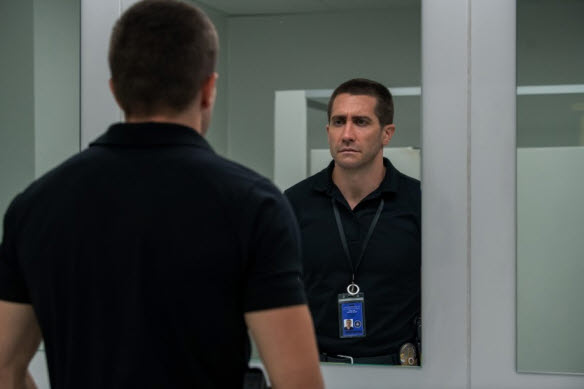
And we gradually get to know about Baylor’s current problems. He has been facing a legal trouble which was resulted from an unspecified but apparently serious incident, and he must go through a court hearing before being back on streets. Because of his considerable stress from this difficult situation, he is not that well as shown from a brief bathroom scene early in the film, and he has also been separated from his wife and their little daughter, but he still refuses to say anything when he is approached by a LA Times journalist on the phone at one point.
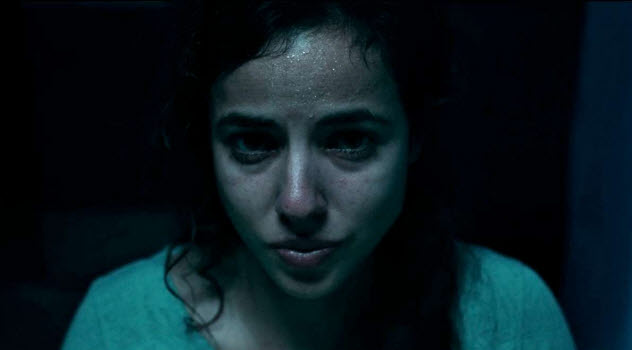
After Baylor goes through several emergency calls which do not feel that serious to him at all, there soon comes another emergency call, and he phlegmatically responds to it as usual, but it does not take much for him to sense how urgent and desperate the caller really is. The caller is a woman who is being taken to somewhere by a van belonging to some guy, and she is apparently terrified as indirectly speaking to Baylor via her phone without getting noticed by that guy. After interacting with her a bit, Baylor immediately searches for any possible way to find her exact current location, but it seems that there are not many things he can do for helping her, and he naturally becomes more exasperated and frustrated as time is running out for him minute by minute.

Nevertheless, Baylor also becomes more determined to save the woman, and we see how he tries more for getting things done for her. Besides attempting to get any more valuable information from her, he also comes to do much more than what he is allowed to do at his current position, and he does not hesitate at all when he has to make one of his police colleagues do something not so recommendable to any police officer to say the least.

Intensely following its hero’s desperate attempt to save that woman, the screenplay by Nic Pizzolatto, who has been mainly known for his acclaimed HBO crime drama series “True Detectives”, reveals more of its hero’s deeply conflicted state of mind. Via a few personal moments of his, we come to sense more of how messy his life has been since that incident, and we come to understand that he is reaching for a sort of redemption while trying as much as he can for that woman.

Like its original version, the movie sticks close to its hero from the beginning to the end. Except several brief shots reflecting whatever is happening on the other end of the line, the movie makes our viewpoint as limited as its hero’s, and that generates more tension on the screen as we come to care and worry more about what may happen in the end. Director/co-producer Antoine Fuqua, who has been known for a number of notable works such as “Training Day” (2001) and “Southpaw” (2015), did a commendable job of constantly maintaining the level of suspense within the limited background of his movie, and I also like how some local aspects are incorporated into the story for extra dramatic effect.

Above all, the movie is carried well by Jake Gyllenhaal, who has seldom disappointed us since his breakout turn in “Donnie Darko” (2001). During a number of key moments in the film, he did a commendable job of making his hero’s small and big reactions quite real and convincing, and that is more than enough for us to get more involved into his character’s increasingly tense circumstance. While the very last scene of the film is rather redundant in my inconsequential opinion, this scene still works thanks to what has been developed so well by the movie and Gyllenhaal, and the movie is certainly another highlight in his long and distinguished acting career.

On the other end of the line, Fuqua has several notable performers provide voice performances to complement Gyllenhaal’s acting on the screen. While Riley Keough deserves to be praised for her excellent voice work, Ethan Hawke, Da’Vine Joy Randolph, Paul Dano, and Peter Sarsgaard are also solid in their respective roles, and you may have some fun in recognizing their voices during your viewing.

In conclusion, “The Guilty” succeeds in distinguishing itself a bit compared to its original version, and Fuqua and Gyllenhaal, who also participated in the production of the film along with Fuqua, surely did their best for making it as compelling and entertaining as possible. Although I still prefer the original version, this remake version is fairly engaging on the whole, and it will be an interesting experience one for you especially if you enjoyed the original version.
Posted in Movies | Tagged , | 1 Comment

No One Gets Out Alive (2021) ☆☆1/2 (2.5/4): Undocumented and terrified

Netflix film “No One Gets Out Alive”, which was released on this Wednesday, is a little spooky film which has enough fear and darkness but does not have enough substance for that. As trying to juxtapose one precarious life condition with some interesting supernatural elements, the movie initially drew my attention, and I appreciated its competent technical aspects, but I only came to observe its story from the distance as disappointed with its rather clumsy last act.

In the beginning, the movie establishes the desperate circumstance of Ambar (Christina Rodlo), a young undocumented immigrant who recently came to Cleveland, Ohio. As reflected by a brief flashback scene, Ambar had to give up her college education for taking care of her very sick mother some time ago, but then she came to need more money for that, so she left for US for earning enough money for her mother, but, not so surprisingly, things have been pretty hard for her in many aspects. Although there is a distant relative of hers who has settled in Cleavland and seems to be willing to help her as much as he can, he and his family do not welcome her much when she visits their house, and she feels more uncomfortable because she lied to him about a certain thing which may get her a legitimate job.

While working along with many other undocumented people in a local sweatshop, Ambar has been looking for any suitable place where she can stay for a while without getting demanded for her identification card, and a small piece of advertisement draws her attention on one day. There is an old boarding house in some shabby neighborhood of the city, and this place seems fairly good for her because it is only for female tenants in addition to not demanding much money for staying during next several weeks.

However, right from when we see this seemingly nice boarding house, we cannot help but feel some creepy vibe from the house as well as its gruff male owner, who does not look that suspicious on the surface but seems to be hiding something behind his back. As Ambar is beginning to spend her first day in a room allotted to her, she hears something strange from the room right below her room, and that sound comes from a young woman who happens to be the only other tenant in the house at present. Ambar is naturally curious about whatever is happening to this young woman, but then this young woman is disappeared before Ambar gets to know more about her, and then there later come a couple of Romanian girls, who look more cheerful compared to that disappeared young woman.

As days go by, Ambar gradually becomes more aware of the ominous aspects of the house. Whenever night comes, she experiences disturbing things including a bizarre recurring dream about some ancient stone box, and we also frequently see dark mysterious figures lurking around her without being noticed by her. Her suspicion is more increased especially after seeing the brother of the owner, and it becomes more apparent to us that the owner and his brother are hiding something inside the basement of the house.

Meanwhile, the circumstance becomes quite more difficult for Ambar outside the house. At one point, it looks like she will get some kind help for solving her current problem involved with identification card, but she eventually finds herself tumbling into a more desperate situation than before, and, to make matters worse, she cannot retrieve her deposit money from the owner. He simply tells her that he cannot give that money back to her at present, and she cannot get any possible help because of her undocumented status.

As cornering its heroine more and more along the story, the screenplay by Jon Croker, Fernanda Coppel, and Adam Nevill, which is based on the novel of the same name written Nevill, slowly reveals more of what was briefly shown to us during the opening part of the movie. It turns out that the owner and his brother have been doing something quite heinous behind their back, and that is involved with that ancient stone box, which was discovered by their archaeologist father somewhere in Central America many years ago.

During the last act, we surely come to behold the grotesque secret inside this ancient sone box, but that is where the movie begins to stumble. After spreading out everything which it has kept behind its back, the movie comes to lose its narrative momentum and tension as spinning its wheels, and we are only get served with those obligatory moments of blood and horror without much dramatic impact.

Anyway, the main cast members of the film try as much as they can with their rather underwritten roles. While she is mostly demanded to look tired or terrified throughout the film, Cristina Rodlo did a good job of conveying to us her character’s accumulating anxiety and despair, and Marc Menchaca and David Figlioli are effective in their respective supporting roles, though the movie could go deeper into their miserable domestic life for more interest and drama.

On the whole, “No One Gets Out Alive” did not scare or entertain me enough, but it works to some degrees thanks to the competent direction by director Santiago Menghini, who previously made several short films before making a feature film debut here. While I am dissatisfied with its weak narrative, I will not deny that I enjoyed its spooky aspects at least, and I will not stop you from watching it if you simply want to kill your free time at chilly autumn night.

Posted in Movies | Tagged , , | Leave a comment

No Time to Die (2021) ☆☆1/2(2.5/4): Craig carries it to the end

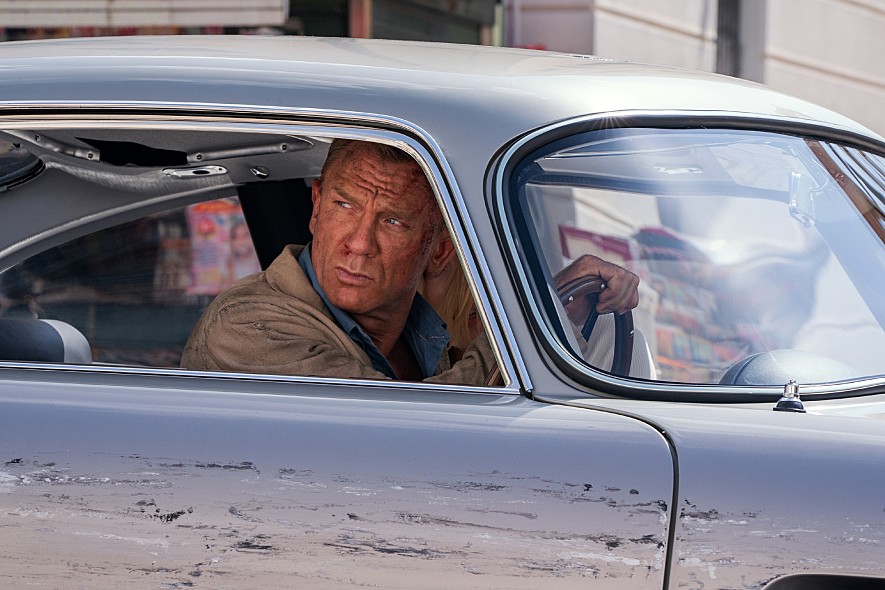
“No Time to Die”, the 25th film of the James Bond series, sadly does not surprise or thrill me much. While there are a number of impressive action sequences which surely deserve to be watched via big screen, the movie often lags and trudges as handling too many things together during its overlong running time (165 minutes), and the overall result is quite middling even though it is occasionally poignant as the exit chapter for its lead performer, who has always been reliable throughout last 15 years since he strikingly entered in “Casino Royale” (2006).

After the prologue part set in a certain remote place which will appear again later in the film, the movie begins the story at the point not long after the ending of “Spectre” (2015). As many of you remember, James Bond (Daniel Craig) decided to retire and then live a far less eventful life along with Madeleine Swann (Léa Seydoux) after defeating and then catching Ernst Stavro Blofeld (Christoph Waltz) in that film, and everything seems to be fine and peaceful for Bond and Swann as a bit of the song from “On Her Majesty’s Secret Service” (1969) is quoted on the soundtrack. As they promise to each other that they will be more opened to each other, it looks like Bond finally finds someone he can lean on for the rest of his life, but then something unexpected eventually happens to destroy what has been tentatively developed between them, and, after surviving the first action sequence of the film, Bond has no choice but to have Swann leave him as soon as possible.

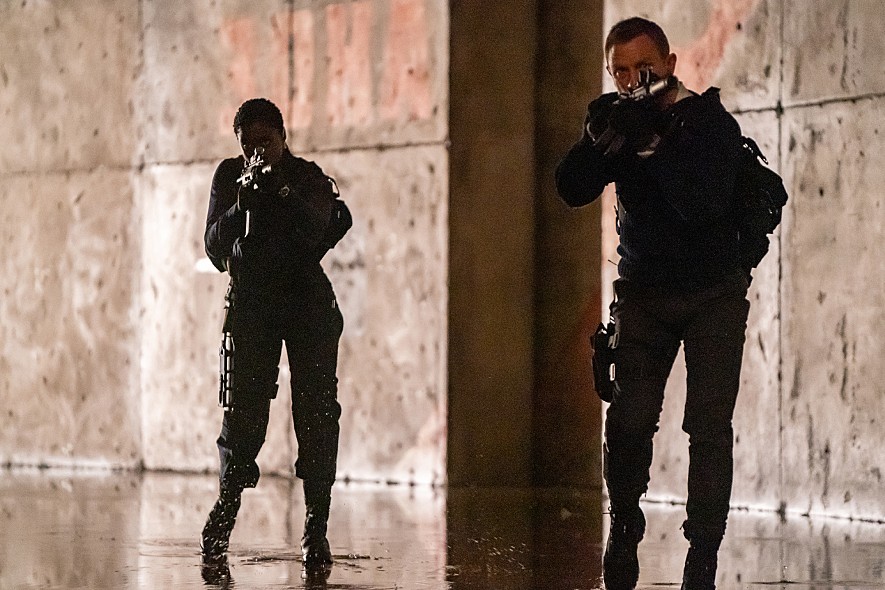
Five years later, Bond is quietly residing alone in Jamaica with no interest in getting back in action, but then he is approached by his old CIA friend Felix Leiter (Jeffrey Wright). Leiter wants Bond to help a bit on his latest mission which happens to be involved with Blofeld’s powerful criminal organization, and Bond is not so eager to help Leiter, but then he comes to see how serious the situation really is via Nomi (Lashana Lynch), a young MI6 agent who has incidentally been the new 007 since Bond left MI6. What CIA and MI6 are respectively looking for turns out to be some deadly biological weapon recently stolen from a top-secret lab in London, and it seems that this heist is involved with Blofeld’s organization, which is still active as being run by his close associates.

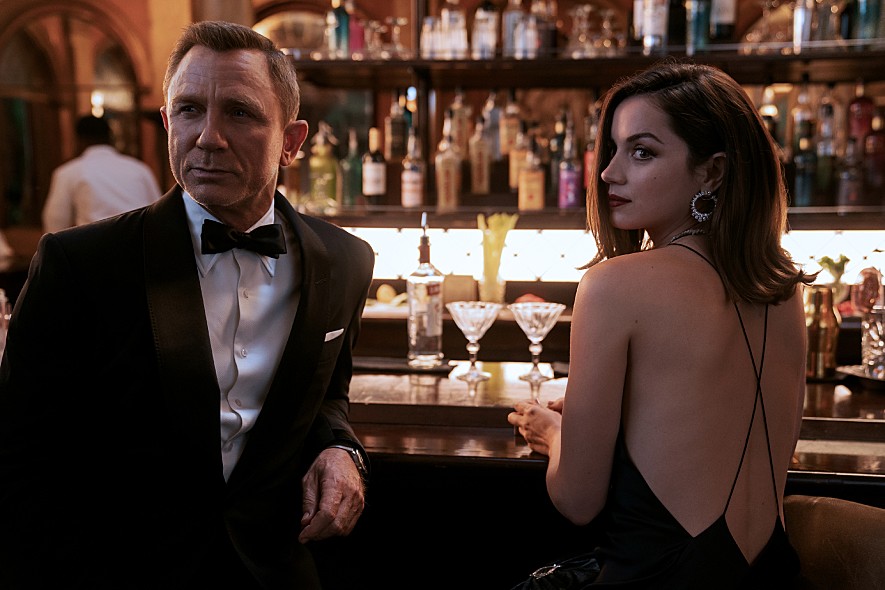
Despite the stern warning from his former boss M (Ralph Fiennes), Bond eventually decides to join Leiter’s mission, and he soon goes to a city in Cuba where the top-ranking members of Blofeld’s organization will gather for their little meeting. Although he succeeds in infiltrating into the meeting along with a plucky female CIA agent named Paloma (Ana de Armas), Bond soon comes to realize that the situation is a lot more complicated than expected, and that accordingly leads to another action sequence for us.

Along with not only Nomi but also Q (Ben Whishaw) and Eve Moneypenny (Naomie Harris), Bond tries to find the mysterious mastermind behind everything, but we already know who that is. He is a dude named Lyutsifer Safin (Rami Malek), and, besides planning something diabolical via that deadly biological weapon as your average James Bond villain, he is also preparing to hurt his opponent a lot via Swann, who has been involved in the situation more than Bond thought.

Now this could be a decent setup for more intrigue and excitement for us, but, alas, the screenplay by director Cary Joji Fukunaga and his co-writers Neal Purvis, Robert Wade, and Phoebe Waller-Bridge is often murky and convoluted as dully rolling from one narrative point to another. While there are several brief moments of humor, the movie often feels heavy-handed and ponderous, and I must tell you that I checked the remaining time more than once when I was watching the film along with many other audiences at last night (Don’t worry, we all wore mask as demanded).

In addition, the movie is glaringly deficient in terms of characterization. Compared to how much “Casino Royale” and “Skyfall” (2012) delved deep into James Bond’s personal feelings, “No Time to Die” feels rather repetitive and superficial without showing us anything new about him, and it is also quite disappointing to see how it under-utilizes not only its recurring characters but also several new characters including Nomi, who could be quite more interesting as Bond’s potential successor in my humble opinion.
Anyway, if you just want action, the movie will not disappoint you at all. Besides two aforementioned action sequences, there is also a well-executed action scene unfolded in the middle of a foggy forest, and I appreciate the technical efforts put into a gritty long-take action sequence during the climactic part, which is unfolded in a remote island reminiscent of “Dr. No” (1962) and “You Only Live Twice” (1967).

And I admire how Daniel Craig carries the film to the end. I do not like all of his Bond movies (I was not so impressed by “Quantum of Solace” (2008) and “Spectre”), but he has always been dependable as bringing gritty human qualities to his character, and he surely makes an admirable exit here while completing his character’s dramatic arc over five films as required. Like his predecessors, he definitely leaves his own mark on the franchise, and I am sure he will soon move onto other good things to come into his career.

In case of the other main cast members, they acquit themselves fairly well despite mostly stuck in thankless roles. While Léa Seydoux, Ben Whishaw, Naomie Harris, Jeffrey Wright, and Ralph Fiennes do not have many things to do except merely filling their familiar roles, Ana de Armas manages to steal the show a bit despite her underwritten role, and Lashana Lynch is sadly wasted in contrast. In case of Christoph Waltz and Rami Malek, the movie is not exactly the highpoint of these two Oscar-winners to say the least, and you may come to miss more those colorful megalomaniac villains such as Auric Goldfinger.

Although it is not as boring as “Quantum of Solace”, “No Time to Die” fails to reach to the level of “Casino Royale” and “Skyfall”, so I cannot recommend it, but I must recognize how the James Bond series has tried to change itself via its last five films. Its attempt was not always successful, but that surely brought some fresh air into this 59-year-old franchise, and it is will be interesting to see whether the franchise will go further for more change and adaptation.

Posted in Movies | Tagged , | 1 Comment

Sankofa (1993) ☆☆☆1/2(3.5/4): A hidden masterwork you should check out right now

Ethiopian filmmaker Haile Gerima’s 1993 film “Sankofa”, which recently had a 4K restoration thanks to Ava DuVernay’s independent distribution company ARRAY and then was released on Netflix in US in last week, is simply extraordinary to say the least. As a sort of invocation on the tragic past of slave trade in Africa and US in the 19th century, the movie gradually lets us observe and reflect on the evil and horror of the slavery during that time, and it also reminds us of the importance of remembering the past before moving onto the future with wisdom, power, and hope.

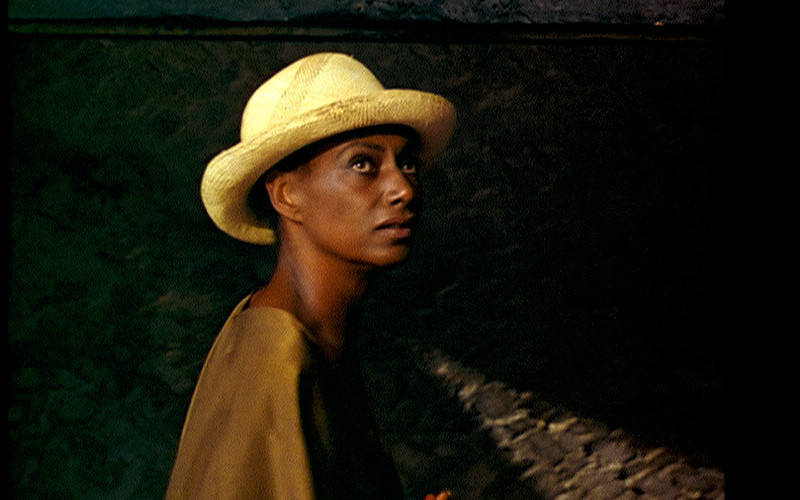
The opening part of the film, which is unfolded at Cape Coast Castle in Ghana, may be a bit too symbolic, but it is striking enough to hold our attention. We see an old guy chanting and beating a drum for a while, and then this curious moment is followed by a young African American model having a photography session along with a Caucasian photographer. As these two figures freely do there work here and there around the castle, we hear a bit about the history background of the castle from a tour guide leading a bunch of tourists, and then the model happens to be confronted by that old dude, who firmly demands to her that she should look back into the past of her ancestors.

The old man is eventually chased away by the guards of the castle, but our heroine becomes a bit more curious about the history behind the castle. She decides to look around inside the castle for herself, and, what do you know, she soon finds herself somehow going through a sort of time travel. She suddenly sees a bunch of helpless slaves bound in chain right in front of her eyes, and she frantically tries to go outside as soon as possible, but then she is captured by several slave traders and then put back inside the castle.

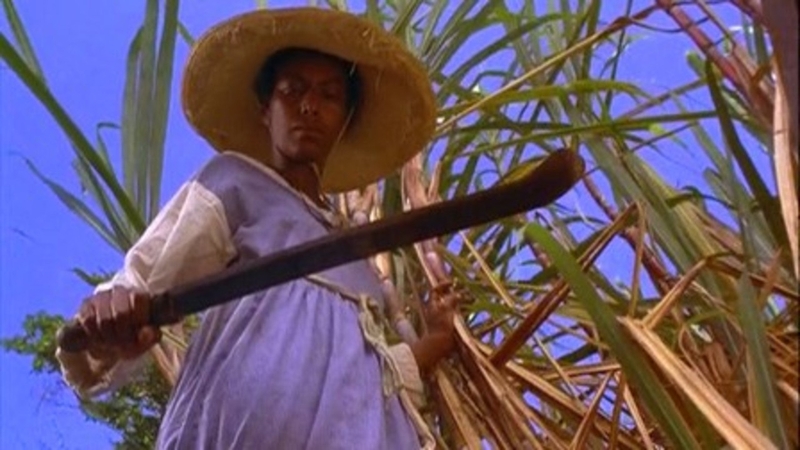
After that narrative point, our heroine begins to go through the life of a young slave woman named Shola (Oyafunmike Ogunlano), and she phlegmatically narrates on how life has been hard, cruel, and difficult for her and many other slaves in a sugar cane plantation located somewhere in Louisiana. Although she does not have to work as a housemaid, Shola often sees how many other slaves are forced to work a lot everyday, and their Caucasian masters and several head slaves are certainly ready to whip any of them if that is necessary.

Nevertheless, there have been quiet resistance and endurance among many slaves in the plantation. In case of Shola’s West Indian slave boyfriend Shango (Mutabaruka), he has been patiently waiting for any opportunity for rebellion, and we later see him and several other slaves having a secret meeting at a hidden spot outside the plantation. Although there is not much chance for overthrowing their Caucasian masters at present, they still hope for freedom nonetheless, and their clandestine meeting keeps growing day by day.

One of the key members is a middle-aged slave woman named Nunu (Alexandra Duah), who has been a kind of spiritual mother to many of slaves in the plantation. She often tells others a fairy tale which turns out to be based on her sad life story, and everyone around her listens to her somber storytelling although they probably heard it many times before.

And we also get to know two different head slaves who mean a lot to Nunu in each own way. After recently becoming more conflicted about his role between other slaves and his Caucasian masters, Noble Ali (Afemo Omilami) comes to lean more on Nunu, and Nunu does not mind this at all. While she also points out to him that their class gap remains same as before, she helps Noble Ali attain some personal redemption for him, and that is one of a few humorous moments in the film.

In case of Joe (Nick Medley), his relationship with Nunu is quite complicated because he is her only son. Having influenced a lot by a local Caucasian priest for years, Joe has distanced himself a lot from his mother and her own religious belief, but that does not change the fact that he is just a slave who happens to be a bit above other slaves, and he is consequently driven into more self-hate – especially when he miserably fails in his little private encounter with a young slave woman who has been sincerely pining for him.

As leisurely rolling around these several different characters, the movie also presents several brutal scenes presenting many dark and deplorable aspects of the slavery in US, and Gerima and his crew members wisely present these violent moments with considerate restraint while never overlooking what the main characters have to suffer and endure. These grim moments in the film are occasionally contrasted with a number of surprisingly haunting moments of poetic beauty, and the cinematography by Augustin Cubano is often stunning for its dexterous utilization of locations and natural light.

In conclusion, “Sankofa” is unforgettable for not only its relevant main subject but also its rich and distinctive mood and style to be admired. To be frank with you, I had never heard of the film before reading a passionate review by Robert Daniels in last week, and, after finally watching it at last night, I really appreciate his enthusiastic recommendation. In short, this is a hidden masterwork you should check it out right now, and I sincerely hope that it will be watched by more audiences out there because of its recent release on Netflix.

Posted in Movies | Tagged , | Leave a comment

The Mad Women’s Ball (2021) ☆☆☆(3/4): Trapped in a madhouse

French film “The Mad Women’s Ball”, which was released on Amazon Prime a few weeks ago, is a harrowing tale of one young woman suddenly trapped in a madhouse of the 19th century. While the movie is often chilling to see how she and many other unfortunate women often get abused and mistreated by their cruel male-dominated system, we find ourselves becoming more engaged while observing more of its unlucky heroine’s dogged struggle, and there are unexpected moments of considerable emotional power as she tries her best via a certain mysterious power of hers.

During the early part of the film, we meet a young woman named Eugénie Cléry (Lou de Laâge), and we get to know about how suffocating her daily life has been in many aspects. While she has grown up in an affluent middle-class Parisian family, her parents expect her to be a docile lady to get married sooner or later, but that is the last thing this plucky young lady wants right now. Just like her younger brother, she wants to go outside without any restriction, and, thanks to her younger brother’s reluctant help, she later gets a chance to spend some free time at a certain area of Paris which would be not approved by her parents at any chance.

While enjoying her free time in that area, Eugénie happens to come across a young man who willingly lends a book on spiritualism during their brief encounter, and she subsequently becomes more aware of what only she has been able to hear and see for years. As a matter of fact, she often finds herself in a sort of trance, and she comes to believe that she can really see the souls of dead people hovering around her and others. That sounds pretty preposterous to say the least, but it looks like she does have the ability to see dead people, as shown from when she finds something precious to her grandmother just because, according to her, her dead grandfather told her about it in advance.

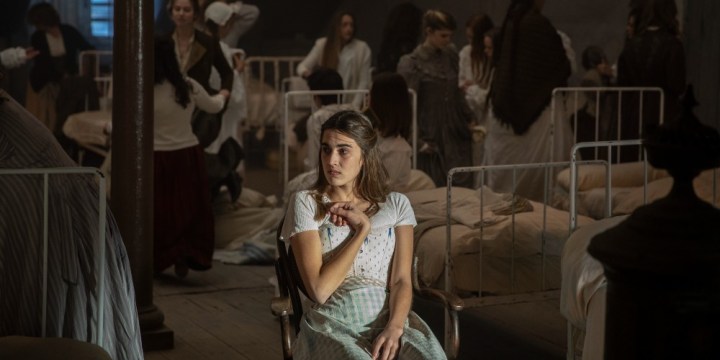
Of course, Eugénie’s growing belief on her special power is not accepted well by her family at all. On one day, her father and younger brother takes her to somewhere, and that place soon turns out to be a notorious madhouse in Paris. She certainly resists as soon as she comes to realize what is going to happen to her, but it is already too late for her, and she is soon thrown into a big ward full of mentally unstable women, which is supervised by a nurse named Geneviève Gleizes (Mélanie Laurent) and several other nurses working under her.

As days go by, Eugénie tries to get accustomed to her changed situation, but she is reminded again and again of how cruel and heartless her new place is to her and her fellow patients. While Nurse Gleizes and most of other nurses are not that bad at least, those male doctors of the madhouse simply regard Eugénie and other female patients as crazy people to be incarcerated and studied, and there is a gut-wrenching moment when one of the female patients is subjected to the presentation of a new therapy in from of many male doctors and then sexually exploited by one of these male doctors.

More determined to get out of the madhouse as soon as possible, Eugénie attempts to get closer to Nurse Gleizes, who initially does not believe Eugénie’s power at all but then finds herself convinced about it after Eugénie says a certain private fact which Nurse Gleizes has kept to herself for years. Around that narrative point, the movie shifts its focus a bit toward Nurse Gleizes, and we observe how barren her life has been in many aspects. She has lived fairly well with her aging father, but there is always a sad void in her private life, and now Eugénie seems to give some comfort and consolation to fill that sad void.

As recognizing more of Eugénie’s power, Nurse Gleizes also comes to care a lot about her, so she tries her best to get the approval on Eugénie’s release, but, not so surprisingly, the head doctor of the madhouse, who is incidentally based on a famous real-life neurologist at that time, does not listen to her at all, and things get worse for Eugénie when she expresses her righteous anger in front of that doctor and other doctors for an understandable reason. She is subsequently taken to the worst ward in the madhouse, and, to make matters worse, the nurse in the charge of this ward is as unflappable and merciless as Nurse Ratched.

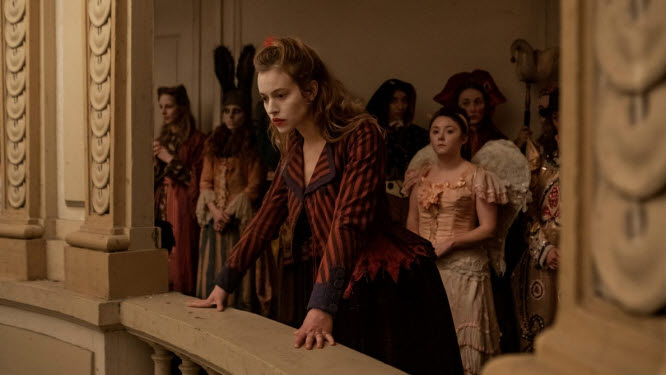
Steadily maintaining its restrained attitude, the screenplay by director Mélanie Laurent and her co-writer Christophe Deslandes, which is based on Victoria Mas’ novel “Le bal des folles”, eventually arrives at a climactic part associated with the very title of the movie, but it stays calm as usual while gradually increasing the dramatic tension beneath the screen, and I admire how it pulls out a quiet but touching moment of female solidarity at the end of the story. While Lou de Laâge is constantly compelling to watch for the fierce intensity of her strong performance, Laurent ably complements her co-star, and Emmanuelle Bercot is also effective as one of the key supporting characters in the film.

On the whole, “The Mad Women’s Ball” is another solid work directed by Laurent, who has diligently developed a filmmaking career in addition to acting in many notable films ranging from “Inglourious Basterds” (2009) to recent Netflix film “Oxygen” (2021). As already shown from her previous film “Galveston” (2018), she is a competent director who knows how to present story and characters well on the screen, and I guess I can have more expectation on the next film on which she is working at present.

Posted in Movies | Tagged , | 1 Comment

Short Vacation (2020) ☆☆☆(3/4): Their little summer journey

During my childhood years in Seoul, I was always fascinated with the intricate network of the Seoul Metropolitan Subway. During that time, believe me or not, the Seoul Metropolitan Subway had no more than 4 lines, so it was pretty easy for me to memorize many stations, and I was particularly intrigued about those stations at the ends of the subway lines. Whenever I happened to get off at one of those stations, I was often curious about where trains would go next after that, and those stations did feel like the end of the ever-expanding world of mine during that period.

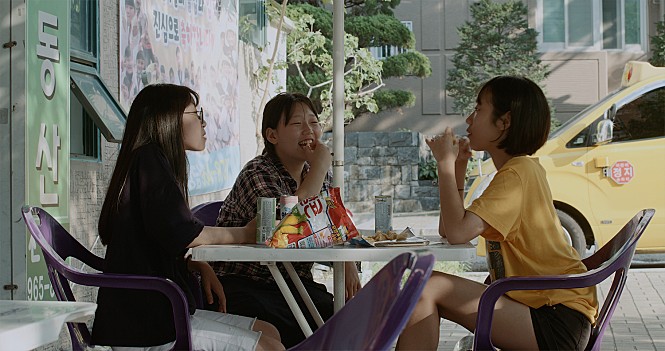
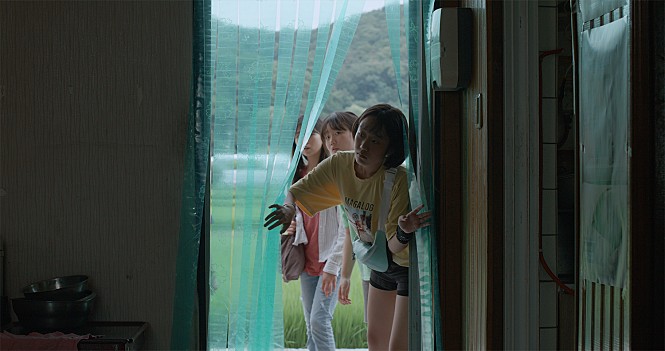
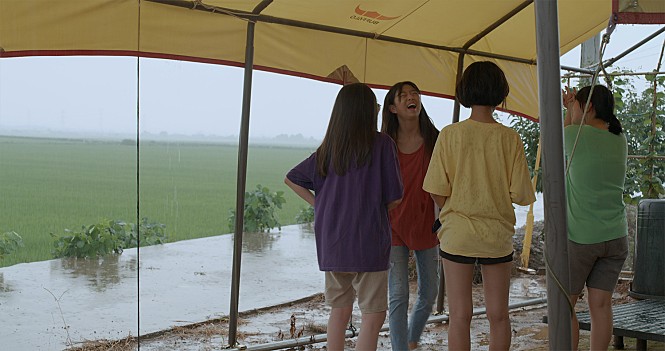
That is why I could not help but a bit nostalgic while watching South Korean independent film “Short Vacation”, which is a very simple story about four ordinary adolescent girls’ little summer journey around the end of one of the Seoul Metropolitan Subway lines. Although nothing much happens among them throughout the film, it is constantly engaging to observe whatever is spontaneously exchanged among them, and their plain journey certainly takes my mind back to those little adventures of mine during my childhood years.

At the beginning, the movie quickly introduces its four main characters: Si-yeon (Seol Si-yeon), Yeon-woo (Bae Yeon-woo), So-Jeong (Park So-jeong), and Song-hee (Han Song-hee). As she has been recently transferred to their middle school, Si-yeon is a bit awkward when she happens to join a photography club in the school, but she is soon accepted by the other three girls after a little comic happening involved with a contact lens, and it does not take much time for these four girls to hang around together outside.

However, they are not particularly interested in learning how to shoot photographs via cameras, and their supervising teacher is also not so interested in teaching anything to them and other club members. During their club time, the supervising teacher simply shows movies, and there is a brief amusing scene where most of the club members are sleeping although they are supposed to watch a certain great film of John Ford, which, in my humble opinion, could teach them one or two things about camera position and scene composition at least.

Anyway, the summer vacation is near, and the supervising teacher gives our four girls a little special assignment. There is an upcoming local photography contest for young amateur photographers, and the supervising teacher wants our four girls to photograph anything interesting as traveling around “the end of the world”. He hands out four old-fashioned film cameras for each of his four students, and they look and touch them with baffled curiosity. To be frank with you, this scene reminded me that it has been several years since I stopped using cameras just because my smartphone is a more convenient tool for me.

Our four girls subsequently debate on which place should be “the end of the world” for their summer assignment, and there eventually comes an idea from one of them. All they will have to do is taking a subway to Sinchang Station, which feels like “the end of the world” to them considering that this station is at the south end of Seoul Metropolitan Subway Line 1. Once they arrive there, they are going to look for anything interesting enough to be photographed by them, and it seems that they will just spend a few hours there before going back to Seoul.

However, of course, they soon come to realize how unprepared they are. Right from the beginning, they have a problem with finding the exact subway train to take them to Sinchang station, and, not so surprisingly, it turns out that this station is not exactly the end of the subway line as the railroad goes beyond this station. They later manage to find the former location of this station where the railroad really ends, but this place looks so empty and barren that they come to have more doubt on their summer assignment.

Anyway, due to one little unlucky happening, our four girls subsequently find themselves wandering more in the surrounding rural area of Sinchang Station, and the movie calmly follows their rather uneventful and meandering journey. The area is so remote that they come across only a few persons, and, as the day is being over, they eventually decide to stay in a town hall, which does not seem to be abandoned at all but strangely remains empty as before when they later drop by this place again.

So far, I have only described the plain narrative of the film, and I must tell you that what is important here is those small accidental moments observed and captured by our four heroines and their cameras. The movie often stops to admire what their cameras capture for a while, and we become more drawn to its calm and reflective mood as musing more on how these little captured moments will be remembered by our four young girls. Under the competent direction of first-time directors Kwon Min-pyo and Seo Han-sol, the four young performers of the film give unadorned natural performances shining with realistic spontaneity, and I would love to know about how the directors handled and modulated the group acting of their four young performers.

In conclusion, “Short Vacation”, which is incidentally another notable graduation work from Dankook University in this year after “Scattered Night” (2019) and “Gull” (2020), may be a bit too dry and simple for you, but I assure you that it will grow on you once you give it a chance. In short, this is another interesting debut film from South Korean cinema during this year, and I sincerely hope that the directors will advance further after this promising start.

Posted in Movies | Tagged , , , , , | 2 Comments

Birds of Paradise (2021) ☆☆1/2(2.5/4): Two ballet dancers competing for the top

“Birds of Paradise” is rather disappointing in two main aspects. On one side, it seems to be a pulpy melodrama about a cutthroat artistic competition peppered with some sexual tension, but I must tell you that it is much tamer compared to, yes, Darren Aronofsky’s “Black Swan” (2010). On the other side, it looks like trying to present the realistic depiction of the strain and pressure from competing for the top, but the result is not so interesting or enlightening compared to Robert Altman’s “The Company” (2003), which can be regarded as an antidote to “Black Swan” if you feel so drained after watching it.

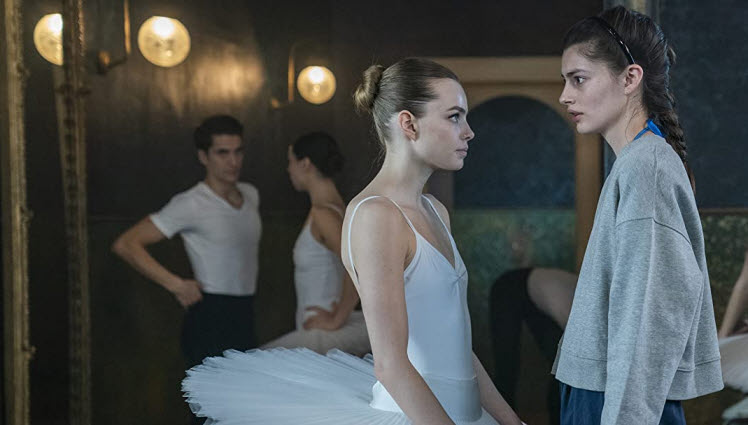
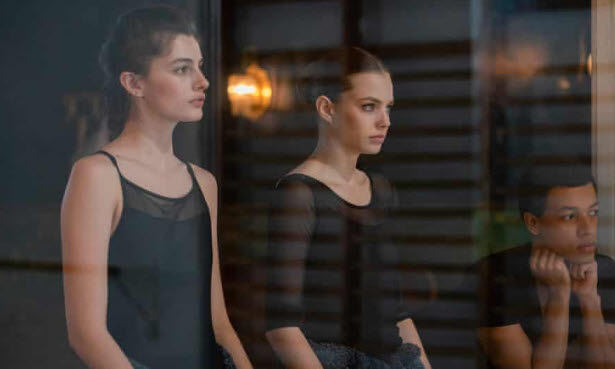
At first, the story is unfolded mainly via the viewpoint of Kate Sanders (Diana Silvers), a young American ballet dancer who recently enrolls in a prestigious ballet academy in Paris. She is less experienced compared to other students because she was actually a basketball player before eventually deciding to become a ballet dancer, and Madame Brunelle (Jacqueline Bisset), the strict and fastidious principal of the academy, emphasizes to her that whatever she achieved in US means nothing in Paris, but she is still determined to try her best for the chance to join the Opéra national de Paris.

However, what she and other students will soon have to go through is quite arduous and demanding to say the least. 15 male students and 15 female students are respectively evaluated every week, and only five students in each group will remain after 8 weeks as others will be let go one by one just for being at the bottom of the group. After this grueling period, the remaining 10 students must show their best in front of several judging members including Madame Brunelle, and then only one male student and one female student will be selected for the Opéra national de Paris.

Besides her relatively inexperienced status compared to other students, Kate has several other disadvantages. As a humble middle-class girl mainly depending on a scholarship fortunately provided to her, she cannot spend money easily on many necessary stuffs for her training including ballet shoes, and we are not so surprised when she attempts a bit of shoplifting when she visits a local shop for ballet dancers along with other students.

In addition, Kate has to get accustomed to how many of others around her often regard her with condescension, and she unfortunately happens to share the room with Marine Elise Durand (Kristine Frøseth), another American girl in the group who incidentally had the very unpleasant encounter with Kate on their first day in the academy. When Kate mentions Marine’s dead twin brother who also incidentally trained in the academy before his tragic death, Marine instantly responds with furious anger, and we accordingly get a brief but explosive moment of catfight between these two girls.

Nevertheless, it does not take much time for them to make amends to each other as they get to know and then befriend each other. When Kate is depressed to find herself at the bottom of the group in the first evaluation, Marine willingly helps her in more than one way, and Kate becomes someone to lean on for Marine, who has been quite unhappy since her twin brother’s death. Although they are certainly well aware that only one member of their group will get the spot in the Opéra national de Paris, they eventually make a private pact for assuring each other that they will support each other to the end.

Mainly thanks to Marine, Kate gradually begins to climb up and up in the list, while also accepting that she must be ready for doing whatever she can do for reaching to the top. Besides approaching closer to the No.1 male dancer in the group for having him as a partner to improve her skill, she also tries something many ballet dancers do behind their back just for improving herself more and more, but she does not tell anything to Marine because, as time goes by, it becomes quite apparent to her that Marine will be the one she must beat in the end.

In the meantime, the screenplay by director/writer Sarah Adina Smith, which based on A.K. Small’s novel “Bright Burning Stars”, shifts its focus a bit toward Marine, and we get to know how much she has been confused and conflicted. While her rich estranged parents do not provide her much support except money, the only comfort besides Kate comes from a young musician she happens to meet at a party, but their relationship is soon going nowhere as she is pushed to the extreme along with Kate and other remaining students as their eventual audition day is approaching.

Around that narrative, we are supposed to root for both of our two heroines, but the movie unfortunately does not provide the emotional ground for that, and we come to observe their competition without much care or attention. Although Kristine Frøseth and Diana Silvers do their best in addition to looking convincing during their dance scenes, their characters often feel underdeveloped, and that is the main reason why the finale does not work as well as intended. In case of several other main cast members in the film, they are usually required to do nothing more than filling their respective spots, and Caroline Goodall and Jacqueline Bisset are particularly wasted in their thankless supporting roles.

In conclusion, “Birds of Paradise” is not entirely without fun as occasionally dabbling with some pulpy moments including the ones involved with a lurid secret club, but it ultimately leaves empty impressions as hesitating to go over the top like “Black Swan” or delve deep into more realism and verisimilitude like “The Company”. I do not feel like wasting my time, but I would rather recommend you to watch either “Black Swan” or “The Company” instead.

Posted in Movies | 1 Comment

Everybody’s Talking About Jamie (2021) ☆☆☆(3/4): Here comes Jamie

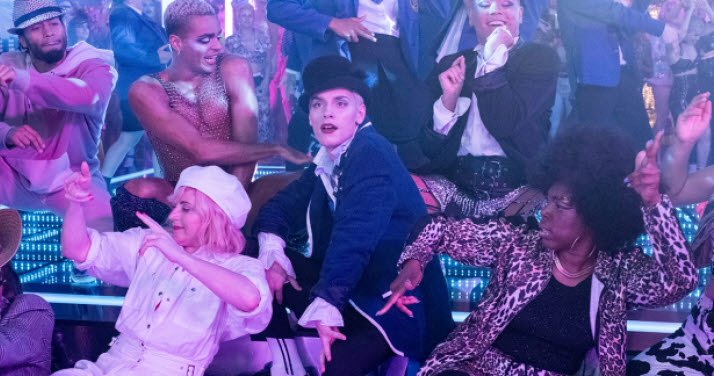
“Everybody’s Talking About Jamie”, which was released on Amazon Prime a few weeks ago, is as energetic and flamboyant as demanded while also being as sweet and poignant as required. Based on the stage musical of the same which was in turn adapted from the 2011 British television documentary “Jamie: Drag Queen at 16”, the movie constantly delights and amuses us as cheerfully bouncing along with its gay adolescent hero, and it also surprises and touches us via genuinely sincere and poignant moments coming from its hero and several other characters around him.

The story of the movie mainly revolves around the emotional journey and growth of a 16-year-old boy named Jamie New (Max Harwood), and the opening part showing his daily life reminds us of how many sexual minority kids like him in UK and many other western countries have been allowed to show and express more of themselves and their sexuality these days. Besides his caring mother Margaret (Sarah Lanchshire), many people in his neighborhood in Sheffield, South Yorkshire have accepted him for years, and so have most of the students in his school, though he is ridiculed by some meathead bully from time to time.

Anyway, Jamie decides to pursue his longtime aspiration more as having his 16th birthday and reflecting more on what he wants to be after his graduation. Much more emboldened by the very special birthday present from his mother, he becomes really serious about being a drag queen entertainer someday, so he does some active research on the drag queen business in Sheffield, and, what do you know, it turns out that there is actually a fashion store for drag queen entertainers in the city.

That fashion store in question has been run by an old former drag queen named Hugo Battersby (Richard E. Grant), who gladly becomes Jamie’s mentor after he discerns Jamie’s need and aspiration as talking a bit with Jamie. Besides teaching Jamie on how bold, confident, and fearless he should be during his first public drag queen performance, Hugo, who was once a raging drag queen during the 1980-90s, also shows Jamie those wild old days of him and many fellow sexual minority people, and we are poignantly reminded of how much people like them fought and struggled really hard for freedom and acceptance during that very eventful period. Although things were quite daunting for them due to the AIDS epidemic as well as the prejudice and ignorance of others, there were indeed social advances for them in the end, and it goes without saying that the freedom and acceptance enjoyed by Jamie and many other sexual minority kids at present come from their courageous efforts during that time.

Jamie initially wants to make a modest public debut as a new drag queen in the town, but, of course, the situation becomes more complicated than before because he unintentionally reveals his plan in front of his classmates. While his best friend Pritti Pasha (Lauren Patel), a smart and intelligent girl who wants to be a doctor someday, stands by him as usual, he has to face more prejudice from his school bullies, and there is also a private matter involved with his father, who does not want to accept or recognize his gay son at all while mostly occupied with living a new life with his second wife.

Filled with a number of stylish and flamboyant songs including “This Was Me” and “Work of Art”, the first half of the movie culminates to its highpoint as accompanied with “Over the Top”, and then the second half of the movie switches upon a plain and introspective mode via a series of sincere and earnest musical scenes. While Pritti comes to reveal more of herself via “It Means Beautiful”, Jamie and his mother become more honest and affectionate to each other than before as singing “My Man, Your Boy” together, and the movie even shows some understanding on a few supporting characters opposing Jamie’s lifestyle in one way or another.

The movie sometimes loses its narrative pacing as hurriedly hopping from one song after another, but that remains to be a minor flaw thanks to the fairly good qualities of the songs written by Dan Gillespie Sells and Tom MacRae, and the movie is also held together well by the engaging lead performance from newcomer Max Harwood. Besides ably handling many song and dance moments assigned to him, Harwood did a convincing job of presenting Jamie’s human qualities behind his showy attitude and appearance, and we consequently come to cheer for Jamie while observing how much he is matured in the end before making his first step into adulthood.

In case of the main cast members surrounding Harwood, they hold each own spot around him well. While Sarah Lancashire, Lauren Patel, and Shobna Gulati have each own moment to shine, Richard E. Grant, who has been more notable thanks to his recent Oscar-nominated supporting turn in “Can You Ever Forgive Me?” (2018), is dependable as usual, and he certainly steals the show whenever he enters the screen.

Directed by Jonathan Butterell, “Everybody’s Talking About Jamie” succeeds in winning my heart thanks to not only its enjoyable song and dance scenes but also its solid performances to be savored, and that means a lot considering that I am a discreet and introverted gay dude quite different from Jamie in many aspects. Yes, I did observe his story from the distance at first, but I eventually came to have more empathy and understanding on his need to express himself freely, and that is more than enough for recommending this charming musical film.

Posted in Movies | Tagged , , , , , , | Leave a comment

Candyman (2021) ☆☆☆(3/4): Candyman is back….

Nia DaCosta’s latest film “Candyman”, a sequel to Barnard Rose’s iconic 1992 film of the same name, is a spooky genre reconstruction which tries both old and new stuffs. While staying fairly faithful to the dark and disturbing aspects of the 1992 film, the movie also attempts some fresh new ideas and variations, and it is mostly successful even though it occasionally seems to be trying to handle a bit too many things together within its rather short running time (91 minutes).

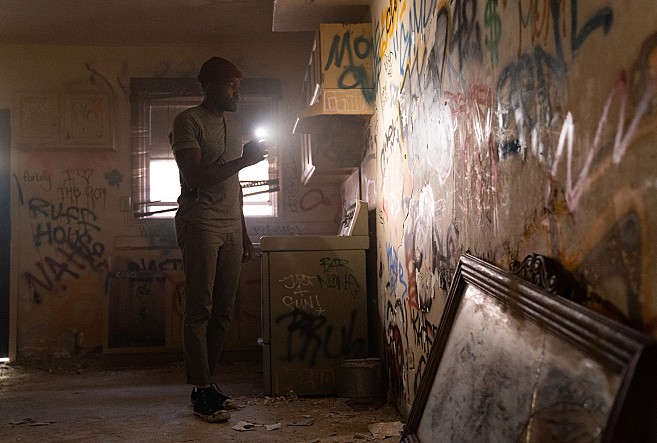
After the unnerving prologue scene set in the Cabrini-Green Housing project of Chicago in 1977, the movie promptly moves forward to 2019, and we are introduced to a young African American visual artist named Anthony McCoy (Yahya Abdul-Mateen II). Although his career has not advanced much while he keeps trying to find any new artistic inspiration, things are mostly fine for Anthony at present mainly thanks to his supportive girlfriend Brianna Cartwright (Teyonah Parris), and they have been happy together in their new residence located in Cabrini-Green.

Through Brianna’s older brother, Anthony comes to learn a bit more about the old dark history of Cabrini-Green, which was once one of the most notorious neighborhoods in the city due to crime and poverty. When Brianna’s older brother tells about a certain notorious incident depicted in the 1992 film and how that horrible incident was associated with a mysterious figure named Candyman, Anthony becomes quite intrigued to say the least, so he subsequently decides to look here and there around Cabrini-Green for getting some inspiration he really needs now.

Although Cabrini-Green has been changed a lot since that incident (I remember well how it looked quite plain and ordinary when I observed it from the distance during my three-week visit to Chicago in April 2010), there is still a shabby abandoned area which has not been gentrified yet, and Anthony cannot help but feel unnerved as looking into this area, just like when the plucky doctorate candidate heroine of the 1992 film did while doing her field research around the Cabrini-Green Housing project. He later meets a resident who gladly tells him a lot about not only Cabrini-Green but also Candyman and the dark historical background surrounding this mysterious figure, and that eventually gives Anthony the inspiration for his next work to be installed at a local art gallery where his girlfriend works.

While Anthony is quite disappointed with not getting enough attention and praise for his latest work, strange things begin to happen around him not long after he did something not so wise. Still not that serious about Candyman and the gruesome myth behind this figure, he casually called Candyman no less than five times, and, what do you know, he subsequently becomes disturbed more and more as it seems to him that Candyman does exist after all.

As Anthony desperately tries to understand what the hell is really going on around him, the screenplay by DaCosta and her co-writers Win Rosenfeld and Jordan Peele (He also served as one of the producers of the film, by the way) throws one disturbing moment after another along the story. There are several skillful scary scenes where mirror is effectively utilized for suspense and terror, and I also like how DaCosta and her cinematographer John Guleserian bring extra spookiness to the film via the visually striking presentation of a number of recognizable Chicago skyscrapers in foggy nocturnal background. As a guy who photographed lots of small and big building in the downtown area of Chicago besides Willis Tower in 11 years ago, I surely appreciate this impressive visual touch recurring throughout the movie.

In addition to having a little naughty fun with the world of art galleries and critics inhabited by Anthony and several other characters including his girlfriend (I can attest to you that you may come across such hipster folks like them when you drop by the Museum of Contemporary Art, Chicago or those posh local galleries located in the West Side area of the city), the movie also explores several timely social subjects including racism and gentrification, and DaCosta makes an interesting artistic choice of presenting a number of flashback scenes via shadow puppetry animation. Although it stumbles more than once when it subsequently goes further from what has been gradually developed via these flashback scenes, the movie makes some clear and forthright points on its main subjects, and that is why you really need to stay during its end credits, which is more or less than the summary of its sincere and passionate reconstruction job on the Candyman myth established in the 1992 film.

The main cast members of the movie are engaging to watch, though I wish the movie allowed a bit more space for their characters to breath. While Yahya Abdul-Mateen II, who has been more notable since his prominent supporting turns in “Aquaman” (2018) and “The Trial of the Chicago 7” (2020), earnestly carries the film, Teyonah Parris and Colman Domingo are solid as usual in their respective substantial parts, and it is surely nice to see some of the main cast members of the 1992 film contributing a bit to the film.

In conclusion, “Candyman” is a competent horror film besides being a successful sequel to the 1992 film, which was unfortunately followed by two forgettable sequels without which we can live. Although the 1992 film is still more intriguing and terrifying in comparison, the movie mostly succeeds in doing its own stuffs, and DaCosta, who previously made “Little Woods” (2018), confirms here that she is indeed one of the most interesting African American filmmakers to watch.

Posted in Movies | Tagged , , | Leave a comment

Nightbooks (2021) ☆☆☆(3/4): Now he must write scary stories to survive

Netflix movie “Nightbooks”, which was released in last week, is a familiar but solid dark fantasy tale decorated with a number of darkly enjoyable moments to be savored. While mostly unfolded within its rather limited fantasy background, the movie puts some good efforts on alternatively disturbing and entertaining the audiences, and you may end up wanting more after amused and thrilled enough during your viewing.

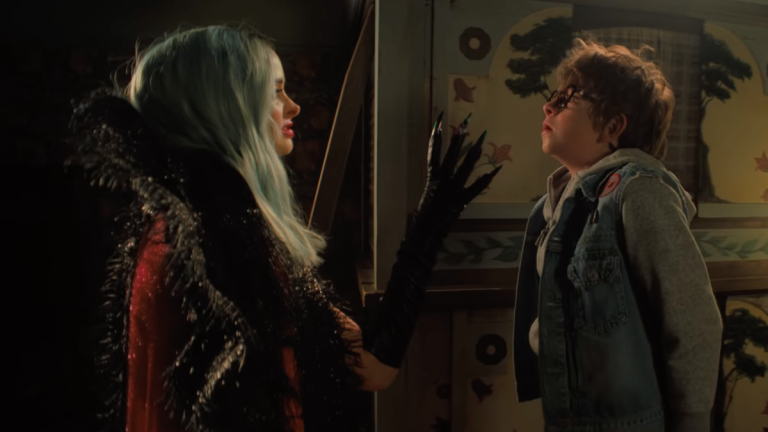
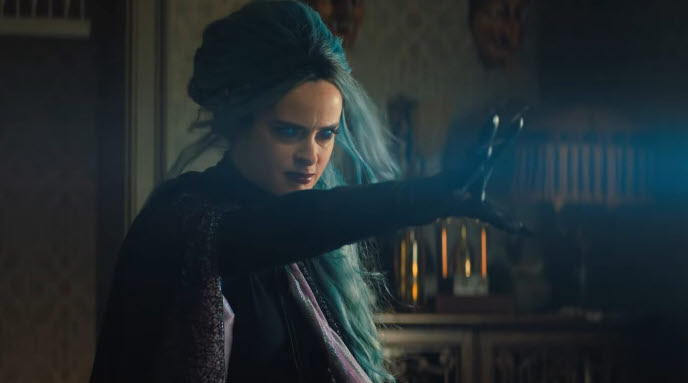
The opening scene swiftly thrusts its young hero into his perilous plight within a few minutes. Feeling quite miserable about how people around him do not appreciate much his little horror tales, Alex (Winslow Fegley) impulsively decides to burn his private book containing so many scary stories of his, so he goes down to the basement of an apartment building where he and his parents live, but, unfortunately, he soon finds himself entrapped by an evil witch named Natacha (Krysten Ritter), who promptly takes him to her magical house where only she can freely come and go.

Although she will not kill him for now, Natacha demands that Alex should write and then read a new scary story everyday, but Alex cannot easily do that for an understandable reason. Yes, as reflected a bit by the opening scene, he has been your average young horror fan who wielded his dark imagination a lot upon that private book of his, but he has been recently stuck in writer’s block as being afraid of getting ridiculed and ostracized more, and this certainly becomes a much bigger problem for him now.

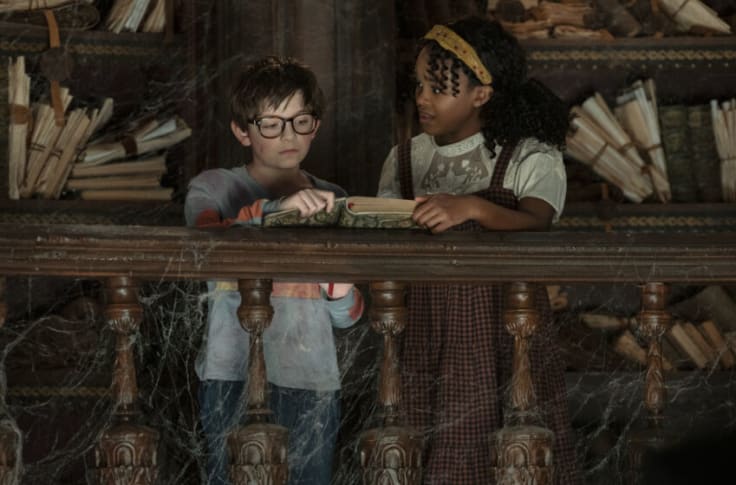
At least, Natacha’s magical place has a huge library packed with many books of horror stories to the top. While there is nothing new for Natacha because she knows the content of every book in the library, these numerous books in the library may give some inspiration to Alex, so he looks for anything to help him before he eventually runs out of those scary stories written in his private book.

In the meantime, he meets two other figures residing in Natacha’s place. One is a grumpy cat which has a magical ability to become invisible, and the other one is an older girl named Yazmin (Lidya Jewett), who was taken to Natasha’s place some years ago and tells Alex more about Natacha’s unspeakable evil. Before Alex, there were many other children kidnapped by Natacha, and, though she is now a housemaid constantly harassed by Natacha, Yazmin is the more fortunate one compared to what happened to other kidnapped children when they were deemed useless by Natasha.

Because he is still not inspired enough to write a new scary story, Alex has no choice but to depend on his private book for next several days, though Natacha turns out to be a pretty tougher audience than expected. While she lets him survive one day after another, she often interrupts his storytelling just because of small and big details she does not like, and that surely puts Alex as well as Yazmin on the edge whenever he attempts to please Natacha with his story.

During Alex’s storytelling scenes, the movie provides to us the simple but striking visual presentations of his scary stories, and that adds some extra spookiness to the ominous mood of the mood. My personal favorite is the one involved with a sorcerer and the mouth of some big and hideous monster, and I especially like how this gruesome tale resonates with what is revealed later in the story.

Besides Alex’s disturbing tales to please his captor, the movie, which is adapted from the book of the same name by J.A. White, gives several other dark moments which will surely entertain certain young audiences who will root for him a lot as discerning the common things between them and him. Constantly shrouded in menacing atmosphere, Natacha’s place has several nasty surprises to behold, and there is a pretty scary moment when Alex and Yazmin happen to have a very serious problem in Natacha’s precious magic garden full of dangerous creatures which must be handled with uttermost care and caution.

The screenplay by Mikki Daughtry and Tobias Iaconis becomes a bit repetitive during the middle act, but then it becomes more engaging as Alex and Yazmin band together for their possible escape from Natacha’s place. I will not dare to tell any spoiler to you, but I can tell you instead that the climactic part of the story works because of not only a fair share of surprise for us but also considerable dramatic impact in terms of plot and characters, and director David Yarovesky did a competent job of delivering a satisfying conclusion coupled with a little naughty wink to us at the end of the story.

The movie depends a lot on its three main performers, and their good performances dutifully fill their archetype roles. While Krysten Ritter certainly has the most fun as expected from her deliciously diabolical character, young performers Winslow Fegley and Lidya Jewett are likable in their respective roles, and Fegley, who was unflappably funny in “Timmy Failure: Mistakes Were Made” (2020), confirms again that he is another young talent to watch.

On the whole, “Nightbooks” does not bring anything particularly new to its genre territory, but the overall result is solid enough thanks to its good direction, atmosphere, and performance at least, and I think you should check it out someday if you enjoyed “Goosebumps” (2015) or “Scary Tales to Tell in the Dark” (2019). It did not exceed my expectation, but it did its job fairly well, and that is enough for me for now.

Posted in Movies | Tagged , , , | Leave a comment