Flee (2021) ☆☆☆1/2(3.5/4): A simple but extraordinary animated documentary film

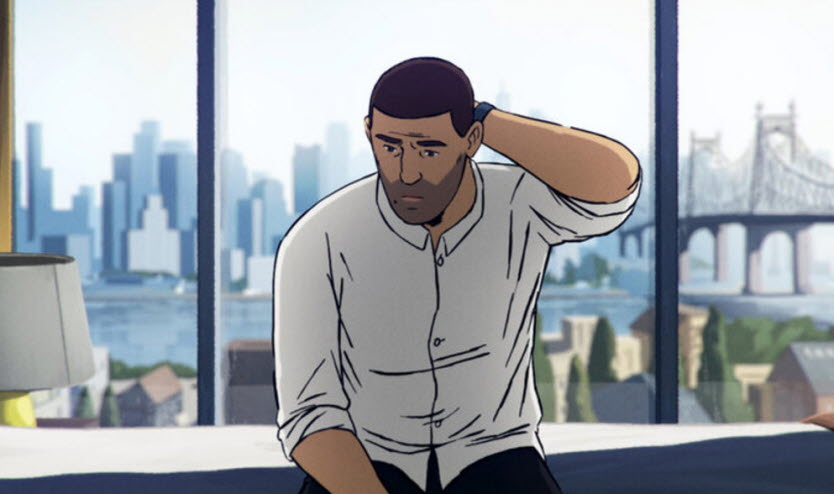
“Flee”, which was recently selected as the Danish entry to Best International Film Oscar, is a simple but extraordinary animated documentary film. As sensitively and thoughtfully examining one real-life Afghan immigrant’s past which has been suppressed at the corner of his traumatized mind for many years, the film gives us a number of haunting moments to remember, and its harrowing human tale sadly resonates with how the history tragically repeats itself in Afghanistan at present.

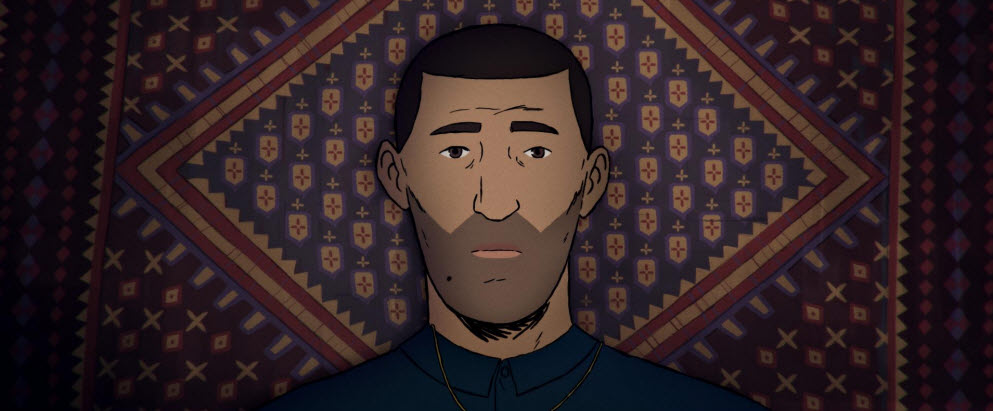
The main narrative frame of the documentary is a series of private interview sessions between director Jonas Poher Rasmussen and an Afghan immigrant called Amin, who was incidentally Rasmussen’s old high school friend. As Amin is rather awkwardly lying down on a carpet, Rasmussen asks a number of questions about Amin’s past, and, despite some understandable reluctance at first, Amin slowly comes to reveal what he has never told anyone around him for years since he came to live in Denmark.

As Amin reminisces about his suppressed past, the documentary takes us to Kabul, Afghanistan during the late 1980s via the mix between archival footage and animation. Although things had not been exactly good in the city due to the Soviet–Afghan War, young Amin and his family lived fairly well in their house, and young Amin remembers how he used to be rather flamboyant during that period – and how he also started to be aware of his homosexuality. At one point, he confides to Rasmussen that he was quite infatuated with a certain popular action movie star, and I could not help but amused a bit as remembering how I often strongly responded to those bodybuilder photographs even when I was very young.

As he grew up, young Amin became more sensitive to his surrounding environment, and we get to know a bit about how his father, who was a military officer, was taken away and never returned some years ago. When the eventual end of the Soviet-Afghan War was followed by the Afghan Civil War, Kabul became a lot more unstable than before, and young Amin and his family had no choice but to leave their country as soon as possible.

What follows next is a series of sad and heartbreaking moments not so different from whatever those numerous refugees around the world are suffering and enduring even at this point. Although they all luckily left Kabul at the very last minute, young Amin and his family soon had to deal with the harsh conditions of living in Moscow, and they were frequently threatened by those greedy local police officers expecting some bride from them.

At least, the family was helped a bit by Amin’s older brother who already fled to Sweden, but the circumstance remained pretty daunting to say the least. They certainly had to leave Moscow as soon as possible, but those human traffickers were the only option for them, and Amin certainly does not have any nice word about human traffickers, who surely represent one of the worst sides of the humanity in my humble opinion.

It is not much of a spoiler to tell you that young Amin finally managed to leave Moscow, but what he went through during that time was pretty traumatic to say the least. Besides being separated from his dear family members, he was virtually forced to put away his whole past behind his back, and he could not tell anyone around him about who he really was, even after eventually coming to live in Denmark.
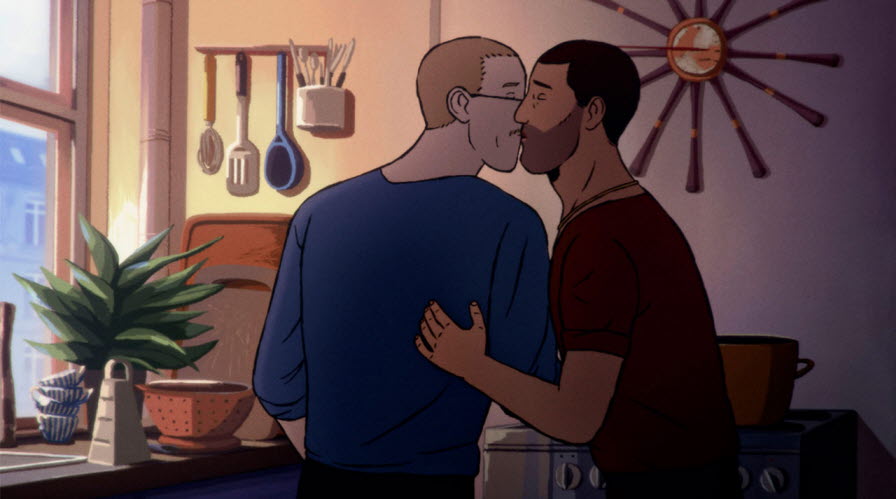
And how Amin has distanced himself from his past has affected his personal life a lot. Although he is a fairly successful researcher with a PhD degree and has a good boyfriend who cares about him a lot, he has been not particularly willing to have a more stable life, and that accordingly generates considerable strain between him and his boyfriend.

The documentary is basically a long and difficult therapy which feels quite vivid and striking via animation, and that reminds me a lot of Israeli Oscar-nominated animated film “Waltz with Bashir” (2008), which revolves around the suppressed traumatic personal memories of the Lebanese Civil War. Like “Waltz with Bashir”, the documentary often hits us hard with a number of simple but powerful animation scenes, and that makes us have more empathy and understanding on Amin’s old but painful traumas – and how much he has been quietly struggling with them behind his back.

Nevertheless, the documentary also shows some hope and optimism around the end of Amin’s difficult emotional journey. There is a poignant scene which shows when he became much more comfortable about his homosexuality than before, and there is also a brief but undeniably touching moment showing how he comes closer to his boyfriend after coming to learn more about himself through his interview sessions with Rasmussen.

Overall, “Flee”, which won the Grand Jury Prize in the World Cinema Documentary section when it was shown at the Sundance Film Festival early in this year, is another memorable documentary film of this year, and I come to admire its empathically humanistic approach as reflecting more on those many unforgettable moments in the documentary. In short, this is another indelible case of documentary and animation, and I sincerely urge you to check it out as soon as possible.
Posted in Movies | Tagged , , , , | 3 Comments

The Novice (2021) ☆☆☆1/2(3.5/4): Driven to compete all the way

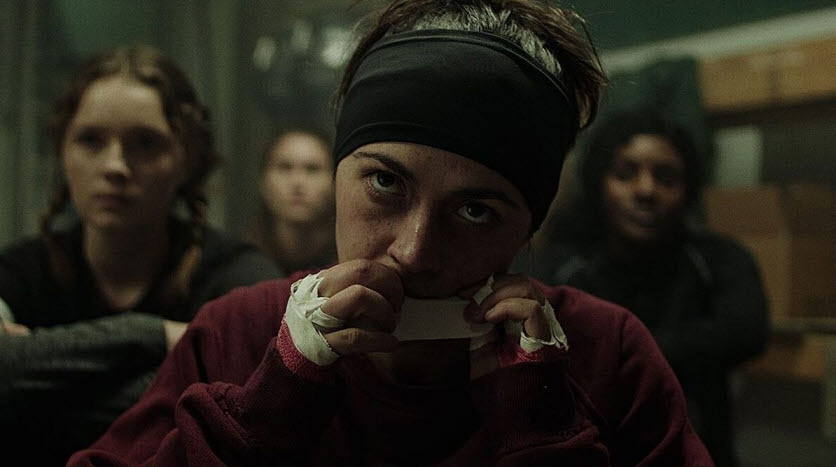
“The Novice” is a little but undeniably intense character drama which will make you wince more than once for good reasons. As palpably and disturbingly conveying to us its very competitive heroine’s physical and psychological journey, the movie makes us more interested in what really makes her ticks, and we come to brace ourselves more as observing more of how obsessively and relentlessly she keeps pushing herself all the way.

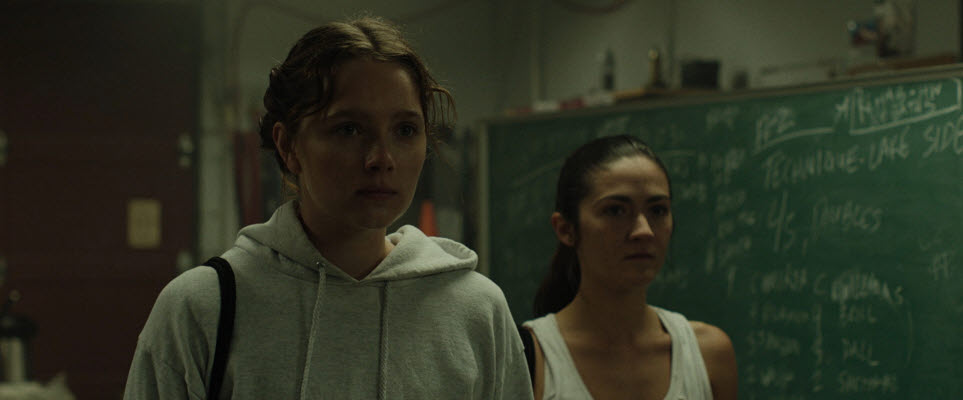
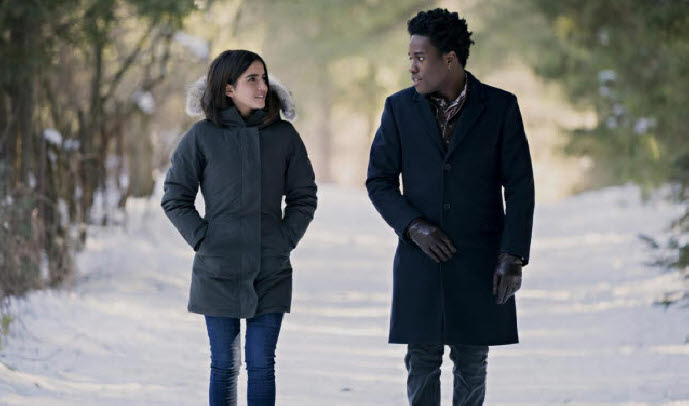
When we meet Alex Dall (Isabelle Fuhrman) at the beginning of the film, she is going through her first days in the campus of some university, and the movie focuses on how much she tries to excel herself everyday. Although she is not particularly good at physics, she chose it as her major nonetheless just because it looks challenging to her, and she is quite determined to study and prepare as much as she can for getting good grades. When we see her taking a class examination, she seems as if her whole life depended on her examination score, and, not so surprisingly, she is the last one to leave around the end of the examination time.

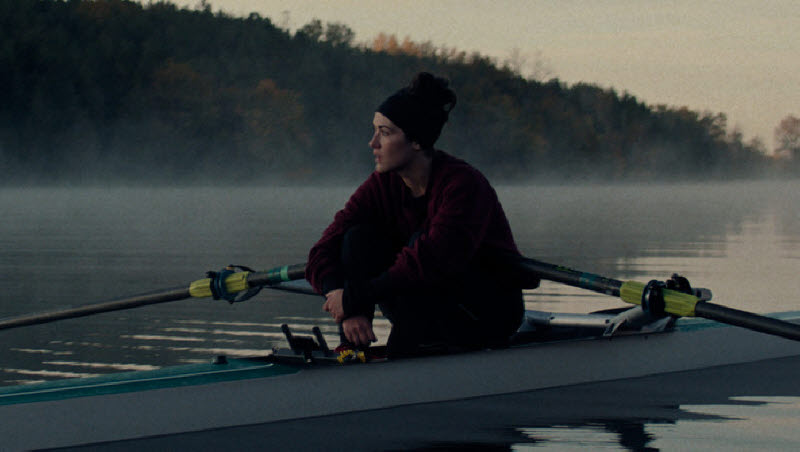
In addition, Alex also joins the rowing team of the university, and, again, she becomes quite competitive during the following test and training sessions. Although she is just one of novice team members for now, she wants to be the No.1 in the group for joining the varsity group later, and that aim becomes the main focus for her besides doing fairly well in her physics department classes.

It seems that she should probably have chosen other sports instead of rowing, but Alex does not want to give up at all even after her embarrassing moment which occurs during one minor competition, and the mood becomes more tense and disturbing as she continues to push herself as usual. While she keeps focusing more and more on training harder, her mind often becomes hazy and then goes into a sort of trance mode, and she seems to be a bit more relaxed during that rather troubling state of hers, but she is soon back in her usual pressured status.

At least, there are several people who care about her to each own degree. The two team coaches are always ready to give her some more help and advice, and one of them actually allows Alex to do an early morning training alone by herself. Although many of the team members are not particularly cordial to Alex, one of them comes to give her some support as a fellow novice member because she has been also considerably pressured as her college scholarship depends a lot on her athletic result in the team.

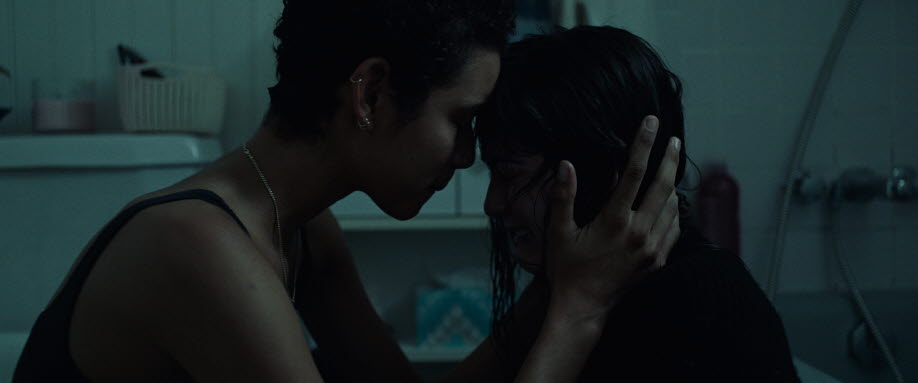
And there is also Dani (Dilone), who was actually the teaching assistant of one of the classes attended by Alex. Although Alex has frequently annoyed Dani due to her sheer competitiveness, they find themselves attracted to each other when they later meet again at an evening meeting, and Alex subsequently finds herself living in Dani’s residence. Dani is soon going to leave for studying in some other university, but Alex gets some comfort from her at least for now, and Dani is willing to understand and tolerate how Alex is constantly driven to prove herself by any means necessary.

However, Alex still cannot possibly stop herself from being driven by her growing competitiveness, and director/writer/co-editor Lauren Hadaway, who made her feature film debut here, and her crew members including cinematographer Tood Martin frequently did a commendable job of depicting Alex’s increasingly unstable state of mind with considerable verisimilitude and dramatic impact. While Martin’s camera effectively establishes constant cold and grey atmosphere on the screen, Hadaway and her co-editor Nathan Nugent vividly present Alex’s confusion and obsession via deliberately choppy editing, and the result is further accentuated by occasional sound distortion effects on the soundtrack.

Some of you may be frustrated as the movie never lets you have the full understanding of its heroine’s pathological obsession, but this rather frustrating enigma is accompanied with vivid third-dimensional human details thanks to the strong performance from Isabelle Fuhrman, who deservedly received the Best Actress Award when the movie was shown at the Tribeca Film Festival several months ago (It also won the Best Cinematography Award for US Narrative and the Founders Award for the Best U.S. Narrative Feature Film, by the way). While never making any excuse on her character’s edgy aspects, Fuhrman ably conveys to us her character’s mental and physical deterioration along the story, and we come to care more about whether her character will eventually reach to the breaking point.

Around Fuhrman, several other main cast members hold each own place fairly well. While Jonathan Cherry and Kate Drummond are solid as two very different coaches in the story, Amy Forsyth and Dilone are also effective in their respective supporting roles, and Dilone is particularly good when her character tries to be more patient and understanding during one certain key scene between her and Fuhrman later in the story.

In conclusion, “The Novice” is surely a tough stuff to watch, but it is still quite worthwhile to watch for Hadaway’s skillful direction and Fuhrman’s darkly intense performance, which is incidentally her best work since her chilling breakthrough turn in “The Orphan” (2009). You may not like her character that much even at the end of the story, but Fuhrman’s uncompromising acting will captivate you from the beginning to the end, and you will probably be relieved to see her character finally getting a bit of peace of mind at least.

Posted in Movies | Tagged , , , | 2 Comments

Mixtape (2021) ☆☆☆(3/4): A predictable but enjoyable mix

Netflix film “Mixtape”, which was released early in this month, is a predictable but enjoyable coming-of-age drama accompanied with a number of fairly good songs to listen. Right from the beginning, you will know what you will get, but the movie mostly works thanks to its lightweight spirit as well as the solid efforts from its main cast members, and you will probably go along with that without much complaint.

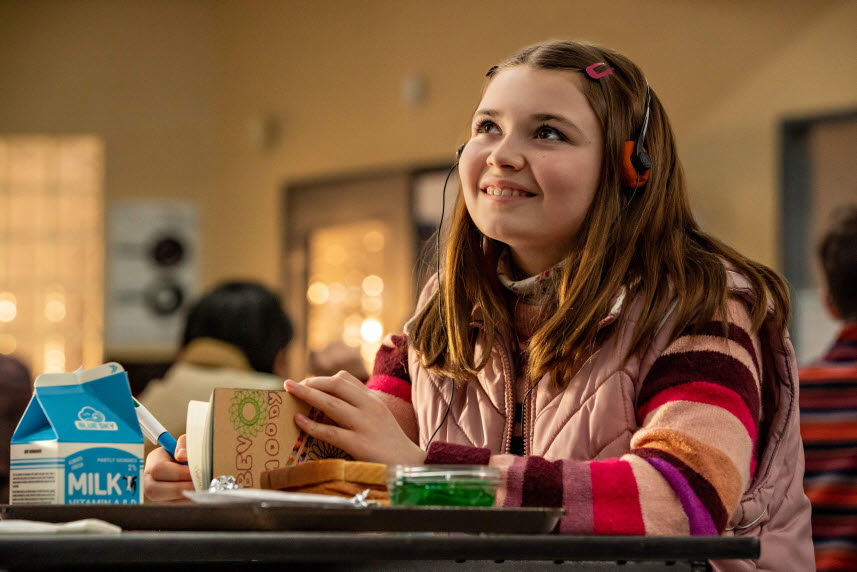
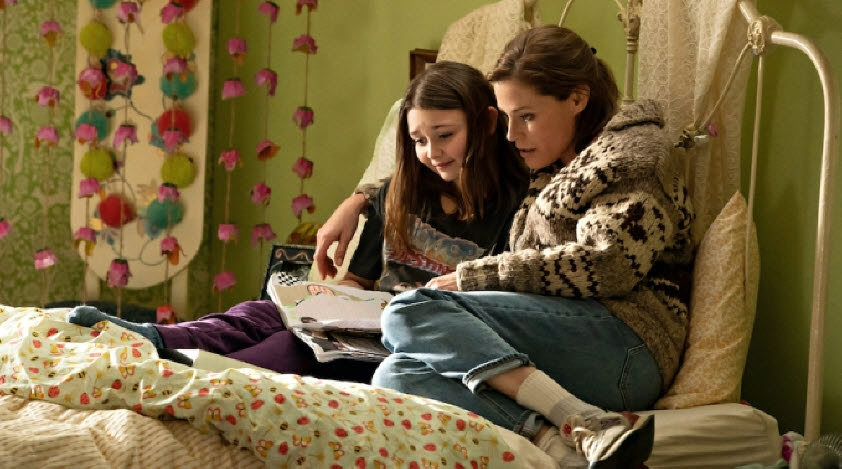
Set in Spokane, Washington during the last months of 1999, the movie mainly revolves around Beverly Moody (Gemma Brooke Allen), a 12-year-old girl who has lived with her grandmother Gail (Julie Bowen) since her parents’ death. Just like Gail, Beverly’s mother happened to give birth to her daughter even before she became 17, but she and her young husband died due to an unfortunate car accident when Beverly was only 2 years old, and Gail has tried her best in raising her granddaughter alone during next 10 years.

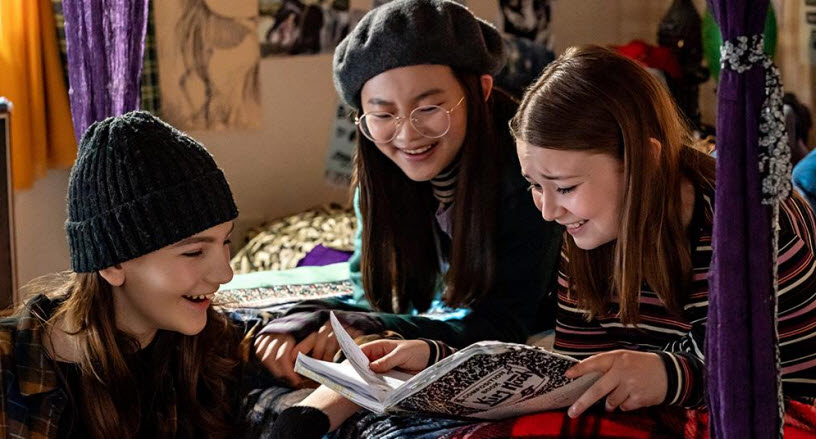
As Gail is usually occupied with making ends meet and is often not so willing to talk about her deceased daughter, Beverly has naturally been curious about who her mother was, and then she happens to discover something while rummaging those old stuffs belonging to her mother. It is a cassette tape which contains a number of different songs, and Beverly is certainly curious about the contents of this ‘mixtape’, but, alas, it is subsequently damaged when she tries to play it with her Walkman (If you do not know what the hell this is, please try Google for getting some information about it).

At least, the case of the mixtape also has the list of the songs in the mixtape. Beverly is determined to find and the listen to these songs, but she has never heard of any of them, so she goes to an old record/CD shop run by a dude who simply calls himself “Anti” (Nick Thune). Although he is initially not so willing to help Beverly as your average jaded dude, Anti eventually agrees to help her a bit, and Beverly is certainly excited to experience some small parts of her mother’s life via several first songs in the list.

In addition, her quest for finding the rest of the songs in the mixtape also leads her to befriending two different schoolmates who instantly become her best friends. Although she cannot translate the Japanese lyrics of a certain song by the Blue Hearts for an understandable reason, Ellen (Audrey Hsieh) gladly provides some extra help to Beverly via her online search, and some of you may become a little nostalgic when Ellen does a bit of web browsing at one point (Have you ever heard of Napster, by the way?). In case of Nicky (Olga Pesta), this sullen feisty girl instantly recognizes the lyrics of a song of the Kinks when Beverly quotes it in their class, and she is surely glad to join Beverly’s quest as an aficionado of rock music.

As moving from one predictable narrative point to another as expected, Stacey Menear’s screenplay diligently develops its story and characters with enough spirit and personality. While our three girls are distinctively colorful in each own way, the movie also pays some attention to several other characters around them, and there is a little poignant scene where Gail comes to have more understanding on how much her granddaughter hopes to get to know about her lost daughter, whom she misses everyday more than she admits on the surface.

During the last act, the mood becomes a little more serious and melodramatic when Beverly gets her heart broken by a rather callous comment from one rock musician who once worked with her mother, but the movie does not lose any of its positive spirit at all, and that is the main reason why the finale is heartwarming even though we already saw it coming. In addition, the movie provides some extra humor from how many people were afraid of the possible Y2K crisis at that time (Again, please try Google for learning more about it), and that also surely brought me some little laughs to say the least.

Director Valerie Weiss draws the likeable performances from her main cast members, who are all funny and engaging in their respective parts. As the center of the film, young actor Gemma Brooke Allen effortlessly slides along her character’s dramatic arc in the story, and we are accordingly amused and touched by how much her character is matured around the end of the story. As Beverly’s two very different friends, Olga Pesta and Audrey Hsieh play their characters well with considerable life and personality, and Julie Bowen and Nick Thune also have each own moment to shine as two substantial adult supporting characters in the story.

On the whole, “Mixtape” did not surprise me much, but it engaged me enough during viewing, and I came to reminisce a bit about when I attempted to make my own mixtapes during my adolescent period in the late 1990s. I was actually more interested in many film composers such as John Williams or Jerry Goldsmith instead of those rock musicians mentioned in the film (I am still a fan of many film composers who has hundreds of movie score album CDs, by the way), but I used some of their works to express myself to some of my schoolmates, though that was not that successful as far as I can remember. To be frank with you, now I wish I had kept those mixtapes of mine, which would surely tell me as well as others much about who I was during that time when I was young and wild.

Posted in Movies | Tagged , , , | Leave a comment

Swan Song (2021) ☆☆☆(3/4): A somber SF chamber drama about life and death

“Swan Song”, which was released on Apple+ two days ago, is a somber SF chamber drama revolving around one complex human matter of life and death. As calmly and earnestly following its ordinary hero’s emotional struggle involved with making an exceptional but difficult choice, the movie lets us muse more on life and humanity, and then it eventually arrives at the thoughtful and poignant conclusion which will linger on your mind for a while.

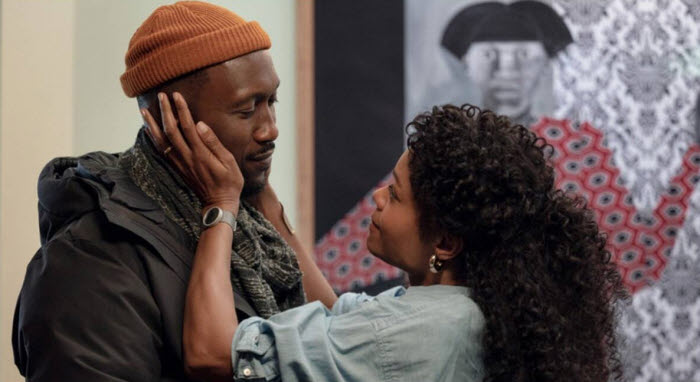
At the beginning, the movie, which is set in the near-future world, gradually establishes its hero’s desperate circumstance. Cameron Turner (Mahershala Ali) is a successful designer who has lived a fairly good life with his wife Poppy (Naomie Harris) and their little son, but there is something important he has not revealed to them for a while. He has actually been terminally ill, and he cannot possibly confide this to his wife because, due to one hurtful past experience, he knows too well how much she can be devastated by personal loss. Besides, she has already been pregnant for several months, and that makes Cameron more conflicted about hiding the fact from her.

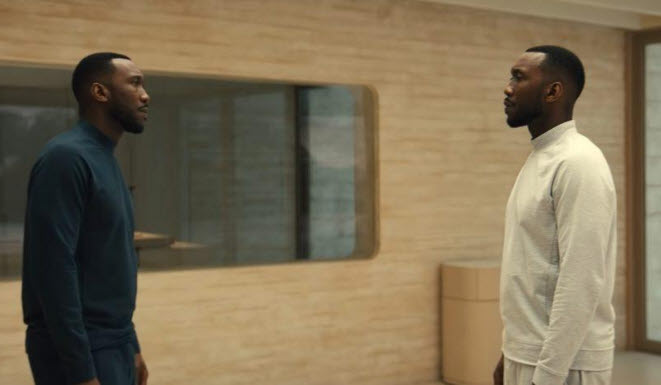
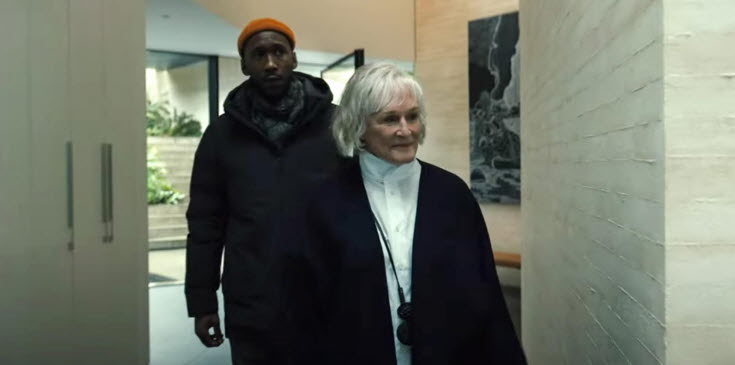
However, he also has an option which will not have his wife and son suffer from his impending death. Under the cool supervision of Dr. Scott (Glenn Close), Cameron has already participated in her clandestine science project, and we get to know about what Dr. Scott and her few staff members are going to do at their state-of-the-art facility located in some remote spot. Using Cameron’s DNA, they already made a clone which not only looks exactly like him but also will have all the memories belonging to his mind, and all Cameron will have to do at present is agreeing to do a 7-day preparation period along with his clone, who is temporarily called Jack for convenience.

As watching his clone in dormant state, Cameron is naturally unnerved, but then he is reminded again of his grim reality, and the movie patiently depicts how Dr. Scott and her assistants handle the first step of the preparation process between Cameron and Jack. Thanks to their special equipment, everything in Cameron’s mind is swiftly transferred to Jack’s head (Please don’t ask me about how that is actually possible), and Jack soon wakes up for the first time with some understandable bafflement.

Cameron’s following formal encounter with Jack is quite awkward to say the least, but Cameron soon gets a bit more accustomed to his doppelgänger, and, as interacting with Jack and Dr. Scott, he often finds himself reflecting more on all those memories of his wife and son. As reminded again of how much he cares about them, he cannot help but feel more uncomfortable about how he is soon going to be replaced by Jack, and that leads to more tension between him and Jack, who also cares a lot about Cameron’s wife and kid because, well, he has the exact same feelings and thoughts based on Cameron’s memories.

Instead of overplaying the conflict between Cameron and Jack, the screenplay by director/writer Benjamin Cleary steadily maintains its calm and meditative attitude as before, and it also shows some humor mainly via Cameron’s friendship with a woman who has already been replaced by her clone. Just like Cameron, she will die sooner or later due to some terminal illness, and she has no bad feeling about how her clone has been doing and living pretty well outside, but she also cannot help but feel a bit bitter about how she has been living her remaining days inside the facility as waiting for her eventual death.

The mood becomes a bit more tense later as Cameron becomes more desperate with his increasingly unstable medical condition, but Cleary tactfully handles his story and characters with some unexpected moments of empathy and understanding. I will not go into details, but I can tell you at least that Jack comes to function as an active figure of the story just like his counterpart, and I was particularly touched by his simple act of decency around the end of the story.

Everything in the film depends a lot on the dual performance by Mahershala Ali, a charismatic actor who has advanced a lot during last several years as giving us several stellar performances including that unforgettable Oscar-winning supporting turn in “Moonlight” (2016). As he deftly handles his two roles during several key scenes in the film via subtle touches and nuances, we become more emotionally engaged in his two characters’ overlapped emotional journey, and we accordingly come to care more about its eventual outcome.

Around Ali, several other notable cast members in the film dutifully fill their respective parts as required. While Glenn Close imbues her rather thankless character with detached but gentle authority, Naomie Harris, who incidentally appeared along with Ali in “Moonlight”, clicks well with Ali during several warm and intimate scenes between them, and Awkwafina, who can be both funny and touching as shown from “The Farewell” (2019), is also solid as another crucial supporting character in the story.

In conclusion, “Swan Song” is a small but interesting film which explores its science fiction ideas as much as intended, and Cleary and his crew members including cinematographer Masanobu Takayanagi did a competent job of filling the screen with enough mood and details to hold our attention. Although it requires some patience from you due to its rather slow narrative pacing, the movie is still worthwhile to watch thanks to its several strong points including Ali’s commendable performance, and you may find yourself reflect a bit on your life and existence after watching it.

Posted in Movies | Tagged , , , | Leave a comment

Let It Snow (2019) ☆☆1/2(2.5/4): A passable winter holiday flick

Netflix film “Let It Snow” is a passable winter holiday flick you can watch just for killing your time at cold winter night. Although it is thoroughly trite and predictable in terms of story and characters, the movie is equipped with some holiday cheer and lots of snowy shots at least, and its short running time (94 minutes) will quickly pass by even though it does not leave much impression on you in the end.

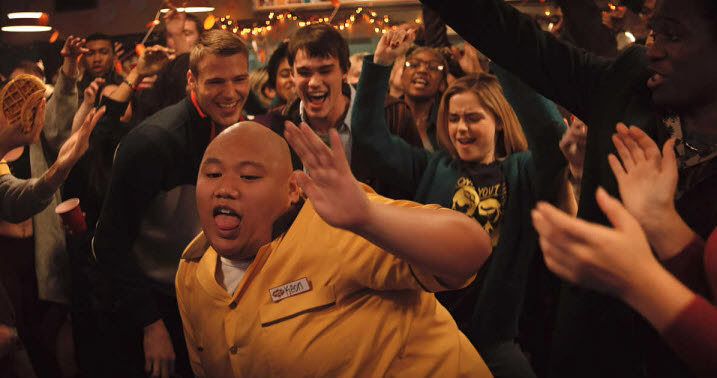
The story, which is based on “Let It Snow: Three Holiday Romances” by John Green, Lauren Myracle, and Maureen Johnson, is mainly set in some small snowy town on Christmas Eve, and the opening part of the film busily hops around a bunch of different young people in the story. Many of them are looking forward to having some fun and excitement in the upcoming evening, and Keon (Jacob Batalon) is particularly eager to throw a party for his friends and others mainly because it may help his future DJ career (He already has a rather unimpressive stage name for that, by the way).

When his plan to hold the part at his home is unexpectedly dashed, Keon is naturally disappointed, but then he gets an opportunity to hold the party at some other place instead. Although that place is actually a local diner where he works, he soon eagerly embarks on preparing for the party, and his close friend Tobin (Mitchell Hope) is supposed to bring some beer before the party begins in the evening.

However, Tobin somehow becomes late to Keon’s annoyance, and we already know the reason for that. Before going to the diner, Tobin and his best female friend Angie (Kiernan Shipka), who is often called Duke, hang around a bit with Angie’s college student friend JP Lapierre (Matthew Noszka), and, as watching how Angie is close to JP, Tobin cannot help but feel jealous due to having a crush on her for a long time. When they later commit a little act of stealing along with JP, they have some fun from that, but, not so surprisingly, the situation becomes a bit complicated because of an unexpected trouble. As they and JP are stuck together for a while, Tobin becomes more conscious of whatever is exchanged between Duke and JP, and that consequently causes a very awkward moment between Duke and Tobin at one point later in the story.

In the meantime, the movie also observes the development of an accidental relationship between Julie (Isabela Merced) and Stuart (Shameik Moore). They happen to encounter each other on a train going to the town which is incidentally her hometown, and Julie is not particularly impressed by Stuart being a well-known pop singer, but she allows him to accompany her when she decides to get off the train when it happens to stop right before arriving at the nearby station. As they talk more with each other, they find themselves attracted more to each other, but, as shown from her first scene in the film, Julie has a big personal matter to deal with, and she feels all the more conflicted when she later goes to her family house along with Stuart.

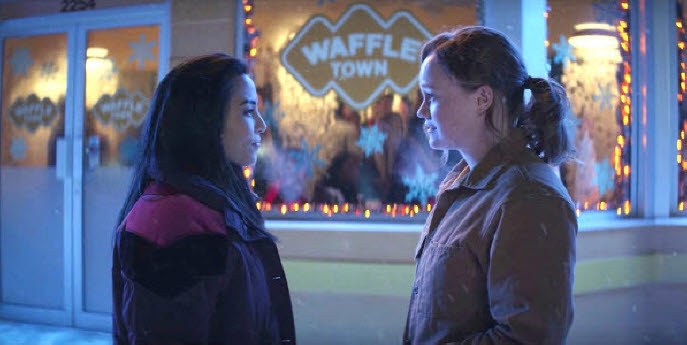
At the diner, Dorrie (Liv Hewson), who works there as an waitress, is also conflicted a lot over her own personal matter. When a bunch of cheerleaders happen to stay in the diner for a while as it gets colder outside, Dorrie recognizes one of them because she and that cheerleader girl have been in a romantic relationship behind their back. She tries to present herself well in front of the cheerleaders, but she only comes to embarrass herself instead, and she becomes more unsure about whether she can possibly go on with that cheerleader girl.

In case of Dorrie’s best friend Addie (Odeya Rush), she has been in a serious emotional turmoil as quite concerned about the possibility of her boyfriend cheating on her behind his back. She tries to contact with him as much as she can, but it really looks like he is going to dump her for some other girl, so she subsequently tries to go to the diner where he will probably be along with that girl and some others.

Alas, as the weather is getting colder and snowier, Addie only finds herself stranded on a road, and that is how she comes to meet an eccentric lady who willingly gives her a ride to the diner. Although Joan Cusack is surely a good comic actress, her several dialogue scenes with Odeya Rush are actually the least funny part of the film, and it is rather depressing to see these two performers trying and then failing to overcome their bland and lackluster lines.

Even if you can overlook this glaringly flawed part, the adapted screenplay by Laura Solon, Victoria Strouse, and Kay Cannon still feels deficient due to thin and mediocre characterization. Although the movie generates some sense of fun when the party is finally started at the diner (Is this a spoiler?), we only come to observe this from the distance without much care or attention because many of its main characters are too flat to engage us from the beginning, and that flawed aspect is not even compensated much by the fairly good efforts from the main cast members of the film.

On the whole, “Let It Snow”, which is the first feature film of director Luke Snellin, is not very bad or boring, but its story and characters are not engaging enough for me, and I am now reminded of how enjoyable “Love Actually” (2003) really is as a winter holiday season film. That movie is surely quite sappy and sentimental at times, but it has much more wit and personality in comparison, and maybe I should revisit it just for cheering me up a bit more.

Posted in Movies | Tagged , , , , | Leave a comment

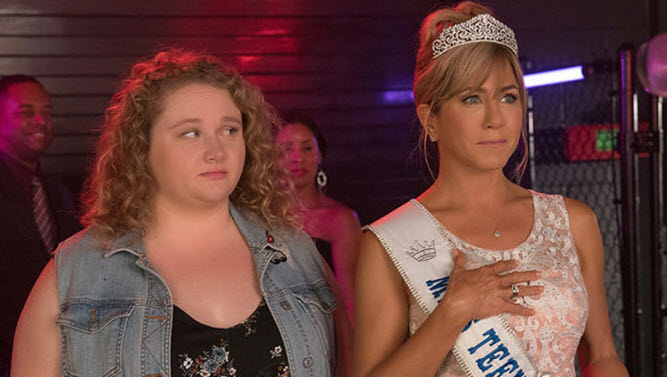
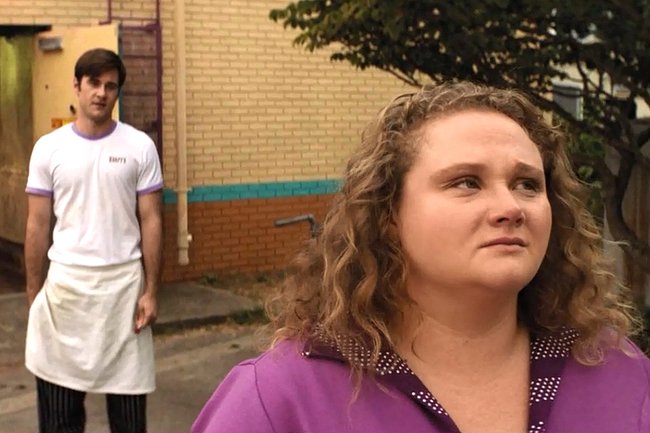
Dumplin’ (2018) ☆☆☆(3/4): This Is Her

Netflix movie “Dumplin’” is your average feel-good comedy drama flick which actually handles its genre clichés and conventions better than you may think. Sure, this is another familiar story of an adolescent heroine going all the way for more self-esteem and confidence, but the movie has plenty of wit, spirit, and heart at least, and you will gladly root for not only its young heroine but also several other characters around her.

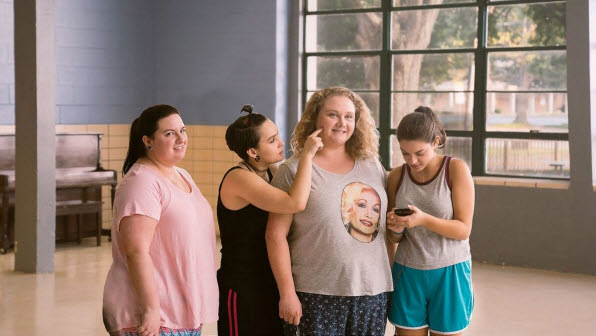
At the beginning, Willowdean “Dumplin’” Dickson (Danielle Macdonald) tells us about how she grew up under the loving care of her dear aunt instead of her mother during her childhood years in a small city of Texas. Because her mother was frequently busy with those local beauty pageants as a famous former beauty queen, her aunt was usually the one to spend time with her, and she gladly shared her considerable enthusiasm toward those Dolly Parton songs with her young niece, who also soon became a big Dolly Parton fan just like her aunt.

However, Willowdean’s aunt passed away several months ago, and Willowdean cannot help but sense more of her aunt’s absence from time to time, but, at least, she gets some consolation from her best friend Ellen “Elle” Dryver (Odeya Rush), who has always been close to her mainly thanks to both of them being passionate Dolly Parton fans. In case of Willowdean’s mother, well, it seems that, besides her real job for supporting herself and her daughter, all she cares about is how to present herself well for her occasional guest appearances at a number of beauty pageants in Texas, and she is also always busy whenever she is about to supervise the annual beauty pageant in the city.

When she is later rummaging up all those old stuffs left by her aunt, Willowdean happens to discover something quite unexpected. It is an old application form for the local beauty pageant in the city, and that belonged to none other than her aunt. After learning that her aunt actually aspired to participate in that beauty pageant but then sadly gave up, Willowdean becomes quite determined about doing what her aunt could not do at that time, and Ellen is certainly willing to accompany Willowdean for support besides also submitting her application form just like her best friend.

Of course, things do not go that well from the beginning because Willowdean does not think much beyond submitting her application form to the pageant committee, which is incidentally led by her mother. Although quite caught off guard by her daughter’s unexpected action, Willowdean’s mother eventually allows Willowdean to join a number of other girls who are already quite prepared to compete with each other, and, as a fairly chubby girl who is understandably not so confident about herself, Willowdean soon finds herself being at a loss about what to do next.

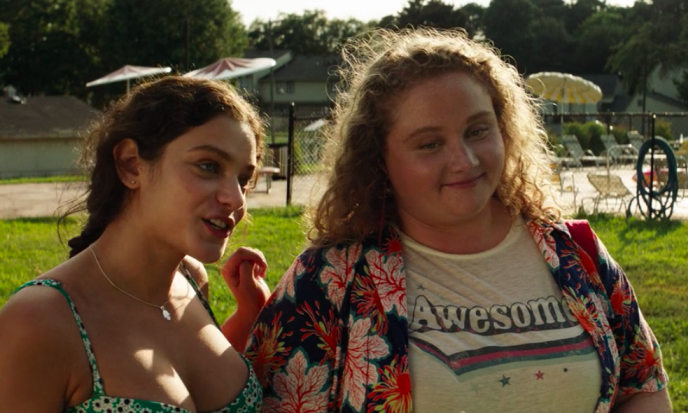
Fortunately, besides Ellen, Willowdean comes to have two other girls willing to help her. While Millie Mitchellchuck (Maddie Baillio), a chubbier schoolmate of hers who has been ridiculed more than Willowdean at their school, is quite eager to try her best regardless of her, uh, relative physical disadvantage, Hannah Perez (Bex Taylor-Klaus), who is a glum but feisty girl passionate about women’s rights, is more interested in fighting against what the beauty pageant mainly represents, but both of them gladly provide some cheer and support to Willowdean, and they later have a pretty fun time together at a certain favorite place of her aunt, which I will let you see for yourself.

Meanwhile, Willowdean also finds herself becoming a bit estranged from Ellen due to their different viewpoints on the beauty pageant, but the screenplay by writer/co-producer Kristin Hahn, which is based on the novel of the same name by Julie Murphy, wisely avoids overplaying their accidental conflict. Ellen and other beauty pageant participants are depicted with some care and understanding, and our heroine comes to discern a bit of how important this seemingly superficial event really is to those pretty girls – and her mother, who turns out to be more serious and caring than she seems on the surface.

As earnestly rolling its story and characters toward the big finale, the movie diligently builds up its emotional momentum, and we come to care more about how the story will end, even though we already have a pretty good idea on that. I do not dare to spoil any of your entertainment, but I can say at least that I enjoyed how the movie smoothly glides from one expected moment to another with some small surprises for us.

Above all, the movie is anchored well by the strong lead performance from Danielle Macdonald, who has been more notable thanks to her acclaimed performance in “Patti Cake$” (2017). Besides balancing her character well between achingly low self-esteem and undeniably irrepressible spirit, Macdonald is believable in her character’s gradual growth along the story, and she is also supported well by Odeya Rush, Maddie Baillio, and Bex Taylor-Klaus, who bring each own personality to the story as Willowdean’s three different friends. While Luke Benward is likable as a lad who seems to be interested in getting closer to Willowdean, Harold Perrineau often steals the show as a certain crucial character in the story, and Jennifer Aniston effortlessly goes back and forth between comedy and drama as Willowdean’s mother.

In conclusion, “Dumplin’” is a fairly enjoyable Netflix product thanks to the director Anne Fletcher’s competent direction as well as the commendable efforts from her cast members, and it is a little shame that it was quickly put aside when it was released on Netflix three years ago. I did not expect much when I checked it out in this afternoon, but I was touched and amused enough on the whole, and that is enough for recommendation.

Posted in Movies | Tagged , , , | Leave a comment

About Endlessness (2019) ☆☆☆(3/4): About Absurdness

Roy Andersson’s latest film “About Endlessness”, which won the Silver Lion award for Best Direction when it was shown at the 2019 Venice International Film Festival, is as dry, absurd, and melancholic as you can expect from his work. Again, we are served with a bundle of many different weird comic scenes held together via the amusingly drab overall tone hovering over the film, and you will probably come to enjoy them once you are willing to embrace that distinctive mood and style of the movie.

After the opening scene which is clearly a homage to Marc Chagall’s 1918 painting “Over the Town”, the movie shows a man climbing up a stair with lots of stuffs held by his arms, and then he talks directly to us. Looking quite miserable to say the least, this dude tells a bit about how miserable his life has been, and the camera simply regards him from its static position until he looks all the more pathetic at the end of his speech.

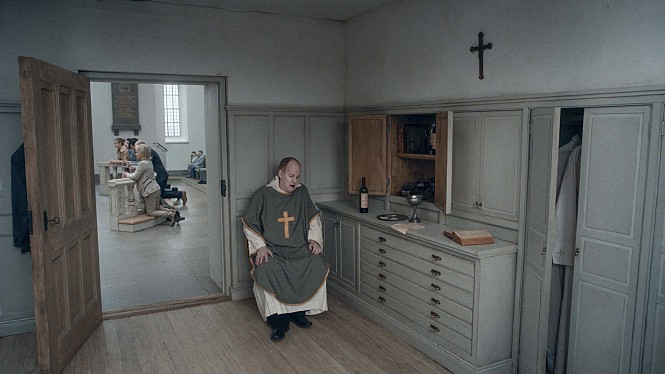
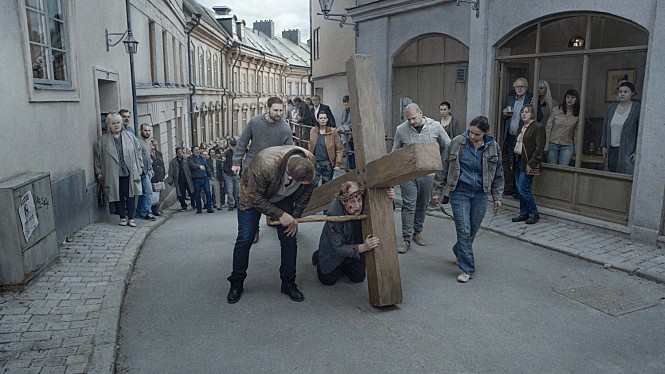
In case of a Catholic priest who is clearly depressed, the movie depicts his hopeless melancholy via several scenes. At first, he is struggling to carry a big cross while wearing a thorny crown just like a certain famous historical figure, and he is also frequently flagellated by some of people following after him. As watching this very absurd moment, I was instantly reminded of that hilarious moment of group self-flagellation in “Songs from the Second Floor” (2000), which is the first film of Andersson’s Living Trilogy. Even though I did not wholly understand what this scene means, it felt fairly funny to me, and I came to have more expectation on whatever I would get next during my viewing.

And the movie did not disappoint me with the priest’s next scene, which is unfolded between him and his doctor. The priest seeks for any help or advice from his doctor, but the doctor does not seem to be that interested in that while flatly interacting with the priest. During the subsequent scene, we see the priest trying to go through a religious ceremony, and the mood becomes a bit anxious as the camera statically observes his apparently problematic condition from the distance.

And the movie continues to look at other different people, who are all dealing with their rather dull and cheerless existence in the world which simply seems to be moving onto one day after another without much care or attention. In one certain brief scene, the camera simply looks at a female business executive wordlessly looking outside from her big office, and the narrator of the film phlegmatically tells us that she is “incapable of feeling shame.” Although she does not reveal much, we can clearly sense her barren state of mind when she looks back at us at the end of this scene.

While steadily maintaining the grey atmosphere surrounding its various figures, the movie shows some little warmth and tenderness at times. In the scene unfolded at a train station, we see a man gladly welcomed by his family members shortly after a train’s arrival, and then we see a woman getting off from the train and then being left alone for a while – until she is eventually greeted by someone who seems to be close to her.

My little favourite moment in the film is involved with three young women who happen to drop by a certain public place. As the music is played in the background, they begin to dance together while others are amused and entertained by that, and their plucky spirit is palpable to us although the movie deliberately places them on one side of the screen from the beginning.

I also like a couple of scenes involved with one troubled dentist with some personal issue. He tries to handle his latest patient on one winter day, but things do not go that well due to both of them, and he eventually walks out from the scene with his patient helplessly left with his assistant. We soon see him at a bar with several others while it is snowing outside, and he remains glum and sour, even when one stranger tries to communicate a bit with him.

During its second half, the movie becomes more melancholic than before. We get a short scene showing Hitler’s last day in his bunker, and the movie later shows a bunch of defeated Nazi German soldiers trudging to somewhere. Around the end of the film, we meet again that miserable guy who appears around the beginning of the movie, and he remains pathetic as before while complaining about his life again in front of the camera – with, to our little amusement, his wife in the background.

While observing how the movie eventually arrives at its very last scene which resonates a lot with its very title, I came to reflect more on how Andersson has been consistent in terms of form, style, and mood during last two decades. Like his Living trilogy, the movie firmly sticks to its dry and absurd sense of humor coupled with a considerable level of melancholy, and that is often accentuated by its muted color scheme as well as the pale façade of the human figures in the film.

Although I am not so sure about whether “About Endlessness” is as great as the Living Trilogy, and it sometimes feels like a mere footnote in comparison, but I enjoyed its offbeat humor and melancholic beauty at least. I did not laugh as much as I expected, but I still admire its artistic qualities nonetheless, and I think you should check it out if you admire the Living Trilogy as much as I do.

Posted in Movies | Tagged , | Leave a comment

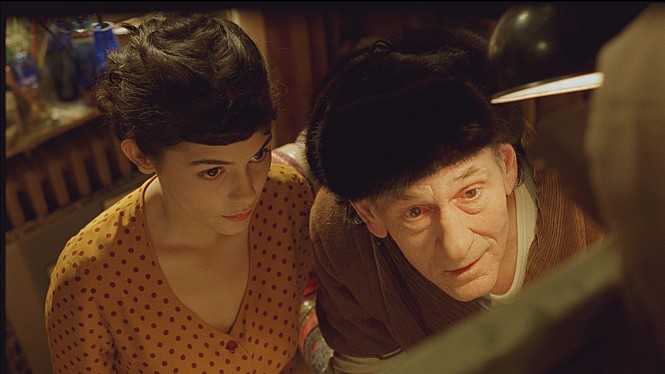
Amélie (2001) ☆☆☆1/2(3.5/4): This charming quirky girl

What a charming comedy film “Amélie” is. Constantly buoyed by its vibrant wit, style, and imagination, this quirky French crowd-pleaser, which is re-released in South Korean theaters in this week, is still lovable and admirable for its numerous funny offbeat moments to be savored more than once, and it is always entertaining to watch how it cheerfully and mischievously bounces from one narrative point to another along with its undeniably fetching heroine.

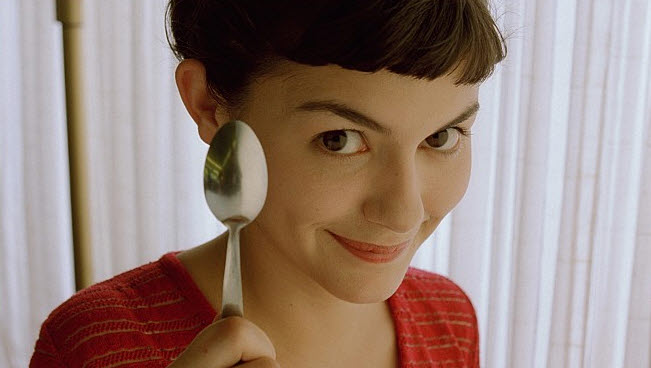
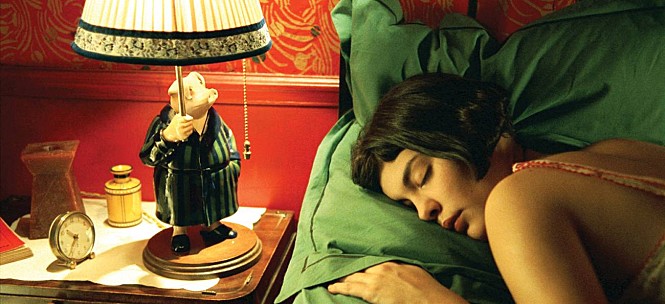
Audrey Tautou, who had a major career breakthrough thanks to the considerable critical and commercial success of the film inside and outside France, plays Amélie Poulain, a likable young woman who has somehow maintained her plucky spirit well despite her rather unhappy childhood period. As shown from the opening part of the movie, she grew up under the parents who were not very sunny or cheerful to say the least, but she was daunted by that at all, and the omnipresent narrator of the film phlegmatically describes a number of variously amusing incidents around her – including her frigid mother’s hilariously morbid death.

Anyway, Amélie eventually leaves her hometown several years later, and then she comes to settle in a neighborhood of Montmartre, Paris while working as a waitress in a small local cafe, which is frequently filled with a number of different eccentric people. For example, there is a rather creepy guy who is still obsessed with his ex-girlfriend who is incidentally another waitress in the cafe, and the growing tension between him and his ex-girlfriend has been a constant source of amusement for others in the cafe.

Meanwhile, something unexpected occurs on one day in Amélie’s little solitary private life. She happens to discover a little metal box hidden behind a wall in her apartment, and, as looking over a number of old items stored inside that metal box, she cannot help but become curious about who owned it several decades ago. Although she usually prefers to be alone, she is often curious about how others are living in the city, and there is a little funny moment when she simply wonders about how many people are having orgasm right now.

The movie subsequently follows Amélie’s search for the owner of that metal box. Although her search seems to be going nowhere at first, she finally finds its real owner thanks to one of her neighbors, who kindly corrects a little but crucial mistake in her ongoing search process. I will not go into details on what she will do next, but I can tell you at least that you will be quite amused by how she gives that metal box back to the owner while also touched a lot by how much that emotionally affects the owner.

After that point, Amélie decides to do more good things to others around her, and the screenplay by Guillaume Laurant, which is based on the story written by him and director Jean-Pierre Jeunet, generates lots of humor and warmth from how its heroine has some fun from a number of sneaky but well-intentioned deeds. For instance, she indirectly functions as a sort of matchmaker between that creepy dude and a grumpy hypochondriac woman running a cigarette shop in the cafe, and that eventually leads to one of the most uproarious moments in the film. In addition, she commits several mischievous things to a local grocer after watching this guy blatantly bullying his timid assistant as usual, and that indirectly helps the assistant having a bit more confidence and self-esteem than before.

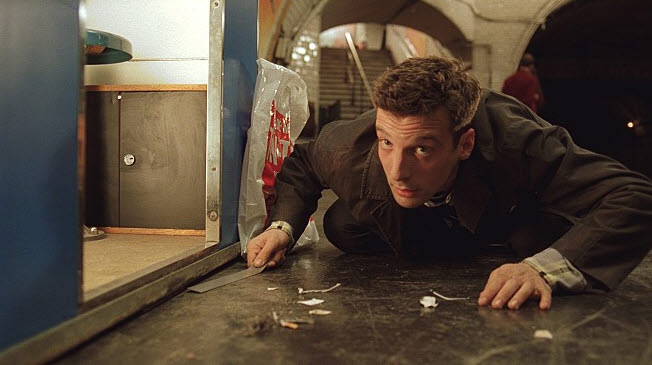
However, Amélie turns out to be not that good at helping herself. When she comes across a lad named Nino (Mathieu Kassovitz) at the train station, she is instantly attracted to him, but he seems to be more interested in his little hobby during their accidental encounter, and that certainly lets her down a lot. Not long after that, she embarks on trying to get to know more about him and then attract his attention, but she only finds herself hesitating more, even though she comes to get more than one chances to reveal herself to him.

While there is naturally some suspense on whether our heroine will cross the line to get closer to Nino or not, the movie remains to be lightweight as before, and Jeunet, who has been known for several stylish offbeat works such as “Delicatessen” (1991) and “The City of the Lost Children” (1995), and his crew members including cinematographer Bruno Delbonnel keep delighting us with colorful mood and details to be cherished. Besides being nominated for Best Foreign Language Film Oscar, the movie garnered four other nominations including the ones for Best Production Design and Best Cinematography Oscar, and it is quite impressive in technical aspects. Thanks to its distinctive mood and style, the movie steadily engages us from the very beginning, and we gladly go along with numerous quirky moments in the film.

Above all, the movie depends a lot on Tautou’s natural charm and presence. Her performance here in this film is still one of the best ones in her long movie acting career, and she is also supported well by a bunch of interesting performers including André Dussollier, Dominique Pinon, Yolande Moreau, Jamel Debbouze, and Mathieu Kassovitz, an actor/director who is mainly known for his electrifying crime drama film “La Haine” (1995).

On the whole, “Amélie” remains quite fun and enjoyable although 20 years have passed since it came out, and it is surely one of the highlights in Juenet’s idiosyncratic filmmaking career. Although things have recently been less positive for him, he is currently working a film to be released by Netflix at least, and I sincerely hope that it will be as charming as “Amélie”.

Posted in Movies | Tagged , , , | Leave a comment

This Is Not a Burial, It’s a Resurrection (2019) ☆☆☆1/2(3.5/4): A little gem from Lesotho

“This Is Not a Burial, It’s a Resurrection”, which was the official selection of Lesotho for Best International Film Oscar in last year, is a small but unforgettable film to be admired and appreciated a lot for several good reasons. Leisurely unfolding its unadorned but poignant narrative on the screen, the movie gradually holds our attention via its distinctive local mood and details, and its seemingly plain but undeniably memorable moments will linger on your mind for a long time after you watch it.

After showing a brief blurry visual moment which baffles us a bit, the movie promptly looks into a dark and shabby place where several figures are idly spending some time. After slowly looking and moving around this place for a while, the camera eventually focuses on an old musician figure sitting alone in a corner, and this figure, who is played Jerry Mofokeng Wa Makhetha (You may remember this South African actor for his notable supporting role in Oscar-winning film “Tsotsi” (2005), by the way), comes to function as the narrator of the following story.

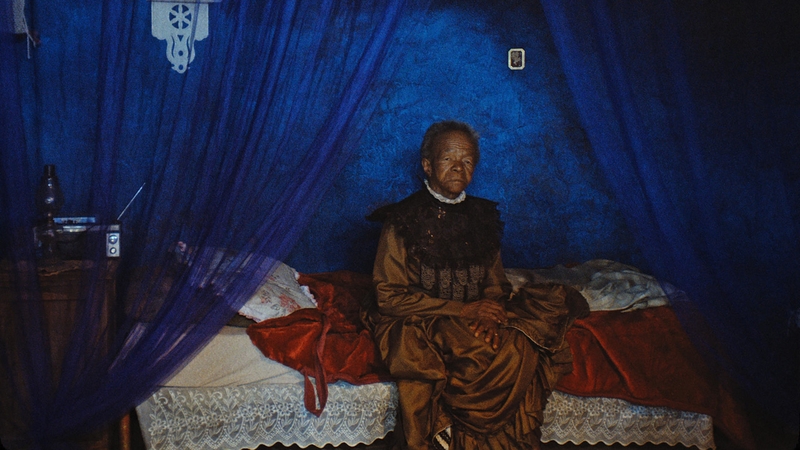
The center of the following story is an old woman named Mantoa (Mary Twala Mhlongo). She has lived alone in a small rural village located somewhere in Lesotho for many years, and she is certainly looking forward to seeing again her only son who is also her only surviving family member, but, alas, she is only notified later that her son, who has worked in some big mine far from the village, died for some unknown reason, and she is naturally devastated by her son’s unexpected death.

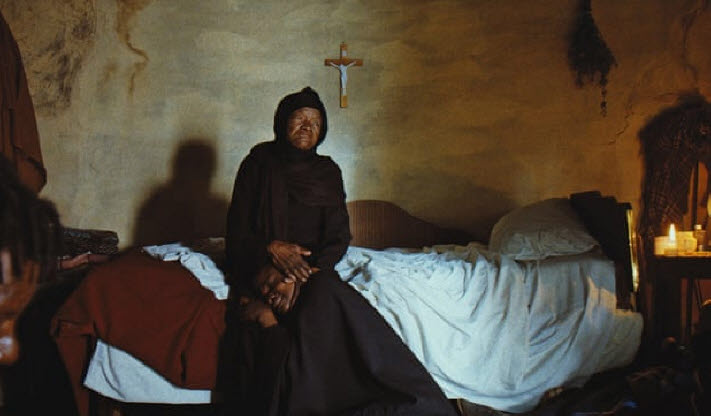
Calmly observing Mantoa’s subsequent morning period, the movie lets us gather more details about her village life. She has been respected by many others in the village as a witch doctor, and she is even visited by a local priest, who is willing to give her some pep talk as a decent guy who personally understands well how unbearable grief can be. Although he tries his best outside her little house, Mantoa’s grieving mind is already going somewhere as she keeps staying inside her residence, and the colorful interior of her residence makes a quiet but striking contrast to her current state of mind.

Meanwhile, the people of the village come to face a difficult choice to make. Due to a big dam to be built sooner or later at a nearby spot, the village is going to be flooded in water, and the government, which is mainly represented by a local politician, suggests that they all should relocate to some other place with some substantial compensation. Many of villagers are interested in accepting this offer from the government, but most of them are still hesitant about giving up their old hometown, and they are also concerned about how to handle the matters with their little cemetery where their deceased family members were buried.

In case of Mantoa, this situation invigorates her because, as an old lady who has almost nothing but her past which is closely connected with the village, she is determined to stick to her village till the end of her remaining years. When she actively draws the attention from others at one point, many of them are not so pleased at first, but it does not take much time for her to persuade them to be on her side, and the movie gives us a little spine-tingling moment of solidarity among her and others.

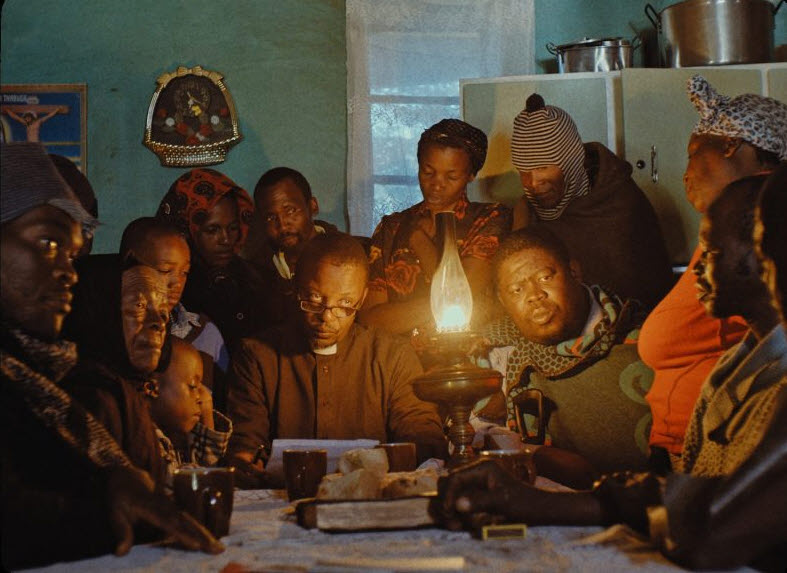
Now, the story seems to enter the territories of other similar small-town social drama films such as Robert Redford’s “The Milagro Beanfield War” (1988), but the screenplay by director/writer/editor Lemohang Jeremiah Mosese, who previously made a feature film debut with “For Those Whose God Is Dead” (2013), simply stays focused on Mantoa and her fellow villagers while never overplaying their conflict with the ongoing dam project outside. During one particular scene where they gather around the priest as he writes a letter of petition, the camera merely observes them from its static position, but we slowly come to get the palpable sense of community from them, and their faces bring considerable human quality to this memorable moment.

Shot in 1.33:1 ratio by cinematographer Pierre de Villiers, the movie often shines with precise scene composition and interesting details, and I particularly admire one certain masterful scene among Mantoa and two other characters. While the camera steadily looks at Mantoa and one of these two characters, we also see the other character via a tiny mirror on the wall, and I would love to learn more about how Mosese and de Villiers prepared before shooting this visually impressive moment.

Above all, the movie is quietly held together by the strong lead performance from Mary Twala Mhlongo, which feels all the more poignant considering that the movie is one of her several last films before her death in last year. Although the movie often maintains some distance from her character, her solid performance steadily functions as the beating old heart of the film, and we come to understand her character more before the story eventually reaches to the point where her character comes to commit a bold act of defiance alone by herself.

In conclusion, “This Is Not a Burial, It’s a Resurrection”, which received the World Cinema Dramatic Special Jury Award for Visionary Filmmaking when it was shown at the Sundance Film Festival early in last year, is a fascinating piece of work which deserves more attention in my humble opinion, and I must tell you that it relaxed and tranquilized me a lot after I experienced the fun and excitement of “Spider-Man: No Way Home” (2021) at last night. In short, this is another highlight of 2021, and I sincerely urge you to check out this overlooked masterwork as soon as possible.
Posted in Movies | Tagged , , | 1 Comment

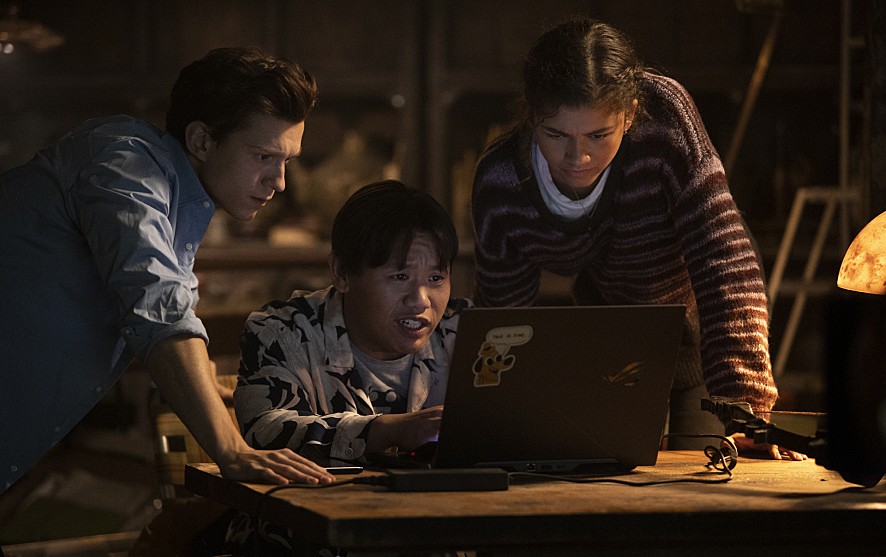
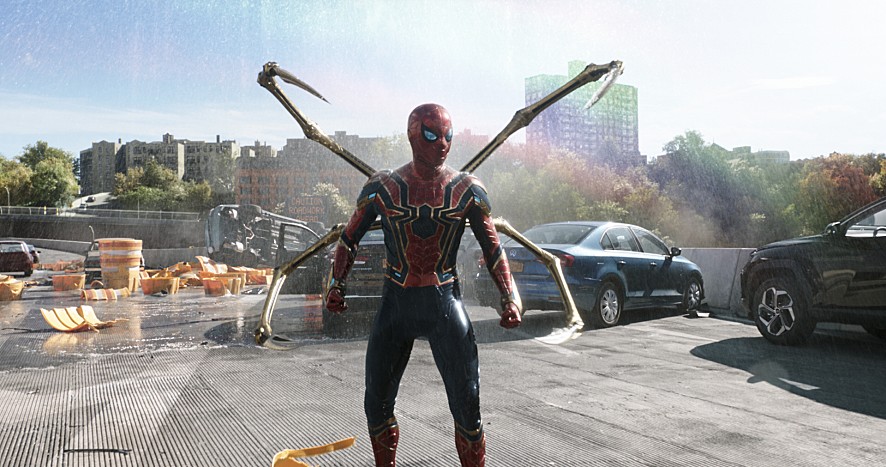
Spider-Man: No Way Home (2021) ☆☆☆(3/4): An entertaining IP mix with some heart

“Spider-Man: No Way Home” is a mostly entertaining Intellectual Property (IP) mix which actually made me care a little more than expected. While it is still considerably (and frustratingly) connected with Marvel Cinematic Universe (MCU) just like its two predecessors, the movie pays more attention to what makes its young superhero special and endearing to us, and that is why its expected finale works well with enough emotional resonance for us despite a number of weak aspects including its rather overstuffed narrative depending on our nostalgia a bit too much from time to time. 

The movie starts the story at the point not long after the very final scene of “Spider-Man: Far From Home” (2019). Besides his dual identity fully exposed in public thanks to the villain of the previous movie, Peter Parker/Spider-Man (Tom Holland) also finds himself wrongfully charged for the killing of that villain, and that certainly causes lots of troubles for not only him but also several people who already knew about his dual identity. Although his two close high school friends Michelle ‘MJ’ Jones (Zendaya) and Ned Leeds (Jacob Batalon) still stand by him as before while preparing for college enrollment with him, both they and Parker get rejected by MIT due to his ongoing scandal and controversy, and Parker feels more guilty about how things have been turned upside down for them and Aunt May (Marisa Tomei) because of him.

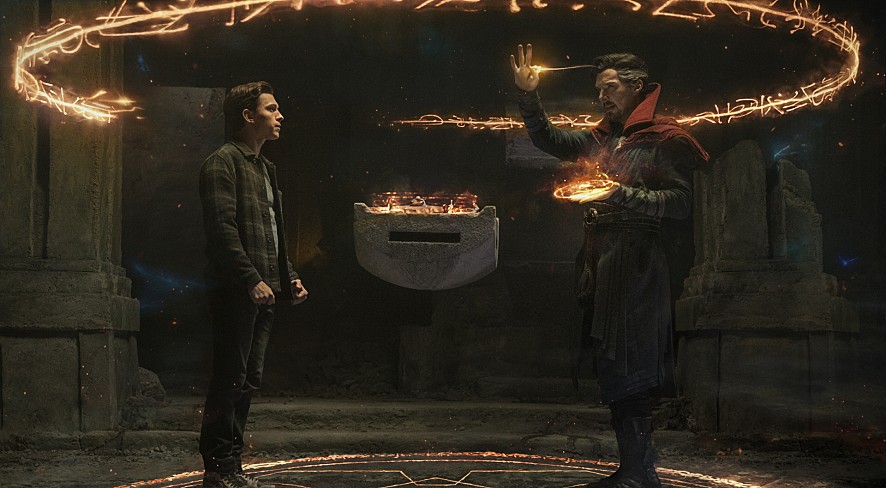
In the end, Parker goes to Stephen Stranger/Doctor Strange (Benedict Cumberbatch) for getting any help, and, as a dude who has supernatural powers to exert over the dimensions of time and space, Stranger knows a certain special spell which can be the solution for Parker’s current messy circumstance. This spell will erase the currently common knowledge of Parker’s dual identity once for all in the whole universe, and Parker has no problem with that at first, but, of course, it turns out that there is a catch. Once the spell is completed, everyone including his friends and Aunt May will forget who he is, so he requests several seemingly minor modifications when Stranger embarks on conjuring the spell.  

Of course, things soon do not go that well, and Stranger aborts the process, but then he and Parker come to see what they inadvertently cause. Because Parker intervened on Stranger’s spell too much, the boundaries between parallel universes are broken, and that consequently brings a number of certain figures who are total strangers to Parker but are surely quite familiar to you if you have seen Sam Raimi’s Spider-Man trilogy in the 2000s and a couple of Spider-Man flicks in the following decade.

Considering that the trailer of the movie already exposed to us several figures with whom Parker will have to deal along the story, I guess I can talk a bit about how some of the main cast members gladly have an old fun in the film. Although almost 20 years have passed since he played that character in “Spider-Man” (2002), Willem Dafoe has not lost any of his edgy persona yet as recently shown from his baroque supporting turn in “The Lighthouse” (2019), and he surely utilizes that well as his character swings back and forth between good and evil. Like Dafoe, Alfred Molina, who was one of the main reasons for the greatness of “Spider-Man 2” (2004), relishes his several big moments in the film, and I am rather pleased to see Jamie Foxx looking better than his rather embarrassing performance in “The Amazing Spider-Man 2” (2014), though his character development in the film turns out to be relatively contrived compared to Dafoe’s or Molina’s.    

Although it takes some time for getting things rolling as trying to balance its hero among numerous figures coming into his story, the movie mostly succeeds in engaging us well while our young superhero struggles to do right things for others associated with him. While we surely get several big action sequences as expected, they are fairly grounded well in story and characters, and director Jon Watts, who also directed two previous Spider-Man films, and his crew members including cinematographer Mauro Fiore and composer Michael Giacchino did a competent job of bringing enough sense of fun and excitement to the screen. I must confess that I often got confused a bit while watching the big showdown sequence around the end of the film for an understandable reason I do not dare to reveal here, but it is still exciting and exhilarating on the whole, and then you will be touched by how our young superhero actually becomes really matured at the end of his bumpy journey.

As the center of the film, Tom Holland is solid as before, and it is surely nice to see his character being more independent while not looking like that billionaire superhero’s lapdog anymore. In addition, he and Zendaya click better with each other than before, and Zendaya, who is already having another interesting year thanks to her small but crucial supporting turn in “Dune” (2021), brings some pluck and charm to her character. In case of the other notable cast members in the film, Benedict Cumberbatch, Marisa Tomei, Jon Favreau, Jacob Batalon, Benedict Wong, and J.K. Simmons comfortably slip into their familiar roles, but I must point out that Batalon is often demanded to function as the main comic relief of the story too much as before.     

On the whole, “Spider-Man: No Way Home” is better than its two passable predecessors, but it does not reach to the level of “Spider-Man 2” or “Spider-Man: Into the Spider-Verse” (2018), which is incidentally the best superhero film of the 2010s. While the movie entertained and touched me enough at last night, my mind still could not help but compare it with “Spider-Man: Into the Spider-Verse”, and it still feels like a safe product compared to how boldly and creatively “Spider-Man: Into the Spider-Verse” went all the way for both drama and comedy.

Anyway, based on my usually trivial star rating system, I gave 3.5 stars out of 4 stars to the greatness of “Spider-man 2” and “Spider-Man: Into the Spider-Verse”, and I also gave 2.5 stars to the plain existence of “Spider-man: Homecoming” (2017) and “Spider-Man: Far From Home”, so I give “Spider-Man: No Way Home” 3 stars. If you like its predecessors more than me, you will probably want to add extra half star to my rating, and I promise you I will not stop you from doing that.

Posted in Movies | Tagged , , , | 1 Comment