Again, we are reaching to the end of another year, but, as many of you know, things have not been that good these days. We are still stuck with the ongoing COVID-19 pandemic, and, as far I as can see, this may not go away even around the end of the next year. I was already vaccinated twice, but I and many others were recently notified that we should get a booster shot sooner or later, and that makes me feel more pessimistic about the next year.
Anyway, movie festivals returned with some caution during this year, and I have kept going to theaters as wearing a mask as before. At a few local movie theaters I have trusted a lot, I watched many interesting new movies during this year, and I also encountered a fair share of other good movies at my residence, though I still prefer to watch movies at theaters instead of my residence. That is why I was glad to see that several notable Netflix films were shown more widely in South Korean movie theaters before their eventual online release, and I hope this welcoming trend will be continued during next several years at least. I still do not like “The Harder They Fall” and “The Hand of God” enough, but I enjoyed watching them on a big screen nevertheless, and I was also exalted to behold “The Power of the Dog”, which is Jane Campion’s triumphant comeback besides being one the best films of this year.
Anyway, there are still a considerable number of small and big films released in 2021, and I have not watched some of those very good films of 2021 yet, but I have managed to watch and review around 300 movies during this year. As usual, I submit here the list of a bunch of good movies you should not miss, and I hope this list will help you have a more entertaining time later.
By the way, as an audience living in South Korea, I still cannot watch several notable films of this year including “Licorice Pizza”, “The Worst Person in the World”, “A Hero”, “Parallel Mothers”, “The Lost Daughter”, “The Souvenir, Part II”, “Nightmare Alley”, “The Tragedy of Macbeth”, and “West Side Story”. They all will soon be reviewed, and I will certainly mention them at the end of the next year if they are as good as others say.
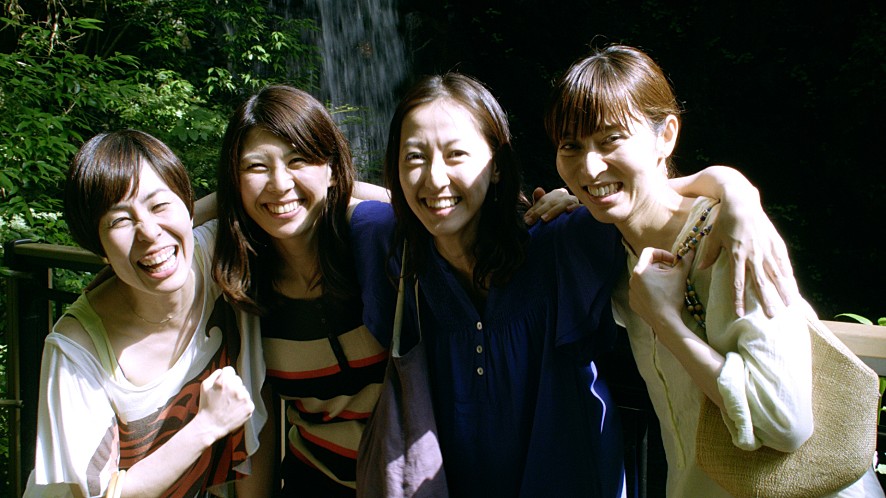
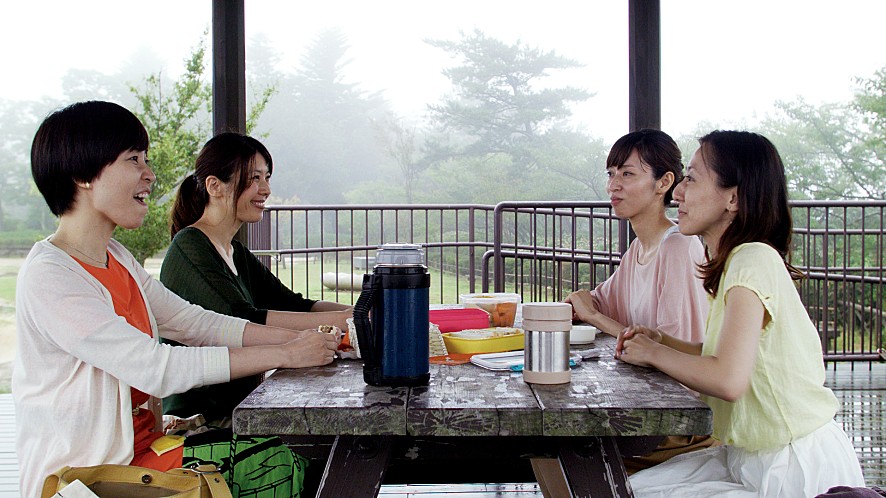
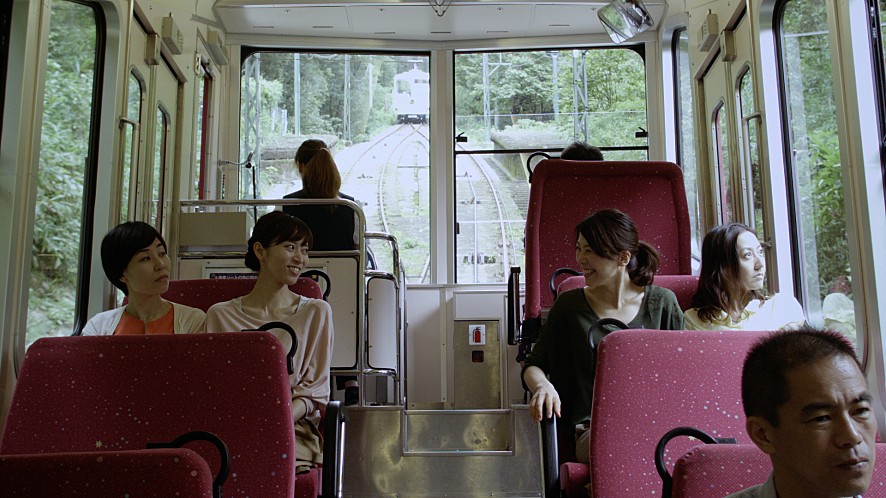
Ryūsuke Hamaguchi’s “Happy Hour” is a challenging but ultimately rewarding experience you should give a chance someday. The movie will surely daunt you for its very long running time which is more than 5 hours (!), but it will gradually hold your attention thanks to the skillful handling of mood, story, and characters, and there are a number of wonderful moments to be savored and appreciated.
At the beginning, the movie, which is set in a Japanese city named Kobe, introduces us to four different women who have been close friends for more than 20 years. They are Akari (Sachie Tanaka), Sakurako (Hazuki Kikuchi), Fumi (Maiko Mihara), and Jun (Rira Kawamura), and the opening scene shows them having a little private picnic together at a local park around the city. As the movie calmly focuses on their plain conversation later, we come to sense more of how long they have known each other, and we become more immersed in the cheerful mood of their conversation as they talk about one thing after another for a while.
After this first long sequence in the film, we get to know more about their respective private lives. Unlike her three friends, Akari has been a single woman since her recent divorce, but she does not care much about being alone as mostly occupied with her busy daily work. She works as a nurse at some local hospital, and we come to discern that one of the doctors in the hospital is apparently interested in getting closer to her, but she pays more attention to a young nurse who really needs more lesson and experience for doing her jobs better.
On the surface, Sakurako has the most stable domestic life in the bunch, but it does not take much time for us to discern how much she has been suffocated by her domestic role. While her husband is usually absent due to his busy job, she is supposed to take care of all those domestic matters for herself, and she certainly feels more pressured when her mother-in-law happens to stay in her residence for an indeterminate period. In addition, her adolescent son turns out to have a little private matter behind his back, and we are not so surprised when that matter of his leads to something quite serious later in the film.
In case of Fumi, she and her husband have maintained an acceptable equilibrium between work and private life, but she cannot help but feel frustrated with how they have been more like roommates rather than a married couple, and that drives her more to her work. While her husband works as the editor of a notable female writer, she usually handles small cultural events, and she later gets her three friends to join a little private workshop along with her at one point.
The workshop is presented by a guy who has some interesting artistic skills and life philosophy, and the movie willingly spends a very long time with his workshop process. I must confess that I initially observed this guy with some skepticism, but then I found myself intrigued and amused by what he and others try to do for, supposedly, real human communication, and then this intriguing sequence is followed by another long conversation sequence as our four ladies and several other characters come to have a post-workshop meeting.
Their conversation initially feels casual and cheerful, but then there comes a sudden awkward moment when Jun comes to reveal that she has been trying to divorce her husband because she feels no love from him. While certainly caught off guard by how their friend has hided that from them, Jun’s friends decide to stand by her as usual, and we get another long sequence where Jun has to go through a rather grueling process at the court while her friends are there for giving her some support.
The mood becomes more pleasant when our four ladies subsequently go to a hot spring town outside Kobe, but then the movie goes for more plot conflict and development after a small but crucial narrative turn. As seeing how much Jun has been unhappy and miserable, her friends respectively come to reflect more on whether they have been really happy, and their growing doubt and anxiety naturally lead to several key moments to observe as each of them comes to make each own choice for their respective lives in one way or another.
Dexterously juggling its four different main characters from the beginning to the end, the movie also pays some attention to a number of supporting characters around them, who also contribute much to its rich overall experience. We are amused by the possibly romantic interaction between Akari and a certain supporting character, and then we are chilled and repulsed by how coldly articulately Jun’s husband describes his nearly loveless fixation on his wife. We are touched by how Sakurako’s mother-in-law turns out to be more supportive than expected, and we are intrigued by whatever is developing between Fumi’s husband and that young female writer, who later has a showstopper moment when she reads her latest work in front of several other characters and many other audiences.
To be frank with you, I was surprised to learn later that the four lead actresses of the film actually did not have any movie acting experience before selected by the director via a local workshop. I have no idea on how much they prepared before shooting many long sequences in the film, but the four lead actresses of the movie all look natural and effortless in their interactions on the screen, and that says a lot about Hamaguchi’s considerable filmmaking skill and talent.
Overall, “Happy Hour”, which is the longest Japanese feature film according to the IMDB trivia, surely demands some patience from you right from the beginning, but then it will interest and engage you a lot via its genuine human moments to be appreciated, and you will come to root for its four ladies a lot around the end of their emotional journey. It is quite long indeed, but its commendable achievement in terms of story and characters takes me back to what my mentor/friend Roger Ebert once said: “No good movie is too long, and no bad movie is short enough.”
While it is not exactly one of my No.1 favourite books, I understand well why J.D. Salinger’s “The Catcher in the Rye” has been a beloved classic novel for many young people out there since it came out in 1951. After all, it is a very well-written book, and who cannot possibly identify with its lonely, disillusioned, and disaffected adolescent hero who is not so different from how you are or were in those wild and confusing adolescent years?
As many of you know, Salinger became a notorious recluse during his later years due to the unwanted popularity of “The Catcher in the Rye”, and he did not read or reply to any letter from the fans of the novel at all. As shown from Philippe Falardeau’s lightweight comedy film “My Salinger Year”, his literary agency simply received those heaps of fan letters on his behalf and then rejected all of them via its short reply, and it did that for many years before he died in 2010.
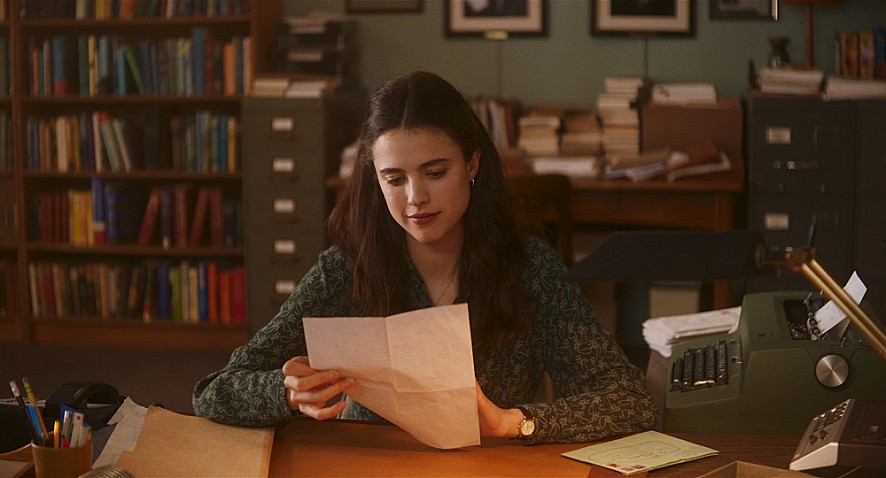
However, the focus of the movie is not on Salinger himself but on a young woman named Joanna Rakoff (Margaret Qualley), who later wrote the memoir of the same name on which the movie is loosely based. At the beginning of the story, Joanna is initially supposed to spend some time in New York City before going back to Berkeley, California where her boyfriend is waiting, but she decides to stay much longer in the city for pursuing her aspiration to become a writer, and that is how she comes to look for any suitable temporary job to support her financially during the following period.
Fortunately, it does not take much time for Joanna to find a position which is not only quite suitable but also may help her future career a lot. She happens to get hired as an assistant in one of the oldest literary agencies in the city, and she cannot help but feel excited when she looks at the photographs of its several very famous clients such as Dylan Thomas, Agatha Christie, F. Scott Fitzgerald, and, of course, Salinger.
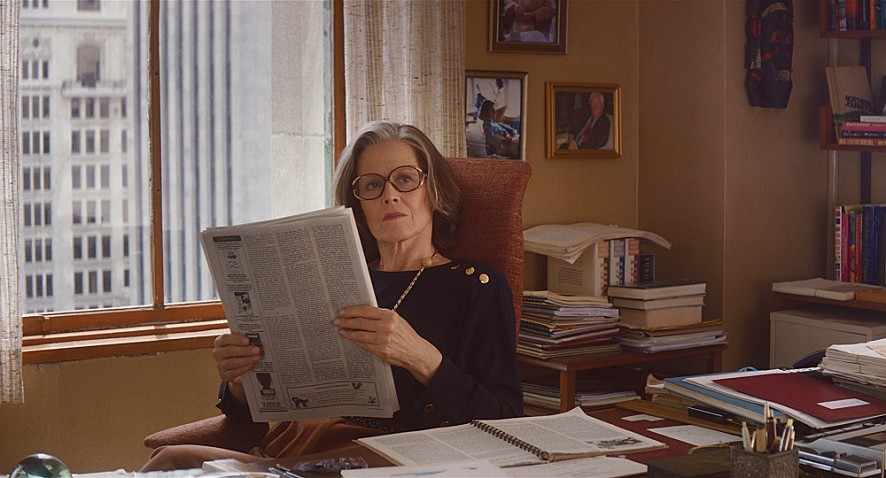
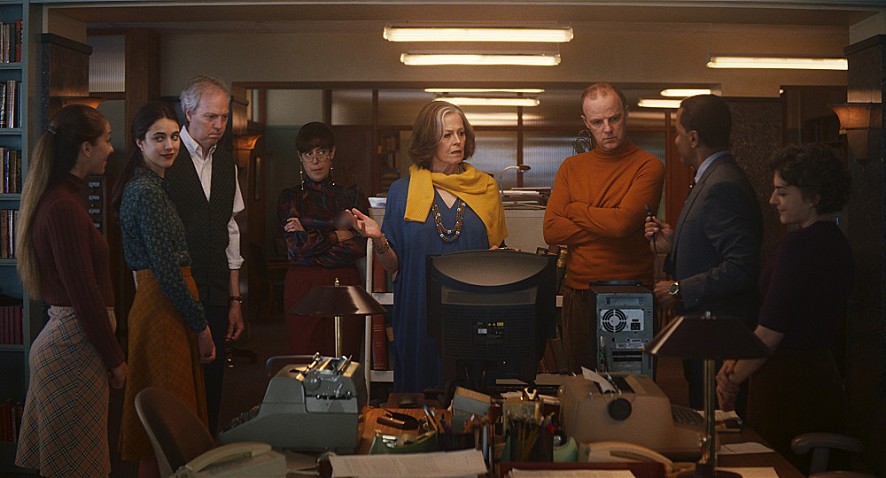
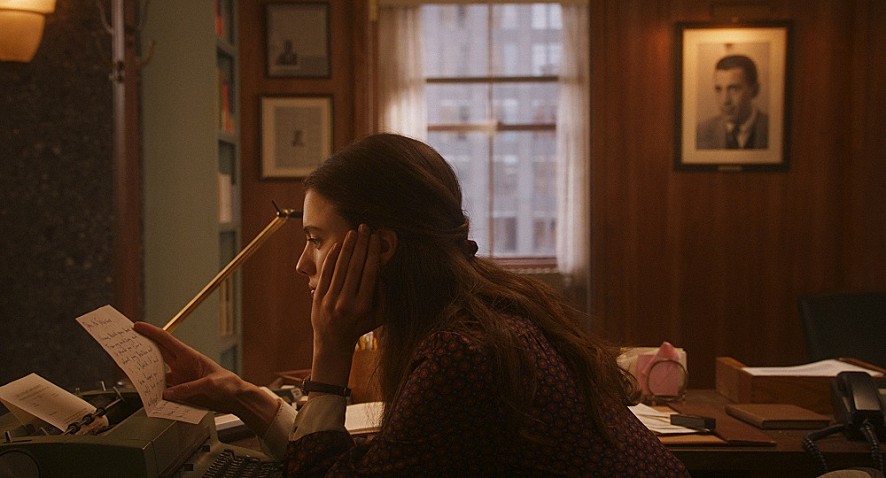
Joanna works under Margaret (Sigourney Weaver), a rather eccentric but no-nonsense boss who has run the agency for many years. Although it is the late 1990s, Margaret dislikes using computers, so Joanna has to use old typewriters when she does one job after another as instructed, but she does not complain at all because the decidedly old-fashioned mood of Margaret’s agency brings extra charm to her ongoing NYC experience. Besides, she happens to get quite close to a young dude who is also an aspiring writer just like her, and she soon finds herself living with him while also letting herself gradually estranged from her boyfriend, who virtually becomes an ex-boyfriend around that point.
Meanwhile, Joanna becomes more interested in handling those heaps of fan letters sent to Salinger, which must be constantly monitored due to how that book happened to be associated with the tragic killing of John Lennon in 1980. While some of the fan letters are rather weird, most of them are sincere about how “The Catcher in the Rye” means so much to their writers, and Joanna comes to wonder whether these people deserve more than that short reply she frequently types.
However, Margaret is pretty strict about how to handle this and other matters involved with Salinger. Sometimes Salinger calls the agency, and Joanna is naturally excited even though she has never read any of his books, but she must stick to the rules, especially when Salinger suddenly becomes quite interested in re-publishing a certain old work of his.
While Salinger and this possible publication project of his keep hovering around the fringe of the story, Falardeau’s screenplay leisurely flows from one episode to another. I was often amused by several eccentric figures in Margaret’s agency, and I particularly enjoyed a brief scene where Joanna is unexpectedly invited to Margaret’s lunch meeting by a Margaret’s longtime partner, whose private relationship with her later turns out to be more complex than expected.
The movie sometimes feels rather aimless, but everything is mostly held well together by the undeniable charming presence and talent of Margaret Qualley. Since her small but notable supporting turn in Quentin Tarantino’s “Once Upon a Time in Hollywood” (2019), this wonderful actress, who is incidentally the daughter of Andie MacDowell, has steadily advanced during last several years, and her likable performance here in this film confirms here that we are going to see a lot more of this promising actress in the future.
Around Qualley, several other cast members of the film fill each own spot as well as they can, though most of their supporting roles are underdeveloped on the whole. While her character is more or less than a mild version of Meryl Streep’s character in “The Devil Wears Prada” (2006), Sigourney Weaver balances her seemingly frigid character well between comedy and drama, and she has a little poignant moment when Margaret comes to reveal a bit of her personal side to Joanna later in the story. In case of Brian F. O’Byrne, Yanic Truesdale, and Colm Feore, they are sadly under-utilized in comparison, but their colorful appearances do bring some extra personality to the film at least.
On the whole, “My Salinger Year” is a bit too light to leave a substantial impression on me, and it also tries a little too much when it attempts to present some of those Salinger fan letters more visually, but I was charmed enough by its cheerful mood coupled with some interesting things associated with literacy agency. I wish it did more correction and modification for some improvement in terms of story and characters, but I was not bored at all during my viewing, so I will not grumble for now.
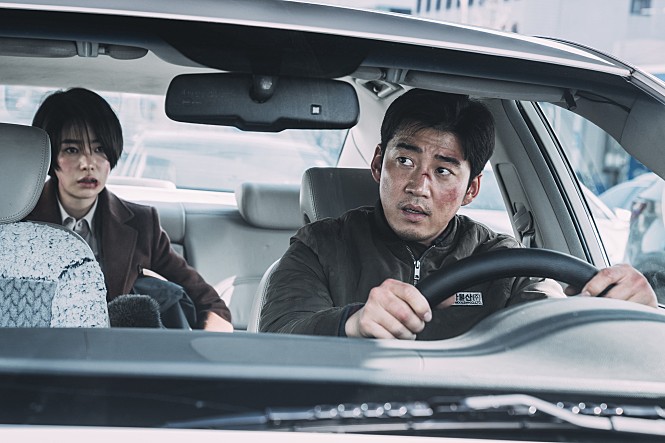
South Korean film “Spiritwalker” is a slick and efficient genre piece which handles its familiar genre elements much better than I thought when I came across its trailer in last month. Once it sets the rules around its utterly preposterous story promise, the movie briskly and entertainingly hops from one narrative point to another along with its confused hero, and you will gladly go along with that before it reaches to its last act where everything is conveniently explained for us as expected. That is a bit disappointing in my humble opinion, but the movie compensates for that with a number of gritty action scenes to excite us, and I felt fairly satisfied when I came out of the screening room along with other audiences a few hours ago.
At the beginning, the movie puts us right into a very baffling circumstance surrounding its hero. When he regains his consciousness right after a small car accident happened, he cannot remember who he is, but then he is baffled to find that he is in the body of someone else he does not know at all. After being taken to a nearby hospital later, he gathers a few bits of information about who this person is, but he only becomes more baffled when he subsequently goes to where this person is supposed to live.
And that is just the beginning of his very extraordinary circumstance. Every twelve hours, his consciousness is somehow transferred to another figure quite alien to him, and it surely takes some time for him to get accustomed to this weird situation before he eventually becomes determined to find out what is exactly happening to him right now – and where the hell his original body is at present.
Fortunately, it soon turns out that there is something common among those figures who happen to be occupied by our hero’s consciousness one after another along the story, and the movie accordingly provides us more clues on what is really going on around him. Our hero is actually an agent who has worked for some secret government agency, and he has recently been pursued by the agency for some hidden reason he still cannot remember much. It seems that one of his colleagues, who is also incidentally his lover, holds all the answers to his growing questions, but he must be careful because she is understandably quite watchful about whatever may happen to her. At one point, he cautiously approaches to her when no one is watching them, but, of course, she does not recognize him at all, and that accordingly leads to the first action scene in the film.
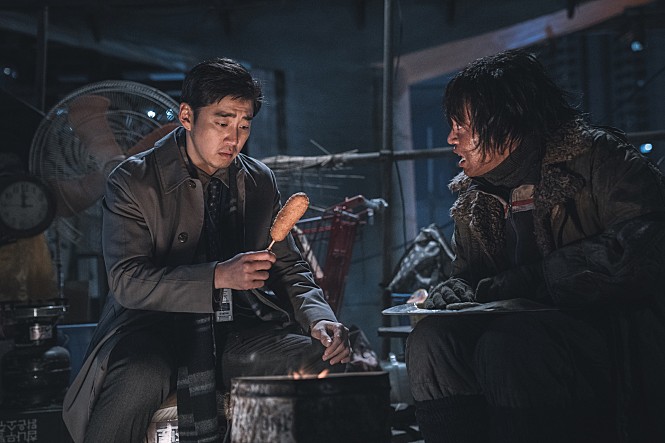
Meanwhile, the plot gets thickens with more figures to enter the picture. There are several agency officials quite willing to cover up whatever was caused by our hero, and there are a number of chilling moments of violence as their underlings do some nasty cover-up jobs as ordered by them. In addition, there is also a homeless guy who happened to encounter our hero during the opening scene, and the movie provides a few moments of humor as this dude later becomes an unlikely ally for our hero.
Except its outrageous story promise which surely belongs to the realm of fantasy, the movie is basically another typical spy action thriller flick about an amnesiac agent on the run, but the screenplay by director/writer Yoon Jae-geun, who previously made a feature debut with “Heartbeat” (2010), steadily engages us while accumulating more tension and intrigue around its story and characters. Around its middle point, you will easily guess what is really going on around its hero, but the movie keeps holding our attention as usual with some surprises for us, and, above all, it never overlooks what is being at stake for its increasingly desperate hero.
The movie also gives us a series of crackling physical action scenes as expected from its genre, and these well-made action scenes surely bring considerable intensity to the film. I must point out that our hero often looks as invincible as, say, Jason Bourne throughout the movie, but Yoon and his crew members make sure that these action scenes are presented with palpable physical impacts on the screen, and they thankfully do not resort to shaky camerawork and choppy editing here. When our hero goes into his full-throttle mode during its last act, the movie becomes less interesting with lots of bangs and crashes, but it still maintains its narrative momentum fairly well under Yoon’s competent direction, and it confidently goes all the way along with its hero before eventually arriving at the ending.
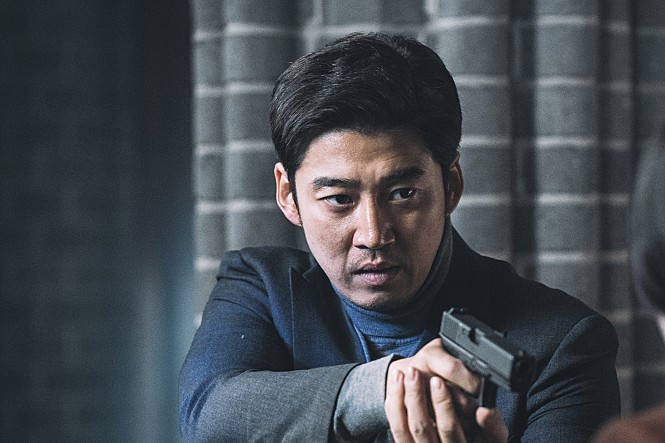
As the center of the film, Yoon Kye-sang diligently carries the film with some effective assistance from several other main cast members who respectively play a number of crucial supporting characters to be occupied by his character’s consciousness along the story. As the main opponent to our hero, Park Yong-woo constantly looks hostile and aggressive as demanded by his role, and Moon Jin-ah and Park Ji-hwan are also solid in their respective parts.
In conclusion, “Spiritwalker” is a nice genre product which does its job as well as intended, and I had a fairly good time on the whole. By the way, its copyright was already sold for the possible American remake version, and, thought I do know whether it will eventually come out, I sincerely hope that the American remake version will be as enjoyable as the original version at least.
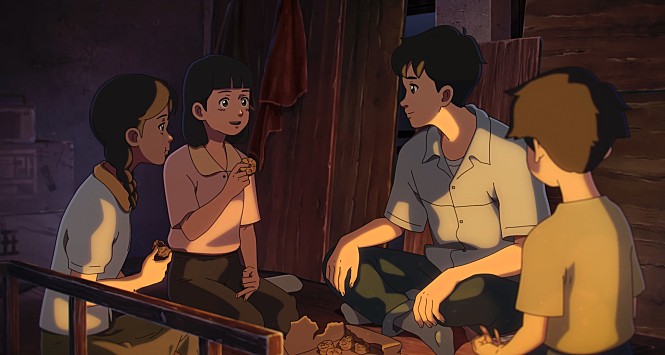
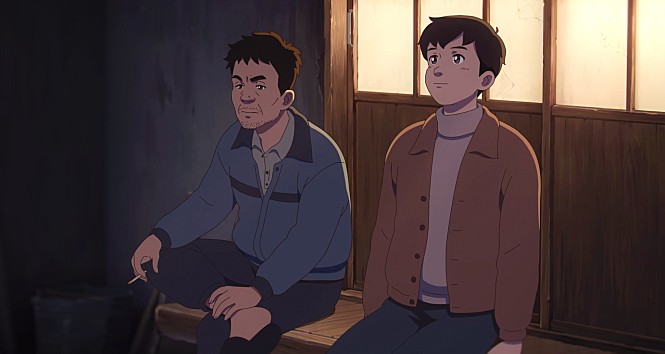
South Korean animation film “Chun Tae-il” is a plain but sincere presentation of one young real-life laborer who came to bring more public attention to workers’ rights via his tragic early death. As a guy who does not know that much about him and his life, I have no idea on how much the story is actually close to his real life story, but I could not help but feel touched by several simple but undeniably powerful moments in the film during my viewing, and I subsequently came to reflect more on how his social cause is still quite relevant in the South Korean society even though more than 50 years have passed since his death.
At the beginning, the story shows us the early life period of Chun Tae-il (voiced by Jang Dong-yoon) in Daegu, South Korea around the early 1960s. We initially see Tae-il having a good time along with his younger siblings during one bright afternoon, but he and his family soon come to have a very hard time due to his father’s unfortunate business failure, and he goes to Seoul along with his father and younger siblings not long after his mother suddenly leaves them without any word.
Anyway, Tae-il works very hard during next several years for himself as well as his family, and then things slowly get a bit better for them. His mother returns after Tae-il accidentally comes across her on a street on one day, and Tae-il is certainly glad to see his parents and younger siblings living together as before, even though they are still quite poor as living in a shabby neighborhood full of wooden makeshift houses. In addition, he is recently employed in one of many small clothing factories in Seoul, and it looks like everything will go well for him and his family as long as he keeps working hard as usual besides following whatever is ordered by his new boss.
When he is later promoted to the position where he should supervise and control several other workers in the factory, Tae-il is willing to try his best as a mediator between the other workers and his boss, but he soon becomes quite conflicted as being more aware of how grueling and difficult their work environment is in many aspects. Their factory is virtually a stuffy sweatshop where workers’ welfare and health are thoroughly disregarded everyday, and Tae-il tries to help and encourage his fellow workers as much as possible, but then he is reminded again of how unfairly he and other workers have been treated by their employer. Although they are frequently demanded to work longer and harder, they get paid less and less just because their employer has some financial loss, and Tae-il soon comes to feel that he must do something for not only his colleagues but also many other laborers out there.
Of course, as a young dude who did not have much school education, Tae-il does not know what to do at first, but there comes one accidental moment of enlightenment. After coming to learn from his father that there are actually the laws associated with workers’ rights, he immediately starts to delve into these labor laws for learning more about how much workers’ rights are actually guaranteed by the government, and he subsequently becomes much more active about doing what is right for him and others according to his enlightened viewpoint.
However, not so surprisingly, his sincere efforts for workers’ rights only leads to more doubt and frustration. During that time, workers’ rights were the last thing to be considered by the South Korean government as relentlessly pushing millions of workers more and more for rapid economic advance, and those rich businessmen gladly went along with that as frequently exploiting their laborers. Shortly after he submits his petition to the Ministry of Labor, Tae-il is fired for causing too much trouble, and that is followed by a brief period during which he muses more on whether his cause is still worthwhile to follow.
In the end, Tae-il decides that he really should fight harder against the power that be, and the last act of the story focuses on how he and his several colleagues come to clash against not only their employers but also the South Korean government. At one point, they manage to get a minor victory for them and their fellow laborers, but that triumphant moment is soon crushed by their opponents who are willing to stop and crush them by any means necessary, and Tae-il becomes quite agonized over what he can possibly do more – especially when he and his colleagues may lose one last chance left them for now.
The story eventually culminates to what occurred to him on November 13th, 1970, and director Hong Jun-pyo thankfully presents this sad and horrible incident with enough restraint while never overlooking the human aspects of Tae-il and several other main characters. I must point out that they are rather broad and simple in my inconsequential opinion, but they are imbued with enough life and personality thanks to not only good animation but also the solid voice performances by a number of notable South Korean performers including Jang Dong-yoon, Yeom Hye-ran, Jin Seon-kyu, Park Chul-min, and Kwon Hae-hyo, and the story earnestly builds up its emotional momentum enough to earn our tears before its expected melodramatic finale.
In conclusion, “Chun Tae-il” is a humble but engaging animation film which handles its human subject with lots of care and respect, and it will probably make you have more interest on its real-life hero who surely deserves to be remembered more these days. To be frank with you, there are still lots of unjust labor exploitation here and there in the South Korean society even at this point, and I sincerely hope that the film will lead to more awareness of workers’ rights among young South Korean people.
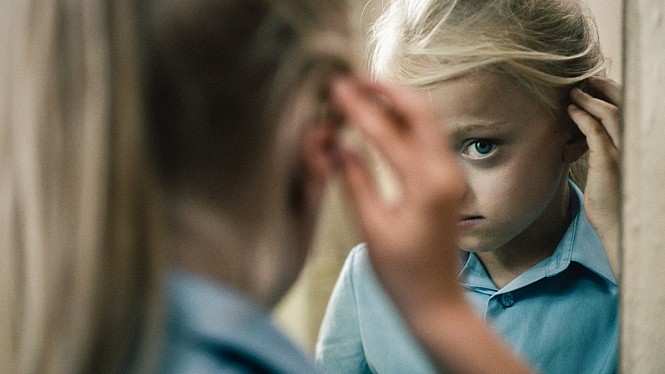
“Listen”, which received several minor awards including the Special Jury Prize of the Venice Horizons Award when it was shown at the Venice International Film Festival in last year, is a sincere but ultimately disappointing melodrama. Although it sincerely wants to draw out more attention to its social issues from us, the movie stumbles a lot more than once mainly due to its clumsy storytelling, and that is a shame considering the good efforts observed from its several main cast members.
At the beginning, the movie observes how things have been quite difficult for Bela (Lúcia Moniz) and Jota (Ruben Garcia), a Portuguese immigrant couple who have resided along with their three kids in a shabby residence located somewhere in London. Because Jota has still not received his delayed wage from his employer, there is not much money for buying food for the family, and Bela, who has also earned a bit while working as a housemaid, has no choice but to commit some shoplifting before beginning another hard day of hers.
In addition, all of Bela and Jota’s kids need some attention and care for each own reason. While their youngest kid is still a one-year-old baby, their oldest kid Diego (James Felner) has recently been quite ill, and their middle child Lu (Maisie Sly) has a congenital hearing disability. Although Lu also has a hearing aid, it does not work that well for some technical problem, and Bela becomes quite frustrated to learn later that she may buy the new hearing aid for Lu, which is certainly too expensive to buy for her at present.
And then something quite unexpected happens. When Bela comes to Lu’s special elementary school for taking Lu back to their home, Lu’s teacher notifies to Bela that there are some bruises on Lu’s back, and Bela are quite perplexed. She later asks Lu about the bruises, but Lu seems to have no idea on how the hell she got them, and Bela becomes panic because Lu’s teacher might already notify this case to a social services officer who is supposed to drop by Bela and her family’s house in the afternoon.
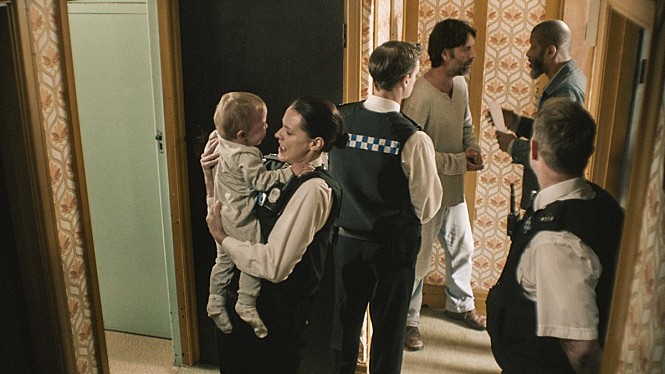
Her husband tries to calm her down and get things under control as much as possible around the time of the visit from the social services officer, but, of course, their world is turned upside down as soon as the social services officer knocks on the front door of their home. Accompanied with several police officers who would function as his enforcers, the social services officer flatly notifies to Bela that he is going to take away their kids for protection, and Bela and Jota are consequently separated from their dear kids.
What follows next is quite a nightmarish situation for not only Bela and Jota but also their kids. A few days later, Bela and Jota are finally allowed to see their kids again for a while, but they cannot freely interact with their kids just because of those unfair regulations, and that surely exasperates both Bela and Jota a lot. To make matters worse, their kids are bound to be sent away to foster parents regardless of whether they want or not, and it looks like there is nothing Bela and Jota can do for stopping this infuriating injustice from happening to them.
At least, there is someone willing to help them. That person is question is Ann Payne (Sophia Myles), and, as a former employee of the social services, she surely knows a lot about the system. While calmly reminding Bela and Jota of how the circumstance can be much worse if they are not very cautious, Payne does her best as providing Bela and Jota some helpful advices, and it seems possible that Bela and Jota will soon reunite with their kids even though they and their kids may not be allowed to live in England anymore.
It goes without saying that the movie apparently sides with Bela and her family, but the screenplay by director Ana Rocha de Sousa and her co-writers Paula Alvarez Vaccaro and Aaron Brookner often simplifies their desperate situation too much. While it willingly shows that Bela and Jota are not exactly model parents in case of their kids’ welfare, the screenplay does not show much interest in the opposing position of those social services officers, except frequently emphasizing how bad and lousy they are at their job. In addition, the movie often feels ham-fisted in its blatantly manipulative attempt to pull our heartstrings, and that distracting aspect is exemplified well by one certain sappy moment of big speech during the last act.
Anyway, Lúcia Moniz and several other main cast members in the film try their best in making their characters into believable human figures, though their efforts are frequently undermined by the movie itself. While never asking for pity or sympathy from us, Moniz is convincing as an exhausted but strong-willed woman who is simply trying to get back her kids, and she is complemented well by the relatively understated performance from Ruben Garcia. Sophia Myles acquits herself fairly well despite her bland thankless supporting role, and young performers Maisie Sly and James Felner are also solid in their small but substantial parts.
On the whole, “Listen” is rather dissatisfying due to its glaringly flawed screenplay, and I was all the more disappointed as reflecting more on how its story and characters could be more engaging than what I observed during its rather short running time (73 minutes). Yes, it surely has its heart in the right place, but it merely resorts to blatant melodrama without much nuance or complexity for its social issues, and I only came to leave the screening room without much impression in the end.
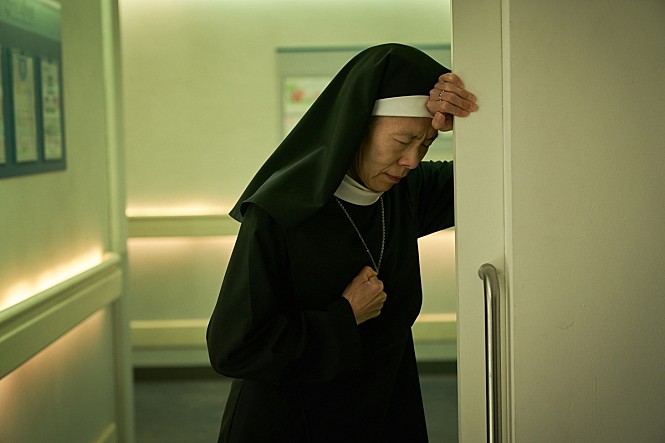
South Korean film “The Prayer”, which is actually the theatrical version of one episode of South Korean TV anthology drama series “SF8”, is a simple but thought-provoking SF morality play which examines one familiar but undeniably impossible moral dilemma via its robot heroine. Although it mostly stays within genre conventions, the movie is still engaging thanks to its good storytelling and solid acting, and it will make you reflect more on several social issues poignantly reflected by its story and characters.
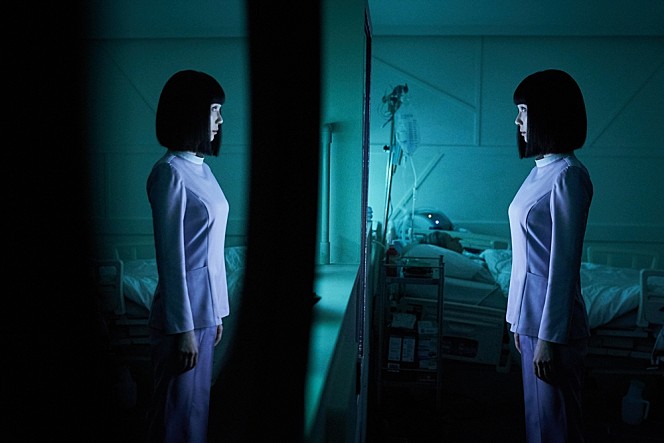
During its first act, the movie, which is mainly set in one nursing home located in Seoul in 2046, gradually lets us get accustomed to its futuristic background and details. Thanks to considerable technological advance, all of the patients in the hospital and their human caregivers are constantly assisted by android nurses, but things are still hard for many of human caregivers nonetheless. Yes, those android nurses are as cool and unflappable as expected in addition to being always ready for doing their jobs, but they still do not provide much emotional support to human caregivers, most of whom have suffered a lot in many aspects while usually being stuck with those patients as their close family members.
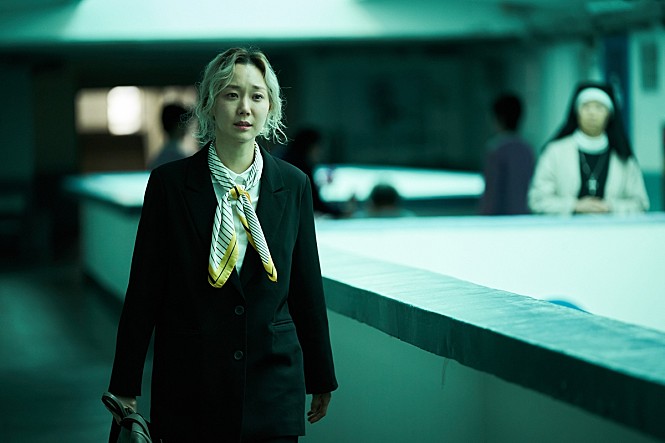
In case of a young woman named Jeong-in (Lee Yoo-young), her circumstance has been pretty depressing to say the least. As her father wished before his death, she has tried to run his little printing company as long as possible, but the printing company is on the verge of being bankrupt at present, and she has also been quite exhausted for taking care of her comatose mother. While her mother has been comatose for no less than 10 years, there is virtually not any possible chance of her mother regaining her consciousness at all, and Jeong-in becomes quite more frustrated and conflicted as being more aware of how her life has been going down and down due to this increasingly daunting circumstance.
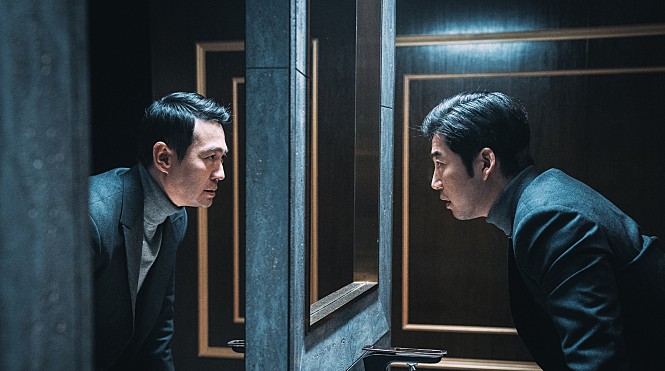
At least, Jeong-in gets some consolation from her mother’s android nurse Ho-joong, who incidentally looks identical to Jeong-in and is accordingly also played by the same actress. Whenever Jeong-in feels helpless and hopeless, Ho-joong is willing to comfort Jeong-in a bit even though her No.1 priority is taking care of Jeong-in’s mother, and Jeong-in appreciates that even though Ho-joong’s kindness is just one of her many programmed responses.
However, Jeong-in later finds herself being on the edge again. Quite devastated by one tragic incident associated with a patient staying next to her mother, she is not so sure about whether she can keep going as before, and Ho-joong instantly senses and analyzes on how fragile and unstable Jeong-in’s state of mind is. According to the final conclusion made by Ho-joong’s artificial intelligence, it is highly likely that Jeong-in will end up giving up her life, and Ho-joong correctly discerns that Jeong-in must be free from her mother for avoiding that grim possible outcome.
In the meantime, Ho-joon begins to learn a bit about religion and morality via Sister Sabina (Ye Soo-jung), an old nun who often drops by the nursing home as willing to provide some pep talk to those human caregivers in the nursing home. While eventually deciding that she must do something for both Jeong-in and her mother, Ho-joong also wants to be sure about whether she makes a right decision or not, and that is how she comes to call Sister Sabina at one night.
Their following conversation may not surprise you much as these two main characters pull and push each other on the matters of life and morality, but the movie gradually dials up the level of tension line by line, and director/writer Min Gyoo-dong, who previously made “Herstory” (2017), skillfully handles his main characters’ increasingly tense circumstance. While the technical aspects of the film are more or less than what you can expect from your average TV episode, Min and his crew members fill the screen with enough mood and details to intrigue and engage us, and we accordingly become more emotionally involved in the moral dilemma of the story.
Above all, the movie is anchored well by the commendable dual performance by Lee Yoo-young, a promising actress who has been more prominent since her notable supporting turn in “Fatal Intuition” (2015). While quite looking different from her recent comic turn in “Perhaps Love” (2021), Lee ably goes back and forth between her two very different roles throughout the movie, and that is the main reason why several key scenes between these two characters of hers work with substantial dramatic effect.
In case of a few other main cast members of the film, they effectively fill their respective spots around Lee. While Ye Soo-jung, who was simply unforgettable in “An Old Lady” (2019), brings some life and personality to her rather functional role, Yeom Hye-ran is believable in her similar dual performance, and Choi Byung-mo and Yoon Kyung-ho are also well-cast in their small supporting roles.
In conclusion, “The Prayer” is a fairly modest genre piece, but it did its job as much as expected with enough intrigue and intelligence during its short running time (79 minutes). To be frank with you, I and a friend of mine came to talk and discuss about its story and characters for a while after we watched it early in this morning, and that says a lot in my humble opinion.