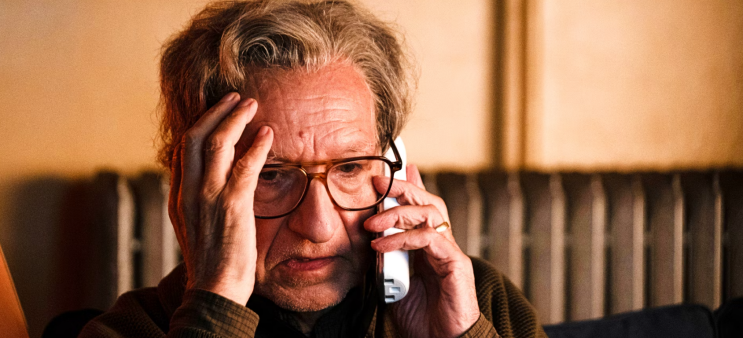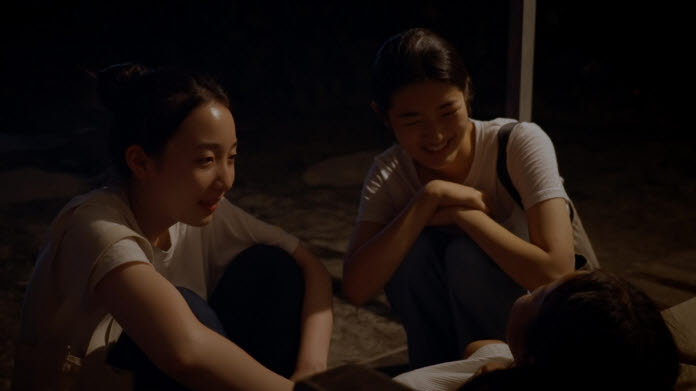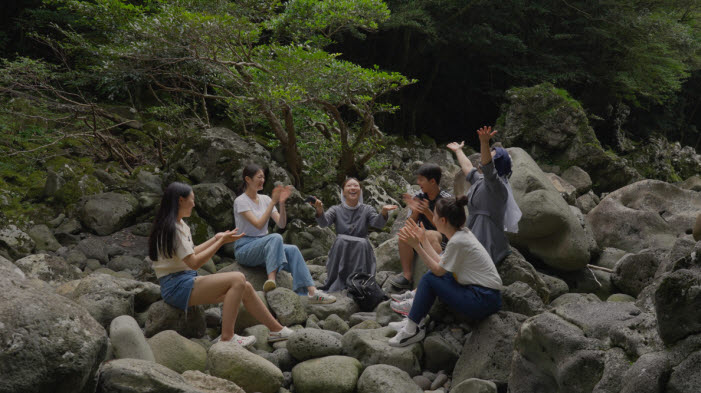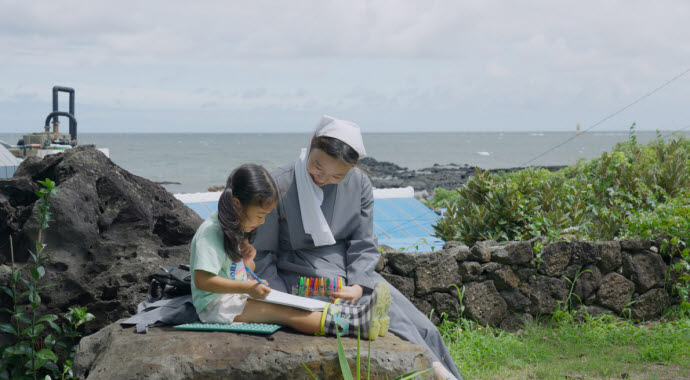
They Shot the Piano Player (2022) ☆☆1/2(2.5/4): The disappearance of Francisco Tenório Júnior

How much I actually came to learn about Francisco Tenório Júnior? That was a lingering question left in my mind after I watched animated docudrama film “They Shot the Piano Player”, which was mainly about the real-life disappearance and presumed murder of that rather obscure and but undeniably talented Brazilian pianist in 1976. Yes, his disappearance was really tragic for many reasons, but he remains to be a frustratingly elusive human figure even at the end of the film, and that was a little disappointing for me even though I admire its considerable technical efforts.

The narrative of the film is driven by a fictional New York City journalist named Jeff Harris (voiced by Jeff Goldblum), who comes to embark on writing a book about the Bossa nova music of Brazil around the early 1960s after his article on that subject came to draw lots of attention around the world. As a part of his material research process, he plans to spend several days in Brazil, and a close local friend of his is certainly willing to help him right from the beginning.

As doing more research into Bossa nova, which is a relaxed mix of American Jazz and Samba music, Harris comes to learn more about how influential Bossa nova was when it was developed in the late 1950s by a group of very young talented musicians such as João Gilberto and Paulo Moura. Just like when those young French filmmakers of the French New Wave concocted something quite revolutionary around that period, Gilberto and his fellow musicians happened to create their own innovate stuffs to be spread around the world, and it is interesting to note that both Bossa nova and the French New wave were highly creative responses to the considerable influence from some of the best parts of the American culture during that time.
While Harris interviews a number of living legends of Bossa nova in Brazil (Their real interview recordings are incorporated into the film, by the way), one certain figure keeps appearing, and that figure in question is none other than Francisco Tenório Júnior. All of the interviewees who personally knew him during that time talk a lot about what a talented genius this young pianist/composer was, and the film naturally gets more interested in delving into his exceptional but tragically short career along with Harris.

Although there are only a few recordings to show the talent of this ill-fated artist, they are fairy enough for us to feel and understand his considerable artistic talent, which could have influenced Bossa nova more if it had not been for his sudden disappearance. In March 1976, Tenório was doing a tour along with his several colleagues including Vinicius de Moraes in Buenos Aires, Argentina, and everything seemed fine for them as they enjoyed another satisfying moment for their careers, but then he was suddenly vanished not long after he went outside his staying place during one early morning.

This mysterious incident was certainly devastating to many people around him. While many of his colleagues were quite baffled, his wife and children as well as his mistress were more devastated as it became more evident that Tenório was another victim of many South American dictatorship governments during that period. As an expert explained to Harris later in the film, those dictators of a number of Central and South American countries gathered together for their joint covert operation to oppress millions of citizens during that period, and, not so surprisingly, the US government and CIA secretly supported this atrocious operation for securing their national interest on Central and South America as a part of the Cold War strategy.

Because what really happened to Tenório right before his presumed death remains an unsolved mystery even at this point, the film understandably comes to keep circling around that maddening question as a bunch of various testimonies associated with his disappearance and presume death keep popping out here and there. For example, we never get to know the exact reason for why he was targeted from the very beginning, and we can only guess that he was just casually labeled as a “subversive” just like millions of innocent victims during that terrible period. In addition, there are also several different versions of how he got vanished on that fateful day, and you will not be that sure about whether he went outside for buying a sandwich for him or getting a medicine for his mistress who happened to accompany him during that tour of his.

Moreover, the film is so occupied with the mystery surrounding Tenório’s disappearance that it often seems to overlook presenting Tenório as a human being to know and understand. Although it looks a bit into his early years later, Tenório still feels distant to us even at that point, and we are only reminded again and again of how wonderful he was as an artistic and a man despite his rather complicated private life. Furthermore, its fictional interviewer hero is quite colorless despite Goldblum’s good voice performance, and you may wonder whether the film could be more effective if it just directly approached to its narrative materials instead of using a redundant narrator figure as its narrative framing device.

In conclusion, “They Shot the Piano Player”, whose title is clearly derived from François Truffaut’s “Shoot the Piano Player” (1960), is not entirely satisfying, but it is technically impressive thanks to its vibrant and colorful juxtaposition of music and animation. Compared to directors Fernando Trueba and Javier Mariscal’s previous Oscar-nominated film “Chico and Rita” (2010), this is relatively less recommendable in my humble opinion, but it is not a total waste of time at least, and you may be interested in checking it out if you are not so familiar with its main subject.

Posted in Movies | Tagged , , , , , | Leave a comment

The Breaking Ice (2023) ☆☆☆(3/4): A quiet triangle in one cold Chinese city

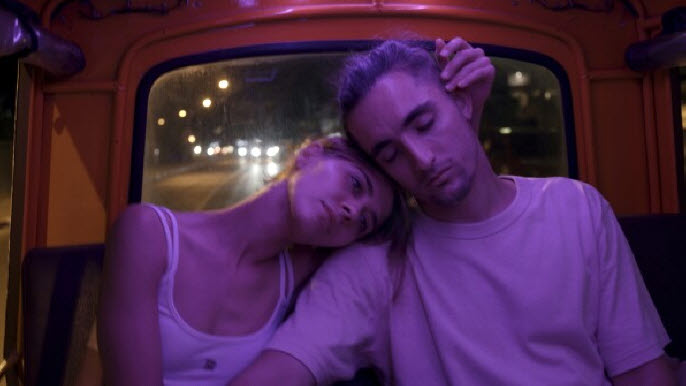
“The Breaking Ice”, which was selected as the Singaporean entry for Best International Film Oscar in last year, is a somber but poignant drama about three different young people who happen to be stuck together during several cold winter days in the northeastern area of China. While it requires some patience from you at first mainly due to its slow narrative pacing, the movie will gradually immerse you in its vivid local mood and details to observe and appreciate, and you will also come to care about its three main characters more than expected.

The main background of the film is Yanji, a country-level city in the east of the Jilin Province of China which is also the center of the Yanbian Korean Autonomous Prefecture. As some of you know, many of its citizens are the descendants of Korean people who moved there during the Japanese colonization era during the 20th century, and they have proudly maintained their heritage for many years as reflected by the frequent appearance of Korean language throughout the film.

The story begins with the big wedding ceremony between one Chinese dude and some Korean Chinese woman, and it soon comes to focus on one of the guests at the spot. This person in question is a lad named Haofeng (Liu Haoran), and it is slowly revealed to us that he is from Shanghai and also has been struggling with some serious mental problem. As a matter of fact, he later becomes so depressed that he seriously considers suicide, and then he changes his mind when he happens to spot a pretty young woman who works as a guide for visiting Chinese tourists.

Her name is Nana (Zhou Dongyu), and the movie observes her daily work for a while once Haofeng impulsively joins those Chinese tourists under her supervision. At one point, she and her tourists drop by a big tourist spot showing more of the local Korean culture in Yanji, and I must tell you that this is quite an interesting sight for South Korean audiences like me.

After that, Nana takes her tourists to a local restaurant for lunch, and then we get to know more about her friendship with a lad named Xiao (Qu Chuxiao). While not knowing what to do for his currently aimless life, Xiao usually works for his aunt and her husband who have incidentally run that local restaurant, and it is evident to us that he wants to get closer to Nana, though she is not so interested in that despite still regarding him as a close friend of hers.

When Haofeng happens to lose his smartphone, Nana is willing to help him a bit, and then she suggests to him that he should spend some time along with her and Xiao before going back to Shanghai. Although he is reluctant at first, Haofeng eventually agrees to have some fun along with his two accidental friends during the following evening, and we come to see more of the city and its surrounding area as observing how they go through a few more days and nights together.

On the surface, nothing much seems to be happening, but the three characters of the film gradually reveal themselves bit by bit along the story. Although the movie never specifies whatever Haofeng has been struggling with, we come to gather a bit about how much he has been pressured in one way or another, and that is the main reason why he and Nana come to form a sort of kinship between them. As revealed later in the story, she also ran away from lots of expectation and stress, and she understands Haofeng to some degree even though she never asks any direct question on his depressed status. In case of Xiao, he still yearns for Nana’s affection, but he is willing to accompany her and Haofeng as their friend nonetheless, and several playful moments among them in the film may take you back to those young main characters of Jean-Luc Godard’s “Band of Outsiders” (1964).

Patiently rolling its story and characters, the movie establishes more of its realistic local background which will haunt your mind as much as its three youthful but melancholic main characters. Thanks to cinematographer Yu Jing-pin, the cold ambiance of the city and its surrounding area on the screen feels quite palpable with the frequent shots of ice and snow, and this icy atmosphere is accentuated more during one sequence where Nana, Haofeng, and Xiao try to climb to the top of the Changbai Mountains, which are also known as the Great Paekdu in Korea. As more snow and fog come, the mood becomes rather surreal, and we are not so surprised when they experience something unbelievable before eventually going back to Yanji.

Under the thoughtful direction of director/writer Anthony Chen, a Singaporean filmmaker who won the Camera d’Or for his first feature film “Ilo Ilo” (2013) at the 2013 Cannes Film Festival, the three main cast members are convincing in their earnest low-key acting. While Zhou Dongyu brings some tranquil beauty to her character, Liu Haoran is effective in the restrained depiction of his character’s deeply troubled state, and Qu Chuxiao is also solid as another crucial part of the story. Because they never spell out whatever is happening among their characters, it is always engaging to observe the subtle interactions among their performances, and the movie wisely avoids any unnecessary melodrama even during its eventual finale.

In conclusion, “The Breaking Ice” is worthwhile to watch for its cold but haunting poetic qualities to be savored. You may struggle a bit at first for getting what and how it is about, but it is fairly rewarding on the whole thanks to its solid mood, storytelling, and performance, so I recommend you to give it a chance someday.

Posted in Movies | Tagged , , | Leave a comment

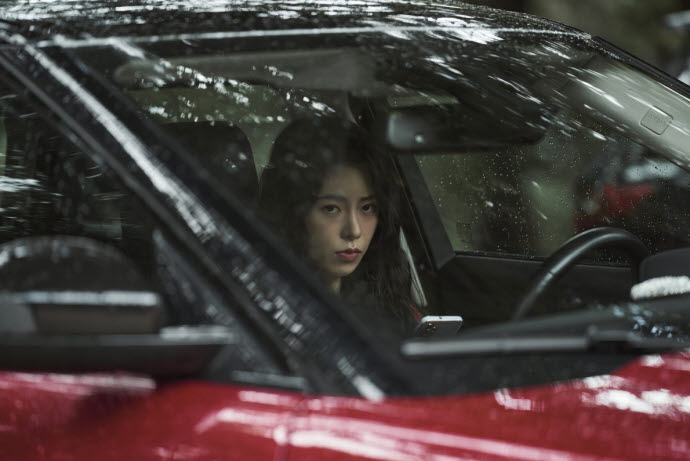
Unknown Narrative (2023) ☆☆(2/4): A jumbled dream movie

South Korean independent film “Unknown Narrative” could be named “Unfathomable Narrative” instead. It is supposed to be your average dream movie reminiscent of many other similar films such as David Lynch’s “Mulholland Drive” (2001), but any of its variously confusing moments do not gel together enough to hold my attention, and I found myself checking the time more than once during my viewing despite its rather short running time (75 minutes).

In the beginning, the movie seems to be mainly about Gi-un (Kim Dae-gun), a young man who works as a stunt double for the lead actor of some zombie apocalypse movie. When he begins another day, Gi-un feels rather disturbed for some unknown reason, and that odd impression on him grows further when he and others have an inexplicable happening while shooting one particular scene of their zombie flick.

After that weird moment, Gi-un frequently experiences one weird thing after another in his dream, and the movie accordingly throws lots of odd moments in seemingly random order. For example, we are introduced to a colorful delivery truck driver who keeps talking to himself as driving to somewhere, and then we see a schoolteacher doing her classroom lesson in front of a bunch of plant pots for no apparent reason. To be frank with you, I really have no idea on what these strange moments really mean for Gi-un, and I must warn you that they are just the prelude to many baffling moments to follow.

In the meantime, we are also introduced to Gi-eun (Jeong Ha-dam), a young woman who has suffered a lot due to her spinal injury caused by some serious accident. She recently decides to quit her painkiller because it keeps muddling her state of mind, but her doctor warns that the following withdrawal symptoms can also be quite severe, and things surely start to become very confusing for her mind. For example, there is a colorful dream moment where she does a free shopping here and there inside a big clothing shop, and then it turns out that her unconscious state of mind is connected with Gi-un’s for some unknown reason. This certainly makes the situation all the more confusing for us, and we come to wonder more about whether something actually happened between them.

However, the movie does not give us anything tangible enough for us to sense and understand whatever is happening on the screen, and there are also a number of glaring technical tactics which became more and more tiresome for me during my viewing. Whenever a character mentions something supposedly important, the movie suddenly makes a blatant jump cut just for showing that for a few seconds, and you will feel more embarrassed as the movie does the same thing again and again to the end. As an amateur film reviewer, I am not an expert at all, and I can tell you at least that even a film school novice will be too ashamed to do such a heavy-handed thing like that.

And that is just one of many other things which may frustrate or annoy you a lot. The sound effects of the movie are deliberately jarring, but this serves no purpose at all in my humble opinion, and neither does the decidedly overbearing score, which grated on my eardrums more than once. In addition, the line delivery of the performers in the film often feels so stiff that you will become more aware of the artificial qualities of the movie.

I guess the movie wants to catch its audiences off guard all the time, and I respect that to some degree, but it unfortunately forgets to ground its random dream narrative on any kind of emotional thread we can hang on. Sure, we may never explain everything in “Mulholland Drive”, but there is always a strong emotional center to interest and fascinate us to the end. In case of Charlie Kaufman’s “Synecdoche, New York” (2008), it is also equally confusing from the beginning to the end, but it somehow touched me in a similar way, and that is the main reason why I have been eager to revisit this sublime piece of work someday.

At least, I cannot say anything bad about the two main performers of the film, who try their best for filling their respective parts with some life and personality. While Kim Dae-gun, who previously played a crucial supporting character in “Drown” (2022), did a fairly good job of embodying his character’s growing confusion and desperation along the story, Jeong Ha-dam, who has been another interesting South Korean actress to watch since her breakout turn in “Still Flower” (2015), has some fun with several showy moments given to her, and it is a shame that their efforts are often limited by the weak storytelling and thin characterization of their movie. In case of several performers who simply come and go, Park Myung-shin manages to acquit himself well even though he is required to carry his single scene alone, and Lee Hyun-jin and Lee Ju-won also leave some impression during their brief appearance.

“Unknown Narrative” is the first feature film of director/writer Yang Gun-young, who previously made short film “Please Don’t Ask Me Why” (2019). Despite my immense frustration with her movie, I must point out that there are occasional signs of considerable talent in the film, and I guess she really wants to demonstrate what she is capable of as much as possible here in this film, but she sadly fails to make something as singular as Park Sye-young’s remarkable debut feature film “The Fifth Thoracic Vertebra” (2022). At least, she will probably move onto something more interesting sooner or later, and I really think she can do that.

Posted in Movies | Tagged , , | Leave a comment

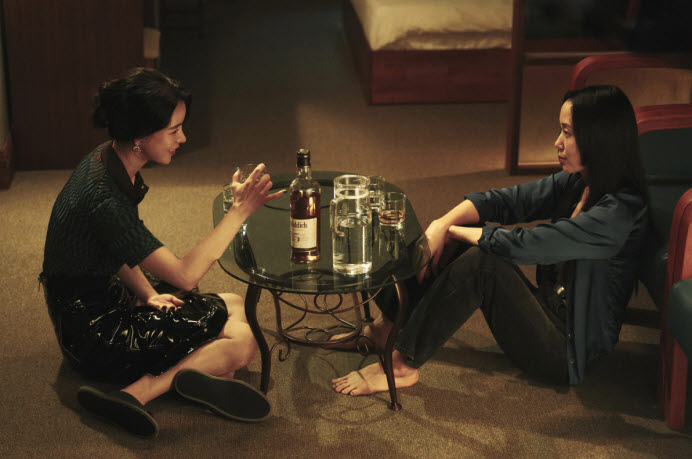
A Traveler’s Needs (2024) ☆☆☆1/2(3.5/4): Hong and Huppert meet again

Isabelle Huppert, who recently had her 71st birthday in last month, is one of the most interesting movie actresses I have ever seen. With that consistently distinctive persona of hers, she has steadily fascinated and impressed us for more than 50 years, and now she entertains us again in South Korean filmmaker Hong Sang-soo’s new film “A Traveler’s Needs”, which incidentally won the Grand Jury Prize when it was premiered at the Berlin International Film Festival early in this year.

Here in this film, Huppert plays an elusive middle-aged French woman who goes through a rather eventful day in one neighborhood area of Seoul. On the surface, this French lady is simply enjoying some life in Seoul while supposedly working as a private French tutor, but neither the movie nor she reveals that much about who she actually is, and that is where Huppert brings her own magic. Effortlessly exuding her own charm and charisma, she makes her opaque character interesting to observe to the end, and Hong certainly provides his own comic moments to support his lead actress.

The first act of the movie opens with the meeting between Huppert’s character and a young South Korean lady. After casually talking with each other in English for a while, the young South Korean lady demonstrates a bit of her piano performance skill, but Huppert seems to be more occupied with something else as she goes out to the balcony of her young pupil’s residence, and her young pupil keeps playing the piano in the meantime.

Some time later, Huppert throws a few seemingly serious questions on how her young pupil felt about her performance. Although she stumbles a bit as trying to articulate what she exactly felt at that time, her young pupil manages to give the answers, and Huppert writes down her answers on notes in French. When they subsequently go outside, Huppert asks about how her young pupil feels about a certain object they happen to come across, and, again, she writes down the answers on notes in French.

In the end, Huppert gives her young pupil what she wrote in French. According to her, one can learn a foreign language better via trying to speak what feels close to one’s heart first, and her pupil seems to believe in this rather unorthodox method while also showing some gratitude via a little tuition from her. I cannot say whether this teaching method can be really effective, but I must say that I was constantly amused by how Huppert delightfully handles this amusing moment under Hong’s unadorned but smooth direction.

The second part of the movie is more or less than a variation of the first part, and Huppert visits a middle-aged couple introduced to her via the mother of her young pupil. Because she happens to like a South Korean rice wine named “makgeolli” a lot, she and the couple later come to have a little drinking time together, and that reminded me again that it is not so recommendable for any alcoholic performer to collaborate with Hong (I heard that he often made his performers drink in front of the camera, by the way).

And I was also reminded of that simple but sublime moment of Huppert drinking a bottle of soju, another South Korean alcoholic beverage, alone in Hong’s previous film “In Another Country” (2012). As he did in that charmingly enjoyable film, Hong finds some rich humor from how his South Korean characters clumsily interact with Huppert in English, and that becomes all the amusing for me and other South Korean audiences when Huppert is later introduced to a famous poem from one of the most famous South Korean poets of the 20th century.

Around the last act, things get a little more serious as Huppert comes to show a bit of her character’s private life in Seoul. It turns out that she has been in a romantic relationship in a younger man, and she is willing to give him some financial help via that little tuition earned by her, though we are not so sure about whether she really loves him or not.

Our doubt on that aspect of hers is increased more when someone makes an unexpected visit to that young man’s residence. I will not go into details for not spoiling any of your entertainment, but I can tell you instead that what follows next is surprisingly tense, and you will even be surprised by a brief but striking moment of jump cut, which certainly stands out in contrast to Hong’s usually laid-back handling of story and characters.

Although you may scratch your head a bit due to the rather ambiguous ending, Huppert will still hold your attention as usual as freely bouncing along with the movie, and she is also supported well by several South Korean performers including Lee Hye-young, Kwon Hae-hyo, Cho Yun-hee, Ha Seong-guk, and Kim Seung-yoon. Like Huppert, most of them worked with Hong more than once, and they surely know how to handle those dryly humorous moments in the film while ably supporting Huppert as required.

Overall, “A Traveler’s Need”, which is incidentally Hong’s 31st feature film, is one of his more enjoyable films during last several years besides being one of the better South Korean movies of this year. He seemed to be spinning wheels in his two previous films “In Water” (2023) and “In Our Day” (2023), but he is back in element here, and I certainly hope that he will collaborate with Huppert again someday.

Posted in Movies | Tagged , , | 2 Comments

Yannick (2023) ☆☆☆(3/4): One nutty interrupter

French film “Yannick” is a little one-joke comedy film which may often amuse you with the increasingly absurd situation surrounding its main characters. Despite its rather short running time (67 minutes), the movie does as much as intended without wasting any minute of it, and then it makes a rather neat exit when the story seems to be approaching toward its inevitable finale.

The movie opens with the ongoing stage performance of a play inside some little theater in Paris. The play, which is incidentally titled “The Cuckold”, initially seems a bit interesting with the scene between the husband and wife in the play, but it becomes more evident to us that its three main performers are really trying hard to sell their characters in front of their audiences. As a matter of fact, there are only a handful of audiences in the theater, most of whom are mildly interested without much care.

And then one of the audiences suddenly interrupts the performance to the surprise of everyone in the theater. He is a plain working-class guy named Yannick (Raphaël Quenard), and he is not so pleased because he has to endure this rather mediocre performance instead of actually having a good time there. He attempts some earnest criticism on the play as well as its performance, but he does not get much agreement from his fellow audiences or the main performers, and then he is eventually demanded to leave theater for continuing the performance.

At first, Yannick seems defeated when he exits, but he somehow changes his mind later while determined to do something quite drastic. He returns with a gun in his hand, and nobody dares to object him this time, regardless of whether that gun is real or not. As holding both the audiences and the main performers as his hostages, he eventually demands the main performers to do something else instead of what they were supposed to do on the stage, and that certainly throws the main performers into more panic and confusion.

Now this setup surely requires you some suspension of disbelief, and the movie manages to sidestep some plot holes as cheerfully wielding its darkly absurd sense of humor along the story. Mainly because there are not many people in the theater besides the audiences and the main performers, Yannick can easily take over the theater quite easily, and the audiences and the main performers have no choice but to follow his demands without being not so sure about what is really going on around them. The audiences do not complain that much mainly because they have been rather bored during the performance, and some of them actually seem amused by how Yannick breaks the monotony of the performance. In case of the main performers, they all agree to indulge Yannick as much as possible, but, not so surprisingly, they come to see more of how impossible he really is as their new writer/director (Their original writer/director is conveniently absent, by the way).

Considering what he manages to write in the end, I should say Yannick is not a very good writer at all, but I must also admit that he is constantly fun and amusing to observe from the distance at least. During the second half of the story, he even attempts to ingratiate him with a number of audiences, and most of the audiences except one cranky old dude are more amused as coming to side with him more than before (Talk about the Stockholm syndrome!).

These and many other moments in the film are effectively presented under the deft direction of director/writer Quentin Dupieux, who is also known as “Mister Oizo” and incidentally serves as the co-producer/editor/cinematographer of the film. While it is mostly confined in its small, closed background, the movie never feels stuffy despite being shot in the screen ratio of 1.33:1, and his main cast members keep their appearance as straight as possible while not seeming to be aware of being on the joke of the film at all. Although the story begins to run out of its narrative momentum during its last 10 minutes, it still maintains its lightweight mood even at that point, and you will also get some extra laugh before the end credits roll.

While Raphaël Quenard is naturally a standout thanks to a number of juicy comic moments given to him, the rest of the cast members are also engaging in their solid ensemble performance. As the three main performers of the play in the film, Pio Marmaï, Blanche Gardin, and Sébastien Chassagne are often hilarious as their characters frantically try to cope with their increasingly complicated circumstance in one way or another, and Marmaï is particularly funny when his character happens to reach to a sort of breaking point around the climactic part of the story. In case of the supporting performers playing the audiences, they ably support Quenard and the other three main cast members, and their individual responses to their ongoing hostage situation certainly contribute more humor to the story.

On the whole, “Yannick” is a modest but interesting piece of work from Dupieux, who previously made several notable feature films including “Dearskin” (2019). In my consequential opinion, it could be developed further in terms of story and characters, but the movie tickled and entertained me enough while not staying out its welcome at all, and now I become more interested in checking out Dupieux’s previous works later.

Posted in Movies | Tagged , , , , | Leave a comment

BlackBerry (2023) ☆☆☆1/2(3.5/4): The Rise and Fall of BlackBerry

You probably remember that there was a very popular smartphone called BlackBerry before iPhone and many other smartphones. To be frank with you, I never used BlackBerry because I stuck to my small cellular phone during that time although I saw it from movies and TV from time to time. When I eventually move onto Samsung smartphone along with my family in 2013, BlackBerry was already being pushed out by other smartphones, and now it becomes an artifact of the early 2000s at present.

Matt Johnson’s third feature film “BlackBerry” presents the dramatic story of how BlackBerry rose and then fell during the 2000s, and it splendidly works as an ironic cautionary tale on ambition and hubris. Sure, the company behind BlackBerry would have gone nowhere if it had not had someone to push itself much further, but that person in question also turned out to one of the main factors in its eventual downfall later, and there is certainly a rich irony in that.

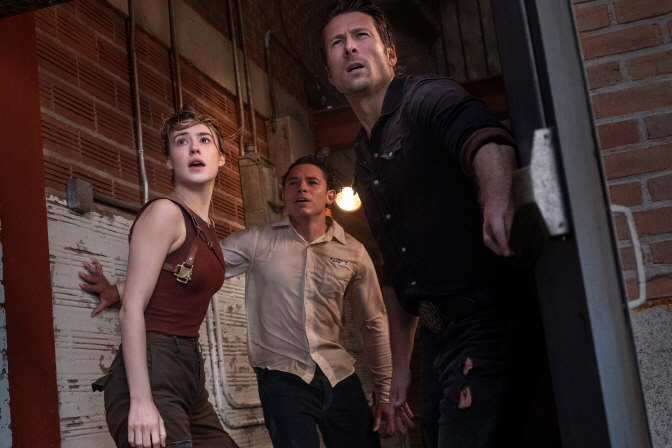
The movie, which is mainly set in Waterloo, Canada, opens with an accidental meeting in 1996 between an ambitious businessman named Jim Balsillie (Glenn Howerton) and the two young nerdy co-founders of Research in Motion (RIM): Mike Lazaridis (Jay Baruchel) and Doug Fregin (Matt Johnson). While Lazaridis and Fregin initially do not impress Balsillie much mainly due to their clumsy presentation on their new cellular device called “PocketLink”, Balsillie subsequently come to see some potential from PocketLink, and he decided to go all the way for RIM not long after getting fired from his company.

Although Balsillie demands to Lazaridis and Fregin that they should hire him as the co-CEO of the company first, Lazaridis, who is incidentally the current CEO of RIM, eventually agrees to accept Balsillie’s demand despite some initial hesitation. After all, RIM is on the verge of bankruptcy because of Lazaridis and Fregin’s bumbling mismanagement, and it surely needs a guy willing to bring some constructive changes into the company right now, which feels pretty much like your average fraternity house for nerdy boys.

And Balsillie does the job as much as expected. After doing some aggressive reorganization inside RIM, he makes Lazaridis and other technicians focus more on the development of PocketLink, which is renamed later as, of course, “BlackBerry”. Thanks to Balsillie’s savvy business tactics, RIM eventually succeeds in drawing the attention from the executives of Bell Atlantic, which is also known as Verizon. in US, and, what do you know, BlackBerry subsequently becomes a new hot electronic device to buy once it comes out in 1999.

The second half of the screenplay by Johnson and his co-writer/producer Matthew Miller, which is based on Jacquie McNish and Sean Silcoff’s nonfiction book “Losing the Signal: The Untold Story Behind the Extraordinary Rise and Spectacular Fall of BlackBerry”, jumps forward to when the company becomes much bigger and richer in the early 2000s. While Fregin remains your typical nerd just like many of his colleagues in the company, Lazaridis becomes a bit savvier as influenced more by Balsillie, and both he and Balsillie are quite confident about the future of their company.

However, their company soon begins to have one big trouble after another. When RIM confronts the impending possibility of the hostile takeover by some bigger American company, Balsillie pushes RIM toward selling much more BlackBerrys in US for blocking that possibility, but this aggressive business tactic of his leads to a disastrous outcome which irrevocably tarnishes the reputation of the company. Moreover, Steve Jobs and his Apple company suddenly surpass RIM with, yes, iPhone in 2007, and that certainly makes Lazaridis and other technicians in the company all the more nervous.

Quite intoxicated with his big success, Balsillie is more occupied with buying a NHL (National Hockey Leagues) team, so Lazaridis has to handle this immediate problem for himself. Not so surprisingly, he quickly finds himself under a situation way over his head – especially when US SEC (Securities and Exchange Commission) begins to investigate the company.

Under Johnson’s competent direction, the story smoothly rolls toward its predestined finale, and Johnson also draws good performances from his two fellow cast members. While Jay Baruchel successfully dials down his comic image for his usually subdued character, Johnson functions well as a goofy but surprisingly sensible counterpart to Baruchel’s character, and Glenn Howerton, who has also been mainly known for comic performances like Baruchel, is palpably intense and aggressive in what may be regarded as a breakthrough turn in his acting career. While his character is pretty unlikable to say the least, Howerton presents his character as a fascinating case study to observe with some dark amusement, and he certainly energizes the movie whenever he enters the screen.

“BlackBerry” is another recent entrepreneur movie about famous product after “Air” (2023) and “Tetris” (2023), but it is one of more enjoyable ones thanks to its solid storytelling and entertaining performances. Although I have no idea on how much the movie actually embellishes its real-life story, the overall result is quite engaging on the whole, and it will probably be remembered more than BlackBerry itself in the future.

Posted in Movies | Tagged , , | Leave a comment

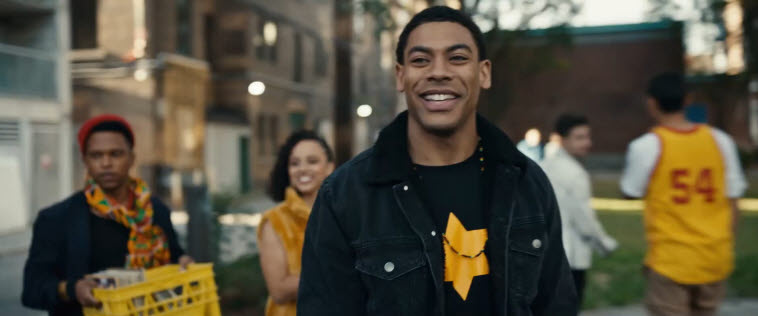
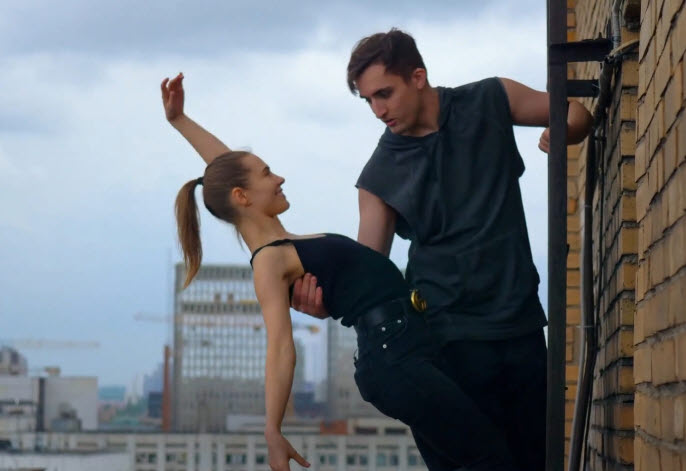
Madu (2024) ☆☆☆(3/4): A talented boy from Nigeria

Documentary film “Madu”, which is currently available on Disney+, closely follows one talented boy from Nigeria. Although there are a number of small and big obstacles despite one very fortunate opportunity given to him, he keeps trying nonetheless as helped and supported by others around him, and it is also touching to observe the gradual personal growth from his ongoing journey toward being a professional ballet dancer someday.

During the early part of the documentary, we get to know a bit about Anthony Madu, a 12-year-old Nigerian boy who suddenly happened to draw lots of attention around the world when a video clip of his ballet dance went viral on the Internet a few years ago. Since he was 5, he became interested and then very passionate about ballet dance, and the video clip clearly shows his considerable talent and potential as a future ballet dancer.

Not so surprisingly, his ardent passion toward ballet dance is often ridiculed by other kids as reflected by a certain brief moment, but his family have always supported him anyway, and then there comes a good news for them. Thanks to that very popular video clip which was even reported on the BBC news in UK, Elmhurst Ballet School becomes interested in helping Anthony developing and honing his raw talent, and they are certainly delighted for this unexpected opportunity for him.

However, this also means that Anthony is soon going to leave for UK. While quite excited about going to that prestigious ballet school, Anthony cannot help but nervous about being separated from his family including his dear younger brother during next several months, and his mother and younger brother feel a bit sad despite being very happy for Anthony’s good chance.

Everything in Elmhurst Ballet School surely looks and feels alien to Anthony right from his first day in the school, but he gradually gets accustomed to his new environment because his talent can be encouraged and nurtured much more than before. Those teachers who are going to train him and many other students in the school are mostly kind and supportive while helping their students advancing day by day, and Anthony also comes to befriend several students around his age. Because he never had any close friend in Nigeria due to being often ridiculed for his ballet dance, he is rather awkward when he approaches to some of his schoolmates, but he soon becomes quite close to them, and he even shows an interest in one young girl later.

However, Anthony often misses his family a lot. He is sometimes conflicted about that growing feeling and his big aspiration, and then the situation becomes all the more complicated when he later begins to show the signs of a serious medical problem. Because he may have to give up his aspiration because of this, he becomes more conflicted than before, and he is subsequently advised to spend a holiday week along with the family in Nigeria.

While he is certainly welcomed by his family when he returns, Anthony comes to feel how much he is changed after spending several months in UK. He has surely seen more of the world outside, and his accent becomes closer to the British one than his original Nigerian one. In addition, he often has some emotional swings as his adolescent years begin, and there is a short but painful moment when his parents sincerely calm him down during another emotional swing of his.

Anyway, Anthony eventually goes back to his school in UK, and he keeps trying as receiving more help and support from his teachers and schoolmates. Although that medical problem of his is irreversible, he avoids the worst situation as least, and he still can study ballet dance as before, while his teachers are generous and encouraging as before. In addition, we also see Anthony hanging around with several schoolmates of his, and it is heartwarming to see how his schoolmates gladly provide some comfort and support to him.

While it sometimes oversteps a bit especially when it attempts to emphasizes how Anthony feels about his serious medical problem, the documentary shows a lot of care and admiration toward him, and directors Matthew Ogens and Joel Kachi Benson did a competent job of giving us more glimpses on Anthony’s aspiration and talent. From time to time, they show Anthony doing a solo performance alone in wide and empty spaces, and his artistic passion from these occasional moments is palpable to say the least. As reminded by one of his teachers at one point, he needs to know and then express himself more for whatever he will achieve someday, and the last scene in the documentary clearly shows us how much he is comfortable and confident about himself while ready to advance more for his future.

In conclusion, “Madu” is a modest but moving documentary, and you will come to root for its main human subject more when it is over. Although I wonder whether it could be more interesting if it followed Anthony a few years more, the overall result is still engaging enough on the whole, and I will be glad if there comes a documentary showing more of his ongoing journey some time later. Sure, there will certainly be a lot more challenges for him, but he will probably prevail and then fulfill his longtime aspiration in the end, you know.

Posted in Movies | Tagged , , , , , | Leave a comment

Blood for Dust (2023) ☆☆☆(3/4): Descent of a salesman

“Blood for Dust” is a moody but tense noir film which follows the descent of one ordinary salesman who lets himself driven more into crime and corruption by his growing despair and frustration. While this is not a pleasant sight at all, the movie keeps holding our attention to the end, and the result is one of more interesting crime drama films of this year.

The early part of the film slowly and dryly establishes how things have been gloomy and frustrating for its salesman hero during last several months of the early 1990s. Since a certain shocking incident involved with one of his close colleagues occurred some time ago, Cliff (Scoot McNairy) has tried to move on for supporting his dear family as before, but it has been more difficult for him to make ends meet during last several months, and now he is almost reaching to the rock bottom after suddenly getting fired due to that incident in the past. Because his family really needs money at present, he naturally tries to get employed again and again, but, to his despair and frustration, nobody is particularly willing to hire him at present because of that incident.

And then, of course, there comes a tempting offer from another old colleague of his in the past. In contrast to Cliff, Ricky (Kit Harrington) seems to be doing quite well even though he was deeply involved with that incident just like Cliff, and we are not so surprised when it is later revealed that Ricky has earned a lot of money via his ongoing association with some dangerous criminals out there. As a guy who worked as a traveling salesman just like Cliff, Ricky surely knows how to make himself look not so suspicious to many others including police officers, and he has used that skill for delivering drug or firearm for those criminal associates of his.

Now Ricky wants Cliff to join his little criminal business, and Cliff is understandably reluctant at first, but he eventually agrees to assist his old colleague as reminded more that there will not be another chance of employment for him for a while. When he is later introduced to Ricky’s several criminal associates, he surely comes to see that these criminals are definitely not people he can mess with, and he becomes all the nervous when he is subsequently instructed to do a certain delivery job along with a menacing henchman who may kill him instantly if that seems necessary.

Now some of you will have a pretty good idea on where the screenplay by David Ebeltoft is heading, but the movie takes its time in building up mood and tension around its story and characters. As he becomes more conflicted about his gradual descent into crime, we get to know a little more about Cliff, and the movie provides a bit of warmth when he drops by a house belonging to the widow of that unfortunate colleague of his, who was once very close to him not long before that incident.

Meanwhile, not so surprisingly, it turns out that Ricky has some other plan behind his back, and this makes Cliff’s situation all the more desperate than before. Now having no one to depend on except himself, he must be more active than merely functioning as a carrier, and he surely comes to face more of his dark sides when he must survive by any means necessary.

Even at that narrative point, the movie firmly sticks to its dryly stark atmosphere while heading toward a moment of inevitability along with its plain ordinary hero, and director Ron Blackhurst and his crew members including cinematographer Justic Derry and editor Justin Oakley did a commendable job of filling their movie with some striking visual qualities. While many of its nocturnal scenes are drenched by the barren darkness accentuated by their cold orange lighting scheme, the movie is also decorated well with enough amount of period atmosphere and details to be appreciated, and the ambient score by Nick Bohun frequently keeps us on the edge during several key moments in the film.

The movie depends a lot on the lead performance by Scoot McNairy, who has been quite ubiquitous since his breakthrough turn in Gareth Edwards’s little SF movie “Monsters” (2010). Flawlessly embodying his character’s jaded weariness and desperation, McNairy also skillfully conveys to us his character’s inner corruption along the story without any unnecessary exaggeration, and it is often bitter to observe how his character tries to believe that he is still a good person despite his irreversible change along the story.

Around McNairy, a number of interesting performers come and go as required. While Josh Lucas, Stephen Dorff, and Ethan Suplee are effectively threatening in their respective supporting roles, Nora Zehetner quietly shines during her substantial scene with McNairy in the middle of the story, and Kit Harrington is unexpectedly effective as looking and feeling quite different from when he appeared as a decent lad of honor and integrity in HBO TV drama series “Game of Thrones”.

On the whole, “Blood for Dust” is typical to the core in terms of story and characters, but it distinguishes itself to some degree at least thanks to its solid mood, storytelling, and performance. While it may require some patience from you due to its rather slow narrative pacing, it will engage and then satisfy you more than expected in the end, and it is certainly recommendable to anyone who can appreciate a good noir flick.

Posted in Movies | Tagged , , , | Leave a comment

Laroy, Texas (2023) ☆☆☆(3/4): A little comic noir set in Texas

“Laroy, Texas” is a little comic noir which reminds us again of that old genre lesson: the world always wins no matter how much you try to win by any means necessary. Clearly reminiscent of its senior noir films such as the Coen Brothers’ “Blood Simple” (1984), the movie provides us a fair share of twists and turns along its increasingly complicated narrative, and it also shows some pity and understanding to some of its mostly pathetic main characters.

At first, the movie establishes its hero’s pitiful daily existence in a little Texan town named Laroy. Ray (John Magaro) has run a local hardware store along with his older brother, but he has been usually disregarded by not only his older brother but also his pretty wife who was once a beauty queen. Nevertheless, he still wants to support his wife’s rather unrealistic hope of having a beauty salon someday as much as possible – even after his old schoolmate Skip (Steve Zahn) informs to him that she is actually cheating on him behind her back.

And then there comes an unexpected opportunity for him to get the money for his wife’s future business. When Ray happens to be outside a local motel which has been a spot for her extramarital affair, somebody suddenly approaches to him, and we quickly gather that this stranger in question mistakes Ray for some professional killer, who is incidentally introduced to us during the prologue scene. Ray is not so pleased when he is instructed to kill someone, but then he is eventually pushed to take the job just because of being called a pushover, and he becomes quite tempted because of the money given to him in advance.

What follows next is Ray’s clumsy attempt to locate and then eliminate that target in question – and how he belatedly comes to realize that he is in a situation way over his head. It later turns out that the target is involved with a serious matter surrounding a bigger amount of cash which happens to be gone missing, and then there is also that professional killer who was supposed to do the killing. Because of his strict professional principles, the killer is willing to get to the bottom of the circumstance, and it goes without saying that things will be very unpleasant for whoever happens to stand on his way.

Getting cornered more and more, Ray eventually comes to seek for help from Skip, who is certainly eager to prove his professional worth at last to many others including those local police officers. Not so surprisingly, he turns out to be as woefully clumsy as his schoolmate, and there is a morbidly comic scene where he attempts to squeeze some information from some guy even though he terribly botches that job more than once to Ray’s horror.

As they clumsily bounce from one spot to another along the story, Ray and Skip come to learn a bit more about what is really going on around them, and the screenplay by director/writer Shane Atkinson doles out a series of well-written scenes driven by the colorful personalities of various figures popping here and there around Skip and Ray. In case of one certain supporting character who gladly explains them more about their increasingly confusing situation, the mood becomes surprisingly poignant as Ray comes to see more of himself from that supporting character, and we are not so surprised by his sudden unexpected choice around the end of the story.

And the movie comes to show more care and compassion to Ray and Skip, who are still pathetic as before but come to us as two understandable losers who have had each own fair share of hope and desperation just like many other noir movie characters before them. Even though he is reminded again and again of how much he has been oblivious to all the daily deceptions around him, Ray still desperately sticks to the possibility of getting his wife back in the end. No matter how silly and hopeless he is as a private detective, Skip still wants to believe that the case will lead him to more recognition and respect, and that is the reason why he is willing to take more risk for his schoolmate later in the story.

John Magaro, who also co-produces the movie, and Steve Zahn are pitch-perfect in their comic acting which gradually anchors the film as generating a considerable amount of gravitas. While Magaro, a likable character actor who has steadily worked during last several years since his substantial supporting turn in “The Big Short” (2015), holds the ground with his low-key performance, Zahn, who is no stranger to playing goofy characters, often functions as a showy counterpart to his co-actor, and their resulting chemistry keeps things rolling even when the movie seems to trudge from time to time.

Atkinson surrounds his two lead performers with a bunch of engaging performers including Megan Stevenson, Matthew Del Negro, Darcy Shean, Brannon Cross, Emily Pendergast, Brad Leland, Galadriel Stineman, and Dylan Baker. Baker is often chilling as slyly letting us get some glimpse into his character’s ruthless qualities hidden behind a seemingly uncharacteristic appearance, and he certainly generates enough tension for the story whenever he appears.

Overall, “Laroy, Texas” is a solid genre piece which not only keeps us engaged to its twisty storytelling but also manages to give us a satisfying ending where almost everything in the story is fatefully resolved. Although it does not surpass its many seniors that much, it did its job fairly well on the whole with enough mood, style, and personality, and that is certainly enough for me.

Posted in Movies | Tagged , , , , | Leave a comment

Poetry on Land (2023) ☆☆☆(3/4): A master landscape architect

South Korean documentary “Poetry on Land” is a soothing experience to be cherished for good reasons. While it is lovely to see all those tranquilly beautiful nature landscapes in the documentary, it is also fascinating to observe an old female professional who is a creative mind behind many of these gorgeous sceneries, and you will come to admire how she is willing to keep going as usual despite her old age.

That female professional in question is Jeong Yeong-seon, an 82-year-old lady whom you may have heard about if you have any interest in landscape architecture. For last several decades, Jeong has distinguished herself a lot as one of the best landscape architects in not only South Korea but also the global world. As shown around the end of the documentary, she recently received a prestigious award from the International Federation of Landscape Architect (IFLA) in last year, and that was just one of many recognitions given to this exceptional woman.

The documentary simply looks at a number of various works of her, but it is not so difficult for us to discern her considerable skills coupled with some artistic touches to admire. In case of a garden for the building of one prominent local cosmetic company, many different plants associated with cosmetic are arranged here and there in the garden, and the result is seemingly plain but somehow feels colorfully sublime in addition to providing an organic surrounding environment for the building.

As a first-rate landscape architect, Jeong surely knows a lot about those various local plants in South Korea, and she gladly talks about how she applies that vast knowledge of hers to her works. She has always preferred natural style and mood, and she pays a lot of attention to how her work can be poetically harmonious with its surroundings just like many old traditional Korean gardens. For example, she made sure that her design was effortlessly mixed into the background in case of a little park area surrounding a small stream from the Han River in Seoul, and you will surely appreciate how that park area looks so plain but undeniably relaxing on the whole.

My personal favorite is a rather modest interior garden installed inside one urbane building. Because the building happened to be surrounded by many other buildings, a bunch of tall trees are placed inside the garden for making you feel like being in the middle of a small forest, and there are also a bunch of various local forest plants to accentuate that impression. The overall design may look pretty simple at first, but you may want to savor the resulting atmosphere for a while as sipping a cup of oriental tea. To be frank with you, I am already considering visiting that place someday.

One of most interesting moments in the documentary is how Jeong’s landscape architecture works can look beautiful even during cold and barren winter days. While their leaves are almost gone, those trees still look lovely in their thoughtful arrangement, and they surely look all the more beautiful when they are covered with lots of snow.

Although she does not talk that much about her life and career, Jeong tells a bit about how much she has been enthusiastic about landscape architecture for many years. Even when she was very young, she was quite passionate about plants and landscapes while spending a lot of time around her father’s orchard area, and her modest residence located in some rural region certainly shows that she has never forgotten the root of her lifelong professional passion.

Whenever she works, Jeong simply does simple sketches or writes some notes on those ground plan papers with her pastel pencils, and it goes without saying that she already has clear ideas on what she will do for her latest project. Despite her old age, she is quite active and painstaking in every step of her work progress, and several interviewees in the documentary, each of whom incidentally has a fair amount of professional background, cannot help but show admiration and respect as gladly talking about her impressive professional dedication in front of the camera.

Although it seems to respect Jeong too much to delve more into her private life, the documentary later provides several sweet personal moments between her and her family. Her son, who has also devoted himself to the same professional field since he watched her jobs during his childhood years, has been one of her closest professional associates, and we see how he steadily assists his mother when they look around the spot for her latest project. As a grandmother, Jeong certainly dotes a lot on her grandson, and she willingly shows and teaches him a lot on how precious nature environment is as well as the importance of her works. Her grandson is still a little innocent boy who simply wants to run around a garden designed by his grandmother, but you can easily imagine him following his grandmother and father’s footsteps someday.

In conclusion, “Poetry on Land” is a nice little documentary which did a good job on illuminating Jeong’s considerable lifetime achievements, and director Jung Da-woon presents her interesting human main subject with enough sincerity and admiration. Regardless of how many years are left for her, Jeong is always ready for doing more for our valuable nature environment in South Korea, and I and many other South Korean citizens should certainly appreciate more of her priceless public service of many years.

Posted in Movies | Tagged , , , | Leave a comment