Laapataa Ladies (2023) ☆☆☆(3/4): Two switched brides

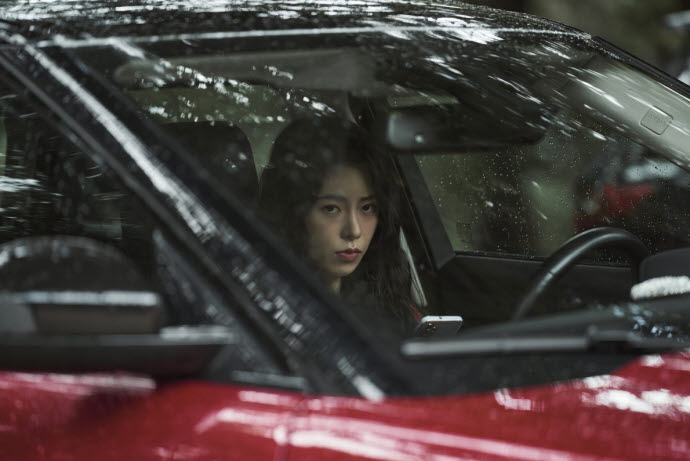
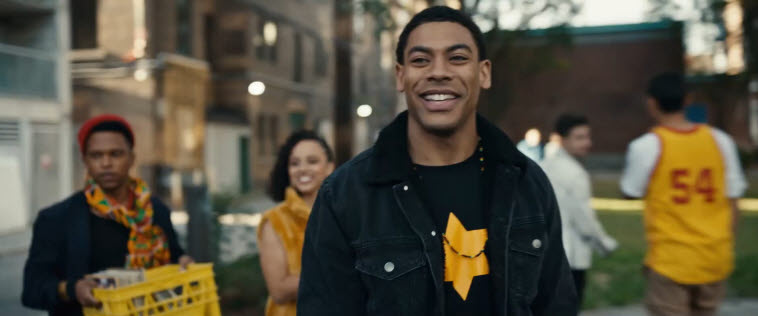
Indian film “Laapataa Ladies”, which was recently shown at the Jeonju International Film Festival in South Korea, is an entertaining mix of comedy, drama, and a bit of wholesome feminist message. Starting from one absurd comic situation involved with mistaken identity, the movie deftly swings back and forth between humor and poignancy, and it surely earns its feel-good ending as making us like and care more about almost everyone in the story.

The movie, which happens to be set in 2001, opens with a little wedding ceremony being held in one small rural village. Although they got to know each other a bit only for a rather short time, Phool (Nitanshi Goel) and her groom Deepak (Sparsh Shrivastav) are hopeful about their married life, and we soon see this young married couple leaving her village and then traveling to Deepak’s hometown village by a train right after the end of their wedding ceremony.

Because it is incidentally some traditional holiday when a lot more couples marry than usual, Deepak and Phool happen to sit along with two other recently married couples, and we cannot help but notice how Phool and the two other brides do not look that different from each other as they are covering themselves with the same kind of veil. When the train arrives at his village at late night many hours later, Deepak hurriedly gets off from the train, but, alas, he wakes up one of those two other brides instead of Phool, and he belatedly comes to realize his mistake when she finally reveals herself in front of him and his family, who are all quite shocked and baffled to say the least.

Deepak and his friends naturally go to a local police inspector for requesting some help, but they do not have any clue about where the hell Phool is. Moreover, the inspector is not particularly eager to help them because the case does not seem to benefit him at any chance, though he senses something fishy about that other bride during their subsequent meeting.

That other bride, who says her name is Pushpa (Pratibha Ranta), simply decides to stay at Deepak’s family house for a while, and it gradually turns out that she does have some hidden purpose behind her back. While she pretends that she does not know how to contact with her family or her groom, she actually has a cellular phone, and we see how she prepares for her hidden plan step by step without telling anyone while also closely monitored by the aforementioned inspector.

Meanwhile, the movie shows us how the situation is equally baffling for Phool, who finds herself helplessly stranded alone in the train station of the village where that other bride was supposed to go. She could just simply go with that other bride’s groom, but it is quite apparent to her (and us) that he is not a very good person at all, and she has no choice but to stay alone at the station for a while at least.

While generating some suspense in the story at times, the movie leisurely rolls its plot and characters with genuine care and affection. While it pays some attention to Deepak’s earnest efforts for finding his bride, the movie also focuses on how Pushpa positively influences Deepak’s family members in one way or another, and there is a small touching moment when she sincerely encourages one certain female family member’s considerable artistic talent. In case of Phool, she comes to go through some substantial growth and maturation via several generous figures willing to help her more than expected, and it is poignant to observe how much she is changed in the end even though her affection toward her groom remains same as before.

Needless to say, the movie eventually shifts itself toward melodrama later in the story, but it thankfully avoids unnecessary sappiness while making a clear point on female rights. While Phool and Pushpa are quite different from each other in many aspects, they are all active and independent in their contrasting life choices nonetheless, and you will certainly root for them more around the end of their individual journeys. In addition, the movie surrounds them with a number of various colorful female characters to remember, and I particularly like Manju Maai (Chhaya Kadam), a no-nonsense street vendor lady who teaches a bit of self-taught feminism to Phool after reluctantly taking her under her wing.

The movie is often buoyed by the engaging performances from its several main cast members. While Nitanshi Goel and Pratibha Ranta ably support the film from their opposite positions, Sparsh Shrivastav is sympathetic as another crucial part of the story, Chhaya Kadam and Ravi Kishan delightfully steal the show during their respective key scenes. As the aforementioned inspector, Kishan is hilariously sleazy with a moustache to twirl, and he is also effective when his character unexpectedly shows some decency and principle around the end of the story.

“Laapataa Ladies” is the second feature film from director/co-producer Kiran Rao, who made a feature film debut with “Mumbai Diaries” (2011) and then has produced several successful commercial films including “Dangal” (2016) during next several years. I have not seen “Mumbai Diaries” yet, but I can tell you instead that “Laapataa Ladies” is a competent crowd-pleaser packed with enjoyable goodies including the good soundtrack by Ram Sampath, and I think you should give it a chance someday.

Posted in Movies | Tagged , , | Leave a comment

The Hand (2023) ☆1/2(1.5/4): Stuck with an evil hand in the toilet

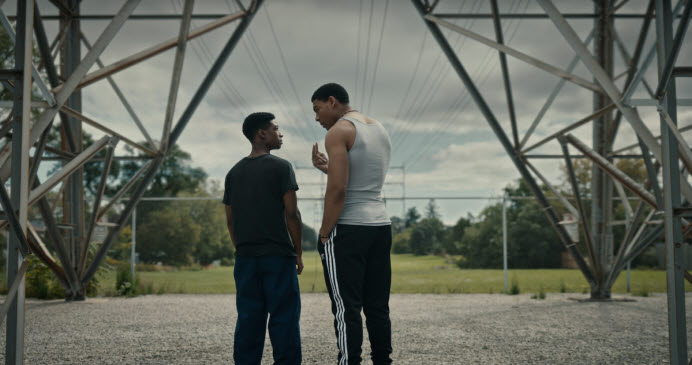
South Korean film “The Hand”, which is incidentally the last movie I happened to watch as a judge for one certain minor category of the upcoming Wildflower Film Awards ceremony of this year, starts with a supposedly intriguing horror story premise, but, to my big disappointment, it does not have much time or skill to develop that into something truly tense or frightening. Despite its rather short running time (58 minutes), the movie often feels like a short film extended too long, and this made me more aware of its many glaring flaws including its deficient storytelling and shallow characterization.

The movie is basically one extended situation unfolded inside a very limited space. After having a strange dream probably due to another night of heavy drinking, Bong-soo (Lea Jae-won) wakes up and then goes to the bathroom inside his apartment, but then he is caught off guard as encountering something very disturbing in the bathroom. For no apparent reason, a mysterious hand is being erected right from the inside of the toilet in the bathroom, and he is not hallucinating at all because his wife also sees the same thing after being awakened by him.

Quite baffled and disturbed, Bong-soo naturally makes an emergency call. He is subsequently told that a paramedic team will soon come to his apartment, but, of course, things quickly get weirder for Bong-soo and his wife. They are relieved to see the security guy of their apartment building coming to their apartment, but something scary happens to the security guy right before the paramedic team eventually arrives, and, what do you know, they and several others find themselves somehow locked inside the bathroom.

It becomes more evident to us that whatever is going on around them is clearly involved with that hand, but it takes some more time for them to grasp their increasingly risky circumstance. Some of them eventually do some idiotic things just like many other horror movie characters, and then, not so surprisingly, they all belatedly come to realize how evil and dangerous that hand really is.

Now this looks like a fairy good setup, but the screenplay by director Choi Yun-ho and his co-writer Jangjak, who has been known for several online graphic novels, does not advance much from that. For instance, it does not provide much explanation on that hand at all, and it is also rather vague about how the hell that hand ended up being in the bathroom of Bong-soo’s apartment. Later in the story, the lead of the paramedic team reveals one certain weird incident which occurred some time ago in Bong-soo’s neighborhood, but, to our frustration, the movie never makes any clear connection between that incident and the origin of that hand, and we come to observe the whole situation without much care or interest.

I guess the movie tries to generate more horror and terror from the chaos and confusion among its several main characters including Bong-soo, but, unfortunately, none of them is particularly developed well enough to engage us to the end. While some of them are more or less than cardboard figures to be eliminated by that hand along the story, the rest of them are no better than that, and that makes the film all the more tiresome. To make matters worse, the movie also resorts to a certain familiar genre convention without much success, and that may remind you that there have many better films which handle that genre convention much more skillfully.

Eventually, there comes an inevitable point where Bong-soo and a few other surviving characters stick together for getting out of the bathroom as soon as possible, but the movie remains as tepid and uninteresting as before. You may appreciate some influence from a certain striking moment from the finale of Roman Polanski’s “Repulsion” (1965), and the movie thankfully becomes a bit more fun around that point, but then it hurriedly moves forward to its finishing line where it clumsily tries to catch us off guard again.

Although they did not have much to do from the beginning, the few main cast members of the movie acquit themselves fairly well. While often limited by their superficial roles, Lee Jae-won and Park Sang-wook are convincing at least as their characters are cornered more and more by the supernatural force of that hand along the story, and Jeong Seo-ha manages to hold her own place well around them even though her character remains under-developed just like several other characters in the story.

Overall, “The Hand”, which is incidentally not associated at all with Oliver Stone’s early horror film “The Hand” (1981), is quite disappointing in many ways, and my only consolation is that its tedious impression on me is quickly faded after I watched it and then started to write this review. Sure, the movie is not exactly one of my worst movie experiences during several recent years, but it is still pretty lousy in my humble opinion, and I am depressed to see how it ends up being limited by not only its low production budget but also numerous incompetent aspects.

By the way, I must tell you that Cameron and Colin Cairnes’ recent horror film “Late Night with the Devil” (2024) is currently being shown in South Korean theaters, and I gladly recommend it instead if you want to be really scared and entertained. Believe me, you will have a much more productive time with that small but solid genre product, and you may thank me for that later.

Posted in Movies | Tagged , | Leave a comment

Jango: Uncharged (2023) ☆☆(2/4): A merely goofy B-spoof

South Korean “Jango: Uncharged” is a merely goofy B-spoof which mildly amused me from time to time. While it is thoroughly silly and outrageous from the beginning to the end, the movie eventually goes nowhere as showing its many limits including the very limited production budget, and I came to wonder whether its production process is more interesting the film itself.

As reflected by its title, the movie is an apparent parody of Quentin Tarantino’s “Django Unchanged” (2012), and it even opens with a bunch of slaves being transported to somewhere by one vicious slave trader. Although the background is supposed to be somewhere in some southwestern region of US around the 19th century, it is very, very, very evident to us that the movie is shot in somewhere in South Korea instead, and you may get some small laugh from how it willingly sticks to its preposterous background setting.

By the way, this opening scene has the funniest thing in the film which is not so far from those hilarious moments associated with a pair of coconuts in Terry Gilliam and Terry Jones’ “Monty Python and the Holy Grail” (1975). Because they could not use real horses due to their limited production budget, director/writer Back Seung-kee and his crew members used something else for depicting horse riding, and I would not mind if they used this amusingly silly method more in the film.

Anyway, the evil slave owner and those unfortunate slaves soon encounter a figure who introduces himself as Dr. Salt (Seo Hyun-min), who surely reminds you of Christoph Waltz’s similar character in “Django Unchained”. Dr. Salt is particularly interested in one of those slaves, and he does not mind at all using some violence just for having that slave in question.

The name of slave is incidentally Jango (Jung Kwang-woo), which should be pronounced as “Jaan-go”. As the subsequent flashback sequence, which is incidentally shown in black and white silent film style, Jango was a poor lad who wanted to be a filmmaker someday while diligently working as a delivery guy, and he and his younger sister, Jan-di (Jung Soo-jin), support each other’s dream while living together in a cardboard box which seems bigger inside just like that telephone booth in British TV drama series “Dr. Who”. However, things became more difficult for Jango after he gave up most of his saved money for helping his younger sister fulfill her lifelong dream, and that was how he eventually tumbled into slavery.

After getting some help from Jango for finishing his latest job, Dr. Salt offers a partnership to Jango because he sees some potential from Jango, and that is followed by a montage sequence where they eliminate lots of targets including bad cats and dogs (Note: No animal was harmed during the production of the film). When he later comes to learn about what happened to his younger sister, Jango becomes determined to save her by any means necessary, and Dr. Salt is certainly willing to accompany his partner.

It turns out that Jango’s younger sister, who has always wanted to be a movie actress, has been a captive held by some powerful evil movie producer, who, as reflected by his silly name, is based on Leonard DiCaprio’s pompous villain character in “Django Unchained” (He even has a servant clearly inspired by Samuel L. Jackson’s character, by the way). During the introduction scene of this sleazy character, the movie has a bunch of performers appear as famous Hollywood stars, and I must confess that I chuckled a bit when I correctly guessed one of the names in advance.

However, the movie only ends up scratching the surface without much comic inspiration, and its middling result reminds me again that “Django Unchained” is parody-proof from the beginning. Just like Tarantino’s many other works, that movie frequently shows a sly sense of humor in addition to those witty dialogues. Compared to that, “Jango: Uncharged” seriously lacks wit and style, and it is not even that clear about what it is exactly poking fun at besides Tarantino’s film. At first, it seems to be a satire on the economic hardship of young poor people in debt, but then it also attempts to satirize movie business, but none of its comic attempts sticks that well on the wall.

Although they often suffer from the absence of any kind of acting chemistry between them, the main performers in the film sincerely stick to their straight acting despite delivering a lot of silly English dialogues mixed with some Korean elements, and they look as committed as I was on the stage for a little amateurish parody of Kang Je-gyu’s “Shiri” (1999) during my high school years. They actually show more spirit and energy during the behind-the-scene footage clip around the end of the film, and that naturally takes me back to late American critic Gene Siskel’s famous question: “Is this film more interesting than a documentary of the same actors having lunch?”

The answer for “Jango: Uncharged” is unfortunately no, and I must remind you that there are actually several better and more skillful South Korean parody films including Ryoo Seung-wan’s “Dachimawa Lee” (2008), which not only understands but also loves its numerous comic targets to be lampooned in one way or another. To be frank with you, I would rather recommend “Dachimawa Lee” instead, and I assure you that you will get much more laugh and entertainment once you get along with its free-for-all parody approach.

Posted in Movies | Tagged , , , | Leave a comment

Kingdom of the Planet of the Apes (2024) ☆☆☆(3/4): Another story begins…

The recent three movies from the Planet of the Apes franchise were remarkable for a number of good reasons. Besides the first-rate special effects which vividly presented a bunch of various ape characters on the screen, these movies made us really care about these CGI characters, and their result was also even more interesting and compelling than the 1968 classic film and the following sequels.

Because of the considerable box office success of the trilogy, the production of a sequel was inevitable, and I doubted whether that was necessary, but, what do you know, “Kingdom of the Planet of the Apes” turns out to be another surprise. While it sometimes feels a bit redundant as another typical tale of hero’s journey, the movie brings out some new and fresh narrative ideas and potentials to be explored by whatever may follow next, and that is certainly promising to say the least.

The period background of the story is “many generations after” the heroic death of Caesar, the chimpanzee hero of the trilogy memorably played by Andy Serkis. As many of you remember, Caesar and his ape comrades became much more intelligent and communicative thanks to a genetically modified virus which also eliminated nearly all of the human population around the earth, and the trilogy was mainly about how they rose, struggle, and then won in the end despite many obstacles including those petty human survivors (Can humans really ever learn, I wonder?)

Anyway, our new ape hero is Noa (Owen Teague), a young chimpanzee who has lived peacefully along with many members of his ape clan inside one remote forest area. As observing how he and his two close friends prepare for the upcoming coming-of-age ceremony, the movie gradually establishes the details of the daily life of their ape clan, and it is sometimes amusing to observe the remaining ruins of the human civilization fully covered in the greenery of trees and bushes, which might come true around the end of this century if we remain unwise and arrogant as before.

Not long after Noa and his two close friends encounter a mysterious human figure, their clan and village are suddenly attacked by a group of vicious ape soldiers coming from the outside region. Fortunately, Noa manages to survive and avoid being taken to somewhere as most of his surviving clan members are, and he becomes determined to locate and then rescue his clan members even though there is no one around him for now.

Fortunately, Noa later comes across the two figures who may help him as accompanying him. One of them is a wise and eccentric orangutan named Raka (Peter Macon), who instantly reminded me of my favorite ape character in the trilogy. Raka gladly tells and teaches Noa everything he knows about Caesar and the old history between humans and apes, and Noa certainly becomes more aware of how he did not know many important things outside his little world.

The other figure is that elusive human figure, who turns out to be a young woman and called “Nova” (Freya Allan) by Noa and Raka. When she later approaches closer to Raka and Noa, Noa is naturally watchful about her as before, and, as Raka correctly perceived from his first encounter with her, Nova turns out to be very different from many of humans who came to lose their intelligence and communication skill due to that virus.

As these three figures go through a number of events during their joint journey, the movie doles out a series of entertaining moments clearly influenced by some of its predecessors. In case of one action sequence, this is clearly influenced by that striking hunt sequence in the 1968 classic film, and the score by John Paesano accordingly gives a respectful nod to Jerry Goldsmith’s Oscar-nominated score for that movie.

The second half of the film becomes a little less engaging during the expected climactic action sequence, but the screenplay by Josh Friedman keeps focusing on the characters at least. While the main villain of the story is rather broad and simple, Noa’s situation turns out to be more complicated than expected later in the story, and he surely comes to learn some bitter lessons about apes and humans just like Caesar did a long time ago.

While his character is relatively less compelling than Caesar, Owen Teague is believable in his character’s development along the story, and you may come to have more expectation on his character’s next adventure to come. While Kevin Durand and Peter Macon are effective as the two substantial simian figures in the story, Freya Allan is also solid in her crucial supporting part, and William H. Macy provides some humor during his brief appearance.

“Kingdom of the Planet of the Apes” directed by Wes Ball, who has mainly known for “The Maze Runners” (2014) and the two following sequels. While I did not like these movies enough for recommendation, Ball showed some competence at least, and he did a better job here in “Kingdom of the Planet of the Apes”. In short, this is a beginning as good as “Rise of the Planet of the Apes” (2011), and I am already ready for our new ape hero’s continuing journey.

Posted in Movies | Tagged , , , | 3 Comments

The Fall Guy (2024) ☆☆☆(3/4): The adventure of one stuntman

“The Fall Guy”, which is incidentally released as “The Stuntman” in South Korean theaters (I hope that local audiences will not mistake it for the remake of Richard Rush’s “The Stunt Man” (1979), by the way), has a lot of fun with its cheerful mix of comedy, action, and a bit of romance. Loosely based on the popular American TV series of the same name in the 1980s, the movie provides enough entertainment as its titular hero tumble into one risky moment after another, and the overall result is good enough to compensate for some glaring flaws including its occasionally uneven narrative.

Ryan Gosling, who demonstrated his considerable talent and presence again via his recent Oscar-nominated turn in Greta Gerwig’s enormous hit film “Barbie” (2023), plays Colt Seavers, a professional movie stuntman whose promising career was suddenly halted due to one unfortunate incident. At that time, he was participating in the shooting of a movie as the stunt double of its star lead actor Tom Ryder (Aaron Taylor-Johnson), and everything looked fine as Seavers was about to do another take as requested by Ryder, but that regrettably led to a serious physical injury of his.

Several months later, Seavers is now working as a parking lot valet, and he is mostly fine with being away from his former career, but there comes a sudden call from Gail Meyer (Hannah Waddingham), the executive producer of that movie. Gail is making another movie starring Ryder in Australia, and she wants to hire Seavers as a new stunt double for Ryder. Although he is reluctant at first, Seavers eventually accepts the request mainly because this new movie happens to be the directorial debut work of Jody Moreno (Emily Blunt), who was his girlfriend around the time of that unlucky incident.

When Seavers arrives at a location where Moreno and her crew members including a bunch of stuntmen led by Seavers’ old friend Dan Tucker (Winston Duke), the situation turns out to be a bit more complicated than he expected. Because Gail did not tell anything about him to Moreno, Moreno is not so pleased about encountering him again. While she keeps working as usual, she eventually comes to let out her feelings about him when they and others are making one brief but important shot, and it seems they can actually restart their relationship once his job is done.

However, there is another problem. Gail subsequently reveals to Seavers that Ryder, who is your typical spoiled movie star, was gone missing a few days ago, and she asks Seavers to find and bring back Ryder as soon as possible. Although he does not like Gail or Ryder that much, Seavers cannot say no again because he knows Ryder’s inexplicable disappearance can seriously jeopardize the production of his ex-girlfriend, so he quickly embarks on his little private investigation.

Of course, the situation turns out to be far less simple than it looks on the surface, and the screenplay by co-executive producer Drew Pearce, who previously wrote and directed “Hotel Artemis” (2018), naturally provides a series of plot turns and twists while maintaining a lightweight sense of humor throughout the story. In addition to having enough intrigue and suspense to hold our attention, it frequently throws some witty moments associated with filmmaking and stunt work, and you will be more amused if you are seasoned movie fans like me.

While he does more stunt work on the set, Seavers also goes through a series of perilous moments while doing the investigation, and his particular set of skills surely come handy whenever he gets cornered in one way or another. There are several big action scenes in the film as expected, and director/co-producer David Leitch, who has steadily built his action movie director career since he made “John Wick” (2014) with Chad Stahelski, does not disappoint us at all, though I must point out that the editing by Elísabet Ronaldsdóttir is a bit too choppy in case of one particular action sequence intercut with Moreno’s soulful karaoke moment.

Gosling and several other cast members willingly dive into their respective comic roles with gusto. Gosling, who was surely (and ironically) assisted a lot by his stunt doubles as reflected by what is shown during the end credits, balances his character well between humor and gravitas, and he and Emily Blunt effortlessly generate enough romantic heat during their several key scenes in the film. While Aaron Taylor-Johnson delightfully chews his every moment as demanded by his stereotype character, Hannah Waddingham deliberately goes much further than that, and Winston Duke, Teresa Palmer, and Stephanie Hsu are also solid in their crucial supporting parts.

On the whole, “The Fall Guy” is an entertaining product which is also a bit better than Leitch’s previous film “Bullet Train” (2022), and it is clear that Leitch, who incidentally worked as a stunt performer and coordinator before moving onto his directorial career, and his cast and crew members enjoyed making their film together. Considering how stunt work has been rather overlooked for many years in Hollywood (Will there ever be the Oscar category for that?), the movie may draw more attention to all those efforts of many hard-working stuntman out there, and I will certainly welcome that.

Posted in Movies | Tagged , , , , , | 3 Comments

Squaring the Circle: The Story of Hipgnosis (2022) ☆☆☆(3/4): The story of one album art design studio

Documentary film “Squaring the Circle: The Story of Hipgnonsis” presents the story of one British album art design studio which gave us some of the most iconic album covers of all time. Although I do not know that much about those music albums during the 1960-70s, many of the album covers shown in the documentary look familiar or recognizable to me at least, and that says a lot about how strikingly artistic they are.

The two central figures of the documentary are Aubrey Powell and Storm Thorgerson, who incidentally died in 2013 but is often shown to us via archival photograph and video clips throughout the documentary. When they were young and wild during the early 1960s, Powell and Thorgenson happened to befriend the nascent members of Pink Floyd, and then they found themselves assigned to designing the cover of the latest album from the band, even though they did not have much career or experience for that job at that time.

Nevertheless, as two young men full of artistic instinct and talent, Powell and Thorgerson decided to give a try on this challenging assignment, and the result was much more successful than they or the band could imagine. Following the ongoing psychedelic trend during the 1960s, they went all the way for bold surreal design, and they could actually get away with their unorthodox album cover design mainly because Pink Floyd was merely regarded as a minor pop band in UK around that time.

As the band gradually rose with more fame and popularity, Powell and Thorgerson got more albums to work on while also establishing their little company. On Thorgerson’s little inspired suggestion, he and Powell decided to name it “Hipgnosis” for making their company look a bit cooler on the surface, and their company soon began to draw many other musicians and bands besides Pink Floyd, who remained their No.1 client as before.

One of the biggest clients of Hipgnosis was Paul McCartney, who certainly has some interesting things to tell us as reminiscing about his collaborations with Powell and Thorgerson. Once he came with an idea to be developed for the cover of his new album, Powell and Thorgerson enthusiastically went all the way for getting what they and McCartney wanted, and there is an amusing episode about when Powell had to go to the top of one big snowy mountain just for getting a right photograph which would be the centerpiece of the cover design of McCartney’s latest album.

In case of Peter Gabriel, Powell vividly remembers how he and Thorgerson managed to shoot the photograph of Gabriel and then include it in the design of Gabriel’s latest album cover. Although Gabriel was often awkward in front of Powell’s camera, Thorgerson found a brilliant solution which would make the result all the more impressive, and Gabriel also willingly demonstrated a little private prank of his in front of the camera.

Whey they did the album design for Pink Floyd’s “The Dark Side of the Moon”. Powell and Thorgerson simply included the drawing of a prism effect in the black background. While it may look too simple at first, the result is undeniably memorable to say the least, and the documentary also shows us a bit about how influential this impressive album cover design has been for next several decades.

As bouncing after one memorable album cover design after another for more amusement and enlightenment for us, the documentary also pays some attention to how Powell and Thorgerson could complement each other despite their considerable personality difference. While Thorgerson was the one usually going wilder and bolder for any kind of spontaneous inspiration, Powell was the one who often keeping them on the ground, and that certainly made them into an almost perfect artistic duo during their prime period during the 1970s.

However, there also came burden and pressure as they had more and more success during next several years. While they surely enjoyed the taste of success, Powell and Thorgenson did not feel that comfortable with how they were pushed toward more success, and that naturally put more strain on their friendship/partnership at times.

As entering the 1980s, they came to see themselves and their company becoming less trendy than before. Like Pink Floyd was pushed back by new emerging rock bands such as Sex Pistols during that time, the works of Hipgnosis became less relevant as the era of music video and CD began, and Thorgerson and Powell eventually decided to move onto whatever might come next for them after shutting down their company, though what they tried to do next unfortunately led to the permanent end of their relationship.

In conclusion, “Squaring the Circle: The Story of Hipgnosis”, which belatedly comes to South Korea in this week, is engaging enough for recommendation, and director Anton Corbijn, who has been relatively less prominent after “A Most Wanted Man” (2014), handles its main subject with enough care and respect. It could show and tell more in my humble opinion, but the overall result is fairly satisfying, and you will appreciate more of the considerable artistic achievement and influence of Hipgnosis and those talented people behind it.

Posted in Movies | Tagged , , , , | Leave a comment

Tchaikovsky’s Wife (2022) ☆☆(2/4): The Passion of Tchaikovsky’s Wife

They say misery loves company, but, after watching Kirill Serebrennikov’s “Tchaikovsky’s Wife”, I am wondering whether Russians love misery more than it wants. Here is a relentlessly grim, solemn, and miserable film which does not have much sense of human passion or spirit to compensate for its increasingly tedious dirge, and we are left with growing emptiness while not getting much entertainment or enlightenment about Tchaikovsky or his very, very, very unhappy wife.

According to the movie, Antonina Miliukova (Alyona Mikhaylova) had no idea about her husband’s homosexuality when she approached to him like your average groupie girl not long after encountering him at a private meeting. While Tchaikovsky (Odin Biron) simply shows some courtesy during several following private meetings between them, Antonina becomes more determined to be the wife of a great composer, and she is not deterred at all even when he flatly tells her that he is not interested in women.

In the end, after agreeing with each other that their marital relationship will be mostly platonic, Antonina and Tchaikovsky get married, and she is certainly thrilled to become Mrs. Tchaikovsky in addition to finally getting away from her domineering mother, but we already begin to see bad signs here and around them. For example, after their little wedding ceremony, they go to a party where nearly all of the guests happen to be men, and the mood is not that jolly or vivacious to say the least, while Tchaikovsky becomes too drunk to do the consummation event of their wedding night.

And things only get worse and worse during next several months for both Antonina and her husband, who still seldom touches her while preferring to hang around with his certain male friends more. When he happens to get a new work to do outside Moscow, he gladly goes away from his wife, and Antonina remains baffled and frustrated as wondering more about what she should do for really being loved by her husband.

Yes, there eventually comes a point where Antonina comes to learn about her husband’s homosexuality from several people close to her husband, but she cannot accept this at all – even when she receives a fairly nice offer any sensible woman cannot refuse under her tricky situation. She adamantly refuses to let her husband go, and she firmly sticks to her position even while letting herself having an inappropriate relationship with a lawyer representing her.

As duly observing her following downward spiral, the movie does not go that deep into what makes its heroine tick, so we only come to observe her ongoing misery and despair from the distance without much care or understanding. Is she just delusional? Is she really clinging desperately on the hope of getting finally loved by the man she has worshipped no matter what? Alyona Mikhaylova brings some fire and passion to her character, but Serevrennikove’s screenplay sadly does not provide much insight on her character, and it is certainly daunting to see her fierce efforts getting wasted from time to time.

Furthermore, Tchaikovsky himself in the film is not particularly interesting to observe either. As often limited by the flat characterization of his role, Odin Bron, who is actually an American actor, does not have much to do here, and his character eventually becomes more distant to us as being all the more absent during the last act.

In case of the soundtrack of the film, I must tell you that you will not hear that much of Tchaikovsky’s works here in this film as it sticks so much to his wife’s gradually unhinged viewpoint. Filling the resulting empty space as much as possible, the score by Daniil Orlov is certainly quite melodramatic, but I doubt whether you remember the score as much as the brief humming of one of Tchaikovsky’s famous works in the middle of the film.

At least, the movie is fairly competent in technical aspects. Cinematographer Vladislav Opelyants, who previously worked with Serebrennikove in “Petrov’s Flu” (2021), serves us a number of skillful visual moments where the passage of time is deftly illustrated in unbroken shot, and the movie is surely packed with authentic period atmosphere as required. Around the end of the story, Serebrennikove and his crew members pull off all the stops at last for a dramatic moment to remember, but, alas, that comes too late in my inconsequential opinion, and it actually made me more depressed, considering that the movie would be much more interesting if it had more of such a bold moment like that.

In conclusion, “Tchaikovsky’s Wife” has some interesting potential at first, but it only ends up being a generic biopic lacking enough human interest to hold our eyes for its overlong running time (141 minutes). Although you may admire Serebrennikove’s attempt to give a female perspective to what can be regarded as your typical great male artist drama, you will probably be quite bored by its monotonously gloomy presentation of human misery and suffering, and you may become more interested in watching Ken Russell’s Tchaikovsky biopic “The Music Lover” (1971) later. No, I have not watched that cult film yet, but I heard from others that it is not boring at least regardless of whether you like it or not, and, as a matter of fact, I really want to check it out right now after regrettably wasting 141 minutes of my life today.

Posted in Movies | Tagged , , , , , | Leave a comment

Wicked Little Letters (2023) ☆☆☆(3/4): A little problem in their town

“Wicked Little Letters” is a lightweight comedy film coupled with a bit of mystery. While it is not that difficult for us to guess the answer to the mystery inside the story even before its half point, the movie remains buoyed by its cheerful mood and several good performances even at that point, and we gladly go along with that.

The story, which is set in a small British town named Littlehampton around the 1920s, begins with a situation which would instantly draw the attention of Agatha Christie’s famous rural sleuth Miss Marple. Another anonymous poison letter has been just delivered to a local spinster named Edith Swan (Olivia Colman), and, though she is rather reluctant at first, she is eventually pushed by her domineering father Edward (Timothy Spall) to report her ongoing incident to the local police.

As subsequently talking with the local chief constable of the town, Edith says that she suspects that her neighbor Rose Gooding (Jessie Buckley) is the one who has sent those anonymous poison letters. When Rose moved to the house right next to Edith’s along with her young daughter, she surely drew lots of attention as a single mother quite open and forthright about her close relationship with her boyfriend, and this certainly shocked Edith to say the least, who has had a repressed conservative daily life under her strict father. Nevertheless, Edith and Rose somehow befriended each other for a while despite that for a while, but then they became quite estranged from each other due to a conflict ignited by the clash between Edith’s father and Rose.

Even though there is no incriminating evidence against her from the very beginning, the local police decide to arrest Rose, who naturally insists that she did not write any of those anonymous poison letters. Fortunately, Gladys Moss (Anjana Vasa), a young female police officer in the local police station who has aspired to follow the footsteps of her detective father, believes Rose, but, not so surprisingly, her opinion on the case is immediately dismissed by her misogynistic supervisor to her frustration.

Once she begins her own little investigation, Gladys soon finds some allies to help her. There are a trio of local ladies willing to assist Gladys as the close friends of Rose, and, though their first encounter was not exactly pleasant, Rose comes to accept Glady’s help after being released on the bail paid by her good friends, because being separated from her dear daughter is the last thing she wants now.

Around that point, you can easily deduce the culprit behind those anonymous poison letters if you are familiar with the Law of Economy of Characters, but the screenplay by Jonny Sweet, which is actually inspired to some degree by a real-life case as humorously mentioned at the beginning of the film, keeps things rolling with enough wit while making some indirect points on female rights and solidarity. Nearly all of the female characters in the film including Edith and Rose are often disregarded due to their gender, and we come to care more about Edith and Rose as observing how they struggle with misogyny day by day in one way or another. While Rose sticks to her feisty appearance outside, Edith silently endures her father’s emotional abuse inside, and that is probably why they easily became close to each other at first.

In case of Gladys, she also has had a fair share of disappointment and frustration as often discriminated by her supervisor and other male police officers at her workplace, but that does not stop her at all from getting the justice for Rose. Later in the story, she and her new friends eventually discover a substantial clue, and now they will have to plan for catching a certain figure on the spot because the case becomes much more serious than before with more anonymous poison letters sent around the town.

The movie loses some of its narrative momentum during its last act as almost everything in the story is revealed as expected, but it still holds our attention thanks to the good performances from its main cast members. Olivia Colman, who also produced the film, and Jessie Buckley, who was Oscar-nominated for playing the younger version of Colman’s character in Maggie Gyllenhaal’s “The Lost Daughter” (2021), ably complement each other throughout the film, and Anjana Vasan holds her own place well between Colman and Buckley as another crucial main character in the story.

Around these three wonderful actresses, director Thea Sharrock, who recently gave us Netflix film “The Beautiful Game” (2024), assembled a number of colorful supporting characters to remember. While Timothy Spall, an ever-dependable British character actor who has constantly impressed us for more three decades, is suitably obnoxious as required, Gemma Jones is also fine as Edith’s fragile mother, and Joanna Scanlan, Lolly Adefope, Malachi Kirby, and Eileen Atkins are well-cast in their respective supporting parts.

In conclusion, “Wicked Little Letters” is a small but jolly comedy film which does as much as intended, and I fine with that. While it is a bit weak as a mystery story in my inconsequential opinion, it has enough humor and personality to support itself at least, and it is certainly recommendable for the delightful efforts of its solid cast.

Posted in Movies | Tagged , , , | Leave a comment

Petrov’s Flu (2021) ☆☆1/2(2.5/4): A baffling Russian flu fantasia

Kirill Serebrennikov’s “Petrov’s Flu” is a boldly self-indulgent mess you may admire for good reasons. Mainly revolving around one plain hero who happens to have a serious case of flu, the movie freely and whimsically goes back and forth between reality and fantasy, and there are a number of visually striking moments to be savored, but you may also often scratch your head on what is actually about. To be frank with you, even I do not know how to describe its plot and characters to you on clear terms, so I will simply write down what I observed from the film.

The opening scene of the movie shows its titular character, Petrov (Semyon Serzin), being inside an urban bus along with many other passengers during on winter day. He is going to an apartment where his ex-wife and their son live, but he is not so well now because of recently having a flu, and his miserable current status is more exacerbated by a series of grumblings from a number of different figures around him inside the bus.

Some time later, Petrov’s ride is unexpected interrupted by a vehicle coming behind the bus. The vehicle belongs to a guy named Igor (Yuri Kolokolnikov), and Igor subsequently has Petrov get off from the bus and then join him inside the vehicle, which turns out to be a makeshift hearse. After an absurd moment involved with the coffin inside the vehicle, Igor takes Petrov to his workplace, and things become more absurd as Petrov finds himself hopelessly and miserably stuck with Igor and his colleague.

The movie also pays attention to the equally melancholic daily status of Petrov’s ex-wife Nurlinsa Petrova (Chulpan Khamatova), who incidentally works as a local library employee. For some unknown reason, she can suddenly be quite dangerous to others around her whenever she becomes quite exasperated, and we see how things can be very bloody when she becomes really angry to one rude attendee of a small poetry meeting held at her workplace.
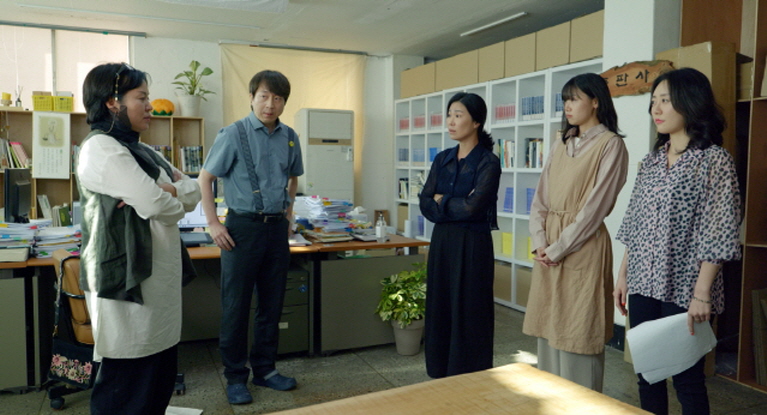
In case of her son, he and Nurlinsa are not particularly friendly to each other. While Nurlinsa has been quite estranged from her ex-husband, her son still wants his father to take him to some holiday celebration event, even though he becomes rather ill probably because of that flu. While she actually feels a murderous urge at one point, Nurlinsa tries to tolerate her son as much as possible, though he does not appreciate her efforts much.

Meanwhile, Petrov’s state of mind becomes more feverish due to his worsening medical condition, and the movie deliberately blurs the line between reality and fantasy more than before. In case of one sequence, Petrov finds himself spending some time with a writer friend of his, and the situation becomes a bit amusing when Petrov finds that his friend’s latest work contains a surprising moment of sexuality. Not so pleased about this for a personal reason, Petrov and his writer friend argue with each other for a while, and then there comes another absurd moment between them as cinematographer Vladislav Opelyants’ camera fluidly hangs around them (Opelyants deservedly received the Vulcan Award for cinematography when the movie was premiered at the 2021 Cannes Film Festival, by the way).

Around this point, you will be quite baffled to say the least, and the movie keeps throwing more baffling moments as if it were following a stream of ill consciousness inside its hero who remains rather elusive to us to the end. For instance, we never get to know that much about him beyond his very sick condition, and you may not be entirely sure about whether he is a mechanic or a graphic novel artist or both.

While nothing is clarified enough on the whole, the movie goes further during its last act, which is incidentally presented in black and white film. We get to know more about a certain female figure briefly appearing in the middle of the film, and there are some moments of poignancy, but then you may also wonder whether this part is actually a story imagined inside Petrov’s mind. This will probably make you more distant to the story and characters than before, and you will not be that impressed much when the movie tries to catch you off guard again during its final scene.

Overall, “Petrov’s Flu” is admirable to some degree for how Serebrennikov and his cast and crew members try to do as much as possible during its rather long running time (147 minutes), but it was a frustrating experience for me as I often failed to sense and then hold onto any kind of emotional narrative inside the film. As I told you many times before, I do not mind getting baffled and disoriented at all, but “Petrov’s Flu” lacks the emotional center to engage and then touch me, and that makes me less inclined to give it a second chance later.

Anyway, “Petrov’s Flu” reminds me again that Serebrennikov is an interesting Russian filmmaker who willingly takes a chance with his artistic vision. I admired his previous works “The Student” (2016) and “Leto” (2018), and, despite his recent serious clash with the Russian government, he has already moved onto “Tchaikovsky’s Wife” (2022) and “Limonov: The Ballad” (2024). While I did not like “Petrov’s Flu” enough, I am already ready for these next two films of his, and I sincerely hope that I will be more impressed and entertained.

Posted in Movies | Tagged , , , | Leave a comment

Challengers (2024) ☆☆☆1/2(3.5/4): Are they ready to serve?

Luca Guadagnino’s new film “Challengers” is quick, deft, and passionate in its every serve, and I like that a lot. Electrifyingly and humorously bouncing along one very complicated situation among its three main characters, the movie alternatively amuses and thrills us to the end, and you will appreciate its masterful handling of story and characters more after getting totally knocked down by its intense and breathtaking finale.

After the opening scene where it skillfully sets its overall tone, the movie quickly establishes how things have not been going that well for Art Donaldson (Mike Faist) and his wife Tashi (Zendaya). Although he has been quite a prominent professional tennis player in US for last several years, Art may have to consider retirement seriously due to a series of rather dissatisfying tournament results at present, but he is willing to try more with the full support and encouragement from his wife, who was incidentally a very promising young tennis player before she had to retire due to an unfortunate accident. After her retirement, she began to pursue the career of a tennis coach, and, not so surprisingly, she has been her husband’s coach since their marriage.

After some consideration, Tashi decides to have her husband participate as a wild card player in a Challenger event in New Rochelle, New York, and she hopes that this may boost her husband’s confident to some degree, but, alas, there comes an unexpected problem via Art’s old friend/colleague Partick Zweig (Josh O’Connor). While he is struggling at the bottom of his professional career in addition to being on the verge of becoming literally penniless, Patrick thinks this Challenger event can bring some change to his professional career, and he becomes more confident when it later turns out that he may actually get back in his element at last.

The movie already shows us that Patrick and Art will eventually confront each other during the final game, but the screenplay by Justic Kuritzkes gradually doles out one surprise after another as frequently going back to the interconnected past of its three main characters. In case of a flashback part which goes back to 13 years ago, we see more of how much Art and Patrick stuck to each other as two close friends, and we also observe how zealous Tashi was in preparing for her professional career in the future. When she happens to come across Art and Patrick at one point, she seems to regard them as a tempting challenge to handle instead of being actually attracted to either of them, so she willingly comes to a hotel room where they have been staying.

What happens next among them is both funny and intense in unexpected ways. I will not go into details here, but let’s say that both Patrick and Art get what they want while, to Tashi’s little naughty amusement, also coming to face what has been below their very close friendship. At first, it seems that what happened among them will just stay in the room where that happens, but this inevitably affects everyone in one way or another in addition to putting more strain on Art and Patrick’s supposedly strong relationship.

As we get to know more and more about the very complicated history among these three main characters, we keep wondering more about their real feelings and motives. While Patrick and Art turn out to be struggling with their old mutual emotional issues as before, Tashi also feels less confident than before as becoming rather unbalanced about her feelings about Art and Patrick. Although her self-interest seems to come first for her, she also looks like really caring about her husband while not entirely denying whatever she actually feels about Patrick.

As these three main characters virtually throw or return a serve to each other along the story, Guadagnino and his crew members dials up the level of tension across the screen whenever it looks necessary to them. A number of tennis match scenes in the film are often visually impressive in addition to being increasingly taut and sweaty as demanded, and cinematographer Sayombhu Mukdeeprom, who has been mainly known for his frequent collaborations with Apichatpong Weerasethakul and also previously worked with Guadagnino in “Suspiria” (2018), and editor Marco Coast deserve to be praised for their top-notch efforts on the screen, which is further accentuated by the propulsive electronic score by Trent Reznor and Atticus Ross.

The movie surely swings up and down with the absorbingly dynamic interactions among its three main cast members. While Zendaya demonstrates more of her natural talent and charisma than whatever she achieved in Denis Villeneuve’s recent Dune movies, Mike Feist and Jack O’Connor are also equally stellar as their characters constantly push and pull each other throughout the story, and they and Zendaya steadily support their movie even when it stumbles a bit during the last act where every card held behind its back is unfolded for delivering the expected climax as required.

In conclusion, “Challengers” is a well-made sports drama film besides being another knockout work from Guadagnino, who has seldom disappointed me since “I Am Love” (2009). As shown from many of his previous films including “I Am Love” and “Call Me by Your Name” (2017), he is a master filmmaker who really knows how to illustrate human passion and sensuality on the screen, and he definitely proves his main strength again here in this superbly entertaining work.

Posted in Movies | Tagged , , , | 1 Comment