Late Night with the Devil (2023) ☆☆☆(3/4): When the devil was invited on air

“Late Night with the Devil” brings some fresh satiric spin to its familiar genre territory, and I like that. Yes, this is basically another your average found footage horror film, but it is a skillful genre product packaged with some wry sense of humor, and the result, which incidentally looks as authentic as required by its period background setting, is often darkly funny and amusing enough to tickle us before eventually reaching to its expected grand finale.

Before following what happened during the 1977 Halloween episode of a fictional late-night talk show, the movie gives a brief background information on Jack Delroy (David Dastmalchian), the host of that fictional late-night talk show. There was a time when he and his show seemed to be going up to the level of “The Tonight Show Starring Johnny Carson”, but, alas, he and his show somehow remained below that top level even though he was willing to try anything for drawing more primetime viewers out there. As a matter of fact, he even did something quite shameless involved with his dying wife not long before she passed away, just because that would guarantee a higher rating for his show.

However, Delroy and his show kept going down to the frustration of him and his producers since that highpoint, so he decided to do something quite sensational for the Halloween episode in 1977, which could be a big deciding factor on the future of his show. He came to invite not only a psychic but also a young girl who might be a real case of demonic possession, and he also added a skeptic magician willing to expose any fraud, just because, well, that would make the episode more interesting for his audiences.

The main part of the movie, which is deliberately shot in the low-quality video of 1.33:1 screen ratio, cheerfully follows the familiar format of the late-night talk shows in the 1970s. After the announcement of several special guests to appear, Delroy makes a humorous appearance as expected, and that is followed by the appearance of his first guest of this night, who gives a fairly good opening performance for Delroy and his audiences as your typical psychic.

However, there soon come a series of rather disturbing signs. After somehow sensing something very strong around the end of his performance, the psychic looks quite disturbed to say the least, and then we are served with a sudden happening not so far from that infamous gross moment in “The Exorcist” (1973). While naturally quite surprised just like many others around him, Delroy does not mind at all because such an unexpected thing like that is always good for drawing more attention to his talk show.

Whenever the show takes a brief break, the movie switches to black and white film of a wider scope for showing more of what is going on around the set of Delroy’s show, and that is where the movie becomes more satirical. When the situation is becoming more serious than expected, one of Delroy’s colleagues shows understandable concerns, but, like those cynical TV company executives of “Network” (1976), Delroy is still quite willing to go further for higher ratings, even though he is also visibly disturbed by what occurs right in front of him and others. Around the point where that girl who has been supposedly possessed by some dark force out there, things surely get pretty tense and sensational for Delroy and others around him, but he cannot help but delighted and excited as it seems he is really almost close to something to catapult him and his show to the top of his field.

It goes without saying that Delory will come to get much more than what he has wished for, and the movie does not disappoint us at all when it is about to pull all the stops for more scary entertainment for us. Although it stumbles a bit when it attempts to surprise us more around the ending, the competent direction by directors/writers/editors Colin and Cameron Cairnes keeps holding our attention to the end, and you will also enjoy a series of nice authentic period details which are presented well with a tongue-in-cheek attitude.

The main performers of the movie play their characters as straight as possible, and their good performances bring some extra plausibility even when the film goes quite wild during its last act. David Dastmalchian, a rising character actor who has recently appeared in a number of notable films such as “Ant-Man” (2015), “Blade Runner 2049” (2017), “The Suicide Squad” (2021), and “Dune” (2021), is pitch-perfect in his slick urban appearance coupled with opportunistic cynicism, and we are not so surprised when the movie later reveals a bit more of whatever his character actually did in exchange for fame and success. Around Dastmalchian, Laura Gordon, Ian Bliss, Fayssal Bazzi, Rhys Auteri, and Josh Quong Tart are also effective in their respective supporting roles, and the special mention goes to Ingrid Torelli, who instantly generates an uncanny vibe right from her first scene in the film and then never steps back at all as gradually dialing up the level of suspense along with the story.

Although it mostly sticks to its familiar genre conventions, “Late Night with the Devil” has a lot of devilish fun inside its genre territory while giving us as much as promised to us from the beginning, and Dastmalchian demonstrates here more of his considerable talent and presence than before. This is certainly one of more memorable performances from him, and I think we are going to watch and enjoy more of him during next several years to come.

Posted in Movies | Tagged , , , | 1 Comment

Jeong-sun (2022) ☆☆☆(3/4): After she is exposed

South Korean film “Jeong-sun”, which was belatedly released in South Korea in this week (It was premiered at the Jeonju International Film Festival in May 2022, where it received the Grand Prize award), is a dry but intense character drama revolving around one infuriating circumstance. As its heroine tries to cope with her undeniably painful and gloomy situation, the movie lets us more compassion and empathy on her, and that is why it really earns a little moment of personal healing and recovery around the end of the story.

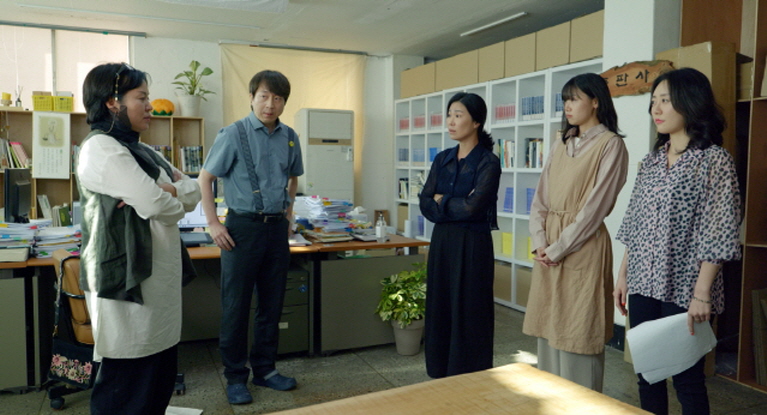
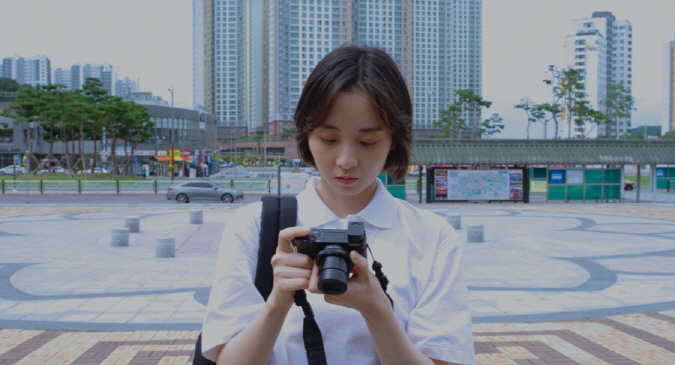
The early part of the film slowly establishes the daily life of Jeong-sun (Kim Geum-soon), a middle-aged single woman who has earned her living via working in some small food factory. Although her current job does not pay her that much, she is proud of being a working woman who can take care of herself, and she does not lose her spirit at all even though she is often chided by her male foreman, who is incidentally much younger than her.

As her daughter Yoo-jin (Yoon-geum Seon-ah) will soon marry, Jeong-sun comes to think more about what she is going to do with the rest of her life, and then there comes an unexpected opportunity via Yeong-su (Jo Hyun-woo), a newly employed guy who happens to be around her age. As time goes by, both Jeong-sun and Yeong-su find themselves attracted more to each other as two lonely single persons, and they eventually start to have a secret romantic relationship without telling anything at all to their co-workers.

However, it does not take much time for their co-workers to notice something from them, and this naturally puts some strain on their relationship. When Jeong-sun unintentionally hurts his feeling at one point, Yeong-su becomes rather nasty to her, and this certainly baffles Jeong-sun. Nevertheless, she eventually misses Yeong-su, and, what do you know, they come to have another private time together in his shabby motel room.

During this supposedly time, Jeong-sun lets Yeong-su record her with his smartphone when she is singing a song while only wearing her underwears, but, unfortunately, this later turns out to be a serious big mistake. A few days later, many of their co-workers begin to talk about her behind their back, and then she belatedly discovers that Yeong-su had spread out that embarrassing private video of hers to some of their co-workers, who also spread it out on the Internet without much thought.

Around the time when Yoo-jin also comes to learn about what happened to her mother, Jeong-sun becomes so traumatized that she barely speaks or responds to her daughter, who comes to take care of the aftermath on behalf of her mother. She immediately goes to the local police, and Yeong-su and several other co-workers are subsequently investigated, but she becomes more frustrated to see that there is nothing much she can do for her mother except standing by her mother as much as possible.

And we see more of how Jeong-sun becomes more conflicted and tormented in her traumatized status. At one point, she is suddenly visited by Yeong-su, who may get legally punished for what he did to her. He seems sincere in his apology while also asking for some mercy from her, but this only exacerbates her trauma and shame. She eventually tries to pull herself together and then move on, but, not so surprisingly, there later comes a moment when she comes to realize how much she still feels angry and hurt inside her mind.

While mostly looking calm and plain, Kim Geum-soon is simply terrific in what can be a breakthrough performance in her acting career. Ably conveying to us what is silently churning inside her character’s traumatized mind, she gradually holds our attention along the story, and we come to feel more of her character’s pain and anger. Yes, there inevitably come a couple of big scenes where her character finally lets out what she has desperately been hiding and suppressing for a while, but these big moments do not feel contrived at all thanks to the aching emotional intensity of Kim’s commendable performance.

Several supporting performers surrounding Kim are also effective in their respective parts. As Jeong-sun’s devoted daughter, Yoon-geum Seon-ah holds her own place well during her several key scenes with Kim, and she also did a good job of bringing enough amount of life and personality to her plucky character. In case of Jo Hyun-woo, he is suitably pathetic while not making any excuse on his character’s thoughtlessly terrible action, and it goes without saying that his character richly deserves all the anger and wrath from Jeong-sun.

Overall, “Jeong-sun”, which is incidentally the first feature film of director/writer Jeong Ji-hye, is a modest but engaging female film to be admired for its solid storytelling and Kim’s harrowing lead performance. Although you might not notice her before, Kim has diligently appeared in a number of different films ranging from “Train to Busan” (2016) to “Juhee from 5 to 7” (2022) during last several years, and “Jeong-sun” finally gives her a precious chance for demonstrating more of her considerable presence and talent. I assure you that will never forget her and her character after watching “Jeong-sun”, and I also sincerely hope that the movie will lead this wonderful actress to more good opportunities out there during next several years.

Posted in Movies | Tagged , , , | 2 Comments

Until the Stones Speak (2022) ☆☆☆(3/4): The memories of a massacre

South Korean documentary film “Until the Stones Speak” is often haunting as simply listening to the sad and bitter testimonies from five old ladies who have coped with each own pain and trauma from one of the most atrocious incidents in the modern South Korean history during the 20th century. Although more than 70 years have passed since that incident, they still can vividly recollect what happened to them and many others around them during that horrible time, and the documentary certainly works as a valuable record of their personal stories to remember.

That incident in question is the Jeju Uprising during 1948-1949, which is also called the Jeju 4.3 incident in South Korea. At that time, many people in Jeju Island protested the upcoming national election which would eventually elect Syngman Rhee as the first president of South Korea, and this was naturally oppressed by the South Korean police and military by any means necessary under the approval of President Rhee. It is estimated that around 30,000 people were killed as a consequence, and the investigation by a national committee in the early 2000s revealed more of the numerous atrocities committed during that violent time.

The documentary introduces us to five old ladies one by one, and they all have each own sad and painful story to tell. During the opening part of the documentary, one of these old ladies reminisces about how her father, who was just a plain farmer, got killed along with several other prominent members of their village by the local police just because the local police wanted to do some retaliation against their enemies. Sadly, there was nothing she could do for saving her father, and she also could have gotten killed along with her father and others because the local police and the South Korean military were always ready to kill anyone to be labeled as a communist at any time.

In case of the four other old ladies, they and many local people of Jeju Island were brutally oppressed just for fleeing from the local police and the South Korean military. As their villages were destroyed, they had no choice but to hide themselves around numerous mounds in the island, and they managed to live and survive there for next several months, though all of them and others were eventually captured around the end of the Jeju Uprising.

What followed next was quite traumatic for them to say the least. The local police savagely tortured them a lot before sending them and many other people captured people together to a military trial which was quite unfair and illegal from the very beginning. They were not told anything about why they were brought there, and, to believe or not, the judges presiding over the “cases” randomly doled out the sentences upon them without much thought or consideration.

Ironically, they were relieved a bit when they were subsequently sent to the prisons in the mainland. At least, they could get away from all the brutalities happening in Jeju Island, and they were actually treated a little better as serving their respective prison sentences, though they still had to struggle day by day in their prisons.

In the end, they and many others got released some time later, but there were still more struggles for all of them. In case of one of them, she was persuaded to marry her second husband just because her first husband was assumed to be killed during the incident, but, what do you know, he subsequently turned out to be alive not long after her second marriage, so she was forced to go back to her first husband.

Although they were not allowed to speak about the incident during next several decades, they have often told their stories to their family members in private. At one point later in the documentary, one of these old ladies is visited by her daughters, and her daughters show the sincere compassion and understanding on those nearly unimaginable cruelties inflicted upon their mother.

It was really fortunate that they and many other aging survivors of the incident could finally speak about the incident around the early 2000s. In 2018, they and a bunch of other people who were also wrongfully imprisoned at that time sent a belated petition on their unfair prison sentence, and the court subsequently nullified their prison sentence in the very next year after rightfully deciding that their case was a grossly serious case of mistrial. Considering all those many years of silence and oppression, this judgment might come a bit too late, but all of them were glad about finally getting the justice they had waited so long.

On the whole, “Until the Stones Speak”, directed by Kim Kyung-man, is calm but poignant in its sincere and respectful handling of its several human subjects, and you will not easily forget their stories after it is over. Although I and many of South Korean audiences have to depend a lot on the subtitle due to their heavy Jeju dialect, their stories gradually came alive in my mind nonetheless, and I came to reflect more on how much I do not know about the Jeju uprising. While these old ladies and other survivors are fading away into the past at present, the incident and their tragic stories deserve much more attention in my inconsequential opinion, and I will not certainly forget them.

Posted in Movies | Tagged , , , , , , | Leave a comment

Shortcomings (2023) ☆☆☆(3/4): This one disagreeable Asian American lad

“Shortcomings”, which recently came to Netflix in South Korea, is often amusing for how it tackles the representation of Asian Americans. As a matter of fact, the movie opens with the screening of a popular flick not so different from “Crazy Rich Asians” (2018) at some local Asian American film festival held in Berkeley, California, and that is just the beginning of a series of little humorous moments popping here and there around its disagreeable Asian American lad who really needs to grow up in my trivial opinion.

While everyone around him including his current girlfriend is delighted and excited by that feel-good movie, Ben (Justin H. Min) is not so amused in contrast as an aspiring filmmaker who has not made anything substantial yet. Not long after the movie is over, he argues a lot with Miko (Ally Maki) about why he does not like the movie at all, and now I wonder what he thinks about Justin Lin’s “Better Luck Tomorrow” (2002), a sadly overlooked film incidentally about a bunch of Asian American suburban kids who are not exactly the wholesome representation of their race.

Anyway, Ben’s cranky response to that feel-good movie certainly put more wedges on his strained relationship with Miko, and we observe more of how he lets himself more estranged from her in one way or another. He is actually attracted more to white women, but he cannot possibly admit this to Miko when she comes across the glaring evidence on that, and his eyes are already drawn to a young white woman who gets employed in a local arthouse theater managed by him.

The movie also focuses on his friendship with Alice (Sherry Cola), an Asian American lesbian girl who has been his best friend for many years. At one point, Ben willingly becomes her ‘boyfriend’ in front of her Korean family members attending the wedding of one of her cousins, and, as a gay guy who has often pressured by my parents toward heterosexual marriage, I must say that this brief but funny moment gets every detail right about how burdening Korean parents can really be in case of marriage.

Meanwhile, Miko eventually comes to decide that enough is enough, so she announces to Ben that she will soon move to New York City for some independent filmmaking internship, Coming to see that their relationship is being over, Ben tries to get closer to that young white woman, but, not so surprisingly, she turns out to be not so right for him, and he also hurts her feeling a bit when she shows him a little art project of hers at one point.

When Alice later takes him to a party for lesbians just because she needs someone to accompany her, Ben is not so excited at first, but, what do you know, he comes across a young white woman who turns out to be a bisexual. Despite Alice’s warning on how unreliable this bisexual woman can really be, he decides to go a little further with her, but then she comes to change her mind, and he ends up showing her more of how unlikable he can be.

Dryly bouncing from one episodic moment to another, the screenplay by Adrian Tomine, which is based on his acclaimed graphic novel of the same name, feels like going nowhere at times just like its increasingly pathetic hero, but it is steadily buoyed by its edgy sense of humor, and I was often amused by how it is willing to make its Asian American hero all the more unlikable along the story. Around its last act, Ben becomes more disgruntled and self-absorbed than before, and it is a bit relieving to see that he somehow comes to grow up a bit in the end.

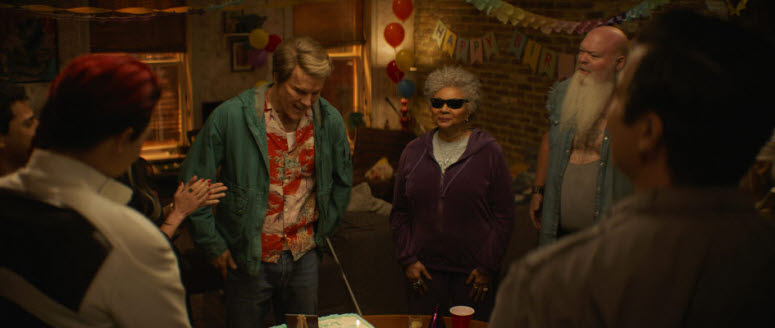
Everything in the movie depends a lot on its lead actor’s talent and presence, and Justin H. Min, who looks and feels quite different from his gentle supporting turn in Kogonada’s “After Yang” (2021), did a commendable job of bringing enough life and personality to his decidedly unpleasant character. Although Ben is definitely someone I will instantly avoid as much as possible, he is an interesting case study to observe from some distance, and I enjoyed small nice details including several Criterion Blu-rays and a big poster of Nobuhiko Obayashi’s cult horror comedy film “House” (1977) in his residence. I still do not like this dude much, but I must admit that he surely has some good taste in case of movies.

Around Min, several supporting performers hold each own spot well. Sherry Cola is often funny as an effective counterpart to Min’s character, and she also brings some gravitas to the story when even her character cannot tolerate Ben later in the story. While their roles are rather under-developed, Ally Maki, Tavi Gevinson, Debby Ryan, and Sonoya Mizuno are well-cast on the whole, Timothy Simons, Jacob Batalon, Ronny Chieng, and Stephanie Hsu provide some extra humor during their brief appearance in the film.

In conclusion, “Shortcomings”, which is the first feature film of director/co-producer Randall Park, is a comedy of acquired taste which took some time for me to decide whether I was entertained enough despite its, yes, shortcomings. To be frank with you, I still feel like not totally getting its comic moments as a foreign audience outside US, but I appreciate its storytelling and performances at least, so I recommend you to give it a chance someday.
Posted in Movies | Tagged , | Leave a comment

Moving On (2022) ☆☆1/2 (2.5/4): Fonda, Tomlin, and a bit more

“Moving On”, which is currently available on Netflix in South Korea, is enjoyable whenever it is driven by the good chemistry between two legendary actresses at the center of the film. They are more than 80 at present, but these two great actresses have steadily and productively moved on during several recent years as before, and we are certainly lucky to see them still working, though the movie itself sometimes falters despite their fun and touching efforts on the screen.

Jane Fonda, who looks a bit dowdier than usual here in the film, plays Claire, an old woman who is about to go to visit LA for dealing with her old personal matter to settle. More than 50 years ago, she was raped by the husband of one of her close friends, and she told no one about that except a very few persons. Now her friend recently passed away, and she is going to confront and kill that scumbag at last while attending her friend’s upcoming funeral and wake in LA.

Of course, things do not go that well for Claire after she eventually arrives at the funeral. Right from when she encountered Howard (Malcolm McDowell) again, she flatly tells him that she is going to kill him sooner or later, but, not so surprisingly, she does not know whether she really wants that – and how she will actually do that. Besides, a lot of time has passed, and that man seems changed to some degree after getting quite older just like her, though his presence still makes her quite uncomfortable.

Claire’s docile awkwardness is contrasted with the late arrival of Evelyn (Lily Tomlin), another close friend of Claire who was quite close to both Claire and their deceased friend in the past. She sees right through how superficial the words from Howard feel when he attempts to say nice things about his married life during that following wake, and that is why she comes to reveal to everyone at the spot something quite personal between her and her deceased friend.

Meanwhile, Claire remains indecisive about whether she will really kill him or not – even when a certain tool for killing comes handy to her at one point. As she becomes more and more hesitant, she comes across her ex-husband Ralph (Richard Roundtree), who was also invited to the funeral just like Claire and Evelyn. They have not seen each other for many years since their rather painful divorce which incidentally happened not long after that rape incident, but, though they have moved on in each own way since that, Claire cannot help but feel another chance for romance, and the same thing can be said about Ralph. As a matter of fact, he even invites her to a little dinner at his residence just for old time’s sake.

As Evelyn and Claire try to handle Claire’s old personal issue together, the screenplay by director/writer/co-producer Paul Weitz, who has been more serious in his recent outputs compared to when he and his brother Chris made “American Pie” (1999) together many years ago, naturally swings back and forth between comedy and drama, and Fonda is effortless along with her co-star as they pull and push each other along the story. Lily Tomlin, who has built a remarkable career of her own just like Fonda during last six decades and recently worked with Fonda in Netflix TV series “Grace and Frankie”, deftly functions as a no-nonsense counterpoint to her co-star, and they also did a good job of conveying us to an old history between their characters even though we do not get to know that much about the past between Claire and Evelyn.

However, the movie unfortunately stumbles during its last act when Evelyn and Claire seem finally ready to confront Howard. While Claire surely comes to let out a bit more of her pain and frustration, the resulting dramatic moment between her and Howard somehow feels tame, and the following finale is quite contrived without much emotional impact on the whole. While Fonda and Tomlin do try to elevate their materials as much as possible, their efforts are ultimately limited by the rather flawed storytelling of the film, and that is quite a shame to say the least.

In addition, the movie brings two equally legendary actors for supporting Tomlin and Fonda, but they are not particularly utilized well as simply demanded to fill their respective spots. Although his role is more or less than a possible love interest, Richard Roundtree, who has been known for his charismatic lead performance in Gordon Parks’ “Shaft” (1971), and sadly passed way a few months ago, fills his functional character with enough life and presence, and you may enjoy a low-key romantic heat generated between him and Fonda later in the story. Malcolm McDowell, who has been and will always be remembered for his chillingly striking performance in Stanley Kubrick’s ever-disturbing masterwork “A Clockwork Orange” (1971), shows here that he can still exude the intense aura of vicious bad boy with his piercing blue eyes, and one of the major disappointments in the film is that it gives his character an ending which feels a bit too easy in my humble opinion.

In conclusion, “Moving On” is fairly watchable thanks to not only Fonda and Tomlin but also the solid supporting turns from Roundtree and McDowell, but it is still one or two steps from Weitz’ more satisfying recent works such as “Grandma” (2015), a little overlooked gem which incidentally has one of the best performances in Tomlin’s long and illustrative acting career. To be frank with you, I would rather recommend “Grandma” first, but I will not stop you from watching “Moving On” if you just want to see all those four great performers appearing in one movie.

Posted in Movies | Tagged , , | Leave a comment

Scoop (2024) ☆☆☆(3/4): How they got a scoop on Prince Andrew

Netflix film “Scoop”, which was released a few weeks ago, tries to give us a close look into the real-life story behind one of the most notorious TV interviews during last several years. Although I have no idea on how much that real-life story is actually fictionalized here, the result is a solid and entertaining drama about good professional journalism, which is surely something we need more than before these days.

As many of you know, everything began from a very questionable relationship between Prince Andrew of England (Rufus Sewell) and Jeffrey Epstein. According to Prince Andrew, he and Epstein were just close friends, but everyone started to suspect the worst when Epstein was arrested and then went to prison for his sex trafficking of young women around the late 2000s. When Prince Andrew and Epstein happened to be photographed together in the Central Park of New York City in 2010, there naturally came more suspicion upon Prince Andrew, and things got much worse for him later when Epstein was arrested again shortly before his sudden death in 2019.

The screenplay by director Peter Moffat and his co-writer Geoff Bussetil, which is based on the nonfiction book of the same name by Sam McAlister (Billie Piper), mainly focuses on the diligent efforts of the production team at the BBC Two news and current affairs program Newsnight during that period. As BBC is about to go through a big downsizing, everyone is quite daunted and depressed to say the least, the chief producer, Amanda Thirsk (Keeley Hawes), and her staff members try to keep going as usual nonetheless, and that is when McAlister, who has worked as a guest producer, suggests the exclusive interview of Prince Andrew for drawing more viewers out there. Although that seems not so possible because he may not answer to all those hard questions involved with his close association with Epstein, McAlister believes that she can make the interview happen, and she becomes more determined after Epstein’s second arrest.

In case of Prince Andrew, he believes that things will go back to normal for him sooner or later, but his personal assistant Esme Wren (Romola Garai) does not think so at all as a person relatively less isolated from the outside world compared to her royal boss. Knowing well how he will be far less popular than before, she certainly needs to swing the public opinion on him to some degree at least, so she eventually agrees to set an interview between Prince Andrew and Emily Maitlis (Gillian Anderson), a prominent journalist who is the current presenter of Newsnight.

What follows next is not so far from the first half of Ron Howard’s riveting interview drama film “Frost/Nixon” (2008). On one side, Wren and other assistants try to prepare their royal boss for the upcoming interview where Maitlis will not pull any punch at all on his longtime association with Epstein. On the other side, Thirsk and her staff members busily prepare for what might become the scoop of the year, and McAlister is definitely willing to participate more, though she is also concerned about not being there for her young son that often because of her busy work schedule.

Clearly siding with McAlister and her several female colleagues, the movie occasionally makes some sharp points associated with the #MeToo Movement. We see a bit of how many young women were exploited by Epstein and a number of rich and powerful associates of his including President Bill Clinton for many years, and we are also reminded that we should really have sided more with Monica Lewinsky considering how her inappropriate sexual relationship with Clinton was quite unequal from the very beginning.

In the end, everything culminates to Maitlis’ one-hour interview with Prince Andrews at the Buckingham Palace, and the movie wisely does not try too much during this part, while adding some dry sense of wry humor. Shrewdly seeing that Prince Andrew himself is actually the biggest liability in this situation, McAlister advises Maitlis that she should simply make him talk more and more along the interview, and, this is surely not a spoiler for many of you, they actually get away with getting him exposed a lot more than expected in front of the camera, even though everything is constantly monitored by Wren and several her fellow staff members on the spot.

While they are the most prominent cast members in the bunch, Billie Piper and Gillian Anderson effortlessly slip themselves into the ensemble without being too showy, and Keeley Hawes and Romola Garai are also excellent in their substantial parts. In case of Rufus Sewell, whom I still fondly remember for appearing in Alex Proyas’ cult SF noir film “Dark City” (1998), he goes all the way for the pathetic obtuseness of a man who is clearly and hopelessly out of touch just like many of his royal family members, and you will definitely agree that Prince Andrew deserved all the public humiliation upon him.

In conclusion, “Scoop” is one of more enjoyable Netflix products during this year mainly thanks to its competent storytelling and several engaging performances. Although it does not reach to the level of several other recent acclaimed journalism drama films such as Tom McCarthy’s “Spotlight” (2015) or Maria Schrader’s “She Said” (2020), the movie does its reporting job fairly well, so I will not grumble for now.

Posted in Movies | Tagged , , , , | Leave a comment

The Lesson (2023) ☆☆(2/4): The writer, the wife, their son, and his tutor

“The Lesson”, which is currently available on Netflix in South Korea, reminds me again of how it is usually difficult to make a movie about writers. Its main characters often talk about writing and literature throughout the story, and some literature excerpts are freely quoted from time to time, but I somehow never got the sense of any interesting plot or narrative thickening during my viewing.

Daryl McCormack, a promising actor who recently gave us a wonderful breakthrough performance in “Good Luck to You, Leo Grande” (2022), plays Liam Sommer, a young man who is in the middle of an interview on his sensational first novel during the prologue scene of the film. When his interviewer asks him a bit about his source of inspiration, Liam naturally makes some enigmatic smile, and it goes without saying that the movie is soon going to delve into how he came to write his novel.

The main story of the film, which incidentally consists of three parts, begins with Liam suddenly getting employed as the new tutor of the younger son of J.M. Sinclair, a successful novelist who has been acclaimed for a number of serious novels written by him. As an aspiring young writer who has also been a big fan of Sinclair’s books, Liam is certainly excited about this unexpected golden opportunity, and he does not mind at all about spending several days inside Sinclair’s isolated country house under the non-disclosure agreement with Sinclair.

Not long after his arrival in Sinclair’s house, Liam meets Sinclair’s younger son Bertie, whom he is going to put through a series of dense lessons before Bertie has a demanding college entrance interview at the English literature department of Oxford University. At first, Bertie seems merely pressured about this, but he also does not look like really caring about whether he will study in Oxford or not, and his father is actually more excited about his son’s potential as a writer.

Eager to listen and learn from his favorite author, Liam also cannot help but notice more of the considerable emotional gap between Sinclair and his two family members. Bertie does not like being compared to his older brother who tragically died not so long ago, but his father keeps comparing him to his older brother nonetheless, and that certainly exasperates Bertie a lot. In case of Sinclair’s French art collector/broker wife Hélène (Julie Delpy), she is often elusively cold and phlegmatic, and it is apparent that there is not much love or affection between her and her husband.

It is not much of a spoiler to tell you that Liam soon finds himself getting more associated with his favorite writer than his student. Sinclair later turns out to be struggling a lot with finishing a new novel of his, and Liam is certainly willing to help his idol as much as possible in exchange for getting some helpful criticism on his current work in process.

Of course, it does not take much time for Liam to realize that there is something really sneaky about Sinclair. While he frequently talks about writing and literature, Sinclair does not seem to be that productive at all in his current writing process, and Liam also comes to suspect more about the recent death of Sinclair’s older son, who was incidentally quite a promising writer just like Bertie is at present.

What is eventually revealed along the story will not surprise you much, because the screenplay by Alex MacKeith virtually spelled that out in advance. In addition, it also fails to develop its few main characters into believable human characters to interest and then engage us. Liam is your average colorless hero who mostly observes everything from the distance, and he is only distinguished a bit by his exceptional photographic memory. Sinclair and his family members are more or less than stereotype caricatures, and you may be instead interested more in whether Liam’s eventually published novel has actually developed them more into three-dimensional characters. After all, literature is supposed to sublimate that superficial third-rate novel called reality, right?

As a result, we could not care that much about what is going on in the story while sometimes admiring how much McCormack and his fellow cast members in the film try to make their characters work as much as possible. Despite mostly stuck in his rather thankless role, McCormack acquits himself well on the whole, and Richard E. Grant, who has always been good at playing smarmy characters as shown from his recent Oscar-nominated supporting turn in “Can You Ever Forgive Me?” (2018), surely has some juicy moments as his character’s pompous façade gets crumbled later in the story. Although it is nice to see Julie Delpy trying something different from her usually likable appearance, the movie sadly does not provide much substance for her efforts, and she ultimately gets wasted just like Stephen McMillan, who unfortunately does not have much to do except usually looking morbid and sullen as required.

On the whole, “The Lesson”, directed by Alice Troughton, is not entirely without fun mainly thanks to its good cast members’ diligent efforts, but it will not tell or show you anything substantial about creative writing while leaving some empty impression on you in the end. If you actually expect to learn anything about creative writing from the movie, just go back to William Strunk Jr. and E. B. White’s guidebook “The Element of Style” or Stephen King’s equally valuable book “On Writing”. Believe me, you will have a much more productive time there.

Posted in Movies | Tagged , | Leave a comment

Música (2024) ☆☆1/2(2.5/4): Distracted but talented anyway

“Música”, which is currently available on Amazon Prime, gave me a rather mixed impression. The movie is often likable with a series of whimsically musical moments, but it is also quite distracting at times as trying too many things within its short running time (91 minutes). Although it has enough wit, mood, and spirit to support itself for a while, it could hone its story and characters more for some improvement in my inconsequential opinion, and I only admired the result from the distance instead of really getting engaged to the story and characters during my viewing.

Rudy Mancuso, who also directed the film besides serving as its co-writer/composer/co-executive producer, plays an apparently talented Brazilian American lad who seems autobiographical considering that 1) his name is also Rudy and 2) the movie looks like being based on a real-life story as humorously emphasized at its very beginning. The opening scene shows Rudy meeting his rich white girlfriend Haley (Francesca Reale) at a local diner for having a serious conversation about whether their relationship can be continued, but his mind cannot help but get distracted due to how many different sounds around them feel like the music to be processed by him, and Haley eventually decides that enough is enough.

While surely feeling hurt by this unexpected breakup with his girlfriend, Rudy’s mind is more occupied with what to do next for his life. While he is about to graduate from a local university as his dear immigrant mother Maria (Maria Mancuso, who is incidentally Mancuso’s real-life mother) has always wanted, he wants to do more of his own quirky puppet performance outside his New Jersey neighborhood after his graduation, though, so far, what he has routinely done at a nearby subway station is not that successful enough to draw the attention of others.

Anyway, after hearing about her son’s recent break-up, Maria is ready to recommend some suitable Brazilian girls who can be a nice wife for her son someday, and that leads to one silly scene where she blatantly attempts to set him up with some beautiful Brazilian lass in their neighborhood. To Rudy’s perplexed embarrassment, the girl is quite determined to move on the next step within a few minutes, and he has no choice but to tell her clearly that he is not into her at all from the start.

When he later comes to a local fish shop for doing a little errand for his mother, Ruby unexpectedly finds a chance for new romance. Although their first encounter is not exactly pleasant, Ruby becomes quite attracted to a young female employee working there, and it soon turns out that the feeling is mutual between him and Isabella (Camila Mendes). As they subsequently spend more time together, the movie provides several sweet moments to enjoy, and I particularly like when Ruby tries to show Isabella more of how his brain can instantly process many different sounds around him into a musical rhythm (This interesting neural condition of his brain is called Synesthesia, which is, according to the IMDB Trivia, “a perceptual phenomenon in which stimulation of one sensory or cognitive pathway leads to involuntary experiences in a second sensory or cognitive pathway.”).

Although their first official date turns out to be a bit disastrous due to one unexpected happening, Ruby and Isabella are still willing to move on the next step of their relationship. However, not so surprisingly, Haley comes to consider restarting her relationship with Ruby in the meantime, and his situation naturally becomes very complicated as he remains indecisive about which girl he has to choose.

Of course, what will eventually happen during the last act is quite evident to us to say the least, but the movie keeps things rolling as trying one impulsive musical moment after another. Even when he becomes all the more conflicted, Ruby’s mind still cannot help but process every sound into musical rhythm, and we frequently watch how people around him suddenly dance according to whatever is being processed inside his mind. Furthermore, he even begins to talk with his main puppet, and that certainly leads him to some soul-searching later in the story.

However, the screenplay by Mancuso and his co-writer/co-executive producer Dan Lagana often stumbles in its attempts to bring more substance to the story and characters. Most of the main characters in the film are rather broad stereotypes instead of feeling like real human characters to observe, and that is the main reason why one very awkward scene between Ruby and Haley’s rich white family is merely amusing despite some sharp points on the white prejudice against Latino immigrants. While the musical scenes in the film are well-executed on the whole, they are sometime distracting as interrupting the narrative flow of the movie, and you may come to wish that Mancuso put some more restraint on that as fleshing out the story and characters more.

As far as I can see from his solid lead performance, Mancuso looks like a promising new actor to watch. He is also supported well by several other main cast members including Camila Mendes, Francesca Reale, Maria Mancuso, and J.B. Smoove, and Smoove often steals the show as a local food truck owner who is also Rudy’s best friend.

In conclusion, “Música” is a fairly enjoyable product despite some glaring flaws in terms of storytelling and characterization. Although I cannot wholly recommend the movie, the overall result occasionally shows Mancuso’s considerable talent and presence at least, and it will be interesting to watch what this evidently talented actor will do next in the near future.

Posted in Movies | Tagged , , , | Leave a comment

Sewol: Years in the Wind (2023) ☆☆☆(3/4): The chronicle of their long plight

I still remember how shocking the sinking of MV Sewol incident was to me and many other South Koreans. When there came sudden news reports on the incident during the morning of April 16th, 2014, it did not seem that disastrous as we were told that everyone on the ship was saved at least, but then it soon turned out to be much more devastating than expected, and we were all the more outraged as how incompetent and heartless President Park Geu-hye and her government were in handling this terrible incident and the aftermath during next few years.

South Korean film “Sewol: Years in the Wind” simply and patiently followed the long plight of the surviving family members of those many young victims of the incident. At that time, a big group of boys and girls from one high school in a city called Ansan were on the ship, and most of them died mainly because they were simply told to stay inside the ship even when it was sinking. Needless to say, the parents of these dead students including co-director Kim Hwan Tae, who made the documentary along with Moon Jong-taek, were quite devastated to realize that their kids were not saved at all from the beginning, and they instantly demanded the government the open and thorough investigation on the incident, while trying to cope with their immense pain and grief.

However, the parents only found themselves getting more traumatized and frustrated due to what followed next to them. As President Park and her government did not do anything helpful for them at all, they decided to take care of their urgent matter for themselves, but then they were cruelly harassed and oppressed by the government and President Park’s right-wing party as well as those powerful media companies, who all stopped at nothing to insult and humiliate the parents. While her government willfully used the police and many other legal means for silencing the parents as much as possible, her party and several right-wing media companies constantly attempted to make the parents look like greedy people trying to benefit from the death of their children. Sadly, this tactic worked on many right-wing people to some degree even though there were also a considerable number of liberal and moderate supporters for the parents.

One of the most painful and infuriating moments in the documentary comes from a bunch of right-wing bullies and thugs deliberately eating lots of junk food right in front of the parents when the parents were attempting a public hunger strike. This surely reminded me again that there are lots of deplorable free-range rudes out there in the South Korean society who willingly give up being decent citizens and human beings because of hate and bigotry – just like those hateful MAGA people out there in US.

The parents still tried to stick together for drawing more public attention to their important cause, but their pain and frustration only got increased more day by day as they were pushed back further and further despite their desperate efforts. At one point, the school of their dead children eventually decided to clean up all of the kids’ classrooms which had functioned as memorial spots for a while, and this was surely another painfully unfair stab at their grieving heart.

At least, it later looked like there finally came a small light for the parents around late 2016 as the sheer incompetence of President Park and her government was fully revealed at last. Yes, they could have actually responded quickly to the incident, but President Park, who was revealed out to be a virtually mindless puppet of her equally hapless best friend as many of us had suspected for years, was totally at a loss about what to do next, and many government documents showed more of how much she and her government systemically oppressed the parents for covering up their gross incompetence.

In the end, the South Korean society was rocked by a series of massive public protests demanding the impeachment of President Park, and the parents were exalted when the congress eventually allowed the impeachment, but, again, they were let down by many of those prominent politicians including President Park’s successor President Moon Jae-in. While President Park was subsequently ousted early in the next year, she was not prosecuted at all for her incompetent response to the incident, and President Moon, whom I came to dislike and criticize more these days even though he was supposed to be a liberal compared to President Park, and his party only threw empty promises to the parents without caring much about the full investigation on the incident. As a matter of fact, he even pardoned President Park before eventually being succeeded by the current president of South Korea a few years ago.

And the parents were let down further as watching how the South Korean society and its people got more inclined to move on without looking back at the incident and their pain and suffering from that at all. They have wanted to make a memorial park in their city for their lost children and other victims, but many people were against that as wrongfully arguing that it will make their neighborhood look bad and disreputable, and President Moon and his government provided no help or support at all. The parents continued to protest as before, but they were reminded again and again of how apathic and callous the South Korean society and its people can be, and then there came the Seoul Halloween crowd crush incident on October 29th, 2022, another traumatic disaster clearly showing that their society and its people and government did not learn much from the sinking of MV Sewol incident.

Overall, “Sewol: Years in the Wind” is another earnest documentary about the surviving family members of the sinking of MV Sewol incident after “Life Goes On” (2021), which incidentally regards its main subject in a relatively wider view. As watching these good two documentaries one by one yesterday, I came to reflect more on the very serious systemic flaws of the South Korean society and government with more bitterness and sadness, and I certainly recommend both of them if you still care about the truth and justice for the surviving family members of the victims of the sinking of MV Sewol incident. Yes, they are trying very hard even at present for the closure still beyond their reach, and they do need all the support and compassion we can give right now.

Posted in Movies | Tagged , , , , | Leave a comment

Life Goes On (2021) ☆☆☆(3/4): As they hold up

South Korean documentary “Life Goes On” is often sad and heartbreaking in its intimate presentation of several different persons who have tried to go on despite tragically losing their loved ones to some of the most traumatic accidents in the South Korean society during last three decades. While painfully accepting their irreversible personal losses, they also show some solidarity and compassion to each other as sharing their personal pain and frustration, and their individual stories remind me again of what has often been seriously disregarded and forgotten in the South Korean society for many years.

The documentary begins with Yoo Kyeong-geun, a plain family man who has been trying to demand more investigation on the sinking of MV Sewol incident on April 16th, 2014, which led to the death of more than 300 passengers including one of his daughters. At that time, his daughter happened to be going to Jeju Island along with many of her schoolmates, and, unfortunately, most of them died mainly due to the gross incompetence of President Park Guen-hye and her South Korean government.

What happened next to Yoo and many other grieving parents was quite unjust to say the least. No matter how much they protested for the truth and justice for their lost children, President Park and her government not only ignored them blatantly but also oppressed them a lot during next several years. For example, her despicable right-wing party and some powerful right-wing media companies willfully insulted and tarnished them by any means necessary, and, believe or not, there were also truly despicable thugs and bullies who gleefully ate junk food right in front of them when Yoo and his colleagues began a desperate hunger protest in public at one point.

In the end, President Park and her government were a lot more criticized as their sheer incompetence in responding to the incident was exposed more later, but Yoo and his colleagues remained dissatisfied as before. After President Park was consequently ousted, her successor, President Moon Jae-in, promised more investigation on the incident, but he and his party did not show much will or determination in keeping their promise, while many South Koreans became more inclined to forget and then move on without much thought or reflection.

This infuriating social apathy was evident when Yoo and his colleagues subsequently tried to install a big memorial for the victims of the incident in their city. While they had a fair share of supporters, there were also lots of people opposing against the memorial. These people impertinently argued that it would make their neighborhood look bad and disreputable, and, what do you now, some of them are the prominent members of President Park’s party.

Meanwhile, Yoo began his independent podcast show, and that was how he came to meet and interact with many people who have suffered and endured a lot under the situations not so different from Yoo and his colleagues. In case of a guy named Go Seok, he lost his child to a big fire accident which killed more than 20 people including several young children on June 30th, 1999, and he has surely experienced his own grief and frustration despite his strenuous efforts on bringing more public awareness to child safety. In case of a middle-aged woman named Hwang Myeong-ae, her lost daughter was one of many victims of the Daegu subway fire incident on February 18th, 2003, and she still remembers how she and other surviving family members of the victims had to go there for collecting any remain of the victims for themselves.

As talking more with these two people and many others via his podcast show, Yoo came to see that he and his colleagues was not alone at all from the beginning. As a matter of fact, late Bae Eun-sim, who had been a prominent public figure since the death of her young democratization activist son in 1987, willingly and openly showed solidarity and compassion to Yoo and his colleagues because she understood well their ongoing plight. Right after her son got killed due to police brutality, Bae bravely stood forward in public along with the parents of many other dead young activists, and they all were harassed and oppressed a lot just because they demanded truth and justice to the government just like Yoo and his colleagues.

Sadly, the South Korean society and people do not seem to learn much even at this point. During last 10 years, the sinking of MV Sewol incident has been faded away from our public consciousness just like many other disastrous incidents caused by negligence and incompetence before that, and I and many other South Korean people had another social/personal trauma when the Seoul Halloween crowd crush incident happened on October 29th, 2022. Again, the South Korean government and its current leader were more occupied with saving their face and position instead of doing anything for us as well as the surviving family members of those unfortunate victims, who also came to experience their own grief and frustration just like Yoo and the other surviving family members of the victims of the sinking of MV Sewol incident.

On the whole, “Life Goes On”, which is directed by Jang Min-gyeong, is a modest but poignant documentary which handles its important main subjects with enough care and respect. Yes, things may not be changed that soon in the South Korean society, but, folks, there is always hope as long as people are still capable of compassion and solidarity, and I and many other South Koreans really should keep remind that to ourselves more than ever.

Posted in Movies | Tagged , , , , | Leave a comment