One Life (2023) ☆☆☆(3/4): He simply tried to save them…

It is hard not to be touched by the story of “One Life”, which is about one compassionate British man who tried to save many kids right before the World War II. Once he saw what was going on at that time, he could not possibly walk away from that, and it is really moving to watch how he tried hard to the end – and how much his and several others’ humanitarian efforts were appreciated in the end.

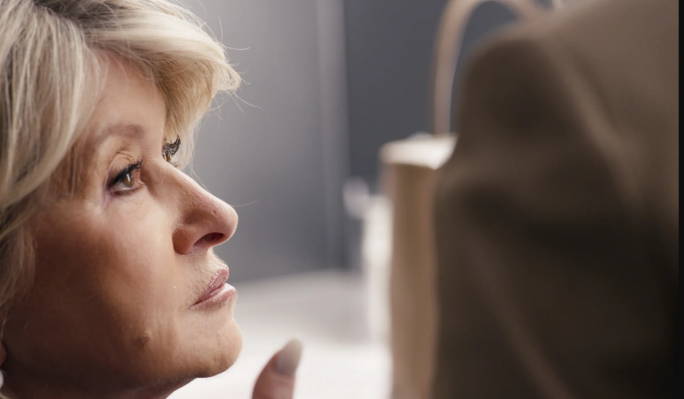
His name is Nicholas Winton, and the movie opens with how old Winton, played by Anthony Hopkins, lives day by day along with his wife in 1987. Whenever he is not handling those daily matters, old Winton focuses on some old documents from his past, and that often takes him back to when he and several others attempted to rescue refugee kids from the Nazi-occupied territory during 1938-1939.

At that time, young Winton, played by Johnny Flynn, was just a mid-level stockbroker. He was simply supposed to help his colleagues a bit in Prague, Czechoslovakia just for a few days, but he immediately changes his mind after seeing how things have been getting worse and worse for many Jewish refugees who fled from Nazi Germany. Around that time, Nazi Germany took over Austria and then the considerable part of Czechoslovakia, and it became quite more apparent that it was also going to occupy the rest of Czechoslovakia.

While trying to think of any possible way to help the refugees, Winton comes to have a rather daring idea. He and his colleagues are going to transport the children of the refugees from Prague to London, and, of course, they certainly have to set up their operation as quickly as possible, especially when the German takeover of Czechoslovakia looks more and more imminent. First, they must convince the refugees to cooperate with them, and then they must also gather enough money to fund their operation while also getting the approval from the British government.

All these and other things have to be quickly prepared within a very short time, but Winton and his colleagues manage to do that as pushing their noble cause as much as possible in public. In the end, they amass enough fund for their operation, and, above all, the British government approves of their operation, as long as they can provide foster parents willing to take care of those refugee kids at least for a while.

And we see how things go fairly well for their operation during next several months. While there is always considerable risk for those refugee children as they will pass through Germany for reaching to England, Winton and his colleagues become more confident after their first trial, and they come to handle far more refugee children than expected before Europe is eventually thrown into the World War II in September 1939.

Still feeling regretful over how their last attempt was tragically failed, old Winton wants the story of those refugee children to get known more in public, but he becomes frustrated as nobody seems to be particularly interested in the story. Some time later, he approaches to one certain public figure who might help him, and, what do you know, he soon finds himself appearing in a well-known BBC TV program.

While the part associated with young Winton’s efforts feels rather generic, the part involved with old Winston is undeniably poignant even though we can clearly see where it is heading. Yes, his and his colleagues’ efforts are surely recognized and appreciated in the end, and he certainly comes to have a big moment to remember. Nonetheless, this modest but powerful moment is presented well enough to move us, and it will surely remind you of the importance of doing the right thing for others in the need of help.

Anthony Hopkins, who has been always a pleasure to watch for more than 50 years since his solid debut performance in “The Lion in Winter” (1968), is inarguably the best thing in the film. As bringing some class and humanity to his several key scenes, Hopkins demonstrates again that he is still one of the best performers of our time, and his understated acting is especially wonderful when he subtly illustrates how much his character is surprised and then touched around the end of the story.

Around Hopkins, several other cast members dutifully fill their respective spots. While it is a bit difficult to connect his performance with Hopkins’ acting, Johnny Flynn acquits himself fairly well as effectively supported by Romola Garai and Alex Sharp, and Lena Olin, Jonathan Pryce, and Helena Bonham Carter fill their supporting roles with enough presence, though Olin does not have much to do as merely being around Hopkins.

In conclusion, “One Life”, which is adapted by Lucinda Coxon and Nick Drake from Barbara Winton’s nonfiction book “Into the Arms of Strangers: Stories of the Kindertransport”, is an engaging human drama, and director James Hawes did a competent job of handling the story and characters with enough respect and sensitivity. If you have ever watched Oscar-winning documentary film “Into the Arms of Strangers: Stories of the Kindertransport” (2000), you surely know that Winton’s story is just a small part of the bigger story, but the movie is still worthwhile to watch at least, and you will be certainly pleased to see Hopkins still active as usual.

Posted in Movies | Tagged , , , | Leave a comment

Freud’s Last Session (2023) ☆☆1/2(2.5/4): A fictional meeting of two minds

Any good two-hander movie should trust its characters and performers, but “Freud’s Last Session” does not do that much. Here are two fascinating real-life figures who might have an interesting conversation if they had really had a private meeting in real life, but the movie often gets distracted by some other things besides what is going on at the center of its story, and the overall result is rather middling despite the good efforts from its two lead performers.

These real-life figures in question are Dr. Sigmund Freud and C.S. Lewis, and the movie, which is based on the stage play of the same named by co-writer Mark St. Germain, focuses on one fictional meeting between them shortly after the beginning of the World War II in 1939. As an Oxford professor who has a deep faith in God and religion, Lewis (Matthew Goode) surely has a lot of things to discuss with Dr. Freud (Anthony Hopkins), and Dr. Freud is eager to meet Lewis even though he knows well that his atheistic viewpoint will clash with Lewis’ religious faith in one way or another.

Once they meet each other in Dr. Freud’s current residence in London, they naturally begin to pull and push each other in their following intellectual conversations, and they certainly come to talk more about themselves to each other. While Lewis willingly talks about how his father became quite distant to him and his younger brother after their mother’s death, Dr. Freud tells a bit about his difficult relationship with his strict Jewish father, and he also shows his growing concern about the ongoing war in Europe. After all, he recently fled to England from his country along with his dear daughter Anna (Liv Lisa Fries), and his mind often cannot help but swept by the memories of how things were grim for him and his family in Austria due to the political rise of Adolf Hitler and his Nazi party.

Of course, their different viewpoints on God and religion lead to some argument between Lewis and Dr. Freud, but the movie somehow fails to generate more interest to hold our attention. Their argument simply shows what has been generally known about each of them to us, and it is also frequently interrupted by several things including an air raid alarm and Freud’s deteriorating medical condition. In addition, there is also a subplot involved with Anna’s complex relationship with her father, who still depends a lot on her but does not approve much of what is going on between Anna and her female romantic/professional partner.

If these and other supposedly minor plot elements just stayed around the fringe of the story instead of interrupting the narrative flow between its two main characters, the movie could be more focused in terms of story and characters. After all, it has two very talented performers at its center, and I wonder whether the movie could be more improved if it simply observed and listened to whatever is being exchanged between them for around 2 hours.

Their efforts are sadly undermined by the rather unfocused screenplay, but Anthony Hopkins and Matthew Goode are mostly solid whenever their characters make some interesting interactions across the screen. Hopkins, who remains active as before even though he will soon have his 87th birthday, has some fun with his role as expected, and that is always evident whenever we see the twinkles in his eyes. Although he is frequently reminded of how he is dying day by day, Dr. Freud still cannot resist having an intellectual argument with somebody as smart as him, and Hopkins did a good job of balancing his role between humor and pathos while thankfully not resorting to a thick German accent (I can easily imagine how Laurence Olivier would ham it up like he did in “The Boys in Brazil” (1978), you know).

On the opposite, Goode is less showy in comparison, but his unflappably earnest acting complements well Hopkins’ showier acting, and he is particularly good when his character, who was incidentally played by Hopkins in “Shadowlands” (1993), reminisces about how traumatizing his World War I experience was. Even though the movie throws another redundant flashback scene at that point, Goode manages to convey to us how his character was changed a lot by his war experience, and we come to understand a bit of his strong faith in God and religion.

Around Goode and Hopkins, there are several other performers who manage to leave some impression despite their thankless supporting roles. Liv Lisa Fries is well-cast as Freud’s long-suffering daughter, who surely deserves her own story to tell in my humble opinion. Jodi Balfour clicks well with Fries as Anna’s romantic/professional partner, and Jeremy Northam is rather under-utilized as a caring friend of Dr. Freud.

On the whole, “Freud’s Last Session”, directed by Matthew Brown, has some interesting moments to observe thanks to Hopkins and Goode, but it eventually fizzles without much satisfaction, and you probably should check out some other movies associated with Lewis or Dr. Freud instead. “Freud” (1962) and “Shadowlands” already came to my mind, and I especially recommend the latter, where Lewis comes to question a lot on his faith in God and religion as going through the joy and pain of his unexpected middle-age romance. After being dissatisfied with “Freud’s Last Session”, I felt an urge to revisit “Shadowlands”, and I will surely do that sooner or later.

Posted in Movies | Tagged , , , | Leave a comment

In a Violent Nature (2024) ☆☆☆(3/4): From a killer’s viewpoint

When I started to become fascinated with movies during the early 1990s, “Friday the 13th” (1980) and its countless sequels naturally drew my attention whenever I spent some time in local video rental shops. Because of my young age, I could not possibly rent their VHS copies for myself, but I eventually got a chance to watch “Friday the 13th Part 2” (1981) on TV, and, boy, how much I was disappointed! First of all, it did not scare me at all, and, above all, I could not understand why some big dude wearing a bag tried to kill all those young (and boring) people who simply seemed to have a good time at that lakeside camp.

And that is the main reason why I had some naughty fun with “In a Violent Nature”, a little independent horror film which turns its very familiar story premise upside down in an amusing way. While it is surely drenched in lots of blood and violence as expected, the movie handles the story and characters with enough wit and competence to be appreciated, and that certainly distinguishes itself a bit from the main source of inspiration.

In the beginning, we are introduced to the killer character of the movie, who is simply named Johnny (Ry Barrett) and will surely look quite familiar to any connoisseur of the American slasher horror films of the 1980s. He is a hulking dude who does not speak at all as lurching here and there in his remote forest territory, and we later get some obligatory background information on how he was turned into a boogieman figure of that area many years ago.

Anyway, he has been somehow dormant during last several years, but then he is awakened as a group of college students inadvertently disrupts his hibernation, and he is certainly ready to kill anyone who dares to mess with him or his old territory. After eliminating one very rude local guy early in the story, he subsequently approaches to those college kids who are going to spend a night at a little lakeside cabin, and the mood naturally becomes a little tense as he is watching them from the distance without being notice at all.

It goes without saying that most of these college kids will get killed in one way or another just like many characters in the Friday the 13th flicks. Whenever one of these college kids happens to be alone by himself or herself, our killer character automatically comes for another killing, but the movie skillfully provides some good moments of nasty and fun surprise, and my favorite moment in the film is when a young lady is forced to do a very fatal physical stretching thanks to our killer character.

Things becomes a bit more interesting as the few surviving main characters try to get away from our killer character as soon as possible. When they come across some local ranger guy later in the story, this ranger dude turns out to have an old score to settle between him and our killer character, and he is certainly very careful because one cannot possibly be too cautious about Johnny, who, not so surprisingly, cannot be easily stopped or killed at all. 

Meanwhile, the movie closely sticks to its killer character as he slowly goes for one target after another, and it shows some wry sense of humor in addition to bringing considerable realistic touches to the screen. As shot in the screen ratio of 1.33:1 by cinematographer Pierce Derks, the movie often limits itself within its killer character’s perspective, so we usually observe him from the behind, but the movie does not disappoint us at all when it finally shows how its killer character’s expectedly hideous face, though he eventually covers his face with something equivalent to that hokey mask in “Friday the 13th: Part III” (1982) and its following sequels. 

In the end, the “Final Girl” character emerges as required during the last act, and the screenplay by director/writer Chris Nash, who makes a feature film debut hear after making several short films, puts a little nice twist on this genre convention. No, we do not get something like that infamous final scene in “Friday the 13th”, but we are served with something much more intriguing instead, and you may actually come to wish for a possible sequel to come in the future.   

The main cast members of the film fill their archetype roles as much as demanded. Although his job is as thankless as whatever those big stuntmen did in the Friday the 13th flicks, Ry Barrett manages to bring some deadpan humor to his gruesome character, and his character will probably draw a fair number of fans like Jason Voorhees and Michael Myers. In case of several other main cast members, Reece Presley provides some gravitas to the story while Andrea Pavlovic is also effective as the “Final Girl” character, and the fans of the Friday the 13th series may appreciate a brief but crucial cameo appearance by a performer from “Friday the 13th Part II”.   

On the whole, “In a Violent Nature” simply has a fun within its familiar genre playground, but it is a lot more engaging and skillful than those Friday the 13th flicks and their countless imitators. Needless to say, this is mainly for genre aficionados, but you can enjoy it enough if you have ever watched any of those American slasher horror films of the 1980s, and you may find yourself gladly going along with all those gory and violent moments in the film.

Posted in Movies | Tagged , , | Leave a comment

The Devil’s Bath (2024) ☆☆☆(3/4): A woman’s nihilistic descent into madness

“The Devil’s Bath”, which was recently selected as the Austrian submission for Best International Film Oscar in the next year, made me seriously conflicted about whether I can recommend it to others. Here is a well-made psychological horror period drama film which will definitely leave you a very unpleasant but undeniably strong impression for good reasons, and I suggest you that you should brace for yourself before trying this relentlessly grim and chilling film.

The movie, which is set in some rural town of Austria in the 18th century, establishes its chilly mood and austere attitude right from the shocking opening scene, where some woman kills a little baby just because she wants to die. Yes, she could kill herself instead, but suicide is not an acceptable option for her from the beginning due to a religious reason, and she willingly submits herself to the local authorities without any hesitation.

And then we are introduced to another woman living in that area. Her name is Agnes (Anja Palschg), and she is about to marry a guy named Wolf (David Scheid), but things turn out to be far less hopeful than she expected. While her husband is a fairly nice guy, he does not seem to be particularly attracted to her as shown from their utterly joyless wedding night. Furthermore, her mother-in-law frequently hovers around them as Wolf and Agens’ residence happens to be not so far from his family home, and Agnes’ mother-in-law usually points out how unprepared Agnes is as a wife in many aspects.

While Agnes struggles to get accustomed to her new environment, the movie gradually conveys to us her apparently fragile state of mind. She often feels lonely and isolated without anyone she can casually talk with, and that makes her more anxious and depressed day by day. At one point, she actually looks like considering befriending a certain pregnant woman in the town, but her mother-in-law does not approve of that at all because that pregnant woman seems to have some bad reputation. In addition, the movie implies a hidden reason behind Wolf’s apparent disinterest in his wife, and that leads to a devastating personal moment later in the story.

As she is frequently demanded to work more and also have a child someday as usual, Agnes slowly descends into more mental deterioration. While the movie does not spell out each step of this disturbing happening of hers, directors/writer Veronika Franz and Severin Fiala, who previously drew our attention for their very disturbing debut film “Goodnight Mommy” (2014), fills the screen with the gloomy aura of inevitable doom, and they firmly stick to their coldly detached storytelling approach. Even when their heroine is driven further into her ongoing downward spiral, the movie remains cold and distant as before, and that makes us all the unnerved than before.

In the end, as already announced to us during the early part of the film, Agnes eventually begins to pass the point of no return, and that is where I came to have more reservation on how the movie is about. Based on the historical research and records on the two shocking real-life incidents in Austria during the 18th century, the movie surely wants to make a strong feministic point about how numerous women got their spirit crushed by those toxic influences of patriarchy during that point, but I must confess that I winced more than once as observing its cold-blooded objective presentation of the stark horror of its real-life stories. This is quite unpleasant to say the least, and this disagreeable impression is further accentuated by the truly nihilistic finale which comes right after when Agnes finally gets what she has desperately wanted.

Nevertheless, I also found myself admiring how the technical details serve the directors’ uncompromising vision and storytelling. The cinematography by Martin Gschlacht, who deservedly received the Silver Bear award for his considerable technical contribution when the movie was premiered at the Berlin International Film Festival early in this year, is vivid and realistic in every individual shot, and you will come to sense more of what has been tormenting Agnes’ mind, even while observing her descent into madness from the distance. The editing by Michael Palm is concise and efficient as steadily building up the narrative momentum of the film, and the sparse but effective score of the film provides extra moodiness to the screen.

As the center of the film, Anja Plaschg, who also composed the score, dutifully carries the film with her good low-key performance. While we never get to know much about her character, Plaschg is still believable in the accumulating madness inside her character, and she is also supported well by several supporting performers including Maria Hofstätter and David Scheid.

On the whole, “The Devil’s Bath” is certainly not something you can casually watch on Sunday afternoon, but I eventually decided to recommend this gut-wrenching piece of work for its mood, storytelling, and performance despite some reservation. As my late friend/mentor Roger Ebert once wrote in his famous rebuttal letter to the filmmakers of “Chaos” (2005), we should merely not depict evil, but we should express an attitude toward evil, and, for now, I guess “The Devil’s Bath” did that job fairly well even though it made me very, very, very uncomfortable from the beginning to the end.

Posted in Movies | Tagged , , , | Leave a comment

Daughters (2024) ☆☆☆1/2(3.5/4): Imprisoned fathers reconnecting with their daughters

Netflix documentary film “Daughters”, which was released a few days ago, presents an aching human story of a bunch of prisoners trying to reconnect with their young daughters. As frequently alternating between these two different groups, the documentary lets us sense and understand their pain and sorrow, and that is why it is quite touching to see how these fathers and daughters eventually come to have a little special moment to remember together.

At first, we get to know a bit about an extraordinary fatherhood program in a number of prisons in US. The participants of this 10-week program are male prisoners willing to try to reconnect with their young daughters, and the early part of the documentary shows us how this special program is done at a big prison near Washington D.C. Under the guidance of their kind and thoughtful coach, the participating inmates, most of whom are incidentally African Americans, are going to prepare for their upcoming meeting with their daughters, and they all recognize how challenging this task can be. After all, they still struggle with being fathers, while also feeling guilty about how they have often been absent throughout their daughters’ life.

Among these inmates, we get to know several particular individuals. In case of a guy named Keith, he wants to reunite with his wife and their 5-year-old daughter as soon as possible, but he will have to be imprisoned for 7 years at least, and he is certainly worried about how that will put more distance between him and his daughter. Although she is still very young while innocently hoping for her dear daddy’s return, his daughter will surely be more aware of his absence in her life, and that will certainly hurt her feeling a lot.

From a 10-year-old girl named Santana, we see how Keith’s daughter may feel when she grows up to be around Santana’s age. While her mother is often occupied with raising her two younger siblings, Santana always has to be the de facto head of her family to take care of one thing after another, and you can instantly sense how much she has been resentful about her father’s absence. Although she agreed to participate in the program nonetheless, she does not seem that willing to meet her father again right now, and it is really heartbreaking to see how weary and disaffected this young girl looks as going through another hard day of her life.

In case of an adolescent girl named Ja’Ana, she looks mostly fine under her dear mother’s care, but she still needs to be connected more with her father, who will definitely be incarcerated for many years without much possibility for parole. As pointed out at one point in the documentary, father and daughter relationship is as important as mother and daughter relationship, and, as letting out more of their personal thoughts and feelings, the participating inmates of the program come to discern more of how important the upcoming event with their daughters will be for their daughters as well as themselves.

Meanwhile, the documentary sometimes reminds us more of how things have been harsh and difficult for the inmates of the prisons in US and their dear family members. As a matter of fact, many of American prisons do not allow any direct personal meetings between inmates and their families at present, and the documentary lets us sense and understand more of how frustrating and suffocating this really is for both sides.

As the participating inmates of the program show more progress week by week, the daughters also go through the preparation stage along with their mothers, who are incidentally going to step aside during the upcoming event. When that day finally comes, the daughters are all excited or anxious, and we soon see them entering the prison one by one as going through some security procedure as required.

Of course, their eventual meeting with their fathers feels pretty awkward to say the least, even though the fathers wear suits instead of their usual orange attire now. Nonetheless, it does not take much time for the fathers and daughters to reconnect with each other, and that is followed by a modest but undeniably touching scene where they dance a bit together as music is being played in the background. Directors Natalie Rae and Angela Patton wisely step back for letting this sweet human moment to speak for itself, and we come to reflect more on the importance of genuine human connection in our life.

However, the documentary does not overlook how things will be hard and difficult as before for everyone once this meeting is over. The fathers cannot help but emotional as they are about to be separated from their daughters again, and the same thing can be said about their daughters. At least, it is undeniable that the program brings considerable positive effects on the inmates, and we are not so surprised to learn later that the recidivism rate of the participants of the program is less than 5 %.

On the whole, “Daughters”, which deservedly won the US Documentary Audience Award when it was premiered at the Sundance Film Festival early in this year, did a splendid job of presenting its various human subjects with respect and sensitivity. It is certainly one of the better documentaries of this year, and I assure you that its many moving moments will linger on your mind for a long time after it is over.

Posted in Movies | Tagged , , , , | 1 Comment

Skywalkers: A Love Story (2024) ☆☆1/2(2.5/4): A couple of thrill-seekers

Good documentaries engage us and then let us get to know more their subjects, but Netflix documentary film “Skywalkers: A Love Story”, which was released in last month, feels rather and hollow in my trivial opinion. Sure, there are a series of remarkable moments which will make you feel dizzy and tense at times during your viewing, if you are afraid of high places as much as I am. However, the documentary does not delve much into what makes its two human subjects tick – or how they have bonded with each other.

They are young Russian rooftoppers Ivan Beerkus and Angela Nikolau, who frequently draw lots of attention on the Internet whenever they try and then succeed in their highly risky (and usually unauthorized) public stunts during last several years. Without any particular safety measure, this couple climbed onto the top of many different tall buildings around the world, and the documentary opens with how they are planning to embark on one of their most ambitious projects at a certain well-known skyscraper in Kuala Lumpur, Malaysia.

What Beerkus and Nikolau are going to do is not just climbing on the top of that skyscraper. Once they reach to their destination, they are going to photograph themselves doing some risky things before eventually going down to the ground later, and it goes without saying that their photographs will surely go viral on the Internet if they succeed.

Of course, they cannot possibly be permitted to climb up there, and we get to know more about the considerable legal risks they are going to take. For not getting caught and then arrested for imprisonment, they must carefully plan how they should infiltrate into that skyscraper, and they must also be prepared for any unexpected setback on their way to the top. For avoiding getting noticed by anyone in the building, they decided to try on the night of a big World Cup match, but there is still always the risk, and we later see them having to wait for several hours within a very small spot where they have to evade being noticed by anyone.

The early part of the documentary focuses a bit on these two young persons’ respective backgrounds. In case of Nikolau, she was the daughter of two circus performers, and she was quite interested in doing risky stuffs even when she was very young. When she heard about Beerkus and his fellow Russian rooftoppers, she quickly became determined to go all the way for rooftopping, and it did not take much time for Beerkus to notice how competent and competitive she was. In the end, he invited her to join his latest project, and Nikolau grabbed the offer even though she did not know that much about him.

What follows next is how Nikolau and Beerkus fell in love with each other as they pushed each other more and more via their shared passion and understanding. Both of them became more popular on the Internet thanks to their following joint projects, and we see them appearing on not only Russian TV programs but also American ones.

However, their fun time did not last that long around the early 2020s, which will be forever remembered for the COVID-19 Pandemic. Due to the pandemic, Beerkus and Nikolau could not easily travel around the world anymore, and, naturally, they came to suffer a considerable financial problem as they came to lose their sponsors. At one point, Beerkus’ concerned parents suggest that he should really get a real job which actually pays, but that is still the last thing he wants.

Of course, there is also the Russian Invasion of Ukraine in early 2022. While showing a bit of how their country is thrown into considerable turmoil as a consequence, both Nikolau and Beerkus curiously keep themselves from expressing any direct opinion on that. Considering that he is partially Ukrainian, Beerkus may actually have something he wants to say, but the documentary does not delve much into that possibly sensitive issue, and neither does he or Nikolau.

In the end, the documentary comes to focus again on their aforementioned project in Kuala Lumpur, but it simply sticks to their narrow viewpoint without providing any particular counterpoint opinions on their apparently reckless stunt. Sure, they are really serious and passionate about their project, but they do not seem aware that much of the dire possible consequences of their many risky activities, and the documentary simply recognizes that grim aspect a bit without really facing it.

Furthermore, Nikolau and Beerkus are sometimes a little too self-aware of how they are presented in front of the cameras. We later observe a bit of their personal conflict caused by her accidental physical injury which occurred in the middle of their preparation stage, but this conflict is soon resolved rather easily as they keep blatantly emphasizing on how inseparable they are from each other. While I guess their relationship is really based on a lot of love and comradeship, they are sadly not very interesting figures to observe from the beginning, and I cannot help but observe instead how narcissistic and superficial they are just like millions of digital influencers and creators out there.

In conclusion, “Skywalkers: A Love Story”, directed by Jeff Zimbalist and Maria Bukhonina, is not satisfying enough for recommendation, but whatever they vividly captured via their cameras is still a good selling point. Sure, these striking moments will remain in my mind for a long time, but the human figures behind them are not compelling enough to hold my attention, and that is a shame.

Posted in Movies | Tagged , , , , | Leave a comment

Twisters (2024) ☆☆☆(3/4): There will come more tornadoes, you know

Lee Isaac Chung’s new film “Twisters” serves us as much as expected, and it did a fairly good job on the whole. While not going that far from the story formula established in its predecessor “Twister” (1996), the movie provides a number of big and stormy moments as demanded, and these moments are certainly worthwhile to watch in a big screening room equipped with an excellent sound system.

While it is connected with its predecessor to some degree, the movie works as a standalone piece featuring the completely different story and characters, though it is still all about chasing after tornadoes and then beholding their awesomely catastrophic power. This time, we meet a young female meteorologist named Kate Carter (Daisy Edgar-Jones), and the opening sequence shows her and her several colleagues attempting their little scientific experiment on a tornado in the middle of Oklahoma, which turns out to be much more dangerous than expected. As a result, three of her colleagues get killed in the end, and she is certainly devastated by the consequence of her serious error.

Five years later, Kate is now working at the New York City branch of National Oceanic and Atmospheric Administration (NOAA), but then she is approached by her surviving colleague Javi (Anthony Ramos), who has been participating in another tornado research project in Oklahoma. He suggests that she should join his ongoing project at least for a week, and Kate agrees to return to Oklahoma that even though she has not fully recovered from the trauma of that horrible tornado incident.

On the first day, Kate and Javi and their research team come across a bunch of other storm chasers, and one particular group comes to draw their attention. This group, which has been considerably famous due to its constant online promotion, is led by a guy named Tyler (Glen Powell), and Kate and Javi are not so pleased to see how this rather cocky dude and his team often compete with their team for chasing after the latest tornado to come.

However, Kate comes to change her opinion about Tyler and his colleagues as getting to know them more during next several days. They may look a bit too showy and ridiculous on the surface, but most of them are also well-experienced professionals, and Tyler turns out to be more intelligent and thoughtful than expected, though he was totally wrong about Kate’s background from the beginning.

In the meantime, Kate also comes to discern that Javi is not totally honest about how his research team has been funded. His main financial backer turns out to be a wealthy real estate businessman who will probably benefit a lot from Javi’s research, and Kate becomes more distant from Javi and his team after getting to learn more about their main financial backer.

While the screenplay by Mark L. Smith, which is developed from the story by Joseph Kosinski, stumbles and lags a bit during its middle act, the movie keeps rolling as handing out one big stormy sequence another. I was a bit disappointed to see that it does not have something as outrageous as the sudden appearance of that unfortunate cow in “Twister”, but its tornado sequences are grand and terrifying enough to hold my attention for a while, and I was not disappointed at all in case of the expected climatic part where Kate must confront a very huge tornado for her scientific success (Is this a spoiler?).

The three main cast members naturally look inconsequential in front of all these gigantic (and expensive) CGI spectacles in the film, but they manage to hold each own place well without being overshadowed by a lot of special effects on the screen. Daisy Edgar-Jones, who was memorable as the ill-fated heroine of “Fresh” (2022), fills her character with enough spirit and presence, and we accordingly root more for her character along the story. On the opposite, Glen Powell, who has been one of the most promising new actors to watch since his fun supporting turn in “Top Gun: Maverick” (2022), functions well as an effective counterpart to his co-star, and Anthony Ramos, who has steadily advanced after his electrifying lead performance in “In the Heights” (2021), acquits himself well despite his rather thankless supporting part.

Around these three main cast members, the movie assembles a bunch of interesting performers to notice. While Brandon Perea and Sasha Lane are the showiest ones in the bunch, Maura Tierney briefly appears as Kate’s concerned mother later in the story, and I was especially delighted to see Tunde Adebimpe again, whom I still fondly remember for his gentle supporting performance in “Rachel Getting Married” (2008).

In conclusion, “Twisters” is a competent blockbuster product packed with enough spectacles for your ticket price, and Chung, who previously received a Best Director Oscar nomination for his modest but undeniably powerful Korean American immigrant drama “Minari” (2020), demonstrates here that he can also handle well a big-budget film like this. Although it is not better than “Minari”, this movie will probably lead him to better things to come, and I will surely look forward to watching whatever he will make next.

Posted in Movies | Tagged , , , | Leave a comment

Alien: Romulus (2024) ☆☆☆(3/4): A well-mixed entry of the 45-year-old series

“Alien: Romulus” surprises me as showing that there are still enough fun and thrill in the series which was started 45 years ago. While there are nice old stuffs to be appreciated, there are also refreshing new stuffs to be savored, and the resulting mix is fairly enjoyable even though we already know what we are going to get right from its first few minutes.

The story, which is incidentally set at a time point somewhere between “Alien” (1979) and “Aliens” (1986), begins with how things have been grim and desperate for Rain Carradine (Caliee Spaeny) and her android brother Andy (David Jonsson). Along with many other poor working-class people, they have been stuck in a big mining colony on some alien planet for many years as exploited by their big company day by day, and Rain becomes all the more frustrated when she belatedly come to learn that she and Andy will be stuck there for several more years because of a sudden company police change.

And then there comes an offer she cannot easily refuse. Tyler (Archie Renaux), an old friend of Rain, and his several associates are planning to get out of the planet and then move to somewhere else in the space, and they happen to come across a good chance via a certain abandoned company space station floating outside the planet. This abandoned company space station may contain something necessary for their long intergalactic journey, and they really need Andy for getting access to this company space station. While initially hesitating at first, Rain eventually agrees to participate in their little operation, and Andy has no problem with that at all because, well, he is programmed to do whatever is the best for his dear human sister.

Of course, as already shown to us from the prologue scene associated with that big spaceship in “Alien”, things are going to be very bad for Rain and her associates. They soon come to realize that their target is not an ordinary space station at all once they get the access to it thanks to Andy, and we instantly notice many bad signs associated with that nasty alien creature of the series.

What will happen next is pretty evident to us to say the least, the movie wisely takes its time for building up more dread and suspense on the screen while peppering the screen with a number of familiar elements from “Alien” and “Aliens”. At one point, a certain plot element from “Alien” becomes more prominent along the story, and the movie has a little wry fun with how Andy becomes a lot more useful than expected when he comes to have a sort of upgrade later in the story.

In case of that nasty alien creature, it does not disappoint us at all as pulling off some old and new surprises. Yes, somebody will definitely be fatally impregnated with that nasty alien creature at one point, and we will eventually get another chestbuster scene later. Yes, we will certainly be served with a number of creepy scenes where that nasty alien creature may suddenly appear around the screen at any point, and you will wince a lot whenever it shows its many vicious sides including highly corrosive acidic blood.

While doling out one familiar stuff after another, the movie also tries some fun variations from that. For example, it shows a bit more of how that nasty alien creature grows up in size (Don’t ask me about what it actually eats for growing that big within such a short time), and I particularly like one key action sequence where the surviving main characters must quickly and carefully evade that very dangerous alien blood in a zero-gravity condition. In addition, the movie sometimes tips its hat to several memorable moments of “Alien” and “Aliens”, and you may chuckle a bit when one certain main character says a line not so far from what Sigourney Weaver defiantly utters during the climax scene of “Aliens”.

Above all, like its two monumental predecessors, the movie makes us care about the story and characters even when things get quite frantic. Although most of its main characters are more or less than stock archetypes, the screenplay by director Fede Álvarez and his co-writer Rodo Sayagues does some character development before eventually shifting itself onto a full-horror mode, and it is actually poignant to observe how strong the bond between Rain and Andy turns out to be.

The main cast members dutifully fill their respective spots as demanded. While ably balancing her character between toughness and vulnerability, Cailee Spaeny, who recently drew more attention from us thanks to her acclaimed performance in “Priscilla” (2023), shows another side of her considerable talent here in this film, and she is supported well by the other main cast members including Archie Renaux, Isabela Merced, and David Jonsson, who recently became more prominent thanks to his solid comic performance in “Rye Lane” (2023).

Overall, “Alien: Romulus” is inherently redundant from the beginning, but it is interesting and thrilling to enough to hold our attention, and Álvarez, who previously gave us “Evil Dead” (2013) and “Don’t Breathe” (2016), did a commendable job of learning well from the old ones while also trying the new things. In my humble opinion, this is one of the better products during this summer blockbuster season, and it will certainly remind you again that no one can hear you scream in space.

Posted in Movies | Tagged , , , | 1 Comment

I Saw the TV Glow (2024) ☆☆☆(3/4): Obsessed with an old TV show

Jane Schoenbrun’s second feature film “I Saw the TV Glow” is a disorienting but compelling piece of work to admire for mood and style. While it feels rather thin in terms of story and characters, it is at least filled with enough personality and atmosphere in addition to being driven by considerable emotional intensity, and its strikingly mind-bending aspects are something you cannot easily forget after it is over.

The early part of the film, which is mainly set in 1996, is about how its introverted hero gets obsessed with “The Pink Opaque”, a fictional TV show for young adults. Although he has only watched its promotional clips on TV, Owen, played by Ian Foreman at this point, becomes quite fascinated with this fictional TV show, but he is not allowed to watch it at late night just because his father thinks it is just for girls.

However, Owen soon comes to find a way to watch “The Pink Opaque”. On one day, he happens to come across an older girl named Maddy (Brigette Lundy-Paine), who happens to be reading the episode guide of “The Pink Opaque” during their first encounter. Maddy gladly suggests that he should spend a night along with her at her house for watching “The Pink Opaque” together, and Owen does not hesitate to go along with that, though he has to tell a little lie to his parents for that.

After their first night with “The Pink Opaque”, Maddy begins to show Owen more episodes of “The Pink Opaque”, which may amuse you a bit for its authentic details which will probably take you back to those old popular TV series of the 1990s such as “Buffy the Vampire Slayer”. It is about two adolescent girls who happen to share a supernatural power between them, and each episode is about how they bravely fight against a number of various henchmen sent by their powerful archnemesis including a vicious duo named Marco and Polo (I am not kidding at all).

While they become closer to each other during next two years, Maddy comes share more of herself with Owen, who is now played by Justice Smith. At one point, she frankly reveals her sexual identity to him, and then Owen finds himself getting confused about his sexual identity. He does not know how to express and then handle his confusion, and he becomes more distant to his parents even when her mother is about to die due to her unfortunate terminal illness. He has no idea on how to deal with this impending personal issue, and he becomes more nervous when he comes to learn about how much Maddy wants to get away from their suburban neighborhood.

During its second half, which moves the story forward to 10 years later, the movie goes for more bafflement and confusion, and Schoenbrun and cinematographer Erik K. Yue continue to fill the screen with dreamy qualities. As its hero becomes more confused about his status of mind, the movie often catches us off guard with odd but undeniably striking moments, and everything eventually culminates to a stupefying monologue scene where Owen’s mind gets more shaken up by his growing confusion. Is his life actually a fake reality? Or, is he simply stuck in his increasingly disturbed mind?

If you watched Schoenbrun’s previous film “We’re All Going to the World’s Fair” (2021), you surely know well in advance that Schoenbrun will not give you any easy answer at all. The movie keeps going back and forth between the two possibilities surrounding its hero as he gets more baffled about whatever he is experiencing, and it does not let us get off easily even during its adamantly ambiguous finale.

In case of thematic aspects, the movie is certainly a rich ground filled with queer materials to be appreciated. Considering how both Maddy and Owen are not so fine or comfortable with who they are supposed on the surface, the story can be interpreted as a transgender fantasy fable, and “The Pink Opaque” can be regarded as the projection of whatever they feel inside themselves.

Although the movie sometimes stumbles more than once during its second half, it is still carried well by its two lead performers, who come to function as its emotional center as they revolve around each other along the story. Justice Smith, a promising actor who has steadily advanced during last several years since I noticed him in “Jurassic World: Fallen Kingdom” (2018), gives his best performance to date, and he is often poignant in his character’s emotional struggles with his sexual identity. On the opposite, Brigette Lundy-Paine, who has been mainly known for her supporting turn in Netflix TV series “Atypical”, is equally wonderful as bringing enough spirit to the screen whenever coming upon the screen, and I am sure that we will see more of this non-binary actor’s considerable talent during next several years.

On the whole, “I Saw the TV Glow” is distinctive and interesting enough to compensate for its several weak aspects including its rather uneven narrative pacing, and the overall result shows how much Schoenbrun has advanced after “We’re All Going to the World’s Fair”. This non-binary filmmaker’s movies are still an acquired taste to me, but “I Saw the TV Glow” confirms that they are another interesting filmmaker to watch, and I will certainly have some expectation on whatever will come next from them.

Posted in Movies | Tagged , , | 1 Comment

We’re All Going to the World’s Fair (2021) ☆☆1/2(2.5/4): An elusive horror drama of online dysphoria

Jane Schoenbrun’s first feature film “We’re All Going to the World’s Fair” alternatively baffled and fascinated me. On one hand, I was fascinated with its interesting storytelling approach which clearly shows its director’s distinctive personality and talent. On the other hand, I was often frustrated with its rather slow and opaque narrative which may also demand some patience from you.

At first, the movie revolves around Casey (Anna Cobb), an adolescent girl who looks quite isolated in one way or another. While she lives in the attic of a cozy suburban house, we never get any information about whom she has lived with, except when someone comes in the house and then complains about the noise from her attic later. It seems that she is your typical loner, and we are not so surprised to see that her daily life is usually spent on making videos to be posted on her private online channel, though, as far as I can see from the screen, she has not drawn many viewers yet.

The opening scene shows Casey trying what may draw more viewers. There has been a viral online activity called “World’s Fair Challenge”, and she is willing to participate in this activity even though it looks like something much riskier than, say, ice bucket challenge. All one has to do is saying “I want to go to the World’s Fair” three times and then doing several required things in front of a computer screen, but those online people have claimed that this seemingly harmless act can lead to some serious mental/physical changes.

Anyway, Casey seems willing to take the possible risk because she is lonely and desperate. During the first half of the film, we see more of her isolated status filled with ennui and loneliness, and she is eager to show anything weird which may happen to her. As closely observing her, you may come to have some understanding on why some people gladly record themselves doing weird things and then post that on the Internet.

When she attempts to record her sleep at one night, Casey happens to receive a weird warning message from an unknown person. This unknown person, JLB (Michael L. Rogers), wants to talk with her about whatever is happening to her right now, and Casey accepts this guy’s approach because, well, she has no one else to talk with, though this person keeps his identity hidden even when they talk more and more about the possible consequences of World’s Fair Challenge.

Because his voice sounds much older than Casey, we naturally fear for her safety, but then the movie shifts its viewpoint a bit to JLB, who turns out to be a plain older dude who is probably as lonely and desperate as Casey. Just like her, he also resides in a suburban house located somewhere, and we seldom see anyone else besides him in the house. At one point, we see a person moving in the background, we are never sure about who that person is or what that person is doing over there.

During the second half of the film, the movie observes Casey slowing going down her own online rabbit hole along with JLB, who keeps encouraging her to make more videos of hers. As days go by, she comes to show a series of strange behaviors, and the movie sometimes shows rather disturbing online videos associated World’s Fair Challenge. Not so surprisingly, she eventually looks more disturbed than ever, and there is a painfully harrowing scene involved with a certain precious childhood stuff of hers.

However, the movie never clarifies what is exactly going on inside Casey’s mind, and it is also rather ambivalent about the disturbing sides of World’ Fair Challenge. Is this challenge really as dangerous as calling the titular character of “Candyman” (1992) three times in front of the mirror? Or, is this just another mindless online trend which happens to become too popular around the Internet? The movie does not answer these and other questions at all even, and we also cannot be totally certain about a supposedly sincere confession scene later in the story.

Nevertheless, the movie still holds our attention as steadily maintaining an elusive aura of creepiness under Schoenbrun’s deft direction, and Anna Cobb, who incidentally made a debut here in this film, did a splendid job of embodying her character’s growing desperation behind the disaffected façade. Although we are not always sure about whatever her character is feeling and thinking, Cobb constantly draws our attention with her unadorned acting, and we come to care more about whatever may happen to her character in the end. On the other side, Michael J. Rogers effectively complements his co-star throughout the film, and his detached performance also never makes us less guarded as contributing extra creepiness to the screen.

On the whole, I am less enthusiastic about “We’re All Going to the World’s Fair” than many other reviewers, but it surely shows Schoenbrun’s considerable potential as a filmmaker, and Schoenbrun already moved on to “I Saw the TV Glow” (2024), which is the second part of Schoenbrun’s Screen trilogy after this movie. Although watching “We’re All Going to the World’s Fair” turned out to be more like doing a homework before “I Saw the TV Glow”, but it was an interesting experience to some degree, and I hope I will be more interested and entertained in “I Saw the TV Glow”.

Posted in Movies | Tagged , , | Leave a comment