Here are we again as expecting the beginning of 2025, but, boy, what a depressing year 2024 has been. While we were all surely hopeful around the beginning of this year, there were actually some good moments of hope and optimism to cherish, but the world seems to keep going down as shown from the dreadful result of the 2024 US Presidential Election. In addition, the South Korean society was shocked and shaken by those vile, mean, and incompetent politicians including the current President of South Korea during this month, and I and many other South Koreans were all the more devastated by a horrible airplane accident which happened yesterday.
While being quite angry, shocked, and depressed during these last several weeks, I kept watching and reviewing movies as usual, probably because that is the only way to soothe and lighten up myself besides reading books. This year, I wrote more than 300 reviews just like I did in last year, and I still believe that I will go to hell for writing so many reviews every year without getting paid at all for this.
Although I must confess that it was rather hard to pick the No.1 movie of this year, I watched a number of really good movies during this year, and I will gladly share my inconsequential annual list with you as before. Maybe cinema is really dying as some people said again and again during last several years, but there are still interesting old and new stuffs out there, and I came to learn more as enjoying both old and new movies at my home and local theaters.
By the way, mainly because I am just an amateur reviewer in South Korea, I could not watch many notable films of this year including “Babygirl”, “Dahomey”, “A Different Man”, “The Brutalist”, “An Complete Unknown”, “No Other Land”, “Queer”, and “A Real Pain” before the end of this year, but I will probably watch and then review them in the next year. Of course, they will be mentioned at the end of the next year if they are as good as many other folks said.
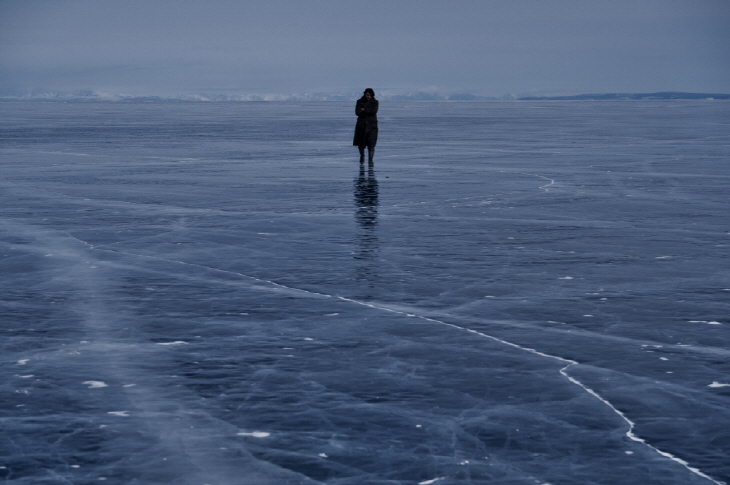
South Korean film “Harbin” is so serious and ponderous that it often forgets engaging or entertaining its audiences. I do understand that it attempts to be a grim and gritty period drama about one famous real-life national hero and his several comrades, but, boy, what a piece of dry and mediocre seriousness it is. To be frank with you, there is not particularly anything to surprise and enlighten me and other South Korean audiences on its serious historical subject, and that is the main reason why I observed this rueful dirge without any care or attention at all.
Because I and many other South Koreans already know well about the real-life incident on which the movie is based, I think it is fair to tell you in advance that what Ahn Jung-geun (1879 ~ 1910) and his several comrades planned at the time was succeeded on October 26th, 1909. Their target was Itō Hirobumi, the Prime Minister of Japan who is probably the most notorious Japanese historical figure in the Korean history except Toyotomi Hideyoshi. This dude was the central figure in the Japanese colonization of Korea during the 1900s, and he came to a Chinese city named Harbin, which incidentally belonged to Russia along with its surrounding area during that time, for a diplomatic meeting with Russian government officials on that fateful day.
The story begins with Ahn, played by Hyun Bin, and a bunch of his comrades gather in Vladivostok, Russia seven days before the day of assassination. As they and many other Korean independence fighters are cornered more and more, they eventually decide to assassinate the Prime Minster of Japan when he arrives in Harbin, and despite being still quite devastated by what recently happened to him and many other comrades, Ahn is very determined to accomplish this risky mission. As a matter of fact, he demonstrates his strong will and determination to others via a rather bloody act of oath at one point early in the film.
Ahn and several other members including Woo Deok-sun (Park Jeong-min) and Kim Sang-hyun (Jo Woo-jin) quickly embark on the preparation for their assassination plan, and this is alternated with the relentless pursuit by Mori Tatsuo (Park Hoon), a cold-blooded Japanese officer who once encountered Ahn on a battlefield. Although Ahn spared the life of Mori and a few other surviving Japanese soldiers at that time, Mori has felt quite humiliated about that, and he is surely ready to catch Ahn by any means necessary after being informed about the assassination plot.
Around the middle of the story, it becomes apparent to Ahn and his few trusted comrades that there is an informer among them, and the mood becomes more tense as they try to find the informer in addition to avoiding Mori and his men. There is a quietly tense sequence where Ahn and his comrades wait for any incriminating moment on a train, and everything eventually culminates to whether Ahn really can confirm the informer as time is running out for him and his comrades.
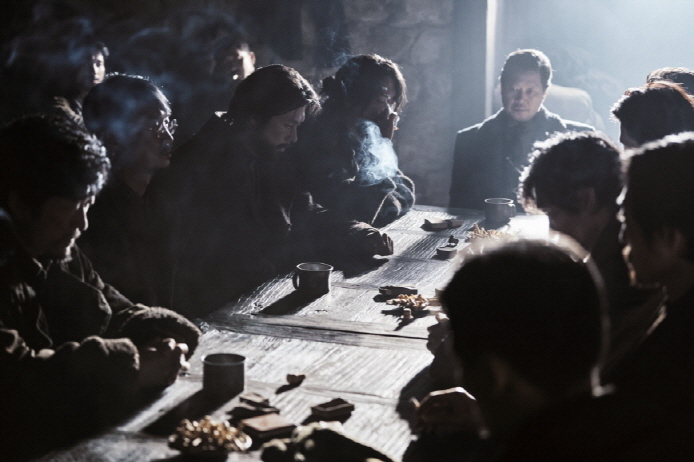
However, we cannot care that much about what will inevitably happen in the end because the screenplay by director Woo Min-ho, who has been mainly known for “Inside Men” (2015), his co-writer Kim Min-seong, often meanders and stumbles in terms of characterization. Ahn and many other characters in the film frequently talk and talk about their political belief, but their dialogues and speeches mostly feel flat and bland without giving any insight into their personality or humanity, and you may instead come to notice more of how much they smoke as endlessly discussing on their assassination plan inside those shabby and stuffy places where they are hiding from the Japanese Army.
In case of their Japanese opponents in the story, they are also not that interesting either. While Mori merely functions as the main antagonist of the story, the Prime Minister of Japan is depicted as a plain bureaucratic authority simply following the imperialistic interest of his country, and that is sort of refreshing in my humble opinion. Lily Franky, a Japanese actor whom you may remember for his good performances in several works of Hirokazu Kore-eda, is surprisingly believable in his low-key acting, though the movie does not give him many things to do except looking haughty or thoughtful during his brief appearance.
Hyun Bin and several other main cast members in the film try to fill their archetype roles as much they can, but many of them are limited by their flat characters from the very beginning. While Park Hoon is only demanded to look to cold and intense throughout the film, Park Jeong-min and Jo Woo-jin manage to distinguish themselves to some degree, and Jeon Yeo-been is so under-utilized that we cannot help but notice that her role is the only one substantial female character in the story.
In conclusion, “Harbin” does not have enough personality and substance to hold out our attention before eventually arriving in its predetermined finale. At least, it looks slick and competent in technical aspects thanks to the first-rate crew members including cinematographer Hong Kyung-pyo (He previously worked in a number of recent notable South Korean movies including Bong Joon-ho’s Oscar-winning film “Parasite” (2019), by the way), but I was only left with the growing hollow impression on my heart and mind, and I am already quite ready to move onto whatever I can watch during the remaining few days of 2024.
Animation feature film “Wallace & Gromit: Vengeance Most Fowl”, the latest work from Aardman Animations which will be released on Netflix on next Friday in South Korea, is as funny and delightful as we can possibly expect. Although it may not surpass those inspired moments of the first three Wallace & Gromit films, it shows that Aardman Animations does not lose any of its skills and touches yet, and that is certainly a good news for any fan of Wallace & Gromit films.
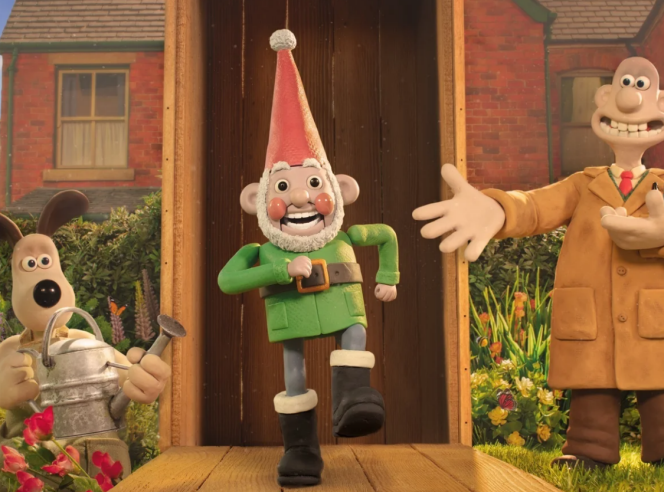
The film opens with another usual day a goofy inventor dude named Wallace (voiced by Ben Whitehead) and his loyal dog Gromit, and we accordingly get a witty scene showing how they start their morning while Wallace goes through a rather complex preparation process handled by a series of his invented machines. Because he has spent too much money on his inventions again, Wallace needs some money to take care of this financial problem, and then there comes an unexpected solution. A garden norm robot he invented just for helping Gromit’s garden work, which is called “Norbot” (voiced by Reece Shearsmith), actually turns out to be quite useful and efficient compared to many of Wallace’s inventions, and many people in the neighborhood come to show a lot of interest in Norbot.
Delighted by this opportunity, Wallace embarks on doing some gardening business via Norbot, but, alas, there is one big problem. As already shown from the trailer of the film, Feathers McGraw, a villainous penguin who previously appeared in “The Wrong Trousers” (1993), has been waiting for a moment of revenge in a local zoo where he has been incarcerated since his devious criminal plan was foiled by Wallace and Gromit, and he instantly sees a golden chance when he happens to watch a TV new report on Wallace and his latest invention.
What follows next is another delightful comic moment to cherish. Via his own little creative (and sneaky) scheme, McGraw succeeds in getting online access to Wallace’s personal computer, which happens to be connected with Norbot at that time. He does some hacking on the Artificial intelligence control system of Norbot, and, what do you know, Norbot is re-programmed to be quite evil while being under his control (The film surely does not mince any word on the dark sides of advancing computer technology).
It goes without saying that Gromit soon notices that something fishy is going on with Norbot, especially when Norbot quickly manufactures a bunch of other Norbots supposedly ready to serve under Wallace’s latest business. Not so surprisingly, Wallace remains rather oblivious to the growing possibility of trouble and danger, and this certainly frustrates Gromit more than once.
Meanwhile, the film also pays attention to what is going on at a local police station. While Chief Inspector Albert Mackintosh (voiced by Peter Kay) is mostly occupied with a certain upcoming ceremony which will distinguish the last days of his public service, Constable Mukherjee (voiced by Lauren Patel) comes to discern that something bad is happening around their neighborhood, and her attention is soon drawn to Wallace and his Norbots.
In the end, there comes a moment when McGraw finally reveals his diabolic plan (He even does a bit of homage to a certain infamous James Bond movie villain, by the way), and it is naturally followed by a series of comic action scenes as expected. They may not reach to the sublime comic perfection of the climatic chase scene of “The Wrong Trousers” (If you have not seen yet this very special animation short film which also won an Oscar, please check it out as soon as possible), but directors Nick Park, who won no less than three Oscars thanks to some of his Wallace & Gromit films, Merlin Crossingham and their crew present one hilarious moment after another to the end, and you will certainly cheer when Wallace and Gromit save the day again (Is this a spoiler?)
Above all, the film also depends a lot on its style and personality, and that is one of the main reasons why Aardman Animations has been as distinguished as Pixar Animation Studios or Studio Ghibli. Its stop-motion clay animation may look rather rough and broad at first, but it is constantly filled with numerous loving details to observe and cherish, and we come to admire more of those painstaking efforts put behind and in front of the camera.
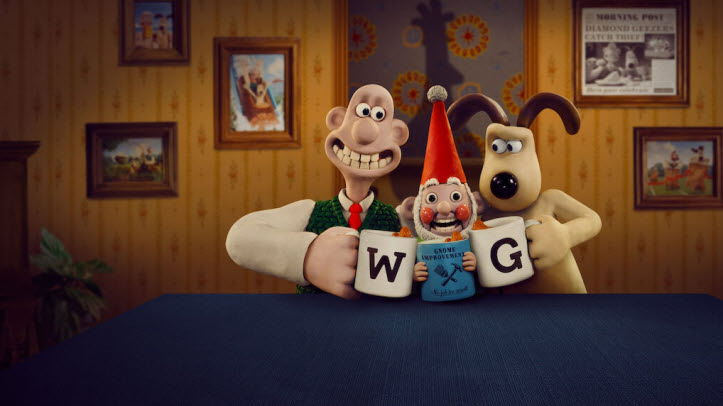
Furthermore, just like all of Wallace & Gromit films, the film is supported well by one of the most endearing duos in the history of cinema. While you may want to shake your head due to his frequent obtuseness, Wallace comes to us a likable dude you can gladly tolerate for his good nature and irrepressible enthusiasm toward invention, and Gromit surely earns our esteem as sincerely trying to help and support his master as much as possible – even though he does not speak at all throughout the film just like he and his master’s very dangerous opponent.
In conclusion, “Wallace & Gromit: Vengeance Most Fowl” shows Aardman Animations back in element after being relatively less stellar during last several years as shown from “Chicken Run: Dawn of the Nugget” (2023), which is incidentally also available on Netflix. Although that animation film is fairly enjoyable, it is also rather forgettable compared to the better works of Aardman Animations including, yes, “Chicken Run” (2000), and that is why “Wallace & Gromit: Vengeance Most Fowl” is quite welcoming to say the least. In short, this is one of more enjoyable animation films of 2024, and I assure you that you will not regret at all.
Bob Clark’s 1983 film “A Christmas Story” is quite typical but also very special in many aspects. Yes, this is mainly about one ordinary American kid trying to receive a certain toy for the upcoming Christmas, but the movie somehow hits the right balance between sly wit and nostalgic innocence, and that is the main reason why it has been an enduring classic film for every Christmas season since it came out more than 40 years ago.
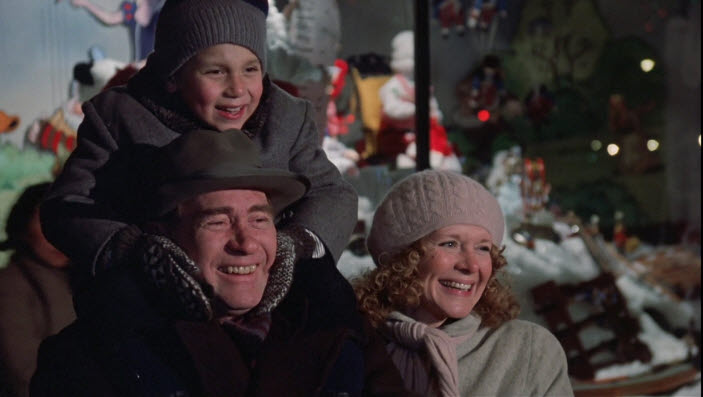
The story, which is based on Jean Shepherd’s 1966 book “In God We Trust: All Others Pay Cash” (Shepherd also participated in the adaptation in addition to doing the wryly humorous narration of the film, by the way), is set in one suburban neighborhood located in the northern region of Indiana during the late 1940s. As Christmas is coming, a young boy named Ralphie Parker (Peter Billingsley) has been eagerly hoping for getting a Red Ryder Carbine Action 200-shot Range Model air rifle during the ongoing Christmas season, and we are tickled a lot by how much he tries to persuade his parents, who are respectively played by Darren McGavin and Melinda Dillon.
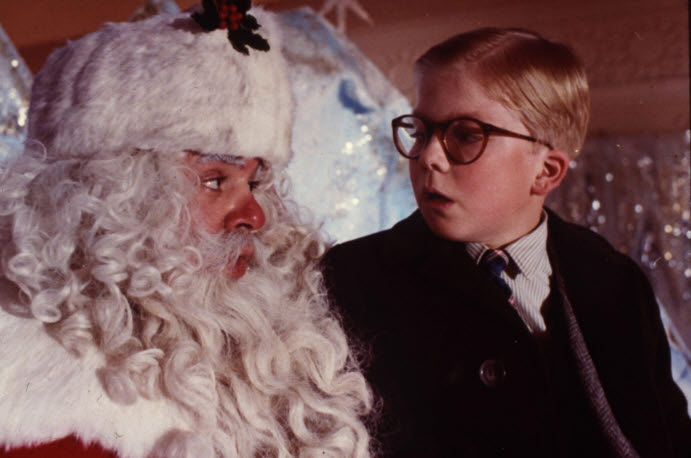
Alas, all Ralphie comes to hear from his parents is “You’ll shoot your eye out.”, but our little hero is not deterred at all, and what follows next is a series of attempts for attaining his goal. At one point in the middle of the story, he attempts to write a good school essay on his passionate Christmas wish which he hopes will impress not only his schoolteacher but also his parents, but, not so surprisingly, he does not succeed at all to our little amusement. Later in the story, he tries to make a wish to a Santa Clause working in a local department store, but that only leads to one of the most hilarious (and twisted) moments in the film.
Meanwhile, the movie immerses us more into the daily life of Ralphie and many other characters around him as they go through a particularly cold winter, and we accordingly get a number of small but hilarious episodes to remember. Ralphie’s father often struggles to fix the faulty furnace in the basement of their house, and his dynamic stream of slang heard from the basement often reaches to the level of rough poetry. Nevertheless, both he and his wife do not approve much of Ralphie uttering a certain bad word at one point (Hint: It sounds a bit like…. “fudge”), and we accordingly get a couple of very humorous moments when Ralphie gets punished in a certain old-fashioned way some of you might heard about before.
These and many other moments in the film are certainly specific to the core, and I must confess that I sometimes observe them from the distance as a non-American dude who has not been that serious about Christmas. Nevertheless, there are also a lot of universal elements to resonate with anyone’s childhood memories. After all, we all had some funny moments to remember during our childhood period, and you will all empathize with the terror experienced by Ralphie and his friends due to a neighborhood bully – and how Ralphie finally become angry enough to feel that enough is enough. Despite being frequently young and wild during my old childhood years, I actually did not get angry that often as mostly occupied with books and movies, but I could also be infernally wrathful at times (I still can be, so don’t ever f*ck with me, folks), and I saw a lot of myself from Ralphie during that hilariously violent moment.
The movie is not afraid at all of becoming broadly comic as shown from several moments of imagination in Ralphie’s mind, but its story is also grounded in a sweet and gentle sense of humanity, which is amply provided by Ralphie’s loving parents. They sometimes look like a mismatched couple due to their vast personality difference, but it is clear that they really respect and love each other like any other decent couple, and we also cannot help but smile as observing their human flaws which look more endearing as I watch the film again and again. In case of an episode involved with a rather bizarre prize item sent to Ralphie’s father, he cannot possibly be prouder and happier about that, but his wife is understandably horrified – especially he enthusiastically puts that item right in front of the living room window for being seen by every neighbor of theirs to her horror and embarrassment.
One of my personal favorite moments in the film comes from the eventual Christmas gift time for Ralphie and his family. An aunt of his happens to send him a very silly bunny costume to wear, and Ralphie does not like this at all, but his mother insists that he should wear it just for being thankful to his aunt. Whenever I had to wear my old military uniform for my annual reserve army training, I felt as miserable as Ralphie during this uproariously humiliating moment, and I am still glad that I am too old for that sh*t at present.
The movie depends a lot on the engaging performance of its lead actor. Although the movie remains to be the sole highlight in his acting career, Peter Billingsley gives a sublime comic performance to remember, and he is alternatively funny and heartfelt without making any misstep throughout the film. McGavin and Dillon ably support Billingsley while having each own moment to amuse us, and so do several young performers including Ian Petrella, Scott Schwartz, and R. D. Robb, and Zack Ward.
On the whole, “A Christmas Story” is something we can always welcome whenever Christmas is coming, and I am glad to report to you that the movie remains as funny and charming as it was when I watched it for the first time in 2009. Yes, as a guy with some morbid sense of humor, I am mostly drawn to its naughtier sides, but I also feel quite warmed by its intimate human moments, and it is certainly qualified as one of the best Christmas movies out there.
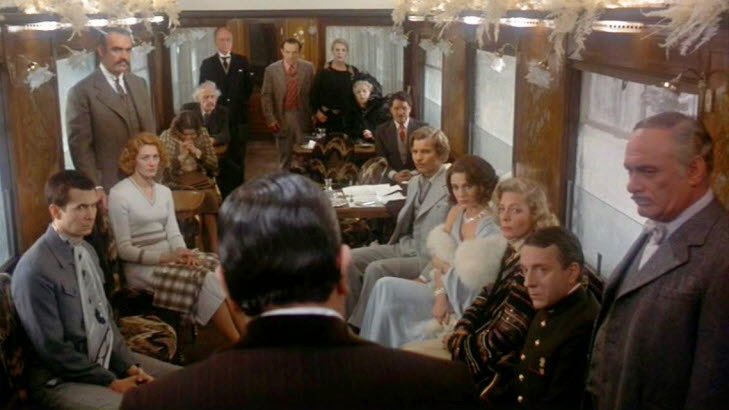
Sidney Lumet’s 1974 film “Murder on the Orient Express” is all about style and mood. While this is not exactly one of the best film adaptations of Agatha Christie novels, it still works as an enjoyable genre piece packed with enough class and skill, and, above all, it is also quite fun to watch all of these stellar cast members in the film stuck together within a rather limited background.
The story, which is based on one of Christie’s most famous mystery novels, is mainly driven by another seemingly impossible challenge for Christie’s famous Belgian private detective Hercules Poirot (Albert Finney). Not long after he gets on the Orient Express train departing from Turkey, Istanbul, one of the passengers approaches to him because this person in question is quite concerned about his safety right now, but Poirot rejects this person’s request just because he is not particularly interested. What do you know, this person is found murdered in the very next morning, and Poirot agrees to do some investigation as requested by his old Italian friend, one of the passengers who is also incidentally an executive of the train company.
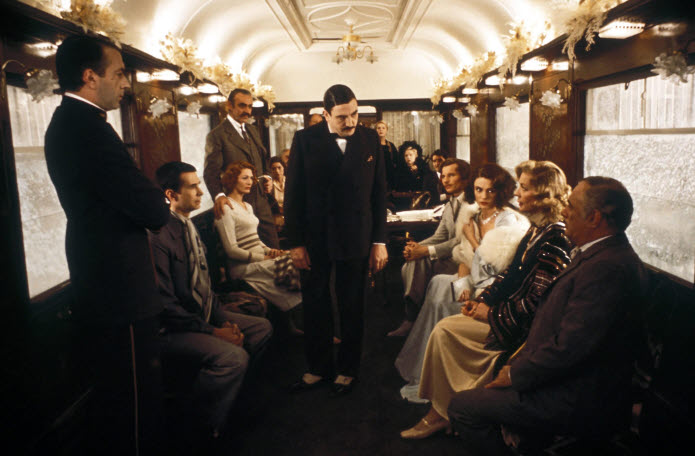
Before the story becomes a bit more serious with this unexpected incident, Lumet and his crew members including cinematographer Geoffrey Unsworth did a masterful job of filling the screen with enough period atmosphere and details to behold. As a result, we find ourselves immersed into its romantically old-fashioned style and mood around the time when every passenger of the Orient Express is on the board, and this impression is further accentuated by the Oscar-nominated score by Richard Rodney Bennett (The film received the total six Oscar nominations at that time, by the way).
While the train itself certainly adds extra nostalgia as it passes through a series of landscapes, it is also filled with a bunch of colorful figures who are played by variously distinguished performers to notice. They are (in alphabetical order) Martin Balsam, Ingrid Bergman, Jacqueline Bisset, Jean-Pierre Cassel, Sean Connery, John Gielgud, Wendy Hiller, Anthony Perkins, Vanessa Redgrave, Rachel Roberts, Richard Widmark, and Michael York, and you will be more impressed to know that many of them already won or previously nominated for Oscar before this film (Ingrid Bergman somehow won a Best Supporting Oscar for this film, though even she thought she did not deserve her third Oscar that much).
Around the narrative point where the train unexpectedly gets snowbound in the middle of the second night of its long journey across the Europe continent, the movie efficiently sets up the stage for the next act. A number of small and big incidents happen here and there on the train while our detective hero is trying to sleep, and Bennett’s score naturally takes an ominous tone around this point.
After the aforementioned passenger is eventually found murdered, the movie accordingly goes through a series of Q&A sessions conducted by Poirot inside the snowbound train, and that is where the movie becomes less interesting than before. Whenever Poirot asks some pointed questions to each of those possible suspects, they all naturally look as suspicious as required with some necessary overacting, and this pattern simply goes on and on until our detective hero finally presents his conclusion in front of everyone on the train.
However, the movie fortunately does not lose its sense of fun and humor at all, even though it turns out later that the murder case in the story is closely associated with a devastatingly tragic case of child kidnapping, which is clearly based on the kidnapping and murder of Charles Lindbergh’s son in 1932. Lumet and legendary editor Anne V. Coates make sure that the story keeps rolling as our detective hero digs up one crucial thing after another along the narrative, and Unsworth’s camera steadily focuses on whatever is being exchanged between Poirot and each of his interrogation targets without making the film feel too static or stuffy within its limited background.
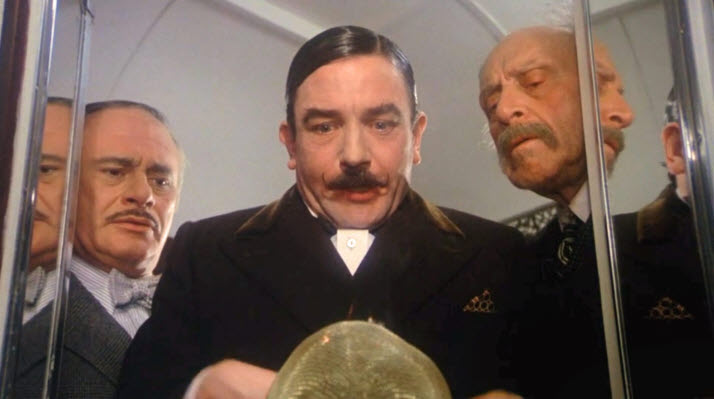
Above all, Lumet allows his performers to bring some extra personality to their broad archetype roles in addition to having each own moment along the story, and their game efforts are firmly anchored by the masterful comic performance by Albert Finney, who got deservedly Oscar-nominated for this film. While quite amusing in many of his deliberately mannered touches to savor, Finney gradually takes the center as the plot thickens as expected, and he eventually dominates over all of his other fellow cast members when his character has to deliver a rather long explanation on what really happened at that time (Critic Roger Ebert wrote in his 1974 review: “…it’s fun of a rather malicious sort watching a dozen high-priced stars keep their mouths shut and just listen while Finney masterfully dominates the scene.”).
In conclusion, “Murder on the Orient Express” does not look that fresh after 50 years while looking rather trivial due to being sandwiched right between Lumet’s two greater works “Serpico” (1973) and “Dog Day Afternoon” (1975). Nevertheless, it remains fairly entertaining thanks to Lumet’s competent direction and the good performances from his stellar cast members, and it remains to be two or three steps above that recent movie adaptation directed by Kenneth Branagh, which is not bad but merely passable on the whole. Yes, this is an old-fashioned stuff indeed, and it is equipped with enough charm and craft at least, and you may want to savor it again just because of that.
Documentary film “Sugarcane”, which is currently available in Disney+ in South Korea, is alternatively chilling and heartbreaking with its emerging big picture of one tragic past in Canada. As already known to many of us via recent news reports a few years ago, thousands of young Indigenous people in US and Canada were taken to many Catholic residential schools where they were frequently mistreated and abused, and the documentary looks close into the remaining human pain and trauma resulted by this heinous historical crime.
The documentary is pretty personal to Julian Brave NoiseCat, who directed it along with Emily Kassie. As shown in the documentary, his father Ed was actually born in one of those Catholic residential schools for Indigenous people, which is located near to Williams Lake Indian Reserve No. 1 (It is also called “Sugarcane” by local people, by the way). Ed’s mother, who is still alive, was sexually abused by one of those priests of that Catholic residential school while working there, but she is understandably not so willing to tell anything about what happened to her during that horrible time of hers.
While following NoiseCat’s efforts to get to know more about his hidden family history, the documentary also closely observes the efforts of a local activist named Charlene Belleau, who was crucial in exposing the hidden secret behind that Catholic residential school. It turned out that more than 100 Indigenous people died and then promptly covered up around the school, and, as pointed out to us around the end of the documentary, this is just a small portion of the atrocities committed around many other Catholic residential schools which were established across Canada and US around the 19th century.
The purpose of these horrible schools was pretty deplorable to say the least. By forcing those many young Indigenous people into Westernization and Christianity, the priests and nuns of these schools attempted to eradicate the ethnic/cultural identity of young Indigenous people once for all, and those young Indigenous people had to endure a lot of mistreatment and abuse in addition to constant racial discrimination.
The atrocities of those Catholic residential schools were eventually gone around the late 20th century, but their ramifications remain among many Indigenous people as shown from the documentary. While NoiseCat’s father is still haunted by whatever he had to endure when he was very young, we also meet several old local Indigenous people damaged in one way or another by their traumatic experience with Catholic residential school, and one of the most heartbreaking moments in the documentary comes from when one of these unfortunate people openly expresses about how much he remains angry and traumatized even at present.
In case of Willie Sellars, who is the current chief of Williams Lake First Nation, he is really tries hard to bring more attention from the media and the public to what happened at that Catholic residential school in his region. Thanks to his and many other activists’ efforts, the Prime Minster of Canada eventually comes to Williams Lake Indian Reserve No. 1 for giving a public apology, but there are still a lot of more atrocities to be discovered and exposed, and Sellars and many other activists including Belleau are certainly willing to go for that.
Meanwhile, we are also introduced to Rick Gilbert, the former chief of Williams Lake First Nation. He is a devoted Catholic who sincerely takes care of his small church along with his wife, but he also remembers well how much he was mistreated during his hurtful years at that Catholic residential school, and that is why he and several other Indigenous figures go to the Vatican for meeting Pope Francis.
After meeting the pope, Gilbert subsequently has a brief meeting with a priest who is incidentally the Superior General of the Missionary Oblates of Mary Immaculate, which was closely associated with the Catholic residential school for Indigenous people in US and Canada. The priest listens to Gilbert with genuine care and compassion, but then his following response is as perfunctory as that public statement from the Pope, and we wonder whether anything can be really changed at all in the system.
Deftly juggling its three different narrative lines, the documentary eventually culminates to some powerful personal moments to linger on your mind for a while. At one point later in the documentary, NoiseCat comes to have a more serious conversation with his father, and Ed comes to face how that long struggle with his pain and trauma also affected his family members a lot. Eventually, Ed goes to his mother’s house for an honest conversation with her on their past, but his mother still cannot tell anything about their past. Although we can only listen to their private conversation, her pain and trauma somehow feel quite palpable to us nonetheless, and we can only imagine how much she is still reeling from that.
In conclusion, “Sugarcane”, which won the Directing Award at the US Documentary section of the Sundance Film Festival early in this year (It also recently won the Best Documentary Award at the Nation Board of Review, by the way), is unforgettable in its thoughtful and sensitive presentation of the scars and damages caused by the historical atrocities which should be known more in public. In short, this is one of the best documentaries of this year, and you may want to know more about its important social/historical subject after watching it.
Documentary film “Blink”, which is currently available on Disney+ in South Korea, is the story of one loving family who decide to have a very special trip around the world. As the parents sincerely try to help their four children have more experience to remember, the documentary closely observes how this family come to stick together more thanks to this precious journey, and we come to have more understanding and empathy on its personal importance to all of them.
At the beginning, we are introduced to a middle-class French-Canadian couple and their four young kids. Édith Lemay and Sébastien Pelletier talk a bit about how it has frequently been demanding for both of them to raise their four kids together in their cozy suburban house, and we see how lively their four kids are in each own way. While their eldest kid Mia is your average big sister for her three younger brothers, Léo, Colin, and Laurent are often brimming with their boundless spirit and energy, and it is apparent that they have all happily grown up under the loving care and attention of their parents.
However, there is one big medical problem for three of these kids. Because of a rare genetic disorder called retinitis pigmentosa, Mia, Colin, and Laurent will inevitably become blind, and we notice that they are already on the way of losing their eyesight. It goes without saying that their parents were quite devastated to learn about their serious medical condition, but Édith and Sébastien have tried to help them as much as possible, and that is why they came to decide to have a global travel along with their four kids for showing a lot more of the world around them than before.
It goes without saying that they were going to spend a lot of money for this special family trip, but then Édith and Sébastien happened to get some enough money to finance their global travel with their kids. After some careful planning on how to spend the money day by day, they and their kids made a sort of bucket list on what they wanted to experience together during their global travel, and their kids eagerly filled the list with some humor and creativity.
And they did travel around here and there around the world as shown from the documentary. First, they went to Namibia for watching many different animals living in its animal preservation region, and they were not disappointed at all as beholding those various animals out there. After that, they went to a number of different countries including Egypt, Turkey, Thailand and Mongolia, and you will be amused and touched to see one of the kids trying something so trivial but also quite meaningful to him when he and his family came to a desert area for riding camels together.
They also even go to Nepal just for watching one of those big snowy mountains of the Himalayas. Although their hiking course around the Himalayas turns out to be a bit more demanding for them, the kids do not lose their spirit at all, and Édith and Sébastien are certainly happy to see their kids enjoying not only all those beautiful landscapes surrounding them but also befriending a few local animals (I particularly like that grumpy cat, by the way).
However, Édith and Sébastien are also often reminded of how their three kids are still losing their eyesight day by day. For example, their three kids cannot easily see during nighttime, and this problem of theirs will surely get worse and worse as time goes by. They and Léo, who is incidentally not afflicted with retinitis pigmentosa unlike his three siblings, hang around with each other pretty well on the whole, but we cannot help but observe that there will soon be more distance between him and his three siblings due to the worsening eye condition of his three siblings.
Nevertheless, the emotional bond among the family members remains strong as before, and that is quite evident to us when they suddenly find themselves trapped within a rather small place in the middle of their trip in Ecuador. As they get stuck there much longer than expected, the kids become afraid and nervous, but they still stick together under their parents, and that is certainly another moment to remember for all of them.
Yes, it should be noted that these kids are pretty lucky to live under the affluent parents who can actually afford to provide a lot of things to them besides their exemplary homeschooling, but it is difficult for us not to be moved by their sincerity and enthusiasm as well as the considerable dedication shown from their parents. Although there are several occasional moments where they are quite conscious of the camera observing them, Édith and Sébastien come to us as very decent people who really care a lot about the future of their kids, and their kids are always direct and frank in showing their thoughts and feelings in front of the camera.
On the whole, “Blink”, which is directed by Edmund and Daniel Roher, handles its interesting human subjects with enough respect and sensitivity, and the result is often moving while never losing its sight on the personal dimensions of their precious journey at all. As shown from the end of the documentary, the kids are all right while also quite ready to go further with their life, and their family trip will always occupy a special place in their minds even after they cannot see anymore in the end.
Leo Carax’s new short film “It’s Not Me”, which happens to be released in South Korean theaters along with Alice Rohrwacher’s new short film “An Urban Allegory” (2024), is elusive but undeniably intriguing in many aspects. Clearly influenced by those baffling later works of Jean-Luc Godard, the film often made scratch my head more than once, but it also engaged me with a real sense of wit and creativity beneath its seemingly random stream of images, and the overall result is actually a lot more enjoyable than whatever Godard’s later films attempted to do.
At first, Carax seems willing to show more of himself to us, but then his mind cannot help but follow his irrepressible creative spirit, and that is the beginning of his little visual joyride. He is really prepared to baffle or fascinate us in his own way here in this film, and I assure you that you will gladly go along with that especially if you have admired his idiosyncratic directing career like I have.
Like Godard’s later films such as “Goodbye to Language” (2014), the film frequently utilizes title cards for accentuating its ideas and themes. To be frank with you, I was rather annoyed by this at first, but then I was gradually amused by how Carax humorously handles this, and that certainly distinguishes his film a lot from Godard’s later works, which are nothing but hollow and ponderous cinematic doodles to me (Call me a philistine if you want, folks).
What is presented between these title cards are a deliberately jumbled mix of various video clips ranging from some rough home movie to a certain famous short film by the Lumière brothers. While this surely is another thing Godard tried again and again in his later movies, Carax easily surpasses Godard as actually generating a sort of narrative flow among these seemingly random video clips. You can clearly sense him trying one thing after another with no apparent direction, but you can also feel his wit, confidence, and energy nonetheless, and you may actually find yourselves often intrigued by whatever he is going to try next.
This free-wheeling attitude of the film will surely take you back to “Holy Motors” (2012), which is incidentally one of Carax’s better works. In that boundlessly fascinating film, Denis Lavant, who has been one of Carax’s main collaborators since Carax’s first feature film “Boys Meets Girls” (1984), plays many different roles as moving here and there by a big white limousine, and he even plays again that weird character he previously played in Carax’s segment in “Tokyo!” (2008). As a matter of fact, that weird character briefly appears in the middle of “It’s Not Me”, and Lavant has a little juicy fun as going all the way with his character’s amusingly unpleasant aspects.
Another interesting moment in the film is when Carax shows a bit of his sincere concern about how our world has been threatened more and more by the ongoing rise of fascism during last several years. At one point, we see a mother reading a rather twisted tale to her children, and we later see an archival footage clip showing a big American Nazi rally held in the middle of New York City. Yes, as shown in Marshall Curry’s Oscar-nominated short documentary film “A Night at the Garen” (2017), such a deplorable thing really occurred there in 1939, and the chilling images from that archival footage clip are strikingly juxtaposed with the current political status of our world.
Nonetheless, the mood remains casual and lightweight while Carax continues to explore the range of his artistic creativity as much as possible within the 41-minute running time of his short film, and that is why you should not leave the screening room before it is completely over. Right after its end credits, Carax presents a little surprise for you, and that reminded me again that I must re-evaluate his previous film “Annette” (2021) as soon as possible. I wrote a 3-star review after watching it for the first time in 2021, but its memorable moments have stayed in my mind since that, and I must admit that this unconventional musical film is much more interesting and creative than many other recent musical flicks such as, yes, “Wicked” (2024).
On the whole, “It’s Not Me” is a small but undeniably intriguing piece of work, and Carax demonstrates here again that he is still a talented director willing to take a chance at any time. After “Boys Meets Girl”, he became a rising new director to watch, but then his filmmaking career took a big downturn after the problematic (and very expensive) production of “The Lovers on the Bridge” (1991), and he seemed to crash down toward the bottom when his next film “Pola X” (1999) came out. Nevertheless, he eventually made a triumphant comeback with “Holy Motors”, and “Annette”, which garnered him the Best Director Award when it was premiered at the 2021 Cannes Film Festival, solidified the second prime of his compelling filmmaking career.
Probably because I was charmed a lot by Rohrwacher’s “An Urban Allegory” right before watching it, I put “It’s Not Me” one or two steps below “An Urban Allegory” at present. but I am willing to revisit both of them sooner or later. Despite being quite different from each other in terms of style and theme, they somehow make a superlative double feature show, and it is really lucky for me and other South Korean audiences to have such a nice little cinematic gift around the end of this year.
It took some time for me to understand and appreciate the works of Alice Rohrwacher, who has been one of the most interesting filmmakers of our time since she made a feature film debut with “Heavenly Body” (2011). While I admired “Happy as Lazzaro” (2018) as much as many others, I actually struggled a bit to discern what and how it is about, but then I got more accustomed to her own distinctive style and touches after watching “La chimera” (2023) and “The Wonders” (2014) later, and I also enjoyed a lot her Oscar-nominated short film “Le pupille” (2022), which is incidentally available on Disney+ right now.
In case of her latest short film “An Urban Allegory”, Rohrwacher worked along with JR, an acclaimed French artist who previously made an Oscar-nominated documentary film “Faces Places” (2017) along with Agnès Varda. Inspired by “Allegory of the Cave” by Plato, the film explores the importance of art in our urban life via its seemingly simple story, and the result is another fascinating work to be added to Rohrwacher’s advancing career.
At first, we meet a little young boy named Jay (Naïm El Kaldaoui) and his dancer mother. Although he is rather ill, there is not anyone else to take care of him besides his mother right now, so she has no choice but to go to her latest audition along with her son. Alas, she only ends up arriving a little too late at a building where the audition is going to be held, and now she must persuade the supervisor of the audition to let her participate in the audition while her son is waiting for her alone in the corner.
While his mother is occupied with the audition, Jay happens to encounter a guy who is clearly the director to preside over the audition along with his staff. Because this dude is played by none other than Leo Carax (He also serves as one of the producers of the film, by the way), our level of interest is instantly increased, and Carax has some little fun with his brief but crucial part – especially when his character whispers something to Jay.
The film does not specify much what exactly Carax’s character says to Jay, but we come to have a pretty good idea as Jay later wanders around streets and alleys and then begins sort of a steam-of-consciousness monologue clearly influenced by the aforementioned work of Plato. As he looks more around people and places, we become more aware of how we often let ourselves get entrapped in our urban daily life in one way or another, and I assure you that you will not feel like checking up your smartphone at all while watching this small satiric moment.
However, the film also finds some hope and optimism as our little hero comes to discover how things around him and others can really look and feel quite different, and that is where JR’s own distinctive artistic style makes a leap from what has been established so well by Rohrwacher. I will not go into details here for not spoiling any of your entertainment, but I can tell you instead that you will be quite delighted if you were entertained a lot by those memorable pieces of installation art by JR in “Faces Places”.
Around that narrative point, the film smoothly enters a realm of fantasy, so you cannot entirely be sure about what is exactly happening on the screen, but then there comes a sublime moment associated with the collaborative art project “Chiroptera”. With the score by Thomas Bangalter and the choreography by Damien Jalet, this ambitious art project powerfully resonates with the main theme of the film, and we come to reflect more on how art can actually make us regard our reality differently and then become more liberated than before.
In the end, the film returns to focusing on the relationship between Jay and his mother, who is certainly quite upset as looking for her son. Young performer Naïm El Kaldaoui is engaging in his effortless natural performance, and his expressive face sometimes speaks volume even when his character does not tell or signify much on the surface. He and his co-star Lyna Khoudri are convincing in their interactions early in the film, and that is the main reason why the last scene of the film is quietly touching.
Although its running time is only around 20 minutes, the film is efficient in its gentle handling of its story, mood, and character, and it is really fortunate for me and other South Korean audiences that the film is released in South Korean theaters along with Carax’s recent short film “It’s Not Me” (2024). The total running time of these two very different short films is just a bit more than 60 minutes, but I felt satisfied enough with both of these two interesting works, and I am already quite willing to revisit them again someday.
By the way, if you ask me which one I actually like more, I will say that “An Urban Allegory” won my heart while “It’s Not Me” intrigued my mind in many different directions, and I will also add that I usually follow my heart’s judgment in case of evaluating movies. While it is pretty amusing to see Carax emulating whatever Jean-Luc Godard struggled to do in those decidedly (and snobbishly) cerebral works during his later years, what Rohrwacher attempts to do along with JR somehow touched my heart a lot more than expected, though I must confess that my mind was initially baffled a little during its first few minutes. In short, this is one of more interesting short films I saw during this year, and it surely makes a wonderful double feature show along with “It’s Not Me”.