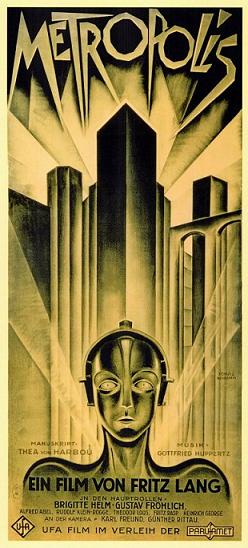
The Original Poster of "Metropolis"
There must be many ardent admirers who know far more than me about Fritz Lang’s “Metropolis”(1927), one of the great movies in the 20th Century. They will provide you more detailed and accurate knowledges about this unforgettable masterpiece after watching, no, experiencing it. So, I think I have to talk about my experience during the evening of May 4th and my several thoughts, instead of making a fool of myself by talking about what I do not know well.
Like any other devoted movie lovers, I was happy to hear about the miraculous discovery of the missing footage, thought to be lost forever, in last year. A nearly-completed print was found in Bueno Aires, Argentina, and it was confirmed by experts in Germany that it is genuine. This print was clumsily transferred to 16mm negatives after having arrived in Argentina and was in bad conditions, but the Murnau foundation began the restoration process based on this print as well as other prints discovered from Australia and New Zealand. In the end, the restored version was finally shown to people through the 60th Berlinale and other ways including Internet streaming in Germany early in this year. 
For me, it was pure luck to get the chance to see its glory. Very exhausted after a long returning travel from exhilarating Ebertfest in last month on April 27th, I came to know that the restored version would be shown in Jeonju International Film Festival. Jeonju is my hometown and I could not miss this great opportunity. Just like when I immediately grabbed the chance to watch Ramin Bahrani’s “Goodbye Solo” during the same event of last year, I quickly went to the website of JIFF and there were few available seats for the first screening on May 4th(the second screening on May 5th had already been sold out). I immediately bought one seat for me. I would miss the family meeting because of that, but I think the movie is worthy of that sacrifice.
To be frank with you, the situation was too fortunate for me to believe. I was a little worried while walking along the alleys of the festival place. What if the screening is canceled due to some sudden technical problems? I really want to thank my recent temporary depression. I had been plagued by the anomie resulted from returning to home after the trip, and I tried to get out of that state by prescribing myself with writings about my experiences in US and having a lot of rest for four days. My previous writings are the fruits of that treatment, and, thanks to that, I slipped into calm, meditative state like being on sedative; I was all-ready for accepting any disagreeable surprises with humility.
Well, there was no problem in getting into the screening room. I took the reserved ticket from the booth without difficulty. Only thing I had to was walking down the alley I have known for nearly 20 years. I have walked around this alley since I was 9. I clearly remembered almost every movie I watched in this area during my childhood and teenager years and can tell you their loving or embarrassing memories.
My first movie on this alley was “Batman Returns”, “Bambi” of my childhood. I still like the movie while agreeing with Roger Ebert’s opinion. It’s too dark and neurotic and nihilistic as the superhero movie or the entertainment for children. But that movie used to inspire my night dreams with big, dark, pessimistic, but wondrous cities without brightness. And think about the fact that all of those childish imaginations were basically originated from “Metropolis”, which I would watch few minutes after in the same area. Come to think of it now, that seems like a perfect poetic ending, with beautiful lamps and red umbrellas hung under the darkening sky.

Certain anxiety took place few minutes before the show time: when was the last time I watched “Metropolis”? I cannot remember well. It was around 2004 or 2005, the wild time when I frantically engulfed lots of DVDs every week. It was the version released by Kino International I watched at that time, and it was certainly more impressive than my first viewing from the pirate video with a tacky piano score. It was great to watch Kino version, but the memory was vague, and I was nervous because the comparison between Kino version and the restored version will be necessary when I write this.
However, the memory was quickly freshened up as soon as the feature presentation starts and the great images were surfaced both on my memory bank and the screen. That immense, evocative city set which would influence many movies we’re familiar with(“Blade Runner”, “Brazil”, “Batman”, “Gattaca”, “Dark City”….), the collage of relentless machines as dynamic as the sequences from “Man with a Movie Camera”, the haunting entrance of beautiful Maria(Brigitte Helm) with poor kids at the Eternal Garden, the huge machine turned into the monstrous temple in the Freder(Alfred Abel)’s vision, Rotwang(sinister Rudolf Klein-Rogge) and his lair, underground workers gathering before Maria with heads down, the creation of False Maria by Rotwang, many faces and eyes on the screen, the climatic disruption of the city system and following deluge….. and the moving message about the heart as the mediator between the head and the hand.
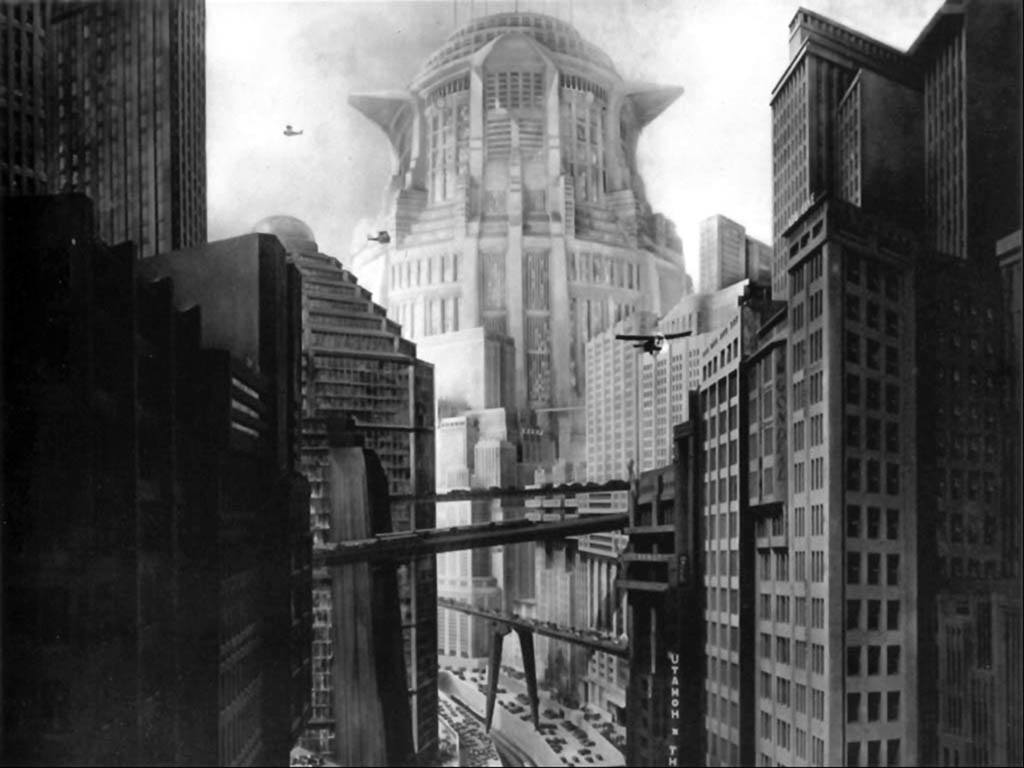
Like Joh Fredersen(Gustav Fröhlich), the domineering controller of the city and Freder’s father, Lang wielded his directorial power with the crews and the actors and the extras more than 30,000 for completing his visions. In the era when people had never even dreamed of the computers, many sequences were made by hand-made special effects and they certainly look old-fashioned now. However, they are more absorbing than fast food CGIs nowadays; they make their own fantasies and we’re attracted to them.
The people on the movie were in the real situations where Lang mercilessly pushed them into, and that is certainly shown on the screen. Funny thing is, what Lang did is not far from what the Nazis did with the crowd in “Triumph of the Will” few years later. He was against the Nazis, unlike his wife at that time, so he fled from them and came to US, where his movies and other movies from the German Expressionism gave birth to another immortal style named Film Noir.

After the premiere, “Metropolis” went through terrible butchering process. Although the images still hold the power despite this atrocity, many have wished for its complete restoration. Until recent years, Kino version in 2002 is the most closest one to the original version. With Wagnerian original score by Gottfried Huppertz, it looks quite nice with several missing scenes described by intertitles.
I want to emphasize this to you; the restored version of “Metropolis” is not complete. Due to the bad condition of found print, you can tell easily where the scenes or frames are added even if you’re not a movie expert. About 8 minutes is still missing because of that, and one crucial scene between Fredersen and Rotwang is still explained by the intertitle.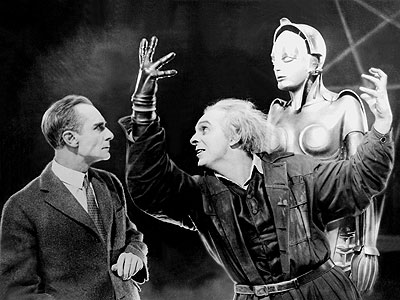
What the hell, the added materials indeed help the film a lot. Like Lang envisioned, the movie comes to us more than before as the fairy tale with the science filling the role of the magic(I was amused to spot the pentagram in Rotwang’s house). Several supporting characters including Fredersen’s assistant and Butler get more space and makes the story richer, although the story still lacks logic in some parts.
The relationship between Fredersen and Rotwang becomes more interesting by watching their previously missing scenes. The characters of the movie are simple but their relationships are fascinatingly entangled, mainly by Rotwang’s obsession and spite. With the hairdo of Doc Brown and the hand of Dr. Strangelove, Rotwang is the origin of all mad scientists , good or bad, in the movies to come. From the eerie sequence of his creation of false Maria, you will find familiar equipments and visual effects. Oh, by the way, he is a quintessential case of that famous Climbing Villain Syndrome from Ebert’s Movie Glossary. 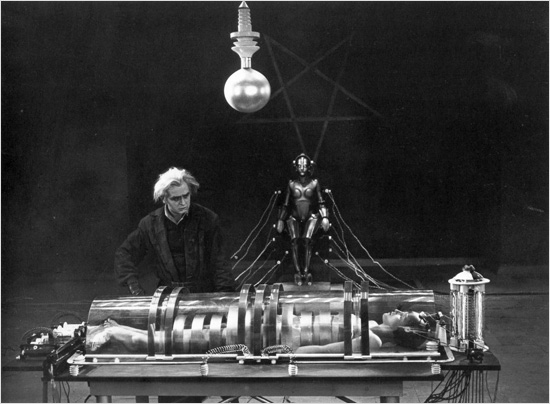
I am always amazed by the power of the great silent movies. They don’t talk to us, but they come to make voices in our head with our language despite their limits. Like Wall-E and Eve, the actors in the silent movies are more expressive with their faces than the mannequins we sometimes came across on the screen nowadays, and they surely stir our heart(Brigitte Helm is effective both as a graceful angel of hope and a sensual angel of destruction) The great images of “Metropolis” has made the striking impression on many of us with awe and still do. With added footage, the movie is a more moving drama now.
And it has timeless aspects. While watching underground workers in “Metropolis”, I was reminded of one article I read from local weekly magazines in last year. Written by the reporter who went to underground just like Freder, it told me there are still desperate people working mindlessly in a clockwork fashion in the factories. The task is pretty simple, but imagine you have to repeat it over and over and over again from AM 9:00 to PM 5:00 with few breaks. And the big cities continue to run above them while consuming them everyday – the replacements are always ready. This is not the reality only belonged to South Korea. Just look around, and you will see.

P.S.
My blunders
1) I told my far-flung correspondents friends during Ebertfest that the running time was about 3 hours, but the running time of the restoration version is 145 minutes with 24 frames per second.
2) I also criticized Gottfried Huppertz’s score while not knowing it is the original score composed at that time. I respect the original score for keeping up with the grandiose visions on the screen, but it is sometimes too grand for intimate scenes between characters in the movie. Is it the problem with the orchestra, or do I demand a wrong thing to the silent movie score?
Anyway, I and my friends predicted that Roger Ebert will probably show the movie to the audiences in Ebertfest of the next year. And we all agreed that the Alloy Orchestra, responsible for a fantastic experience during the showing of “Man with a Movie Camera” in this year, should be invited again if that happens.

The Night Scenery of Jeonju
 The last day of Ebertfest finally came, but it was still happy to be get together with others. The last movie of the festival, “Song Sung Blue”, is the documentary about the human spirit. Mike and Claire Sardina, as Lightening and Thunder, had been wonderful performers on the stages. Maybe their acts were not original(Mike sang Neil Diamond songs, and Claire did the songs of Patsy Cline, Blondies, and ABBA), but they were popular with people in Milwaukee and you can see why from their performances in video footage. Even if you don’t have much interest in these songs, they would draw your attentions with the joy of singing. And they were good singers.
Their love and dream and family went through many hardships. The same kind of accident incredulously happened twice at the same place. Their career was damaged because of that, and we observed the strains in the family. Director Greg Kohs shot his movie(This is his first feature-length documentary) for eight years and he seemed to become unseen family member/observer during the process. When Claire and her son have a intense quarrel, they are not conscious of the camera watching them. 100% objectivity is impossible, but a good documentary can approach close to that with the camera turned into the part of daily lives.
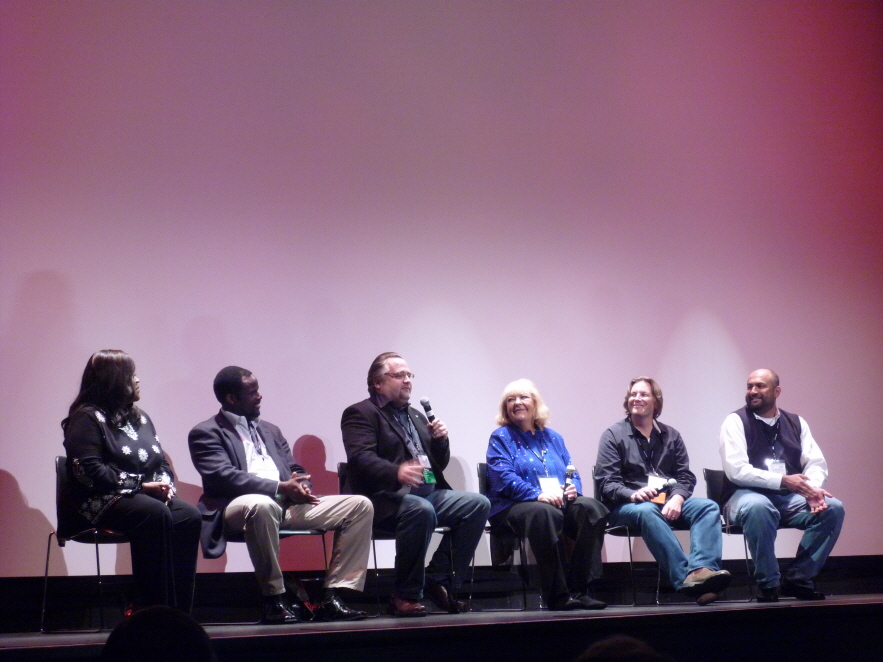
(From the Left) Chaz, Omer, Unidentified Panelist, Claire, Greg Kohs, and Omer
Mike and Claire’s Love prevailed over unforseen incidents. The movie has a moving scene with Eddie Vedder, and there are many reasons you will admire these strong-willed people in the movie. When Claire appeared on the stage after the showing, she gave the audience memorable moments with two Patsy Cline songs and one ABBA song. I don’t know much about Patsy Cline except her fame, but Claire made my ears prick up. And with ABBA, she is still Thunder despite her age.
The festival was over, and I lost my way again and nearly failed to say goodbye to my friends. This time, I was rescued by Howie Movshovitz, a good friend of Roger(He advised me not to hesitate about asking someone a favor in America). He had a cell phone, and I had Omer’s calling card. And then soon I came across Michael and Wael and everything became all right again – the Farewell meeting at Steak ‘N Shake.
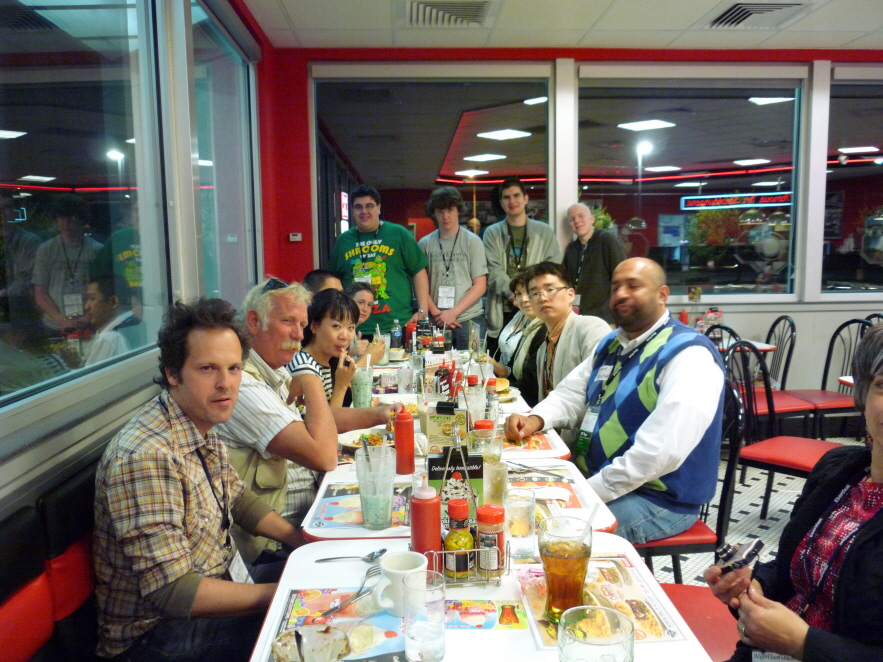
Everyone was there. Ali had to leave for the plane, and Grace came there because her plane was delayed. Vincent was there, again. And Roger and Chaz and Millie came. The time flied fast as before while we talked with or listened to others. Roger and Chaz had to leave, and so did Grace. At PM 6:30, I said goodbyes to people I was honored to meet.
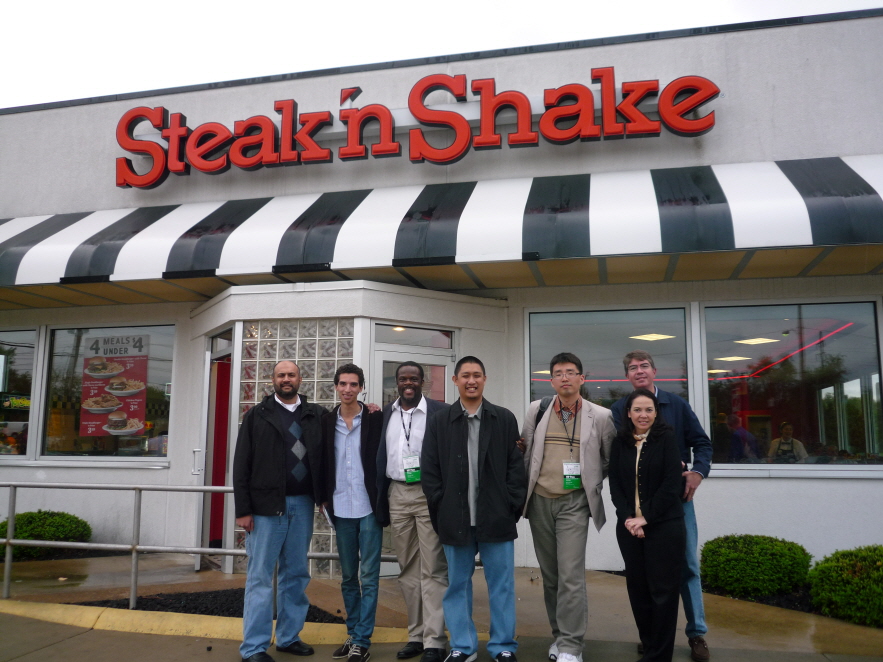
(From the left) Omer, Wael, Omar, Michael, Me, and Gerardo & Monica
PM 7:00. I was depressed at Amtrak Station. That emotional state went all the way through Chicago, Des Plaines, O’Hare, Narita, Inchon, Seoul, Jeonju, and Daejeon. I tried to calm myself with “The Book of Eli”, “Kick-Ass”(a bad choice), “Leap Year”, and “Iron Man 2” at the theater. But I failed and could not sleep much.
Bernard Herrmann told his friend that finishing his work on Brian DePalma’s “Obsession” was one of the most difficult moments in his life. “After so many weeks those two characters – Cliff Robertson and Genevieve Bujold – were no longer celluloid fantasies but real people. It was like saying goodbye to two of my closest friends.”
With Chicago, my internet friends are no longer digits on Internet now. They are as real as the citizens of Chicago. I really met them and knew a bit about them. Maybe I don’t know all about them, we share common interest and have a good time together. I became relaxed and I began to call them by the first names. That’s enough for categorizing them as real friends, even though we will communicate with each other in the e-world for a while just like before.
People around me mostly don’t care much about what I experienced. Maybe they’re interested in Chicago, but they don’t have any interest on Ebertfest. It’s just frivolous thing to them. I fear that this will be my first and last visit to Urbana-Champaign. I worry about how I can preserve what I love from the expectations of others. All I know is, I will have to go through some hard time for living in my reality. I’m ready for that, with the moratorium on my bloging.
 Like the hero of “Synecdoche, New York”, I have had lots of regrets and lost opportunities and I will. Ebertfrest is no exception. I should have photographed more people, including Roger’s driver(or helper) at our last meeting. I should have been more available with a cell phone or a blackberry. I should have talked with Roger as much as other far-flung correspondents. I should have presented myself more articulate in front of Bordwell and other elders passionate about movies….. It’s endless, while the happiness is discarded and stored in the another section of my brain. The memories inevitably will begin to fade out, one way or the other.
I feel better now. The writing can be a good alternative therapy to some, and I think I’m one of them. I have written this and the other post about Chicago in last three days. I can sleep better now and I can reminisce our memories without pain or heartburn now and I can ease my intestine now. Maybe my dream and hope is broken or never realized, but I will go on and I will sometimes say to myself something like what Melvin says in “Melvin and Howard.”
“Yeah, I’ve known that since I first found that will. I mean, do you think Melvin Dummar is going to get $156 millions or anything like it? Nah. I’m not going see that money. That’s all right. ‘Cause you know what happened? Howard Hughes sang Melvin Dummar’s song. That’s what happened. He sang it. He was funny. Yeah, He sang it. “Santa’s Souped-up Sleigh”.”
My version
“My life is a mess, but I met people I have admired for a long time in person thanks to my generous and affluent parents. I had a bad luck and screwed lots of things during these days. Roger also had a bad luck. Because of them, I contacted him and he answered me and we met each other. Roger and his gangs liked me and they were helpful to me like lucky charms(whenever I got lost and they were needed, I always came across them) and I watched the movies with them for 5 days! And Roger liked my photo! Isn’t it a wonderful life for me, even if it has been full of spoilt things? With these, that’s lucky enough for me and I can go on.”
Jeonju International Film Festival began in last week. Today, they will show the complete version of “Metropolis” tonight and I bought the ticket at the 11th hour. Even without the Alloy Orchestra, I’m sure that will be quite special.
Roger, Chaz, Millie, Carol, Mary Susan, Nate, Omer, Omar, Michael, Randy, Tom, Gerardo & Monica, Grace, Ali, Jim, Jackson, Betsy, Blake, Vincent, and other people I unintentionally forgot to mention…. thank you. I still don’t know what to say.
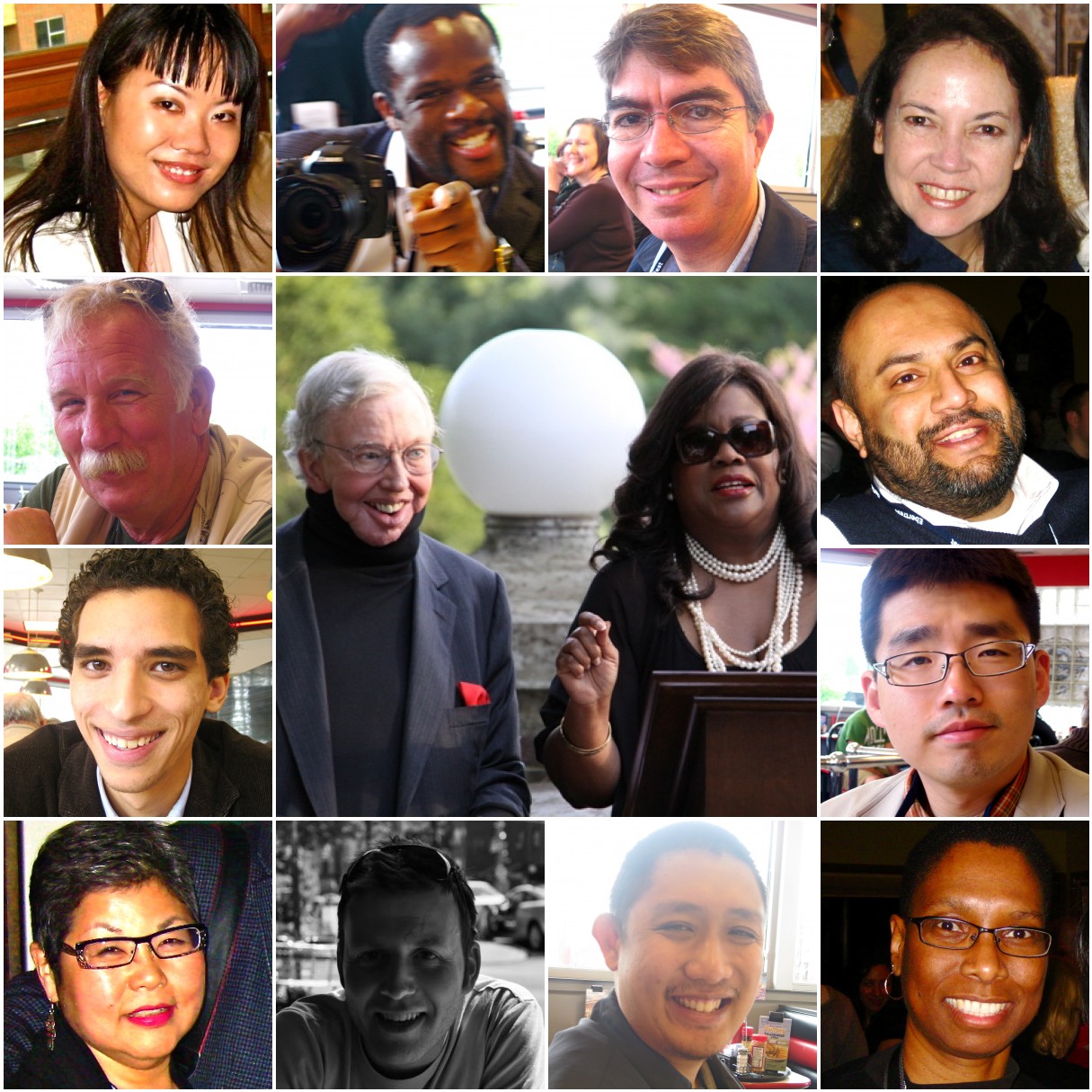
(Photo courtesy of Grace Wang)
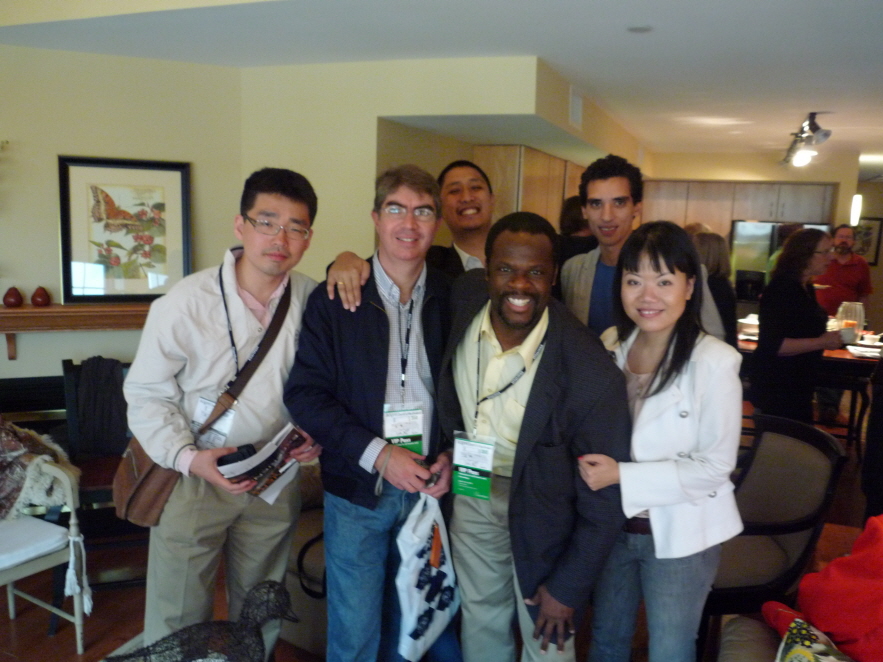
Day 4 was for four movies. Due to the lack of sleep, I was in the worst condition, so I didn’t react well to “I Captured the Castle”. But I enjoyed Q & A just like others and I promised myself that I will check this movie again someday even if I can’t write anything about movies for a while.
Brunch meeting before it was pleasant. People we became familiar with in last three days came(yeah, Vincent, I see you), and, like Gerardo, I became an autograph hunter while constantly eating foods. My mistake was asking Takita for an autograph too early. He left too small space for Roger with his big signature. And I took several photos. Roger came in later and he sat on the sofa and almost everybody was to be received in audience by him. We were all friends here. And I spoilt my chance; I didn’t say much in front of him. I think I’m sort of a mirror person. Tell me first, so I can think about what to say.
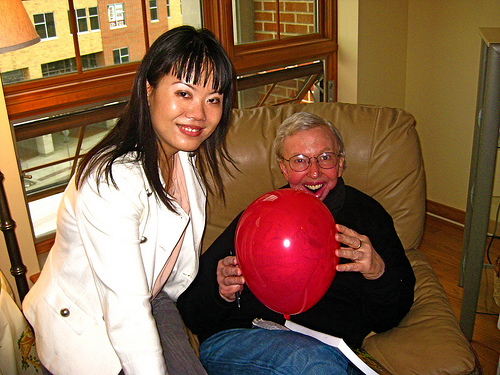
Grace and Roger and..... (Photo courtesy of Grace Wang)
After I was disappointed with my body during “I Captured the Castle”, the documentary “Vincent: A Life in Color” came to me like an energizer. I heard about Vincent from Roger’s blog for the first time. I was expecting to see him on the bridges in Chicago. I met him at Cowboy Monkey for the first time. I saw and said hello to him every day of Ebertfest. And he frequently changed his clothes and always made some joke from people’s name(I was one of his victims, you know). And he gracefully did spin move a lot with these colorful suits.
So, is there anything I haven’t learn about this fascinating man in the documentary? The bad news is, there is nothing new. The good news is, the movie still is a wonderful story of the life force who is almost blind. My eyesight is terribly poor, but that is nothing compared to Vincent’s condition. Because of glaucoma, one of his eyes is completely blind and the sight of the other eye is as small as key hole.
Despite his condition, Vincent is a confident walker. On bridges, whenever he hears the sound of the tour boat, he spins and takes off and hurls around his jacket. He is an urban legend of Chicago now.
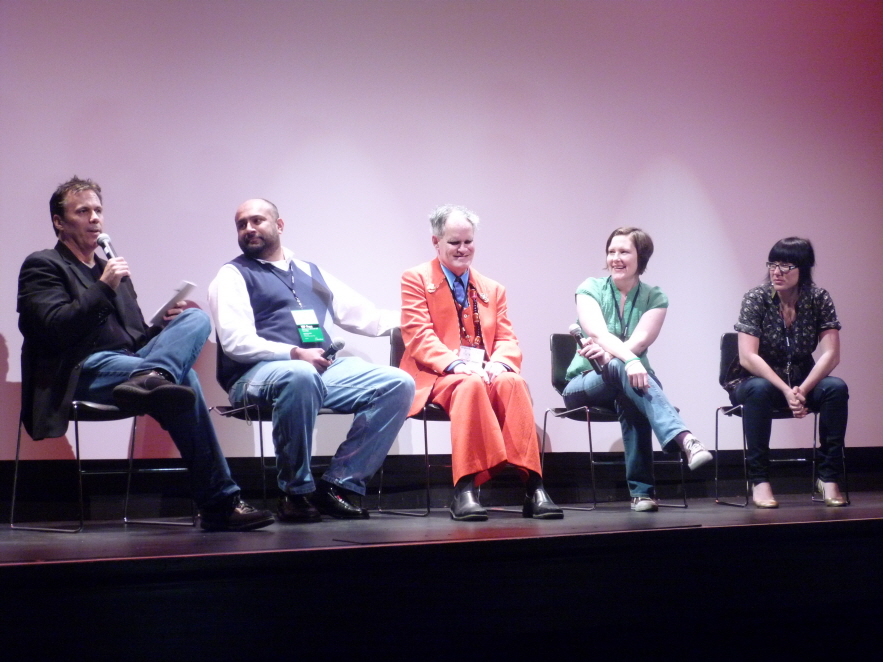
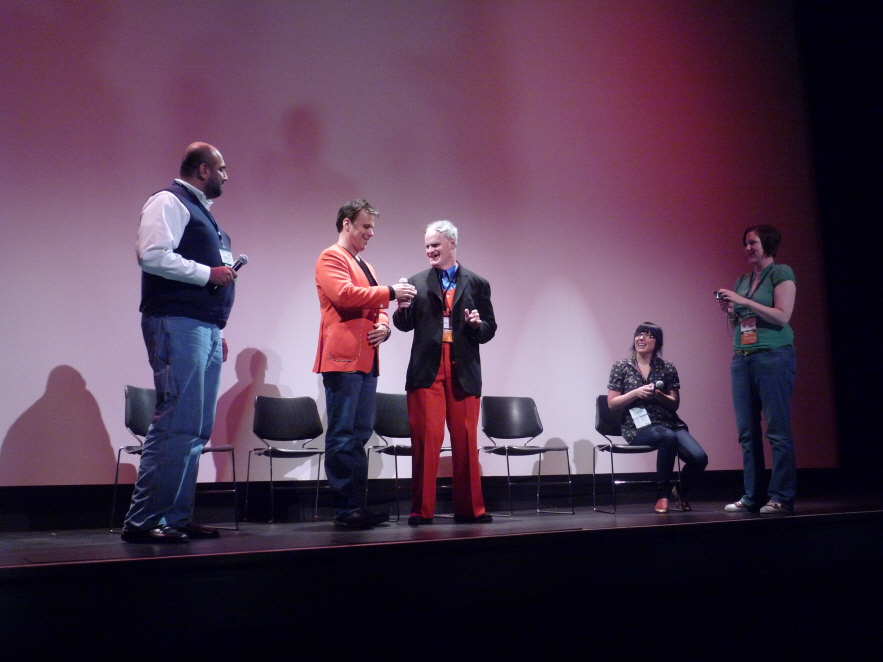
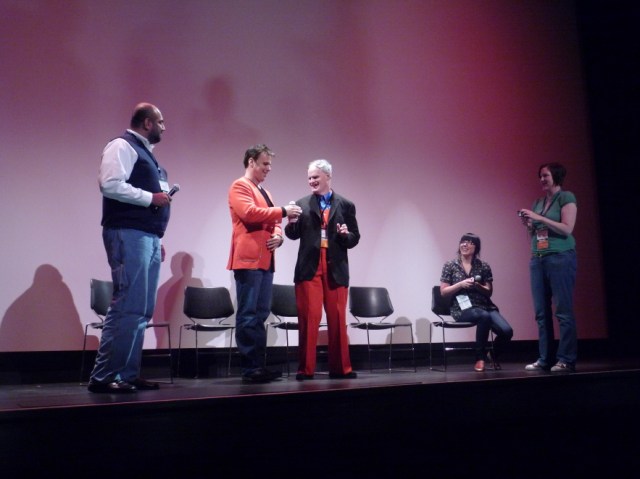
(Fron the Left) Richard Roeper, Omer, Vincent, Jennifer Burns, and Unidentified Panelist
Maybe he looks like an weirdo to you. And maybe we will never wholly understand him, let alone his view. Nevertheless, he has led an interesting life and Director Jennifer Burns lets us to know about his life through several interviews of Vincent himself and people who know him. The result is optimistic portrait of a lovable, intelligent human being who does not much bother about his limit or how people think about him. And we became joyous when the season for Vincent returns to Chicago on the screen. Sadly, I was a little too early.
During Q & A, Burns told us about the tight budget for her work(she depended on several credit card). Even with dashing Richard Roeper, Vicent stole the show again and Roeper exchanged the suit with him. I also did it the day before. I will check out Vincent’s site. By the way, his helper Barbara introduced me her daughter to me before the showing. She told me later that her daughter also had poor eyesight because of the same reason. She was in a little better condition, and she seemed to be so well-adjusted that I did not recognize it. I was surprised to know that later at the post-fest party.
The next movie was James Mottern’s “Trucker”, featuring Michelle Monaghan’s uncompromising performance which should have been Oscar-nominated in this year. Despite being not as enthusiastic as Roger about this movie(I watched this movie twice in this January), I think this movie is surely deserved to be watched by more people.
Diane(played by Monaghan) has been leading the life on her own without any problem. She earns her living as a trucker. She is a competent one. She has a house and she recently paid off her own rig. When she isn’t working, she usually hangs around her friend Runner(always-interesting Nathan Fillion). But the change comes in front of her house in one day. Her ex-husband is sick, his wife is busy, so Diane has to take care of her son Peter(Jimmy Bennett) whom she had abandoned a long time ago.
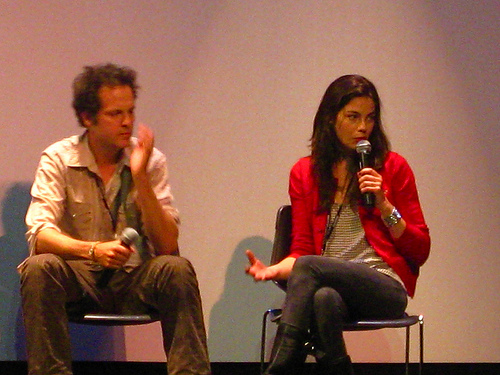
James Mottern and Michelle Monoghan (Photo courtesy of Grace Wang)
This is an uncompromising drama about two lonely, tough souls. We have a pretty much a good idea about the ending, but the movie transports its load in a route far different from what we expect. Diane and Peter never lost their edges while discovering the feeling between them. They have to accept each other, and then need each other. But they never turn into model mother and child; they are still more like a lioness and her wild cub. James Mottern captures the rhythm of daily life while occasionally emphasizing the wideness of Diane’s world. This is Monaghan’s showcase of her talent and, she and Mottern and panelists and audience discussed a lot about her character and how she handled it.
I found Barbet Schroeder’s “Barfly” more simple, straightforward than my thought based on the first viewing on TV in 2003. This time, it became more funnier and moving than before. Based on Charles Bukowski’s screenplay, “Barfly” tells about the endless cycles of two alcoholic characters(played by Mickie Rourke and Faye Danaway) and more. When they meet each other, it was love in the rosy sight and they continue their alcoholic life without trying to be sober at all.
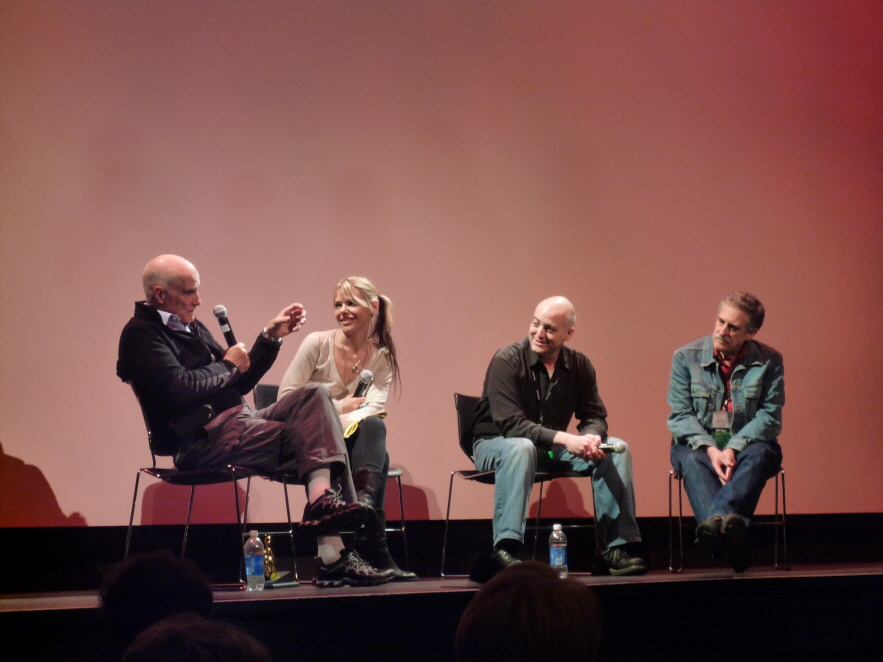
(From the Left) Barbet Schroeder, two unidentified Panelists, and Movshovitz
It sounds depressing, but the movie finds the humor and the heart from this seedy world. There are distinctive supporting characters hanging around bars every day. They are more funny the more I think I about them. I was tired, but the movie is strangely optimistic in alcoholic way and it made feel good, just like any other good movies. I like the movie more than before. I think it’s time for changing my original three-star opinion.
That was not the end of the day. We went to Betsy Hendrick’s party on her house on Haines Blvd. I met people and lost myself a bit with a cup of gin tonic among them, but I had to leave with others sooner than I thought. It was short, but Betsy provided a relaxing moment before my sleep and I was grateful for her hospitality.


Delirium continued to reign on Day 3 and another “the lamb to the slaughter” situation started for us early in the morning. After saying goodbye to Michael Philips at Breakfast room, I went into Pine Lounge on the 1st floor with my friends. Along with them, I was about to participate in panel discussion titled “The Global Web of Film Lovers”. Thanks to Roger’s blessing and Omer’s deft moderation, we went through well and 70 minutes was shorter than I thought. The video clip is available here, but I do not want to kill myself by watching it.
What’s the next? After brief lunch, Yojiro Takita’s “Departures” was shown and the response was amazing; I could clear hear audience’s reaction in the dark while deeply moved by the story again. The movie is delicate mixture of humor and drama with affectionate manner. The opening sequence sets the tone. Seriousness and embarrassment are so organically connected that we can’t help but laugh while respecting the situation of the characters.
Cellist Daigo(Masahiro Motoki) and his wife(Ryoko Hirosue) move back to his hometown after his sudden unemployment. He is unwittingly employed at encoffinment company, and he has to clean and prepare bodies. He is reluctant, but he eventually finds himself as a very good professional in this business. We see several bodies. We see how people deal with the death of loved ones as the part of their life in various ways. And then, something happens, and the following sequences touched hearts of many audience. As the living, characters comes to accept the death as the part of the life just like eating food and so do we.
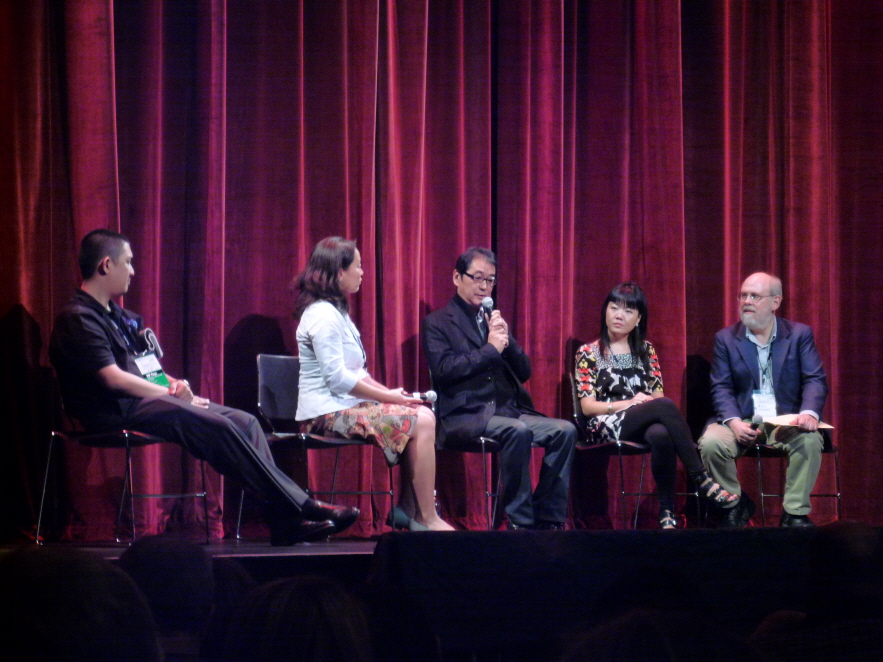
(From the Left) Michael, The Translator, Yojiro Takita, Grace, and Bordwell
With cinematography beautifully capturing the change of seasons, lush music by Joe Hisaishi, and good performances by actors, “Departures” was an one of unexpected surprise to me early in last year. I had regretted about missing it in South Korea in 2008, but now I’m happy for having seen it in a big theater like Virginia. Even though the translator was needed, Q & A with Grace, Michael, the director Yojiro Takita was as entertaining as ever with nice catchphrase “I hate myself”. We used it a lot after that. I hate myself.
What did I see from “A Man with the Movie Camera” with the Alloy Orchestra? Maybe it’s enough to say that I saw a fascinating cinematic experiment from a long time ago. Lots of images from the Soviet Union in the 1920’s flied on the screen with ferociousness fueled by the Alloy Orchestra. this is still dizzy even with our standard. People at that time were probably scared hell out of it and thought this was an insane movie.
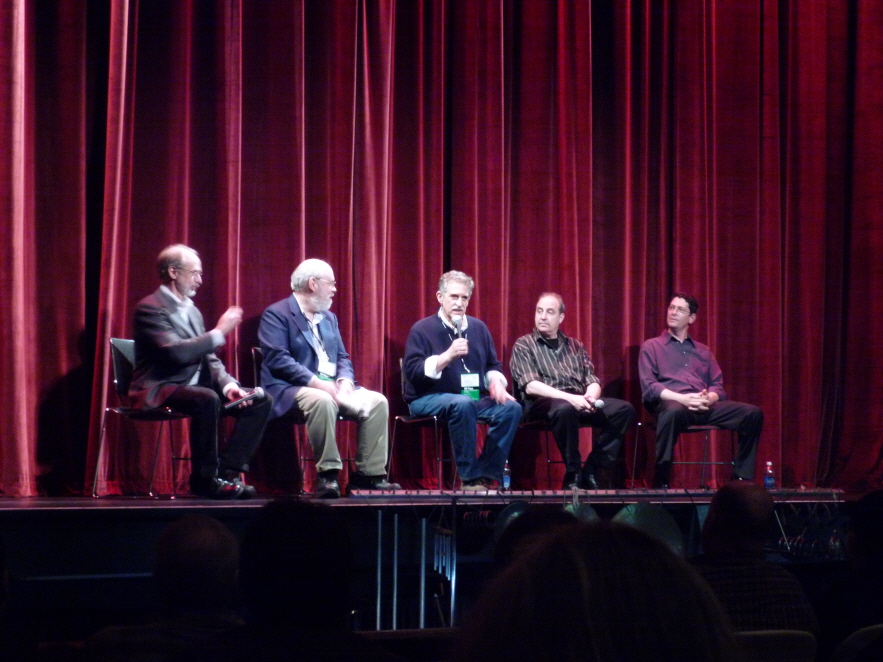
(From the Left) Unidentified Panelist, Bordwell, Howie Movshovits, and two members and The Alloy Orchestra
In the end, I saw the grandfather of all these flashy editing in modern movies. I marveled by its untainted vigor. I was blown away with my mouse hung open. Q & A with two members of the alloy Orchestra and Bordwell and Howie Movshovitz informed us a lot about the background behind the movie and, they also explained how they composed and played the music. They will probably play for “Metropolis” in next year. I hope they will take care of the volume problem. I had to stuff the tissue into my left ear as the buffer because the left speaker was too loud.
Because “Synecdoche, New York” means especially special to Roger, I decided to sit near Roger along with Gerardo and Monica like the night before for “Apocalypse Now – Redux”. Some parts were clear to me and other parts were not so clear to me at first watching in South Korea in early 2009. But with the second watching, I needed some reorganization. Some of things I thought as clear as blue sky called for questions. Some of things I didn’t get it at first became more clear this time. And there were still other things I cannot explain well. Why did he constantly take care of his ex-wife house while distant from her?
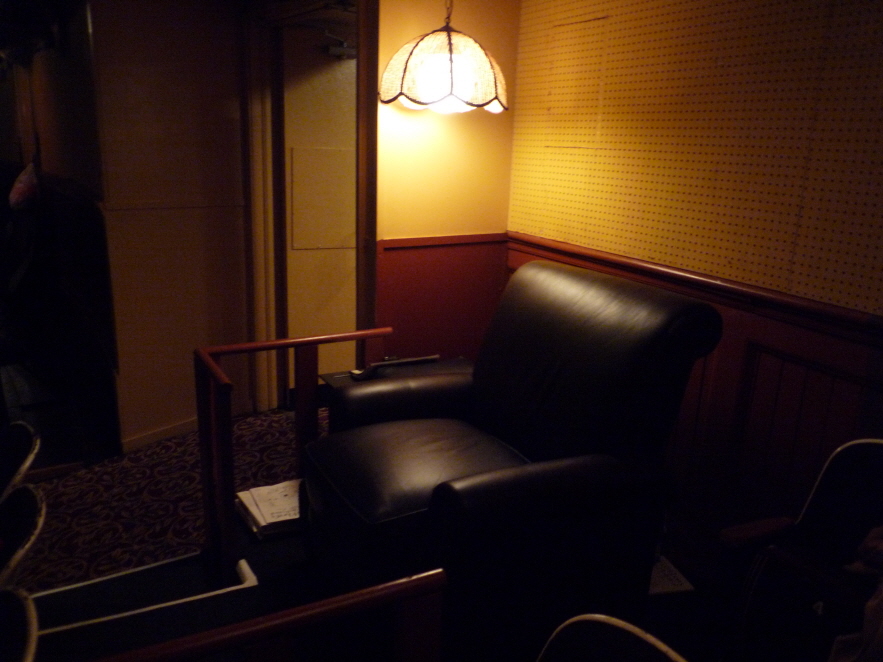
Roger's Seat
“Synecdoche, New York” is a depressing movie because it is about the life. Life is full of sadness and regrets and diseases. We try to control it like the director controls his play on the stage. We ultimately fail and become an instructed actor instead because of inevitable end. That’s a gloomy message, but Kauffman, in unconventionally moving way, reminds us that we’re not the only one who has to face that truth. And he intrigues us with a clever labyrinth of the life of one man, played by Philip Seymour Hoffman.
Or is he just one man? The movie is full of character development, character exchange, and character transfiguration(The last part is perfectly embodied by Dianne Wiest). Kaden may be not so different from H.C.E. of “Finnegans Wake”, the book I will probably never understand. They say H.C.E. is Humphrey Chimpden Earwicker, but it is also “Here Comes Everybody”. The movie is truly synecdoche itself, where time and space and people co-exist while being twisted and overlapped.
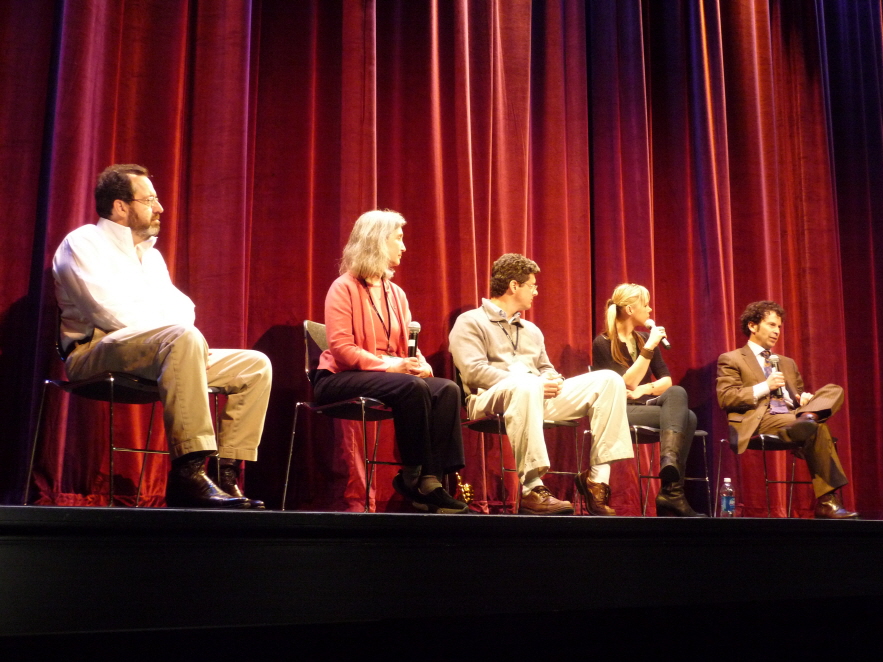
(From the Left) Michael Barker, Nell Minow, two unidenfied Panelist, and Charile Kauffman
At Q & A, Charlie Kauffman and others talked about the production and other things. Michael Barker, co-president of Sony Picture Classics that distributed it, was generous to me during mid-fest party later. He told me about new Woody Allen movie set to be released this year. As a long time fan of Woody Allen, I came to have some expectation for it.
In case of mid-fest party, I lost my way mistaking other guy for Omer. Fortunately, I was rescued by Roger and Chaz. While waiting for Chaz, I had to spend some minutes with Millie on the back seats, and Roger on the front seat.
It was a dark and chilly night with no light in the car….. I could not say anything because I waited for somebody to say something…. But Millie was quiet…. And Roger coule not, of course…. I could hear Roger moisturize his mouth…. and I hear his quiet breath…. what do I have to say?…. What time it is?…. Was that the sound of scribbling on the note?…. what will he say?….. Finally Chaz saved me from this difficult situation and she drove me to the party place. Ma’am, I owed you a lot. I’m still immature about being with people.
Kauffman was there. Vincent was there. And Wael Kairy from Cairo was there. What a surprise! He made it! Before Ebertfest, I had just casually watched the news about Icelandic volcano, and then it suddenly came to mind during pizza party that Wael would have to cross the Atlantic Ocean(In case of Ali, he came to US earlier). We all welcomed him and he had a meaningful conversation with Kauffman midst of noises. Meanwhile, some freelancer reporter approached me and I told her everything I could tell her. After that, I got out of the place and came back to Illini Union for sleep.
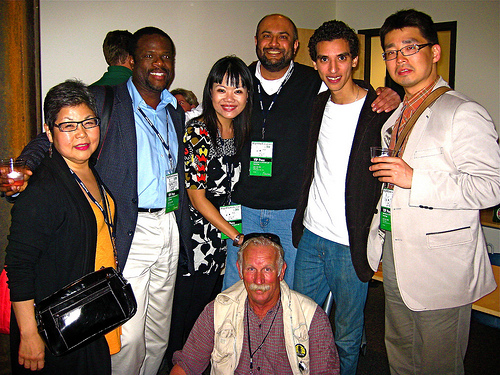
(From the Left) Carol Iwata, Omar, Grace, Tom Dark(bottom), Omer, Wael, and Me (Photo courtesy of Grace Wang)
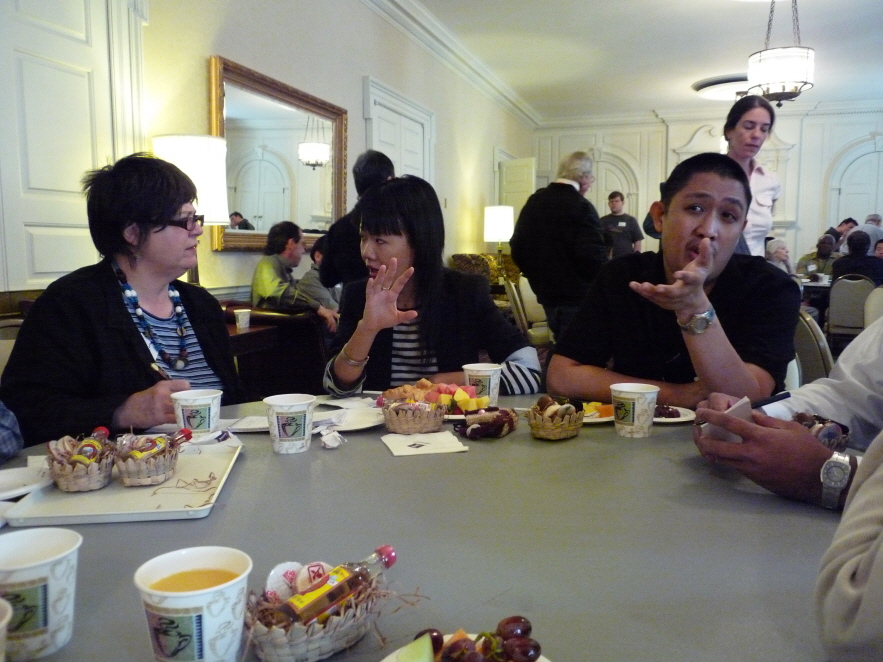 I was afraid of Day 2 because I would be on the stage as one of panelists for the first movie of that day, “Munyurangabo”, directed by Issac Chung, Korean-American director from Arkansas. The morning started very comfortably like the last meal before the execution. We met Roger and Chaz again in General Lounge on the 2nd floor of Illini Union, and we also had the chance to meet other people including Troylene Ladner, Carol, Randy Master, Michael Phillips, Vincent(he changed the clothe again… how many suits did he bring here?), and members of Ebert clubs. One of them, Sean, brought DVD of TV series “Firefly” for Roger, but Carol told me that Roger rarely watched DVDs brought by others with few exceptions. It’s like a lottery, I guess.
The mood became more warm with Mr. and Mrs. Valero’s present to Roger. It was the illustration of young Roger and his father based on the photo and it was drawn by Mrs. Valero. In addition, a three-month-old baby conceived during Ebertfest in last year was greeted by many of us. Meanwhile, the local newspaper reporter approached us and I emphasized that I’m “definitely amateur”. I’m a still a child compared to others.
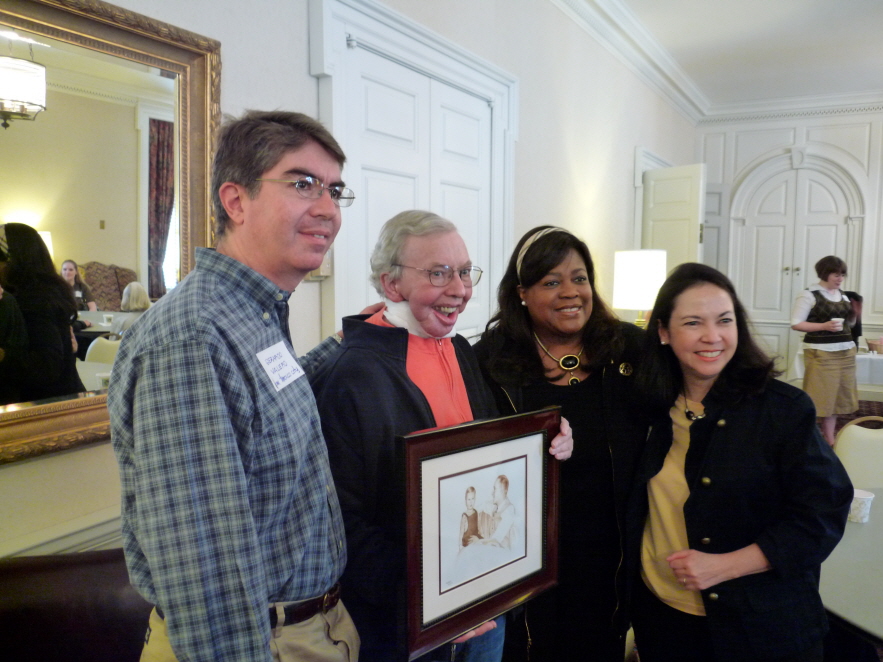
(From the Left) Gerardo, Roger holding the picture, Chaz, and Monica
I wondered whether people thought like that during the discussion panel on “Munyurangabo”, which was simple but deeply moving film about two boys in Rwanda. Issac Chung, a Korean-American director, made this movie as the part of education for local students when he taught movies in Rwanda. It was shot in two weeks(one actor had to be replaced after 4 days) and some technical limitations can be glimpsed, but the movie has a quiet, meditative power that clearly proves Chung’s talent.
With machete at the opening sequence, the tension is slowly built while we are getting to know about two boys, Sangwa(Eric Ndorunkundiye) and Ngabo(Jeff Rutagengwa). We don’t know the difference, but local people can tell it even if it does not come out of the mouth. When they drop by Sangwa’s home, Sangwa’s father asked his son about that later. Sangwa has to make a choice and so does Ngabo. The movie does not make a speech, but we clearly begin to see the painful past of this country through their story with natural, documentary-like depiction of rural area. And all about Rwanda is compressed into a sudden appearance of passionate poem near the end. It is the showstopper of the movie(I don’t know whether that word is appropriate for this quiet movie).
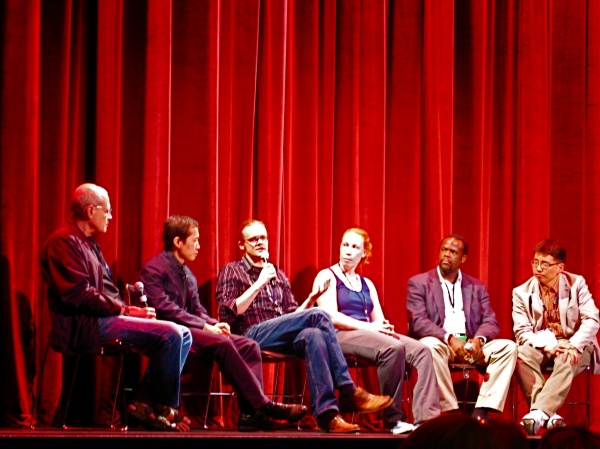
(From the Left) Unidentified panelist, Issac Chung, Samuel Anderson, Jenny Lund, Omar, and Me
Yesterday, I checked the website and Q & A clip for “Munyurangabo” was only 4:30 without any sound. Therefore, I could not confirm how bad I had been. I only made two remarks, and Issac Chung, co-producer and co-writer Samuel Anderson, co-producer Jenny Lund and Omar took the helm. I have to admit that I was too passive. The catastrophe didn’t happen. We discussed about possible homosexual relationship between two boys(no, no, it’s more close to bromance). Issac said the men from Korean culture were shy of physical touching and I responded with body language and everyone laughed.
Sweet ordeal was over thanks to others’ support, and we moved to the next movie, Michael Tolkin’s “The New Age”. It’s about a Yuppie couple, Peter and Katherine, who loses their job along with their social positions and tries to search for new haven through these new age stuffs. To outsiders like me, they are alien and distant materials I could not care much. Plus, main characters are unlikable and hallow.
But in case of their situation, I understood it well just like other American audience. Having seen so many desperate SOSs from the buildings of Chicago, I knew well that real estate business was screwed thanks to these greedy banks. At one point, Katherine explained about the situation and everyone cheered and clapped. The exactly same thing is happening around US with bigger scale.
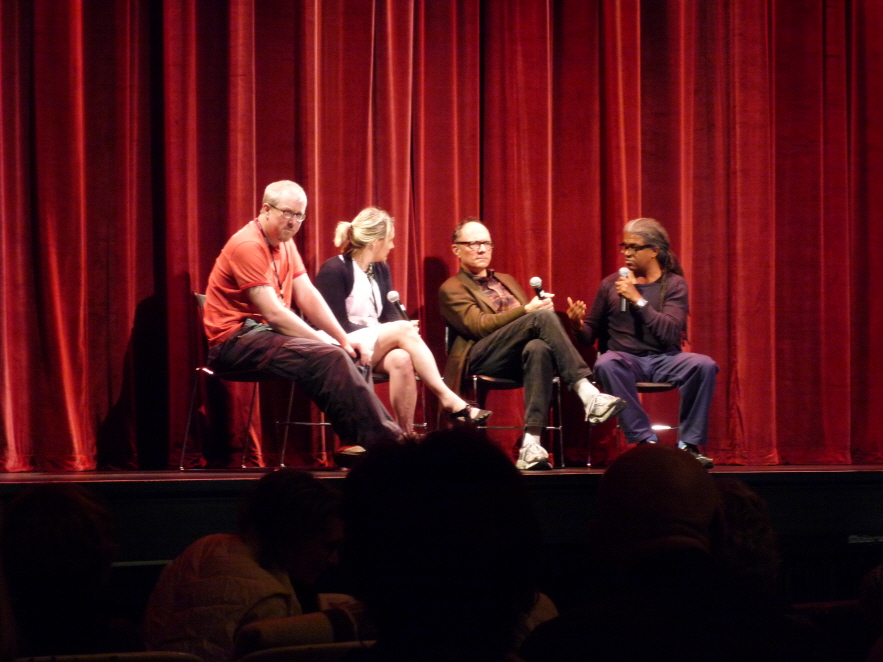
(From the Left) Jim Emerson, Unidentified Panelist, Michael Tolkin, and Elvis Mitchell
Overall, it’s a little boring but engaging enough to be recommended. Peter Weller and Judy Davis has already played another hollow couple in David Cronenberg’s “Naked Lunch”, and their chemistry in this movie is, again, impeccable. Maybe Peter and Katherine are unlikeable, but they are witty and serious. They are open about their relationship. They are not suddenly mad about that even when they are in deep trouble. There are funny performances from Samuel L. Jackson and Patrick Bauchau, and people loved that.
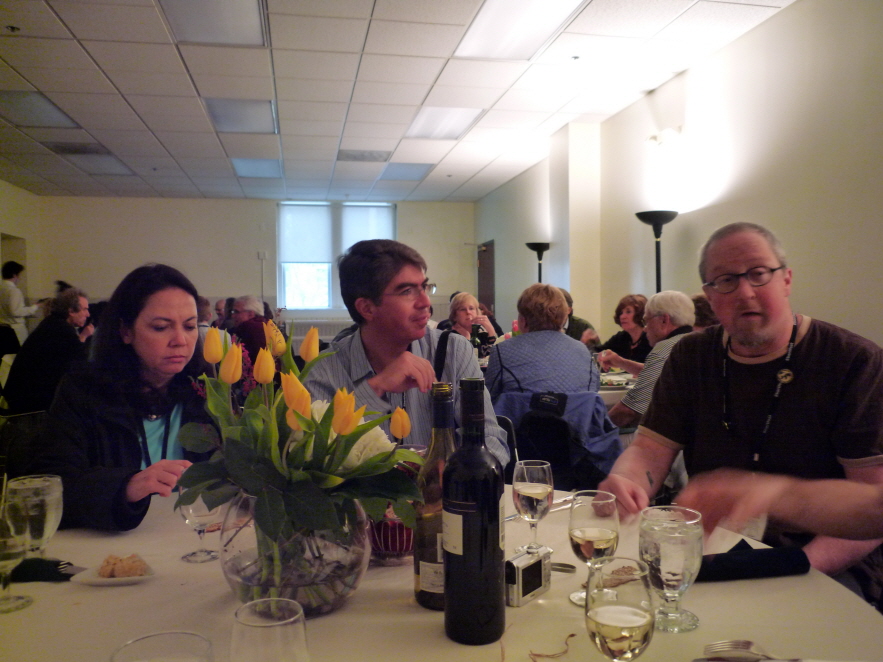
Monica, Gerardo, and Emerson
The Dinner place was Green Room of Spring Cultural Center, one block north of Virginia Theater. I met Jim Emerson(his tatoo on the right wrist was immediately linked to some tattoo removal ad in Ebertfest leaflet in my head) and had some talk with him about his website while walking to the building. During dinner, I briefly talked with Issac Chung as an immature critic and a gifted director. We both made our parents disappointed by getting interested in movies.
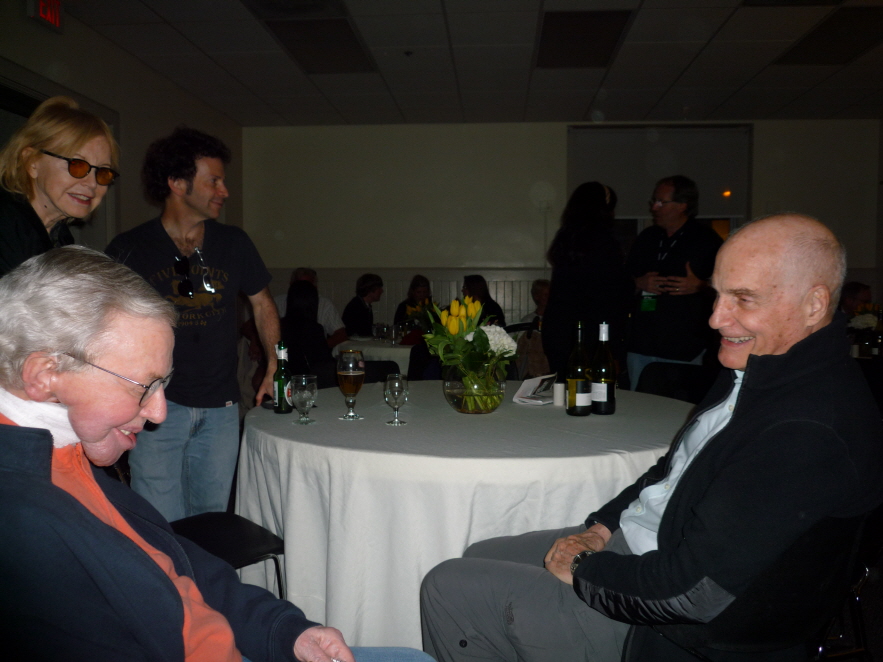
Roger & Barbet Schroeder
Barbet Schroeder, the director of “Barfly”, luckily came across the Atlantic Ocean despite unfortunate volcano ash. And Charlie Kauffman was there, too. I’ll never forget Schroeder for giving me a wrong clue about the name of the movie he could not remember. I pointed out to him that it is “Basic Instinct”, not “Fatal Attraction”, that was made by the director who made that awful film about Las Vegas.
Charlie Kauffman was far different from Charlie or Donald of “Adaptation”. He patiently listened to my thoughts about his masterpiece(“Synecdoche, New York) as well as the reactions from Korean reviewers when the movie was released in this January. Then we talked about the books by Joseph Heller and Patricia Highsmith and others. I tried to explain him how Beckett’s “Endgame” reminded me of “Synecdoche, New York”.
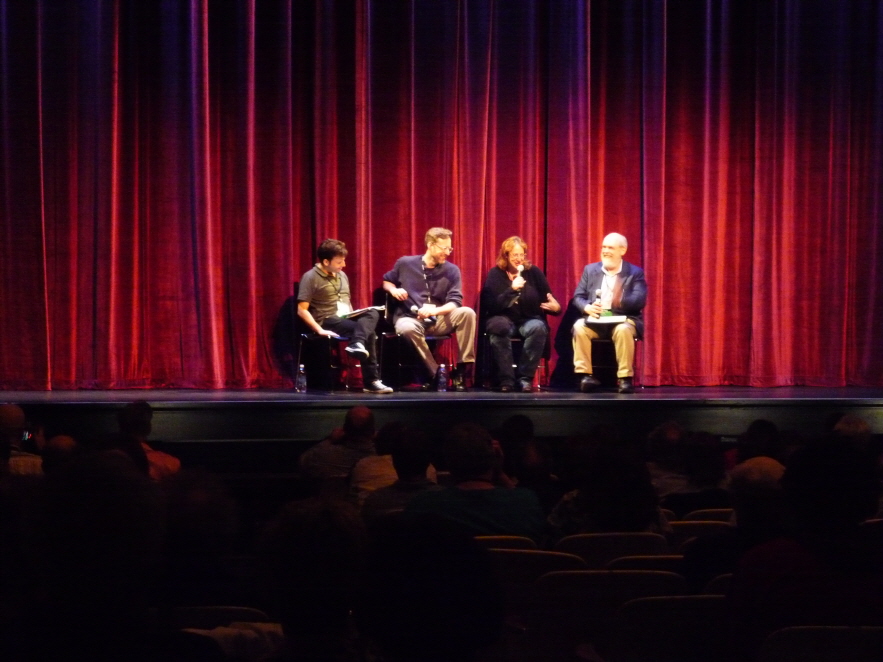
(From the Left) Ali, Phillips, Unidenfied Panelist, Bordwell
As usual, the time went fast, and it was the time for “Apocalypse Now – Redux”. “Apocalypse Wow” can be a good title for this gigantic movie. I watched this version in 2001 at local theater before, I felt it was a little too long. We all agreed with that after watching it. We can live without those two main additional sequences. I think Coppola added legs to the snake on the great painting.
Fortunately, the canvas is large enough to forgive that. And we know well that how excruciating it was for Coppola and his crews to make this masterpiece. In this ambitious movie, there are many striking sequences besides the one of the great sequences in the movie history. This time, the bridge sequence came to me the most closely. It embodies the title of the movie. It looks like a crazy carnival with lots of lights and smokes and explosions. Remember, the movie was made before the era of CGI.
We were exhausted but enlivened by following Q & A with David Bordwell, Ali, and Michael Philips. Our night was ended with another visit to Stake ‘N Shake, and I was delighted to meet people younger me, who may be more passionate than us. I had an interesting discussion on “A Clockwork Orange” with a 15-year-boy named Jackson. I later found that he could drive a car. I still can’t drive a car.