Gretel & Hansel (2019) ☆☆☆(3/4): A creepy variation of one familiar fairy tale

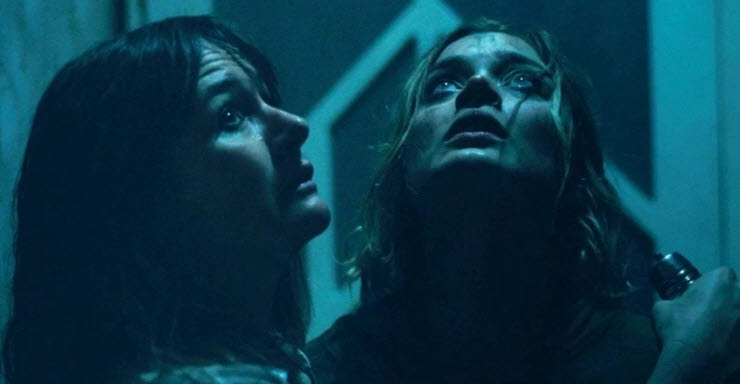
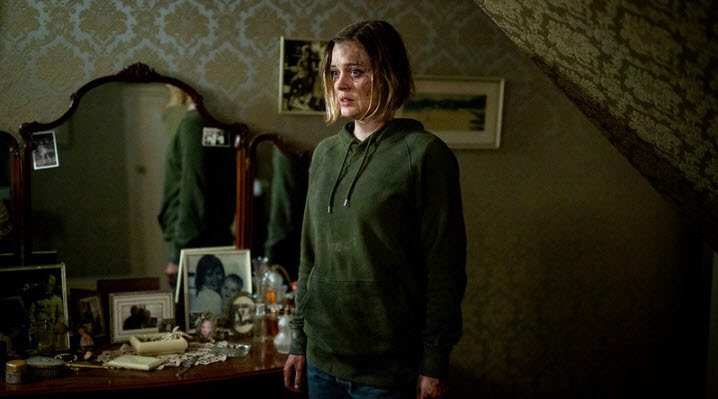
“Gretel & Hansel” is a creepy variation of one fairy tale quite familiar to many of us. While staying true to the darkness of its original story by the Brothers Grimm, the movie tries a number of different things in terms of story and characters, and I enjoyed how it intrigued me with its distinctive mood and details to be savored.

At first, the movie opens with a disturbing fairy tale about one beautiful but creepy girl. When she became ill and was expected to die soon, her father was so desperate that he eventually decided to take his little daughter to a powerful enchantress, who accepted his tearful request with a certain price in exchange for that. As saving his daughter, she imbues her body with a part of her dark magic power, and, of course, that turns out to be not a very good thing for her father and others in his village.

This fairy tale is the one which Gretel (Sophia Lillis) often tells to her younger brother Hansel (Sam Leakey) during their bedtime. While it may scare him to some degree with a moral lesson, the reality surrounding them has been much harsher and scarier to them at present. After their father died not so long ago, they and their mother have struggled with the ongoing famine and poverty, and Gretel has no choice but to go to the house belonging to some rich old prick. She simply wants to be hired as a new housemaid but, what do you know, this prick turns out to be more interested in whether her maidenhood is, pardon my language, “intact”.

As a strong-willed girl with pride and integrity, Gretel refuses to bend herself to this prick’s demand, so she returns without any good news, and her mother, who has been rather unstable in her mind due to their continuing despair and hopelessness, declares that, from now on, there will be no space for Gretel and Hansel in her house. Discerning that there will be more trouble due to her mother, Gretel promptly walks out of the house along with Hansel, who is understandably not so pleased in addition to being quite hungry.

During their first night outside the house, Gretel and Hansel are soon reminded of how harsh and dangerous their world can be, but, fortunately, they happen to encounter a hunter living around a nearby forest, who turns out to be much more generous and compassionate than expected. As allowing them to stay at his shabby residence for a while, he gives them an instruction on how to pass through the forest and then find some people who may hire them, though Gretel is not wholly comfortable with his gentle kindness.

Of course, once they enter the forest on the very next day, Gretel and Hansel cannot help but become agitated by the increasingly ominous mood of the forest. In addition, they get hungry again some time later, so they eventually eat mushrooms on the ground after Gretel check them out in her own way, and that leads to one of a few amusing moments in the film.

Not long after this incident, Gretel and Hansel come across a strange big wooden house located somewhere in the middle of the forest. While not being edible at all in contrast to that magical house depicted in the story of the Brothers Grimm, this house apparently looks weird and sinister in its deliberately anachronistic architecture style, but Gretel and Hansel cannot possibly resist it after discovering that there is lots of delicious food in the dining area inside the house.

As you have already expected, Gretel and Hansel soon meet an old lady living in the house, who lets them in the house and then eat those tasty dishes as much as they can. While Hansel does not mind this hospitality at all, Gretel remains skeptical and watchful, and the moody atmosphere inside the house further amplifies her suspicion. As a girl with some special gift, she comes to sense more of the darkness lurking around here and there in the house, and it looks like the old lady is hiding something insidious behind her back.

It is not much of a spoiler to tell you that Gretel and Hansel will subsequently come to face the fiendish side of their suspicious host, but the screenplay by Rob Hayes delivers a number of unexpected moments, and its expected climax, which is accompanied with lots of fire as you have already guessed, is skillfully delivered by director Osgood Perkins and his crew members including cinematographer Galo Olivares. As previously shown from “I Am the Pretty Thing That Lives in the House” (2016), Perkins is a talented filmmaker who knows how to engage us via mood and details, and he and Olivares provide us several striking visual moments packed with creepiness gradually encroaching upon the screen.

The movie is basically a three-character story, and its three main performers are effective in their respective roles. While Sophia Lillis, who recently drew our attention with her plucky performance in “It” (2017) and its 2019 sequel, is believable in her character’s gradual transformation along the story, Alice Krige has some naughty fun with her devious character, and young performer Sam Leakey holds his own small place between his two co-stars.

In conclusion, “Gretel & Hansel” is another well-made horror film from Perkins, and I appreciate how it takes its time in building up story, mood, and characters before going all the way on full horror mode as required. The overall result is rather modest on the whole, but it works as well as intended while often impressing and intriguing us with its effective elements, so I will not grumble for now.

Posted in Movies | Tagged , , , , | Leave a comment

Bully. Coward. Victim. The Story of Roy Cohn (2019) ☆☆☆(3/4): The story of one evil power broker

Roy Cohn was a deplorable piece of work in many aspects. Throughout his relentless pursuit of money and power, this evil and ambitious power broker casually ruined the lives of many people while also influencing numerous scumbag figures not so different from him, and his toxic legacy is still living well and alive in the American society even after his miserable death in 1986.

Although it does not give us a wide view on Cohn’s life and career like other recent documentary film “Where’s My Roy Cohn?” (2019), HBO documentary film “Bully. Coward. Victim. The Story of Roy Cohn” did a fairly good job of illuminating the dark sides of its loathsome but undeniably compelling human subject along with some personal elements to be appreciated. He was indeed a very bad person, but it is fascinating to observe his countless hypocrisies and contradictions, and you will come to understand why he can be regarded as not only a bully and coward but also a victim.

The first part of the documentary mainly revolves around a certain infamous trial which considerably boosted Cohn’s early legal career in the early 1950s. Although he was just a young Jewish lawyer who had just graduated from his law school and then began to work for the US Justice Department, Cohn impressed his superiors a lot as ready to do anything for bringing out the guilty verdict on Julius and Ethel Rosenberg, a Jewish American couple arrested for espionage activities. For example, he had Ethel’s brother give a false testimony against her and her husband at the trial, and that was one of the major factors leading to the eventual execution of her and her husband in 1953.

After this notorious trial, Cohn came to work as the legal counsel for Senator Joseph McCarthy, and he and McCarthy had many showy moments for publicity during their vicious witch hunt for communists and any other potential subversive figures. Although he was gay in fact, Cohn openly persecuted homosexuals along with McCarthy just because homosexuals were deemed to be a serious problem for national security, and he went further with his hypocrisy as trying to get a certain very close friend/associate of his promoted in the US Army. I guess he probably wanted to demonstrate to others that he could be an exception as ruling over others with power, but that attempt eventually led to the public humiliation of him and McCarthy, whose political career was completely destroyed as a consequence.

After promptly resigning from his position under McCarthy, Cohn moved to his hometown New York City, and, what do you know, he soon rose from the bottom as acquiring some powerful allies and friends. As usual, he showed them that he is the one who would do anything for winning at the court, and he got rewarded a lot while doing many dirty things for solving their legal problems.

Around the late 1970s, Cohn got himself involved more with Ronald Reagan, and he subsequently found himself at the peak of his power broker career after helping Reagan getting elected as the US president in 1980. While he got more connected with the US government via several shady political operators such as Roger Stone and Paul Manafort, he became more involved with some of the most notorious figures in New York City, and one of them was a certain young rising real estate developer who is occupying the White House at present.

In the meantime, Cohn officially kept his sexuality in the closet, but he willfully threw himself into sexual pleasure whenever he could. For example, he frequented a popular disco club in the middle of Manhattan which was infamous for drug and sex, and he also often visited a beach town outside the city which was a haven for many gay people during that time. Usually accompanied with handsome blonde lads, he did not hesitate at all to satiate his sexual desire as going through one wild day after another, and it is no wonder that he later found himself infected with HIV virus.

As reflected well in Tony Kushner’s monumental play “Angels in America”, Cohn continued to stick to his hypocrisy even during his final years. Despite the growing rumor about his illness, he kept insisting that he was dying due to terminal liver cancer, but he was actually receiving an experimental AIDS treatment behind his back, while firmly objecting as usual to those federal laws guaranteeing the civil and human rights of sexual minority people. As a matter of fact, he was probably more devastated when he got disbarred not long before his death.

In the meantime, director/co-producer Ivy Meeropol gradually reveals her personal perspective on Cohn’s life and career. She is a granddaughter of Julius and Ethel Rosenberg, and there is a small poignant moment when she and her uncle visit the Sing Sing Prison, where her grandparents were incarcerated until their eventual execution. Her father and uncle tried hard to clear their parents’ name, and they partially succeeded in the end (Although Julius was guilty as charged, his crime turned out to be not as serious as suggested at that time, while Ethel was innocent from the beginning), but there is still bitterness as her uncle reminisces about that dark time for him and his brother.

On the whole, “Bully. Coward. Victim. The Story of Roy Cohn” is a fairly good documentary which deserves to be watched along with “Where’s My Roy Cohn?”, and they will give you more knowledge and understanding on Cohn’s life and career. He is a thoroughly hateful man indeed, and the American society is still coping with the consequences of his virulent achievements, but, boy, what a diabolical dude he is.

Posted in Movies | Tagged , , , , , | Leave a comment

Welcome to Chechnya (2020) ☆☆☆1/2(3.5/4): Against the anti-gay purge in Chechnya

It is often scary and chilling to watch HBO documentary film “Welcome to Chechnya”, which gives us a close look into a small but significant human effort against the ongoing anti-gay purge in Chechnya. While it is surely heartening to see some brave acts of decency and compassion in the documentary, we are also reminded that there are still many people living in fear somewhere in Chechnya and other parts of of Russia just because of their sexuality, and we become more concerned as hoping more for the right ending of this grim and devastating situation of human rights violation.

After the opening scene focusing on a desperate call from one young woman living in Grozny, Chechnya, the documentary informs us on how things became suddenly worse for sexual minority people in Chenchnya in 2017. Like any other strongman figure willing to solidify his political power via cruelty and oppression, Ramzan Kadyrov, the current president of the Chechen Republic, openly targeted sexual minority people as a part of his ‘cleansing’ process for Chechnya and its people, and the brutality upon sexual minority people has frequently been condoned by him and his cronies. As reflected via a series of rough but undeniably gut-wrenching video clips in the documentary, many sexual minority people have been injured or killed on streets, and the Chechen government even has several special prisons where sexual minority people are incarcerated and tortured after getting suddenly arrested.

Some of you have probably heard about this horrific case of human atrocity when it was reported on the media not long so long ago. While this was surely a shocking news, Kadyrov blatantly and impertinently denied everything in front of the camera as also emphasizing that there is no sexual minority people in Chechnya, and Vladimir Putin, who has been his main political ally, and his Russian government turned a blind eye on Kadyrov’s ongoing purge while also dismissing everything.

Watching how the situation quickly became perilous for sexual minority people in Chechnya, a group of Russian activists embarked on establishing a covert network for saving and extracting sexual minority people from Chechnya, and the documentary mainly revolves around two of these good people: David Isteev and Olga Baranova. Mostly funded by many human rights organizations around the world, they and other Russian activists have helped bunch of sexual minority people escaping Chechnya, and we later see their small clandestine shelter for these people, which is located somewhere in Moscow. Although the rescued people in the shelter are relatively safe now, there is still the constant danger of getting caught and then being sent back to Chechnya, so there is always the sense of dread and anxiety hovering over these people, even when they try to be a bit more joyful than usual.

As watching these sexual minority people on the screen, you may sense something awkward about their faces from time to time, and I assure you that is a natural reaction, because their faces were digitally altered in advance for their safety. Instead of blurring their faces or hiding them in darkness, director/co-producer/co-writer David France chose to this digital modification method for presenting what is genuinely expressed from their faces while not endangering them at all, and, as far as I could see from the final result, this approach mostly works despite occasional awkwardness.

Meanwhile, things become more difficult for Isteev, Baranova, and their other fellow activists with more obstacles for them. At one point, they must rescue the aforementioned young woman as soon as possible, and we accordingly get a series of tense moments as she and other activists carefully sneak away from Grozny and then go to a nearby airport, where they still must be very careful because they may get caught at any moment before finally allowed to get on a plane flying to Moscow.

The documentary also observes how the situation is not so stable for the rescued sexual minority people. In case of one young gay lad, his family was frequently threatened by the local police after his escape, so his family, who bravely chose to stand by him, subsequently moved to Moscow, but they also needed to stay in a safe house because the Chechen government is still looking for him. This young man happened to be in one of those horrible prisons for sexual minority people in Chechnya, and the Chechen government certainly does not want him to testify about its ongoing purge in public.

Not long after leaving Russia along with his family as well as his boyfriend, this young man eventually decides to come forward and tell everything in front of the camera. While well aware of the enormous risk in coming back to Russia, he does what should be done for him and many other sexual minority people in danger, and there is a brief but undeniably powerful moment when his real face and identity are revealed to us as he speaks in front of a group of journalists.

While bitterly recognizing how things will continue to get worse for sexual minority people in not only Chechnya but also Russia, “Welcome to Chechnya”, which received the U.S. Documentary Special Jury Award for Editing when it was shown at Sundance Film Festival early in this year, does not resort to anger and frustration, and neither do those decent and courageous activists shown in the documentary. Justice still seems to be out of reach for them as oppressed more than before, but they do not give up at all, and I can only wish that justice will eventually be served to them and many persecuted sexual minority people out there in not only Chechnya but also Russia.

Posted in Movies | Tagged , , , , | 1 Comment

Hamilton (2020) ☆☆☆1/2(3.5/4): Indeed, it is as good as I heard from others

As I heard about the enormous critical and commercial success of a certain Broadway musical four years ago, I wondered about how it could be transferred to movie screen like some other successful Broadway musicals, and now here comes a sort of answer to my question. Although it remains bound to stage as the recording of three live performances stitched together, “Hamilton” supremely works thanks to many other reasons besides its excellent music and lyrics, and its 160-minutes running time passed faster than expected during my viewing.

The musical, which is inspired by Ron Chernow’s 2004 acclaimed biography, chronicles the life and career of Alexadner Hamilton, who is vigorously played by its Tony-winning writer/composer Lin-Manuel Miranda. As reflected by “My Shot”, Hamilton in the musical is a passionate and intelligent man constantly driven by his ambition and the thoughts of “millions of things I haven’t done”, and the musical gives a fictional presentation of his bold, relentless pursuit of achievement and legacy through not only him but also others who happened to get involved with him in one way or another.

The period background of the musical is America, 1776, and Hamilton happens to be at the right spot and the right time for his irrepressible ambition. At that time, America was about to enter the Revolution War, and the possibility of the new nation draws the attention of not only Hamilton but also some other young dudes including Aaron Burr (Leslie Odom Jr.), who comes to befriend Hamilton during their amiable accidental encounter, but, already told to us in advance, later becomes a bitter political opponent who is going to be known as “a damn fool who shot him”.

While going through those obligatory historical moments such as the Battle of Yorktown in 1781, the story of the musical often revolves around the clashing difference in personality and viewpoint between Hamilton and Burr. While Hamilton is usually blunt and forthright in his ambitious political advance, Burr is more discrete and reserved (“Talk less; smile more”, he advises to Hamilton early in the story) despite having his own big ambition, and the tension between them is gradually accumulated as they find themselves antagonizing each other more than once in the middle of the tumultuous political circumstance in US after the Revolution War.

The second half of the musical rocks as much as its first half as throwing a series of amusing political situations fueled by competitive musical mood. After the arrival of Thomas Jefferson (Daveed Digs, who also plays Marquis de Lafayette in the first half), Hamilton comes to face several difficult problems to be handled, and the situation gets worse for him during the following absence of George Washington (Christopher Jackson), who is like a father figure to him besides being his major political backer before making a wise and thoughtful decision of leaving Washington D.C. after serving as the US President twice.

The musical also pays considerable attention to Hamilton’s personal life, which is mainly represented by his relationship with his wife Eliza (Phillipa Soo) and her older sister Angelica (Renée Elise Goldsberry), who respectively provide female perspectives to the story as two substantial female characters in the musical. While clearly discerning that Hamilton is her ideal match in more than one aspect, Agenlica gives up her love for practical reasons including her dear younger sister’s growing love toward Hamilton, and we accordingly get a harrowing emotional moment as she sings “Satisfied”.

All these and other highlight moments in the musical are vividly and energetically presented on the screen by director/co-producer Thomas Kail, who was also the director of the 2016 Broadway run, and his technical crew members including cinematographer Declan Quinn, who is no stranger to shooting a live performance as shown from his last collaboration with late Jonathan Demme in “Justin Timberlake + the Tennessee Kids” (2016). While Quinn’s cameras usually look direct at the stage from the front side, the cameras fluidly move as the movie flawlessly shuffles between different camera angles, and we come to appreciate more of the performances as well as the first-rate technical qualities demonstrated on the stage, though it goes without saying that nothing beats watching a live stage performance for yourself.

While Miranda is indubitably the center of the show, he lets the other cast members have plenty of moments to shine. While Leslie Odom Jr., who won a Best Actor Tony instead of Miranda, has a showstopper moment with “The Room Where It Happened”, other actors including Phillipa Soo, Daveed Diggs, Renée Elise Goldsberry, and Christopher Jackson are equally outstanding, and Jonathan Groff is delightfully haughty and obnoxious as King George III. It is notable that most of the characters in the musical, who, of course, were all Caucasian in real life, are played by colored performers, and that casting choice, which was intended by Miranda from the very beginning, surely induces some thoughts and reflections on how the American history has been told and regarded by its people during its 224 years.

In conclusion, “Hamilton”, which was supposed to be released in US in next October but was instead to be released on Disney+ two days ago, is an entertaining and admirable alternative for you if you did not get a chance to experience the 2016 Broadway run or any other live performance of the musical. Indeed, it is as good as I heard from others, and I willing to revisit it instead of saying, well, “What did I miss?”

Posted in Movies | Tagged | Leave a comment

The Outpost (2020) ☆☆☆(3/4): In the middle of a hell called war

“The Outpost” turns out to be more engaging and thoughtful than I expected. While this is surely another tense, gritty, and brutal modern American war drama, it distinguishes itself to some degree as tactfully handling its story and characters with considerable skill and respect, and it surely does more than merely presenting those brave soldiers simply trying to do their duty and survive in the middle of one grave danger.

At the beginning, the movie gives us some basic background knowledge on Combat Outpost Keating, a US Army outpost located in a remote spot around the border between Afghanistan and Pakistan. As being at the bottom of three steep mountains surrounding it, this outpost was pretty vulnerable to the attacks from the Taliban right from the start, and, as often depicted in the film, its US soldiers had to be constantly watchful of any sudden ambush upon their outpost.

As the soldiers of the outpost are going through another anxious day after the opening nocturnal scene, the screenplay Eric Johnson and Paul Tamasy, which is adapted from Jake Tapper’s nonfiction book “The Outpost: An Untold Story of American Valor”, casually introduces a bunch of them to us one by one. I must point out that it is initially rather difficult to distinguish one soldier from another as the camera quickly glides from one soldier to another, cinematographer Lorenzo Senatore did a smooth job of immersing us into their small world, and we accordingly come to get the sense of place and people even while struggling to remember those names popping up here and there on the screen.

As we become more accustomed to their small world, the movie gradually fleshes out some of its soldier characters a bit. Staff Sergeant Clint Romesha (Scott Eastwood) is the one who holds the ground under his commanding officers including Captain Benjamin D. Keating (Orland Bloom), and you can instantly discern that he is the one to depend on no matter what happens. In case of Specialist Ty Michael Carter (Caleb Landry Jones), he is as clumsy as I was during my military training period in late 2007, but he later turns out to be less silly than he seems at first, especially when he muses on how bumpy his life has been since his childhood.

Meanwhile, the movie pays some attention to the ongoing efforts of these and other soldiers on a nearby village and its local people. Representing the outpost as its commander, Captain Keating has sincerely tried to earn the hearts and minds of these local people who clearly do not trust American soldiers much, and he and his men eventually manage to make a small but significant progress, but, not so surprisingly, that achievement is soon damaged by a number of negative factors besides the Taliban.

And the outpost remains in constant danger as usual. While the soldiers can be relaxed a little from time to time, their relatively peaceful moments are usually bound to be disrupted by another attack from those Taliban soldiers, who, day by day, keep getting better in attacking the outpost with more weapons and equipments. As frequently warned by a local guy, it looks like there will soon be a really massive attack on the outpost, but, so far, that has not happened yet, and everyone in the outpost becomes less interested in the continuing warning from that local guy.

Nevertheless, they are still well aware of how easily they get killed at any moment, as going through a series of precarious episodic moments. They are also frustrated to learn that they are ordered to stay more in this dangerous place. At one point, they are promised that the outpost will be gone within a month, but then, what do you know, that plan gets postponed.

After slowly dialing up the level of tension during its first half, the movie goes all the way as all hell breaks loose as expected during the second half, and director Rod Lurie and his crew members serve us a number of vivid, striking moments amidst lots of bangs and smokes. Instead of resorting to choppy editing and shaky camera work, the movie fluidly follows its individual characters in steady and continuous ways during these moments, and the overall result deserves to be compared with “Black Hawk Down” (2001) and “1917” (2019).

And it surely helps that the cast members in the film are all quite convincing in their visceral depiction of fear and courage on the screen. Except Scott Eastwood, Caleb Landry Jones, and Orland Bloom, most of the cast members are not so recognizable to us, but they are all solid in their ensemble performance while naturally generating the palpable mood of camaraderie among their solider characters, and that is the main reason why what is shown to us around the end of the film is poignant.

Overall, “The Outpost”, which is incidentally Lurie’s first film since his 2011 remake of “Straw Dogs” (1971), succeeds as much as intended, and I admire the skills and efforts put into the film besides Lurie’s competent and thoughtful direction, which thankfully prevents the film from becoming a superficial jingoistic glorification of American military exploit like “Lone Survivor” (2013) and many other similar war flicks during recent years. Yes, the US government and Army really screwed up in not only Iraq but also Afghanistan, but we should not forget that there were also many people who showed our better sides as courageously sacrificing themselves in that mess, and the movie sincerely and skillfully respects that.

Posted in Movies | Tagged , , , , , | Leave a comment

The Fantastic Fungi (2019) ☆☆☆(3/4): Diverse and remarkable

Documentary film “The Fantastic Fungi” gives us a vast and fascinating look into the remarkable world of fungus species, which, as reflected by a very old fossil shown in the middle of the documentary, has existed on the Earth for more than one billion years. The documentary surely reminds us that there are indeed a lot more things to learn from numerous different kinds of fungi out there, and it even suggests that they may provide a key to our imminent matter of survival during this century.

With the occasional narration by Brie Larson, the documentary initially gives us a series of awe-inspiring visual moments captured from a diverse bunch of fungus species. As we observe them growing here and there in forests and fields, the narration tells us a bit about their long history of omnipresence on our planet, and their steady decomposition process on various kinds of bio-organic materials including dead animals and plants surely shows us that they are indeed the ones who have supported the circle of life on the Earth.

Through a number of enthusiastic fungus experts, director Louies Schwartzberg, who also serves as the co-producer and cinematographer of his documentary, informs us more on that delicate and complex aspects of the fungi ecosystem. Many of fungus species initially grow as a bunch of tiny strings, but these tiny strings eventually come to form a bigger structure called mycelium together, and mushrooms are more or less than the fruits growing out of mycelium, considering that their major function is spreading tiny seed-like particles, called spores, in the air for more growth and reproduction.

While you probably heard about how fungi benefit plants and animals as providing them nutrients via their relentless decomposition process, you will be surprised to learn that they also help forest trees forming a sort of bio-organic communication network. They connect one tree to another via their mycelium structure in the ground, and one of the experts in the documentary tells us that those forest trees connected with each other via this complex fungal network can actively interact with each other for their common goal of survival and growth.

In addition, a number of fungus species have shown us that they can be an answer to the increasing environment pollution problem in our time. In case of one fungus species, it produces an enzyme capable of decomposing high-molecule hydrocarbon materials, and we subsequently see how this interesting biological property can be utilized for handling oil pollution cases.

It goes without saying that this remarkable diversity among many different fungus species came from that slow but steady process of evolution. Like any other organism on the Earth, they have gradually evolved for more advantage for survival and growth, and one of the best examples is a fungus species which produces a certain famous antibiotic. This fungus uses its antibiotic substance for killing other microorganisms which may grow around it, and, once it was discovered around the 1940s, this antibiotic substance eventually came to save the lives of millions of injured Allied soldiers during the World War II.

Around the 1950s, many psychologists came to focus on the possible medical benefits of the psychedelic substances generated from certain types of fungus species, and their studies subsequently led to the popularity of magic mushrooms during the 1960s in US, which happened to be going through a big social/political change. Of course, those powerful people in the US government such as President Richard Nixon were not amused about these psychedelic stuffs at all, and these psychedelic stuffs have officially been banned during last five decades.

Nevertheless, many experts continued to delve more into magic mushrooms, and one of them was Paul Stamets, who is incidentally the most prominent figure in the documentary. Although he initially grew up in your typical conservative Christian family, Stamets became separated from his Christian background especially after an unpleasant incident involved with one of the important books in his life, and then he found his lifelong passion from wild mushrooms. As a matter of fact, he later established a private company devoted to culturing mushrooms, and one of the most interesting moments in the documentary comes from the scene where he shows us how he and his employees work together. There are many different kinds of mushrooms being grown in the company, and I could not help but smile as watching Stamets revealing a big chunk of some fungus species in front of his enthusiastic audiences.

Stamets has been an advocate of the therapeutic utilization of magic mushrooms and their psychedelic substances, and the documentary gives us several notable examples to observe. These psychedelic substances may help people suffering from addiction and depression, and a couple of terminal cancer patients tell us how they became more relieved and peaceful after trying a psychedelic mushroom substance called psilocybin. For making us understand how their medicated state of mind feels, the documentary throws a series of fantastic visual moments to behold, and it is a shame that I could not watch them on the big screen of the Virginia Theater during the 2020 Eberfest, which was unfortunately canceled due to the ongoing COVID-19 pandemic.

I must point out that “The Fantastic Fungi” does not provide much counterpoint for a more balanced viewpoint, but I enjoyed its many informative moments despite having some doubt from time to time, and Schwartzberg and his writer Mark Monroe deserve to be commended for skillfully presenting a brief but compact presentation during its 80-minute running time. Along with another documentary called “DOSED” (2019), which is also about the medical aspect of natural psychedelic stuffs, the documentary will intrigue you a lot, and I assure you that you will come to reflect more on the world of nature surrounding you.

Sidenote: The documentary is currently available here.

Posted in Movies | Tagged , | 1 Comment

DOSED (2019) ☆☆☆(3/4): Going through alternative addiction therapies

Documentary film “DOSED” observes a bumpy and difficult personal quest to sobriety via alternative addiction therapies. While some of you probably have some reasonable doubt on those alternative addiction therapies, the documentary still engages us as glimpsing into a series of sobering moments of relapse and withdrawal, and you may come to reflect more on the possible benefits from magic mushrooms and many other psychedelic substances on addiction and some other serious mental illnesses.

Director/co-producer/co-editor Tyler Chandler starts the story with a frank interview between him and a close friend of his who has struggled with addiction in Vancouver, Canada without much progress. After having her first drug experience at the age of 15, Adrienne gradually went down into the bottom of addiction during next several years, and her addiction problem got much worse when she happened to work at a law firm where many people around her frequently used cocaine.

Adrianne has been surely well aware that she must get out of her current state of addiction as soon as possible, but, unfortunately, she has only swung back and forth between checking into rehabilitation center and having another relapse during recent years. Although she has been prescribed with several medicines such as methadone for helping her coping with withdrawal, they are not particularly effective for her, and she even becomes quite dependent on these medicines, which inevitably bring her to another cycle of addiction. Frequently suffering anxiety and depression throughout her long struggle with addiction, she has often considered suicide as she casually tells in front of the camera, and that certainly concerns others around her including Chandler himself.

And then there comes an unlikely option for her. She encounters an addiction therapy method using a certain type of magic mushroom, and she decides to try that even though she does not feel that sure. She tries a bit of mushroom for the first trial, and, what do you know, she subsequently feels considerably better than usual.

The documentary gives us some background information on that magic mushroom, which produces a psychedelic substance called psilocybin, and some other psychedelic substances. Several experts and underground healers appearing in the documentary confidently claim that they really have therapeutic effects on addiction, anxiety, and depression, and, though nothing much has been done yet, it seems to be really worthwhile to study more on these psychedelic stuffs and their possible medical benefits.

However, these psychedelic stuffs are not welcomed much by those government officials in the charge of the national health care system as well as many pharmaceutical companies out there. For those pharmaceutical companies, psilocybin and other psychedelic substances do not look that profitable for understandable reasons, and those authorities who have the power over the health care system have done almost nothing because, well, psychedelic substances look as bad as heroin or cocaine from their rigid viewpoint.

In the meantime, the documentary chronicles the following ups and downs in Adrienne’s quest to sobriety. Not long after her first successful trial with the magic mushroom, she tumbles into another crushing moment of relapse, so she has no choice but to go to a local rehabilitation center for her immediate detox process. After discerning that she needs something stronger besides the magic mushroom, she decides to try another alternative therapy based on the psychedelic substance extracted from the root of a West African plant.

Not so surprisingly, this alternative therapy demands more effort and patience from Adrianne. For example, she should lower the dose of her current prescription drugs before subjecting herself to the therapy, and there is an amusingly uncomfortable moment when she gathers pills she has just vomited on the ground just because she may need them later.

After Adrianne checks into the rehabilitation center where she is going to go through this alternative therapy, we see how things are often grueling and miserable for her. After she attends a traditional ritual where she is treated with the psychedelic substance from that West African plant, she goes through a series of emotional upheavals, and it seems that helps her healing process, but I must point out that she often looks more emotionally unstable and vulnerable than before as days slowly and frustratingly go by for her.

It is not much of a spoiler to tell you that Adrianne eventually comes to find the peace and stability she needs for taking her first step toward sobriety, but the documentary often surprises us with several searing moment of emotional honesty observed from Adrianne. It is later diagnosed that she has been suffering from post-traumatic stress disorder due to something in the past she still does not remember, and we later get a poignant scene where she tearfully reveals how much she was emotionally supported by her recently diseased pet cat.

Overall, “DOSED” did a fairly good job of presenting its main human figure’s hardships with considerable sincerity and compassion, though it could be considerably improved by a more balanced view on those psychedelic substances. Yes, I still have some reservation after watching this documentary and another documentary called “The Fantastic Fungi” (2019), but I am certainly glad for Adrianne’s eventual recovery, and I hope she will continue to prevail during the rest of her life.

Posted in Movies | Tagged , , , , | Leave a comment

The Platform (2019) ☆☆☆(3/4): Trapped in a big horizontal prison

theplatform01

Spanish film “The Platform”, which won the People’s Choice Award for Midnight Madness at the Toronto International Film Festival, is a small but efficient genre piece trying to push a simple but darkly interesting story idea as much as possible within its grim limited background. Although it is sometimes difficult to watch how the movie ruthlessly drives the story and characters into a series of disturbing moments, you will probably keep watching its slow but inexorable plot progress nonetheless, while wondering what will eventually happen at the end of its allegorical journey.

After the prologue scene suggesting something sinister beneath its seemingly bright mood, the movie promptly thrusts us into the increasingly desperate circumstance of a lad named Goreng (Iván Massagué), who belatedly comes to realize that he made a bad choice as volunteering to spend 6 months in some big futuristic prison facility. When he wakes up in this facility, he finds himself locked up inside the concrete cell along with some older guy, and we come to gather that the facility, which is called “Vertical Self-Management Center”, consists of more than 100 floors, each of which has one concrete cell for two inmates.

Right from his first day at the cell, Goreng gets to know the few important rules in this large prison system. In every cell, there is a big hole in the middle of the floor, and that is the pathway for a big platform to be descended from the very top of the facility everyday. Once a large amount of various dishes is prepared on the platform at the top, the platform will go down and then stop by each floor for a while, and that is the only time when the inmates of this facility can eat.

theplatform05

Of course, the inmates in the upper part of the facility have more advantage because they are the ones who get the food first, and the inmates incarcerated deep down there in the facility do not get much to say the least. Goreng’s cellmate, who has been in the facility for several months, advises that he should eat whatever is left on the platform just in case, and Goreng soon comes to find how merciless the facility really is, when he happens to violate one certain rule without much thought.

Goreng thinks he and other inmates in the facility must stick together for fighting against the system, but, not so surprisingly, his idealistic idea is quickly crumpled by his cellmate and other inmates on nearby floors. Everyone is mostly occupied with how to eat and survive more, and Goreng is also ridiculed by his cellmate for bringing a book instead of something more useful under his circumstance.

And there is a dreadful possibility constantly hanging over him and all other inmates in the facility. Every one month, two inmates on each floor are automatically transferred together to different floor, and it looks like there is no perceivable rule on how this transfer is determined in each case. Everyone certainly hopes to be transferred to higher floor, but they also fear that they may be transferred to lower floor, where they may be driven to unspeakable deeds mainly due to the lack of food.

It goes without saying that Goreng subsequently chooses to make some extreme choices later in the story, and the screenplay by David Desola and Pedro Rivero, which is based on Desola’s story, diligently accumulates the sense of dread step and step as occasionally showing some dark sense of humor. There is a recurring story element involved with Goreng’s certain favorite dish, and it is sort of amusing to watch how that is utilized for several uncomfortable moments of black humor in the film.

theplatform03

And we get to know more of the diabolical aspects of the facility in the movie. As trying to improve his chance of survival during next several months, Goreng gets to know some other inmates in the facility by chance, and they all have each own insane way to cope with their seemingly endless despair. In case of one silent female character who turns out to be quite more dangerous than she seems on the surface, we are told that she has been looking for her young child here and there in the facility, but then we come to have doubt on whether her young child really exists.

After sliding up and down its plot course as expected, the movie finally arrives at a climactic part where our hero comes to have a sort of revelation as required, and that is where it begins to lose its narrative momentum as becoming more predictable than before. At least, it does not fell apart thanks to the competent direction of director Galder Gaztelu-Urrutia, and he and his cast members did a solid job of keeping us on the edge till the ending, which feels rather weak compared to the rest of the film. While the characters in the film are more or less than archetype characters, Iván Massagué and several other main cast members in the movie are believable in their intense depiction of hopelessness and despair, and Zorion Eguileor is particularly fine in his juicy supporting role.

Overall, “The Platform”, which is currently available on Netflix in US and several other countries, is tense and skillful enough to hold my attention, and I was entertained by its strong elements even while reminded of similar SF horror films such as “Cube” (1997). The overall result may not be that refreshing, but it works as well as intended, and that is enough to me for now.

theplatform04


Posted in Movies | Tagged , , | Leave a comment

I’m No Longer Here (2019) ☆☆☆(3/4): Adrift between Monterrey and NYC

Imnolongerhere03

“I’m No Longer Here”, which was released on Netflix in US and several other countries a few months ago, gives us a vivid glimpse into a Mexican subculture probably quite unfamiliar to many of you. Although I must point out that it sometimes stumbles in its binary storytelling, the movie is still packed with palpable verisimilitude and vigorous personality, and it is certainly one of more interesting offerings from Netflix.

The movie mainly revolves around the viewpoint of Ulises Sampiero (Juan Daniel Garcia Treviño), a 17-year-old boy who resided in Monterrey, Mexico before leaving for New York City as shown at the beginning of the story. Like many other illegal immigrants coming into the American society, he soon goes through a series of difficult moments as trying to settle in some neighborhood area of Queens, and his inability to speak English makes things all the more difficult for him, though he manages to earn his meager living as working with several fellow Mexican immigrant workers, who also provide him a place to live for now.

However, Ulises often finds himself ridiculed for his rather eccentric appearance and minor musical taste. His odd hairdo is surely the one drawing our eyes first, and he is also quite devoted to dancing to a certain type of Latin American music called “Cumbia”. He does not have much interest in other kinds of music, and his stubborn affection and devotion toward Cumbia later causes a big trouble for him when he is demanded to dance to the other type of music at one point.

Imnolongerhere01

Meanwhile, the movie sometimes goes back to the time shortly before UIises’ departure from Monterrey. He usually spends days and nights outside along with a bunch of boys and girls who are as enthusiastic and passionate about Cumbia, and they and several other adolescent bunches in the city are a part of the local counter-culture called “Kolombia”. They often dance and listen to “Cumbia rebajada” (It is a slowed version of Cumbia, by the way), and the movie accordingly gives us a number of joyous moments of music and dance as Ulises, who is incidentally a very good dancer, and his bunch freely express their youthful energy.

Of course, Ulises and his bunch are not free at all from what has been going on in their slum neighborhood. While they merely extort a little money from kids outside school at times, they soon get involved with the members of some local drug cartel, and Ulises subsequently finds himself in a very serious situation after one shocking incident, which jolts us hard with a sudden act of ruthless violence and then chills us a lot as the camera is phlegmatically observing the aftermath for a while.

For his safety, Ulises has no choice but to flee to US, and it looks like he should stay there for a long time, but he cannot help but miss his hometown and all those good old times he had there along with his bunch. At one point early in the film, he calls his favorite local radio music program just for sending his message to his bunch, but the host of the program seems to be more focused on delivering the public messages from the Mexican government.

In the meantime, Ulises gets a little help from a few people who show him some generosity. There is a Columbian prostitute who is glad to listen to Cumbia along with him at a local nightclub by which he and other Mexican workers happen to drop at one night, and there is also Lin (Angelina Chen), who comes to befriend him as he temporarily works for her store owner great uncle. When he later sneaks upon the rooftop of the store building because he desperately needs any free place to stay, she happens to notice him, but, without telling her great uncle anything, she allows him to stay because she feels sorry and curious about him.

Imnolongerhere04

As Lin sincerely tries to connect with Ulises despite the language barrier between them, we sense a certain possibility of romance between them, but, no matter how much they respectively try, there is still a big gap remaining between them, and that aspect is more evident to us when she takes him to a party which does not interest him much from the beginning. Amongst strangers who do not speak Spanish and the music he does not like much, he feels more isolated and alienated than before, and that eventually leads to another moment of despair for him later in the film.

Although the screenplay by director/writer Fernando Frías de la Parra comes to lose its narrative momentum as trudging toward its arrival point during its second half, the movie keeps engaging us via its realistic sense of people and places, and cinematographer Damian Garcia did a commendable job of establishing authentic local moods on the screen while occasionally providing striking visual moments to remember. The main cast members including Juan Daniel Garcia Treviño, most of whom are non-professional performers as shown by a video clip shown at the very end of the film, are convincing and natural in their unadorned acting, and they are certainly impressive whenever they are required to dance in front of the camera.

Overall, “I’m No Longer Here” is worthwhile to watch mainly for several fascinating musical moments which pulsate with considerable raw energy. Although I think it could be improved via more focused narrative, it still draws our attention as a window to an unfamiliar life and culture to observe, and I do appreciate that a lot.

Imnolongerhere05

Posted in Movies | Tagged , , , | 1 Comment

Eurovision Song Contest: The Story of Fire Saga (2020) ☆☆1/2(2.5/4): Rachel McAdams shines in another usual Will Ferrell movie

eurovisionsongcontestthestoryoffiresaga01

Surprise is always important for comedy to work well on audience, and Netflix film “Eurovision Song Contest: The Story of Fire Saga” has two moments which surprised me for making me chuckle a lot. Although I could clearly see in advance what would inevitably happen in both moments, they amused and tickled me more than I expected, and it is a shame that the rest of the movie is not as hilarious as them in spite of the diligent comic efforts from its two lead performers.

In this movie, Will Ferrell, who also serves as the co-producer/co-writer of the movie, plays Lars Erickssong, the latest example from Ferrell’s ever-growing menagerie of clownish man-child characters. Since he opened his eye to music thanks to a certain famous song by ABBA during his childhood period, this Icelandic dude aspires to compete at the Eurovision Song Contest, but his sincere aspiration does not get much support from others around him including his own father played by Pierce Brosnan, and only his childhood friend Sigrit (Rachel McAdams) takes his dream seriously as his sole close artistic colleague.

Of course, there comes an unexpected opportunity for Lars and Sigrit on one day. They happen to be selected as the one to fill the remaining one spot at the national singing competition which will decide who will participate in the Eurovision Song Contest on behalf of Iceland, and Lars is certainly excited for finally getting an opportunity for which he has wished for many years, though it goes without saying that he and Sigrit do not have much chance from the beginning.

eurovisionsongcontestthestoryoffiresaga02

As many of you have already expected, Lars and Sigrit inadvertently becomes a national laughingstock at the competition mainly thanks to Lars’ incorrigible goofiness, but, what do you know, something quite unfortunate suddenly happens not long after the competition is over. To the horror and disbelief of the staff members in the charge of the competition, that incidentally makes Lars and Sigrit the only eligible one to be sent to the Eurovision Song Contest, and Ferrell and Rachel McAdams aptly demonstrate their good comic chemistry in one of the two aforementioned comic moments.

After Lars and Sigrit arrive in Edinburgh, Scotland for attending the Eurovision Song Contest, the movie goes for more wackiness besides lots of required gloss and glamour. Compared to many of other competitors at the contest, Lars and Sigrit surely look silly and modest, and they are particularly awed and impressed by the bold flamboyance of Alexander Lemtov (Dan Stevens), a Russian singer who often wields his manliness in a rather telling way on and off the stage. As already shown from “Beauty and the Beast” (2017), Stevens is no stranger to singing grandly and loudly, and he is evidently having a ball here with his delightfully broad caricature role.

As Lemtov seems to be very interested in getting close to Sigrit in more than one way, Lars cannot help but become very uncomfortable. He and Sigrit have been reluctant to embrace whatever has been developing between them just because he puts his artistic success and recognition above all else, but now he comes to feel jealous and petulant, and that naturally leads to a series of childish behaviors we can expect from your typical Will Ferrell character.

eurovisionsongcontestthestoryoffiresaga04

The middle act of the movie often loses its narrative pacing as indulging in Lars’ pettiness and immaturity too much, but director David Dobkin, who previously collaborated with Ferrell and McAdams in “Wedding Crashers” (2005), keeps things rolling at least via a number of big performance scenes unfolded on the stage. Although they mostly feel as redundant as many of Ferrell’s usual schticks in the film, they look as grand and flashy as demanded, and they certainly function well as the solid ground for another disastrous stage moment for Lars and Sigrit, who is probably not aware of what happened to Isadora Duncan at the time of her very unfortunate death in 1927.

Around its third act, the movie comes to lose more of its comic momentum to my disappointment, and I think it could be vastly improved through cutting 20 minutes at most, but it is thankfully buoyed to some degree by Ferrell and McAdams’s comic chemistry. Although it is rather tiresome to see Ferrell staying on his usual comic persona these days (I really miss when he demonstrated his more serious side via “Winter Passing” (2005) and “Stranger than Fiction” (2007)), he is still a fine comedian, and he also wisely steps back a bit for McAdams, who effortlessly steals the show as willingly hurling herself into numerous silly moments along with her co-star. While she can certainly be quite serious as shown from her commendable Oscar-nominated supporting turn in “Spotlight” (2015), McAdams also has a natural gift in comedy as shown from “Mean Girls” (2004) and “Game Night” (2018), and she also nearly sells a romantic feeling between her character and Ferrell’s, even though the movie never makes it feel that convincing to us.

Overall, I cannot recommend “Eurovision Song Contest: The Story of Fire Saga” because it did not entertain me enough despite several good comic moments and Ferrell and McAdams’s comic chemistry. Yes, you may enjoy it more than me if you happen to have lots of spare time to kill, but I must point out to you that Ferrell and McAdams were respectively funnier in better comedy films such as “Anchorman: The Legend of Ron Burgundy” (2004) and “Morning Glory” (2010), and I would rather recommend these two comedy movies instead if you have not watched them yet.

eurovisionsongcontestthestoryoffiresaga03

Posted in Movies | Tagged , , | 1 Comment