Nobody Knows I’m Here (2020) ☆☆☆(3/4): Repressed and detached

nobodyknowsimhere03

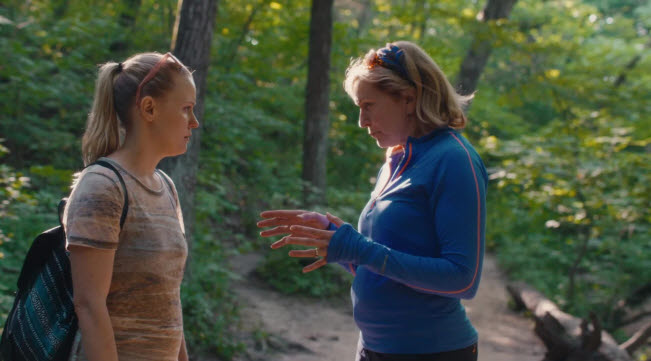
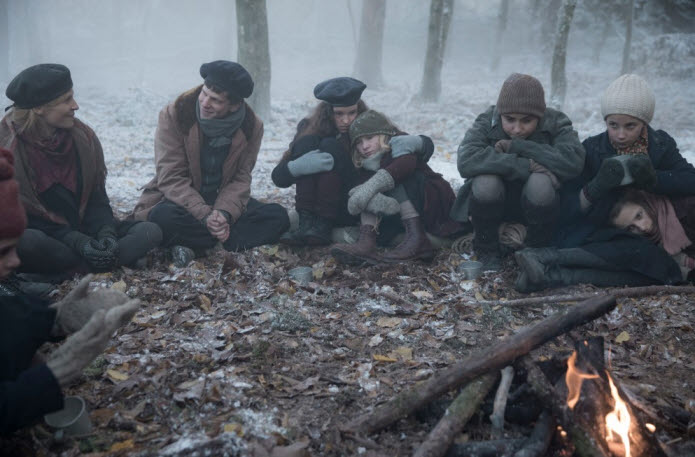
Chilean film “Nobody Knows I’m Here”, which was released on Netflix in a number of countries including US in last week, is a somber and detached character drama about one tragically repressed guy who is still reeling from his old traumatic wound in his adamantly isolated status. Although it may demand considerable patience from you due to its cold, austere storytelling approach, the movie slowly comes to engage us thanks to its good mood and performance, and it eventually comes to an arrival point accompanied with a little amount of surprising tenderness and poignancy.

Mainly set in some remote spot near Lake Llanquihue in Chile, the movie calmly observes the seemingly uneventful daily life of a big, obese reclusive named Memo Garrido (Jorge Garcia). Although the movie does not tell us much about how he came to be stuck in that place, it seems that he has been mostly fine under the care of his gruff uncle Braulio (Luis Gnecco, who looks quite different from when he appeared as the titular character of co-producer Pablo Larraín’s “Neruda” (2016)), and the first half of the movie mainly revolves around how Memo and Braulio work together in Braulio’s small sheep farm.

As watching him going through one day after another, we come to sense that there is something not so right about Memo. While he prefers to be left alone as much as possible, he has a rather disturbing habit of sneaking into empty houses around his residence for no apparent reason, and his uncle does not mind that much, though he points out to his nephew at one point that he may not get away with his naughty habit someday.

Usually reticent and incommunicado, Memo sometimes lets himself mired in his own make-believe world. Whenever he is in his private room full of signs of arrested development, he focuses on making a shiny but tacky outfit from a number of different fabrics, and we later see him dancing a bit in the middle of a nearby forest while wearing that outfit with a pair of headphones to play music on his ears.

nobodyknowsimhere04

The movie slowly reveals Memo’s painful past bit by bit, which is mainly presented via grainy video clips. When he was a young boy living in Miami, he showed considerable talent and potential as a singer, but, alas, his father, who was his manager at that time, did not let young Memo come onto the stage just because a producer pointed out that young Memo did not look good enough to sell songs and records. What happened next surely hurt young Memo’s feelings a lot, and there is a brief painful moment when young Memo helplessly watches his good effort being appropriated on the stage without his concession.

It is apparent that Memo is still clinging onto what was lost from him forever, and the movie occasionally throws some striking visual moments to reflect his morose wistfulness. While the mood is mostly moody and phlegmatic on the screen thanks to cinematographer Sergio Armstrong and composer Carlos Cabezas Rocuant, it sometimes becomes quite colorful as Memo delves more into his warped state of mind full of remorse and trauma, and there is even a deliberately weird scene when he vomits lots of shiny stuff on the floor.

Of course, Memo’s seemingly inert environment later happens to be disrupted by Marta (Millaray Lobos, who is engaging enough in her functional role), a local fashion consultant who comes to take an interest in him after one coincidental encounter between them. After Braulio happens to have a terrible accident and then is sent to a hospital, Marta approaches closer to Memo probably because she is concerned about him being alone without his uncle, but, not so surprisingly, Memo does not respond that well to Marta’s good will.

nobodyknowsimhere02

It is not much of a spoiler to tell you that Memo eventually steps outside a bit to reach to Marta but then she comes to discover who he was. As a consequence, Memo comes to face his wounding past again, and he also has to deal with his father, who, for a reason revealed to us around that narrative point, is not so pleased about what is going on around his son.

As shifting itself on a slicker mode during its last act, the movie unfortunately comes to distance itself more from its hero, and its finale sequence does not work as well as itself, but it is at least held well together by the restrained performance by Jorge Garcia, who has been mainly known for his supporting turn in TV series “Lost”. Never reaching for our pity or sympathy, Garcia thoroughly embodies his character’s emotionally barren state, and his hulking appearance comes to look more like a carnal barrier for a man who is still an angry and traumatized child inside his mind. Regardless of whether what happens around Memo around the end of the story is real or not, we can feel and understand how hard and difficult it is for him to let out finally what has been repressed for many years, and we come to hope that he will eventually be more comfortable with himself than before.

Overall, “Nobody Knows I’m Here”, which is incidentally the first feature film from director Gaspar Antillo, is rather dry and opaque stuff as your typical arthouse film, and I must confess that I lost my patience at times when I watched at last night, but I appreciated the skills and efforts put into the film at least. Although it is not wholly successful in my inconsequential opinion, it is still worthwhile to watch mainly for Garcia’s sensitive performance, and I assure you that you will never forget him and his performance once it is over.

nobodyknowsimhere01

Posted in Movies | Tagged , | Leave a comment

Invisible Life (2019) ☆☆☆1/2(3.5/4): Two different sisters, Two separate lives

invisiblelife01

“Invisible Life”, which was selected as Brazil’s official entry for Best International Film Oscar in last year, is a surprisingly absorbing piece of family melodrama. While the story and characters may feel familiar at first, the movie gradually draws us into its two main characters’ heartbreaking tale via vivid realism, sensitive storytelling, and some stylish moments to be appreciated, and it certainly helps that the movie is anchored by two strong lead performances at its center.

Julia Stockler and Carol Duarte play Guida and Eurídice Gusmão, two sisters who are different from each other in many ways. In the opening scene, these young lasses are spending some time together in a beach forest, and everything seems fine for them, but then the mood becomes rather ominous as Eurídice later becomes separated from Guida in the forest.

As listening to Eurídice’s following narration, we sense something bad will happen to her and her older sister sooner or later, and that does happen as Guida hurriedly decides to elope with some Greek sailor at one night. Shocked by her impulsive deed, her parents quickly decides to have Eurídice get married for covering up their family scandal as soon as posssible, and Eurídice is not so pleased about that because she would rather go to Vienna instead for honing her considerable musical talent.

Several months later, Guida returns after belatedly coming to realize how lousy her lover actually is, but she is now pregnant, and that certainly makes her father irater. Furiously rejecting Guida with no mercy except some money thrown at her, her father firmly forbids her to come back again, and Guida, who is quite strong-willed just like her father, also swears in response that she will never return.

invisiblelife05

Once Guida is gone, her father goes further for cutting her away from the family once and for all. He decides not to tell anything about Guida’s return to Eurídice, and his obedient wife follows his heartless decision without any complain. Although Guida still wants to correspond with her dear younger sister, their father cruelly blocks Guida’s small chance of connecting with Eurídice, and Eurídice still does not know anything even when they are not so far from each other in Rio de Janeiro.

The middle part of the film alternates between their respective lives, both of which are constantly filled with misery and unhappiness. While Eurídice lives in a more comfortable environment after leaving her parents, her husband turns out to be your average insensitive prick, and her remaining aspiration to be a musician seems to be dashed completely when she is notified on one day that she becomes pregnant. With a sympathetic relative who is her only close friend, she tries to escape from this situation, but, of course, she only finds herself more trapped in that drab prospect of being a middle-class wife and mother forever.

In case of Guida, it goes without saying that things are far more desperate for her as she tumbles down into the bottom of the society. Because she has run out of money now, she has no choice but to work as a prostitute on streets shortly after giving birth to her little boy, and it is really fortunate that she is subsequently helped by an old lady who turns out to be more generous and sympathetic than expected.

As getting more accustomed to her new life, Guida comes to find a new family to lean on from her young son and that old lady, but she still hopes for reconnecting with Eurídice. Even though she is well aware that she may never get any reply in the end, she keeps writing letters to her dear younger sister, and some of the most poignant moments in the film come from the readings of her harrowing letters.

invisiblelife03

In the meantime, Eurídice goes through a fair share of ups and downs in her life. As keeping searching for her dear older sister, she also finds some solace from preserving that precious aspiration of hers, but then, like Guida, she is painfully reminded that she does not have much chance as a woman limited by a conservative patriarchal society.

While there eventually comes a series of expected melodramatic moments during its last act, the screenplay by director Karim Aïnouz and his two co-adapters Murilo Hauser and Inés Bortagaray stays calm without becoming too sappy, and Aïnouz and his crew members deliver several striking dramatic moments to admire. Cinematographer Hélène Louvart did a commendable job of establishing a plain but palpable sense of period and place on the screen, and the precise editing by Heike Parplies and the good score by Benedikt Schiefer are crucial especially during one mesmerizing key scene where our two lead characters happen to be around each other at one spot but then become separated due to another cruel turn of fate.

Above all, the movie is held together well by the dynamic performances from Duarte and Stockler, both of whom are constantly convincing in their main characters’ respective dramatic trajectories. They are also supported well by several supporting performers including Gregorio Duvivier, Bárbara Santos, Flávia Gusmão, Maria Manoella, and Antônio Fonseca, and it is surely nice to see Fernanda Montenegro on the screen again (Remember her Oscar-nominated performance in “Central Station” (1998)?).

In conclusion, “Invisible Life”, which received the top prize at the Un Certain Regard section of the Cannes Film Festival early in last year, is a powerful work for many good reasons, and it is certainly another fine work from Aïnouz, who previously drew my attention via “Futuro Beach” (2014). “Invisible Life” confirms to me that he is indeed a talented filmmaker, and I will certainly have some expectation on his next movie to come.

invisiblelife04

Posted in Movies | Tagged , | 1 Comment

Athlete A (2020) ☆☆☆1/2(3.5/4): A shocking sexual abuse case behind USA Gymnastics

athletea02

It is often difficult to process what is told in Netflix documentary film “Athlete A”, which was released on this Wednesday. Like many other recent documentary films on sexual abuses, the documentary gives us a series of devastating testimonies on a shocking case of sexual abuse which was covered up by USA Gymnastics for more than 20 years, and you will certainly be relieved to see those numerous survivors getting the justice in the end.

The documentary opens with the story of Maggie Nichols, an adolescent gymnastic athlete who had aspired to become a member of the American Olympic team since her childhood years. Even when she was very young, she showed considerable potential and talent, and her parents enthusiastically supported her as she advanced more and more in her burgeoning athletic career, but, as their parents bitterly tell us, her earnest aspiration was unjustly dashed just because she and her parents reported a case of sexual abuse to USA Gymnastics.

As subsequently shown to us in the documentary, Nichols was sexually abused by Dr. Larry Nassar, who, as many of you remember, was eventually put on a trial for his long history of sexual abuse on young women and girls at not only USA Gymnastics but also the Michigan State University. While the case was utterly shocking considering the number of young women and girls abused by this vile man, it was also pretty infuriating that USA Gymnastics had deliberately ignored his horrible crimes just for protecting its interest and public image.

athletea01

Director Bonni Cohen and Jon Shenk interviewed several survivors of Nassar’s sexual abuses, and they willingly tell us how his sexual exploitation on them and many other young female athletes was possible during his long tenure at USA Gymnastics. As the national gymnastic teams from Romania and other Eastern countries showed considerable athletic achievements at the Olympics during the 1970s, USA Gymnastics was certainly willing to surpass them by any means necessary, and then there came a chance when a trio of Romanian gymnastic coaches defected to US around the early 1980s. These coaches were promptly hired by USA Gymnastics, and then they pushed young female athletes into harsh and demanding training sessions which were often accompanied with verbal or physical abuses.

Frequently isolated in this toxic environment, many female athletes of USA Gymnastics were naturally drawn to the seemingly kind approach from Nassar. Still being young and innocent, most of them did not know what happened to them when he sexually molested them in private, and some of them belatedly came to realize that only after his crimes were fully exposed in public. The documentary shows us a number of creepy online education video clips made by him, and it is really disturbing to see how he casually touches several young women just for demonstrating his physical therapy techniques.

When they came to learn of what happened to their daughter, Nichols’ parents took an immediate action. After they told about that to several persons at USA Gymnastics, they were notified that there would be an internal investigation, but nothing much was done, and USA Gymnastics did not even report that to the local police, let alone FBI.

In the meantime, Nichols and her parents came to face the consequence of their attempt to reach for justice. In a national competition for the selection of the national team members for the 2016 Rio Olympics, Nichols was not even chosen as an alternative despite earning the 6th place, and Nichol’s parents were blatantly disregarded by USA Gymnastics in contrast to the parents of other athletes.

athletea03

However, the wheel of justice subsequently started to roll for Nichols and many other survivors of Nassar’s sexual abuse thanks to the diligent and stubborn efforts from the reporters of the Indianapolis Star. When they were about to broke the story about Nassar’s sexual abuse at USA Gymnastics in September 2016, they had only three survivors to testify, but then, once their article was published, far more survivors approached to them for telling each own story of sexual abuse, and Nassar was eventually accused of sexually abusing no less than 250 young women and girls at least.

Not only Nassar but also several figures associated with the cover-up of his crimes came to get comeuppance in the end, and the most powerful moment in the documentary comes from the scene showing a bunch of survivors of his sexual abuse coming forward and then making a statement in front of Nassar during his trial. They were not afraid of him anymore as finally getting what they needed for many years, and this moment certainly resonates a lot with the ongoing #MeToo era.

Overall, “Athlete A” may be a bit tough to watch, but it handles its sensitive subject with enough consideration, and it is surely another commendable documentary from Netflix, which already presented us “Crip Camp: A Disability Revolution” (2020), “Circus of Books” (2019), “A Secret Love” (2020), and “Disclosure: Trans Lives on Screen” (2020) during this year. They are all worthwhile to watch in my inconsequential opinion, and I assure you that you will get a fair share of enlightenment from each of them.


athletea04

Posted in Movies | Tagged , , , , , | 2 Comments

Disclosure: Trans Lives on Screen (2020) ☆☆☆1/2(3.5/4): Now it is the time for them

DisclosureTransLivesonScreen01

Netflix documentary film “Disclosure: Trans Lives on Screen” gives us an enlightening look into how transgender people have been regarded and represented on the media. While never overlooking how unfairly they have been misrepresented in numerous movies and TV shows for many years, the documentary also observes the recent big progress for them, and it will surely make you reflect more on their presence and basic rights to live.

At first, the documentary draws our attention via a bunch of various notable transgender figures, each of whom has lots of things to tell in front of the camera. All of them had each own personal struggle with their gender identity, and they were particularly sensitive about how negatively transgender people have been depicted in movies and TV shows. Watching transgender characters mainly used for laugh or shock on screen, they felt more awkward and ashamed about their gender identity, and they were certainly not so willing to reveal themselves to others around them.

As shown from a series of archival video clips and photographs, the misrepresentation of transgender people was prevalent even at the beginning of the movie history. For example, while he has been infamous mainly for the shameless racism in his monumental silent film “The Birth of a Nation” (1915), D.W. Griffith was also guilty of another kind of prejudice as shown from one of his notable works, which has a silly caricature of transgender woman as one of its minor supporting characters.

And we see how the trend of depicting transgender characters as laughingstocks or monsters was continued during the next hundred years. While “Psycho” (1960) and “Dressed to Kill” (1980) are naturally mentioned as the prime examples of this misrepresentation of transgender people, the documentary looks around a wide of range of TV shows and movies ranging from “The Silence of the Lambs” (1991) and “NYPD Blue” to “Ace Ventura: Pet Detective” (1994) and “Married… with Children”, and it certainly makes a sharp point to us.

DisclosureTransLivesonScreen04

Many of the interviewees in the documentary frankly tell us on how they were often frustrated with their deficient representation on the media – and how happy they were to come across the rare occasions when the media paid some attention to transgender persons. While most of these occasions were gaudy and sensational, they were glad to see their existence illuminated in public via the Jerry Springer Show or, yes, “Paris Is Burning” (1990), an iconic documentary film which vividly captured the lively cultural world of sexual minority dancers.

Around the late 1990s, the progress was started bit by bit, and then there came “Boys Don’t Cry” (1999), an Oscar-winning drama film which is based on the tragic story of a real-life transgender man. Although it should be mentioned that the movie erases the presence of an African American man who was another victim in the case, the movie is still a painfully powerful work nonetheless, and Yance Ford, who was recently Oscar-nominated for his documentary film “Strong Island” (2017), reminisces about how difficult it was for him to watch a certain horrific moment of violence in the movie.

However, the depiction of transgender people in TV shows and movies were not improved much even during the 2000s. Many transgender characters in movies and TV shows were unfortunate victims of terrible fate or crime, and there is an amusing moment when one transgender actress recollects when she happened to work in two different TV medical drama series where she played basically same transgender characters without much difference.

DisclosureTransLivesonScreen02

In addition, there have also been the imbalance in the representation on the media between transgender women and men. Transgender women draw more attention because they are, well, a more sensational subject, so they are usually the ones associated with transgender people in other people’s mind, and transgender men accordingly have not gotten much spotlight in comparison while often marginalized even among other sexual minority groups.

Fortunately, things have gotten better for transgender people during recent years as many of them have kept trying to show themselves more and fight more for their human rights, and their images on the media have been considerably improved as a result. While we see more transgender characters appearing in movies and TV shows these days, many of these characters are played by real transgender performers, who surely bring unsurpassable authenticity to their roles. For instance, Laverne Cox, who is incidentally one of many transgender interviewees in the documentary, steals the show every time she appears in Netflix TV series “Orange Is the New Black”, and it goes without saying that Oscar-winning Chilean film “A Fantastic Woman” (2017) depends a lot on the strong presence of its wonderful lead transgender actress Daniela Vega.

On the whole, “Disclosure: Trans Lives on Screen” presents its main subject with considerable respect and thoughtfulness under the competent direction of director/co-producer Sam Feder. Yes, as mentioned around the end of the documentary, the world still needs to be changed a lot more for more inclusion for many transgender people out there, but the progress has already been started, and, despite many uncertainties in our world at present, I am hopeful about that.

DisclosureTransLivesonScreen03

Posted in Movies | Tagged , , , | Leave a comment

Wasp Network (2019) ☆☆1/2(2.5/4): A sprawling misfire based on one intriguing tale

waspnetwork04

Olivier Assayas’ new movie “Wasp Network”, which was released on Netflix in last week, is a curious misfire. While it has not only an intriguing story setting but also a bunch of talents assembled together under Assayas’ direction, the overall result is somehow merely sprawling as often suffering from the lack of narrative focus and momentum, and I only came to observe its rather scattershot storytelling from the distance.

The movie begins with one sudden act committed by one of its main characters. In 1990, René González (Édgar Ramírez), a pilot who has lived with his wife Olga (Penélope Cruz) and their little young daughter in Havana, escapes alone to Miami via one of small airplanes stolen from his workplace, and he later explains his motive to American officials shortly after arriving in Miami. Although the Cold War was recently over with the collapse of the Soviet Union, Cuba is still under Fidel Castro’s communist dictatorship, so many desperate Cuban people keep trying to escape as before, and René is one of such cases, though he took a safer route compared to those poor people trying to escape via small boats.

As trying to settle in Miami, René naturally gets associated with Cuban Americans living there, and he eventually comes to join a group named Brothers to the Rescue and then a bigger group named the Cuban American National Foundation (CANF). Both of these two groups have been quite interested in helping the Cuban refugees safely arriving in Miami, and René is certainly willing to help as much as he can. Although he does not get paid much, he frequently flies on the sea between Cuba and Miami, and, as shown from one brief scene, he does his job as well as expected.

waspnetwork02

Meanwhile, the movie also focuses on Juan Pablo Roque (Wagner Moura), a Cuban military officer who makes an equally daring escape attempt. At one night, he swims alone to Guantanamo Bay Naval Base, and he surely draws lots of attention shortly after being interviewed at Guantanamo Bay Naval Base and then sent to Miami. Like René, he soon comes to be involved with Brothers to the Rescue and CANF, and he and René often spend some time together as fellow escapees.

However, these two guys subsequently find themselves in a rather tricky circumstance. It turns out that CANF and Brothers to the Rescue are involved with international drug traffic for getting the money to finance their small war against Castro’s dictatorship, and the high-ranking members of CANF have no qualms about ordering acts of terror to destabilize the weakening position of Castro and his government.

Because he does not approve of these criminal acts, René becomes an undercover informer for FBI just like Juan, who has enjoyed spending his extra cash earned from his secret part-time job. When Ana (Ana de Armas), a Cuban American woman he married not long after his settlement in Miami, becomes very suspicious about what he is hiding behind his back, he does not give any clear answer to her, and she decides not to ask more because, well, she depends on him more than she can admit.

In the meantime, Olga finally decides to join her husband along with their daughter, but, not so surprisingly, things do not go well for her. It seems the Cuban government is not that willing to let her and her daughter join her husband, and there is a painful moment of frustration when she belatedly realizes that she is trapped in a bureaucratic system which keeps demanding her one document after another.

waspnetwork01

Around its middle part, the movie introduces another main character in the story, who is played by Gael García Bernal. I will not go into details on how Bernal’s character functions in the story, but I can tell you instead that the plot does thicken as the movie, which is adapted from “The Last Soldiers of the Cold War” by Fernando Morais, delves more into what was going on between the Cuban government and those two aforementioned Cuban American groups during that era. As things get more troubling, the American government eventually decides to handle the matter in direct ways, and there is an amusing moment when a bunch of American government officials come to Havana for a clandestine meeting with Cuban officials and generals.

However, after throwing so many different elements into its big picture, the movie only comes to lose its narrative pacing in the end, and it also suffers from its rather thin main characters. Although Édgar Ramírez, Wagner Moura, Penélope Cruz, Ana de Armas, and Gael García Bernal are surely charismatic performers equipped with enough talent and presence, their fairly good performances are mostly limited by their superficial roles, and Armas, who has been more prominent thanks to her breakout turn in “Knives Out” (2019), is particularly wasted in her thankless role.

On the whole, “Wast Network” is another mildly disappointing work after Assayas’ previous work “Non-Fiction” (2018), which was admired by many critics but did not entertain me enough. The movie is not totally without interest thanks to the admirable efforts from its cast and crew members, and I will not deny that it engaged me to some degree during my viewing, but I still think there is a better story somewhere inside this middling work.

waspnetwork03

Posted in Movies | Tagged , , , , | Leave a comment

Baseball Girl (2019) ☆☆☆(3/4): You will definitely root for her

baseballgirl01

I love it when I come to root for a movie character a lot more than expected, and South Korean film “Baseball Girl” is one of such wonderful examples. Like a number of certain unforgettable movie heroines I encountered during last three decades, its young heroine often made me worry about her as trying to give all to what she really wants, and I must confess that I sometimes became rather skeptical about where her defiance and determination will lead her in the end. Nonetheless, she eventually persuaded me, and I came to agree to her adamant position while also admiring and respecting her more than before.

The movie opens with a very important moment for a bunch of senior baseball team members of some minor high school. During last several years, the baseball team of this school has drawn considerable attentions thanks to their exceptional results on the field, and the senior team members are eagerly waiting for the outcome of their respective interviews with a recruiter from a professional baseball team, though only one of them will be chosen while the rest of them may look for different careers instead.

One of them is a girl named Soo-in (Lee Joo-young), who has never given up her dream since she began to play baseball during her elementary school period. As told to us later in the story, she had lots of hard and difficult moments as being a sole female player among boys, but she keeps sticking to her aspiration nevertheless, and it is implied that she has considerably distinguished herself in her current team.

Not so surprisingly, Soo-in is not chosen by the recruiter, who instead chooses Jeong-ho (Kwak Dong-yeon), a boy who has known her since they played together in their elementary school team. As the only person who knows and understands well how much Soo-in has tried for all those years, Jeong-ho is genuinely sorry for her, but Soo-in does not want his pity or sympathy at all.

baseballgirl03

Because this is her last high school year, Soo-in is told by her teachers that she really should consider other options for her life, and Soo-in’s mother definitely agrees to that. As a hard-working woman who has supported her family for many years instead of her good-natured but pathetic husband, she firmly believes that her daughter must be really serious about getting a job before her upcoming high school graduation, and she already has the one to be offered to her daughter.

Even in her team, Soo-in does not get much support from the other team members or her new baseball coach, who once tried to join a professional baseball team many years ago but then only saw his hope and ambition dashed quickly. When Soo-in tries to prove herself in front of other team members and her coach, the coach promptly demonstrates to her how limited and disadvantaged she is in terms of skill and strength, and that surely hurts and frustrates her a lot.

Despite painfully learning more of her weaknesses, Soo-in still does not give up because she believes that she must try hard to the end for giving the best shot to her lifelong aspiration, and her coach eventually agrees to help her. Still having reservation on what result she will get in the end, the coach does his best because he now believes that she deserves a full chance at least, and there is a small touching moment when he teaches her how to improve her strong aspects for compensating for her weak ones including the speed of her pitch, which is understandably not fast enough compare to the ones of professional male baseball players.

baseballgirl04

Of course, the movie switches onto melodramatic mood during its middle part as Soo-in comes to clash more with her headstrong mother due to the growing difference in their thoughts and opinions, but the screenplay by director/writer Choi Yun-tae steadily maintains its restrained and composed handling of story and characters. While we surely get some expected emotional moments as Soo-in’s mother belatedly comes to open her eyes to her daughter’s hope and determination (Is that a spoiler?), the movie keeps focusing on its main subject just like its heroine concentrates hard on her aim, and I particularly appreciate that it never overlooks the hard reality surrounding its heroine even during its finale.

Everything in the film depends a lot on its lead performer, and Lee Joo-young gives a strong performance packed with quiet but palpable spirit and willpower. Soo-in is not a very likable girl to say the least, but Lee’s diligent acting lets us emphasize with Soo-in’s old and unflappable passion toward baseball, and we gradually come to cheer for her as touched by her determination to go all the way for what may be the last chance for her adamant dream.

The other main cast members of the film hold each own place well around Lee without overshadowing her at all. While Lee Joon-hyuk and Kwak Dong-yeo dutifully hold the ground for Lee, Yum Hye-ran is effective as a woman who is as strong-willed as her own daughter, and Song Young-kyu and Joo Hae-eun are also solid in their small but substantial supporting characters.

In conclusion, “Baseball Girl” impressed me with its earnest but moving sports drama mainly driven by its heroine’s strong will and hope, which remind me of why we should never give up while keeping trying our best to live. Yes, things are gloomy and depressing in our current world these days, but we should not resort to despair and cruelty at any chance (That is the main reason why I abhorred the cynical wholesale nihilism of “Joker” (2019), by the way), and I must tell you that I felt better after walking out of the screening room this afternoon. That is what a good film can do for us, you know.

baseballgirl02

Posted in Movies | Tagged , , , | 1 Comment

Onward (2020) ☆☆☆(3/4): A passable work from Pixar Studios

onward01

Pixar Studios Animation film “Onward”, which was finally released yesterday in South Korean theaters after several months of delay caused by the ongoing COVID-19 pandemic, did not surprise me much, and that was a surprise for me. Although the film is passable in terms of style, mood, and storytelling, its overall result is not as distinctive as the best works from Pixar Studios, and I constantly felt some reservation even while amused and entertained by a number of good moments in the film.

At the beginning, the movie quickly establishes its fantasy background coupled with modern touches. Once upon a time, the world was full of magic and wonder, but, after its various magical creatures such as elves, fairies, and trolls were drawn to science and technology, the world has become far less magical and wondrous during next several thousand years, and we see a number of amusing sights not so far from what you usually see from modern American cities and their suburban areas.

When a nerdy teenage elf named Ian Lightfoot (voiced by Tom Holland) is about to begin his another day in his suburban neighborhood which is full of houses looking like big mushrooms, he has a good reason for being quite nervous. It is his 16th birthday, and he hopes to bring some differences into his daily life, but he still feels uncertain and insecure, though he always gets the full support from his mother Laurel (voiced by Julia Louis-Dreyfus) and his older brother Barley (voiced by Chris Pratt).

While things unfortunately do not go as well as intended at his school, Ian subsequently gets an unexpected surprise when he returns to his home along with Barley. Their mother reveals that their father, who passed away around the time when Ian was born, left a present to be given to his boys when both of them are over 16, and, what do you know, it turns out to be an old magic staff with the instruction on a certain magic spell. As a dude who has been quite obsessed with the ancient history of magic and sorcerers, Barley is certainly excited, and he surely has lots of things to tell his younger brother, who is rather skeptical about magic.

onward03

Of course, Ian comes to have an experience to blow his mind when he casually tries to use that old magic staff while his mother is not at home. That spell in question is really intended for bringing his dead father just for 24 hours, but, alas, probably due to his inexperience with magic, a valuable key stone happens to be broken in the middle of his clumsy incantation, and he and his brother come to bring back only the lower part of their father.

According to Barley, he and Ian need another key stone for bringing back the upper part of their father, and that is the beginning of their bumpy quest which must be ended within 24 hours. Although Ian remains skeptical and unsure, he cannot refuse the chance to see and talk with his dead father, and Barley is eager to lead Ian more into the journey he has always wanted to have along with his younger brother.

As dutifully bouncing from one narrative point to another along with its two lead characters, the screenplay by director Dan Scanlon and his co-writers Jason Headley and Keith Bunin diligently delivers good moments to excite or tickle us. In case of one humorous scene, Ian and Barley have some surprise and bafflement when they enter a commercial spot owned by an entity who is very reluctant to give them a guide for their quest, and Octavia Spencer has a fun with her seemingly imposing character. I enjoyed a thrilling chase sequence involved with a bunch of tiny magical creatures who turn out to be very tough street guys, and I also appreciate how the film slyly generates humor and poignancy from the lower part of Ian and Barley’s father, which functions as something a bit more than an object to be carried during Ian and Barley’s journey.

onward02

Unfortunately, the film takes an easy and predictable course as entering its expected third act along with its two main characters, and that is where it becomes less entertaining than before. To be frank with you, a number of obstacles thrown at Ian and Barley will not impress you much especially if you are familiar with many other fantasy adventure films or video games out there, though the perfunctory climactic action sequence in the film has a couple of nice surprises.

Anyway, it cannot be denied that the film is supported well by its dependable main voice performers. While Tom Holland and Chris Pratt are well-cast as two mismatched brothers, Julia Louis-Dreyfus has her own small fun moments like Spencer, and it is a bit shame that their roles are mostly stuck in a functional subplot until the finale. Lena Waithe, Ali Wong, and Tracey Ullman are also fine in their brief respective moments, and Mel Rodriguez is suitably goofy as Laurel’s centaur boyfriend (My inconsequential question: how do he and Laurel sleep on bed together?)

Overall, “Onward” is not a bad animation film at all, but it is rather uncharacteristic in addition to being two or three steps down from several recent acclaimed Pixar animation films such as “Coco” (2017) and “Toy Story 4” (2019). I recommend it anyway because it does provide fun and entertainment as much as you pay for ticket price, but I must emphasize that you should not expect much this time – especially you are a longtime admirer of Pixar Studios just like me.

onward04

Posted in Movies | Tagged , , , , | 1 Comment

Da 5 Bloods (2020) ☆☆☆1/2(3.5/4): Boys are back in Vietnam

da5bloods01

Spike Lee’s latest work “Da 5 Bloods”, which was released on Netflix on last Friday, is quite a compelling mix of adventure drama, social commentary. and history lesson. While it is rather uneven and a bit too overlong in my inconsequential opinion, it is entertaining to watch how confidently and joyously Lee juggles disparate elements together for another ambitious project in his bold and distinctive filmmaking career, and you will come to enjoy its numerous good moments while marveling at how skillfully he handles its improbable narrative concoction.

After the prologue part which gives us a quick history lesson on the Vietnam War and the social turbulence in US during that intense and chaotic period, the movie begins with the arrival of its four African American main characters in Ho Chi Minh City, Vietnam at present. Around 50 years ago, Paul (Delroy Lindo), Otis (Clarke Peters), Eddie (Norm Lewis), and Melvin (Isiah Whitlock Jr.) fought together in Vietnam under the command of Norman Earl “Stormin’ Norm” Holloway (Chadwick Boseman), and their official purpose of visit to Vietnam is retrieving the remains of Holloway, who, after getting killed during a very intense combat, was buried at a certain spot located in some remote forest area.

It soon turns out that our four main characters are hoping to find something else besides their dear commander’s remains. At that time, they and Holloway were on a mission to find a crashed plane belonging to CIA, and that plane contained a considerable amount of gold bars, which were supposed to be delivered to local tribe people fighting against those Vietcong soldiers. Once they found these gold bars in the plane, Holloway, who was your average progressive African American intellectual, suggested that they should keep these gold bars for themselves to help and benefit many fellow African Americans in the country, and his four men did not object at all. As reflected by one scene which virtually functions as a social/historical lesson for us as well as them, they learned a lot from Holloway on how the country has been very unfair to African Americans since the very beginning of its history, and they were certainly eager to give a middle finger to the establishment which unjustly forced thousands of young African Americans into the war (As it is directly pointed out to us in the movie, more than 30% of the American soldiers sent into the Vietnam War were African Americans although African Americans were only around 10% of the whole American population at that time).

Anyway, our four characters, who are quite old now, certainly need some local help for their private mission. While a local guide named Vinh (Johnny Trí Nguyễn) is going to lead them to that forest area in question without knowing anything about their private mission, Desroche (Jean Reno), a shady French business guy introduced to them via an old friend of Otis, will help them getting gold bars out of Vietnam, though, not so surprisingly, he demands a considerable price for his service.

da5bloods05

And then there comes a little setback for their plan. Paul’s estranged son David (Jonathan Majors) follows after Paul and his gangs shortly after learning of their plan, and he adamantly insists that he should accompany Paul and his gangs. Although Paul is not so pleased about his son’s interference, he and his gangs eventually agree to let David go along with them, and we soon see their departure, which, to our amusement, is accompanied with a certain piece of classic music which was memorably used in “Apocalypse Now” (1979).

Along their journey, our four main characters are often reminded of their old war experiences, which still vividly haunt each of them even at present. In case of Paul, it is apparent that he has suffered a worse case of posttraumatic stress disorder (PTSD) compared to others, and he also becomes gradually paranoid with more distrust and suspicion – especially after he and his gangs finally come to locate where Holloway and gold bars are buried (Is this a spoiler?).

As the mood subsequently becomes more serious before, the movie enters the territory of “The Treasure of the Sierra Madre” (1949), and Lee deftly rolls his story and characters from one wild moment to another while constantly throwing sharp moments of social commentary at us. There is a tense and striking scene involved with landmines which are still dangerous even after more than 40 years, and then we are served with a rather amusing scene involved with a bunch of local gangs, which not only gives a wink to that famously misquoted line in “The Treasure of the Sierra Madre” but also makes a mandatory point on how much Vietnamese people suffered during the war.

With these and many other elements thrown into its mix, the movie understandably feels disjointed from time to time, but Lee, who developed the screenplay along with Kevin Willmott from the one originally written by Danny Bilson and Paul De Meo, and his crew members deliver its many key moments with enough skill and style to hold our attention during its 155-minute running time. While cinematography Newton Thomas Sigel establishes a vivid local atmosphere on the screen in addition to masterfully switching between different screen ratios for dramatic effects, editor Adam Gough did a seamless job of maintaining narrative momentum to support Lee’s occasionally sprawling storytelling, and Terence Blanchard’s score sometimes goes on a full throttle mode as required in addition to being an effective counterpoint to several songs of Marvin Gaye on the soundtrack.

da5bloods03

Above all, Lee draws the excellent performances from his main cast members. With several awesome showstopper moments which may make him a serious Oscar season contender, Delroy Lindo inarguably gives the best performance in the film, but Clarke Peters, Norm Lewis and Isiah Whitlock Jr. also have each own moments to shine as steadily holding the ground for Lindo. While Jonathan Majors, who previously drew our attention with his wonderful performance in “The Last Black Man in San Francisco” (2018), holds his own small place around his four senior performers, Chadwick Boseman, imbues his character with an ample amount of charisma, intelligence, and leadership, and Lee wisely has Lindo, Peters, Lewis, and Whitlock appear along with Boseman in the flashback scenes instead of digitally de-aging the quartet like Martin Scorsese did to his main cast members in “The Irishman” (2019). This may look a bit odd at first, but it feels far less awkward than the digital de-aging effects of “The Irishman” (Well, what can possibly beat natural human faces?), and it makes perfect sense in the context while also generating some poignancy.

Thanks to Lee’s considerate approach to the story and characters, a number of minor supporting characters popping here and there around the story are presented with humanity and personality, and the performers playing them are clearly having a ball with their respective parts. While Jean Leno, Paul Walter Hauser, Jasper Pääkkönen, and Mélanie Thierry fill their spots as required, Johnny Trí Nguyễn, Veronica Ngo, and Lê Y Lan are also solid as the crucial local characters in the story, and I particularly appreciate a small moment when a casual conversation among a group of Vietcong soldiers is translated to us via subtitle. Directly criticizing “Rambo: First Blood Part II” (1985) and other similar Hollywood action films set in Vietnam, the movie naturally takes a more considerate viewpoint on Vietnam and its people, though it ironically culminates to a climactic action sequence where its main characters come to take their last stand against those local bad guys.

In conclusion, “Da 5 Bloods” is imperfect to say the least, but the overall result is fantastic enough to overlook these flaws in the film, and I admire how boldly Lee reaches for many different things ranging from the Boston Massacre to Black Lives Matter movement within the epic background of the Vietnam War. When he received an Honorary Oscar in 2015, we thought that was too early for a consummate filmmaker who has never stopped since “She’s Gotta Have It” (1986), and, what do you know, he has kept going as usual while giving us “BlacKkKlansman” (2018), which won a Best Screenplay Oscar for him. With “Da 5 Bloods”, he certainly demonstrates again that his filmmaking career is far from over, and he will definitely continue to interest and entertain us with some social enlightenment for us.

da5bloods04

Posted in Movies | Tagged , , , , | 2 Comments

Clemency (2019) ☆☆☆1/2(3.5/4): A calm, sobering drama on death penalty

clemency01

“Clemency”, which won the Grand Jury Prize at the Sundance Film Festival early in 2019 but was unfortunately overlooked shortly after its limited theatrical release in US around the end of the same year, will shake you hard for good reasons. While never feeling preachy or overdramatic, the movie lets us understand and emphasize with its conflicted heroine going through her soul-crushing professional duty again, and her sobering psychological drama will make you reflect more on whether death penalty is really necessary or not.

At the beginning, the movie phlegmatically observes the latest execution to be done under the supervision of Bernadine Williams (Alfre Woodard), who handled no less than 10 executions as a prison warden. As the time for the execution approaches minute by minute, she calmly and methodically goes through every step of the procedure, and, once she is notified that the inmate to be executed will not be pardoned by the state governor, she embarks on the final step along with her prison guards. While a number of people including the inmate’s devastated mother are watching from the space next to the execution room, she and her prison guards wait for a while just in case, and then the inmate is allowed to leave some final words right before the execution begins.

Unfortunately, a minor complication happens in the middle of the execution, and, though the job is eventually done as instructed, that incident begins to settle Bernadine’s mind, which turns out to have been quite exhausted behind her staunch appearance. At her home, her husband Jonathan (Wendell Pierce) tries to get closer to her for not only comforting her and but also saving their estranged marital relationship, but she refuses to open herself to her husband even while feeling number day by day, and that certainly frustrates him a lot, especially when he attempts to persuade her to retire for both of them.

clemency03

In the meantime, there comes another execution to be done, and Bernadine dutifully prepares for that as before. We see her discussing with her staff members on the schedule for the execution. We see her having a meeting with the lawyer representing Anthony Woods (Aldis Hodge), the inmate who is about to be executed. We see her asking Woods about what he wants for his last meal before the execution. A group of people protest against Woods’ execution outside the prison everyday, but that seems to be the last thing to concern Bernadine, and she is determined to keep herself straight from the beginning to the end.

However, she cannot deny that she has already felt unsettled and conflicted more than before, but there are not many people who can listen to her and then understand her. Her husband is surely willing to know more of what has been eating her mind, but, as she correctly points out to him during one scene, he cannot possibly understand her emotional circumstance because he does not know how it feels like supervising an execution. Her deputy warden and the prison priest understand a growing psychological toll on her mind, so she can talk a bit with them, but, not so surprisingly, they are also getting pretty exhausted just like her.

The movie also pays some attention to Woods, who becomes quite devastated and depressed once he is notified of his final day to come. His lawyer, a weary old man who genuinely cares about him, frankly admits to him that there is nothing he can do for now except trying hard to get the pardon from the state governor at the last minute, and that drives Woods into more despair and depression. When someone in Wood’s past is trying to meet him again for a personal reason, he becomes consoled a bit, but then his eventual meeting with that person turns out to be not the one he hopes for.

Eventually, the movie arrives at its inevitable narrative point, and it continues to hold itself firmly with detached restraint while never stepping back from a series of emotionally intense moments. While cinematographer Eric Branco’s camera dryly establishes the stark atmosphere coupled with the sense of dread on the screen, the ambient but mournful score by Kathryn Bostic subtly conveys the tragic aspects of the situation surrounding Bernadine and Woods, and we come to brace ourselves more for what we are going to observe from them.

clemency02

As the heart and soul of the film, Alfre Woodard, who also participated in the production of the movie as one of its executive producers, gives a restrained but undeniably compelling performance which somehow got overlooked during the Oscar season in last year. Although she does not seem to signify anything on the surface, Woodard gradually reveals to us her character’s inner turmoil without overemphasizing it at all, and that is the main reason why a certain close-up shot of hers during the finale is utterly spellbinding. The camera merely looks upon her face for a while without showing anything else, but, thanks to Woodard’s deft acting and expressive face, that is more than enough for us to sense and emphasize with her character’s trembling emotional status.

Woodard is also supported well by several notable performers. While Wendell Pierce, who has been one of my favourite character actors since I noticed him from HBO TV series “The Wire”, is believable in his several scenes with Woodard, Richard Schiff effortlessly embodies his lawyer character’s jaded idealism, and Aldis Hodge, who has been more notable since his breakout turn in “Straight Outta Compton” (2015), is simply heartbreaking as a man who desperately reaches for any comfort and consolation before his final day.

On the whole, “Clemency”, which is the second feature film by director/writer Chinonye Chukwu, is a powerful piece of work which deserves to be compared with other similar drama films such as Tim Robbins’ “Dead Man Walking” (1995). Although this is indeed a tough stuff to watch, it is one of the better films of last year, and I think you should check it out as soon as possible.

clemency04

Posted in Movies | Tagged , , | Leave a comment

Just Mercy (2019) ☆☆☆(3/4): Conventional but timely anyway

justmercy01

“Just Mercy” is a conventional but timely drama film based on one infuriating real-life case of legal injustice. Although it occasionally feels too mild and colorless in terms of story and characters, it is still engaging mainly thanks to several good moments, and its calm but passionate arguments on race and the American legal system certainly come closer to us, considering the ongoing political movement shaking the American society at present.

The prologue scene of the movie shows us how the world was suddenly turned upside down for Walter “Johnny D” McMillian (Jamie Foxx) in 1987. Not long after he went through another usual working day around Monroeville, Alabama, this average African American guy was arrested by the local police just because he happened to be targeted as the main suspect of the murder of an 18-year old girl. Though there was no concrete evidence to prove his involvement in the murder, he was swiftly thrust into a trial, where he received a death sentence.

The story of the movie is mainly told via the viewpoint of Bryan Stevenson (Michael B. Jordan), an African American lad who, after one prison experience he will never forget, chose to pursue justice and civil rights before eventually graduating from the Harvard Law School. When he moves to Alabama for starting a non-profit organization for providing poor people proper legal representation, his mother is understandably quite concerned, but she does not stop her son because she understands her son’s idealistic hope and ambition, and we get a little sentimental moment as she and her son have a little heart-to-heart conversation in private.

As soon as he arrives in Alabama, Stevenson comes to see more of how he and his non-profit organization are not welcomed much there. Because there is not anyone willing to provide a workplace for them, Stevenson and his colleague Eva Ansley (Brie Larson) have no choice but to work at Ansley’s residence for a while. When he arrives at a local prison to meet several death row inmates, he is forced to go through a humiliating search process, and that certainly reminds him (and us) of how hard and difficult it is for an African American person in the South.

justmercy02

One of the death row inmates Stevenson meets is none other than McMillian, but he is not particularly interested in whatever Stevenson offers to him. He and his dear family tried really hard during last 4 years, but there was not any progress for him, and Stevenson merely looks to him like another lawyer to disappoint him in the end.

Nevertheless, Stevenson slowly comes to gain McMillian’s trust. He visits McMillian’s family members and neighbors still hoping for McMillian’s release, and he becomes more determined to pursue justice after looking into how McMillian became the main suspect of that murder case and then was promptly prosecuted. The prosecution only depended on two rather unreliable testimonies without any other evidence, but that seemed more than enough for the judge and the jury members at the trial, and the local legal system has kept refusing the re-examination of McMillian’s case just because it does not want to admit its serious failure in public.

In addition, many people in Monroeville are not so amused to see Stevenson’s attempt to free McMillian, and, not so surprisingly, there soon come a series of moments of exasperation and frustration for Stevenson. The district attorney and the sheriff of Monroeville are ready to block Stevenson by any means necessary, and there is a chilling scene where Stevenson is suddenly approached by two local police officers on a road during one late evening. Although Monroeville has been touted as the hometown of Harper Lee and the main background of her classic novel “To Kill a Mockingbird”, racism is still alive and well there just like many other places in the South, and Stevenson knows too well that he must be careful with the police just like any other African American persons in US.

justmercy04

The movie comes to lose its narrative momentum during its third act, but director/co-writer Destin Daniel Cretton, who adapted Stevenson’s 2014 book “Just Mercy: A Story of Justice and Redemption” along with Andrew Lanham, did a competent job on the whole. Michael B. Jordan, who also participated in the production of the film, holds the movie well as demanded although the movie does not explore his character that much except his clean-cut idealism and persistence. On the opposite, Jamie Foxx, who has been less prominent since he won an Oscar for “Ray” (2004), demonstrates here that he has not lost any of his talent at all, and he and Jordan overcome a number of clichéd moments in the movie to some degree.

In case of the other main cast members in the film, some of them shine while others are stuck in thankless roles. While Brie Larson, who previously collaborated with Cretton in “Short Term 12” (2013) and “The Glass Castle” (2017), and Rape Spall are unfortunately wasted due to their functional characters, Tim Black Nelson is effective as a conflicted key witness, and the special mention goes to Rob Morgan, who is devastating as one of McMillian’s death row inmates and gives us the sobering dramatic highpoint of the movie.

While not entirely without weak aspects, “Just Mercy” is a fairly good movie which earnestly presents its social messages via its predictable but watchable drama. Sure, it could delve deeper into its human subjects instead of safely staying in its genre conventions, and it surely feels more relevant at this point, so I recommend it despite some reservation.

justmercy03

Posted in Movies | Tagged , , | Leave a comment