Breaking Fast (2020) ☆☆☆(3/4): A romance during Ramadan

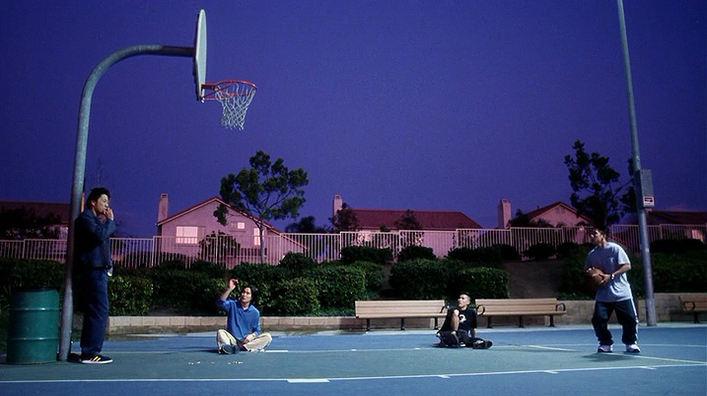
“Breaking Fast” is a modest but engaging queer film to be appreciated for several good reasons. While it is essentially your average conventional romantic comedy film, the movie colors its familiar plot with interesting cultural elements via its gay Muslim hero, and you will probably find yourself alternatively amused and intrigued by that. Above all, its hero’s unexpected romance at the center of the story is genuinely touching despite a number of plot contrivances during its predictable third act, and we certainly come to root for him a lot even while recognizing the clichéd aspects of the ending.

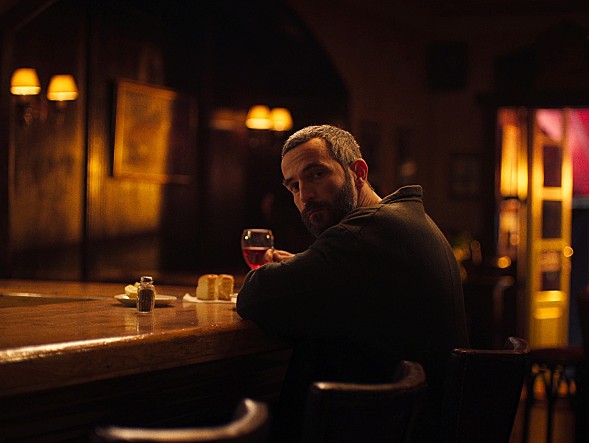
During the opening scene, the movie shows one big annual family event held at the residence of Mo (Haaz Sleiman), a gay Arab American doctor who has worked in LA for several years. As a devout Muslim, Mo certainly values the Ramadan period during which he and many other Muslims fast during daytime and then eat evening meal, which is known as iftah, after sunset, and the last evening of Ramadan period has been a very important time for him and his dear family members, who have always come to his residence for having the hearty last iftah together.

However, not long after he cheerfully brings pieces of traditional bread to his family waiting for him at his residence, Mo gets a disagreeable news from his boyfriend Hassan (Patrick Sabongui), who has not come out of his closet yet in contrast to Mo. While he has avoided getting married to a woman as much as possible, Hassan eventually succumbs to the pressures from his family mainly due to being scared of getting his homosexuality exposed at any moment, and his eventual decision surely lets down Mo a lot.

After one year, Mo has not fully recovered from his breakup with Hassan, so his best friend Sam (Amin El Gamal), who is incidentally your typical flamboyant gay character, attempts to cheer him up a little. He invites Mo to his upcoming birthday party, and Mo reluctantly agrees to go there, though he is not going to stay long there once he and others celebrate Sam’s birthday together.

However, Mo finds himself staying a little longer than expected when he comes across a hunky Caucasian dude named Kal (Michael Cassidy), who is also incidentally not so interested in having a fun time at the party. When Mo is about to leave the place, he encounters Kal by coincidence, and then they come to walk outside together for a while. As they talk more with each other, Mo finds himself attracted to Kal, and Kal is also clearly drawn to Mo, especially after they share their common enthusiasm toward a certain famous comic book hero.

After this brief romantic moment which is cut short by his reluctance, Mo does not expect to meet Kal again, but, what do you know, he later comes across Kal again at his workplace, and he is certainly delighted when Kal is willing to have nightly iftars with him. As the son of an American soldier who spent lots of time in Jordan during his childhood years, Kal is quite familiar with Ramadan, and he surely respects Mo’s religious devotion – and how that does not clash at all with being a gay.

As the days and nights of Ramadan pass by, Mo and Kal become closer to each other than before, but, of course, there come a series of conflicts arising between them. While it turns out that Kal has his own private issues he does not want to talk about, Mo comes to realize the considerable gap between him and Sam, who has a bitter viewpoint on religion unlike Mo and sharply points out Mo’s blind spots during a rather artificial argument scene later in the story.

During the third act, the screenplay by director/writer Mike Mosallam, which is expanded from his 2015 short film of the same name, juggles a bit too many elements together before the expected resolution at the end of the story, but this weak aspect is compensated by the considerable humor and sensitivity brought into the story and characters. A number of private moments between Mo and Kal are warm and intimate even though they stick to abstinence due to the Ramadan rules, and we also get a few uproarious moments including the scene where Mo tries to handle an embarrassing circumstance in front of Kal without breaking any of those Ramadan rules.

Above all, the movie depends a lot on the good low-key chemistry between its two main cast members. Haaz Sleiman, who was memorable as one of the principal characters in Tom McCarthy’s “The Visitor” (2007), gives an earnest performance which imbues his rather clean-cut hero with sincerity and personality, and he and Michael Cassidy, who holds his own place well beside Sleiman, click well with each other right from the beginning. Although his supporting character often feels like a broad caricature, Amin El Gamal enlivens the screen whenever he enters, and Patrick Sabongui is commendable in his brief but substantial appearance in the film.

In conclusion, “Breaking Fast” does not break any new ground in its genre territory, but it is still fairly good on the while in addition to distinguishing itself to some degree via specific cultural background and details. Yes, it is always interesting to observe people different from me, and, in my inconsequential opinion, the movie did that well besides being moving and entertaining.

Posted in Movies | Tagged , , , | Leave a comment

Shiva Baby (2021) ☆☆☆1/2(3.5/4): Her accumulating troubles at a shiva

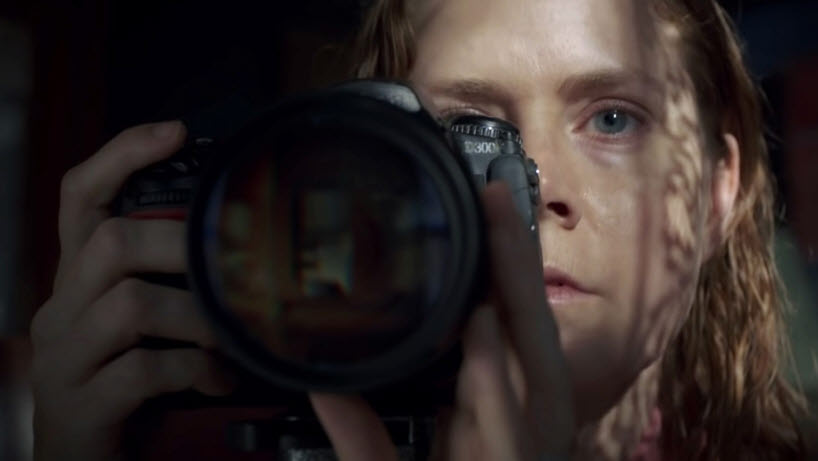
Emma Seligman’s debut feature film “Shiva Baby” is often sharply and painfully funny to say the least. Mainly revolving around one young woman who suddenly finds herself in a very awkward situation during one Jewish ritual meeting full of neighbors and relatives, the movie deftly goes up and down along with its heroine during its rather short running time (77 minutes), and it is surely a rare comic gem I am willing to revisit for appreciating many deliciously humorous moments which did drew lots of giggles and chuckles from me during my viewing.

At the beginning, we are introduced to a young American Jewish woman named Danielle (Rachel Sennott), who is a senior college student and has also been a ‘sugar baby’ for some older man. Right after having another private time with that dude in his Manhattan apartment, Danielle hurriedly joins her parents for attending the shiva for a distant relative of theirs who recently died. As she talks with her parents, we gradually come to gather how much she feels pressured by her parents, who have expected a lot from her while having no idea on what their daughter has been doing behind her back for earning some extra cash.

Before entering the house where the shiva is being held, Daniella’s mother Debbie (Polly Draper) repeatedly emphasizes to Daniella on how she must behave and present herself well in front of many relatives and neighbors attending the shiva, and, not so surprisingly, that turns out to be not that easy for Daniella due to the appearance of Maya (Molly Gordon), who was once her girlfriend during their high school period. Looking more confident compared to Daniella, Maya is willing to present more of her promising current status in front of those relatives and neighbors attending the shiva, and Daniella, who does not have many things to boast about in comparison, understandably feels like being inadequate whenever others ask her about how she has been during recent years.

However, there soon comes a bigger trouble for Daniella when her ‘sugar daddy’ unexpectedly comes to the shiva. To her astonishment, her father Joel (Fred Melamed) actually knows this guy, and we accordingly get a series of hilariously cringe-inducing moments as both Daniella and this guy come to learn more about each other thanks to Daniella’s parents, who talk quite a lot about Daniella as well as him while not noticing at all what Daniella and he are barely hiding behind their seemingly formal appearance.

Naturally, Daniella wants to get out of the house as soon as possible, but, to our amusement, she keeps getting stuck in the house. While noticing that there is something odd about their daughter’s behaviors, Joel and Debbie are constantly busy with talking with other attendees willing to talk a lot with them, and Daniella is also often held by a number of many different relatives and neighbors who are not that close to her but eager to ask her a lot nonetheless.

Around that narrative point where another crucial character enters the picture, the circumstance becomes more complicated for Daniella, who becomes more confused about her thoughts and feelings for now. As reflected by their brief private moment in an upstairs bathroom, she is willing to go a little further with her sugar daddy, but then she also finds herself attracted to Maya again, who turns out to have some feelings toward her despite several years of estrangement between them.

Except a couple of moments of some respite, Seligman’s screenplay, which is expanded from her 2018 short film of the same title, pushes its heroine into more difficulty and embarrassment to endure during the second half. I will let you see for yourself how the movie eventually reaches its arrival point, but I can tell you instead on how skillfully Seligman and her crew members dial up the comic tension around Daniella. While you may not be surprised by a certain inevitable moment around the end of the story, that moment and the following scenes are handled with precise timing and admirable subtlety, and I particularly like when the final shot of the movie quietly but touchingly presents a little peace of mind for our very unlucky heroine.

It helps that the movie is carried well by the strong performance from Rachel Sennott, who was also the lead performer of Seligman’s 2018 short film. While effortlessly embodying her character’s growing anxiety and insecurity, Sennott is believable in several sincere moments including the one where Daniella and her mother happen to have an opportunity for some honest conversation, and she firmly holds the center even while, as reflected by the frequently neurotic string score by Ariel Marx, everything looks more chaotic and nightmarish around her increasingly vulnerable character.

Sennott is also supported well by a number of solid supporting performers around her. While Molly Gordon is convincing in her character’s dynamic interactions with Daniella along the plot, Polly Draper and Fred Melamed have some juicy fun with their broad but colorful roles, and Danny Deferrari and Dianna Agron are also well-cast as two other substantial supporting characters in the story.

Overall, “Shiva Baby” is full of good comic moments to be savored, and Seligman makes an impressive feature film debut here while demonstrating well that she is a good filmmaker who knows how to handle story, mood, and characters well enough to engage and amuse us. In short, this is one of the funniest films of this year, and I think you really check it out as soon as possible.

Posted in Movies | Tagged , , | 1 Comment

Test Pattern (2019) ☆☆☆(3/4): The Night After

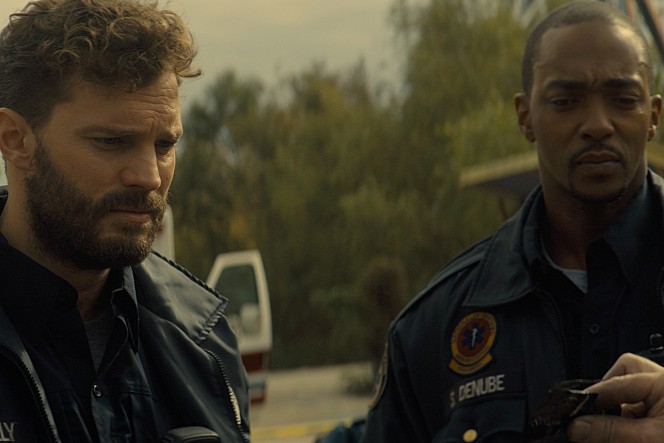
“Test Pattern” is undeniably compelling in its modest but harrowing presentation of race and gender issues. During its first half, it simply and sweetly observes the relationship development between two very different people, but its disturbing opening shot already showed us what will happen to this loving couple later, and the second half is often devastating as these two people struggle with anger, pain, and frustration in front of a system which, as many of you know, has often failed them and many others out there.

These two people in question are Renesha (Brittany S. Hall) and Evan (Will Brill), and the following scene after that unnerving opening shot shows us their accidental first encounter in Austin, Texas. While Renesha is having a fun time along with her several friends at a local bar, she happens to be noticed by Evan, and, after dancing a bit with her, he tentatively approaches to her later. Although both of them are considerably drunk and he is a total stranger to her, she gives him her phone number anyway, and that is the beginning of their romantic relationship. She soon invites him to her apartment, and it does not take much time for them to sense their mutual attraction as they interact more with each other.

Some time later, we see Renesha living with Evan at a house where he works as a tattoo artist while she works in some local non-profit organization outside. Maybe she gave up some of her initial career ambition, it is clear that she is passionate about her job, and Evan is certainly glad to hear that she has been recently promoted at her workplace, though he is not so willing to have a drinking time with her and her close female friend for celebration.

Anyway, Renesha ends up going to a bar only with her friend during that evening. Although she simply wants to talk with her friend while not drinking at all, the situation is changed when two white males approach to them. These two dudes are also having a celebratory drinking time, and, despite her initial reluctance, Renesha subsequently finds herself not only drinking a lot but also ingesting a certain kind of substance. As a consequence, everything looks quite blurry to her, and then one of these two guys takes her to a hotel room.

When she becomes less drunk, Renesha is confused and horrified to discover that she is on the bed with that guy. Although he acts as if nothing serious had happened between them and then takes her to her residence by his care later, her blurry fragments of memory indicate that she was sexually assaulted, and her body and mind belatedly take their slow steps toward recognition while she takes a bit of rest.

Once she becomes sober enough, Renesha tells her boyfriend about what happened at last night, and, while understandably quite angry and shocked, Evan willingly takes her to a nearby hospital for getting her examined as soon as possible, but then they find themselves stuck in a bureaucratic system which does not help them much from the beginning. For example, after waiting for more than two hours at that hospital, they are only told that they should go to the other hospital just because of the absence of a qualified specialist to handle her and a rape examination kit, and, this is quite infuriating to say the least, they are also demanded to pay more than one thousand dollar even though Renesha did not receive any help or treatment at all.

As time goes by without much process for them, we come to sense more strain on Renesha and Evan’s relationship. As a black female who is probably well aware of her disadvantaged social status due to race and gender, Renesha clearly discerns that there is nothing much she or her boyfriend can do in front of their increasingly frustrating situation, but she still cannot help but feel hurt by her traumatic experience behind her resigned but guarded attitude on the surface, and we are not so surprised when she eventually comes to show her anger and frustration during a certain brief moment later in the film. As a white male, Evan is baffled and exasperated to see his girlfriend not getting any proper treatment, and he becomes more determined to get her tested even though she suggests that they just go back to their home instead.

Never becoming blatant in its underlying social messages, the screenplay by director/writer/co-producer Shatrara Michelle Ford phlegmatically details its two main characters’ plight, and the result is sometimes as painful as Eliza Hittman’s “Never Rarely Sometimes Always” (2020). While cinematographer Ludovica Isidori did a commendable job of capturing the small nuances and details from the two main characters without being obtrusive at all, the score by Robert Ouyang Rusli is particularly effective when it uses a certain familiar piece of classic work as a counterpart to another moment of frustration for Renesha and Evan later in the story.

In addition to having a good chemistry between them on the screen during the first half, Brittany S. Hall and Will Brill are also believable in the growing conflict between their respective characters. Hall is especially good when Renesha finally starts to deal with her trauma around the end of the film, and Brill ably supports his co-star’s performance while bringing some casual charm and decency to his character.

On the whole, “Test Pattern” feels like an extended short film from time to time, but it still works powerfully during its quiet but strong moments, and we come to have more understanding and empathy on its two main characters’ respective emotional struggles. This is the first feature film from Ford (She previously made short film “Afro-Woman: 2016 CE” (2016), by the way), and I hope this will be the beginning of another interesting American female filmmaker to watch.

Posted in Movies | Tagged , | 1 Comment

The Courier (2020) ☆☆☆(3/4): One British businessman turned into a spy

“The Courier”, which was simply released as “The Spy” yesterday in South Korean theaters, is a modest but engaging drama which is based on one of many interesting real-life stories from the Cold War era. Mainly revolving around one ordinary man who happened to get himself involved into a highly risky espionage operation, the movie gives a series of suspenseful moments as expected from its genre, but it is also touching at times as observing what is developed between its hero and a man whom he reluctantly comes to work with.

The story of the movie, which is set in the early 1960s, begins with how a Russian colonel named Oleg Penkovsky (Merab Ninidze) comes to decide that he should risk his own life for saving not only his country but also the whole world. During that time, Nikita Khrushchev, who was the First Secretary of the Communist Party of the Soviet Union during that period, was quite willing to go further in the ongoing political conflict with US, and Penkovsky firmly believes that Khrushchev’s potentially disastrous political gamble must be stopped by any means necessary. While being as discreet as possible, he attempts to approach to CIA, and CIA, which is mainly represented by a CIA officer named Emily Donovan (Rachel Brosnahan) in the movie, is certainly excited to have a valuable source like Penkovsky, who can incidentally access to lots of classified information as a high-ranking military intelligence officer.

However, due to the recent arrest of one of their biggest assets in the Soviet Union, CIA should be really careful in establishing a correspondence line with Penkovsky, and that is where MI6 enters the picture. After talking a bit with MI6 officer Dickie Franks (Angus Wright), Donovan approaches to a fairly successful British businessman named Greville Wynne (Benedict Cumberbdatch), who, considering his business background associated with the Eastern Europe region, looks like an ideal mediator between them and Penkovsky. All he will have to do is forming a seemingly doubtless business relationship with Penkovsky in Moscow, and that will provide enough cover for Penkovsky when he later comes to London then meets Donovan and Franks in secret.

Understandably concerned about what may happen to him if things ever go wrong, Wynne is not very willing to go to Moscow and then meet Penkovsky, but he is eventually persuaded by Donovan, and then he finds himself getting involved into the situation more than expected. After having a secret meeting with Donovan and Franks, Penkovsky demands that Wynne should work as a courier for him, and Wynne reluctantly agrees to help Penkovsky more as being more aware of how the political situation between the Soviet Union and US is becoming more volatile day by day.

Anyway, Wynne soon gets accustomed to handling those small packages handed to him by Penkovsky, and, not so surprisingly, he comes to care about Penkovsky’s safety after getting to know him and his family, who has no idea on what he has been doing behind his back. Donovan promised that Penkovsky and his family will quickly and safely be sent away from the Soviet Union if he happens to be exposed, but there is no absolute guarantee on her promise, and both Penkovsky and Wynne become more nervous in front of the growing possibility of getting caught for their espionage activity.

In the meantime, Wynne’s frequent business trips to Moscow put considerable strain on his relationship with his wife Sheila (Jessie Buckley), who has a good reason for not trusting her husband’s words much. Even when clearly recognizing how much his wife has been exasperated and frustrated, Wynne has to keep hiding his national secret behind his back as before, and there inevitably comes a point where Sheila comes to decide that enough is enough.

During the last act which is involved with the Cuban Missile Crisis, the mood becomes a bit more intense than before, but Tom O’Connor’s screenplay does not hurry itself while not losing the focus on its two main characters. Although knowing well the consequence they are going to face in one way or another, both Wynne and Penkovsky try their best for each other to the end, and there is real human poignancy around the eventual end of their story.

Under the competent direction of director Dominic Cooke, the main cast members of the film are solid on the whole. While Benedict Cumberbatch, who also participated in the production of the movie as one of its several executive producers, gives another strong performance to watch, Merab Ninidze is equally compelling on the opposite position, and they ably convey to us the growing respect and care between their characters along the plot. In case of several other main cast members, Rachel Brosnahan and Angus Wright do as much as they can do with their respective functional characters, and Jessie Buckley, who has become more prominent since her breakthrough performance in “Wild Rose” (2018), imbues her rather thankless role with enough life and personality.

In conclusion, “The Courier” is sometimes predictable and familiar to the core, but and it is fairly entertaining enough for recommendation thanks to the skillful handling of mood, story, and characters. Although it does not aim that high, it accomplishes its mission in the end with some emotional resonance, so I will not grumble for now.

Posted in Movies | Tagged , , , | Leave a comment

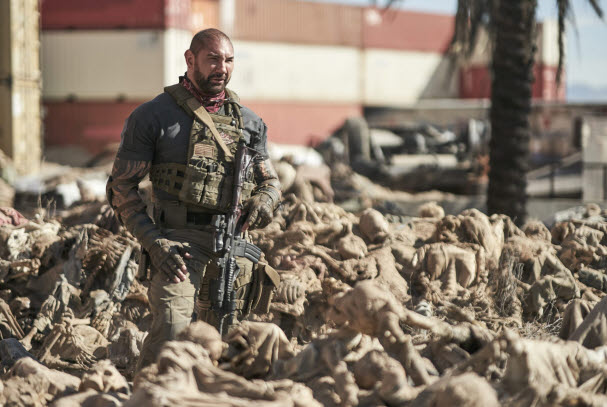
Stowaway (2021) ☆☆1/2 (2.5/4): Three astronauts and a stowaway

Netflix film “Stowaway”, which was released on last Thursday, attempts to do pretty familiar stuffs in the middle of the space. While it works to some degree thanks to its competent direction and the solid performances from its few main cast members, the movie does not bring anything particular new or refreshing to its genre territory in my humble opinion, and we simply come to watch its pedestrian plot trudging from one expected narrative point from another without enough care or attention.

At the beginning, the movie promptly establishes the premise surrounding its three astronaut characters: Marina Barnett (Toni Collett), David Kim (Daniel Dae Kim), and Zoe Levenson (Anna Kendrick). They have just begun their two-year mission to Mars, and the opening scene shows us how anxious they are during the launch of their spaceship. Things can go wrong at any point, and, not so surprisingly, there comes a trouble which may lead to the cancellation of their mission, but everything is eventually under control once they enter the space as planned and then begin their long journey toward Mars.

Under the command of Barnett, who will supervise the navigation of their spaceship, Levenson and Kim begin to focus on their respective scientific projects, and we observe some playful interactions between these three astronauts. Yes, they will surely miss the Earth a lot, but they have been trained and prepared a lot for their mission, and it seems that time will go well for everyone as long as they do their best as a team during next two years.

However, they come across a serious unexpected trouble even before their first day in the space ends. An unconscious man is found inside the spaceship, and he turns out to be an engineer worker named Michael Adams (Shamier Anderson). Neither the astronauts nor Adams knows how the hell his unconscious body happened to be inside the spaceship, and, to our frustration, the movie never delves into this mystery at all.

Anyway, the astronauts have no choice but to accept Adams as the fourth member of their team, and Adams is eager to help them as much as he can despite his lack of training and experience, though he misses a lot his younger sister left on the Earth. For example, he assists Kim’s ongoing plant research, and, as a former graduate student, I was amused a bit by when Kim and Levenson jokingly discuss on whether Kim should officially recognize Adams’ contribution on whatever he will publish after the mission.

Meanwhile, Barnett becomes more conflicted because she has been aware of one certain problem right from when Adams was discovered. At the time of its discovery, his unconscious body inadvertently damaged an important machine which removes carbon dioxide in the air inside the spaceship, and it subsequently becomes quite apparent to Barnett that there is no way to fix that machine. She surely tries to search for any alternative options as consulting with the mission control as well as Kim, but it seems that she and others in the spaceship will inevitably face the lethal possibility of carbon dioxide poisoning unless she and her two fellow astronauts resort to a certain drastic choice.

When Barnett eventually discusses with Kim and Levenson in private, Kim and Levenson respond to this bad situation differently. While Kim starts to reflect more and more on that drastic choice in question, Levenson strongly believes that they must go for any possible way to avoid that, and Barnett comes to decide that they should wait and try during next several days before making the final decision.

The screenplay by director Joe Penna and his co-write Ryan Morrison, who previously collaborated with Penna in “Arctic” (2018), tries to build up tension bit by bit after that narrative point, but it only comes to falter more while not going that far beyond our expectation. The situation for the main characters certainly gets worse with decreasing options for them, but this often feels contrived while accompanied with a series of trite character development moments, and we come to observe their situation from the distance even as recognizing what is being at stake for them.

Anyway, I appreciated several good aspects of the movie to some degree. Its special effects are fairly excellent on the whole, though I must tell you that the overall result will not blow your mind like “Gravity” (2013) or “Interstellar” (2014) did. While often fluidly moving around the characters in the movie, cinematographer Klemens Becker’s camera gives us several commendable visual moments, and I particularly like a gradually tense sequence unfolded outside the spaceship later in the story. In case of the four main cast members of the movie, Anna Kendrick, Toni Collette, and Daniel Dae Kim fill their rather thin roles with each own distinctive presence, and Shamier Anderson, a Canadian actor who is incidentally the older brother of Stephan James, holds his own place well among his more well-known co-performers.

In conclusion, “Stowaway” is not a total dud at all, but it is rather dissatisfying in terms of story and characters. Often becoming bored and disappointed during my viewing, my mind frequently went away to “Gravity” and many other recent space drama movies out there, and I assure you that you will not miss anything if you decide to watch any of them instead of this passable piece of work.

Posted in Movies | Tagged , , , | Leave a comment

My prediction on the 93rd Annual Academy Awards

The Oscar season of this year, which is understandably lengthened due to the ongoing COVID-19 pandemic, is probably the most leisurely one I have ever experienced during last 10 years. In last year, I was often exhausted as hurriedly checking out a bunch of Oscar contenders during only several weeks before the ceremony. In this year, I was a bit more relaxed than before while reviewing the Oscar contenders of this year one by one during a much longer period.

While the mood is relatively less exciting compared to when we watched the dramatic rise and subsequent triumph of “Parasite” in last year, there is still much room for excitement and tension nonetheless. It looks like “Nomadland” will win several awards including Best Picture and Best Director Oscar, but there are still considerable possibilities of upset by “The Trial of the Chicago 7” or “Minari”. In addition, several other major categories also turn out to be rather unpredictable, and, above all, the Best Actress Oscar race has been unexpectedly quite chaotic during last several weeks.

So, will “Nomadland” prevail as most of us predicted? Will Netflix, which gets heaps of works Oscar-nominated as before, finally win the Best Picture Oscar via “The Trial of the Chicago 7” besides winning several smaller awards? Will the Best Actress Oscar race lead to a really historical moment to watch in the end? I still cannot be that sure about everything, but, as usual, I give you my inconsequential Oscar prediction, and let’s have some fun with how much you can outguess me.

Best Picture
“The Father” (2020) David Parfitt, Jean-Louis Livi and Philippe Carcassonne
“Judas and the Black Messiah” (2021) Shaka King, Charles D. King and Ryan Coogler
“Mank” (2020) Ceán Chaffin, Eric Roth and Douglas Urbanski
“Minari” (2020) Christina Oh
“Nomadland” (2020) Frances McDormand, Peter Spears, Mollye Asher, Dan Janvey and Chloé Zhao
“Promising Young Woman” (2020) Ben Browning, Ashley Fox, Emerald Fennell and Josey McNamara
“Sound of Metal” (2019) Bert Hamelinck and Sacha Ben Harroche
“The Trial of the Chicago 7” (2020) Marc Platt and Stuart Besser

After winning Golden Globe, BFCA, DGA, PGA, and BAFTA, “Nomadland” has solidified its status as the front runner compared to the other nominees. Although “The Trial of the Chicago 7”, which won the SAG ensemble award in last month, may win at the last minute just like “Parasite” did in last year, but I do not think that will happen.

Prediction: “Nomadland”
Preference: “Nomadland”

Best Actor in a Leading Role
Riz Ahmed – “Sound of Metal” (2019)
Chadwick Boseman – “Ma Rainey’s Black Bottom” (2020)
Anthony Hopkins – “The Father” (2020)
Gary Oldman – “Mank” (2020)
Steven Yeun – “Minari” (2020)

Late Chadwick Boseman has been the front runner as winning Golden Globe, BFCA, and SAG, but Anthony Hopkins, who recently won BAFTA to our little surprise, may win.

Prediction: Chadwick Boseman
Preference: Riz Ahmed – and my salute to Chadwick Boseman and Anthony Hopkins

Best Actress in a Leading Role
Viola Davis – “Ma Rainey’s Black Bottom” (2019)
Andra Day – “The United States v. Billie Holiday” (2021)
Vanessa Kirby – “Pieces of a Woman” (2020)
Frances McDormand – “Nomadland” (2020)
Carey Mulligan – “Promising Young Woman” (2020)

This category turns out to be one of the few very unpredictable ones in this year. While Andra Day unexpectedly won Golden Globe, the movie is not so good enough to boost her chance. While Vanessa Kirby deservedly won the Best Actress award at the Venice International Festival, there has not been much buzz around her. While Viola Davis won SAG, the voters will probably focus more on honoring her deceased co-star’s last performance. While France McDormand won BAFTA, her fabulous performance is not that showy enough to get more votes on her side. While Carey Mulligan won BFCA, her opportunity has been decreasing during last several weeks. Considering that SAG is relatively more reliable than other awards, I will predict that Davis will win.

Prediction: Viola Davis
Preference: Frances McDormand

Best Actor in a Supporting Role
Sacha Baron Cohen – “The Trial of the Chicago 7” (2020)
Daniel Kaluuya – “Judas and the Black Messiah” (2021)
Leslie Odom Jr. – “One Night in Miami” (2020)
Paul Raci – “Sound of Metal” (2019)
Lakeith Stanfield – “Judas and the Black Messiah” (2021)

Daniel Kaluuya, who was electrifyingly magnetic in “Judas and the Black Messiah”, swept Golden Globe, SAG, BFCA, and BAFTA, so…

Prediction: Daniel Kaluuya
Preference: Paul Raci

Best Actress in a Supporting Role
Maria Bakalova – “Borat Subsequent Moviefilm” (2020)
Glenn Close – “Hillbilly Elegy” (2020)
Olivia Colman – “The Father” (2020)
Amanda Seyfried – “Mank” (2020)
Yuh-jung Youn – “Minari” (2020)

Although she was not nominated in case of Golden Globe, Yuh-jung Youn has been the front runner thanks to her triumph at BAFTA and SAG, but watch out for Glenn Close, who may finally win the award despite her not-so-acclaimed movie, or Maria Bakalova, who is the best thing in “Borat Subsequent Moviefilm”.

Prediction: Yuh-jung Youn
Preference: Yuh-jung Youn

Best Director
Thomas Vinterberg – “Another Round” (2020)
David Fincher – “Mank” (2020)
Lee Isaac Chung – “Minari” (2020)
Chloé Zhao – “Nomadland” (2020)
Emerald Fennell – “Promising Young Woman” (2020)

Chloé Zhao won numerous awards besides Golden Globe, BAFTA, BFCA, and DGA, so….

Prediction: Nomadland
Preference: Nomadland

Best Original Screenplay
“Judas and the Black Messiah” (2021): Screenplay by Will Berson, Shaka King; Story by Will Berson, Shaka King, Kenny Lucas, Keith Lucas
“Minari” (2020): Lee Isaac Chung
“Promising Young Woman” (2020): Emerald Fennell
“Sound of Metal” (2020): Screenplay by Darius Marder, Abraham Marder; Story by Darius Marder, Derek Cianfrance
“The Trial of the Chicago 7” (2020): Aaron Sorkin

“Promising Young Woman” and “The Trial of the Chicago 7” have competed with each other during last several months, and I think the former will win considering its victory at WGA, BAFTA, and BFCA.

Prediction: “Promising Young Woman”
Preference: “Minari”

Best Adapted Screenplay
“Borat Subsequent Moviefilm” (2020): Screenplay by Sacha Baron Cohen, Anthony Hines, Dan Swimer, Peter Baynham, Erica Rivinoja, Dan Mazer, Jena Friedman, Lee Kern; Story by Sacha Baron Cohen, Anthony Hines, Dan Swimer, Nina Pedrad
“The Father” (2020) Christopher Hampton and Florian Zeller
“Nomadland” (2020) Chloé Zhao
“One Night in Miami” (2020) Kemp Powers
“The White Tiger” (2021) Ramin Bahrani

“Nomadland” may win in the end, but I think it will go to “The Father”

Prediction: “The Father”
Preference: “The Father”

Best Film Editing
“The Father” (2020): Yorgos Lamprinos
“Nomadland” (2020): Chloé Zhao
“Promising Young Woman” (2020): Frédéric Thoraval
“Sound of Metal” (2019): Mikkel E.G. Nielsen
“The Trial of the Chicago 7” (2020): Alan Baumgarten

The award usually goes to the busiest one, so it will be a competition between “Sound of Metal” and “The Trial of the Chicago 7”, which is likely to win considering that it recently won ACE.

Prediction: “The Trial of the Chicago 7”
Preference: “Sound of Metal”

Best Cinematography
“Judas and the Black Messiah” (2021): Sean Bobbitt
“Mank” (2020): Erik Messerschmidt
“News of the World” (2020): Dariusz Wolski
“Nomadland” (2020): Joshua James Richards
“The Trial of the Chicago 7” (2020): Phedon Papamichael

I think “Nomadland” will win, but watch out for “Mank”, which recently won ASC.

Prediction: “Nomadland”
Preference: “Nomadland”

Best Original Score
“Da 5 Bloods” (2020): Terence Blanchard
“Mank” (2020): Trent Reznor, Atticus Ross
“Minari” (2020): Emile Mosseri
“News of the World” (2020): James Newton Howard
“Soul” (2020): Trent Reznor, Atticus Ross, Jon Batiste

“Soul” has been the unbeatable front runner during last several months.

Prediction: “Soul”
Preference: “Da 5 Bloods”

Best Original Song
“Fight for You” from “Judas and the Black Messiah (2021): Music by H.E.R. and Dernst Emile II; Lyric by H.E.R. and Tiara Thomas
“Hear My Voice” from “The Trial of the Chicago 7” (2020): Music by Daniel Pemberton; Lyric by Daniel Pemberton and Celeste Waite
“Húsavík” from “Eurovision Song Contest” (2020): Music and Lyric by Savan Kotecha, Fat Max Gsus and Rickard Göransson
“Io Si (Seen)” from “The Life Ahead” (2020): Music by Diane Warren; Lyric by Diane Warren and Laura Pausini
“Speak Now” from “One Night in Miami” (2020): Music and Lyric by Leslie Odom, Jr. and Sam Ashworth

“Speak Now” will win, but watch out for “Húsavík”.

Prediction: “Speak Now”
Preference: “Speak Now”

Best Production Design
“The Father” (2020): Production Design: Peter Francis; Set Decoration: Cathy Featherstone
“Ma Rainey’s Black Bottom” (2020): Production Design: Mark Ricker; Set Decoration: Karen O’Hara and Diana Stoughton
“Mank” (2020): Production Design: Donald Graham Burt; Set Decoration: Jan Pascale
“News of the World” (2020): Production Design: David Crank; Set Decoration: Elizabeth Keenan
“Tenet” (2020): Production Design: Nathan Crowley; Set Decoration: Kathy Lucas

This is the category where “Mank” will definitely win.

Prediction: “Mank”
Preference: “Mank”

Best Costume Design
“Emma.” (2020): Alexandra Byrne
“Mank” (2020): Trish Summerville
“Ma Rainey’s Black Bottom” (2020): Ann Roth
“Mulan” (2020): Bina Daigeler
“Pinocchio” (2019): Massimo Cantini Parrini

“Ma Rainey’s Black Bottom” has been the front runner here, so…

Prediction: “Ma Rainey’s Black Bottom”
Preference: “Emma.”

Best Makeup and Hairstyling
“Emma.” (2020): Marese Langan, Laura Allen, Claudia Stolze
“Hillbilly Elegy” (2020): Eryn Krueger Mekash, Patricia Dehaney, Matthew Mungle
“Ma Rainey’s Black Bottom” (2020): Sergio Lopez-Rivera, Mia Neal, Jamika Wilson
“Mank” (2020): Kimberley Spiteri, Gigi Williams, Colleen LaBaff
“Pinocchio” (2019): Mark Coulier, Dalia Colli, Francesco Pegoretti

Again, “Ma Rainey’s Black Bottom” has been the front runner here, so…

Prediction: “Ma Rainey’s Black Bottom”
Preference: “Pinocchio”

Best Sound
“Greyhound” (2020): Warren Shaw, Michael Minkler, Beau Borders and David Wyman
“Mank” (2020): Ren Klyce, Jeremy Molod, David Parker, Nathan Nance and Drew Kunin
“News of the World” (2020): Oliver Tarney, Mike Prestwood Smith, William Miller and John Pritchett
“Soul” (2020): Ren Klyce, Coya Elliott and David Parker
“Sound of Metal” (2019): Nicolas Becker, Jaime Baksht, Michelle Couttolenc, Carlos Cortés and Phillip Bladh

There is no doubt on this category at all.

Prediction: “Sound of Metal”
Preference: “Sound of Metal”

Best Visual Effects
“Love and Monsters” (2020): Matt Sloan, Genevieve Camilleri, Matt Everitt and Brian Cox
“The Midnight Sky” (2020): Matthew Kasmir, Christopher Lawrence, Max Solomon and David Watkins
“Mulan” (2020): Sean Faden, Anders Langlands, Seth Maury and Steve Ingram
“The One and Only Ivan” (2020): Nick Davis, Greg Fisher, Ben Jones and Santiago Colomo Martinez
“Tenet” (2020): Andrew Jackson, David Lee, Andrew Lockley and Scott Fisher

I think “Tenet” will win.

Prediction: “Tenet”
Preference: “Tenet”

Best Animated Feature Film
“Onward” (2020): Kori Rae and Dan Scanlon
“Over the Moon” (2020): Peilin Chou, Glen Keane and Gennie Rin
“A Shaun the Sheep Movie: Farmageddon” (2019): Will Becher, Paul Kewley and Richard Phelan
“Soul” (2020): Pete Docter and Dana Murray
“Wolfwalkers” (2020): Tomm Moore, Stéphan Roelants, Ross Stewart and Paul Young

Again, there is not any doubt on this category.

Prediction: “Soul”
Preference: “Wolfwalkers”

Best International Feature Film
“Another Round” (Denmark) (2020): Directed by Thomas Vinterberg
“Better Days” (Hong Kong) (2020): Directed by Derek Tsang
“Collective” (Romania) (2019): Directed by Alexander Nanau
“The Man Who Sold His Skin” (Tunisia) (2020): Directed by Kaouther Ben Hania
“Quo Vadis, Aida?” (Bosnia and Herzegovina) (2020): Directed by Jasmila Žbanić

“Another Round” has been the front runner here, and its Best Director nomination surely helps that.

Prediction: “Another Round”
Preference: “Quo Vadis, Aida?”

Best Documentary Feature
“Collective (2019): Alexander Nanau and Bianca Oana
“Crip Camp” (2020): Nicole Newnham, Jim LeBrecht and Sara Bolder
“The Mole Agent” (2020): Maite Alberdi and Marcela Santibáñez
“My Octopus Teacher” (2020): Pippa Ehrlich, James Reed and Craig Foster
“Time” (2020): Garrett Bradley, Lauren Domino and Kellen Quinn

“My Octopus Teacher” won PGA and BAFTA, so…

Prediction: “My Octopus Teacher”
Preference: “Time”

Best Documentary Short Subject
“Colette” (2020): Anthony Giacchino and Alice Doyard
“A Concerto Is a Conversation” (2021): Ben Proudfoot and Kris Bowers
“Do Not Split” (2020): Anders Hammer and Charlotte Cook
“Hunger Ward” (2020): Skye Fitzgerald and Michael Scheuerman
“A Love Song for Latasha” (2019): Sophia Nahli Allison and Janice Duncan

All of the nominees are pretty good, and I think the award will go to “A Love Song For Latasha”.

Prediction: “A Love Song for Latasha”
Preference: “Do Not Split”

Best Live-Action Short Film
“Feeling Through” (2019): Doug Roland and Susan Ruzenski
“The Letter Room” (2020): Elvira Lind and Sofia Sondervan
“The Present” (2020): Ossama Bawardi and Farah Nabulsi
“Two Distant Strangers” (2020): Travon Free and Martin Desmond Roe
“White Eye” (2019): Shira Hochman and Tomer Shushan

“Two Distant Strangers” will probably win despite being the weakest one in the bunch, but watch out for “The Letter Room”.

Prediction: “Two Distant Strangers”
Preference: “The Letter Room”

Best Animated Short Film
“Burrow” (2020): Michael Capbarat and Madeline Sharafian
“Genius Loci” (2020): Adrien Mérigeau and Amaury Ovise
“If Anything Happens I Love You” (2020): Michael Govier and Will McCormack
“Opera” (2020): Erick Oh
“Yes-People” (2020): Arnar Gunnarsson and Gísli Darri Halldórsson

I only watched “Burrow”, “If Anything Happens I Love You”, and “Yes-People”, and “If Anything Happens I Love You” is the best one in the bunch.

Prediction: “If Anything Happens I Love You”
Preference: “If Anything Happens I Love You”

Posted in Movies | Tagged | Leave a comment

Lingua Franca (2019) ☆☆☆(3/4): An intimate transgender immigrant drama

I always cherish movies showing and transporting us into the lives of different people, and “Lingua Franca”, which was released on Netflix in US in last August, is one of such good movies. Mainly revolving around the urban daily life and struggle of its transgender immigrant heroine, the movie comes to us as an intimate character drama frankly and sensitively dealing with gender identity and several other social issues, and it is alternatively heartbreaking and poignant to see her fragile and uncertain life.

After the calm and quiet opening scene showing the beginning of another day in a Russian Jewish neighborhood of Brooklyn in New York City, the movie phlegmatically depicts how a Filipina transgender immigrant named Olivia (Isabel Sandoval) earns her living via working as a live-in caregiver for an old lady named Olga (Lynn Cohen). Because she has been on the early stage of dementia, Olga often needs to be reminded of where she is now, and Olivia tactfully handles Olga with care and attention in addition to maintaining the status quo in Olga’s small but cozy residence.

So far, taking care of Olga has provided considerable stability to Olivia’s life, but we soon come to see how unstable Olivia’s life actually is. Because of that shocking political rise of Donald J. Trump and the following social ramifications in US, the situation becomes quite more dangerous for Olivia and many other immigrants, and she is often afraid of the possibility of getting suddenly arrested and then sent back to the Philippines. She managed to get some American dude to marry her and then help her getting a green card, but then it turns out that there is a passport problem involved with her gender transition, and that certainly frustrates her a lot.

Meanwhile, there comes another person into Olga and Olivia’s daily life, and that person in question is Olga’s grandson Alex (Eamon Farren), who starts to stay in Olga’s residence while trying to get employed at his uncle’s butcher shop. As an alcoholic who has been recovering since a certain big legal problem of his, this lad is willing to make a fresh clean start for his life, but he still cannot say no when one of his friends suggests that he should drink along with others, and, of course, that consequently leads to another regretful morning for him.

Anyway, he tries to take care of his grandmother alone while Olivia is absent, but Alex soon comes to see how hard and difficult the job really is, so he comes to depend more on Olivia, who generously provides him some guidance and support while also finding herself slowly attracted to him. At one point, she simply watches him reading an old letter for his grandmother, but a series of closeup shots clearly convey to us her thoughts and feelings at that point, and we are not so surprised when we later see her quietly lusting after him alone in private.

In case of Alex, he also becomes attracted to Olivia while not knowing her gender identity at all. When he approaches to her more actively, Olivia does not reject him at all, but she becomes conflicted about whether she should be more honest with him. As getting to know more of her unstable social status, Alex shows more sympathy toward Olivia, and it looks like she finally gets a chance for settling permanently in US, but she hesitates because, well, she cares about him as much as he loves her.

Now this looks like a typical setup for melodrama, but the movie sticks to its low-key tone as usual. While occasionally emphasizing how the situation has been getting worse out there for Olivia and many other immigrants due to those deplorable and heartless immigration policies of the Trump administration, the screenplay by director/writer/co-producer Isabel Sandoval, a Filipina transgender filmmaker who also edited the movie besides playing the heroine of the film, keeps focusing on its heroine’s daily life, and we are reminded more of how it can be suddenly turned upside down at any chance.

And we also see how Olivia’s unexpected romance with Alex provides some precious comfort to her. As they become more serious about their relationship than expected, Alex even considers marrying her right now for solving her current trouble once for all, but it is apparent to us that he does not have much thought on their subsequent married life. In case of Olivia, she is certainly happy to be with Alex, and she later has a sweet romantic moment with him while “Smoke Gets in Your Eyes” is being played in the background, but she still hesitates on what to do with her relationship with Alex.

The ending of the movie is a bit too ambiguous in my humble opinion, but it is presented well with admirable restraint, and Sandoval carries the film well with her earnest lead performance while also supported well by a small group of supporting performers surrounding her. Besides having a nice chemistry with Sandoval on the screen, Eamon Farren is convincing as a flawed but decent young man trying his best for pulling himself together, and Lynn Cohen, who incidentally died in last February, holds her own small place as another substantial supporting character in the film.

In conclusion, “Lingua Franca” is a modest but solid piece of work to be admired and appreciated for its sensitive storytelling in addition to its honest and thoughtful handling of social issues. Although it initially requires some patience from you because of its rather slow narrative pacing, the movie is a rewarding experience on the whole, and you will never forget its heroine after it is over.

Posted in Movies | Tagged , , | Leave a comment

Yes, God, Yes (2019) ☆☆☆(3/4): The little sexual awakening of one Christian girl

“Yes, God, Yes” is a little coming-of-age comedy film which turns out to be more considerate and thoughtful than you may expect from its very title. While surely generating some good laughs from its adolescent Christian heroine’s gradual sexual awakening, the movie also regards her and several other figures around her with some understanding and tolerance, and we come to smile a bit as she becomes a little more opened to life and sex in the end.

At the beginning, the movie, which is incidentally set around the late 1990s, quickly establishes the religiously conservative environment surrounding Alice (Natalia Dyer). a plain Catholic high school girl who has dutifully and exemplarily followed the rules and commandments of her Catholic church since her childhood years. While she and many other students frequently hear from their teachers on why they must stick to sexual abstinence before getting married, Alice is still curious about sex from time to time just like many other adolescent boys and girls around her age, and there is a small amusing moment when she happens to receive a naughty photograph via the Internet. She does not know much about sex, but she cannot help but look at that photograph with curiosity and fascination, and she even tries an online chat with someone willing to have a salacious conversation with her.

Meanwhile, there comes an unexpected trouble to her on one day. Before they go to her school together, Alice’s best friend informs Alice that there is a dirty rumor about Alice, and it soon turns out that everyone in the school knows the rumor, which is incidentally about what allegedly happened between Alice and one of male students in the school during one evening party. Although nothing much happened between them at that time as a matter of fact, everyone believes that she did ‘tossing the salad’ for that boy, and she is utterly flabbergasted as she does not even know what ‘tossing the salad’ really means.

Because the movie already explained to us the meaning of that phrase at the very beginning, we surely get some little laughs from Alice’s absurd plight, but the movie never overlooks how much her school life is affected by that mean rumor. Unlike that male student, Alice is frequently ridiculed by many other students, and her teachers also become less friendly to her. As a result, she comes to feel more guilty about sex and desire than before, and that is the main reason why she goes to a school retreat, where she and other students can spend four days under the spiritual guidance of Father Murphy (Timothy Simons) and several model students working under him.

As Alice begins her first day at the school retreat along with a number of other students including her best friend, she sincerely hopes that she will find some answer and guidance during next four days, but, not so surprisingly, that turns out to be not so easy at all. That rumor is still attached to her as usual, and she is even demanded to confess during her private interview with Father Murphy, who can be your average casual dude but firmly sticks to his religious belief and principles nonetheless. Furthermore, there is a hunky male student whose certain physical aspect arouses Alice’s sexual desire right from their first official encounter, and she is certainly filled with more guilt and fear as thinking more of him.

It is not much of a spoiler to tell you that Alice comes to discover what some of other characters in the story have been hiding behind their supposedly exemplary appearance, but the screenplay by director/writer Karen Maine, which is based on her 2017 short film of the same name, never goes for cheap laughs. While it can be said that many of supporting characters revolving around Alice are more or less than broad Christian archetypes, the movie does not ridicule or judge them at all, and their hypocrisy amusingly reminds us again of how religions have pathetically failed to control and suppress human nature for many years.

Around the end of the story, our heroine is surely confused and disillusioned a lot, but then the movie leads her into a certain place she never knew before. While still not having any idea on what this place really is, she happens to come across a middle-aged woman who was once a girl not so different from her, and their following conversation becomes quite touching as that lady imparts some valuable life lessons to Alice.

As the center of the film, Natalia Dyer, who has been mainly known for her supporting performance in Netflix drama series “Stranger Things”, balances her performance well between comedy and drama, and she is believable in her character’s gradual emotional maturation along the story, Although nothing much is changed around Alice on the surface, we can sense how much she is changed after her emotional journey, and it is both funny and moving to see how she becomes more comfortable with her burgeoning sexuality in addition to being more serious about the life ahead of her. In case of several supporting cast members in the film, they fill their roles with some life and personality, and Timothy Simons is particularly effective in his certain brief scene with Dyer around the end of the story.

“Yes, God, Yes” is the first feature film directed by Maine, who was one of the writers behind short film “Obvious Child” (2009) and its 2014 feature film version. Considering how the story and characters are succinctly and effectively handled within very short running time (78 minutes), she is a competent filmmaker to say the least, and it will be interesting to see what may come next from her in the future.

Posted in Movies | Tagged , , , | Leave a comment

The Man Who Sold His Skin (2020) ☆☆1/2(2.5/4): A refugee who becomes, uh, art

“The Man Who Sold His Skin”, which was nominated for Best International Film Oscar in last month, tries to balance itself between two very different plot elements. At first, it begins as a serious refugee drama, and then it enters the absurd world of European artwork business along with its refugee hero, and the overall result is rather uneven despite several good moments oscillating between humor and pathos.

Yahya Mahayni, who received the Best Actor award when the movie was shown at the Horizontal section of the Venice International Film Festival in last year, plays a Syrian guy named Sam Ali, and the first act of the film shows us how Sam ended up being stuck in Beirut, Lebanon during several years. In 2011, things became unstable in Syria due to the Arab Spring, but Sam was not concerned much because he was simply happy to be with his lover Abeer (Dea Lian). Although Abeer was expected to marry someone much more promising compared to Sam, that did not dissuade Sam at all from pursuing her more, and they eventually came to have an impromptu public engagement on a train.

However, Sam happened to make a bad choice of word while expressing his irrepressible bliss and excitement in front of other passengers, and that subsequently gets him into a very serious trouble. Although he manages to avoid the worst shortly after arrested by the police for that, it goes without saying that he must leave his country as soon as possible, so he escaped to Lebanon after notifying Abeer on his departure in advance.

Some time later, Sam is now staying somewhere in Beirut while earning his meager living via sexing chicks (Yes, this instantly took me back to the similar scenes in Lee Isaac Chung’s recent Oscar-nominated film “Minari” (2020)), and he has been quite frustrated with his current status. Although he sometimes contacts with his family as well as Abeer, he still cannot go back to Syria as the circumstance becomes more dangerous due to the ongoing civil war, and Abeer already moved to Brussels, Belgium shortly after marrying that promising dude. He surely wants to meet her again despite that, but he does not have a visa for entering Belgium, which is quite difficult to get for him considering his current status as a refugee without any support or vouch.

And then there comes an unlikely chance to Sam on one day. When he is gleaning some food for the attendees at a posh art exhibition, he happens to be noticed by a renowned artist named Jeffrey Godefroi (Koen De Bouw), and Godefroi and his artwork dealer Soraya Waldy (Monica Bellucci) propose to Sam a rather weird offer. In exchange of a special visa for him to enter Belgium in addition to a considerable amount of money, Godefroi is going to use Sam as a living artwork, and all Sam will have to do is getting tattooed on his back by Godefroi and then letting himself being exhibited in museums and galleries.

Sam initially declines this offer, but then, of course, he comes to change his mind after reminded of how hopeless his current status has been. What Godefroi wants from him does not seem to be particularly demanding or humiliating, and, most of all, he cannot possibly say no to an opportunity to reunite with Abeer at last. Once the deal is done between him and Godefroi, Sam is quickly taken away from Beirut, and Godefroi is quite ready to work on Sam’s back.

What follows next is a series of absurd moments not so far from Oscar-nominated Swedish film “The Square” (2017). Like that film, “The Man Who Sold His Skin” also has some fun with how silly and outrageous things can be in the world of artwork business, and the main source of humor in the film comes from how Sam is often treated like as an artwork to be exhibited or traded instead of a real human being. Godefroi and Waldy eagerly present Sam and his tattooed back as an artistic statement on the current refugee issues, and they are certainly excited when the exhibition of Sam’s tattooed back draws lots of attention from collectors and art dealers while also drawing the anger and fury from a group of refugees.

You may think this is too absurd to be plausible, but the screenplay by director/writer Kaouther Ben Hania was actually inspired by a similar living artwork by Wim Delvoye, who incidentally appears briefly as a minor supporting character in the film. Yes, Delvoye really exhibited a guy having Delvoye’s tattoo design on his back, and, like Sam in the film, that guy in question is contractually obliged to spend a certain amount of time for exhibitions.

The movie would be more entertaining for us if it pushed its satirical elements further, but it instead focuses more on its serious social issue while our hero comes to reconsider his Faustian deal, and that is where it begins to falter. Although Mahayni dutifully carries the film well on his back, his engaging performance is often limited by a number of blunt plot contrivances during the last act, and the other main cast members including Dea Liane, Koen De Bouw, and Monica Bellucci are mostly stuck in their thankless roles.

On the whole, “The Man Who Sold His Skin” does not work that well despite the rich potentials for satire and social commentary in its story and characters. In my consequential opinion, the movie is the weakest Best International Film Oscar nominee of this year, but it does draw my attention at least, and I hope its director will soon move onto better things to come.

Posted in Movies | Tagged , , | 1 Comment

Pinocchio (2019) ☆☆1/2(2.5/4): The creepy and bizarre version of a famous fairy tale

Matteo Garrone’s latest film “Pinocchio” is creepy and bizarre without much sense of fun and enchantment. While it is quite impressive to say the least in technical aspects (It was recently nominated for Best Costume and Best Makeup Oscar, by the way), the movie also looks deliberately dry and pale to the core, and we only come to observe its story and characters from the distance without much care or attention, despite our common knowledge of a famous Italian fairy tale on which it is based.

In the beginning, we see how its young eponymous hero is created by an old carpenter named Geppetto (Roberto Benigni, who dials down his rambunctious comic persona a bit here in this film). While he is going through another mundane life of his shabby daily life, Geppetto happens to encounter a puppet theater troupe, and, after getting a glimpse on those puppets, he promptly decides to make a puppet for himself. Fortunately, a piece of wood which seems to be imbued with some magic comes handy to him, and we soon see him diligently carving that piece of wood into a little human figure.

In the middle of this process, Geppetto comes to sense that there is indeed something special about his latest work, and, what do you know, his half-finished work comes to recognize and then speak to him when its head part is almost completed. Joyous at this outcome, Geppetto proudly and loudly announces the ‘birth’ of his son all around his village, and his “son” is named, of course, Pinocchio (Federico Ielapi).

Geppetto is surely ready to do everything he can do for raising Pinocchio, but, sadly, it turns out that, despite his sincere affection, he is not a very good father for Pinocchio mainly due to his sloppy mind. He clumsily tries to send Pinocchio to a local school, but he does not discern at all that Pinocchio’s mind is attracted to something else instead. Although he is supposed to go to the school as his father told him, Pinocchio goes to see the latest show from that puppet theater troupe instead, and it does not take much time for him to get noticed by not only a bunch of puppets doing the show on the stage but also their big grumpy owner, who instantly takes Pinocchio away from the village.

And that is the beginning of a series of unfortunate adventures of our little wooden hero. While he manages to get away from the owner of the puppet theater troupe after appealing to that guy’s better side a bit, Pinocchio subsequently gets involved with a couple of scoundrels, who are clearly the personified versions of two animal characters in the original story. Despite the sensible advice from another personified character in the story (Guess who that is), Pinocchio lets himself exploited by these two deplorable scoundrels, and he eventually comes to face a very dire circumstance which may be a little too disturbing for little children.

Fortunately, Pinocchio has a magical guardian to save him from this and several other troubles into which he gets later in the story, and that character in question is none other than the Fairy with Turquoise Hair, who is initially played by Baldari Calabria when she looks like a little girl and then played by Marine Vacth when she later reveals her true self to Pinocchio. While having lots of patience with many unwise choices and behaviors of Pinocchio, the Fairy with Turquoise Hair surely has some lessons to be learned by him, and we accordingly get that infamous moment involved with his nose at one point.
Pinocchio seems to keep those lessons in his mind, but, just like many other characters in moral fairy tales, he soon goes astray as before. When he comes upon a chance to have a fun somewhere outside the village, he does not hesitate at all, and the movie surely serves us another grotesque moment as our little wooden hero belatedly realizes what kind of trouble he gets himself into, though I must point out that this moment is not so memorable as what is shown in the 1940 Walt Disney animation film version. In case of the latter, I was amused a lot even while recognizing its creepy aspects. In case of the former, I was just mildly disturbed even though admiring a bit of the technical efforts shown from the screen.

Needless to say, the movie is admirable for its top-notch production qualities, but the screenplay by Garrone and his co-writer Massimo Ceccehrini often lags and trudges in its glacial narrative. Even at the narrative point where Pinocchio finally meets his father again inside some hideous giant fish, the movie does not provide much fun on the whole, and the expected finale feels too long as it tries to confirms to us that our little wooden hero finally comes to learn how he can be good enough to be a real boy (Is this a spoiler?).

Anyway, despite its failure to engage me, “Pinocchio” works to some degree as a distinctive version of the familiar fairy tale, and you may like it more than me if you enjoyed Garrone’s “Tale of Tales” (2015), which I somehow admired a bit more for a number of striking images which are as morbid and gruesome as what I saw from “Pinocchio”. To be frank with you, I am very interested in watching its behind-the-scene documentary for getting to know more of how Garrone and his crew members handled its commendable technical aspects, but, seriously, I have doubts on whether young audiences will enjoy it. Sure, kids are not that easily disturbed these days, but they will probably become bored and impatient during their viewing instead of being excited and enchanted, and I would rather recommend them and their parents the 1940 Walt Disney animation film version instead.
Posted in Movies | Tagged , | 1 Comment