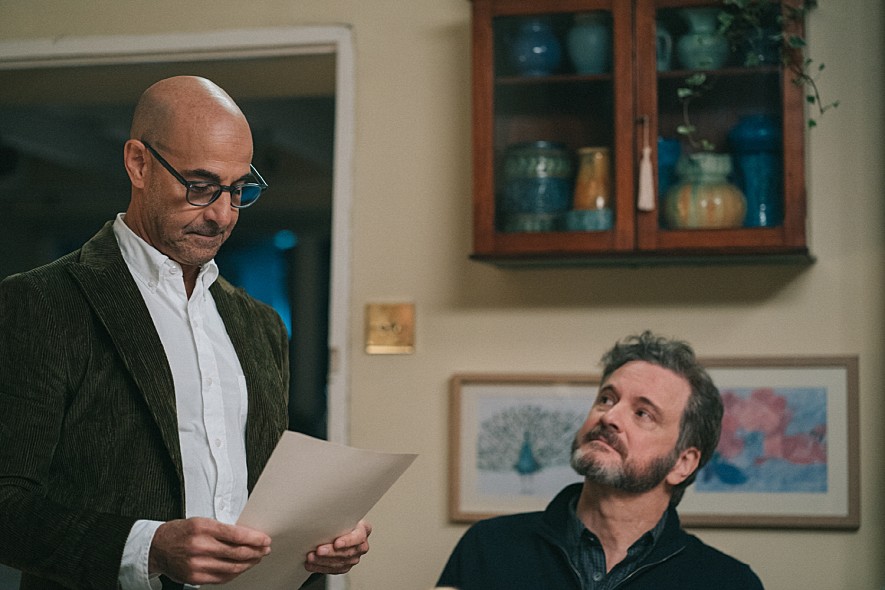
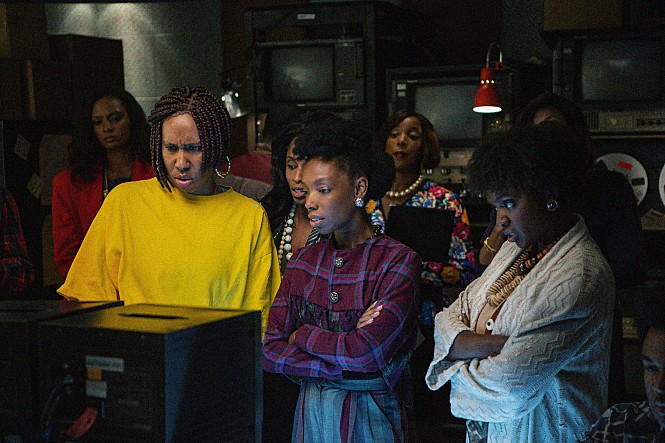
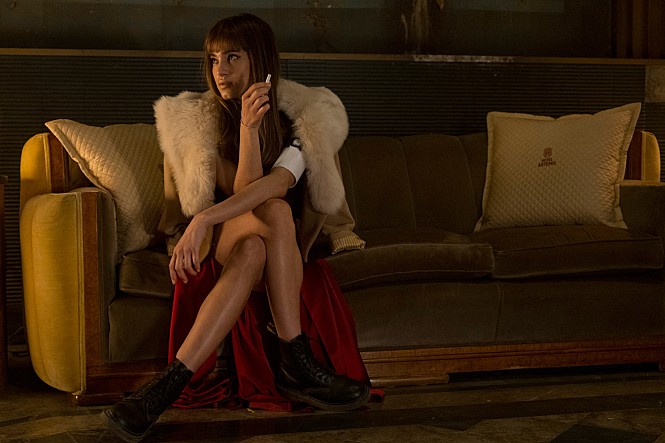
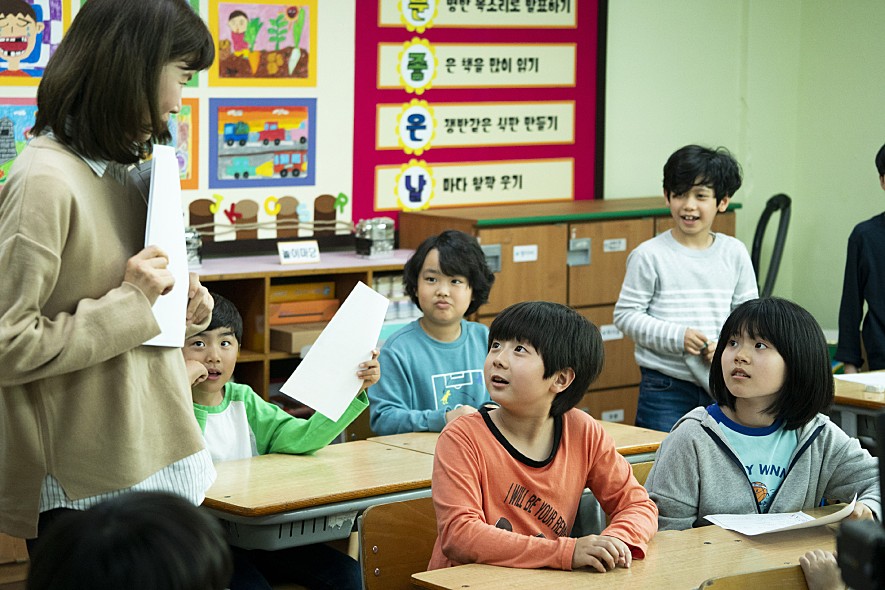
She Dies Tomorrow (2020) ☆☆☆(3/4): Before tomorrow comes

“She Dies Tomorrow” is very convincing and thought-provoking in handling its rather preposterous story premise. While it takes some time in building up its story and characters during its first part, it eventually comes to us as quite an engaging and fascinating rumination on those familiar matters of life and death, and I admire how deftly and touchingly it pulls off that without any fatal misstep to disrupt its exquisite mood and narrative. 

At first, we are introduced to a young woman name Amy (Kate Lyn Sheil), and the movie shows us how things have been quite depressing for her. Although she has just moved to a new house while looking forward to having a fresh new start for her life, she is apparently moody and depressed, and, not so surprisingly, she later turns out to be on the verge of falling back to her alcoholism.

Anyway, the mood seems to be brightened up a little when Amy’s artist friend Jane (Jane Adams) drops by Amy’s house for checking her out before going to her sister-in-law’s birthday party, but then Amy tells something odd and disturbing to Jane. For some unknown reason, Amy firmly believes that she is going to die tomorrow, and Amy understandably tries to be reasonable with her friend for a while, but, no matter how much her friend tries, Amy remains quite sure that the end is approaching right now.

Quite flabbergasted by her friend’s seemingly insane conviction on the impending end, Jane returns to her home and then works on her latest project for a while, and then there comes a mysterious happening upon her. After that, she also comes to believe that the end will occur on the very next day, and she phlegmatically talks about that when she subsequently attends her sister-in-law’s birthday party.

Jane’s brother Jason (Chris Messina) and his wife Susan (Katie Aselton) are naturally caught off guard by what Amy tells them and their two party guests, but, what do you know, these four people also soon find themselves becoming quite sure that the end is near. Once they have an experience to similar to Jane’s, Jason and Susan are overwhelmed by the feeling and knowledge of the impending end, though, like Amy and Jane, they do not exactly know how the end will come to not only them but also their adolescent daughter, who also becomes emotionally overwhelmed as much as them. 

And we gradually come to gather how contagious this inexplicable happening of feeling and knowing the approaching end really is. Later in the story, Jane goes to a hospital for getting more hint on how the hell she will die tomorrow, and a doctor assigned to her becomes quite devastated once he gets ‘infected’ while talking with her. In case of Amy, she decides to be a little more active than before, so she comes to try driving a dune buggy, but then the mood becomes depressing as before when she comes to transmit her feeling and knowing of the impending end to one supporting character in the story.

While observing more of what is happening to the characters in the film, you will naturally come to wonder whether it is simply a sort of mass hysteria or actually a real omen for what will inevitably happen in the end, but the director/co-producer/writer Amy Seimetz, who previously made a feature film debut with “Sun Don’t Shine” (2012), wisely avoids any cheap explanation, and it instead delves deeper into its baffling story promise. Under Seimetz’s skillful direction, whatever is felt by the characters in the film is constantly palpable to us, and the dry but peculiar mood surrounding them is further accentuated by the score by Mondo Boys. As a result, even while having more doubts on their mysterious circumstance, we come to accept their serious attitude to that, and their human reactions are sometimes unexpectedly touching to us.   

One of my favorite moments in the film comes from two supporting characters in the story, who, after getting ‘infected’, come to face how superficial their relationship has been during last several months. Ironically, their shared belief in the impending end makes them more honest and caring to each other, and it is poignant to watch them peacefully spending some time together as the day they have been dreading is beginning.

After subtly building up its emotional narrative, the movie eventually reaches to its arrival point as expected, but then it finds an unexpected way to sidestep our expectation. I will let you see that for yourself, but I can tell you instead on how much that depends on the convincing acting of Kate Lyn Sheil, who holds the center well while also supported well by several other cast members including Jane Adams, Chris Messina, Katie Aselton, Jennifer Kim, Josh Lucas, and Tunde Adebimpe, whom I still fondly remember for his warm and decent supporting performance in late Jonathan Demme’s “Rachel Getting Married” (2008).

Overall, “She Dies Tomorrow” is a solid genre piece which accomplishes its modest goals fairly well, and I enjoyed Seimetz’ thoughtful handling of mood, story, and performance. As watching the key scenes in the film, I found myself musing a lot on my life and its inevitable end, and that led me to some thoughts on how I should live the remaining years of my life. So far, it looks like I will not die tomorrow at least, and I am grateful that there is still more time for me to watch more movies and write more reviews.

Posted in Movies | Tagged | Leave a comment

The Power (2021) ☆☆1/2(2.5/4): Her first night shift

“The Power” is a little spooky horror film shrouded in creepy darkness. While it has several effective moments to be appreciated, the movie often falters in case of handling its two different kinds of horrors in addition to being hampered by its thin narrative and weak characterization, and that is a shame considering its relevant main subjects which have drawn more of our attention during last several years.

The story of the movie is mainly set in one big hospital of East London in early 1974. At that time, the conflict between the British government and striking miners led to the nocturnal electricity cutoff in the city, and that is not a good thing at all for a young nurse named Val (Rose Williams), who has been afraid of darkness due to some childhood trauma which is vaguely presented to us during the opening scene.

After having another bad dream, Val tries to calm herself a bit because she is about to begin her first day in the aforementioned hospital, which turns out to be not an ideal workplace for her right from the beginning. While her direct supervisor is frigid and strict to say the least, several other nurses in the hospital do not provide much comfort or support to her, and most of those doctors in the hospital do not pay much attention to her because, well, she is way below their rank just like other nurses.

At least, there is one doctor who seems to be open to Val’s thoughts and opinions, but, unfortunately, their brief conversation only leads to more troubles for Val when her supervisor happens to see that. As an old-fashioned matron who firmly believes in rules and boundaries, her supervisor does not approve of Val’s casual interactions with that doctor at all, and Val soon finds herself assigned to cleaning the ward for child patients and then forced to do a night shift during the following night. She is certainly worried and scared due to her fear of darkness, but she has no choice but to do whatever is demanded to her because she does not want to give any more bad impression to others during her first day at the hospital.

As the day is being over, darkness comes into the hospital much earlier than Val expected, and, to make matters worse, a section where she and a few other nurses who are supposed to do their respective night shifts is locked up from the outside. She naturally becomes more terrified and nervous than before, and we soon see her tentatively walking along dark hospital corridors with a small oil lamp in her hand.

While Val manages to get accustomed to her night work a bit, it seems to her that there is something sinister lurking somewhere inside the hospital, and that gradually unnerves her. While those few other nurses in the hospital do not take Val’s growing anxiety that seriously, it looks like a small Indian orphan girl, who has been one of child patients in the hospital, has also been aware of whatever Val is sensing at present. Nevertheless, she is not so willing to tell Val on what has exactly scared her, probably because of her mistrust on others around her in the hospital or her rather limited ability to speak English.

Of course, the mood becomes all the more disturbing as the night goes on, and director/writer Corinna Faith and her crew members continue to push us and Val into more terror and creepiness as expected. There is a tense and frightening moment unfolded in a certain space inside the hospital, and we see how that comes to resonate with those traumatic childhood memories of Val. No matter how much she tries to repress her hurtful memories, they keep coming back to her, while amplified further by whatever is hiding somewhere inside the hospital.

As we naturally come to wonder about the reliability of Val’s increasingly unstable viewpoint, the movie subsequently shifts itself a bit onto the viewpoints of a few other substantial characters around Val including that Indian girl, but the outcome is not so successful due to deficient storytelling and characterization. While these supporting characters are under-developed on the whole, what is eventually revealed during the last act is not so particularly surprising because we already saw that coming even during the first act (Hint: just look at a certain poster on a wall), and the finale is rather weak compared to what has been built up during the rest of the film.

At least, a number of competent aspects of the movie compensate for its weak elements to some degree. Thanks to cinematographer Laura Bellingham, the movie is constantly filled with uneasy murkiness from the beginning to the end, and its small group of performers do as much as they can for filling their broad archetype characters. While Rose Williams ably conveys to us her character’s accumulating fear and anxiety, several other main cast members including Emma Rigby, Gbemisola Ikumelo, and Diveen Henry are well-cast in their respective supporting roles, and young performer Shakira Rahman brings some life and personality to her functional character.

In conclusion, “The Power” will surely make you reflect on the multiple meanings of its very title in the end, but it does not work well enough on the whole despite its palpable spooky atmosphere and some other good stuffs. This is not a bad horror film at all, but it could be better in terms of story and characters in my trivial opinion, and I am only left with dissatisfaction instead of being entertained by it.

Posted in Movies | Tagged , , | Leave a comment

Let Them All Talk (2020) ☆☆☆(3/4): A delightful cruise movie from Steven Soderbergh

Steven Soderbergh’s new film “Let Them All Talk”, which was released on HBO Max in last December, simply enjoys being with a small number of colorful characters during its leisurely transatlantic cruise. On the surface, the movie seems to be just observing whatever is happened or exchanged among them, it constantly engages us thanks to its sharp writing, skillful direction, and enjoyable performances, and you will probably come to overlook its few notable shortcomings during the last act.

The screenplay by Deborah Eisenberg mainly revolves around Alice Hughes (Meryl Streep), an acclaimed middle-aged female novelist who has apparently struggled with her writer’s block as reflected by the very first scene of the film. For many years, Alice published a number of well-received novels including the one which actually garnered her a Pulitzer Prizes some years ago, but it looks like she has passed her prime at present, and she has also been pressured a lot by her publishing company, which has expected a lot from whatever she is writing at present.

During her meeting with Alice, Karen (Gemma Chan), who recently became her new literary agent after the predecessor’s departure, tries to check out whether Alice is really writing something good enough to excite her as well as the publishing company, but Alice remains taciturn as usual, and their conversation eventually moves onto the latest literature prize to be received by Alice in London. Because of some health condition of hers, Alice does not want to go to London by airplane for receiving that prize in question, so Karen suggests a transatlantic crossing between New York City and Southampton via the ocean liner Queen Mary 2, and Alice reluctantly accepts this suggestion.

However, Alice decides not to go alone by herself, and she makes rather unusual choices on her cruise companions. She contacts with her two old college friends with whom she has not corresponded that much during last three decades, and Roberta (Candice Bergen) and Susan (Diane Wiest) are understandably perplexed by the invitation from their old friend, though they all agree to accompany her while enjoying some luxuries during the cruise.

Another person chose by Alice is none other than Alice’s young nephew Tyler (Lucas Hedges), who is also not so particularly close to his aunt either. He is surprised again when he is approached by Karen, shortly after he and her aunt and her two friends get on the Queen Mary 2. Assuming that Alice will probably continue to work on her new novel, Alice wants someone close enough to spy on Alice, and Tyler certainly looks like the right guy for this little job. Although he is not so eager at first, Tyler eventually agrees to spy on his aunt, and we subsequently get a little amusing moment as Tyler tentatively tries to get any hint from her aunt.

Anyway, it looks like Alice still does not find any good idea for handling whatever she is writing at present, and her mind seems to be drifting elsewhere from time to time. Whenever she is not chatting with her friends and nephew, she usually walks around here and there in the ship unless she spends some time in the swimming pool, and we come to sense something between her and a guy who happens to be around her more than once.

In the meantime, Susan and Roberta spend their free time in each own way, and Roberta is willing to try anything for meeting anyone who may get interested in having a relationship with her. As shown from the first scene of the film, Roberta has struggled a lot to support herself since her divorce with her rich ex-husband, and she also strongly believes that Alice used her old private life as a source of inspiration for that Pulitzer-winning book of hers, which was incidentally used as an evidence against Roberta during her subsequent divorce suit.

Because it is possible out that Alice’s current project is something to follow after that Pulitzer-winning book, Roberta naturally becomes more pissed off than before. Although Alice still does not talk much about her current project, it seems that she brought her two friends just for getting any bit of inspiration from them and their lives, and that eventually leads to Roberta’s blatant demand for the recognition and apology from Susan.

As still cheerfully gliding from one episodic moment to another, Eisenberg’s screenplay gets a bit thickened via some other plot elements. There is a possible romantic subplot between Tyler and Karen, and we also get some small laughs from the frequent appearance of a popular mystery writer, whom both Roberta and Susan prefer over some obscure 19th century writer to be introduced by Alice during a special literature event on the ship.

Although things get less interesting as the mood becomes suddenly rather melodramatic during the final act, Soderbergh, who also shot and edited the film for himself under pseudonyms as usual, keeps things afloat under his slick and competent direction, and his main cast members are apparently enjoying themselves on the screen. While Meryl Streep is much better than her shrill comedy performance in “The Prom” (2020), Diane Wiest and Candice Bergen remind us again of how wonderful they still are, and Lucas Hedge and Gemma Chan hold each own place well around these three great actresses.

In conclusion, “Let Them All Talk” is another small but efficient work from Soderbergh, who has steadily been going his own way during last two decades since winning the Best Director Oscar for “Traffic” (2000), The overall result is not that great, but it is still fairly commendable nonetheless, and I am willing to enjoy this richly entertaining cruise movie again.

Posted in Movies | Tagged , , , | 1 Comment

Quo Vadis, Aida? (2020) ☆☆☆1/2 (3.5/4): A harrowing Bosnian war drama

Bosnian film “Quo Vadis, Aida?”, which was recently nominated for Best International Film Oscar, is an unforgettable war drama which takes us into one of the most tragic incidents in the Bosnian War. As told to us at the beginning of the movie, the story itself is partially fictional, but what inevitably happens during its finale did occur in real life as some of you may remember, and that is the main reason why the urgent personal drama at the center of the movie feels all the more harrowing to us.

Mainly set in and around Srebrenica, a Bosnian city located near the border between Bosnia and Serbia, the movie initially shows us how dangerous and desperate the situation has been in July 1995 for many Bosniak Muslim civilians in Srebrenica including Aida Selmanagić (Jasna Đuričić), a middle-aged female schoolteacher who has recently worked as a translator at a nearby UN Peacekeeping Army camp. As the soldiers of the Serbian Army led by General Ratko Mladić (Boris Isaković) are about to take over the city even though the city is declared as a safe zone by the UN, Aida and the mayor of the city are quite concerned to say the least, so they go to the camp and then meet its commander for getting any assurance on their safety, but the commander, Colonel Thom Karremans (Johan Heldenbergh), only emptily repeats that there will be airstrikes on the Serbian Army if it ever attempts to invade the city.

Needless to say, both Aida and the mayor have no faith on that at all, and it later turns out that even the commander has been pretty skeptical about that as having been quite frustrated with the incompetence and inaction of his superiors in the UN. Although he and his UN Peacekeeping soldiers are supposed to protect the city and its endangered civilians, they have not been authorized yet to do anything besides holding their position as usual, and they even have not received enough supplies for maintaining their camp during last several months.

Well aware that the UN Peacekeeping Army will not do much for protecting the city, General Mladić and his Serbian soldiers eventually begin to invade Srebrenica, and that consequently leads to lots of panic and chaos in the city. Many of Bosniak Muslim civilians hurriedly try to leave the city, and they all go to the UN Peacekeeping Army camp for safety and protection, but not all of them are allowed to enter the camp as the maintenance and protection of the camp come first for Colonel Karremans and his soldiers. As a result, thousands of civilians have no choice but to stay outside the camp, and they are all more scared and terrified as the Serbian soldiers are ready to go for them after taking over the city.

Because her dear husband and one of their two sons happen to be stuck outside the camp just like many others, Aida desperately tries to bring them into the camp by any means necessary, but she only comes to discern more of how the situation has become a lot direr for not only the refugees outside the camp but also the ones inside the camp. The ones inside the camp are relatively safer in comparison, but then they come to see that the UN Peacekeeping Army is not so reliable when Colonel Karremans lets a bunch of Serbian soldiers into the camp, and that certainly drives them into more terror and desperation.

When General Mladić, who comes to look more insidious and deplorable in his superficially jovial attitude, later proposes an evacuation plan for the refugees, Colonel Karremans, who cares a bit about what he is supposed to do, certainly knows too well what his opponent and those Serbian soldiers will eventually do, but, again, there is really nothing he and his men can do about that except stepping back from the situation. Unlike many other characters in the film including Aida, both Colonel Karremans and General Mladić are actually real-life figures, and I must confess that I was relieved to learn later that the latter was captured in 2011 and then incarcerated for his war crimes in 2017.

In the meantime, Aids tries harder for finding any possible way out for her family, but she is reminded again and again of how helpless she really is. As a UN employee, she has been certainly protected right from the beginning, but her family continues to be stuck in an increasingly gloomy status along with many other refugees, and it only becomes more apparent to her that there is not much hope for all of them at all, regardless of how much she keeps trying. As the heart and soul of the film, Jasna Đuričić’s earnest performance is simply heartbreaking at times, and several other main cast members including Izudin Bajrović, Boris Isaković, and Johan Heldenbergh are also effective in their respective supporting roles.

Even during the inevitable finale, the movie sticks to its phlegmatic attitude, but it never overlooks the horror of what occurred in Srebrenica during that time, and it has several restrained but undeniably chilling moments which are more than enough for conveying to us the horrific aspects of that incident. The following epilogue feels a bit too long in my humble opinion, but the screenplay by director/writer/co-producer Jasmila Žbanić still sticks to its calm position as before, and then there comes a hauntingly poignant moment which will linger on your mind for a while.

Overall, “Quo Vadis, Aida?” works as a sincere and powerful remembrance to its important historical subject, and you will find yourself shaken up a lot by a number of emotionally intense moments in the film. In my consequential opinion, this is one of the best films I saw during this year, and I wholeheartedly urge you to get a chance to watch it as soon as possible.

Posted in Movies | Tagged , , , | 2 Comments

Moffie (2019) ☆☆1/2(2.5/4): A rough military gay drama set in South Africa, 1981

South African film “Moffie”, whose very title is derogatory Afrikkans for homosexual, does not present much attitude to its intriguing main subjects, and that was often frustrating for me during my viewing. As a movie about a certain type of white male experience in South Africa during the early 1980s, it surely draws our attention from the beginning, but it merely presents its story and characters without enough depth and insight to hold our attention, and that is a disappointment considering how it could be more interesting with its distinctive local background and details.

The movie, which is set in 1981, initially gives us a bit of historical background information. As the white minority government of South Africa came to have a military conflict with the communist government of Angola on their border, it became mandatory for all of the able-bodied white South African males between the age of 17-60 to go through a two-year military service, and Nicholas van der Swart (Kai Luke Brummer), the adolescent hero of the movie, is no exception. Before leaving for a military training camp, he has a celebratory dinner with his mother and her current husband, and we later get a little amusing moment when his divorced father surreptitiously gives him an adult magazine to be enjoyed in private later.

Right from when he gets on a train to take him and many other teenage trainees to their military training camp, Nicholas soon comes to see how hard and difficult things can be for him during next two years. As your average introverted adolescent kid, he does not like much the rowdy and drunken mood among other teenage trainees, and there is a nasty moment as he (and we) witnesses a number of his fellow trainees viciously harassing some black guy at a station by which their train happens to drop for a few minutes.

When Nicholas and his fellow trainees finally arrive at the camp, they are instantly slapped with harsh and brutal treatments from their drill instructors, who relentlessly hurl many kinds of insults toward them just like that no-hold-barred drill instructor character in the first half of Stanley Kubrick’s “Full Metal Jacket” (1987). For example, they are forced to take off all the clothes for medical examination procedures, and their drill instructors certainly do not overlook any single chance to humiliate and insult them.

After that point, the movie goes through a number of rough military training scenes along with its hero, who surely suffers a lot but manages to endure day by day. Although he still looks like a quiet loner in the bunch, he is not totally alone at least as befriending some nerdy lad who gradually becomes his best friend at the camp, and you may be amused to see them singing together a certain forbidden song which will probably remind you of Oscar-winning documentary “Searching for Sugar Man” (2012).

Meanwhile, the movie gradually lets us sense more of Nicholas’ homosexuality, which is slyly emphasized to us as the camera phlegmatically looks at his colleagues’ naked bodies during their routine shower time. It goes without saying that homosexuality is not tolerated at all under the extremely masculine environment surrounding him, and he becomes more guarded than before when two trainees happen to be savagely punished and humiliated after getting caught for their homosexual interaction.

Nevertheless, Nicholas cannot help himself at all when one of his fellow trainees tentatively approaches to him at one cold wet night in the middle of another grueling training session of theirs. Both of them remain to be discreet as much as possible after having a little romantic time together, but then Nicholas finds himself becoming quite anxious and agonized when his secret lover is suddenly gone later in the story.

Instead of developing its hero’s anxiety and agony further, the screenplay by director Oliver Hermanus and his co-writer Jack Sidey, which is based the autobiographical novel of the same name by Andre Carl van der Merwe, abruptly moves onto a military operation into which Nicholas and other trainees are put after the training period, and that is where the movie becomes less interesting than before. Although we get to know a bit more about Nicholas and his repressed homosexuality, he is still more or less than a blank figure onto the homophobic mood and environment of the South African military is projected, and the expected moment between him and his lover around the end of the story is frustratingly ambiguous without much impact.

As a gay South African filmmaker of color, Hermanus certainly could provide outsider’s viewpoint on the story of his film, but he adamantly sticks to his dry and dispassionate storytelling approach throughout the movie, while also having it confined within the rather insular viewpoint of its white male South African hero. While Nicholas is sometimes ridiculed by his fellow trainees for his British heritage, that is inarguably nothing compared to what millions of black South Africans suffered and endured everyday during that period, and you may be bothered by the constant marginalization of black South Africans in the movie, which is understandable considering its story and background but can be grating to you from time to time.

On the whole, “Moffie” is a curious piece of work which brings some fresh elements to its queer drama territory, but it is also thin and shallow in terms of story and characters. I did not feel like wasting my time during my viewing, but the overall result only reminds me of several better military queer films including Claire Denis’ “Beau Travail” (1999), and, to be frank with you, I would rather recommend them first.

Posted in Movies | Tagged , , , | Leave a comment

Way Back Home (2019) ☆☆☆(3/4): When a past returns to her

South Korean independent film “Way Back Home” is a quiet and sensitive drama which speaks volume in many wordless moments. Calmly observing how its ordinary heroine’s daily life is shaken by the return of one terrible incident in her past, the movie subtly and tentatively depicts her resulting emotional struggle beneath the surface, and we eventually come to understand and empathize more with her troubled state of mind as she slowly steps forward to the possibility of hope and healing.

During the opening part, we get to know the current status of Jeong-won (Han Woo-yun) and her dear husband Sang-woo (Jun Suk-ho). Several years ago, they met each other via her uncle running a carpentry shop where he works, and it is clear to us that they have lived pretty well together as we watch them preparing to move into a house where Sang-woo’s parents once lived. They still feel like newlyweds although it has been two years since they married, and Jeong-won’s uncle and aunt, who took care of her after she left her rural hometown, are certainly pleased to see their niece having a fairly good and happy married life.

And then there comes an unexpected phone call to Jeong-won on one day. It is from a local police station, and she is notified that a man who sexually violated her around 10 years ago was finally arrested. Understandably quite disturbed by this news, Jeong-won also becomes very conflicted because she has never told her husband about this incident of hers, and it does not take much time for him to notice something odd about his wife.

At least, Jeong-won has her aunt and uncle, who understand her situation well because that incident was the very reason why she was sent to them during that time. Because they do not have any children between them, Jeong-won has been pretty much like a daughter to them, and they are surely ready to give her some emotional support while hoping for the possible closure for her.

In contrast, Jeong-won does not interact well with her own mother due to many years of estrangement. When her mother happens to drop by her workplace, their interactions feel strained to say the least, and, for a reason to be revealed later in the story, Jeong-won is also not so enthusiastic about meeting her younger sister again, who is now a high school student preparing for her college entrance examination and will probably stay at Jeong-won’s residence around the time of her college entrance examination.

As the police re-open and then re-examine her case, Jeong-won cannot hide her past incident anymore from her husband, and Sang-woo is certainly caught off guard as a result. Not so sure about what he should do for his wife, Sang-woo attempts to learn more of the case, and, not so surprisingly, that inadvertently hurts Jeong-woo’s feelings. As she flatly says to her husband at one point, talking about that terrible incident is the last thing she wants to do for now, and, as a caring husband, Sang-woo respects her wish even though he becomes more baffled and frustrated than before.

Jeong-won subsequently tries to go through her daily life as usual, but, of course, that turns out to be much more challenging than she thought at first, and the movie quietly but palpably conveys to us her growing emotional instability while not resorting to any cheap melodramatic tactic. Although her phlegmatic face does not signify to us much, we can clearly sense the psychological turmoil behind it, and we later get a small but striking moment when she suddenly finds herself thrown back into an old memory from the past.

Discreetly moving from one narrative point to another, the screenplay by director/writer Park Sun-joo gradually builds up the emotions swirling around its heroine and few other characters, and it is poignant to see how it leads them to several small but touching moments during its last act. As opening herself more to her younger sister, Jeong-won comes to realize that she is not the only one damaged and tormented by that incident, and that is followed by a hopeful moment of reconnection between them around the end of the story. After they become more honest about how they are respectively feeling now, Jeong-won and her husband’s relationship becomes more solid that before with more mutual affection and understanding, and she is reminded again that she did marry a good man.

The main cast members of the movie are convincing in their unadorned acting. While Han Woo-yun serenely and steadily holds the center as required, Jun Suk-ho, Yoo Jae-myung, Yeom Hye-ran, Oh Min-ae, and Jung Da-eun have each own moment around Han, and Jung is particularly wonderful as a girl who is as confused and conflicted as her older sister.

In conclusion, “Way Back Home”, which is incidentally Park’s first feature film (She previously edited several notable South Korean independent films including “The End of April” (2016) and “February” (2017), by the way), is a plain but engaging human drama, and its main issue is certainly relevant considering the prevalent gender insensitivity in the South Korean society. While it may be a bit too dry and slow for you at first, its tentative emotional journey is worthwhile to watch nonetheless, and you may find yourself reflecting more on helping and supporting survivors like Jeong-won.

Posted in Movies | Tagged , , , | Leave a comment

The United States vs. Billie Holiday (2021) ☆☆(2/4): She suffered and suffered….

Lee Daniels’ latest film “The United States vs. Billie Holiday”, which was released on Hulu in this February, is utterly trite and disappointing in many aspects. While surely intended to be a sincere tribute to the life and career of one of the greatest African American singers in the 20th century, the movie unfortunately does not have provide much insight or empathy on the long and miserable plight of its real-life human subject, and the overall result is depressingly unpleasant and mediocre despite having one of the most notable breakthrough performances of this year.

After giving us some brief historical background of its story at the beginning, the movie instantly moves onto how things were quite hard and difficult for Billie Holiday (Andra Day) in 1947. While she was quite popular and famous as one of the best blues singers in US around that time, she caused considerable noises as often singing a certain song about the horror of Southern lynching upon African Americans, and that accordingly turned her into a target to be investigated and cornered by FBI, who surely had lots of stuffs to be used against her due to her long history of drug addiction.

Ordered by a high-ranking FBI official named Harry J. Anslinger (Garrett Hedlund), an African American agent named Jimmy Fletcher (Trevante Rhodes) approaches to Holiday as a young World War II veteran, and Holiday and her inner circle members soon let him into their world just because she happens to be interested in this dashing dude. Although she is currently married, that is not much of a problem to both her and her present husband because he mostly cares more about getting a bit of whatever she will earn, and we later come to learn that she has also been particularly quite close to a well-known actress named Tallulah Bankhead (Natasha Lyonne) (As some of you know well, she was once rumored to be the main source of inspiration for Bette Davis’ unforgettable heroine in “All About Eve” (1950)).

While it seems that Fletcher is also attracted to Holiday despite believing that arresting and then sending her to jail is the right thing to do for his boss’ ongoing war against drug, the situation is turned upside down as she is finally arrested with incriminating evidences on her drug abuse. Holiday certainly feels betrayed after belatedly coming to learn of who Fletcher really is, and then she is sentenced to more than one year of incarceration at her following trial.

In the meantime, though he receives some good words from his boss, Fletcher becomes conflicted about whether he is actually on the right side, and then he is ordered to approach to Holiday again not long after she is eventually released. Due to losing her license to perform at clubs and cabarets in New York City, she has no choice but to perform here and there around the country, and she and her colleagues are naturally followed by Fletcher, who is soon welcomed again into their world despite what he did to her.

As Fletcher comes to know more about Holiday and then care more about her, the screenplay by Suzan-Lori Parks, which is based on Johann Hari’s nonfiction book “Chasing the Scream: The First and Last Days of the War on Drugs”, tries to develop emotions between Holiday and Fletcher, but it often falters and stumbles due to its scattershot storytelling and weak characterization. As trying to handle numerous incidents in Holiday’s life and career within 2-hour running time, Parks’ screenplay ends up merely scratching the surface, and it does not generate any genuine sense of life and personality to be felt from Holiday and several other main characters including Fletcher. As a result, the subsequent romance between Holiday and Fletcher feels contrived at best and gratuitous at worst, and, to make matters worse, Fletcher remains more or less than a functional plot element without much human quality or motivation to discern.

As he previous did in his several works including “Precious” (2009), Daniels attempts to bring some bold style and energy to lift and spice up the story and characters, but, sadly, his efforts only lead to more distraction and annoyance. For example, the deliberately unrealistic sequence where Holiday shares the horror of Southern lynching with Fletcher is surely striking on the surface, but this feels rather hollow due to not having enough narrative momentum and characterization to support it, and the same thing can be said about the finale, which is supposed to be sad and tragic but only comes to be soapy and phony instead.

It is a shame that many notable cast members of the film are mostly wasted in their thankless roles. While Trevante Rhodes helplessly struggles with his under-developed role, Natasha Lyonne, Garrett Hedlund, Da’Vine Joy Randolph, Tyler James Williams, and Rob Morgan simply come and go as required without utilized that well, and you know there is really something wrong in the movie if a dependable trouper like Morgan does not leave much impression to us despite being one of the supposedly substantial characters in the film.

Anyway, the movie is not a total failure at all thanks to Andra Day, who recently received the Golden Globe Award in addition to receiving an Oscar nomination for her performance here in the film. She surely tries her best, and the result is as commendable as Diana Ross’ Oscar-nominated turn in another Billie Holiday biopic “Lady Sings the Blues” (1972), which, despite all its flaws and weaknesses, is relatively more entertaining besides supporting Ross’ impressive acting well.

In conclusion, “The United States vs. Billie Holiday” is redeemed to some degree by its lead actress’ committed acting, but it also often bored and annoyed me due to its superficial story and characters as well as its misguided storytelling approach. In short, this is a rather wretched misfire which will definitely waste your time, so I recommend you to invest your free two hours to “Lady Sings the Blues” instead.

Posted in Movies | Tagged , , , | 1 Comment

Nobody (2021) ☆☆☆(3/4): Bob Odenkirk with a particular set of skills

“Nobody” is exactly what I expected from its trailer, and it did its job well enough to satisfy and entertainment me despite not surprising me that much. Again, we are served with a shamelessly brutal and violent action flick about a guy who, turns out to have, yes, a particular set of skills, but it is a competent action film peppered with some wit and humor, and it is also anchored well by the presence and talent of its engaging lead actor.

Bob Odenkirk, who drew my attention for the first time via his enjoyable supporting performance in acclaimed TV drama series “Breaking Bad”, plays Hutch Mansell, who is presented as a plain suburban family guy via the amusing opening scene rapidly depicting his mundane and predictable daily life cycle. Although he has lived fairly well with his wife and their two kids in their cozy house, he and his wife have been rather estranged from each other, and he has also been disregarded by his brother-in-law and father-in-law at his workplace, which is incidentally owned by his father-in-law.

And then something happens at one night. After hearing some strange sounds inside the house, Hutch wakes up and then goes downstairs, and, what do you know, there are a couple of burglars who have just invaded his house. Although he could be a bit more active in taking care of this dangerous situation, Hutch sticks to his usual passive mode as before, even when his teenage son tries to fight against one of these two burglars.

After police officers eventually come for investigation, Hutch is ready to continue his daily life as usual, but it seems something is being awakened inside him, and then he finally comes to reveal his hidden sides when it looks like those burglars took away a kitty bracelet belonging to his dear little daughter. He already spotted a certain clue from those burglars at that time, and he is surely ready to retrieve that kitty bracelet by any means necessary.

I will not go into details into what happens next, but I can tell you instead that Hutch’s impromptu personal mission accidentally leads to a very unpleasant encounter between him and a bunch of drunken young thugs who happen to get on a bus not long after he did. Watching these nasty lads attempting to bully a young woman on the bus, he instantly decides to take care of them, and he surely shows them that he is not someone with whom they should not mess from the beginning. As already shown a bit via the trailer, the following action sequence unfolded within the bus is pretty violent to say the least, but it is skillfully presented with palpable energy and impact, and Odenkirk willingly hurls himself into demanding physical actions in addition to conveying well to us his character’s understandable vulnerability.

After having this liberating moment of ventilation, Hutch goes back to his usual plain daily life while not saying much to his family, but, as most of you have already guessed, that turns out to be not so easy at all. One of those young thugs happens to be a younger brother of a very notorious Russian mob boss, who is naturally quite furious about what happens to his younger brother. It does not take much time for this ruthless Russian mob boss to identify and track down Hutch, and Hutch soon comes to learn that he inadvertently causes a far bigger problem just for that damn kitty bracelet.

It is not much of a spoiler to tell you that there will be lots of shooting and explosion, and director Ilya Naishuller, who previously directed “Hardcore Henry” (2015), and his crew members do not disappoint us at all. No matter how many goons his vengeful opponent sends to him, Hutch is ready to take care of all of them for himself, and we consequently see a lot of extras and stuntmen getting shot or maimed throughout the second half of the film.

Needless to say, this part is often excessive in its depiction of violence and action, but the screenplay by Derek Kolstad, who is incidentally the write of “John Wick” (2014) and its two sequels, never forgets that it is basically a one-joke action comedy. While the plot itself is predictable to the core, the movie efficiently hops from one narrative point to another as continuing to throw more actions upon the screen, and it also shows some morbid sense of humor at times. While we come to care a bit about Hutch and several other characters close to him, we observe all those mayhems in the film from the distance with mild amusement, and you may find yourself concerned more about the safety of a certain valuable artwork appearing in the movie.

Steadily carries the film with enough gravitas and presence, Odenkirk, who also participated in the production of the movie, is apparently having lots of fun here, and he also shows good comic timing during several absurd moments including the one when Hutch boldly confronts his opponent at one point. As Hutch’s main opponent, Aleksei Serebryakov, a Russian actor whom you may remember for his gloomy lead performance in Oscar-nominated film “Leviathan” (2014), gleefully and savagely chews every moment of his in the film, and Christopher Lloyd and RZA also have each own little fun as two other crucial supporting characters in the story.

In conclusion, “Nobody” is simply another variation to be compared with many other similar action flicks ranging from “Taken” (2008) to “John Wick”, but it generates enough fun and excitement within its genre territory, and it surely demonstrates that Odenkirk can be an action movie hero as good as, say, Liam Neeson. He is approaching to 60 at present, but, considering how much Neeson kicked asses even during his 60s, I guess Odenkirk will probably be able to do that too.

Posted in Movies | Tagged , | Leave a comment

Concrete Cowboy (2021) ☆☆☆(3/4): Into the world of urban riders

Netflix film “Concrete Cowboy”, which was released on last Friday, brings us into a small African American urban community quite unfamiliar to many of us. While the story itself is your average coming-of-age drama coupled with typical father and son issues, the movie is packed with a vivid and authentic sense of locations and people, and we come to observe its interesting juxtaposition of two very different main elements with constant curiosity and interest.

The story begins with the latest trouble of Cole (Caleb McLaughlin), a 15-year-old boy who has lived with his single mother in Detroit, Michigan. At his school, he got involved with another violent incident due to his temper problem, and his mother finally decides that enough is enough. After she comes to the school for picking him up, she promptly drives to Philadelphia, Pennsylvania, and then she simply leaves him on the doorstep of a shabby residence belonging to his father Harp (Idris Elba), whom Cole and his mother have not seen for years since Cole was very young.

Because Harp happens to be not at his residence, Cole soon comes to look for his father, and then he (and we) beholds an unorthodox lifestyle of Harp and his colleagues in their urban neighborhood. Sticking to their long but mostly forgotten tradition of African American cowboys and horse riders, Harp and his colleagues have maintained their own small stable for horses in one nearby spot, and, to Cole’s surprise and displeasure, Harp even keeps his own horse in his residence, which looks more like a stable than a home in many ways.

Naturally, Cole wants to get away from his father and then go back to Detroit as soon as possible, but it goes without saying that he has no choice from the beginning. While an old friend of his, who is now a local drug dealer, is willing to help him a bit, it does not take much time for Cole to realize that there is no other place to stay besides his father’s residence, so he eventually agrees to follow whatever is demanded by his father after his rather rough night at that stable belonging to Harp and his colleagues.

What follows after that is Cole’s struggle to get accustomed to his changed circumstance. As his father instructs, he begins to work in the stable under the guidance of Harp’s colleagues including a middle-aged lady named Nessie (Lorraine Toussaint, who is dependable as usual), who incidentally knew Cole when he was very young. Getting rid of horse manures and other kinds of waste everyday is difficult for Cole to say the least, but he slowly comes to learn of the value of labor discipline while helped by Harp’s colleagues from time to time.

As Cole spends more time with Harp and his colleagues, we get to know more about their way of life, and the screenplay by director Ricky Staub and his co-writer Dan Walser, which is based on Greg Neri’s book “Ghetto Cowboy”, lets us immerse gradually into their small community. As Harp and his colleagues, most of whom are played by the real-life members of the Fletcher Street Urban Riding Club in Philadelphia, talk with each other during their evening meeting, we come to sense their passion and dedication to horse riding, which has been one of a few good things onto which they have held in their glum ghetto environment. Later in the story, they provide something special for a member who has not been able to ride horse due to his unfortunate injury, and that is one of the most poignant moments in the film.

Cole comes to appreciate more of what Harp and others show and teach him, but, not so surprisingly, he is also tempted by a life of crime represented by his aforementioned old friend. While this subplot is rather predictable because we can clearly see where it is heading right from the beginning, Jharrel Jerome is engaging at least as a lad who is not so different from what Harp was once, and his functional character is allowed to have some humanity when he shows Cole what he has yearned for years.

Although its third act is a little artificial in generating dramatic tension as required, the movie still engages us as never losing its focus on the father and son relationship between Harp and Cole. While these two different main characters eventually arrive at a touching moment of reconciliation and reconnection as expected, it is delivered with a considerable amount of sincerity and sensitivity, and there is a wonderful moment when they and other riders do some horse riding around their ghetto neighborhood while others are watching them with awe and fascination.

The story depends a lot on the dynamic relationship development between Cole and Harp, and Idris Elba and Caleb McLaughlin did a commendable job of conveying that to us. Quite charismatic as usual despite his shabbier appearance, Elba, who also participated in the production of the film, effortlessly embodies his character on the whole, and Caleb McLaughlin, who has been mainly known for his performance in Netflix drama series “Stranger Things”, holds his own place well next to Elba.

Overall, “Concrete Cowboy” is often predictable in terms of story and characters, but it still works thanks to its competent direction and good performances, and its anthropologic moments are certainly worthwhile to watch. Its package is pretty familiar on the surface, but its contents are quite interesting, and you will probably want to look more into its main subject after the movie is over.

Posted in Movies | Tagged , , , , | Leave a comment

The Wife of a Spy (2020) ☆☆☆(3/4): A dry but compelling historical drama by Kiyoshi Kurosawa

Kiyoshi Kurosawa’s latest film “The Wife of a Spy”, which won the Silver Lion award at the Venice International Film Festival in last year, is a dry but compelling historical drama set in Japan during the World War II. While it takes some time to generate enough tension and momentum to engage us, the movie gives us a number of effective suspenseful moments once everything is set and ready in the story, and we become more emotionally involved in what is being at stake for its main characters as the story eventually arrives at its inevitable ending.

During the first act, the movie depicts how everything looks fine and well in the daily life of Satoko Fukuhara (Yū Aoi) and her businessman husband Yūsaku (Issey Takahashi). It is 1940, and things have been much more unstable and uncertain inside and outside their country due to the World War II, but they have been leading a comfortable life of luxuries in their big house nonetheless. It seems that everything will remain all right for them as usual no matter what will happen in the near future, and, needless to say, the current political situation of their country is the last thing to worry about in Satoko’s viewpoint, though she is concerned a bit when her husband later goes to Machuria for some business matter and then gets delayed there for a while.

However, we come to gather that there is something fishy going on around Yūsaku. At the beginning of the story, there is a serious matter involved with a longtime British business partner of his, and Taiji Tsumori (Masahiro Higashide), a military investigator who is incidentally a longtime childhood friend of Satoko and still seems to have some feelings toward her, summons Yūsaku for interrogation. Although Yūsaku’s British business partner is eventually released for the lack of incriminating evidence, he soon comes to leave Japan for being suspected of espionage activities, and Tsumori later warns Satoko that she and her husband should be more careful and discreet than before.

While she does not pay much attention to this sincere warning from her old childhood friend, Satoko soon finds herself becoming more aware of her husband’s rather elusive sides – especially after he returns from Manchuria. When she welcomes her returning husband at the port, there is a young woman who may be associated with him, and Satoko’s suspicion on her husband is gradually increased when that young woman in question is found murdered some time later.

Because of the very title of the film, it is not much of a spoiler to tell you that Yūsaku has been secretly planning to commit a serious act of treason because of what he accidentally discovered in the middle of his trip in Manchuria. There is a secret Japanese military facility where many heinous medical experiments have been done on prisoners (As many of you know, such facilities did exist in Manchuria), and he is quite determined to deliver the incriminating documents and records on that to the US government – even though this will surely bring his country into the war with US.

When she belatedly comes to learn of what her husband has been hiding behind his back, Satoko is understandably shocked and then scared about what may happen next to them because of that, but then there comes a crucial point where she must make a decision for herself after facing those atrocities hidden from Japanese people as well as the outside world. The camera simply looks at Satoko’s expressionless face for a while, but that is more than enough for us to understand her following actions, which inevitably bind her more to her husband later in the story.

As Satoko becomes far more active than before, the screenplay by Kurosawa and his co-writers Ryūsuke Hamaguchi and Tadashi Nohara begins to accumulate suspense while occasionally giving us a number of tense moments. There is a restrained but undeniably chilling scene where Tsumori, who comes to suspect Yūsaku more than before, flatly demonstrates to Yūsaku how far he is willing to go for what is necessary for the country in his firm belief, and that is why we come to brace ourselves more when Yūsaku and Sakoto embark on a considerably risky escape plan for accomplishing their mission.

Using a small number of plain sets and locations, the movie often feels like a modest chamber drama, and it certainly depends a lot on the talent and presence of its three main cast members. While Issey Takahashi and Masahiro Higashide hold the ground in their opposite positions, Yū Aoi is quite effective in a number of dramatic key scenes in the film, and she is particularly good when her character serenely beholds the eventual outcome of the war poured upon her world. Even though we are not so sure about her character’s state of mind at that point, Aoi is simply magnificent in her following delivery of emotional devastation, and this feels all the more harrowing as the movie subsequently delivers its phlegmatic epilogue.

In conclusion, “The Wife of a Spy”, which was originally produced as a local TV movie, may look milder compared to Kurosawa’s recent works such as “Creepy” (2016), but it is still a well-made period drama equipped with good mood and solid performance, and its highlights certainly enlivened me a bit when I watched it at last night. Its achievement may be modest on the whole, but it is certainly another interesting work from Kurosawa, and I am glad to see that he is still proficient as before.

Posted in Movies | Tagged , , | Leave a comment