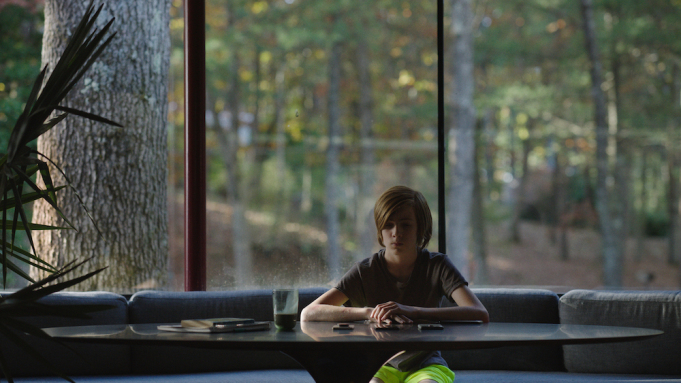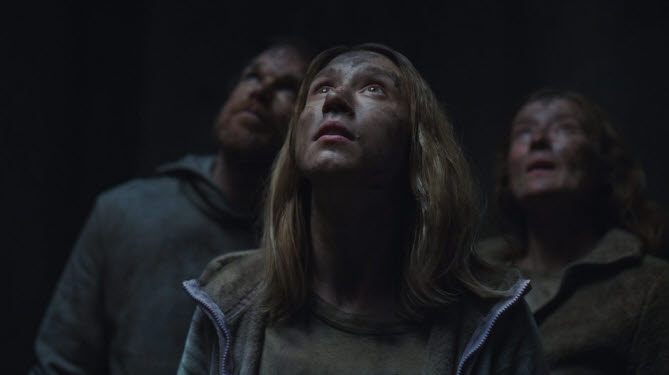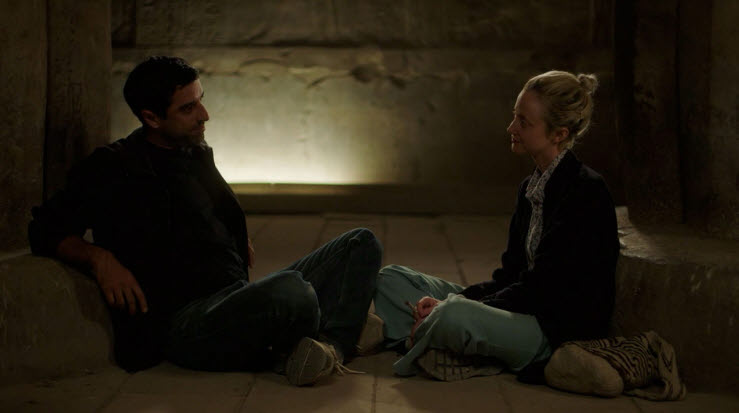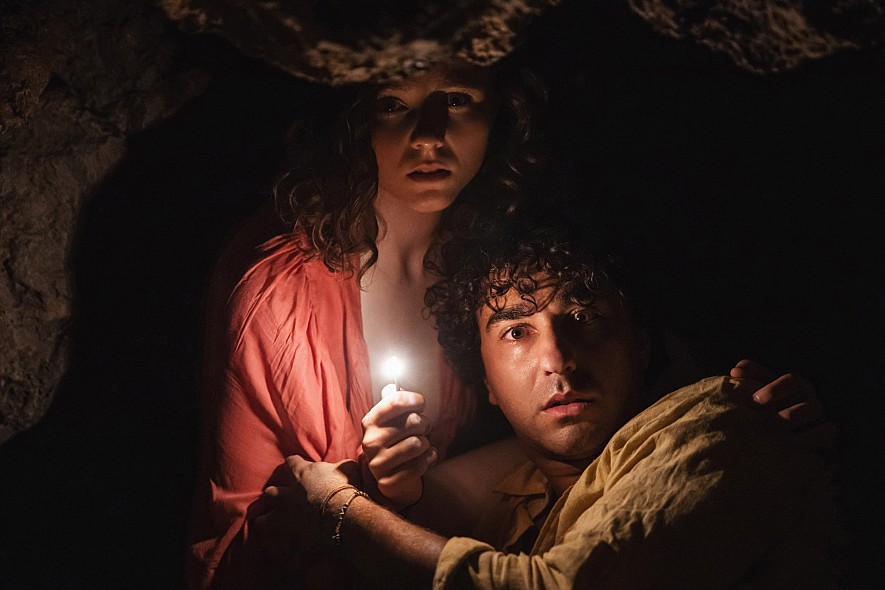
Pig (2021) ☆☆☆1/2(3.5/4): Where is his pig?

“Pig” is as simple as its very title suggests, but it somehow came to hold my attention for not only what it is about but also how it is about. Mainly driven by its solitary hero’s quiet but strong determination, this little existential arthouse thriller film gave me a number of humble but thoughtful moments to savor and reflect on, and, above all, it is firmly anchored by one of the best performances in its leading actor’s bumpy career full of ups and downs.

The movie consists of three acts, and the first act introduces us to Rob (Nicholas Cage), a shabby reclusive dude residing alone in the middle of a remote forest area of Oregon. His main source of income is those wild truffles to be dug from the underground of the forest, and, yes, he has a little foraging pig to accompany and assist him during his routine truffle hunt in the forest.

As phlegmatically observing him going through his simple daily life, the movie lets us gather how much Rob cares a lot about his pig. Besides little treats to be given to it during the truffle hunt, he cooks a fairly nice meal for his pig with care and attention, and, as he quietly watches it eating that freshly prepared meal, we come to sense that his pig is more than a very good living tool for his truffle hunt.

Rob’s only connection with the world outside is Amir (Alex Wolff), a cocky urban lad who comes to Rob’s forest cabin by his fancy yellow sports car. He has worked as a supplier of those expensive cooking ingredients such as truffle, and Rob has been one of his most important sources of income, though they are not particularly close to each other despite a little connection between Amir’s family and Rob revealed later in the story.

Anyway, not long after their latest meeting, something unexpected happens to Rob on one day. A couple of figures suddenly break into his cabin, and they steal his pig before knocking him down with a blunt instrument. When he manages to regain his consciousness some later time, these intruders are already gone with his pig, and, despite the injury on his head, he soon becomes quite determined to retrieve his pig.

Now this looks like a setup not so far from a number of recent action flicks ranging from “John Wick” (2014) to “Nobody” (2021), but the screenplay by director/writer Michael Sarnoski, which is based on the story written by him and Vanessa Block, does not hurry itself at all. When it seems that he needs some help and assistance, Rob calls Amir without hesitation, and Amir soon finds himself taking Rob to a nearby city despite his reluctance.

It looks like Rob’s pig was taken to some rich dude who has coveted it for a good reason, and Rob turns out to be capable of pulling some strings for more information and tips, though that requires some effort and strength from him at one point. When a certain underground figure declines to help him, Rob later shows how much he is determined to find his pig, and we accordingly get a tense and striking moment of suffering and endurance.

As the movie enters the second act, we get to know a bit more about Rob via Amir and several other characters who know him. While Rob is not someone like John Wick at all, we gradually come to gather that he was once at the top of his professional field before he walked away from his career and reputation for some personal reason. During his encounter with a certain dude who once worked under him many years ago, he quietly but sharply reminds that dude of how that dude’s life has lost what is really important in exchange of fame and success, and every word from his plain but deep wisdom strikes that dude hard while also making us reflect more on our own life. After all, many of us also often get lost in our life as blindly pursuing success and other superficial stuffs like that, don’t we?

So far, I have tried to be as vague as possible about Rob’s former profession. Although you will probably guess it right from the beginning of the first act of the movie, I will let you discover it for yourself and then observe how it is subtly developed into a crucial plot element in the third act, which mainly revolves around, this is not a spoiler at all, the figure who supposedly has Rob’s pig now. Firmly sticking to its calm and pensive mood as usual under Sarnoski’s confident direction, the movie delivers a modest but powerful dramatic moment when Rob fully demonstrates his particular set of skills.

Although he has often wasted his time on a bunch of bad movies during more than two decades, Nicholas Cage is still one of the most talented actors working in Hollywood, and the movie gives him a wonderful opportunity for reminding us of that undeniable fact. While he can go quite wild as shown from “Mandy” (2018) and “Color Out of Space” (2019), Cage can also dial down his usual intensity as shown from “Joe” (2013), and he is simply fantastic here as subtly and masterfully depicting his austere character’s humanity and resilience. In case of a few substantial performers around Cage, they duly occupy their small spots around him, and Alex Wolff is commendable in how he duly complements Cage without stealing the spotlight from him at all.

On the whole, “Pig”, which is incidentally Sarnoski’s first feature film, is an exceptional piece of work, and its modest but undeniably haunting qualities have grown me a lot after I watched it at last night. In my inconsequential opinion, this is one of the best films I saw during this year, and I assure you that you will be impressed by its simple but sublime aspects once you give it a chance.

Posted in Movies | Tagged , , , | 1 Comment

Pray Away (2021) ☆☆1/2 (2.5/4): How they damaged others out there

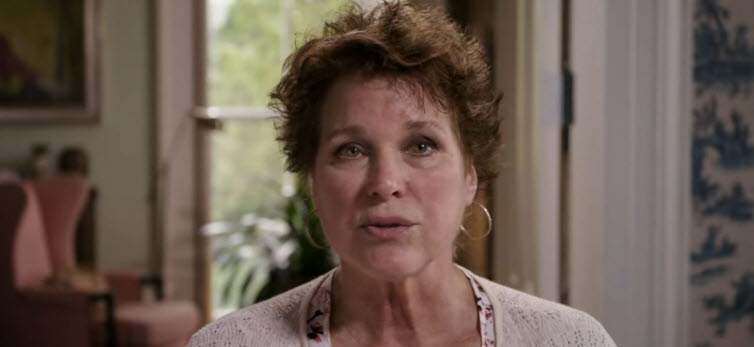
Netflix documentary film “Pray Away”, which is released on this Tuesday, mainly focuses on several survivors and former leaders of gay conversion therapy groups in US. Although it does not go that deep into many horrors and tragedies of gay conversion therapy, the documentary gives us a fairly good presentation of the deeply toxic aspects of gay conversion therapy, and it is often chilling to see how persistent gay conversion therapy is even at present.

During the early part of the documentary, several interviewees including Randy Thomas, who was one of the board members of a prominent American Christian gay conversion therapy group named Exodus, tell us about the early years of Exodus in the late 1970s. During that time, homosexuality was still regarded as a mental illness by many people including those influential Christian evangelists. Many LGBTQ people in churches naturally felt quite conflicted between their sexuality and faith, and their growing problem eventually led to the foundation of Exodus, which confidently promised many of them the salvation via being converted to heterosexuality.

As religiously devoted people, the leaders of Exodus did not have much doubt on whether they were actually doing right things, but they were seriously under-qualified as ‘therapists’. For example, most of them did not have any professional therapy qualification, and their so-called psychological theories on homosexuality were silly and ludicrous to say the least. They usually blamed bad parenting or relationship problems with parents, and that only made those therapy recipients feel all the worse about themselves.

Nevertheless, Exodus kept increasing its influence during next several decades as drawing more people willing to be converted, and, as some of you know, it even had a number of representatives who proudly presented themselves as “ex-gays” in public. In case of John Paulk, he was the shining emblem of gay conversion therapy as an ex-gay man who was not only saved by his Christian belief but also married an ex-lesbian woman, and it did not take much time for him to become the top spokesperson of Exodus.

Paulk, who is now living with his male partner at present, shows lots of regret and guilt during his interview, and the same thing can be said about Yvette Cantu Schneider, a bisexual woman who was another key figure of Exodus as an “ex-lesbian”. At that time when she came to join Exodus, she simply wanted some emotional comfort and support after watching many deaths caused by AIDS in the 1980s, but then she let herself live the life of lie and denial, and, just like many of her Exodus colleagues, she also caused more unhappiness and misery out there.

In case of Julia Rogers, her story is a heartbreaking tale of the cycle of emotional abuse. She came out to her conservative Christian mother when she was 16, but, not so surprisingly, she was quickly sent to a gay conversion therapy group associated with Exodus. After she was eventually “converted” by its leader, she subsequently found herself giving speeches for many other gay conversion therapy groups, and she remembers one particularly painful moment when she was persuaded to talk about a painful experience of sexual assault just for more emotional appeal in her speech.

Around the 2000s, Exodus and its numerous affiliates expanded its social influence further as being closely associated with many powerful conservative politicians including President George W. Bush, and its annual conference continued to draw more people as usual. Although homosexuality was not regarded as a mental illness anymore around that time, there were many opportunistic therapists eager to capitalize on gay conversion therapy, and Exodus and its affiliates did not mind using those scoundrels’ pseudo-psychology theories on homosexuality just because they would make gay conversion therapy look much more justified than before.

However, as the protests for the civil rights of LGBTQ people were continued on the opposite end, the American society and its people came to accept homosexuality more than before, and Thomas and many other figures of Exodus belatedly opened their eyes to the sins they had committed for years. After attending a group meeting of gay conversion therapy survivors, Thomas quit Exodus due to his growing guilt and regret, and Exodus was eventually shut down as more and more survivors came forward with their deep emotional scars and pains.

Nevertheless, as shown at the end of the documentary, gay conversion therapy has not been stopped at all in US even at this point, and this alarming status is mainly reflected via one ex-LGBTQ Christian group led by an ex-transgender guy named Jeffrey McCall, who seems to believe quite firmly that he was really converted by his religious faith. As one of the interviewees in the documentary points out, gay conversion therapy will never go away as long as there is hate toward LGBTQ people, and it is alternatively depressing and alarming to watch people like McCall continue to spread more misery and unhappiness in the name of faith and conformity.

On the whole, “Pray Away”, which is directed and co-produced by Kristine Stolakis, is rather uneven and unfocused as juggling too many different narratives within its 101-minute running time, but it is not entirely without merit. To be frank with you, it will probably not enlighten you that much if you have ever seen “Boy Erased” (2018) or “The Miseducation of Cameron Post” (2018), but I sincerely hope that its Netflix release will lead to more conversation on its relevant main subject.

Posted in Movies | Tagged , , , , | Leave a comment

No Sudden Move (2021) ☆☆☆(3/4): A solid twisty crime noir by Steven Soderbergh

Steven Soderbergh’s new film “No Sudden Move” is a dry but twisty crime noir film to be savored and appreciated for a number of good reasons. While its plot is surely as amusingly convoluted as you can expect from its genre territory, the movie also skillfully handles it with considerable mood and efficiency, and it keeps us engaged from the beginning to the end even though we often struggle to grasp its complicated big picture.

The opening scene, which is intercut with a series of old photographs, sets the tone of the movie, which is set in Detroit, 1954. As David Holmes’ cheerful score is played on the soundtrack, we are introduced to an African American ex-con named Curt Goynes (Don Chaedle), and we soon see him being recruited for a shady blackmail job by a guy named Doug Jones (Brendan Fraser). All Goynes needs to do is going to the suburban house of some company accountant along with other two guys and then holding that accountant’s family in hostage for a while, and Goynes agrees to do that mainly because he really needs some cash for leaving the city as soon as he can.

At first, his job looks like an easy task to be done within several hours. Shortly after meeting his two accomplices, Ronald (Benicio del Toro) and Charley (Kieran Culkin), Goynes and these two criminals enter the accountant’s residence and hold the accountant’s family at gunpoint without much difficulty. Although he is quite baffled by what is happening to him and his family right now, Matt Wertz (David Harbour) complies with the gangs’ demand anyway, and he subsequently leaves the house along with Charley for getting something important which has been incidentally stored in his workplace.

Of course, as many of you have already expected, the circumstance soon becomes a lot more complicated than Goynes and his accomplices expected. I will not reveal more to you here, but I can tell you instead that Goynes finds himself not only sandwiched between two certain powerful criminal figures in the town but also pursued by Detective Joe Finney (Jon Hamm), who instantly senses something fishy right from when he enters the picture later.

Despite his increasingly perilous circumstance, Goynes decides to take more risk as being determined to get to the bottom of the situation. While he and Roland, who also inadvertently gets himself involved more with Goynes, attempt to find out who is really behind everything, the screenplay by Ed Solomon accordingly throws more plot elements into the story. For instance, Wertz turns out to have a pretty messy private matter behind his clean-cut appearance, and, as he keeps trying to get things under control, that puts more strain on his relationship with his wife Mary (Amy Seimetz), who has apparently known what her husband has been hiding behind his back.

In the meantime, that important object in question is gradually revealed to be much more than a mere MacGuffin, and we consequently come to regard the story from a wider perspective while also reflecting more on the importance of its period background. Around the narrative point where Goynes and Roland finally confront the figure at the top of their complex situation, the movie becomes a little preachy, but Solomon’s screenplay does not lose any of its edgy wit and humor at least, and it surely has several nice surprises to be unfolded as arriving at its neat ending.

As usual, Soderbergh serves as the unofficial cinematographer/editor of the film, and his distinctively lean and efficient handling of mood, story, and characters keeps things rolling even when we are confused as much as some of the main characters in the film. Although the production budget of the film was only around 8 million dollars, the movie is decorated with enough period mood, and Soderbergh also makes an interesting visual choice via fisheye lens, which feels a bit too distracting to our eyes at first but somehow works as a part of the style of the film.

The movie is packed with various performers having each own fun with their respective characters, most of whom are broad but vivid characters to remember. As the main center of the film, Don Cheadle ably holds the ground with his calm but intense performance, which incidentally makes a good contrast to his volatile breakthrough turn in Carl Franklin’s overlooked crime noir film “Devil in a Blue Dress” (1995). As his accidental accomplice who is not that clever in comparison, Benicio del Toro gives a laconic deadpan performance to complement Cheadle’s, and Brendan Fraser, Ray Liotta, Kieran Culkin, and Bill Duke are also solid as several other substantial criminal figures in the story. In case of the other notable cast members in the film, David Harbour, who has steadily impressed us since his Emmy-nominated supporting turn in Netflix series “Stranger Things”, is terrific as a pathetic man stuck in the situation way over his head, and Jon Hamm, Amy Seimetz, Julia Fox, and Noah Jupe did a good job of filing their small supporting parts with some life and personality.

Although he announced his retirement around the time when “Side Effects” (2013) and “Behind the Candelabra” (2013) came out, Soderbergh returned a few years later with “Logan Lucky” (2017), and he has diligently worked since then as cranking out a series of enjoyable films including Netflix film “High Flying Bird” (2019). “No Sudden Move” is certainly another nice work from him, and you should check it out if you admire his recent productive period as much as I did.

Posted in Movies | Tagged , , | 1 Comment

Blood Red Sky (2021) ☆☆1/2(2.5/4): A little setback on one hijacked plane

Netflix film “Blood Red Sky”, which was released a few weeks ago, attempts an amusing mix of two different genres during its 2-hour flight, but its flight turns out to be too trite and predictable to me. I am wondering whether this is because I was already exposed to its main big genre twist via its movie trailer which shows too much in my trivial opinion, so now I sincerely advise you not to read my review further if you are already interested in watching the movie and really want to be surprised.

At the beginning, the movie quickly establishes the rather vague current situation of a German woman named Nadja (Peri Baumeister) and her little young son Elias (Carl Anton Koch). During last several years, Nadja has suffered some rare blood disease, but it seems that there is a doctor in New York City who may cure her via his state-of-the-art bone marrow therapy, so she and her son are about to take a night airplane to New York City at the international airport in Berlin.

As their airplane subsequently takes off from the airport, everything seems to be going well for them as well as many others on the airplane, but, alas, there comes a big problem. In the middle of its flight across the Atlantic, the airplane happens to be swiftly hijacked by a bunch of terrorists, and everyone else on the airplane is thrown into panic and confusion as watching how ruthless these terrorists really are.

While trying to protect her son later, Nadja gets herself shot several times, and she is presumed to be dead, but, what do you know, there is a small secret she has kept behind her back along with her son. She is actually a vampire, and a series of following flashback scenes show us how she was turned into a blood-sucking entity due to one very unfortunate incident which occurred when her son was a little baby.

Once she regains her consciousness, Nadja finds herself feeling more urge for blood in addition to having some physical transformation, but her maternal love remains as strong as before, so she decides to use some advantages from being a vampire. While she cannot be killed by guns, she is also equipped with increased strength and instinct, and it does not take much for the terrorists to realize that there is a serious impediment to their evil plan.

This surely looks like a good setup for wild fun and terror to be unleashed on the screen, but, sadly, the movie is already on safe autopilot mode. For example, the opening scene reveals too much of where the story is eventually going to land, so there is not much suspense in what is being at stake for Nadja and her son, and we come to regard their urgent situation without enough care or interest. In addition, the other characters around them are stock archetype characters much blander than the characters of “Airport” (1970) and its several sequels, so there is not much dramatic impact from some of them getting killed along the story.

And there is also a serious problem in narrative pacing. While the first act of the movie did a fairly good job of drawing our attention under director/co-writer Peter Thorwarth’s competent direction, its second act often gets its narrative flow disrupted by those aforementioned flashback scenes, which are not particularly engaging as merely functioning as the obligatory exposition for our heroine’s medical condition. In case of the third act, it is often quite frustrating due to more plot contrivances besides being too long, and I believe the movie could be tauter and more effective if its running time (121 minutes) were shortened to around, say, 90 minutes.

The movie surely serves you a substantial amount of violence, action, and blood when it is about to reach to the end of its flight, but the movie does not have much surprise in that department. While I will not go into details here for not spoiling your entertainment at all, I was particularly annoyed by a blatant left turn it takes around the last act, and I was frequently distracted a lot by one of the terrorist characters, who glaringly signals more troubles to come right from his first exaggerated moment in the film.

As the unlikely action hero of the movie, Peri Baumeister acquits herself well, and she and young actor Carl Anton Koch did a good job of conveying to us the strong emotional bond between their characters. It is disappointing to see that the movie resolves their characters’ complicated relationship too conveniently in the end, but Baumeister and Koch carry the film mostly well even when they are separated from each other, and their good acting is the main reason why I kept watching the movie despite my growing disappointment. In contrast to Baumeister and Koch, the other main cast members in the film including Roland Møller and Dominic Purcell are wasted in their thankless parts, and Alexander Scheer is unfortunately forced to demonstrate a bad case of overacting by his cartoonish villain character.

On the whole, “Blood Red Sky” is not a total waste of time, but I still think it could handle its apparently outrageous story premise better with more wit, skill, and, yes, craziness. As more disappointed with its overall result, my mind could not help but think of more entertaining airplane thriller movies such as “Flightplan” (2005) and “Snakes on a Plane” (2006), and I would rather recommend you to watch them instead.

Posted in Movies | Tagged , , , , , , | Leave a comment

Limbo (2020) ☆☆☆1/2(3.5/4): Refugees stuck in a remote Scottish island

“Limbo” is a small offbeat film about a group of refugees stuck in a remote Scottish island. While often recognizing their quiet desperation and frustration in a number of achingly melancholic moments, the movie is also often surprisingly funny with its absurd deadpan humor coupled with some quirky touches, and it is also quite fascinating to see how this seemingly modest but undeniably charming piece work constantly swings back and forth between comedy and drama without cheapening neither of them at all.

The story is mainly told via the viewpoint of Omar (Amir El-Masry), a young Syrian musician who has recently stayed in that Scottish island along with several other refugees. They have all been awaiting the results of their asylum claims while sometimes attending an elementary class on proper social interactions in the British society, and the opening scene shows them phlegmatically watching their two instructors solemnly demonstrating to them how to behave in front of a woman to date.

Omar has resided in a small house along with three other refugees: Farhad (Vikash Bhai), Wasef (Ola Orebiyi), and Abedi (Kwabena Ansah). Without much to do except waiting outside for any notification letter to be delivered, they usually spend time on watching a certain famous American TV sitcom series, and we later get a small amusing moment when two of them zealously discuss on the relationship development between the two lead characters of that American TV sitcom series.

Although he sometimes calls to his parents currently staying in Turkey, Omar cannot help but feel not only lonely but also uncertain about what will happen next and what he will do about that. While his country is still being shaken up by the ongoing civil war, his parents often talk about his older brother who chose to stay in Syria for joining the rebel army, and he often wonders whether he made a right decision when he decided to leave Syria a few years ago.

At least, he has kept his grandfather’s oud (It is one of those traditional Arab instruments, by the way) intact during all those years of struggle and plight, but he is not particularly willing to play it even though he carries it all the time. As shown by a rough video clip from his past, there was a time when he was a promising musician, but he seems to have lost his groove due to his depressing current circumstance, and he is not brightened up much even when Farhad later suggests to him that he should play it in front of local people with Farhad acting as his agent/manager.

In case of the local people of the island, most of them do not mind much the presence of Omar and other refugees in their island, though they do not show much hospitality to the refugees in the island either. At one point, Omar comes across a bunch of local young people, and these young people are initially a bit too rude and insensitive to him, but they eventually make him have a little fun time with them on a nearby beach.

While all these and other absurd moments happen along the story, Omar and his fellow refugees remain mostly calm and detached, and that is the main source of the deadpan comedy of the screenplay by director/writer Ben Sharrock. For example, the scene involved with a mail delivery guy looks rather silly at first with a piece of classic opera music played on the soundtrack, but then it brings out more laughs than expected via sharp wit and exact coming timing. In addition to enhancing many of those comic moments in the film via precise scene composition and thoughtful camera movement, the cinematography by Nick Cooke steadily fills the screen of 1.33:1 ratio with the haunting gray aura of ennui and melancholy, and that further accentuates the funny aspects of the film.

In the meantime, the movie also gradually reveals more of the human depth of not only Omar but also his fellow refugees. Although they often bicker with each other over a number of minor things, Wasef and Abedi turn out to have depended more on each other, and there is a little poignant moment when they have a silent moment of reconciliation not long after having a big personal clash between them at the aforementioned elementary class. In case of Farhad, you can easily guess a personal reason behind his refugee status, but it is later revealed with considerable pathos, even though you are still amused by his odd affection toward a chicken which he names after a certain famous British singer.

The main performers of the film are all commendable in their unadorned natural performances, and I was rather surprised to learn later that many of them actually have considerable acting experience. While Amir El-Masry earnestly functions as the emotional center of the film, Vikash Bhai, Ola Orebiyi, and Kwabena Ansah hold each own place around El-Masry, and Kenneth Collard and Sidse Babett Knudsen are often hilarious as the deadly serious class instructors in the movie.

“Limbo” is the first feature film from Sharrock, who previously made several short films before making a feature film debut here in this movie. While frequently savoring its genuinely funny moments, I also admired its skillful and effortless handling of mood, story, and characters, and I was particularly impressed by how it effortlessly delivers the final scene with considerable emotional power you will have to experience for yourself. In short, this is one of the most impressive debut feature films of this year, and I think you must not miss this little but remarkable gem.

Posted in Movies | Tagged , , | 1 Comment

Drunk Bus (2020) ☆☆☆(3/4): His life-changing bodyguard

“Drunk Bus” drives along a very familiar course, but it is more colorful and entertaining than expected. While this is your average coming-of-age comedy drama about a young man getting wiser via a sudden change coming into his drab daily life, it is thankfully equipped with enough humor and personality, and you may gladly go along with its ride as enjoying the good comic chemistry between the mismatched duo in the film.

In the beginning, the movie leisurely depicts how its hero’s daily life has been going nowhere for several years. Although he graduated from a college in Kent, Ohio around four years ago, Michael (Charlie Tahan) is still stuck in the campus area while earning his meager living via driving a night bus around the campus, and he has also been lonely and depressed for a while due to the recent breakup with his girlfriend who decided to leave him for getting a job in New York City. While his two close friends cheer him up a bit at times, his daily life still feels pretty glum and monotonous to say the least, and there is an amusing montage scene where he phlegmatically drives his night bus as usual while the bus is frequently bustled with drunken college kids.

At one night, Michael happens to be punched by one of those drunken college kids, and that leads to one unexpected change in his night job. On the very next night, he is approached by an imposing and heavily tattooed Samoan guy named Pineapple (Pineapple Tangora), and he is subsequently notified that Pineapple is going to work as his bodyguard for a while. Although he is not so pleased about this sudden change, Michael lets Pineapple on his bus anyway, and Pineapple soon turns out to be quite an effective bodyguard in more than one aspect.

As he spends more time with Pineapple on the bus, Michael finds himself talking a lot with Pineapple, who willingly gives Michael some advices on a number of different things including how he should be more active about life. As bringing Michael into several impulsive adventures, Pineapple certainly brings some spirit into Michael’s life, and Michael becomes more aware of how repetitive his life has been due to his indecisiveness.

Of course, there already comes a situation where Michael must make a choice sooner or later. His ex-girlfriend notified to him that she will soon return to the campus for some personal business, and she seems to be interested in meeting him again, though her text messages are rather vague to say the least. While reflecting on how unsatisfying their relationship was to him (She never allowed him to have sex with her for her religious faith, for instance), Michael also wonders whether they can restart their relationship again, and he becomes more conflicted as Kat (Kara Hayward), who is one of Michael’s two aforementioned friends, seems to be interested in getting closer to him.

Now you probably have a pretty good idea on where the story is heading, and the screenplay by Chris Molinaro simply moves from one expected narrative point to another, but its amusingly repetitive narrative course is packed with colorful characters and nice running gags. Besides Michael’s two friends and his goofy roommate, we also have one crusty old dude with disability whose nickname I cannot write here for a good reason, and I enjoyed how the movie delivers a nice surprise from this funny supporting character. In case of one of the running gags which is involved with a bunch of rude fraternity house dudes, it is probably a bit too much for some of you, but you will come to get accustomed to it, and you will get a big chuckle from the subsequent payback moment.

Above all, the main source of entertainment comes from the developing friendship between Michael and Pineapple, who later turns out to be much more than your typical ethnic stereotype. Although his advices do not solve every problem in Michael’s life, his good-willed positive influence certainly helps Michael become more decisive about a number of matters in his life, and we later get a little poignant moment when these two different characters show more honesty to each other.

The movie depends a lot on the comic interactions between its two main performers, who wonderfully complement each other throughout the film. While Charlie Tahan holds the ground with his earnest performance, Pineapple Tangaroa, a non-professional actor who just appeared in two films before this movie, brings considerable life and personality to his showier role, and his charismatic presence buoys the film a lot whenever he enters the screen. In case of several supporting performers around Tahan and Tangaroa, Zach Cherry, Sarah Mezzanotte, Dave Hill, Tonatiuh Elizarraraz, Martin Pfefferkorn, and Kara Hayward are solid in their respective parts, and Will Forte provides some extra humor as Michael’s busybody boss.

“Drunk Bus” is directed by John and Brandon LaGanke, who previously made several short films together before making a feature film debut here in this film. They did a fairly good job of balancing the story and characters between comedy and drama, and I was often charmed by its funny moments even while clearly recognizing its numerous familiar aspects. I surely discerned what it was going to do right from the beginning, but it did its job as well as expected at least, so I will not complain for now.

Posted in Movies | Tagged , , , , , | Leave a comment

Holler (2020) ☆☆☆1/2(3.5/4): A harsh working-class daily life in Ohio

“Holler” is a little but haunting character drama about one ordinary working-class American girl who does deserve better than what her whole life has given her. While phlegmatically observing the daily struggles of her and several other characters around her, the movie slowly immerses us into their drab and harsh world which does not have much promise or future for everyone in their decaying town, and that is why it is touching to see when she becomes a bit more active for her life.

Set in one plain industrial town in Ohio, the movie, instantly puts us into another hard day of Ruth (Jessica Barden), an adolescent high school girl who has struggled a lot with her older brother Blaze (Gus Harper) for supporting themselves. Their mother Rhonda (Pamela Aldon) is absent due to being incarcerated in the county jail for her drug addiction problem, so it is Ruth and Blaze’s job to earn enough money for paying the rent for their house, but things have been pretty grim for not only them but also many others in the town. While what they earn at a local factory is not enough at all, they may get laid off along with many of their co-workers because of the local economic downturn, so they often collect scrap metals from here and there around the town and then sell them to a local scrap metal collector named Hark (Ausitn Amelio).

However, after being notified that they can be evicted from the house at any point, Linda and Blaze become more desperate than ever, and Hark happens to be able to offer them an opportunity to earn much more money within a shorter time. Along with Hark’s crew, they sneak into those old abandoned factories and buildings at night for stealing any valuable scrap metal inside them, and they certainly must be very careful of not only the local police but also any local competitor crew they might come across on the spot.

While well aware of the considerable risk of this new job, Blaze and Linda keep working for Hark, and Linda comes to impress their boss as a quick learner. She soon learns how to handle a number of tools including the one for cutting those metal plates, and we later get a wonderful scene where she intuitively uses a bit of her newly acquired knowledge in the middle of her first ‘field work’. The camera simply follows her viewpoint, but that is more than enough for us to discern what she is noticing and following step by step, and we come to see that she is indeed a girl too good and smart for the job.

As a matter of fact, Linda has been actually considering getting any opportunity for higher learning, but those opportunities seem to be beyond her reach for many reasons including the lack of money for college education. At one point later in the story, she attempts to persuade her high school class teacher to give her a chance, but the teacher does not hesitate to show his skepticism on that while recommending a lesser option instead.

However, Linda also hesitates on getting out of her small world. When Blaze helps her a bit via having her receiving an acceptance letter from some college outside their town, she is not so happy because she is still indecisive about what she really needs or wants, and her mother, who is quite bitter and resentful as still struggling with her addition problem, does not give Linda much help or support while looking miserable as usual.

Calmly and sensitively building up its characters along the story, the movie fills the screen with plain but palpable realism. From its main characters’ weary faces and the shabby but authentic details of their daily life, we come to sense more of how hard and difficult it is for them to live through another day of despair and hopelessness, and cinematographer Dustin Lane’s camera functions as an unseen observer for us while often closely following the characters on the screen. As we get to know them and their world more, we come to understand and empathize more with them, and we are not that shocked when one of the main characters becomes quite vicious to Linda and Blaze later in the story.

Above all, the movie is firmly anchored by the unadorned but undeniably powerful performance from Jessica Barden, a young British actress who previously played supporting roles in a number of notable films including “Far from the Madding Crowd” (2015) and “The Lobster” (2015). Besides effortlessly immersing herself into the mundane background, Barden subtly let us sense her character’s inner resilience behind her character’s rather detached façade, and we come to root for her character more when she eventually decides what is more important for her. Although Barden has been relatively unknown, the movie demonstrates well to us her considerable talent and presence, and I can only hope that the movie will boost her career as much as Debra Granik’s “Winter’s Bone” (2010) did Jennifer Lawrence’s.

In case of several other main performers in the film, they are equally convincing on the whole. While Gus Harper has his own moving moments as an older brother who has always cared about his younger sister’s welfare and future, Austin Amelio is as seedy as required by his supporting role, and Becky Ann Baker and Pamela Adlon are also effective in their respective substantial roles.

“Holler” is the first feature film directed by director/writer Nicole Riegel, who previously made the 2016 short film of the same name from which the movie was developed. I heard that the story is considerably influenced by her own life experiences, and, as far as I can see from the overall result, she did a commendable job of presenting a vivid slice of American life with care and respect. In short, this is a much better alternative to Ron Howard’s bland misfire “Hillbilly Elegy” (2020), and I wholeheartedly urge you to check out this admirable debut work as soon as possible.

Posted in Movies | Tagged , , , | 1 Comment

Saint Maud (2019) ☆☆☆(3/4): The sobering observation of one disturbing religious mania

“Saint Maud” is a dark and disturbing psychological thriller which will catch you off guard more than once. As mostly sticking to its very disturbed heroine’s warped viewpoint, the movie alternatively chills and fascinates us via a number of intense moments to linger on your mind, and it is also firmly held by its exceptional lead performance which will be remembered as a major breakthrough for the lead performer’s burgeoning career.

Morfydd Clark, a young British performer who previously appeared in a number of notable films including “Love & Friendship” (2016) and “The Personal History of David Copperfield” (2019) during last several years, plays a young nurse named Maud, and the opening part of the film shows and tells us how much she has been devoting herself to her Catholic faith since some traumatic incident in the past. Although she left her former workplace due to that rather unspecified incident, she seems to be ready for her new job as declaring her professional/spiritual devotion to God as well as herself, and we soon see her going to a big house located outside her seaside town.

The house belongs to a middle-aged woman named Amanda Köhl (Jennifer Ehle), who was once a renowned dancer/choreographer but has recently been confined in her current residence due to her terminal illness. Maud’s predecessor warns to Maud in advance that Amanda is not a very nice person, but Maud does not pay much attention to that warning because she is confident that she will take care of her supposedly cantankerous employer as well as she can in addition to providing some spiritual support.

Anyway, to our little surprise, Amanda mildly welcomes her new nurse, and Maud comes to observe more of her employer as handling many things for Amanda including daily injection of several different medicines. While well aware of the fact that she does not have many days to live, Amanda does not hesitate at all in front of any chance to enjoy her shortening life, and she does not even mind drinking and some sexual pleasure despite her worsening medical condition.

However, Amanda also often feels quite bitter and morose about her impending death, and Maud is certainly willing to help and support her employer in her own spiritual way. At one point, she earnestly talks about how she often listens to the words of God spoken only to her, and Amanda seems to be genuinely interested in being spiritually saved by Maud. She subsequently joins Maud’s unorthodox religious activities, and, as she looks like getting a bit better than before, she gives Maud a book on those famous religious paintings by William Blake for showing her some gratitude.

However, their seemingly good relationship does not last that long, and that consequently throws Maud into lots of confusion and desperation. She keeps searching for any answer from God, but her God does not respond to her at all, and that makes her more exasperated and frustrated than before. She subsequently lets herself go back to her old messy self, and we accordingly get a series of uncomfortable scenes including the one where she comes to have more than one sexual encounter.

As we naturally come to have more doubt on her sanity, the movie pushes its heroine into more despair and madness. After experiencing a sort of epiphany, Maud becomes determined to push herself further into her religious faith, and she is also quite obsessed with saving Amanda’s soul, though that may not be what Amanda wants for now.

While we consequently become more distant to Maud as she is driven further by her religious mania, the movie keeps holding our attention as gradually dialing up the level of emotional intensity via several striking scenes including the one where she happens to experience a sort of spiritual elevation. Regardless of whether this feverish moment is real or not, she cannot help but become exalted more than ever, and that makes her more convinced that she is indeed an instrument of God for Amanda.

I will not go into details on what eventually happens around the end of the story, but I can tell you instead that it will strike you really hard mainly thanks to Morfydd’s committed acting. While her character is surely someone with whom you do not want to associate at any chance, Morfydd subtly conveys to us her character’s damaged psyche, and we come to understand her character’s pathological behaviors to some degree even though the movie does not wholly explain what makes her character tick. While the movie is virtually the showcase of Morfydd’s considerable acting talent, several other cast members of the movie including Jennifer Ehle, Lily Knight, and Lily Frzer are also solid in their small supporting parts, and Ehle did a good job of suggesting Amanda’s darker side behind her mild and fragile appearance.

In conclusion, “Saint Maud”, which is incidentally the first feature film of director/writer Rose Glass, is definitely not something you can casually watch on Sunday afternoon, but I recommend it nonetheless for not only Glass’s skillful handling of mood, story, and character but also Clark’s unforgettable performance. Both of them are apparently talented, and I sincerely hope that the movie will lead both of them to more good things to come in the future.

Posted in Movies | Tagged , , , | 1 Comment

My Heart Can’t Beat Unless You Tell It To (2020) ☆☆☆(3/4): For their younger brother

“My Heart Can’t Beat Unless You Tell It Too” is a moody but interesting horror drama film about two sibling toiling on taking care of a sick family member with unspeakable need. While calmly and slowly observing their respective human anguish and exhaustion, the movie also throws several obligatory moments of horror as they continue to supply what their loved one needs, and we come to emphasize with their desperate struggle while also horrified by that.

Patrick Fugit and Ingrid Sophie Schram play Dwight and Jessie, two close siblings who have led a nearly isolated life along with their younger brother Thomas (Owen Campbell) within their current residence. Thomas has been very sick due to some unknown disease, and Dwight and Jessie’s private life has always been spent on taking care of their younger brother. Due to his illness, Thomas has never gone outside while occasionally home-schooled by Jessie, and you will notice how their residence is completely insulated from the surrounding environment with the apparent absence of sunlight.

Yes, as many of you have already guessed, that unknown disease of Thomas made him into a sort of vampire. While he does not have those sharp fangs and cannot be transformed into a bat or whatever, Thomas often needs to be supplied with fresh human blood for maintaining his medical status quo, and Dwight is the one who usually searches for any possible victim to be sacrificed for Thomas. In the opening scene, Dwight lures and then kills a homeless guy he happens to pick up outside at one night, and then Jessie takes care of the rest of the task before Dwight subsequently buries the body somewhere.

While Jesse has been quite accustomed to their bloody job as Thomas’ caring and protective sister, Dwight has recently become more exhausted and frustrated, and he wonders how long he and his sister will have to go on for just keeping their dear younger brother alive as usual. He does care about his younger brother as much as Jessie, and there is a little touching moment when he and Jessie brighten up Thomas’ mood a bit via holiday presents, but he often finds himself wishing to get away from everything having been eating him inside – including his younger brother.

Dwight’s only consolation comes from a local female prostitute he meets from time to time, but he just gets as much as he pays to her. After they have sex in a motel room, he suggests that they should spend more time together just for a little conversation, but she still maintains her professional attitude, and he does not know what to talk with her except vaguely expressing his longtime yearning for escape.

In the meantime, the situation becomes a little more tense as conflicts begin to grow among Dwight and his two siblings. While he has appreciated how much his older siblings have taken care of him, Thomas becomes more interested in the world outside just like any other boy at his age, and he is naturally frustrated as being blocked by not only his older siblings but also his own medical condition. When Dwight miserably fails to get their latest victim, Jessie decides to take care of the situation for herself, and he is understandably repulsed by the outcome of her following action.

Firmly and patiently focusing on the relationship dynamics among its three main characters, the screenplay by director/writer Jonathan Cuartas accumulates the emotional tension around them bit by bit. Cinematographer Michael Cuartas, who is also Cuartas’ brother, shot the movie in the screen ratio of 1.33:1, and that further emphasizes the stuffy aspects of the three main characters’ insulated domestic environment. Mostly sticking to its static position, the camera often phlegmatically regards them and their quiet barren indoor spaces, and the resulting stark atmosphere on the screen is further enhanced by the ambient score by Andrew Rease Shaw.

While the last act of the movie loses some of narrative momentum, the three main performers keep holding the film together as before. Fugit, who also participated in the production of the film, gradually earns our sympathy as embodying many years of frustration and anxiety behind his character’s weary appearance, and his good performance reminds me again of how much he has been matured as a good adult actor after his adolescent breakout turn in Cameron Crowe’s “Almost Famous” (2000). On the opposite position, Schram is equally good in her frigid character’s singled-minded devotion to Thomas, and she and Fugit are believable as a sister and a brother who have known and understood well each other as bounded by their common domestic work. As another crucial part of the story, Owen Campbell is somehow poignant despite what his character should do for survival, and he is particularly good when his character tentatively approaches to an unexpected visitor to his house later in the story.

By the way, I happened to watch the movie not along after watching “Anything for Jackson” (2020), which is also about two ordinary people willing to commit something atrocious for their loved one. Although the latter is more morbid and humorous in comparison, I think “My Heart Can’t Beat Unless You Tell It Too” and “Anything for Jackson” can make a nice double feature show considering their thematical overlap, and I recommend you to try that someday if you simply want to watch a couple of good horror films at night.

Posted in Movies | Tagged , , , , | Leave a comment

Anything for Jackson (2020) ☆☆☆(3/4): A Satanist couple in trouble

“Anything for Jackson” is a little horror film which turns out to be more morbid, humorous, and bizarre than expected. While unfolding its devious plot mainly via the viewpoint of an insidious old couple who seems be ready for doing anything for their desperate personal cause, the movie gradually wields its twisted sense of black humor along with a number of disturbing moments of horror, and we gladly go along with that even while observing this evil couple’s plight from the distance.

When the movie opens with the introduction of its two main characters, everything seems to be fine and normal on the surface as this old couple is beginning another day at their house. As Audrey (Sheila McCarthy) is doing some work in the kitchen, her doctor husband Henry (Julian Richings) enters, and we see them cordially talk a bit with each other before he hurriedly goes outside for some important matter.

It soon turns out that Henry and Audrey are preparing to kidnap a young pregnant woman named Becker (Konstantina Mantelos), who, as revealed to us later via a brief flashback scene, is one of the pregnant patients in the woman’s clinic belonging to Henry. Once Henry manages to kidnap and then take Becker into his house, Audrey instantly assists him, and Becker soon finds herself handcuffed to a bed in a room on the top floor of the house. She naturally screams for help once she discerns what has just happened to her, but, as Audrey and Henry have already checked, there is no one outside to hear her scream at any chance.

As trying to comfort their captive as much as they can, Audrey and Henry gradually reveal their deranged plan which is somewhere between “Rosemary’s Baby” (1968) and the reversal version of “The Exorcist” (1973). Some time ago, they lost not only their daughter but also her little son, and, while still coping with the resulting pain and grief, they are determined to get back their dear grandson by any means necessary. As a matter of fact, they are the members of a local Satanist group, and they recently obtained an ancient Satanist book, which will probably help them bring back their dead grandson’s soul and then take him into Becker’s unborn child.

Of course, they must summon a certain powerful demon who will surely demand some effort and sacrifice, and the movie has some twisted fun with their rather clumsy preparation process. While everything seems to be going smoothly of them, they are still nervous and unsure about whether they accomplish the task as well as they hope, and we cannot help but amused from time to time even while chilled by their fiendish plan.

Not so surprisingly, the situation later becomes quite more complicated than they expected. When a detective visits his woman’s clinic as expected, Henry tries to look as innocent as possible, but that only makes the detective suspect him more than before. There is also a local handyman who is rather too eager to do what he is hired to do, and we later get a little amusing moment when this dude may discover Audrey and Henry’s unspeakable secret at any moment.

Furthermore, Audrey and Henry come to have a more serious trouble inside their house, which gradually looks more like your average haunted house as days go by. As they are more disturbed, Audrey and Henry eventually come to consult one of their fellow Satanists who is relatively more knowledgeable in comparison, and he agrees to take care of their problem, though he will not just do that for free.

While the mood becomes darker and more insidious, the movie keeps its attitude straight along with its main characters. Although they are not exactly pleasant people, we come to understand Audrey and Henry to some degree, and there is a little sobering scene where Aubrey phlegmatically explains why they chose to bring back their grandson instead of his mother. In case of Becker, she is presented as someone who is not merely a captive at all, and we come to root for her more as she struggles to search for any possible way out.

During the last act, the movie switches onto a full-throttle horror mode in its modest but effective way, and director/co-writer/co-producer Justin G. Dyck, who wrote the screenplay with his co-producer Keith Cooper, skillfully doles out the obligatory moments of shock and awe while never losing any sense of fun. Although the ending is a bit too ambiguous in my humble opinion, I appreciate it nonetheless because it is thankfully free of a certain familiar horror cliché, and I am more amused as reflecting more on many twisted moments in the film.

The movie depends a lot on the talent and presence of its two lead performers, and Sheila McCarthy and Julian Richings play their characters as straight as possible while dexterously balancing their acting between comedy and horror. As another crucial character in the story, Konstantina Mantelos holds her own small space well between McCarthy and Richings, and Josh Cruddas is also effective in his substantial supporting role while bringing some extra humor and creepiness to the movie.

On the whole, “Anything for Jackson” did a good job of bringing some fresh air to its genre territory, and I enjoyed its sly mix of horror and comedy. In short, it is one of better horror flicks I have seen during last several months, and it is definitely recommendable if you are ready for something hilarious as well as macabre.

Posted in Movies | Tagged , , , , | Leave a comment