Escape from Mogadishu (2021) ☆☆☆(3/4): They must stick together for their escape

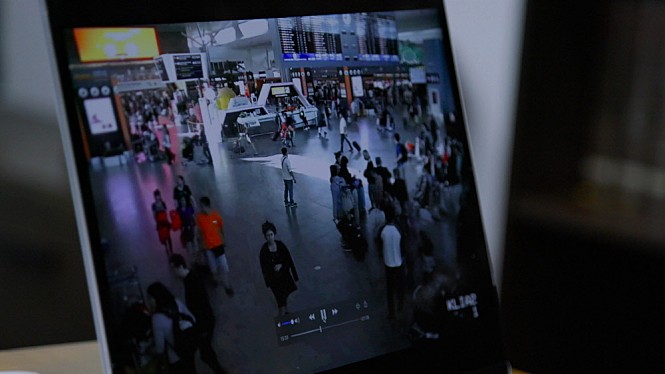
South Korean film “Escape from Mogadishu” is a gritty and intense action thriller flick which is loosely based on a real-life story between South and North Korean embassy in Mogadishu, Somalia in 1991. While often reminiscent of a bunch of notable Hollywood movies ranging from “Black Hawk Down” (2001) to “Argo” (2012), the movie steadily holds our attention via its efficient narrative and several good action scenes, and I appreciate the efforts and skills put into its admirable overall result.

At the beginning, the movie gives us a bit of historical background information on the diplomatic competition between South and North Korea around that time. For getting enough votes for its future UN membership from many of African countries, the South Korean government and its diplomats attempted to persuade these African countries via various means including economic support, but their efforts were often countered by their North Korean counterparts in many cases, and Somalia was no exception as shown during the early scenes of the film. Although he has not received much support from his government, Han Sin-seong (Kim Yoon-seok), the South Korean ambassador to Somalia, has tried as much as he can along with his few subordinates including Kang Dae-ji (Jo In-sung), but their latest diplomatic attempt is undermined by a little indirect interference from the North Korean embassy, which is headed by Ambassador Rim Young-su (Heo Joon-ho).

While Ambassador Han and other South Korean embassy officials keep conflicting with their North Korean counterparts, the situation gradually becomes more unstable in Mogadishu day by day. Both Ambassador Han and Ambassador Rim are not particularly disturbed by this circumstance because they have been quite accustomed to the ongoing civil war in Somalia, but then the situation becomes much more volatile than expected. As the rebel army is getting closer and closer to Mogadishu, the city is consequently thrown into more disturbance and chaos, and it soon becomes quite clear to every foreign embassy official in the city that they must leave the city as soon as possible.

Once the rebel army enters Mogadishu, the city is turned into lawless war zones riddled with rioters and soldiers eager to shoot anyone on their sight, and Ambassador Han and his embassy people soon find themselves stuck inside their embassy building. While they can stay there for a few more days, they should immediately find any possible way to leave the city alive before it is too late, and Ambassador Han must find any foreign embassy which may help their escape from Mogadishu.

Meanwhile, Ambassador Rim and his North Korean embassy officials become much more desperate as their embassy is eventually attacked by rioters like many other embassies in the city. As they are helplessly stranded outside without any good alternative, Ambassador Rim decides that they should go to the South Korean embassy, and Ambassador Han reluctantly allows Ambassador Rim and other North Korean embassy officials into his embassy building. While both of these two conflicting groups certainly feel awkward to stay together, Ambassador Rim and Ambassador Han agree that they and their people must stick together for now, and, despite some understandable frictions between their groups, everyone in the embassy soon works together for surviving their increasingly dangerous circumstance together.

As our two ambassadors desperately search for any possible option for their people, the movie deftly dials up the level of tension on the screen while occasionally focusing on the rampaging confusion and terror on the lawless streets and alleys of Mogadishu, and it wisely does not overplay the strained mood between South and North Korean characters. Although a subplot involved with the hostile mutual distrust between Dae-jin and his North Korean counterpart is rather contrived, both North and South Korean main characters in the film are simply presented as ordinary people trying their best in front of a big danger, and we come to care about their escape attempt more even though we can already discern how their story will end.

During its expected climactic sequence, the movie goes for more suspense and intensity, and there are a series of palpably ferocious moments to impress and thrill you a lot. I was amused a bit by a rather clever way of protecting several vehicles for escape as well as the characters inside them, and I was also surprised to learn later that what unexpectedly occurs at the very end of the sequence is actually not so far from what really happened at that time.

The main cast members of the movie dutifully fill their respective spots. While Kim Yoon-seok holds the center as required, Heo Joon-ho is effective as his counterpart, a number of various supporting players including Jo In-sung, Koo Kyo-hwan, Kim So-jin, and Jung Man-sik bring some life and personality to their functional roles.

On the whole, “Escape from Mogadishu” does not reach to the level of “Argo” and “Black Hawk Down”, but it is recommendable because of its competent aspects including those well-made action scenes in the film, and it is another fine work from director Ryoo Seung-wan, who is mainly known for several notable action films such as “The City of Violence” (2006), “The Berlin File” (2013), and “Veteran” (2015). Compared to the glaring failure of his previous film “The Battleship Island” (2017), “Escape from Mogadishu” certainly looks like an improvement in many ways, and I am glad to see him back in his element.

Posted in Movies | Tagged , , , , , , | Leave a comment

Jungle Cruise (2021) ☆☆1/2 (2.5/4): A goofy overlong adventure film

“Jungle Cruise” is not as awful as I feared after watching its trailer several weeks ago, but it is also not as fun and entertaining as it could be. As a blockbuster flick based on one of those theme park rides of Disney Parks, it surely has lots of stuffs to be presented during its ride, but it often stumbles in terms of plot and characters in addition to having other problems including its overlong running time (127 minutes), and that is a shame considering the game efforts from its main cast members.

The opening part, which is set in London, England during the World War I, quickly establishes the story premise. Dr. Lily Houghton (Emily Blunt) has been searching for a certain mythical entity probably hidden somewhere in the Amazon, and she needs a certain old South American artifact which may contain the information on the exact location of that mythical entity. When her plan A for obtaining that artifact is failed despite the sincere efforts from her younger brother McGregor (James Whitehall), she instantly moves onto the plan B, and that consequently leads to the first action scene in the film.

Anyway, after managing to succeed in obtaining that artifact in question, Lily and McGregor soon go to a small port town located in the middle of the Amazon for embarking on their risky journey along the river, and that is where she happens to encounter Captain Frank Wolff (Dwayne Johnson), a big gruff dude who has run his modest river tour business via his old steamboat there. Although she and her brother are supposed to hire some other guy in the town whom Frank incidentally owes lots of money, Lily chooses to hire Frank in the end mainly because of how he confidently responds to a sudden emergency involved with a wild jaguar.

Frank warns from the beginning that their river journey toward a certain remote jungle area will be quite risky and perilous, but, needless to say, Lily does not give up at all as your average 20th century modern woman who is as spirited and feisty as, say, Katharine Hepburn, and her brother reluctantly accompanies her despite being your typical timid nerd. Watching the shabby appearance of Frank and his steamboat, I could not help but think of John Huston’s classic adventure film “The African Queen” (1951), and Frank and Lily are certainly as mismatched as Hepburn and her equally legendary co-star in that movie.

As this trio begins to sail along the river, the movie throws them into one adventure after another. While we get a thrilling sequence unfolded along a rapid which may send them all down to a big waterfall, there is also a rather amusing part involved with a bunch of indigenous tribe people who turn out to be not as hostile as they seemed at first, and the movie goes all the way for goofiness during this part.

The movie also brings extra tension to the story via its chief villain played by Jesse Plemons, who cheerfully wields a certain foreign accent as savoring his every villainous moment in the film. While his character is not particularly menacing, Plemons seems to understand well the ridiculous aspects of his character and the movie, and he always enlivens the movie with a wry sense of humor while somehow avoiding chewing his scenes too much.

Besides having lots of soldiers working under him, Plemons’ character, who happens to be as knowledgeable as Lily in their common academic field, also recruits a trio of very old cursed figures not so far from those cursed pirate characters in “Pirates of the Caribbean: The Curse of the Black Pearl” (2003). One of them is Aguirre (Édgar Ramírez), and he and his fellow cursed figures’ historical background surely took me back to Werner Herzog’s mesmerizing masterpiece “Aguirre, the Wrath of God” (1972), though it is impossible to expect “Jungle Cruise” to be as uncanny and awe-inspiring as that great film.

Despite these and other fun materials, the movie comes to lose its narrative momentum during its second half, and we become more aware of its weak aspects. Director Jaume Collet-Serra, who has been mostly known for several notable action movies starring Liam Neeson, and his crew members keep things rolling as before at least, but the expected climax part does not surprise or excite us much in addition to being predictable and pedestrian, and I was also disappointed with the superficial handling of a certain hidden aspect of McGregor, who turns out to be quite more loyal to his older sister than he seemed at first.

As the two lead performers of the film, Dwayne Johnson and Emily Blunt acquit themselves quite well although both of them are often limited by trite storytelling and weak characterization. Besides having enough pluck to fill her broad character, Blunt willingly hurls herself into brisk action as well as a number of silly comic moments, and Johnson dutifully delivers some laughs for us, though he feels rather awkward when the movie attempts to bring some gravitas to his character later in the story. In case of the other main cast members including Jack Whitehall, Édgar Ramírez, and Paul Giamatti, they are sadly stuck in thankless supporting roles in contrast to Plemons, and Ramírez is particularly wasted as mired in lots of CGI.

In conclusion, “Jungle Cruise” is not a total dud at all, but it is one or two steps behind “Pirates of the Caribbean: The Curse of the Black Pearl”, which is also incidentally based on one of Disney Parks rides. While clearly influenced by many other similar adventure films such as “Raiders of the Lost Ark” (1981) and “Romancing the Stone” (1984), the movie does not have enough personality or entertainment in comparison, and I assure you that you will have a better time if you watch either of two aforementioned films instead. Or, if you have never heard of “Aguirre, the Wrath of God”, you really should check out that masterpiece as soon as possible.

Posted in Movies | Tagged , , | Leave a comment

Two of Us (2019) ☆☆☆1/2(3.5/4): Just two of them

“Two of Us”, which was selected as the French entry for Best International Film Oscar in last year (It made the shortlist of fifteen films early in this year, by the way), begins its story with the warm and sensitive depiction of one loving couple to observe and admire. Although the movie does not show and tell much about their past, the longtime affection between them is palpable to us to say the least, and that is the main reason why we come to empathize with their following desperate circumstance.

They are Nina Dorn (Barbra Sukowa) and Madeleine Girard (Martine Chevallier), and the first act of the movie shows a rather amusing aspect of their daily life of many years. On the surface, Nina and Madeleine are simply very close neighbors living right next to each other on the same floor of an apartment building, but they usually spend time together in Madeleine’s apartment, and, just for keeping their appearance intact in front of others, Nina always has to go to her official residence whenever somebody else comes to their cozy love nest.

While Nina is relatively more open and honest about her sexuality, Madeleine has not revealed their relationship yet to others including her two adult children, who still think their deceased father was the only love in their dear mother’s life although Madeleine actually did not love her husband much for a good reason. Nina wants her partner to come out of her closet sooner or later, but Madeleine understandably hesitates because of her fear of getting rejected by her two children, and she frustrates Nina more than before as she subsequently comes to change her mind about selling their apartments and then moving to Rome, Italy for living more openly and happily together.

And then there comes an unexpected trouble for both of them. On one day, Nina finds Madeleine collapsed on the kitchen floor, and it later turns out that Madeleine has a very serious case of brain stroke. While quite devastated by this sudden illness of her longtime partner, Nina still cannot reveal anything to Madeleine’s two children, who simply regards Nina as their mother’s very close neighbor/friend while showing some obligatory gratitude to her help.

Anyway, things become quite complicated for Nina when Madeleine returns from the hospital shortly after regaining her consciousness. As Madeleine is taken care of by one of her two children and then a nurse subsequently hired by them, Nina, who really begins to live in her official residence now, drops by Madeleine’s apartment as frequently as she can, but she soon finds herself limited a lot by Madeleine’s children as well as the nurse, and, as a woman who has been inseparable from her longtime partner, she cannot possibly stand this at all.

At least, Nina has the key to Madeleine’s apartment, and that leads to a series of amusingly suspenseful moments during the second act. Even though she is well aware of the risk of getting herself exposed along with her longtime partner, Nina cannot help but sneak into Madeleine’s apartment at every night, and she is simply happy to be with Madeleine again in their bedroom, though Madeleine remains quite still and nearly inexpressive due to her illness.

After carefully establishing what is being at stake for both Nina and Madeleine during the first two acts, the screenplay by director Filippo Meneghetti, who previously made several short films before making a feature film debut here, and his co-writer Malysone Bovorasmy takes several plot turns as expected, but it also surprises us as showing more of how strong the emotional bond between its two heroines really is. After one certain inevitable moment later in the story, Nina becomes quite more driven by her love than before, and we are not so surprised when she suddenly commits a rather violent act at one point. In case of Madeleine, she frequently seems to be away from others around her despite her notable physical recovery, and her two children do not expect much from her, but then there comes a little poignant moment when she comes to find a simple but clever way of expressing how much she misses Nina – and how desperately she wants to see Nina right now.

The movie surely depends a lot on the strong duo performance from its two lead actresses. Barbara Sukowa, a German actress who previously drew my attention for the first time for her good performance in Margarethe von Trotta’s “Hannah Arendt” (2012), is fabulous as deftly conveying to us her character’s growing anxiety and frustration, and she and Martine Chevallier complement each other well as two very different people who have loved and known each other for many years. Although she often seems to be only required to be silent and expressionless later in the story, Chevallier subtly lets us sense that her character is as desperate and frustrated as Nina, and she and Sukowa ably carry the movie together right up to the very last scene, whose dramatic emotional power is something you have to behold and appreciate for yourself in my inconsequential opinion.

In conclusion, “Two of Us” is a small but excellent queer drama film which deserves to be mentioned along with “Carol” (2015) or “Portrait of a Lady on Fire” (2019), and I really admire those sensitive moments tinged with yearning and desperation in the film. After all, any good love story is spiced with yearning and desperation to amuse and touch us, isn’t it?

Posted in Movies | Tagged , , , | 1 Comment

Gull (2020) ☆☆☆(3/4): Her little struggle for herself

South Korean independent film “Gull” is a simple but haunting character drama about one ordinary woman’s harrowing emotional journey after a traumatic incident. While dryly but sensitively observing her inner struggle without any unnecessary exaggeration, the movie slowly lets us come to know and understand her as a human being whose painful voice deserves to be heard and respected, and it is really poignant to see when she eventually comes to find her inner strength to make a strong and defiant stand against the injustice inflicted upon her.

At first, the movie succinctly establishes the ongoing daily life of Oh-bok (Jung Ae-hwa), a plain middle-aged married woman who has worked as a fishmonger at an old marketplace in Seoul for many years. Things recently become quite difficult for Oh-bok and many other minor merchants in the marketplace because of a conflict between them and those city developers who have refused to give them the proper compensation for their impending relocation, but her mind is mostly occupied with her eldest daughter’s upcoming marriage at present, and we get a little amusing moment when she is about to meet the in-laws along with her husband and eldest daughter. Although her eldest daughter’s marriage will require a considerable amount of money from her, Oh-bok does not mind at all as being really glad for her eldest daughter, and we subsequently see her checking the money for that before closing her shop in the following evening.

After closing the shop, Oh-bok drops by a small drinking party attended by her fellow merchants. While she is initially reluctant to join them, it does not take much time for her to get pretty drunk as she accepts one drink after another from others, and then, after a brief moment of blackout, the movie shows Oh-bok looking rather distraught in the next morning. As the movie closely observes her following actions, it becomes quite clear to us that she was sexually assaulted during the previous night, but she really does not know what to do about that. Although she goes to a local woman’s clinic for getting some treatment for a certain injured part of her body, she tells nothing at all even to her family members, and her husband and daughters are baffled by her abruptly changed mood and attitude.

While trying to gather herself enough to work again at her shop, Oh-bok also tries to get an apology from the person responsible for her sexual assault. That person in question is one of her fellow merchants, so she asks one of their mutual colleagues/friends to deliver her indirect message to that person, but, of course, that person does not reply at all while showing more impertinence. In addition, that person happens to be one of the leading figures in the public protest of Oh-bok and many other minor merchants, and most of them understandably do not want any fuss from whatever happened between Oh-bok and that person, which may jeopardize their ongoing negotiation between them and those city developers.

Feeling more helpless and frustrated, Oh-bok comes to reflect on how much she has been disregarded and unrecognized as frequently being pushed to support her family as a mother and wife for many years, and there is a restrained but undeniably heartbreaking scene where she happens to talk with her mother on the phone while sitting alone inside a local high school. As talking more with her mother, Oh-bok is reminded of how much she has been constantly neglected throughout her whole life without receiving any support or help, and her seemingly phlegmatic face conveys to us a lot about her suppressed pain and sorrow of many years.

In the end, Oh-bok comes to confide to her eldest daughter on what happened to her during that night. While quite shocked to say the least, her eldest daughter promptly embarks on helping Oh-bok to some degree. For example, she assists her mother in filing a report to the local police station, and she also gives her mother some emotional support although she still does not tell anything to her father and her younger sister.

The mood becomes a little tense when Oh-bok’s public accusation against that person is consequently spread around the marketplace, but director/writer/editor Kim Mi-jo, who previously made a couple of short films before making a feature film debut here, wisely stays away from any possibility of gratuitous sensationalism and exploitative melodrama. Even during a few moments of emotional outburst in the film, cinematographer So Seong-seob’s camera firmly sticks to its calm and static position, and we come to pay more attention to whatever is churning inside Oh-bok’s mind, while also discerning more of how difficult it is for her to make even a tiny step toward the justice for her.

As the center of the film, Jung Ae-hwa is simply superlative in her subtle but ultimately powerful performance, which will be an overdue breakthrough for this relatively unknown stage/movie veteran actress. While Oh-bok is not exactly a very nice person, Jung brings considerable humanity and dignity to her character without any ounce of pity or excuse, and her performance here in this film is surely one of the best performances in South Korean cinema of this year.

Overall, “Gull”, which was incidentally produced as the director’s graduation work in Dankook University, is another notable South Korean film of this year in addition to being a relevant female drama film of the ongoing #MeToo era, and its very last shot still touches me with a small but significant act of defiance and resilience from its heroine. Maybe she will be disregarded again, but she will not be silent anymore just like many women who came forward during last several years, and that reminds us again that we really need to listen to women more than ever.

Posted in Movies | Tagged , , | 2 Comments

The Cursed: Dead Man’s Prey (2020) ☆☆☆(3/4): A well-made interseason episode

I must confess that, as a nerdy guy who has seldom watched TV for many years, I really did not know anything about South Korean TV drama series “The Cursed”, whose second season will soon be started in this year. As a matter of fact, I thought “The Cursed: Dead Man’s Prey” was just another usual summer horror thriller film to be reviewed before watching it yesterday, so I did not expect much from the very beginning, but, to my small surprise, it turns out to be more competent and entertaining than I expected at first.

According to the information I gathered later, the movie is set between the first and second season of “The Cursed”, and its first act quickly establishes the latest case of In Jin-hee (Uhm Ji-won), a righteous and passionate social issue reporter who has run an independent online news channel since the end of the first season of “The Cursed”. While she appears on a popular radio show for an interview about her recently published book on occult stuffs, there comes a mysterious call from some anonymous guy, and he announces that he recently committed a murder and will also kill three certain people within a short time unless he gets what he wants.

As already shown to us during the opening scene, this unknown dude is not kidding at all, and the police have been quite baffled by what they found at the crime scene. While it is clear that the victim was murdered via a deadly poison, a figure supposed to be the one who committed the murder was also found dead right at the crime scene, and, according to the following autopsy, this figure’s body has actually been dead for several weeks at least.

Once she gets to know more about this strange case, Jin-hee becomes more determined to delve into it, and the person behind the case already gave an opportunity for that. During that radio show interview, he promised that he will show himself at a spot where she will give him an exclusive interview, and the police investigation team, which is incidentally led by Jin-hee’s detective husband, promptly prepares to catch their suspect on the spot.

Of course, their suspect turns out to be not a normal person at all when he finally shows himself in front of Jin-hee, and she and her colleagues subsequently do some research on the supernatural aspects of their case. They come to focus on a certain strange mark which seems to suggest something quite sinister behind their case, and we accordingly get a little lecture scene provided by an occult culture expert brought by them. According to this expert, that strange mark is connected with a strong Indonesian curse which can reanimate and then control dead bodies from the distance, and they must find the controller for stopping it once for all.

Meanwhile, Jin-hee and her team also investigate about not only the victims but also those three targeted figures in question. It is not much a spoiler to tell you that they are all associated with some very big pharmaceutical corporation, and you can easily guess why the controller is so angry at these persons and that pharmaceutical corporation.

While trying to find the controller in addition to saving the targeted figures, Jin-hee and the police soon come to realize how unstoppable their opponent is. Their opponent later turns out to have heaps of dead bodies to be reanimated and then controlled, and the movie gives us a tense action sequence where these controlled dead bodies do lots of action together for accomplishing their master’s goal. I must say that I have no idea on how the controller can actually coordinate their actions and movements (Is this person also a grand master of multitasking, I wonder?), but director Kim Yong-wan and his crew members skillfully handle this action sequence with enough energy and excitement.

As Jin-hee struggles more for solving the case, she feels more of the need for extra help, and then there comes Baek So-jin (Jung Ji-so), a young woman who has a particular set of supernatural skills. As they closely worked together before So-jin left the country for her spiritual healing, Jin-hee is certainly glad about So-jin’s return, and So-jin is already ready to use her certain dark side to fight against their mighty opponent.

Around its last act, the screenplay by Yeon Sang-ho, who has been mainly known for “Train to Busan” (2016) and also previously collaborated with Kim in the first season of “The Cursed”, comes to lose some of its narrative momentum, and we consequently become more aware of its weak points. For example, it is so obvious to us that a certain supporting character is going to be very, very, very crucial later in the story because, well, that character is played by a performer recognizable to many South Korean audiences, and that surely takes me back to the time-honored law of economy of characters, which was frequently mentioned by my late friend/mentor Roger Ebert.

Nevertheless, the movie keeps engaging us as briskly rolling toward its expected climax, and the mast cast members are solid in their respective roles. While ably holding the center during the first half of the film, Uhm Ji-won clicks well with Jung Ji-so during several key scenes of theirs later in the movie, and several supporting performers in the film including Jung Moon-sung, Kim In-kwon, Ko Kyu-pil, Kwon Hae-hyo, Lee Seol, and Oh Yoon-ah dutifully fill their functional roles around Uhm and Jung.

In conclusion, “The Cursed: Dead Man’s Prey” is a well-made interseason episode which can entertain its target audiences as well as other audiences like me, and its target audiences will surely have more expectation on the second season of “The Cursed”, which incidentally gets a little teaser moment at the end of the end credits of the movie. To be frank with you, I am not that interested in watching South Korean TV dramas despite being a South Korean, but, considering that I was entertained enough by the film, maybe I should give a chance to “The Cursed” someday.

Posted in Movies | Tagged , , | Leave a comment

The Night (2020) ☆☆☆(3/4): An isolated night of terror

“The Night” is a little creepy psychological horror film mainly revolving around one isolated night of terror within some big hotel in LA. While clearly influenced by a number of other horror films such as, yes, “The Shining” (1980), the movie attempts to do its own stuffs via the specific cultural background of its two main characters, and the overall result is fairly solid enough to hold our attention up even though it is a bit too frustratingly ambiguous to delve into the pain and guilt at the center of its dark drama.

After the disturbing opening shot showing one of its two main characters looking at a mirror, the movie switches onto a cheerier mode as showing one ordinary evening dinner meeting they are attending. They are Babak Naderi (Shahab Hosseini) and his wife Neda (Niousha Jafarian), and we gradually get to know them more as these Iranian American couple are casually playing a parlor game along with their close friends at the house belonging to one of their close friends. They seem to be a happy married couple with their dear one-year-old daughter who was also incidentally brought there, but they were actually separated from each other for several years before Neda eventually came to US from Iran, and we come to sense that Neda is still not that accustomed to her new living environment.

The gap between Neda and her husband becomes more evident to us when the evening party is eventually over, and they are ready to go back to their residence along with their little daughter. Although he already drank a few glasses of vodka, Babak insists that he should drive their car, and Neda reluctantly lets her husband do that despite her concern. Babak looks fine enough to drive the car, but, for some reason, the navigation system in their car does not work very well, and, to the frustration of both, they find themselves getting lost again and again during next several hours.

After a sudden mysterious incident, Neda becomes more concerned and frustrated, so she comes to insist that they just go to any nearby hotel and then sleep there, and Babak grudgingly agrees to that. Fortunately, there happens to be a big old hotel not so far from where they are for now, and they soon check into one of its many rooms where they are finally going to get some good sleep.

However, of course, there were already bad signs as Neda and Babak went inside this hotel in question. For instance, they had a rather unpleasant encounter with an old black dude on crutches in front of the hotel, and there is also something fishy about the receptionist of the hotel, who looks as courteous as you can expect but subtly exudes an unnerving aura along with the seemingly posh but dimly lighted interior of the hotel. When I later checked Wikipedia shortly after watching the film, I was a bit surprised to learn that this hotel does exist in LA, and I actually considered visiting this hotel someday, though it is probably not as spooky as what is shown in the movie.

Anyway, Babak and Neda subsequently try to sleep along with their little daughter in a hotel room given to them, but then a series of odd things happen around them. As experiencing several disturbingly confusing moments which do not seem to make sense to him, Babak becomes more unnerved in addition to being more annoyed by his toothache, and he and his wife somehow get stuck inside the hotel with no one to help around them. While understandably perplexed by her husband’s increasingly agitated appearance at first, Neda also begins to experience strange things, and both she and her husband come to sense more of something insidious hovering over them in the hotel.

As its two main characters are cornered and pressured more and more along the story, the movie steadily increases the sense of isolation and helplessness around the screen while often throwing effectively chilling moments to be appreciated. In case of one particular scene involved with a certain figure who supposedly comes to the hotel for help, the mood slowly becomes more uncomfortable as that figure responds to Babak and Neda with indirect aggressiveness, and then the movie pulls out the rugs from under them for throwing more terror and confusion into their worsening situation.

Around its last act, the screenplay by director/co-producer Kourosh Ahari and his co-writer Milad Jarmooz stumbles a little as finally revealing a bit of what is exactly lying behind its two main characters’ relationship. I was initially dissatisfied to some degree because I thought the movie depends too much on ambiguity without enough explanation, but, considering what it is really about, Ahari’s storytelling choice works on the whole, and his skillful direction keeps things rolling up to the very last scene, which succinctly conveys to us the gloomy consequence of guilt and denial while also resonating with the very first scene in the film.

The movie is also anchored well by its two strong lead performances. While Shahab Hosseini, who has mainly been known for his acclaimed performances in Asghar Farhadi’s Oscar-winning films “A Separation” (2011) and “The Salesman” (2016), deftly depicts his character’s growing fear and anxiety, his co-star Niousha Jafarian holds her own place well besides her co-star, and several supporting performers including George Macquire and Michael Graham bring extra tension and menace to the film.

Because it depends more on mood and emotion instead of narrative, “The Night” may frustrate you more than once, but it is still worthwhile to watch for a number of well-executed moments besides its palpably ominous atmosphere and commendable acting. Ahari surely demonstrates here that he is a good filmmaker to watch, and I guess I can have some expectation on whatever will come next from him in the future.

Posted in Movies | Tagged , , | Leave a comment

The Water Man (2020) ☆☆☆(3/4): Searching for the Water Man

“The Water Man”, which was released in US a few months ago and then released on Netflix outside US, is a modest but wholesome coming-of-age fantasy drama. While it is reminiscent of other similar genre products ranging from “Bridge to Terabithia” (2007) to “A Monster Calls” (2016), the movie mostly works as earnestly building up its story and characters with enough mood and emotion, and we come to accept a number of fantasy elements in the film while also appreciating the small but precious beating heart at the center of the story.

In the beginning, the movie gradually establishes the new environment surrounding a young boy named Gunner Boone (Lonnie Chavis). Due to his seriously ill mother Mary (Rosario Dawson), his navy father Amos (David Oyelowo) decided to move to a small mountain town located somewhere in Oregon, but the fact that Mary may die sooner later has already hovered around them, no matter how much Amos and Mary try to keep going for their young son. Amos also tries to get closer to his son for more emotional support, but he is not so good well in interacting with his son, and that makes Gunner feel more alone in front of his growing fear and sadness from his mother’s illness.

At least, Gunner is brightened up a lot whenever he freely wields his artistic imagination in his own small world. During the opening scene, we see him trying to develop his own graphic novel, and he often borrows lots of various books from the kind owner of a local bookstore for getting more idea and inspiration. His mother certainly appreciates her son’s burgeoning artistic talent and sensitivity a lot, and her time with Gunner always brings a little but nice joy to her even though her illness continues to get worse day by day.

Of course, Gunner soon comes to realize that his mother may not live that long, and we see his innocent but sincere attempt to find any possible solution to his impending family matter. After putting aside his graphic novel project for now, he begins to study a bunch of medical textbooks associated with his mother’s illness, and then he happens to come upon an old book which contains the myth about a local supernatural entity called, yes, “the Water Man”. According to the book, the Water Man may have a cure for Gunner’s mother as an immortal entity who can bring back life to dying organisms, and, out of growing desperation, Gunner becomes determined to find the Water Man by any means necessary.

Fortunately for Gunnar, there are two people who may help him to some degree. One of them is a local recluse who actually wrote that book in question, and that person willingly gives Gunnar some helpful bits of information about the Water Man and a wide nearby forest, where the Water Man have supposedly lived for more than a century as desperately searching for the body of a person who was quite dear to the Water Man.

The other person is Jo Riley (Amiah Miller), a feisty runaway teenage girl who has earned a bit from local kids as telling the stories about the Water Man. According to one of her stories, she actually met the Water Man in the forest on one day, and she surely interests her audiences including Gunnar as emphasizing that her visible scar was resulted from that spooky encounter of hers.

After a rather traumatic moment which painfully reminds him again of how seriously ill his mother really is, Gunnar comes to believe that he must take any action right now, so he subsequently approaches to Jo, and she agrees to accompany him during their impromptu journey into that forest where the Water Man is supposed to be hiding somewhere. As they go deeper into the forest, the movie occasionally looks around here and there for more realistic mood and details, and that accordingly immerses us more into our two main characters’ ongoing situation, which turns out to be more perilous than expected due to a big wildfire approaching to the forest hour by hour.

What is revealed along their adventurous journey is not so surprising to say the least, but the screenplay by Emma Needell steadily stays focused on character development, and the movie provides us several nice fantasy moments seamlessly incorporated into its vivid and realistic forest background. I like the magical ambience of a brief scene where Gunnar and Jo come across a very unlikely happening in the middle of the forest, and I must confess that I was quite amused by a nocturnal scene which will surely make you cringe if you have an aversion to bugs. Around the narrative point where Gunnar finally reaches to what may be the arrival point of his journey, we come to look back on all these and other things in his journey, and there is a real poignancy in what he eventually comes to learn and accept.

Director/co-producer David Oyelowo, who has been mainly known for his commendable performances in several acclaimed films including Ava Duvernay’s “Selma” (2014), draws good performances from his small main cast members. While Lonnie Chavis and Amiah Miller diligently hold the center as required, Oyelowo and the other adult cast members including Alfred Molina, Maria Bello, and Rosario Dawson dutifully fill their respective spots around Chavis and Miller, and Dawson brings considerable warmth and presence to her seemingly thankless supporting role.

Overall, “The Water Man” is sensitive and thoughtful in terms of story and characters in addition to having enough sense of fantasy, and Oyelowo makes a fairly solid feature film directorial debut just like Chiwetel Ejiofor recently did in Netflix film “The Boy Who Harnessed the Wind” (2019). While you can easily discern what you are going to get from it, the movie did a better job than expected, and that is more than enough for recommendation.

Posted in Movies | Tagged , , | Leave a comment

Host (2020) ☆☆☆(3/4): An online horror film set in the ongoing pandemic era

During last two years, our world has been changed a lot due to the ongoing COVID-19 pandemic, and this unfortunate global change certainly has influenced my routine visits to local movie theaters a lot. As I am constantly reminded of wearing mask in public space just like others, the worlds of movie characters feel and look different to me at times because of the glaring absence of masks in their worlds, so I frequently cannot help but a bit distant to whatever is being shown on the screen – especially when I watch movies set in supposedly contemporary backgrounds.

In case of a little British horror film “Host”, that did not happen at all because its background is quite realistic and contemporary to say the least. While this is another usual genre exercise unfolded entirely inside small computer screens, it distinguishes itself a bit as being set in the ongoing pandemic era, and its cast and crew members actually faced a number of limitations as shooting their film in the middle of the lockdown period in UK during last year.

The movie simply presents its story as an extended online video group chat among a young woman named Haley (Haley Bishop) and her several friends during one seemingly “ordinary” evening. As respectively struggling through the ongoing lockdown period in UK, they have been pretty bored without many things to do, and that is why Haley suggested that they should hold an online séance together with some assistance from a middle-aged lady who seems to be an expert of spiritual world.

At first, nothing seems to be wrong as Haley and her friends follow the instructions from that middle-aged lady. Although they are not physically together, they still can hold a séance as long as they all can be serious enough about summoning any soul out there, and they are all ready to be surprised even though they are still not as serious as their invited expert. Anyway, they all light a candle as instructed, and, as they try to gather their will power or whatever, the mood among them becomes a bit solemn for a while.

After a few expected moments of false alarms, Haley and her friends become more relaxed and playful than before, but we already noticed ominous things even before the séance was started. For example, Haley was disturbed for a while as hearing a suspicious sound from somewhere inside her flat, and you surely know too well that this is not a good sign at all, if you are a seasoned moviegoer like me. In case of a certain creepy object brought by one of the characters in the film, it instantly took me back to what Anton Chekhov once said about what will inevitably happen if there is a loaded gun in the first act, and I was not disappointed at all later.

It is not much of a spoiler to tell you that Haley and her friends belatedly come to realize that they inadvertently get themselves thrown into a grim situation which may be way over their heads, but it is still entertaining to watch how the screenplay by director Rob Savage and his co-writers Gemma Hurley and Jed Shepherd, which was developed from a short film made by Savage early in last year, gradually develops tension on the screen. Although it is occasionally limited by its stuffy setting, the movie steadily draws more of our attention as diligently delivering one disturbing moment after another along its narrative, and we come to brace ourselves more as wondering more about what may come upon its main characters at any point.

Wisely choosing to show that mysterious source of menace as little as possible till its very last shot, Savage and his crew members skillfully utilize a number of simple but effective special effects during several key moments in the film. For example, I liked an unnerving scene where one of the main characters nervously looks around the dark attic of her residence with her laptop camera, and I also enjoyed one particularly terrifying moment based on a certain visual effect familiar to many of you.

As the movie rolls faster toward its inevitable arrival point, the mood becomes more intense and disturbing with more shock and awe for us, and Haley Bishop and several main cast members deserve to be commended for their believable presentation of accumulating panic and dread. Although their characters are more or less than cardboard figures to be eliminated one by one along the plot, Bishop and her fellow cast members imbue their respective roles with enough life and personality to engage us, and that is the main reason why the movie can still hold our attention even during its very predictable finale.

On the whole, “Host” does not bring anything particularly new to its genre territory, but it is fairly efficient in developing and then maintaining mood and tension during its relatively short running time (57 minutes), and it is surely one of better horror films I saw during this year in addition to being worthwhile to be remembered as one of the first notable COVID-19 pandemic era movies. While I might not be scared a lot during my viewing, I was at least entertained enough by how the movie deftly and economically handles its very simple idea under its very limited environment, and I appreciate that to some degree. Yes, as your average agnostic atheist, I have had lots of skepticism on those so-called spiritual stuffs, but I have learned well from many horror movies that you must not meddle with what you do not know well about, and the movie did a nice job of reminding me of that important lesson again.

Posted in Movies | Tagged , , | 1 Comment

Action Hero (2021) ☆☆☆(3/4): A little goofy college action comedy

South Korean independent film “Action Hero” is a little goofy mix of action and comedy which turns out to be more likable than I expected. While I often shook up my head as observing all those silly moments generated among its mostly broad main characters, I came to care a bit about some of them at least as getting occasional good laughs during my viewing, and it did not disappoint me when it finally delivered its modest but effective action-packed climax as required.

After the deliberately ridiculous opening scene which will bring some smile to anyone familiar with those old Hong Kong martial arts action flicks, the movie moves onto its first chapter cheerfully establishing its hero’s current hopeless status. Since he became a big fan of those Hong Kong martial arts action films, Joo-seong (Lee Suk-hyung) has aspired to be an action movie performer someday, but, to his disappointment, this earnest college lad has been stuck in preparing for the civil official application examination just like many other students in his university. Besides his little martial art club where he is incidentally its only member, the only consolation in his campus life comes from a movie acting class which he always attends despite not officially being one of its students, but neither the professor nor many of other class students is not particularly impressed by his enthusiastic presentation.

At least, there is Chan-yeol (Lee Se-joon), a senior class student who is genuinely interested in making something awesome with Joo-seong. Although he does not seem that talented in my humble opinion, Chan-yeol gladly supports Joo-seong’s aspiration as showing Joo-seong a little corny old student film. Needless to say, Joo-seong wants to look as impressive as its lead actress, but, so far, Chan-yeol and Joo-seong do not have any story idea to be developed into their little future project, and we accordingly get a little wacky moment as they try to shoot their first film only with a vaguely concocted idea.

And that is when they come across a blackmail letter to be sent to the professor of their movie class. While the letter suggests that the professor has been involved with a very serious case of administration corruption, Joo-seong and Chan-yeol see a seemingly wonderful idea for their nascent movie project. They are going to investigate onto the mysterious identity of the person behind this letter, and they will certainly capture everything on their camera with Joo-seong as the righteous hero to save the day in the end.
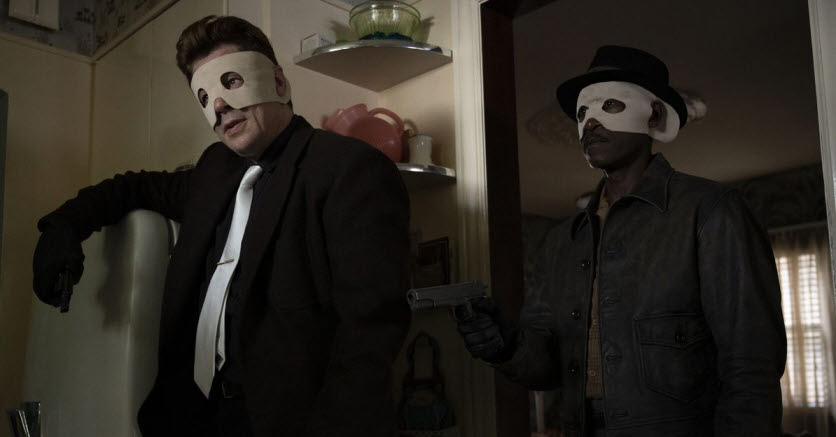
Meanwhile, the movie also pays attention to what is going on around that professor in question, who, not so surprisingly, turns out to be as corrupt as the letter suggests. While trying to handle this unexpected emergency for herself, the professor naturally comes to suspect one of her two assistants who have actually handled all those dirty deeds on her behalf, and that leads to a hilariously serious moment between her and that assistant.

As that assistant, a senior student named Seon-ah (Lee Ju-young), tries to figure out how to solve the situation for herself as well as her boss, we get to know a bit about how things have been desperate and frustrating for her during recent years. Constantly struggling to pay off her college tuition loan, she also has to work at a campus college coffee shop, but it looks like she will be stuck in her miserable status of life forever, and her fellow assistant Jae-woo (Jang In-sub) is not much of help or consolation to her although he turns out to be as desperate as Seon-ah later in the story.

Once all of its main characters are established, the screenplay by director/writer Lee Jin-ho, who makes a feature film debut here after making a couple of short films, throws more turns and twists into its narrative, and the main source of our laughs comes from how each of its main characters struggles to figure out what the hell is going on while mired more in their increasingly complicated circumstance. In case of Joo-seong and Chan-yeol, they belatedly come to realize how serious the situation really is, but they continue to make more misjudgments and errors just like others involved in the circumstance, and that only leads to more chaos and confusion for everyone.

Rather than laughing at their misadventures, the movie regards Joo-seong and Chan-yeol with some care and affection, and the same thing can be said about Seon-ah, who comes to find that she is still as lively and feisty as she once was many years ago. Although stumbling a bit during the final act, the movie eventually delivers a climactic action sequence which turns out to be more skillful and exciting than it seemed at first, and I also like how the following ending is balanced well between hard reality and tentative optimism.

The main cast members act as straight as possible while willingly throwing themselves into lots of silliness on the screen. While Lee Suk-hyeong deserves to be commended for looking both absurd and believable during many of his action scenes in the film, Lee Ju-young provides some necessary gravitas to the story as demanded, and Kim Jae-hwa, Jang In-sub, and Lee Se-joon are also fun to watch in their respective supporting parts.

In conclusion, “Action Hero” is rather modest on the whole, but it is funny and engaging enough to be compared with “The Paper Tigers” (2020), another recent martial arts comedy action film which is also silly but entertaining in its own way. To be frank with you, I wish it went further with more action and satire, but that weakness is understandable considering its small production budget, and it is certainly another notable debut feature film of this year in South Korea.

Posted in Movies | Tagged , , , , , | Leave a comment

Fear Street Part Three: 1666 (2021) ☆☆☆(3/4): … and now it faces the origin of evil

I must confess that I had some skepticism when I came across the trailer of the Fear Street trilogy a few weeks ago. Based on the popular book series of the same name by R.L. Stine, it just looked like your average Netflix event to be watched and then forgotten, but, what do you know, its first two films turned out to be more interesting and entertaining than expected, and now here comes “Fear Street Part Three: 1666”, which works well as the satisfying conclusion to what has been built up so well in its two predecessors.

First, let me give you a bit of summary on what happened in “Fear Street Part One: 1994” (2021) and “Fear Street Part Two: 1978” (2021), respectively. Around the end of the first film, its two main characters, Deena (Kiana Madeira) and her nerdy younger brother Josh (Benjamin Flores Jr.) managed to survive along with Deena’s girlfriend Sam (Olivia Scott Welch), but, alas, they are still menaced by that old curse put upon their town many decades ago, and Sam is subsequently possessed by some evil power behind it. In the second film, Deena and Josh come to the lone survivor of one of many serial killing incidents in their town, and the traumatic survival story of this lone survivor in question eventually gives them a possible solution for getting rid of that old curse from not only Sam but also their town once for all.

It seems that all Deena and Josh will have to do is taking the skeletal hand of a young woman supposedly behind that old curse and then bringing it back to where this young woman was buried, so, along with that skeletal hand obtained from the lone survivor, they quickly go to that burial site, which Deena and Sam accidentally came across in the first film. When Deena finally brings the skeletal hand back to its owner, she instantly experiences the old memories of its owner, and the movie accordingly moves back to 1666, when the town was modestly being established by a bunch of settlers from England.

Through the viewpoint of the owner of the skeletal hand, the movie gradually reveals to us what exactly happened at that old time while having some little fun from having many of the main cast members playing the other characters in this new period background. Although this looks rather awkward at first, we get slowly accustomed to this rather amusing casting choice, and we soon become more emotionally involved in what is going on around the young woman and several others including the local preacher’s daughter, to whom she becomes quite attracted just like Deena is helplessly drawn to Sam.

Quite well aware of the danger of their forbidden romance, these two young ladies try to be careful about their emotional matter as much as possible, but they cannot completely hide it from others, and they are soon thrown into a bigger problem as the town and its residents begin to be disturbed by a series of ominous incidents. Especially after one shocking happening which was incidentally the first serial killing incident in the town history, the town residents are thrown into more panic and fear, and, not so surprisingly, many of them start to suggest the presence of witchcraft around the town.

While we surely get several tense dramatic scenes as the town residents embark on their frantic witch hunt later in the story, the screenplay by director Leigh Janiak and her co-writers Phil Graziadei and Kate Trefry takes several neat plot turns for springing some surprises for us, and that makes the first half of the movie more poignant and harrowing than expected. Although the ending is already predetermined from the start, the movie keeps engaging and chilling us as usual, and then we come to see more of what is actually being at stake in the ongoing circumstance surrounding Deena and the other main characters in 1994.

I will not go into what will happen next during the second half of the film, but I can tell you instead that the movie did a good job of presenting a smart variation of what we got from the climax parts of its two predecessors. While we are not so surprised as Deena and several other main characters find themselves cornered by a bunch of lethal menaces at a certain familiar spot in their town, we are still amused and thrilled as before thanks to Janiak’s competent direction, and we come to pay more attention to whether they will eventually survive their increasingly perilous night.

The main cast members of the movie dutifully fill their respective spots as usual. While Kiana Madeira and Olivia Scott Welch are believable with the considerable chemistry between them, Ashley Zukerman, Gillian Jacobs, Benjamin Flores Jr., and Darrell Britt-Gibson also give solid supporting performances around Madeira and Welch, and you may be often delighted to see several other notable supporting performers in the series popping here and there along the story.

On the whole, “Fear Street Part Three: 1666” is as fun and thrilling as its two predecessors, and I really enjoyed how it skillfully completes its whole big picture in the end. Besides scaring us as much as it can, this wonderful trilogy is also willing to amuse and tickle us while bringing some refreshing modern perspective and element to its familiar genre territory, and I think it will be fondly remembered for a long time just like “Scream” (1996) and other smart and witty horror films in the past. In short, it is one of the more entertaining stuffs during this summer season, and, to be frank with you, I am willing to give it another round someday for appreciating its many commendable aspects more.

Posted in Movies | Tagged , , | Leave a comment