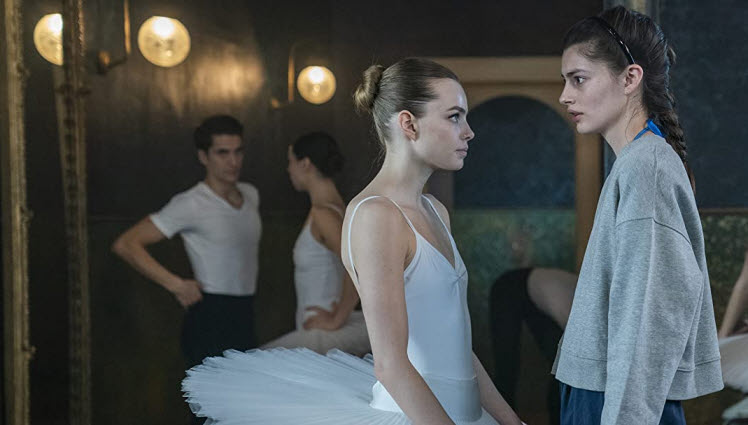
Shang-Chi and the Legend of the Ten Rings (2021) ☆☆☆(3/4): Hail to Tony Leung

Superhero movie can only be as good as its villain character, and “Shang-Chi and the Legend of the Ten Rings”, the latest product from the Marvel Cinematic Universe (MCU), is often elevated by the very compelling presence of its villain character. Although not occupied with world domination or some other goals as grand as that, he is brimming with sheer emotional intensity as constantly driven by a surprisingly poignant personal motive, and he is probably the most complex MCU villain character since Michael B. Jordan’s character in “Black Panther” (2018).

His name is Wenwu, and he is played by Tony Leung, a Hong Kong actor who has been one of the most interesting performers in our time for more than two decades. With his deeply soulful eyes and natural charismatic presence, he has effortlessly impressed and dazzled me and many other audiences as deftly and sensitively handling his various characters’ matters of heart, and, when I happened to revisit Wong Kar-wai’s great film “In the Mood for Love” (2000) at a local theater early in this year, I was reminded again of what a great performer Leung is. Just like his co-star Maggie Cheung, he does not seem to signify anything on the surface, but both of them subtly convey to us their character’s mutual romantic feelings without any ounce of melodramatic exaggeration, and we are both amused and touched by their exquisitely discreet attitude.

I apologize for digressing a bit, so let’s get back to what I am supposed to talk about here in this review. Equipped with mysterious ten metal rings which have given him not only superpower but also immortality, Wenwu has attained and maintained considerable power and wealth for more than ten centuries, but then he finds himself unexpectedly fallen in love with one woman who dares to stand up against him. As a strong-willed guardian of some hidden magical place Wenwu wants to conquer, Jiang Li (Fala Chen) turns out to be an equal match for him, and we accordingly get a gracefully dynamic fight scene not so far from the duel scene between Leung and Zhang Ziyi in Wong’s recent martial arts drama film “The Grandmaster” (2013).

In the end, Wenwu and Jiang marry while leaving behind their respective worlds, and they subsequently have two children, but, alas, their happiness does not last long. After Jiang’s unfortunate death, Wenwu returns to his old violent way of life, and his grief and anger consequently affected the lives of his two children a lot, Shang-Chi (Simu Liu) and Xialing (Meng’er Zhang).

25 years later, Shang-Chi is living normally in San Francisco while working as a parking lot valet with his best friend Katy (Awkwafina), but then his plain daily life, which he has carefully maintained for years since he left his father’s clan, is soon disrupted. When he and Katy are on a city bus, they are suddenly ambushed by a bunch of goons sent by his father, and that leads to an action sequence as impactful as the similar one in “Nobody” (2021).

It does not take much time for Shang-Chi to realize that his father and those goons will also come for Xialing, who seems to live somewhere in Macau, China. Along with Katy, Shang-Chi hurriedly flies to Macau to find his sister, but then he comes across a couple of surprises, and we are accordingly served with another impressive action sequence to behold. Simu Liu, a likable Canadian actor whom I noticed for the first time via Canadian TV sitcom series “Kim’s Convenience”, shows here that he is a competent action movie performer, and Meng’er Zhang also deserves to be commended for bringing lots of ferocity to her character’s swift and precise physical actions.

When Wenwu finally shows himself in front of his two estranged children, he is willing to talk a lot about what he is going to do just like your average James Bond movie villain, but he does believe that this is also a very important matter to his children. He has been searching for a way to resolve his longtime personal grief and pain, and now he is almost near his ultimate goal thanks to what he recently extorted from his children. Leung handles this obligatory expository part with a considerable degree of class, authority, and humanity while maintaining well his character’s steely appearance, and he always commands over several other performers around him, who, in my inconsequential opinion, often seem to be in genuine awe and respect as sharing the screen with him.

The movie inevitably culminates to the big finale packed with lots of CGI actions, but director Destin Daniel Cretton, who wrote the screenplay along with Dave Callaham and Andrew Lanham, thankfully does not lose the human dimensions of the story even during the most bombastic moments in this part, and I also appreciate how he and his crew members present many distinctive cultural elements with care and attention. Compared to the disastrously misguided attempt in “Mulan” (2020), the result is quite more authentic as frequently reminiscent of many Chinese martial arts drama films, and I also enjoyed the solid supporting performances from Awkwafina, Fala Chen, Michelle Yeoh, and a certain well-known actor who cheerfully functions as a sort of Shakespearean comic relief in the story.

On the whole, “Shang-Chi and the Legend of the Ten Rings” brings another whiff of fresh air to the MCU franchise just like “Black Widow” (2021) did a few months ago, and it will surely give a sense of empowerment to many Asian American audiences like “Black Panther” did to African American audiences. So far, the ongoing Phase Four of the MCU has been more interesting than I expected, and I hope the people behind the MCU will keep going further with this welcoming trend.

Posted in Movies | Tagged , , , | 1 Comment

Bob Ross: Happy Accidents, Betrayal & Greed (2021) ☆☆☆(3/4): A decent painter betrayed by his greedy partners

As far as I can see from Netflix documentary “Bob Ross: Happy Accidents, Betrayal & Greed”, which was released a few days ago, Bob Ross was not only a decent painter but also a good man to admire. He simply wanted to share the joy of painting with many others out there in addition to encouraging them a lot, and that is the main reason why it is really disheartening to see how his wholesome image and legacy have been ruined and tarnished by his greedy business partners since his untimely death.

Mainly through his son Steve Ross and several friends/colleagues who knew Ross well, the early part of the documentary shows and tells us a bit about Ross’ early years. While he served in the US Air Force in Alaska during the 1960s, Ross actively pursued his interest toward painting, and his son and his first wife reminisce about how much he was devoted to painting whenever he was not working. Around the time when he was finishing one painting, his mind was already focused on whatever he was going to paint next, and he eventually came to pursue his personal passion more after leaving the US Air Force several years later.

During the 1970s, Ross met a TV painting instructor named William Alexander, and, as his mentor, Alexander impressed Ross a lot for how quickly he finished one painting during each 30-minute episode of his TV show. As often appearing along with Alexander on TV, Ross came to master that quick painting method, and then, what do you know, he soon stepped into the league of numerous TV painting instructors including not only Alexander but also Cathwren and Gary Jenkins, who were already famous for teaching how to draw flowers around that time.

When Ross worked with his accidental business partners Annette and Walter Kowalski at the beginning, everything was quite small and modest to say the least, but then it did not take much for all of them to realize that they had something quite special in their hands. Although he was rather clumsy during the shooting of the first several episodes of his TV show, Ross soon got more accustomed to how to present his painting process in front the camera, and his warm natural charisma, which was mainly represented by his tranquil face and amusing Afro hairdo, shined more along with that. As he went through one season after another, he became more and more famous in public, and he ended up doing no less than 30 seasons until his death.

According to his son and his colleagues, Ross was not so different from his TV persona like, say, Mr. Rogers, and they all fondly remember how he used to make them feel good with his positive influences. Although Mr. and Mrs. Jenkins were basically a competitor to him in their field, Ross did not hesitate to recommend them at times during his TV show, and he and they remained to be good friends till his death. In case of his son, Ross did not mind encouraging and supporting him on TV, and his son, who became a painting instructor just like his father, still appreciates his father’s sincere help a lot.

However, unfortunately, there came a trouble in Ross’ life and career. As time went by, Mr. and Mrs. Kowalski, who later established Bob Ross Incorporated (BRI), attempted to gain more control over Ross and his copyrights, and Ross was certainly not pleased about this at all. His second wife stood by him as protecting him from this avaricious couple as another business partner of his, but then she died early due to her terminal illness, and Ross was further devastated when he was notified that he would also soon die not long after that.

Nevertheless, Ross kept trying to work as before while not revealing his impending death to the public, and he also continued to defend his legacy from Mr. and Mrs. Kowalski even though his body got more fragile day by day. Around the time of his eventual death in 1995, he only weighed around 38 kg (around 84 pounds), and his son tells us how it was painful for him to see his father gradually drained of his usual positive spirit.

While Ross defended his legacy till his death, Mr. and Mrs. Kowalski did not stop at all in their aggressive pursuit of the full control over Ross’ legacy, and the second half of the documentary focuses on how nasty and greedy they and their company have been during last 26 years. Besides damaging the lives and careers of several people close to Ross just for more business profit and control, they have also vulgarized what was so caringly established by Ross, and that will surely make your eyes roll for good reasons.

Ross’ son surely tried to fight against this greedy couple, but, alas, it turned out that there was really nothing he could do for stopping them, and they remain the one who has power and money. As a matter of fact, no less than 12 people associated with Ross or BRI declined to be interviewed for the documentary because they all feared for the possibility of getting sued by Mr. and Mrs. Kowalski. Of course, Mr. and Mrs. Kowalski also declined to be interviewed, and their company is already working on protecting their business interest from whatever will be resulted by the Netflix release of the documentary.

On the whole, “Bob Ross: Happy Accidents, Betrayal & Greed” illuminates its human subject’s legacy while revealing a lot about the ongoing injustice inflicted on it. Director Joshua Rofé did a competent job of juggling interview and archival footage clips, and I also like how he gives the documentary some nice artistic touch via a number of paintings emulating Ross’ painting style, which function as our window to those past moments remembered by the interviewees in the documentary. In my humble opinion, Ross and his legacy surely deserve better, and I can only hope that there will be the happy ending for them someday.

Posted in Movies | Tagged , , , , | Leave a comment

CODA (2021) ☆☆☆(3/4): A bit better remake on the whole

“CODA” is a solid crowd-pleaser which has its big heart in the right place. Based on French film “La Famille Bélier” (2014), the movie gives us a sensitive and heartwarming tale of one musically talented girl and her culturally deaf family, and it is actually a bit better than the original version as handling its story and characters with more sensitivity and thoughtfulness. Because I already watched the original version, I was well aware of how it was going to pull some heartstrings inside me, but it engaged me more than expected thanks to its good storytelling and the commendable efforts from its main cast members, and it really earns those several big emotional moments around the end of its story.

At first, the movie establishes the daily life of a teenage girl named Ruby Rossi (Emilia Jones) and her culturally deaf family living in a small seaside town of Massachusetts. For many years, her parents Frank (Troy Kotsur) and Jackie (Marlee Maltin) have earned their living via their small fishing business, and Ruby and her older brother Leo (Daniel Durant) have been quite accustomed to helping their father on his fishing boat. Because of their disability, Frank and Leo often depend a lot on Ruby during their working time, and Ruby, who is the only non-deaf person in her family, has no problem at all with functioning as a bridge between her family and the outside world.

Once she graduates from her high school several months later, Ruby is supposedly going to help her family business more, but there comes a new possibility for her life when she is about to start her last year at a local high school along with many other schoolmates including her best friend Gertie (Amy Forsyth). When they are looking for any suitable extracurricular activity for them, Ruby chooses to join the school choir just because of her longtime interest and passion toward music, and what do you know, she turns out to be a very good singer with considerable potential. That is soon noticed by her rather eccentric music teacher, who is very willing to encourage and train her more for her possible enrollment in some prestigious music college in Boston.

The teacher later pairs Ruby with a male student named Miles (Ferdia Walsh-Peelo) for their duo performance, and she and Miles soon find themselves attracted to each other as spending more time together. At one point, she takes him to her family house, and it looks like they can get a bit closer to each other than before as they share their common passion on music, but then there comes an amusingly embarrassing moment thanks to Ruby’s parents, who are quite frank (and loud) about a certain aspect of their healthy private life.

As she hones her musical talent more under her music teacher, Ruby becomes more eager to go to that music college in Boston, but she also becomes more conflicted about whether she can actually leave her family. As the local economic situation have become hard and difficult for him and many other fishermen in the town due to many obstacles including a new regulation involved with monitoring their work process, Frank decides to take a big business risk, and that naturally means he and his deaf family members are going to need Ruby more than before. As a girl who cares a lot about her family, Ruby tries to balance herself between her passion and her family, but that turns out to be more difficult than expected, and she will have to make a big choice on her future sooner or later.

What will eventually happen between Ruby and her family will not surprise you that much, the screenplay by director/writer Sian Heder, who previously made a feature film debut with Netflix film “Tallulah” (2015), holds our attention more as steadily developing the story and characters via small but enjoyable moments. While Ruby comes to us a smart and plucky lass for whom we come to root a lot along the story, her relationships with her deaf family members are depicted with loving care and details, and the movie also lets us empathize more with her deaf family members during several crucial scenes including the one where the soundtrack is appropriately switched off for giving us some more understanding on their soundless condition.

Above all, the movie is enlivened a lot by its wonderful main cast members, who incidentally received the Special Jury Ensemble Cast Award when the movie was premiered at the Sundance Film Festival early in this year (It also received the US Grand Jury Prize, the US Dramatic Audience Award, and the US Dramatic Best Director Award for Heder in addition to being subsequently acquired for a festival-record $25 million by Apple, which released the film in US a few weeks ago). While Emilia Jones, a young talented British actress who may impress us more in the future, holds the center well via her charming lead performance, Troy Kostur, Marlee Martin, and Daniel Durant bring considerable authenticity and dignity to their respective characters as real deaf performers, and Martin, who won the Best Actress Oscar for her memorable performance in “Children of a Lesser God” (1986) and Kostur steal the show at every moment of theirs in the film.

In case of the other main cast members in the film, they bring some life and personality to their supporting roles while dutifully holding their spots around the fringe of the story. While Eugenio Derbez is somehow endearing despite his character’s broadly comic demeanors, Ferida Walsh-Peelo click well with Jones in several intimate scenes between them, and Amy Forsyth deserves to be mentioned for imbuing her functional role with enough sense of life.

In conclusion, “CODA”, whose title is the acronym of “Child of Deaf Adults”, is an exemplary case of remake, and I will not be surprised if audiences and critics keep talking about it during the upcoming Oscar season. In my humble opinion, there have already been several other better films including Oscar-nominated German film “Beyond Silence” (1996), but it is a fairly good film nonetheless besides being an improvement over the original French film, and I sincerely hope that it will bring more public awareness of those culturally deaf people out there.

Posted in Movies | Tagged , , , | 2 Comments

Annette (2021) ☆☆☆(3/4): Leos Carax back in action

Leos Carax’s latest film “Annette” may be another case of style-over-substance, but what a wild and ambitious genre exercise it is. Exultantly gliding from one solid musical number to another as your typical sung-through musical film, the movie confidently reaches for more style and energy from the beginning to the end, and you will come to admire its numerous operatic moments packed with whirlwind emotional intensity, if you are willing to go along with its stylish mood and some deliberately outrageous aspects.

After the exhilarating prologue musical sequence where Carax and several other figures in the production including his composer/co-writers Ron and Russell Mael of Sparks set the unabashedly artificial quality of the movie, we are promptly thrown into the ongoing romance between Henry McHenry (Adam Driver) and Ann Defrasnoux (Marion Cotillard), two very different artistic figures who have somehow complemented each other since they fell in love with each other. While Henry is a popular standup comedian as provocative as Andrew Dice Clay or Andy Kaufman, Ann is an acclaimed classic opera singer relatively more respectable compared to her lover, and their unlikely romantic relationship has surely drawn lots of attention from the media as they willingly show more of their passionate romance in public.

When Ann subsequently gets pregnant, that seems to make her and Henry much happier than before, but, alas, there comes a big trouble in Henry’s career. As boldly reflected by Ann’s vivid but troubling musical dream sequence, a group of women step forward together for revealing how they were respectively abused and harassed by Henry in the past, and that consequently leads to Henry’s long descent into self-destruction. Those provocative schticks of his do not amuse his audiences any more, and he only comes to make his situation worse as getting himself mired in more rage and self-pity, while Ann’s career ironically goes up and up with more successes.

Now you may be reminded of “A Star Is Born” (1937) and its several remake versions, but then Carax catches us off guard when Ann eventually gives birth to her baby daughter, who is named, yes, Annette. We get a weirdly sentimental musical moment as Ann is going through the agony of her childbirth, and then Carax adds more artificial touches to amuse or distract you a lot. Right from when she comes into the world, Annette is presented as a, shall we say, very artificial figure, and it is kind of amusing to see how wildly and playfully the movie goes all the way with this outrageous setting during the second half of the film, which mainly revolves around Henry’s opportunistic attempt to capitalize on his baby daughter’s unbelievable talent.

It should be pointed out that the story and characters remain to be more or less than a mere flimsy ground for a bunch of songs written by the Mael brothers, so we come to observe the film from the distance at times, but the movie keeps things rolling under Carax’s skillful direction. I must confess that I do not remember that well many of the original songs in the film, but I was entertained by how they are fluidly and dexterously presented on the screen with considerable energy and personality, and the overall result is quite less tiresome compared to what I had to endure while watching “Les Misérables” (2012).

Carax’s two lead performers willingly throw themselves into many wild emotional moments in the film. Adam Driver, who has been one of the most interesting American actors during last 10 years since his Emmy-nominated breakthrough turn in HBO TV series “Girls”, is no stranger to singing as memorably shown from “Inside Llewyn Davis” (2013) or “Marriage Story” (2019), and he ably delivers several key musical moments including the one accompanied with “We Love Each Other So Much”, which can be regarded as the theme song of the movie.

On the opposite, Marion Cotillard is rather under-utilized in comparison, but, at least, she graces the screen as usual whenever she enters the screen. In case of Simon Helberg, who was very funny in “Florence Foster Jenkins” (2016), holds his own small place well around Driver and Cotillard as another substantial character in the story, and I also appreciate how the movie presents Ann and Henry’s daughter as someone more than a plot element.

Although it is less satisfying to me compared to his previous film “Holy Motors” (2012), “Annette”, which received the Best Director award when it was shown at the Cannes Film Festival early in this year (It also deservedly received the World Soundtrack Award, by the way), reminds me again of what an adventurous filmmaker Carax has been during last several decades. After all those notorious troubles involved with “The Lovers on the Bridge” (1991) and “Pola X” (1999), his career seemed to be almost finished, but then he made a glorious comeback with “Holy Motors”, and “Annette” demonstrates again that he has lost none of his artistic ambition and talent yet.

To be frank with you, I am still not quite enthusiastic about the movie compared to some other critics and reviewers out there, and I will not deny that I was constantly aware of its many artificial aspects throughout its rather overlong running time (141 minutes). Nevertheless, I admire how Carax and his cast and crew members take a chance more than once here, and I think you should also take a chance. Regardless of whether you will like it more or less than me, I assure you that you will not forget this odd and singular piece of work for a long time.

Posted in Movies | Tagged , , , | 1 Comment

John and the Hole (2021) ☆☆(2/4): A boy who traps his family in the hole

“John and the Hole” begins with a very twisted story promise to grab your attention, but it is unfortunately not developed into something really interesting or compelling as humorlessly trudging along its increasingly flat storyline. While this is not a crappy piece of work at all thanks to some competent technical aspects to be appreciated, the movie is still no more than a hollow and superficial genre exercise on the whole, and it ultimately lets us down more with the insipid resolution at the end of the story.

At first, the movie sets its clinical tone around its equally detached young hero. Right from his first scene, we notice something odd and disturbing about John (Charile Shotwell), and the early part of the film phlegmatically shows us how this 13-year-old boy has been pretty distant to his close family members, who are living along with him in one posh modern house located in the middle of a forest. His father Brad (Michael C. Hall) and his mother Anna (Jennifer Ehle) look like nice parents on the surface, but they do not know how to get close to their peculiar son, and the same thing can be said about his older sister Laurie (Taissa Farmiga), whose mind is mostly revolving around her new boyfriend.

When he is playing with a drone in the forest during one afternoon, John happens to come upon an abandoned bunker, and that subsequently leads him to one disturbing idea. After testing the effectiveness of a certain prescribed drug for his mother, he has his whole family drugged at one night, and his parents and older sister are shocked to find themselves trapped in that bunker in the following morning. Once they come to realize what is really going on, they naturally plea to John, but John coolly ignores their desperate plea, and then he embarks on becoming the man of the house. For example, he drives his father’s vehicle for himself and then gets some money from an ATM machine, and he also makes sure that nobody is looking for their family members for a while at least.

We naturally come to wonder more about what makes this problematic boy tick, but the movie, which is based on screenplay writer/co-producer Nicolás Giacobone’s short story “El Pozo”, adamantly refuses to give us any easy answer. As struggling to survive in the bunker day by day, John’s parents ask themselves again and again on their son’s elusive motive, but they cannot find any answer, and neither can their daughter, who already knows a bit about how odd and unnerving her younger brother is.

Meanwhile, the movie continues to observe how John tries to act like a free grown man able to take care of himself and his life. At one point, he invites a boy around his age who has communicated with him via an online game, and they have some fun together at his house, but John turns out to be pretty clumsy in interacting directly with his friend, who comes to regard John with more bafflement when John later pays him some money just for being with John for one day.

Is John simply an emotionally stunted kid who happens to take a drastic measure for more freedom? Or, is he actually a cold-blooded psychopath incapable of making any meaningful human connection with others around him? The movie keeps observing his creepy behaviors as often tantalizingly suggesting these and other possibilities about its young hero, but it only ends up going nowhere without giving us any understanding or insight on him, and John accordingly becomes a more distant cypher to us. In case of his three unfortunate family members, they are more sympathetic in comparison, but the movie does not flesh them out well enough to engage us more, and we become more frustrated while also caring less about whatever will happen between them and John in the end.

Director Pascual Sisto, who incidentally makes a feature film debut here in this work, and his crew members did as much as they can for maintaining the cold and detached attitude of the movie to the end, but their fairly good efforts are often wasted due to the barebone narrative of the film. There are several morbid moments reminiscent of the twisted works of Yorgos Lanthimos and Michael Haneke, but the movie mostly fails to reach to the dark absurdity of Lanthimos’ films or the gut-chilling ruthlessness of Haneke’s movies, and a subplot involved with a mother and her young daughter seems rather pointless without resonating much with the main storyline.

The main cast members of the film try as much as they can do for filling their respective roles. Charlie Shotwell, a young actor who has steadily advanced since his notable supporting turn in “Captain Fantastic” (2016), is hopelessly stuck in his distractingly one-note role, and I must tell you that he was much more engaging in “The Nest” (2020), a little but intense family drama which is also one of the overlooked gems of last year. In case of Michael C. Hall, Jennifer Ehle, and Taissa Farmiga, they have more things to do at least, but then they only come to function as a mere counterpoint to Shotwell’s blank attitude.

In conclusion, “John and the Hole” stumbles a lot due for many reasons including thin characterization as well as deficient storytelling, and I have been feeling emptier as reflecting more on its considerable failures. At least, the movie shows that Sisto is a filmmaker who does know how to intrigue us with mood and idea, and I sincerely hope that he will soon move onto better things to come into his nascent filmmaking career.

Posted in Movies | Tagged , , , | Leave a comment

Words on Bathroom Walls (2020) ☆☆☆(3/4): His little mental secret

“Words on Bathroom Walls” is another typical coming-of-age drama about a troubled adolescent romance, but it is more thoughtful and sincere than expected. While it handles its story and characters well with considerable care and attention, the movie does not pull punches in case of depicting the dark and disturbing aspects of its hero’s serious psychological condition, and it surely earns its touching ending thanks to its sensitive storytelling as well as the engaging performances from its main cast members.

Charlie Plummer, a promising newcomer who has been more prominent during last several years thanks to his good performances in a number of notable films including “All the Money in the World” (2017) and “Lean on Pete” (2017), plays Adam Petrazelli, a teenage boy who has a long history of schizophrenia behind his socially awkward appearance. For last several years, Adam has managed to keep his mental illness under his control while actively pursuing his aspiration of being a first-class restaurant chef someday, but, alas, there eventually comes a point when his mental illness causes a big trouble in his high school, and he subsequently goes through a series of medications while his mother tries to find any other school which may have him until his upcoming graduation.

In the end, Adam is accepted by a Catholic high school located a bit far from his home, and he is fine with that. As long as he keeps his dark secret behind his back for next several months, everything may turn out to be well for him as well as his mother and her current boyfriend and then he will probably move onto some prestigious culinary school as he has always wanted. In addition, it seems that a new type of drug for schizophrenia is more effective than expected, though his life becomes a bit more boring than before due to the consequence disappearance of three colorful imaginary figures not so far from the similar ones in “A Beautiful Mind” (2001).

When he is having a little private interview with the school principal, Adam happens to have a sort of Meet Cute moment with someone in an empty bathroom in the school building. That person in question is a Latino female student named Maya Arnez (Taylor Russell), and her first encounter with Adam is pretty strained as he happens to witness what Maya has been doing behind her supposedly exemplary appearance. Although she is a top-notch senior student expected to be the valedictorian at the upcoming graduation ceremony, she has often earned some money from taking care of the homeworks of some rich kids in the school, and Adam becomes more attracted toward to her as getting to know her bit by bit during next several following days.

Because he has been in the serious need of improving his test scroes, Adam requests some help from Maya, and she does not mind that at all because, well, she is also attracted to him while quite curious about him. Although he still does not tell her anything about his mental illness, she is willing to spend more time with him, and her presence seems to help him as much as his current medication.

Of course, things later become less rosy for Adam as his mind and body experience the side effects of his new medication, and the screenplay by Nick Naveda, which is based on the novel of the same name by Julia Walton, later goes through several intense moments of emotional upheavals along with its hero. While feeling more conflicted about hiding his mental illness from Maya, Adam also comes to clash a lot with his mother, and there is a painful scene where he and his mother face old anger and resentment accumulated between them for many years. Although he has always been a dear son to her, Adam’s mother has her own exasperation and frustration as coping with his schizophrenia everyday, and even her current boyfriend, who turns out to be more decent and compassionate than he seems at first, cannot help her that much no matter how much he sincerely tries.

As he often cannot help himself, Adam can be quite rude and hurtful to others around him, but the movie never loses its empathy on its hero, and Plummer steadily holds our attention even when his character is driven to some extreme moments later in the film. Wisely avoiding exaggerating his character’s mental problem, Plummer ably conveys to us his character’s constant inner struggle along the story, and we come to accept and understand his character’s inherent flaws more besides rooting for him more.

Plummer is also surrounded by a number of fine performers, who hold each own place well around him. While Talyor Russell has a good chemistry with Plummer whenever they share the screen together, Molly Parker and Walton Goggins are also solid as Adam’s concerned mother and her boyfriend, and Andy García has several small but enjoyable moments as the no-nonsense priest in the school.

Directed by Thor Freudenthal, “Words on Bathroom Walls” is a fairly entertaining product which is also poignant for its genuine emotional moments, and I was particularly touched by how its obligatory feel-good finale sidesteps clichés and, along with Adam and others around him, recognizes what he will probably have to live with for the rest of his life. Yes, there may be more struggles for him in the future, but he is less afraid and uncertain than before, and that is a progress for him, isn’t it?

Posted in Movies | Tagged , , , , , | Leave a comment

Underground (2019) ☆☆☆(3/4): A calm and thoughtful observation of subway workers

South Korean documentary film “Underground” simply observes a bunch of various subway workers who have devoted themselves to making their public system work everyday for millions of citizens out there. Although it does not explain that much to us as austerely sticking to its calm and detached position, the documentary lets us understand how their system works in addition to appreciating their professional dedication, and we come to discern the importance of their labor rights more than before.

At first, the documentary begins with a group of male senior students of an industrial high school in Busan. As reflected by the very first scene of the documentary, they all are about to graduate, so they now must be serious about getting a job after their graduation, and the documentary comes to focus a bit on one of these students as he considers getting hired at a contract company which has been associated with the Busan subway.

Around that point, the documentary begins to look around several different parts of the Busan subway system. We see a big factory where disassembled subway cars are examined and repaired everyday. We watch a middle-aged subway conductor who has diligently driven subway trains for years. We observe female cleaners assigned to one of the main subway stations in the city. We glimpse on a few employees who steadily monitor many corners of that station in their control room. And we also look closely at a group of workers checking the railroads of one subway line.

While the camera often approaches close to these and many other people in the documentary, director Kim Jeong-Keun chooses not to inform us on who they are or how they work, and he simply lets the camera convey to us what matters a lot to its human subjects. Doing their respective jobs well everyday is certainly No.1 priority to many of them, but they also care a lot about their labor rights, and one crucial scene in the documentary shows a bunch of employees attending a meeting with a labor right activist from Seoul. Although they may not understand everything this activist tells them, they do believe that they deserve to be treated better by their big employer, and we are not so surprised when the documentary later tells us a bit about how things have been difficult for many non-regular employees of the Busan subway, who have been unfairly regarded as a sort of second-class workers.

Anyway, the system keeps working as usual, and we get a series of unadorned moments showing how its many employees serve the system and the public. At that big factory for repair and maintenance, we see many workers carefully working on various small and big parts of a disassembled subway car, and this moment will surely remind you of how every moment of yours on subway depends a lot on these and many other repair/maintenance workers out there.

In case of the cleaning ladies in that subway station, they remind us of how those clean subway stations have been taken for granted by many of us. Several hours before the subway station is opened to passengers, these ladies work a lot on the floors of their subway station, and they still have to work while their subway station is opened, though they do have some time for rest as shown from a small cheerful scene unfolded in their little private place.

Even at night, the system does not sleep at all as many other employees do many different repair and maintenance jobs along its several subway lines, and the documentary gives us some close glimpses into how these nighttime employees work every night. Once the last subway train is stopped and the whole subway line is shut down around midnight, a group of nighttime workers check out one area after another along the railroads of the subway line, and the camera looks at them for a while when they have to do some necessary repair at a certain spot.

In case of that middle-aged subway train conductor, he cannot help but feel a bit nostalgic when he talks about his early years, but the documentary does not dwell on his good old past at all while clearly pointing out the possible end of his occupation in the future. Like many labor jobs, his job will be completely automatized someday, and there is a little bittersweet moment when he gets on a new subway train fully controlled by its computer system.

While shuffling among its many different parts, the documentary does not lose its focus at all as gradually completing its big picture, and then it eventually goes back to that male senior student introduced to us at the beginning. Along with many of his classmates, he gets to know more about the range of his possible choices in the future, and he subsequently chooses to work at that contract company, but we cannot help but worry about him as well as other young people not so different from him. Sure, he is well aware of the possible change to come in his field sooner or later, and he remains rather optimistic nonetheless, but, considering the current industrial trend, I think the future may not be that hopeful for them during next several decades.

Often reminiscent of Frederick Wiseman’s recent works such as “City Hall” (2020), “Underground” may feel a bit too dry for you in the beginning, but it is a rewarding experience coupled with some indirect enlightenment for many of you. Even at this point, our life depends a lot on those hard-working laborers who do deserve better, and the documentary did a fairly good job of reminding us of that inarguable fact again.

Posted in Movies | Tagged , , , , | Leave a comment

Luxor (2020) ☆☆☆(3/4): As she wanders around in Luxor

“Luxor” is a slow and tentative romance drama which suggests a lot with its distinctive local atmosphere to remember. Although the movie does not tell that much about the old past between its two main characters, what is subtly and quietly exchanged between these two different people is often absorbing to watch, and their somber emotional drama is further enhanced by the specific mood and details of an old city surrounding them.

When we are introduced to a British woman named Hana (Andrea Riseborough) at the beginning, she has just arrived in Luxor, Egypt, and the early part of the movie shows her getting accustomed a bit to this foreign place while staying at a posh and luxurious hotel in the city. When she is spending her first evening at the hotel bar, we get a little amusing moment when some guy at the bar tries to talk a bit with her while apparently a little drunk. He is not so funny when he mentions a certain well-known mystery novel by Agatha Christie, but Hana does not mind sleeping with him later, and that leads to another small humorous moment for us.

As she aimlessly wanders around here and there in Luxor, we get to know a bit more about Hana. She is a surgeon who has worked as an aid worker in a number of different war zones, and it is apparent from her rather detached façade that she has been emotionally exhausted for whatever she has saw and experienced from those war zones. Right before she came to Luxor, she worked in the border area between Syria and Jordan, and she will soon go to another war zone right after her current vacation in Luxor.

Quite uncertain about whether she will be able to keep going as before, Hana cannot help but reflect more on her past as looking around many old tourist spots. These tourist spots, most of which are the remains of that glorious era of Ancient Egypt, often look overwhelmingly haunting as embodying several thousand years of history, and Hana often finds herself awed by their sheer scale as well as some small details observed from them.

As a matter of fact, she once dated an archeologist named Sultan (Karim Saleh) many years ago, and she is delighted when she encounters him on a river boat during her second day in the city. By coincidence, Sultan happens to be doing another archeologic work of his at a spot not so far from the city, and he is certainly willing to show her what he and his colleagues are doing at present. Although there is nothing particularly special about what they have been excavating now, Hana sincerely listens to what Sultan enthusiastically presents to her, and we are not so surprised when he suggests that they should stay together for a while in his current staying place, which incidentally looks quite shabbier compared to Hana’s.

While Hana chooses to continue to stay at her hotel as planned, she comes to spend more time with Sultan, and it seems they are attracted to each other a lot just like they once were. When Sultan subsequently approaches closer to her during one evening, Hana does not refuse him at all, and we later get a little playful moment as they attempt to be as carefree as those younger years of theirs.

However, as they interact with each other more and more, Hana and Sultan are also reminded of why and how they broke up with each other. Although the movie never specifies whatever happened between them during that time, we still sense some degree of regret and bitterness as they tentatively talk about their past, and we come to understand why Hana is hesitating over the possibility of regaining her old romance.

While Hana and Sultan keep dancing around each other cautiously, the movie continues to engage us with its vivid and palpable sense of locations and people. I must confess that I have never been to Luxor, but this old city, which eventually comes to us the third main character in the film, looks charming and interesting not only for its old history but also its lively and colorful aspects observed from various places and people. Director/writer/co-producer Zenia Durra did a commendable job of conveying well to us the sublime qualities of the city, and we are not so surprised when an old western couple briefly appearing in the film says they have visited the city every year. As a matter of fact, I actually came to feel the need to visit there during my viewing, though that is not possible at all due to the ongoing COVID-19 pandemic.

As the emotional center of the film, Andrea Riseborough, who has been more notable since I noticed her for the first time via her supporting role in “Oblivion” (2013), gives a wonderfully tranquil performance often shining with emotional subtlety, and she is also complemented well by Karim Saleh, who previously collaborated with Durra in her debut feature film “The Imperialists Are Still Alive!” (2010). Right from their first scene, we can clearly sense some history between their characters, and the following scenes between them are warmed up a lot by their low-key chemistry on the screen.

In conclusion, “Luxor” may require some patience from you in the beginning as one of those “slow” films, but this simple but profound piece of work is worthwhile to watch for mood, storytelling, and performance, and I am already willing to savor its strong points again someday. In short, this is one of the overlooked little gems of last year, and I think you should give it a chance someday.

Posted in Movies | Tagged , | Leave a comment

Jumbo (2020) ☆☆☆(3/4): She falls in love with a machine (no kidding)

French film “Jumbo” pushes its preposterous romantic situation all the way, and I admire that even though I often observed its heroine’s peculiar romantic feeling with amusement and skepticism from the distance. Sure, you may have some doubt on her feverish viewpoint, but whatever she feels and experiences seems to be real to her heart at least, and you will probably come to have some understanding and empathy on her extraordinary circumstance even if you often roll your eyes on how far she is willing to go in the name of love and passion.

Noémie Merlant, who was unforgettable along with Adèle Haenel in Céline Sciamma’s great romance period drama film “Portrait of a Lady on Fire” (2019), plays Jeanne Tantois, a shy young woman whose life mostly revolves around her workplace and her residence where she has lived with her mother Margarette (Emmanuelle Bercot). As your average middle-aged busybody quite frank about her heterosexuality, Margarette is quite interested in when her daughter will finally have a boyfriend, but Jeanne is not particularly interested in meeting any man at present while usually occupied with making models in her room, and she is not so pleased when her mother later tries to match her with one of Jeanne’s fellow employees.

Jeanne has worked in a small local amusement park, and it gradually turns out to us that she has actually been quite attached to a recent new attraction installed in the amusement park. Whenever the opening hour is over at night, she usually spends some time with this new attraction as lovingly wiping its surface a bit, and she even calls it, yes, “Jumbo”.

At first, her romantic attraction toward Jumbo looks rather unilateral, but, as least in her viewpoint, Jumbo can actually communicate with Jeanne, and she is delighted to discover at one night that Jumbo is really alive and, perhaps, loves her as much as she adores it. Although it certainly cannot speak in words, Jumbo seems to be capable of expressing its thoughts and feelings to her via those numerous colorful light bulbs on its surface, and that surely makes their private moments look quite surreal as well as romantic to say the least. While it is not able to caress her physically, Jumbo can make Jeanne feel pretty good and stimulated as giving her one hell of ride, and we can clearly sense from her thrilled face that she has never been as exultant as that.

And that is just the foreplay for several odd sexual moments between her and Jumbo. Sure, Jumbo does not have any, uh, tool for making Jeanne’s body feel more intimacy between them, but she and Jumbo come to find a way to get a sort of organism as reflected by one weirdly ‘sticky’ sequence, and her following reaction in the aftermath is not so far from that cloying sense of embarrassment experienced by any person having the first sexual experience. After all, sexual intercourse is inherently not so clean and pretty from the beginning, and Jeanne and Jumbo’s case turns out to be no exception.

When Jeanne subsequently decides to be more opened about her unconventional sexuality, her mother is naturally flabbergasted and outraged, and we accordingly get some intense emotional moments between them. While quite hurt by her mother’s strong rejection of her odd romantic relationship, Jeanne becomes not only more passionate but also more confused about her romantic feeling toward Jumbo than ever, and the director/writer Zoé Wittock’s screenplay, which is, believe or not, inspired by a real-life story, keeps its attitude as straight as before, even during its heroine’s wildest moments including the one involved with her miserably failed attempt on being ‘normal’ later in the story.

Everything in the movie depends a lot on Merlant’s terrific performance, which ably carries the story to the end via its forthright display of unadulterated emotions to be felt and understood by us. Even when we observe Jeanne from the distance, we still empathize with her to some degree thanks to Merlant’s strong acting, and you may come to cheer for her character when her character is more empowered by her romantic feeling and then takes a bold step for herself as well as Jumbo around the end of the story. In case of Jumbo, this huge metallic entity is imbued with a considerable degree of personality and presence, and that is the main reason why Jeanne’s romance with it somehow works despite many preposterous aspects of their relationship.

The main weakness of the film is that its several human supporting characters around Jeanne look relatively underdeveloped even compared to Jumbo. Although she is mostly stuck in her thankless role, Emmanuelle Bercot manages to enliven her role enough to complement Merlant, and Sam Louwyck also acquits himself well as a gruff dude who turns out to be more compassionate and understanding than expected.

Although it could be improved more in terms of story and characters and the finale feels a bit too hurried in my humble opinion, “Jumbo” is still a memorable piece of work thanks to its confident and sensitive handling of its offbeat main subject as well as another fine performance from Merlant. To be frank with you, I do not think I wholly understand whatever is exchanged between its heroine and her metallic lover, but my mind is now going back to the humorously poignant lyric of “If You Could See” from “Cabaret” (1972).

If you could see her through my eyes
You wouldn’t wonder at all.
If you could see her through my eyes
I guarantee you would fall. (Like I did.)
When we’re in public together
I hear society moan.
But if they could see her through my eyes Maybe they’d leave us alone.

Posted in Movies | Tagged , , | Leave a comment

Old (2021) ☆☆1/2(2.5/4): Stuck in aging faster

M. Night Shyamalan’s latest film “Old” starts well with an intriguing and frightening story promise, but then it only ends up being quite rote and contrived instead. Sure, the movie did a fairly competent job of presenting and then developing its story promise during the first two acts, and I was entertained enough by how it relentlessly pushes the story and characters toward its possible logical conclusion. Sadly, the movie stumbles more than once during its arbitrary third act, and I felt quite dissatisfied as walking out of the screening room along with other audiences.
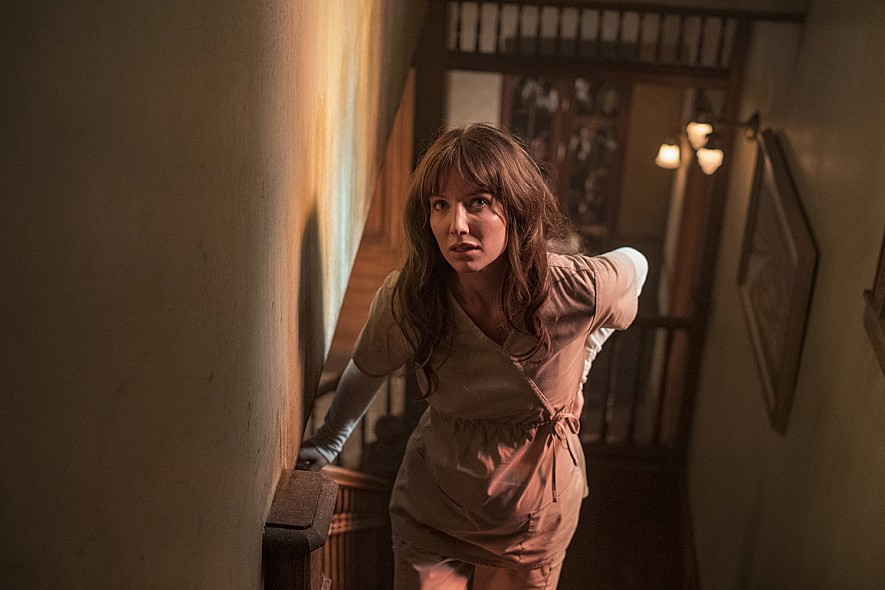
In the beginning, we are introduced to one ordinary middle-class family about to have what may be their last vacation. While they look mostly cordial to each other in front of their two children, Guy Cappa (Gael García Bernal) and his wife Prisca (Vicky Krieps) are actually going through a very difficult time after deciding to end their marriage for some personal reason, and the main purpose of this vacation is giving their kids some good time before whatever they and their kids will have to endure later. Nevertheless, Guy and Prisca soon find themselves arguing with each other not long after arriving in a nice big hotel located in some seaside tropical area, and their kids, who have already been well aware of what is going on between them, become more concerned even while looking forward to having lots of fun during next several days.

Subsequently enjoying the luxurious environment of the hotel, everyone becomes a bit more cheerful than before, and that is when they come to learn about a certain special spot not so far from the hotel. It seems that they can spend a little quiet private time together at that spot, so Guy and Prisca agree to go there along with their kids, but then they are not so pleased to learn later that they and their kids are not the only ones to go there.

Anyway, that spot in question looks fairly nice to the family and several other hotel guests who happen to accompany them. It is actually just a small beach isolated from the outside by the wide and steep rock wall, so they have to walk through the narrow tunnel of that rock wall, but it does not take much time for them to be charmed and then relaxed by the seemingly peaceful mood of this beach. As time leisurely goes by on the beach, Guy and Prisca feel less worried about whatever may happen next to them and their kids, and we come to sense some possibility of reconsideration and reconciliation between them.

However, there are already some bad signs about the beach. At one point, Guy and Prisca’s kids are baffled to find a bunch of objects buried in sand, and then something shocking happens not long after that. Because of that incident, everyone on the beach is certainly willing to leave the beach as soon as possible, but, not so surprisingly, that turns out to be impossible for some inexplicable reason, and then they are thrown into more panic and disorientation due to a number of equally disturbing happenings.

From these happenings, everyone on the beach belatedly comes to realize the terrifying secret of the beach. Probably because of some rare magnetic substance in the rock wall, their bodies are all getting aged quite faster than usual, and, unless they find any possible way out from the beach, they will all eventually be dead due to their accelerated aging process.

As gradually pushing its main characters into more dread and desperation along the plot, the movie, which is based on Pierre Oscar Levy and Frederik Peeters’ graphic novel “Sandcastle”, doles out one unnerving moment to another. As they get aged second by second, Guy, Prisca, and other adult characters on the beach are more reminded of their physical fragility, and Prisca soon comes to have a very gruesome emergency when her certain illness becomes quite more serious than before. In case of Guy and Prisca’s two kids, they are naturally aghast at how suddenly they grow up so fast within a few hours just like some other kid on the beach, and we are served with a morbidly intense scene when one of them happens to have a serious biological problem with that other kid due to their lack of certain physical knowledge.

However, the movie unfortunately lets us down during the last act as resorting to glaring plot contrivance, and we become more aware of a number of weak aspects in the film. While its characters are more or less than plot elements to be squeezed for more suspense or tension, some of their dialogues feel strained and artificial as trying to tell and explain to us a bit too much, and this often undermines the good efforts from its main cast members including Gael García Bernal, Vicky Krieps, Alex Wolff, Eliza Scanlen, and Thomasin McKenzie. Effortlessly conveying to us their characters’ troubled marital relationship right from the beginning, Bernal and Krieps are dependable as usual, and Wolff, Scanlen, and McKenzie are equally solid while reminding us again of why they have been new talented performers to watch during last several years.

Overall, “Old” is an initially promising but ultimately middling misfire, but it is at least a mild failure compared to “The Last Airbender” (2010) and “After Earth” (2013), which are still the lowest points in Shyamalan’s checkered filmmaking career. I cannot recommend it, but I was not that bored during my viewing, and I sincerely believe that Shyamalan will soon get a chance to rebound from another low point of his as he previously did in “The Visit” (2015).

Posted in Movies | Tagged , , | Leave a comment