Wheel of Fortune and Fantasy (2021) ☆☆☆1/2(3.5/4): Coincidence and imagination

Japanese film “Wheel of Fortune and Fantasy”, which won the Silver Bear Grand Jury Prize when it was shown at the Berlin International Film Festival early in last year, is another excellent work from Ryusuke Hamaguchi, who has been one of the notable Japanese filmmakers during last several years. Consisting of three deceptively simple stories, the movie constantly engages us mainly thanks to Hamaguchi’s dexterous storytelling, and I can only admire how effortlessly and thoughtfully it glides from one interesting moment to another.

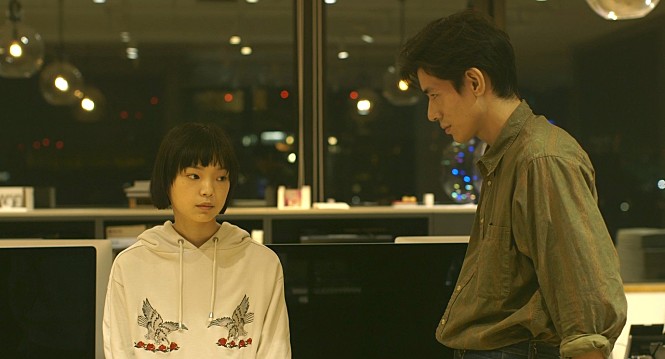
The first story, which is titled “Magic (or Something Less Assuring)”, opens with two young women going through a photograph shooting together outside. They are Meiko (Kotone Furukawa) and her close friend Tsugumi (Hyunri), and we subsequently watch them having a little private conversation as riding a taxi together. Tsugumi recently met some cool guy who really seemed to click well with her, so she tells her friend a lot about how wonderful it was for her to meet someone like him, and Meiko willingly listens to her friend before she eventually parts ways with her friend.

During the next scene, it turns out that there is a hidden reason why Meiko was quite attentive to what her friend was saying. I do not dare to go into details for not spoiling any of your entertainment, but I can tell you instead that this scene is as compelling as the previous scene. As usual, Hamaguchi deliberately has his performers deliver their lines in a rather flat way, but the result is actually playful at times in addition to being accompanied with considerable dramatic effects, and that is the main reason why the following ending scene works well with haunting emotional resonance.

The second story, which is titled “Door Wide Open”, catches us off guard right from the beginning. At first, we see one college professor teaching students in a small class, but then it turns out that the story is not about him or his students at all when the movie looks at what is happening in the nearby office belonging to a professor named Segawa (Kiyohiko Shibukawa). One of his students desperately is begging this professor not to fail him in one of his classes, but Segawa simply dismisses his student’s desperate plea, and that certainly makes this student become quite spiteful about Segawa.

This student happens to be having a casual affair with a young woman named Nao (Katsuki Mori), and he comes to have a little naughty idea when they spend some time together in his small residence. Segawa has recently gained more prominence thanks to a little novel of his which received some prestigious literature award, and Nao is going to approach closer to Segawa while disguising herself as a former student of his quite impressed by his novel.

All Nao has to do is going to Segawa’s office and then seducing him enough to cause a scandal to tarnish his career and reputation, but then something unexpected occurs between them. Segawa does not respond much to her in the beginning, but then Nao comes to touch something inside him once she reads a certain passage of his novel, and she also comes to reveal herself more to him than expected. The uttermost seriousness of their following conversation feels somehow amusing to us as it delves deep into the rather salacious aspect of that passage of his novel, and then we get another naughty laugh when their situation later takes an unexpected turn with some bitterness to linger around the ending.

The third story, which is titled “Once Again”, starts with some explanation on its alternative world. In 2019, the human society stopped using most of digital technologies due to some powerful computer virus spread around the whole world, but life still goes on as usual, and we see a woman named Moka (Fusako Urabe) attending her all-girls high school reunion. Because she does not remember well many of her old schoolmates, Moka cannot help but feel distant from them, so she eventually leaves without much regret, but then she comes across someone at a train station on the very next day.

I will not reveal here anything about who that person is, but I can assure you that you will be quite amused while observing what is happening between Moka and this figure. As they pull and push each other, we get to know each of them a bit by bit, and then there comes a little surprise for them as well as us. Although the mood remains as phlegmatic as before, these two characters consequently reveal more of their respective feelings to each other, and there is genuine poignancy when they later return to the train station for having a little moment of role-playing between them.

Overall, “Wheel of Fortune and Fantasy”, whose original Japanese title is “Coincidence and Imagination”, is consistently satisfying in all of its three different parts, and it surely shows again that Hamaguchi is indeed a master filmmaker who can intrigues and engages us as long as he intends. While he could hold our attention for more than 5 hours in “Happy Hour” (2015), he can also easily hop from one short tale to another as shown in “Wheel of Fortune and Fantasy”, and these two films and “Drive My Car” (2021), which is incidentally another superlative work of his in last year, will certainly make you have some expectation on whatever will come from him next. In short, this is something you should not miss if you admire “Happy Hour” or “Drive Your Car” as much as I do, and I guarantee that you will not be disappointed at all.
Posted in Movies | Tagged , | 1 Comment

Mass (2021) ☆☆☆1/2(3.5/4): Four troubled parents in the room

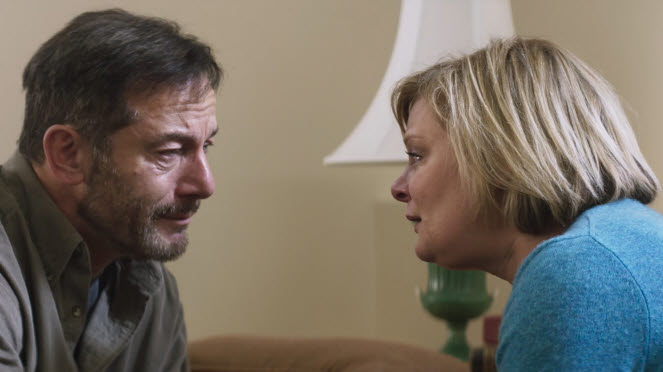
“Mass” is a modest but undeniably compelling drama about four ordinary people struggling to deal with their respective human losses caused by one terrible incident. While it simply observes a series of tense and strained interactions among them, the movie is often devastating and harrowing as gradually letting us have more empathy and understanding on their pain and sorrow, and it is really poignant to see some little glimpse of hope and healing at the end of their grueling emotional journey.

During its opening part, the movie slowly establishes the situation among its four main characters. In the one room inside a small church located in some little rural town, their private meeting is about to be held, and the movie generates a bit of dry humor as the two employees of the church nervously prepare for the meeting along with a mediator who arranged the meeting for the four main characters in advance.

As the mediator is waiting for the four main characters’ arrival, we meet Jay (Jason Isaacs) and Gail (Martha Plimpton) first. They are still conflicted about whether they can really face Richard (Reed Birney) and Linda (Ann Dowd) despite what happened some time ago, but they eventually decide to go to the meeting as planned, and they subsequently find themselves in the room along with Richard and Linda while their mediator makes the final check on whether they are all ready for conversation.

Once the mediator leaves the room, the mood among these four people feels pretty awkward to say the least. All of them try to be courteous and tactful as much as possible, and Jay and Gail generously exchange some personal news with Richard and Linda, but it does not take much time for them to begin to talk about the certain inconvenient fact among them. Several months ago, there was a horrendous shooting incident at the high school attended by their kids, and Richard and Linda’s son was the culprit while Jay and Gail’s son was one of several schoolmates killed by Richard and Linda’s son at that time.

Although they are willing to give Richard and Linda a moment of forgiveness, Jay and Gail cannot help but become fixated on how Richard and Linda’s son came to commit such a horrible deed, but Richard and Linda understandably cannot give Jay and Gail any possible answer for that because, well, they were shocked and surprised as much as Jay and Gail at that time. Yes, their son, who incidentally killed himself in the end, was a shy and introverted loner, and his unmistakable signs of danger look quite clear to them now in retrospect, but they still have no idea on what really drove their son into such an extreme act of violence.

As Richard and Linda come to argue more with Jay and Gail, the mood naturally becomes more intense than before, director/writer/co-producer Fran Kranz, who has mainly worked as an actor for years before making a directorial debut here in this film, subtly dials up the level of emotional intensity. At first, cinematographer Darren Morze’s camera sticks to its static and distant positions, but then the camerawork gradually becomes shaky with more close-ups, and we accordingly find ourselves more immersed in the increasingly dynamic circumstance among its four main characters. As they show each own anger and sadness more and more along the story, our empathy is pulled toward all of them, and Kranz’s screenplay did a skillful job of organically building up its main characters via recognizable human elements.

Above all, his four main performers, who will deservedly receive the Robert Altman Award at the Film Independent Spirit Awards, are all simply magnificent in their achingly powerful acting without any false note. While Jason Isaacs, a British actor who has been mainly known for his several notable supporting turns including the one in Harry Potter movies, slowly exudes his character’s quiet intensity along the story, Martha Plimpton, a veteran actress whom you probably remember as one of the supporting characters in “The Goonies” (1985), deftly complements Isaacs on the screen, and they instantly convey to us their characters’ emotionally damaged status right from the beginning. At one point later in the film, Plimpton has an unforgettable moment as her character lets out more of her feelings in front of others, and I must confess that that is one of several powerful scenes in the film which almost made me broken down with tears during my viewing.

On the opposite, Reed Birney and Ann Dowd, who also have a considerable acting career just like their co-stars, are an equal acting match for Isaacs and Plimpton. Birney is particularly wonderful when his character indirectly reveals his deep grief and torment behind his seemingly unflappable façade, and Dowd is utterly heartbreaking as her character later confides something important to Plimpton’s character around the end of the story. This scene seems rather redundant at first, but Dowd is devastatingly superb in her delivery, and the result is another emotional blow for us.

In conclusion, “Mass”, which incidentally won the Audience Award when it was shown at the Flash Forward section of the Busan International Film Festival several months ago, is a superb drama film which will knock you down for its sheer emotional power. As writing this review, I often found myself emotionally overwhelmed as remembering how strongly I responded to the film at last night, and I guess that says a lot about what Kranz and his cast and crew members splendidly achieve here.

Posted in Movies | Tagged , , , | 2 Comments

The House (2022) ☆☆☆(3/4): Three Tales in the House

Netflix animation feature film “The House”, which was released on last Friday, is a curious mixed bag which still engages us even when it does not work as well as intended. Consisting of three different weird tales, the movie tries to scare us, disturb us, and touch us, and the result is not exactly successful, but I really enjoyed its detailed and meticulous stop-motion animation even though I felt some dissatisfaction in the end.

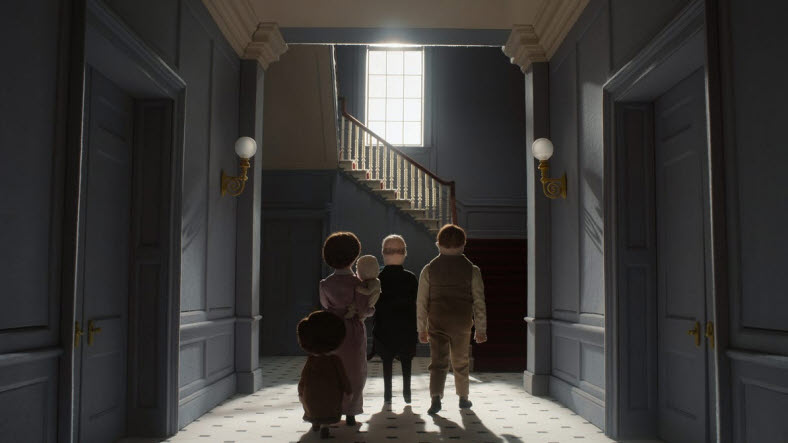
The first tale, which is titled “And heard within, a lie is spun”, is about one very strange circumstance of a young girl named Mable (voiced by Mia Goth) and her poor family. In the beginning, we see how they are disregarded by their more affluent relatives, and that certainly makes Mable’s parents quite humiliated, but then there comes an unexpected change when Mable’s father later comes across some strange architect who presents an offer he cannot possibly refuse. For some unknown reason, the architect is willing to build a big house for the family at a certain spot not so far from the family’s current residence, and Mable’s parents are certainly delighted by this impossibly good offer.

However, of course, it turns out that there is a catch once the house is completed. According to a shady legal representative of the architect, the family must give up everything belonging to them before entering the house, and Mable’s parents do not mind that much despite some initial reluctance. After all, the house looks pretty good inside and outside, and every necessity including food is constantly provided for the family everyday, though they somehow do not see any servant or maid in the house at all.

As days go by, it does not take much time for Mable to sense that there is something very creepy about the house. When it later goes through a sort of renovation for no apparent reason, she and her little baby sister frequently find themselves lost or trapped inside the house, and the mood becomes all the more insidious as their parents become more distant to them as their parents seem to be under a sort of spell conjured inside the house.

What eventually occurs around the end of the story will probably not surprise you that much, the story keeps holding our attention thanks to the competent direction of directors Emma de Swaef and Marc James Roels. There are a series of genuinely creepy moments, and you will admire the technical aspects of these moments for those big and small details vividly presented on the screen via stop motion animation.

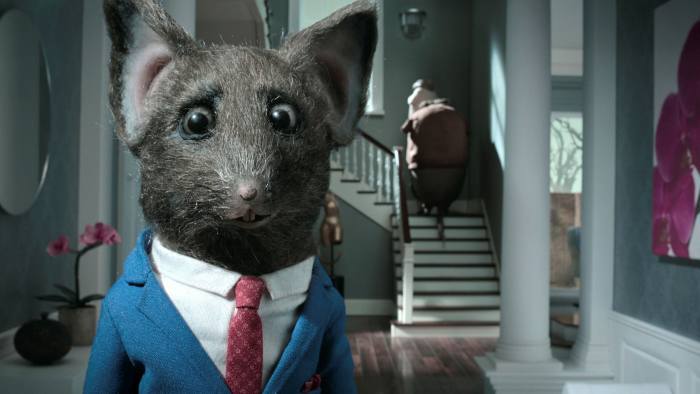
While it is also mainly set in the same house, the next story, which is titled “Then lost is truth that can’t be won”, presents anthropomorphic rat characters instead of human characters. The house, which is now surrounded by a more modern background, is currently occupied by a struggling developer, and the main humor of this part comes from the growing desperation over his ongoing renovation project. Besides constantly demanded to pay off his bank loans sooner or later, the developer (voiced by Jarvis Cocker) has to work on the house alone by himself, and then he comes to face a very serious pest problem which will amuse anyone who has ever had a domestic pest problem.

Anyway, the developer manages to open the house for potential buyers in the end, but, alas, things only get worse for him when a strange old couple comes into the house. This old couple keeps saying they are “extremely” interested in buying the house, but they do not leave at all, and this certainly annoys and frustrates the developer. No matter how much he tries to get rid of them, this couple still does not go away at all, and the mood becomes all the more surreal as his state of mind gradually crumbles along the story. At one point, we even get a hallucinogenic musical moment, and director Niki Lindroth von Bahr has a lot of naughty fun with that.

Compared to the first two tales, the third tale, which is titled “Listen again and seek the sun”, is relatively milder and gentler in comparison. In this tale, the area surrounding the house has been flooded for some unknown reason, and the house is now inhabited by a few anthropomorphic cat characters including Rosa (voiced by Susan Wokoma), who has attempted to fix the house while also trying to survive along with her two tenants day by day. While quite determined to stay in the house as long as she can, Rosa cannot help but feel exasperated because her two tenants are not particularly cooperative to her, and her frustration is more increased when another figure enters the picture later in the story.

What we get here is a merely whimsical comic drama which meanders from time to time before the eventual finale, but what is presented on the screen by director Paloma Baeza still entertains us nonetheless. Like the two other tales, the third tale distinguish itself fairly well via its own mood and details, and that is more than enough for forgiving its several shortcomings including its rather week narrative.

In conclusion, “The House” is not a total success as its individual tales do not gel together well on the whole, but it is still a nice visual treat for you if you are well aware of the painstaking efforts behind its lovely stop motion animation. It could be more improved in my humble opinion, but it surely has much more style and personality compared to many forgettable Hollywood blockbuster animation films out there, and I am willing to revisit it someday.

Posted in Movies | Tagged , , , , | Leave a comment

Special Delivery (2022) ☆☆☆(3/4): She must deliver this kid to the end

South Korean film “Special Delivery”, whose theatrical release in South Korea was incidentally delayed for around 2 years due to the ongoing COVID-19 pandemic, is a competent genre product to be appreciated for its taut and efficient handling of story and action. While it is clearly influenced by a number of well-known seniors ranging from Walter Hill’s “The Driver” (1978) to John Cassavetes’ “Gloria” (1980), the movie has enough style and substance to engage and entertain us, and it also confirms again to us the considerable talent and presence of its lead performer.

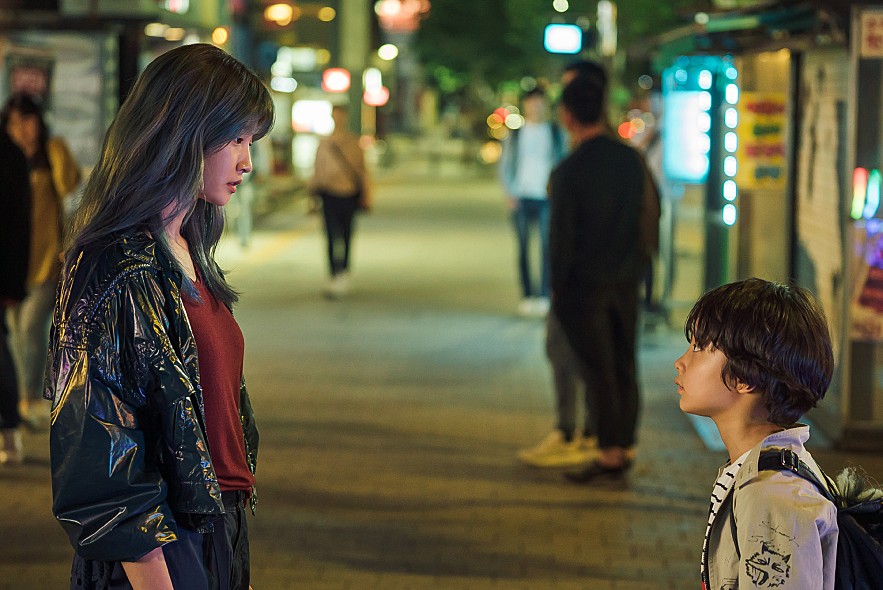
Park So-dam, who has been more prominent these days thanks to her delightfully saucy performance in Bong Joon-ho’s Oscar-winning film “Parasite” (2019), plays Eun-ha, a tough young woman who has earned her living via her particular set of skills. On the surface, she is just a mere employee working at one shabby garage in Busan, but she is actually a very skillful driver who can “deliver everything that the post office service does not handle”, and the opening sequence, which is reminiscent a bit of the opening part of Nicholas Winding Refn’s “Drive” (2011), shows us how deftly and swiftly she handles her latest delivery job without any misstep.

Not long after this job is done, another delivery job is suddenly handed to Eun-ha, and she and her boss, who has virtually been like a good uncle to her, promptly embark on making their delivery plan. Although she has to go to Seoul in this time, all she has to do is waiting at a certain spot before picking up and then delivering whoever will come according to the plan, and she will certainly be paid well once this job is done.

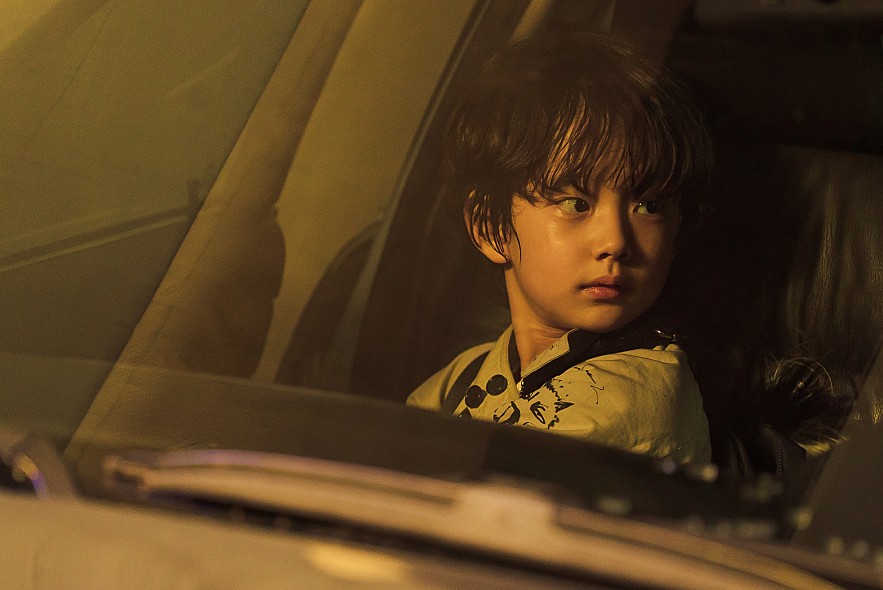
However, not so surprisingly, this delivery job turns out to be much riskier than expected. When Eun-ha is waiting for the client at that certain spot, a young boy is frantically running toward her car, and she instinctively senses that something is terribly going wrong. At first, she considers leaving the spot as soon as possible without looking back at all, but, probably out of pity and compassion, she decides to let the boy get into her car, and then they soon find themselves chased by a bunch of thugs.

Around that point, the movie lets us have a pretty clear idea of what is going on around Eun-ha and the boy. He is the only son of the client, and, before he gets killed in the end, the client gave his son an incriminating piece of evidence against someone with whom he has been associated for years. Of course, that criminal figure in question and those thugs are quite willing to retrieve this evidence by any means necessary, and the situation later becomes more complicated as we get to know more about how dangerous and powerful this criminal organization really is.

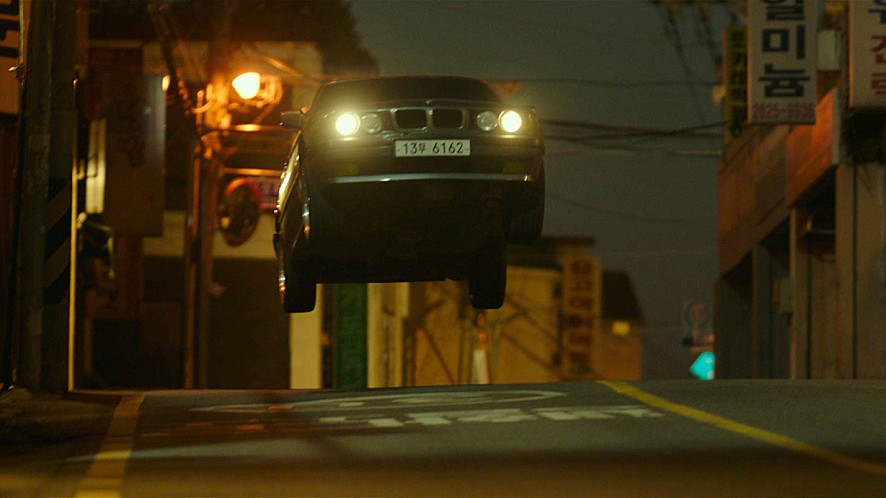
As instructed by her boss, Eun-ha could just let the boy handled by one of her boss’ criminal associates, but she eventually decides to take a much harder way for the boy’s safety, and the movie accordingly gives us a series of well-executed moments including a suspenseful scene where our heroine must outwit her opponents as soon as possible. Although her driving skill is utilized less than expected, you will not grumble at all as watching a gritty vehicle action sequence which will grab you hard from the beginning to the end, and director/co-writer Park Dae-min and his crew members did a commendable job of vividly conveying to us many physical impacts during this impressive sequence.

Meanwhile, the movie also pays a lot of attention to the growing relationship between Eun-ha and the boy, who is not just a story element to be wielded in one way or another. Although she simply follows what should be done in her view, Eun-ha comes to care about the boy much more than she admits on the surface, and the boy also comes to depend a lot on Eun-ha as being reminded more that there is no one to help him except her.

It surely helps that Park and young performer Jeong Hyeon-jun, who also appeared as one of the main characters in “Parasite”, click well with each other on the screen. While confidently embodying her character’s toughness and resourcefulness, Park ably demonstrates another side of her talent here in this film, and her terse but undeniably strong acting is complemented well by Jeong’s unadulterated natural performance.

In addition, the movie assembles a group of colorful performers around Park and Jeong. I will not go into details for not spoiling any of your entertainment, but I can tell you instead that Kim Eui-sung, Song Sae-byeok, Han Hyun-min, Yeon Woo-jin, and Yeom Hye-ran are well-cast in their respective supporting roles, and, as a longtime cat lover, I will not deny that I smiled during a few tender scenes between Eun-ha and her grumpy pet cat, who cannot help but steal the scene a bit from Park whenever the camera looks at it.

On the whole, “Special Delivery” did its job as splendidly as expected, and I and a friend of mine had a fairly thrilling time as watching it at a local movie theater during last evening. As a dude who knows a lot about vehicles, he pointed out some unrealistic moments in the film after we came out of the screening room, but both of us agreed that the movie is still entertaining enough nonetheless, and I am sure that you will agree to that after watching it.

Posted in Movies | Tagged , , | 2 Comments

The Tragedy of Macbeth (2021) ☆☆☆1/2(3.5/4): A sparse but striking version of that Scottish play

Joel Coen’s first solo film “The Tragedy of Macbeth”, which was released on Apple TV+ a few days ago, is a sparse but striking version of that ‘Scottish Play’ which is incidentally one of the best works of William Shakespeare. While it is mostly faithful to the overall plot of Shakespeare’s play besides some noticeable narrative condensation, the movie is often quite impressive in terms of mood, storytelling, and performance, and it is certainly another interesting movie adaptation to be mentioned along with several notable previous ones including Akira Kurosawa’s “Throne of Blood” (1957) and Roman Polanski’s “Macbeth” (1971).

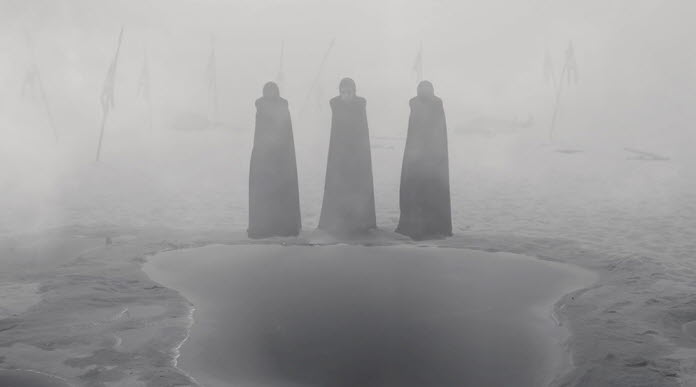
After the opening scene which succinctly establishes the ominously gloomy tone of the film, we see how Lord Macbeth (Denzel Washington) happens to be tempted by a sudden possibility of attaining more power in the near future. He has been a royal and brave general serving under King Duncan (Brendan Gleeson), and he recently demonstrated his considerable royalty and valor for his king during the latest battle in Scotland, but then he comes across a trio of witches when he is returning to his king along with his close comrade/friend Banquo (Bertie Carvel). These three witches insidiously prophesy that Macbeth is going to be the Thane of Cawdor and then the King of Scotland, and they also give a small but significant prophesy for Banquo.

Macbeth is initially skeptical about the prophecy on his upcoming future, but, what do you know, he soon does become the new Thane of Cawdor as ordered by his king, and that naturally makes him much more ambitious than before. Mainly because he is not that young, he becomes more obsessed with that possibility of becoming the king before his death, and his cunning wife does not hesitate at all to boost his ambition more once she comes to learn of that prophecy from her husband.

And the chance comes to them sooner than expected as King Duncan later visits Macbeth’s castle. Although he is still hesitating over whether he can actually kill his king for becoming the next king, Macbeth eventually lets himself driven further by his ambition as well as his wife, and that consequently leads to a brief but shocking moment of violence.

Once he succeeds in eliminating King Duncan, there is no other obstacle in Macbeth’s subsequent rise to the throne, but, as many of you already know well, Macbeth becomes more paranoid in addition to struggling with the consequences of his horrible crime, and his wife also gradually finds herself being driven into madness as watching how cruel and ruthless her husband can be for maintaining their power as long as he can. While she is pretty good at pushing her husband into killing, she turns out to be much weaker than she thought at first, and we accordingly get that famous scene revealing what has been eating her day by day.

For emphasizing these two main characters’ increasingly unhinged and desperate status, the movie is packed with nightmarish qualities to be noticed. Shot in the black and white film of 1.33:1 ratio, the movie is constantly shrouded in the dry and bleak sense of doom, and cinematographer Bruno Delbonnel, who previously collaborated with Coen and his brother in “Inside Llewyn Davis” (2013) and “The Ballard of Buster Scruggs” (2018), provides a number of terrific shots to be admired for the skillful utilization of lights and shadows. The production design by Stefan Dechant and the costume design by Mary Zophres are austerely impressive under the stylized ambiance of the film, and I particularly appreciate how the deliberately claustrophobic aspects of Macbeth’s castle convey to us more of Macbeth and his wife’s accumulating desperation and madness.

Above all, the movie is firmly supported by two great American movie performers of our time. Denzel Washington, who is no stranger to Shakespeare plays considering his humorous supporting turn in Kenneth Branagh’s “Much Ado About Nothing” (1993), gives another superlative performance which will surely garner him another Oscar nomination, and he deftly handles several big monologue scenes in the film including that well-known one which begins with “Tomorrow, and Tomorrow, and Tomorrow”. As his equal acting partner, Frances McDormand, who incidentally played Lady Macbeth on stage before, is convincing in her character’s fateful psychological downfall along the story, and she does not disappoint us at all when her character finally reaches to the bottom of her madness around the end of the story.

Coen assembles a number of interesting performers around Washington and McDormand, and many of them have each own moment to shine. While Brendan Gleeson leaves an indelible impression despite his rather brief appearance, Alex Hassell, Henry Melling, Bertie Carvel, Moses Ingram, Sean Patrick Thomas, Ralph Ineson, Stephen Root, and Corey Hawkins are also solid in their respective supporting roles, and the special mention goes to Kathryn Hunter, who is quite spooky as playing all of the three witches in the story (She also plays another small supporting role in the film, by the way).

Overall, “The Tragedy of Macbeth” may feel a bit too dry for some of you, but it is still a very interesting experience to be savored for its many strong elements including the excellent performances from Washington and McDormand. In short, this is another highlight of last year, and I think you should check it out as soon as possible.

Posted in Movies | Tagged , | 2 Comments

The Tender Bar (2021) ☆☆(2/4): So he grew up to be a writer…

George Clooney’s new film “The Tender Bar”, which was released on Amazon Prime early in this month, often bored me without leaving much impression on the whole. It is supposed to be a warm, tender, and intimate coming-of-age drama, but the movie only comes to us as a bland and tedious misfire instead, and it also seriously wastes two fairly good performances which deserve better in my inconsequential opinion.

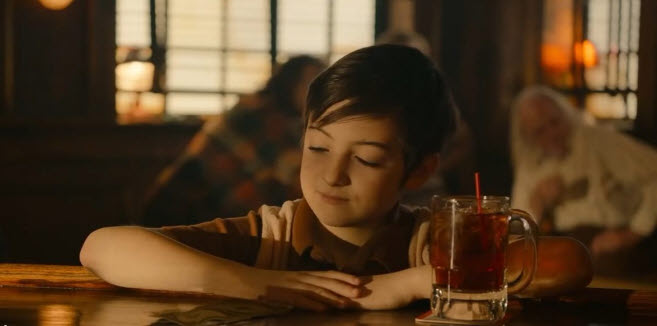
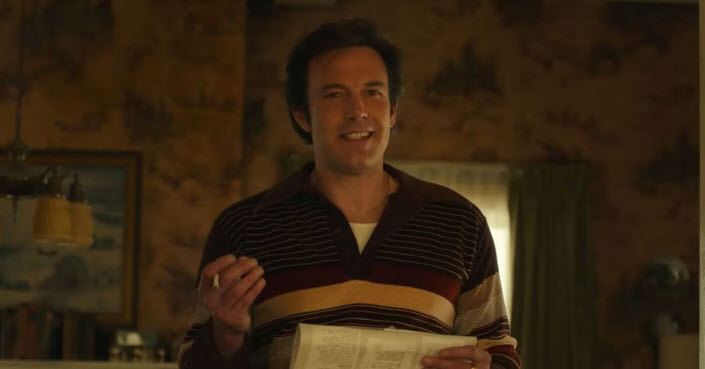
The story, which is based on the memoir of the same name by J.R. Moehrigner, is about Moehringer’s childhood and adulthood memories during the 1970-80s. In 1973, young J.R. (Daniel Ranieri) moved to his grandfather’s house along with his mother Dorothy (Lily Rabe) shortly after her divorce, and he is glad about coming back to his grandfather’s house even though he misses his absent father a bit. The house is never boring for him as being usually full of many other family members besides his grandparents, and his favorite family member is an uncle named Charlie (Ben Affleck), who has run a small local car in the neighborhood.

Young J.R. often comes to Charlie’s bar, and, though he is surely not allowed to drink any booze, he enjoys being around his dear uncle, who willingly encourages his nephew’s interest in reading and writing. After all, the name of his bar came from the author of several books placed in the bar, and he turns out to be quite more perceptive and intelligent than he looks on the surface. At one point, he makes a sincere but sharp comment on his nephew’s little family newspaper, and that certainly makes young J.R. have more confidence about his writing talent.

Meanwhile, young J.R. still misses his father although he knows well how much his mother is sick of her ex-husband. He can only listen to his father’s voice via his father’s radio show, and his father only lets him down after he promises his son to take him to a big baseball game. At least, his father later visits him, but then there is not much conversation between them, and his father soon leaves after having some clash with Charlie, who surely hates his guts for many reasons including the one involved with a little debt between them.

The screenplay by William Monahan could delve deeper into the relationship development between young J.R. and Charlie, but it instead moves onto several years later. J.R., who is played by Tye Sheridan from this point, is now an adolescent boy who is about to apply for the enrollment in Yale University, and he is certainly anxious about whether he will be accepted or not. Even if he is accepted in the end, he really needs the scholarship for studying there, and there is not much possibility for that, but, of course, he eventually receives a letter of acceptance from Yale which also confirms that he will get the scholarship.

What follows next is your typical campus drama. Our young hero studies a lot on literature along with many other students, and then he finds himself hopelessly falling in love with a pretty female student. While she seems to be willing to have a serious relationship with him, it gradually turns out that she is not so particularly serious about him, and J.R. only comes to find himself stuck in his on-and-off relationship with her during next several years. Although his close friends as well as Charlie advise him to get over that girl, he cannot do that at all even when he eventually graduates four years later, and he is certainly heartbroken when he later comes to learn that he cannot meet her anymore.

Unfortunately, the movie does not give us any sense of growth and maturation from its rather colorless hero in the meantime. While I was amused a bit by a brief lecture scene involved with two certain old literature works, I was disappointed as the movie did not go further than that, and I was also dissatisfied with its superficial handling of its young hero’s problematic relationship with that girl. She is pretty and charming indeed, but we can never fully discern why he cannot easily quit her, and this weak problem is further accentuated by the rather weak presence of Tye Sheridan, who can actually give solid performances as recently shown from Paul Schrader’s “The Card Counter” (2021) but is sadly stuck with his mediocre character here in this film.

While the movie disappointingly under-utilizes many of its various cast members ranging from Lily Rabe to Christopher Lloyd, its two certain cast members manage to acquit themselves well at least. Ben Affleck, who has become a bit more interesting thanks to several recent good performances including his amusing supporting turn in “The Last Duel” (2021), effortlessly slips into his role from the beginning, and it is a shame that the movie does not focus more on his colorful character’s loving relationship with young J.R. In case of young performer Daniel Ranieri, he does more than holding his own place well among Affleck and several adult performers around him, and he virtually steals the scene from Sheridan at one point later in the story.

On the whole, “The Tender Bar” is another disappointment from its director, and that reminds me of how promising Clooney was as a new filmmaker in the early 2000s. After making a debut with “The Confessions of a Dangerous Mind” (2003), he advanced with two Oscar-nominated films “Good Night, and Good Luck” (2005) and “The Ides of March” (2011), but he subsequently went downhill with “The Monument Men” (2014) and “Suburbicon” (2017), and “The Tender Bar” only throws more doubt on the current status of his filmmaking career. I do not know what may come next from him, but I can only hope that “The Tender Bar” will be just another low point before he can be back in his element.

Posted in Movies | Tagged , , , , | Leave a comment

West Side Story (2021) ☆☆☆1/2(3.5/4): An exhilarating musical film by Steven Spielberg

Steven Spielberg’s latest film “West Side Story” is an exhilarating musical film which I gladly watched after one particularly exhausting day. I must confess that my physical condition was not that good when I watched the movie during last evening, but it did not take much time for me to be galvanized by all those terrific moments in the film, and I really enjoyed and admired how Spielberg and his cast and crew members bring a considerable amount of fresh energy and spirit into their very familiar materials.

As many of you know, the movie is the adaptation of the classic Broadway musical of the same name, which came out in 1957 and then made into the successful Oscar-winning film directed by Robert Wise and Jerome Robbins in 1961. Although it was not entirely without flaws, the 1961 film, which won no less than 10 Oscars including the one for Best Picture, is still packed with a number of awesome things besides Leonard Bernstein’s terrific music, Stephen Sondheim’s dexterous lyrics, and Robbins’ electrifying choreography, and these timeless elements compensate a lot for its several notable weak aspects including the serious lack of chemistry between its two leading performers Natalie Wood and Richard Beymer.

Mainly because of the weak aspects of the 1961 film, there has always been the possibility of improvement and modification via the remake version, and I am happy to report that Spielberg did a fantastic job of presenting those musical moments with sheer technical confidence and prowess. While the 1961 version will certainly come first as usual, the 2021 version often does its own things with more realism and verisimilitude, and it helps that it is constantly buoyed by the strong performances from many of its relatively unknown cast members, who ably imbue the movie with a heap of youthful vigor and emotional intensity.

Although the story, which is basically the modern reworking of that certain romantic tragedy of William Shakespeare, is not exactly the strongest aspect of the film, the adapted screenplay by Tony Kushner improves the original story to some degree while also accentuating its social/historical aspects more than the 1961 version. As reflected by the very first scene of the film where the camera hovers over the gentrification process on the shabby neighborhood of the West Side area of Manhattan, the mood becomes more serious and realistic, and some timeless social issues including race, immigration, and gun control are organically incorporated into the story. In addition, the conflict between the Zets, a Caucasian gang group, and the Sharks, a Latino gang group, is depicted with a lot more menace and danger even though it is accompanied with Bernstein’s music and Robbins’ choreography, and we also come to sense some despair and desperation from both sides as reflecting more on how the world inhabited by these two groups will be gone sooner or later due to the ongoing gentrification.

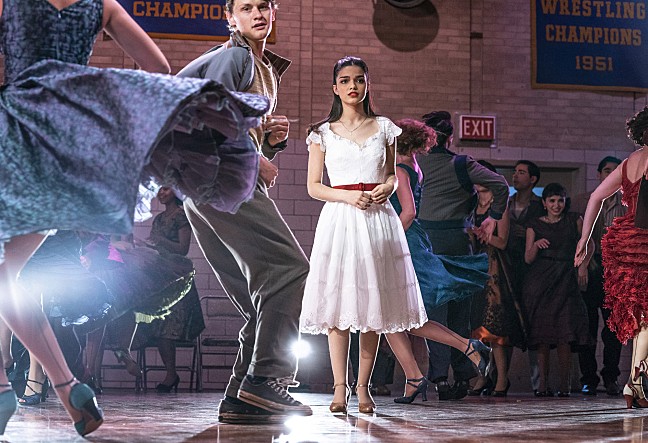
Above all, the movie soars whenever it presents a musical scene as expected. Thanks to Spielberg and his top-notch crew members including cinematographer Janusz Kamiński and editors Michael Kahn and Sarah Broshar, we surely get a more visually interesting and effective presentation of several famous songs including “Tonight”, and I especially enjoyed how they present the “America” with much more cinematic touches compared to the 1961 version. The movie also surprises us as using a few other songs including “Cool” under curiously different contexts, and that certainly brings more fresh air to the film.

During its second half, the movie loses its narrative pacing a bit as heading toward its predictable finale, but it still engages us as before with some interesting modern touches involved with gender sensitivity. For example, the tomboy character in the 1961 film is now presented as a tougher transgender character, and a certain key scene later in the story is coupled with more sexual brutality and some female perspective.

Amidst these and many other rich stuffs in the film, the couple at the center of the story feels rather generic, but its two leading performers do their respective tasks fairly well on the whole. Although Ansel Elgort is one of the weakest elements in the film for being as banal and colorless as he was in “Baby Driver” (2017), he and his co-star Rachel Zegler, who actually sing their songs in contrast to Wood and Beymer in the 1961 film, click better with each other than their counterparts in the 1961 film, and Zegler constantly outshines her rather bland co-star as being on a par with Wood’s natural warmth and beauty.

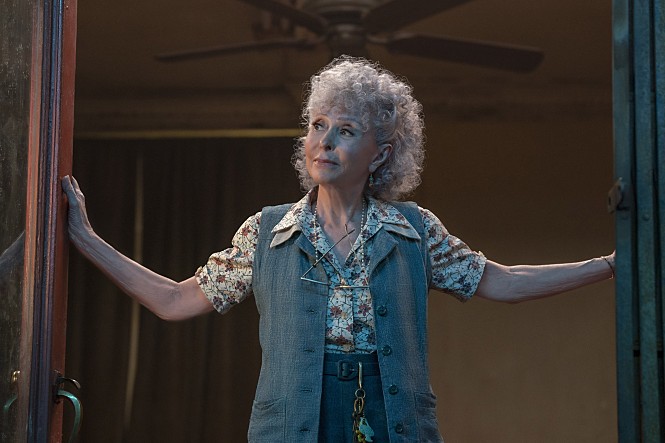
In case of the other main cast members in the film, most of them are not so familiar to us, but I am sure that their respective careers will be boosted a lot by their spectacular works here in this movie. While Ariana DeBose, who will definitely receive an Oscar nomination for her colorfully ferocious supporting performance, is the most memorable one in the bunch, David Alvarez, Mike Faist, Josh Andrés Rivera, and Iris Menas are also quite good, and Rita Moreno, who incidentally won an Oscar for playing DeBose’s character in the 1961 film, has her own little poignant musical moment later in the movie.

In conclusion, “West Side Story” is a commendable remake equipped with its own style and mood to distinguish itself from the 1961 version, and it is definitely another superb work in Spielberg’s long and illustrious filmmaking career. Although it has been more than 45 years since his first theatrical feature film “The Sugarland Express” (1974), he is still a great filmmaker willing to try new things, and we can only hope that he will keep going on as usual during this decade. In short, this is the best musical film of last year, and it will surely remind you of what cinema really is.

Posted in Movies | Tagged , , , | 3 Comments

House of Gucci (2021) ☆☆(2/4): A brand to kill for

Ridley Scott’s “House of Gucci”, which is another new film from Scott in last year after “The Last Duel” (2021), is neither classy nor pulpy to my disappointment. While it is too superficial to be a serious drama about ambition and deterioration, it is also not trashy enough to be an enjoyable camp about greed and folly, and we accordingly come to observe its uneven and sprawling narrative without much care or attention despite all the hard works done by its leading actress.

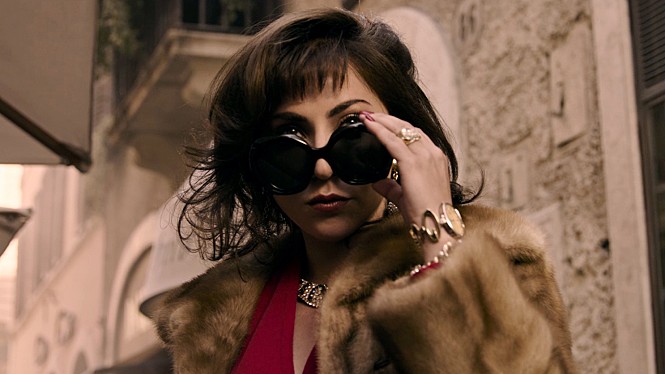
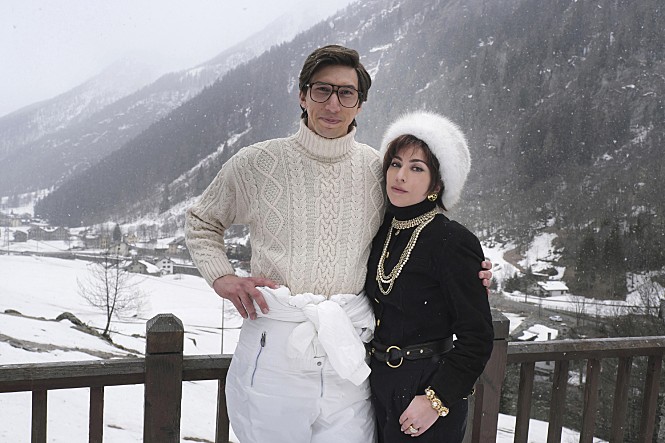
The story mainly revolves around Patrizia Reggiani (Lady Gaga), and the early part of the movie shows us how she came to marry Maurizio Gucci (Adam Driver) in Milan, 1978. When she happens to come across Maurizio at one evening party, she does not hesitate to get closer to him mainly because he is an heir to the Gucci fashion house, and it does not take much time for her to win his heart, but there is one problem. Maurizio’s father Rodolfo (Jeremy Irons), who owns the half of the family business, does not approve much of Patrizia because she is just the daughter of some middle-class family man running a small local trucking company, and he even threatens to disinherit his only son, but Maurizio and Patrizia come to marry in the end once Maurizio makes it clear to his father that he is not so interested in running or inheriting their family business.

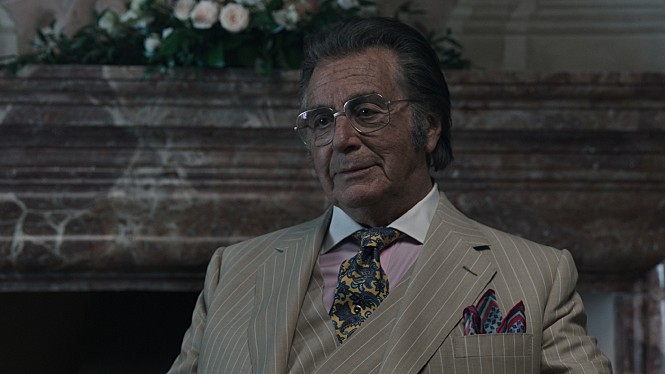
After disinherited by his father, Maurizio comes to depend a lot on Patrizia and her family due to his penniless status, and he does not mind at all working in his father-in-law’s company, but there comes a chance for both him and his wife a few years later. His uncle Aldo (Al Pacino), who owns the other half of the Gucci fashion house, is willing to let Maurizio join the family business mainly because he has been quite disappointed with his incompetent son Paolo (Jared Leto), and, despite his initial reluctance, Maurizio comes to accept his uncle’s offer as being urged by Patrizia, who is certainly delighted about going higher along with her husband at last.

After that point, things go fairly well for Patrizia and her husband for a while as they enjoy some glamour and luxury inside and outside Italy, but, of course, there comes a very complicated circumstance in their family business. As pushed more by his wife, Maurizio comes to clash a lot with Aldo over how to run and maintain their family business, and Patrizia is willing to do anything for making her husband have the total control over the Gucci fashion house. As a result, the situation becomes quite messy for everyone, and that also affects Mauricio and Patricia’s marriage, which becomes more deteriorated as he becomes more distant to her due to a number of personal and business matters.

As the story is eventually heading to what happened on March 27th, 1995, we are supposed to be more engaged around this narrative point, but the movie somehow fails to generate much interest or fascination for us. It surely tries to dazzle us as using many showy stuffs ranging from a bunch of fashionable attires to a number of recognizable pop songs from its period background, but the movie keeps fizzling just like Paolo’s disastrous fashion show at one point, and it only gets enlivened to some degree when a certain famous fashion designer enters the picture for saving the Gucci fashion house later in the story.

Above all, the main characters of the movie are not particularly interesting figures to observe. The screenplay by Becky Johnston and Roberto Bentivegna, which is based on Sara Gay Forden’s nonfiction book “The House of Gucci: A Sensational Story of Murder, Madness, Glamour, and Greed”, does not provide much insight or depth to Patrizia and the other main characters in the story, and they all come to us nothing more than broad caricatures destined to failure or disgrace from the beginning. While we come to understand Patrizia’s ambition to some degree at least, the movie does not delve much into what makes her tick, and the same thing can be said about the other main characters including her husband, who remains a vapid and blank figure even at the very end of the story.

Anyway, Lady Gaga, who already demonstrated her considerable acting talent in her recent Oscar-nominated turn in “A Star Is Born” (2018), tries really hard in her admirably committed performance which more fluidly oscillates between drama and camp than the movie itself. While her rather exaggerated Italian accent is initially distracting, Gaga fully embodies her character’s ambition and ferocity, and that is why her performance is entertaining to watch even when she deliberately goes for overacting.

Unfortunately, the movie does not support Gaga’s diligent efforts much, and neither do many of the main cast members, who are only demanded to fill each own spot without many things to do. It is certainly nice to see Al Pacino and Jeremy Iron sharing the screen during one brief scene, but these two great actors are just required to look tired and hammy, and that is all for us to see here. While Adam Driver is hopelessly stuck in his flat thankless role, Jared Leto, who is barely recognizable in his heavy makeup, gives another worst acting in his career after “Little Things” (2020), and Salma Hayek and Jack Huston manage to acquit themselves well despite being thoroughly under-utilized.

In conclusion, “House of Gucci” is quite disappointing for not going all the way with its sensational story materials, and I found myself becoming more bored and disaffected during its second half after trying to enjoy it during its first half. At least, Scott gave us “The Last Duel” right before this misfire, and I think you should watch that fairly good film instead.

Posted in Movies | Tagged , , , , | 1 Comment

France (2021) ☆☆(2/4): An inane satire on media and journalism

Bruno Dumont’s latest film “France” works best whenever the camera focuses on its leading actress’ undeniably beautiful face. I must point out that the movie itself is limp and hollow as a satire on media and journalism, but its leading actress does try her best to sell whatever her increasingly distant character is going through, and it is a shame that the movie does not support her diligent efforts enough on the whole.

Léa Seydoux, who has been one of the most interesting French actresses since she drew our attention for the first time via her supporting turn in “Mission: Impossible – Ghost Protocol” (2011), plays France de Meurs, a TV reporter who has been quite famous for years thanks to her popular TV news show. At the beginning, we see her entering a very important press conference along with her close friend/colleague Lou (Blanche Gardin), and the movie gives us a little amusing moment as she boldly throws a supposedly important question to the current president of France, whose archival footage is seamlessly incorporated into this scene.

We subsequently see how France works inside and outside her TV studio. Whenever she is not doing her TV show, she often goes to anywhere to draw the attention of millions of viewers out there, and we observe how she and her crew do some manipulation when they are their work at some remote spot of Northern African region. It seems that all she cares about is how to present her report clip more, uh, entertaining, but that will not probably surprise you much if you are already well aware of how unreliable media has become during last several years.

At her TV studio, France does some discussion with invited figures on TV, but none of them seems to know well what they are talking about. At one point, a certain invited guest tries to make his point with lots of words, and he fails to make his argument more convincing in the end, but then he throws a vicious sexist comment at France after the show is over.

That surely hurt France’s feelings, but there is no one for her to lean on except Lou, who just provides some banal pep talk whenever France feels bad. In her big and expensive apartment which looks like a museum instead of a residence, France does not interact much with her write husband or their young son, and we sense more of the distance between her and her husband when they are having a dinner with a few friends of theirs.

And tgeb another thing happens to cause more turmoil in France’s private life. On one day, her car clashes with a young motorcyclist, and that consequently causes lots of public fuss around her as she and Lou try to get things under control. She subsequently visits that young motorcyclist, and he and his family willingly accept her apology and some compensation from her, but we cannot help but wonder about what she actually thinks and feels. She indeed looks troubled, but, in my humble opinion, she seems to care more about her life and career as wallowing in self-pity.

Anyway, she eventually decides to have a break. Shortly after announcing that on TV, France goes to a sanatorium located in the Alps, and we accordingly get some lovely snowy landscape shots as she tries to bring some calmness to her mind. Although she is still not totally free from her fame and reputation, she comes to befriend some handsome lad, and it does not take much time for them to get closer to each other than before.

The movie subsequently takes a left turn just for bringing its heroine back in action, but it simply meanders as before without enough satiric edge. In case of the sequence involved with a bunch of refugees fleeing from some war zone, it feels shallow without any comic or dramatic effect, and we are only served with a small absurd moment of cheap laugh when France is showing her viewers what she and her crew shot at that time. While there comes a sudden moment of shock later in the story, it is contrived in addition to looking gratuitous for a good reason, and we do not sense any emotional devastation from that because the movie seriously lacks depth in terms of story and characters. As a result, we come to observe its heroine from the distance more than before, and that is one of the main reasons why the finale does not work at all as merely being one more scene to be added to the movie.

Anyway, Seydoux is sometimes engaging to watch as usual. She is particularly good whenever we get the glimpses of her character’s superficial personality, and she certainly looks good whenever her character has to present herself well in front of the camara. In case of several other main cast members surrounding Seydoux, they are unfortunately stuck in bland supporting roles, and Blanche Gardin does not have many things to do besides throwing some banal sarcastic lines drenched in cynicism.

In conclusion, “France” is a dull and blunt misfire which bores us as not having anything new to say about its familiar subject besides failing to work as an edgy satire, and this is a major letdown compared to Dumont’s previous notable works including “Camille Claudel 1915” (2013). That film can be quite dry for some of you, but it is much more interesting in comparison, and I would rather recommend you to watch it instead of this disappointing dud.

Posted in Movies | Tagged , , , | Leave a comment

That Day, on the Beach (1983) ☆☆☆1/2(3.5/4): Edward Yang’s first feature film

During last several years, I and South Korean audiences were lucky to watch several works of Taiwanese filmmaker Edward Yang including “A Brighter Summer Day” (1991), which I belatedly watched in December 2017. Although I initially braced myself for the 4-hour long running time of that great film, it did not take much time for me to get absorbed into the vivid and palpable sense of time and life felt from the screen, and I came to appreciate more of what a great filmmaker Yang really is as subsequently watching his several other works including “Yi Yi” (2000).

In case of “That Day, on the Beach”, I did not expect much mainly because it was just his debut feature film preceding “The Taipei Story” (1985) and “The Terrorizers” (1986), but, what do you know, the movie turned out to be much more interesting than expected. Although he just started his filmmaking career with a segment in the seminal Taiwanese New Wave omnibus film “In Our Time” (1982) at that time, the movie is as distinctive and recognizable as Yang’s next films in terms of mood and storytelling, and I am happy to report to you that I found myself gladly following Yang’s masterful narrative during its 166-minute running time.

The movie begins with the arrival of a renowned pianist named Tan Weiqing (Terry Hu) in Taipei, who has been mostly lived abroad for more than 10 years. After hearing about the news about her visit to Taipei, her old friend Jiali (Sylvia Chang) instantly tries to contact with Weiqing, and Weiqing promptly meets Jiali for getting to know how she has been during all those years.

As Jiali starts to talk about that, the movie shows us how Jiali happened to befriend Weiqing in the past. They met each other via Jiali’s older brother who was incidentally Weiqing’s boyfriend, and they soon became close to each other, but then there came a sudden change into their life. Although Jiali’s older brother was really serious about his relationship with Weiqing, his doctor father had already expected him to marry the daughter of one of his old colleagues in addition to following his footsteps, and he eventually came to conform to his father’s order despite some protest.   

After showing us how this rather unpleasant change consequently put the distance between Jiali and Weiqing, the movie moves onto how Jiali finds herself in a similar situation several years later. While going through her college years, she comes to fall in love with a male student named Cheng Dewei (David Mao), but then her father makes it very clear to her that she is supposed to marry someone else instead. When she becomes quite conflicted about this circumstance, her older brother, who has been not so happy with his married life as reflected by one brief scene, gives an indirect advice on what she should do, and she eventually goes for what she wants without any hesitation.

When Jiali subsequently marries Dewei without her parents’ permission, the future does not look that bright for both of them, but then, what do you know, things get a lot better for them mainly thanks to one of Dewei’s college friends, who later has Dewei work in his lucrative company along with many college friends of theirs. As a result, Jiali does not have to work anymore, and she tries to get accustomed to her changed environment full of affluence, but she cannot help but feel discontent and dissatisfied day by day mainly because of her husband’s frequent absence due to his company work. 

Although there eventually comes a moment of emotional outburst between Jiali and her husband, the movie still maintains its calm and leisurely narrative flow as slowly revolving around a certain incident associated with its very title. The more we get to know about Jiali’s hard and difficult struggle with her increasingly crumbling married life, the more important this incident becomes in the story, and I will let you feel for yourself the considerable dramatic effect waiting for you at the end of her emotional journey. 

In the meantime, the movie also pays some attention to a number of different figures in Jiali’s life, and I particularly like a modest but poignant scene which serenely conveys to us how much Jiali’s mother tolerated her husband for many years – and how she is totally in peace with whatever she suffered and endured during all those years. In case of Jiali’s old college friend who also has a fair share of life issues, she provides Jiali some relief and consolation as they often spend time together, and Jilali later finds herself tempted to have an affair with some guy introduced to her via her friend.

As all these and other elements in the story are thoughtfully presented on the screen one by one, the movie effortlessly immerse us into its realistic atmosphere, and Yang and his cinematographer Christopher Doyle, who incidentally made a debut here thanks to Yang’s persistent insistence to hire him despite the objection from the production company of the film, did a commendable job of vividly capturing the urban ambiance of Taipei in the early 1980s. As a matter of fact, the movie often feels like a living time capsule packed with considerable sense of time and life, and that is why it still engages us just like “The Taipei Story” and “The Terrorizers”, which also function quite well as the vivid windows into the life and people in Taipei in the 1980s.

In conclusion, “That Day, on the Beach” is much more than being the mere opening chapter of Yang’s admirable filmmaking career. Although he made only seven feature films before he died in 2007, he is still influencing many other filmmakers out there as shown from two recent great South Korean films “House of Hummingbird” (2018) and “Moving on” (2019), and I will be certainly delighted if “A Confucian Confusion” (1994) and “Mahjong” (1996) are also released for me and other South Korean audiences later.

Posted in Movies | Tagged , | Leave a comment