The Point Men (2023) ☆☆(2/4): A hollow hostage thriller flick

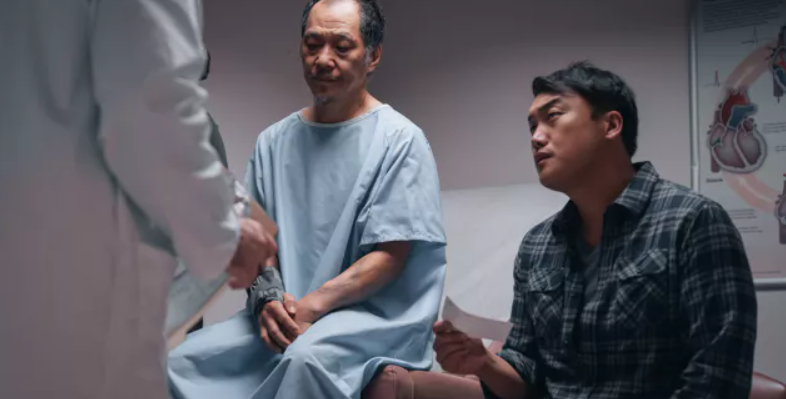
It was hard for me to care that much about what was going on in South Korean film “The Point Men”, which is incidentally inspired by the true events of the 2007 South Korean hostage crisis in Afghanistan. Sure, I and many other South Korean people would be much more horrified if all those South Korean Christian missionaries were killed in the end, but I remember too well how insensitive and thoughtless these misguided people were from the very beginning. After all, what is the point of going to Afghanistan if your main purpose is dying as a martyr for your god and then going to the heaven? Isn’t it exactly the same thing which drives those extreme religious fanatics around the world?

And, I tell you now, these people were truly willful and senseless in many aspects. Although the South Korean government did not allow any civilian to go to Afghanistan after the 9/11 incident, they managed to find a loophole and then go there without any preparation at all, and they did not even listen to any advice or warning from the start when they arrived there. For example, it was quite dangerous for them to travel together on a big bus, but they insisted that they should travel together, and they surely drew lots of attention due to their blatant missionary activities with no understanding or respect on those local people and their culture. Furthermore, even after they were eventually saved, they and their church did not show any substantial appreciation to the South Korean government, and this impertinent attitude certainly made a very bad impression on me and others in South Korea.

Anyway, the movie is mainly about two fictional characters assigned to the negotiation for saving these hostages: Jung Jae-ho (Hwang Jung-min) and Park Dae-sik (Hyun Bin). Once the news about the hostages came to the South Korean government, Jae-ho and his fellow diplomats are quickly sent to Afghanistan, but things have already been quite complicated for them. While they surely want to rescue the hostages as soon as possible, Jae-ho and his colleagues are soon sandwiched by the local government figures and the Taliban soldiers holding the hostages, both of whom are not so willing to step back a bit more for the ongoing negotiation.

That is why Dae-sik, a weary but handsome National Intelligence Service (NIS) agent comes into the picture as a hostage negotiation expert. While still haunted by one big devastating failure in Iraq, Dae-sik is ready to do as much as possible for the hostages despite his initial reluctance, but he only comes to clash a lot with Jae-ho due to their different viewpoints on the situation. Dae-sik believes that they must be prepared to do anything for saving the hostages, but Jae-ho is also concerned about the public image of their government even though he does care about saving the hostages. After all, negotiating with those Taliban soldiers will make the South Korean government look rather bad, and following their demand is nearly impossible to say the least.

Anyway, the situation becomes a bit better when Dae-sik comes with a possible solution for that. As assisted by a Korean con man who turns out to be useful as a translator, Dae-sik and Jae-ho approach to someone who may influence the ongoing hostage negotiation to some degree, and the mood becomes a little relaxed as they are invited to a local tribe party later as a part of their urgent mission.

Of course, things do not go that well for them later, and both Dae-sik and Jae-ho become all the more desperate just like several South Korean officials around them. As the clock keeps ticking, it is apparent to both of them that they need to do something quite risky to say the least, and the story eventually culminates to the narrative point where they confront those Taliban soldiers for themselves.

It goes without saying that the movie is an exaggerated and simplified fictional version of whatever happened during that urgent time, but it is still difficult to care because it is bland and superficial in terms of story and characters. While both of its two lead characters are flat archetypes without much human quality to engage us, many of supporting characters around them are more or less than plot elements or the mere parts of the background, and I also do not like the apparent whitewashing of the hostages, who are presented as almost blameless victims in the film.

The main cast members of the film do as much as they can do with their cardboard characters, though they are often limited by their respective roles. Despite looking intense and desperate as required, Hwang Jung-min seems to be stuck on autopilot as he has often been during last several years, and I only remember how frequently he raises his voice throughout the film. On the opposite, Hyun Bin tries to bring some gravitas to his taciturn character, but he only comes to look uninteresting on the whole, and Kang Ki-young, who plays the aforementioned interpreter, is unfortunately demanded to function as a rather distracting comic relief in the story.

“The Point Men” is directed by Yim Soon-rye, who previously made “Little Forest” (2018). Compared to that gentle film, “The Point Men” looks and feels quite different in many aspects, and I guess Yim wants to demonstrate here that she can also make a thriller film, but the result is rather tepid with a number of flaws which annoyed me a lot during my viewing. Let’s hope that she will soon move onto better things to come.

Posted in Movies | Tagged , , , , , | Leave a comment

Sick of Myself (2022) ☆☆☆(3/4): A morbid comedy of narcissism

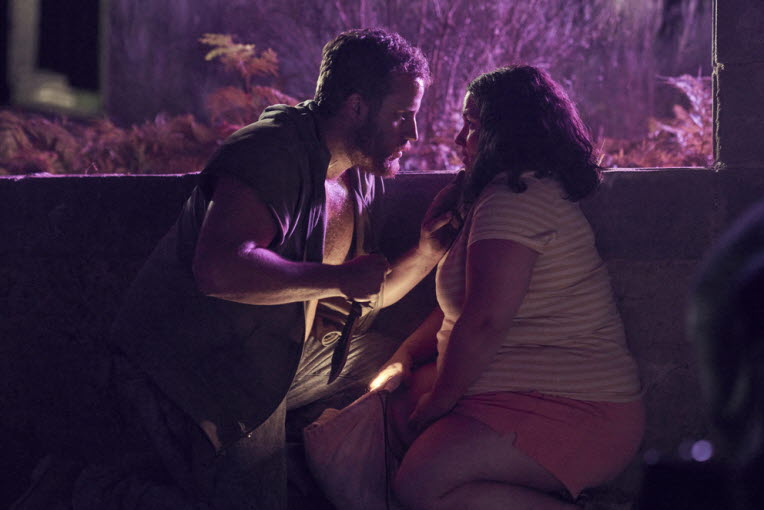
Norwegian film “Sick of Myself” will often make you cringe and wince for good reasons. Here is one narcissistic lass willing to go all the way for getting more attention from others, and the movie follows her pathological behaviors with detached humor and fascination while also gradually immersing itself in her increasingly warped viewpoint.

At the beginning, the movie quickly establishes the unhealthy relationship between Signe (Kristine Kujath Thorp) and her artist boyfriend Thomas (Eirik Sæther), who has a bad habit for creating his artworks. He usually steals one furniture after another just because he needs them for his artistic activities, and this unwholesome habit of his is continued even when he later comes to draw lots of attention as a new emerging artist in the town.

While Thomas is enjoying all the attentions he has received, Signe has just stood by him without much to do, but then something happens to her on one day. When she is working at a local bakery as usual, a horrible incident occurs right in front of the bakery, and she finds herself enjoying lots of attention as she later talks about the incident to others around her. After virtually addicted to feeling like being at the center of the world, she goes further for that, and there is a little amusing scene where she casually lies that she has a certain kind of allergy and then pretends to have a serious allergic reaction in front of her boyfriend and others.

As Thomas, who does deserve her considering how he is as narcissistic as his girlfriend, is just annoyed with her attention-seeking behaviors, Signe eventually decides to do something much more drastic than before. After learning about a certain Russian drug with serious side effects, she instantly obtains that drug in question via a young drug dealer who is your average pathetic momma’s boy, and then she soon gets what she wants. As showing a very serious medical symptom, she naturally draws much more attention than before, and she continues to make her medical condition worse and worse because, well, she is still craving for more attention from others including her doctors and her friends.

The most humorous moment in the film comes from when Signe is later transferred to a medical facility recommended by her mother. During her stay, she joins a group meeting attended by various patients not so different from her in terms of attitude and behavior, and we get more laughs as their counselor sincerely tries to help them while quite oblivious to how morbid and twisted his patients really are.

Although it seems that her medical condition is quite irrevocable, Signe is more excited when she subsequently gets an unlikely chance to pursue a modeling career. She is approached by a modeling agency interested in damaged or deformed people in the name of inclusion, and she does not hesitate to say yes as proudly showing off her medical condition as before.

However, things begin to get really worse for Signe in the meantime. It looks like that drug has more side effects than she thought at first, and her health condition becomes more deteriorated than she wants. In addition, as craving for lots of attention as much as her, Thomas becomes a lot pettier than before, and that certainly puts more strain on their problematic relationship.

Steadily maintaining its detached attitude as usual, the screenplay by director/writer/editor Kristoffer Borgli often has a fun with its heroine’s deluded state of mind. We are frequently caught off guard as a number of certain scenes turn out to be dream or delusion, and we even come to wonder whether Signe’s worsening condition later in the story is actually a part of another attention-seeking behavior of hers. As she goes deeper to the bottom of her madness and delusion, we naturally become more disgusted with her pathological behaviors, but she remains as a compelling cast study to observe from the distance, and we continue to watch her as more interested in how far she will really go in the end.

The movie depends a lot on Kristine Kujath Thorp, who is thoroughly uncompromising in her vicious comic performance. We do not feel that sorry for Signe even when everything is inevitably crashing down upon her later in the film, but Thorp ably conveys to us what makes her character tick, and we come to have some pity and understanding on Signe even during her most pathetic moments in the movie. On the opposite, Eirik Sæther is suitably obnoxious as Signe’s equally self-absorbed boyfriend, and several supporting performers including Fanny Vaager, Andrea Bræin Hovig, and Henrik Mestad are also effective in their small but substantial parts (You may also enjoy the cameo appearance of Anders Danielsen Lie, who was excellent in Oscar-nominated Norwegian film “The Worst Person in the World” (2021)).

On the whole, “Sick of Myself”, which was recently released in South Korea as “Hashtag Signe”, is certainly not something you can casually watch on Sunday afternoon, but I enjoyed how it handles its many uncomfortable moments with acerbic wit and sharp insight. The movie willingly tackles some unpleasant sides of human nature for generating some dark laughs, and you may go along with that even though you become quite disturbed from time to time.

Posted in Movies | Tagged , | Leave a comment

Wildcat (2022) ☆☆1/2(2.5/4): A troubled vet and his ocelots in Amazonian jungle

Documentary film “Wildcat”, which is currently available on Amazon Prime, left me with mixed feelings. On one hand, it is supposed to be about how one troubled vet reached for his mental healing via fostering ocelots in the middle of the Peruvian Amazon, and it certainly interests us as presenting a series of intimate moments observed from its main human subject’s solitary efforts in the jungle forest. On the other hand, it also tries to be the direct and honest presentation of mental illness, and there are a number of very uncomfortable moments which do not mix well with the gentler (and cuter) part of the documentary.

The documentary mainly revolves around Harry Turner, a young British vet who has struggled a lot with post-traumatic stress disorder (PTSD) and other mental issues caused by his battle experiences in Afghanistan. After coming back to UK, Turner had a pretty hard time as often failing to adjust himself to normal life, and that was the main reason why he subsequently volunteered to go to a certain remote spot in the Peruvian Amazon. Quite comfortable with being totally isolated from the outside world, he worked as a member of one non-profit organization, and, what do you know, it turned out that he is very good at handling those rescued wild animals.

Along with his girlfriend Samantha Zwicker, a young American ecologist who is incidentally a founder of the organization, Turner began to work on an ocelot named Khan, and the early part of the documentary focuses on how eagerly Turner took care of Khan in many aspects. At first, we see him simply treating Khan like a little pet cat, but then we observe how he helped Khan adjusting more to the jungle environment outside their shelter. For example, there is one interesting moment showing him teaching Khan a bit on how to hunt for itself, and he certainly looks proud as Khan seems ready to be released several months later.

However, something unfortunate occurred on one day. Khan happened to be injured seriously by a booby trap installed by somebody, and, despite Turner and Zwicker’s efforts, Khan eventually died. Understandably devastated by this tragic incident, Turner became quite morose and depressed for a while, and that certainly made Zwicker concerned a lot about her boyfriend’s mental health – especially when she had to leave for her academic works in US.

Some time later, Turner came to handle another ocelot to take care of, and, what do you know, this ocelot, which is incidentally named Keanu, came to enliven Turner much more than expected. Based on what he experienced and then learned from handling Khan, he handled Keanu with more care and attention, and Keanu showed considerable progress besides growing up a lot during next several months.

Eventually, there came an inevitable point where Turner had to make Keanu more separated from him than before, and that was where Turner became very conflicted about what would happen next. While he surely felt much better than before as spending lots of time with Keanu, he was also well aware that he must let Keanu go as soon as possible, and it seemed that Keanu also sensed his growing hesitation. For example, it did not leave the shelter as much as Turner wanted, and that certainly made Turner frustrated more and more.

This ongoing conflict of his also affected not only his mental health but also his relationship with Zwicker. During one very disturbing moment, we indirectly observe how much she felt helpless and frustrated as he was showing usual signs of depression and suicidal impulse, and then we later get to know more about her toxic relationship with her frequently abusive alcoholic father, which is probably the main reason why she tried to stand by Turner as much as she could. Because she cared about him just like she cared about her father, she thought she could handle her boyfriend’s mental issues, but, not so surprisingly, she came to recognize that she must distance herself from him for herself.

The documentary does not hesitate at all as looking directly into Turner’s personal demons, but the result is rather blatant and heavy-handed at times while also lacking wider perspectives beyond Turner’s or Zwicker’s. They surely came into the jungle for their commendable cause, and they seem to find a vocation to which they may dedicate themselves for the rest of their life, but that does not change the fact that they are more or less than privileged white persons searching for the spiritual healing by the Mother Nature. As a matter of fact, we do not get to know much about any of the local members of their organization or any of those local residents living there, and the documentary actually seems to be more interested in what Turner’s family experienced during their brief visit.

Directed by Melissa Lesh and Trevor Beck Frost, “Wildcat” is a fairly solid documentary which will surely appeal to you as a story of personal healing just like Netflix Oscar-winning documentary “My Octopus Teacher” (2020), but I am not sure about whether the documentary works as well as intended. Sure, you may be charmed and touched by many nice moments observed from those rescued wild animals, but I must tell you that, even at this point, my mind keeps coming back to what W.G. Sebald once said: “Men and animals regard each other across a gulf of mutual incomprehension.”

Posted in Movies | Tagged , , , , , , , | Leave a comment

Girl Who Dreams About Time (2022) ☆☆☆(3/4): Dealing with her fateful vocation

South Korean documentary film “Girl Who Dreams About Time” follows the life story of one young female shaman who simply tries to live her own life. Although she was expected to follow the footsteps of her grandmother due to her ‘fate’, she really wants to explore other options for her life out there, and the documentary lets us have some empathy and understanding on her growing conflict between her life and her fateful vocation.

At first, the documentary gives us some background information on its two human subjects. After losing her parents when she was very young, Kwon Soo-jin lived with her grandmother during next several years, and now she becomes a senior high school student preparing for the upcoming college entrance examination, but there is one big personal problem for her. Even when she was only 4 years old, she showed considerable potential for becoming a shaman, and, as a well-experienced shaman, her grandmother certainly taught her a lot on shamanism. Because being a shaman is usually a social stigma, Soo-jin really wants to go to college for escaping her “fate”, and her grandmother respects her decision even though she does not approve of that much.

Anyway, things seem to be going pretty well for Soo-jin once she eventually begins to study in some good college in Seoul. We see her doing her little class presentation quite enthusiastically, and then we observe her having a little private moment with her boyfriend. She sincerely hopes that she will work in advertisement business after her college graduation, which will be her first forward step toward a normal life she has always wanted.

However, Soo-jin still finds herself tethered to her old world represented by her grandmother. Whenever she is not busy with studying or taking exams, she has to come to her grandmother’s house every weekend for doing various shamanistic rituals and activities, and that gradually puts a considerable amount of strain on her relationship with her grandmother. At one point, the camera merely watches their big argument from its static position, but this moment feels quite painful to say the least. She really likes to be in her college, but her grandmother and her fateful vocation keep holding her as usual, and we come to sense more of her ongoing dilemma via a subsequent close-up shot of her face.

In the end, Soo-jin makes a decision with which she will have to live for the rest of her life. After she finally graduates from the college as planned, she moves to a city near her hometown where she is going to work as a new shaman in the town. Every weekend, she goes to her grandmother’s house as usual, and we see how she tells fortunes to several people who come to her for understandable personal reasons (We never see the faces of these people as the camera only looks at them from the behind, by the way).

This is rather sadly fatalistic in my humble viewpoint, but Soo-jin is not so depressed about accepting her ‘fate’ at least. As a smart girl who is considerably savvy about self-promotion, she makes a YouTube account where she can eagerly talk about her profession, and she has enough charisma to draw more attention from those online viewers out there. Although I do not care much about what she says, I find her quite engaging with her outgoing attitude, and I even consider checking out her YouTube account someday.

In addition, Soo-jin’s grandmother is certainly ready to provide all the support and help she can give to her dear granddaughter. During the preparation for one big ritual to be held at their place, she willingly assists Soo-jin at every step of this ritual, and we get a little amusement as observing them with some fascination. Later in the documentary, they go together to a beach town for another ritual, and we feel more of the strong emotional bond between them as they go through the ritual in private later.

Nevertheless, Soo-jin still wants to live her own life as before, and that aspect of hers is clearly shown from when she happens to have a drinking time with several friends of hers. As she joyfully and comfortably talks with them, she feels a bit more normal at least for a while, and we come to sense that she will be all right regardless of whatever will happen next according to her ‘fate’.

Except several occasions when Soo-jin talks about herself and her life in front of the camera, the documentary sticks to its restrained attitude as a close but detached observer, and director Park Hyuck-jee, who has been known for his acclaimed documentaries including “Oh! My Papa” (2016) and “Speed of Happiness” (2020), deserves to be commended for how he slowly but effortlessly immerses us into the daily life of Soo-jin and her grandmother. Although I wish the documentary showed and explained more about their shamanistic activities, Soo-jin and her grandmother are compelling enough to hold our attention, and the documentary did a good job of presenting them with enough care and respect.

Overall, “Girl Who Dreams About Time” is a haunting documentary which gives us a close and intimate look on shamanism via its two plain but unforgettable human subjects. As your average agnostic, I only observed them and their spiritual belief with skepticism, but I was touched by their human moments nonetheless, and that is certainly enough for recommendation.

Posted in Movies | Tagged , , , , | Leave a comment

Alice Doesn’t Live Here Anymore (1974) ☆☆☆1/2(3.5/4): An intimate female drama by Martin Scorsese (No kidding)

“Alice Doesn’t Live Here Anymore” occupies a curiously odd spot in Martin Scorsese’s legendary filmmaking career. While sandwiched right between “Mean Streets” (1973) and “Taxi Driver” (1976), this little film is quite different from either of his two gritty urban masterpieces in many aspects. As an intimate female drama which tenderly and sensitively follows its plain heroine’s growth and self-discovery, this is surely something very rare in Scorsese’s filmography, and, that is why it should be cherished more besides being an excellent character study which still works well after many years.

The story mainly revolves around Alice Hyatt (Ellen Burstyn), a suburban housewife living in New Mexico. As reflected by the striking prologue scene tinged with fantasy and nostalgia, there was a time when she pursued her little aspiration of becoming a successful professional singer, but now she is stuck with her unloving trucker husband and their willful young son. Despite often being not so happy with her current living condition, she tries her best for making things better for her as well as her family, but she only gets frustrated again and again, and her only consolation comes from a fellow housewife who has been her best friend.

And then something quite unexpected suddenly happens on one day. Her husband unfortunately dies due to a horrible car accident, and Alice finds herself almost penniless as most of their money goes to his following funeral. For supporting herself and her son, she must find any possible way to earn money right now, and that is how she comes to decide that she should try to resume her old professional singing career in Monterey, California. While not so confident about her singing ability, she is ready to try her best nonetheless, and she soon leaves New Mexico along with her son, after saying a tearful goodbye to her best friend.

Not so surprisingly, things do not go as well as she wished. As staying in Phoenix, Arizona, Alice searches for any suitable bar where she can be employed and then hone her singing skill more, but that turns out to be not so easy at all. At one point, a callous bar owner shows more interest in her body rather than her actual singing ability, and that is when one of the sharpest lines in the film comes (“Well, look at my face – I don’t sing with my ass.”).

At least, Alice gets hired by some other bar owner later, but, alas, there comes another trouble for her not long after that. When she is approached by one seemingly charming guy in one evening, she is not so particularly interested in him at first, but then she lets herself charmed by him. As meeting him again, she considers becoming more serious about him, but, what do you know, he soon turns out to be much worse than her husband. Along with Alice, we are slapped with a sudden brutal moment of violence, and Harvey Keitel, who previously worked with Scorsese in “Who’s That Knocking My Door” (1967) and “Mean Streets”, is simply frightening in his brief but undeniably intense appearance.

Shortly after she and her son hurriedly move to Tuscon without looking back at all, Alice decides to put aside her aspiration for a while due to their poor financial status at present, so she begins to work as a local diner waitress. Although she struggles a lot on her very first day at the diner, she gradually gets accustomed to her new job mainly thanks to Florence (Diane Ladd), one of the two other waitresses of the diner.

Around that point, the screenplay by Robert Getchell slowly settles along with its heroine while further fleshing out a number of different characters around her. As the usual customers of the diner come and go during its opening hour, the diner is frequently brimming with a vivid and realistic sense of life, and we also get to observe more of the colorful personalities of Alice’s colleagues. My personal favorite moment is involved with Vera (Valerie Curtin), a shy and neurotic waitress who, to our little amusement, turns out to be more spirited than she seems on the surface.

When David (Kris Kristofferson), one of those usual customers, approaches to Alice for his little courtship on one day, Alice understandably hesitates, but she soon finds herself attracted to him as getting to know him more. As spending more time with him, she comes to consider living with him because he seems to be much better than her husband or that horrid guy, but she still wants to pursue her dream as before, and she keeps hesitating between her aspiration and the possible new love in her life.

While there subsequently comes a considerable conflict to be resolved in one way or another, Getchell’s screenplay wisely does not overplay that, and then it glides to an unexpectedly funny and touching scene between Alice and Florence. As a brash but no-nonsense woman, Florence gives a forthright advice to Alice, and Alice surely follows Florence’s sensible advice when she really has to make an important choice for her life. Her eventual choice can be regarded as a compromise, but she makes that choice on her own terms, and the very last shot of the film slyly implies to us that, regardless of whatever will happen next, there are still a lot of possibilities in front of her.

Scorsese was technically a hired hand in case of “Alice Doesn’t Live Here Anymore”, but he was willing to demonstrate that he could be a fairly good mainstream filmmaker, and he turned out to be the right director for the movie as Burstyn felt after seeing “Mean Streets”. For subtly conveying to us Alice’s unsettled status, he and his cinematographer Kent L. Wakeford seldom let the camera become static throughout the film, and that also brings considerable verisimilitude to the screen. In addition, Scorsese often encouraged improvisation among his cast members, and they accordingly look natural and spontaneous in their interactions on the screen.

While she will be always remembered for “The Exorcist” (1973) and “Requiem for a Dream” (2000), Burstyn actually gave many other stellar performances including her breakthrough supporting turn in “The Last Picture Show” (1971), and “Alice Doesn’t Live Here Anymore” is definitely one of the highlights in her respectable acting career. Effortlessly embodying the ordinary but palpable human qualities of her character, she subtly illustrates her character’s gradual growth and development along the story, and she deservedly received a Best Actress Oscar for that (A small trivia: Because Burstyn could not come to the ceremony at that time, Scorsese came instead, so that was the first time he went up to the stage for receiving an Oscar, though he had to wait for more than 30 years for winning the one for himself at last).

Around Burstyn, several other main cast members inject an extra dose of life and personality to the film. While Diane Ladd received her first Oscar nomination for her scene-stealing supporting performance, Valerie Curtin, Vic Tayback, and Kris Kristofferson are also believable as the more colorful figures in the diner, and Alfred Lutter, who plays Alice’s occasionally unruly son, holds his own little place well besides Burstyn. Later in the story, Lutter has a couple of humorous scenes involved with a tomboy girl who is played by none other than young Jodie Foster, and you may also be able to spot young Laura Dern, who briefly played a girl eating ice cream cone in the movie (This was her second film after “White Lightning” (1973), by the way).

Although it is relatively modest compared to many of Scorsese’s great films ranging from “Mean Streets” to “Silence” (2016), “Alice Doesn’t Live Here Anymore” shows a more sensitive side of Scorsese’s peerless talent like “The Age of Innocence” (1993) and “Hugo” (2011), and it surely shows how willing he was to go outside his artistic comfort zone even at that time. When he was approached by Burstyn before the production of the film began, Burstyn directly asked him about what he really knew about women, and he frankly replied, “Nothing, but I’d like to learn.” As far as I can see from the film, he learned a lot, and he certainly did his best from that.

Posted in Movies | Tagged , , , , , | Leave a comment

Argentina, 1985 (2022) ☆☆☆1/2 (3.5/4): A trial in Buenos Aires, 1985

“Argentina, 1985”, which was selected as the Argentine submission to Best International Film Oscar in last year and recently won the Best Non-English Language Film award at the Golden Globes, is a calm but powerful period drama surrounding one big historical trial in 1985. As following the long struggles of one plain prosecutor and his numerous assistants toward justice and democracy, the movie vividly takes us into that unstable time right after the end of the dictatorship during 1976-1983, and we are reminded again of how difficult it often is to restore democracy after such a terrible period like that.

At the beginning, the movie succinctly establishes how fragile the situation was in the Argentine society in 1984. The reign of the terror by a group of military leaders who crushed thousands of people by any means necessary was finally over, and the new government promised the new beginning for the country and its people, but there was a big legal matter involved with those central figures of the dictatorship. At least, they would be prosecuted at a federal court instead of a military court, but there was not much chance for sending all of them to jail, and that is why Julio César Strassera (Ricardo Darín) is not so pleased about being assigned to this rather tricky case. As a weary but dutiful prosecutor, he is ready to take the job as instructed, but he knows too well that the chance of winning is slim to say the least – and that he will be certainly humiliated in public if he loses as expected.

However, Strassera is also determined to try his best because, like many people in the country, he absolutely abhors the dictatorship even though he could not do anything against it during that grim time. As he begins his first day of preparation along with his young assistant prosecutor Luis Moreno Ocampo (Peter Lanzani), he looks for anyone willing to work under him, and he comes to interview lots of young employees mainly because they are more drawn to challenge in addition to being more likely to dislike the dictatorship.

In case of Ocampo, this passionate lad is in a rather awkward position from the beginning as the son of a prominent right-wing family connected well with lots of powerful dudes including a general who is incidentally one of several defendants of the case. While his mother, who is your average hardcore conservative, does not approve much of what he is about to do, she respects his professional choice at least, and she surely warns him a bit when they are going to attend a social meeting which is packed with guys not so amused about what he and Strassera are doing at present.

And it soon turns out that those supporters of the dictatorship are ready to stop Strassera and Ocampo as much as possible. As he feared right from the start, Strassera and his family often receive anonymous threats on the phone, and they even receive a short but undeniably disturbing letter which may really be sent from someone in the Argentine military. The police provide some security to Strassera and his family as expected, but the police cannot be trusted that much because, after all, they were closely associated with the dictatorship during that time.

The social/political pressure keeps accumulating on Strassera and his prosecution team even after they manage to succeed in assembling a hefty amount of documents and testimonies within less than 4 months. While the judges presiding over the case are not exactly helpful at times, the lawyers of the defendants are certainly ready to tackle against Strassera and his prosecution team in one way or another, and the defendants regard everything with aloof disinterest while fully expecting to be acquitted sooner or later.

Nevertheless, Strassera and his prosecution team do not step back at all as presenting one evidence after another during their long trial. As Ocampo pointed out in advance, they must sway the public opinion more to their argument, and a series of harrowing testimonies of the survivors of the dictatorship, which are incidentally broadcast all over the country, become quite crucial in their strategy. The camera simply observes what these survivors testify at the court one by one, but it is difficult not to feel their immense pain and sorrow, and we can really see how that emotionally affects many people around the country.

As the humble center of the story, Ricardo Darín, who has been more prominent thanks to Oscar-winning Argentine film “The Secrets in Their Eyes” (2009), steadily carries the film to the end without overshadowing his fellow cast members at all. While Peter Lanzani is certainly a standout in the bunch, several main performers playing the members of Strassera’s prosecution team are also effective in their respective supporting roles, and Alejandra Flechner, Claudio Da Passano, and Santiago Armas Estevarena provide some warmth and humor as Strassera’s supportive family members.

In conclusion, “Argentina, 1985”, which is currently available in Amazon Prime, is very engaging thanks to its restrained but passionate storytelling, and director/co-writer Santiago Mitre, who received the FIPRESCI Award when the movie was premiered at the Venice International Film Festival several months ago, deserves to be commended for making another notable Argentine film to be placed along with Oscar-winning Argentine film “The Official Story” (1985), which is also about the dictatorship during 1976-1983. Although nearly 40 years have passed since the end of the dictatorship, the movie powerfully illustrates why that terrible time should not be forgotten at all even at present, and the result is one of more interesting films of last year.

Posted in Movies | Tagged , , , , | 2 Comments

Nanny (2022) ☆☆1/2(2.5/4): A nanny under the influence

“Nanny”, which was released on Amazon Prime in last month, is an uneven mix of immigrant drama and horror. Although it is held together fairly well thanks to its competent direction as well as the good lead performance at its center, the movie stumbles more than once as trying to balance itself between its two very different genres, and then, to my little disappointment, it simply stops when it could go further for more exploration in terms of story and characters.

Anna Diop, who previously appeared as one of the main characters in Jordan Peele’s “Us” (2019), plays Aisha, a Senegalese immigrant who has been just hired as a nanny for some affluent family living in New York City. While she is not that confident about her job, it does not take much time for her to get friendly with a little young girl of whom she is hired to take care, and it looks like this job will help her saving more money for bringing her little young son in Senegal to New York City someday.

Surely feeling alone at times, Aisha gets some comfort from several people around her. While she receives some generosity from her black landlady, there is a Nigerian hairdresser who has been her best friend for a while, and she also comes to befriend a black guy named Malik (Sinqua Walls), who incidentally works in the same apartment building where Aisha goes for her daily babysitting work. He turns out to be really interested in getting closer to her, and Aisha does not mind at all when he suggests later that they should have a little date together.

However, Aisha is still missing her son a lot. She sometimes talks with her son via international video phone, and she always promises to him that she will bring him to New York City as soon as possible, though that will not be possible for a while. When she cannot talk with her son on the phone, she checks out her phone conversations with him again and again, and that reminds her more of how much she really wants to reunite with him.

Anyway, Aisha keeps working as usual, but something strange begins to happen. She starts to experience a series of disturbing dreams involved with water and a certain mythical figure, and she has no idea on why this is occurring upon her. Is possible that this is just an anxiety/exhaustion problem which has been suppressed inside her due to insufficient rest and comfort during last several months? Or, is this actually caused by something real and frightening with possibly insidious motives?

In the meantime, things begin to fall apart for Aisha bit by bit. The more she spends time at her employer’s apartment, the more she senses the growing awkwardness between her employer and the employer’s husband, who often does not provide much emotional support for his wife as often busy with his works outside. Aisha’s employer is mostly fair and kind, but she cannot help but become neurotic as trying to balance herself between her work and her daughter, and we are not so surprised when she comes to clash with Aisha over a trivial matter at one point later in the story.

As more concerned about how unstable her job has become, Aisha naturally seeks some comfort from talking with her son, but she only finds herself more disturbed as she cannot contact a family member who has been taking care of her son in Senegal. Through Malik’s grandmother, who incidentally has some considerable knowledge on spiritualism, Aisha comes to learn more about that certain mythic figure in her dream, and the mood becomes ominous as her mind trembles between reality and dream more frequently than before.

Because Jason Blum serves as one of its executive producers, you will certainly expect to be scared or disturbed sooner or later, and the movie does not disappoint you at all during its last act where our heroine’s mind becomes more unreliable. There are several tense moments as she is thrown into more confusion and anxiety, and we come to worry more about what may happen to not only her but also that little girl under her care.

When the screenplay by director/writer Nikyatu Jusu, who won the Grand Jury Prize when the movie was shown at the Sundance Film Festival early in last year, eventually reveals everything around its finale, it is not exactly surprising to us, but it mostly works thanks to the Diop’s nuanced natural acting. She did a commendable job of conveying her character’s growing anxiety and confusion along the story without exaggerating that at all, and her good performance is the main reason why we keep paying attention to the screen before the movie eventually reaches to its rather fizzling ending.

Around Diop, Jusu ably establishes the plain but vivid realistic background, and the supporting performers are convincing as various people you may come across in New York City, though I wish the movie developed their characters more. While Sinqua Walls clicks well with Diop in their several key scenes, Leslie Uggams has a couple of effective scenes as Malik’s knowledgeable grandmother, and Michelle Monaghan acquits herself fairly well despite her thankless role.

On the whole, “Nanny” is not so recommendable for me, but it still shows Jusu, who previously made several short films before making a feature debut here, is a talented filmmaker with considerable potential. I am not satisfied enough, but I am interested in what may come next from her, and I hope I will be more impressed in the next time.

Posted in Movies | Tagged , , | Leave a comment

The Pale Blue Eyes (2022) ☆☆1/2(2.5/4): A gloomy mystery with young Poe

Netflix film “The Pale Blue Eyes”, which was released in last week, is a gloomy mystery which did not exactly satisfy me. While it has some interesting elements to draw my attention for 2 hours, the movie just ponderously trudges along its mystery plot without enough interest or intrigue, and I did not get much satisfaction even when everything in the story was clearly explained and then resolved.

The story, which is mainly set in West Point, New York around 1830, begins with when Augustus Landor (Christian Bale), a retired New York City detective, is suddenly visited by an officer from the US military academy in West Point on one day. One of the cadets in the academy was found dead outside the academy under a rather suspicious circumstance, and this incident was followed by another weird happening. Superintendent Thayer (Timothy Spall) wants everything to be solved and then handled as soon as possible for avoiding more troubles, and that is why he requests some unofficial help from Landor.

Although he is reluctant at first, Landor agrees to investigate the case, and we soon see that there are many questionable things in the case. It turns out that the dead cadet was actually killed by someone, and it is quite possible that the killer is also the person who took out the heart of the dead cadet while the body was kept in the academy doctor’s workplace later. There is considerable possibility that the killer is in the academy, but it is difficult for Landor to know what is really going among the cadets and officers in the academy, so he really needs someone inside for helping his investigation.

Fortunately, Landor soon gets the one right for his investigation. The person is a young cadet named Edgar Allen Poe (Harry Melling), and, though he always draws attention from others due to his quirky personality and awkward attitude, he turns out to be quite useful for Landor in more than one aspect. Besides being pretty good at getting any chance for gathering inside information from other cadets, Poe turns out to be smart enough to be Landor’s unofficial investigation partner, and there is an amusing moment when he cannot help but act like a detective as he tells Landor about what he deduces from a little clue given to him by Landor.

Meanwhile, the situation becomes more complicated due to several more gruesome happenings around the academy. Several incidents of dead livestock which are gruesomely maimed occur, and that is soon followed by another murder case to disturb everyone in the academy. Quite more concerned about the reputation of his academy, the superintendent comes to put more pressure on Landor, but Landor remains unflappable as before, while also continuing to delve into the case step by step along with Poe.

As they get closer to the possible answer to everything in the case, the movie shrouds the screen with a palpably grim atmosphere along with some Gothic touches which will surely take you back to those dark literature works written by Poe. Thanks to cinematographer Masanobu Takayanagi, the screen is constantly shrouded in a cold and unnerving sense of dread and anxiety, and we are not so surprised to learn later that the case may be involved with some diabolical practice of devil worship.

In the meantime, the screenplay by director/writer/co-producer Scott Cooper, which is based on the novel of the same name by Louis Bayard, focuses on a bit of romance between Poe and a beautiful young woman who happens to be the daughter of the academy doctor. As getting to know her and her family more, Poe comes to have some understandable suspicion, but he cannot help but attracted to her as they recognize a sort of kinship between them as two differently melancholic souls, and there is a little tender moment when he recites a bit of one of his latest poems to her at one point.

In the end, there comes a point where Landor and Poe uncover something dark behind the case, and the movie surely gets more insidious than before, but it comes to fizzle during the overlong finale where it plods a bit too much for explaining everything in the story. Although there are some unexpected plot turns for us, we are not so shocked at all, and the movie eventually arrives at its final scene with a whimper.

At least, the main cast members dutifully fill their roles as much as required. While Christian Bale, who also participated in the production of the film, gives another intense and brooding performance to be added to his career, Harry Melling, who has steadily advanced as a promising character actor since his breakout turn in the Coen Brothers’ “The Ballad of Buster Scruggs” (2018), has a number of juicy scenes as embodying Poe’s uncanny melancholy, and he and Bale are also surrounded well by a bunch of notable performers including Timothy Spall, Simon McBurney, Toby Jones, Charlotte Gainsbourg, Lucy Boynton, Gillian Anderson, and Robert Duvall, who is still active despite having his 92nd birthday in last week.

In conclusion, “The Pale Blue Eyes” is not entirely without enjoyable stuffs, but it is relatively less satisfying compared to Cooper’s several better works including “Hostiles” (2017). While it certainly has plenty of mood and details to be appreciated, the mystery inside its story is not particularly compelling in my humble opinion, and you will probably have a better time if you read instead one of those dark short stories written by Poe.

Posted in Movies | Tagged , , , , , | Leave a comment

Puss in Boots: The Last Wish (2022) ☆☆☆(3/4): Puss in Boots back in action

Animation feature film “Puss in Boots: The Last Wish”, which is the sequel to “Puss in Boots” (2011), has a fair amount of fun and charm to justify its rather redundant existence. While its irreverent fairy tale world, which is borrowed from “Shrek” (2001) and the following several sequels, has not been so fresh or original during last two decades, the film diligently provides a series of funny and entertaining moments as expected, and that is enough for me for now.

The story, which begins at quite several years after the ending of the previous film, quickly establishes how things have become quite different for our furry outlaw hero. While he has enjoyed a considerable amount of fame and notoriety during these several years, Puss in Boots (voiced by Antonio Banderas) comes to face the undeniable fact that he has the only one life left after dying no less than eight times, and, what do you know, he is soon approached by a certain ominous figure eager to give him, uh, the eternal peace. Understandably quite terrified, our furry hero quickly runs away from his fearsome opponent, and he eventually lets himself adopted by an old lady who already lots of other cats in her house.

For some time, the situation does not look that bad for our furry hero once he gets accustomed to the mundane (and mindless) daily life of a pet cat, but, of course, there eventually comes an opportunity for adventure he cannot possibly resist. It turns out that Goldilocks (voiced by Florence Pugh) and her trio of bears are looking for his little criminal service, and their ultimate goal, a big star hidden somewhere inside a dangerous magic forest, may get our furry hero to have extra lives. Naturally, he quickly embarks on acquiring the magic map which will lead him to that big star, and he also happens to be accompanied with Perrito (voiced by Harvey Guillén), a little happy-go-lucky dog who has disguised himself as a cat for his practical survival.

Of course, things soon turn out to be a bit more complicated than our furry hero expected at first. It seems that all he will have to do is stealing the map from one certain greedy industrial figure, but this loathsome figure also wants to locate that star for his megalomaniac ambition. In addition, our furry hero also comes across Kitty Softpaws (voiced by Salma Hayek Pinault), another outlaw cat who was once very close to him and is also quite willing to get the map by any means necessary for her little personal purpose.

While reluctantly working together for their common goal, Puss in Boots and Kitty Softpaws find themselves rekindling those old romantic feelings between them, though neither of them can easily admit that they are still attracted to each other despite all those years of separation between them. At least, Perrito is always willing to soften the mood between his two feline companions, and that makes both of them a bit more willing to open themselves to each other, though the map and that big star remain a big issue between them.

As cheerfully rolling these three and several other characters from one point to another, director Joel Crawford and his crew serve us several good action sequences packed with enough wit and style to be appreciated. These sequences often look rough via their deliberate cell animation style, but this interesting stylistic choice brings some extra energy and spirit to the screen, and we remain engaged and excited even when lots of things happen here and there across the screen.

The screenplay by Paul Fisher and Tommy Swerdlow, which is based on the story written by Swerdlow and his co-writer Tom Wheeler, allows occasional character development in the meantime. While our furry hero’s conflict with the growing possibility of his death brings enough gravitas to the story, there is some poignancy in the respective simple wishes of his two accidental companions, and we are also touched a bit when Goldilocks, who actually cares about her bear family more than she admits, makes an important choice for her alternative family later in the story.

Above all, the voice cast members of the film have lots of fun as imbuing their characters with a substantial amount of life and personality. While he has been considerably matured during last several years as shown from his moving Oscar-nominated turn in Pedro Almodóvar’s “Pain and Glory” (2019), Antonio Banderas still can be very funny as recently shown from Gastón Duprat and Mariano Cohn’s “Official Competition” (2021), and his delightful voice performance perfectly captures his character’s irrepressible bravado as before. Besides Salma Hayek Pinault and Harvey Guillén, both of whom hold each own spot well around Banderas, Florence Pugh, Ray Winston, Olivia Colman, Samson Kayo, John Mulaney, Wagner Moura, and Da’Vine Joy Randolph are well-cast in their respective supporting parts, and Moura is particularly effective as our furry hero’s fearsome opponent.

In conclusion, “Puss in Boots: The Last Wish” is a predictable but enjoyable product, and it will certainly appeal to both cat and dog lovers for good reasons. To be frank with you, I did not expect much when I came into the screening room during last evening, but I found myself chuckling from time to time, and I was also often amused by how actively two young audiences behind me responded to the film. Yes, I could recommend them several better recent animation films such as “Guillermo del Toro’s Pinocchio” (2022), but we had enough fun anyway, and I can only hope that they will soon go for better stuffs out there.

Posted in Movies | Tagged , , , , | 1 Comment

Fragrance of the First Flower (2021) ☆☆☆(3/4): Still attracted to each other

Taiwanese film “Fragrance of the First Flower” is a familiar but engaging melodrama about two women who still cannot help but attracted to each other despite several years of separation between them. As alternating between their past and present, the movie lets us know more about their emotional bond as well as the complicated circumstance surrounding them, and we come to care more about them as their emotional journey eventually culminates to an important moment of decision for both of them.

The movie opens with an accidental encounter between Ting Ting (Lyan Cheng) and Yi Ming (Zaizai Lin) at the wedding ceremony of their mutual schoolmate. At first, they look just pleased to see each other again after their high school years, and we later see them spending a little more time together, before Yi Ming returns to her residence where she lives with her husband and their little son.

Not long after that, Yi Ming decides to meet Ting Ting again for their old time’s sake, and Ting Ting has no problem at all with seeing her again. As they talk more with each other, they become more friendly to each other, and Ting Ting is eventually introduced to Yi Ming’s family thanks to a little accidental encounter between her and them.

In the meantime, the movie goes back to the past between Yi Ming and Ting Ting during their high school period in the early 1990s. When they first came across each other, Ting Ting was a freshman who had just started her first year at their school, and Yi Ming was a confident senior who had also been the captain of the volleyball team of their school. Right from when she saw Yi Ming, Ting Ting found herself quite attracted to Yi Ming, and that was the main reason why she came to join the volleyball team.

When Ting Ting eagerly approached to her, Yi Ming did not mind much because it was nice to have someone willing to be under her wings, but, what do you know, they soon became each other’s best friend. As they spent more time together, they shared a lot of feelings and thoughts between them, and, of course, there eventually came a point where Ting Ting showed more of her infatuation with Yi Ming. While perplexed a little at first, Yi Ming did not reject Ting Ting’s affection at all, and that made them much closer to each other, though Yi Ming mostly regarded Ting Ting as her best friend.

As remembering those old times with Ting Ting, Yi Ming naturally finds herself drawn more to her, but things are now more complicated for her. Although homosexuality has been accepted much more than before in her society, she is still afraid of admitting more of how she is still attracted to Ting Ting, and, above all, she cannot simply walk away from her family life right now. While she is frequently frustrated with her plain and dull husband who usually takes everything for granted, she still cares a lot about the welfare of their little son who is incidentally on autism spectrum, and disrupting her son’s daily life is certainly the last thing she wants.

As Yi Ming becomes more conflicted about her feelings toward Ting Ting, we also get to know more about how they became estranged to each other during that time. Due to one very unpleasant incident at one night, Ting Ting almost exposed her relationship with Yi Ming to others at the school, and Yi Ming was not so pleased about that at all. She began to distance herself more from Ting Ting as time went by, and they eventually became all the more separated from each other than before when Yi Ming subsequently began her college years.

Directed by Angel Ihan Teng, the movie is actually the condensed feature film version of the first season of a popular streaming service drama series. I have not seen the drama series yet, but I can tell you that the movie itself mostly works well without much narrative gap. Although there are some visible interruptions, the movie steadily develops its story and characters on the whole, and it also pays some attention to a few other main figures around Yi Ming and Ting Ting.

In the end, there comes an expected moment as Yi Ming and Ting Ting come to confront their situation with total honesty, and we surely get a substantial amount of tears, but the movie sticks to its restrained mode even at that point. Our two heroines are reminded again of how much they are still emotionally attached to each other, but there are also some serious issues to deal with in one way or another, and they will have to tackle them if both of them are really ready to take another forward step toward each other.

The movie is firmly carried by the strong lead performances from its two good actresses. While Lyan Cheng’s charming performance functions as the main catalyst for the dramatic tension throughout the film, Zaizai Lin is terrific whenever her character quietly struggles with her complicated matters of heart, and they constantly click with each other well as their characters push or pull each other along the story. In case of a few main cast members surrounding them, Lee Yi acquits himself well despite his rather thankless supporting role, and the movie thankfully does not allow any pity on his incorrigibly insensitive character.

Overall, “Fragrance of the First Flower” is a modest but solid queer melodrama to be appreciated for its sensitive mood and storytelling, and you may also get interested in checking out that drama series (Its second season is already being in production, by the way). Although it does not exceed my expectation, I appreciate its strong elements nonetheless, and I recommend you to give it a chance someday.

Posted in Movies | Tagged , , , , , , , , | Leave a comment