Three Thousand Years of Longing (2022) ☆☆☆(3/4): Can she make a wish?

George Miller’s latest film “Three Thousand Years of Longing” is a modest but haunting fantasy drama about life and storytelling. While it is relatively less ambitious and memorable compared to the greatness of his previous film “Mad Max: Fury Road” (2015), the movie is often visually striking as doling out one splendid moment after another, and it eventually reaches to its expected finale with substantial poignancy for us.

At the beginning, we meet Alithea Binnie (Tilda Swinton), a female narratologist who has always been interested in stories throughout her whole life. When she comes to Istanbul, Turkey for attending an academic conference, she is baffled as suddenly experiencing a couple of odd incidents, and then a really strange thing happens to her later. At a local antique market, she happens to acquire a little old glass bottle, and it soon turns out that this glass bottle contains a Djinn, an old supernatural entity who can grant three wishes to whoever releases him.

While quite surprised and perplexed by this unexpected discovery, Alithea tries to handle her situation as sensibly as possible. As a story expert, she knows too well that she should be careful about whatever she may wish, and the Djinn, played by Idris Elba, consequently finds himself in a rather difficult circumstance as she refuses to make any wish. For gaining his freedom, he must convince her that he is not one of those naughty Djinns, and, what do you know, he comes to tell her a lot about his long life history.

What follows next is three different stories set in three different periods, respectively. At first, we get a story involved with the Queen of Sheba and King Solomon, whose ardent courtship toward the Queen of Sheba eventually led to the banishment of the Djinn into a metal container during next several centuries. The second story is about one plain lass who yearned for the crown prince of the Osman Empire, and it goes without saying that her story did not end that well although she got her big wishes via the Djinn. In case of the third story, it mainly revolves around a very unhappy woman trapped inside her old wealthy husband’s house, and the Djinn naturally comes to feel some kinship between them as spending next several years with her in her little private place.

For each segment, the movie unfolds one impressive visual moment after another, and Miller and his crew members including cinematographer John Seale, who came out of his retirement again as he previously did for Miller in “Mad Max: Fury Road”, did a splendid job of bringing considerable style and personality to each segment. Although it is clear that they depended a lot on CGI, the result is filled with distinctive mood and details to be appreciated, and that is the main reason why each segment in the story comes to function as a part of narrative development between Alithea and the Djinn. Because of her longtime fascination with stories, she cannot help but enthralled by his stories, but she still hesitates to make her three wishes no matter how much he tries to persuade her, and that certainly frustrates him a lot.

As Alithea and the Djinn continue to cope with their seemingly intractable situation, the movie continues to impress us with more wonder and imagination, and the overall result is not so different from Tarsem Singh’s “The Fall” (2006), which shares lots of common things with Miller’s film. Besides mainly fueled by their respective directors’ ambitious storytelling experiments, both of these films often emphasize to us the power of storytelling via their sheer visual prowess, and they touchingly remind us of why we always needs stories throughout our constantly messy and chaotic life.

During the last segment, the movie stumbles more than once due to its rather uneven narrative pacing, but it still works because of what has been patiently established and then developed between its two main characters. Even though she has been quite detached to her life as well as those stories she has made or collected, Alithea comes to accept that she cannot be distant to her ongoing life story anymore, and she eventually makes an active choice for not only her but also the Djinn. While it is possible that the whole story is more or less than a piece of imagination from Alithea, the screenplay by Miller and his co-writer Augusta Gore, which is based on A.S. Byatt’s short story “The Djinn in the Nightingale’s Eye”, never overlooks its emotional ground, and that is why the somber final scene is emotionally resonating.

Above all, the movie is carried well by its two captivating lead performers. While she initially seems to be stuck in a thankless role, Tilda Swinton gives another engaging performance as gradually revealing her character’s hidden deep emotional needs along the story, and Idris Elba, who has always been reliable with his natural charisma just like Swinton, finally gets a role for fully demonstrating his undeniable presence and talent. He and Swinton constantly hold our attention although they simply interact with each other within a small, limited background throughout the film, and we can always sense something interesting happening between their characters, while gladly going along with them to the end of the story.

Overall, “Three Thousand Years of Longing” is one or two steps down from what Miller achieved so awesomely in “Mad Max: Fury Road”, but it is his another distinctive work at least, and I recommend it mainly for its several strong elements including the commendable acting from Swinton and Elba. To be frank with you, I admire it instead of really liking it, but, in my inconsequential opinion, you should give it a chance because, after all, this is not something you do not see at theater everyday.

Posted in Movies | Tagged , , | Leave a comment

Official Competition (2021) ☆☆☆(3/4): A director and her two difficult stars

“Official Competition” is simply hilarious as having a naughty fun with its one-joke story premise. Although it comes to lose some of its comic momentum during its last act where the mood becomes a bit more serious, the movie continues to tickle us as before, and it is also supported well by the entertaining comic performances from the three main cast members at the center of the film.

Everything in the story begins from a wealthy old man who is just having his 80th birthday. Although he has accomplished a lot via his big pharmaceutical company for years, this old guy wants to leave behind a more enduring legacy before he dies, and he eventually decides to produce a great movie to be remembered, though he does not know anything about filmmaking from the beginning.

Anyway, the old man tries his best. First, he purchases the copyright of the novel of some famous author who won a Nobel Prize, and then he approaches to Lola Cuevas (Penélope Cruz), an acclaimed movie director who is quite serious about filmmaking in her own idiosyncratic way. Although he does not even know what or how the novel is about, he is willing to promise her the total artistic control over the production of their movie, and Lola accepts his request without much hesitation.

For the two contrasting lead characters of her movie, Lola cast two actors who cannot possibly be more different from each other: Iván Torres (Oscar Martínez) and Félix Rivero (Antonio Banderas). While Iván is a very serious stage actor with a big artistic ego behind his seemingly humble appearance, Félix is your typical charismatic but arrogant movie star, and it goes without saying that they do not get along well with each other right from their first day with their director at a charity foundation building belonging to the old man.

At first, all they will have to do is reading their director’s screenplay for more preparation before the shooting, but, not so surprisingly, Lola turns out to be much more demanding than expected. As your average perfectionist, she frequently pays painstaking attention to every minute detail of her movie, and that often baffles her two stars. At one point, she demands Iván to deliver one very simple line as exactly as she wants, and that leads to a little moment of amusement for us as he patiently tries to follow her fastidious request.

And that is just the beginning of many outrageous things Lola are going to do for preparing her two stars for her movie. For example, she puts her two actors under a possibly risky situation, just because she wants to extract the right emotions from them. Needless to say, both of them cannot help but become nervous even while trying their best as much as possible, and the deft utilization of sound effects brings more hilarity to this loony moment.

Although it is more or less than a series of comic episodes among its three main characters, the screenplay by directors Gastón Duprat and Mariano Cohn and their co-writer Andrés Duprat keeps holding our attention with more outrageousness to be served to us. In case of a little audition for the old man’s young daughter who is eager to play a certain substantial character in Lola’s movie, you will definitely roll your eyes for good reasons, while also chuckling a lot. I will not go into details for not spoiling any of your fun, but I can tell you instead that the performers in this scene play absolutely straight to their characters’ increasingly absurd circumstance, and that surely generates more laughs for us.

While enduring one demanding session after another under their director, Iván and Félix come to dislike their director more and more, but they also hate each other’s guts more than before as they get themselves entangled into a sort of acting one-upmanship between them. Naturally, Lola comes to have lots of headache thanks to the increasing conflict between her two stars, and, not so surprisingly, there eventually comes a point where she reaches to a breaking point, though she is still stopped at all as driven by her artistic passion.

During its last act, the movie loses its focus a bit after a certain narrative point, but it maintains its twisted sense of humor as before despite having less surprise and hilarity in comparison. Although the story is unfolded mostly inside one limited background, the movie seldom feels stuffy or constrained, and Duprat and Cohn add some nice visual comic touches to the screen at times.

Their three main cast members, who incidentally participated in the production of the film as its executive producers, are willing to hurl themselves into lots of absurdities for more laughs for us. While Penélope Cruz dexterously maintains the balance between her two co-stars, Antonio Banderas and Oscar Martínez are often hilarious as their characters pull and push each other throughout the story, and they and Cruz keep the movie rolling as providing the constant amusement for us.

In conclusion, “Official Competition” is entertaining for its skillful serving of silly but effective comic moments. Its goal is modest, but it succeeds as much as intended, and I often found myself laughing or chuckling loud along with the audiences around me when I watched it during last evening. Considering that I am usually a very quiet audience, that tells a lot about its effectiveness, doesn’t it?

Posted in Movies | Tagged , , | Leave a comment

Hero (2022) ☆☆1/2(2.5/4): A passable musical film about one patriotic activist

I was ready to give a chance to South Korean musical film “Hero” even though it is not for me from the beginning. No, I have no problem with its genre at all, but, just like many of its director’s films, the movie often tries too hard for squeezing laughs or tears from the audiences, and I only found myself quite distracted while not caring much about its story and characters.

The movie, which is based on the local hit stage musical of the same name, mainly revolves around An Jung-geun (Jung Sung-hwa), who was one of the most prominent real-life Korean-independence activists during the early 20th century. During that time, Korea was about to be colonized by Japan, and An and many other activists were determined to stop this by any means necessary. What he eventually committed has still been remembered and admired by many people in South Korea, though that did not stop Japan at all in the end.

Anyway, the movie starts with the grand opening number scene where An and a bunch of his comrades show their considerable commitment with a rather gruesome act of self-mutilation. You may wince for good reasons, but then the music swells as everyone sings together on the screen, and the resulting mood is as forceful as that certain highlight moment from “Les Misérables” (2012).

During the early part of the film, we get to know a bit about An’s personal life. When he is about to leave his hometown in Korea for fighting for the independence of his country, his wife and children are not so happy about that, but his mother understands and accepts his decision – despite knowing that she may never see her son again.

What follows next is how An fights along with many other activists during next several years. Although they score some big victories at first, they are eventually overwhelmed by a massive attack from the Japanese Army, and we are naturally served with lots of bangs and explosions as An and his comrades are desperately fighting against the Japanese soldiers.

After this devastating defeat, An and his comrades go undercover for some time in Vladivostok, Russia, but then there comes a possible big chance for their independence movement. There is one prominent Japanese political figure who has been leading the ongoing colonization process of Korea under Japan, and he will soon drop by Harbin in Northeast China for meeting a Russian minister. An believes that killing this Japanese politician may stop that process via demonstrating more defiance of Korean people against Japan, and his several comrades willingly join him even though being well aware of the considerable risk in their assassination plan.

Of course, they should be more careful as their fateful day is approaching. While they are constantly informed about their target from their spy who manages to get quite close to their target, they are chased by a vicious Japanese detective who surely looks villainous with a mustache to swirl. At one point, he and his men brutally beat one of An’s comrades just for squeezing any information from him as soon as possible, and the mood becomes quite solemn as he eventually dies without telling anything at all.

However, this gritty and violent aspect of the movie often clashes with its less serious parts. Many of substantial characters surrounding An in the film are more or less than broad caricatures mainly existing for cheap laughs or blatant melodrama, and that is not so surprising considering several previous works of director/co-writer Yoon Je-kyoon such as “Miracle in Cell No.7” (2013). Although I did not like that film much, I observed how much it appealed to the audiences around me, and I noticed that “Hero” also worked on the audiences in the same way during my viewing.

At least, the songs in the film are mostly fine on the whole. I must tell you that they are not as catchy as, say, the songs from “Hamilton”, but Yoon and his crew members did a fairly competent job of presenting these big musical moments on the screen. While some of them feel stagy at times, they are handled with enough skill to compensate for that, and I appreciate that even though, to be honest with you, I cannot hum any of the songs in the film.

The main cast members of the movie try as much as they can do with their respective archetype roles. While he is not a bad singer at all, Jung Sung-hwa is usually stuck with looking serious and determined throughout the film, and many of his fellow cast members are under-utilized due to their superficial supporting roles, though some of them manage to distinguish their parts more than expected. While Kim Go-eun and Park Jin-joo have each own moment to shine as two substantial female characters in the film, Kim Sung-rak, who plays that Japanese politician, delivers his two Japanese musical scenes with gusto, and Na Moon-hee brings some presence to her thankless role even though she does not speak much on the screen.

In conclusion, “Hero” does not annoy me like many of Yoon’s previous films, and that is the only consolation for me. Yes, he and his crew and cast members surely did a lot, and that surely shows on the screen, but the movie still does not engage me much due to its weak storytelling and thin characterization. Incidentally, this is the last South Korean film of this year for me, and that is a shame, considering that there are many better South Korean films during this year. Please watch “Decision to Leave” (2022) or “The Apartment with Two Women” (2021) instead, and you will thank me for that.

Posted in Movies | Tagged , , , | Leave a comment

Roald Dahl’s Matilda the Musical (2022) ☆☆☆(3/4): An enjoyable standard movie adaptation

“Roald Dahl’s Matilda the Musical”, which was released on Netflix on Christmas, is as cheerful and naughty as you can expect from the film adaptation of a popular stage musical based on one of the well-known works from Roald Dahl. While it is sweet, cheery, colorful on the whole, the movie also has some dark and vicious sides to amuse or scare its young target audiences, and everything is mostly packaged well together along with a number of nice musical scenes.

Because I have not seen the stage musical itself, the adaptive screenplay by Dennis Kelly, who wrote the musical version along with director Matthew Warchus and songwriter Tim Minchin, is fairly faithful to Dahl’s original children’s book. Our plucky little young heroine Matilda Wormwood (Alisha Weir) has often been neglected by her callously self-absorbed parents since she was born, but she has managed to grow up pretty well alone by herself, and she does not have much problem with her parents as long as they let her spend her own time with books without bothering her at all.

However, Matilda’s daily life happens to be disrupted when her parents, who did not care about her education at all from the beginning, comes to send her to a local private school run by its stern and imposing headmaster Miss Agatha Trunchbull (Emma Thompson). Right from its first appearance, the school looks gloomy and harsh enough to be described as Dickensian, but Matilda is not daunted at all, and her considerable intelligence and spirit soon comes to draw the attention of everyone in the school including her classroom teacher Miss Jennifer Honey (Lashana Lynch), a kind and tender young woman who is frequently daunted by Miss Trunchbull just like many others in the school.

Of course, Miss Trunchbull does not want anyone to disrupt her firm status quo in the school. No matter how much Matilda and her schoolmates try to be cheerful and defiant with their songs and dances, Miss Trunchbull is determined to crush all their spirits by any means necessary, and there is one grotesque moment when she casually wields a certain athletic skill of hers in front of her terrified students.

Meanwhile, our young heroine is also harassed more by her parents, and she usually finds herself escaping into a little story she makes up and then shares with Mrs. Phelps (Sindhu Vee), a local mobile librarian lady who are always ready to borrow her many different kinds of books. Matilda’s story is a sort of fairy tale about one young circus couple and their little daughter who has to endure a lot due to her evil step-aunt, and it goes without saying that this story is eventually connected with the main narrative of the film.

As she pours more emotion into her story, Matilda somehow acquires a telekinetic power, and this special power of hers is increased as she uses it more and more during next several days. While she is told early in the film that she should not be bad to others even if they are not so nice to her at all, she cannot help but mischievous and furious, and it is not much of a spoiler to tell you that, after learning of something personal between Miss Honey and Miss Trunchbull, she will eventually use her special power against her hateful schoolmaster.

This story setting surely can be as dark as, say, “Carrie” (1976), but the movie steadily maintains its cheery mood as usual. As a matter of fact, even Miss Trunchbull comes to have her own fantasy musical moment in the middle of the story, and we surely have a little laugh from that before we wince again for her sheer nastiness which may influence a lot Imelda Staunton’s equally mean character in “Harry Potter and the Order of the Phoenix” (2007).

Technically, the movie is more or less than a standard musical adaptation, but it delivers its musical sequences fairly well on the whole, and young performer Alisha Weir duly holds the center as required. Along with a bunch of child performers on the screen, she brings a considerable amount of natural charm and spirit into their big musical scenes in the film, and I would have not mind at all if they had suddenly performed instead that striking school musical scene from “Pink Floyd – the Wall” (1982).

Around Weir, several other adult cast members have some fun with playing their colorful caricature roles. Sindhu Vee and Lashana Lynch are effective as two kind adult characters in the Matilda’s life, and Lynch demonstrates here a considerable range of her talent while feeling quite different from her tough supporting turns in “No Time to Die” (2021) and “The Woman King” (2022). As Matilda’s utterly obnoxious parents, Stephen Graham and Andrea Riseborough willingly throw themselves into their crude supporting parts, and the same thing can be said about Emma Thompson. Even though she is actually not taller or bulkier than me, she somehow looks quite heavy and imposing in the film, and she surely enjoys every nasty but undeniably juicy moment handed to her.
In conclusion, “Roald Dahl’s Matilda the Musical” is an enjoyable musical movie mainly thanks to the engaging performances from its main cast members, and I was entertained by its delicious mix of sweetness and nastiness. Although it does not surpass the 1996 movie adaptation of Dahl’s book, the movie has enough charm and spirit to keep things rolling to the end at least, and it may cheer you up a bit in the middle of the ongoing holiday season.

Posted in Movies | Tagged , , | Leave a comment

Glass Onion: A Knives Out Mystery (2022) ☆☆☆1/2(3.5/4): Blanc back in action

Rian Johnson’s new film “Glass Onion: A Knives Out Mystery”, which was released on Netflix yesterday, is another delicious murder mystery to be savored and appreciated. Like its predecessor “Knives Out” (2019), it is constantly witty, intriguing, and suspenseful as throwing one surprise plot turn after another, and you will enjoy many fun and colorful moments in the movie even if you can easily guess the answer in advance.

Daniel Craig, who recently ended his tenure in the James Bond series, is back as Benoit Blanc, who is incidentally the best detective in the world according to Google. He happens to be invited to a little private party to be held in a small Greek island belonging to the owner of a prominent technology company, and he subsequently finds himself surrounded by a bunch of figures who are also invited to the party for a personal reason. All of these figures have been associated with Miles Bron (Edward Norton) in one way or another for years, and Bron is going to have another fun time with them just like he and they have done every year.

Not long after Blanc arrives in Bron’s island along with the other guests, Bron reveals something to Blanc in private. As a matter of fact, Blanc was not actually invited, and it goes without saying that somebody wants Blanc to attend Bron’s party for some unknown reason. Because Bron plans a murder mystery game for his guests who do not like him much for each own reason, Blanc tactfully warns Bron, but Bron does not pay much attention to Blanc’s warning.

It is not much of a spoiler to tell you that the situation becomes much more serious for everyone later, but now I have to be a lot more discreet about describing the story and characters. Once everyone sees how serious the circumstance really is, Blanc steps forward as expected, but the mystery handed to him looks quite difficult to solve. For instance, every living figure around him has a good motive and chance for committing that crime in question, and the mood certainly becomes more tense and disturbing as he and others are going to be stuck inside the island during next several hours.

As the story briskly rolls from one unexpected moment to another, the movie deftly doles out a number of hints and clues as expected, and the main pleasure comes from how Johnson’s screenplay cleverly builds them up to an eventual narrative point where everything perfectly and beautifully fits together in the end. While there are several big plot turns to catch off you guard, the movie never loses its narrative momentum at all as firmly holding our attention, and we are completely satisfied by how it delivers a cathartic moment of resolution with sheer thrill and excitement.

In technical aspects, Johnson and his crew members have a lot of fun with imbuing the main background of the movie with a considerable amount of style and details. Bron’s big manor in the island, which is more or less of the reflection of his ego which is as big and vain as Elon Musk’s, is filled with interesting stuffs to draw our attention, and my personal favourite one in the film is a garden which happens to be a non-smoking area for a reason to be revealed later in the film. The production design by Rick Heinrichs and the costume design by Jenny Eagan are often impressive to say the least, and their splendid works are captured well on the screen by cinematographer Steve Yedlin.

At the center of the film, Craig goes all the way with his character’s exaggerated accent while also exuding his character’s irrepressible wit, charm, and intelligence. Blanc looks rather silly at times, but, like Hercules Poirot in Agatha Christie’s mystery novels, he is always watchful as enthusiastically drawn to another crime mystery to be solved, and Craig ably conveys to us a strong sense of decency and justice behind his character’s unabashedly comic appearance. At one point early in the film, Blanc emphasizes that he just cares about facts only, but, of course, he does care much more than he seems on the surface, and you will smile as observing how he slyly lets the justice served around the end of the story.

Around Craig, Johnson assembles a number of various performers, and each of them surely has each own fun with their broad but colorful archetype roles. While Edward Norton is suitably obnoxious as required by his character, Kathryn Hahn, Leslie Odom Jr., Kate Hudson, Dave Bautista, Jessica Henwick, Madelyn Cline, and Janelle Monáe are also effective as the other potential suspects in the story, and Monáe is especially terrific when her character, who is quite bitter about Bron and most of his guests for an understandable reason of her own, mercilessly roasts them all at one point. In addition, a number of notable figures and performers make their cameo appearances here and there throughout the film, and it is certainly a bit poignant to see the last movie appearance of Angela Lansbury and Stephen Sondheim (The movie is dedicated to both of them, by the way).

On the whole, “Glass Onion: A Knives Out Mystery” is thoroughly enjoyable thanks to Johnson’s dexterous handling of story and characters and many other strong elements including the spirited efforts from Craig and the other main cast members. It is a shame that I and other South Korean audiences could not have a chance to watch at movie theater, but I had a pretty good time with it today anyway, and I sincerely urge you to check it out as soon as possible before exposed to any spoiler.

Posted in Movies | Tagged , , , | 2 Comments

The Big 4 (2022) ☆☆1/2(2.5/4): Very silly – and very violent

Indonesian Netflix film “The Big 4”, which was released in last week, is a very violet action flick which is also quite silly and melodramatic at times. Although this extreme mix is mostly too uneven and shallow for me, the movie seldom bores its target audiences as diligently doing one thing after another during its 141-minute running time, and you may come to have some expectation on its possible sequel, if you enjoy it more than me.

Right from the opening sequence unfolded inside a seemingly benevolent charity organization which turns out to be quite atrocious, the movie strikes us hard with its deliberately jarring concoction of extreme violence and silly gags. Once they are ready to attack their latest target, Topan (Abimana Aryasatya) and his three team members go all the way for rescuing those poor children to be dissected for illegal organ trafficking sooner or later, and we are surely served with lots of bloody and gory moments as they swiftly and mercilessly eliminate every opponent in their sight.

These four persons have been under the guidance of Petrus (Budi Ros), an old man who has been a father/mentor figure since they were very young. When his daughter Dina (Putri Marino) becomes a police officer at last, Petrus decides to retire just because he does not want to have more problem between him and his daughter, and his four pupils respect his decision even though they are not so happy about his decision.

However, Petrus is suddenly killed while being ready to move onto the next chapter of his remaining life, and that certainly devastates both Topan and Dina. Dina becomes quite determined to find out who killed her father, but the case remains unsolved during next three years, and that makes her quite frustrated to say the least – until she accidentally comes across a little thing which leads her to something her father hid from her for years.

Dina subsequently goes to a little island which is a well-known spot for tourists, and that is how she comes to encounter Topan, who has been living a relatively quiet life in the island just like his fellow team members since their mentor’s death. Right from their first encounter in a shabby little hotel, Dina instantly senses something is not quite right, and, what do you know, Topan soon finds himself wielding his good old killing skills when it turns out that there are some dangerous people following after Dina.

These dangerous people are led by a ruthless figure named Antonio Sandoval (Marthino Lio). When he is introduced to us early in the film, he and his gang members are eliminating their latest opponents, and he enjoys every minute of it while also showing off his jacket which is not so different from the one worn by Ryan Gosling in “Drive” (2011).

As gradually revealed along the story, Antonio is driven by a certain personal motive besides being hired by someone eager to eliminate Topan and his team members, and Topan and his team members have no choice but to go back to their good old killing mode in addition to working along with Dina. Although she does not trust Topan and his team members much at first, Dina eventually helps them because there is not anyone to help her besides them, and, not so surprisingly, she also finds herself attracted to Topan as she gets to know him more.

While these main characters bounce from one narrative point to another, the movie keeps things rolling as pouring lots of action and comedy onto the screen. You may chuckle while watching a number of broad comic moments including the one involved with a sudden catfight between Dina and the only female member of Topan’s team, and then you will be quite thrilled or shocked by several relentless action sequences. As far as I observed from the film, it kills as much as its fellow Indonesian action movie “The Raid: Redemption” (2012), and I assure you that the movie is equally violent except that it also does lots of silly gags even during its most violent moments.

That brings a sort of personality to the film, but I often felt distant to it even while admiring the considerable efforts put into its main action sequences. I appreciate how the main cast members willingly throw themselves into both action and comedy, but their acting often feels cartoonish to me as frequently swinging back and forth between heavy-handed melodrama and cheap comedy, and their characters do not have much substance behind their colorful appearances. In the end, I did not care much when the movie arrived at its expected big finale filled with lots of bangs and crashes.

In conclusion, “The Big 4” is not entirely without good things to enjoy, but I still hesitate to recommend it due to many reasons including its overlong narrative and superficial characterization (Several main female figures in the film are mostly defined by how attractive they look, for example). Maybe because I did not enjoy much “The Raid: Redemption” and its following 2014 sequel unlike many others, I was not entertained a lot by what is so loudly and violently presented in the film, but I have to say that director/co-writer/co-producer Timo Tjahjanto is a good action movie director who does know how to present action on the screen well for us. Seriously, I can only hope that he will do a better job in terms of story and characters in his next film.

Posted in Movies | Tagged , , | Leave a comment

Gagarine (2020) ☆☆☆(3/4): His little fight against the demolition to come

French film “Gagarine” is a little but interesting drama which alternates between reality and fantasy as observing its plain young hero’s defiant stand against the change to come. Although its overall result is uneven at times, the movie compensates for its several shortcomings via a vivid and realistic sense of life and location, and that is the main reason why a number of big fantasy moments during its last act work with enough interest and poignancy.

The main background of the film is Cité Gagarine, a real-life housing project in Ivry-sur-Seine, on the south of Paris. After they interviewed the residents of Cité Gagarine as requested by the architects working on its planned demolition, directors/co-writers Fanny Liatard and Jérémy Trouilh made the 2015 short film of the same name there, and they subsequently returned for making its feature film version before the demolition of Cité Gagarine was eventually started in 2019.

The story is unfolded mainly through the viewpoint of Youri (Alséni Bathily), a 16-year-old boy living in one of the apartments of Cité Gagarine. Because his mother has been absent for some personal reason for a while, Youri usually has to take care of himself alone, and he also spends lots of time on fixing many things in his apartment building. Because of it has lots of problems and damages here and there, Cité Gagarine, which was incidentally named for the Soviet cosmonaut Yuri Gagarin, has been considered for planned demolition, and, needless to say, that is the last thing Youri wants.

Mainly because both his first name comes from that famous Soviet figure, Youri is interested a lot in the space, and we often observe how passionate he is about space exploration. At one point, he gladly prepares a little nice setting for helping his neighbors get a good look at the solar eclipse on the sky, and everyone including him cannot help but amazed as beholding that rare cosmic happening later.

However, their harsh reality comes not long after that. Despite Youri’s diligent efforts in the housing project, those public inspectors conclude that Cité Gagarine should be demolished sooner or later instead of getting some extensive repair. Youri and several other residents naturally protest against that, but there is nothing they can do, and we soon see many of residents leaving the housing project one by one.

Youri is supposed to be picked up by his mother as she finally seems to find a place where she and her son can stay, but then she notifies him on some change in her plan. Youri eventually finds himself staying alone in the housing project without anyone else living around him, and that makes him more determined to stay there regardless of whatever will happen next. When those demolition workers come later, he decides to hide inside a little private place he made for himself, and it looks like he will be all right as long as he evades those demolition workers.

Around that narrative point, the movie has some little fun with how its hero attempts to make a self-sustaining space for himself. As a smart kid who apparently has considerable potential in engineering, Youri develops a number of various devices and equipments via many different stuffs left in the housing project, and his little private place eventually becomes more like the interior of a small spaceship. In fact, he even makes a control panel although he is not making a spaceship at all.

Meanwhile, Youri comes to befriend a teenage girl named Diana (Lyna Khoudri) more, who left the housing project along with her family but then comes across him when both he and she try to steal some stuffs at a nearby construction site at one night. He later takes her to his place, and she is certainly impressed by how he has managed to live there thanks to a bunch of devices developed by him. In addition, they also get themselves associated with a young local marijuana dealer, and the mood becomes merrier than before as these three young people gladly spend more time together in Youri’s private place.

Of course, their good time does not last that long as the demolition of Cité Gagarine is continued as usual, and Youri consequently becomes more desperate than before. During this part, the movie comes to lean more on fantasy, and that feels a bit jarring and baffling at first, but it still holds our attention thanks to Liatard and Trouilh’s good direction. Their cinematographer Victor Seguin provides a series of striking visual moments to be appreciated, and these wonderful moments are further enhanced by the ambient score by Amine Bouhafa and Evgueni and Sacha Galperine.

Liatard and Trouilh also draw engaging performances from their main cast members. Alséni Bathily is solid as the strong human center of the story, and he is also supported well by several other main cast members including Lyna Khoudri, Jamil McCraven, Finnegan Oldfield, Farida Rahouadj, and Denis Lavant, who steals the show as usual in his brief appearance.

On the whole, “Gagarine” is a modest but charming piece of work to admire, and Liatard and Trouilh make an admirable feature debut here after directing several short films together. Although it is a bit too thin in terms of story and characters, the movie has enough mood and details to engage me at least, and I will gladly pay attention to what Liatard and Trouilh will do next in the future.

Posted in Movies | Tagged , , | Leave a comment

Corsage (2022) ☆☆☆(3/4): Royal Ennui

“Corsage”, which was recently selected as the Austrian submission for Best International Feature Film, is a dry but interesting character study loosely based on one real-life royal figure during the late 19th century Europe. According to the IMDB trivia, the movie is quite different from the history of its real-life heroine in many aspects, but it is anchored well by another strong acting from its very talented lead performer, and I admired that and the other strong elements of the film even while observing its story and characters from the distance.

Vicky Krieps, a wonderful Luxembourgish-German actress who has been more prominent thanks to her unforgettable breakthrough turn in Paul Thomas Anderson’s “Phantom Thread” (2017), plays Empress Elisabeth of Austria, who has incidentally been the subject of numerous other films for many years (In fact, the movie is one of five Austrian-German productions about Empress Elisabeth of Austria to be released between 2021-2022). The movie begins with Elisabeth preparing for another public occasional which she is going to attend along with her husband, and it is clear that she is not so particularly interested in that from the start. As a matter of fact, she feigns to be sick when she and her husband later meet several officials in public, and she enjoys the responses from others around her simply because she just wants to have a little fun.

Phlegmatically observing Elisabeth’s daily life in the royal palace in Vienna, the movie conveys to us more of her ongoing ennui. She and her husband do not have much affection between them, and he is usually occupied with handling numerous matters of his country day by day. While she is eager to discuss those matters with him in private, he does not listen or talk to her much, and he does not even provide much comfort or affection to her, though he respects and values her as his empress to some degree.

Naturally, Elisabeth lets herself getting involved with some other men out there, and one of them is King Ludwig II of Bavaria (Manuel Rubey), who is incidentally also a cousin of hers. Although they are more like friends instead of lovers, Elisabeth loves to spend some time with him anyway, and she willingly ignores her husband for that, even when her husband is ringing the bell right in front of the entrance to her private place.

However, King Ludwig II soon returns to his place, and Elisabeth gets bored again while her husband does not provide much help or support as usual. When she later tries to have some fun with her little daughter outside, that only leads to an unexpected trouble, and that causes more conflict between her and her husband, who still does not understand how much she wants more fun and freedom outside their palace.

In the end, Elisabeth’s husband allows her to have a little vacation in some rural area of England, where she has some other guy with whom she is willing to spend some time. Although this guy is just a plain horse trainer, Elisabeth enjoys flirting a bit with him, and he also seems to be interested in getting a little closer to her, though causing a scandal is the last thing he wants.

Not so surprisingly, their relationship is soon aborted as the people surrounding Elisabeth remind her again of her weighty social position, and Elisabeth is frustrated to find herself stuck in her royal palace again. She tries to get closer to her husband, but her little bold attempt only results in a joyless sex between them, and she is not so pleased at all when she comes to learn that her husband has been close to a girl much younger than her. As approaching to 40 day by day, she becomes more anxious about losing her beauty and youth, and that makes her all the more conscious of how her body is slim enough for her tight corsage.
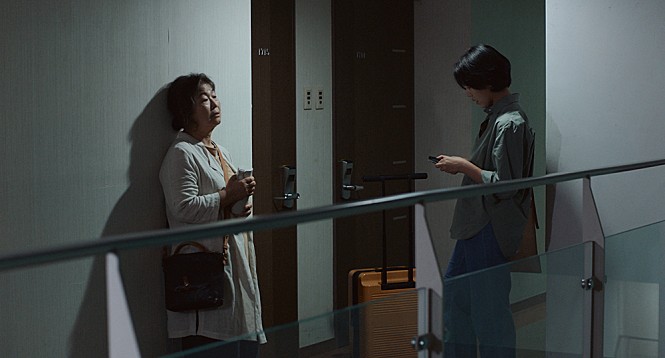
Leisurely strolling from one episodic moment to another, the movie deliberately adds bits of anachronism for emphasizing its modern perspective just like Sofia Coppola’s “Marie Antoinette” (2006), and director/writer Marie Kreutzer has some fun with that. For example, you may sometimes notice certain objects which do not fit well with the period background of the film, and you will also be caught off guard by certain key scenes where English songs are sung and performed for no apparent reason.

In the meantime, Krieps’ nuanced performance, which deservedly won the Best Actress at the European Film Awards (She was also jointly awarded with Adam Bessa in “Harka” (2022) when the movie was shown in the Un Certain Regard section of the Cannes Film Festival early in this year), keeps holing our attention to the end. Effortlessly embodying her character’s longtime frustration and suffocation, Krieps is terrific especially when her character becomes more neurotic later in the story, and she is also supported well by several good supporting performers in the film including Katharina Lorenz, Jeanne Werner, Alma Hasun, Manuel Rubey, and Florian Teichtmeister.
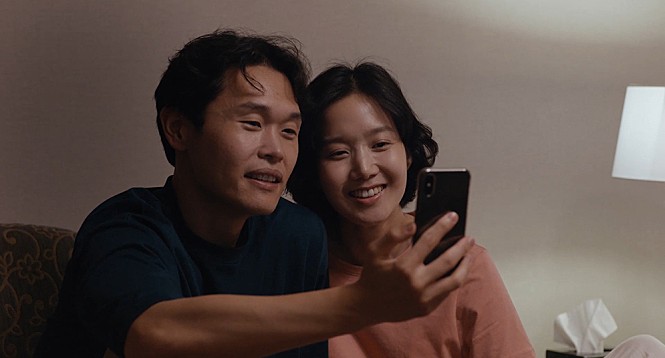
Overall, “Corsage” will surely require some patience from you due to its detached attitude and slow narrative pacing, but it is still worthwhile to watch thanks to Kreutzer’s competent direction as well as another stellar acting from Krieps. I must tell you that Its ending may distract you if you know enough about its real-life heroine, but, in my trivial opinion, it mostly works in the context of the story, and you may come to reflect more on the feminist aspects of the film. After all, there are still millions of women constrained by social roles imposed upon them, and that certainly makes the film timeless to say the least.

Posted in Movies | Tagged , , | Leave a comment

Lady Chatterley’s Lover (2022) ☆☆☆(3/4): She simply wants him…

Netflix film “Lady Chatterley’s Lover”, which was released early in this month, is more sensitive and thoughtful than you might expect. Based on that famous classic novel of the same name by D. H. Lawrence, the movie surely provides enough sensuality and eroticism as expected, but it also focuses a lot on the mood and emotions around its two main characters, and the overall result is often interesting as really delving into those tricky matters of heart between them.

At the beginning, the story begins with its young heroine’s supposedly happy marriage with her wealthy husband in the middle of the World War I. Although her husband, Sir Clifford Chatterley (Matthew Duckett), will soon go to the front line as a military officer, Constance (Emma Corrin) is still excited because her husband feels like someone she can love for the rest of her life, and it looks like nothing can possibly go wrong for them despite the ongoing war.

Unfortunately, the situation is subsequently changed a lot when Lord Chatterley returns with a serious physical injury. Besides not being able to walk any more, he is now sexually impotent, and that certainly frustrates Constance a lot right from when they have their first night in his big family manor. As he starts to concentrate on writing a novel, she assists his writing process while constantly taking care of him, but, despite her sincere affection toward him, there comes a point where she cannot stand their isolated status anymore.

Eventually, her older sister comes to the rescue, and Constance finally can take some rest outside the manor while her husband is being taken care of by Mrs. Bolton (Joely Richardson), an old widow who once worked in the manor. She eventually befriends the newly hired gamekeeper of the manor, and it does not take much time for her to find herself quite attracted to this handsome lad. Although he is rather quiet and taciturn on the surface, Oliver Mellors (Jack O’Connell) turns out to be an intelligent and sensitive guy, and Constance becomes more fascinated with him as they often meet each other in a little cabin in the forest outside the manor.

As a matter of fact, there is really nothing which can restrain Constance’s growing interest and passion toward Oliver, because her husband already allowed that she can have a secret sexual affair behind her back just for having a son who will inherit his title as well as his wealth. Although she was rather hesitant about her husband’s suggestion, Constance eventually comes to follow whatever her heart feels at one point later in the story, and Oliver cannot say no because, well, the feelings between them turn out to be quite mutual.

As they heedlessly throw themselves into their carnal passion along the story, the movie surely presents a considerable amount of sex and nudity on the screen, but director Laure de Clermont-Tonnerre, who previously made a feature film debut in “The Mustang” (2019), and her crew members including cinematographer Benoît Delhomme handle these sexual moments with enough sensitivity and lyricism. As surrounded by the vivid sights of nature, the two lovers are excited by not only their passion but also their freedom, and there is a lovely rainy scene where they get themselves completely naked and then freely roam outside together as feeling more love between them.

Of course, the circumstance becomes more complicated when Constance and Oliver become more aware of how tricky their respective positions are. Although his wife left him several years ago, Oliver still cannot get a divorce due to her selfish reason. As loving Olivier more and more, Constance actually begins to consider leave her husband, but she knows too well that she may lose everything in her life as a result. Her husband becomes more distant and less understanding as he comes to pay more attention to the local coal mining business instead of his writing, and he prefers to maintain the status quo between them without asking too much about the baby she may have sooner or later. Even her older sister reminds her of that cold and harsh reality, when she later comes to learn more about her ongoing affair with Oliver.

As the story is heading toward the expected finale, the screenplay by David Magee stays focused on the emotional details of its main characters, and Emma Corrin and Jack O’Connell ably embody and express these fine character details to be appreciated. while Corrin, who recently drew our attention for her Emmy-nominated turn in the fourth season of Netflix drama series “The Crown”, wonderfully illustrates her character’s growing longing and passion along the story, O’Connell, who has steadily advanced since his breakout performance in “Starred up” (2013), deftly complements his co-star with his equally good performance, and their good chemistry on the screen is one of the main reasons why the movie works on the emotional level instead of merely scratching its carnal surface. Around Corrin and Jack O’Connell, several substantial supporting performers including Matthew Duckett, Joely Richardson, Ella Hunt, and Faye Marsay are also solid on the hole, and Richardson’s supporting performance feels particularly resonant, considering she once played Lady Chatterley herself in the 1993 BBC TV serial.

Overall, “Lady Chatterley’s Lover” is fairly engaging in terms of mood, storytelling, and performance, and it makes me more interested in reading the works of Lawrence (Full Disclosure: I still have not touched any of them even though I bought the Penguin paperback editions of three novels of his several years ago). In short, this is one of more entertaining offerings from Netflix during this year, and I sincerely recommend you to check it out during your spare time.

Posted in Movies | Tagged , | Leave a comment

Bardo, False Chronicle of a Handful of Truths (2022) ☆☆1/2(2.5/4): A mid-life self-indulgent by Alejandro G. Iñárritu

Alejandro G. Iñárritu’s latest film “Bardo, False Chronicle of a Handful of Truths”, which was released on Netflix after being shown in South Korean theaters in last month, is a self-indulgent misfire which jumps high for greatness but only ends up with occasional glimpses of greatness instead. When I watched it early in this morning, I often felt baffled and frustrated even as admiring those splendid visual moments, and I was eventually left with hollow impressions on whatever Iñárritu attempts to achieve here.

After the simple but mesmerizing opening scene unfolded on a vast barren field, the movie instantly thrusts us into a bizarre hospital scene involved with its hero’s pregnant wife. Her baby has just been born, but the baby does not want to be in the world outside according to her doctor, and we soon see the baby really put back into her womb. We later come to gather that this is more or less the magic realism presentation of what actually happened to her and her baby, but it is just weird to me without much emotional effect, and that is all.

Our hero, Sliverio Gama (Daniel Giménez Cacho) is an ex-journalist who has been an acclaimed documentary filmmaker since he quit his reporting job many years ago, and we get to know a bit about his current status. He has recently released an ambitious docufiction titled “False Chronicle of a Handful of Truths”, and he is soon going to be honored by some prestigious association in LA for his journalistic achievement in the past.

It goes without saying that he is at the top of his life and career, but Silverio cannot help but become agitated and conflicted at times. When he is back in Mexico City along with his family, he is reminded of how much he has been separated from his home and country, and it is implied that he is not wholly popular in Mexico because of the main subjects of his documentary works. For example, one of his documentaries is incidentally about the illegal immigrants crossing over the Mexico-US border, and we later get an extended sequence showing how he followed and recorded their plights and struggles.

At one point, Silverio goes to a big TV studio for being interviewed by a journalist who was one of his close colleagues during that time. As cinematographer Darius Khondji’s camera smoothly follows after our hero, we are served with a series of shiny moments including the one featuring a group of dancers wearing fluffy costumes, and then there comes a blistering moment as Silverio is subsequently roasted by his old colleague in front of many audiences watching them.

Silverio simply remains non-responsive throughout his “interview”, but he talks with his wife a lot when he returns to his residence in Mexico City, and you may be baffled a bit as listening to their conversation for good reasons. Was he really “interviewed” as shown on the screen? Was it just a pigment of his artistic imagination, just like what he and a certain American character behold at a big palace?

Without clarifying anything, the movie continues to flow from one episodic moment to another, and Iñárritu and his crew members deserve to be commended for the sheer cinematic prowess shown from these moments at times. In case of the sequence unfolded during a big party for celebrating another public honor received by Silverio, the camera confidently and effortlessly moves among lots of dancing people, and that eventually culminates to a little sublime moment as our hero slowly dances among others in the center.

It is quite evident that Iñárritu tries to emulate what was attempted in Federico Fellini’s “8 1/2” (1963) and many other similar films ranging from Bob Fosse’s “All That Jazz” (1979) to Charlie Kaufman’s “Synecdoche, New York” (2008), but, alas, he does not have succeed much here as failing to have enough control over various story materials. Each of them may look good and interesting individually, but they do not gel much together on the whole, and that makes us feel more lost and confused, no matter how much the movie tries. In the end, we only come to see lots of self-pity and self-indulgence from the distance without much care or attention, and the movie eventually fizzles despite a little plot turn during its finale.

Above all, its hero, who is clearly a fictional reflection of Iñárritu, is not particularly interesting enough to hold our attention. Daniel Giménez Cacho surely tries as much as he can do with the materials given to him, but his character is not that memorable compared to the filmmaker hero of “8 1/2” or the playwright hero of “Synecdoche, New York”. In case of a bunch of performers surrounding Cacho, they simply come and go without much impact, and I must confess that I remember more those three poor amphibian pets of Silverio’s son.

In conclusion, “Bardo, False Chronicle of a Handful of Truths” is not a total dud thanks to its admirable technical aspects, but it is a big letdown in contrast to Iñárritu’s two previous films “Birdman or (The Unexpected Virtue of Ignorance)” (2014) and “The Revenant” (2015). Considering how a considerable number of critics and reviewer are enthusiastic about it, I may give it another chance someday, but, for now, I will just move onto whatever I will watch next.

Posted in Movies | Tagged , , | 1 Comment