Louis Armstrong’s Black & Blues (2022) ☆☆☆(3/4): Inside Louis Armstrong

Documentary film “Louis Armstrong’s Black & Blues”, which is currently available on Apple TV+, does more than merely presenting the life and career of Louis Armstrong, who has been regarded as one of the greatest American musicians in the 20th century. While it feels pretty conventional at first, the documentary eventually delves deeper into its surprisingly complex human subject as freely flowing from one point to another in his life and career, and the result is often engaging and enlightening to say the least.

Via a bunch of various archival materials including Armstrong’s private recordings, the documentary gives us a vivid presentation of his life and career. He was born to a poor black family residing in New Orleans, Louisiana in 1901, but he grew up fairly well under his parents along with his siblings, and then he came to show considerable musical talent around the time when he was sent to a house for black juvenile delinquents due to one minor incident. Not long after that, young Armstrong came to play trumpet in local jazz bands, and then his career came to have a big breakthrough when he later moved to Chicago, Illinois thanks to a mentor figure of his.

Eventually, Armstrong came to go his own way thanks to his growing prominence. He became famous not only in Chicago but also in New York City, and he soon found himself performing in London and Paris as he continued to draw more attention. While there was a little trouble with his lousy manager, Armstrong was fortunate enough to have a new manager right after firing that manager, and his new manager turned out to be more helpful and reliable than the previous one. He knew how to pull strings here and there for further promoting Armstrong, and that quickly made Armstrong one of the most famous entertainers in US during that time.

Armstrong steadily maintained his star status during next several decades, but he never forgot how he and many other black people often coped with racism and prejudice. While he mostly stuck to that familiar jovial persona of his in public, he was not your average Uncle Tom at all, and there is an amusing episode about when he gave hell to one white employee on a movie set in Hollywood because of how blatantly he was disregarded by that white employee.   

And that was actually mild compared to what Armstrong and many other fellow black musicians often had to endure. Especially when they were in the South, they usually had no choice but to conform to its local segregation rules, and Armstrong surely had many episodes of racism and prejudice to tell. When he was supposed to be introduced on the stage during one concert, the white master of ceremony refused to introduce him just because of his race, and Armstrong eventually had to step forward for introducing himself because there was no other option. 

When the Civil Rights Movement was ignited in US around the 1950s, Armstrong was frequently asked about his opinions on the Civil Rights Movement. While he often did not provide much comment, he did not restrain himself at all whenever it looked necessary in his view. As a matter of fact, he did not hesitate at all to criticize President Dwight D. Eisenhower for not giving enough response to a certain big issue of racism and segregation in Arkansas, and he was actually much more supportive of the Civil Rights Movement than he seemed on the surface.

Nevertheless, Armstrong was not regarded that highly among more progressive black people during that time due to his seemingly conforming public image. In an archival interview, late Ossie Davis frankly talks about why he and many others around him did not like much Armstrong as well as what he represented – and how he came to change his mind after accidentally having a private glimpse into Armstrong’s life and humanity on one day.

The documentary also pays some attention to the loving relationship between Armstrong and his fourth wife Lucille. She understood well how stubborn her husband usually was, but she was also equally stubborn to say the least, and that was how she managed to make her husband move into a permanent residence despite his initial reluctance. He did not like that much at first, but, what do you know, he came to love the house a lot more than expected, and he even came to have a little private room of his own where many of his private recordings were stored.

When he was about to be 70 in 1971, Armstrong seemed to be able to go on more, but he eventually passed away not long before his 70th birthday. Although more than 50 years have passed, his music has constantly influenced many musicians who came after him, and his distinctive vocal and instrument performance are still recognizable to many of us. As many of the interviewee in the documentary point out, he is indeed a great musician who brought considerable change to American music, and that should be appreciated more in my inconsequential opinion. 

In conclusion, “Louis Armstrong’s Black & Blues”, which is directed by Sacha Jenkins, did a splendid job of illuminating some less-known human aspects of Armstrong’s life and career, and it is certainly one of more interesting documentary films of this year. As far as I can see from the documentary, Armstrong was a good man besides being a first-class musician, and that will probably make you admire his lasting artistic legacy more.

Posted in Movies | Tagged , , , , | Leave a comment

Good Night Oppy (2022) ☆☆☆1/2(3.5/4): Two rovers on Mars

Documentary film “Good Night Oppy”, which is currently available on Amazon Prime, is gives us a close and intimate look into one remarkable space mission which came to last a lot longer than expected. When NASA sent two rovers to Mars in 2003, the expectation on them was not that high for understandable reasons, but, what do you know, these two rovers moved and lived much more than their human controllers ever imagined, and the documentary is often poignant as showing us how much human efforts and emotions were projected into these two very special rovers during a long period of time.

They were respectively named Spirit and Opportunity, and the early part of the documentary focuses on the early stages of their mission during the early 2000s. Once his proposal on the geological exploration of Mars was accepted, Steve Squyres quickly worked on the project along with a bunch of scientists and engineers, and some of his team members, who are both smart and colorful in each own way, gladly tell us a lot about their demanding but rewarding work experiences. Although anything could go wrong at any point during the upcoming mission, they carefully and thoroughly prepared step by step, and it is interesting to observe how meticulously they worked on some of numerous technical obstacles in their project.

Anyway, the rovers were eventually completed and then fully prepared before the deadline, but Squyers and his team members remained nervous as usual. While the two rockets respectively containing Spirit and Opportunity were successfully launched into the space, they still had to be watchful of any unexpected troubles, and there indeed came a very big trouble when Spirit and Opportunity were in the middle of their long journey toward Mars.

Fortunately, Spirit and Opportunity respectively landed on the opposite sides of Mars without much technical glitch, but now Squyers and his scientists and engineers had to prepare for the last step for beginning the mission on Mars. Both Spirit and Opportunity needed to be connected with the NASA control room on the Earth, and Squyers and his team certainly braced themselves during the next few minutes when the fate of their mission would be determined.

To their delight, both Spirit and Opportunity turned out to be fully functional in addition to being ready to move and explore, and they became more excited day by day as Spirit and Opportunity sent lots of scientific data as they hoped. Thanks to these two rovers, they could get a much closer look into those alien landscapes of Mars, and that certainly awed and excited them a lot. Furthermore, Spirit and Opportunity provided more detailed geological data, and it seemed possible that they might come across the concrete evidence on the past existence of water on Mar.

Spirit and Opportunity were actually expected to operate just for around 90 days due to the harsh environment of Mars, but they surprised their human controllers as turning out to be more enduring than expected. For example, their solar panels were expected to be useless sooner or later as being covered with dust day by day, but the solar panels could often be cleaned by occasional dust storms, and that made both Spirit and Opportunity operate longer than their human controllers predicted.

When these rovers passed Day 90, Squyers and his scientists and engineers were quite delighted, and they became all the more motivated as Spirit and Opportunity miraculously kept working on Mars during next several years. While the scientists looked for more areas to be explored and studied, the engineers often handled small and big technical glitches to be solved in one way of another, and they all found themselves more emotionally attached to their rovers day by day.

Sadly, there eventually came a point where Spirit, which had to endure a harsher condition compared to its fellow rover, stopped to function in 2009, but Opportunity continued to function during next several years. Although it surely came to suffer more of mechanical deterioration and software problem during its later years, its human controllers kept it moving as usual, and it kept amazing them as remaining fairly well and competent.

The most touching part of the documentary comes from a number of Squyers’ team members who confide to us a lot on how much they came to care about Opportunity. The older team members cannot help but become sentimental because they put a considerable part of their lifetime onto Opportunity and its fellow rover. The younger team members regard these two rovers with respect and reverence because, well, these two rovers inspired many of them to pursue space exploration when they were kids.

In the end, there came an inevitable moment when Opportunity could not go on anymore. Due to the massive planetary dust storm on Mars in 2018, Opportunity ceased to function on June 12th, 2018, and that day was certainly quite bittersweet for its human controllers. Although it was just a machine, it was an endearing entity to them for many years, and everyone felt quite sad as arriving at the eventual end of their miraculous mission.

On the whole, “Good Night Oppy” is pretty engaging as a sincere chronicle of the two memorable rovers at its center, and director/co-writer/co-producer Ryan White, who previously made “Ask Dr. Ruth” (2019), did a splendid job of mixing archival and interview clips along with the vivid visual recreation of Opportunity, Spirit, and their extraordinary time on Mars. To be frank with you, I do not really know when we can actually go to Mars, but I really hope that both Opportunity and Spirit will be retrieved and then preserved someday for representing the better sides of our humanity, and I think you may hope for the same thing after watching this lovely documentary.

Posted in Movies | Tagged , , , , , , , | Leave a comment

La Vie en Rose (2007) ☆☆☆1/2(3.5/4): Non, je ne Regrette rien

As your average inconsequential movie reviewer, I have seen heaps of musician biography films come and go for more than 20 years, and not many of them can top what is so powerfully achieved in Olivier Dahan’s “La Vie en Rose”, which is thankfully re-released in South Korean theaters in this month. Besides being constantly fueled by the absolutely stunning lead performance at its center, the movie also works a rather messy but ultimately dazzling presentation of the complex human personality of its legendary real-life musician, and its many highlights touch me a lot even though more than 10 years have passed since I watched it right before doing a 4-week military training in late 2007.

That real-life musician in question is Édith Piaf (1915-1963), who is still remembered for her indelible performances of various songs such as, yes, “La Vie en Rose”. Considering how Piaf’s life and career were quite dramatic as being full of many ups and downs, it is certainly difficult to compress her tumultuous life and career into one feature film, but the screenplay by Dahan and his co-writer Isabelle Sobelman manages to overcome that as freely hopping among numerous key moments in Piaf’s life via its non-linear narrative. The overall result often feels jarring and confusing at first, but it gradually generates a sort of emotional narrative as the movie focuses more on Piaf’s later years, because this is more or less than the reflection of how old Piaf struggles to regard her life and career before her eventual death.

The early part of the film mainly revolves around Piaf’s unhappy and miserable childhood years. Born to alcoholic parents who did not care much about her, young Piaf, played by Manon Chevallier and then Pauline Burlet, was separated from her street singer mother when her acrobatic father returned from the war and took her to a brothel run by his mother, and then she had to leave that place again when her father later came back several years later. While assisting her father on one day, she comes to demonstrate a bit of her natural singing talent, and that is the humble but significant beginning of her musician career.

Several years later, Piaf, now played by Marion Cotillard, is still on the streets of Paris while earning her meager living day by day via her singing, but then she comes across a local nigh club owner who instantly recognizes her considerable potential. Thanks to him, she gets a chance to show more of her talent at his nightclub, and that catapults her to a quick stardom, and, alas, her usual poor judgment of men around her leads to a devastating throwback to her burgeoning career.

Nevertheless, Piaf eventually makes a triumphant return mainly thanks to the tough tutelage from her new accompanist, and the movie quickly moves forward to her prime period when she had one big success after another in not only France but also US. As she goes for joie de vivre as usual, she finds herself passionately fallen in love with a famous French boxer, and she does not even care much about the fact that he is already married and will probably never leave his wife and children.

These and other good moments in Piaf’s life are freely juggled along with many bad moments in her life, and the striking dramatic contrast resulted from that lets us get to know more about those compelling human contradictions inside Piaf. While she is often quite vulnerable, she is also a tempestuous diva driven by her strong will to perform, and one of the most poignant moments in the film, which still moves me to tears, comes from where she is still determined to perform for her audiences as usual despite her increasingly fragile physical condition. Everyone around her understandably try to dissuade her, but she remains adamant because, as a professional dedicated to her artistic craft, she believes she must not stop no matter what happens.

However, there eventually came a point where Piaf could not possibly go on anymore around 1960. Like Judy Garland, Piaf often depended a lot on alcohol and drugs for many years, and that caused her severe health deterioration during her last several years. Although she was only 48 years old at the time of her death, she looked quite more aged than she actually was, and the later part of the film depicting her painful last years are bitter and devastating before followed by her last hurrah accompanied with “Non je ne regrette rien”, which could have been the title of her memoir if she had written it.

All these and other things in the film are held strongly together by Cotillard’s unforgettable acting, which deservedly won the Best Actress Oscar (The movie also won another well-deserved Oscar for its makeup and hairstyling in addition to being nominated for Best Costume, by the way). Fully embodying many different sides of her character, her electrifying performance deftly swings along her character’s high and low points throughout the film without any misstep, and she also looks quite credible during a number of small and big performance scenes where she gets Piaf’s mannerism absolutely right with her top-notch lip-synching job.

The main weak point of the film lies in a number of various supporting characters who come and go around Piaf. I wonder whether they could be developed more, but that would probably be distracting instead because the movie is intended to be all about Piaf from the beginning. At least, a number of notable French performers including Emmanuelle Seigner, Sylvie Testud, and Gérard Depardieu fill their small spots as much as they can with each own presence, and Jean-Pierre Martins clicks well with Cotillard during several tender scenes between them.
On the whole, “La Vie en Rose” is still a superlative film to be experienced, and its sublime qualities remind me again of how forgettable many recent musician biography flicks are. Here is a movie which wants to do a lot more than merely recreating the life story of its real-life human subject, and I am glad to report that it still shines magnificently even after 15 years.

Posted in Movies | Tagged , , , , | Leave a comment

Perisan Lessons (2020) ☆☆1/2(2.5/4): A mock language for survival

“Persian Lessons”, which was Belarus’ official submission to Best International Film Oscar in last year but then was disqualified due to its technical ineligibility, is about one man who survives the Holocaust via a mock language invented by himself. Although the movie does not escape much of its genre conventions, it is fairly engaging to watch how he manages to concoct that mock language bit by bit for his survival, and that compensates for the conventional aspects of the movie at times.

The story, which is set during the World War II period, mainly revolves around a young French Jewish lad named Gilles (Nahuel Pérez Biscayart), and the movie opens with Gilles and many other Jewish people being taken to a spot where they are all going to be killed. At the last minute, he pretends to be a Persian via a book he happened to acquire right before that, and that draws the attention of a German officer named Klaus Koch (Lars Eidinger), who happens to be quite eager to learn Persian for a little personal reason.

Once Gilles is taken to a concentration camp where Koch stays, Koch has Gilles work in a kitchen in the concentration camp along with several other Jewish people, and he also demands Giles to teach him Persian during next several months. Because the possibility of his survival depends a lot on Koch, Gilles has no choice but to agree to do the lessons for Koch, though he does not know any other Persian word besides “baba” (It means “dad” in Persian, by the way).

Because Koch wants to learn at least 20 Persian words per one day, Gilles must find a way to concoct and then memorize “Persian” words to be taught to Koch. While initially becoming quite panic and desperate, Gilles soon come to find his own way. At first, he simply invents words for the objects in the kitchen, and then, as handling the list of the names of all those Jewish people sent to the concentration camp, he gets one little brilliant idea. Based on those names on the list, he makes his fake words via his own simple word system, which surely helps him memorize and then teach all of them to Koch (A Russian philologist at Moscow State University was hired to make around 600 hundred fake words for the film, and these words were actually based on the real names of documented victims of the Holocaust).

The lesson scenes between Gilles and Koch in the film are the most interesting part of the film. While Gilles tentatively doles out each of his fake words, Koch eagerly try to memorize them all because he does not know anything about Persian from the beginning. As a matter of fact, he later shows a little poem based on those fake words he learned, and he surely shows Gilles that he is a good student who does not miss much from his accidental tutor.

However, that still does not change the fact that Koch can just let Gilles killed at any point, and Gilles is reminded of this grim fact everyday. While he is not sent to Poland where many other Jewish people are transported and then killed, he has to see those doomed folks come and then go at the concentration camp, and he feels more conflicted as reminded again and again that there is nothing he can do about that.

In the meantime, Gilles has to focus more on his survival as he is still suspected by not only Koch but also several other German figures in the concentration camp. At one point later in the story, there comes an unexpected peril via one certain new prisoner, and that naturally generates some suspense, but the screenplay by Ilya Tsofin, which is partially inspired by the 1977 short story “Erfindung einer Sprache” (It means “Invention of a Language” in German, by the way) by German writer Wolfgang Kohlhaase, resorts to a little too easy resolution in my humble opinion.

During the last act where everything eventually falls apart for the German characters (Is this a spoiler?), the movie becomes more predictable than before, and that is where my level of interest was decreased a lot. In addition, many of the main characters around Gilles and Koch are more or less than bland stock supporting characters to be despised or pitied, and a subplot involved with two Jewish brothers with whom Gilles gets involved during this part is superficial without much dramatic weight.

Anyway, Nahuel Pérez Biscayart, an Argentine actor whom you may remember for his memorable performance in Robin Campillo’s “BPM (Beats per Minute)” (2017), dutifully carries the film as ably handling three different languages as required. His solid lead performance is matched well by the effective acting from Lars Eidinger, and Eidinger wisely does not overplay his character’s loathsome sides while also not making any excuse on his character. While it is rather amusing to observe Koch’s sincere passion toward learning Gilles’ mock language, we are also chilled by his casual attitude to what he is assisting everyday at the concentration camp, and he is surely another example of the banality of evil.

Director/co-producer Vadim Perelman, a Ukrainian-Canadian-American filmmaker mainly known for his powerful debut film “House of Sand and Fog” (20003), did a fairly competent job, but “Persian Lessons” is still less impactful than many other notable Holocaust movies such as “Son of Saul” (2015). On the whole, it just mildly intrigued me instead of really engaging me on the emotional level, but I did not feel like wasting my time during my viewing at least, so I will let you decide whether you should check it out or not.

Posted in Movies | Tagged , , | Leave a comment

Life of Hae-Oak (2021) ☆☆☆(3/4): Will she ever make it through?

Watching South Korean film “Life of Hae-Oak” is not a comfortable experience at all. Closely observing its young heroine’s seemingly endless predicament, the movie palpably conveys us her growing conflict and frustration, and that will probably make you wince more than once. Sadly, what is depicted in the film is not so different from what countless young people in the South Korean society have to endure day by day, and you may come to reflect on that a lot after the movie is over.

Lee Tae-kyoung, who previously drew my attention more for her solid lead performance in “Unboxing Girl” (2020), plays Lee Ra-el, a young woman who has studied for a civil service exam during several years since her college graduation. Not long after failing to pass the primary test, Ra-el moves to a rather shabby one-room residence for more focusing on her study, and her mother is delighted when the real estate agent tells her that all the previous residents were lucky enough to pass their exams. It is clear to us from the beginning that Ra-el’s mother expects a lot from Ra-el, and Ra-el has followed her mother’s expectation as a good daughter, but we come to sense that she is not so sure about whether she really wants to pass the exam and then become a civil servant.

Anyway, Ra-el subsequently embarks on preparing for the upcoming primary test, but then she gets frustrated again due to another failure. While her mother is ready to support and cheer her up as usual, Ra-el feels more pressured and conflicted than before, and that is probably the main reason why she later comes to show an inexplicable allergic symptom.

Fortunately, Ra-el succeeds in the next attempt to pass the primary test, but there are still two next tests she must also pass before becoming a civil servant. She naturally tries to focus as much as possible, but, alas, she fails to pass the 2nd test more than once. To her embarrassment, that seems to make that allergic symptom of hers much worse than before, and there is a cringe-inducing moment when she inadvertently causes inconvenience in a study room full of young people who are also trying to prepare for their exams as much as they can.

Meanwhile, Ra-el’s mother keeps pressuring her daughter with her cheery expectation as usual, and she even suggests that Ra-el should change her name for bringing more luck to her another attempt to pass the test. Now Ra-el becomes “Hae-oak”, and we get a little amusement when she is reminded that she will have to do some extra paperwork for making her new name official on the record.

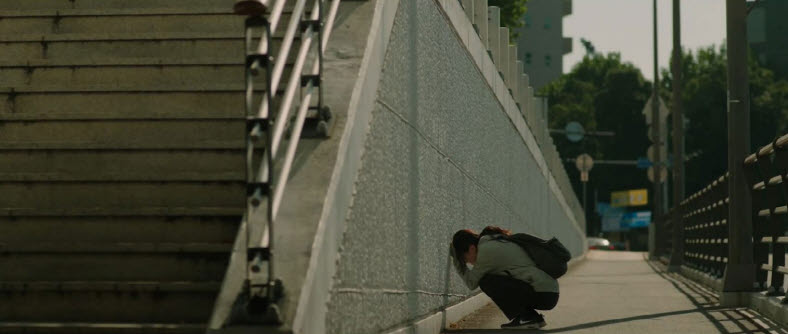
Around the narrative point where our heroine gives another shot at the test, you will probably expect something to happen sooner or later, and the movie certainly shows more of how fragile she really is. Yes, she is ready to give all the efforts she can muster this time, but, alas, she eventually finds herself quite more agitated than expected, and we are not so surprised when she subsequently reaches to a sort of breaking point.

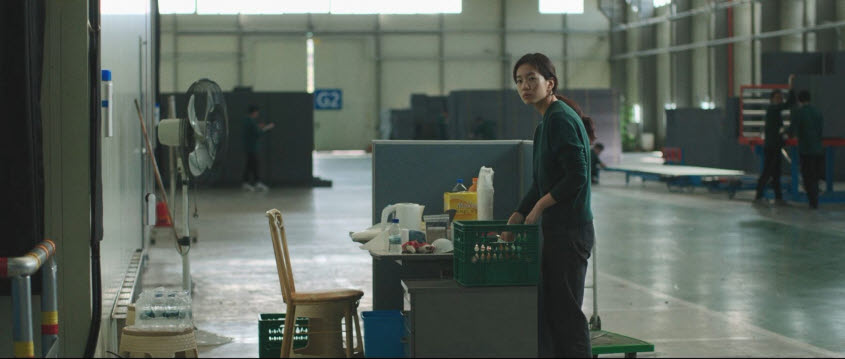
This ongoing predicament of hers is often alternated with a series of moments involved with an all-you-can-eat pork restaurant where she works part-time. At one point, Ra-el has to handle a very rude male customer who seems to be enjoying bullying her just for the quality of the meat served to him, and Ra-el remains passive and helpless as usual. To make matters worse, her boss does not help her much, and she later finds out something bad about her boss while trying to do her job in the restaurant kitchen as demanded.

It is not much of a spoiler to tell you that these two narrative lines eventually converge around the end of the film, and the screenplay by director Park Jung-hwan, who incidentally makes a feature debut here after making several acclaimed short film, and his co-writer Jung Ji-in, sticks to its detached attitude even at that point. You may be a bit disappointed with how the story simply stops right before the epilogue scene, but you will be a bit chilled as the epilogue scene indirectly points out how many young people are letting their spirit and youth ground out there in the South Korean society even at this point.

The movie is definitely not something pleasant to watch at all, but it still holds our attention as vividly capturing its heroine’s trembling emotional status along the story. Quite different from her more active appearance in “Unboxing Girl” here in this film, Lee demonstrates again that she is indeed another interesting new South Korean actress to watch, and her good lead performance ably carries the film to the end while also supported by a few substantial supporting performers including Jeon Guk-hyang. Jeon is convincing as a mother who expects too much from her daughter without really asking what her daughter really wants to do for her own life, and her rather aggressive cheeriness in the film tells us a lot about why Ra-el cannot easily say no to her mother.

On the whole, “Life of Hae-oak” is one of those gloomy South Korean films presenting the harsh and unpleasant sides of the South Korean society, and I admire its dry but empathetic storytelling and Lee’s commendable efforts. Although I am a bit dissatisfied with its lack of resolution, I guess that is the point of the movie, so I will put aside my reservation to some degree as mildly recommending it to you.

Posted in Movies | Tagged , , | Leave a comment

The Banshees of Inisherin (2022) ☆☆☆1/2(3.5/4): Decision to End

Martin McDonagh’s new film “The Banshees of Inisherin” is a modest but undeniably compelling mix of comedy, tragedy, and some violence as you can expect from him. As calmly and morbidly presenting how one kind of relationship is gradually turned into another kind between its two different main characters, the movie ably pulls us into their problematic situation, and you will admire how dexterously it leads them to the inevitable conclusion of their little feud.

Set in a fictional Irish island named Inisherin during the 1920s, the movie begins with a sudden unexpected change between Pádraic Súilleabháin (Colin Farrell) and his close friend Colm Doherty (Brendan Gleeson) on one day. Just because he does not want to spend time with Pádraic anymore, Colm decides to end his longtime friendship with Pádraic, and Pádraic becomes quite perplexed as wondering why his friend does not like him now. He later tries to approach to Colm more than once, but Colm adamantly refuses him, and he also says that he will do something very drastic if Pádraic attempts to talk with him again.

More baffled than ever, Pádraic tries to understand his friend’s adamant refusal to talk with him, though Colm makes it very clear to Pádraic that he simply wants to focus more on composing his folk music during the rest of life. Feeling a sudden hole inside his mundane daily life, Pádraic becomes more obsessed with getting his friend back, and his sister Siobhán (Kerry Condon) and a local lad named Dominic Kearney (Barry Keoghan) are willing to help Pádraic to some degree.

However, the situation becomes all the worse as Pádraic tries more and more for getting close to Colm again, and Colm becomes quite angry and frustrated because he ironically finds himself interacting a lot more with Pádraic than he wanted. As he sharply points out as one point, he did not mind how dull Pádraic actually is, but now he puts his artistic activities way above his relationship with Pádraic, which is a lot more inconsequential to him than before. Pádraic cannot accept this at all, while feeling quite hurt and exasperated behind his passive aggressive attitude.

With the ongoing civil war in the distant background, the mood becomes more intense and brooding step by step, and McDonagh’s screenplay carefully builds up narrative momentum as letting us get to know more about its two main characters and their isolated little world. Like many of others around them, they have been stuck there for many years, and we come to discern more of how important Colm was to Pádraic’s mundane daily life. After all, he needs someone to talk with beside his sister, and he is not consoled much by spending some time with Dominic, while his sister turns out to have been quite eager to get out of the island as soon as possible.

The main surprise in the movie comes from how much Pádraic and Colm push and pull each other throughout the story, so I will be more discreet about what happens next between them, but I can tell you that you will get exactly what you can expect from McDonagh, who previously gave us “In Bruges” (2008) and “Three Billboards Outside Ebbing, Missouri” (2017). Thanks to his sharp and efficient handing of story and characters, the movie constantly holds our attention despite its leisurely narrative pacing, and that is the main reason why several sudden moments of violence in the film are dramatically effective. At one certain crucial narrative point, the movie does not flinch at all from a little gruesome moment involved with Colm’s grim bow, and you will wince as seeing how that moment leads to a more disturbing moment later in the story.

The movie depends a lot on the darkly amusing comic chemistry between Colin Farrell and Brendan Gleeson, who previously worked together in “In Bruges”. During last 20 years, Farrell has steadily demonstrated his considerable talent and presence as appearing a number of acclaimed films such as Yorgos Lanthimos’ “The Killing of a Sacred Deer” (2017) and Kogonada’s “After Yang” (2022), and he is simply terrific in his seemingly plain but undeniably rich and engaging performance which recently garnered him the Best Actor award at the Venice International Film Festival. As watching how he skillfully handles his character’s incorrigible obtuseness throughout the film, I wonder whether McDonagh told Farrell something similar to what John Huston often said to Jack Nicholson on the set of Huston’s penultimate film “Prizzi’s Honor” (1985): “Remember, he’s stupid”.

On the opposite, Gleeson, who will surely be Oscar-nominated like his co-star, is a fantastic acting partner to say the least, and he is equally terrific as phlegmatically embodying his character’s deep stubbornness. As he and Farrell clash with each other in one way or another, they are supported well by a number of colorful performers, and Kerry Condon and Barry Keoghan, a young promising Irish actor who previously appeared along with Farrell in “The Killing of a Sacred Deer”, did a commendable job of holding each own small place around Farrell and Gleeson.

In conclusion, “The Banshees of Inisherin” is quite an absorbing piece of work as swinging back and forth between absurd comedy and intense drama, and McDonagh pulls off another notable success just like he did in his previous films. I really enjoyed how the story and characters move from one memorable moment to another with the growing sense of inevitability, and I am still reflecting on the eventual ending of the film, which incidentally takes me back to that famous line in Orson Welles’ great film “Citizen Kane” (1941): “Only you’re going to need more than one lesson. And you’re going to get more than one lesson.”

Posted in Movies | Tagged , | 2 Comments

The Fabelmans (2022) ☆☆☆1/2 (3.5/4): So he goes for filmmaking…

Steven Spielberg’s latest film “The Fabelmans” is a gentle and intimate drama which is incidentally inspired by the early years of his life. While you may wonder how much the movie is overlapped with Spielberg’s childhood and adolescent years, the story itself will engage and touch you as a poignant tale of life, growth, family, and the art and power of filmmaking, and you may come to have some human understanding on what made Spielberg tick toward filmmaking.

The opening part of the film, which is set in 1952, begins with how a little young boy named Samuel Fabelman (Mateo Zoryon Francis-DeFord) became interested in filmmaking. When his Jewish parents Mitzi (Michelle Williams) and Burt (Paul Dano) take him to a local theater for watching Cecil B. DeMille’s “The Greatest Show on Earth” (1952) together, Samuel is not so eager about that, what do you know, he soon finds himself enthralled and impressed along with many audiences in the screening room – especially during the climactic part of the film.

When his father bought him a toy train set for a Jewish holiday present as he wanted, Samuel is certainly ready to use it for reproducing his favorite moment in “The Greatest Show on Earth”. His rather reckless attempt annoys his parents a bit, but Mitzi recognizes her son’s artistic spirit as a woman who once aspired to be a professional pianist, and she later buys him a film camera which leads him to his first step of filmmaking.

Meanwhile, Samuel’s family comes to have a big change. Because of his job opportunity involved with his professional field, Burt decides to leave their neighborhood in New Jersey to Phoenix, Arizona, and Mitzi is not so pleased about that. At least, Bennie (Seth Rogen, who is a masterstroke of casting if you remember when he once played along with Michelle Williams in Sarah Polley’s “Take This Waltz” (2012)), a jolly dude who has been Burt’s co-worker and best friend besides being an unofficial uncle to Mitzi and Burt’s children, also moves to Phoenix for working with him as before, and both she and her kids welcome that.

The story subsequently moves onto Samuel’s adolescent period in Arizona, where he, now played by Gabriel LaBelle, keeps pursuing his interested passion for filmmaking. Along with his fellow Boy Scout members, he often makes short films to be shown to not only his parents but also to his friends and neighbors, and he feels more confident as watching how much his audiences are enthralled by his little cinematic achievements. He enjoys having them under his artistic control, and that is another source of encouragement besides his mother’s constant support.

However, Samuel’s growing skill as a filmmaker also makes him more aware of whatever is going on between his parents. In a restrained but impactful scene which any admirer of Brian De Palma’s movies will appreciate, Samuel comes to notice a certain thing while looking over what he casually shot during a family camping trip, and he consequently feels angry and conflicted about that. As his great uncle Boris (Judd Hirsch, who is wonderful in his brief but memorable appearance) warned him before, art usually does hurt, and that makes him put aside his interest in filmmaking around the time when Burt decides to move to California for another good job opportunity.

During its third act, the movie becomes a bit more intense as its young hero struggles inside and outside his family. While he becomes more aware of the growing estrangement between his parents, Samuel is often bullied by other students in his high school just because of being Jewish, and then there accidentally comes a chance for little romance, which also reignites his passion toward filmmaking.

We all know how the story will eventually end, but the screenplay by Spielberg and his co-writer Tony Kushner keeps engaging us while doling one genuine complex human moment after another as usual. When he is hired to shoot a short film of students enjoying one summer day on the beach, Samuel is not so willing to do that at first, but his artistic instinct soon comes back, and he is reminded again of the artistic power of filmmaking when he later shows the result to his young audiences. When his parents announce their separation at last, Samuel and his siblings surely feel hurt, and that is followed by a little bitter personal moment between him and one of his younger sisters (Julia Butters, who briefly but effortlessly stole the show from Leonardo DiCaprio in Quentin Tarantino’s “Once Upon a Time in Hollywood” (2019), has another solid moment to be added to her promising acting career).

As the center of the movie, Gabriel LaBelle and Mateo Zoryon Francis-DeFord are seamlessly connected in their acting, and they are supported well by two contrasting key performances in the film. As Samuel’s spirited but troubled mother, Michelle Williams gives another excellent performance to watch, and she is particularly terrific when her character becomes more honest with Samuel later in the story. On the opposite, Paul Dano subtle and tender in his low-key appearance, and he also has his own moments including the one where his character comes to accept Samuel’s artistic aspiration more than before.

On the whole, “The Fabelmans” is another stunning work from Spielberg, and I really love its many small but indelible moments including the sublime ending where one certain legendary filmmaker is played by another great filmmaker (I will let you see this little ingenious casting for yourself, by the way). Yes, we have been lucky to enjoy Spielberg movies during last five decades, and, again, he does not disappoint us at all.

Posted in Movies | Tagged , , , , | 2 Comments

Avatar: The Way of Water (2022) ☆☆☆1/2(3.5/4): Cameron back in Pandora

James Cameron’s new film “Avatar: The Way of Water” is another big stuff of entertainment you can expect from him. Although it may not be as envelope-pushing as many of his previous films such as its predecessor, it is certainly nice to be back in its alien world full of wonderful visual goodies to be cherished via big screen, and you may willingly overlook its several notable shortcomings in terms of story and characters.

The opening part shows and tells us how things have been happy and peaceful for Jake Sully (Sam Worthington) and his new family in an alien planet called Pandora for more than 10 years since the ending of “Avatar” (2009). After completely living behind his human life and body, he came to lead an indigenous alien tribe he saved from those greedy (and evil) human beings, and he and his wife Neytiri (Zoe Saldaña) subsequently came to have three kids besides adapting a little girl who is the offspring of the alien body of Sigourney Weaver’s scientist character in the 2009 movie (Please don’t ask me how the hell she got pregnant, because the movie never clarifies that matter).

However, their good time is suddenly disrupted by another invasion of the human race, and Sully has no choice but to fight against them for his family and tribe, but those humans will not go away that easily this time. Despite several considerable limits including the atmosphere of the planet which is not so suitable for human body, they are quite determined to turn Pandora into a new planet for the residents of the Earth, and they even bring several deceased villain characters of the 2009 film back into life for handling their ongoing problems with Sully and his tribe.

Sully and his tribe try as much as possible for stopping those human beings, but there comes an eventual point where Sully comes to see that he and his family must leave their forest area for protecting the tribe, and that is where the movie changes its main scenery. Sully and his family go to the sea outside their forest area, and he attempts to get the help and protection from a local tribe led by Tonowari (Cliff Curtis) and his wife Ronal (Kate Winslet), who reluctantly accept Sully’s request despite being aware of the potential risk from that.

Around that narrative point, the movie becomes more relaxed than before as Sully and his family gradually adapt themselves to their new environment, and Cameron and his production designer Dylan Cole, Ben Procter, and Vanessa Cole have a field day as filling the screen with numerous fantastic details to be appreciated and admired. The new background of the film is basically the outlandish extension of the tropical sea areas of the Earth, but it is presented with a considerable amount of interest and imagination, and I constantly observed the overall result with growing fascination even though my eyesight was often limited by my rather small 3D glasses during my viewing.

I watched the 4K HDR version in high frame rate in a local Dolby Cinema screening room, and I must tell you that I still have some mixed feelings about high frame rate. Sure, everything looks clear and fine despite the dimness of the 3D glasses, but my eyes still often had problems with adjusting to its high frame rate during my viewing, and I am considering watching the movie again at an IMAX theater just for comparison, just for checking out whether my initial impression was wrong or not.

Nevertheless, despite being distracted by this rather annoying visual quality at times, I kept being entertained and involved thanks to Cameron’s commanding handling of technical aspects including the top-notch special effects of the film which will surely be Oscar-nominated in the next year. Although its running time is more than 3 hours, the movie seldom feels like lagging, and we come to sense Cameron’s affection and enthusiasm toward his fantasy world. Sure, it is not exactly original, but he is really interested in presenting more awe and wonder for us, and that certainly makes the film have more life and personality than many other bland Hollywood blockbuster products out there.

Cameron certainly does not disappoint us in case of the expected climatic part where lots of actions happen across the screen, but that is where my attention was decreased to some degree, and I became more aware of the weak aspects of the story and characters. Many of its main characters are more or less than plot elements, and Cameron and his several co-writers often struggle to develop them further. In case of a subplot involved with Sully’s two older kids, you can instantly see where it will head, and the same thing can be said about the one involved with a certain magical ability of the daughter of Weaver’s character.

Although I have some reservation due to its weak aspects, “Avatar: The Way of Water” has lots of enjoyable things to justify its 192 minute-running time, and Cameron demonstrates here that he is still a master filmmaker who has diligently impressed and dazzled us during last four decades. I do not think the movie will be regarded as a technical milestone just like its predecessor, but it is a fairly commendable sequel, and I will not complain if Cameron continues to entertain us in the next three sequels to come. To be frank with you, I am seriously wondering whether he will take us to desert in next time just for another big scenery change, and I will not be surprised if he attempts to top what Denis Villeneuve did in “Dune” (2021).

Posted in Movies | Tagged , , , | 1 Comment

10 movies of 2022 – and more: Part 3

Now here are 12 South Korean films of this year.

Continue reading
Posted in Movies | Tagged | Leave a comment

10 movies of 2022 – and more: Part 2

And here are the other 5 movies in my list – with other films good enough to be mentioned.

Continue reading
Posted in Movies | Tagged | Leave a comment