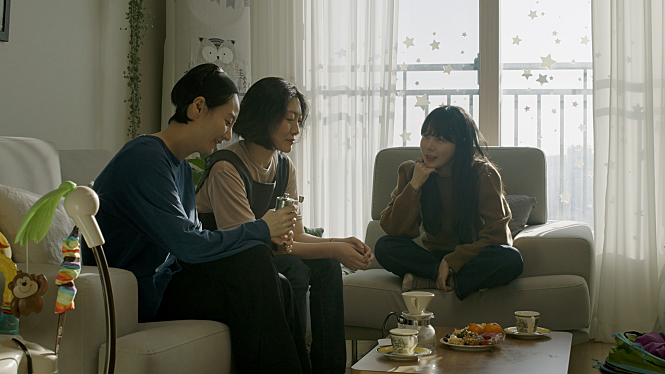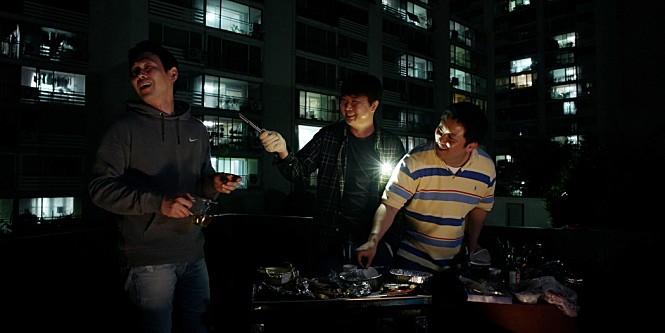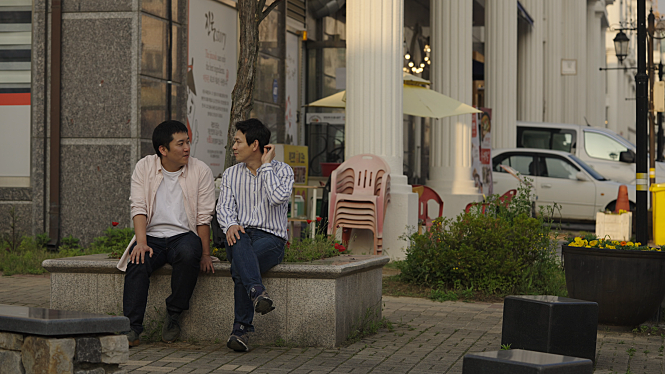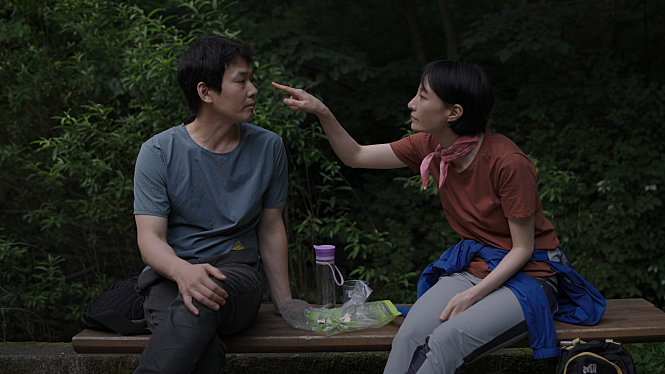
10 movies of 2022 – and more: Part 1

Here are the first 5 movies in my list.

Continue reading
Posted in Movies | Tagged | Leave a comment

10 movies of 2022 – and more: Introduction

So here we are again. 2022 is being over, and I am now writing about how many movies I watched during this year despite the ongoing COVID-19 pandemic. Although things have been a bit better compared to what we suffered during 2020 and 2021, I am still wearing a mask just like many others, and I am seriously wondering whether we will continue to wear mask as before throughout the next year.

Anyway, 2022 has been another fruitful year for me and many other movie audiences out there. While I watched lots of notable films via those streaming services, I still enjoyed watching good films on big screen nonetheless, and I was certainly delighted to watch “Top Gun: Maverick” in a big local Dolby Cinema screening room with a bunch of audiences during one summer evening. Tomorrow, I will watch “Avatar: the Way of Water” in the same screening room, and I sincerely hope that it will be as entertaining as implied by the first preview reactions in US.

During last few weeks, I struggled to make my annual movie list, and I surely had some headache before eventually submitting my list to Indiewire and rogerebert.com. There are many movies I like a lot, but, boy, it is really difficult to arrange them in the list, and I must confess that my mind was frequently occupied with that even when I was supposed to work to earn my living at a certain small biotechnology company.

By the way, you will notice that several notable films of this year such as “The Fabelmans”, “Women Talking”, “The Banshees of Inisherin”, “Glass Onion: A Knives Out Mystery“, “Babylon”, “Living”, “Tringle of Sadness”, “All The Beauty And The Bloodshed” and, yes, “Avatar: the Way of Water” are not included in my list. I could not watch them and other certain films before eventually making the list, but I will surely watch them within next few months, and I will certainly mention them around the end of the next year if they are as good as others have said.

Posted in Movies | Tagged | Leave a comment

Moonage Daydream (2022) ☆☆☆1/2 (3.5/4): A Bowie Odyssey

Brett Morgan’s latest documentary “Moonage Daydream” is a kaleidoscopic presentation of the artistic career of David Bowie, one of the most interesting pop musicians in the late 20th century. Regardless of how much you know about David Bowie (Full Disclosure: I don’t know much except several notable movies where he appeared), the seamlessly dazzling montages of various archival clips in the documentary will convey you his own distinctive artistic style and personality, and it eventually comes to us a vibrant and respectful tribute to his impressive career and lasting achievement.

The opening part of the film mainly revolves around Bowie’s early career years in the early 1970s, which is mainly represented by his flamboyantly androgynous appearance in public. With his fluid sexual image, he drew lots of both female and male fans as one of the major stars during the glam rock period, and the documentary deftly shuffles the archival footage clips of his concert performances for conveying us his huge popularity during that time.

Even when he was not playing his music, Bowie constantly fascinated others with not only his usual flamboyant appearance but also his own distinctive personality. Even when he was not wearing those fancy costumes and makeups, he had a certain indelible unworldly aura around him, and that was certainly the main reason why Nicholas Roeg had him play the alien hero of “The Man Who Fell to Earth” (1976). Although he might not be a great actor, Bowie certainly left considerable impressions via his unconventional presence on the screen, and that still makes the film worthwhile to watch.

Around that time, Bowie came to feel more need for artistic exploration and reinvention, and that was how he came to decide to take a break and then go to West Berlin in 1976. While West Berlin felt quite alien to him in many ways, he felt more comfortable about trying to do many different things, and the documentary shows us him trying not only some musical experiments in a local recording studio but also some abstract paintings. As watching him doing a bit of painting experiments, I could not help but think of when he played Andy Warhol in Julian Schnabel’s “Basquiat” (1996), and I observed a series of his paintings with considerable interest and fascination. He really tried to explore and expand his artistic range and talent, and he indeed lived for that as enjoying whatever would come from that.

In the middle of the documentary, we get to know a bit about Bowie’s childhood years, which were not exactly good for him for understandable reasons. Even when he was young, he was not comfortable with the mundane conservative middle-class environment surrounding him, and he surely appreciated how his older half-brother opened the door to new worlds for him. His older half-brother introduced to young Bowie lots of progressive things ranging from Jack Kerouac to John Coltrane, and we can see that was a very important experience for young Bowie.

Unfortunately, not long after he left the Royal Air Force, Bowie’s older half-brother came to suffer schizophrenia and then stayed in a mental hospital for the rest of his life. Considering how art and mental illness are not so far from each other, Bowie seemed to have his own personal demons as he indirectly admitted, but he could ventilate lots of feelings and thoughts via his artistic activities, and I guess that explains a lot about his usual bold attitude and presence in public. He might have been afraid a lot, but he confidently wielded his striking persona as a part of his art and life, and that still existed even when he reinvented his public image as being back in action around the 1980s.

During the 1980s, Bowie became relatively less flamboyant in his slicker attire, but he still captivated his audiences as usual as shown from another series of archival footage clips. Thanks to his experiment period in West Berlin, he was more confident about going his way, and he eventually evolved as an enduring pop music icon who is still recognized and remembered by many people even after his death in 2016.

Although there is not any narrator or interviewee to explain to us about Bowie’s life and career, Morgan, who previously gave us “Kurt Cobain: Montage of Heck” (2015) and “Jane” (2017), skillfully generates a solid narrative flow via juggling many different archival footage clips including the ones from Bowie himself. We are simply served with a number of montage sequences assembled from these various archival materials, but the overall result itself is quite compelling in terms of mood and style, and Bowie’s presence constantly hovers over them mainly through his recorded words. To be frank with you, I could not understand that well his metaphysical thoughts as a straightforward man of concrete science, but I can tell you at least that he was a really intelligent dude who also had a very sensitive artistic soul.

In conclusion, “Moonage Daydream” may not enlighten you that much on Bowie’s life and career, but it is a very engaging visual odyssey into Bowie’s life and career. I do not think I understand everything in the documentary, but I enjoyed and admired a lot how it is about, and it may look more fascinating if I revisit it after learning more about Bowie’s life and career. This is surely one of more interesting documentaries of this year, and I sincerely recommend you to give it a chance before this year is over.

Posted in Movies | Tagged , , | 1 Comment

Marcel the Shell with Shoes On (2021) ☆☆☆(3/4): Meet Marcel the Shell

“Marcel the Shell with Shoes On” is a little whimsical work packed with irresistible charm and cuteness. Although it took some time for me to accept its rather outrageous story premise, I eventually accepted that anyway as having enough amusement and entertainment, and I also came to adore its titular hero who becomes more endearing for his unadorned innocence and curiosity.

The film takes a mockumentary approach to its story and characters, so we mostly observe its story and characters via the camera of a documentary filmmaker named Dean (Dean Fleisher-Camp). Not long after he got separated from his wife, Dean came to stay in one suburban house via the Airbnb service, and that was how he came to discover a one-inch-tall talking shell named Marcel (voiced by Jenny Slate). With the willing cooperation from Marcel and his grandmother Nana Connie (voiced by Isabella Rossellini), Dean and his camera have followed the daily routine of Marcel and Nana Connie, and we accordingly get a series of small humorous moments including the one showing how Marcel can move from the upstairs to the downstairs despite his physical limits.

Although he has only one eye and two legs besides his tiny mouth, Marcel is pretty active and resourceful in many of his daily activities. While his grandmother is usually occupied with growing vegetables outside, he does a number of different activities including getting some fruits from a tree outside the house, and you will be surely amused by how he can get the fruits via his own simple but clever method.

Marcel and his grandmother once had a big family some years ago, but, as shown from a flashback scene, they got separated from other family members because of some bad incident between the former resident of the house and her ex-boyfriend. As he becomes more aware of the world outside his house via his interactions with Dean, Marcel really wants to know where the hell his missing family members are at present, and Dean is willing to help him via posting his several video clips of Marcel on YouTube.

The responses to Dean’s video clips are not so impressive during the first several days, but, what do you know, they later come to draw lots attention on the Internet, and Marcel soon finds himself becoming a very popular online celebrity. Everyone is quite interested in getting to know more about him, and he is even approached by Lesley Stahl, who is quite interested in interviewing him for “60 minutes”.

Meanwhile, Marcel and Dean continue to try to get any information about where Marcel’s missing family members are now, but there is still not much clue on that, and then they get an unexpected trouble. Because of Marcel’s considerable popularity in public, many people come to their house just because of curiosity, and, not so surprisingly, a very unpleasant incident soon happens to Marcel and Dean’s dismay.

The mood accordingly becomes a little more serious than usual, but the movie still maintains its lightweight deadpan tone even at that point. When Stahl herself and her TV crew finally arrive, Marcel becomes quite nervous and conflicted for understandable personal reasons, but he is eventually motivated more by his grandmother, and we get some good laugh as observing how Stahl and her TV crew are really serious about interviewing Marcel.

I must point out that the screenplay by director Dean Fleisher-Camp and his co-writers/co-producers Jenny Slate, and Nick Paley, which is developed from the story they wrote along with Elisabeth Holm, is basically a one-joke comedy, but the movie fills its rather thin story and characters with lots of charm and personality. Although our titular hero looks quite simple on the surface, he comes to express more than his modest cuteness, and his interactions with his grandmother are accompanied with enough gravitas and poignancy to engage us. As the heart and soul of the story, Jenny Slate, who is incidentally Fleisher-Camp’s ex-wife, and Isabella Rossellini generate an effortless synergy between their lovely voice performances, which are the main reason why we can accept their characters’ fantastic existence without much problem.

Besides humbly holding the ground for the two little main characters of his film as required, Fleisher-Camp also did a skillful job of mixing animation and live-action on the screen. As he and other performers in the screen play their respective characters as straight as possible, the animation part of the screen is seamlessly incorporated into the screen, and you will be surprised how much the movie actually depends on animation. As a matter of fact, animation figures in more than 75% of the film, and that makes the movie eligible for Best Animated Feature Oscar in next year (It has already received the Best Animated Feature awards from the New York Film Critics Award and the National Board of Review, by the way).

Overall, “Marcel the Shell with Shoes On” is a cute and likable piece of work which has enough style and personality to support its rather thin narrative, and Fleisher-Camp, who previously made several short films including three ones featuring Marcell, did an admirable feature debut here on the whole. Although I am not so enthusiastic compared to many other critics and reviewers, I recognize and appreciate its undeniable charm and colorfulness nonetheless, and I think it will grow more on me before I revisit it someday.

Posted in Movies | Tagged , | 2 Comments

Fire of Love (2022) ☆☆☆1/2 (3.5/4): The story of one exceptional volcanologist couple

It is difficult not to be impressed by what is so beautifully and terrifyingly presented in documentary film “Fire of Love”, which is currently available on Disney+ in South Korea. For presenting the story of one exceptional volcanologist couple, its director and editors assembled and then edited lots of archival footage clips left by this couple, and their overall result is often extraordinary for many awesome moments of sheer wonder and danger.

That volcanologist couple in question are Katia and Maurice Krafft, who were always together for their endless interest and fascination toward volcanoes for many years before they ultimately died in the Mount Unzen eruption in Japan in 1991. When they accidentally met each other for the first time in the middle of the 1960s, they instantly clicked with each other thanks to their common academic subject, and that was the beginning of their long story of study, adventure, and love.

As shown from a series of archival footage clips showing how they worked and interacted with each other, Katia and Maurice were a wonderful couple who complemented each other in more than one aspect. Right from when they began their relationship, they decided not to have any kid for fully focusing on their scientific research which would surely demand a lot of time and effort from them, and their contrasting approach methods fit quite well with each other. While Maurice usually approached to his study subjects in wider views, Katia focused on smaller things to observe and record, and that made them perfect research partners for each other.

For their research, Katia and Maurice often went here and there around the world for any active volcano about to be erupted sooner or later, and that was where most of their remarkable film records came from. While they were in constant danger, they took some calculated risk for their academic interest and study, and you will surely be awed and terrified as observing how they were often very close to erupting volcanoes. Yes, it is indeed awesome to have a close view on those epic eruptions, but it is also quite scary to watch all those vividly volcanic moments full of hot smoke and lava, and you will be all the amazed by how Katia and Maurice were usually casual in front of their camera.

Of course, Katia and Maurice were certainly well aware of the possibility of getting themselves killed at any moment during their field research, but they were still driven by their academic passion as well as their love toward volcanoes. While it was always difficult to fund their researches, they were always happy and excited whenever they had a chance to observe an active volcano in their latest eruption, and we cannot help but amused a bit as watching a number of little playful moments between them.

Although they initially thought that it was not right to categorize volcanoes due to their various characteristics, Katia and Maurice eventually agreed that volcanoes could be divided into two categories. In case of “red volcanoes”, they are relatively less dangerous because their craters simply spew up red hot lava to be flowed down from them, and that was how Katia and Maurice could often closely capture those vivid moments of eruption from this kind of volcanoes. At one point, the documentary shows an archival footage clip showing hot lava quickly cooled by sea water, and that is certainly another marvelous moment to watch.

In case of “grey volcanoes”, they can be much more dangerous than their red cousins because their sudden explosive eruption can be quite more disastrous in addition to being very unpredictable. In case of the massive eruption of the Mount St. Helens in US in 1980, which is still the deadliest and most economically destructive volcanic event in the US history, many volcanologists including Katia and Maurice knew in advance that the volcano would soon have a big eruption, but the eventual eruption was a lot more catastrophic than expected, and the gray barren aftermath of the eruption shot by Katia and Maurice is devastating to watch to say the least.

While they loved volcanoes a lot, Katia and Maurice also cared a lot about predicting and preparing for the disasters caused by volcanic eruptions just like many other fellow volcanologists of theirs. Although there are many unpredictable factors behind volcanic eruption, there are also scientific ways to detect the possibility of next eruption to happen, and Katia and Maurice focused much on recording how catastrophic volcano eruption can be. In case of the eruption of the Nevado del Ruiz stratovolcano in Colombia in 1985, this resulted in the death of more than 23,000 people, and Katia and Maurice did not look away at all as vividly capturing its horrific aftermath with their camera.

The story eventually arrives at that fatal moment of Katia and Maurice on June 3rd, 1991. When Mount Unzen finally began its eruption, this turned out to be deadlier and more unpredictable than expected, Katia and Maurice were unfortunately too close to the volcano at that time, and it is poignant to see how they diligently worked together as usual before that fateful day came – and how they probably stood by each other till their death.

In conclusion, “Fire of Love”, which won the Jonathan Oppenheim Editing Award in the U.S. Documentary category when it was premiered at the Sundance Film Festival early in this year, handles its two fascinating human subjects with care and respect in addition to presenting a bunch of splendid moments of terrifying beauty. While director/co-writer/co-producer Sara Dosa and her editors Erin Casper and Jocelyne Chaput did a commendable job on the whole, the narration from Miranda July functions well as the reflective comment on the life and career of Katia and Maurice Krafft, and the effective score by Nicolas Godin further enhances many unforgettable parts in the story, In short, this is one of the best documentaries of this year, and I wholeheartedly recommend you to check it out as soon as possible.

Posted in Movies | Tagged , , , , , | 2 Comments

Sr. (2022) ☆☆☆(3/4): A free-flowing tribute to his filmmaker father

Netflix documentary film “Sr.”, which was released in last week, is a free-flowing tribute to one notable American filmmaker who had a very interesting life and career. Because I have not seen any of his work yet (Shame on me!), I wish the documentary presented more of his work and career for enlightening me a bit, but the documentary is still fairly engaging as gradually delving into the complex human relationship between him and his more famous son along its amorphous narrative, and it is often poignant to observe what is exchanged between them.

His name is Robert Downey Sr., who is incidentally the father of, yes, Robert Downey Jr. During the 1960s, Downey Sr. rose to considerable prominence thanks to his several successful underground films such as “Chafed Elbows” (1968) and “Putney Swope” (1969), and his son still remembers how busy and interesting his childhood environment was during that time. Young Downey Jr. frequently watched Downey Sr. and others busily working on their latest project in his family residence, and he even appeared in one of his father’s films. Although he was very young at that time, he showed considerable potentials as a performer, and that was the beginning of his long movie acting career.

As Downey Sr. frankly admits at one point, he did not know much about filmmaking from the very beginning, but he decided to try anyway, and, what do you know, he turned out to be talented enough to develop his own filmmaking style and approach. Although it was always difficult to get his films financed in one way or another, he always found ways to overcome his small production budget, and he tells an amusing episode on how his blatantly frank attitude managed to convince some rich guy to sign a big fat check for the production of “Greaser’s Palace” (1972).

Although his significant achievements were later eclipsed by his son’s much bigger career success associated with those Marvel Cinematic Universe flicks, many of Downey Sr.’s works have been regarded as the important artistic works from that era since they came out. As a matter of fact, “Putney Swope” was actually included in the US National Film Registry several years ago, and he is certainly proud of that as shown from one brief moment in the documentary.

As often interviewed by his son, Downey Sr. is ready to tell all in front of the camera, and he even becomes a main part of the shooting of the documentary, which is incidentally co-produced by his son. While observing the work progress from director/co-cinematographer Chris Smith, who is mainly known for “American Movie” (1999) and recently made Netflix documentary “Fyre: The Greatest Party That Never Happened” (2019), and the crew members of the documentary, Downey Sr. decides to be an active part of the production, and the mood becomes playful when he has the camera focus on several ducks living in a pond of his neighborhood in New York City.

Around that point, the documentary comes to pay more attention on the relationship between Downey Sr. and his son, and their frank conversations are touching because they are well aware of Downey Sr.’s incurable illness. There are still some unresolved matters between them despite their mutual love and affection, and Downey Sr. is willing to discuss with his son on how he inadvertently exposed his young son to drugs during that wild filmmaking period of his – and how that led to lots of troubles in his son’s career and life during the 1990s.

Meanwhile, the medical condition of Downey Sr. gets worsen as time goes by, but he does not stop participating in the production of the documentary. Becoming less mobile than before, he knows that he does not have much time now, but he is still passionate about the production of the documentary nonetheless, and we see how he does some editing job while lying on his bed.

Eventually, there comes a point where Downey Sr. cannot go on anymore, and that certainly affects Downey Jr. a lot as shown from his little private conversation with his therapist. Just like his father, he is totally frank and sincere without any vain pretense, and he cannot help but a bit more emotional in the middle of the conversation.

As many of you know, Downey Sr. died on July 7th, 2021, and the documentary thankfully avoids any cheap sentimentality while frankly recognizing the sadness of his family members including his son. When he holds a little private memorial for his father, Downey Jr. delivers a sincere and succinct eulogy for his father in front of his several family members, and that is more than enough for us to sense the feeling of immense loss from him.

In conclusion, “Sr.”, which recently received the Best Documentary Award from the National Board of Review a few days ago, is rather uneven at times due to its free-flowing narrative, but it often amuses and touches you while showing lots of respect and affection toward Downey Sr., and its offbeat storytelling approach is surely something he may approve of. Although it is not exactly informative, it ignites some curiosity on his works in my mind at least, and I think I should check out some of his notable works as soon as possible.

Posted in Movies | Tagged , , , , , | Leave a comment

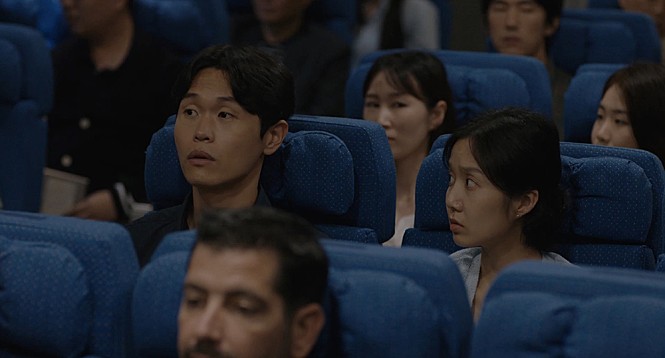
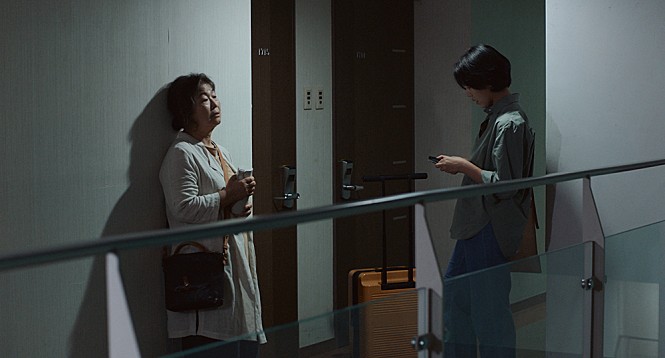
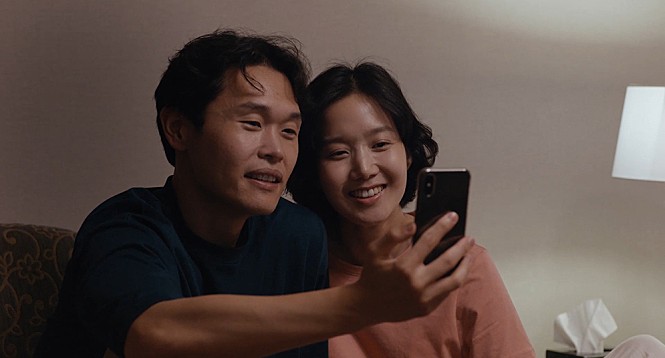
When Winter Comes (2020) ☆☆☆(3/4): A bus driver still not through with his past

South Korean independent film “When Winter Comes” is about one plain guy still not through with his past. Leisurely moving from one episodic moment to another, the movie gradually develops his quiet emotional struggle along the story, and that is why it is touching to see some tentative hope for a real new beginning for him and his life.

At the beginning, the movie slowly establishes its hero’s past and his current daily life. While there was a time when he was a promising young independent filmmaker, Seok-woo (Kwak Min-gyu) subsequently gave up his filmmaking career for some unknown reason and then went back to his hometown, and the opening part of the film shows us how he works as a local bus driver day by day. When his two co-workers ask him a bit about his past filmmaking career at one point, he is not so eager to talk about that at all probably because of shame or something else. At least, he is not particularly unhappy or miserable about his current status, but his private room full of DVDs and video recordings often reminds him of those past years of his, and he is also not so pleased when he keeps receiving the invitation letter from a local filmmaker association.

On one day, Seok-woo happens to notice an old MP3 player left by someone at a local bus terminal, and he becomes curious about the owner of this MP3 player just because it looks very familiar to him. After he gives it to a young female employee named Yeong-ae (Han Sunhwa), this MP3 player is soon stored in a room for the lost and found, and he frequently asks her about whether there is any person coming to look for it.

Via a couple of flashback scenes, we come to gather why this MP3 player looks so important to Seok-woo. During his filmmaking period, he had a girlfriend who was also one of his fellow filmmakers, but then she left him around the time when he came to give up his filmmaking career. Incidentally, she did not send his MP3 player back to him at that time, and it looks quite possible to him that the MP3 player found at the bus station is actually the one he gave to her.

For confirming whether that MP3 player really belongs to his ex-girlfriend, Seok-woo tries to check out whatever is stored inside it, but, alas, it turns out to be in the need of repair, so he seeks some extra help from Yeong-ae. Because she actually likes him a lot, Yeong-ae gladly helps him finding any local repair shop where that MP3 player can be fixed, and the movie gives us a series of nice nocturnal moments as they search around here and there in the town during one evening. When they eventually find a suitable repair shop, they come to have a little unexpected warm moment between them, and it looks like Seok-woo is also interested in getting closer to Yeong-ae despite maintaining his passive attitude as before.

Fortunately for Yeong-ae, there is a little opportunity for more relationship development between her and Seok-woo. A local table tennis competition will soon be held, and Yeong-ae suggests that he should play along with her in the competition. Again, Seok-woo is not so eager to say the least, but he eventually agrees to start the preparation along with Yeong-ae, and, considering how good they actually are at playing table tennis, it seems that they will do pretty well in the upcoming competition.

Around that narrative point, the movie delves a bit into the area of sports movies, but it keeps focusing on Seok-woo’s growing inner conflict with his past. The story does not specify much on how he came to give up his filmmaker career as well as his ex-girlfriend, but we can instead sense more of how much he feels hurt by any reminder of that time – especially when he suddenly gets one unexpected phone call from his ex-girlfriend later in the story.

Wisely avoiding any unnecessary melodrama, the movie steadily maintains its low-key tone as usual, and director/writer Lee Sang-jin did a competent job of imbuing his film with the palpably realistic sense of daily life. The main characters in the film really look like living through one day after another in their small town, and the movie occasionally shows some sense of humor as Yeong-ae tries to draw more attention from Seok-woo.

The main cast members of the film are believable in their respective parts. While Kwak Min-gyu’s unadorned natural performance humbly carries the film, Han Sunhwa always lightens the mood with her charming presence whenever she appears on the screen, and I enjoy how she and Kwak effortlessly click well together throughout the film. Several substantial supporting performers in the film including Lee Jung-bi and Ahn Min-young bring some extra colorfulness to the story, and Mok Gyoo-ri is also solid in her brief but crucial appearance during the last act.

On the whole, “When Winter Comes” may require some patience from you due to its slow narrative pacing, but it is still worthwhile to watch as a nice character drama, and Lee, who previously made a couple of short films before making his feature film debut here, shows considerable potential as a good filmmaker who knows how to engage audiences via mood and storytelling. In my trivial opinion, this is surely another notable debut feature film of this year in South Korea, and I think you should give it a chance someday.

Posted in Movies | Tagged , , , , | Leave a comment

Hit the Road (2021) ☆☆☆1/2(3.5/4): A family on the road

Iranian film “Hit the Road” simply follows and observes one private journey, but it will surprise you more than once. As closely and intimately focusing on the emotional undercurrents among its four principal characters going through a certain important moment in their family life, the movie doles out one small human moment after another, and I certainly appreciate how these moments culminate to its sublime finale in the end.

The movie opens with its four main characters in the middle of their long journey, and it draws our interest as showing how three of them are quite discreet about their journey for good reasons. One of them is a lad named Farid (Amin Simiar), and he must leave the country as soon as possible for some unspecified cause. His father and mother are certainly willing to help him, and that is why they and Farid are going to a certain remote spot where he will be smuggled across the border as arranged by his father in advance.

Of course, Farid and his parents have to be very careful about this illegal activity, and that is why they are pretending that they are simply enjoying a car travel along with Farid’s little younger brother and a family dog which incidentally does not have much time to live due to some illness. While both Farid and his parents cannot help but become nervous about the possibility of getting caught by the police at any point, Farid’s younger brother is constantly cheerful with his irrepressible spirit without noticing anything from them, and that certainly annoys them from time to time.

Anyway, everything seems to be going well according to their plan, though there come a few setbacks on the road. At one point, they have a little minor accident when they encounter a cyclist doing some competition with other cyclists, and the mood becomes rather awkward as they are taking this cyclist to a nearby spot where he can get some medical treatment. In addition, Farid’s younger brother continues to make one nuisance after another while still quite oblivious to what is going on around him, and that makes his father lose his temper a bit at times.

In contrast, Farid’s mother mostly remains calm and collected right next to Farid, who does not speak much as quietly driving the car as safely as possible for not getting any unnecessary attention. Once he crosses the border, he may be separated from his family forever, and his future beyond the border is quite uncertain to say the least. While understandably anxious and worried inside his mind, he tries to repress his feelings as much as he can, but his mother instinctively senses and understands that, and there is a little tender moment when they share their respective anxieties in private despite not telling that much to each other.

As the journey continues, Farid and his family pass by one wide rural landscape after another, and director/writer/co-producer Panah Panahi, who is the older son of Iranian filmmaker Jafar Panahi, and his cinematographer Amin Jafari vividly present those various landscapes on the screen. Whenever Jafari’s camera looks at the wide background surrounding the main characters, we become more aware of the magnitude of their long journey, and we also come to reflect more on their thoughts and feelings churning beneath the surface.

Nevertheless, the movie seldom loses its sense of humor even during its most serious moments. While we continue to be amused by the perky personality of Farid’s younger brother, we are also touched a lot by how Farid’s gruff father gradually reveals his concerns on his older son as well as his family. When he and Farid come to have a father and son moment in private later in the story, he tells his son that it is okay to express sadness and anxiety in front of him, and that is one of the most touching moments in the film although they still feel the growing gap between them.

Around the narrative point where its main characters are around the end of the journey, the movie sticks to its phlegmatic attitude as distancing itself a bit from the expected melodramatic part of the story. During one crucial scene later in the story, the camera simply observes Farid’s parents and several other people from the distance, but the resulting emotional effect is palpable nonetheless because of what is so diligently developed up to that narrative point.

Furthermore, the movie is supported well by its solid quartet acting from its four main cast members. While Hassan Madjooni and Pantea Panahiha ably function as the emotional center of the story, Amin Simiar holds his own small place well between them, and young performer Rayan Sarla is utterly unforgettable with his unadorned acting full of charm and energy. His character is surely annoying at times, but we cannot help but love his character just like Farid and his parents, and he is absolutely terrific when he is required to take the center around the end of the film.

Overall, “Hit the Road” is seemingly plain but undeniably impressive in its effortless handling of story and characters, and I am willing to watch it again soon for savoring those precious little moments in the film. Although this is his first film, Panahi demonstrates here that he is a talented filmmaker who may have a fruitful filmmaking career in the future just like his father has, and it will be certainly interesting to see what will come from him next.

Posted in Movies | Tagged , | 1 Comment

Compartment No. 6 (2021) ☆☆☆1/2(3.5/4): Her accidental travel companion

“Compartment No. 6”, which was selected as the Finnish submission for Best International Film Oscar in last year, is a modest but intimate character drama between two accidental travel companions. They are quite different from each other in many aspects, but, of course, they become a little closer to each other as spending time together in a train compartment, and the result is alternatively funny and poignant as they show more of themselves to each other along the story.

The opening part of the film introduces us to Laura (Seidi Haarla), a Finnish lass who came to Moscow for her academic study. Although the movie does not specify its period background to us directly, it seems to be around the 1990s considering Laura’s video camera, and the opening scene shows us how a bunch of Russian intellectuals casually enjoy themselves around Laura at a little party held at the residence of Laura’s Russian lover.

Laura and her lover, who is incidentally a college professor, are supposed to go to Murmansk by train for studying the Kanozero Petroglyphs, but, unfortunately, her lover cannot go due to some unspecified matter, so Laura has no choice but to get on the train alone on the next day. Because she speaks Russian fairly well, she does not have much of language barrier problem, but she often cannot help but feel isolated, and she feels all the lonelier as sensing the growing distance between her and her lover.

Meanwhile, she has to be with some young Russian dude in their train compartment during next several days, and their first encounter is not so pleasant to say the least. When she meets him for the first time, this young man is apparently quite drunk, and he talks too much in addition to being very rude to her. Annoyed a lot by this, Laura naturally looks for any other place to occupy in the train, but, alas, the train seems to be full, and a stern female train conductor is not willing to help her – even when she offers a bit of bribe.

Because of her unpleasant fellow passenger, Laura considers giving up her trip to Murmansk when the train stops by St. Petersburg, but she eventually changes her mind and then goes back to her train compartment, and that Russian lad, who is sober now, shows a little more consideration than expected despite being rather sullen and gruff. When the train is going to stop at one city for one night, he suggests that they should visit the residence of some old acquaintance of his, and, though she is not particularly interested at first, Laura joins him when they come across each other later.

What follows next is a little warm and humorous moment between them and one old lady who kindly lets them stay at her residence for one night. As she and they drink together, the old lady talks for a while about how she has had a good life as being true to herself, and she also indirectly encourages the certain feelings developed between Laura and the Russian lad.

The Russian lad’s growing feelings toward Laura become more evident when Laura comes across a fellow Finnish passenger not long after they are back on their train on the next day. While she is pleased to feel less isolated than before, he cannot help but become petty and grouchy – especially when he feels the language barrier between him and the two people in front of him.

While it eventually rolls its two main characters toward a certain point where they come to get closer to each other than before, the screenplay by director Juho Kuosmanen and his co-writers Andris Feldmanis and Livia Ulman, which is adapted from the novel of the same name by Rosa Liksom, takes its time in developing their mutual feeling along their journey. When they eventually arrive at Murmansk later in the story, the movie patiently builds up its narrative momentum as usual, and then there come several unexpected moments including the one where Laura becomes more active in approaching closer to her accidental traveling companion.

Like any similar films about two different figures getting close to each other via their journey, the movie depends a lot on the chemistry between its two lead performers, and it is engaging to observe how their characters’ relationship is dynamically changed along the story. Although the movie does not tell that much about its two lead characters’ respective backgrounds, Seidi Haarla and Yuri Borisov fills their roles with enough life and personality in addition to effectively complementing each other throughout the film, and their solid duo acting is one of the main reasons why the last scene of the film works with considerable emotional impression. While they are still total strangers to each other even at the end of the story, Laura and her accidental traveling companion get to know each other much more than expected, and you may wonder whether they will meet again just like that young couple of Richard Linklater’s “Before Sunrise” (1995).

On the whole, “Compartment No. 6”, which shared the Grand Prix award with Asghar Farhadi’s “A Hero” (2021) when it was shown at the Cannes Film Festival early in last year, is another good film from Kuosmanen, who previously drew my attention with “The Happiest Day in the Life of Olli Mäki” (2016). It is surely quite familiar, but the movie handles its story and characters with lots of wit, mood, and sensitivity, and that is more than enough for recommendation in my trivial opinion.

Posted in Movies | Tagged , , | 1 Comment

White Noise (2022) ☆☆(2/4): A whimsical misfire from Noah Baumbach

Noah Baumbach’s latest film “White Noise”, which is released in South Korean theaters in this week and then will be on Netflix around the end of this month, does not click that well with me. The movie, which is based on the novel of the same name by Don DeLillo, surely tries a lot throughout its 135-minute running time, but the overall result feels rather hollow and superficial on the whole, and this is a major letdown compared to many of Baumbach’s recent acclaimed works including “Marriage Story” (2019).

At the beginning, we are introduced to a college professor named Jack Gladney (Adam Driver) and his colorful suburban family. Although things are usually messy in their house, Jack and his wife Babette (Greta Gerwig) mostly get along well with their four children, and we see how they cheerfully start another usual day in their neighborhood which often looks like a low-key version of Wes Anderson movies (As many of you know, Baumbach worked with Anderson in “The Life Aquatic with Steve Zissou” (2004), and “Fantastic Mr. Fox” (2009)).

The main focus of Jack’s academic work is the history of Adolf Hitler, though he actually does not know how to speak or write German. I have no idea on how he managed to become a fairly good Hitler expert despite that, but he seems to be pretty respectable enough to be invited to an academic conference, so he tries to get some help from a German guy who is willing to teach the other thing besides German.

At his campus workplace, Jack is surrounded by a bunch of colorful professors who are mostly occupied with each own academic interest. Whenever they gather together for lunch, they surely talk a lot about what they are interested in, but they do not look like really interacting with each other at all, and we just observe the aimless verbal cacophony among them from the distance.

Meanwhile, Jack becomes more concerned about his wife’s mental health. While she is cheerfully vivacious on the surface, it seems that she has been on a certain unknown type of medication, and one of their children urges Jack to delve into this matter more, though both of them still cannot identify what kind of medicine Barbette has been supposedly taking.

Around the end of the first act, the movie becomes a bit more interesting due to a sudden disaster which occurs at a spot not so far from Jack’s neighborhood. As a considerable amount of certain toxic chemical is spread toward the neighborhood, everyone is thrown into panic and worry, and there eventually comes a moment when Jack and his family must evacuate from their neighborhood as soon as possible.

As Jack and his family try to go to a nearby shelter, the movie provides a series of bizarre moments to baffle and confuse you. At one point, Jack and his family see something frightening on the sky along with many others on the road, and the score by Danny Elfman surely swells as much as expected during this weird moment.

While Jack tries to process and understand what is going on just like many others around him and his family, the movie puts us into more confusion and bafflement. Lots of words about the ongoing disaster are hurled around here and there, but none of them gel together well to form something coherent and understandable, and it sometimes looks like all we get is nothing but sound and fury.

After the abrupt end of the second act, the story focuses on the marital problems between Jack and Babette again. While struggling with the fact that he may die sooner or later due to being exposed to that toxic chemical, Jack becomes all the more concerned about his wife, and then there comes a crucial moment as both of them tell all to each other.

We are supposed to be more emotionally involved in their problematic situation, but Baumbach’s screenplay fails to develop them into believable human figures, and we keep observing them and other characters around them from the distance without much care or attention. In the end, the movie arrives at the finale with some good cheer, but that does not mesh that well with the rest of the film, and we are consoled a bit by what is joyfully presented during its end credits, which is its best part in my inconsequential opinion.

The main cast members of the film try to sell their broad characters as much as possible. While Adam Driver, who previously worked with Baumbach in “Marriage Story”, dutifully carries the film to the end, Greta Gerwig is often limited by her uneven character, and Raffey Cassidy, André Benjamin, Jodie Turner-Smith, Bill Camp, and Don Cheadle manage to leave some impression despite their caricature supporting roles.

On the whole, “White Noise” is a disappointing misfire despite the efforts from Baumbach and his cast and crew members, and it only makes me more interested in reading DeLillo’s novel, which, as far as I heard from others, has been regarded as “unfilmable” since it came out in 1985. I could somehow sense how the story and characters may work on pages, but, sadly, they do not work at all on the screen, and maybe Baumbach deserves some pat on his back for trying something quite impossible from the beginning.

Posted in Movies | Tagged , , , , | Leave a comment