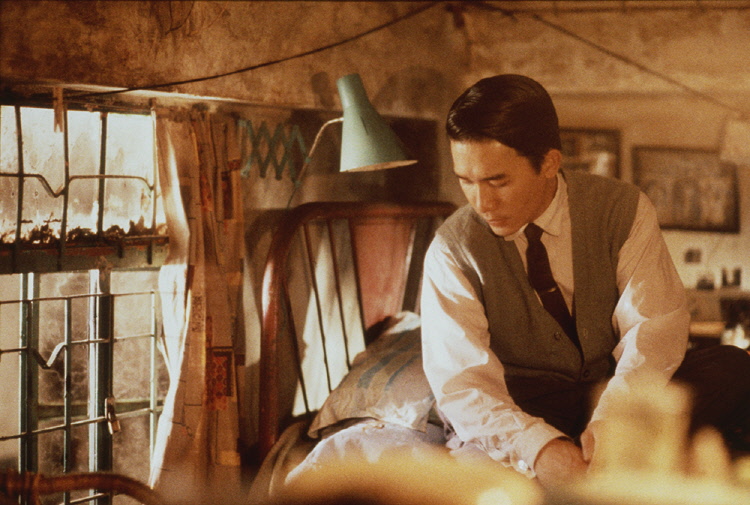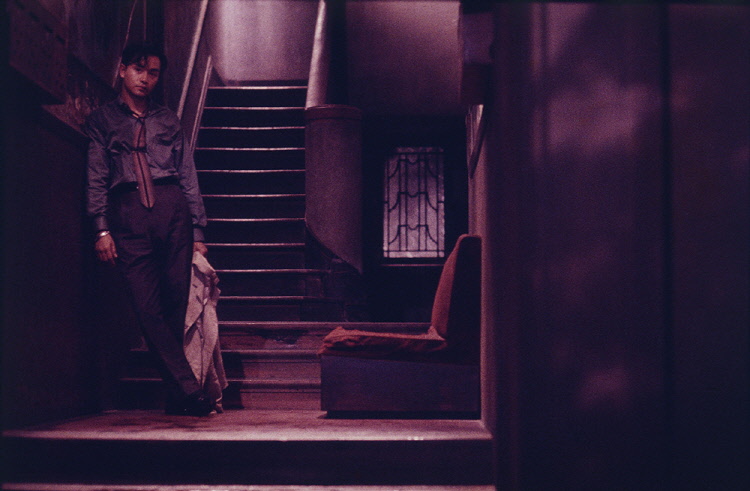
Wong Kar-Wai’s 1990 film “Days of Being Wild”, whose 4K remastered version was released in South Korean theaters a few days ago, remains a distant but interesting experience for me. Mainly revolving around one handsome but hopelessly self-absorbed lad who is nothing but annoyance for others around him, the movie is not so pleasant to watch to say the least, but it also occasionally shows Wong’s considerable talent and potential which would give us several better films such as “In the Mood for Love” (2000).
At the beginning, the movie, which is set in Hong Kong, 1960, shows how its hero, Yuddy (Leslie Cheung), actively pursues attention and affection from a young woman named Su Lizhen (Maggie Cheung). As constantly dropping by her shabby workplace day by day, he tells her that they are destined to fall in love with each other, and she does not believe his words at first, but, what do you know, she eventually opens her heart to him due to his persistence.
This surely looks like the beginning of a genuine romance, but the movie soon shows how Lizhen’s relationship with Yuddy leads her to a lot of misery and bitterness. When she begins to consider being more serious about their relationship, Yuddy starts to distance himself from her just because he does not want to settle at all. This certainly breaks her heart, but she still cannot get over him – even after Yuddy quickly moves onto some other woman without any hesitation.
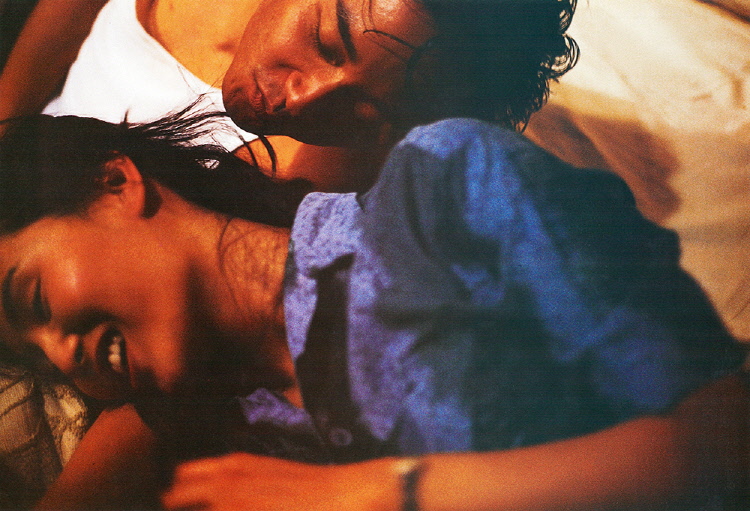
When she attempts to see Yuddy again, Lizhen encounters a young policeman who happens to be doing his routine patrol in Yuddy’s neighborhood. Although remaining as officiously detached as possible, the young policeman sincerely feels sorry for her, and that leads to the most poignant moment in the film. Although it is apparent that they feel something being developed between them, neither of them are willing to get closer to each other despite that, and we are more saddened to observe how the romantic possibility between them is eventually extinguished.
Meanwhile, the movie continues to observe more of how crass Yuddy is in many aspects. In case of his new girlfriend, Leung Fung-ying/Mimi (Carina Lau), she seems to have no illusion about Yuddy from the beginning, but, not so surprisingly, she also comes to want more from Yuddy just like his previous girlfriend, and Yuddy naturally becomes quite ready to get off from her at any time. This surely exasperates her a lot, and this leads to a dramatic confrontation between Mimi and Lizhen later in the story. Just like Lizhen, Mimi cannot help but become bitter and morose about her current status, and she is not even consoled that much by Yuddy’s friend Zeb (Jacky Cheung), who has been genuinely attracted to her for a while but only finds himself very frustrated to see her heart still yearning for Yuddy.
In case of Yuddy’s foster mother Rebecca (Rebecca Pan), who was once a fairly successful prostitute, she knows and understands her son better than anyone, but they frequently cannot help but pull or push each other. Even though being quite resentful about her, Yuddy still has to depend a lot on his foster mother because he is basically nothing but a bum, and this makes him cling more to finding and then meeting his biological mother someday.
While the story becomes moodier and seedier during its last act, the movie continues to dole out small but impressive moments tinged with indelible mood and style. We remain distant to its disagreeable hero to the end, but Wong and his cinematographer Christopher Doyle serve us a series of brief but poetic moments to remember, and you will not mind the rather redundant final scene at all even though you may also wonder whether this is really necessary. To be frank with you, I am still not sure about how this scene is connected with the rest of the story, but it is certainly nice to see Tony Leung Chiu-wai doing what can be regarded as a test run for his unforgettable performance in “In the Mood for Love”.
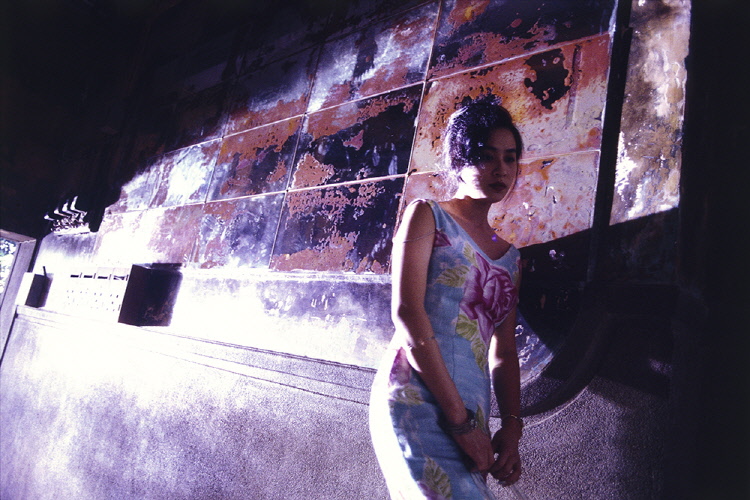
As the melancholic center of the movie, Leslie Cheung, who incidentally passed away in 2003, is flawless in his superficial character’s self-pity and narcissism. While his character is definitely an unpleasant cad, Cheung makes Yuddy as an engaging case study to observe from the distance at least, and he is particularly good whenever his character lets himself drenched in his own romantic narcissism – such as when he dances to music alone by himself while wearing only underwear (By the way, this was hilariously parodied in South Korean independent film “Lucky Chan-sil” (2019)).
Several other cast members in the film hold each own place well. Maggie Cheung, Carina Lau, and Rebecca Pan are terrific in their respective key scenes in the film, and Pan is especially good when we observe more of the complicated relationship between her character and Yuddy. Andy Lau and Jacky Cheung are also solid as the two substantial male supporting characters in the story, and Lau is an effective counterpoint to Maggie Cheung as they convey to us the subtle romantic tension between their characters.
In conclusion, “Days of Being Wild”, which incidentally came after Wong’s first feature film “As Tears Go By” (1988), does not impress me as much as “Chungking Express” or “In the Mood for Love”, but it is still interesting to observe how Wong was honing and refine his own artistic touches at that time. I merely admire it instead of embracing it, but it was nice to revisit it along with many audiences at a local theater anyway.