Netflix film “Don’t Say Good Luck”, which was released in last month, is a modest but earnest coming-of-age drama film to cherish. While it is inherently melodramatic from the beginning, the movie deftly strikes the right balance between humor and tear via its small but sincere moments, and it is also anchored fairly well by the commendable lead performance at its center.
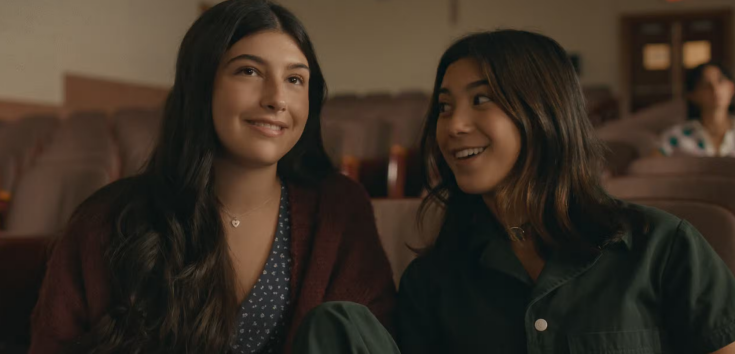
Sunny Sandler, who is the second daughter of, yes, Adam Sandler (He also participated in the production of the film, by the way), plays Sophie Birenbaum, a quiet but spirited high school girl ready to join the upcoming school production of “Waitress the Musical” along with her best friend Carolyn (Scarlett Estevez). She initially does not expect much during the audition, but, what do you know, she is eventually chosen as the lead actress by the director of the school play, and she is certainly excited about that.
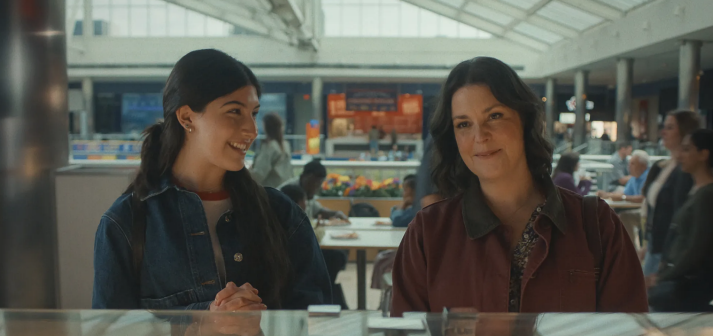
However, there comes a sudden unexpected change for her family around that point. Her mother Elizabeth (Melanie Lynskey), who was quite ill due to cancer some time ago, goes to a local clinic for getting the result of her recent medical examination, and then she and her husband Ted (Max Greenfield), who has run a local deli along with his wife for years, receive a bad news. Her cancer has unfortunately returned, and they are told that the situation may become much worse for her this time.
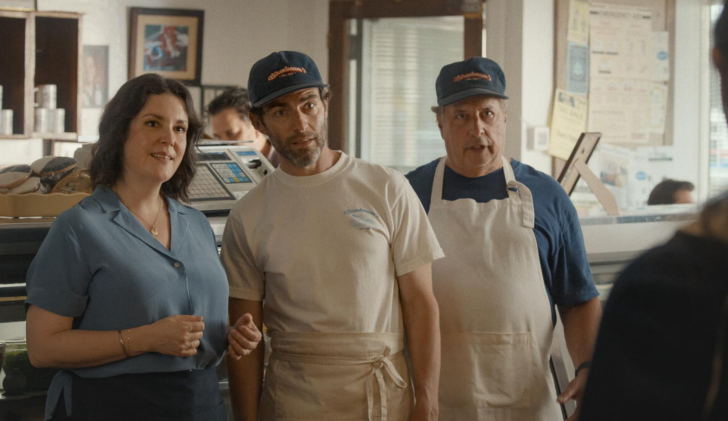
Needless to say, Elizabeth and Ted are reluctant to deliver this bad news directly to their three children at first, but they eventually decide to tell everything to their children. While her two younger brothers are not old enough to understand how things can be grim for their mother, Sophie naturally becomes quite concerned about her mother’s health, but her mother wholeheartedly encourages her artistic passion as usual, and Sophie continues to prepare for the show along with her fellow cast members under their director’s no-nonsense supervision.
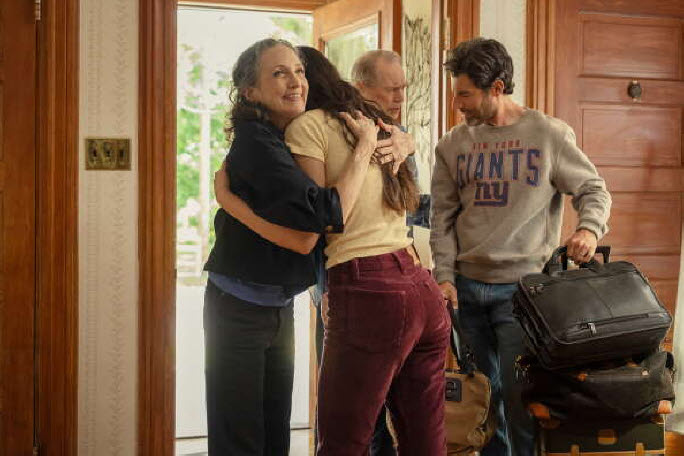
Now the movie feels like your average tearjerker, but the movie thankfully does not try too hard even when the story becomes a bit melodramatic. When Elizabeth’s medical condition gets worse as expected, her parents come for more support besides taking care of her children along with Ted, but we come to sense that she and her parents have not gotten along with each other that well. She and her mother soon clash a lot with each other about how to handle her current situation, and Sophie certainly sees and hears a lot from them while mostly keeping her own feelings to herself.
Needless to say, this comes to affect her preparation for the school play in one way or another, but, again, the movie does not push its story and characters too hard. As frequently encouraged by both her mother and the director, Sophie gradually finds more confidence and passion for playing the titular role of “Waitress the Musical”, and she also comes across the possibility of romance via her hunky co-star, who seems willing to go for more than practicing kissing with her.
In the end, there come a couple of typical tear-jerking moments during the last act, but the screenplay by Laura Harkin, director Juila Hart, and her husband/producer Jordan Horowitz steadily rolls the story and characters with enough sensitivity and human depth. As the movie doles out one small character moment after another, we get to know and care more about Sophie and several other supporting characters surrounding her, and I particularly like when one of Sophie’s fellow cast members, who seemed rather displeased when she was cast in a supporting role instead of Sophie’s part in the school play, shows more generosity and thoughtfulness to Sophie than expected.
And Sandler’s likable lead performance fills the screen with a considerable amount of charm and spirit. While I only came to pay more attention to her after watching her appearing along with his father in “Happy Gilmore 2” (2025), I can tell you at least that Sandler is a promising actress with enough talent and presence, and it will be interesting to see whether she will eventually have her own distinctive acting career just like her father has for many years.
Around Sandler, Hart assembles a bunch of various performers, each of whom have each own moment to shine. Melanie Lynskie, a veteran actress who has seldom disappointed us for more than 30 years since she rose to prominence along with Kate Winslet via Peter Jackson’s unforgettable 1994 adolescent drama film “Heavenly Creatures” (Folks, I think this deserves more attention than that very famous fantasy adventure trilogy of his!), deftly avoids any cliché expected from her character, and she and Sandler effortlessly click well with each other as ably suggesting the long personal history between their characters. While Max Greenfield has several small touching moments with Lynskey, Bebe Neuwirth and Steve Buscemi are effective in their brief but crucial appearance as Elizabeth’s flawed but well-meaning parents, and several other main cast members including Jack Champion, Stephanie Beatriz, Scarlett Estevez, and Jon Lovitz are also well-cast in their respective supporting parts.
In conclusion, “Don’t Say Good Luck” is one of the better Netflix products of this year besides being another solid work from Hart, who gave us several notable movies such as “Fast Color” (2018) and “I’m Your Woman” (2020). Although it is relatively less impressive than those two previous films of hers, the movie is a fairly engaging mix of comedy and drama, so I recommend you to give it a chance someday.