Madeline’s Madeline (2018) ☆☆(2/4): Seriously committed and disturbed

madelinesmadeline04

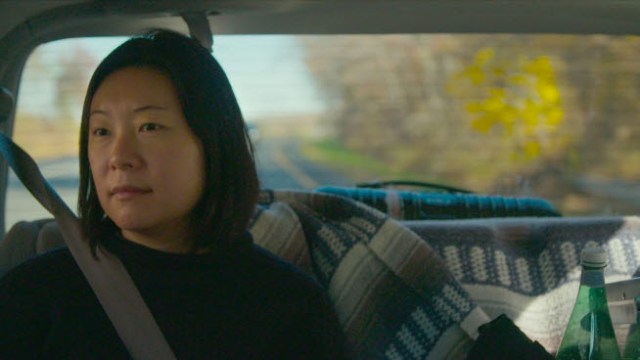
Watching “Madeline’s Madeline” was quite annoying and frustrating for me. Attempting to present a disturbing drama of mental illness and artistic exploitation, the movie is deliberately disorienting and jarring from the beginning to the end, and I sort of understand that storytelling approach to some degree, but I only found myself distracted and confused without much emotional involvement in its story and characters, which, in my inconsequential opinion, deserve more thoughtful and focused storytelling approach.

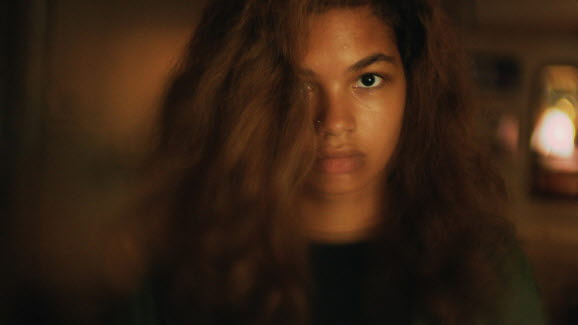
The story mainly revolves around Madeline (Helena Howard), an adolescent girl who has been a member of a New York City improvisation theater group led by Evangeline (Molly Parker). After the unnerving opening scene involved with a cat and a hot iron (Don’t worry, that cat does not get hurt in the film), we see her going through improvisation routines along with other members, and it looks like she is ready to be committed to art just like others, but she and others do not have any clear understanding of what Evangeline is really trying to develop with them. At first, it seems they are going to do a play featuring animals, so Madeline and other members try their best for channeling their animal characters, but then Evangeline invites an ex-con just because she decides to change the direction of her project, and everyone else is more confused and frustrated than before.

Anyway, Madeline keeps trying her best as encouraged by Evangeline, but there is a serious problem with which Madeline has coped for years. It is clear to us from the beginning that she is mentally unstable to say the least, and she frequently suffers from mood swings while often clashing with her mother Regina (Miranda July), who also turns out to be as emotionally high-strung as her daughter. Regina is surely concerned a lot about whether her daughter will be fine outside, but she cannot help herself as shown from their first scene, and Madeline cannot help but react harshly to that.
madelinesmadeline02

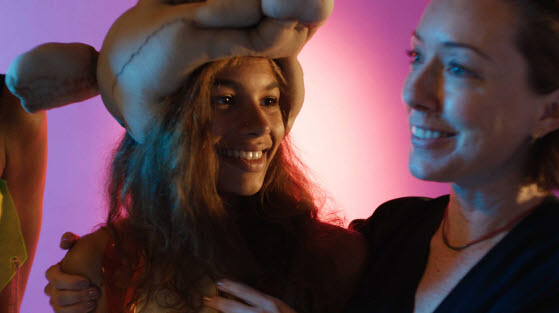
While Madeline continues to struggle with her tumultuous state of mind, the situation takes another turn as Evangeline decides to change the direction of her project again. Paying more attention to Madeline than before, she puts Madeline at the center of the subject, and Madeline is certainly happy about this, but it is pretty apparent to us that Evangeline is going to manipulate and exploit Madeline for the project. When Madeline comes to a photography session along with her mother, Evangeline suggests that Regina should participate in the session for getting more genuine emotional expressions from Madeline, and she does get what she wants from Madeline in the end.

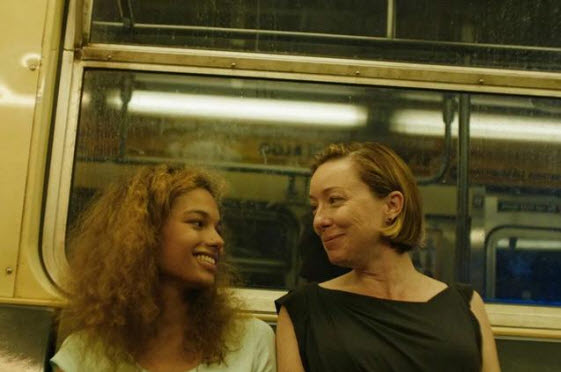
Later in the story, Madeline is invited to a party held in Evangeline’s house, and she surely impresses Evangeline’s husband and party guests as brandishing her raw acting ability. Evangeline is not so pleased about that, but that does not stop her at all from exploiting Madeline further, and her artistic exploitation eventually leads to a very hurtful scene where Madeline is pushed to perform something too personal while watched by everyone including her mother.

As busily going up and down along with its disturbed heroine, the movie tries lots of stylish things for emphasizing her warped and agitated viewpoint, but, unfortunately, most of its attempts are just merely distracting. With its constantly dizzy camera movements and endlessly choppy editing, the movie awkwardly swings from one moment to another without enough dramatic momentum to hold our attention, and we are only left with more confusion and frustration while feeling more distant to whatever is going on the screen.
madelinesmadeline03

In addition, the screenplay by director/writer Josephine Decker feels rather shallow in its handling of story and characters. While Madeline is supposed to be the one we should identify with, the movie does not provide enough emotional depth to her, and the same thing can be said about many other characters in the film. Besides its three main characters, most of supporting characters in the movie are more or less than disposable plot elements, and that is why a sudden action during the finale does not entirely work despite the considerable efforts from the cast members.

The main performers of the film do as much as they can do with their respective roles. Newcomer Helena Howard did a good job of handling several demanding scenes in the film, and I think she will soon move onto better things to come during next several years. While Molly Parker, who has been mainly known for her supporting role in TV Series “House of Cards”, is also solid as gradually revealing her character’s manipulative side, Miranda July, who drew my attention for the first time with her wonderfully quirky debut work “Me and You and Everyone We Know” (2005), manages to bring some humanity to her underdeveloped character, and she and Howard give us a little nice moment when their characters are allowed to be less shrill than usual at one point.

“Madeline’s Madeline” is the third feature film by Decker, who previously made “Butter on the Latch” (2013) and “Thou Wast Mild and Lovely” (2014). Although I have not seen these two films yet, I can tell you at least that, as far as I can see from “Madeline’s Madeline”, she is a filmmaker with some potential and talent, and I only hope that whatever will come from her next is more engaging than this botched exercise in style.


madelinesmadeline01

Posted in Movies | Tagged , , | Leave a comment

A Long Farewell (2017) ☆☆☆1/2 (3.5/4): Farewell to one old apartment complex area

alongfarewell04

Apartment complexes were an important part of my childhood life during the 1980-90s. As I and my family often moved from one apartment complex to another one, I always looked at those big buildings with wonder and curiosity, and I still fondly remember them. Although more than 20 years have passed now, some of them still exist even at this point, and I must confess that I could not help but a bit sentimental when I checked their current status via online searching a few years ago.

And that is why I was touched a lot by what is shown in “A Long Farewell”, a little South Korean documentary film which is about one big apartment complex area about to be demolished for reconstruction. While simply presenting a number of different apartments and the environment surrounding apartment complexes on the screen, the documentary is often poignant as listening to personal memories and thoughts from a group of residents of the area, and it is also quite interesting as showing us a curious case of beautiful balance between nature and civilization.

The apartment complex area in question is Dunchon Jugong Apartment complex area, which is located in a fringe region of Seoul. Built in 1980, this apartment complex area has been considered for reconstruction since 1998, but the reconstruction has been delayed for more than 15 years, and, as told to us at the end of the documentary, the reconstruction finally began this year after all of the remaining residents relocated to other places.

alongfarewell03

In the beginning, the documentary alternates between two different apartments in Dunchon Jugong Apartment complex, and their owners tell us a bit about how they have lived in their respective residences. While there have been a number of inconveniences as their apartment buildings get older and more deteriorated year by year, they try to live in their big neighborhood as long as they can because, well, they feel attached a lot to where they lived for many years, and that aspect is clearly felt from a number of static shots showing small and big things in their respective apartments.

In case of a married female resident, she tells us about how she came to spend most of her life in an apartment which was her family home at first. She went through her childhood and adolescence years there, and, after her parents relocated to a rural area, she and her husband moved to there a few years ago. At present, she is raising her child there just like her mother did a long time ago, and the documentary gives us a quiet but moving moment as looking around her apartment strewn with several stuffs for child.

The apartment buildings of Dunchon Jugong Apartment complex area certainly look old and shabby to say the least, but its environment surprisingly feels fresh as filled with trees and many other different plants which have grown there for many years. While many of tress in the area are quite big and tall, they somehow provide a soothing atmosphere to the residents of the area, and there are a number of lovely shots showing splendid sceneries accompanied with natural beauty to be appreciated. While I especially liked a tiny lane surrounded by a bunch of trees, I was also impressed by a brief shot showing a tree nearly covering one side of an apartment building, and I felt soothed a lot by a wide shot showing how much the area is filled with greenery thanks to those numerous trees, which will sadly be removed once the reconstruction is started.

alongfarewell02

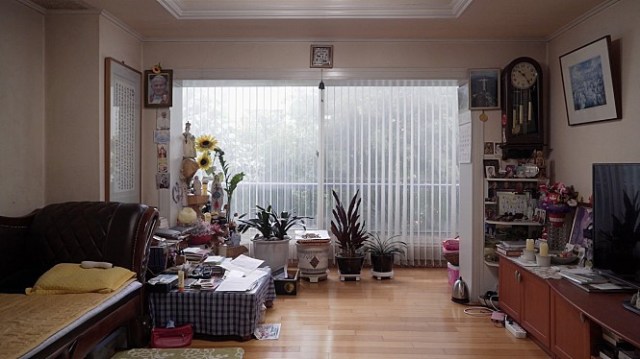
And we also come to feel more life from various apartments shown in the documentary. In case of one particular apartment, it is filled with many Catholic objects including a big photograph of Pope Francis, and we can sense its resident’s strong faith even though the resident does not talk about that at all. In case of one very neat apartment, it looks so well and ordered that I felt a bit sad as observing that it will be gone forever just like many other apartments in Dunchon Jugong Apartment complex area.

Later in the documentary, a young woman who once spent several years along with her family in Dunchon Jugong Apartment complex area tells us about how she came to return to the area. As going through a difficult moment in her life, she decided to go back to the area because of her strong emotional attachment to the area, and she says that living in the area felt like a personal healing process. While her place looks pretty modest, she always feels soothed and energized by the bright, comforting mood of her residence, and she particularly likes the evening bell sound from a nearby Buddhist temple. As listening to her words, the documentary shows several cats living in her residence, and it seems these cats also feel same about her residence.

“A Long Farewell” is directed by Raya Kim, who also did the shooting with her co-cinematographer Cho Yong-gi. This is her first feature documentary film, and I admire how subtly and deftly she engages us via her plain but effective approach. While the documentary just observes and listens along with us, it vividly conveys to us a sense of place, time, and people, and I assure you that you will come to reflect a lot on what is presented on the screen. Although it is a little shame that the running time is no less than 72 minutes, the documentary is still one of the most satisfying experiences I had during this year, and I sincerely hope that it will get a chance to be appreciated outside South Korea.

alongfarewell01

Posted in Movies | Tagged , | Leave a comment

Ode to the Goose (2018) ☆☆☆(3/4): Ode to Gunsan

odetothegoose01

The works of Zhang Lü, who drew my attention for the first time with “Dooman River” (2011), always have a palpable sense of people and locations. While “Dooman River” immersed us into the realistic daily life of Korean Chinese characters living near the border between China and North Korea, “Scenery” (2013) and “A Quiet Dream” (2016) gave us a refreshing perspective on a number of familiar sites in Seoul, and “Gyeongju” (2014) often mesmerized us as playfully wandering around various places in Gyeongju.

In case of Lü’s latest film “Ode to the Goose”, the main background of its first half is Gunsan, a port city which is not that far from my hometown city Jeonju. While revolving around several places in and around Gunsan, the movie alternatively baffles and engages us as freely wandering along with its two main characters, and we become more amused when the movie later delves more into its two main characters’ relationship during its second half.

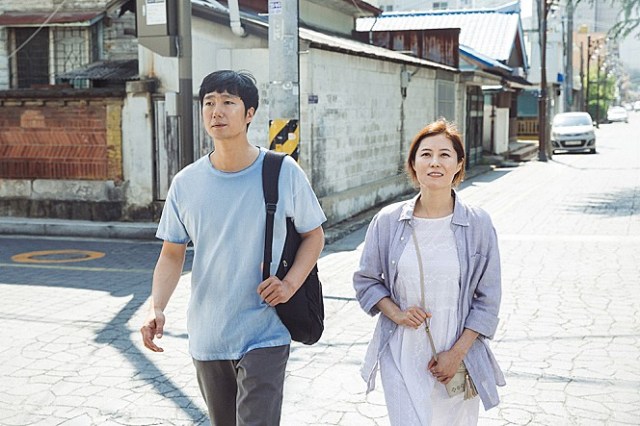
When we meet Yoon-young (Park Hae-il) and Song-hyun (Moon So-ri) during the opening scene, they have just arrived in Gunsan, and they are looking for a place to stay for a few days. When they happen to have a lunch at a small, modest restaurant, a middle-aged lady, who is the owner of the restaurant, recommends them a nearby inn, but she also tells them that the innkeeper is rather fastidious about guests.

Anyway, Yoon-young and Song-hyun go to that inn in question, and the innkeeper, who turns out to be a Korean Japanese guy, allows them to stay in the inn without much objection. At first, Yoon-young and Song-hyun come together inside one of the guest rooms in the inn, but then Song-hyun decides to stay alone in some other guest room instead, and Yoon-young is not so pleased about that because of his old feeling toward Song-hyun, who is later revealed to be the ex-wife of his senior friend.

odetothegoose02

As Yoon-yong and Song-hyun spend some time together around several places in Gunsan, it looks like Yoon-young may get a bit closer to Song-hyun, but, unfortunately, her heart seems to be drawn to someone else, and that is none other than that innkeeper guy. As getting to know the innkeeper bit by bit, Song-hyun finds herself attracted to the innkeeper, and they come to spend more time together after the innkeeper, who turns out to be an amateur photographer, shows her his darkroom and several photographs shot and developed by him.

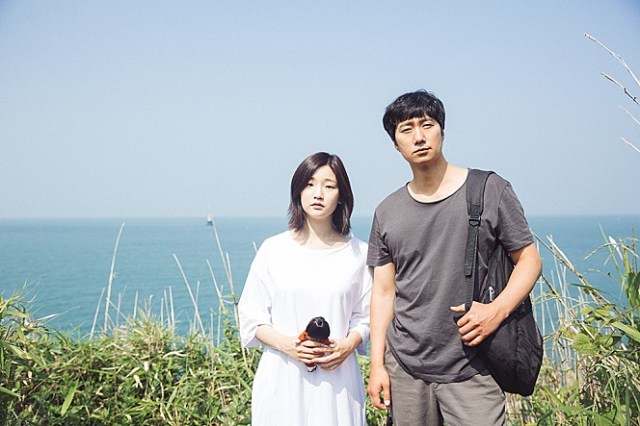
In the meantime, Yoon-young comes to notice more of the innkeeper’s daughter, who usually stays in her room where she constantly watches whatever is happening in and around the inn via a number of surveillance video cameras. Whenever she appears outside her room, Yoon-young cannot help but curious about this elusive young woman, and it looks like she is also interested in Yoon-young. In the end, they go to an island outside Gunsan together, and we get a rather ambiguous moment as they wander around in the island, but then, for some unknown reason, they find themselves in a problematic situation along with the innkeeper and Song-hyun.

After Yoon-young comes back to Seoul, we meet a few other characters including Yoon-young’s aging father and his Korean Chinese housekeeper lady, and then the movie moves backward to several day ago for showing how Yoon-young happened to go to Gunsan along with Song-hyun. When he came across Song-hyun at a small demonstration site, he did not recognize her at first, but she is pleased to see him again, and she even takes him to her dentist cousin for his toothache problem.

odetothegoose04

After Yoon-young comes back to Seoul, we meet a few other characters including Yoon-young’s aging father and his Korean Chinese housekeeper lady, and then the movie moves backward to several days ago for showing how Yoon-young happened to go to Gunsan along with Song-hyun. When he came across her at a small demonstration site, he did not recognize her at first, but she is pleased to see him again, and she even takes him to her dentist cousin for his toothache problem.

Song-hyun and Yoon-young meet again later for drinking, and the movie gives us an amusing scene as drunken as those funny moments of Hong Sang-soo’s films. While both of them are quite inebriated, Yoon-young gives an impromptu poem recital in front of everyone including Song-hyun, and that is certainly a showstopper moment to remember in my inconsequential opinion.

I must confess that I am still not that sure about what “Ode to the Goose” is exactly about, but, at least, I observed how it is about with enough interest during my viewing, and I admire its mood, storytelling, and performance. Under Lü’s thoughtful direction, cinematographer Cho Young-jik did a good job of capturing small moments of plain beauty from many different mundane locations in the film, and Park Hae-il and Moon So-ri ably carry the film together while supported well by a number of reliable supporting performers including Jung Jin-young and Park So-dam. Like Lü’s other previous films, the movie is a typical arthouse film which requires considerable patience from you, but it is a rewarding experience at least while also being one of more interesting South Korean films of this year, and I am quite willing to revisit it for appreciating its quiet, sensitive moments again.

odetothegoose03

Posted in Movies | Tagged , | Leave a comment

Call Me Lucky (2015) ☆☆☆1/2(3.5/4): Meet Barry Crimmins

callmelucky01

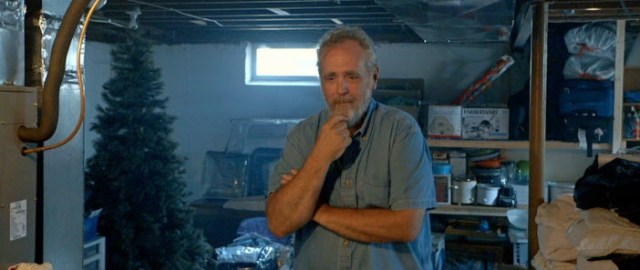
Documentary film “Call Me Lucky” presents a talented and passionate comedian who was also a complex and compelling human being. While it is engaging to observe the considerable talent and spirit of this rather obscure comedian, the documentary also powerfully shows us how he coped with a personal trauma in his life, and we cannot help but moved by that.

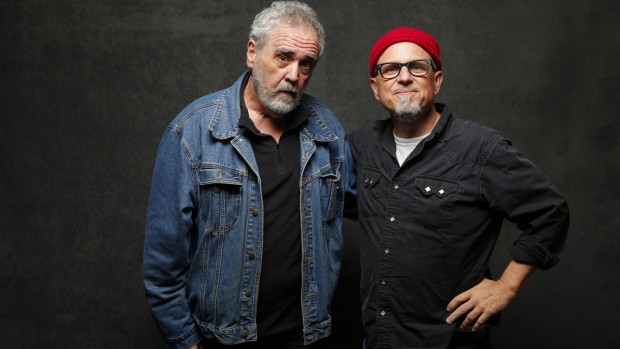
At first, the documentary has a bunch of interviewees tell us a bit about Barry Crimmins, an American stand-up comedian who is not known well even in US but has been respected a lot by his peers for good reasons. As shown from several archival footage clips in the documentary, he could be pretty abrasive and belligerent on the stage, but he was quite funny and hilarious thanks to his natural comic talent, and he also promoted and nurtured the talents of many other stand-up comedians including director Bobcat Goldthwait and Goldthwait’s close friend Tom Kenny.

Through Crimmins himself and his family members and friends, we get to know a bit about his early years. While growing in a conservative Catholic family living in Skaneateles, New York, Crimmins often showed his wild, funny side to others around him, and that aspect is exemplified well by one amusing episode during his adolescent years, which is hilariously depicted via an animation sequence in the documentary. When he and his several high school friends went to an outdoor concert held in Watkins Glen, New York, he happened to be struck by a lightening there, but he was quite excited as having a sort of psychedelic experience, and that was certainly a moment to be remembered by him and others for the rest of their life.

callmelucky03

Shortly after his high school graduation in 1971, Crimmins began his stand-up comedian career at a small place named Under the Stone, and he later moved to Boston around the 1980s. He founded his first comedy club in a Chinese restaurant, and that comedy club, named The Ding Ho, and another comedy club he subsequently founded, named Stitches, attracted many promising stand-up comedians such as Denis Leary and Paula Poundstone. Goldthwait places not only his old friends/colleagues but also himself in front of the camera, and all of them fondly remember how exciting their time with Crimmins was. While not suffering fools at all, Crimmins was also kind and supportive to his colleagues, and one of the interviewees in the film reminisces about when Crimmins gave him a brutal but honest and helpful advice at one point.

During his stand-up comedy performances, Crimmins often talked about politics and other social matters, and he surely had lots of things to talk about as being angry about the Reagan administration during the 1980s. While he was frustrated and exasperated a lot with the prevalent ignorance and complacency in the American society, his anger was sublimated into intense but funny moments on the stage, and he was also quite vocal about his thoughts and opinions even when he was not on the stage.

As observing how zealously Crimmins fought and protested against social injustices, we wonder what made him tick, and we soon come to get the answer during the second half of the documentary. During one stand-up comedy performance in 1992, he revealed to his audiences that he was raped by a man associated with his babysitter when he was a child, and everyone including his family members were certainly shocked and surprised by this revelation of his. After that point, he became all the more vocal about child abuse, and that led to his private investigation on online pedophilia during the late 1990s. Posing as a 12-year-old boy, he diligently collected many alarming evidences as operating in those deplorable online chat rooms for pedophiles, and he subsequently sent the evidences to authorities for stopping and exposing those despicable guys out there.

callmelucky02

However, Crimmins did not get much responses from the government. He was brought to the US senate hearing for explaining to senators why child pornography laws should be enforced on the Internet, but, as he bitterly points out via his voice-over, the senators did know much about computer technology, and many of them even showed their ignorance without any shame or hesitation while casually hurling superficial platitudes. When the lawyer representing a big online service company later came to present his argument in front of the senators, Crimmins virtually roasted that guy as sitting right next to him, and his following argument certainly impressed the senators more.

The documentary also shows Crimmins during his later years, and the most poignant part of the documentary comes from when Crimmins comes to revisit where his child trauma happened. As the camera calmly looks around that place along with him, he simply observes that he manages to survive that horrible moment (“It almost killed me, but I’m still here. So you can call me lucky.”), and we come to sense more of that psychological scar inside his mind.

I belatedly watched “Call Me Lucky” at last night although I heard about it in late 2015, but I am glad to report to you that it is worthwhile to watch for its many candid moments accompanied with some sharp sense of humor. Goldthwait did a commendable job of presenting his human subject with honesty and respect, and, considering Crimmins’ recent death early in this year, the documentary becomes more relevant than before. He was certainly funny and interesting, and you will not forget him easily after you watch this terrific documentary.

callmelucky04

Posted in Movies | Tagged , , , | Leave a comment

Mamma Mia! Here We Go Again (2018) ☆☆☆(3/4): Here they sing and dance again

mammamiaherewegoagain03.jpg

“Mamma Mia! Here We Go Again” is better than I expected, and that is a little surprise for me. Yes, this is your typical jukebox musical movie just like its predecessor, but it is somehow less tiresome in comparison as providing a number of nice musical moments to be savored, and I found myself going along with its cheerful spirit even while recognizing its numerous artificial aspects.

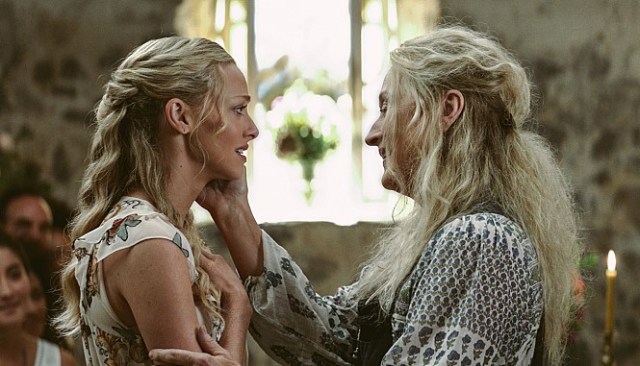
The movie alternates between two main parts, and one of them begins with Sophie (Amanda Seyfried) preparing for the new opening of a hotel located at some Greek island. While the hotel originally belonged to Sophie’s mother Donna (Meryl Streep), Donna unfortunately died a year ago, and, though still feeling sad about her mother’s death, Sophie is quite determined to continue her dear mother’s business, and everything seems to be going well as planned by her and her trustful manager Fernando (Andy García)

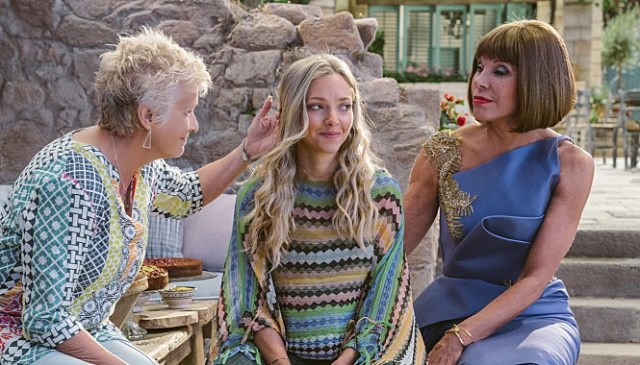
However, we soon come to learn that things do not go as well as Sophie wishes. While Sam (Pierce Brosnan), Donna’s husband who is also one of three men in Donna’s life, has been near her, the other two guys, Bill (Stellan Skarsgård) and Harry (Colin Firth) cannot come to the opening ceremony for each own personal reason, and Sophie’s husband Sky (Dominic Cooper) cannot come either because he has been in New York City for developing his career further. At least, Donna’s two female friends, Tanya (Christine Baranski) and Rosie (Julie Walters), come to the island as expected, and they certainly cheer up Sophie a lot as occasionally remembering Donna.

mammamiaherewegoagain01

In case of the other part of the movie, we see how young Donna (Lily James) came to settle in that Greek island. As soon as she graduates from Oxford along with Tanya and Rosie, who are respectively played by Jessica Keenan and Alexa Davies in this part, young Donna goes to France for enjoying more of her youthful life, and that is where she happens to encounter young Harry (Hugh Skinner). Although he is initially very awkward in front of Donna, Harry comes to express his love to her through his musical scene, and, of course, it does not take much time for them to spend a very intimate time together.

However, Donna soon leaves Harry, and then she arrives in a rural beach area of Greece. When she misses a boat which would take her to that island, she happens to meet young Bill (Josh Dylan), who is willing to take her to that island by his yacht. As they spend some time together in his yacht, Bill becomes attracted to Donna just like Harry, and he also demonstrates his singing ability to her for showing his love to her, but then they happen upon an unexpected incident on their way to the island.

In the end, Donna says goodbye to Bill when she arrives in the island, and then she comes upon an old farmhouse which somehow looks fine to her despite being in the serious need of repair and renovation. As looking around the inside of the house, she comes across young Sam (Jeremy Irvine), and something instantly clicks between them from the beginning, but, not long after their cozy musical scene, it turns out that Sam has something he did not tell her in advance.

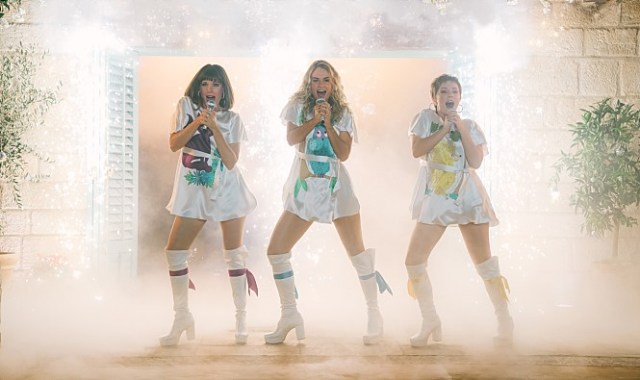
As the screenplay by director Ol Parker and his co-writers Catherine Johnson and Richard Curits casually goes back and forth between its two predictable but engaging storylines, the movie constantly serves us musical scenes based on a number of notable songs by ABBA as its predecessor did. While “Mamma Mia”, “Dancing Queen”, and “Super Trouper” appear again, other songs including “When I Kissed the Teacher” and “Waterloo” are delightfully utilized on the whole, and I particularly like how “My Love, My Life” is poignantly used during a crucial scene later in the film.

mammamiaherewegoagain02.jpg

And it surely helps that the main cast members of the film have lots of fun together on the screen. While Amanda Seyfried gives a likable performance as she did before, Lily James did a terrific job of channeling Meryl Streep’s spirited performance in the previous film, and she is also supported well by her two co-performers Jessica Keenan and Alexa Davies, who are as solid as Jeremy Irvine, Josh Dylan, and Hugh Skinner.

In case of other notable performers in the film, Julie Walters and Christine Baranski are enjoyable as usual, though I must say it is a shame that Baranski does not have something as show-stopping as performing “Does Your Mother Know?” in the previous film. While Dominic Cooper, Pierce Brosnan, Stellan Skarsgård, and Colin Firth fill their functional roles as required (Brosnan sings as little as he can within his limit this time, by the way), Andy García is suitably colorful, and Cher is mostly adequate as Sophie’s estranged grandmother, although I must point out that she is merely three years older than Streep (and they once played together in “Silkwood” (1983)).

On the whole, “Mamma Mia! Here We Go Again” manages to be entertaining without being as excessive as its predecessor, and I came to have a fairly good time with it while willingly overlooking several shortcomings including its rather thin narrative full of glaring plot contrivances. Sure, it is not particularly refreshing while also feeling redundant at times, but it did its job as well as intended with considerable charm and spirit, and I like that anyway.

mammamiaherewegoagain04

Posted in Movies | Tagged , , | Leave a comment

Halloween (2018) ☆☆1/2(2.5/4): He’s back – but she’s quite ready this time

halloween01

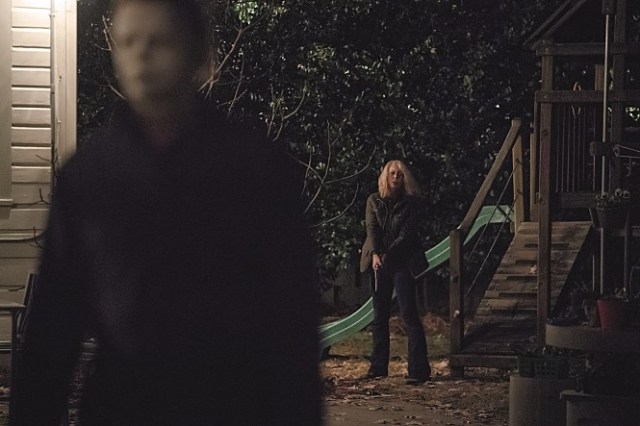
As I sat for watching David Gordon Green’s new film “Halloween”, I was ready to be scared and thrilled, but I only found myself disappointed in the end. Although the movie is certainly well-made with some interesting elements to notice, the movie did not surprise or disturb me enough as dutifully trudging through its expected moments along with its murderous villain, and I came to observe its story and characters from the distance without much care and attention.

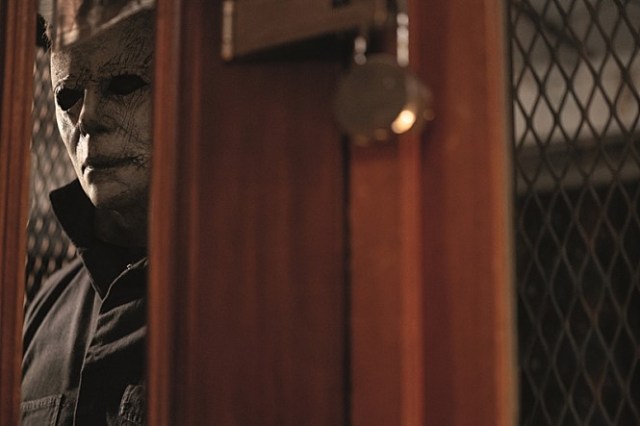
Besides being a direct sequel to John Carpenter’s 1978 horror film of the same name, the movie is a sort of reboot as erasing not only the ambiguous ending of the 1978 film but also what happened in those forgettable following sequels made after that film. At the end of that nightmarish Halloween night in Haddonfield, Illinois, a murderous figure responsible for that, who is merely named “The Shape” in the end credits of both the 1978 film and the 2018 film, was captured and sent back to a mental institution, and he came to spend no less than 40 years there, but, as shown from the opening scene, there is still something creepy and disturbing about him. When we see the mask he once wore, we can instantly see that something very bad is going to happen, and we are not so surprised when an accident later happens as he is being transferred to some other facility along with other patients.

Meanwhile, the movie also focuses on Laurie Strode (Jamie Lee Curtis), who was the girl who survived that figure’s lethal attack during that terrible Halloween night. Although 40 years have passed, she still struggles with her post-traumatic stress disorder, and she has also been quite obsessed with the possibility of getting attacked again by that dangerous figure. Currently living in an isolated spot which is heavily guarded by iron fences and surveillance cameras, she has a bunch of firearms in her solitary residence, and there is even a sort of panic room in the basement area.

halloween03

In contrast to Laurie, her daughter Karen (Judy Greer) has tried to live a normal life with her husband and their daughter. While she is genuinely concerned about her mother’s wellbeing, she also wants to be away from her rather tense childhood years with her mother as much as possible, and that generates some tension between her and her daughter Allyson (Andi Matichak), who is more sympathetic to Laurie as shown from her brief scene with Laurie.

When she learns that the figure responsible for her lifelong trauma escaped on the day before Halloween, Laurie becomes quite determined to take care of this dangerous situation for herself, and that accordingly makes her clash a bit with Sheriff Frank Hawkins (Will Patton), who arrested that figure 40 years ago. As the number of dead bodies is increased, he tries to stop that figure as soon as possible, but it looks like there is nothing much he can do, and he does not get much help from Dr. Ranbir Sartain (Haluk Bilginer), who has been that figure’s doctor since Donald Pleasance’s character in the 1978 film died.

As Laurie and some other main characters busily go around here and there, the figure in question slowly moves around the neighborhood areas of Haddonfield as he once did before, and the movie provides a number of nice moments to enjoy. While I admired how cinematographer Michael Simmonds’ camera fluidly moves along with the figure in one smooth unbroken shot, I also appreciated several small moments which mostly work as homages to the 1978 film, and I was particularly amused by a brief moment involved with a couple of young kids accidentally coming across the figure on a busy street.

However, the movie fails to engage me. While I observed the strained relationship between Laurie and her family members with some degree of interest, the screenplay by Green and his co-writers Jeff Fradley and Danny McBride simply pushes them into predictable moments, and the eventual payoff moment during the finale feels rather deficient as a result despite its apparent message on female bonding and empowerment. In addition, many of supporting characters in the film are so underdeveloped that they are more or less than killing targets, and I must tell you that I was mostly correct about who will get killed in the film.

halloween02

As I became less interested during my viewing, I could not help but a little sarcastic about how indomitable and invincible that murderous figure is. As far as I remember, he is shot a couple of times on his body at one point later in the movie, and then he is hit by a vehicle, and then, not long after waking up from his temporary unconscious state, he gets his several fingers blown away by a shotgun, but he somehow maintains his usual composure and walking speed despite all these and other substantial physical traumas inflicted on him. Considering that he is over 60, he is surely an extraordinary case study, and it is no wonder that the state has held him for 40 years.

Anyway, the movie is not a total disappointment at all thanks to the game efforts from its cast and crew members. Jamie Lee Curtis, who has been always associated with her breakout turn in the 1978 film, is solid as a woman quite ready to face the origin of her trauma again, and Judy Greer and Andi Matichak are also fine in their respective supporting roles while Will Patton and Haluk Bilginer manage to leave some impression despite their thankless roles. Under Green’s slick direction, the movie is constantly shrouded in ominous mood, and the score by John Carpenter, Cody Carpenter, and Daniel Davies is effectively used in several key scenes in the film.

Overall, “Halloween” is a fairly competent sequel which is certainly better than other sequels including “Halloween H20: 20 Years Later” (1998), but I cannot recommend it because of its glaring weak aspects, so I advise you to watch the 1978 film instead, which still impressed me with its dexterous handling of shock and suspense when I revisited it again early in last month. While that film goes for pure thrill and horror, Gordon’s film just follows a predetermined playbook while paying some respect to its senior, and that is all.

halloween04

Posted in Movies | Tagged , , | Leave a comment

The Other Side of the Wind (2018) ☆☆☆(3/4): Now here comes his last completed film

theothersideofthewind02

I feel rather ambivalent about “The Other Side of the Wind”, Orson Welles’ last completed film which was finally released on Netflix this Friday. While I am not so sure about whether it is as successful as intended, I observed its uneven mix of satire and style with considerable interest and curiosity, and I think it is an important cinematic event you should check out as soon as possible – especially if you are a serious moviegoer with some background knowledge on Welles’ dramatic life and career.

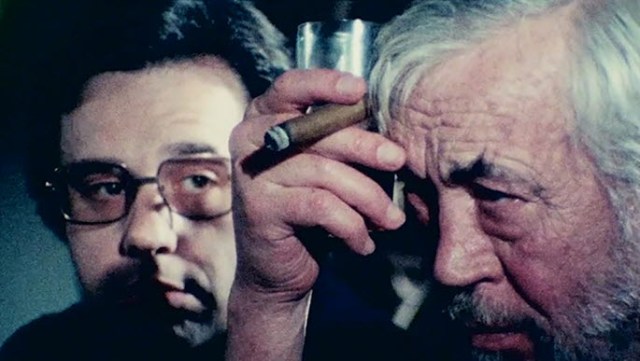
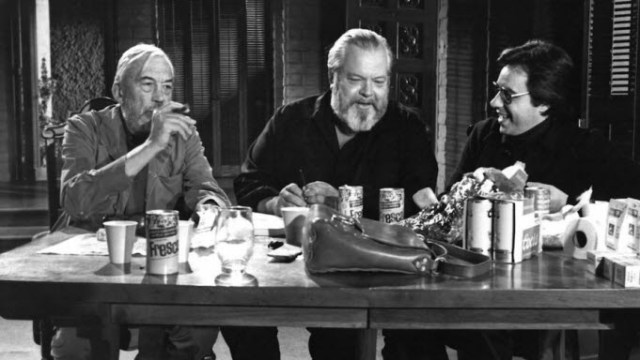
The movie freely alternates between two different parts. One part mainly revolves around an aging Hollywood director named Jake Hannaford (John Huston), and the other part is what turns out to be his last work, which is titled, yes, “The Other Side of the Wind”. While that movie of his in the film seems to be almost complete, Hannaford does not seem to care much about his film, and he and many other characters soon go to a party to be held at a big house belonging to one of his close friends. Even as he is driving to the party place, several guys are eager to get any word from him just because of his legendary status, but the one who usually talks is his de facto pupil Brooks Otterlake (Peter Bogdanovich), a hotshot movie director who has enjoyed his own success during recent years. Although Welles denied that Hannaford is his fictional version, we cannot help but think of Welles as watching Hannaford, and that impression is further accentuated by the presence of Bogdanovich, who was in fact Welles’ protégé around the time when “The Other Side of the Wind” was made.

Meanwhile, we get some glimpse into Hannaford’s film as one of the financers of the movie watches the rough-cut version of the film. Clearly emulating those European arthouse movies during the 1960-70s, the movie has its lead actress and actor, played by Welles’ co-writer Oja Kodar and Bob Random respectively, aimless move around here and there without any dialogue, and it is no wonder that the financer eventually gets bored and exasperated no matter how much Hannaford’s assistant tries to explain to him what the hell is going on the screen. I am reminded of an advice my late friend Roger Ebert received a long time ago: “If nothing has happened by the end of the first reel, nothing is going to happen.”

theothersideofthewind03

Meanwhile, a lot of things happen around Hannaford when he finally arrives at the party place. There are many different people at the party, and some of you may be amused to recognize prominent figures including Claude Charbrol, Paul Marzurky, Henry Jaglom, and Dennis Hopper, who, according to Netflix documentary “They’ll Love Me When I’m Dead” (2018), was not that sober when he performed in front of the camera.

Most of party guests are excited to see Hannaford, but there is a female critic who is not so cordial to him. Clearly modeled after famous real-life movie critic Pauline Kael, she frequently throws some sharp comments and questions at Hannaford, but he does not give much attention to her – until she later makes some barbed observation on what was probably going on between him and the lead actor of his movie.

Anyway, the main purpose of the party is showing Hannaford’s movie, and we subsequently watch more of his film. We see a very weird scene unfolded in a psychedelic sex club, and then we get a striking sex scene unfolded within a moving vehicle, and then there comes a surreal moment as we hear Hannaford’s voice demanding more and more from his two lead performers.

While I guess these moments were intended as some kind of naughty joke, I also admire how Welles tried to do something new and different. Although the result is not as impressive as those numerous ground-breaking achievements in “Citizen Kane” (1941), he is apparently having a fun with going all the way for baffling and surprising us, and he does not even hesitate to make his movie look as gaudy and blatant as Russ Meyer’s films.

theothersideofthewind04

And he also willingly makes a fun of the later years of his filmmaking career. As watching the screening of Hannaford’s movie interrupted more than once due to some technical problems, I could not help but reminded of how many of Welle’s later movie projects including “Chimes at Midnight” (1965) were often hampered and delayed by numerous production problems, and we later get a sad, poignant shot which may be the reflection of his bitter feelings over several unfinished movie projects throughout his career.

At least, “The Other Side of the Wind” managed to survive, though it spent nearly 40 years in its complicated legal limbo before finally going through its remaining post-production process and then being shown to the audiences for the first time at the Venice Film Festival in this September. I have no idea on whether Welles, who died in 1985, would approve of the outcome, and I think he would be amused to see his movie being released along with “They’ll Love Me When I’m Dead”, which tells us many things about its problematic production. After all, he once said during the production of his movie that it would be shot “as though it’s a documentary.”

In conclusion, “The Other Side of the Wind” is not something which can be described as ‘entertaining’, but I think it is still worthwhile to watch as a belated cinematic event from one of the greatest filmmakers in the movie history. Although I am not as enthusiastic about it as many other critics, I will soon revisit it someday for more understanding and appreciation, and I may become more fascinated with it. Welles was indeed a genius, and it is surely nice to see another work from him, you know.

theothersideofthewind01

Posted in Movies | Tagged , | Leave a comment

They’ll Love Me When I’m Dead (2018) ☆☆☆(3/4): On Welles’ last completed film

theylllovemewhenimdead03.jpg

As many of you know, Orson Welles’ filmmaking career was full of frustrations and disappointments. Although he drew lots of attention when he made his first feature film “Citizen Kane” (1941), it took many years for that film to be recognized as one of the greatest works in the film history, and many of his subsequent works were hampered by numerous production problems. While his very next film “The Magnificent Ambersons” (1942) was severely butchered after a poor test screening result, “Touch of Evil” (1958) was also heavily modified despite his protest, and his other notable works including “Chimes at Midnight” (1965) were frequently riddled with financial troubles during their production.

In case of “The Other Side of the Wind” (2018), it was one of Welles’ several unfinished film projects, but it was recently completed after the legal matters surrounding it were finally resolved a few years ago, and Netflix documentary film “They’ll Love Me When I’m Dead” looks into its fascinating production story. While feeling a bit uneven at times as trying to show and tell a lot of things for 98 minutes, but the documentary is still interesting on the whole, and I certainly become more interested in watching “The Other Side of the Wind”, which is incidentally released along with the documentary on Netflix.

In the beginning, the movie gives us some background information on how Welles came to decide to try a comeback around the early 1970s. Although he has been far less welcomed by Hollywood since the commercial failure of “Touch of Evil”, Hollywood was going through a major change at that time through the rise of new American films represented by “Bonny and Clyde” (1967) and “Easy Rider” (1969), and Welles was willing to try something different just like those young promising filmmakers during that era. Not long after he returned to Hollywood, he was approached by Gary Graver, a young cinematographer who was quite eager to work with him, and that was his first step toward “The Other Side of the Wind”.

theylllovemewhenimdead02

Welles soon began to write the screenplay for “The Other Side of the Wind” along with a young Croatian actress named Oja Kodar, who was his lover during that time and also came to play the lead actress of a movie within in the film. The hero of “The Other Side of the Wind” is an aging Hollywood filmmaker who has struggled to complete his last film, and it was clear to everyone that the hero of the story was more or less than the fictional version of Welles himself, but he repeatedly denied that in public, even though he seemed to enjoy how others speculated about his film.

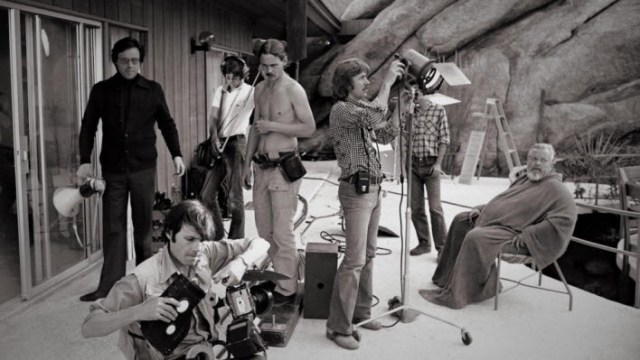
While he did not have enough money for the production of “The Other Side of the Wind”, Welles was confident as usual. In fact, he started to shoot one of its major sequences along with his few crew members including Graver and a bunch of performers including Claude Chabrol and Dennis Hopper, who was not exactly in an ideal condition for the shooting due to his drug addiction but managed to perform in front of the camera anyway.

Welles shot this sequence even though he had not yet cast anyone as the lead actor of his movie. While he considered casting himself as the lead actor, he was already determined to hire someone as big and legendary as himself, and that was none other than his old friend John Huston, who did not hesitate at all when Welles called him. Once Huston joined the shooting, things looked more promising than before as reflected by a number of behind-the-scene footage clips shown in the documentary, and it seemed Welles was really going to accomplish something new and great as he once did many years ago.

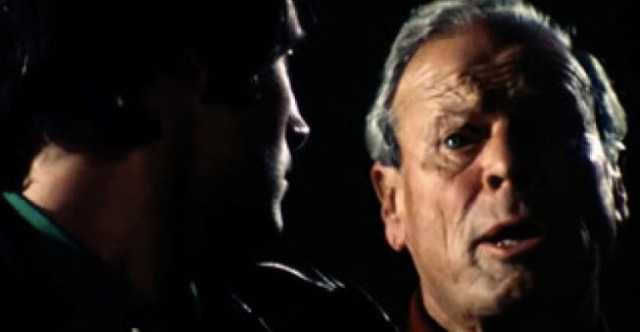
However, the production of “The Other Side of the Wind” soon came to face a series of troubles, and its production process became a lot longer than expected. While the financers of the movie understandably got nervous, Welles kept changing the screenplay during the shooting, and everyone else on the set was not so sure about what exactly Welles and they were doing. Even Huston became frustrated in the end, and he had some private talk with Welles in the end not long before he left for making “The Man Who Would Be King” (1975).

theylllovemewhenimdead01

In case of Graver, Welles demanded a lot from him, and the documentary tells us a bit about how much Graver was devoted to making “The Other Side of the Wind”. Not paid well during the production, Graver even shot a number of pornography films for making ends meet, but he remained loyal to Welles nonetheless, and there is a poignant archival footage clip showing his considerable dedication to “The Other Side of the Wind”.

Eventually, the principal photography of “The Other Side of the Wind” was ended in 1976, and Welles moved onto the editing step, but, alas, the movie was subsequently thrown into a legal limbo due to his conflict with his financers. Before he died in 1985, Welles tried as much as he could for saving his film, but he miserably failed, and we are reminded again that he was often his worst enemy in his many problematic circumstances.

“They’ll Love Me When I’m Dead” is directed by Morgan Neville, who won an Oscar for “20 Feet from Stardom” (2013) and previously made “Best of Enemies” (2015). Compared to these two previous works of his, it is less impressive in my trivial opinion, but Neville did a competent job of mixing interviews and archival photographs and footage clips, and it certainly deserves to be watched along with “The Other Side of the Wind”.

theylllovemewhenimdead04

Posted in Movies | Tagged , , , | Leave a comment

Intimate Strangers (2018) ☆☆1/2(2.5/4): A dinner game gone wrong

intimatestrangers01

South Korean “Intimate Strangers” is an amusing comedy film about secrets and lies exposed via a dinner game gone wrong. As cheerfully pushing its main characters into more troubles and embarrassments, the movie generates a number of humorous moments which did make me and other audiences around me laugh and chuckle last evening, but then it takes a sudden plot turn around its finale, and it is a shame to see how that unfortunately mars its comic momentum which has been steadily built up to that narrative point.

The main background of the movie is a posh modern apartment located somewhere in Seoul, which is owned by Seok-ho (Cho Jin-woong) and his wife Ye-jin (Kim Ji-soo). While Seok-ho is a plastic surgeon, Ye-jin works as a psychiatrist, and they look mostly happy on the surface, but we observe some tension between them and their young daughter, who comes to clash with her mother after her mother finds a certain object in her bag.

Anyway, Seok-ho and Ye-jin are very busy with preparing for their housewarming dinner party, and we soon see the arrival of their guests who also have been close friends to them for many years. They are Tae-so (Yoo Hae-jin) and his wife Soo-hyun (Yum Jung-ah); Joon-mo (Lee Seo-jin) and his wife Se-kyung (Song Ha-yoon); and Young-bae (Yoon Kyung-ho), who comes alone although he has been in a relationship with someone since his recent divorce.

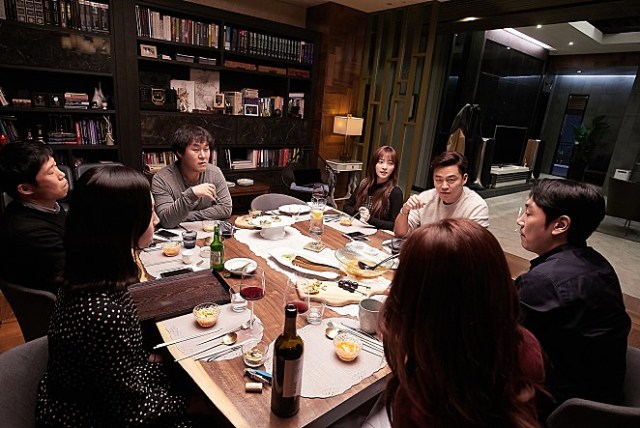
Once everyone sits on the table, the dishes prepared by Seok-ho and Ye-jin are served one by one, and the mood becomes quite cheerful and pleasant as they and others continue to talk with each other, but then one of them suggests that they should do something for more amusement. All they have to do is placing their respective smartphones on the table and then sharing all the text messages and phone calls received during their dinner, and everyone agrees to do that because, well, they do not want to look like they are hiding something.

intimatestrangers02

When they start the game, it seems frivolous at first, but, of course, it is turned into something more serious step by step. Whenever a phone call or text message arrives, the mood becomes more uncomfortable than before, and everyone comes to find their respective personal relationships tested more seriously than they ever imagined.

As we become more aware of what is being at stake for everyone at the table, the movie continues to increase its comic momentum along with more hilarity. Whenever one uncomfortable moment is resolved, there soon comes another one, and we cannot help but amused by this absurdity while occasionally cringing at several very awkward moments among its main characters.

Although I cannot go into details because I do not want to spoil your entertainment, I think I can tell you a bit about some of funny scenes in the film. While I enjoyed an early small moment which functions as a sort of false alarm, I was also tickled by one particular scene involved with the occupation of one of the main characters, and I must confess that I laughed loud along with other audiences while watching how one certain sneaky tactic leads to an increasingly hysterical moment of deception and misunderstanding.

Under director Lee Jae-kyoo’s competent direction, the movie keeps things rolling within its limited space during most of its running time. Thanks to cinematographer Kim Sung-an’s fluid camerawork, the movie seldom feels stuffy or claustrophobic, and the score by Mowg is also effective along with a certain famous pop song which is used more than once in the film.

intimatestrangers06

Above all, the movie depends a lot on the talent of its main cast members, whose smooth ensemble performance is inarguably the best thing in the film. While Cho Jin-woong and Yoo Hae-jin, who have been two of the most dependable actors in South Korea during recent years, did a good job of handling their numerous comic moments, Lee Seo-jin and Yoon Kyung-ho are equally fine in their respective roles. In opposite to their male co-performers, Kim Ji-soo, Yum Jung-ah, and Song-ha Yoon hold their own places well, and you may also be entertained by the voice performances provided by a number of notable South Korean performers including Ji Woo, who briefly appears on the screen as Seok-ho and Ye-jin’s daughter.

While I appreciated its several good things, I also noticed some glaring flaws in the film including its very contrived finale, which made me baffled and then dissatisfied a lot. Instead of pushing its story and characters further, the movie instead chooses to retreat from what has been so far revealed in front of us and its main characters, and that is quite disappointing to say the least.

I forgot to tell you that the movie is a remake version of Italian film “Perfect Strangers” (2016), which was already remade in Greece, Spain, Turkey, India, and France and will also be remade in Qatar, Germany, Sweden, and, possibly, US. I have not watched yet the original version or other remake versions, but I can tell you at least that “Intimate Strangers” will give you a fair share of fun, and, considering the active reactions from the audiences around me, you may be more satisfied than me.

intimatestrangers04

Posted in Movies | Tagged , , | Leave a comment

Shirkers (2018) ☆☆☆1/2(3.5/4): In search of a stolen movie

shirkers02.jpg

Netflix documentary film “Shirkers”, which won World Cinema Documentary Director Award at the Sundance Film Festival early in this year, is a vivid, compelling collection of personal memories surrounding one small stolen film. As following a dramatic quest revolving around that unfortunate film, this remarkable documentary delves deep into what has been unjustly suppressed and forgotten for many years, and the overall result is quite powerful at times.

After initially showing a brief except from that stolen film which was her first movie, director Sandi Tan describes her early years to us via a series of old photographs and video footage clips. Born in Singapore, 1972, she spent most of her childhood years with her grandparents due to her parents’ early divorce, and she reminisces a bit about how her grandparent’s house looked. It is gone now with a big condominium building occupying its place instead, but she still remembers how the front lawn of her grandparents’ house was used to be flooded by rain, and we get a little amusing moment showing that site being flooded by rain as before.

Even when she was very young, Tan showed her rather wild, rebellious streak, and that aspect of hers only grew further as she entered her adolescent years. Constantly feeling pressured and suffocated by lots of expectation from adults around her, she reached for freedom through throwing herself to movie and rock music, and we hear about how she managed to watch “Blue Velvet” (1986) and many other films banned in Singapore.

Although movie business was almost non-existent in Singapore during the early 1990s, Tan and her two friends Jasmine Ng and Sophia Siddique were eager to make movies as attending a small filmmaking class taught by an American guy named Georges Cardona. While there was something weird about him, Cardona made a good impression on Tan and his other students, and Tan did not mind at all when he later suggested that they take a road trip across US together, even though everyone knew that he was a married man.

shirkers04

During that road trip, Tan came to decide to write a screenplay with Cardona’s seemingly sincere encouragement, and she immediately embarked on her personal project once she came back from US. Her screenplay, titled, yes, “Shirkers”, is about one teenage killer girl’s wild journey, and, like any enthusiastic first-time screenplay writers, she tried to put everything into it. Although she did not have much knowledge and experience, she was quite determined to make something special, and she soon came to have Ng and Siddique join the project.

Of course, Tan and her friends came to face a series of obstacles from the beginning. Because they had to go back to their respective colleges outside Singapore after a few months later, they did not have much time, so they hurriedly went through their pre-production process. When they held an audition for finding performers for their movie, many of cast members were their friends or family members, and Tan eventually came to cast herself as the heroine of their movie although she was not sure about whether she could do the job well.

Anyway, the shooting began under Cardona’s direction once everything was ready in the end, and Tan and her two friends went through a pretty exciting time together. While there was some conflict among them around the end of the shooting, they stuck together for completing their movie anyway, and they managed to finish the shooting before they went back to their respective colleges.

While they were absent, Cardona was supposed to do the editing of their film, but he did not tell them much about what was going on, and then he simply disappeared along with everything they shot. Tan and her friends were quite perplexed and devastated as a consequence, and they felt more hurt when a certain package was sent to Tan in 1997.

shirkers03

During next 14 years, Tan and her two friends went on each own way as leaving behind their stolen film, but then there came an unexpected twist on September 11th, 2011. Cardona’s ex-wife contacted Tan shortly after his death, and she sent Tan a bunch of film cans containing the raw footage of “Shirkers”, which had been preserved mostly intact except the sound part which was somehow lost.

During the second half of the documentary, Tan tries to find more about Cardona, and what she comes to discover is not that pretty at all. Besides lying about his personal background, Cardona often manipulated and exploited others around him, and a guy who once attended Cardona’s filmmaking class tells us at one point that Cardona deliberately sabotaged his project just because he seemed to advance further than Cardona.

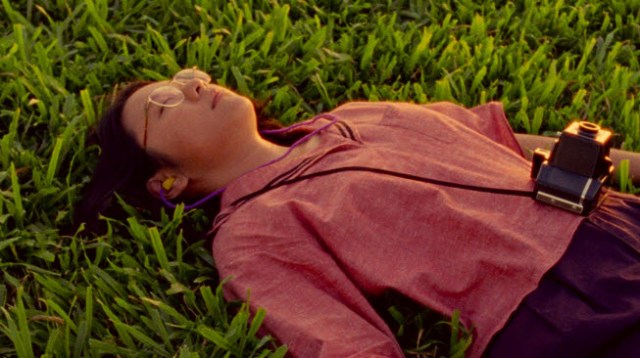
As watching a number of raw footage clips from “Shirkers”, we cannot help but wonder about what it could have been if it had not been snatched away from Tan and her two friends, but Tan and the documentary do not merely dwell on the past. While candidly and thoughtfully reflecting on what was lost forever, she comes to find closure and relief through what was fortunately left to her, and so do her two friends, who are still as passionate about movies as her despite their broken dream in the past. Their movie is gone forever, but, at least, they regain what was wrongfully taken away from them, and the documentary did a commendable job of presenting that with care and affection. In my inconsequential opinion, this is one of the best documentary films of this year, and I wholeheartedly recommend it to you.

shirkers

Posted in Movies | Tagged , , , | 1 Comment