Teen Titans Go! To the Movies (2018) ☆☆☆(3/4): Teen Titans go to Hollywood

To be frank with you, I do not know much about TV animation series “Teen Titans Go!” except that it is based on the DC Comics superhero team of the same name, but I can surely tell you that its movie version, “Teen Titan Go! To the Movies”, is a silly but entertaining animation feature film. While it is mainly driven by lots of gags and jokes, the film works well as a smart, jubilant parody of superhero genre, and the overall result is certainly better than many of recent DC comics movies except, of course, “Wonder Woman” (2017).

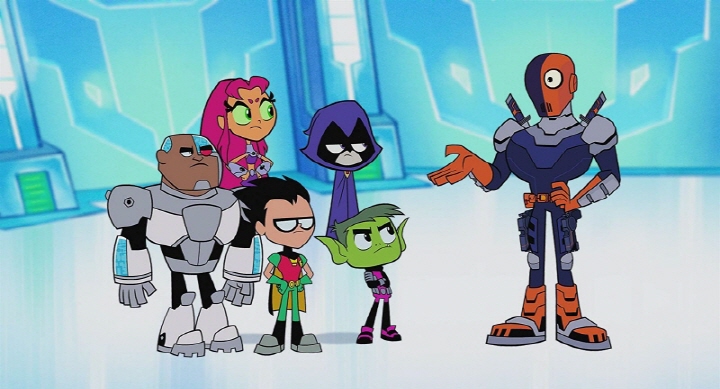
During the opening sequence featuring a villain attempting a robbery of massive scale, we are introduced to the five colorful main characters of the film: Robin (voiced by Scott Menville), Beast Boy (voiced by Greg Cipes), Cyborg (voiced by Khary Payton), Raven (voiced by Tara Strong), and Starfire (voiced by Hynden Walch). Eager to prove themselves via their respective superpowers, they willingly fight together against that villain, but, alas, that villain is instantly defeated by other superheroes including Superman (voiced by Nicholas Cage) while they are a little too occupied with presenting themselves via their theme song, and they are certainly disappointed when their efforts are not recognized much in the end.

In spite of having been Batman’s longtime sidekick for a long time, Robin believes he is good enough to be regarded as a superhero someday, although I must point out that, despite his exceptional physical abilities, he is relatively less impressive than his four friends/colleagues. While Beast Boy can be transformed into any kind of animal, Starfire, an alien princess from the outer space, can shoot laser beams from her hands and eyes, and Raven has a telekinetic/teleport power as the daughter of some powerful demon. In case of my favorite character Cyborg, he is a robotized boy equipped with various weapons and other miscellaneous tools including a music player, which is certainly useful when he and his friends sing and dance (that happens pretty often throughout the film, by the way).
In their world, superheroes have been worshiped and adored a lot by common people, and, not so surprisingly, Hollywood has made heaps of superhero films where superheroes play themselves. When he attends the premiere of the latest Batman movie along with his friends, Robin hopes that there will soon be a movie about him, but, sadly, his status turns out to be far less significant than he ever imagined, and he is quite disappointed with that.

At least, he has his four friends to cheer him up, but Robin decides to go to Hollywood for making his dream come true, and his friends willingly join him because, well, he is their friend. Once they see that there have been too many superhero movies at present (I must confess that I cannot help but laugh silently as typing this sentence for a reason many of you probably know), they decide to commit something rather drastic for increasing the need for their movie, and that leads to one of the looniest moments in the film, but then they soon come to realize that the consequence of their action is too much for them.

After hurriedly rectifying the situation, the Teen Titans go for a less drastic way instead. For being as famous as Superhero and other superheroes, they need a powerful opponent to distinguish them, and they fortunately have an ideal guy for that. There is a new villain named Slade (voiced by Will Arnett, who also co-produced the film), and this guy, who looks like a cheap version of Deadpool, is about to execute his diabolical plan involved with some precious mineral, which he recently succeeds in stealing despite the efforts of the Teen Titans.

As fighting against Slade together, the Tean Titans naturally come to draw the attention of Hollywood, and they are soon approached by Jade Wilson (voiced by Kristen Bell), a successful filmmaker who is currently making another Batman and Superman movie. Robin is delighted to see that he finally gets his wish, but then he becomes distant to his friends as clinging more to his dream, and this disappoints his friends a lot.

It is not much of a spoiler to tell you that 1) Robin eventually comes to realize his error, and 2) he is reminded again that friendship matters more than anything else, and 3) he and his friends subsequently gather together again to stop Slade’s evil plan, but the screenplay by Aaron Horvath, who co-directed the film with Peter Rida, and his co-writer Michael Jelenic diligently throws small and big moments for good laughs. I often chuckled as appreciating a number of witty and hilarious moments of self-conscious humor, and I particularly liked a sly satiric touch in Wilson’s ambitious promotional event for Robin’s movie, which will certainly tickle you if you are, like me, a seasoned moviegoer who has been tired of the massive marketing strategies of recent Hollywood superhero films.

The main cast members give endearing voice performances full of life and personality, and the same thing can be said about the other notable voice performers in the film. While Will Arnett and Kristen Bell are reliable as usual, and Nicholas Cage shows some sense of humor via his deadpan voice performance, and many of you will surely appreciate the cameo appearance of a certain famous figure who recently passed away.

Overall, “Teen Titans Go! To the Movies” is a fun stuff which can entertain both young and adult audiences, and its upbeat spirit still makes me smile even at present. Sure, this is a minor work compared to “Incredibles 2” (2018) or “Spider-Man: Into the Spider-Verse” (2018), but it did its job as well as intended, and now I am seriously considering checking out several episodes of “Teen Titans Go!”

Posted in Movies | Tagged , | 1 Comment

Filmworker (2017) ☆☆☆(3/4): Serving Kubrick

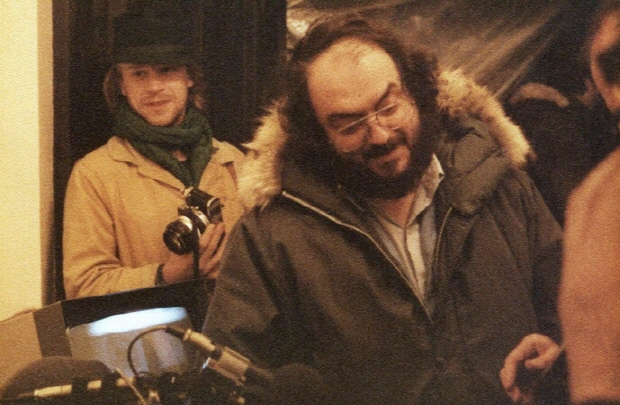
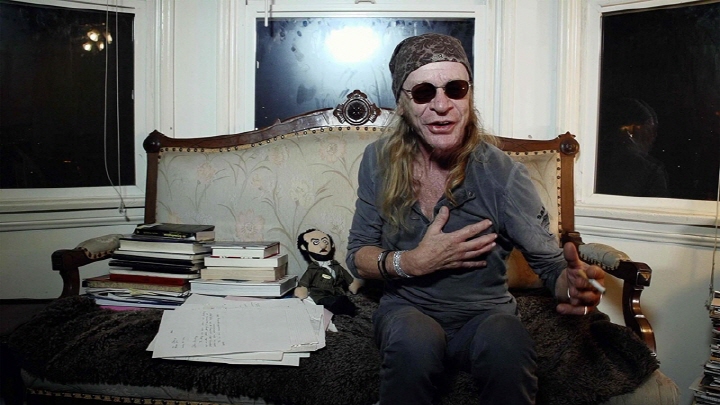
If you are a big fan of Stanley Kubrick’s films like me, you probably know about Leon Vitali, who was initially an actor but then came to assist Kubrick for nearly 20 years till Kubrick’s death. As a guy who spent lots of time with Kubrick, he certainly had lots of things to talk about, and documentary film “Filmworker” gives us an interesting look into his life and career which are still devoted to Kubrick’s works as before.

In the beginning, the documentary presents a brief summary of Vitali’s short but promising acting career before “Barry Lyndon” (1975). As appearing in various films and TV series, he gradually came to establish himself as a young notable performer to watch, and he was certainly excited when he was notified that he was going to play the defiant stepson of Ryan O’Neal’s hero character in “Barry Lyndon”. After all, he was quite impressed by Kubrick’s two previous works “2001: A Space Odyssey” (1968) and “A Clockwork Orange” (1971), and he was certainly willing to do his best even though he was well aware of how demanding Kubrick could be to his cast and crew.

Anyway, not long after meeting Kubrick in person, Vitali began to work along with the cast and crew of “Barry Lyndon”, and, as working more and more for Kubrick, he found himself more interested in filmmaking. Although he did not know much about filmmaking, he could not help but fascinated as watching Kubrick meticulously handling his cast and crew under his slow but confident direction, and Kubrick encouraged Vitali’s interest when Vitali expressed his wish to know more about filmmaking.

Once “Barry Lyndon” came out in 1975, Vitali drew lots of attention and acclaim for his supporting performance in that film, and he was even asked to join the Royal Shakespeare Company, but he was already determined to pursue his growing interest in filmmaking. When he worked as the lead actor of “Terror of Frankenstein” (1977), he volunteered to participate in the editing process of that film for free, and he certainly learned a lot as closely watching the editing process.

After that apprenticeship period, Vitali approached Kubrick, and he was subsequently hired as Kubrick’s personal assistant. Around that time, Kubrick was preparing for making his next film “The Shining” (1980), and Vitali handled various things as demanded by Kubrick. He had to fly to America for photographing many different hotels for the production design team of the movie, and he also took care of the long, arduous audition for finding a child actor to play Danny Torrance in the film. After going through thousands of candidates, he eventually came across a young boy named Danny Lloyd, and he instantly knew he found a right boy for the movie.

After gaining more of Kubrick’s confidence via his diligence and dedication, Vitali came to work more closely with him during the production of “Full Metal Jacket” (1987), but he also had to endure more of Kubrick’s relentlessly demanding perfectionism. As Kubrick’s right-hand guy, he had to take care of numerous small and big things on the set at every moment, and Kubrick depended more and more on Vitali as time went by, though he could be quite abrasive to Vitali when things did not go as well as he wanted.

While he frequently became exhausted as constantly working without enough rest, Vitali stayed beside Kubrick nonetheless because, well, it was always exciting to be around one of the greatest filmmakers in the movie history. Like one of the interviewees in the documentary points out, he was attracted to Kubrick’s undeniable genius like a moth was drawn to fire, and he was willing to spend lots of time on whatever was demanded by his boss. For example, he personally handled the screening and distribution of Kubrick’s works around the world, and we get an amusing anecdote on how he had Warner Brothers promote “Full Metal Jacket” as prominently as wanted by Kubrick when it was released on VHS for the first time.

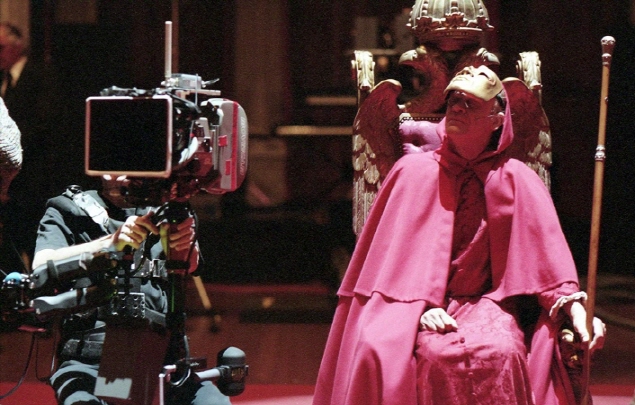
In case of Kubrick’s last work “Eyes Wide Shut” (1999), Vitali did acting again as suggested by Kubrick. He played that sinister guy wearing a golden mask and a red cloak during the infamous orgy scene in the film, and, with some amusement, he reminisces about how he got a little busier than before while still working as Kubrick’s assistant as usual. When Kubrick died in March 1999, he was certainly devastated, but he soon focused on completing the post-production of “Eyes Wide Shut”, and we hear a bit about how much he fought to maintain what Kubrick wanted to accomplish in the film.

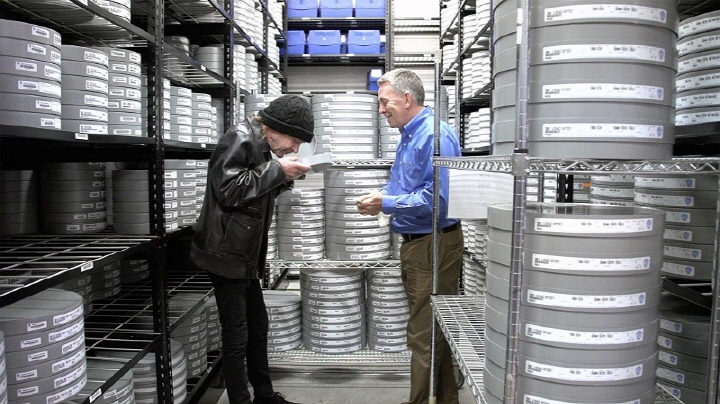
Now it is almost 20 years since Kubrick passed away, but Vitali remains loyal to his boss who was also a good friend to him, and it is poignant to see that he is still working hard for preserving his boss’ enduring legacy. As shown at the end of the documentary, he recently participated in the 4K restoration of “2001: A Space Odyssey”, and I will certainly think of him when I watch that restoration version of that great film.

On the whole, “Filmworker” is both engaging and informative, and director Tony Zierra did a fairly good job of mixing various archival footage clips with a number of nice interview clips featuring many different figures including Ryan O’Neal, Danny Lloyd, Matthew Modine, Stellan Skarsgård, Marie Richardson, and late R. Lee Ermey. Its overall result is rather modest, but it is still a loving tribute to a relatively unknown figure behind Kubrick’s later works, and it is surely a must-see for any serious moviegoer.

Posted in Movies | Tagged , , , , , , | Leave a comment

The Little Stranger (2018) ☆☆☆(3/4): He’s back to that old place…

“The Little Stranger” is a little gothic drama film shrouded in nervous ambiguity. Because it is adamantly unclear about what is exactly going on around its main characters, you may be frustrated and then disappointed with its rather inconclusive ending, but the movie is still an interesting genre piece decorated with enough mood and details to be appreciated, and I was mostly satisfied although I often felt impatient during my viewing.

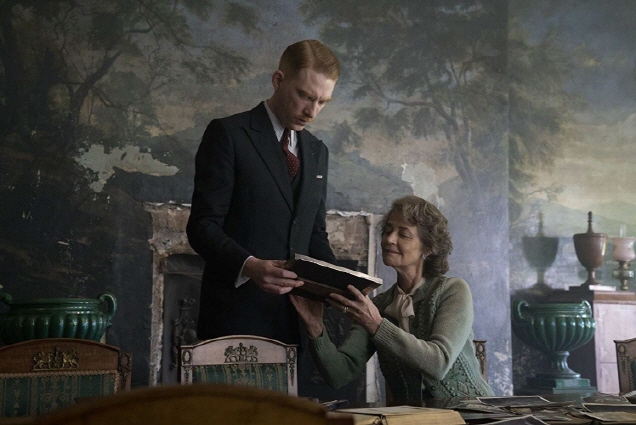
Domhall Gleeson, who looks quite more restrained and constipated here compared to his overzealous supporting performance in “Star Wars: the Last Jedi” (2017), plays Dr. Faraday, a young doctor who has worked in some small rural British country town. In the opening scene, he is going to a big 18th century estate named Hundreds Hall for examining a young maid who works alone there, and he soon meets Caroline Ayres (Ruth Wilson) and her brother Roderick (Will Poulter), who have lived there along with their aging mother Mrs. Ayres (Charlotte Rampling). As Roderick usually prefers to be alone as a World War II veteran who is damaged both physically and mentally, Caroline is usually the one who takes care of their domestic matters, and Dr. Faraday later talks with her a bit after concluding that there is nothing particularly wrong with that young maid, who just seems to be affected by the moody atmosphere inside Hundreds Hall.

Although it looks shabby and desolate now, there was a time when Hundreds Hall looked bright and cheery, and Dr. Faraday remembers that good time well. His mother, who passed away years ago, once worked there as a maid, and she once took him there during the 1919 Empire Day party. While he was inside the mansion, young Faraday could not help but impressed by how big and beautiful the mansion was, and he also happened to encounter of the young daughter of Mr. and Mrs. Ayres, who was Caroline’s older sister and unfortunately died not long after the party for some reason.

Anyway, as still remembering that short but mesmerizing time at Hundreds Hall, Dr. Faraday comes to spend more time with the Ayres family, who subsequently decide to make the mood cheerier via holding an evening meeting for their close friends as well as Dr. Faraday. Although the weather is not so good outside, Dr. Faraday and other guests have a fairly good time along with Caroline and Mrs. Ayres in the drawing room, and it seems things will get better in Hundreds Hall.

However, as Roderick, who does not attend the evening meeting because he is drunk and reluctant to be with other people, fears, something quite bad happens around the end of the evening meeting, and that is followed by more misfortune for the Ayres family. As feeling more nervous and agitated than before, Roderick eventually comes to have a sort of nervous breakdown at one night, and he is consequently sent to a mental institution. Although quite depressed by this, Caroline tries to continue to take care of the estate as usual while supported and consoled by Dr. Faraday, she also cannot help but feel uncomfortable about her mansion – especially after she hears some strange sounds at night.

And then the situation becomes weirder as the main characters of the film witness several mysterious happenings in the mansion. At one point, we get a creepy moment as a number of bells in the kitchen which are connected to other rooms are rung by someone inside the mansion, and there later comes a terrifying scene involved with a nursery room which has been left empty for many years. While Mrs. Ayres comes to believe a certain possibility, Caroline becomes more nervous than before, and Dr. Faraday does not know what to do except trying to get closer to Caroline. As feeling more of the mutual feeling between them, he seriously begins to consider marrying Caroline especially after another bad thing happens in Hundreds Hall, but Caroline is not particularly willing to get married as planning to get away from everything including Hundreds Hall, and that certainly frustrates him a lot.

Steadily maintaining its low-key attitude, the movie, which is adapted from the novel of the same name by Sarah Waters, austerely sticks to the ambiguous atmosphere surrounding its main characters. The mansion in the house is constantly filled with that melancholic sense of decay and decline, and cinematographer Ole Bratt Birkeland effectively establishes gray ambience on the screen, which is further supported by the understated score by Stephen Rennicks.

While Gleeson stays calm and detached in his somber lead performance, the other main performers bring some more emotions to the movie. While Ruth Wilson, who looks more subdued than her villainous supporting role in TV series “Luther”, is dependable as usual, Will Poulter and Charlotte Rampling are well-cast in their respective roles, and Liv Hill is also solid in her small but substantial supporting role.

“The Little Stranger” is directed by Lenny Abrahamson, who previously made “Frank” (2014) and “Room” (2015). While “Frank” was a quirky comedy about one eccentric musician who always wears a big papier-mâché mask over his head, “Room” was a harrowing drama about the relationship between a young mother and her young son who have been locked up together in a small room for several years, and these two films and “The Little Stranger” certainly show Abrahamson’s considerable flexibility among different genres. I have no idea on what will come next from him, but I guess we can have some expectation on that.

Posted in Movies | Tagged | Leave a comment

Default (2018) ☆☆☆ (3/4): A broad look into the South Korean financial crisis in 1997

South Korean film “Default” intends to give us a broad look into the South Korean financial crisis in 1997, and it did a fairly good job despite its several weak elements. While occasionally hampered by its rather heavy-handed storytelling and thin characterization, the movie engaged me and other audiences around me nonetheless thanks to its timely subject and some strong dramatic moments, and I came to reflect on how things were quite bad for millions of people in South Korea at that time, while also worrying about the increasingly unstable status of the South Korean economy at present.

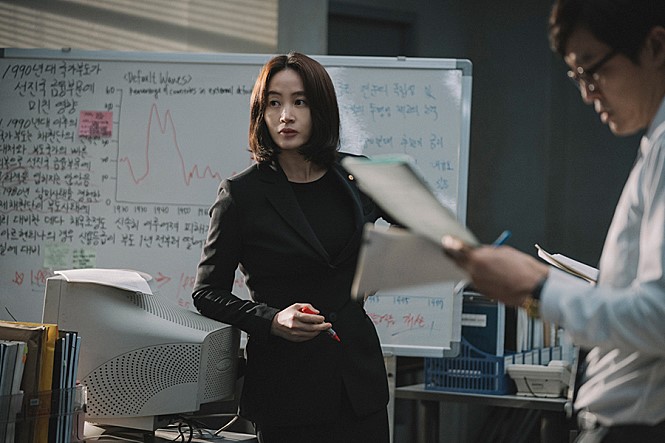
The movie consists of three main storylines, and the most important one involves with Han Shi-hyeon (Kim Hyeo-soo), a senior financial analyst of the Bank of Korea who has been well aware of an imminent financial crisis for months. When her direct boss finally comes to read her latest report on this matter in November 1997, he is certainly shocked to realize what is going to happen sooner or later, and he immediately calls other high-ranking government officials. As they seriously discuss about how to handle this emergent situation, Han argues for the necessity of public announcement, but her argument is callously dismissed by her direct boss and others including the Vice Minister of Finance, who is broadly and despicably played by Jo Woo-jin without any mustache to twirl.

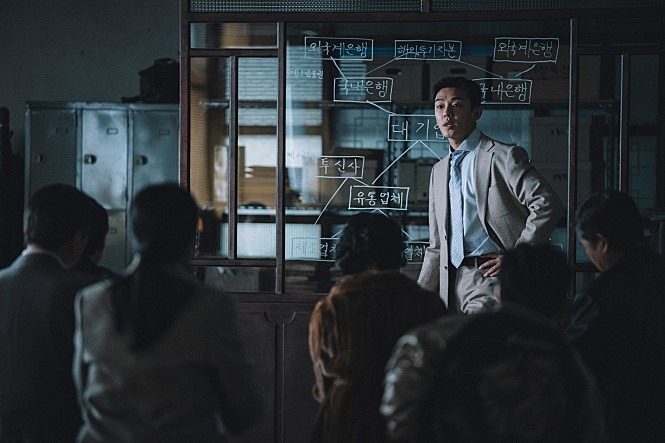
Meanwhile, Yun Jeong-hak (Yoo Ah-in), a young, ambitious guy working in some prominent investment bank, happens to spot the approaching crisis while checking financial data, and then he decides to try what will be the biggest gamble in his life. After promptly quitting his job, he gathers a group of potential investors, and he gives them (and us) a crash course on how the South Korean economy will collapse due to excessive bank loans – and how that crisis will be a big investment chance of lifetime. Although most of his potential customers simply disregard his pitch, two of them approach to Yun later, and they and Yun soon embark on their risky investment operation.

The movie also focuses on Gab-su (Heo Joon-ho), an ordinary working-class guy who has run a small factory for years. While his business has not been that good recently, Gab-su and his business partner recently get a big contract from some major company, and, though he pauses for a while before signing the contract obliging him to pay a considerable amount of cash within a short period, he hopes that everything will get better for him and others including his dear family.

In the end, the South Korean government has no choice but to recognize the crisis in public as the financial market begins to crash down with the massive withdrawal of foreign investment. Unable to pay their debts, many small and big companies become bankrupt within a few days, and there are a number of devastating moments which vividly show us how hard the South Korean society was struck by this sudden economic disaster at that time.

Watching how the situation gets worse day by day, Yun and his investors cannot help but excited about that, but they are also nervous about the remaining possibility of losing their money. For the success of their opportunistic plan, the South Korean government must request a bailout from International Monetary Fund (IMF), and Yun believes that will certainly happen, but he has some doubt just like his investors.

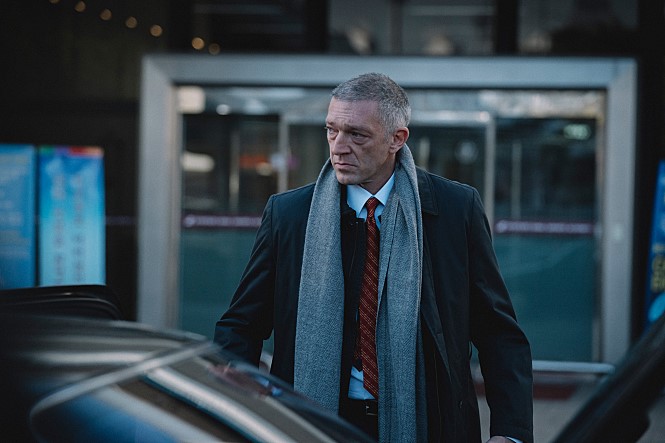
As I and other audiences around me already know well, the South Korean government does not disappoint him at all. In spite of Han’s argument against the bailout from IMF, her direct boss and other high-ranking government officials commence the negotiation with IMF as planned by the Vice President of Finance in advance. The Managing Director of IMF, played by Vincent Cassel with chilly detachment, demands lots of difficult conditions from the beginning, and Han tries her best to stop the negotiation and find any other possible way out for the South Korean government, but she and her colleagues only get more frustrated as their effort is silenced by not only the government and but also the media, which willingly goes along with the government while glossing over the real cause of the crisis.

Although the movie stumbles due to several contrived melodramatic scenes later in the story, the screenplay by Eom Seong-min mostly succeeds in holding our attention amid multiple storylines and numerous details. I must confess that I do not wholly grasp everything presented in the film, but I was seldom bored as the movie busily handled its drama and information, and its narrative pacing is maintained well under director Choi Kook-hee’s plain but competent direction.

The main performers in the movie fill their respective roles as demanded. While Kim Hye-soo gives a strong performance as a stubborn professional woman who struggles to do the right thing as coping with many obstacles including bureaucracy and misogyny, Jo Woo-jin and Vincent Cassel are effective as the villains of the story, and Heo Joon-ho is also fine in his earnest acting. In case of Yoo Ah-in, he is unfortunately distracting while clumsily chewing his every moment in the film as he previously did in “Veteran” (2015), and you may miss his relatively restrained performance in “Burning” (2018).

Although I must point out that “The Big Short” (2015), which “Default” clearly tries to emulate, handles its similar subject with more wit, energy, and intelligence in comparison, “Default” works as well as intended considering what I observed from audiences as I walked out of the screening room after the movie was over, so I recommend it with some reservation. Yes, it is not entirely without flaws, but it delivers its message well to its audiences anyway at least.

Posted in Movies | Tagged , , | Leave a comment

The Wife (2017) ☆☆☆(3/4): Beside her famous husband

The heroine of “The Wife” is usually quiet and reserved, but her seemingly detached façade speaks volume as we get to know more about her and her marital relationship. While she continues to occupy her small place besides her famous husband silently as usual, we come to sense more of suppressed feelings churning inside her, and we are not so surprised when there eventually comes the point where she must deal with what has been beneath their supposedly enduring relationship.

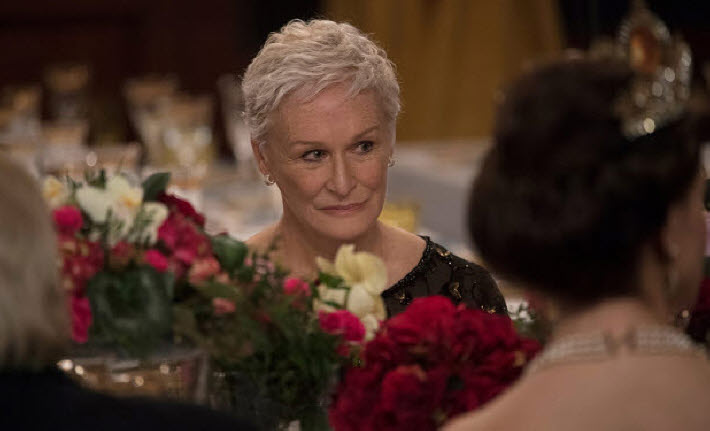
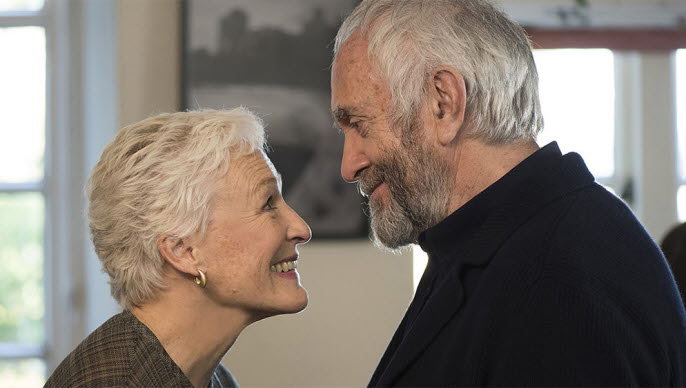
Set in 1992, the movie opens with an old couple anxiously waiting for something in their cozy house located somewhere in Connecticut. They are Joe Castleman (Jonathan Price) and his wife Joan (Glenn Close), and Joe is a famous writer who wrote several acclaimed novels and may receive the Nobel Prize in Literature a few hours later. When there subsequently comes a phone call from Stockholm early in the morning, they listen together to what is officially notified via that phone call, and they cannot help but giddy as celebrating their good news.

We later see them holding a big celebratory party, which is attended by not only their friends and colleagues but also their two children. While their daughter will soon give them the joy of being grandparents, their son, who is incidentally an aspiring writer, does not bring much cheer to their parents. Joan praises her son’s latest effort, but her son wants to hear any comment from his father above all ease, who does not give much attention to his son’s latest effort while still quite excited about receiving the Nobel Prize.

When Joe and Joan later go to Stockholm along with their son, they are approached by a writer named Nathaniel Bone (Christian Bone), who has tried to write a biography on Joe’s life and career but has not yet gotten any authorization from Joe. Although Joe rudely dismisses him, Bone remains persistent. Not long after she and her husband arrive at a hotel in Stockholm, Joan agrees to spend some time with Bone, but she does not tell him much no matter how much he tries to get her tell anything interesting about her husband and their long relationship.

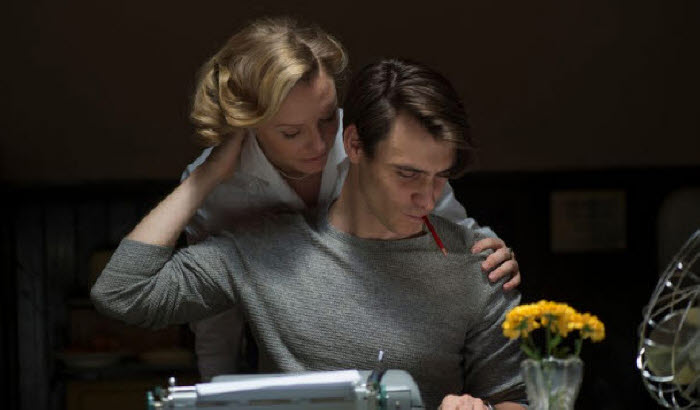
Through a series of flashback scenes intercut with the main narrative, the movie slowly reveals to us how Joe and Joan’s relationship was developed in the past. In 1958, Joan, played by Annie Starke at this point, was a young aspiring writer studying in a woman’s college, and Joe, played by Harry Lloyd at this point, was a professor teaching her writing class. Although Joe was already married and had a baby with his wife, he and Joan felt strong mutual attraction between them as spending more time together, and he eventually left his wife and child to marry and live with her.

It is apparent that Joan and Joe’s relationship have endured so many things including his frequent acts of infidelity since that point, but their relationship becomes increasingly strained as the time for the award ceremony is approaching. As he is more occupied with his upcoming glory, Joe’s attention is drawn to a young female photographer accompanying her, and it does not take much time for Joan to sense what is going on between her husband and that young woman. Because she prefers to stay outside any spotlight, Joan personally asks her husband not to be thankful to her in public, but, not so surprisingly, her husband disregards her request, and she is not so pleased about that.

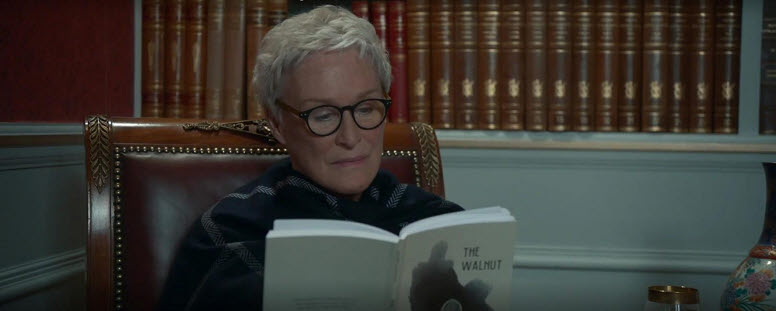
What follows next is inevitable to say the least, and Glenn Close, who will probably be Oscar-nominated for her carefully modulated performance here in this film, is simply fabulous to watch. While revealing not much in her guarded appearance at first, Close masterfully implies what has been accumulated inside her character for years, and she is stunning especially when her character resolutely covers up her boiling personal feelings as everyone pays attention to her because of her husband at one point later in the movie.

On the opposite, Jonathan Price, who drew my attention for the first time via his meek hero in “Brazil” (1985), effectively complements Close as her equal acting match. Whenever they share the screen together, we can always feel many years of life between their characters, and I enjoyed how Close and Price effortlessly handle one key scene where their characters swing from one mood to the other one within a few minutes.

The weakness of the adapted screenplay by Jane Anderson, which is based on the novel of the same name by Meg Wolitzer, mainly lies in its rather superficial handling of its supporting characters. While Christian Slater is stuck in his bland thankless role, Max Irons is under-utilized as Joan and Joe’s sullen, resentful son, and the same thing can be said about Elizabeth McGovern, who briefly appears as a sardonic alumnus who gives young Joan a bitter advice to remember. As young Joan and Joe, Annie Starke and Harry Lloyd hold their own place well, and Starke did a commendable job of being connected well with Close’s performance.

Although it occasionally feels flat and indistinctive under director Björn Runge’s workmanlike direction, but “The Wife” does leave some indelible impression mainly thanks to Close’s restrained but strong performance. Although it has been more than 35 years since she debuted with “The World According to Garp” (1982), she is still one of the best American movie actresses, and she surely demonstrates that to us again here.

Posted in Movies | Tagged , | 2 Comments

Young-ju (2017) ☆☆☆(3/4): A simple but bleak drama about guilt and torment

South Korean film “Young-ju” is a simple but bleak drama about guilt and torment. Although there are several moments which are quite difficult to watch for their considerable emotional intensity, the movie steadily engages us as closely observing its main characters’ stark and desperate emotional states, and we come to care a lot about them while also worrying about what may happen among them in the end.

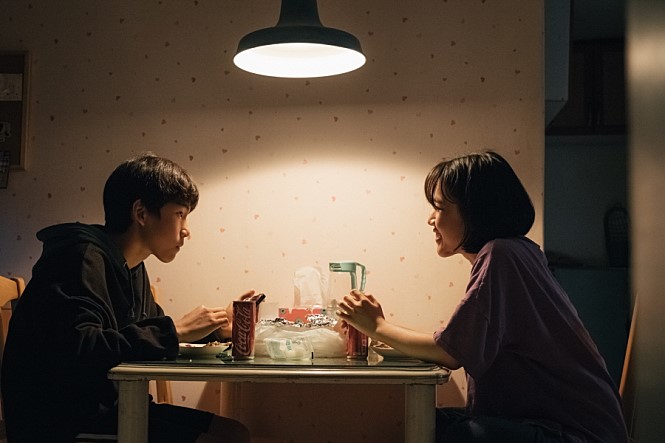
In the beginning, the movie shows us the hard daily life of Young-ju (Kim Hyang-gi) and her younger brother Young-in (Tang Joon-sang). Since their parents died due to a tragic car accident several years ago, Young-ju and Young-in have lived fairly well together in their family residence, but they are running out of money at present although Young-ju has worked hard to support them after quitting her school, so Young-ju recently decided to sell their residence as advised by their aunt.

However, Young-in does not want to leave their residence at all, and this hot-tempered adolescent boy instantly clashes with his aunt and her husband when they come along with a potential buyer. After seeing this strife, Young-ju comes to change her mind, and that leads to a bitter quarrel between her and her aunt, who eventually tells Young-ju that she is going not to help Young-in and Young-ju from now on.

Of course, Young-ju soon finds herself in the urgent need of money. While hanging around with some bad schoolmates, Young-in gets himself in a big trouble along with these boys, and Young-ju must find any possible way to get 3 million won for preventing her brother from being sent to a juvenile reformatory, but there is virtually no one to help her. After being coldly rejected by her aunt, she tries a questionable loan service on the phone, but, not so surprisingly, that makes her situation more desperate before.

And then she gets a certain idea while looking into a court file on her parents’ accident. She spots the address of the residence belonging to the truck driver responsible for her parents’ accident, and it does not take much time for her to find Sang-moon (Yoo Jae-myung) and his wife Hyang-sook (Kim Ho-jung). After seeing that this couple is looking for anyone to help them in their small tofu shop, Young-ju instantly approaches to them, and they gladly hire her while having no idea on who she actually is.

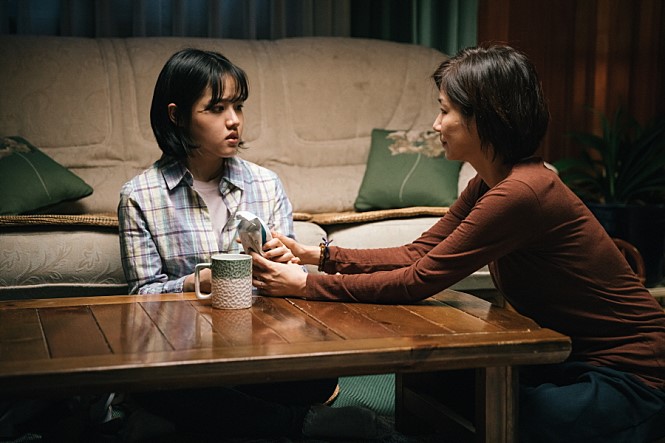
It is gradually revealed to us that Young-ju is going to steal money from this couple. Not long after spotting where the couple keeps the money they have earned, she breaks into the shop at one night, but Sang-moon comes into the shop when she is about to go away with money. While being too drunk to recognize Young-ju, Sang-moon reveals his guilt and torment to Young-ju, and that makes Young-ju change her mind. After Sang-moon loses his consciousness due to his excessive consumption of alcohol, she calls an ambulance, and Hyang-sook later shows gratitude to her even though she knows what Young-ju was attempting to do at that time. Clearly seeing that Young-ju desperately needs money, she borrows Young-ju enough money for Young-in’s release, and Young-ju is certainly grateful to Hyang-sook for that.

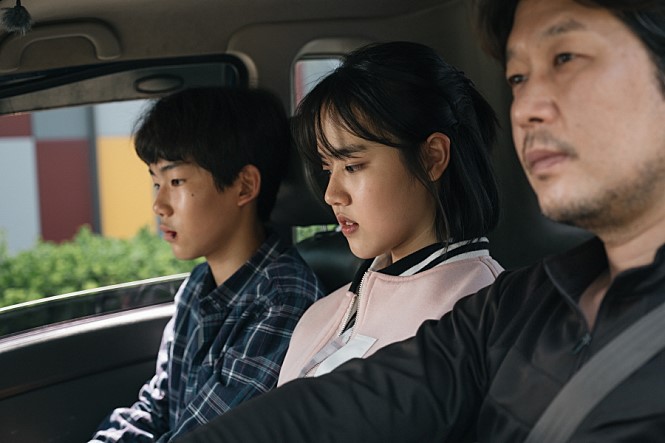
After that point, Hyang-sook and Sang-moon come closer to Young-ju than before, and Young-ju does not mind this as feeling happy to be with them, but she also feels guilty about not telling them the truth. As she sees more of how much Hyang-sook and Sang-moon have been affected by what Sang-moon inadvertently caused at that unfortunate moment, she hesitates more and more, and the situation becomes more complicated when Young-in comes to realize that his sister has been associated with the last persons he wants to see.

While its rather predictable narrative does not surprise us a lot, the movie still holds our attention as gradually accumulating the emotional tension around Young-ju and other main characters. Under director/writer Cha Sung-duk’s competent direction, the dry, sobering tone of the movie is constantly maintained from the beginning to the end, and you may appreciate some notable religious details of Sang-moon and Hyang-sook’s daily life, which further accentuate the moral themes of the movie.

Cha draws good performances from her main cast members. As the emotional center of the movie, Kim Hyang-gi, who previously appeared in “Thread of Lies” (2014) and “Snowy Road” (2015), is compelling in her nuanced performance, and she is terrific whenever the camera closely focuses on her expressive face, which ably conveys contradicting feelings churning behind her character’s weary façade. While Yoo Jae-myung is glum and remorseful as required by his role, Kim Ho-jung brings some warmth to the movie, and Tang Joon-sang is also solid in his rather functional role.

Like many of recent South Korean independent films such as “Last Child” (2017) and “After My Death” (2017), “Young-ju” often feels harsh and gloomy, and it is certainly not something you can watch for entertainment, but it is still worthwhile to watch for its engaging drama and commendable acting. In short, this is one of the notable South Korean independent films of this year, and I sincerely hope that Cha will advance further after this impressive debut feature film of hers.

Posted in Movies | Tagged | 1 Comment

Puzzle (2018) ☆☆☆(3/4): Reaching out through puzzle

“Puzzle” is a little likable movie about an accidental change coming into its heroine’s plain domestic life. While she has been quite content with her rather isolated daily life, something draws her attention one day, and that leads to her discovery of a certain talent inside her. As quietly observing how she slowly comes out of her cocoon through her discovered talent, the movie gives us a series of intimate moments to enjoy, and we are touched as sensing how much she is changed around the end of her story.

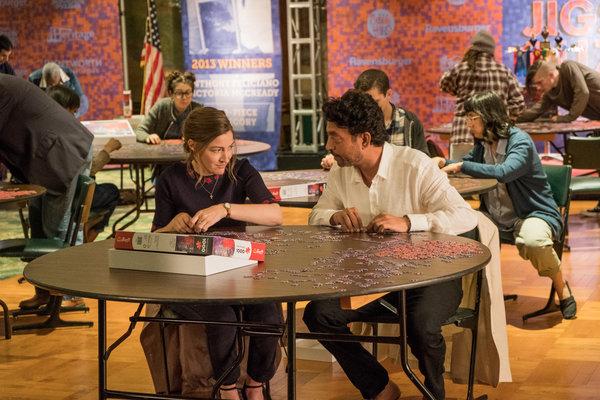
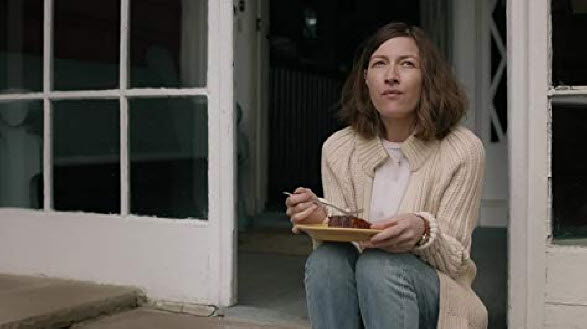
Kelly Macdonald, a dependable British actress who appeared in a number of notable films such as “Trainspotting” (1996), “Gosford Park” (2001), and “No Country for Old Men” (2007), plays Agnes, an ordinary housewife living in a neighborhood area located outside New York City with her husband Louie (David Denman) and their two sons for many years. During the opening scene, we watch her busily serving her family and guests during her birthday party held at her house, and we later see more of how she has been accustomed to taking care of every domestic work in her house. Once she wakes up in the next morning, she prepares breakfast for her family, and then she is going to spend the rest of the day on other routine domestic works as usual until her husband and their two sons return around the evening.

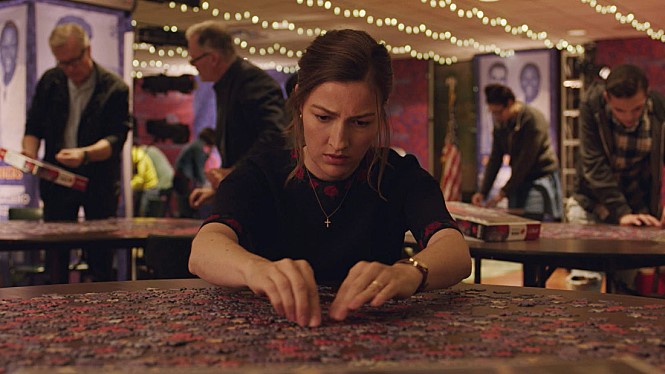
When she happens to have some free time in the afternoon, Agnes unwraps several birthday gifts of hers, and one of them turns out to be a 1000-piece puzzle set. Although it looks challenging at first, she decides to try to have a fun with this puzzle set, and, to her surprise, she assembles all the puzzle pieces correctly within a few hours. As spending more time with this puzzle set and some other ones in the house, she becomes more enthusiastic about this newfound hobby of hers, and that eventually leads her a puzzle shop located in the middle of New York City.

While buying a couple of puzzle sets at that shop, Agnes notices a small advertisement looking for a partner for an upcoming puzzle competition. Naturally becoming curious about that advertisement, she sends a text to the person who put a phone number on that advertisement, and that is how she comes to encounter Robert (Irrfan Khan), an affluent Indian inventor who has lived alone in his posh residence located somewhere in Manhattan since his recent divorce (his ex-wife was his previous puzzle partner, by the way). While their first meeting is pretty awkward to say the least, they soon come to click well with each other as Robert is quite impressed by Agnes’ exceptional ability, and he suggests that they should train together twice a week for the puzzle competition.

Agnes is certainly happy to have someone with whom she can share her enthusiasm on puzzle, but she does not tell her family anything about that. As she spends more time with Robert, she feels more confident than ever while also becoming more aware of how she has been rather unhappy for many years, and this change of hers is soon noticed by her husband, who is understandably quite baffled while not knowing what to do about it.

It is not much of a spoiler to tell you that Agnes and Robert come to have a certain mutual feeling between them, but the adapted screenplay by Oren Moverman and Polly Mann, which is based on Natalia Smirnoff’s novel “Rompecabezas” wisely does not overplay that, and the movie sensitively depicts what is gradually accumulated between Agnes and Robert during their puzzle training sessions. As they show more of themselves to each other, they cannot help but become drawn more to each other, and there eventually comes a moment when they come to go further than they expected from their supposedly platonic relationship.

In the meantime, the movie spends a considerable amount of time on what is going on between Agnes and her family. While there is a financial matter involved with a garage run by her husband, she and her husband come to conflict over the future of their sons, and that makes their relationship more strained before. As her domestic situation becomes messier, Agnes becomes more occupied with her puzzle sets, and we are not very surprised when her husband directly shows his anger and frustration to her at one point. He is not a bad husband at all, but he simply cannot understand what is happening in their relationship, and their situation becomes worse when there comes a certain inevitable moment between them.

Director Marc Turtletaub, who has mainly been known as the producer of several acclaimed films including “Little Miss Sunshine” (2006) and “Loving” (2016), maintains well the calm, sensitive mood of the film even when the story becomes a bit more melodramatic, and he draws engaging performances from his main cast members. While Kelly Macdonald is especially wonderful when she subtly conveys to us her character’s burgeoning enthusiasm on puzzle, Irrfan Khan brings some gravitas to his scenes with Macdonald, and David Denman is also fine as another crucial part of the movie.

Although I wish it could show more of those puzzle sets, “Puzzle” is still a good movie worthwhile to watch for its thoughtful storytelling and solid performances, and it is a shame that it did not get much attention when it was released in US a few months ago. It is too good to be overlooked in my trivial opinion, and I think you should give it a chance someday.

Posted in Movies | Tagged , , | Leave a comment

The Miseducation of Cameron Post (2018) ☆☆☆(3/4): At a conversion center

“The Miseducation of Cameron Post”, which won the Grand Jury Prize for US Drama at the Sundance Film Festival early in this year, is about a young sexually confused girl who happens to be pushed into a bad place cruelly oppressing her sexuality. While there are a number of uncomfortable moments showing us the cruelty of gay/lesbian conversion therapy as expected, the movie calmly and sensitively observes its heroine’s struggling emotional journey nonetheless, and the result is an engaging coming-of-age drama to be appreciated.

Set in the early 1990s as reflected by several period details shown on the screen, the movie opens with a Sunday church meeting attended by a group of teenagers including Cameron Post (Chloë Grace Moretz). Although she looks docile as listening to a pastor emphasizing abstinence, Cameron has actually been in a romantic relationship with one of her female schoolmates, and their secret relationship unfortunately gets exposed when they attempt to have a little fun time during their prom night. As a consequence, Cameron’s aunt, a devout Christian who has taken care of her since her parents died, sends Cameron to a gay/lesbian conversion center named God’s Promise, which is run by Dr. Lydia March (Jennifer Ehle) and her brother Reverend Rick (John Gallagher Jr.).

While not so pleased about being stuck in God’s Promise, Cameron tries to follow the gay/lesbian conversion program as much as she can. She befriends her roommate who cheerily welcomes her, and she also gets the frequent counseling sessions from Reverend Rick and Dr. March. Reverend Rick says to her that he was cured of his homosexuality thanks to his sister’s therapy, and Dr. March, who is often as chilly as Nurse Ratched, is quite determined to sever the root of Cameron’s homosexuality as asking many personal questions to her.

Nevertheless, Cameron is not so sure about whether she is doing the right thing, and that is why she comes to hang around with two of her fellow ‘disciples’: Jane Fonda (Sasha Lane) and Adam Red Eagle (Forrest Goodluck). As more seasoned and rebellious members in God’s Promise, Jane and Adam tell Cameron a bit about how she can present herself well in front of Dr. March and Reverend Rick, and Cameron becomes a little happier than before as bonding more with these two new friends of hers.

As time goes by, Cameron gradually comes to realize how oppressive her current environment really is – and how useless and harmful gay/lesbian conversion therapy actually is. She cannot help but think of her girlfriend from time to time, and she naturally feels hurt a lot when she later comes to realize that she is betrayed by her girlfriend. Her roommate looks more well-adjusted in comparison, but, what do you know, it turns out at one night that she has also struggled a lot just like Cameron.

As leisurely moving from one episode to another, the adapted screenplay by director Desiree Akhavan and her co-adaptor Cecilia Frugiuele, which is based on the novel of the same name by Emily M. Danforth, deftly moves around different emotional modes. There is a humorous scene where Cameron’s small act of shoplifting happens to be spotted by her roommate and then they seriously discuss about what to do about that along with another disciple, and there is also a lively scene where Carmeron gets a chance to lose herself a bit in front of other disciples as music being played in the background.

The situation eventually becomes a lot more serious not long after a painful moment involved with one of the disciples in God’s Promise, who feels devastated and frustrated as rejected by his father again for not being masculine enough. What subsequently happens is shocking to say the least, but the movie thankfully maintains its calm, restrained approach even at that point while never overlooking how much that happening affects not only Cameron and other disciples but also Reverend Rick, who, sooner or later, will have to face how misguided he and his sister have been.

Like any good drama films, the movie depends a lot on the talent of its performers, and they do deliver strong performances on the whole. Chloë Grace Moretz, who has steadily advanced with a string of commendable performances including a delightful supporting turn in “Clouds of Sils Maria” (2014), is believable as subtly conveying to us her character’s emotional development along the story, and Sasha Lane, who drew our attention for the first time with her breakout turn in “American Honey” (2016), and Forrest Goodluck, who previously played the son of Leonardo DiCaprio’s character in “The Revenant” (2015) did a good job of supporting Moretz in their scenes. In case of John Gallagher Jr. and Jennifer Ehle, they bring considerable humanity to their respective roles, and that is why it is all the more disturbing to observe what their characters try to do to Cameron and other kids under their supervision. They surely have good intentions, but, as sharply pointed out later in the movie, what they do is basically emotional abuse, and they remind me again of how some people can cause misery and unhappiness to others in the name of faith.

Overall, “The Miseducation of Cameron Post” is a modest but solid work to be admired for the sensitive and thoughtful handling of its subject, which is still quite relevant even at this point considering that gay/lesbian conversion therapy is not officially banned yet in some states of US. As a guy who had struggled with his sexuality for many years, I felt lots of sympathy toward its heroine and other adolescent characters in the film, and I was certainly moved by its quietly hopeful ending. Nothing is certain for them, but they feel better about themselves, don’t they?

Posted in Movies | Tagged , | Leave a comment

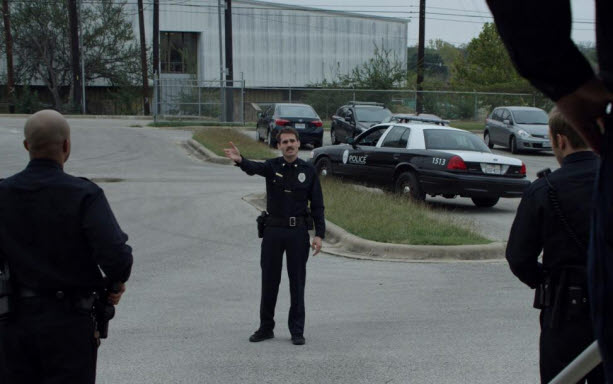
Thunder Road (2018) ☆☆☆(3/4): A police officer with issues

“Thunder Road” is a small character comedy drama film which draws your interest right from its opening scene, which is the best part of the movie in my inconsequential opinion. Although the rest of the movie is less memorable in comparison, it constantly provides enough amusement via a series of humorous moments to admire, and that is more than enough for forgiving its few glaring flaws including an abrupt narrative turn around its ending.

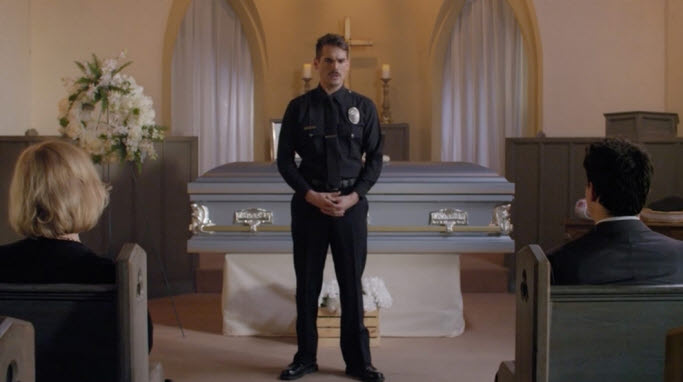
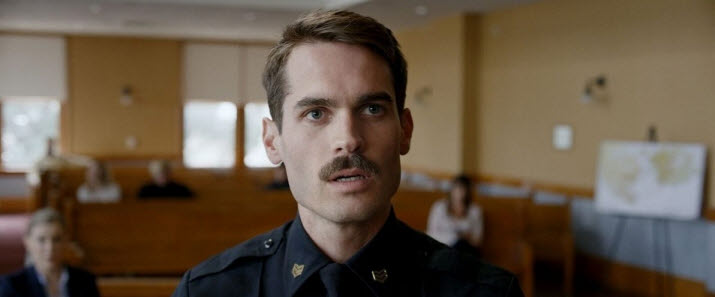
Jim Cummings, who is also the director/writer of the film, plays Jim Arnaud, a police officer who has been going through a very difficult time in his life. While he and his wife are about to take the final step of their divorce, his mother recently died, and, though he and his mother did not get along well with each other, he is quite devastated by her death. During the opening scene, he tries to hold himself while delivering a heartfelt eulogy at his mother’s funeral, but he only finds himself having a nervous breakdown in the middle of his eulogy, and we get a painfully funny moment as he is helplessly rambling in front of others including his ex-wife and his dear young daughter.

After the funeral, Jim seems to feel a little better as getting help and support from his partner, but he still has lots of emotional issues inside him, and that is exemplified well by when he and his partner try to handle a disturbed homeless guy. When that homeless guy does something quite unpleasant, Jim overreacts to this action while his colleagues are watching him, and he is subsequently ordered to take some rest by his boss.

Although he has not been particularly close to his daughter, Jim wants to spend more time with her, and there is a small nice moment between him and his daughter when he takes her to her school in one morning. When he sees that she puts lots of makeup on her face just because she does not feel pretty, he tries to tell her that she looks pretty and all right to him even without makeup, but he only comes to make her feel unhappier than before. When he meets her school teacher later in the story, he is informed that his daughter has a serious problem in her class, and we get another funny moment in the film as he tries to process this matter.

As his ex-wife wants the full custody of their daughter, Jim decides to take their matter to the court, but, not so surprisingly, things do not go well for him again. As instructed by his lawyer, Jim tries to present himself well in front of the judge presiding over his custody case, but then he happens to say an inappropriate thing to the judge, and that certainly makes a bad impression on the judge.

After getting quite embarrassed by a certain evidence presented by his ex-wife’s lawyer, Jim comes to have another nervous breakdown, which leads to an uproarious moment simultaneously absurd and intense. As the camera steadily hangs around Jim and other characters, the movie deftly dials up and down its comic intensity, and Cummings is simply terrific without showing any self-conscious gesture.

Under Cummings’ competent direction, the movie later cools itself as well as its hero. There is a warm scene where Jim and his partner come to have a little cheerful time together not long after their strife, and there is also a surprisingly reflective scene where Jim and his sister talk a bit about their mother, who turns out to have a small personal secret behind her back.

And then there comes a totally unexpected moment which feels rather jarring compared to the overall tone of the film. While this sudden narrative turn does not work as well as intended, it leads to a sincere and honest conversation between Jim and his daughter at least, and that moment is followed by a fitting finale to be savored.

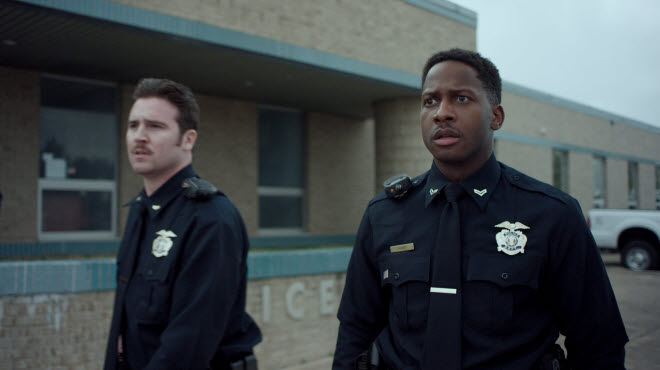
“Thunder Road” was developed from Cummings’ 2016 short film of the same name, which won the Short Film Grand Jury Prize at the Sundance Film Festival and also garnered the Special Jury Award at the SXSW Film festival. When the movie was shown at the SXSW Film Festival early in this year, it received lots of praises along with the Grand Jury Award, and it drew more attention when it was subsequently released in US this October. Although he only made a few short films before making his first feature film, Cummings shows here that he is a good filmmaker who knows how to interest and engage us, and he also demonstrates his considerable comic talent on the screen. While we often cringe or laugh whenever Jim embarrasses himself, we come to care about this flawed but decent guy nonetheless, and that is the main reason why the quieter moments in the film work on the emotional level. In case of the other performers around Cummings, they are solid on the whole, and the special mention goes to Nican Robinson, who holds his own small place well as Jim’s no-nonsense partner.

When I watched “Thunder Road” two days ago, it merely amused me at first, and I thought it was just your average whimsical American independent comedy film, but then it grew on me as I came to see more of how effortlessly it delivers humor and pathos without looking down on its problematic hero. In short, this is another notable debut film of this year, and it will be interesting to see what will come next from Cummings.

Posted in Movies | Tagged , | Leave a comment

The Long Dumb Road (2018) ☆☆1/2 (2.5/4): Another familiar road trip movie

As watching “The Long Dumb Road”, I was reminded of several other road movies released during this year. At first, we watched Ed Harris, Jason Sudeikis, and Elizabeth Olsen journeying together in “Kodachrome” (2017), and then we saw Vera Farmiga, Christopher Plummer, and Lewis MacDougall hitting the road together in “Boundaries” (2018), and we recently had “Green Book” (2018), in which Viggo Mortensen drives for Mahershala Ali.

In case of “The Long Dumb Road”, it has Tony Revolori and Jason Mantzoukas, and it is often engaging to watch how they pull and push each other on the screen. Although the screenplay by director Hannah Fidell and her co-writer Carson D. Mell does not bring anything particularly new to its genre territory, these two good actors bring a lot to their respective characters, and that compensates for several shortcomings in the film to some degrees.

Revolori, who has been a new talented actor to watch since his breakthrough turn in “The Grand Budapest Hotel” (2014), plays Nathan, a nerdy lad who is about to leave his hometown in Texas and then go to LA for beginning his education in an art college. While he recently broke up with his ex-girlfriend, he is hopeful about the next chapter of his life at least, and he is certainly looking forward to having some interesting experiences as he drives alone from his hometown to LA.

Unfortunately, things do not go as well for him as expected. His car happens to have a problem not long after his departure from his hometown, so he has to walk alone along the road for a while until he eventually arrives at a roadside garage. When he is about to ask for help, he comes across a guy played Mantzoukas, and this guy, named Richard, willingly helps Nathan although he has just been fired by the owner of the garage for some reason.

Once his car is fixed, Nathan offers a ride to Richard, and Richard gladly accepts Nathan’s offer. They are initially supposed to go together just for a few hours, but, of course, they come to spend more time with each other than expected, and then they stay together in an inn which looks more like a trailer park. As suggested by Richard, they later go to a nearby bar, and Nathan certainly has an interesting time there along with Richard, who is quite eager to show Nathan how to enjoy life and manages to succeed in that.

When he comes to learn a bit about Richard’s old high school sweetheart on the next day, Nathan suggests that they should drop by where she currently lives. Although he is reluctant at first, Richard agrees to go there along with Nathan, and he is happy to meet that women in question again, but he inadvertently causes a very awkward moment as misunderstanding how she feels about him and then unwisely following his impulse.

Watching how thoughtless and impulsive Richard can be, Nathan gradually becomes wary of him, but he remains stuck with Richard nonetheless, and then they come across two young women. As Richard charms Nina (Grace Gummer), Nathan comes to befriend Rebecca (Taissa Farmiga), so the situation seems to get a bit better for them, but, of course, there comes another awkward moment as Richard becomes too serious about what is going on between him and Nina. When he does not receive what he wants, he shows his petty, abrasive side again, and then he comes to use a certain word which should not be uttered to any woman in my trivial opinion.

After that narrative point, Nathan and Richard’s relationship becomes more strained than before, and they come to be reconciled due to another trouble coming upon them, but, of course, they come to reconciliate with each other for taking care of their trouble together. Although the story does not give us much surprise during that part, Revolori and Mantzoukas carry their movie well as before. While Revolori is earnest and likable as a young man who is shy but eager for new experiences, Mantzoukas, who recently drew my attention for the first time via his hilarious guest appearance during the second season of TV sitcom series “The Good Place”, is alternatively pathetic and amusing in his spirited comic performance, and, considering what is shown here in this film, we will probably see more of his talent during next several years.

In case of a few substantial supporting performers in the film, they fill their respective spots along the story as much as they can. While Casey Wilson tactfully handles the scene where her character comes to have a little private time with Richard, Gracie Gummer and Taissa Farmiga are rather under-utilized in comparison, and the same thing can be said about Ron Livingston, who appears as Richard’s old friend later in the movie.

While it is not so distinctive compared to countless road movies out there, “The Long Dumb Road” is mostly competent on the technical levels. As leisurely moving from one location to another, it effectively establishes a nice mood through many different landscape shots to enjoy, and cinematographer Andrew Droz Palermo, who previously worked in “A Ghost Story” (2017), deserves some commendation for that. Although I am still not impressed enough to recommend it, the movie is fairly watchable thanks to several good things including the effortless chemistry between its two lead performers, and it may provide enough entertainment for you if you just want to kill your free time. It is not so fresh, but it is not entirely without sprit and personality at least.

Posted in Movies | Tagged , | Leave a comment