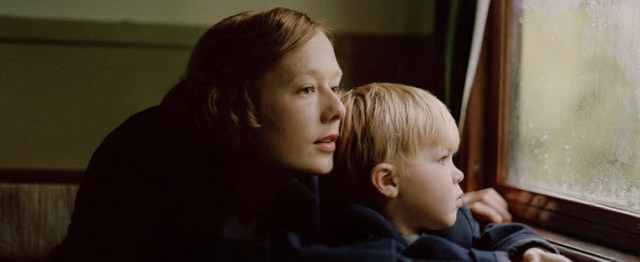
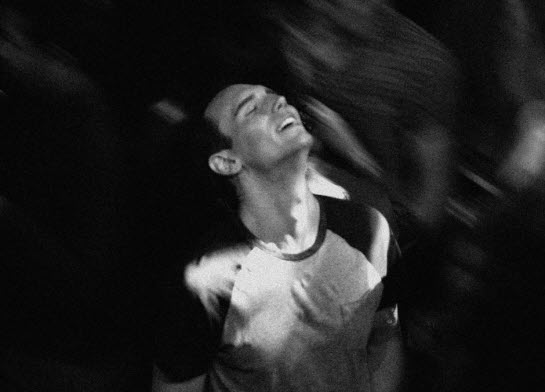
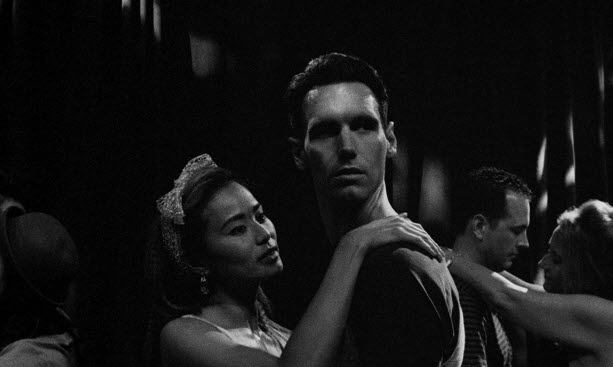
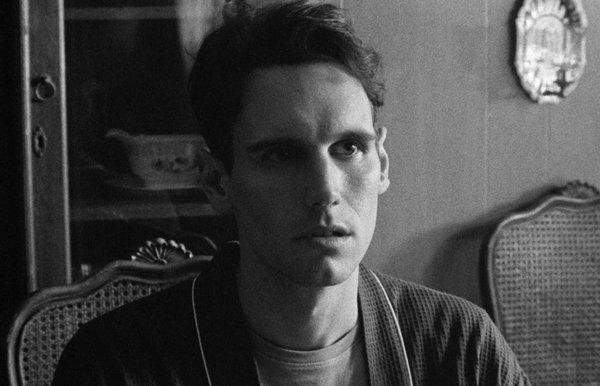
Boy Erased (2018) ☆☆☆(3/4): A restrained drama on gay conversion therapy program

boyerased01“Boy Erased” intends to give us a close look into the horror of gay conversion therapy program, and it mostly succeeds as sticking to its restrained but sobering storytelling approach. Although I think it could be angrier and edgier on its subjects, there are some quiet but powerful moments to remember, and it is also supported well by the good performances from its talented main cast members.

Based on the memoir of the same name by Gerrard Conley, the movie presents a fictional presentation of Conley’s real-life story mainly through the viewpoint of Jared Eamons (Lucas Hedges), a gay lad who is the son of Baptist minister Marshall Eamons (Russell Crowe) and his wife Nancy (Nicole Kidman). After coming to learn of their son’s homosexuality due to a certain incident at a college he is attending, Jared’s parents decide to send their son to a gay conversion therapy center, and the opening scene of the movie shows Jared being taken to that center by his mother, who is going to stay in a nearby hotel while he goes through his gay conversion therapy program.

When Jared begins his first day of gay conversion therapy program under chief therapist Victor Sykes (Joel Edgerton), things do not look particularly bad, but, of course, he comes to see the dark, twisted aspects of gay conversion therapy program as days go by. While frequently emphasizing faith and the grace of God as your average Christian, Sykes constantly talks about why homosexuality is an unnatural sin and why Jared and others in the program need to be cured of their temptation, and he later instructs them to present every sinful activity of their family members just because he thinks homosexuality is resulted from problematic domestic environment.

boyerased03

As passively doing whatever is instructed by Sykes, Jared comes to wonder about whether he should be cured, and his doubts grow further as he observes some of his fellow program participants. While Jon (Xaiver Dolan) is constantly nervous and cautious about being tempted again, Gary (Troye Sivan) later advises Jared on how to present oneself better to Sykes for avoiding a worse situation, and Cameron (Britton Sear) is clearly confused and depressed as pushed harder and harder by Sykes. At one point later in the story, Jared and other program participants watch Cameron being cruelly punished for a minor transgression, and we are reminded of how people can sometimes commit atrocity in the name of love and religion.

In the meantime, several flashback scenes show how Jared became aware of his homosexuality. During his high school years, he was in a relationship with some girl who clearly liked him, but he did not feel right when she approached closer to him during one evening. Not long after he began his college education, he found himself attracted to a handsome student at an art exhibition, and he and that student came to have an intimate moment at that student’s residence.

The adapted screenplay by director/writer Joel Edgerton slowly raises its dramatic tension below the surface as Jared’s circumstance becomes more exasperating and suffocating for him. He tries to go along with other program participants as much as he can, but then there eventually comes a point when he comes to feel that enough is enough, and the mood between him and Sykes accordingly becomes more intense than before.

boyerased04

While never sensationalizing the subject of his movie, Edgerton did a good job of establishing the low-key tone on the screen. As his cinematographer Eduard Grau steadily maintains muted gray atmosphere, the sense of isolation and oppression surrounding Jared and other characters in the film feels palpable to say the least, and we come to empathize more with Jared’s accumulating frustration and exasperation.

As the center of the film, Lucas Hedges, who had an interesting time as appearing in not only this film but also “Mid90s” (2018) and “Ben is Back” (2018) in last year, gives an engaging lead performance, and he is surrounded by several notable performers. In what may be his best performance during recent years, Russell Crowe has a nice scene around the end of the film which touchingly reveals his character’s conflicted thoughts and feelings, and Nicole Kidman, who happens to appear along with Crowe on the screen for the first time, has several fine moments as her character actively comes to decide what should be really done for Jared. While Edgerton is effective as another substantial part of the story, Xavier Dolan, Joe Alwyn, Théodore Pellerin, Troye Sivan, Britton Sear, and Cherry Jones are well-cast in their respective supporting roles, and it is rather curious to watch the subdued performance from Dolan, which feels quite different from those flamboyant arthouse films directed by him.

On the whole, “Boy Erased”, which is the second feature film directed by Edgerton, is an admirable piece of work, and I appreciate its strong aspects including the earnest efforts of Hedges, Crowe, and Kidman, but I must point out that it is relatively less distinctive compared to “The Miseducation of Cameron Post” (2018), which happened to be another queer drama about gay conversion therapy program in last year. Yes, this is basically a conventional queer drama intended to be accessible to a wider range of audiences, but it is still worthwhile to watch for several good reasons, and it will certainly make a nice double feature show along with “The Miseducation of Cameron Post”.

boyerased02

Posted in Movies | Tagged , , | 1 Comment

Blaze (2018) ☆☆☆(3/4): Inside Blaze Foley

blaze01

Ethan Hawke’s “Blaze” is as melancholic and poignant as you can expect from a movie based on the life and career of a rather obscure real-life country musician. While thankfully free of genre conventions and clichés, the movie freely rolls around here and there along with its hero for exploring his life, talent, and personality, and its distinctive mood and music will linger on you for a long time after it is over.

The hero of the movie is Blaze Foley (1949-1989), who has not been known well even after his death but has been fondly remembered by his many contemporaries including Willie Nelson and Townes Van Zandt, who was one of his close friends and was also a major influence on his music. Although a number of his notable songs appearing in the movie are not that famous, “If Could Only Fly” got more exposure in public through Merle Haggard’s 2000 album “If I Could Fly”, and “Clay Pigeons” also drew attentions when it was covered by John Prine on his Grammy Award-winning 2005 album “Fair and Square”.

The adapted screenplay by Hawke and his co-adapter Sybil Rosen, which is based on Rosen’s memoir “Based on Living in the Woods in a Tree: Remembering Blaze”, frequently moves among three different time points throughout the film. While showing us how Blaze (Ben Dickey) meets Rosen (Alia Shawkat) by coincidence and then falls in love with her, the movie often intercuts that part with his last music performance at some shabby Texan bar, and it also has several radio interview scenes featuring Zandt (Charlie Sexton) and Zee (Josh Hamilton), who is another close friend/colleague of Blaze.

The scenes between Blaze and Rosen are presented with lots of intimacy and tenderness. They happen to encounter each other at a small artists’ community located somewhere in Georgia, and it does not take much time for them to become interested in each other as they get to know each other more. At one point, they come to hide together in a small dark place after one funny happening, and we can clearly sense the growing attraction between them even though we barely see their faces in the darkness.

blaze04

Blaze and Rosen soon come to live together in their small cabin located in the middle of a forest, and the movie observes how they inspire each other as fellow artists. While Rosen becomes Blaze’ muse, he encourages her aspiration of being an actress, and they feel happy and content whenever they leisurely spend time together in their solitary residence. They eventually get married not long after meeting Rosen’s Jewish parents during another humorous scene in the film, and then Blaze decides to go further with his music career as supported by Rosen. They move around here and there as he takes the first major forward steps for his music career, and there is a nice scene where he plays music for his aging father at a nursing home.

However, of course, Rosen comes to see the less pleasant sides of her husband as he continues to do more tours around the country. While frequently drinking a lot, he also behaves like a willful jerk at times, and that certainly frustrates Rosen a lot. She tries to stand by her man as much as she can, but, sadly, there inevitably comes a point where she and Blaze come to realize that their relationship cannot be supported by their love anymore.

The trajectory of Blaze and Rosen’s relationship is melancholically juxtaposed with the scenes showing his last performance. Looking older and shaggier in his exhausted appearance, he keeps playing music in front of a few audiences, and cinematographer Steve Cosens’ camera fluidly moves around here and there as paying some attention to Blaze’s audiences from time to time. Filled with dark red lights, these scenes clearly imply Blaze’s despaired status, and we later get a sad, painful moment when he bitterly expresses his sadness and desperation while sitting alone on a street. Ben Dickey, a non-professional actor who is also a country musician, is simply devastating in that moment, and his unadorned natural performance, which deservedly received the Grand Jury Prize when the movie was shown at the Sundance Film Festival early in last year, is certainly one of the memorable performances of last year.

blaze02

Dickey is also complemented well by the warm, lively presence of Alia Shawkat, a talented actress who drew my attention for the first time via her supporting role in TV sitcom series “Arrested Development”. Right from their first scene, Dickey and Shawkat are effortless with considerable chemistry between them on the screen, and they are especially wonderful during the scenes where Blaze plays his music and Rosen attentively listens to it with genuine affection.

Hawke assembled a number of interesting cast members around Dickey and Shawkat. While Charlie Sexton is often amusing in his bemused appearance, Josh Hamilton, who was terrific as the caring father of the heroine of “Eighth Grade” (2018), functions well as an effective counterpart during his scenes with Sexton, and Sam Rockwell, Steve Zahn, Kris Kristofferson, Wyatt Russell, and Richard Linklater are also enjoyable in their small supporting roles.

In conclusion, “Blaze”, which is Hawke’s third feature film (he previously directed “Chelsea Walls” (2001) and “The Hottest State” (2006) in addition to documentary film “Seymour: An Introduction” (2014)), is a solid movie commendable for its mood, music, storytelling, and performance. You may feel impatient with its slow narrative pacing, but it is a rewarding experience on the whole, and you will agree to Hawke’s admiration and affection toward his human subject.

blaze03

Posted in Movies | Tagged , , , , | Leave a comment

Brexit (2019) ☆☆☆(3/4): Behind Brexit

brexit01

When I encountered the trailer of British TV movie “Brexit”, I wondered whether it was too early to make a film about Brexit. After all, Britain and its government and people are still struggling with the ongoing consequence of that catastrophic referendum in June 2016 even at this point, and the historical significance of Brexit has not yet been solidified enough for us to see an emerging big picture surrounding it.

Anyway, I am happy to tell you that “Brexit” turns out to be fairly entertaining and thought-provoking despite several inherent weak aspects including its understandably narrow perspective. While it is compelling to watch how a major social/political paradigm shift happened via the Vote Leave campaign for the 2016 referendum in Britain, it is also unnerving to observe its eventual ramifications, and you may become worried a lot about what may be possible in a brave new world to come.

The story of the movie mainly revolves around Dominic Cummings (Benedict Cumberbatch), who was the main political strategist for the Vote Leave campaign at that time. Although he is reluctant when his fellow political strategist Matthew Elliot (John Heffernan) asks him to supervise the Vote Leave campaign, he eventually agrees to head the campaign once Elliot promises him the total control of the campaign without any interference, and he soon embarks on searching for any possible way to beat the Vote Remain campaign, which is going to be headed by Craig Oliver (Rory Kinnear).

After discerning that his campaign needs to target millions of people who are usually not so interested in voting, Cummings decides to try something quite different. Instead of a traditional campaign strategy depending on posters and phone-calls/leaflets delivered by local members of parliament, he and his strategy team members are going to focus on finding and then luring potential Leave voters via new digital technologies, and he soon contacts AggregateIQ, a computer software company which has built a massive database from the daily online activities of countless social media tool users. Through the database of AggregateIQ, it is possible to find all the potential Leave voters around the country within a short period, and it is also quite possible to push them further to the upcoming referendum.

brexit03

Well aware of the importance of a simple but effective slogan, Cummings tries to find the right slogan, and, by coincidence, he comes to have a small but brilliant idea on improving the original slogan. All he has to do is inserting ‘back’ into the original slogan, and the resulting new slogan, “Take Back Control”, turns out to be as hugely effective as, say, “Make America Great Again”.

In the meantime, as pushing the campaign in his own way, Cummings frequently clash with Elliot and other main figures of the Leave Campaign. They are not so happy when Cummings refuses to be associated with Nigel Farage (Paul Ryan) and his UK Independence Party (UKIP) party for a strategic reason, and they try to persuade Cummings to step down from his position at one point, but Cummings adamantly sticks to his position. He even fires the chairman of the Board for Vote Leave, and then he keeps going his way as usual.

In the end, nobody complains when it gradually turns out that Cummings was right from the beginning. Once the database is installed by a bunch of technicians from AggregateIQ, he and his campaign team can gather the information on heaps of potential Leave voters who have felt disfranchised and resentful about the government for years, and then they induce more fear and resentment among these voters for the success of their campaign. As sensing the consequent change in public opinion, several prominent politicians including Boris Johnson (Richard Goulding) and Michael Gove (Oliver Maltman) come to support the Leave Vote campaign in public, and Oliver and his Vote Remain campaign team begin to realize that something is going quite wrong, especially after he witnesses the disastrous outcome of one focus group meeting.

brexit04

As busily juggling many different story elements together, the screenplay by James Graham, which is based on “Based on All Out War: The Full Story of How Brexit Sank Britain’s Political Class” by Tim Shipman and “Unleashing Demons: The Inside Story of Brexit” by Oliver, does not let us get confused at all, and the movie steadily maintains its narrative momentum under director Toby Haynes’ competent direction. Although it tumbles during its prologue and epilogue, the movie mostly succeeds in delivering enough drama and information to us, and it was also anchored well by another strong performance from Benedict Cumberbatch, who, as shown from BBC TV series “Sherlock”, can effortlessly play a smart, confident guy with antisocial aspects.

In case of the other performers surrounding Cumberbatch, they are less prominent in comparison, but Rory Kinnear has a memorable scene when his character happens to come across Cummings later in the story. As Oliver and Cummings discuss with each other on what may come next in the future, Kinnear and Cumberbatch generate a moment of quiet intensity as two men in opposing positions, and that is certainly one of several highpoints in the film.

On the whole, “Brexit” did its job as well as intended although it inevitably feels rather incomplete in the end. As reflected by what is told to us at the end of the story, the historical narrative of Brexit continues to unfold with more facts and consequences to behold, and we will probably come to see its real historical lesson after several more years. Will there be a sequel examining that?

brexit02

Posted in Movies | Tagged , , , | Leave a comment

The Hate U Give (2018) ☆☆☆(3/4): She won’t be quiet at all

thehateugive01.jpg

“The Hate U Give”, which is based on the novel of the same name by Angie Thomas, handles a timely subject with earnest care and compassion. Through the intimate human story of a young girl who becomes a lot more active after witnessing a terrible incident not so far from many recent tragic cases of police shooting in US, the movie urges us to reflect more on its social/political issues, and it makes its points clearly and strongly via a number of powerful moments to remember.

During the early part of the movie, we get to know about the complex daily life of Starr Carter (Amandla Stenberg), a 16-year-old African American girl who has managed to balance herself well between two different worlds. Thanks to her caring parents Maverick (Russell Hornsby) and Lisa (Regina Hall), she and her two siblings have attended a prestigious school outside their poor African American neighborhood, and she tells us how it is often difficult for her to maintain her appearance in her school which is full of affluent Caucasian kids. For avoiding any unnecessary attention, she should not show her racial identity too much in front of others in the school, and there is an ironic moment when she dryly observes how casually many of her Caucasian schoolmates including her boyfriend Chris (K. J. Apa) appropriate African American culture and slangs without being aware of their racial privilege,

In her neighborhood, Starr can be more comfortable with being herself, but she also knows too well how difficult and dangerous it is to live there. Her neighborhood has been constantly riddled with drug crimes for many years, and there is always the danger of getting shot by the police just because of being an African American. During the opening scene, her father, who once lived the life of a criminal but then became a different man after several years in prison, firmly emphasizes the importance of looking non-threatening in front of police officers, and Starr and her two siblings take their father’s lesson to heart as demanded.

thehateugive04

During one evening, Starr happens to go to a party held in her neighborhood, and she comes across Khalil (Algee Smith), an old childhood friend who used to hang around with her during their childhood years. When the party is later disrupted by a sudden shooting, they hurriedly leave the scene just like many others, and they soon come to spend some time together as Khalil is taking her to her home by his car, but then they are stopped by a police officer. As taught by her father, Starr tries to look non-threatening as much as possible, but Khalil unfortunately comes to look aggressive to the police officer, and he eventually gets killed when the police officer mistakes something harmless for a gun.

Quite devastated by what has just happened right in front of her eyes, Starr is subsequently taken to a local police station. She soon finds herself questioned by a couple of detectives, and they seem to be more interested in the criminal activities of Khalil, who has worked for a local drug gang organization led by a guy named King (Anthony Mackie). Thanks to her police officer uncle Carlos (Common), she quickly returns to her home along with her mother, but she is still haunted by what she witnessed, and she is also notified that she will have to testify in front of the grand jury, who will decide whether the case should proceed to trial or not.

As watching the growing civil protest against the case, Starr comes to feel the need to speak up for herself, but she is not so sure about whether she can do it. In her school, many students talk a lot about the case, but she does not dare to reveal her situation even to Chris, who is naturally baffled as she becomes rather estranged from him. In addition, she and her family receive a threat from King because she may talk about Khalil’s criminal association with him, and that leads to a conflict between Lisa and Maverick, who is determined to do anything for protecting his family from a man for whom he once worked.

thehateugive03

While it is a little too blatant and contrived at times, the adapted screenplay by Audrey Wells, who died from cancer shortly before the movie was released in last October, sticks to its sincere and honest storytelling approach, and the movie serves us several emotionally resonating scenes under the good direction of director George Tillman Jr., who previously directed “Soul Food” (1997), “Men of Honor” (2000), and “Notorious” (2009). While the scenes involved with Khalil’s funeral are handled with sad poignancy, a crucial conversation scene between Starr and her boyfriend is unexpectedly touching as he shows her more understanding and compassion than expected, and we later get a humorously awkward moment when she formally introduces him to her family.

It surely helps that the movie is full of good performers who enliven their characters via their considerable presence and talent. While Amandla Stenberg, who previously played a minor supporting role in “The Hunger Games” (2012), ably holds the center, Regina Hall and Russell Hornsby are terrific in their respective roles, and the other notable supporting performers including Algee Smith, Anthony Mackie, K. J. Apa, and Common are also solid in their supporting parts.

On the whole, “The Hate U Give”, whose title is derived from legendary rapper Tupak Shakur’s “THUG LIFE” concept (It is the acronym for “The Hate U Give Little Infants F*cks Everybody”, by the way), is an engaging coming-of-age drama about race and social injustice, and it deserves to be mentioned along with other interesting racial drama movies of this year such as “Monsters and Men” (2018) and “Blindspotting” (2018). While I noticed its weak spots including the finale which is a little too neat, it engaged and touched me enough during my viewing, and I think that is more than enough for recommendation.

thehateugive02

Posted in Movies | Tagged , , , | Leave a comment

What They Had (2018) ☆☆☆(3/4): As they are losing her

whattheyhad03.jpg

Calmly observing one family struggling with their difficult personal matter, “What They Had” gives us an intimate drama packed with small but effective emotional moments which let us understand and emphasize with its main characters. As one of them is fading away day by day, the rest of them conflict with each other over what they should do under their circumstance, and it is often sad and poignant to watch how their conflict arrives in its eventual resolution as they try to deal with not only their circumstance but also old personal feelings among them.

The movie opens with a sudden emergent situation for them. During one cold, snowy winter night in Chicago, Ruth Everhardt (Blythe Danner), an old woman who has suffered from Alzheimer’s disease, walks out of her residence where she has lived with her husband Norbert (Robert Forster), and, after discovering her disappearance, Norbert immediately calls their two children Bridget (Hillary Swank) and Nicholas (Michael Shannon). Around the time when Bridget comes to Chicago from her home in LA along with her college student daughter Emma (Taissa Farmiga), Ruth is already found and then sent to a local hospital for medical examination, but Bridget and Nicholas become very concerned about their mother for a good reason. While their father is quite determined to take care of his wife as long as he can, there will soon come a point where his wife will not remember him anymore, and he also may not live that long due to his heart problem.

As understandably tired of his parents’ circumstance, Nicholas suggests to his sister that they should take their parents to a nursing home for preventing another trouble, but Bridget hesitates while Norbert remains adamant about taking care of Ruth for himself. As a man who has been married to his dear wife for more than 60 years, he simply cannot imagine letting her go away from him, and he strongly believes he can take care of her better than those nursing home employees despite his weakening health.

whattheyhad04

While Nicholas and Norbert clash over what is the best for Ruth, Bridget tries to make a decision, but she only finds herself more hesitating than before, and she also comes to face her personal problems. As she casually admits to her brother, her married life during last 20 years has not been as happy as she wanted, and she also does not get along particularly well with her daughter, who turns out to have her own personal problem. Not long after meeting one of her childhood friends, Bridget decides to meet him again with a suitable excuse, and that eventually leads to a rather funny moment which elicited a small chuckle from me during my viewing.

In the meantime, the state of Ruth’s mind gets worse and worse, and her children become more worried about that while her husband keeps trying to maintain the status quo. She frequently cannot remember who she is at present, and she does not even recognize her husband and children at times while occasionally showing erratic behaviors. At one point, she believes Norbert is her boyfriend, and he willingly goes along with that because, well, he cares about her happiness more than anything else.

While the story eventually becomes melodramatic as required, director/writer Elizabeth Chomko handles her story and characters with considerable sensitivity and thoughtfulness. The strained relationships between the main characters in the film are both convincing and engaging enough to hold our attention, and we come to care about them while also understanding their respective positions.

whattheyhad02

Chomoko also draws good performances from her main performers. Hilary Swank, who has somehow been under-utilized during recent years despite winning two Oscars for “Boys Don’t Cry” (1999) and “Million Dollar Baby” (2004), is fine as a conflicted woman who comes to reflect more on her life as dealing with her family problem, and she is especially wonderful when her character treads on a tricky emotional circumstance with that aforementioned childhood friend of hers. Michael Shannon, an intense actor who has always been interesting to watch since his Oscar-nominated breakout turn in “Revolutionary Road” (2008), is solid as usual, and he and Swank are constantly believable during several private scenes between their characters. While Robert Forster, an ever-reliable veteran actor who has steadily worked since his debut in John Huston’s “Reflections in a Golden Eye” (1967), has a number of touching moments which shows more of his character’s love and dedication to his wife, Blythe Danner, who is no stranger to playing mother as shown from numerous films including “The Great Santini” (1979), “The Prince of the Tides” (1991), and “Meet the Parents” (2000), does a lot more than looking baffled and confused as demanded, and Taissa Farmiga, who is the younger sister of Vera Farmiga, holds her own small place well among her co-performers.

Although it lags a bit during its final 20 minutes, the movie still works thanks to Chomko’s competent direction and her main performers’ commendable acting, and I was especially moved by a subdued dramatic moment you have to see for yourself. What follows after that is as bittersweet as expected, and the last shot of the film will probably linger on your mind for a while – especially if you know anyone suffering from Alzheimer’s disease.

“What They Had” is the first feature film by Chomko, who mainly worked as an actress before making this directorial debut of hers. As far as I can see from the film, she is a good filmmaker who knows how to engage us, and it will be interesting to watch what will come next from her. In short, this small drama film is one of the notable debut works of last year, and it surely deserves more attention in my trivial opinion.

whattheyhad01

Posted in Movies | Tagged , | Leave a comment

The Underdog (2018) ☆☆☆(3/4): Another solid South Korean animation film to watch

underdog01

South Korean animation feature film “The Underdog” is something to be appreciated for several good reasons. While distinguishing itself as one of few notable South Korean animation feature films during recent years, the film is also equipped with good story and characters to engage and entertain young and adult audiences together, and it was a pleasure for me to observe how much several young audiences around me enjoyed the film.

The story of the film is mainly about Moongchi (voiced by Do Kyung-soo), a pet dog who suddenly finds himself abandoned by his owner at the beginning of the story. Left with a big bag of dog feed, he initially waits for his owner’s return like any good dog, but he eventually comes to understand his current status after encountering a bunch of abandoned pet dogs, and he soon comes to live with them in a nearby abandoned house located in a barren area which is going to be redeveloped sooner or later.

As spending time with his new friends, Moongchi comes to learn how to survive under his new reality. He must get accustomed to eating leftovers thrown away by humans, and he must always be careful whenever he is outside. There is a vicious dog hunter frequently going around in the area, and, as clearly shown from his first scene in the film, this mean guy is quite willing to catch stray dogs by any means necessary for his dirty benefit.

After hearing about a land where dogs can live freely without humans, Moongchi becomes interested in getting out of the area. Not long after he happens to enter a nearby mountain forest alone on one day, he encounters a trio of wild dogs who are hunting a boar, and he certainly comes to envy their free life, but they do not want him mainly because he does not seem to be capable of hunting for food. Determined to join the pack, Moongchi attempts to impress them, but, alas, his attempt subsequently leads to a disastrous consequence for not only him but also these wild dogs.

underdog03

When these wild dogs decide to move to a safe place for them, Moongchi suggests that they should go to that land he previously heard about. They are soon joined by Moongchi’s friends who have no choice but to leave the area when the area begins to be redeveloped, and that is the beginning of their long journey which turns out to be not so easy for several reasons including the dog hunter, who becomes very determined to track them down as driven by his despicable personal motive.

Journeying from one place to another, Moongchi and other canine characters naturally go through a number of episodic moments, and the film deftly shifts itself among different moods. While there is an effectively dramatic moment involved with a highway which Moongchi and his fellow canine characters must walk across despite many vehicles going fast along the highway, we also get a lively hunt scene where Moongchi comes to have his first taste of raw meat, and then it is followed by a thrilling action sequence where Moongchi and his fellow canine characters must fight hard for their survival and freedom.

In the meantime, Moongchi gets a bit closer to Bami (voiced by Park so-dam), a female wild dog who was once owned by the dog hunter. Although their first encounter was not exactly pleasant, Bami comes to like and trust Moongchi during their journey, and she has a poignant moment later in the story when she tells him about her sad, painful past, which certainly reminds us of how people can be quite cruel to dogs.

underdog04

While the story becomes a little loosened when Moongchi and his fellow canine characters arrives at a spot where they experience unexpected kindness and hospitality, the movie still makes us aware of what is being at stake for them as the dog hunter continues to pursue them. Lee Jun-hyuk did a good job of imbuing his hateful character with enough sleaze and malice, and you may cheer a lot for what eventually happens to his character.

The other main cast members of the film also bring considerable life and personality to their respective characters. While Do Kyung-soo, who recently gave a spirited performance in “Swing Kids” (2018), holds the ground with his earnest voice acting, Park So-dam is excellent in her plucky voice performance, and so are other notable cast members including Jeon Sook-kyung, Yeon Ji-won, Park Joong-geum, and Park Chul-min, who effortlessly steals the show as he previously did in co-director/writer Oh Sung-yoon’s debut animation feature film “Leafie, A Hen into the Wild” (2011).

Despite its small production budget which partially depended on online funding campaign as shown from its end credits, “The Underdog” looks good on technical levels thanks to the diligent efforts from Oh, his co-director Lee Chun-baek, and their crew members. Sure, it looks relatively rough compared to those Hollywood animation films, but the film looks bright and colorful on the whole, and I enjoyed its occasional lyrical visual moments such as a peaceful scene accompanied with impromptu music performance. In my inconsequential opinion, this modest but competent animation film deserves to be watched by more audiences, and I also hope that its commendable achievement will lead to more good South Korean animation films in the future.

underdog02

Posted in Movies | Tagged , , | Leave a comment

Mirai (2018) ☆☆1/2(2.5/4): This willful boy may need another lesson

mirai

Japanese animation feature film “Mirai” is a passable piece of work a bit too mild and shallow to impress me enough. Although it provides a number of lovely visual moments as we can expect from a well-made cell animation film, it is frequently hampered by its rather repetitive storytelling, and you may become impatient as the story keeps spinning its wheels without much narrative development to interest or engage you.

In the beginning, we see how everything has been fine for a young boy named Kun (voiced by Moka Kamishiraishi) and his parents. Thanks to his architect father, Kun and his family have happily lived in a slick and cozy modern house located in some urban area of Tokyo, and Kun has enjoyed lots of affection and attention from his parents since he was born several years ago.

However, things are about to be changed a lot because Kun’s mother recently gives birth to his baby sister. When Kun’s mother returns to the family house along with her baby daughter, Kun is delighted to be a big brother to his baby sister, but he soon becomes quite discontented as his parents become busy with taking care of his baby sister. While Kun’s mother needs to have a rest for a while and is soon going to go back to her work, Kun’s father is going to handle all the domestic affairs instead of his wife, and, not so surprisingly, most of his time is spent on his baby daughter, who is subsequently named Mirai (It means ‘future’ in Japanese, by the way).

When Kun openly expresses his growing discontent about getting enough attention from his parents, something weird happens in front of him. A mysterious guy suddenly appears in the garden of the family house, and it does not take much time for Kun to discern who this guy actually is (I will not reveal his identity here for not spoiling your entertainment). After having a little fun time with this guy, Kun comes to feel a bit better than before, and it looks like he will get along well with his baby sister, but, what do you know, he becomes angry again as being reminded again that his baby sister is still his parents’ No.1 priority.

mirai05

After that point, Kun encounters an adolescent girl who turns out to be older Mirai from future. She wants to do something for marrying someone as soon as possible, so Kun joins her plan along with that aforementioned guy, and we get a silly comic moment as they try to accomplish their mission in the family house while not noticed by Kun’s father.

As watching this moment, you will probably wonder whether older Mirai (voiced by Haru Kuroki) and that aforementioned guy are merely fantasy elements generated from Kun’s imagination. While remaining ambiguous about the nature of these two characters, the film does not delve that deep into its premise, and it is also disappointing that these two characters remain to be more or less than perfunctory plot elements throughout the film.

Moreover, it is often frustrating to watch the film monotonously switching back and forth between its two contrasting modes. Whenever Kun is pissed off about something, the film shifts itself onto its fantasy mode as required, and there are several fantasy moments including the one showing his unexpected encounter with the younger version of his great-grandfather, who kindly shows Kum how to be more confident about riding a bike for himself without his father’s help.

To be frank with you, it was a little difficult for me to care about Kun, who is no more than your typical willful boy. Sure, I might have been as stubborn as him when I was young and wild, but, whenever he seems to learn something via his fantastic experience, he always gets reverted to his old willful attitude, and that reminds me of that famous line from “Citizen Kane” (1941): “Only you’re going to need more than one lesson. And you’re going to get more than one lesson.”

mirai02

In contrast, what Kun’s parents experience as taking care of their second child is depicted with more care and attention in comparison. While they are good parents, they sometimes get frustrated as facing the difficulties of raising their children, and Kun’s father surely comes to realize how hard it is to take care of a baby. Through his demanding domestic experiences, he comes to learn how to be a better parent than before, and that certainly helps strengthening his relationship with his wife.

Despite its weak story and characters, “Mirai” is visually impressive at least, and director/writer Mamoru Hosoda, who has been known for his several acclaimed animation films including “Summer Wars” (2009), “Wolf Children” (2012), and “The Boy and the Beast” (2015), serves us some striking moments to remember. I loved the crisp opening shot giving us a wide view of the urban landscape surrounding Kun’s family house, I enjoyed a brief but breathtaking moment featuring heaps of fishes, and I also liked a futuristic sequence unfolded in a crowded train station. In case of its grand climatic sequence, it is definitely worthwhile to watch on a big screen, but I must point out that it also feels too short and hurried to generate any substantial emotional effect for us.

Compared to Hosoda’s previous works, “Mirai” is less enjoyable in many aspects, but it is not entirely without good elements at least. Although I am not satisfied enough with its overall result, I will not deny that I was entertained to some degrees when I watched it at a local theater this morning, so I will not stop you from watching it if you just want to spend your free time.

mirai04

Posted in Movies | Tagged , , , | 3 Comments

The Favourite (2018) ☆☆☆1/2(3.5/4): A queen and her two ladies

thefavourite01

Yorgos Lanthimos’ latest film “The Favourite”, which received the Grand Jury Prize at the Venice International Film Festival in last year, is a delightfully edgy period comedy drama film to be savored. While it is relatively less dark and bizarre compared to his previous films such as “Dogtooth” (2009) and “The Lobster” (2015), the movie gives us a fair share of darkly comic moments as observing the shifting power dynamics among its three main characters, and we are constantly entertained by that.

The story of the movie is mainly set in the palace of Queen Anne of England (Olivia Colman), 1708. While Britain is being at war with France at present, the Queen does not show much interest in governing her country as frequently suffering from her seriously fragile health condition, and she has mostly depended on Sarah Churchill (Rachel Weisz), who has been her close friend and adviser for many years. With the support from the current Prime Minister Sidney Godolphin (James Smith), Sarah has virtually acted as the power behind the throne, and the Queen is fine with that while mostly occupied with taking care of her 17 pet rabbits, which are respectively named after 17 children she unfortunately lost over the years.

However, Sarah’s relationship with the Queen becomes destabilized after her penniless cousin Abigail Hill (Emma Stone) comes to the palace for getting any help from Sarah. Abigail is initially hired as a scullery maid, but then she comes to draw the Queen’s attention after alleviating the chronic pain in the Queen’s leg via her herbal remedy, and it does not take much time for her to gain more favor from the Queen.

thefavourite02

At first, Sarah does not mind this change much, and she even promotes Abigail while getting closer to her more than before, but then she comes to realize how much her position becomes threatened by her cousin’s growing status in the palace. When she lets Abigail spend more time with the Queen because she is busy with handling government affairs with Godolphin, Abigail actively uses this opportunity for her own benefit, and the Queen is happy to have another secret lover besides Sarah.

Of course, the situation becomes more complicated as Sarah and Abigail’s power struggle gets mixed up with the political circumstance outside the palace. When Robert Harley (Nicholas Hoult), a prominent parliament member who usually clashes with Godolphin and Sarah, approaches to Abigail for getting any inside information on whatever Godolphin and Sarah are planning to do, she initially hesitates, but then she agrees to make an alliance with Harley once she sees that he can be useful for her. When Sarah becomes more determined to get rid of her as soon as possible, she retaliates in a rather nasty way, and that accordingly leads to a major narrative turn later in the story.

As marching toward its inevitable finale step by step, the screenplay by Deborah Davis and Tony McNamara, which is loosely based on the real-life rivalry between Churchill and Hill over Queen Anne, gives us plenty of wonderfully funny moments. There is a hilarious moment when Abigail happens to witness a very private time between Sarah and the Queen and then tries to sneak away from the spot without getting noticed, and then there is an uproarious moment involved with Sarah and Abigail’s occasional shooting time outside the palace. The dialogues in the film are precisely delivered with dark wit and humor to be appreciated, and I particularly like a brief scene later in the film where Sarah and Abigail express their mutual hate to each other while still maintaining their prim appearance.

thefavourite03

The movie is also quite impressive in technical aspects. Thanks to the production design by Fiona Crombie and Alice Felton and the costumes by Sandy Powell, the movie is filled with authentic period atmosphere, which is enhanced further by the soundtrack consisting of various pieces of music ranging from J.S. Bach and Franz Schubert to Elton John and Olivier Messiaen. The cinematography by Robbie Ryan is fluid and dynamic, and his frequent use of wide-angle lens throughout the film emphasizes the sense of insulation and isolation surrounding the main characters in the film.

Above all, the movie is supported well by its three main performers, who indubitably give three of the most enjoyable movie performances of 2018 and will surely be Oscar-nominated together in next week. While Olivia Colman, who received the Volpi Cup for Best Actress at the Venice International Film Festival in last year, ably holds the ground as a capricious but lonely woman who is often overwhelmed by her regal position, Emma Stone and Rachel Weisz deftly handle each own moments with gusto, and it is really fun to watch how these talented actresses push or pull each other on the screen. In case of other notable performers in the film, Joe Alwyn, Mark Gatiss, James Smith, and Nicholas Hoult fill their respective supporting roles as required, and Hoult has a couple of small juicy scenes as casually wielding his character’s vicious side.

After impressing me and others a lot with that odd and chilly domestic drama of “Dogtooth”, Lanthimos has advanced further with “The Lobster” and “The Killing of a Sacred Deer” (2017), and “The Favourite” fully confirms to me his status as a master filmmaker who is not afraid of trying something new. He and his cast and crew bring a considerable amount of fresh air into their genre territory, and the result is quite entertaining while also being one of the funniest films of 2018. In short, this is indeed something you should not miss.

thefavourite05

Posted in Movies | Tagged , , , , | 3 Comments

Vice (2018) ☆☆1/2 (2.5/4): The scattershot portrayal of Dick Cheney’s life and career

vice01.jpg

“Vice”, which is intends to give us a funny, scathing look into Dick Cheney’s life and career, turns out to be middling at best and plodding at worst. While it is at least anchored by one of the most committed movie performances of last year, the movie is also seriously marred by its scattershot narrative and superficial characterization, and the overall result is disappointing as it does not provide much insight on a man who has been regarded as one of the most notorious vice presidents in the American history.

The first half of the movie mainly focuses on how Cheney (Christian Bale) gradually rose in the political world of Washington D.C. during the 1960-80s. While there was a time when he seemed to be destined to the life of a useless drunk in Wyoming, he eventually came to his senses thanks to his wife Lynne (Amy Adams), and, after several years, he begins to work as a White House intern under Donald Rumsfeld (Steve Carell), who was US President Richard Nixon’s economic advisor at that time. As Rumsfeld eagerly shows him how things work in Washington D.C., Cheney quickly adapts himself to its political system, but their good time does not last long as they are subsequently pushed away from the White House a few years later.

When Gerald Ford (Bill Camp) becomes the new US president after Nixon’s disgraceful resignation due to the Watergate scandal, Cheney instinctively sees a breakthrough for his political career, and he soon becomes White House Chief of Staff while Rumsfeld becomes the Secretary of Defense, but then they come across another setback when Ford fails to get re-elected. After that, Cheney tries to be a representative for Wyoming, and, despite his serious heart condition, he manages to win the election and then gets another boost for his political career as the presidency of Ronald Reagan begins.

vice02

As busily hopping from one narrative point to another, the screenplay by director/writer Adam McKay hurls many pieces of information to us. We come to learn a bit about the Unitary executive theory, which interests Cheney a lot because it can technically allow the US President to wield his power without any intervention from the Congress or the Department of Justice. We get to know more about Cheney’s heart condition, which gets worse due to the following several incidents of minor heart attacks. And we also see when his daughter Mary (Alison Pill) tearfully reveals her homosexuality to him and his wife.

Sadly, these and other elements in the film do not stick well together even though McKay tries very hard to draw our attention. As frequently breaking its fourth wall via its fictional narrator played by Jesse Plemons, the movie hurls numerous moments of absurd satire, but many of them do not work as well as intended, and we do not get much entertainment while only left with the vague understanding of Cheney’s political rise.

During its second half, which mostly revolves around Cheney’s vice presidency under George W. Bush (Sam Rockwell), the movie becomes a little more interesting as observing how Cheney successfully manipulated Bush to get more power for him and then abused his considerable political power and influence to the detriment of not only his country but also the world outside, but then it comes to lose its focus again while busily presenting many incidents including that infamous one associated with Scooter Libby (Justin Kirk), and it eventually fizzles around the finale involved with Cheney’s heart transplant surgery in 2012.

vice04

At least, McKay assembled a group of talented performers, and they manage to make the movie watchable to some degrees. Christian Bale, who previously collaborated with McKay in “The Big Short” (2015), immerses himself into his character while mostly unrecognizable in heavy make-up, gives a subdued but effective performance which slowly reveals his character’s intense ambition, and it is a shame that his impeccable performance, which will definitely be Oscar-nominated on next Tuesday, is not supported well by the movie. While Amy Adams, who already appeared along with Bale in “American Hustle” (2013), is also commendable as Cheney’s politically savvy wife, Steve Carell and Sam Rockwell somehow bring some humanity to their broad supporting roles, and the other notable performers including Alison Pill, Lily Rabe, Jesse Plemons, Tyler Perry, LisaGay Hamilton, Justin Kirk, Eddie Marsan, Bill Camp, Shea Whingham, Alfred Molina, and Naomi Watts fill their thankless roles as demanded, though most of them are under-utilized on the whole.

As trying to do too much during its 132-minute running time, “Vice” ends up becoming a shallow misfire which does not achieve much in the end, and it is a major letdown compared to McKay’s previous work “The Big Short”, for which he deservedly won Best Adapted Screenplay Oscar. Although I enjoyed the efforts from Bale and other main cast members of the film, I was also distracted a lot by its many glaring flaws including its deficient screenplay, and I became distant to its story and characters with growing disappointment.

By the way, during my viewing, I could help but think of Paolo Sorrentino’s “Il Divo” (2008), which did a far better job in comparison. While cheerfully and strikingly satirizing the life and career of a notorious real-life Italian politician as shady and evil as Cheney, that movie works as a very compelling character study, and I still remember well its many memorable moments which delighted and entertained me a lot when I watched it several years ago. To be frank with you, I think you will have a more productive time if you watch that film instead.

vice05

Posted in Movies | Tagged , , , | 2 Comments

Rust Creek (2018) ☆☆1/2(2.5/4): A fatal detour in the Kentucky woods

rustcreek04.jpg

Right from the beginning, “Rust Creek” signifies that something bad is going to happen. While everything looks fine and normal for its heroine at first, we can already see that she is heading to a big trouble, and we surely get a number of tense moments as she finds herself thrown into a very dangerous situation which may cost her life if she is not careful. The movie maintains well the level of tension via these good moments during its first act, but then it unfortunately begins to lose its narrative momentum during its middle act, and it is disappointing to see the movie plodding into the last act without much surprise or suspense for us.

During the opening scene, we are introduced to Sawyer (Hermoine Corfield), a young college senior student who has just received a good news from some company in Washington D.C. For her upcoming job interview, she will have to take a long car trip alone, but she is not particularly worried because she has a Global Positioning System (GPS) device to guide her, and we soon see her driving her car along the route as instructed by her GPS device.

As she is on a state highway, Sawyer is notified that it will be blocked due to some construction work, so she takes a detour in some rural forest region, but she reaches to a dead end not long after that. To make matters worse, her GPS device turns out to be not that helpful, and she is not so sure about where the hell she is now at present even after checking a map.

When she temporarily stops her car at one point, Sawyer happens to spot two local guys from the distance. Although she does not see at all what they are doing there, these two guys are alarmed by her sudden appearance for some reason, and they subsequently follow after her and then approaches closer to her when she happens to stop her car for checking her map again. As clearly discerning that there is something very suspicious about them, she tries to get away from them as soon as possible, but, of course, they come to corner and assault her when she resists their approach, and she soon finds herself running away from them despite a serious injury on one of her legs.

rustcreek03

While Sawyer fortunately manages to hide from them in the nearby forest, her situation becomes more desperate as time goes by. She left her smartphone in her car, so there is no way to call anyone for help, and her injured leg keeps bleeding even though she does some basic emergency treatment on it. When the night comes upon the forest, she must endure its cold darkness without anything to warm her body, and that certainly leads to more fear and despair for her.

As its heroine struggles alone in the forest during its first act, the movie effectively generates a palpable sense of danger and desolation to draw our attention more. While cinematographer Michelle Lawler did a fine job of establishing the unnerving atmosphere on the screen via several bleak shots of wide landscapes, the ambient score by H. Scott Salinas adds extra tension to its heroine’s increasingly difficult circumstance, and Hermione Corfield, an English actress who previously played minor roles in “Mission: Impossible – Rogue Nation” (2015) and “Star Wars: The Last Jedi” (2017), is convincing in her good physical performance, which conveys well to us her character’s accumulating dread and desperation.

However, the movie begins to stray as several other characters enter the picture. After surviving the night in the forest, Sawyer is luckily found by some guy, and then he takes her to his trailer located somewhere in the middle of the forest, but, alas, it soon turns out that he is not exactly a good person. When Sawyer regains her consciousness in his trailer, she finds her wrists being tied up, and she also notices several equipments and materials for illegal methamphetamine production. Especially after she comes to find that the guy is associated with the very two men looking for her, she comes to distrust him more than before, but she has no choice but to stay in his trailer as she is quite exhausted and needs to recover from her leg injury.

rustcreek01

Meanwhile, the movie also introduces us to the sheriff of a nearby town, who happens to be informed about a certain abandoned car outside his town. When he casually checks that car, he senses something fishy, and then, mainly thanks to one of his deputies, the state police soon come to look for the driver of that abandoned car, and he is not so pleased about that as a guy who simply wants to retire well without any problem.

I will not go into details on what will happen next, but I can tell you instead that the screenplay by Julie Lipson will not surprise you much as taking numerous obvious steps. I was not so surprised to see Sawyer and her questionable savior coming to trust each other more in the end, I was not so impressed by a certain narrative turn in the middle of the story, and I was not so jolted by the artificial finale which is one of many contrived elements in the film.

“Rust Creek” is the second feature film directed by Jen McGowan, who previously debuted with “Kelly & Cal” (2014). Although I have not seen that film, the good technical aspects of “Rust Creek” show me that McGowan is a competent filmmaker, and I can only hope that she will soon advance further from this minor genre piece.

rustcreek02

Posted in Movies | Tagged , , , | Leave a comment