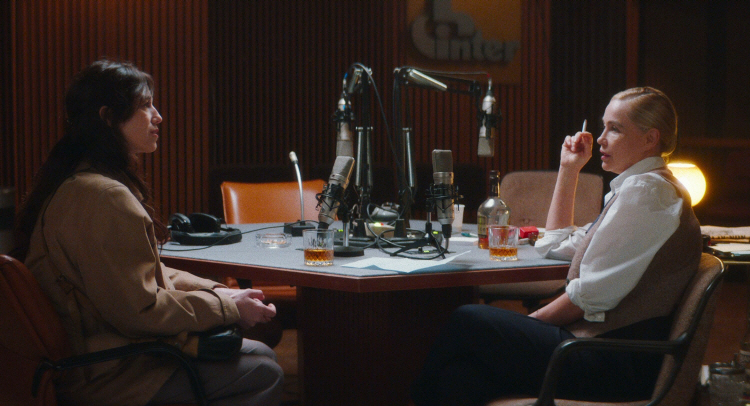
Nobody 2 (2025) ☆☆1/2(2.5/4): A killer’s family vacation

“Nobody 2”, a sequel to “Nobody” (2021), attempts to generate more laugh and thrill from the one-joke promise of its predecessor. Although it is a fairly competent product, the result is more or less than a pointless rehash in my inconsequential opinion, and that is a shame considering the game efforts from its good lead actor and a few other notable supporting performers around him.

Bob Odenkirk, who also served as one of the producers of the film, plays Hutch Mansell, a former government assassin known as “Nobody”. As shown from the previous film, Hutch tried to live as your average suburban family guy for a while, but his accidental clash with a local Russian gang awakened his good old killer instinct, and he eventually decided to get back in his killing business around the end of the previous movie.

Nevertheless, Hutch also tries to maintain his suburban family life as before, and that certainly burdens him as well as his family at times. Although his dear wife Becca (Connie Nielsen) and their two children try to understand and accept whatever he is doing behind his back, he often finds himself being too busy to spend more time with his family, and this naturally frustrates both him and his wife a lot.

In the end, Hutch decides to have a real vacation with his dear family as finally taking some free time from his killing business, and he actually has a modest but sincere plan for them. He is going to take them to a certain amusement park, which was incidentally a very special place during his childhood. His father David (Christopher Lloyd), who also has a particular set of skills just like his son, once took young Hutch and his half younger brother to that amusement park, and that was the only time when young Hutch felt like being plain and ordinary.

When Hutch and his family eventually arrive at that amusement park, he is a bit disappointed to see that the place has changed a lot now. Nevertheless, his wife and kids are glad to have a real family time along with him, and Hutch cannot help but feel a little nostalgic as looking around those old spots he still remembers well.

However, as his handler warned him in advance, it seems that Hutch is always bound to get himself into trouble no matter how much he tries to be plain and ordinary. When his son happens to clash with some boy around his age, Hutch tries to avoid any possibility of trouble at first, but, what do you know, he soon lets himself driven by his violent sides, and this consequently leads to another conflict between him and his wife.

And the situation turns out to be much more problematic than expected. Due to the trouble caused by him, Hutch comes to draw the attention of the local sheriff, who is not so amused to say the least. While Hutch simply wants to continue his family vacation, the sheriff becomes quite determined to show Hutch who the boss is in the town, but, of course, his goons make a big mistake of underestimating Hutch, and we get a tense but absurd action scene unfolded in the middle of a boat ride.

Coming to realize that he should take care of the mess caused by him as soon as possible, Hutch prepares for whoever he is going to confront in the end, and we are accordingly introduced to a certain female criminal boss quite willing to eliminate any trouble in her criminal empire as quickly and ruthlessly as possible. Although her prime has passed years ago, Sharon Stone knows how to chew every moment of her scenes with gusto, and it is too bad that the movie does not give her more space for her deliberately hammy villain performance.

Around the narrative point where Stone’s criminal boss arrives at the amusement park along with a heap of armed goons as expected, the movie naturally goes for a full-throttle action mode, and director Timo Tiahianto, an Indonesian filmmaker who previously made “The Big 4” (2022) and “The Shadow Strays” (2004), serves us an intense mix of brutal action and carefree comedy. You will wince because of several extreme moments of violence, but you may be tickled a bit by the occasional moments of absurdity, and you will probably not mind the sudden insertion of a certain well-known pop song around the end of the film.

However, the movie is also hampered by the lack of character development in the story. Despite Odenkirk’s diligent acting, Hutch remains pretty much like what we saw from him in the previous film, and that is the main reason why the movie is less engaging compared to the previous film. In case of several substantial supporting characters, Hutch’s wife and their kids are mostly put aside for plot convenience, and Connie Nielsen is seriously under-utilized again before getting her own moment later in the story. In case of RZA, who plays Hutch’s half-brother, Colin Hanks, who plays that corrupt sheriff, and Christopher Lloyd, they simply come and then go as required, but I must admit that it is nice to see Lloyd still active despite being over 80 at present.

Overall, “Nobody 2” does not bore me during its rather short running time (89 minutes), but it is one or two steps from the level of entertainment of the previous film. Although I understand that it is supposed to be sort of a violent variation on “National Lampoon’s Vacation” (1983), it is deficient in terms of wit and personality, and my mind is already ready to move onto better stuffs while not remembering much from this passable product.

Posted in Movies | Tagged , , | Leave a comment

Devo (2024) ☆☆☆(3/4): The story of one defiantly unconventional American band

Netflix documentary film “Devo”, which was released in last month, looks into the history of Devo, a defiantly unconventional American band which simply tried to do something quite different during the 1970-80s. To the frustration and bafflement of its members, the social messages behind the absurdly subversive artistic musical expressions from the band were not often appreciated enough even when it was pretty popular, but they do not regret anything at all, and the documentary cheerfully takes us into some of the best and worst points in the career of their band.

At first, the documentary shows and tells us how the band was conceived mainly via the interview clips of the two members of Devo, Mark Mothersbaugh and Gerald Casale. Around the early 1970s, Mothersbaugh and Casale were studying at Kent University in Ohio, US, and, just like many other young American people during that time, they were influenced a lot by the turbulent social/political situation of the American Society during that period. As the hope and optimism in the American society during the early 1960s got smashed and dissipated, the country seemed to be on the way toward regression and devolution instead, and that inspired Mothersbaugh and Casale to found a little avant-garde band of theirs for throwing urgent social messages on what was happening around them and many others in the American society.  

Although the first public performance of Devo was not exactly successful to say the least, that did not deter Mothersbaugh and Casale at all, as they became more confident about their artistic vision. Around the time when Mothersbaugh’s brother Bob Mothersbaugh, Casale’s brother Bob Casale, and Alan Myers joined the band, they willingly went for many different unconventional stuffs, and they even made a number of cheap but amusing short music films, which can be regarded as the precursors to all those bold and flashy music videos during the 1980s.

In the end, Devo came to amass a considerable number of fans and admirers as one of their short music films got a lot of attention at several notable film festivals. As the band eventually performed not only in LA but also New York City, the unorthodox style and performance of the band drew more public attention than before, and the members of the band were certainly excited when David Bowie showed his interest in working along with them on their first album. Although Bowie later gave up their project because of juggling too many projects during that time, he introduced the band to Brian Eno instead, and their eventual first album, “Q: Are We Not Men? A: We Are Devo!”, led the band to a big breakthrough in 1978.

Because they were already quite accustomed to mixing music along with theatrics and visual styles thanks to making their short music films, the members of Devo got quickly comfortable with the rise of MTV around the early 1980s. As its popularity got boosted further by MTV, Devo kept advancing with several hit songs including “Whip It”, and the members of the band ironically found themselves stuck inside the mainstream they had frequently criticized and satirized via their music. 

As Mothersbaugh and Casale frankly admit in their interviews, they and their fellow band members tried to be practical as balancing themselves between their artistic integrity and the constant demands from their record company. Thanks to their ongoing commercial success, they were allowed to have some artistic freedom, and they kept defying against the expectations from critics and fans as much as possible. However, there eventually came a point where the band began to lose its popularity in public, and everyone in the band became more aware of the beginning of the end when their sixth album turned out to be a big commercial failure despite their good efforts. 

However, what really bothered and baffled the members of the band was how most of their audiences responded to their music. Even though the satiric messages on the rise of social/commercial conformism in the American society are quite evident in many of their hit songs, their audiences usually regarded the songs as another cool new ones to consume and then discard, and the documentary does not miss the sheer irony and absurdity in that. As reflected by the name of their band, the members of Devo tried to warn about the human devolution caused by social/commercial conformism, but their works and the messages inside them were inevitably diluted or buried as they became a part of the American mainstream pop culture.

Moreover, as many of us know too well, things have only gotten worse and worse in not only the American society but also the whole world during last several decades. Mothersbaugh and Casale understandably feel bitter about that, but they remain proud about their band in addition to being quite active artists even at present, and, as some of you know, Mothersbaugh has been one of the most prominent film music composers working in Hollywood.  

 In conclusion, “Devo” is an engaging documentary which gives us enough insight on its fascinating main subject, and director Chris Smith, who has been mainly known for “American Movie” (1999), did a competent job of presenting a fairly comprehensive picture of the rise and fall of Devo. Yes, I must confess that I did not know much about its main subject from the beginning, but the documentary intrigued and informed me enough, and that is more than enough for recommendation in my trivial opinion.

Posted in Movies | Tagged , , , | Leave a comment

E.T. the Extra-Terrestrial (1982) ☆☆☆☆(4/4): A boy and his alien friend

Steven Spielberg’s 1982 film “E.T. the Extra-Terrestrial”, which was re-released in selected theaters in South Korea in this week, is a pure cinematic magic to behold even though more than 40 years passed since it came out. On the surface, it is a pretty modest science fiction adventure film, but it is filled with a lot of wonder, skill, and heart to be appreciated, and that is why it has been regarded as one of the greatest achievements in Spielberg’s long and illustrious filmmaking career.

While watching the film again at a local theater, I admired again how steadily the movie sticks itself to the viewpoint of its young hero. After the opening sequence showing how its titular alien figure happens to be left alone near a suburban area, the movie follows the accidental encounter between this alien figure and him, and it takes time as sensitively depicting the developing connection between these two very different characters. Although he is quite frightened at first, Elliot (Henry Thomas) soon becomes curious and sympathetic, and he eventually befriends this alien figure, which he incidentally calls “E.T.”.

Although we sometimes see a group of government agents searching for E.T., the movie mostly focuses on how Elliot comes to bond more with his alien friend along the story. Without telling anything to his divorced mother, he keeps E.T. inside their house, and his two siblings agree to go along with that, though their respective first encounters with E.T. are not exactly pleasant to say the least. Once they come to understand that E.T. really needs some help for getting back to the home planet, Elliot and his two siblings willingly plan to help their alien friend, and that leads to an amusing scene where E.T. gets disguised in a rather crude Halloween attire for avoiding any unnecessary attention.

During my viewing, I wonder again who E.T. really is and what this alien character thinks and feels about his extraordinary circumstance on the Earth. Yes, this alien character has certainly been remembered as one of the most memorable alien creatures in the movie history, and you may scratch your head a bit if you reflect more on many mysterious sides of this alien character. For example, is E.T. male or female? And how old actually E.T. is compared to Elliot? Above all, when E.T. gets connected with Elliot in more than one way, is this actually just a survival strategy instead of merely being much closer to Elliot?

Regardless of whatever you and I think about those elusive matters with this alien character, the screenplay by Melissa Mathison follows the logic of fairy tale while not explaining too much to us, and we come to accept that without any question mainly thanks to Spielberg’s masterful handling of story and characters. He trusts us to understand that Elliot just follows what he sincerely feels about his alien friend, and he effortlessly makes us empathize more with Elliot’s viewpoint along the story. As a matter of fact, the camera of cinematographer Allen Daviau often stays around the level of Elliot’s viewpoint, and that gives us several memorable shots while we become more aware of how those government agents get closer to Elliot and his alien friend.

Things certainly become quite tense and serious around the last act, but the movie still maintains its fairy tale qualities even at that point. When Elliot’s mother reads to her daughter a certain part of J.M. Barrie’s “Peter Pan” at one point early in the story, this moment feels a bit too blatant at first, but it later resonates with what dramatically occurs later in the story. As a result, we all come to root all the more for Elliot and E.T. than before, and we certainly become quite exalted when E.T. demonstrates his special power again at the last minute.

Around that narrative point, the movie is buoyed further by its superb technical qualities provided by Spielberg and his excellent crew members including Daviau. The editing by Carol Littleton, who received an Honorary Oscar a few years ago, is particularly impressive during that famous climax action sequence which is still a marvel to behold for its brimming sense of unadulterated thrill and excitement, and the unforgettable score by John Williams, who deservedly won his fourth Oscar for this film, soars along with the movie whenever that is required.

The main cast members of the film are believable as their characters experience or behold all those wondrous moments in the film. Although he has steadily maintained his acting career during last four decades, Henry Thomas has been always remembered for his earnest performance here in this film, and it is still the best work in his career. Around Thomas, Dee Wallace, Robert MacNaughton, and Drew Barrymore hold each own place as Elliot’s family members, and Peter Coyote is also solid a government agent who turns out to be much more sympathetic and understanding than expected.

On the whole, “E.T. the Extra-Terrestrial” is a great film to be remembered for its sublime mix of SF, fantasy, and adventure, and I am glad that I could watch it again at a movie theater today. When I watched it for the first time around the early 1990s, it was simply an entertaining movie to me just because I was a young boy at that time, but I came to appreciate more of its immense emotional power as well as its top-notch technical aspects when I watched it again around 10 years later, and the movie still interested and touched me a lot again today. To be frank with you, I am already considering showing it someday to my little niece who has been growing up day by day, and I’d love to observe how she will respond to it.

Posted in Movies | Tagged , , , , | Leave a comment

Roman Holiday (1953) ☆☆☆1/2(3.5/4): One free day of a princess

William Wyler’s 1953 film “Roman Holiday”, which is being shown in selected theaters in South Korea, is a witty and charming work absolutely tailor-made for its lead actress. Here is an exceptional actress whose charm and presence have never been surpassed by any other actress during last seven decades, and the movie has indubitably been immortalized by her breakthrough performance to remember.

Yes, that actress is none other than Audrey Hepburn, who was one of the greatest Hollywood actresses during the 1950-60s. Although her movie acting career was nearly over after “Wait Until Dark” (1967) and “Two for the Road” (1967), she left her own indelible image in the movie history in a number of notable films such “Sabrina” (1954) and “Charade” (1963), and “Roman Holiday” is one of the best examples in the bunch. 

Hepburn plays Princess Ann, who is a very, very, very important royal figure of an unspecified European country. As the heiress to the throne, Princess Ann has certainly been burdened with a lot of royal duty, and the opening part of the movie shows how busy she is as visiting one European country after another for serving her country. Around the time when she visits Rome, she cannot help but feel quite tired and suffocated, and, to make matters worse, nobody around her seems to understand her mounting stress and fatigue.

Eventually, Princess Ann impulsively decides to sneak out of the embassy of her country when no one is looking, but there is one small problem. Shortly before her elopement, she happened to be medically sedated, and she soon becomes quite groggy around the time when she is discovered by an American newspaper reporter named Joe Bradley (Gregory Peck). After seeing how helpless she is, Bradely decides to take her to his current staying place, while having no idea about her real identity.

Of course, around the next morning, Bradley belatedly comes to learn who she really is, and there soon comes a very good idea to benefit him and his career. When Princess Ann becomes interested in having some free time in the city, he gladly volunteers to be a generous guide for her, while also having his photographer friend Irving Radovich (Eddie Albert, who was deservedly Oscar-nominated for providing some extra humor to the film) photograph their private moments without being noticed by her at all.

After establishing its two main characters during its first half, the screenplay by Dalton Trump, Ian McLellan Hunter, and John Dighton gives a series of lightweight moments during its second half (Its rather checked history caused by the blacklisting against Trump and many other left-wing Hollywood figures during that time is dramatized in “Trumbo” (2015), by the way). While freely wandering along with Bradley, Princess Ann feels much happier than before, and, not so surprisingly, Bradley comes to care more about her even though he still does not reveal to her that he knows her real identity.  

Because of the inherent human decency in Gregory Peck’s rather plain but undeniably wholesome screen persona, there is not much suspense on Bradley’s eventual choice later in the story, but I must point out that Peck humbly supported his co-star in and out of the screen. Cary Grant, who was incidentally considered first for Peck’s role, might have been more believable in the wily sides of Bradley, but Peck’s unadorned acting lets his co-star shine more and more along the story. As a matter of fact, his earnest acting works better as things get more serious around the last act of the movie, and that is one of the main reasons why the expected finale is accompanied with genuine poignancy. 

In addition, Peck also made Hepburn presented as his co-star in the main title, and that was quite generous to say the least considering that Hepburn was just a young unknown newcomer at that time. Hepburn, who won a Best Actress Oscar for the film, is indeed the real star of the movie, and we can only imagine how refreshing she looked to the audiences at that time. With her own charm and presence, she effortlessly radiates as a singular beauty to behold, and she also did a stellar job of conveying to us her character’s inner drama along the story. While surely having more fun and freedom than she can ever imagined thanks to her unexpected American friend, there eventually comes a point where Princess Ann must return to her royal duty and position, and Hepburn is terrific when her character must hold her aching personal feelings in front of others including Bradley around the end of the story.       

The movie is certainly one of many highlights in the illustrious filmmaking career of Wyler, who made some of best works from the classic Hollywood era during the 1930-60s and also won no less than three Best Director Oscars for “Mrs. Miniver” (1942), “The Best Years of Our Lives” (1946), and “Ben-Hur” (1959). He and his crew including cinematographers Henri Alekan and Franz Planer did a stellar job of vividly capturing numerous real locations in Rome on the screen, and you can easily see how the city was destined to be brimming with more class and glamour as shown from “La Dolce Vita” (1960).         

In conclusion, “Roman Holiday” is a classic Hollywood romantic comedy film mainly distinguished by Hepburn’s exceptionally luminous presence. During last several decades, many different young actresses were compared to her, but she remains irreplaceable even at this point, and she and her several good films including this lovely movie will probably remain forever in the history of cinema.

Posted in Movies | Tagged , , , | Leave a comment

The Ugly Stepsister (2025) ☆☆☆(3/4): The stepsister’s grotesque struggle for beauty

“The Ugly Stepsister” is a twisted mix of horror and comedy which will alternatively amuse and unnerve you from the beginning to the end. Inspired by one of the most famous fairy tales from the Brothers Grimm, the movie is willing to go all the way for grotesque and absurdity, and you will appreciate that if you know how the Brothers Grimm’s fairy tale is quite darker compared to that Disney animation version.     

The heroine of the movie is Elvira (Lea Myren), one of the two daughters of a middle-aged widow who is going to marry a widower currently living with his only daughter. When they arrive at the big house of that widower, he wholeheartedly welcomes them and then marries Evira’s mother, but, alas, he suddenly dies not long after that, and it later turns out that he is not as wealthy as he seems on the surface.

Now becoming a widow without much money again, Elvira’s mother must find any possible chance for financial stability, and, what do you know, there soon comes a chance. The handsome prince of their kingdom is soon going to hold a ball at his palace for finding any suitable young woman to marry, and every eligible young woman in the kingdom is invited to the ball. When she is invited along with her stepsister Agnes (Thea Sofie Loch Næss), Elvira cannot help but become quite excited, because she has yearned to win the prince’s heart and then marry him someday.

 However, she is disadvantaged in many aspects compared to her stepsister, who is incidentally more charming and beautiful. Elvira’s mother certainly knows this too well, and she is already quite ready to push her daughter for more beauty. First, she has Elvira go through sort of plastic surgery on her nose after her dental brace is removed, and that is just the beginning of many sufferings to be inflicted on Elvira along the story. 

Nevertheless, Elvira remains to feel inferior compared to her stepsister. When they practice along with many other young women for the dance performance for the prince, Agnes becomes the lead performer without much difficulty, and Elvira manages to become one of the supporting performers just because, as their coach flatly tells her later, her mother bribed the coach in advance. Even after her plastic surgery turns out to be fairly successful, she cannot help but feel how she is constantly compared to her stepsister all the time, and that certainly drives her into more misery and resentment.

Meanwhile, the movie has a lot of naughty fun with its stark and cynical variation of the Brothers Grimm’s fairy story. There are several deliberately gross moments involved with the dead body of Agnes’ father, which has been simply left in a room without any proper care. There is also a rather embarrassing moment between Elvira and the prince, who turns out to be a cad definitely not as charming or romantic as she has imagined. In addition, Elvira’s stepsister is no saint at all, and we get an unnerving scene where Elvira happens to witness what her stepsister has been doing behind her back.

We also get more disturbed by how far Elvira is willing to go for beating her stepsister in their ongoing battle for beauty. Just for losing her weight more effectively, she tries something quite drastic and disgusting as recommended to her later in the story (It is involved with a certain kind of parasite, by the way), and this will make you wince a lot for a good reason. Nevertheless, she still struggles with her inferiority complex, and this eventually makes her do a very mean thing to her stepsister right before the ball is about to be held in the palace.

Although the ending is predetermined to say the least, the movie keeps pushing the story and characters to the extreme. While the mood becomes a bit brighter when Agnes gets an unexpected help at the last minute and then wins the prince’s love in the end (Is this a spoiler?), the movie still goes for more darkness and grotesque as closely sticking to Elvira’s viewpoint, and there eventually comes a deranged moment not so far from what happens around the end of the original fairy story.

Director/writer Emilie Blichfeldt, who incidentally makes a feature film debut here, did a competent job of handling her story and characters with enough wit, mood, and style. She also draws the strong lead performance from Lea Myren, who shows a lot of commitment during a number of striking scenes which depend a lot on her solid acting. In case of several substantial supporting performers, Ane Dahl Torp, Thea Sofie Loch Næss, and Flo Fagerli, and Isac Calmroth are well-cast in their respective parts, and Torp is particularly impressive as Elvira’s stern and harsh mother, who turns out to be driven toward to her own goal as much as her daughter.

In conclusion, “The Ugly Stepsister” is a stark but undeniably compelling genre piece, and I admire how it delves deep into the dark aspects of the Brothers Grimm’s fairly story. Yes, this is certainly not something you can casually watch on Sunday morning, but it is another interesting female body horror film to notice, and it will be interesting to see what will come next from Blichfeldt after this unforgettable debut of hers.

Posted in Movies | Tagged , , , | 2 Comments

3670 (2025) ☆☆☆1/2(3.5/4): A double minority

Good movies can be a vivid window to the lives of others different from us in one way or another, and South Korean independent film “3670” is one of such excellent examples. Closely and sensitively following the personal drama of one young North Korean gay defector, the movie lets us have more understanding and empathy on him, and it is often touching to observe how he gradually becomes more honest about his homosexuality along the story.

At the beginning, we get to know about how Cheol-joon (Cho You-hyun) has tried to settle in the South Korean society since he came over to South Korea several years ago. Along with his two fellow North Korean defectors, he has been preparing for the university scholarship for promising young North Korean defectors like him, and they also have been closely associated with a local church community willing to support them as much as possible.

However, Cheol-joon has something to hide even from his fellow North Korean defectors. After coming to South Korea, he came to realize more that he is gay, and he has tried to search for any possibility of romance or friendship for a while via a certain local online application quite familiar to me (Full Disclosure: I have been using it during last several months). However, most of those gay men on that online application only want sexual fun without much interest in him, and that makes him more isolated and frustrated.

And there comes an opportunity. When he comes across an online notice on a group meeting for blind date and drinking, Cheol-joon decides to take a chance with that, and he soon becomes a bit relieved and happy to be surrounded by a bunch of gay people around his age, though nobody seems to pay much attention to him even after he reveals that he is a North Korean defector. He later sets his eyes on a handsome lad named Hyeon-taek (Cho Dea-hee), but Hyeong-taek turns out to be quite popular around many others, and, to Cheol-joon’s disappointment, he also does not seem to be much interested in Cheol-joon.

However, another possibility of relationship comes to Cheol-joon on the very next day. A guy comes into a local convenient store where Cheol-joon has worked as a part-time employee, and, what do you know, the guy instantly recognizes Cheol-joon as both of them were at that meeting. Although Cheol-joon naturally feels quite awkward to say the least, Yeong-joon (Kim Hyun-mok), who happens to live in the same neighborhood where Cheol-joon lives, suggests that they should spend some time together after Cheol-joon’s worktime is over, and Cheol-joon cannot possibly say no as a lonely person in the desperate need of someone to understand and accept his homosexuality. 

As he spends more time with his unexpected friend, we get to know a bit about Yeong-joon. It is apparent that he does not reveal anything about his homosexuality to his devoted Christian mother, but Yeong-joon wants to enjoy his youthful gay life as much as he can, and Cheol-joon soon goes along with that while coming to befriend more gay friends including Hyeong-taek. At one point, they all go to an underground night club full of young gay people, and Cheol-joon cannot help but feel quite exalted for more freedom and excitement.

Nevertheless, Cheol-joon remains quiet about his homosexuality in front of his fellow North Korean defectors simply because of his fear of repulsion and rejection. Having no idea on Cheol-joon’s homosexuality at all, one of his North Korean defectors tries a bit of matchmaking at one point later in the story, and that leads to a little amusing moment between Cheol-joon and one female North Korean defector.

And he also misses his parents a lot, who are probably still in his North Korean hometown if they are not dead yet. His aunt, who also managed to come over to South Korean just like him, has already given up any hope about them, but Cheol-joon still holds onto any possibility of the reunion with his parents, and there is a brief but poignant moment when he and his aunt have some honest private conversation between them.

 Steadily balancing itself among several different human issues of its specific hero, the movie stays focused on his gradual emotional maturation along the narrative, and Cho You-hyun is often compelling in his nuanced low-key performance. Besides subtly illustrating his character’s inner struggles, Cho is touching whenever his character advances further from his emotional shell, and he is also supported well by several supporting performers who have each own moment to shine. While Kim Hyun-mok is effective as his character comes to show more insecurity and vulnerability later in the movie, Cho Dea-hee has a good moment when his character turns out to be more considerate than expected, and Bae Han-sol, Lim Ji-hyung, and Cha Mi-kyung are also well-cast in their respective supporting roles.

Overall, “3670”, which incidentally comes from a sort of numeral code used among its hero and his gay friends, is another notable South Korean queer film which deserves more attention in my humble opinion, and director/writer Park Joon-ho makes a commendable feature film debut here. As far as I can see from his film, he is a good filmmaker with considerable potential, and it will be interesting to see whether he will impress us more in the future as another interesting South Korean filmmaker to watch.

Posted in Movies | Tagged , , , , , | 1 Comment

The Final Semester (2024) ☆☆☆1/2(3.5/4): Before he graduates

South Korean film “The Final Semester” follows a plain teenager boy about to enter what may define the rest of his life. Still not knowing well what he really wants for his life, he simply follows what he is expected to do, and you will probably brace for yourself at times as observing how risky and hazardous his surrounding environment can be.

At first, we get to know how things are not so promising for Chang-woo (Yoo Yi-ha). He will graduate once his final semester at some vocational high school is over, but he is not so sure about what he is going to do next, and the people surrounding him do not help him much on the whole. While his widow mother is mostly busy with supporting Chang-woo and his two younger brothers, his best friend Woo-jae (Yang Ji-woon) does not have much plan either, and he and Chang-woo eventually accept the suggestion from a teacher in their school, who recommends a sort of apprenticeship at a small local company factory.

After visiting that factory, Chang-woo still hesitates, but he cannot possibly say no considering his current status. Although not having been a very good student in the school, he still wants to go to a college, and the company will support his college study once he gets officially employed later. In addition, he may also get exempted from the military service in exchange for working there during next several years.

However, as he and Woo-jae try to start their first days in the factory, we come to see more of how woefully they are unprepared in many aspects. Although they learned a bit of how to handle machines and tools at their school, they are quite inexperienced to say the least, and many of the employees in the factory do not welcome them much from the beginning. In the end, Woo-jae and Chang-woo are stuck with doing one menial job after another, and they become more frustrated as days go by.

 And we become more aware of how their work environment is not so safe here and there. While many of the employees in the factory are well-experienced professionals, they do not often seem to care a lot about the safety of their work environment, and their rather unorganized workplace is often full of the possibility of accidents. Chang-woo and Woo-jae certainly know that they should be careful, but they do not know very much about how they should be careful, and that is why it is often unnerving to see them slogging through another working day full of possible hazards. 

In the end, Woo-jae quits without any hesitation, but Chang-woo keeps working in contrast, and there actually comes some progress for him. Thanks to one generous adult employee, he begins to learn welding bit by bit, and, what do you know, he begins to like working there – especially after receiving a bit of monthly salary as promised to him from the beginning. Furthermore, he also befriends two fellow teenage trainees working there, and his two new friends are willing to support him as much as they can.

However, of course, they are still reminded again of the harsh reality they have to deal with in one way or another. Woo-jae comes to learn later that the company will hire only one of its adolescent trainees, and he also finds himself frequently doing overtime work even though that is not permitted by the labor law at all. He cannot possibly complain about this to his employer, and he and his fellow trainees are not even allowed to be honest about their work environment when they have a private interview with a visiting civil servant at one point.

Thankfully not resorting to unnecessary melodrama, the movie phlegmatically lets us to sense how the system works unfairly against Chang-woo and many others in the factory. They all need to stay employed, and clashing with their employer is definitely the last thing they want. Later in the story, there comes the breaking point of one of Chang-woo’s fellow trainees for an understandable personal, but nothing is changed at all even after that, and Chang-woo and many other employees keep working as usual.

It is often frustrating to observe how passive and indecisive Chang-woo is at times, but Yoo Yi-ha’s earnest lead performance did a subtle job of conveying to us his character’s growing conflict along the story. Even when he does not seem to signify anything at all on the surface, the thoughts and feelings churning behind Chang-woo’s quiet appearance are quite palpable to us, and that is why we come to sense a lot of bitterness from the final scene of the film. Around Yoo, Kim Sung-gook, Kim So-wan, and Yang Ji-woon hold each own place well as the crucial supporting characters in the story, and Yang provides a bit of humor to the story during his several key scenes with Yoo.              

On the whole, “The Final Semester” is a dry but undeniable powerful coming-of-age tale reflecting another unpleasant side of the South Korean society, and director/writer Lee Ran-hee, who previously drew my attention for her debut feature film “A Leave” (2020), demonstrates again her considerable filmmaking talent as advancing further from her previous achievement. I knew what the movie is about in advance, but I found myself much more engaged in the story and characters with more care and worry, and that is what a good movie can do in my inconsequential opinion.

Posted in Movies | Tagged , , , , , | 1 Comment

Fight or Flight (2024) ☆☆1/2(2.5/4): A flight full of killers

“Fight or Flight” is one of those goofy action thriller films which do not take themselves seriously while having some outrageous fun with their utterly silly story premise. Although it is rather deficient in terms of story and character, the movie is willing to go for a lot of absurdity and violence just for laugh and amusement at least, and it is also held together fairly well by the engaging efforts from its lead actor.

Josh Hartnett, who has recharged his acting career as recently appearing in a series of notable films ranging from Christopher Nolan’s “Oppenheimer” (2023) to M. Night Shyamalan’s “Trap” (2024), plays Lucas Reyes, a broken man who finds himself called back to action just because of his particular set of skills. As explained later in the story, Reyes was once a top-notch government agent, but he has been hiding away from the world since one particularly unpleasant incident, and we see him waking up somewhere in Bangkok, Thailand after another drinking night.

When he is approached by his ex-girlfriend who is incidentally now the head of some secret agency, Reyes is not so amused to say the least, but he cannot possibly refuse an offer from her, so he reluctantly agrees to do one dirty job for her and her agency right now. All he has to do is getting on an airplane going to San Francisco, and then he must find and then escort a certain mysterious figure who has been targeted by many organizations and agencies around the world for good reasons.

Needless to say, the first act of the film revolves around the mystery of that hidden figure on the airplane, but I must tell you that the movie gives out the answer a bit too easily. Folks, if you are familiar with the law of the economy of characters, you will instantly have a pretty good idea on the identity of this hidden figure within the first 30 minutes of the film, and it is likely that you will not be surprised that much when the movie eventually reveals this hidden figure around the beginning of its middle act.

Meanwhile, the real twist in the story is that Reyes belatedly comes to learn that there are a lot more things to handle besides his target. The information about his target happened to be leaked all around the world shortly before he and his target got on the airplane, and, as already shown to us during the opening scene of the film, many of the passengers are actually assassins hired to eliminate Reyes’ target.

In short, this is sort of a cross between “Bullet Train” (2022) and those John Wick movies on airplane, and director James Madigan, who has been mainly known for his special effects technician career before making a feature film debut here (He won an Emmy for HBO TV series “Rome”, by the way), adds some absurd touches to this preposterous circumstance along the story. For example, there is a humorous moment involved with someone who happens to be sitting right next to Reyes, and we get extra laugh from how this moment leads to another twist in the story.

The plot thickens a bit as Reyes’s ex-girlfriend calmly and coldly handles the increasingly tricky situation for her and her agency, but the movie thankfully keeps focusing on Reyes’ ongoing plight. While he is cornered by his numerous opponents in one way or another, he also manages to have a few people willing to help him, and there is a very outrageous moment when he encounters a trio of unexpected allies coming to help him later in the story.

Anyway, the movie surely unleashes a lot of violence and mayhem as expected during its last act, and you will probably be tickled by when it suddenly throws extra goofiness into this violent mix of comedy and action. You may wince more than once, but it may be difficult for you not to chuckle as observing how willing the movie is to try anything just for fun and thrill.

Everything in the film certainly depends a lot on Hartnett’s solid lead performance, which did a good job of balancing itself between humor and action. Never trying too hard for laughs, Hartnett simply plays his character as straight as possible, and this effectively accentuates the absurd circumstance surrounding his archetype character. In addition, he ably fills his role with enough life and personality, and we somehow come to root for his character even though he kills or maims a lot of people along the story.

In contrast, the supporting performers surrounding Hartnett are simply required to fill their respective spots. Considering that the movie is also basically another variation of those Airport flicks, I was a little disappointed that it merely fills its main background with all those assassins ready to go for Reyes and his target, though I was a bit amused when the pilots of the airplane jokingly mention “Sully” (2016) at one point in the middle of the story.

Overall, “Fight or Flight” is not exactly satisfying enough for recommendation, but I appreciate more of Hartnett’s matured presence and talent. Yes, there was a time when he just seemed to be another handsome young actor to be forgotten sooner or later, but he has risen again during last few years as becoming more interesting than before, and I am sure that we will see him moving onto better things to come.

Posted in Movies | Tagged , , , , | Leave a comment

The Thursday Murder Club (2025) ☆☆☆(3/4): A little cozy murder mystery

Netflix film “The Thursday Murder Club”, which was released on last Thursday, is a little cozy murder mystery revolving around a small group of old amateur sleuths. While this is another your average Netflix product, it has enough wit and personality thanks to its solid storytelling and dependable cast, and the overall result is more entertaining than I expected.

The main background of the story is the home for old retirees somewhere in UK, and the opening part introduces the four members of “The Thursday Murder Club”: Elizabeth Best (Helen Mirren), Ron Ritchie (Pierce Brosnan), Ibrahim Arif (Ben Kingsley), and Joyce Meadowcroft (Celia Imrie), who joins the group after a former member of the group was recently sent to the hospice section due to her worsening illness. The main focus of their interest has been old unsolved cases in the past, and the latest one happens to be about the very suspicious death of one young woman, who was probably killed by her boyfriend shortly before he was vanished.

Anyway, things get more interesting for the members of the Thursday Murder Club as the cozy life in the facility becomes seriously threatened. The facility has been partially owned by a local businessman named Ivan Ventham (David Tennant), and Ventham has been quite eager to change the facility into something else for more profit. However, his plan is vehemently objected by his main business partner, a tough local dude who really cares about the facility for a personal reason.

Now you already have a pretty good idea about what will occur next. A murder happens not long after Elizabeth and her three colleagues witness an argument between Ventham and his business partner, and the police soon embark on searching for any possible suspect. As observing how sloppy a local detective assigned to the case is, the members of the Thursday Murder Club decide to handle the matter for themselves, especially after coming to learn that the future of their facility becomes more uncertain due to that murder.

Fortunately, each of them turns out to be fairly resourceful in each own way. As someone who once worked in MI6, Elizabeth surely knows how to sidestep a number of obstacles in front of them, and she soon recruits Donna De Freitas (Naomi Ackie), a smart young policewoman who has been often disregarded by her boss and colleagues due to sexism. While Ibrahim can provide some psychological insight as an ex-psychiatrist, Ron is ready for some action as an ex-union activist, and Joyce was asked to join the group because she was an ex-nurse with considerable medical knowledge.

In front of these four people, there are certainly several possible suspects to be investigated. For example, as they delve more into the business partnership involved with Ventham, it turns out that he has the other business partner who may be involved with the case considering a lot of notoriety surrounding this shady figure. In addition, the situation becomes more complicated when Elizabeth discovers an old hidden secret hidden somewhere around the facility thanks to a little help from a Polish lad who is incidentally one of Ventham’s employees.

The screenplay by Katy Brand and Suzanne Heathcote, which is based on the mystery novel of the same name by Richard Osman, does not hurry itself even though things become more serious and urgent for its main characters. After all, despite their irrepressible eagerness, the members of the Thursday Murder Club have been getting older day by day, and they are often reminded of their approaching mortality via many of their fellow retirees. In case of Elizabeth, she has happily lived with her husband Stephen (Jonathan Pryce) in their comfortable room, but he has unfortunately been suffering from Alzheimer’s disease, and she is afraid of when her husband will not remember her anymore.

Steadily focusing on character development, the movie eventually arrives at the narrative point where everything is resolved and explained to our little satisfaction. Of course, I do not dare to spoil any of your entertainment, but I can tell you instead that the story neatly pulls out the answer with some poignancy, and I was also quite delighted by how a certain figure unexpectedly functions as your typical armchair detective later in the story.

The four principal main cast members are constantly engaging as bringing some touch of class to the film. While Helen Mirren, Ben Kingsley, and Pierce Brosnan ably fill their archetype characters with enough presence and personality, Celia Imrie holds her own place well among her more prominent co-stars, and these wonderful four performers are surrounded by a bunch of various performers including David Tennant, Naomi Ackie, Daniel Mays, Henry Lloyd-Hughes, Tom Ellis, Ingrid Oliver, and Richard E. Grant, who is enjoyable as usual during his brief appearance later in the movie.

Overall, “The Thursday Murder Club”, directed by Chris Columbus, is often fun to watch thanks to the game efforts of its main cast members. Considering that Osman wrote several sequels and already finished writing the fifth book, I will not be surprised if the movie is followed by at least one sequel, and I will not complain as long as they maintain the level of charm and fun shown from this modest but entertaining movie.

Posted in Movies | Tagged , , , | Leave a comment

The War of the Roses (1989) ☆☆☆1/2(3.5/4): A divorce war with no compromise

Is there any divorce comedy film as dark, cynical, and vicious as Danny DeVito’s 1989 film “The War of the Roses”? The main pleasure of this particularly nasty classic comedy movie is how uncompromising it is with a number of hilariously extreme moments to make us both laugh and cringe, and you will be amused more to observe it firmly sticking to its edgy comic spirit to the end along with its two rather unlikable main characters.

After the inspired main title designed by Saul and Elaine Bass, the movie proceeds to a private meeting between a lawyer named Gavin D’Amato, played by DeVito himself, and one of his clients (He is played by Dan Castellaneta, who has provided the voice of Homer Simpson in the TV animation series “The Simpsons”). What Gavin is going to tell his client is a cautionary tale involved with his close colleague Oliver Rose (Michael Douglas) and Oliver’s wife Barbara (Kathleeen Turne), and it does not take much time for us to guess from the sardonic tone of Gavin’s storytelling that things did not end that well for Oliver and Barbara.

Their marriage story was started with your average Meet Cute moment. When Oliver and Barbara came across each other at a little auction held in some beach town, something instantly clicked between them as they competed with each other over a certain china figurine, and, what do you know, they married not long after having quite a passionate time between them (“If we end up together, then this is the most romantic evening of my life. And if we don’t, then I’m the world’s biggest slut.”). Although they struggled a bit during the first several years of their married life, Oliver subsequently began to advance more in his lawyer career, and Barbara mostly focused on taking care of those domestic matters including decorating a big house recently purchased by them.

However, around the time when their two kids are going to leave them for studying in Harvard University, Barbara becomes more aware of the distance and friction between her and her husband – especially after she becomes more financially independent as beginning her own catering business. When Oliver is suddenly sent to a hospital due to what turns out to be a rather minor medical problem, she comes to realize that she is not only sick of her husband but also not in love with him anymore, and she eventually tells him that she wants to divorce him right now.   

While naturally quite confused and exasperated, Oliver eventually agrees on their divorce, but there is one big problem between them. Although she is willing to give up almost everything to her husband, Barbara demands that she should get the house because she thinks she deserves it for all the diligent efforts of hers in making the house look much better than before. In contrast, Oliver believes that the house should remain with him as the house was purchased with the money earned by him, and he is certainly willing to fight against his wife to the end.

What follows next is a series of truly mean and vicious clashes which can still raise your eyebrows even at present. Regardless of whether there is really any affection left between them, both Oliver and Barbara become quite determined to go for total war, and their house is consequently turned into a sort of battleground for their ongoing divorce war. Thanks to a bit of legal advice from Gavin, Oliver keeps staying in their house despite Barbara’s demand, and he soon embarks on trying to outmatch his wife by any means necessary, while ignoring the sincere words of caution from Gavin (“Oliver, my father used to say that a man can never outdo a woman when it comes to love and revenge.”).    

The screenplay by Michael J. Leeson, which is based on the novel of the same name by Warren Adler, often delights in the increasingly malicious behaviors of its two main characters. When Barbara holds a party for the clients of her catering business, Oliver deliberately sabotages the party in a certain definite way to make your eyes roll (“I would never humiliate you like this!” – “You’re not equipped to, honey.”), and then Barbara surely shows him that Hell hath no fury like a woman scorned. In case of another conflict of theirs involved with their respective pet animals, the movie steps back a bit to my little disappointment at the last minute, but we still get some dark laugh despite that.

The comic chemistry between the two lead performers of the film is flawless to say the least. As many of you know, Michael Douglas and Kathleen Turner were successfully paired together in Robert Zemeckis’ romantic comedy adventure film “Romancing the Stone” (1984) and its 1985 sequel, and that is why it is quite amazing to see how they effortlessly interact with each other in a totally different comic mode here in this film. Under DeVito’s confident direction, both Douglas and Turner are utterly fearless in their thoroughly uncompromising comic acting, which steadily keeps us engaged to the very end even though we wince more and more as watching the conflict between their spiteful characters from the distance.

 In conclusion, “The War of the Roses” is still quite viciously funny due to its numerous biting comic moments including its starkly cynical ending true to its nasty black comic heart, and it is definitely one of the highlights in the respective careers of DeVito, Douglas, and Turner. Yes, this is surely not something you can casually watch on Sunday afternoon, but you will find yourself tickled more and more by its morbidly cutthroat sense of humor after watching it, and, like me, you may wholeheartedly agree to the advice given at the end of the story.

Posted in Movies | Tagged , , | Leave a comment