W.G. Sebald once said: “Men and animals regard each other across a gulf of mutual incomprehension.” As watching Hungarian filmmaker Ildikó Enyedi’s latest film “Silent Friend”, I wondered whether that can be also applied to our equally longtime relationship with plants. As juggling three different human stories across the time of one big old gingko tree, the movie calmly and deftly toys with its rather fantastic but undeniably intriguing story premise, and the result is one of the most singular cinematic experiences during last several years.
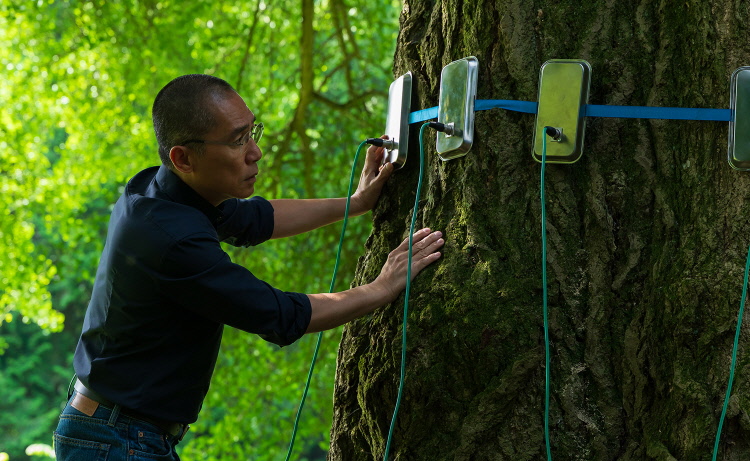
The main part of the story revolves around the accidental research of Dr. Tony Wong (Tony Leung Chiu-wai), a Chinese neurology researcher who moves to the old university town of Marburg, Germany for continuing his ongoing scientific project in early 2020. He has been particularly interested in how child brain shows a very different activity pattern compared to adult brain, and we see him enthusiastically lecturing on his research in front of many students.
However, the campus is soon shut down due to the following COVID-19 Pandemic, and Dr. Wong finds himself isolated alone inside the campus. Because his laboratory is also shut down, he does not have any particular thing to do right now, and his only companion in the campus is a gruff maintenance man who is not so friendly to him to say the least.
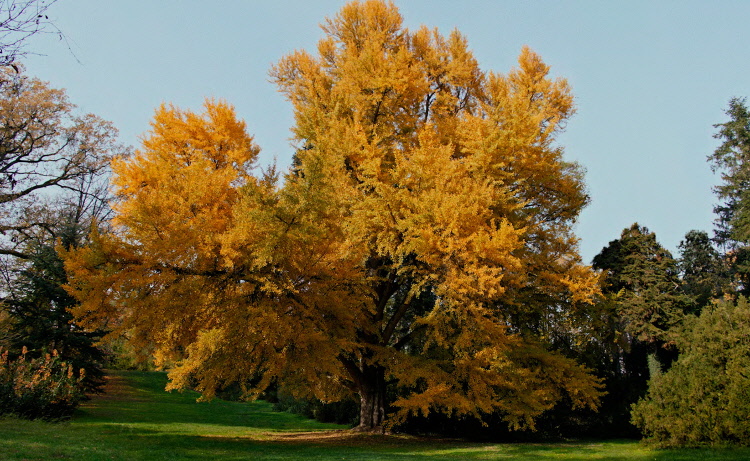
And then something begins to intrigue Dr. Wong’s inquisitive mind. He comes to notice more of a big old gingko tree in the campus, and, after watching an interesting YouTube lecture by some prominent French plant biology scientist, he becomes quite curious about whether plants can think or feel just like animals including humans.
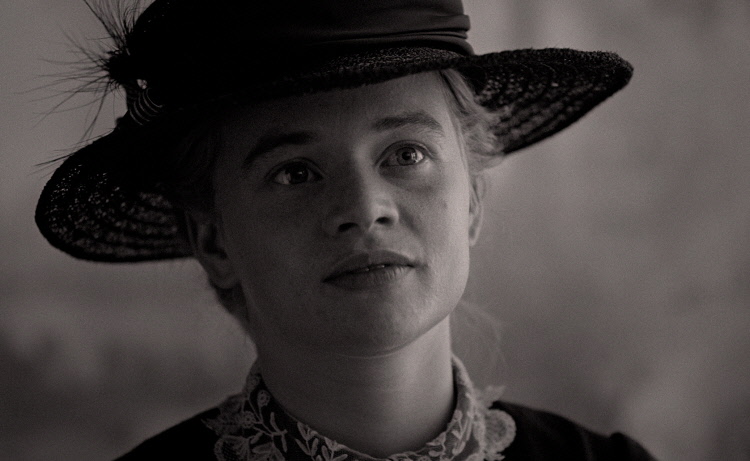
While Dr. Wong embarks on his little impromptu scientific project bit by bit, the movie also presents the two additional stories set in the same campus but in different time periods, respectively. In case of the story set in 1908, we meet a promising young female college student named Grete (Luna Wedler), and this story observes her rather difficult quest for recognition and independence. In case of the other story set in 1972, we meet a plain male college student named Hannes (Enzo Brumm), and this story depicts how he becomes interested in his close female friend’s little scientific project involved with a pot of geranium.
At first, Grete’s story instantly draws our attention as showing how often she must cope with misogyny and sexism. While she simply wants to study more on plant biology, several haughty male professors do not hide their condescending attitude at all during their interview with her, and one of them deliberately insults her more than once. Nevertheless, she stands her ground with her intelligence and determination to the end, and that is how she is eventually allowed to study along with many male students in the campus.
While she still has to deal with more obstacles just for being a young woman, Grete keeps trying anyway. When she subsequently does a part-time job at a local photography shop, she comes to learn much about all those photography skills thanks to her generous employer, and this actually helps her a lot when she decides to take a bold forward step for her academic career later.
Hannes’ story feels rather flat and redundant at times, but things get more interesting when he finds himself focusing more on that geranium during the longtime absence of that female friend of his. Once he comes to sense the intriguing possibility of communication from it, he goes all the way for detecting more of that, and what follows next is as amusing and intriguing as that communication development sequence in “Hail Project Mary” (2026).
All these three narratives in the film are linked with that big old gingko tree in one way or another, and it is compelling to observe how it gradually takes the center of the story. At first, it draws our attention a bit mainly for its considerably old age (As often reflected by a small plaque attached on it in the film, it has really been there in the campus since 1832, by the way), but then it slowly becomes another main character in the story as Dr. Wong continues to do more test on it. I guess a lot of his research in the film is mostly fictional, but it still looks quite fascinating nonetheless, and I will not deny that I was mesmerized by a number of wondrous moments involved with the gingko tree in the film.
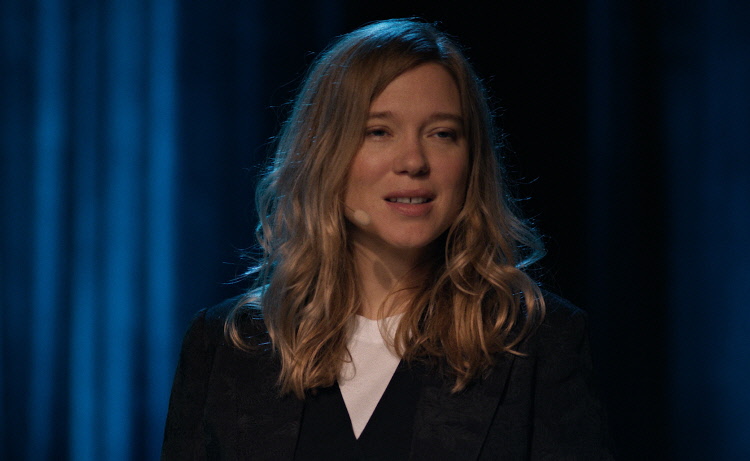
Even when shuffling a lot among its multiple narratives, the movie does not lose any of its narrative focus and momentum. I particularly appreciate how Enyedi and her crew members including cinematographer Gergely Pálos and editor Károly Szalai ably balance their movie among its three different time points. The three main stories of the film are imbued with each own distinctive visual mood and texture, and they are seamlessly intercut with each other without any awkwardness. In case of the main cast members, Tony Leung Chiu-wai and Léa Seydoux certainly draw our attention right from the start, but their humble low-key performances often step aside for several other main performers including Enzo Brumm, Sylvester Groth, and Luna Wedler, who deservedly won the Marcello Mastroianni Award when the movie was shown at the Venice International Film Festival in last year (The movie also won several other awards including the FIPRESCI Prize, by the way)
In conclusion, “Silent Friend” impresses me a lot for its masterful handling of moods and ideas, and it is surely another interesting work from Enyedi, who drew my attention for the first time with her Oscar-nominated movie “Body and Soul” (2017). As your average “slow” film, it will require some patience from you from the very beginning, but its many rewarding moments will linger on your mind for a long time, and you may also come to reflect a bit more on those countless plants around us.