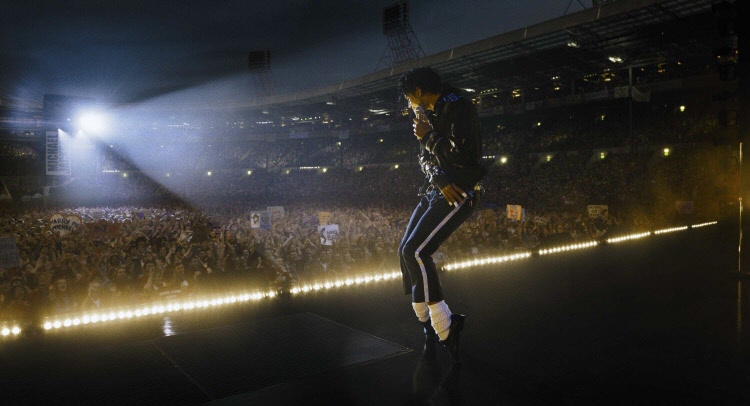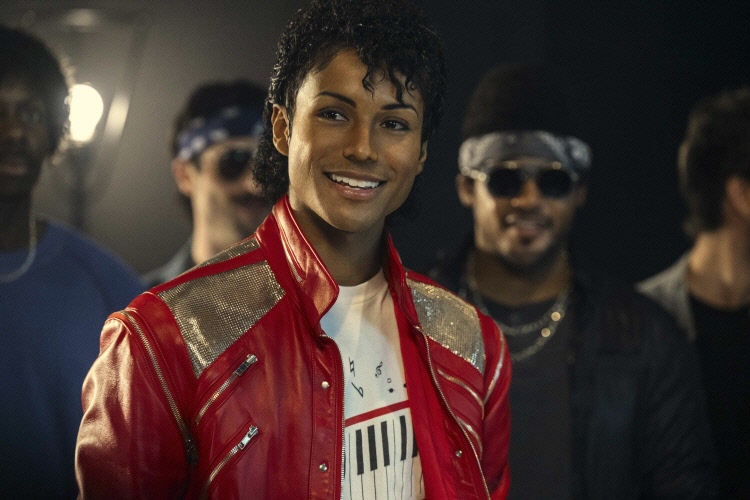
“Michael”, a biography drama film on the life and career of Michael Jackson, works whenever it goes all the way for presenting Jackson’s music. If you simply want to enjoy his music, the movie will not disappoint you at all with its fairy vivid and exciting presentation of his song and dance scenes, and you will not feel like wasting your time and ticket money at all.
However, the movie fails to present Jackson as a three-dimensional human being to observe, and this is probably one of the most distant and uninteresting experiences I have ever had at movie theater. As the screenplay by John Logan, who was previously Oscar-nominated for Martin Scorsese’ “The Aviator” (2004) and “Hugo” (2011), trudges from one narrative point to another without much narrative momentum to engage us, Jackson in the film simply comes to us as a bland figure to adore and worship, and that is all we can get here.
And the movie duly follows most of its genre clichés and conventions without any irony or amusement. For example, it opens with Jackson, played by Jackson’s real-life nephew Jaafar Jackson, preparing for another big moment in his career in 1988, and then it naturally goes back to when young Jackson, played by Juliano Krue Valdi, and his several older brothers began their musician career under the abusive management of their father Joseph Jackson (Colman Domingo). For making them into a successful band, Joseph pushes his boys as hard as possible, and young Michael gradually stands out as the most gifted one in the group, though he often finds himself daunted and oppressed by his frequently domineering father.
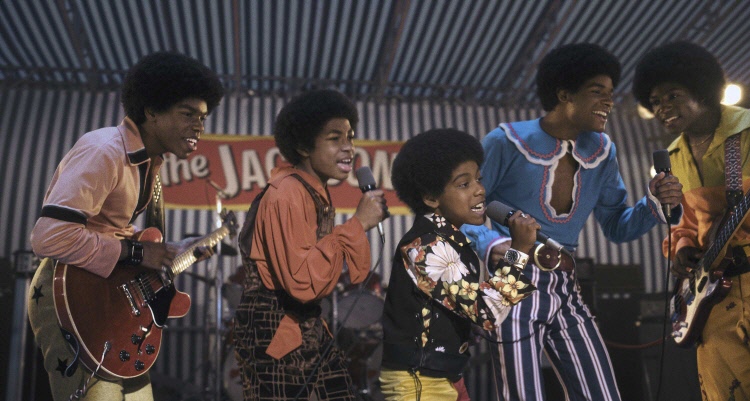
After a string of big performance scenes of the Jackson Five, the story soon jumps onto several years later. Now becoming a young adult, Jackson begins to consider going his way along by himself, but he is still afraid of his father. Fortunately, those record executives and his new attorney John Branca (Miles Teller) are quite helpful to him, and Jackson finally finds a way to get away from his father’s toxic influence.
What follows next is a number of notable career highlights for Jackson during the 1980s. Yes, many of Jackson’s famous songs such as “Beat It” and “Thriller” are presented on the screen with a lot of flashy style, and we often see a lot of enthusiasm from his very, very, very excited audiences. Of course, there subsequently comes a downturn for him when he has a serious accident on the stage, but he endures and then prevails anyway, and then there eventually comes the big finale as expected from the very beginning.
However, the movie only scratches the surface without letting us get to know more about Jackson as a human being. As far as I can see, Jackson in the film is a very talented guy who is also a serious case of arrested development, but the movie merely presents him as an extremely sensitive artist who just did not have normal childhood as being pushed to grow up too soon. This could lead to some insight into all those unpleasant scandals surrounding him later in his life, but the movie conveniently limits itself as deliberately not going beyond 1988.
This is quite understandable because not only Jackson’s surviving family members also his attorney participated in the production of the film. After all, the movie needs their permission on using all those songs by Jackson throughout the film, so it cannot possibly show anything negative about Jackson of them, but the result is blandly sanitized to the bone, and you may wonder what director Antoine Fuqua and his four editors had to cut during their rather troubled post-production period.
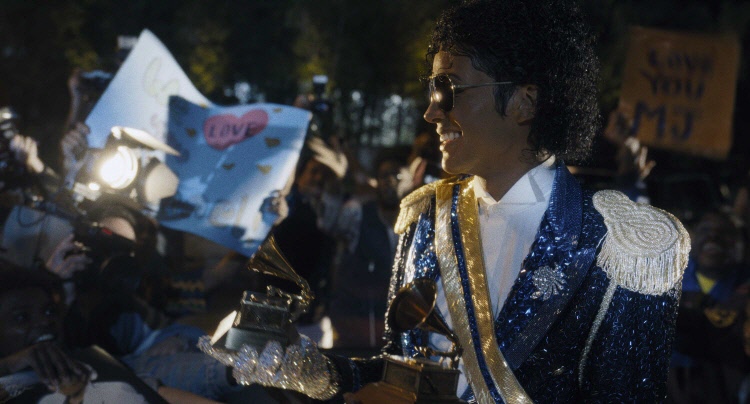
In case of Jaafar Jackson, he acquits himself fairly well as showing enough effort and commitment on the screen. Although he does not sing for himself, Jackson looks quite believable during all those song and dance scenes in the film, and you may wish that the movie gave him more things to do instead of having him merely recreate his uncle’s image. In case of young performer Juliano Krue Valdi, he is suitably perky and fetching as required, and it is a shame that the movie does not utilize well his natural talent on the whole (I can easily imagine how wonderful he could be if the movie solely focused on Jackson’s early career instead).
Several substantial supporting performers in the film simply come and go without much impression. While Colman Domingo is regretfully demanded to chew his scenes as much as Faye Dunaway did in “Mommie Dearest” (1981), Nia Long is stuck with a thankless job of looking saintly and concerned, and the performers playing Jackson’s siblings usually remain as mere background details throughout the film. Miles Teller, Mike Myers, Kendrick Sampson, and Larenz Tate are mostly adequate, but they are limited by their superficial characters from the start, and that is another disappointment from the film.
In conclusion, “Michael” is quite bland and hollow without going that deep into Jackson’s life and career. As a tentpole event for millions of his fans out there, it has been considerably successful at the world box office (It has already earned more than 600 million dollars at present, by the way), but it is still a very bad film for numerous flaws including scattershot storytelling and shallow characterization, and I would rather recommend several better musician biography drama films out there such as “Ray” (2004) or “La Vie en Rose” (2007). After watching these films, I came to feel and know more about their human subjects than before, but “Michael” left me with growing emptiness and disappointment, and, folks, that is all.