
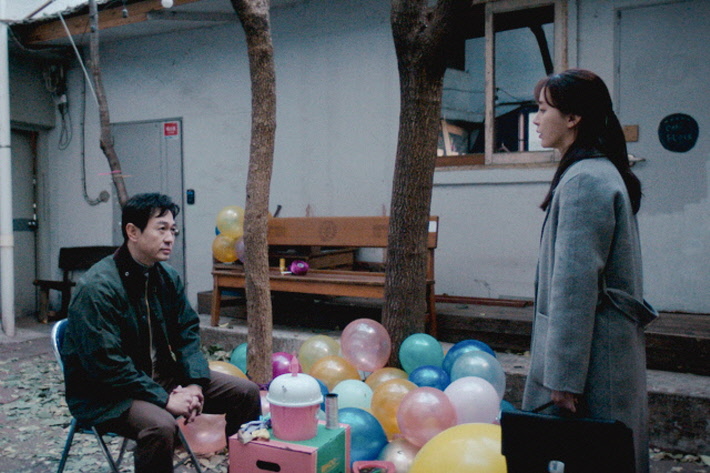
South Korean independent film “The Nonsense” is a little but effective mix between character drama and psychological thriller which will often unnerve you with its disturbingly ambiguous moments. Even in the end, you may not be entirely sure about everything in the story just like its heroine, but its darkly unsettling mood will linger on you mind for a while after the movie is over, and you will probably reflect more on those ambiguous moments in the film.
The story mainly revolves around Yoo-na (Oh Ah-yeon), a claims adjustor working in a small agency handling various insurance claims. Thanks to how thoroughly she has handled many insurance claims without any misstep, Yoo-na has been regarded as one of the best employees in the agency, but we soon see how things have been not that good in her private life. Due to her father’s big real estate business mistake, she and her mother have to pay his enormous debt bit by bit, and it is clear that she has been constantly burdened by this daunting family problem.
On one day, Yoo-na is requested to handle one particular insurance claim which was originally handled by one of her fellow employees who suddenly resigned for no apparent reason. A man suffering from terminal illness was drowned in a nearby lake, and it is quite possible that he committed suicide, but, so far, there is not any evidence to prove that at present.
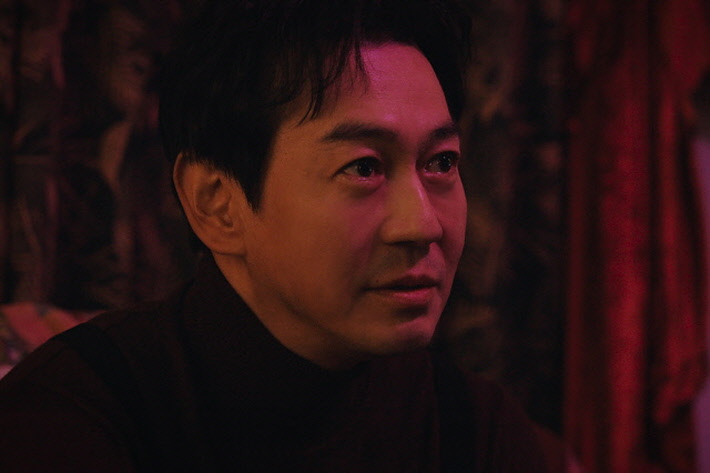
As Yoo-na examines this insurance claim in question, the circumstance surrounding it looks rather suspicious to her. The dead man has no close family member, and the recipient of his insurance claim is Soon-gyoo (Park Yong-woo), who was his “laughter therapist”. When she visits Soon-gyoo later, Yoo-na instantly sense something fishy about this seemingly gentle dude, and she becomes more determined to find what actually happened.
It seems at first that everything will be quickly resolved for her and her agency, but Yoo-na cannot help but become unnerved by Soon-gyoo, and he seems to be well aware of that. Right from their first meeting, he noticed many things about Yoo-na via his very keen observation, and then he sees through more of her as they have more meetings later. She tries to remain calm and cool as much as possible, but she also cannot possibly deny that, as he shrewdly pointed out already, she does have a lot of personal issues hidden behind her frigid appearance.
Soon-gyoo seems willing to provide some help to Yoo-na, and she sees how he works as a therapist for several people including one young baseball player. This lad has been bullied and abused by his coach, and Soon-gyoo has him go through a rather morbid therapy session, which seems to work quite well on the lad as he lets out a lot of his anger and frustration.
Meanwhile, we observe more of Yoo-na’s personal issues as the medical condition of her father, who has been comatose at a hospital for some time, gets worse and worse. While her mother tries anything to make him to get better, Yoo-na is reminded again of her old pain and resentment inside her, and this makes her all the more unsettled than before. When Soon-gyoo later approaches to her with a supposedly generous offer, she is understandably hesistant, but then she finds herself becoming far less burdened than before after he makes her face her pain and resentment during one disconcerting scene.
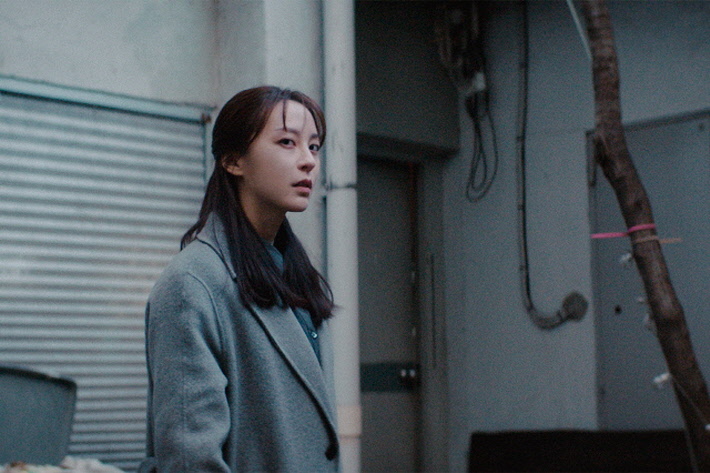
Of course, there soon comes an expected plot turn, and Soon-gyoo naturally looks much more insidious and ambiguous than before, but the screenplay by director/writer Lee Je-hee, who previously wrote the screenplay for recent South Korean horror film “Noise” (2025), does not provide us any easy answer at all even during the finale. Getting more confused about what she should really believe, Yoo-na desperately tries to get any answer from Soon-gyoo, but he remains as elusive as before, though he gives her a sort of free service in the end. During the very last scene, the story throws another moment for more confusion for Yoo-na, but we can all agree that she can at least have some good laugh at last.
The two lead performers of the film are often compelling as ably complementing each other throughout the story. Oh Ah-yeon, who is no stranger to genre movies considering her appearance in South Korean horror film “Gonjiam: Haunted Asylum” (2018), deftly conveys to us the growing anxiety behind her character’s cool-headed attitude, and she is especially good when her character must hold herself as much as possible in front of her opponent later in the story. In case of Park Yoon-woo, who recently appeared in Park Chan-wook’s “Decision to Leave” (2022), balances his increasingly enigmatic character well around a lot of uneasy ambivalence, and he also brings a bit of black humor to several key scenes of his.
On the whole, “The Nonsense” engaged me more than expected, and I enjoyed its mood, storytelling, and performance. Although this is his first feature film, Lee shows considerable skill and potential here in this movie, and it will be interesting to see what may come next from him after this solid first step for his promising filmmaker career. In short, this is one of the more interesting genre films from South Korean cinema during last year, and I think you should give it a chance someday.


![Light Show [Explored 2026-10-09]](https://live.staticflickr.com/65535/55578539818_958ce4fa9c_s.jpg "Light Show [Explored 2026-10-09]")


