“The Little Sister”, which won the Queer Palm award when it was shown at the Cannes Film Festival early in last year, is a sensitive coming-of-age queer drama about one plain Muslim lesbian woman. As observing how much she struggles to balance herself between her sexuality and the other parts of her identity, the movie makes us have more understanding and empathy on her inner struggle, and we are touched by how she makes some little but significant forward steps around the end of the film.
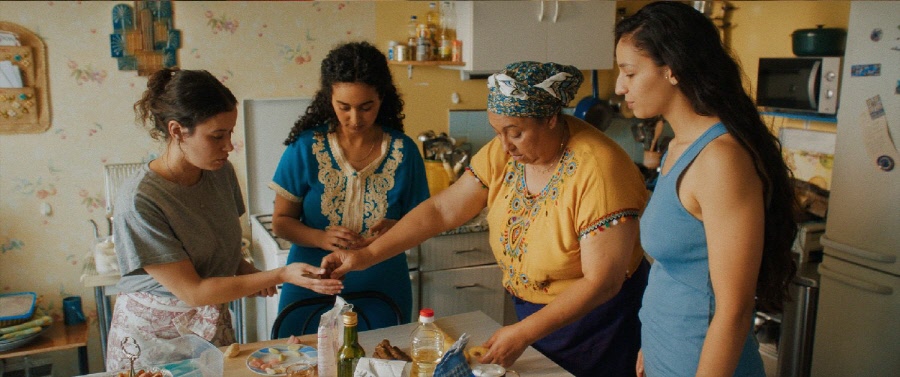
At the beginning, the movie quickly and succinctly establishes the personal background of its young heroine. Fatima (Nadia Melliti) is a 17-year-old girl living with her Algerian immigrant family, and the opening scene shows her going through her routine morning prayer as a devoted Muslim. She and her parents and two older sisters are mostly happy together, and her parents do not seem to mind that she is less girly compared to their other two daughters.
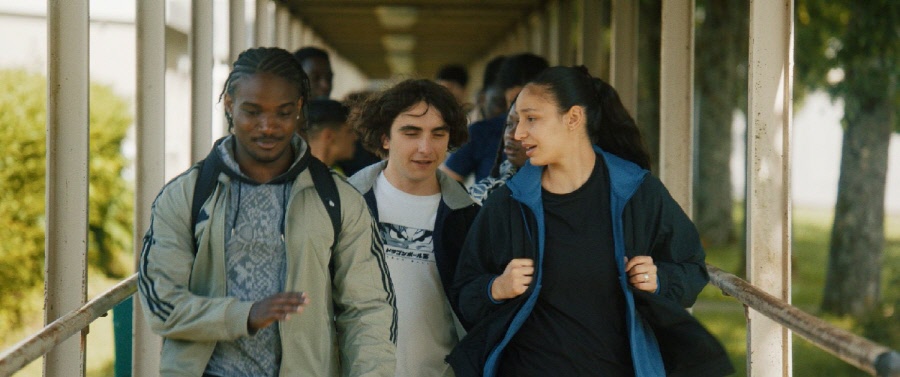
In her high school, Fatima is one of the more promising students in her class. She and many of her classmates are soon going to take an exam for getting their high school diploma, and she is expected to move onto college for higher learning. As a matter of fact, she has aspired to become a writer someday, though her family often expects her to meet and then marry any nice guy sooner or later.
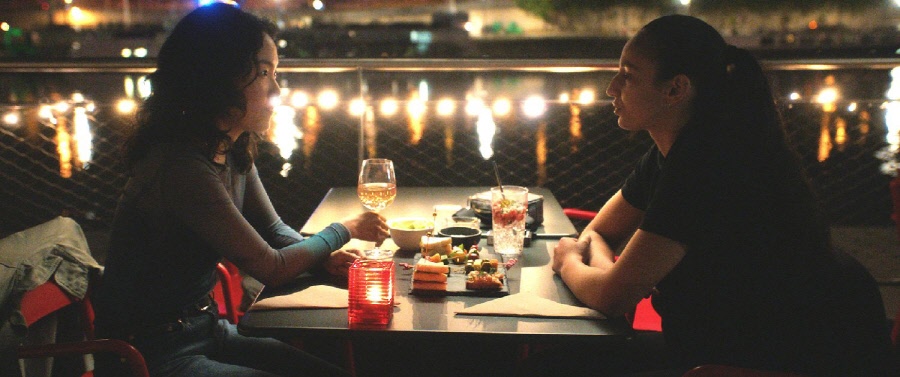
However, Fatima has been hiding her homosexuality from not only her family but also many others around her. Whenever she is free, she looks for any opportunity for quick sexual encounter via an online application, and there is a little amusing scene where she meets a much more experienced lady who gladly tells her all about lesbian sex.
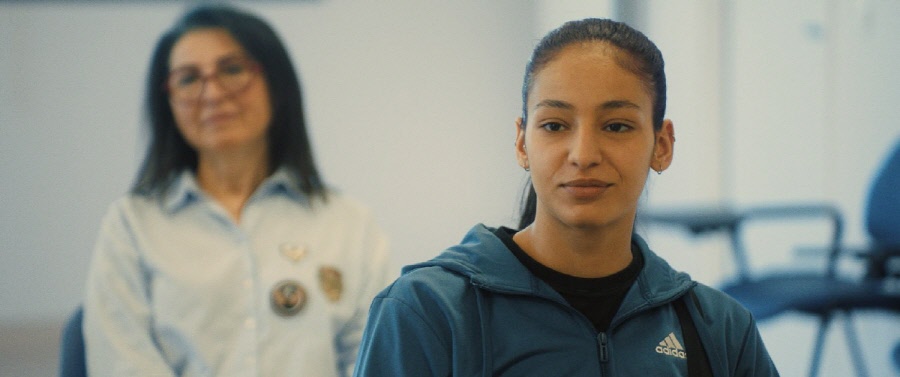
And then there comes an unexpected chance for romance on one day. Due to her chronic asthma, Fatima attends a medical session along with several other asthma patients, and she cannot help but notice a female nurse who turns out to be using the same online application. Not long after this brief encounter, she begins to meet this nurse, and it seems that this can be the first step toward real romantic relationship for her.
Meanwhile, things change in her world bit by bit. Once she passes that examination, Fatima officially graduates from her high school, and we soon see her studying at a local college. Her mother cannot possibly be prouder of her, and she naturally comes to have more of a certain expectation on her, but Fatima still cannot tell anything about her homosexuality to her mother or any other family member of hers.
Nevertheless, she also cannot help but follow whatever her heart desires. After her first romance is suddenly aborted due to some personal reason of her girlfriend, Fatima becomes more emboldened to explore her growing sexual urge more than before, and she does not hesitate at all when she comes across a chance to do something she has never imagined before. As the camera is phlegmatically observing her little sexual experiment, the movie brings a lot of sensitivity and sensuality to this intimate moment, which comes to function as another part of her emotional growth along the story.
In the meantime, Fatima also remains devoted to her religion as before, and this brings more inner conflict for her. At one point in the middle of the story, she tries again on heterosexuality via her ex-boyfriend, but that only reminds her more of her homosexuality instead. When she manages to talk indirectly about herself in front of a local Muslim priest, she only receives a disapproving response from him, and that makes her all the more reluctant about confiding her homosexuality to her family.
Nevertheless, we also observe some little progress here and there in her personal life. When she comes to have another chance for romance later in the story, Fatima naturally hesitates at first, but she cannot deny what her heart has yearned for a while. When she happens to have a private conversation with her mother, she still cannot reveal herself more to her mother, but we sense a bit of mutual understanding between them when her mother gives her a little special present for her upcoming birthday.
Everything in the film depends a lot on the impressive performance of newcomer Nadia Melliti, who deservedly received the Best Actress award for this movie at Cannes Film Festival. Even when her character does not seem to signify much on the surface, Melliti, who also won the Best Female Revelation award at the César Awards early in this year, deftly illustrates the complex feelings and thoughts inside her character, and she also generate enough romantic vibe with Park Ji-min, a South Korean actress who was unforgettable in Davy Chou’s “Return to Seoul” (2022).
On the whole, “The Little Sister”, which is based on French writer Fatima Daas’s 2020 autofiction novel “The Last One”, is a solid work to be admired for its strong lead performance and the competent direction of director/writer Hafsia Herzi, who has been mainly known for her memorable debut performance in Abdellatif Kechiche’s “The Secret of the Grain” (2007) and made a feature film debut in “Good Mother” (2021) a few years ago. As far as I can see from “The Little Sister”, she is a talented filmmaker to watch, and it will be interesting to see what may come next from her.