Work It (2020) ☆☆1/2(2.5/4): A mild underdog movie with predictable movements

Netflix film “Work It” is a mildly enjoyable underdog movie with predictable movements which will not surprise you much especially if you are familiar with its genre territory. As a high school comedy movie about dance competition, it is fairly competent in case of mandatory dance scenes, but it is so typical and plain in other main aspects including story and characters that I sometimes found myself coolly observing it from the distance instead of fully enjoying it.

The story mainly revolves around Quinn Ackerman (Sabrina Carpenter), a plucky high school student who has studied and worked very hard for being allowed to study in Duke University. Although she seems to be able to go to more prestigious colleges such as Yale or Harvard, she has sincerely aspired to go to Duke University just because it is where her dear father, who died several years ago, studied, and her mother fully supports her decision without any reservation.

However, it turns out that she has a small but serious problem when she has an interview at Duke University. During the interview, Quinn is told that she is not so distinctive compared to many other applicants who are as exemplary in grades and extra-curricular activities as her, so she comes to blurt out that she is a member of her high school dance team, which has incidentally won three times in row at the Work It Dance competition.

However, there is one thing Quinn did not reveal during the interview: dancing is actually not something which interests her a lot. As a matter of fact, she was in charge of the lighting for her high school dance team before recently getting kicked out the team because of an unfortunate technical mistake during its latest dance performance in the school.

Because she will really have to participate in the Work It Dance Competition as she said during the interview, Quinn enlists her best friend Jasmine (Liza Koshy) for help, and Jasmine, who is incidentally one of the key members of their high school dance team, tries to help Quinn as much as she can. Not so surprisingly, Quinn only comes to embarrass herself during the following tryout for the dance team, and she is quickly dismissed by Julliard (Keiynan Lonsdale), the cocky captain of the dance team.

While quite disappointed and depressed by the poor result of her efforts, Quinn comes to think of an alternative which may work even though there is not much chance from the beginning. All she has to do is making another dance team with other students, and Jasmine agrees to join her dance team after Julliard refuses to let her shine a bit more in their performance. Along with Jasmine, Quinn manages to assemble several different students with each own considerable potential, and now they need a choreographer who is good enough to improve their dance team a lot.

And that guy is Jake Taylor (Jordan Fisher), a handsome lad who was once famous for his exceptional dancing skills but then walked away from his spotlight due to an unlucky physical injury. Now merely working as a dance teacher for kids, he is not so particularly interested in being a coach/choreographer for Quinn’s dance team, but, of course, he eventually agrees to join her dance team, and we soon see how the team gets improved bit by bit.

While quite predictable in many aspects, the screenplay by Alison Peck throws some nice funny moments for good laughs. I chuckled as watching how Quinn and her dance team colleagues’ first trial leads to an unexpectedly disastrous result, and I was also amused a bit by a running gag involved with a certain supporting character who always attracts Jasmine’s attention for an understandable reason.

In case of the dance scenes in the film, director Laura Terruso and her crew members do not disappoint us at all. Always accompanied with fun and exciting music, the dance movements look as smooth and skillful as we can expect from high school dancers, and the movie also makes sure that we can really sense that Quinn and her team colleagues get improved along the story.

During the last act, the movie begins to stumble as being more predictable than before. Besides a blatantly contrived conflict between Quinn and her team members, there is also a clichéd moment as she comes to clash with her mother right before what is supposed to be her big moment, and it is not much of a spoiler to tell you that her mother eventually comes to change her mind while everything turns out to be pretty well for Quinn and everyone in the story.

Anyway, the main cast members in the film bring some charm and personality to their archetype characters. While fairly engaging in her likable performance, Sarah Carpenter clicks well with Jordan Fisher during their intimate scenes, and the other main cast members including Liza Koshy and Keiynan Lonsdale are solid in their respective parts.

Overall, “Work It” will probably satisfy you enough if you simply want to kill your spare time, but I have to remind you that there are better high school movies from Netflix such as “To All the Boys I’ve Loved Before” (2018) and “The Half of It” (2020). I will not deny that I was entertained to some degree during my viewing, but it will probably be evaporated from my mind within several days, and that will be all.

Posted in Movies | Tagged , , , , | Leave a comment

Los Lobos (2019) ☆☆☆1/2(3.5/4): Wolves Don’t Cry

Mexican film “Los Lobos”, which won Grand Prix of the Generation Kplus International Jury in addition to the Peace Film Award at the Berlin International Film Festival early in last year, is a modest but undeniably extraordinary film mainly revolving around the unadulterated viewpoint of two little boys of an emigrant worker in US. While never overlooking the harsh environment surrounding its two young heroes, the movie sometimes rolls along with their hope and imagination in its own distinctive way, and the overall result is quite poignant to say the least.

At the beginning, the movie calmly observes the long journey of Lucía (Martha Reyes Arias) and her two young sons across the Mexico-US border. Unlike many other illegal Latino immigrants, they easily cross the border as ‘tourists’ and then arrive in Albuquerque, New Mexico, but their harsh reality soon becomes quite evident to us. Because she is not a legitimate emigrant, Lucía has no choice but to do several menial jobs every day for earning enough money for her family, and her two sons Max (Maximiliano Nájar Márquez) and Leo (Leonardo Nájar Márquez) accordingly are left alone during most of daytime in their current staying place, a small shabby apartment which demands some cleaning work right from their very first day.

While they try to spend their free time alone in the apartment during their mother’s absence, Max and Leo cannot help but feel suffocated as limited by a number of rules imposed on them by their mother. Lucía firmly emphasizes to them that they must get along with well with each other in addition to keeping their current residence clean as usual, and, above all, she absolutely forbids them to go outside as long as they are not under emergency.

Lucía also promises to them that she will someday take them to the Disney park, so Max and Leo begin to learn a bit of English as required, but then they quickly get bored after memorizing a certain broken sentence which may be useful if they ever go to the Disney park. As their mother is more frequently absent or tired due to her increasing worktime, they come to throw themselves into their boundless imagination, and, as imagining themselves as two young brave ninja wolves fighting against the world, they draw some crude drawings, which become the basis of the occasional animation scenes in the film.

After carefully establishing its three main character’s isolated circumstance, the movie slowly follows Max and Leo’s growing interest toward the world outside. As watching several Latino American kids in the neighborhood, they cannot help but envy the freedom enjoyed by those boys outside, and, not so surprisingly, they soon come to break their mother’s No.1 rule. When they later happen to encounter their Chinese landlady, she turns out to be more generous than expected, and they get to know more about her and her ailing husband as spending some time with them.

Of course, there subsequently come several problems to Lucía and her sons later in the story, but the screenplay by director/co-producer/co-writer Samuel Kishi, who also edited the film with Yordi Capó and Carlos Espinoza, and his co-writers Luis Briones and Sofía Gómez-Córdova thankfully avoids the pitfall of gratuitous melodrama, and the movie keeps maintaining its calm realistic tone while occasionally focusing on various human figures in its main background. It is apparent that many of them struggle to live with poverty day by day, and the movie subtly lets us reflect more on their despairing human conditions without any cheap sympathy or sentimentalism.

Furthermore, what is achieved on the screen by Kishi and his crew members is seemingly plain but superb enough to engage and touch us. While cinematographer Octavio Arauz often gives us the small but precious moments of visual poetry to be admired, Kishi’s brother Kenji Kishi provides a sparse but effective score, and it is particularly lovely during those simple but charming animation scenes in the film.

Kishi also draws the strong performances from his three lead performers. While Martha Reyes Arias steadily holds the ground as demanded, Maximiliano Nájar Márquez and Leonardo Nájar Márquez, who are real brothers, are effortless in their dynamic interactions on the screen, and they are terrific whenever they share the screen with Arias. As a sort of wolf pack as reflected by the very title of the movie (It means “The Wolves” in English), Lucía and her two boys always come to stick together no matter what happens to them, and Arias and the Márquez brothers convey well to us the strong familial bond among their characters throughout the film.

As already pointed out by many other critics, “Los Lobos” deserves to be compared to other similar recent notable films such as Sean Baker’s “The Florida Project” (2017) and Jeremiah Zagar’s “We the Animals” (2018). Like these two excellent films, the movie understands and empathize well with its young main characters while deftly balancing itself between hard reality and tentative optimism, and it surely earns its hopeful finale thanks to the thoughtful and sensitive direction of Kishi, who previously made a feature film debut with “We Are Mari Pepa” (2013) after directing several short films. As far as I can see from this second feature film of this, he is a talented filmmaker with considerable potential, and it will surely be interesting to see how much he will advance during next several years.

Posted in Movies | Tagged , , , | 1 Comment

Les Misérables (2019) ☆☆☆1/2(3.5/4): Two days in Montfermeil

French film “Les Misérables”, which was nominated for Best International Film Oscar early in this year, is often quite compelling as a vivid examination on race and class in the commune of Montfermeil, a suburban ghetto area on the east of Paris where Victor Hugo wrote that classic novel of the same name in the early 1860s. As busily moving around a bunch of various human figures during its 104-minute running time, the movie gradually raises its sensitive social issues along its steadily developing plot, and then it pulls all the stops during its explosive final act, whose striking last shot will linger on your mind for a long time along with a quote from the aforementioned novel by Hugo.

After the vivacious prologue sequence showing a group of adolescent boys from Montermeil going to Paris and then, along with countless other people, cheering for the French team winning the 2018 FIFA World Cup, the movie shows us one eventful day of Brigadier Stéphane Ruiz (Damien Bonnard), a divorced police officer who has been recently transferred to the anti-crime brigade of the police station in Montfermeil due to a personal reason. Shortly after meeting two other officers Chris (Alexis Maneneti) and Gwada (Djebril Zonga), he is introduced to their direct boss, and he and his two new partners soon begin their daily patrol around Montfermeil.

At first, the mood among these three police officers feels casual and cheerful as Chris and Gwada often make a fun of Stéphane, whom they instantly nickname ‘Greaser’ for his rather slick hairdo. While Chris is a Caucasian and Gwada is an African French guy who has grown up in the area, it is apparent that they have become quite accustomed to each other’s presence, and the movie provides some amusement via the frequent playful banters between them, which sometimes make Stéphane rather uncomfortable for good reasons.

And then Stéphane becomes more awkward as observing more of how Chris and Gwada work on the streets and alleys of Montfermeil. At one point, Chris becomes quite aggressive to several adolescent girls just for smoking marijuana, and he could do worse than that if Gwada did not intervenes in the situation later. In addition, it turns out that Chris and Gwada have maintained some unofficial connections with several prominent local criminal figures in the area mainly for keeping things under control as usual, and Stéphane, who turns out to be your typical by-the-book police officer, becomes more conflicted as working more along with his two new partners.

Meanwhile, the mood becomes a bit more intense due to a small trouble caused by one adolescent boy named Issa (Issa Perica), who happens to steal a small lion cub from the leader of a gypsy circus group. Quite infuriated by this theft, the leader of the gypsy circus group forcefully demands to a major criminal figure in the area that his precious lion cub should be retrieved as soon as possible, and, after coming to learn of the ongoing conflict between these two figures, Stéphane and his two partners must find that lion cub for preventing another violent trouble in the area.

Fortunately, they can quickly locate Issa, but then they find themselves in a big problem after attempting to arrest him. To make matters worse, what happens mainly because of their unwise actions is shot by a drone belonging to a little boy called Buzz (Al-Hassan Ly), and they must find Buzz before what his video clip is leaked on the Internet and then causes more problems for them and others in their police station.

As Stéphane reluctantly goes further along with his new partners, the screenplay director Ladj Ly and his co-writers Giordano Gederlini and Alexis Manenti, which is developed from Ly’s 2017 short film of the same name, builds up more narrative momentum while also taking some time for character development. While it pays some attention to a mentally deficient guy who is incidentally the younger brother of one of the prominent criminal figures in the area, it also thoughtfully handles the impossible situation of an ex-con guy, who has tried to lead a clean new life as focusing on his religion and new occupation before Buzz suddenly comes to him for protection and advise.

Like this ex-con guy, Stéphane tries to resolve the increasingly complicated circumstance, but then he finds himself accepting more compromise than expected. At one point later in the film, Issa comes to be punished in a very cruel way, and there is nothing Stéphane can do about that. You may initially think the boy deserves some spanking, but then you will come to think twice as observing how much he is damaged in more than one aspect around the end of the movie.

As the day is being over, everything seems to be fine on the surface, but then the movie takes a left turn during its last act. This feels rather jarring at first, but it eventually comes to us a logical outcome from what has been slowly developed during the rest of the film, and Ly, who received the Jury Prize when the movie was shown at the Cannes Film Festival early in last year, and his crew members including cinematographer Julien Poupard and editor Flora Volpeliere skillfully throw us right into the raging chaos surrounding the main characters in the film.

In conclusion, “Les Misérables”, which won four César Awards including the one for Best Film a few months ago, is an electrifying and thought-provoking social drama to be appreciated for its considerable verisimilitude and the fine natural ensemble performance from its main cast members. I still think Céline Sciamma’s great film “Portrait of a Lady on Fire” (2019) should have been Oscar-nominated instead, but “Les Misérables” is indeed another excellent French film of last year, and it is certainly recommendable in my trivial opinion.

Posted in Movies | Tagged , , | 1 Comment

Russian Penguins (2019) ☆☆☆(3/4): A risky sports business in Russia

Documentary film “Russian Penguins” is as absurd as its very title suggests. Although I really have no idea on how much of the testaments from the interviewees in the documentary is actually true, the documentary is still engaging as cheerfully presenting numerous absurd aspects of its main subject, and it eventually comes to us as an amusing but ultimately disturbing cautionary tale about one very risk sports business Russia during the 1990s.

During its first half, the documentary shows and tells us how things were quite dire for the Red Army hockey team of the Soviet Union in the early 1990s. After the era of the Soviet Union was officially ended around the end of 1991, the Red Army hockey team and its legendary coach Viktor Tikhonov became desperate and helpless without any government funding to support them, and we later see a series of archival photographs which vividly show us the hopeless status of their home stadium during that period.

As Russia slowly began to try democracy and capitalism around that time, many businessmen in US saw the potential of new business markets. Howard Baldwin was one of such guys, and he happened to see an interesting business opportunity from the Red Army hockey team, which, as shown in director/co-producer Gabe Polsky’s previous documentary “Red Army” (2014), had been quite famous as one of the leading ice hockey teams in the world. Although many talented Red Army team members had already moved to US for more money and success, Badwin came to consider remodeling the Red Army hockey team into a profitable enterprise, and that is how he came to found the Pittsburgh Penguins, which was going to be the American partner of the Red Army hockey team.

At first, this change on the Red Army hockey team did not look that hopeful, just like the social/economic situation of Russia during that period. Although Tikhonov and his general manager Valery Gushin were cooperative, there was not much improvement despite that, and Baldwin eventually came to recruit Steve Warshaw, a marketing expert who was hired to improve and promote the image of the Red Army hockey team and its American partner.

Warshaw willingly talks to us about his bold and outrageous attempts to enhance the profitability of the hockey team. After the disastrous opening game in 1993 which turned out to attract far less audiences than expected, this rather eccentric marketing whiz went all the way for any possible way to attract more audiences. For instance, when he came to learn that a certain underground spot in the home stadium had been actually used as a strip club, he did not hesitate to hire those strippers working there, and an archival video clip shows us those strippers gliding into the ice rink while being ready to take off their clothes.

And that was just the beginning of Warshaw’s more outrageous tactics, which worked better than expected despite some hiccups. When he hired a circus group, the group agreed to have their several bears serve and drink beer in front of the audiences, and that was pretty sensational enough to draw a lot more audiences, but, alas, there later came an unfortunate incident of minor injury due to one drunken guy who unwisely tried to tease one of these bears.

Anyway, the Red Army hockey team seemed to rise to another fame quickly along with its American partner, and that was when Michael Eisner, who was the CEO of Disney during that time, entered the picture. Although he was not particularly interested in ice hockey, he seriously came to consider buying the merchandise rights associated with the Pittsburgh Penguins and its Russian partners, and he even thought of making a sequel to “The Mighty Ducks” (1992) set in Russia.

Baldwin and Warshaw were certainly excited by how much they would get once they accepted Eisner’s offer, but their dream did not last long as the Russian society became quite chaotic and volatile in its clumsy experiment with democracy and capitalism. As the situation got a lot more unstable and lawless in Moscow, Baldwin and Warshaw became quite concerned, so they sought for help from those local high-ranking authorities, but they did not get much help while also cornered by a bunch of local mob figures, who were quite willing to take over Baldwin’s portion in the Red Army hockey team.

Warshaw claims that he was often monitored and intimated by those dangerous people mainly because of Gushin, but there is no clear evidence to support his claim, though it is apparent that the circumstance surrounding the Red Army hockey team was quite dangerous. Around that time when Baldwin and Warshaw walked away from their increasingly risky business venture, several figures involved with the Red Army hockey team were killed under mysterious circumstances, and Gushin, who looks rather more suspicious as we get to know him more, does not tell us much in front of the camera while quite amused by Warshaw’s accusations against him.

On the whole, “Russian Penguins” is a solid companion piece to “Red Army”, and I was entertained by its many absurd moments which make a good contrast with the darker moments later appearing in the documentary. I still have some doubts on how reliable some of its interviewees are, but, what the hell, they and others give a fun and interesting story to observe and reflect on for many reasons, so I will not grumble for now.

Posted in Movies | Tagged , , , , , | Leave a comment

The Fight (2020) ☆☆☆1/2(3.5/4): ACLU lawyers against the ongoing injustices

Documentary film “The Fight”, which deservedly won the US Documentary Special Jury Award for Social Impact Filmmkaing when it was shown at the Sundance Film Festival early in this year, gives us the inspiring stories of several lawyers of the American Civil Liberties Union (ACLU). Mainly thanks to the cruelty and apathy of the presidency of Donald J. Trump during last several years, these people have certainly been far busier than before, and the documentary closely and intimately observes the ups and downs of their continuing legal resistances against the ongoing injustices under the Trump administration.

At the beginning, the documentary lets us get acquainted with the four main legal battlegrounds for ACLU. Because Trump has openly vowed to overturn the landmark decision of US Supreme Court Justice on the Roe v. Wade case in 1973, protecting women’s productive rights has been one of the most urgent tasks in ACLU, and the documentary focuses on one infuriating case involved with a detained adolescent woman in the need of abortion. ACLU lawyer Brigitte Amiri strongly believes that her client should be allowed to have abortion as she has wanted, but she needs to convince three federal court judges presiding over the case, and that turns out to be not so easy at all as her legal argument is tackled a lot by one of these three judges.

That judge in question is none other than Brett Kavanaugh, who, as many of you know, gained a lot of notoriety as Trump appointed him as the new US Supreme Court Justice in 2018. Watching Kavanaugh eventually going to the US Supreme Court despite of lots of controversy surrounding his alleged sexual harassment, Amiri naturally becomes more alarmed and concerned that before, but she continues to fight as usual while well aware of how the situation will be more difficult for her and her clients out there.

In case of Lee Gelernt, the main field of this ACLU lawyer is those detained illegal immigrants who are unjustly separated from their family members during their detention period. After the regulations on immigrants and refugees coming into US become more severe and harsher thanks to the Trump administration, Gelernt comes to handle more desperate cases than before, and there is a sad scene involved with one of Gelernt’s many different clients. She has been looking for any chance for reuniting with her son for several months, but, unfortunately, there has not been much progress for her, and it is really heartbreaking to see her painfully reminiscing about her separation from her son.

Meanwhile, we also get to know Joshua Block and Chase Strangio, two ACLU lawyers handling the cases involved with the human rights of sexual minority people. After the Trump administration announced a law for banning sexual minority people from the US military a few years ago, the discrimination on sexual minority people has become a bigger issue than before, and one of Block and Strangio’s clients, who is a transsexual US Army soldier, is clearly concerned about what may happen next when he talks a bit about his life and military career in front of the camera.

Block and Strangio eventually succeed in blocking that vile attempt of the Trump administration but, not so surprisingly, they and ACLU come to face more obstacles later as the Trump adminstration tries again in a more insidious way. Although, as some of you know, that attempt was ultimately thwarted at the US Supreme Court a few months ago, I bet that Trump and his deplorable cronies will probably not stop at all during next 5 months even if they come to lose their power after the upcoming US Presidential Election.

Speaking of the US Presidential Election, securing the voting rights for millions of American people out there is definitely crucial in protecting the democracy in US, and that is why what ACLU lawyer Dale Ho has been doing is quite important to say the least. He often goes here and there around many different states for protecting voting rights, and that sometimes prevents him from spending more time with his family members, who fortunately understand and support him and his work despite that.

While he surely becomes quite frustrated many times just like most of his colleagues in ACLU, Ho does not stop at all while maintaining his spirit mostly well, and there is an amusing scene where he and other ACLU lawyers read some of those hate mails coming to them from time to time. Those hate mails are certainly quite unpleasant, but they indirectly remind Ho and ACLU lawyers again of what they have been standing for, and they are all willing to stick to their principle and integrity at all cost. As a matter of fact, ACLU has even defended a number of truly hateful figures and groups in the name of due process, and the documentary lets us muse on whether that is ethically right or not.

On the whole, “The Fight” presents a succinct but ample presentation of what ACLU and its lawyers have been doing for many years, and directors/producers Eli Despres, Josh Kriegman and Elyse Steinberg, who previously collaborated together in “Weiner” (2016), did a commendable job of juggling many different elements within the short running time (96-minutes). Thanks to the efficient editing by Desperes and his co-editors Greg Finton and Kim Roberts, we never get lost amidst multiple narratives, and the documentary subsequently serves us a series of compelling moments such as when Ho is anxiously waiting for the ruling on his big case from the US Supreme Court. In short, this is one of better documentaries of this year, and I really hope that things will be better for ACLU and its valiant lawyers in next year.

Posted in Movies | Tagged , , , , | 1 Comment

Blue Story (2019) ☆☆☆(3/4): Ghetto Gangs of London

“Blue Story” is a brutal British crime drama about two African British lads who happen to be driven into a series of violent and tragic happenings. To be frank with you, I really have no idea on how much the movie reflects the harsh reality out there in those African ghetto neighborhoods of London, but I must say that the movie grabbed my attention via its raw energy and palpable realism, and that is more than enough for compensating for a number of glaring weak points I observed during my viewing.

During the opening part, we see how its two heroes, Timmy (Stephen Odubola) and Marco (Michael Ward), became each other’s best friend during their childhood years. When young Timmy and his mother moved from Deptford to Peckham for getting him a better school education, young Timmy was understandably nervous at first, but then he quickly befriended young Marco at his new school, and that was the beginning of their long friendship.

Several years later, Timmy and Marco still attend the same school together along with their mutual male friends. Like many adolescent boys around their age, they all are quite interested in getting closer to those female students in their school, and one particular girl has attracted Timmy’s attention. Her name is Leah (Karla-Simone Spence), and Timmy is certainly excited when he hears that she will also go to a night party he and his friends are going to attend.

In the meantime, the movie also pays some attention to what is going on between the gang organization in Peckham and the rival counterpart in Deptford. As these two gang organization keep clashing with each other day by day, the tension around the two ghetto neighborhoods of London is gradually accumulated on streets and alleys, and that eventually leads to the tragic death of a certain key member of one of these two gang organizations, which accordingly leads to more hostility between these two criminal groups.

To Marco and Timmy, this increasingly violent circumstance in their neighborhood does not look that dangerous to them, though they are actually connected with these gang organizations in one way or another. While Marco is the younger brother of a key member of the gang organization in Peckham, an old childhood friend of Timmy is a member of the gang organization in Deptford, and he is certainly not so pleased to see his old childhood friend hanging around with the brother of one of the main enemies of his gang organization.

Of course, Timmy and Marco fatefully get themselves involved more in this situation, and, due to a series of unfortunate events, they soon find themselves opposing to each other with newfound hate and resentment toward each other. While Marco joins his brother’s gang organization, Timmy subsequently joins his old childhood friend’s gang organization, and both of them are quite eager to kill each other now.

As they and their gang organizations continue their vengeful turf war, the movie strikes us hard with numerous moments of shocking violence. Driven by their tribal mentality, Timmy, Marco, and many other gang organization members are quite determined to do anything with no consideration on the consequences of their actions, and the vicious cycle of violence is continued as before even while some of them eventually get killed or arrested by the police.

The movie has been compared to its American counterparts such as late John Singleton’s “Boyz n the Hood” (1991) and the Hughes brothers’ “Menace II Society” (1993), because director/writer Rapman’s screenplay is based on his own personal experiences of growing up in Deptford and then Peckham. The two gang organizations depicted in the film really exist in real life, and I came to learn later that some portions of the movie are actually inspired by true events.

Rapman, whose real name is Andrew Onwubolu, brings some stylish touches to his film, which complement well the gritty realism felt from several key scenes in the movie. As the omnipresent narrator of the story, he explains or summarizes his main characters’ situations via his rap song, and that certainly helps you a bit if you often have difficulty in understanding those local slangs frequently uttered by the characters throughout the film (To be frank with you, I had to check Google to learn what the hell ‘peng’ means).

The main weak point of the movie lies in its rather clumsy handling of plot and characters. As juggling many different characters besides Timmy and Marco, the story sometimes becomes too unfocused, and many of characters in the film are not developed that well, though this and other notable flaws in the film are thankfully not very distracting due to the strong performances from its good main cast members. While Stephen Odubola and Michael Ward give engaging lead performances at the center of the film, the other main performers including Khali Best, Eric Kofi-Abrefa, and Junior Afolabi Salokun are solid in their respective supporting roles, and Karla-Simone Spence brings some warmth and sensitive to her substantial female character in the story.
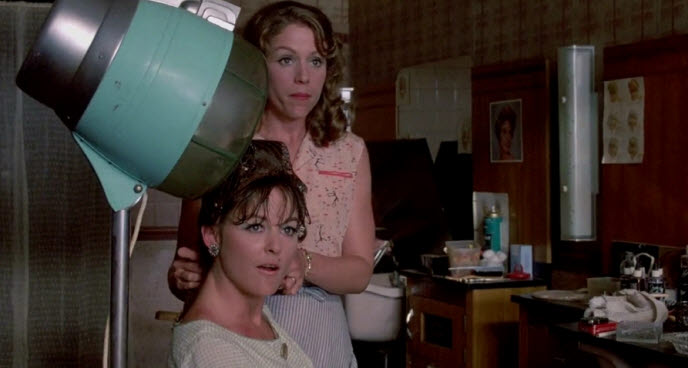
Overall, “Blue Story” is flawed to some degree, but its considerable raw energy is something you cannot easily ignore, and you will admire its director’s rough but undeniably passionate filmmaking. Some of you may still hesitate mainly because the movie was partially banned in British theaters in last year due to an unfortunate incident which allegedly happened during its theater screening, but this is inarguably another interesting debut work of this year, and I urge you to check it out and then evaluate it for yourself.

Posted in Movies | Tagged , , , , , | Leave a comment

Clementine (2019) ☆☆1/2(2.5/4): Two women in a lake house

“Clementine” is a slow and opaque psychological drama mainly revolving around two different female characters who happen to get involved with each other by coincidence. Putting them together in a remote spot during most of its running time, the movie phlegmatically but fascinatingly observes the growing emotional tension between them, and it is rather a shame that the movie only comes to scratch the surface in the end after constantly toying with what may happen between them.

At the beginning, we are introduced to Karen (Otmara Marrero), an adult woman who has recently broken up with her older lesbian lover who is simply called “D” (Sonya Walger) in the film. Although the movie is adamantly vague about how she and D came to end their relationship, it is apparent that Karen has not overcome the aftermath of their breakup, and she is now occupied with getting back her pet dog from D, but she cannot enter D’s house now as D has already changed the lock of the front door of the house.

Quite frustrated with this matter, Karen decides to go to a lake house belonging to D instead, which is located at a remote spot of some rural forest area. Not so surprisingly, D has also changed the lock of the front door of her house, but Karen eventually manages to go inside the house, and the empty silence of the house reminds her again of how much she feels barren and isolated due to her breakup with D.

And then there comes an unexpected encounter. As she walks around the house a bit, Karen comes across an adolescent girl who simply seems to be spending her free time on the lake, and then she meets her again not long after that. The girl’s name is Lana (Sydney Sweeney), and she says she has been looking for her pet dog. Although Karen does not believe Lana’s words much, she decides to help this girl finding the dog because she sympathizes with Lana as a fellow dog owner, and they soon look for the dog together for a while.

Anyway, Lana’s words turn out to be true, and Karen subsequently takes Lana and her dog to where Lana is supposed to live. On the next day, Lana comes to the lake again, and, as she and Karen spend more time together around the house and the lake, something mutual seems to be developed between them. While Karen cannot help but attracted to Lana’s youth and beauty, Lana looks rather oblivious to that as casually talking about her aspiration of being a Hollywood actress, but then it is gradually revealed that she is quite interested in Karen, who is older than her indeed but may lead her to something new and exciting for her.

In the meantime, the situation becomes a bit complicated due to the expected interference from D, who already knows Karen is in her lake house and accordingly has a young local handyman named Beau (Will Brittain) hang around her and Lana just in case. It looks like Beau has some interest in Lana, and Lana lets him flirt a bit with her, but she still seems to be more drawn to Karen than this hunky dude.

Although this generates some tension among these three main characters as they come to spend some time together around the lake house, the movie continues to maintain the ambiguous psychological situation among them. While he later becomes not so pleased about how Lana is flirting with him, Beau mostly does not cross the boundary. While she becomes more willing to cross the line between her and Karen, Lana simply looks like enjoying tiptoeing on the line. While she clearly desires for carnal intimacy, Karen keeps hesitating because, well, her mind is still coping with her messy status after the breakup with D.

During its last act, the screenplay by director/writer Lara Gallaher takes a left turn, and that is where the movie begins to stumble as trying to accumulate some dramatic tension. While a key private scene between Karen and Lana is thoughtfully and sensitively handled, what follows next is clumsily executed in contrast, and you will probably not be surprised by what is inevitably revealed around the ending of the film.

Anyway, Gallaher and her cast and crew members did their best to hold our attention at least during the first hour of the film. While cinematographer Andres Karu did a commendable job of establishing the palpable sense of isolation around the main characters in the movie, the unconventional score by Katy Jarzebowski often makes us nervous and uneasy, and it is particularly effective when the main characters in the film happen to wander aimlessly around in the forest. Ably complementing each other from the beginning to the end, Otmara Marrero and Sydney Sweeney are particularly convincing when their characters seem to show more of themselves to each other later in the story, and Will Brittain and Sonya Walger are also effective in their small but substantial roles.

In conclusion, “Clementine” holds its cards behind its back a little too much, and I must confess that I often myself becoming impatient and frustrated during viewing, though it is evident that Gallaher, who makes a feature film debut here after making several short film, is a competent filmmaker who knows how to handle mood and performance. I wish she added more flesh and bone to her story and characters, but the overall result shows considerable potential at least, and I am certainly interested in watching what will come next from her during next several years.

Posted in Movies | Tagged , , | Leave a comment

2049 (2019) ☆☆☆(3/4): Hoping for a better future

These days, I often find myself worrying over the future of human civilization. While the signs of global climate change are increasing here and there all over the world, we are still not doing enough to stop this alarming trend which may ultimately lead to the end of human civilization during this century, and we have even been accelerating the rate of global climate change further while mostly oblivious to the heavy consequences to come within next several decades.

Especially after observing how this summer has been quite hot, wet, and humid with the record-breaking amount of rain in South Korea, I am reminded more of that inconvenient but undeniable fact that we are indeed passing the point of no return, and that is why I initially had some skepticism on the hopeful attitude of documentary film “2049”, but it eventually brightened up my mood a little as showing me how much we can still do even at this point. Yes, the current situation is irreversible to say the least, but the documentary makes a convincing argument on how we should change our way of life in more than one aspect, and it made me reflect more on why we should try and hope more for not only ourselves but also the future generations to succeed us.

At the beginning, director/writer/co-producer Damon Gameau tells us how he came to be motivated to make the documentary. As watching his little daughter growing up along with his wife, he becomes more concerned about the future of his daughter and her generation, and so he came to decide to make a documentary which dares to envision how things can be better for her and her generation via a number of significant social and technological changes which can actually be possible at present.

After a mandatory visual presentation on how global climate change has been boosted by the enormous emission of carbon dioxide due to the rapid industrial development around the world during the 19-20th century, Gameau promptly focuses on one very interesting way to produce electricity without any air pollution in contrast to fossil fuel. As many of you know, solar energy has drawn lots of attention as one of clean alternative sources, and, thanks to the rapid technology development during last several decades, it is now actually possible to provide electricity to several slum neighborhoods in Bangladesh through one solar panel on each household. Besides providing each household enough electricity for daily life, it is also possible to store electricity or trade it among those households, and the ongoing success of this social/economic experiment may lead to a vast change in energy industry someday in the future.

After seeing how much human life can be improved by solar energy and its flexible storage/trade network, Gameau envisions how things will be different for his daughter and her generation in 2040, and he presents this bright vision on the screen with some sense of humor. Around that time, we may not depend on fossil fuel any more, and that will certainly contribute to the decrease of carbon dioxide and other greenhouse gases such as methane in the atmosphere of the Earth.

Because there are millions of vehicles depending on fossil fuel at present, Gameau naturally comes to pay attention to what can be possible alternatives in the future. While electric cars surely come to your mind, the documentary boldly suggests that we can do more far than that as making those electric vehicles into 100% public properties. After all, we will probably soon enter the era of automatic driving, and it is probably the best for us to walk away from our current concept of car ownership. Imagine how much space we may save as reducing the number of private vehicles – and how much we may utilize those remaining spaces for our common good.

Another significant cause of carbon dioxide emission is agriculture industry, and the documentary shows us several possible ways which not only decrease carbon dioxide emission but also remove carbon dioxide in the atmosphere. One farmer shows us a certain traditional way of agriculture which is beneficial in more than one way in addition to removing carbon dioxide in the atmosphere, and that certainly reminds me again of that inarguable importance of healthy soil environment. In case of one scientist, he talks a lot about how we can take care of the environmental damage to the oceans caused by the global climate change, and, as a guy who has been quite alarmed by what is presented in Netflix documentary “Chasing Coral” (2017), I certainly welcome his proposals.

While clearly recognizing many social obstacles on our road including those deplorable public tactics of fossil fuel industry corporations, Gameau remains hopeful nonetheless as keeping hoping for a better world for his daughter and many other young girls out there. As pointed out at the around the end of the documentary, women’s rights for education and birth control are also actually quite crucial for reducing carbon dioxide emission because they will contribute a lot to the decrease of human population, which will then lead to less consumption of energy and resource. Unfortunately, there are still millions of women stuck in poverty, ignorance, and exploitation out there in the world, and that is why we should listen more to those passionate human rights activists such as Malala Yousafzai.

Overall, “2049” is a reasonably optimistic letter to our future generation which is also entertaining and enlightening enough to engage us, and it reminds me that we really need hope and optimism even though it is a bit too late for us now. We may totally have screwed up our planet, but there are still ways to remedy what has been broken and damaged, and we really should step forward right now for lessening whatever our future generation will have to endure – and helping them survive and prevail, of course.

Posted in Movies | Tagged , , | Leave a comment

Special Actors (2019) ☆☆1/2(2.5/4): Not so special this time

I was merely amused from time to time as watching Japanese comedy film “Special Actors”, which does not push its outrageous comic promise much beyond a number of mildly whimsical moments. Maybe because I am your average seasoned moviegoer, I could instantly see through most of those supposedly funny moments to be sprung here and there along its silly plot, and I only found myself dissatisfied more and more even though I was not totally bored during my viewing thanks to the diligent efforts from its cast and crew members.
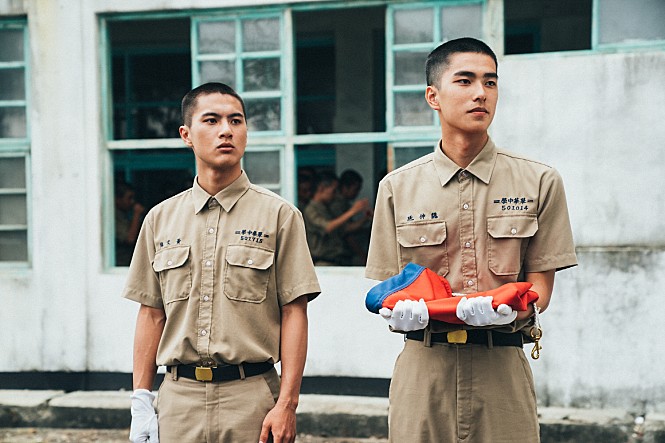
During the opening part, we get acquainted with a rather amusing mental problem of Kazuto (Kazuto Osawa), a young actor who has struggled to get employed without much success. Whenever he faces anything aggressive or stressful, he cannot help but faint instantly, and that is certainly a serious handicap for him when he attempts to get a role in some TV drama series. To be frank with you, I once thought Joaquin Phoenix is sometimes too anxious in his acting approach, but now I have to admit that he is just a mild case compared to this neurotic lad, who even cannot act well as being so afraid of fainting again.

After another disastrous failure, Kazuto forlornly returns to his small and shabby one-room apartment. While he has already been behind one month’s rent, there is not anyone to give him some pep talk, and the only consolation for him comes from the VHS copy of an old corny B-movie called “Rescueman”, which he has often watched since his childhood. While this flick is quite ludicrous to say the least for many reasons including its extremely cheap production quality and bad dubbing, Kazuto feels a little happy for a while, and he keeps aspiring for any big break to come.

And then there comes an unexpected opportunity to Kazuto during one evening. Right in front of his eyes, some guy, who seems quite drunk, has a quarrel with a man he happens to come across, and, after this quarrel is over, it turns out that this seemingly drunken guy turns out to be none other than Hiroki (Hiroki Kono), who is Kazuto’s younger brother. Because they have not seen each other for last several years, Hiroki is glad to see his older brother again, and he soon reveals to Kazuto that he was actually pretending to be drunk and aggressive as requested by his latest client, who is, yes, the very man with whom he fought in front of Kazuto.

Hiroki subsequently takes Kazuto to a special actor agency which has handled him and many other performers ready to act under various situations. While they are usually hired to express fake emotions at funerals or movie screenings, they have also provided customized services to clients coming to them for many different personal problems, and we get a couple of cheerful scenes which show us how they help their clients through their carefully scripted situations.

Well aware of his mental problem, Kazuto is initially reluctant to join this agency, but Hiroko does not let him leave at all, and Kazuto soon finds himself acting a lot more than before because, well, he really needs the money right now for paying his rent. Although his mental problem remains an obstacle to overcome, he gets improved a bit as playing more along with Hiroko and his new colleagues, and they are all willing to assist and help Kazuto.

Meanwhile, one high school girl visits the agency with a rather challenging task. Her parents died due to an accident not so long ago, and her older sister accordingly inherited their family inn, but, alas, her older sister subsequently happened to join a cult, whose leading members are clearly determined to use the inn for another stepping stone for expanding their power and influence. For stopping this cult from taking over the inn, somebody needs to infiltrate into the cult first, and, of course, Kazuto is selected for that job along with several other performers including Hiroki.

The second half of the movie mostly revolves around Kazuto and his merry colleagues’ attempt to expose the scheme of several leading cult members, who have somehow made their numerous followers believe very outrageous things including an ancient cosmic entity which is supposed to communicate with their supposedly mute leader. This certainly looks stupid and preposterous, but there are many idiotic people out there in real life who think the Earth is flat, so this is not as outrageous as you may think.

It goes without saying that most of comic tension in the movie comes from that mental problem of our insecure hero, and the screenplay by director/writer/editor Shin’ichirô Ueda naturally gives us a series of silly situations where he must holds himself well for maintaining his disguise, but the movie fails to accumulate enough hilarity to engage us while also deficient in terms of characterization. While Kazuto remains to be a colorless one-note joke, the other characters surrounding him are also more or less than plot elements, and that is why the finale does not work as well as intended.

Although it is not a total misfire, “Special Actors” is not so special compared to Ueda’s previous film “One Cut of the Dead” (2017), a hysterically funny film about one nutty case of filmmaking. As I became more disappointed with “Special Actors”, I felt more urge to revisit “One Cut of the Dead”, and I recommend you to watch it instead of “Special Actors” especially if you have not seen it yet.

Posted in Movies | Tagged , , , | Leave a comment

Black Is King (2020) ☆☆☆(3/4): An interesting visual album from Beyoncé

I am not much of an American pop music aficionado, but I certainly know how popular Beyoncé has been during last two decades. To be frank with you, I usually regarded her as a merely famous singer who appeared in movies from time to time, but then I came to admire her undeniable star quality and presence quite more than before after watching her Netflix concert film “Homecoming” (2019), which is one of the best concert films of the last decade in my inconsequential opinion. As mesmerized by her indisputable beauty, charisma, talent, I had some second thoughts on her artistic quality, and I even lamented on how the hell she has not yet gotten a chance for fully utilizing her beauty and charisma on the screen (Remember how she was somehow overshadowed by Jennifer Hudson during the first half of “Dreamgirls” (2006)?)

Anyway, when I heard about Beyoncé’s musical film/visual album “Black Is King” being released on Disney+ on last Friday, I did not even know that it is actually a video companion to her 2019 album “The Lion King: The Gift”, which is, yes, a tie-in album for the 2019 remake of “The Lion King”. Because I skipped a chance to watch that feature film simply because my expectation was quickly shrunk after watching its bland trailer, I cannot possibly comment on that feature film where she gave a voice performance as one of the main characters, but I can tell you instead that “Black Is King” is another interesting achievement from Beyoncé, and she surely shines again under her full artistic control.

The film is basically a series of music video clips strung together via a number of common cultural/ethnical themes, and you could actually enjoy them even without the occasional insertions of the dialogues from the 2019 remake of “The Lion King”, though it goes without saying that the African cultural elements in that film are a part of the source of inspiration for the songs and the accompanying visual moments in “Black Is King”. Deliberately emphasizing these distinctive moments and then mixing them along with modern American pop elements on the screen, Beyoncé apparently attempts to deliver messages of African American heritage and empowerment here, which are alternatively subtle and blatant as effortlessly mingled with strikingly beautiful visual moments.

Above all, Beyoncé, who also serves as co-director/co-producer of the film, surely knows how to grab the attention of her audiences right from the beginning. The first song of her album is accompanied with a gorgeous sequence consisting of various landscapes including a wide sea beach on which she and several other figures wander, and I was particularly amused by a seemingly biblical object floating along a big river at one point.

After this part, the film gradually builds up a sort of narrative around a little young African boy who will succeed his father just like the young hero of “The Lion King”. At first, we see this boy being designated as his father’s heir apparent, and then there comes a nightmarish moment when their village is suddenly intruded by a bunch of bikers wearing crimson red outfits. I have no idea on how to interpret this particular moment, but then things get more interesting as the boy subsequently blunders into a slum neighborhood of some modern African city, and that is followed by a sort of twisted coming-of-age process for him.

Beyoncé keeps delivering more impressive visual moments to behold for their bold cultural beauty. In case of one music video clip, it shows a rich African guy enjoying and flaunting his wealth in his big mansion where he is served by Caucasian butler and servants, and we later see the boy roaming around in the mansion. I wonder whether he is simply dreaming for success, power, fame as reflected by a certain subsequent moment, but Beyoncé lets this sequence open to interpretation just like she did in that iconic music video of hers in 2016.

Meanwhile, the elements from the 2019 remake of “The Lion King” keep appearing as demanded, but they are soon overshadowed by the continuing stream of artistic creativity envisioned by Beyoncé and her artistic collaborators. Around the second half of the film, she lets several other famous artists including Pharrell Williams and her young daughter Blue Ivy Carter take the spotlight for a while at times, and Williams has a terrific scene where he sings and dances alone in front of a stack of blue plastic water containers on a remote field.

Despite many excellent visual moments to be cherished, the film feels less special compared to “Homecoming”. Sure, many songs appearing in the film are performed well on the whole, and Beyoncé constantly exudes her star presence as usual while deftly handling the lyrics of the songs in the film, but I must confess that none of them was particularly catchy to me. Personally, I wonder whether that is because I do not have much affinity toward American contemporary pop music.

Nevertheless, “Black Is King” still worked well on me in terms of visual aspects. No, I remain unwilling to see the 2019 remake of “The Lion King” (I still remember pretty well when I was rather repulsed by the supposedly realistic presentation of digital animal figures in that film, by the way), and I also do not have much will to buy and listen to “The Lion King: The Gift” at present, but I admire the creative efforts from Beyoncé and her artistic collaborators at least. It is indeed inherently derivative from the start, but I bet that it is more enjoyable and entertaining than the 2019 remake of “The Lion King”.

Posted in Movies | Tagged , , | Leave a comment