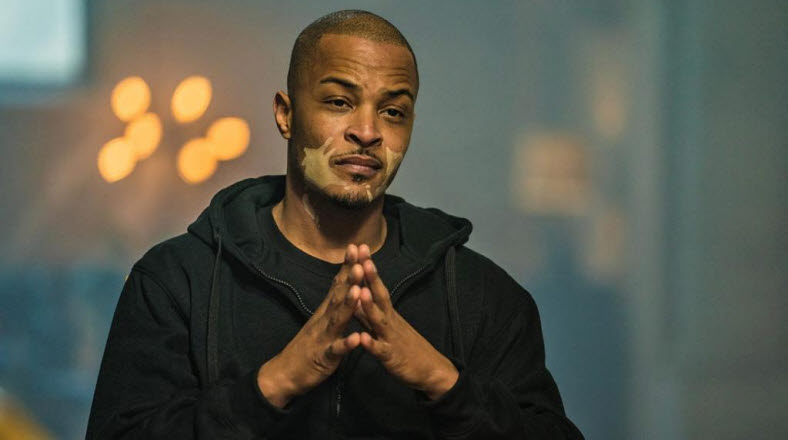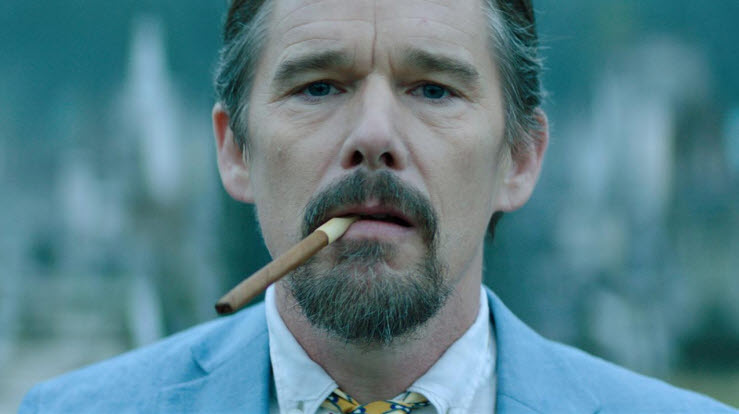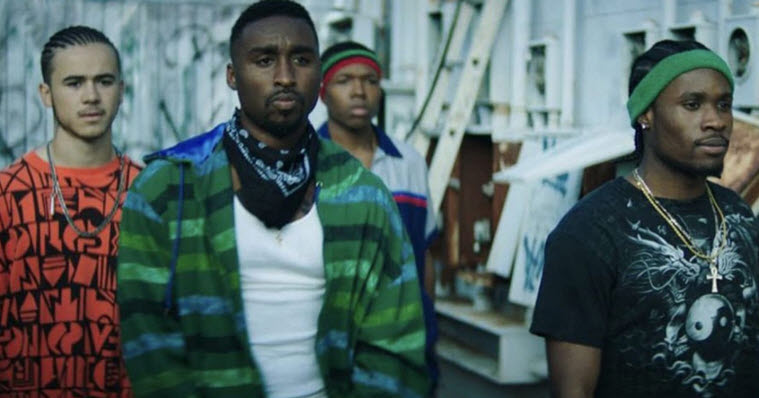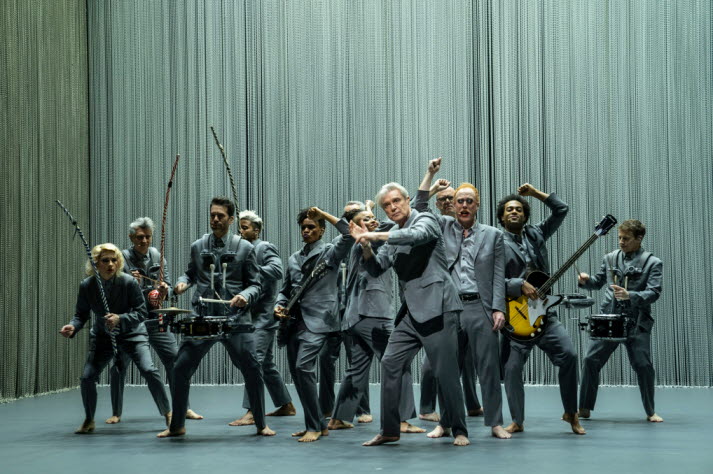
Black Box (2020) ☆☆☆(3/4): As he regains his memories

“Black Box”, which was released on Amazon Prime a few days ago, entertained me enough as digging a bit into its familiar genre territories. If you have ever watched similar genre pieces like Christopher Nolan’s “Memento” (2000), you will know well from the very beginning of the story that you should not trust anything about its apparently unreliable hero, but I assure you that the movie will not disappoint you mainly thanks to its fairly solid storytelling and several engaging performances to watch.

At first, the movie establishes the daily struggle of a photographer named Nolan (Mamoudou Athie), who has been recovering from a serious case of amnesia caused by a big accident which sadly took away his dear wife’s life at that time. With the caring help and assistance of his plucky young daughter Ava (Amanda Christine), Nolan tries to regain his personal memories, but, alas, there has not been much progress, and his recent attempt to resume his professional career only leads to more frustration for him.
Frequently feeling not so fine with many blanks somewhere in his mind, Nolan begins to consider accepting an offer from Dr. Lillian Brooks (Phylicia Rashad), who has badgered him a lot since he was released from a hospital where she has incidentally worked. As a renowned neuroscience researcher, she has been developing a state-of-the-art device which seems to be for helping amnesiac patients like Nolan, and she is quite eager to put Nolan through a series of sessions where she is going to test her invention upon him.

Nolan is naturally skeptical during his first meeting with Dr. Brooks, but he eventually agrees to have several sessions with her, and her device turns out be quite more helpful than he expected. In addition to showing a considerable potential under her hypnosis, Nolan gradually gains his several old memories during the following next sessions, and that seems to help him improve his rather strained relationship with his daughter at present.

However, Nolan subsequently becomes baffled with his supposedly regained memories. For example, the first one is about a wedding where he is supposed to be the groom, but he cannot see the faces of other figures around him including his bride, and, as shown from a brief shot, his wedding photograph does not match with what he comes to remember again at all. Moreover, one domestic memory he regains later places him in a small apartment with two faceless figures who seem to be his wife and daughter, but, as far as he knows, he has always resided in a big and cozy suburban house since he married his wife.

And there is also quite a disturbing matter involved with a certain entity which appears to Nolan more than before as he begins his sessions with Dr. Brooks. While Dr. Brooks assures to him that this is just the manifestation of some self-defense mechanism of his mind, Nolan still cannot help but become more and more uncomfortable, so he consequently decides to search for the answer for himself.

Now I should be more careful about describing the film, though you may already have a pretty good idea on what is going on if you are a seasoned genre consumer like me. Yes, I was not so surprised much around the narrative point where the screenplay by director Emmanuel Osei-Kuffour Jr. and his co-writers Stephen Herman and Wade Allain-Marcus, which is based on the story by Herman, comes to reveal what has been barely hidden under the surface right from the start, but the movie promptly moves beyond that with some thought-provoking ideas, and it also generates enough tension for us to care about what will happen in the end.

The movie depends a lot on the good acting of Mamoudou Athie, who previously drew my attention via his supporting turn in “The Front Runner” (2018) and “Underwater” (2020) and then demonstrated more of his talent and presence in recent Netflix film “Uncorked” (2020). In addition to being believable in his character’s increasingly tricky personal journey, Athie also handles well several key scenes later in the film where he smoothly alternates between pity and terror, and his skillful performance functions well as a strong base for what is inevitably unfolded during the expected climatic scene.

Several other main cast members hold each own place well around Athie. While Phylicia Rashad surely has lots of dark fun with the shady aspects of her supporting character, young performer Amanda Christine is sweet and lively as Nolan’s caring little daughter, Charmaine Bingwa, Tosin Morohunfola, and Donald Watkins are suitably cast in their respective supporting roles.

“Black Box” is the first movie produced from an 8-part deal between Blumhouse Productions and Amazon Studios (Jason Blum participated in the production of the movie as one of its executive producers). Although the movie does not break any new ground in my inconsequential opinion, Osei-Kuffour, who made several short films before making a feature film debut here, and his crew members did a competent job of engaging us enough during its 100-minute running time, and his main cast members are commendable in bringing some human qualities to its familiar genre exercise. In short, this is a promising start for the collaboration between Blumhouse and Amazon Studios, and I hope that the following seven genre flicks will be as entertaining as this at least.

Posted in Movies | Tagged , , | 1 Comment

John Lewis: Good Trouble (2020) ☆☆☆(3/4): A courteous tribute to John Lewis

Documentary film “John Lewis: Good Trouble” is a courteous tribute to US congressman John Lewis, who sadly died shortly after the documentary was released in US three months ago. Although he faced lots of obstacles even during his later years, this legendary figure kept fighting as he always did before, and the documentary did a fairly good job of presenting his exceptional life and career with enough respect and admiration.

The documentary alternates between Lewis’ long past of social/political activities and his continued fight for depending the civil rights of American people during the late 2010s. While he was admired a lot for his considerable contribution to the civil rights moments in the 1960s, he was never content with his present respectable position at all, and he became quite busy especially when what he and his fellow civil rights activists achieved after lots of efforts and sacrifices during that time was subsequently threatened by those despicable right-wing politicians and judges willing to strangle democracy for more power and benefit for themselves.

Occasionally looking directly at the archival photographs from his past during his interviews for the documentary, Lewis willingly tells us about his early years. As his close family members attest to us later, he was a smart little boy eager to reach outside his hometown Troy, Alabama, and there is an amusing episode on how he tried really hard for getting the attention of a pack of chickens in his small family farm.

Thanks to his family’s strong support, Lewis could concentrate on his education, and then he got himself associated with Martin Luther King Jr. in the late 1950s. When he was ready for college education, Lewis initially considered going to Troy University, and he sought for some help from King shortly after being denied admission to Troy University, but, after being warned about the possibility of putting his family in serious danger, he eventually decided to go to a small, historically black college in Nashville, Tennessee instead.

Around the time when he graduated from his college, Lewis became more interested in participating in the ongoing civil rights movement led by King, and the documentary shows us a bit of how Lewis and other activists readied themselves for whatever they would endure for their political belief. Of course, their training turned out to be nothing compared to the real racism they would face in the world outside, and several following archival footage clips show us how people could be quite ugly and hateful as driven by racist hate and contempt during that turbulent era.

One of the key moments in Lewis’ civil rights activist career was that historical moment on the Edmund Pettus Bridge in Selma, Alabama on March 7th, 1965. When he and other participants of the Selma to Montgomery marches tried to cross the bridge, they were savagely suppressed by the state troopers waiting for them at the other end of the bridge, and Lewis was seriously injured in his head at that time. As this incident was reported to the whole country, King could get lots of moral support from more Americans out there, and the marches led to not only the big increase of voter registration among African American citizens but also the Voting Rights Act of 1965.

As subsequently entering the 1970s, Lewis continued his civil rights activist career as before, and then he came into politics as running for the 5th congressional district in Georgia in Atlanta in 1976. Although he lost at that time, he decided to try again 10 years later, and that was the beginning of his distinguished political career in Washington D.C., though, as briefly shown to us at one point in the documentary, it was not very pretty when he resorted to a mean tactic as competing against State Representative Julian Bond, a local African American politician who had been considerably close to Lewis before the election and was understandably offended when Lewis went for the jugular on TV.

During next several decades, Lewis had been a staunch defender and improver of the Voting Rights Act of 1965, and we see some of the outcomes from his diligent efforts. When the Voting Rights Act of 1965 virtually lost its legal power due to a controversial decision from the US Supreme Court in 2013, he certainly felt quite disappointed and devastated, but he did not succumb to despair and resignation at all, and he was ready to fight more even after that shocking and infuriating outcome of the 2016 US Presidential Election (Thankfully, the documentary stays away from the current US president while indirectly recognizing the virulent negative social influences from that loathsome prick and his political party).

And he continued to be an inspiring figure in his political party. A number of prominent interviewees in the documentary ranging from Cory Booker and late Elijah Cummings (I am glad to learn from the documentary that I was not the only one often mistaking him for Lewis) to Alexandria Ocasio-Cortez and Ilhan Omar are all in the awe of Lewis’ life and career, and one of the uplifting moments in the documentary comes from a part showing his tireless support and promotion of several younger politicians in his political party.

Overall, “John Lewis: Good Trouble”, which is directed by Dawn Porter, may not delve that deep into its remarkable subject, and it is still an engaging documentary on the whole, and now it feels more poignant because of Lewis’ recent departure. Like Ruth Bader Ginsburg, a US Supreme Court justice who was another shining beacon of American democracy before her death in last month, he did fight hard and well for his country and people to the end, and I sincerely hope his legacy will remain intact and alive regardless of what will happen to the American society during next several years.

Posted in Movies | Tagged , , , , | Leave a comment

LA 92 (2017) ☆☆☆1/2(3.5/4): A raw, vivid, and riveting presentation of the 1992 LA riots

Documentary film “LA 92” is a raw, vivid, and riveting presentation of the 1992 LA riots. While entirely consisting of a series of various archival footage clips, the documentary delves deep into the social and historical background of this shocking and devastating incident, the big picture emerging from its numerous visceral moments resonates with not only the past but also the present and future of the American society.

After the opening part mainly focusing on the 1965 Watts Riots in LA, which are regarded as a sort of prelude to the 1992 LA riots, the documentary promptly moves onto that infamous case of police brutality which occurred at the night of March 3rd, 1991, and we accordingly behold that shocking video clip showing a young African American ex-con named Rodney King being savagely beaten by four officers of the LA Police Department. Once it was shown on TV around the whole country, this video clip surely shocked lots of American people out there, and it particularly angered and infuriated millions of African American citizens, most of whom had suffered racial injustices caused by the racist aspects of the American legal system for many decades.

Many African American people in LA and their local community leaders strongly demanded the justice for the Rodney King case, but they were reminded again of how things remained same as before despite the social shocks from the Watts Riots. Although the 1973 election of Tom Bradley as the first African American mayor in LA seemed to promise them considerable changes, there was not much progress for African American citizens in LA during next 18 years, and their distrust and resentment toward LAPD and the local legal system consequently got accumulated more and more during that period.

Above all, LAPD, which had been under Commissioner Daryl Gates since 1978, was not willing to be changed at all even after its ugly sides were fully exposed to the whole world due to the Rodney King case. While Mayor Bradley and many other local politicians demanded the considerable changes inside LAPD, Commissioner Gates impertinently kept emphasizing why LAPD was still necessary for maintaining law and order as usual, and he even threw a hostile comment at a local Asian American councilman who forthrightly pointed out Gates’ veiled political threat in the middle of a public hearing.

And the situation got tense more and more in LA during next several months. On March 15th, a 15-year-old African American schoolgirl named Latasha Harlins happened to be murdered by a 51-year-old Korean American convenient store owner just because of a small dispute on whether she stole a carton of orange juice or not, and this tragic incident led to more racial tension in the city. Although it was inarguable that that middle-age Korean American woman responsible for the incident was guilty as charged, she was eventually slapped only with a very lenient punishment, and that naturally led to more anger and frustration for African American people out there.

The breaking point for many of them came on April 29th, 1992, when those four officers responsible for the Rodney King case were almost completely acquitted of the criminal charges brought onto them. Considering that the case was already moved to the courthouse of a suburban area outside LA and the jury mainly consisted of Caucasian citizens, that outcome might not look that surprising at that time, but, as shown from several video clips, many African Americans were quite upset to see another case of racial injustice unfolded right before their eyes, and the mood accordingly became quite more agitated in the city as some of them start to let out their seething anger and frustration on streets.

Although local African American community leaders tried to ventilate their and their people’s anger and frustration in non-violent ways, the situation had already been out of control in the neighborhoods of South Central, and a number of archival footage clips show us how quickly things got quite worse on that notorious day. At first, it was just a bunch of African American dudes harassing Caucasian drivers at the crossroads of their neighborhoods, but their level of violence was subsequently elevated, and the documentary strikes us really hard with several chilling visual records of violence.

During next six days, LA was thrown into sheer chaos while no one seemed to be able to stop this. California governor Pete Wilson declared a state of emergency, but he and other local officials were disastrously slow in the following responses to this emergency, and the damages in the city kept increasing hour by hour. Lots of shops and stores in the city were looted and burned by rioters and bystanders, and the Koreatown area of the city was particularly damaged a lot during this very violent time.

Except when they give us a bit of background knowledge and explanation, directors/co-editors Daniel Lindsay and T.J. Martin, who previously won an Oscar for “Undefeated” (2011), step aside for letting their palpable collage of archival footage clips show and tell us all on the main subject of their documentary, and their storytelling approach is effective thanks to the skillful editing by them and their co-editor Scott Stevenson. It may feel a little blatant when the video clips from the Watts riots and the 1992 LA riots are juxtaposed together around the end of the documentary, but the message is pretty clear and powerful to say the least, and it feels all the more timeless considering the ongoing Black Lives Matter movement at present.

On the whole, “LA 92” is pretty tough to watch from time to time for good reasons, but it is one of the recent important documentary films on the racial injustices in the American society, and its memorable moments resonate a lot with what I observed from the American society during recent years. Yes, there have been some significant progresses during last 55 years, but the system is still quite unfair to many non-Caucasian American citizens out there, and, in my trivial opinion, it really needs some fundamental changes – especially now.

Posted in Movies | Tagged , , , , | Leave a comment

Dick Johnson Is Dead (2020) ☆☆☆1/2(3.5/4): As he lives dying

Netflix documentary “Dick Johnson Is Dead”, which won the US Documentary Special Jury Award when it was shown at the Sundance Film Festival early in this year, is a funny, sad, and touching personal tribute to remember. While clearly recognizing that melancholic sadness of mortality, the documentary often joyfully bounces along its main subject as giving us a number of cheerful and loving moments, and you will be alternatively amused and moved by its intimate mix of humor, pain, and endearment.

The main subject of the documentary is Dick Johnson, who is the father of director/co-writer Kirsten Johnson and was previously shown a bit along with his wife in their daughter’s previous documentary film “Cameraperson” (2016). Although his wife died after suffering Alzheimer’s disease for several years, Dick was still a cheerful grandfather to his daughter’s kids, and the opening scene of the documentary shows him having another jolly time with his grandchildren at his residence.

Around 2017, Dick started to show the signs of memory loss as well as cognition problems, and, not so surprisingly, he was subsequently diagnosed to be in the early stage of dementia. As a result, he had to retire from his long and respectable medical professional career, and he also had to say goodbye to his longtime residence for moving into an apartment in New York City where he was going to live along with his daughter.

As trying to process the fact that her father will be fading away bit by bit until death finally comes, Johnson suggested to him that they should make a documentary about his death and life, and, as a jovial man with lots of sense of humor, Dick willingly put himself in front of his daughter’s camera. We see him spending the final day at his office. We see him meeting and talking with some of his close friends. We see him becoming quite nostalgic as looking around his longtime residence before moving to his new residence in New York City. And we also see him reminiscing about several things in the past including his bittersweet memories of his diseased wife.

However, Dick is not someone who is merely going to dwell in the past at all. Sure, as shown from his routine medical checkup, his mind is getting more deteriorated day by day (he struggles to remember five words which he just heard only a few minutes ago, for example), and that makes him more aware of the impending end of his life, but that does not suppress his usual cheerfulness at all. He still talks lively with his daughter and others around him, and his face is always brightened more whenever he is with his grandchildren, who are currently being taken care of by their two biological fathers living on the apartment right next to Dick and his daughter’s apartment (These two dudes are Ira Sachs and his husband Boris Torres, by the way).

In addition, Dick also actively participates in his daughter’s unorthodox artistic approach to his upcoming death. Throughout the documentary, we see him performing several different kinds of death scenes including the one where he gets suddenly killed on a street by an air conditioner falling right on his head, and the documentary sometimes looks into how he and Johnson prepare for shooting those morbidly funny moments along with a small bunch of crew members working for her.

Although death still remains an inconvenient subject for both Dick and his daughter even during these fun times of theirs, they come to accept it with more openness than before at least, and Johnson goes all the way along with her father while shooting a fantasy scene of his sweet hereafter on a small tacky set. The overall result may be a little too silly, but we cannot help but smile as watching a moment associated with his certain physical deformity.

Nevertheless, Dick’s mortality comes to feel more immediate as time goes by, and he comes to depend more on his daughter and others. There is a small scene where Dick and his daughter talk a bit with a professional caregiver working for them, and this caregiver certainly has a few things to tell as a person with lots of professional experience. When she is about to leave for Israel because of her work, Johnson cannot help but worry about her father’s wellbeing during her temporary absence, and he assures her that he will be all right, though both of them know well that nothing is certain due to his ongoing mental deterioration.

In the end, there later comes a moment for which Johnson has feared, but she sticks to the calm and casual overall tone of the documentary as before. In case of the following scene, I will not go into details at all, but I can tell you instead that this scene caught me off guard while never feeling sappy or manipulative at all. As shown from the very last scene of the documentary, Johnson really tries her best for her father as well as the memories of him shared among her and many others in his life, and she surely pulls it off well.

On the whole, “Dick Johnson Is Dead” is Johnson’s another fascinating documentary after “Cameraperson”, and she did a skillful job of making an honest, sincere, and affectionate tribute to her father. After many years of working as a cinematographer for a number of notable documentary filmmakers including Michael Moore and Laura Poitras, she is now advancing further as another exciting documentary filmmaker to notice, and I am certainly looking forward to watching what may come next from her in the future.

Posted in Movies | Tagged , , , , | 1 Comment

Vampire vs. the Bronx (2020) ☆☆☆(3/4): Young vampire hunters in Bronx

“Vampire vs. the Bronx”, which was released on Netflix in last week, is as silly and funny as suggested by its very title. While reminiscent of many different vampire horror films ranging from TV miniseries “Salem’s Lot” (1979) to “Fright Night” (1985), the movie also has considerable spirit and personality in addition to some spooky moments, and that is more than enough to compensate for its several weak aspects.

During the opening part, we are introduced to Miguel (Jaden Michael), Bobby (Gerald W. Jones III), and Luis (Gregory Diaz IV), three young boys living in a neighborhood area of Bronx in New York City. Whenever they are free after their school time, these three boys spend time together at a local bodega owned by an avuncular guy named Tony (The Kid Mero), but their neighborhood has been gentrified day by day due to the relentless advance of some big real estate company, and it seems Tony’s bodega will be soon gone just like many other familiar shops and stores in their neighborhood.

Although Tony is not so willing to sell his bodega at present, Miguel and his two friends cannot help but feel worried as watching their neighborhood being changed more and more. That is why they decided to try an outdoor party which may give some financial support to the maintenance of Tony’s bodega, but, not so surprisingly, they do not get much support from their neighbors or their parents, and they become more frustrated and disappointed as the date of their outdoor party is coming.

Nevertheless, Miguel keeps trying along with his two friends. Although jokingly called “Lil’ Mayor” by his neighbors, he continues to spread the promotional leaflets of the outdoor party as usual, but then he comes to witness something quite disturbing at one night. When he is hiding from one of the local street gang members shortly after one unfortunate incident, a mysterious figure suddenly appears from nowhere, and then he witnesses that figure question in question attacking and then sucking blood from that thug.

When Miguel subsequently tells Bobby and Luis about what he saw, Bobby and Luis are naturally skeptical about that, but it does not take much time for them to believe their friend’s story as they and Miguel come to sense something sinister from that big real estate company which keeps buying one place after another in their neighborhood as before. After all, the name of the company is Murnau Enterprises, and that will surely amuse you a lot if you have ever watched a certain classic silent film directed by F.W. Murnau.

Once our three young heroes become quite convinced that their neighborhood is being threatened by vampires who are behind the ongoing gentrification process as well as numerous local cases of missing, the screenplay by director Osmany Rodriguez and his co-writer Blaise Hemingway goes through a series of genre conventions along with them as expected. Fortunately, Luis happens to know several things about vampires as reflected by one brief scene early in the film, so he tells Miguel and Bobby a bit about how to kill vampires, and they also watch “Blade” (1998) together for getting more knowledge.

After some obligatory preparation, Miguel and his two friends begin to delve further into their urgent matter, and we are accordingly served with a creepy sequence where they go inside one of the spots which are recently purchased by Murnau Enterprises. I must say that the vampires in the film are not particularly scary, but they are presented with enough menace and malice at least, and the movie never lets us forget what is being at stake for its young heroes.

Of course, the adult characters in the story do not believe at all what Miguel and his two friends saw, and Miguel and his two friends come to have doubt on not only themselves but also their friendship. In case of Bobby, he subsequently lets himself get associated with those local gang members, and that consequently puts himself into a very tricky situation later in the story.

Anyway, our three young heroes eventually come to stick together again for stopping their supernatural opponents (Is this a spoiler?), and they also get some unexpected help from Rita (Coco Jones), a local teenage girl who turns out to be quite knowledgeable about vampires. Although the expected climax is rather modest on the whole, the movie does not lose any of its humor and energy even during that part, and it makes a good point on how resilient a community can be as defending its cultural identity.

Besides effectively establishing an authentic sense of people and locations on the screen, Rodriguez also draws good performances from his performers. Jaden Michael, Gregory Diaz IV, and Gerald W. Jones III are effortless in their natural rapport, and a bunch of distinctive performers including Sarah Gordon, Coco Jone, The Kid Mero, Shea Whigham, Method Man, and Zoe Saldaña fill their respective small spots as demanded, though, in my humble opinion, the movie could utilize them more considering their variously colorful characters.

In conclusion, “Vampire vs. the Bronx” does not break any new ground in its genre territories, but it does its job as well as intended after doing enough homework in advance. Yes, the overall result is rather a mild stuff for the upcoming Halloween season, but it is equipped with enough mood and personality at least, so I will not grumble for now.

Posted in Movies | Tagged , , , | Leave a comment

The Boys in the Band (2020) ☆☆☆(3/4): Boys have issues….

It took some time for me to get accustomed to the broad storytelling approach of “The Boys in the Band”, which was released on Netflix in last week. At first, I thought it was a bit too wild and flamboyant for me, but, fortunately, the movie gradually shows more sincerity and honesty as most of its main characters reveal considerable pathos and vulnerability, and I came to like and care about some of them more than expected.

The movie is based on the groundbreaking play of the same name by Mart Crowley, which caused lots of sensation for its frank and forthright presentation of gay characters when it had an off-Broadway premiere in 1968. At that time, homosexuality was still quite a sensitive taboo for many people, but the subsequent success of the play considerably contributed to the civil rights movements for sexual minority people, and it was also adapted into a movie directed by William Friedkin in 1970, which is regarded as one of the early major breakthroughs in the queer cinema history.

In 2018, there was the 50th anniversary revival of Crowley’s play on Broadway, and its critical and commercial success (It won the Tony Award for Best Revival of a Play in last year, by the way) subsequently led to the production of another movie adaptation. All of the actors who were in the 2018 Broadway production gathered together again in this movie under their director Joe Mantello, and the fact that all of them are openly gay actors reminds us of how much things have been changed since the play came out in 1968.

The story, which is set in New York City, 1968, is mainly about one evening unfolded within a posh two-story apartment belonging to a guy named Michael (Jim Parsons). After the opening scene showing him and his several close gay friends one by one, we see him occupied with preparing for a birthday party to be held at his residence, and we get to know him bit by bit as observing his interactions with Donald (Matt Bomer), who has been quite close to him despite many differences between them. While Michael is your average sophisticated gay dude who graduated from a prestigious college, Donald is a handsome lad who has been fine with earning his living via a menial labor job, and we get some amusement when Donald talks about his own final conclusion after many hours of psychoanalysis.

As the time for the birthday party, which is not for Michael but for one of his friends, is approaching minute by minute, several other friends of his come and then begin to enjoy some food and drink, though nobody seems to be willing to touch a certain dish prepared by Michael. While Emory (Robin de Jesús), an interior designer who is virtually a flamboyant drama queen, cannot help but flirt with others or throw some saucy comments in the air, Bernard (Michael Benjamin Washington), who works as a librarian, is more subdued in comparison, and Hank (Tuc Watkins) and Larry (Andrew Rannells) are clearly having some relationship problem although their contrasting personalities seem to complement each other well (Full disclosure: Hank, who looks stoic and reserved in contrast to his partner’s carefree attitude, reminds me a lot of myself – I am usually quiet and discreet even though I am quite comfortable with my homosexuality at present).

While the man to be congratulated has still not come yet, there comes an uninvited guest. He is Michael’s old college friend Alan (Brian Hutchison), and he seemed to be quite conflicted over something when he called Michael not long after arriving in the city for some business meeting. When Alan unexpectedly appears at the front door of Michael’s apartment later, Michael naturally becomes flabbergasted, and that leads to a series of small amusing moments as he and his friends try to suppress their homosexuality as much as possible in front of Alan, who seems to be quite oblivious to that even when he encounters Emory and Larry.

Of course, Alan is eventually exposed to what Michael tries to hide from him, and the resulting awkward moment becomes quite more awkward when the man Michael and his gay friends have been waiting for finally arrives, and that is when the story begins to shift itself onto a more serious mode. While everyone drinks more and more, Michael, who is now boiling with shame and self-loath more than before, suggests that they should play a certain game together, and the following situation gradually becomes something not so far from Edward Albee’s “Who’s Afraid of Virginia Woolf?”. As Michael cruelly pushes some of his guests into the game, we get several painful moments where they have to face some hard truths about themselves, and Jim Parsons is intense as required in addition to demonstrating the more serious side of his talent.

The other main cast members are equally solid. As Matt Bomer steadily holds the background, Andrew Rannells and Tuc Watkins are particularly poignant when their characters come to be more honest to each other at one point, Brian Hutchison, Robin de Jesús, Michael Benjamin Washington, and Charlie Carver ably deliver each own juicy moment. In case of Zachary Quinto, he simply steals the show right from his showy entrance, and his detached but acerbic performance shines with wit and humor besides being an effective counterpart to Parsons’ tense display of seething emotions.

On the whole, “The Boys in the Band” is worthwhile to watch thanks to Mantello’s competent direction and the vibrant and colorful performances from his engaging cast members. Because I have not watched the 1970 movie version yet, I do not know whether the movie is as good as the predecessor, but I can tell you at least that I had a fairly good time despite its several notable missteps (The brief flashbacks during the second half are rather unnecessary, for instance), and you may enjoy it as much as I did if you are one of its target audiences.

Posted in Movies | Tagged , , | Leave a comment

Cameraperson (2016) ☆☆☆1/2(3.5/4): What her camera observed

Kirsten Johnson’s “Cameraperson” was one of several notable documentary films I unfortunately missed in 2016. Although I bought its Criterion blu-ray edition which was released shortly after its modest theatrical release in US, I somehow kept postponing watching it during next several years, and now I belatedly dug up that purchased Criterion blu-ray edition as getting ready for Johnson’s latest documentary “Dick Johnson Is Dead” (2020), which was incidentally released on Netflix a few days ago.

The documentary consists of a bunch of archival footage clips which were shot by Johnson herself throughout many years of her long documentary filmmaking career. For many different documentary filmmakers ranging from Laura Poitras to Michael Moore, Johnson served as a cinematographer, and many parts of the documentary actually come from numerous additional video clips which were eventually deleted during the editing stage of those documentaries she worked on.

At first, the narrative flow of the documentary feels rather random as it freely hops among a number of different locations and people. There is a somber moment focusing on Bosnia during its post-war era, and then there soon comes a galvanizing scene showing a young professional boxer preparing himself for his upcoming match, and then there is a raw moment unfolded at a shabby local hospital located somewhere in an African country, and then there later comes a dry scene where a local prosecutor of some rural town of Texas shows and tells some graphic details of a horrific murder case.

This will surely make you wonder about what exactly the documentary is doing, but Johnson slowly lets us accustomed to her emerging stream-of-conscious narrative approach, and then we gradually come to sense what her artistic mind often revolves around. For example, one of the most prominent recurring elements in the documentary is Bosnia and its citizens after the Bosnian War, and her camera often looks at the remnants of the war such as the remains of a destroyed mosque, which still seems to be haunted by the dark past of war atrocities despite the considerable passage of time.

As participating in the production of the documentaries on the Bosnian War, Laura approached to many different local people and locations and then recorded them with her camera, and the documentary gives us several haunting moments to remember. At one point, the camera simply focuses on the lower body of a woman without showing her face at all, but what she tells in front of the camera is harrowing to say the least, and that resonates with the following shots showing several local spots where terrible war crimes including murder and rape were repeatedly committed during the war.

However, Johnson also shot lyrical moments of beauty and hope when she happened to stay around a Muslim family who returned to their hometown and made a new beginning for their life despite what they suffered during the war. They now live together in a shabby but cozy cabin, and Johnson’s camera captures some lovely moments as watching young children having some innocent fun outside the cabin.

And we continue to behold what Johnson’s camera observed and recorded as she moved around here and there in the world for those documentary filmmakers she collaborated with. When she was in Afghanistan, she happened to get a chance to interview a young boy who lost not only his left eye but also his older brother, and we see that Johnson cannot help but become emotional when the boy phlegmatically describes what he saw at the time of a tragedy inflicted upon him and her older brother. At the aforementioned hospital in an African country, the mood becomes a little intense when a baby does not seem to breathe shortly after being pulled out from the mother’s womb, but, to our relief as well as Johnson’s, the baby begins to make sounds in the end.

While Johnson’s camera mostly stays calm and objective as required, we become more aware of her presence behind the camera, and that leads us to the deep reflection on the usual artistic ethics which all documentary filmmakers in the world come to face at every moment of their shooting process. When that young professional boxer becomes quite furious after losing his match, Johnson’s camera stubbornly follows him without any intervention until he eventually finds some control and consolation via his mother, and you may wonder whether Johnson should have done more than merely shooting her human subject.

In the meantime, Johnson also presents a bit of her personal life, which is effortlessly mixed into the whole picture without any jarring impression. There are a couple of poignant moments involved with the last several years of her mother who was unfortunately diagnosed to have Alzheimer’s disease not long before her eventual death, and we also observe some brighter moments involved with Johnson’s two children and her widower father, who would be, yes, the main subject of “Dick Johnson Is Dead”.

Since it came out, “Cameraperson” has been regarded by many critics as one of the best documentaries of the last decade. Although I may not be as enthusiastic about it as them, I admire a lot its artistic and personal qualities, and its plain but unforgettable collage will probably keep growing on me during next several days.

Posted in Movies | Tagged , | Leave a comment

The Assistant (2019) ☆☆☆1/2(3.5/4): Her toxic work environment

It may take some time for you to discern the insidiously virulent work environment surrounding the helpless heroine of “The Assistant”, a small but biting independent film which is inarguably one of the most notable movies of the ongoing #MeToo era. At first, nothing seems to be particularly wrong as she begins another busy day of hers, but what she has suffered everyday becomes clearer to us step by step, and you may find yourself wince a lot as observing her increasingly exasperating situation.

During the opening part, the movie introduces us to a young woman named Jane (Julia Garner), who has worked as a junior assistant at some prominent film production company located in the downtown area of New York City. When she leaves her current residence early in the morning, a car is already ready to take her to her workplace, and we soon see her doing a number of things in advance before other employees come.

Once other employees arrive, the mood becomes quite busier than before. Jane and two male assistants working right next to her have to check and modify their boss’ schedule before their boss comes, and she also has to handle many other things ranging from making the copies of a movie screenplay to taking care of the credit card problem of the boss’ wife. Unfortunately, she fails to make a right response to the boss’ wife, and she consequently gets a wrathful call from the boss, who not only harshly insults her but also expects to receive a written apology from her right now.

As time goes by, we come to sense more of how lonely and isolated Jane has been in her workplace. There is not anyone in the company she can lean on, and, as reflected by a brief personal moment of hers, she has been quite distant to her parents as having focused a lot on proving herself to others in the company during last several months. Those two male assistants may understand her continuing struggle to some degree, but they usually look down on her with their condescending attitude, and she also has to endure their mean taunts from time to time.

Constantly emphasizing the drab and moody ambiance of her work environment, the cinematography by Michael Latham effectively conveys to us the growing sense of isolation and suffocation around Jane. Although many different people come and go around her (You may be amused a bit by the unexpected cameo appearance of a certain famous movie actor, by the way), she is usually alone by herself, and she keeps being burdened with more things to be handled immediately for her boss, who is seldom shown on the screen even when he is in his office.

And then something new happens in Jane’s workplace. A young woman from Idaho suddenly comes to the company as a new junior assistant to be hired, and it becomes quite apparent to Jane that the young woman is not that qualified for the job. When her boss instructs her to send the young woman to a spot where he will soon be, Jane follows the instruction without question, and then, as an employee who knows a lot about her boss, she comes to have a pretty good idea on what may happen next to the young woman.

Although the name of the company in the film is never mentioned at all, it is very clear that the screenplay by director/writer/co-producer Kitty Green, who also edited the film along with Blair McClendon, is loosely inspired by the sexual abuse/harassment scandal surrounding Harvey Weinstein and his disgraced film production company, and Green’s screenplay often chills us as showing how much the other employees around Jane are willing to look away from their boss’ evil deeds behind his back. Like Jane, they all want more career advancement and success, so they cannot possibly say no to their rich and powerful boss, and they simply go along with the toxic workplace environment generated by him while expecting to be rewarded for that someday.

Eventually, Jane decides to do something later in the story, but, not so surprisingly, her attempt is promptly thwarted by a high-ranking employee in the human resource department of the company, who turns out to be far less helpful than he seems on the surface. As a matter of fact, she is even cruelly chided for making an unnecessary fuss in the company, and then she also has to endure another moment of bullying from her boss, who surely knows how to handle his meek junior assistant via stick and carrot.

These and many other dark moments in the film are certainly not very pleasant to watch to say the least, but the movie continues to hold our attention thanks to Green’s skillful direction, and Julia Garner, a young talented actress who drew my attention for the first time for holding her own place well beside Lily Tomlin in “Grandma” (2015) and then became more prominent thanks to her Emmy-winning supporting turn in Netflix drama series “The Ozarks”, gives a quiet but strong performance as the weary heart and soul of the story. Even when her character does not signify anything at all to us, Garner lets us sense her character’s growing inner conflict via subtle acting touches, and we are relieved when her character comes to have some relief around the end of the movie, though that does not last very long.

In conclusion, “The Assistant” is definitely not something you can casually watch on Sunday afternoon, but it is one of the more impressive films I watched during this year, and Green, who has been mainly known for directing several documentary films including “Casting JonBenet” (2017), makes a successful feature film debut here. To be frank with you, the movie makes “The Devil Wears Prada” (2006) look like a mild fairy tale, and I assure you that Miranda Priestly will look far better than before once you watch it.

Posted in Movies | Tagged , | 1 Comment

Isadora’s Children (2019) ☆☆☆(3/4): Personal artistic influences from Isadora Duncan

French film “Isadora’s Children” is a modest piece of work which calmly but profoundly explores personal artistic influences from Isadora Duncan, one of the most famous dancers in the 20th century. Through three different stories loosely connected together by one of Duncan’s notable works, the movie shows us how a piece of art can influence the lives of others in more than one way, and its several memorable key moments will linger on your mind for a while once it is over.

The common subject among the three stories in the movie is “The Mother”, which was created by Duncan as a farewell solo dance piece after the tragic death of her two young children in 1913. As reflected by the excerpts from her autobiography quoted throughout the film, “The Mother” was inspired by her devastating grief over her two children’s death and her following personal struggle to process that horrible tragedy, and it is certainly one of her distinguished legacies which remind us that she was too significant to be remembered only for her absurdly horrible death in 1927.

The first part of the movie starts with a young dancer by played by Agathe Bonitzer, who has been honing her dancing skill as getting herself accustomed to “The Mother”. We see her reading Duncan’s autobiography for understanding Duncan’s artistic inspiration and intention more, and we also observe her perusing a copy of the dance chart of “The Mother”, which is full of many different symbols probably representing painstaking instructions on how to move body parts on the stage.

Although the dancer does not speak at all even when she is with her boyfriend, we gradually come to sense her considerable artistic dedication while she seems to reach further to Duncan’s artistic intention. Mostly isolated and focused, she keeps practicing for improving herself more and more, and then there comes a sort of breakthrough when she comes to embody what Duncan hoped to express through her delicate choreography.

And then the movie moves onto the second story, which mainly revolves around a middle-aged dance teacher played by Marika Rizzi and a young girl played by Manon Carpentier. Despite her congenital mental disability, the young girl is willing to perform “The Mother” on the stage a few weeks later, and her teacher generously guides and coaches her as imparting her knowledge to the young girl from time to time.

The young girl is pretty clumsy at first, but then, just like the dancer in the first story, she comes to find her own way of understanding and embodying the choreography of “The Mother”, and her teacher tenderly encourages this process. At one point, they click so well with each other during another training session of theirs that we can clearly sense their developing connection even when they are out of the sight of cinematographer Noé Bach’s camera, which remains static as usual in 1.33:1 screen ratio.

The mood becomes a little more playful when the young girl and her teacher later go to a beach just for having some break. As they are later resting on the beach, her teacher reveals a bit of her private life to the young girl, and we are reminded again of the teacher’s deep care and affection toward the young girl. It is implied that she has been lonely since her own children moved onto each own life, and the young girl certainly feels like another child coming into her life.

Eventually, the young girl comes to arrive at a moment of perfection as she practices more, and that is followed by a quiet but sublime moment between her and her teacher, but director/writer/co-producer Damien Manivel deliberately focuses on the audiences instead when the young girl finally performs on the stage. As the camera moves from one audience to another, we see how much they are emotionally affected by the performance on the stage, and this restrained but powerful moment will definitely make you reflect more on the positive influence of art on our lives.

At the end of this unforgettable moment, the camera lingers a bit longer on the face of an old black lady played by Elsa Wolliaston, who is visibly moved a lot by what she is watching from the stage. The third part of the movie patiently follows her as she is slowly returning to her apartment after the end of the performance, and, after she arrives at her residence, we come to learn why the performance touches her so much.

I will not go into details here, but I can tell you instead that I was caught off guard by an unexpected moment of poignancy ignited by one simple body movement. As the camera intensely observes the old black lady slowly executing one physical movement after another, we come to sense more of her personal history even though she does not say anything at all, and that surely exemplifies the timeless qualities of “The Mother”.

While requiring a considerable amount of patience right from the beginning as a dry and austere arthouse movie, “Isadora’s Children” is worthwhile to watch for its thought-provoking exploration on art and life, and I admire the subtle and thoughtful handling of its main story subject. I was baffled and impatient at first, but then it engaged me more than I expected, and I think you should give it a chance, especially if you are ready for something different and challenging.

Posted in Movies | Tagged , | Leave a comment

American Murder: The Family Next Door (2020) ☆☆1/2(2.5/4): Direct but superficial

I could not help but feel uncomfortable as watching Netflix documentary film “American Murder: The Family Next Door”, which was released on this Wednesday. The people behind the documentary want to present to us a close and direct glimpse into one shocking criminal case, and the overall result, which is entirely based on a bunch of various archival texts and footage clips, is often chilling to watch, but it does not wholly overcome its inherent sensationalism while merely scratching the surface of its disturbing main subject.

The documentary alternates between two narratives which eventually converge together with unnerving dramatic effects. While one of these two narratives is mainly about what happened after the sudden disappearance of an ordinary married woman named Shanann Watts and her two little daughters on August 13th, 2018, the other one follows her married life before the disappearance step by step, and it is notable that both of them are constructed from many different archival materials ranging from social media posts to law enforcement recordings.

Under the competent direction by director Jenny Poppelwell, the documentary gradually holds our attention with increasing uneasiness on the screen. In the early morning of August 13th, 2018, Shanann and one of her close friends returned from a company convention and then parted with each other in front of Shanann’s family residence, but her friend did not receive any call or text from her after that. Naturally becoming quite worried, her friend decided to call the police, but neither she nor a police officer arriving there could do much. There was not anyone in Shanann’s family residence, and they were allowed to enter the residence only after her husband Chris belatedly arrived at the scene.

Via a heap of social media posts from Shanann, the documentary gives us a vivid and intimate presentation of her private life during last several years. Before she met Chris in 2010, she was going through a very difficult time due to several reasons including the disastrous failure of her first marriage and a severe case of autoimmune disease, but she tried really hard to overcome these painful obstacles in her life, and then her life finally seemed to take a positive turn when she encountered Chris via Facebook. Although she was not so certain about him at first, they got quickly closer to each other after meeting each other in person, and that led to their marriage in 2012.

Along with two daughters born after their marriage, Shanann and Chris had resided in a suburban area of Frederick, Colorado, and a number of photographs and video clips posted on Shanann’s Facebook page show us how they looked fine and well with their children in their cozy suburban house. Around the time of the disappearance, Shanann was quite excited to find that she was pregnant again, and Chris looked delighted when she later broke this news to him.

It was clear that there was not any particular reason for Shanann to disappear suddenly along with her two children, reasonable doubt was naturally accumulated around Chris, who did not seem to be affected much by the disappearance of his family. One of his close neighbors noticed something unusual from Chris, and the police officer at the scene also came to suspect Chris, though he kept staying neutral as considering any other possibilities.

And then the documentary slowly reveals the growing cracks inside Shanann and Chris’ married life. They might really love each other around the time of their marriage, but they became estranged from each other around 2017, and, as reflected by her several text messages, Shanann was quite frustrated with how Chris did not even try to communicate with her at all. They subsequently attempted a rather long period of separation, but that only reminded her that there was not much spark in their increasingly problematic relationship.

In the meantime, the glaring evidences against Chris began to pop up here and there as the local police continued their investigation. Around the time when he was interrogated by the local police, they already found that he was having an affair behind his back, and they cornered him further after he failed to pass a polygraph testing, which he agreed to do despite a sensible warning from one of the investigators.

Due to the very title of the documentary, it is not much of a spoiler to tell you that Chris came to have an eventual moment of breakdown, but you will be aghast at how he pathetically tried to avoid taking the full responsibility of what was committed by him on that tragic day. Thanks to his vile cowardice, Shanann’s parents and younger brother suffered more even as he was arrested and then put into the trial, and you will really feel sorry for their unjust plight.

At the end of the documentary, we hear a full confession from Chris, which is accompanied with another raw archival video clip showing here and there in Shanann’s family residence. That is where I came to have more doubt on the intention of the documentary. Sure, the people behind the documentary have lots of sympathy toward Shanann and her unfortunate family, but, ironically, the documentary distances itself from them as steadily sticking to its supposedly objective but ultimately shallow narrative approach, and it actually feels exploitative from time to time as casually delving into Shanann’s private life without much restraint.

In conclusion, “American Murder: The Family Next Door” is engaging to some degree, and it surely draws lots of attention thanks to the sensational aspects of what it is about, but I still feel considerable reservation on how it is about. Although I will not deny that I observed it with curiosity and fascination, I will let you decide whether you want to watch it or not, and I am willing to hear your opinions on it.

Posted in Movies | Tagged , , , , , | Leave a comment