Time (2020) ☆☆☆1/2(3.5/4): Her time without her husband

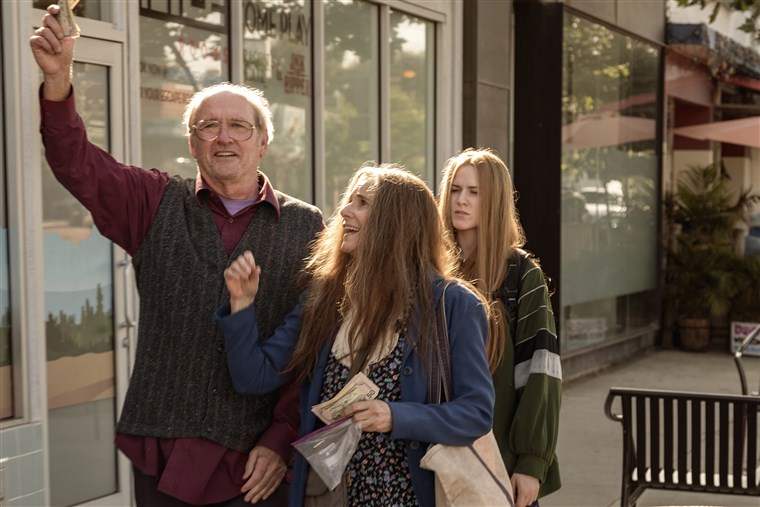
Documentary film “Time”, which was released on Amazon Prime several days ago, gives us a somber but powerful presentation of the personal reflections from one seemingly ordinary but remarkably resilient American woman. As freely alternating between her past and present, the documentary often touches us via a series of intimate moments quietly shining with sincerity and poignancy, and we come to muse more on those social injustices in the America society, which are clearly and painfully reflected by her long and difficult struggle for her husband and children.

At the beginning, the documentary shows us a series of old home video clips shot by Sibil Fox Richardson, an African American woman who is also known as Fox Rich. We see her younger self being optimistic about her future, and we also observe how happy she was with her husband Rob and their children at that time although they struggled a lot in their attempt to run a local clothes shop in their neighborhood. Whey they subsequently found themselves on the verge of bankruptcy, Sibil and Rob came to resort to bank robbery, and he received a 60-year prison sentence for that while she received a far less severe prison sentence after accepting a plea bargain unlike her husband.

While her husband still does not have much opportunity for parole at all, Sibil was fortunately allowed to be released only after 3.5 years, and the documentary gradually shows us how much she has been changed since that. While never hiding or making any excuse on what she and her husband did, she often gives public speeches for helping and advising others in her neighborhood, and she has also actively worked as an activist/entrepreneur.

Above all, Sibil has put considerable personal efforts on getting her husband released from the Louisiana State Prison for more than 15 years, though there has not been much progress for them. As a matter of fact, she already lost a substantial amount of saved money more than once because of those unreliable lawyers she happened to trust too much, and the chance seems to be decreasing year by year, but she has never given up her hope while frankly admitting to us that she cannot help but cling to the expectation on her husband’s release whenever another year is begun.

At least, Sibil has gotten lots of supports from other people around her mainly thanks to her longtime efforts toward not only her reformation but also social justice, and her mother is certainly someone to lean on besides her children. As your typical no-nonsense old lady, Sibil’s mother is not oblivious at all to what her daughter and son-in-law committed in the past, and we can clearly sense that she has always been a strong moral support for Sibil throughout her life.

And we see how Sibil and her husband’s six sons, most of them were incidentally born after that bank robbery incident, have grew up well under their mother and grandmother. Although the long absence of their father has always been a painful fact in their life, their grandmother and mother have taken care of them fairly well, and one of the most touching moments in the documentary comes from when one of Sibil’s sons becomes a certified dentist in front of Sibil and her other sons, who are all very proud of him.

In the meantime, the documentary keeps focusing on Sibil’s latest attempt to get her husband released from his prison. Although she does not expect that much this time, she comes to call to the state court more than once just for checking whether the judge assigned to her husband’s case has submitted the decision, and her accumulating agitation feels palpable when the camera closely observes her concerned face.

As steadily maintaining its calm and meditative attitude, the documentary keeps casually flowing back and forth between Sibil’s past and present as before, and director/co-producer Garrett Bradley, who deservedly received the US Documentary Directing Award when the documentary had its world premiere at the Sundance Film Festival early in this year, did a commendable job of generating an organic narrative flow from that. As we see more of how much Sibil is different from her younger self in the past, we come to sense more of the long passage of time between two different selves of hers, and the resulting sense of time and life achingly resonates with one unexpectedly poetic visual moment around the end of the documentary.

By the way, I will not go into details on the outcome of Sibil’s latest attempt for her husband’s release, but I can tell you instead that I was really caught off guard by a short but surprising scene of private intimacy. It is clear to us that Bradley gained considerable trust from Sibil from the beginning, and I appreciate how Bradley presents this moment with tactful restraint while never looking away from its emotional intensity.

On the whole, “Time” is rather unconventional in its artistic approach, so you may need to have some patience at the beginning, but it will leave you a lasting impression via many haunting moments, which are often beautifully shown in its black and white presentation. In short, this is a plain but undeniably moving tale of human hope and resilience, and it will be a very rewarding experience for you once you give it a chance.

Posted in Movies | Tagged , , , , | 2 Comments

All In: The Fight for Democracy (2020) ☆☆☆1/2(3.5/4): Even one vote does matter

Documentary film “All In: The Fight for Democracy”, which was released on Amazon Prime in last month, is a passionate argument on the importance of voting in the American democracy. Via its sobering presentation on the long history of voter suppression in the American society, the documentary effectively raises a big alarm to its main audiences, and you will find yourself becoming more concerned about the upcoming result of the 2020 US Presidential Election, which will certainly affect the voting right of numerous American citizens out there in one way or another.

One of the enlightening parts in the documentary is the one which shows us that the origin of the voter suppression in US was already there when the American government was established in the 1780s. When George Washington became the first US president, the only citizens eligible for voting were white male land owners, and that was only a few percent of the entire population at that time. Of course, more citizens were allowed to vote as time passed by, but women and black slaves were still blocked from voting in the early 19th century, and even the addition of three amendments to the US Constitution after the Civil War did not help much.

In case of millions of Southern black slaves who became liberated after the Civil War, they were mercilessly oppressed once the US government decided to lessen the control over the Southern states. During the reconstruction period following the war, the freed black voters in the Southern states willingly voted for the black politicians representing them, and that led to the entry of a bunch of black congressmen and senators to Washington D.C., but the following rise of KKK, which was incidentally glorified by D.W. Griffith’s notoriously racist classic film “The Birth of a Nation” (1915), completely wiped out this brief progress. As a consequence, less than 5% of the black population in these states were registered voters in 1945.

Nevertheless, the demand for the changes in the American voting system gradually grew over the time. The voting right for American female citizens came to be recognized and protected in the early 20th century, and the documentary makes a small but acerbic point on how black female activists were unfairly marginalized despite their considerable contribution to the American female suffrage movement during that time. As the American society entered the 1950s, its black population came to demand more freedom and rights including voting right as headed by a number of prominent activists including Dr. Martin Luther King Jr., and the whole nation soon became shaken by their protests and the following backlashes from numerous racist politicians and authorities in the Southern states.

The key moment in King and his fellow civil rights activists’ political movement happened on the Edmund Pettus Bridge in Selma, Alabama on March 7th, 1965. When hundreds of unarmed and peaceful demonstrators including late John Lewis tried to march across the bridge on that day, the local policemen were already on the other side of the bridge as being ready for suppressing them by any means necessary, and what inevitably occurred between these two opposing groups, which happened to be recorded and reported by many journalists around that spot, shocked the whole nation.

The considerable efforts and sacrifices of those Civil Rights movement demonstrators eventually led to more political power for President Lyndon B. Johnson and his government to get the Voting Rights Act of 1965 signed into law. During next several decades, the act was expanded and prolonged more for the inclusion of not only black citizens but also many other minority groups in the American society, and we see how this significant progress received bipartisan supports from both Democrat and Republican politicians.

This progress ultimately led to that historic moment at the end of the 2008 US Presidential Election, but, unfortunately, the dramatic triumph of President Barak Obama caused far more backlashes than before. In 2013, the US Supreme Court virtually nullified the Voting Rights Act of 1965, and this controversial legal decision led to more voting suppressions committed here and there around the nation under superficial excuses including the prevention of voter fraud, which has actually happened far less frequently than many American right-wing pundits and politicians claim. As a result, millions of citizens were denied of their right to vote, and, not so surprisingly, this was one of several big factors contributing to the shocking political rise of the current US president.

While clearly and grimly recognizing the ongoing crisis of the American democracy, the documentary also shows the continuing efforts of many good American people fighting against voter suppression, and that is particularly exemplified well by two different interviewees in the documentary: Desmond Meade and Stacey Abrams. While Meade has fought for the voting right for ex-cons like him in Florida, Abrams ran for the 2018 Georgia Gubernatorial election as the first African American female major-party gubernatorial nominee in US, and we come to sense considerable spirit and defiance form them as watching them trying to bring changes into their society. Although she eventually lost due to many obstacles set by her Republican opponent in advance, Abrams, who also participated in the production of the documentary, does not lose her spirit at all, and she keeps emphasizing to us on why even one vote does matter.

In conclusion, “All In: The Fight for Democracy”, which is directed by Liz Garbus and Lisa Cortés, is not only informative but also compelling in its skillful presentation of the main subject, and I sincerely hope that the documentary has really motivated more potential voters out there in the American society. Yes, there is still hope for the American society to restore its democracy as well as sanity, but things remain uncertain and alarming as before, and we can only wish the best for its good citizens.

Posted in Movies | Tagged , , | Leave a comment

Nocturne (2020) ☆☆☆(3/4): A sibling rivalry

“Nocturne”, which was released on Amazon Prime a few weeks ago, is a psychological horror film which has some little fun with its familiar story and characters. Here is a young heroine very eager to go further for her artistic success and satisfaction, but can she possibly accept the price for that, no matter what will happen to her in the end because of that heavy price? Although it is hampered at times by several weak aspects including its rather thin characterization, the movie draws our attention via its good mood and performance, and the overall result is one of better offerings from the partnership between Amazon Studios and Blumhouse Studios.

The story mainly revolves around the rivalry between an adolescent music high school student named Juliet (Sydney Sweeney) and her twin sister Vivian (Madison Iseman), who has studied along with Juliet in the same music high school during last four years. When they became interested in playing piano during their childhood period, Juliet seemed more promising than Vivian, but, after some point, Vivian became more prominent than Juliet, and now she is going to study in the Julliard School after her final year at her music high school.

In case of Juliet, she decides to take a post-graduation break after not getting accepted by the Julliard School, but she still feels unhappy in addition to becoming more jealous of her twin sister, who seems to have everything for becoming a great pianist someday. Besides her considerable talent, Vivian is more confident and outgoing than Juliet, and their parents often show more attention to Vivian while unintentionally overlooking Juliet.

Meanwhile, Vivian and Juliet happen to participate along with other students in an unexpected audition for a crucial part in the upcoming school concert for senior students. Several weeks ago, a very talented student suddenly committed suicide for no apparent reason, but the teachers of the school decide to hold the concert anyway, and they need somebody good enough to fill the spot which originally belonged to that dead student.

Because this looks like the final chance to distinguish herself more than Vivian before the graduation, Juliet chooses to play the same piece of music to be performed by Vivian, but she only finds herself becoming more nervous than before, and her routine medication for suppressing her nervousness does not help her much. Sure, she wants to beat Vivian, but she cannot help but feel inadequate and uncertain as the day of the audition approaches, and she fears that she will only end up embarrassing herself a lot in front of others including Vivian.

On one day, Juliet happens to acquire a mysterious notebook which belongs to that dead student, and then she looks into it just because of curiosity. In addition to the hand-written copy of a certain famous piece of music, the notebook contains a series of disturbing sketches, and, according to what is written on the first page of the notebook, they seem to suggest what will happen along a journey toward artistic greatness.

As she somehow becomes more obsessed with this suspicious notebook, Juliet finds herself a lot more motivated and improved than expected. At the audition, she surprisingly excels herself, and that makes her more confident than before. After clashing with her teacher during their private lesson, she chooses to study under Vivian’s teacher instead, and Vivian is certainly not amused at all as Juliet seems to be rising up to her level.

While it looks like she is finally able to outshine Vivian, Juliet becomes more agitated and pressured as often experiencing strange moments associated with those disturbing drawings in that notebook. After discovering what they may suggest, she is more convinced that she is indeed heading toward artistic greatness she has yearned for, but the death of the notebook’s original owner still remains as an inconvenient fact, just like a missing page in the middle of the notebook.

You can easily guess the content of that missing page in question if you are a seasoned movie audience like me, but the movie steadily holds our interest even while being apparently reminiscent of many other similar films such as “Black Swan” (2010). Although its heroine’s viewpoint becomes more unreliable especially during the second half, director/writer Zu Quirke skillfully dials up and down the level of tension along the story, and we accordingly get several effective moments including the expectedly dramatic finale, which feels eventual instead of predictable.

As the main center of the movie, Sydney Sweeney is convincing as ably conveying to us her character’s increasingly unstable state of mind, and Madison Iseman complements Sweeney well throughout the film. They are particularly good when their characters fully reveal their longtime resentment to each other later in the story, and that is one of the main reasons why the finale works as well as intended.

“Nocturne” is the third Amazon/Blumhouse movie I saw during this month, and its level of achievement is somewhere between “Black Box” (2020) and “Evil Eye” (2020). I must point out that it falters in several aspects including the flat depiction of its mostly functional supporting characters, the movie is still a fun horror flick to be savored for its strong elements, and you may appreciate that as much as I did.

Posted in Movies | Tagged , , , | Leave a comment

Evil Eye (2020) ☆☆1/2(2.5/4): Mother is quite worried…

“Evil Eye”, which was released on Amazon Prime a few weeks ago, works to some degree despite its preposterous story premise. During its first two acts, the movie builds its psychological tension well as focusing on the believable personal relationship between its two main characters, and I enjoyed this process while also caring about what may happen next between them, but then I was quite disappointed with its contrived last act, which made my eyes rolls more than once for good reasons.

In the beginning, we get to know a bit about a middle-aged Indian woman named Usha (Sarita Choudhury) and her daughter Pallavi (Sunita Mani). Shortly after Pallavi was born, Usha immigrated to US along with her husband and daughter, but now she and her husband are back in Delhi, India due to his new position, and Pallavi is living in New Orleans, Louisiana as looking for a chance for breakthrough as a writer. Like any caring but overprotecting mother, Usha often calls her daughter, and Pallavi does not mind having a conversation with her mother on the phone, though she is annoyed with how her mother has constantly pushed her toward marriage these days.

When her mother arranges another matchmaking meeting for her on one day, Pallavi is not so eager to say the least, but then something quite unexpected happens when she comes to a spot for her meeting. Although the man she is supposed to meet has not come yet, there is a guy who instantly draws her attention, and this guy also seems to be attracted to her once their eyes meet. After they subsequently approach to each other, their mutual attraction feels more palpable than before, and then Pallavi decides to leave along with him instead of waiting for her possible match.

At first, Usha is not so pleased to learn that her daughter did not meet that guy recommended by her, but she is sort of relieved to know that her daughter finally meets someone who may marry her someday, and, boy, her daughter’s boyfriend looks like an ideal match sent from heaven. Besides being kind and handsome, Sandeep (Omar Maskati) is from a wealthy and respectable Indian family, and, as his relationship with Pallavi becomes more serious day by day, he even provides her several expensive stuffs including sapphire earrings and a bigger residence where she can focus more on her writing without any worry on her finance. Pallavi naturally feels awkward about her rich boyfriend’s overwhelming generosity, but she accepts his offerings anyway, and it looks like they will soon head to engagement.

However, Usha comes to feel more uncomfortable about Sandeep, though she only contacts him on the phone. Although she is told that he is really a good match for her daughter in more than one aspect, there is a growing discomfort somewhere in her mind, and it tells her that her daughter should not marry Sandeep at any chance. While it is quite possible that Usha is simply not accustomed to the unexpected change in her daughter’s life, she cannot help but agitated more and more as her mind is taken back to a traumatic incident in the past again and again.

Later in the story, it is revealed that there was a very bad man in Usha’s life before she ran away from him and then married her husband. Although he died not long before her daughter was born, Usha comes to believe that he was reincarnated right after his death and Sandeep is that man in question, and she becomes more convinced as finding several suspicious things about Sandeep, who may be not so different from that man.

Now this sounds pretty outrageous to say the least, but the screenplay by Madhuri Shekar, which is based on Audible Original audio play of the same name, keeps, remains serious as before. As nobody around her believes her words, Usha desperately tries to persuade her daughter not to marry Sandeep, and Pallavi cannot help but become more frustrated and exasperated in addition to being flabbergasted by her mother’s sudden changed position. She still loves her mother, and Usha knows that well, but the gap between them grows more due to Usha’s accumulating suspicion toward Sandeep, who still looks like a nice dude to Pallavi even at that point.

Compared to what has been established well during the first two acts, the last act of the movie is a letdown because of several plot contrivances, but the solid performances from Sarita Choudhurry and Sunita Mani are still engaging to watch. Although they do not share the screen during most of the movie, their interactions on the phone are convincing enough for us to accept the emotional bond between their characters, which remains to feel as strong as before despite the weak ending.

“Evil Eye”, which is directed by Elan and Rajeev Dassani, is another product coming from the partnership between Amazon Studios and Blumhouse Productions. It is not boring at all thanks to its competent direction and good performance, but its flaws are too glaring to compensated by those enjoyable moments in the film, and I was left with dissatisfaction when it was over. Although I cannot wholly recommend it, it is not as bad as you might think, so I let you decide whether you will watch or not.

Posted in Movies | Tagged , | Leave a comment

The Trip to Greece (2020) ☆☆☆(3/4): Coogan and Brydon’s last trip

“The Trip to Greece”, which is supposedly the final installment following “The Trip” (2010) and two sequels, is another delight from Michael Winterbottom and his two engaging lead performers. Yes, they simply serve us a series of jokes, conversations, dishes, and sceneries as they previously did, but it is still as witty and entertaining as expected, and it also surprisingly feels bittersweet with unexpected moments of melancholy and poignancy around the end of their trip.

As before, Steve Coogan and Rob Brydon play the fictional version of themselves, and the opening part of the movie shows them beginning the first day of their weeklong trip in Greece. They are in one of those numerous islands in Greece, and they are going to go around here and there around several other islands while also having some good time at a number of local restaurants.

While waiting for dishes to be served to them one by one at the first restaurant in their schedule, Coogan and Brydon cannot help but throw jokes and other verbal jabs at each other, and that surely reminds me of how much I have gotten accustomed to their respective comic personas since I watched “The Trip” in 2011. While he showed the more serious side of his talent via several recent films including his Oscar-nominated movie “Philomena” (2013), I still remember Coogan for his goofy performance in “Around the World in 80 Days” (2004), and I certainly enjoyed how he hilariously played along with Brydon in “Tristram Shandy: A Cock and Bull Story” (2005), which is about making a movie based on one of the nuttiest works in the history of British literature. As a matter of fact, that movie was so funny and outrageous that I was surprised to learn later that the novel in question, “The Life and Opinions of Tristram Shandy”, does exist – and I managed to read it several years ago, by the way.

Although they already had so much fun from playing against each other in the previous three films, Brydon and Coogan keep finding something fun to say to each other as usual. One of the most amusing moments in “The Trip” is when they try to imitate Michael Caine’s distinctive voice, and, this time, they attempt to imitate several other famous performers. For example, when they talk about Alexander the Great at one local restaurant, their conversation somehow leads to “The Godfather” (1972) and Marlon Brando, and that leads to an impromptu competition on imitating the iconic mumbling voice of Brando in that classic gangster film.

My personal favourite moment comes from the other restaurant scene where Coogan and Brydon happen to compete with each other again on the imitation of famous figures. This time, it is Dustin Hoffman, and their imitation attempts begin with “Midnight Cowboys” (1969) and “Tootsie” (1982) and then end with “Marathon Man” (1976), on which they end up discussing a bit on that infamous scene which is mainly known for that intimidating question thrown at Hoffman’s character in that movie more than once.

Of course, the camera occasionally observes how those delicious local dishes are cooked before eventually served to Brydon and Coogan. They surely look, well, yummy as cooks are working on them step by step, and I particularly enjoyed watching the preparation of a certain seafood dish, which looks delicious with a colorful sauce poured onto raw oyster.

In case of sceneries, the movie does not disappoint us at all. Besides those wide and crisp views of the Aegean Sea, we are treated with other beautiful sights by which Coogan and Brydon drop during their trip, and Winterbottom also gives a brief nod to the social/political issues at present when Brydon and Coogan get a glimpse on a local camp for refugees thanks to an accident encounter with a guy who appeared along with Coogan in Winterbottom’s previous film “Greed” (2019), which is incidentally also set in one of the main islands in Greece.

Meanwhile, the movie gradually presents what has been going on in its two lead characters’ respective personal lives. As they become more conscious of getting older day by day, Coogan and Brydon want to be reminded that they are still fine and all right as before, and there is a silly scene where they try a small swimming competition between them. Observing how clumsy they are during their swimming, I was reminded of how slow I have been in my swimming these days, and that led me to a brief musing on the fact that I am not as young as I was once in the 2000s.

Anyway, mortality still remains an unavoidable fact for both Brydon and Coogan, who, as reflected by several short dream scenes, becomes more agitated after hearing the news of his father’s recent illness and following hospitalization. What follows in the end will not probably surprise you much, but the last shot between Coogan and Brydon in the film will linger on your mind for a while for its melancholic aspects, and you will come to sense that they and Winterbottom really arrive at the end of their 10-year journey.

Overall, “The Trip to Greece”, which is actually edited from six TV episodes just like its predecessors, is a nice finishing touch to what was begun with “The Trip”, and I enjoyed many playfully barbed moments between Brydon and Coogan. They do not reach to that sublime qualities of Andre Gregory and Wallace Shawn in “My Dinner with Andre” (1981), but they have been never boring at all in their effortless comic interactions, and I will not mind if they ever try an encore with Winterbottom someday.

Posted in Movies | Tagged , , | Leave a comment

Samjin Company English Class (2020) ☆☆☆(3/4): As they try to do the right thing

We need some healthy dose of spirit and optimism these worrisome days of COVID-19, and I am happy to report to you that South Korean comedy drama film “Samjin Company English Class” has plenty of that. While sharply recognizing the various hardships with which its three female main characters have to deal everyday, the movie cheerfully follows their risky journey for doing the right thing, and we come to root for them a lot as observing how they come to find inner strength not only from themselves but also others around them.

Set in Seoul, 1995, the movie initially shows us the daily work routines of Lee Ja-young (Go Ah-sung), Jung Yoo-na (Esom), and Park Hye-su (Shim Bo-ram), three young female office employees of a big local corporation named Samjin Company. Like many of other female office employees in the company, they are usually disregarded and overlooked by male office employees while often tasked with doing menial jobs which do not help their nascent career much, and there is a little amusing moment showing them and other female office employees competing on the fast and exact serving of several cups of coffee for their bosses and other office employees.

At least, things do not seem that bad for them and other female office employees. As the new CEO of the company emphasizes the advance into global business, learning English has become quite important for everyone in the company, and the company provides a daily English class for its female office employees, while also offering the opportunity of promotion for anyone scoring at least 600 points at the TOEIC (Test Of English for International Communication) class. Although some of them are understandably skeptical for good reasons including sexism, they all attend the class anyway, and their class scenes take me back to those good old days when I struggled to speak in English.

And then Ja-young happens to notice something suspicious on one day. She and one of her male co-workers come to a local factory of their company for handling some trivial personal business of a recently promoted executive who is incidentally the son of the company chairman, and then she happens to discover the disturbing sign of environment pollution at a nearby river. When she indirectly reports this to her direct boss, it looks like everything will be soon rectified while those local people living near the factory are going to get some compensation, but, of course, Ja-young subsequently discovers a cover-up attempt in the company, and she comes to feel quite conflicted about what she should do about that.

The situation accordingly becomes quite more serious for not only Ja-young but also Yoo-na and Bo-ram once they eventually decide to delve into this tricky matter together, but the screenplay by director/writer Lee Jong-pil continues to maintain its lightweight tone while generating some necessary gravitas in the story. As our three heroines investigate a number of figures in the company more, they come to discern that there is something more suspicious behind the supposedly simple cover-up attempt, and we accordingly get several playfully suspenseful moments including the one unfolded inside a hotel room into which they break for getting more information.

This may sound like your average Nancy Drew stuff, but the movie steadily develops its three main characters along with the story as also providing some surprise and poignancy. Ja-young, Yoo-na, and Bo-ram have each own concern and conflict as they go further in their increasingly daunting internal investigation, and they often ask themselves on what they really should do under their ongoing situation. Yes, they can just stop without looking back at all, but they still cannot ignore what is happening inside the company, even when they find themselves cornered hard against the wall later in the story.

Besides presenting these three main characters as three-dimensional human figures, the movie also did a commendable job of establishing the mood and details of Seoul during the 1990s. I could not help but amused by several authentic period details in the film, and one brief scene at a subway station reminded me of how simple the subway system in Seoul was during that time (They only had five lines, by the way). Although the supporting characters in the film are mostly broad, they are believable in their vivid office background while bringing some extra personality to the story, and that is one of the main reasons why the expected feel-good finale works.

And the movie is anchored well by the terrific trio performance from its likable three lead actresses, who are flawless in their interactions on the screen. While Go Ah-sung, who previously appeared in “A Resistance” (2019), steadily holds the middle point, Esom, who was alternatively sad and funny in “Microhabitat” (2017), has an acerbic fun with her forthright character, and Park Hye-su really surprised me for looking and feeling quite different from her irrepressible breakthrough turn in “Swing Kids” (2018).

Overall, “Samjin Company English Class” is a funny and pleasant film which is occasionally uplifting and moving as going forward along with its endearing three heroines, and I found myself caring about them more than expected at the end of their story. I must say that, considering the national economic crisis in 1997, the ending does not feel that bright and optimistic to me and many other South Korean audiences, but the movie is still entertaining in its well-balanced mix of comedy and drama, and we also appreciate it a lot for giving strong and colorful female characters to remember and cherish. Yes, girls can do anything, and they surely demonstrate that to us pretty well.

Posted in Movies | Tagged , , , | 1 Comment

The Trial of the Chicago 7 (2020) ☆☆☆(3/4): An angry and passionate courtroom drama by Aaron Sorkin

Aaron Sorkin’s new film “The Trial of the Chicago 7”, which was released on Netflix in last week, is an angry and passionate courtroom drama which takes us into one of the most infamous court trials in US during the late 1960s. Although the real-life story depicted in the film happened more than 50 years ago, its infuriating tale of legal injustice and civil rights infringement still feels relevant as resonating with the ongoing social/political crisis of the American society at present, and the overall result is powerful enough to compensate for a number of weak aspects in the film.

At the beginning, the movie introduces us to a bunch of main figures who came to Chicago in late August of 1968 for their respective political causes. While their political backgrounds are quite different from each other, they are all hoping that their respective political demonstrations against the ongoing war in Vietnam will get considerable public exposure as being held near the 1968 Democratic National Convention, and it seems they will be fine as long as they stick to non-violence in front of those local policemen who are already ready to pounce upon them at any point.

However, as many of you know, their supposedly peaceful demonstrations unfortunately lead to a disastrous outcome which shocks the whole nation, and the movie moves forward to several months later. Shortly after Richard M. Nixon enters the White House as the new US president, the US Justice department quickly embarks on charging these various activists with several crimes including inciting riots during that time, and a young promising prosecutor named Richard Schultz (Joseph Gordon-Levitt) is assigned to the case although he has some reservation on the upcoming trial from the beginning.

Schultz is quite concerned about the possibility of the trial turned into a political one for both the US government and the defendants of the trial, who are called the Chicago 7 although the actual number of the defendants is eight due to the last-minute inclusion of a Black Panther member named Bobby Seale (Yahya Abdul-Mateen II). Although he simply dropped by Chicago to attend a local meeting there during that time, Seale was wrongfully tacked on the group just for giving more bad impression to the members of the jury, and he is not even allowed to be defended by his lawyer, who unluckily cannot be at the court due to his sudden serious illness.

In case of Abbie Hoffman (Sacha Baron Cohen) and his close colleague Jerry Rubin (Jeremy Strong), they are ready to fight and resist against the corrupt legal system quite willing to make a big example out of them in public, and their radical attitude often clashes with the more discreet attitude of the other defendants including Tom Hayden (Eddie Redmayne). While certainly as frustrated and exasperated as his fellow defendants, Hayden tries to look moderate and reasonable in front of the members of the jury, but their efforts are frequently hampered by Hoffman and Rubin’s blatant acts of defiance, and William Kunstler (Mark Rylance), one of the two lawyers representing them and the other defendants except Seale, often finds himself struggling to get things under control among his clashing client, in addition to searching for any possible chance to avoid the guilty verdict on his clients.

Not so surprisingly, Kunstler soon faces a series of small and big obstacles thanks to not only Schultz but also Judge Julius Hoffman (Frank Langella), who does not hide his personal contempt toward the defendants at all right from the first day of the trial. Looking stern and regal all the time, Judge Hoffman frequently blocks Kunstler’s no-nonsense tactics while also deliberately helping Schultz in more than one way, and there is a little amusing moment when he makes clear to the jury that he is not related to one of the defendants despite their same surname.

As the trial is continued during next several months without much progress, the defendants and their lawyers understandably get more frustrated and exhausted, and they come to discern more that the eventual outcome of their trial is already determined by the US Justice department. Even Kunstler cannot help but lose his temper after trying to maintain his phlegmatic attitude as much as he can, and Judge Hoffman is certainly ready to strike him more than once for contempt of court.

The movie comes to lose its narrative pacing while trudging toward its inevitable finale during the second half, but Sorkin’s screenplay still crackles with well-written dialogues. Although these dialogues sometimes feel a bit too polished for dramatic purposes, they are deftly delivered by the main performers of the movie, who are mostly effective in their fine ensemble performance. While Eddie Redmayne and Sacha Baron Cohen dutifully hold the center as required, a group of various notable performers ranging from Mark Rylance and Frank Langella to Joseph Gordon-Levitt and Jeremy Strong have each own moment to shine, and Yahya Abdul-Mateen II, who recently won an Emmy for his excellent supporting performance in HBO TV miniseries “Watchman”, is particularly terrific during a powerful scene where his character is unjustly restrained and gagged as ordered by Judge Hoffman.

On the whole, “The Trial of Chicago 7”, which is the second feature film directed by Sorkin after “Molly’s Game” (2017), is recommendable mainly for good dialogues and solid performances, and I had a fairly good time even during its several heavy-handed parts such as the ones showing how the riots happened via a series of redundant flashbacks. I wish Sorkin trusted his main performers more, but the overall result is still engaging nonetheless, so I will not complain for now.

Posted in Movies | Tagged , , , | 1 Comment

Proxima (2019) ☆☆☆(3/4): Before she goes up to the space

French film “Proxima” is a calm and modest character study about one female astronaut trying to deal with a very demanding circumstance. While phlegmatically observing her professional and personal struggles, the movie delicately explores its main subjects including gender roles and expectations, and its heroine’s emotional journey turns out to be quite poignant thanks to the quiet but strong lead performance at its center.

Eva Green, a charismatic French actress who has steadily advanced since she captured our attention in “Casino Royale” (2006), plays Sarah Loreau, a French astronaut who happens to be selected for replacing one of the three members of an upcoming space mission. As a woman who has always aspired to go up to the space since she was a little girl, Sarah is certainly excited about this unexpected opportunity, and she is ready to participate in the training sessions along with the other astronauts of this very important space mission, which will be quite long and demanding but may lead to another major breakthrough in the human history of space exploration.

However, there is one personal issue in her private life. Since her recent divorce with her German astronomical physicist husband Thomas (Lars Eidinger), she has raised her little daughter Stella (Zélie Boulant-Lemesle) alone for a while, but now she has to have her ex-husband take care of her daughter instead, and she cannot help but feel conflicted about that. It goes without saying that Stella is happy to see her mother getting a chance of going up to the space, but Sarah will not be around her for more than one year at least, and she naturally becomes concerned about whether her daughter will be all right during her long absence.

At least, Sarah gets enough support and help from others around her. While he is a little reluctant at first, Thomas agrees to take their daughter to his current residence, and Sarah and Stella often talk with each other on the phone as Sarah embarks on the training sessions at a big space program center in Russia along with her fellow astronauts including Mike Shannon (Matt Dillon), an American astronaut who does not seem to be that nice to her at first but gradually comes to show compassion and understanding behind his stoic façade.

Nevertheless, as diligently and rigorously going through numerous tests and training sessions, Sarah comes to have more doubt on herself, and she finds herself struggling a lot to balance herself between her profession and her private life. Like many other girls around her age, Stella has a number of troubles as growing up day by day, and she often wants to interact more with her mother even when Sarah is quite occupied with her work. As time goes by, Sarah comes to sense the growing distance between her and her daughter, and that impression remains same as before even when her daughter is allowed to visit her at one point later in the story.

While never overemphasizing Sarah’s accumulating emotional conflicts, the screenplay by director Alice Winocour and her co-writer Jean-Stéphane Bron slowly generates emotional tension beneath the surface, and it also pays considerable attention to the rigid procedures through which Sarah and other astronauts go at the space program center. Besides participating in those physically demanding training sessions, they also discuss a lot on every detail of their space mission, and we are reminded again of how risky space missions are in many aspects. Anything can happen at any moment in the space, and they will have to depend on each other a lot while constantly watchful for any sudden peril coming out of nowhere.

Although its last act feels a little too contrived, the movie is still held well together by Green’s engaging nuanced performance, and Green did a commendable job of subtly conveying to us her character’s complex emotional state. While we never doubt Sarah’s firm will and determination, we also come to sense the deep bond between her and her daughter, and that is exemplified well by a restrained but tender scene where she and her daughter get a chance to have a little private conversation together.

The other main cast members in the film dutifully support Green. While Matt Dillon brings some personality and intensity to his seemingly thankless role, Sandra Hüller, who was memorable in Maren Ade’s Oscar-nominated “Toni Erdmann” (2016), and Lars Eidinger are equally solid in their small supporting roles, and young actress Zélie Boulant-Lemesle ably handles several personal scenes focusing on her character (I particularly enjoyed a sweet and playful moment involved with a neighborhood boy on whom her character happens to have a little crush, by the way).

“Proxima” is the third feature film directed by Winocour, who was the co-writer of Oscar-nominated Turkish film “Mustang” (2015) and recently drew my attention more for her second feature film “Disorder” (2015). While it is calmer and tenderer compared to the electrifying male intensity of “Disorder”, the movie also shows considerable sensitivity and intimacy just like that film as firmly focusing on its story and characters, and that is the main reason why the expected finale, which is then followed by a series of real-life photographs intercut with the end credits, is more powerful than expected. Yes, she does her best as a good mother and astronaut, and her daughter will never forget that – no matter what will happen next.

Posted in Movies | Tagged , , | Leave a comment

Greed (2019) ☆☆1/2(2.5/4): A broad satire revolving around one greedy rotten bastard

Some depth and gravitas are usually necessary for an effective satire, but Michael Winterbottom’s “Greed” does not have either of them. While it is occasionally amusing as its greedy rotten hero’s misguided plan for whitewashing his public disgrace is gradually gone wrong along the story, the movie simply makes a superficial fun of him and other cardboard characters without much substance except its obligatory messages on greed and exploitation in global scale, and that famous quote from E.M. Forster’s certain famous novel, which appears at the beginning and end of the film, feels rather hollow without much impact for us.

The hero in question is Sir Richard “Greedy” McCreadie, a British fashion mogul who, according to Wikipedia, is loosely based on Arcadia Group chairman Philip Green. His 60th birthday is coming, and McCreadie is going to hold a big celebratory party on the Greek island of Mykonos, but things do not go that well from the beginning. Because of his disastrous public testimony in front of a parliament select committee investigating his shady business activities, many celebrities already declined to attend the party, and a small amphitheater for entertaining his guests has not been completed yet due to the sloppy job of a builder and workers hired by him.

While surely annoyed by these and many other small and big problems, McCreadie still feels confident about his party, and he also hires Nick (David Mitchell), a nerdy guy who is going to ghostwrite an autobiography to reinforce his public image as a savvy self-made business man. Throughout the film, we see Nick meeting various people ranging from McCreadie’s mother and his old school friend to his former business partner and a financial expert, and they all surely have something to tell to Nick.

However, as he listens to many different interviewees, Nick comes to realize what a daunting task it is to present McCreadie as an admirable business figure. While McCreadie did hurl himself into fashion retail business even before entering adulthood, that was mainly because he left his privileged private school for causing lots of troubles there, and he had already shown those recognizable streaks of an amoral and opportunistic huckster. Once he saw that his cocky bullying tactics worked pretty well for him, he went all the way without looking back at all, and it did not take much time for him to become one of the most prominent persons in the fashion retail business in London.

Not so surprisingly, McCreadie has frequently mistreated numerous people working under him. At one point, one of his former employees recounts when she had to endure cruel verbal abuses from McCreadie just because she did not handle a business deal well for him, and she still feels bitter about him. When Nick visits a sweatshop in Sri Lanka which has manufactured those expensive clothes for McCreadie’s fashion company, he comes to learn more exploitative sides of McCreadie’s business empire, and he accordingly becomes more conflicted about his current task.

Above all, McCreadie is not a very good businessman at all. Many of his private enterprises ended up failing spectacularly with bankruptcy and debts, and the financial expert explains Nick on how McCreadie has gotten richer despite these business failures. Like Donald J. Trump, he is pretty good at playing a successful businessman as boldly brandishing his expensive and luxurious lifestyle in front of others, and we hear about how he has thoroughly ruined his current fashion company while constantly enriching him and his family more and more via a number of dubious business dealings.

His family members do not have any problem with that at all as indulging themselves in each own way. While his mother Margaret (Shirley Henderson) is proud of her son as before, his ex-wife Samantha (Isla Fisher) is still connected with him as the official CEO of his fashion company who recently received a huge bonus for her, uh, contribution to the company, and she does not mind at all about him living with a younger trophy wife at present. In case of his second son Finn (Asa Butterfield), he clearly has some Oedipal issue, but he is as self-absorbed as his older sister Lily (Sophie Cookson), who is mostly occupied with shooting her reality TV show along with her current boyfriend on the island.

Winterbottom’s screenplay, which includes some contribution from Sean Gray according to the end credits of the film, also adds other different story elements including a bunch of Syrian refugees forced to work for McCreadie and a supposedly dull and passive lion which instantly reminded me of Chekhov’s gun right from its very first appearance, but it feels uneven and unfocused as trying to juggle too many things at once. As a result, the movie comes to lose its comic momentum more as trudging toward to its predictable finale which will not surprise you much, and we come to observe its unlikable hero’s hubris and folly from the distance without much care or attention.

The performers try to lift the materials given to them as much as they can. Steve Coogan, who is no stranger to playing an obnoxious jerk willfully oblivious to harmful effects on others around him, brings some acidic wit and humor to several key scenes in the film, but he is mostly limited by thin characterization and weak narrative, and the same thing can be said about the other notable cast members in the film including Shirley Henderson, Isla Fisher, and Asa Butterfield, who is totally wasted in his functional role.

Although it feels relevant in the ongoing Trump era, “Greed” is not entirely without amusement and laughs, but it is ultimately disappointing because of several glaring weak points including its scattershot storytelling approach. To be frank with you, Winterbottom and Coogan were more successful in better comedy films such as “Tristram Shandy: A Cock and Bull Story” (2005) and “The Trip” (2010), and you will surely have a much more enjoyable time with them.

Posted in Movies | Tagged , , | Leave a comment

The Glorias (2020) ☆☆☆(3/4): Viewed through her four different selves

Julie Taymor’s new film “The Glorias” explores the life and career of Gloria Steinem, one of the famous figures in the American feminist movement in the late 1960s and early 1970s. Although the overall result occasionally feels sketchy and overlong as trying to tell and show lots of things within its long running time (147 minutes), the movie still works well thanks to Taymor’s stylish and unconventional storytelling approach as well as a solid quartet performance from its four main cast members at its center, and you will agree that Steinem is one hell of a strong and interesting woman to observe and admire.

As often going back to a black and white fantasy part where Steinem’s four different selves riding on a bus going to somewhere, the screenplay by Taymor and her co-writer Sarah Ruhl, which is based on Steinem’s memoir “My Life on the Road”, freely juggles or juxtaposes the four different periods of Steinem’s life. At first, we see her early years via two different periods, and then these parts are frequently intercut with two other different periods in her adult years, which slowly come to take the main stage along the non-linear narrative of Ruhl and Taymor’s screenplay.

Through young Steinem, who is played by Ryan Kira Armstrong, the movie looks around her rather unstable childhood life. Her father Leo (Timothy Hutton) is a nice jolly dude who loves young Steinem and her older sister a lot, but he is not exactly a very good parent, and his reckless handling of his family’s financial state frustrates his wife Ruth (Enid Graham), who, as revealed later in the story, was a professional newspaper reporter but gave up her professional career after marrying her husband.

Life is never boring for young Steinem thanks to her dad, but there eventually comes a point where her mother leaves her father, and young Steinem, who is now played by Lulu Wilson, has to move to her grandmother’s shabby house along with her mother, who unfortunately becomes sicker physically and mentally not long after that. At one point, young Steinem happens to have a little fun with tap dancing at a local African American barbershop thanks to an African American girl around her age, but then she comes to spend so much time there that her mother becomes quite worried, and that leads to a very awkward moment which gives us a bit of glimpse into the racist aspects of the American society during that time.

In the meantime, the movie also examines how Steinem opened her eyes more to the world surrounding her as entering adulthood. As a young woman eager for more experience and knowledge, Steinem, who is played by Alicia Vikander during this part, explores the rural areas of India, and she becomes more interested in women’s rights after listening to the sad stories of injustice and discrimination from many poor local women, but things do not go that well for her when she subsequently returns to New York City for starting her journalistic career there. Magazine editors, who are all incidentally white males, discriminate her in one way or another, and she still does not get much respect even after she finally makes her big break through a blistering article on the work environment of female Playboy employees.

Nevertheless, Steinem keeps pushing herself against this daunting sexism in her field, and she happens to be at the right time for that. Like the civil rights movement, the female liberation movement was boosted considerably in the late 1960s, and it does not take much for Steinem to notice many signs of feministic advances here and there and then get herself associated with several prominent figures such as Dorothy Pitman Hughes (Janelle Monáe) and Florynce Kennedy (Lorraine Toussaint).

After observing that there is not any magazine dealing with women’s issues, Steinem and her female colleagues decide to establish a magazine for that, which turns out to be a huge success. As the chief editor of the magazine, she often appears on TV, and there is an amusingly self-indulgent fantasy scene where she imagines a furious counterattack on a rude male TV interviewer for a while. This goes a bit too long in my inconsequential opinion, but I guess it will feel exhilarating for many women out there who often have to face those condescending male jerks.

Around the narrative point where older Steinem, played by Julianne Moore, takes the main stage, the movie begins to trudge while becoming less interesting, but it keeps engaging us as often having Steinem’s four different selves interacting with each other. While Vikander and Moore are flawlessly connected with each other, Wilson and Armstrong are commendable as the other key parts of the movie, and the various supporting performers in the film including Timothy Hutton, Bette Midler, Janelle Monáe, Lorraine Toussaint, and Enid Graham are also solid as filling their respective small spots as required.

In conclusion, “The Glorias” is a fairly respectful presentation of its fascinating human subject, though I personally think recent FX TV miniseries “Mrs. America” did a better job of illuminating Steinem and other notable real-life figures of the American feminist movement in the late 1960s and early 1970s. I enjoyed it enough for recommendation, but I also urge you to move onto “Mrs. America” after watching it, especially if you want to know more about Steinem and her colleagues as well as their opponents.

Posted in Movies | Tagged , , , | Leave a comment