Boss Level (2021) ☆☆☆(3/4): Another time loop flick of this year

As far as I remember, “Boss Level” is the fourth time loop flick I saw during last several months. In last year, I watched Andy Samberg and Cristin Milioti stuck in their comic time loop in “Palm Springs” (2020), and then I happened to revisit “Groundhog Day” (1993) at a local theater, which has been the gold standard for every other time loop flick since it came out. In this year, I saw Kathryn Newton and Kyle Allen stuck in a similar time loop in “The Map of Tiny Perfect Things” (2021), and now I get “Boss Level”, which attempts to mix the logics of video game into its very familiar time loop setting.

Anyway, I have to point out to you that “Boss Level” is not exactly the latest addition to this time-honored genre territory. It was actually shot in 2018, but then it somehow got its release in US delayed again and again during next three years, and you may appreciate the ironic aspect of how repeatedly it was stuck in post-production limbo before its recent eventual release in US (The movie was also released in South Korean theaters a few days ago, by the way).

At the beginning, the movie promptly and quickly establishes how monotonous and repetitive things have been for its tough guy hero at present. Whenever Roy Pulver (Frank Grillo), a former special forces soldier who has virtually been at the bottom of hedonism and alcoholism, wakes up, he always finds himself in the same early morning with some young woman with whom he happened to spend some time at his frequent bar during the previous night, and he also always has to deal with a bunch of various professional killers, who always track him down and then kill him in the end before the day is over. Having already gone through the same day more than 100 times without much possibility of escape, Pulver has been quite numb and cynical to his seemingly hopelessly circumstance, but he still keeps trying anyway as hoping for any possible loophole to be found someday.

We soon get to know a bit about how Pulver got himself stuck in this vicious and violent time loop. During the previous day, his ex-wife Jemma (Naomi Watts) had him come to some state-of-the-art research center where she has worked under maximum security, and, not so surprisingly, she turned out to have a hidden purpose behind her back. She did not tell much about her ongoing project during her private conversation with Pulver, but she still looks suspicious enough to make her shady boss, Colonel Clive Ventor (Mel Gibson), decide that she as well as her husband must be taken care of as soon as possible.

After finally coming to grasp what exactly is happening to him again and again, Pulver embarks on making much more progress than before, and the screenplay by director Joe Carnahan and his co-writer Chris and Eddie Borey accordingly serves us a series of over-the-top moments of violence and mayhem. For example, there is a cringe-inducing part involved with Pulver’s hurried attempt to confirm how those assassins can track him down every time, and that is just the beginning of many exaggeratingly violent moments including the one associated with a young Chinese female assassin ready to wield her very, very, very sharp sword.

Mainly because our hero is killed and then revived again and again throughout the film, we often observe his repetitive plight from the distance while amused by its many preposterous aspects from time to time, but the movie cheerfully bounces from one expected narrative point to another via some wit and humor to be appreciated. I will not deny that I chuckled a bit when a certain famous scene from “Raiders of the Lost Ark” (1981) is mentioned at one point, and I was also tickled by the part accompanied with a supporting character played by Michelle Yeoh, who still looks as strong, stately, and graceful as she was in “Crouching Tiger, Hidden Dragon” (2000).

In addition, Frank Grillo, who also participated in the production of the film, provides some gravitas while willingly throwing himself into the dark and violent humor of the movie. During the relatively quieter moments involved with Pulver’s little young son, Grillo ably balances his performance between humor and sincerity, and that is the main reason why we are a bit touched by when Pulver subsequently makes a very risky decision for what should be done for his son around the end of the story. Considering how wild and preposterous the rest of the film is, the finale does not have to be that ambiguous in my humble opinion, but it still mostly works at least, and Grillo’s solid acting surely carries the film to the very end.

In case of the rest of the main cast members, they fill their respective spots around Grillo as much as demanded. While Naomi Watts is regrettably wasted in her thankless functional role, Selina Lo has a little juicy fun as Pulver’s most fearsome opponent, and Mel Gibson, who has been drawn more to antiheroes and villains these days as recently shown from “Dragged Across Concrete” (2018), gladly chews his every moment as the final bad guy of the story.

Overall, “Boss Level” is less impressive than Carnahan’s previous film “The Grey” (2011), which chilled and terrified me a lot with those scary and menacing Alaskan wolves when I watched it at a local theater. It is also one or two steps below its several fellow time loop flicks such as “Edge of Tomorrow” (2014), but it has style and humor to energize its familiar story setting, so I recommend it with some reservation. Sure, it does not break any new ground at all, but it plays well within its genre rules and conventions, and that is fairly enough to me for now.

Posted in Movies | Tagged , , | Leave a comment

Moxie (2021) ☆☆1/2(2.5/4): Her little high school rebellion

Netflix movie “Moxie”, which was released a few days ago, is a likable high school comedy drama which tries to juggle a little too many things together. While it works as a nice coming-of-age tale of female empowerment to some degree, the movie sometimes falters as busily handling numerous other characters besides its shy young heroine, and the overall result is no more than being fairly watchable on free Sunday afternoon.

The movie opens with a suburban high school girl named Vivian (Hadley Robinson) beginning the first day of the new semester of her high school. Although she has her best friend Claudia (Lauren Tsai) next to her as they enter their school, both of them are cautious and discreet because drawing attentions from others is the last thing they want for now, and we are introduced to a number of different archetype high school characters as Vivian and Claudia phlegmatically observe them one by one.

At a English literature class Vivian begins to attend, there is a recently transferred student, and her named is Lucy Hernandez (Alycia Pascual-Peña). When their teacher is about to discuss on a certain classic American novel, Lucy boldly criticizes their teacher’s choice, and that leads to the clash between her and Mitchell Wilson (Patrick Schwarzenegger), a banal and obnoxious boy who has been popular just because he is the captain of the high school American football team. When he later approaches to Lucy just for his narcissistic satisfaction, Lucy flatly rejects him, and then Mitchell cruelly bullies her in addition to getting her labeled as something, probably, too salacious to be mentioned even in the movie.

While witnessing what is happening to Lucy, Vivian initially prefers to stay low without doing anything for her new classmate. Even when she subsequently tries to help Lucy, there is really nothing she can do because Principal Marlene Shelly (Marcia Gay Harden) is mostly occupied with preserving the wholesome public image of the school, and that certainly causes more frustration and exasperation for Vivian.

And then there comes a small idea for Vivian not long after she rummages through her single mother’s old stuffs from the 1990s. Although she is now a sunny suburban mom at present, Lisa (Amy Poehler) was a raging hardcore feminist when she was young and wild, and a number of her old items from the past lead her daughter to the impromptu creation of an underground feminist magazine named Moxie.

While quite determined to highlight gender issues at her school via Moxie, Vivian is not so sure about whether Moxie will draw attention from other female students, but, what do you know, Moxie quickly becomes popular among numerous female students. Although she is still hiding behind anonymity, Vivian is delighted to see how her creation motivates and energizes other female students, and she even comes to befriend Lucy and some other girls willing to promote what Moxie stands for.

However, in spite of their considerable diversity, Vivian’s new friends are rather underdeveloped as the screenplay by Tamera Chestna, which is based on the novel of the same name by Jennifer Mathieu, is so busy with many other elements in the story. Besides the strained relationship between Vivian and Claudia, who later turns out to have her own issues, there is a subplot involved with Lisa and some nice dude willing to be her boyfriend, and the movie also pays some attention to the developing romance between Vivian and a hunky skateboarder boy named Seth Acosta (Nico Hiraga), who genuinely likes her in addition to supporting her feminist causes sincerely.

The movie eventually leads to several bitter moments of personal conflicts, and it is not much of a spoiler to tell you that our heroine eventually becomes more matured and enlightened as finally stepping forward for her feminist belief. While the climax part feels as uplifting as required, we already saw it coming from the distance, and we are not so surprised by how it is delivered to us in the end.

Anyway, newcomer Hadley Robinson holds the center well in her engaging lead performance, and several other youthful performers in the film Lauren Tsai, Alycia Pascual-Peña, Patrick Schwarzenegger, and Nico Hiraga are well-cast in their respective supporting roles. While Pascual-Peña and Tsai are convincing as Vivian’s two very different friends, Schwarzenegger, who is, yes, the son of Arnold Schwarzenegger, is effectively loathsome even though he does not have any mustache to twirl, and Hiraga has good romantic chemistry with Robinson during their several intimate scenes in the film. Around the fringe of the story, Marcia Gay Harden, Ike Barinholtz, Clark Gregg, and Amy Poehler fill their small spots as demanded, and Poehler, who also directs and co-produces the film, has a little fun with her character’s no-nonsense personality.

On the whole, “Moxie” is less successful compared to other similar high school movies such as “Mean Girls” (2004), but it has some good moments, and you may also appreciate the notable inclusion of disability and transgender in the story, though this admirable attempt turns out to be rather clumsy to my disappointment. I do not like the movie enough, but isn’t it nice to see these young girls banding together and then bravely carrying the torch of feminism just like their seniors?

Posted in Movies | Tagged , , , | Leave a comment

Raya and the Last Dragon (2021) ☆☆☆(3/4): A colorful quest for trust and unity

Disney animation feature film “Raya and the Last Dragon”, which was supposed to be released around the end of the last year but then gets released in this month instead due to the ongoing COVID-19 pandemic, is charming and exuberant to say the least. Briskly hopping from one spot to another as a conventional fantasy adventure tale, the movie often delights us via its distinctive cultural style and details in addition to providing several exhilarating actions scenes, and it is also a bit touching as delivering to us the messages on trust and unity in the end.

In the beginning, our princess warrior heroine Raya (voiced by Kelly Marie Tran) tells us a bit about her fantasy world. Around 500 years ago, Kumandra and its people were threatened by evil entities called the Drunn, and Kumandra was on the verge of total annihilation as the Drunn swiftly ravaged all of its five lands, but it was eventually saved by the immense sacrifice of dragons, who defeated the Drunn at the last minute via one powerful magical gem. Although the Drunn were wiped out as a result and almost everything in Kumandra was also restored, the dragons became extinct except one dragon, who was vanished to somewhere shortly after using that magical gem against the Drunn.

During the next 500 years, the five lands of Kumandra have clashed a lot over the ownership of that magical gem. Although it is now safely stored in the Heart Land, Chief Benja (voiced by Daniel Dae Kim), the wise and benevolent leader of the Heart Land, is well aware of how eager other four lands are to possess that magical gem, and Raya is ready to protect it along with her father – especially after she becomes an official guardian after passing her father’s test.

When Chief Benja subsequently invites the leaders of the other four lands to his court, he hopes for more trust and unity among his land and the other four lands, but, alas, that unwittingly leads to a disastrous consequence as the leaders of the other four lands turn out to be quite willing to snatch that magical gem by any means necessary. Shortly after that magic gem is broken into five pieces, the Drunn return to everyone’s horror, and Kumandra becomes quite divided and devastated as before.

Firmly believing that finding that vanished dragon who saved the day at that time will lead to the restoration of her world, Raya has looked around here and there throughout Kumandra during next several years. Riding her trusted steed which looks like a cross between armadillo and pill bug, she embarks on what will be her last chance of finding that dragon, but things still looks hopeless to say the least, and she does not expect much even while executing a ritual for bringing back that dragon.

And then, what do you know, that dragon in question comes to appear right in front of her eyes, and Raya is caught off guard to see that Sisu (voiced by Awkwafina) is quite different from her expectation. Although she did that heroic feat for wiping out the Drunn, Sisu is just a young water dragon full of cheery goofiness, and she actually does not know well what to do next for saving Kumandra.

Anyway, it soon becomes quite clear to both Raya and Sisu that they must gather those five pieces of that magical gem together for saving Kumandra from the Drunn, and that is the beginning of their bumpy journey across the four other lands of Kumandra besides the Heart Land. Raya already has one piece, so all she and Sisu will have to do is getting those four other pieces from the four other lands of Kumandra, respectively.

As Raya, Sisu, and several other characters who happen to get associated with them roll from one land to another, the film, which is directed by Don Hall and Carlos López Estrada with Paul Briggs and John Ripa serving as their co-directors, gives us a series of distinctive sequences packed with each own colorful cultural mood and details. According to the IMDB trivia, these several different regions of Kumandra are mainly inspired by the Southeast Asian countries of Thailand, Vietnam, Cambodia, Myanmar, Malaysia, Indonesia, the Philippines, and Laos, and that certainly brings considerable personality to the film itself along with the fantastic score by James Newton Howard.

While there are a number of swift and exciting action sequences to entertain us, the film also constantly stays focused on what is going on among its main characters. We get lots of good laughs from Sisu’s goofy personality, but she is really sincere in having faith in people out there, and that eventually influences a lot not only Raya but also Namaari (voiced by Gemma Chan), who is initially introduced as Raya’s main opponent but then comes to open her eyes to the value of trust and unity just like Raya and her accidental colleagues.

The voice cast members of the film are commendable on the whole. While Kelly Marie Tran, who has been more notable since her breakthrough supporting turn in “Star Wars: the Last Jedi” (2017), earnestly holds the ground as required, Awkwafina, who has advanced a lot since her notable supporting turn in “Ocean’s 8” (2018), deftly swings between humor and drama, and the other main cast members including Gemma Chan, Daniel Dae Kim, Sandra Oh, and Benedict Wong dutifully fill their respective supporting roles.

In conclusion, “Raya and the Last Dragon” may not surprise you much in terms of story and characters as your typical Disney animation film, but it is equipped with enough style, energy, and personality at least, and it surely refreshed me to some degree during last evening. I could clearly discern what I was going to get, but the film did a better job than I expected, and I assure you that you will gladly embrace its wholesome spirit.

Posted in Movies | Tagged , , , | 3 Comments

Minari (2020) ☆☆☆1/2(3.5/4): A South Korean immigrant family in the middle of Arkansas

“Minari”, whose title means water dropwort in Korean, is a simple but profoundly intimate piece of work to remember. While it is quite specific in terms of background and characters, it also works as a universal American immigrant family drama full of sensitivity and humanity, and you will admire how elegantly and effortlessly many genuine emotional moments in this exceptional movie are delivered one by one along its unadorned but undeniably powerful narrative.

In the beginning, the movie, which is mainly set in Arkansas, US during the 1980s, slowly and succinctly establishes a big change in the life of a South Korean immigrant couple and their two children. Tired of many years of sexing chickens at hatcheries, Jacob Yi (Steven Yeun) decided to move from California to some rural region in Arkansas, but his wife Monica (Han Ye-ri) and their children, David (Alan Kim) and Anne (Noel Kate Cho), are not particularly excited about this decision. When they arrive at a remote spot where Jacob will start a farm for Korean vegetables, Jacob is very hopeful about their rural life ahead, but his wife has some doubt and reservation on his plan, and the growing tension between them often leads to angry arguments while their children hear every word from them.

Anyway, Jacob tries to make the first steps in his farm business during next several days, and it looks like he will succeed in the end as long as he keeps trying hard. In addition, he is unexpectedly visited by some old dude who turns out to have been to South Korea once, and this rather eccentric old dude comes to give an extra help to Jacob as his sole employee.

Because Jacob and Monica still have to work at a local hatchery for making ends meet, they need someone who can babysit David and Anne during their absence, so Monica’s mother Soon-ja (Youn Yuh-jung) comes from South Korea. While Monica is glad to have someone to lean on as her husband is mostly occupied with his farm works, David cannot not accept his grandmother that well just because she feels like a total stranger to him from the beginning, and he is certainly not that pleased when he has to sleep with his grandmother in his bedroom at night.

However, it does not take much time for David to develop a bond between him and Soon-ja, who is an unconventionally colorful and plucky woman in addition to being your average no-nonsense Korean grandmother. She likes to drink the soft drink of a certain brand which she calls “water from the mountains” (Guess what that is, folks), she enjoys watching pro-wrestling matches on TV, and she also gladly teaches David a traditional card game, which I have not still mastered yet for being a lousy and disinterested card player.

As Jacob and his family get more accustomed to the new environment surrounding them, the movie occasionally provides several amusing moments of cultural difference. While local people are mostly friendly to their new neighbors, Jacob and his family cannot help but feel awkward as outsiders when they attend a church service along with a bunch of local people, and there is a little funny moment when Anne encounters a young local girl who has no idea on Anne’s cultural background from the start.

Meanwhile, things get worse in the farm to Jacob’s frustration. While days of dry weather are continued, his main source of water happens to be dried out, he has no choice but to pay for more water for his crops, and that subsequently puts more pressure on not only him but also his family. Monica begins to run out of her patience more than ever, and, not so surprisingly, there later comes a quiet but devastating scene where she bitterly expresses her longtime frustration with a man she has tried to love and trust during all those years since they married in South Korea.

While the mood becomes melodramatic from time to time, the screenplay by director/writer Lee Isaac Chung still calmly glides from one moment to another, and I admire how he and his crew members including cinematographer Lachlan Milne and editor Harry Yoon carefully and thoughtfully build up the main characters and their domestic environment via small and big details to be appreciated – especially by the audiences of South Korean heritage. When I watched the movie along with my parents, my mother was delighted to notice a number of familiar stuffs including a certain blue plastic dipper, and we all became a bit nostalgic when one old but recognizable South Korean song appears at one point.

Furthermore, Chung also draws fabulous performances from his main cast members, who all are quite believable as human characters to empathize with. While Steven Yeun and Han Ye-ri flawlessly embody the long relationship history between their characters, Alan Kim and Noel Kate Cho are also effective in their respective roles, and Youn Yuh-jung, who has been a living legend in South Korean cinema for many years in addition to being one of the coolest South Korean actresses of our time, is undeniably unforgettable in her unpretentious mix of humor and poignancy. If Yeun and Han are the soul of the film, Youn and Kim are the heart of the film, and Youn is especially moving during a dramatic wordless moment around the end of the movie.

On the whole, “Minari”, which won both the US Dramatic Grand Jury Prize and the US Dramatic Audience Award when it was shown at the Sundance Film Festival early in last year, is a wonderful piece of work to be cherished, and it is really exciting for me to see Chung finally getting more attention than before. When I watched his first feature film “Munyurangabo” (2007) for the first time in 2009, I sensed a talented new filmmaker to watch, but his next two feature films “Lucky Life” (2010) and “Abigail Harm” (2012) unfortunately did not get much attention, and he was under the radar for a while before he started to work on the screenplay of “Minari” in 2018.

By the way, I still fondly remember when I had a little conversation with him around the time when “Munyurangabo” was shown at the 2010 Ebertfest. Because both of us incidentally studied biology at first and then became quite passionate about movies in each own way, he jokingly said that we disappointed our respective parents a lot just because of movies. Now I can assure him that he has made something which will surely make his parents very proud, and I hope that the current critical success of the movie will lead to more good and interesting movies from him during next several years.

Posted in Movies | Tagged , , | 2 Comments

Go Back (2020) ☆☆☆(3/4): In front of abuse and disregard

South Korean film “Go Back” seems to be a mystery drama on the surface but then turns out to be less about what exactly happened. While we come to have a pretty good idea on that even before its first act is over, the movie patiently delves deeper into the dark and harrowing human elements surrounding its mystery, and that leads us to more reflection on its relevant social issues including child abuse and sexism.

The movie opens with an odd new report which baffles not only the police but also the public. A letter has been just delivered to a TV news channel, and its writer, who claims to have kidnapped some young girl, demands the ransom of 10 million won, but the condition on the ransom is rather strange to say the least. For no apparent reason, the writer specifies that the ransom should be collected from the public donations of thousands of people willing to pay 1,000 won per each, and this certainly draws more attention and curiosity from the media and the public as days go by.

Because the letter is accompanied with a certain object which strongly suggests that this is not just a silly joke at all, and the police soon embark on finding the identity of the kidnapped girl in question, and a small police station where a young policewoman named Ji-won (Ha Yoon-kyung) works is no exception. She and several others including her direct boss are busy with checking out anything which may be associated with the case, but, so far, there has not been much progress yet.

Meanwhile, Ji-won comes to think more about her accident encounter with one young woman, which occurred around the time when the kidnapping case was reported on the media. Although Ji-won was off-duty at that time, that young woman in question somehow recognized Ji-won, and Ji-won sensed something strange from that young woman’s rather disturbed state. In addition, Ji-won subsequently saw her leaving along with a little girl, so she tries to bring some attention to this, but she is casually disregarded by her direct boss, who seems to care about her but is not totally free of that common sexism of your average South Korean males.

Of course, that young woman, who turns out to be a social service worker named Oh-soon (Park Ha-sun), is really involved with the case (This is not a spoiler at all, by the way), and Ji-won’s following struggle to go deeper into the case is intercut with the flashback scenes showing how Oh-soon got herself involved in the case. Because of her painful personal experience of domestic abuse, Oh-soon has been quite sincere and passionate about helping abused kids out there, but she often gets frustrated and exasperated as facing the fact that there are not many things she and her direct boss can do in numerous cases. In case of one incident of a severely injured boy, it goes without saying that he was abused by his parent, but, to the frustration of Oh-soon and her direct boss, there is no incriminating evidence against his parent, and his parent adamantly denies everything.

In the meantime, Oh-soon comes to care a lot about Bo-ra (Gam So-hyun), a 12-year-old girl who has lived alone with her abusive alcoholic father since her mother’s death. Oh-soon instantly senses from the beginning that Bo-ra has not been happy at all, and she also notices some glaring sign of domestic abuse, but, again, there is nothing much she can do for helping Bo-ra.

Oh-soon’s growing frustration along the plot resonates with how Ji-won is often disregarded by other police officers. At one point in the middle of the story, she notices a suspicious young man who is apparently stalking his ex-girlfriend, and she tries to help that girl as much as she can, but that inadvertently leads to a very bad situation while she unjustly gets harsh words from local cops. She simply wants to protect and serve as required by her profession, but no one takes her seriously at all, and there is a hurtful moment when her direct boss reveals why he has not allowed her to do night patrol.

The two main storylines of the movie eventually converge at the expected narrative point, but the screenplay by Seo Eun-young takes its time before its melodramatic finale. Although this part feels heavy-handed at times and you may not be that surprised by what is revealed around the end of the film, the movie earns its tears and emotions at least, and you will probably wonder what may happen next after its very last shot.

The main cast members of the film are solid on the whole. While Ha Yoon-kyung earnestly holds the ground as demanded, Park Ha-sun is effective as a woman who cares a bit too much, and young actress Gam So-hyun is also fine as another crucial part of the story. In case of the other main cast members of the film, Jung Eun-pyo and Kim Pyung-jo provide some small moments of humor to the story, and Seo Young-hwa, who previously appeared in Hong Sang-soo’s “The Woman Who Ran” (2020), deserves to be mentioned as Oh-soon’s sympathetic direct boss.

Considering its main subjects, “Go Back” is not something you can casually watch on Sunday afternoon, but it is worthwhile to watch thanks to its competent storytelling and good performances, and it will remind you of how important it is for us to stand by and listen to the weak and vulnerable. It is a tough stuff indeed, but it engaged me while provoking some thoughts from me, and that is enough for now.

Posted in Movies | Tagged , , , | Leave a comment

Nomadland (2020) ☆☆☆☆(4/4): A certain American lifestyle

“Nomadland”, which won the Golden Lion award at the Venice Film Festival and then the People’s Choice Award at the Toronto International Film Festival in last September, is simply extraordinary in its seemingly plain and simple presentation of a certain interesting American lifestyle. As its apparently ordinary heroine moves from one place to another, this exceptional movie freely rolls along with her while totally free of conventions and clichés from the beginning to the end, and the overall result is a vivid and sublime slice of life which will grow on you more and more after its very last shot.

At the beginning, the movie gives us a little background information on how Fern (Frances McDormand) came to lead a nomadic life on her own. This middle-aged woman lived with her husband in a real-life town named Empire, Nevada for many years as they respectively worked in the US Gypsum plant in Empire, and she continued to work and live there even after her husband died and she was left alone. However, unfortunately, the plant was shut down in 2011 due to an economic reason, and everybody including Fern eventually left the town, which consequently became empty in addition to losing its zip code later.

While she is now living inside an old van after selling most of her belongings, Fern feels mostly fine with her current status, and we soon see her working at a local Amazon fulfillment center along with many other employees including Linda (Linda May), who has also lived in her own van just like Fern. At one point, Linda suggests to Fern that she should go to a desert rendezvous spot in Arizona for people like them, and Fern is not particularly interested at first, but she later decides to go there when the weather becomes too cold for her not long after her Amazon employment period is over.

At that desert rendezvous spot, Fern meets a number of various people including Bob (Bob Wells), who is the de facto leader of this meeting. He and other fellow nomads surely have lots of things to impart and teach to beginners like Fern, and one of the most amusing moments in the film comes from when one of them cheerfully talks about how to handle the defecation inside van. As a matter of fact, the movie subsequently shows us Fern suddenly having to deal with the call of nature inside her van, and I must say that this is as memorable as a similar scene in Wim Wenders’ “Kings of the Road” (1976), though it thankfully does not show details much in comparison.

As Fern keeps moving with more experiences, the screenplay by director/co-producer/writer/editor Chloé Zhao, which is based on Jessica Bruder’s nonfiction book “Nomadland: Surviving America in the Twenty-First Century”, leisurely and thoughtfully glides from one small personal moment to another. There is a little poignant moment between Fern and an old lady who is still full of life despite not having much time for her life, and, as the camera phlegmatically focuses on her face, you may find yourself transfixed by this old lady’s calm but sincere description of a certain mesmerizing moment she once experienced. In case of a middle-aged guy named David (David Strathairn), we gradually sense the possibility of romance between him and Fern as she comes across him later and then works along with him, but the movie just simply observes whatever seems to be developed between them without spelling it out to us, and I will let you discover where that leads Fern later in the story.

Amidst these and other precious moments to be appreciated, the movie often beholds the wide and vast outdoor backgrounds surrounding Fern and others. Cinematographer Joshua James Richards, who previously collaborated with Zhao in “Songs My Brothers Taught Me” (2015) and “The Rider” (2017), did a splendid job of capturing the unadorned natural beauty of many different landscapes, and these indelible outdoor shots surely contribute to the haunting qualities of the film, while also reminding us of what a beautiful country US is (At least in a geological sense, you know).

As the humble human center of the film, Frances McDormand, who will definitely be Oscar-nominated in next month, is effortless in another superlative performance in her long and impressive acting career. Fully immersing herself into the realistic background of the film, McDormand steadily holds our attention via small details and nuances while not trying anything showy at all, and we come to know a lot about Fern even when she does not seem to signify that much to us. While there later comes a point where Fern confides to a certain substantial supporting character about her life and her thoughts and feelings about it, McDormand does not falter at all, and she and Zhao deftly deliver another powerful moment in the film.

In case of the other cast members in the film, many of whom are non-professional performers, they look as authentic as required in their low-key performance. While he is the most prominent member in the cast besides McDormand, David Strathairn flawlessly slips inside his supporting character as he did in some of John Sayles’ films including “Passion Fish” (1992), and several other substantial supporting performers including Linda May and Bob Wells are also solid on the whole.

After drawing lots of attention from critics with her first feature film “Songs My Brothers Taught Me”, Zhao gave us “The Rider”, a small masterwork which was incidentally one of my best films of 2018. In “Nomadland”, she advances further as surprising and moving me much more than expected, and I wholly agree with others that it is indeed one of the best films of last year. In short, this is a great film, and I wholeheartedly urge you to grab any chance to watch it right now.

Posted in Movies | Tagged , | 2 Comments

Jungleland (2019) ☆☆☆(3/4): Two brothers and a girl on the road

“Jungleland” is a simple but engaging story revolving around the relationship of two very different brothers. Right from its first few minutes, you can easily discern where their story is heading, and the story will not surprise you much, but the movie holds our attention well at least as diligently rolling its main characters along its familiar but solid narrative.

During its opening part set in Fall Liver, Massachusetts, the movie lets us get to know how hard and difficult things are for a young former professional boxer named Walter “Lion” Kaminski (Jack O’Connell) and his older brother Stanley (Charlie Hunnam). They have illegally lived in a shabby foreclosed house for a while, and they have earned their meager living as working in a local sewing factory, but Stanley believes that their luck will soon be changed. They have earned extra cash via illegal underground bare-knuckle fist fights, and, according to Stanley, they may get lots of money if Lion wins his latest fight which will be held in the upcoming evening.

Everything looks optimistic for them when Lion starts to fight against his opponent, but then, unfortunately, Lion happens to notice something quite wrong in his viewpoint. He spots a certain local gangster among the audiences watching the fight, and it does not take much time for him to discern that his fight was fixed from the beginning by that gangster dude and his older brother, who has incidentally owed lots of money from that gangster dude. Although he could just throw the final punch at his opponent who is almost beaten down, Lion deliberately lets himself defeated instead, and that surely leads to a big trouble for him and his older brother.

Lion and Stanley get caught shortly after they try to leave the town as soon as possible, but that gangster dude turns out to have a proposition which will solve their money problem once for all. In exchange of nullifying his debt, Stanley and his younger brother will have to take someone to Reno, Nevada, and then they also can go to San Francisco, where Lion will be allowed to participate in a $100,000 bare-knuckle prize fight held somewhere in the Chinatown neighborhood of San Francisco.

Once Lion and Stanley accept this seemingly generous offer, they meet the person they are supposed to take to Reno, and that person turns out to be a young woman named Sky (Jessica Barden). Because the figure who will receive her in Reno is involved with a certain criminal business field, Lion and Stanley are naturally concerned about whether they get themselves involved with anything seriously criminal, but then they have no choice but to do the job as instructed to them.

As they and Sky begin their long journey from Fall River to Reno, the mood becomes more awkward. It is apparent that Sky does not want to go to Reno at all for some reason she is not so willing to tell right now, but Stanley casually disregards her feelings while Lion comes to feel a bit sorry for her. Naturally, Sky attempts to appeal more to Lion, and they later become a little closer to each other as the first day of their journey is being over.

While they and Sky go through several expected ups and downs during their journey to Reno, we get to know more about not only Sky but also Stanley and Lion’s relationship. Much more desperate than she seemed at first, Sky is quite determined to try anything for avoiding being sent to Reno, and that naturally leads to more troubles for Stanley and Lion. While Stanley tries to handle these problems as much as he can, Lion comes to care more about Sky in addition to reflecting more on how his life and career have been damaged by Stanley, and Stanley is certainly not so pleased about that.

Around the narrative point where its three main characters are about to arrive in Reno, the screenplay by director Max Winkler and his co-writers Theodore B. Bressman and David Branson becomes more predictable, but the movie maintains its narrative momentum before eventually arriving at the finale which has already been waiting for Stanley and Lion right from the very beginning. We surely have a pretty good idea about what will happen in the end, but the movie continues to engage us, and there is some poignancy as Stanley comes to make a crucial decision for his dear younger brother.

The two lead actors of the movie did a good job of carrying the film together. Jack O’Connell, who has been one of the most promising new actors since his breakout performances in “Starred Up” (2013), “’71” (2014), and “Unbroken” (2014), deftly balances his character between physical toughness and gentle sensitivity, and he and Charlie Hunnam, who has been more interesting during recent years thanks to TV drama series “Sons of Anarchy”, complement well each other while conveying to us the long history between their contrasting characters. In case of the other main cast members in the film, Jessica Barden holds her own place well between O’Connell and Hunnam, and Jonathan Majors and John Cullum are also effective in their small but substantial supporting roles.

On the whole, “Jungleland” does not transcend its genre territory at all, but it is still watchable as a nice showcase for the considerable talent and presence of its two lead actors, and I also appreciate its succinct handling of story and characters. I surely knew what I would get, but the movie delivers as much as it promises, so I will not complain for now.

Posted in Movies | Tagged , , | Leave a comment

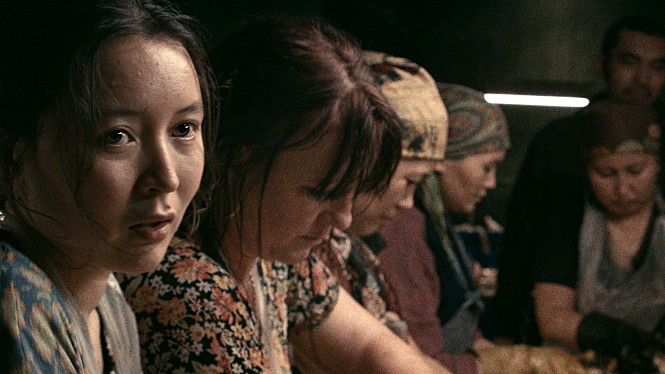
Black Light (2020) ☆☆☆1/2(3.5/4): A truth beyond their reach

South Korean independent film “Black Light” is a seemingly plain but undeniably compelling mystery melodrama, which revolves around the truth beyond the reach of everyone involved with a very complicated circumstance in one way or another. As its three different main characters struggle with each own pain and guilt during the aftermath, they also find themselves facing more lies and facts uncovered one by one along the plot, and we come to wonder whether it is really worthwhile for them to clarify who was actually the victim or the perpetrator.

At first, the movie begins the story from the viewpoint of a young woman named Hee-joo (Kim Si-eun). She recently comes back to her hometown as getting employed at a local factory, and her brother and sister-in-law are willing to live with her in their new place to reside, but she simply declines their offer while deciding to stay in a factory dormitory instead. As a matter of fact, she has still been struggling with her grief from her husband’s death which was caused by an unfortunate car accident two years ago, and being with her family members is the last thing she wants to do for now.

It seems everything will work out well for Hee-joo in the end as long as she focuses on her new job, but then there comes a big trouble for her. During that terrible accident, her husband’s car clashed with a vehicle driven by a man who has been comatose since the accident, and it turns out that that guy’s wife has been working in the same factory. When Yeong-nam (Yum Hye-ran) subsequently approaches to Hee-joo while not recognizing her at all, Hee-joo understandably flinches from Yeong-nam, and she becomes quite conflicted about how to deal with this tricky situation.

In the meantime, the movie also focuses on how things have been very difficult for Yeong-nam and her adolescent daughter Eun-yeong (Park Ji-hoo) since that accident. Whenever she is not working, Yeong-nam pays lots of care and attention to her comatose husband at a local hospital, but there has not been any sign of recovery, and his doctor recommends that he should be transferred to some other facility where his unconscious body can be handled better. As watching her mother slowly succumbing to resignation, Eun-yeong naturally feels angry and frustrated, and that puts more emotional distance between them.

And then something unexpected happens during one evening. When she is coming back to her factory dormitory as usual, Hee-joo happens to be followed by Eun-yeong, and then she comes to let Eun-yeong stay in her dormitory room for a while. When she belatedly comes to realize who Eun-yeong is, Hee-joo becomes quite uncomfortable to say the least, but she and Eun-yeong later come to meet each other more than once, and Eun-yeong comes to confides to Hee-joo a certain hidden fact about her father.

After learning of that hidden fact in question, Hee-joo becomes quite determined to find what really happened during that accident, but the circumstance only turns out to be quite elusive and complicated to say the least. Almost everyone in this situation has small but crucial secrets and lies to be revealed to Hee-joo or Yeong-nam, and that causes more pain and confusion for them. Nobody is entirely innocent or guilty in this situation, and the range of responsibility is even extended to Yeong-nam and Hee-joo’s employer, who incidentally abandoned Yeong-nam’s husband shortly after some serious workplace accident. Although it does not directly spell out to us, the movie makes some important points on laborers’ rights of having safe workplace environment, and that takes me back to another recent South Korean film “I Don’t Fire Myself” (2020), which is also an excellent labor drama in my trivial opinion.

Around its third act, the screenplay by Bae Jong-dae, who made several short films before making a feature film debut here, becomes a little contrived as pushing its three main characters into more personal clashes and melodramas, but its narrative momentum is maintained well on the whole, and then it eventually arrives at the finale which turns out to be more thought-provoking than expected. Regardless of how you will come to interpret it, it feels almost perfect considering what has been steadily built up along the narrative thanks to Bae’s skillful handling of story and characters, and you may be touched by a little possibility of healing and connection in the very last shot of the film.

Bae also draws very engaging performances from his three talented main performers, who did a good job of imbuing their respective roles with considerable human emotions we can empathize with. While Kim Si-eun is believable in her character’s dynamic emotional struggle along the story, Yun Hye-ran is superb as subtly conveying to us her character’s repressed anger and frustration, and Park Ji-hoo, a newcomer who recently gave us a remarkable breakthrough performance in Kim Bo-ra’s “House of Hummingbird” (2018), is also splendid as another crucial part of the movie.

In conclusion, “Black Light” is surely a tough stuff due to a number of intense emotional moments which are often difficult to watch, but it will hold your attention nonetheless because of its good direction and commendable performances, and its powerful moments will linger on your mind for a while after it is over. In short, this is another impressive South Korean film of this year after “I Don’t Fire Myself”, and I guess I can have some hope for more good South Korean films to come during this year.

Posted in Movies | Tagged , , , | 2 Comments

The Father (2020) ☆☆☆1/2(3.5/4): In a state of fading mind

“The Father” is a somber but harrowing chamber drama which calmly and sensitively depicts that confusing and devastating psychological condition of dementia. As its increasingly non-linear narrative is unfolded inside its small background, the movie gives us some acute insight and understanding on its old hero’s irreversible mental deterioration, and we come to empathize more with what he will continue to suffer till the inevitable end of his life.

During the opening scene, the movie succinctly establishes the relationship between Anthony (Anthony Hopkins) and his daughter Anne (Olivia Colman). Although Anthony adamantly believes that he still can take of himself well enough despite being quite old and fragile at present, Anne sincerely believes that her father really needs some extra care and assistance, and the mood becomes more awkwardness as they argue with each other on whether another caregiver should be hired for him after the previous one left due to a small incident involved with his old wristwatch.

Although Anthony seems to be all right on the surface, the movie slowly begins to show us how confusing things can be to him. For example, when he seems to be simply going through another usual day, somebody suddenly enters, and he cannot recognize this person at all even though this person is supposed to be Anne’s husband. In addition, he also cannot recognize his own daughter at all when she subsequently comes, and he is also baffled to know that he has actually been living with Anne and her husband instead of living alone by himself in his own residence.

After that, Anthony keeps getting more confused and disoriented, and we naturally begin to question what is presented through his apparently unreliable viewpoint. He frequently loses the sense of time, and his mind sometimes retreats into his recent past memories for no apparent reason. For example, he often talks about Anne’s younger sister and how much he misses her, but, of course, there is a reason why she never comes to meet him, and you can easily guess the reason as watching Anne’s silent reaction to her father’s affectionate words on her younger sister.

Furthermore, he also shows rapid mood swings beyond his control. When a new caregiver comes for having a short interview with Anne, he warmly greets her at first while showing a little more cheerful and humorous side of him, but then he becomes quite spiteful about having another caregiver. Driven by anger as well as confusion, he says quite hurtful things to his daughter, and Anne has to endure that as a daughter who still deeply cares about her father.

It goes without saying that Anne apparently feels tired, exasperated, and frustrated as reflected by a few brief personal moments, and that certainly puts a strain on her relationship with her husband, but we cannot be that sure about her current status of life due to Anthony’s faulty memory. Is she really married, or is she actually soon going to move to Paris along with her boyfriend as she said to her father during the opening scene?

While constantly making us wonder about what is actually happening around Anthony, director/co-writer Florian Zeller, who adapted his acclaimed 2012 stage play with Christopher Hampton, engages us more as slowly immersing us into Anthony’s confused state of mind via several achingly human moments. When he finally comes to that eventual point where he is utterly scare and helpless with more regress in his mind, Anthony has no choice but to accept what has been happening to him, and this poignant moment is deftly and touchingly delivered to us without any cheap sentiment.

As the fading human center of the film, Anthony Hopkins, who will definitely receive an Oscar nomination for his performance in next month, is superlative in his nuanced acting. Although he often seemed to waste his talent during last 20 years, Hopkins has not lost any of his talent and presence yet as recently shown from his Oscar-nominated turn in “The Two Popes” (2019), and he is effortless as subtly conveying to us his character’s fear, anger, and confusion without any excess or exaggeration. Yes, he will be always remembered for his chilling Oscar-winning performance in “The Silence of the Lambs” (1991), but Hopkins has been always capable of doing many other things besides that iconic performance, and the movie surely proves his immense versatility again.

Several other main cast members in the film dutifully support Hopkins while holding each own space around him. While Olivia Colman, who has been much more prominent thanks to her Oscar-winning breakthrough turn in “The Favourites” (2019), deserves an Oscar nomination for her unadorned but heartfelt performance, Rufus Sewell, Imogen Poots, Mark Gatiss, and Olivia Williams are also solid in their respective small supporting roles, and Williams is particularly wonderful as her compassionate character tactfully handles a sudden embarrassing moment between her and Anthony.

Overall, “The Father” is a successful feature film debut by Zeller, who did a smooth job of preventing his adaptation result from looking stiff or stagy at all. Thanks to his competent direction and the excellent performances from his main cast members, the movie deserves to be compared with other similar drama films such as “Iris” (2001) and “Away from Her” (2006), and it is indeed one of the better films from last year.

Posted in Movies | Tagged , | 2 Comments

I Care a Lot (2020) ☆☆☆(3/4): Another deliciously devious turn by Rosamund Pike

The heroine of “I Care a Lot”, which is released in South Korean theaters on this Friday instead of being released on Netflix or Amazon Prime in several other countries including US, is a nasty piece of work. As an amoral con woman born to be a predator instead of a prey, she stops at nothing at all for getting what she wants and covets, and she is also smart and resourceful enough to get away with many criminal deeds she comes to commit in the name of win and survival. Yes, you will still not like her that much even at the very end of the movie, but, boy, isn’t it rather fun to see how far a clever and interesting criminal like her can possibly go?

Her name is Marla Grayson (Rosamund Pike), and her narration during the opening scene gives a brief summary on her cynical viewpoint on life and people in addition to the modus operandi of her dirty business. On the surface, Grayson is a dedicated and benevolent state-appointed guardian for many old people in the need of assisted living, but she has virtually siphoned off their money and assets behind her back, while those old people supposedly under her care remain helplessly stuck in assisted living facilities as they lose their money to her day by day. When she happens to be sued by the son of some old lady who is recently sent to an assisted living facility because of her, she firmly sticks to her false care and dedication at the court, and a judge presiding over the case has no problem in believing her impertinent lies.

Grayson usually gets her preys from a geriatric clinic doctor who has been paid enough for her unethical service to Grayson, and the doctor notifies to her on one day that there is a lucrative target she cannot possibly refuse. The target in question is an old rich lady named Jennifer Peterson (Dianne Wiest), and she looks like an ideal prey for Grayson and her accomplice/lover Fran (Eiza González) because, in addition to owning a considerable amount of money and assets, this old lady does not have any close living family member who may cause a legal trouble for Grayson later.

Once Grayson embarks on working on Peterson, Peterson’s life is suddenly turned upside down. Shortly after an emergency court hearing on her case, Peterson is swiftly sent to a nearby assisted facility center against her will, and Grayson instantly gets her hand on Peterson’s money and assets. To her surprise and delight, her latest target is actually quite richer than expected when she checks Peterson’s back account and private safe, and that surely puts more fire on her longtime relationship with Fran, who is probably the only person in the world Grayson actually cares about.

Of course, like many other things too good to be true, there is a catch. It subsequently turns out that Peterson is not what she seems to be on the surface, and there is a person who is not so pleased to find that she is suddenly gone from her house. That person in question is quite determined to get Peterson back, and he turns out to be a very dangerous match for Grayson. Once he comes to see that Grayson is not someone who is not so easy to negotiate with, he resorts to harsher measures for solving his pesky problem, and Grayson belatedly comes to realize how serious her situation really is.

While things get darker later in the story as expected, the screenplay by director/writer J Blakeson never loses its vicious sense of black humor as keeping things rolling along a number of delicious turns and twists. It goes without saying that both Grayson and her opponent are quite unlikable to say the least, but their tug-of-war unfolded along the story is gripping to watch as both of them are smart and engaging characters, and we become more interested what will eventually happen even though we do not care much about them.

Above all, the movie is anchored by another strong performance from Rosamund Pike, who surely enjoys playing an uncompromisingly nefarious character as she previously did in “Gone Girl” (2014). Without any need of excuse or explanation for her character’s sheer nastiness, Pike rapturously embraces her character’s strong personality and determination, and she also has a good chemistry with Eiza González, who is convincing during her several personal moments with Pike.

On the opposite, Peter Dinklage, who has always been interesting to watch since his breakthrough turn in “The Station Agent” (2003), has his own juicy fun as a ruthless opponent who turns out to be more reasonable and practical than expected, and he and Pike ably capture the rich irony of their last scene in the film. In case of the other notable main cast members of the film, Dianne Wiest brings some acerbic toughness to her seemingly functional role, and Chris Messina, Macon Blair, and Isiah Whitlock Jr. are also effective in their respective supporting parts.

On the whole, “I Care a Lot” is an entertaining crime comedy thriller film packed with some dark laughs and excitements, and Blackeson did a competent job of balancing the story and characters between humor and violence. Like John Dahl and Linda Fiorentino did in “The Last Seduction” (1994), he and Pike gives us a memorable female criminal heroine we cannot easily forget, and I must confess that I was disappointed a bit with the very last scene of the film, which feels rather perfunctory instead of eventual. At least, that is just a minor flaw in my humble opinion, so I recommend it with some naughty chuckles.

Posted in Movies | Tagged , , , | Leave a comment