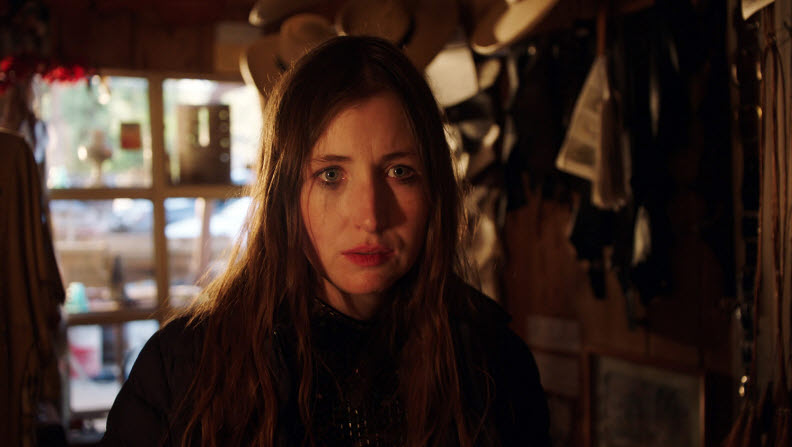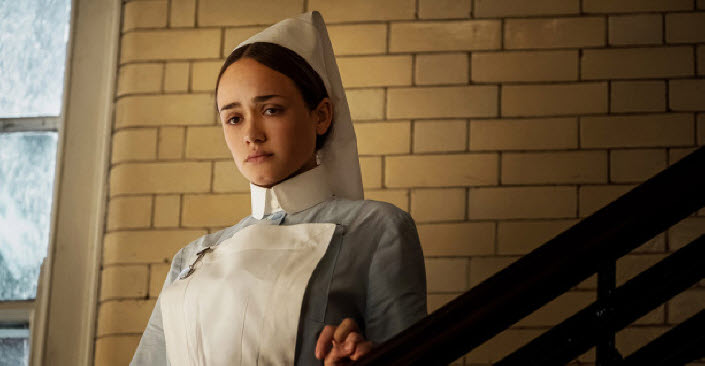
Festival (2020) ☆☆☆(3/4): He cannot afford to be sad…

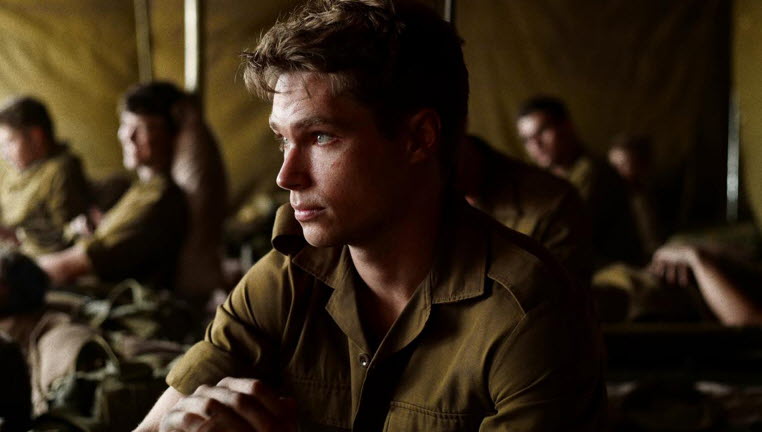
South Korean independent drama “Festival” mainly revolves around one impossible situation which pressures its plain young hero a lot. While we are occasionally amused by how things keep going wrong for him, we also come to sense more of how desperate and devastated he really is, and the movie does a fairly good job of balancing itself between absurd black humor and sincere melodrama.

At the beginning, the movie lets us get to know the difficult daily life of Kyeong-man (Ha Joon), who has earned his meager living via working as a cheap master of ceremony. Because he has to pay for the expensive hospital fee for his ailing father, he is willing to do any job offered to him, and he does not even hesitate to work in front of a small supermarket on its bargain sale day.

We later see Kyeong-man coming to the hospital where his father has stayed since he became very ill. Shortly after sleeping right next to his father for a while, he is awakened by his father, who cannot speak or move that well to his illness but clearly appreciates how much his son cares about his welfare. When he happens to have another job to do, Kyeong-man calls his younger sister Kyeong-mi (So Ju-yeon), and Kyeong-mi is certainly willing to spend some time with their father, though she comes a bit too late to Kyeong-man’s annoyance.

Not long after he leaves the hospital, Kyeong-man receives an urgent call from her sister, who is quite shocked and devastated due to their father’s sudden death. He immediately goes back to the hospital, and he and his sister subsequently prepare for their father’s funeral and condolers to come, but then he faces a certain hard fact about funeral. He and his sister should pay a considerable amount of money for their father’s funeral, but they do not have much money at present. They may have to depend only on the generosity of those condolers who will probably give them some money as a part of the custom, but it is apparent that not many people will come to the funeral, and there is a cringe-inducing scene where one of their relatives comes to show condolence as required and then reminds Kyeong-man that Kyeong-man needs to pay off his dead father’s debt as soon as possible.

While Kyeong-man is agonizing over how he can possibly deal with this difficult circumstance, there comes an accidental job offer which may solve it. One of his colleagues cannot suddenly work at a big birthday party to be held in some country village, so he asks Kyeong-man to go there instead of him, and Kyeong-man promptly accepts this job because he is promised that he will be paid handsomely for that. When he subsequently leaves the funeral, he does not tell his sister about where he will actually go, and Kyeong-mi has to deal with their condolers alone for herself.

When Kyeong-man arrives at that country village in question, his car unfortunately comes to have some mechanical problem, and that is just the beginning of a series of small and big problems which will exasperate him a lot. At one point, he is asked by his client to try a bit more for making his client’s aging mother smile, and he shows no objection just because he is told that he will get extra money for that, but, of course, that turns out to be harder than expected because he keeps being cheery on the surface while struggling to suppress his growing grief behind his back. In addition, he inadvertently got himself stuck in a rather messy circumstance, and he becomes more exasperated as her sister keeps calling him for asking him where the hell he is.

Even though he can simply solve his problem via saying a few words on that, Kyeong-min still does not tell anyone on his increasingly difficult status. This is also quite frustrating to us, but the screenplay by Kim Rok-kyung steadily accumulates its dramatic tension along with that, and we keep watching Kyeong-man’s plight as the story eventually reaches to his expected breaking point.

In the meantime, the story also pays some attention to how things are also hard and difficult for Kyeong-mi, who comes to have a fair share of emotional difficulties as having to take care of the funeral and those condolers without her older brother at her side. In case of a trio of female relatives, they are rather hypocritical in their superficial condolence, and they are also pretty insensitive as bluntly talking about Kyeong-man’s current absence right in front of Kyeong-mi. As a guy who has been to a number of funerals, I am familiar with such people like them, and I remember well how I had to suppress myself while talking with such people at funerals.

The movie depends a lot on its two lead performers, who did a commendable job of conveying to us their characters’ grief, confusion, and frustration. While Ha Joon is convincing in the depiction of accumulating emotional conflicts inside his character, So Ju-yeon ably handles her several key scenes as maintaining her character’s phlegmatically passive façade, and several other main cast members including Oh Chi-woon and Jung In-gi are well-cast in their small supporting roles.

On the whole, “Festival” is more or less than the longer version of a short film, but it handles its story and characters more competently than I expected when I saw its theatrical theater several months ago. Sure, the finale is surely melodramatic to say the least, but the movie earns its tears via genuine emotional moments, and you may find yourself wishing for better days for Kyeong-man and Kyeong-mi.

Posted in Movies | Tagged , , , | Leave a comment

Zack Snyder’s Justice League (2021) ☆☆☆(3/4): Sincerely excessive to say the least

“Zach Snyder’s Justice League” is sincerely excessive to say the least. Although I felt rather tired as going through its exciting but exhausting final hour, I must admit that, thanks to its considerably extended scope in terms of story and characters, the movie has a fair share of strong points compared to the original version which came out in November 2017. Sure, the overall result is often ponderous and plodding especially during the first half where it is busy with establishing its various main characters and their impending emergency, but it keeps rolling at least even during that part, and the fans of DC Extended Universe (DCEU) movies will be certainly rewarded a lot for waiting for this chunky but entertaining piece of work for several years.

First, let’s talk a bit about the very troubled production history behind the film itself. As many of you know, its script, based on the story by director/co-writer Zack Snyder and his co-writer Chris Terrio and Will Beall, had to go through numerous changes even during its production period, and then Snyder came to step down during the following post-production shortly after the death of his daughter. After that, Joss Whedon, who is a persona non grata in Hollywood these days due to his past history of harassment on a number of people he worked with, took care of the subsequent extensive post-production process, and the final result was not received that well by many critics, though I gave it three stars out of four because I was quite annoyed by some awful South Korean film right before watching it.

Anyway, mainly because of the constant demands from millions of fans eager to see what Snyder originally envisioned, Warner Brothers eventually decided to give it a shot, and it spent no less 70 million dollars for making what was simply called the “Snyder Cut” at that time. With Snyder at the helm again, the original version was re-edited in addition to being added with changed score and special effects, and Snyder and his crew and cast members also shot a number of new scenes to be included in his definite final version. With the running time bulked up to no less than 4 hours, the studio initially wanted the final product to be presented as a TV miniseries, but then it eventually came to decide to release the final product as a feature film on HBO Max, and we finally came to see its release on last Thursday.

So here is the question: Is the Snyder Cut as good an improvement over the original version as those DCEU fans have hoped for? The answer is somewhere between yes and no, but, in my humble opinion, the Snyder Cut has enough strong aspects to compensate for a number of its glaring weak ones. Consisting of six chapters and the epilogue, the movie surely feels like watching a long TV miniseries from the beginning to the end, but it has some new engaging elements for more plot and character development, and it certainly looks and feels more like your typical Zack Snyder flick compared to the original version.

The overall setup of the movie is not changed much on the whole. After Superman/Clark Kent (Henry Cavill) bravely sacrificed himself for saving the Earth and the humanity during the climax of “Batman v Superman; Dawn of Justice” (2016), Bruce Wayne/Batman (Ben Affleck) tries to compensate for his unwise and disastrous conflict with Superman, and he tries to gather other superheroes as he comes to learn that another big threat will come to the Earth sooner or later. While Diana Prince/Wonder Woman (Gal Gadot) are Barry Allen/The Flash (Ezra Miller) are willing to join Batman, Arthur Curry/Aquaman (Jason Momoa) and Victor Stone/Cyborg (Ray Fisher) are not so interested to say the least, but it is not much of a spoiler to tell you that these two guys will eventually join the group as they become more aware of the threat from the outer space.

The threat in question mainly comes from Steppenwolf (Ciarán Hinds), an evil alien guy who should not be confused with the Steppenwolf Theater in Chicago, Illinois. Like countless alien villains in comic book movies, he has been hoping for achieving the total destruction in galactic scale, and he comes to the Earth for finding and then gathering the three mysterious boxes hidden somewhere on the Earth. Compared to how many magic stones the chief villain of “Avengers: Infinity War” (2018) had to gather, I guess this is a relatively less demanding job, though Steppenwolf is often pressured by his big giant boss lurking somewhere in the outer space.

Despite several cool action scenes which are accompanied with heaps of slow-motion shots as you can expect from Snyder’s work, Steppenwolf’s destructive quest for these three mysterious boxes is one of the lackluster elements during the first half of the movie, but this and other flaws including occasionally lagging narrative pacing are compensated by the additional personal dramas for The Flash and Cyborg, who incidentally have each own daddy issue. While the Flash has been obsessed with proving the innocence of his wrongfully accused and incarcerated father, Cyborg has struggled with his harrowing love/hate relationship with his scientist father, who revived him via an alien technology shortly after he died along with his mother due to a tragic accident.

Once everything is ready on the plate, the movie goes all the way during the second half, and Snyder surely demonstrates here that he is a better action movie director than, say, Michael Bay. The expected climax sequence unfolded in an abandoned area located somewhere in Russia is quite loud and busy with lots of things happening here and there, but the movie, which is presented in the film ratio of 1.33:1 probably for the subsequent IMAX release in the future, gives us lots of epic moments, and it also did a fairly good job of juggling its superhero characters and their respective abilities without never losing its sense of direction. In case of the epilogue, it is rather redundant and unnecessary as mostly functioning as a teaser for whatever may come next, but it is nice to see Snyder show a bit brighter side of his as showing some signs of hope and redemption among his superhero main characters.

In conclusion, “Zach Snyder’s Justice League” is better than expected despite its many imperfect sides, which, to my little surprise, I came to overlook willingly when I watched it at last night. I do not think I will revisit it that soon, but I agree with others that this is an interesting case showing the bests and worsts of recent superhero movies together, and I assure you that you will be very satisfied if you have been eagerly waiting for it.

Posted in Movies | Tagged , , | Leave a comment

Billie Eilish: The World’s a Little Blurry (2021) ☆☆1/2(2.5/4): So, what’s next for her?

R.J. Cutler’s new documentary film “Billie Eilish: The World’s a Little Blurry”, which was released on Apple+ in last month, often feels like watching the extended opening chapter for whatever will come next. Here is an apparently talented singer/songwriter, and the documentary willingly presents the various personal sides of its human subject, but I could not help but wonder whether the documentary can be more interesting if it is made, say, 10 years later.

The human subject in question is Billie Eilish, a young American musician who is about to be only 20 in this year but has been one of the biggest online pop music stars during last few years. When her performance of a song written by her brother Finneas was uploaded to SoundCloud in November 2015, they did not expect that much, but, what do you know, this led to an online sensation way beyond their imagination, and Eilish soon found herself turned into a major new star to watch thanks to the following commercial success of several subsequent songs written by her and her brother.

During the first half of the documentary, we observe Eilish and her brother working on the songs for their upcoming debut studio album “When We All Fall Asleep, Where Do We Go?”, and their rather unorthodox working environment is a bit amusing to watch. Instead of working within a conventional recording studio, Eilish and her brother work in a bedroom turned into their own recording studio, and it is interesting to see how easily they can record their songs together with a few equipments in their bedroom studio.

We also meet their parents Patrick and Maggie, who are your average open-minded Californian parents. Despite their kids’ enormous success, they and their kids are still living in a small and modest suburban house, and it seems they are all mostly happy together in their house. While understandably concerned about their kids, Patrick and Maggie are certainly proud of how much their kids have succeeded within a very short time, and they are always ready to support their kids. At one point, Eilish confides to her parents on how much she feels pressured and annoyed by the ongoing album production process, and her patients patiently listen to her while also reminding her of what she is supposed to finish along with her brother as soon as possible.

Meanwhile, the documentary shows us a series of video clips of onstage and backstage moments surrounding Eilish, who always brings positive energy to her adoring young fans out there. Regardless of whether they are actually great or not, it is undeniable that her songs have certain specific emotional appeals to her young fans, and she willingly shows gratitude and appreciation to them because she was once one of those girls quite enthusiastic about, yes, Justin Bieber. As a matter of fact, Bieber directly approached to Eilish for the permission to perform her new song “Bad Guy”, and she could not possibly be more excited about that.

While closely observing how Eilish busily alternated between her concert tour performances and her album production, the documentary gives us several entertaining moments for us. When Eilish came to the Coachella Valley Music and Arts Festival, she and her family were thrilled to meet Katy Perry, who gave Eilish a little pep talk during their brief encounter. When she was later introduced to Perry’s boyfriend, Eilish initially did not recognize him at all, and that led to another humorous moment in the documentary.

Meanwhile, the documentary also pays some attention to a few personal problems in Eilish’s private life. Like any other adolescent girls around her age, she cannot help herself in case of her occasional emotional angst, which got much worse when she happened to have a breakup with her boyfriend. In addition, she suffers from her Tourette syndrome from time to time, and she also has to deal with her leg injuries and the resulting pains, which got exacerbated by jumping a bit too much during her concerts.

Nevertheless, Eilish has kept going on with her family standing by her as much as possible, and the second half of the documentary looks at how much she has advanced during 2018-2020. While doing many concerts around the world as usual, she eventually released her first studio album as demanded, and we also see her and her brother intensely working on the main title song for a new James Bond film. As many of you know, the song turned out to be released too early because the theatrical release of the movie was postponed to October 2021, but the song itself was another major success for Eilish and her brother, who received together another Grammy for that a few weeks ago.

While showing how Eilish reached to the top officially at the 2020 Grammy Awards, the documentary certainly leaves a feel-good impression on us in the end as expected, but it somehow feels half-baked on the whole as merely looking like the end of the beginning of Eilish’s stardom. Will she be tragically fizzled like Amy Winehouse? Or, will she be more matured and skilled to become someone equal to Lady Gaga or Taylor Swift? I do appreciate that Cutler and his crew give us an intimate look into Eilish’s career and private life, but, to be frank with you, I wish the documentary delved deeper than what is presented on the screen.

Overall, “Billie Eilish: The World’s A Little Blurry” turns out to be not as hefty as I feared despite its rather long running time (140 minutes), and I conclude that Eilish does have right stuffs to be an enduring pop star, but I still think it will be more interesting to observe and regard her after 10 years at least. Of course, I have really no idea on what will happen next during next 10 years, but I can only wish good luck on her life and career.

Posted in Movies | Tagged , , , | Leave a comment

Fighter (2020) ☆☆☆(3/4): You will cheer for this boxer girl

South Korean independent film “Fighter” is atypical in its seemingly conventional sports drama. When it starts the story along with its struggling underdog heroine full of pluck and determination, it looks rather predictable on the surface, but then it deliberately sidesteps clichés and conventions as diligently focusing on its heroine’s emotional struggles as usual, and it surely earns some poignancy around the end of the story.

In the beginning, we get to know how everything still feels new and alien to Jin-ah (Lim Sung-mi), a young North Korean refugee woman who has just finished her adjustment period in South Korea. As living alone in a small one-room residence, she naturally feels lonely and isolated at times, but she has determined to save enough money for bringing her father from China to South Korea someday, and we soon see her doing several menial jobs for earning money as much as possible.

One of these jobs of hers is cleaning a small local boxing gym where a number of female professional boxers are training, and the movie calmly observes how Jin-ah gradually becomes interested in boxing. Although she initially focuses on doing her job, her eyes are often drawn to those female boxers training in the ring, and her growing interest in boxing is soon noticed by Tae-soo (Beak Seo-bin), a young assistant to the gym director who turns out to be very interested in befriending in Jin-ah.

Tae-soo later attempts to show more of her talent to the gym director, but that is the last thing Jin-ah wants for now. Probably due to her very difficult time before coming to South Korea, she does not trust others that much, and she is also occupied with a certain private matter besides the one involved with her father. It turns out that her long-lost mother has been in South Korea since she escaped from North Korea alone many years ago, and their meeting feels pretty awkward to say the least. Watching how her mother has lived pretty well in an affluent neighborhood, Jin-ah feels more resentment toward her mother, who still feels guilty about her choice in the past but does not know what to do with Jin-ah.

Meanwhile, the gym director comes to discern and then confirm that Jin-ah does have potential, and Jin-ah accepts his offer once she sees that she may get much more money from playing boxing. Although female professional boxing is surely a minor field compared to male professional boxing, she may earn a lot if she can reach to the top of the field, and that is certainly preferable to earning less day by day via her current jobs.

Now you may get a pretty good idea on what follows next, but then the movie takes a dry and unconventional approach to its main subject. While we do not see much of Jin-ah’s athletic progress along the story, the movie even does not have many boxing scenes, and most of these few boxing scenes are just briefly presented without much tension or excitement. In case of a certain key boxing sequence later in the story, it is simply unfolded in a stuffy space with a handful of spectators, and how it is played out in the end certainly goes against our expectation.

Nevertheless, the screenplay by director/write/editor Jero Yun still holds our attention as paying more attention to its heroine’s emotional issues. When she is notified that her father is in a very serious trouble, Jin-ah becomes more desperate and anxious than before, and the presence of her mother in South Korea hurts and angers her more than before. What eventually happens between her and her mother does not surprise us much, but that moment is delivered with enough dramatic impact, and we come to care more about whether their longtime family issue can be really resolved.

Above all, the movie is firmly held together by Lim Sung-mi, who gives a strong performance filled with quiet but palpable intensity. As reflected by her narration at the beginning and end of the movie, every day is another fight for life to Jin-ah, and Lim did a splendid job of embodying her character’s steely determination even when her expressive face does not seem to signify anything at all. Right from her first appearance in the film, we can easily sense how Jin-ah is willing to struggle and fight more, and you may find yourself rooting for Jin-ah a lot around the time when she is really ready to take a forward step for her life and new interest.

Several notable main cast members around Lim ably support her without overshadowing her at all. As a good-hearted lad willing to support the girl he comes to like and admire, Beak Seo-bin is likable in his modest supporting turn, and he and Lim complement well each other via the contrasting personalities of their respective characters. While Oh Kwang-rok ably suggests sincere care and attention behind the jaded appearance of his character, Lee Seung-yeon, who previously played one of the crucial supporting roles in Kim Bo-ra’s “House of Hummingbird” (2018), is also solid as Jin-ah’s estranged mother.

In conclusion, “Fighter” did as much as intended in its own way as defying clichés and conventions, and the overall result is another notable South Korean female drama film of this year. Although it is only March at this point, I and other South Korean audiences were already served with several commendable female movies such as “I Don’t Fire Myself” (2020), “Black Light” (2020), and “Three Sisters” (2020) during last three months, and I am really looking forward to watching whatever may come next during the rest of this year.

Posted in Movies | Tagged , , , , | Leave a comment

A Distant Place (2020) ☆☆☆(3/4): All the woolly sheep

South Korean independent film “A Distant Place” is a quiet but intimate drama which slowly engages us as gradually revealing the emotional undercurrents below its calm surface. Although its slow narrative pacing surely requires some patience from us during the first act, the movie often shines with poetic beauty as shrouded in vivid rural atmosphere, and that and several good performances in the film compensate for its rather thin storytelling.

After the phlegmatic opening scene beginning with a close-up shot of the sheep wool, the movie lets us get to know how its hero Jin-woo (Kang Gil-woo) has led his quiet life in some remote mountainous area in Hwacheon, Gangwon-do. He has worked in a small sheep ranch run by a middle-aged guy named Joong-man (Ki Joo-bong), and we see him working on those sheep in the ranch while his little daughter Seol (Kim Si-ha) is around him. Although Joong-man and Seol have lived in a guest house, they are pretty much like family members to Joong-man and his daughter Moon-kyeong (Ki Do-young), and we later observe these four people casually having a meal along with Joong-man’s fragile old mother Myeong-soon (Choi Geum-soo) in the main house.

It is apparent to us that Moon-kyeong is interested in getting closer to Jin-woo, but Jin-woo is not particularly interested in responding to Moon-kyeong’s affection. When he is not occupied with those ranch works, he mostly focuses on taking care of Seol, and Seol, who always calls him ‘mom’ instead of ‘dad’, is mostly happy as spending her time alone with Jin-woo or those sheep under his care.

And then there come two different changes into their peaceful life on the ranch. Jin-woo’s poet friend Hyeon-min (Hong Kyung) comes to stay in the ranch because he happens to be hired to give lectures by a local church, and we get to know a bit about Jin-woo’s past. He met Hyeon-min at a college where he studied art, and it is clear that Jin-woo and Hyeon-min were quite close to each other, but, for some reason, Jin-woo quit everything and then went to the ranch around the time when he came to take care of Seol alone.

The movie never specifies the reason why Jin-woo chose to abandon his artistic career at that time, but we come to have a pretty good idea when he and Hyeon-min later have a little private time in the guest house. They were actually lovers, and Hyeon-min wants to be close to Jin-woo again, and but Jin-woo does not want to reveal this to his boss or his boss’ daughter. Of course, it does not take much time for Joong-man and Moon-kyeong to notice what is really going between Jin-woo and Hyeon-min, but both of them quietly accept that without saying anything, and Jin-woo becomes a little more relaxed than before as spending more time along with Hyeon-min.

In the meantime, there comes the other change, and that is the unexpected visit of Eun-yeong (Lee Sang-hee), Jin-woo’s estranged twin sister who wants to take Seol away from the ranch for a certain personal cause. Although Jin-woo does not welcome his twin sister much, he lets her stay in the ranch anyway, and we come to sense more of the tension being developed between her and Jin-woo, who adamantly believes that Seoul should continue to live with him as usual.

What eventually occurs among the main characters later in the story will not surprise you much, but the movie still holds our attention via its vivid rural mood to be appreciated. The ranch and its surrounding area provide a number of lovely sceneries to be admired, and I particularly like a gorgeously serene scene which shows a small isle where Jin-woo and Hyeon-min are more comfortable to be with each other.

Like director/writer/editor/co-producer Park Kun-young’s previous film “To My River” (2018), the movie also focuses a lot on poetry, and there is a sublime but ultimately bitter moment when Hyeon-min recites his latest work. To be frank with you, I am a guy who has been sort of dyslexic to poetry, but this moment grows on me after I watched the movie yesterday, and that is one of several reasons why I am willing to revisit the movie someday.

However, the movie is not entirely without flaws. As putting more emphasis on its mood, it sometimes feels thin in case of characterization (Hyeon-min and Eun-yeong are more or less than plot elements, for instance), and, as a queer drama, it is also rather too mild compared to recent queer dramas such as “Brokeback Mountain” (2005) and “God’s Own Country” (2017), both of which are also incidentally associated with handling sheep as live stocks.
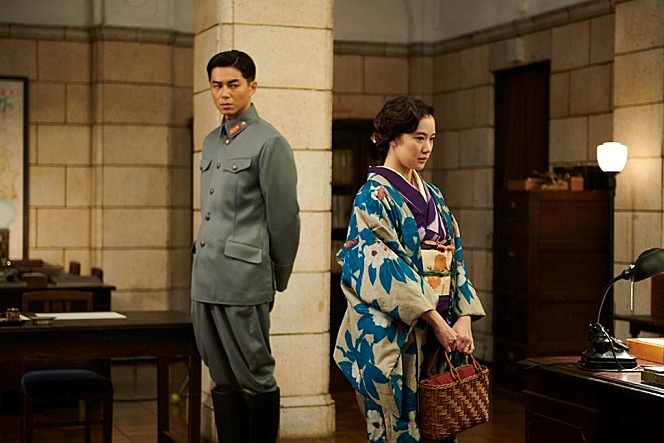
Anyway, the main cast members are convincing in their respective roles. While Kang Gil-woo dutifully holds the center, Hong Kyung and Lee Sang-hee are well-cast as two different figures coming into Jin-woo’s life, and Ki Joo-bong, Ki Do-young, Choi Geum-soo, and Kim Si-ha bring some life and personality to their substantial supporting characters.

Overall, “A Distant Place” may lack depth at times in terms of storytelling, but it is still worthwhile to watch mainly for its impressive mood coupled with many beautiful moments. I admire these good moments, but I am not as enthusiastic about it as some other local critics, and I will not deny that my eyes were usually drawn more to those woolly sheep in the film.

Posted in Movies | Tagged , , , | 1 Comment

Operation Varsity Blues: The College Admissions Scandal (2021) ☆☆☆(3/4): A criminal who exploited the broken education system

Netflix documentary film “Operation Varsity Blues: The College Admissions Scandal”, which was released on Netflix a few days ago, looks into an infamous bribery scandal which drew lots of public attention in 2019. As examining how those numerous incidents of bribery and corruption were done by one man at the center of the scandal, the documentary gives us an alarming picture of the broken education system in US, and it is rather exasperating to learn that nothing much has been changed despite what was fully exposed in public at that time.

The man in question is William Rick Singer, a private college admission consultant in California who was arrested by FBI in 2018 for bribing college coaches and administrators on the behalf of his numerous rich clients. Although he was not interviewed for the documentary, Singer is played by Matthew Modine in the reenactment scenes in the documentary, and, according to the documentary, these reenactment scenes are mostly based on the real FBI wiretap records of the phone conversations between him and his clients.

Alternating between interview clips and reenactment scenes, the documentary gives us some details on the serious flaws of the college admission system which were freely exploited by Singer. While there are more than 3,000 colleges in US at present, many of high school seniors who are about to graduate are eager to go to a very small group of prestigious colleges such as Harvard or Stanford, and these colleges care a lot about how to make them look more prestigious. As long as they are prestigious enough, they will surely get lots of funds and donations every year, and they even provide the “back door” for the admission of the kids of very wealthy people willing to pay several million dollars at least.

For relatively less affluent people, Singer provided the “side door” based on the loopholes in the college education system in US, and he did not disappoint them at all once he received their, uh, donation to his seemingly respectable foundation. Although his clients paid less than one million dollars, he always could get what his clients wanted for their kids, and his clients were certainly satisfied as subsequently watching their kids getting enrolled in those prestigious colleges without knowing anything about what they did behind their back.

Via several interviewees, the documentary explains to us on how the “side door” provided by Singer worked. The children of his clients were presented as promising student athletes, and those college coaches and administrators who were going to decide on these kids’ admission were already bribed by Singer in advance. Regardless of how good these kids actually were, those bribed coaches and administrators were set to open the door for them from the very beginning, and there is a rather amusing case where some kid got accepted even though he is not that tall enough to be a college basketball player.

In addition, Singer also manipulated entrance test scores for making sure that his clients’ kids got very high test scores, and we hear about how he pulled it off with his accomplice. He usually had his client’s kid take a test alone under a certified supervisor, and, of course, that certified supervisor was always his accomplice. Once the exam was over and then his client’s kid left, his accomplice prepared another exam sheet to be submitted instead for getting a high test score, and nobody suspected at all.

Thanks to the smooth persuasion of Singer, who is born to be a first-class salesman, all of his clients came to give him bribes even while well aware of the unethical sides of what he was going to do. All he had to was finding and then poking at his potential clients’ weak spots, and the rest was pretty easy for him to say the least.

Ironically, his particular set of skills were also used quite well for catching his numerous clients including, yes, Lori Laughlin and Felicity Huffman. When Singer finally came to face FBI, he quickly went for full corporation as there was not any other good legal option for him, and, as shown from how many people were arrested in the end, he did a very good job on the whole.

While these clients of his as well as those college coaches and administrators bribed by him surely deserved to be punished and humiliated in public, there was one possible single exception, and that person is John Vandemoer, who was the coach of the Stanford sailing team when he was approached by Singer. Mainly because he was frequently in the need of extra funding for his sailing team, Vandemoer eventually got himself associated with Singer, and, according to him, nobody around him asked too much about his association with Singer. In the end, Vandemoer’s career was seriously ruined, and the only consolation for him was that, despite several serious legal charges held against him during his trial, he was far less punished than expected.

Although it does not delve that deep into Sanger himself or the federal investigation on his criminal operation, “Operation Varsity Blues: The College Admissions Scandal” is still an engaging documentary under the skillful direction of director/co-producer Chris Smith, who recently directed “Fyre” (2019) in addition to participating in the production of infamous Netflix documentary mini-series “Tiger King” (2020). It comes out a bit too early in my trivial opinion, but it surely makes its points well to us, and you may find yourself musing more on how flawed the American education system really is.

Posted in Movies | Tagged , , , , | Leave a comment

Land (2021) ☆☆☆(3/4): Alone in the middle of the wilderness

“Land”, the first feature film directed by Robin Wright, is simple and modest in terms of story and characters. Mostly isolated along with its grieving heroine in its small rural background, the movie sensitively depicts her lonely and difficult emotional journey, and the overall result is predictable but more heartfelt than we expect at the beginning.

In the beginning, the movie calmly observes its heroine making a drastic choice on her current life. Although nothing much is told or revealed to us around that narrative point, it is quite apparent to us that Edee, played by Wright herself, is going through a very difficult time after an unspecified devastating incident, and even her younger sister’s sincere care and support do not help her much as shown from their brief but eventually painful conversation scene. In the end, she decides to walk away from everything in her life once for all, and we subsequently see her arriving alone in some remote mountainous spot located somewhere in the middle of Wyoming.

The spot in question has a small and shabby cabin which has been empty and abandoned since its owner’s death, and Edee already purchased it shortly before her arrival. Determined to be isolated from the world outside, Edee later has her vehicle removed from her new place to stay, and she feels a little better than before as totally disconnected from things reminding of her loss every day. Despite having a handbook for hunt and survival in the wilderness, she is understandably quite clumsy as an inexperienced beginner, but she expects that she will soon get more skilled than before, and we observe her making few forward steps in her self-sustaining status.

Not so surprisingly, living alone in the middle of wilderness turns out to be much more challenging that she thought. Every night, Edee often hears the howling sounds of wild animals living out there, and they certainly disturb her a lot. As winter is inevitably coming, she comes to experience how harsh and dangerous the wilderness can be, and there is a little tense scene where she suddenly faces a terrifying moment of peril due to the appearance of one big hungry predator.

While she manages to survive this very dangerous moment, Edee is at a loss as discovering that she has lost most of her stored food, and what follows next is a series of desperate moments showing her increasingly hopeless attempts for survival. At one point, she tries to shoot a dear for getting meat to eat, but she cannot help but hesitate, and that leads to more horror and desperation for her while her small private world crumbles more under the unforgiving coldness of a raging blizzard.

Fortunately, as Edee is nearly about to give up under a very critical medical condition, there comes an unexpected help from Miguel (Demián Bichir), a local hunter who previously happened to notice Edee’s presence in the cabin. Once he sees how serious her circumstance is, Miguel instantly calls someone to help her along with him, and then they take care of Edee during next several days as she goes through her slow recuperation.

While respecting Edee’s wish to stay away from the world outside, Miguel also discerns that Edee needs someone to teach her on how to live in the wilderness, and Edee gratefully accepts his offer once she is well enough to walk outside. As days slowly go by in the wilderness, Miguel teaches her one skill after another, and Edee comes to have some confidence as following the valuable lessons from her unexpected savior.

As they spend more time with each other, Edee and Miguel become a bit friendlier to each other, but the screenplay by Jesse Chatham and Erin Dignam wisely sidesteps clichés while focusing on how Edee and Miguel tentatively approach closer to each other while not crossing the gap between them. Although he does not say that much, it is clear that Miguel understands well how painful personal loss can be, so he does not ask Edee too much about her personal life, and Edee appreciates that a lot.

During its last act, the movie comes to take a rather predictable route, but Wright and her crew members including cinematographer Bobby Bukowski continue to hold our attention via good mood and solid storytelling. Bukowski did a splendid job of capturing the natural beauty of vast landscapes surrounding the two main characters of the film, and we come to sense more of the slow but constant passage of time as those vivid sceneries are changed season by season on the screen.

Furthermore, Wright is very engaging in her unadorned performance which dutifully carries the film during most of its short running time (89 minutes). Even when her character does not say much, she ably conveys her character’s emotional struggle to us, and she and her co-star Demián Bichir generate a fine low-key chemistry during their several intimate scenes in the movie.

Since she drew our attention via her supporting turn in “Forrest Gump” (1994), Wright has never stopped during last 27 years, and she demonstrates here that she is a good filmmaker besides being one of the most dependable actresses working in Hollywood at present. Although “Land” is more or less than a test run for her, she did it well on the whole, and I think I can have some expectation on whatever she will direct next in the future.

Posted in Movies | Tagged , | Leave a comment

The Mauritanian (2021) ☆☆☆(3/4): A flawed but earnest legal drama

Kevin Macdonald’s new film “The Mauritanian” is a flawed but earnest legal drama which could be better if it stuck more to its unjustly imprisoned hero. Yes, the movie sometimes loses its narrative focus and momentum as shuffling around several other main characters involved with its hero’s undeniably infuriating situation, but it is at least firmly anchored by its lead actor’s strong performance, and I came to observe its hero’s harrowing human drama with more care and attention.

Tahar Rahim, a wonderful French actor whom I came to notice via his unforgettably electrifying performance in Jacques Audiard’s great film “A Prophet” (2009), plays Mohamedou Ould Salahi, a plain Mauritanian Muslim guy who suddenly found himself becoming a target to be investigated by the US government shortly after the 9/11 incident. Besides his past association with the Al-Qaeda around the 1990s, one of Salahi’s cousins called him once via a phone belonging to Osama bin Laden, and he was well aware of that he was really in a big trouble, but, alas, the circumstance turned out to be far worse than expected shortly after he was taken away from a family wedding. He was soon taken to somewhere in Afghanistan, and then, like many other potential suspects targeted by the US government during that time, he got imprisoned in Guantanamo Bay detention camp for next three years without charge or trial.

Salahi’s ongoing plight is mainly viewed through a prominent human rights lawyer named Nancy Hollander (Jodie Foster), who simply comes to accept his case in 2005 as a favor to one of her close colleagues. As she and her assistant Teri Duncan (Shailene Woodley) embark on working on the case, Hollander becomes more passionate about how to get her new client a fair trial in US, and it does not take much time for her to gain the trust from Salahi, who understandably shows tired resignation at first but then comes to agree to be represented by Hollander and Duncan.

However, Hollander and Duncan soon come to face a series of obstacles as preparing for the legal defense for Salahi. While they are allowed to correspond with Salahi via letters which are handled under some heavy security procedures in advance, the US government does not provide much information on what Salahi was exactly accused of – or whether he is really guilty of that. At one point, many stacks of government documents are delivered to Hollander and Duncan, but, to their frustration and exasperation, nearly all of them are heavily censored without informing them on anything at all.

Meanwhile, the movie also pays considerable attention to Lieutenant Colonel Stuart Couch (Benedict Cumberbatch), a US military prosecutor who willingly agrees to handle the case because one of his close friends was killed during the 9/11 incident. Quite determined to prove that Salahi is indeed guilty as charged without any loose end, he and several men under his command busily work on their important task, but it does not take much time for him to have doubt and suspicion – especially when he is not allowed to learn more about how interrogations on Salahi were executed at the Guantanamo Bay detention camp.

As Salahi gradually tells his lawyer more about what he went through during last several years, we accordingly get a series of flashback scenes, which constantly emphasize the sense of isolation and suffocation surrounding him via the screen ratio of 1.33:1. While he tried to deal with his plight as much as he could, things only got worse for him without any hope, and the movie later shows us a number of grueling moments involved with what was infamously termed as “enhanced interrogation techniques”.

However, the screenplay M.B. Traven, Rory Haines, and Sohrab Noshirvani, which is based on Salahi’s 2015 memoir “Guantanamo Diary”, often stumbles as busily juggling its several different narratives. While a narrative depicting Salahi’s plight is surely the most powerful one, its dramatic power is often interrupted by the other ones which feel less compelling in comparison, and these ones are also saddled with several clichéd scenes, which are rather artificial especially compared to those brutally raw scenes unfolded inside at the Guantanamo Bay detention camp.

Anyway, under Macdonald’s competent direction, his four main cast members try their best to elevate the story and characters, though not all of them succeed. Rahim did a commendable job of conveying to us his character’s fear, pain, and desperation without any ounce of exaggeration, and he later has a very poignant scene where his character must try as much as he can for delivering a sincere appeal to the court. While Jodie Foster, who somehow won the best supporting actress award for this film at the Golden Globe Awards a few weeks ago, is fairly effective in her low-key performance which does not overshadow her co-star at all, Shailene Woodley is unfortunately stuck in her thankless supporting role, and Benedict Cumberbatch is suitably unflappable as a by-the-book prosecutor who does not tolerate any foul play at all in his case.

On the whole, “The Mauritanian” does not reveal or tell anything new to you if you have ever seen similar political films such as “The Road to Guantanamo” (2006) or “Rendition” (2007), but it is still worthwhile to watch mainly thanks to the solid performances from its several main cast members. I was not that shocked or enlightened during the viewing, but its story feels relevant even at present, so I recommend it with some reservation.

Posted in Movies | Tagged , , , , | Leave a comment

Biggie: I Got a Story to Tell (2021) ☆☆1/2(2.5/4): A mild tribute to the Notorious B.I.G.

Netflix documentary film “Biggie: I Got a Story to Tell”, which was released a few weeks ago, is a mildly engaging tribute to the Notorious B.I.G., who was one of the legendary rap artists in the 1990s. As a guy who does not know that much about the Notorious B.I.G. and his works, I initially observed the documentary with some interest and fascination, but, despite its best intentions, it is rather underwhelming and unfocused while not going further than my basic knowledge on the Notorious B.I.G.

After the opening part which shows how suddenly the life and career of the Notorious B.I.G. was ended on March 9th, 1997, the first half of the documentary focuses on his early life in a neighborhood of Brooklyn in New York City during the 1980s. Born as Christopher Wallace on May 21st, 1972, he grew up under his schoolteacher mother Voletta Wallace, and his mother and several childhood friend of his tell us a bit about how dangerous their neighborhood was during Wallace’s childhood years. His mother tried her best in raising her young son despite being busy with her study as well as her schoolwork, but their residence was not so far from a seedy street full of drug dealers and addicts, and young Wallace soon got himself involved with local drug business along with his close friends when he was only 14.

Meanwhile, young Wallace also came to develop considerable musical talent, and we hear about how much he was influenced by several different music genres ranging from jazz to country. Every summer, his mother used to take young Wallace to her hometown in Jamaica, and his musician uncle Dave Wallace gladly tells us how much young Wallace was impressed when he saw his uncle performing in front of others. In addition, there was a jazz musician guy in young Wallace’s neighborhood, and the documentary shows us the considerable influence of jazz performance on Wallace’s rapping style.

Once he made quite an impression on many people with his natural music talent during one public rap battle, young Wallace quickly rose as a fresh new talent to watch, and he happened to be at the right place and time. Around that time, the hip hop industry in New York City really needed someone to shake up the ground and then compete with the growing counterpart in LA mainly represented by Dr. Dre and Snoop Dogg, and young Wallace, who eventually dropped his original stage name and then became the Notorious B.I.G., was the right talented guy to accomplish that. Thanks to the supports from several others including Sean “Diddy” Combs, he became a big star rapper within a few several years, and he was catapulted to stardom around the time when his first studio album “Ready to Die” came out in 1994.

However, this rapid career advance of his did not come to him easily at all, and several interviewees in the documentary give us frank testimonies on how Wallace was often unsure about whether he would really succeed in the hip hop industry. Before “Ready to Die” came out, he was still conflicted about whether he really should quit his ongoing drug dealing for pursuing his hip hop career more, and, fortunately, he was subsequently persuaded to keep going for music by Combs.

Via a series of archival video clips shot by Wallace’s close friend Damion “D-Roc” Butler, the documentary shows us how popular Wallace really was as the Notorious B.I.G. Even before he entered the stage, the audiences were quite eager to see his performance, and he did not disappoint his fans at all with the forceful delivery of his electrifying raps. To be frank with you, I wish the documentary could have more time for these archival video clips of Wallace’s performance, which still feels quite galvanizing despite low video and audio qualities.

I was also disappointed that the documentary does not delve that deep into what might have led to Wallace’s unfortunate demise. As he rose up and up, Wallace was often compared with Tupac “2Pac” Shakur in LA, and they actually became close friends in the beginning, but then they were somehow pushed into a conflict beyond their control. Without going much into details, the documentary just shows us a very little of what was going on between Wallace and Shakur during that time, though it emphasizes that Wallace was really devastated by Shakur’s tragic death on September 13th, 1996.

Not long after this sad incident, Wallace went to LA, and it is poignant to see the video clips of his last interview which was done a few days before his sudden death. Like Shakur, he also got killed because of an unfortunate shooting incident, and that certainly shocked everyone in the American hip hop industry again. Although they died too early (Wallace was only 24 while Shakur was merely 25, by the way), both of Wallace and Shakur became larger-than-life legends during next 25 years, and they were also recently inducted into the Rock and Roll Hall of Fame.

Directed by Emmett Malloy, “Biggie: I Got a Story to Tell” does not present much besides what I already knew about Wallace, and it also stumbles from time to time as losing its narrative focus due to covering a little too many things within its 97-minute running time. I would rather recommend you to watch Oscar-nominated documentary “Tupac: Resurrection” (2003) instead because it is a more insightful and entertaining rap artist documentary, but I think “Biggie: I Got a Story to Tell” will probably make a nice double feature show along with that documentary, so I let you make a choice for yourself.

Posted in Movies | Tagged , , , , | Leave a comment

Possessor (2020) ☆☆☆(3/4): Her tricky occupational hazard

“Possessor”, the second feature film by director/writer Brandon Cronenberg, is an oddly unnerving SF psychological thriller film which constantly disturbs us from the beginning to the end. While there are a number of gruesome moments which will definitely make you wince more than once for good reasons, the movie firmly sticks to its clinical attitude as steadily generating the uneasy suspense over matters of body and mind, and some of its highlights will linger on your mind for a long time regardless of whether you like it or not in the end.

After the opening sequence which strikingly ends with a bloody act of killing, the movie gradually lets us gather its science fiction setting. Its heroine Tasya Vos (Andrea Riseborough) has worked as an assassin for some shadowy agency, and the agency has depended a lot on a certain highly advanced neurological technology for executing those assassination missions without leaving any possible trace. All she has to do is subjecting herself to a special equipment which will transfer her consciousness to a chosen target which has already been implanted with a tiny transmitter, and then the target in question, who is totally under her mind control from that point, will carry out her assassination mission.

For not drawing any suspicion during her mission, Vos always has to prepare a lot in advance for perfectly imitating her target, and it is apparent from her weary face that her dirty, difficult, and dangerous job has taken a toll on her these days. When she visits her estranged ex-husband and their little son at one point early in the story, she has to practice a bit for reminding herself of who she really is, and her direct boss Girder (Jennifer Jason Leigh), who was also an assassination agent some time ago, shows reasonable concerns over her increasingly unstable state of mind. The latest psychological test on Vos does not show anything particularly serious for now, but Girder notices how Vos executed her recent missions more violently than usual, and Vos becomes less sure about whether she can continue to kill people as before.

And then there comes the latest mission for her. The person to be assassinated is the owner of some big corporation and his daughter, and the target to be mind-controlled by Vos is a guy named Colin Tate (Christopher Abbott), a pathetic loser who is incidentally married to that person’s daughter. Once that person and her daughter are eliminated, that person’s son will instantly inherit everything, and that will surely lead to the end of that corporation, which is exactly what is wanted by those unknown clients who ordered this assassination.

Once Tate is captured and then prepared for the transfer of Vos’ consciousness, the movie serves us a psychedelic scene which vividly conveys to us how confusing and grueling the process is to her. She successfully occupies her target’s body as planned, but it still takes some time for her to get accustomed to his body. Of course, his wife initially notices something different from her husband right from the beginning, but she simply disregards that without much thought, and Vos keeps sticking to her camouflage as waiting for the time to carry about her mission.

What eventually happens next will not surprise you much, but I assure you that Cronenberg and his crew members will jolt you hard via their cold but undeniably effective delivery of violence and blood on the screen. Like his director father David Cronenberg, he does know how to depict violence and mayhem with maximum dramatic effect, and the overall result is quite visceral and disturbing to say the least.

In the meantime, the movie also delves into the tricky realms of mind as Vos gradually comes to lose her control over Tate’s mind later in the story. As her mind finds herself getting more tangled with Tate’s mind, the movie attempts to depict their psychological conflict via a series of nightmarish images, and I was surprised to learn later that many of these boldly hallucinatory images were actually created via practical effects.

Above all, the movie works because of how its two main performers are flawlessly intertwined with each other in their acting. While she does not appear that much throughout the film, Andrea Riseborough’s haunting performance as a woman who becomes more rattled by her occupational hazard sets the solid ground for Christopher Abbott’s equally commendable performance, and it is compelling to watch how Abbott deftly channels Riseborough’s presence even when her character is nearly losing the control on his character.

It is a shame that two other notable cast members in the film are not utilized that much on the whole. Jennifer Jason Leigh does as much as she can do with her limited supporting role, and I enjoyed the subtle tension between her and Riseborough during their few scenes in the movie. In contrast, Sean Bean is merely required to be obnoxious during his brief appearance, but you will not be disappointed if you still remember that famous online joke on how often he has been brutalized on the screen for many years.

Although it is sometimes a bit too dry and abstract to entertain me, “Possessor” intrigues me with its science fiction story premise, and Cronenberg, who previously made a feature film debut with “Antiviral” (2012), did a competent job of handling its interesting ideas. He surely shows here that he has his own territory to explore right next to his father’s, and we will probably see whether he will advance as well as his father during next several years.

Posted in Movies | Tagged , , , | Leave a comment