Furies (2022) ☆☆1/2(2.5/4): A violent and lurid prequel

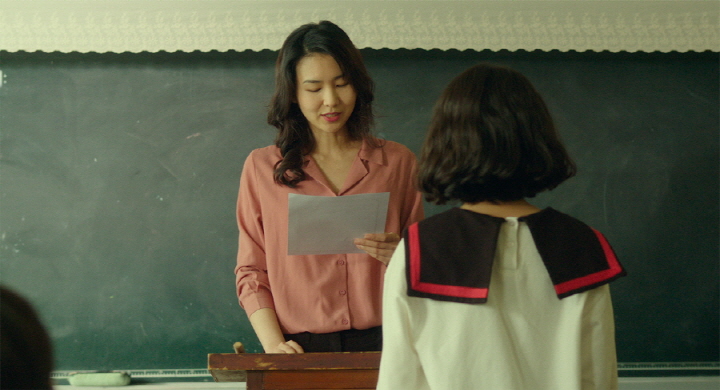
Vietnamese film “Furies”, which was released on Netflix in last month, is a solid but ultimately redundant prequel. As the origin story of the main villain character of “Furie” (2019), the movie shows us how that character was hardened and toughened by her violent criminal life, and it surely gives several competent physical action scenes to enjoy, but it also feels rather superficial as merely being brutal and lurid at times.

The prologue part of the movie shows how an orphan named Bi (Đồng Ánh Quỳnh) came alone to Ho Chi Minh City when she was very young. She lived with her prostitute mother in some rural region, and her mother cared a lot about Bi’s future despite their miserable daily life, but, alas, something quite traumatic happened on one day. Some drunken guy suddenly came into their residence, and this guy raped Bi and then killed Bi’s mother before murdered by Bi.

Bi subsequently ran away to Ho Chi Minh City, and she struggled a lot to survive alone during next several years. When she gets into another trouble during one evening, she is approached by a mysterious woman named Jacqueline (Veronica Ngo), and Bi soon finds herself going through a series of tough physical trainings under Jacqueline’s guidance.

In Jacqueline’s place, there are also two other young women who are not so different from Bi in many aspects. Both Hong (Rima Thanh Vy) and Thanh (Tóc Tiên) had each own painful experience as being on streets as prostitutes, and they instantly discern Bi’s damaged sides, though Bi is rather reluctant to befriend them at first. As these three young ladies live and train together day by day, they come to bond with each other more and more, and they are certainly ready to do anything for their mentor, who has a plan to get rid of a certain group of powerful (and sleazy) criminals in the name of justice.

As these dangerous criminals are introduced one by one, the movie goes all the way for the very lurid aspects of their criminal lifestyle. Besides drug business, they also manage a big prostitution organization, so we accordingly see many unfortunate women physically violated in one way or another. I understand that the main purpose of these unpleasant moments are 1) showing how rotten and evil these criminals really are and 2) making their eventual comeuppance feel inevitable and exciting, but I must point out that these scenes are also quite exploitative to say the least – especially the camera seems to be more interested in the physical details of those numerous victimized women in the film.

Anyway, the movie surely becomes thrilling whenever it is on action mode, and director/co-writer Veronica Ngo, who previously played the lead character of “Furie”, and her crew members surely have lots of fun with giving us one exciting physical action scene after another. Tóc Tiên and her two co-stars are convincing as they fearlessly throw themselves into lots of actions across the screen, and they come to look like a Vietnamese answer to Charlie’s Angels. Although some of the action scenes in the film use too much of low-budget CGIs, you can feel the considerable dedication of the performers in the film at least, and you will come to forgive its technical limits to some degree.

However, the story, written by Ngo and her co-writers Nha Uyen Ly Nguyen and Nguyen Truong, often stumbles in terms of narrative and characterization. Jacqueline is the most developed character in the film, and Ngo demonstrates again her natural screen presence as looking as commanding as required, but her character is mainly defined by the vengeful personal reason behind her plan. In case of Bi and her two colleagues, they are merely and only defined by their respective past traumas, and that is the main reason why their story of female empowerment often feels shallow and contrived.

Above all, the movie pays a bit too much attention to the villain characters of the film, most of whom are just unpleasant in cartoonish ways without looking like the really good antagonists for Bi and her two colleagues. A subplot involved with one of them does not mix that well into the story, and I was not so pleased with how it merely functions a plot device to motivate Bi and several other main characters more later the story.

During the climactic action sequence, the movie certainly pulls all the stops for giving us more of its brutal violence, but we come to observe that from the distance without much care while the movie is often bogged down by its unnecessary melodramatic elements. As a result, we are not so emotionally involved in what is being at stake for Bi and several other main characters and, and that is the main reason why Bi’s eventual transformation into the villain character of “Furie” in the end lacks dramatic impact.

In conclusion, “Furies” is not a bad action film at all, and Ngo shows here that she is a skillful action movie director who knows how to make effective action scenes, but the overall result is still one or two steps below “Furie”. Yes, that film is also pretty conventional to the core, but it is supported well by Ngo’s strong performance while also engaging us in terms of story and characters, and I think you should go back to “Furie” if you are not so satisfied with “Furies” like I was not at last night.

Posted in Movies | Tagged , | Leave a comment

Saloum (2021) ☆☆☆(3/4): An impressive genre film from Senegal

Senegalese film “Saloum”, which belatedly comes to South Korea in this week via a local streaming service, is a little but competent genre film packed with goodies to be savored. Because I did not have much knowledge on what it is about or how it is about before my viewing, the movie surprised me more than once as starting from one genre area and then going into other one, and I came to admire its skillful handling of mood and details as I got engaged in its story and characters much more than expected.

With the opening narration which will resonate more with the story and characters later, the movie introduces us to a trio of mercenaries called Bangui’s Hyenas, and it throws us right into their latest mission in the middle of the 2003 coup d’état in Guinea-Bissau. Their goal is extracting a Mexican drug lord who is in a serious danger now due to his local drug business, and we are served with a striking scene where these three mercenaries swiftly move across an area strewn with numerous dead bodies on the ground before eventually reaching to where that Mexican drug lord is being held.

Once they rescue that Mexican drug lord and get a bunch of gold bricks as promised to them, everything seems to be going pretty well as they fly to Dakar, Senegal by a little airplane, but there comes a little problem. It turns out that there is a fuel leak in their airplane, so they have no choice but to land in a remote area called Saloum. For getting the fuel as well as some resin to seal the leak, they search for any place where they can get help, and, what do you know, they come to stay in a certain nearby place run by a guy named Omar (Bruno Henry), who welcomes them with genial hospitality without asking too much.

It seems that Chaka (Yann Gael) and his two colleagues can be relaxed a bit for a while in this place, but they remain watchful as before due to a couple of setbacks. First, there is a young deaf woman who quickly recognizes them, and then there comes a local police captain, who supposedly visits simply as an old friend of Omar. As the mercenaries and others including Omar gather for a dinner, everything looks and feels fine on the surface, but the mood gradually becomes tense especially when Chaka and that young dead woman have a serious conversation via sign language in front of others.

We get to know a bit more about Omar’s place and its surrounding area as everyone staying in his place are respectively assigned to do some chores outside on the next day. In case of Chaka, he happens to accompany Omar, and they soon go to a nearby fishing village. After they do a bit of shooting, they come to have a little private conversation, and Omar turns out to have some war experience just like Chaka.

It is also revealed later that Chaka has a hidden purpose behind his back. As reflected by his occasional dream scenes, he has been haunted by an old traumatic memory which seems to be associated with his deep fear of water, and now he is planning to confront the evil origin of his personal trauma. I will not go into details on that, but I can tell instead that the movie will catch you off guard when Chaka suddenly reveals something about him at one point to the surprise of everyone else around him.

So far, the movie feels like an African variation of Western genre, but, after that narrative point, it enters a very different genre, and the resulting mix will surely remind you of several works of John Carpenter. Unexpectedly finding themselves menaced by what has been hidden inside Omar’s place for years, Chaka and several others must find a way to get out of the place as soon as possible, and, fortunately, there is some possibility for their escape despite lots of risk in front of them.

I will not tell you anything about their dangerous opponent, but I can tell you that director Jean Luc Herbulot, who wrote the screenplay along with his producer Pamela Diop, and his crew members did a pretty good job of generating a palpable sense of dread along with enough amount of tension and excitement on the screen. The special effects in the film certainly look quite more modest compared to the ones in those Hollywood blockbuster films, but they are utilized effectively on the whole, and cinematographer Gregory Corandi provides a number of splendid visual moments to be appreciated. While we surely get wide and beautiful landscape shots at times, the movie does not disappoint us at all in case of its several action scenes, and the editing by Nicolas Desmaison, Alasdair McCulloch, and Sébastien Prangère is precise and succinct as delivering one dramatic impact after another. In case of the performers in the film, they all look believable in their respective roles, and Yann Gael’s strong lead performance is supported well by several other main cast members including Roger Sallah, Mentor Ba, Evelyne Ily Juhen, and Bruno Henry.

In conclusion, “Saloum” is worthwhile to watch for its deft juxtaposition of two different genres. Although I do not think I understand everything in the film as a foreign viewer, the movie still entertained me enough nonetheless, and I am definitely interested in getting to learn more about its specific background and details. This is just his second feature film after “Dealer” (2014), but Herbulot demonstrates here that he is another talented African filmmaker to watch, and it will be interesting to see what may come next from him.

Posted in Movies | Tagged , , , | Leave a comment

Tetris (2023) ☆☆☆(3/4): A business competition at the end of the Cold War

“Tetris”, which was released on Apple TV+ at the end of last month, gives us a fun mix of comedy and thriller which is incidentally based on a real-life story about one of the most popular video games in the late 1980s. I have no idea on how close it is actually to that real-life story, but I must admit that I enjoyed it even while clearly recognizing many embellished aspects here and there throughout the story.

The center of the story is Henk Rogers (Taron Egerton), a Dutch game developer of Indonesian/Jewish descent who saw the considerable commercial potential of a seemingly insignificant video game imported from the Soviet Union when he came across it at the Consumer Electronics Show in Las Vegas in 1988. That video game was none other than, yes, Tetris, and, as shown in the film, he had to deal with a number of obstacles before succeeding in his ambitious business plan on Tetris.

The early part of the film succinctly establishes a very complicated business situation surrounding Tetris. At first, it seems that all Rogers has to do is getting a bank loan and then acquiring the license for producing and then selling Tetris in Japan via his partnership with Nintendo, but, alas, the circumstance turns out to be quite messy to say the least. Mirrorsoft, a British video game company represented by Kevin Maxwell (Anthony Boyle) and his father Robert (Roger Allam), acquired the right the worldwide licensing rights of Tetris via their associate Robert Stein (Toby Jones), but both Stein and Mirrorsoft made some glaring mistakes in handling this business deal, and this certainly annoys and frustrates Rogers a lot.

Even though you cannot understand everything in the rather confusing buisness situation surrounding Rogers, the screenplay by Noah Pink cheerfully bounces from one point to another with enough humor and wit, and the movie steadily holds our attention via its vibrant period mood and details of the late 1980s. For example, it frequently uses that simple graphic texture of 8-bit video games for bringing more style and excitment to the story in addition to generating some nostalgia for us, and you will certainly smile especially if you spent a lot of time on those 8-bit video games during your childhood years.

I must confess that I preferred books and movies over video games even during my early years, but I did spend some time on Tetris and other video games when I was not reading a book or watching a movie, and the movie certainly reminds me again of how Tetris was so addictive despite its very simple setting. Sure, this is basically a puzzle game on elementary level, but you can easily learn how to play it within a short time, and it surely challenges and then excites you as getting faster and faster with those colored blocks relentlessly falling from the top of the screen.

Just like Tetris itself, the movie becomes more tense and brisker as Rogers comes upon more challenges along his bumpy quest toward obtaining the worldwide licensing rights of Tetris. Despite the considerable risk he will have to face in one way or another, he decides to go to Moscow for persuading a government company to make a deal with him and Nintendo, and he soon comes to realize how risky his situation can really be. As his main opponents, both Mirrorsoft and Stein are ready to get worldwide licensing rights of Tetris by any means necessary, and the situation becomes all the more serious as KGB enters the picture later in the story.

Although we all know how the story will end, the movie ably maintains its narrative momentum even as Rogers and several other main characters busily make one move after another in their business competition. Although the Cold War is nearly being over, Rogers still must be very careful at each step due to the interventions from a certain greedy KGB officer associated with Mirrorsoft, and Alexey Pajitnov (Nikita Efremov), a Russian computer engineer who developed Tetris, and his family go through a very hard time just because he tries to help Rogers a bit.

During its last act, the movie naturally brings more dramatic embellishment into the story, but you will not probably mind that much as getting thrilled and entertained enough thanks to the good efforts from director Jon S. Baird and his crew members including editors Martin Walsh, Colin Goudie, and Ben Mills. We seldom feel lost even while lots of things happen here and there, and we come to pay more attention to what is being at stake for Rogers during the finale which seems to borrow a bit from the similar climax of “Argo” (2012).

In addition, the movie has another good performance from Taron Egerton, who has shown more talent and personality since his breakout turn in “Kingsman: The Secret Service” (2014). Although I must point out that he does not fit that well to his character’s ethnic background from the beginning, Egerton compensates for this flaw to some degrees with his ebullient acting, and he is also supported well by a number of competent performers including Toby Jones, Nikita Efremov, Anthony Boyle, Igor Grabuzov, Ben Miles, and Roger Allam.

On the whole, “Tetris” is an enjoyable product thanks to its competent direction and a number of good performances, and it will surely make a nice double feature show with “Air” (2023), another recent film about a significant real-life business deal in the 1980s. Although it is less impressive than “Air” in several aspects, the movie has its own entertaining qualities nonetheless, and that is enough for recommendation in my inconsequential opinion.

Posted in Movies | Tagged , , , , | Leave a comment

Sharper (2023) ☆☆1/2(2.5/4): Predictable step by step

“Sharper”, which was released on Apple TV+ a few months ago, assumes that its audiences have not seen many thriller flicks, and that is not a very sharp assumption to say the least. If you saw its trailer or its promotional poster, I am sure that you already have a pretty good idea about how it will handle its story and characters, and I can only tell you that it does not have much surprise in that.

Because the movie is driven by a lot of deceptions and manipulations among its several main characters, I may unintentionally reveal some of its sudden plot turns in the following paragraphs of this review, so I strongly advise to you that you should not read further if you are already determined to check out the movie and want to get entertained as much as you can. To be frank with you, when I was watching the film during last evening, my mind kept working on how to write about its story and characters as less as possible, and I must tell you that was more stimulating that the movie itself.

Anyway, let’s start with the seemingly innocuous opening part of the film, which revolves around Tom (Justice Smith), a shy and quiet lad who has worked alone in a little bookstore located somewhere in the middle of New York City. On one day, a pretty young woman named Sandra (Brianna Middleton) enters Tom’s bookstore, and it does not take much time for Tom to be attracted to this young woman as they interact with each other for a while. When he shows a little generosity to her, she shows some appreciation in response later, and they come to spend more time with each other.

Yes, this looks like your average Meet Cute situation, and we are served with some nice romantic moments between Tom and Sandra, but, of course, things soon become very serious. After seeing how much Sandra struggles with a certain big personal problem of hers, Tom is willing to help her just because she really brightens up his melancholic life. After losing his mother some years ago, he has been quite lonely and depressed, and he has not interacted much with his father Richard (John Lithgow), who has been more estranged from his son since he recently married some other woman.

Now, if you are still with me, you may easily guess what will happen next. Yes, Sandra and Tom’s romantic relationship is not accidental at all from the very beginning. Yes, there is an insidious plot against Tom because he happens to be standing on the way for certain criminal figures behind the plot. Yes, these people are certainly quite untrustworthy in one way or another, and we accordingly should keep guessing whatever they are respectively holding behind their backs before the movie arrives at its ending.

We are supposed to have lots of fun and thrill with that, but we can instantly see through the plot mechanism of the screenplay by Brian Gatewood and Alessandro Tanaka because it gives itself away too much in my humble opinion. For instance, it has Julianne Moore at the very center of its promotional poster, so you will promptly discern that her character will be a definite crucial part of the story, even before her character eventually appears in the middle of the movie. I will not go into details on the relationship between her character and another substantial character in the story played by Sebastian Stan, but it will take less than one minute for you to guess who they actually are as well as what they are planning to do.

At least, Moore, who also participated in the production of the film, and Stan are clearly enjoying a number of juicy moments assigned to them. Because their characters often cannot wholly trust each other, there is always considerable tension between them on the screen, and Moore and Stan deftly handle several key scenes where their characters supposedly show more of their feelings to each other in private.

The rest of the main cast members are more or less than mere plot elements, though some of them acquit themselves fairly well on the whole. Briana Middleton, a young promising actress who previously appeared in George Clooney’s “The Tender Bar” (2021), holds her own place well among her more well-known cast members, and she is particularly good when she has to convey to us her character’s conflicted status later in the story. On the opposite, Justice Smith, an equally promising actor who has been steadily advancing since his notable supporting turn in “Jurassic Park: Fallen Kingdom” (2018), clicks well with Middleton during the early part of the film, and he surely has more things to do than compared to John Lithgow, who, to my big disappointment, does not have much to do in contrast while stuck in his thankless supporting role.

Overall, “Sharper”, which is directed by Benjamin Caron (He has been mostly known for directing several acclaimed British TV drama series such as “The Crown”, by the way), is a competent genre product, but it is just mildly entertaining without leaving much impression on me. As a matter of fact, I can name several other similar genre films much more compelling and interesting right now, and I particularly recommend you “House of Games” (1987) and “The Grifters” (1990). Both of these great movies are much, shall we say, shaper in comparison, and, believe me, you will have a more productive time with either of them.

Posted in Movies | Tagged , | Leave a comment

Ghost World (2001) ☆☆☆1/2(3.5/4): A quirky girl and her unexpected friend

I am fascinated with how Terry Zwigoff’s “Ghost World” has grown on me since I watched it for the first time around 15 years ago. At that time, I was a graduate student who was socially awkward but had been mostly happy and content with being surrounded by books and movies instead of people, and I was just mildly amused by its dry sense of offbeat humor as casually observing its lonely adolescent heroine’s angst from safe distance. When I revisited the film in this year, I recently passed 40 while still being alone after several disastrous attempts on serious relationship, and I came to recognize more loneliness from her and her unlikely friend.

For many adolescent kids out there, high school graduation is surely something to celebrate with joy and excitement before moving onto whatever will come next for them, but that is not the case for Enid (Thora Birch) and her best friend Rebecca (Scarlett Johansson). For both of these two teenage girls, their high school graduation is another boring chapter of their mundane suburban life in California, and Enid cannot help but make a barbed comment, when one of their schoolmates who is giving a supposedly inspirational speech in the middle of their graduation ceremony (“I liked her so much better when she was an alcoholic crack addict – She gets in one car wreck and all of a sudden she’s Little Miss Perfect and everyone loves her.”).

Although they have been eager to get out of their high school, Enid and Rebecca actually do not have much plan about the next chapter of their life. Sure, they promised to themselves that they will get a job and then live together after their graduation, but neither of them has never thought beyond that, and they usually occupy themselves with observing their plain and dull surrounding environment with ironic detachment and a bit of naughtiness. One of their usual entertainments comes from a dorky lad named Josh (Brad Renfro), and this poor lad always becomes a schmuck to tease for Enid and Rebecca whenever they come to a local convenient store where he works as a part-time employee.

On one day, there comes another opportunity for naughty fun to Enid and Rebecca when they happen to spot one rather pathetic personal advertisement on a local newspaper. They decide to do a mean prank on the figure behind that personal advertisement, and that is how they come to encounter Seymour (Steve Buscemi). Right from when he enters a local restaurant where they are waiting for his appearance, this guy exudes that unmistakable aura of misery and loneliness, but Enid unexpectedly finds herself becoming quite interested in him in contrast to her best friend, who simply disregards Seymour as another loser to watch from the distance.

We can easily discern why Enid is so fascinated with Seymour. After all, as a girl of specific cultural taste with her own cynical sense of humor, she often feels alienated even when she hangs around with her best friend. In fact, we gradually gather that, despite their long friendship, Rebecca has stuck around Enid as a mere fellow outsider even though they do not share much between them besides their annoyance and frustration with their surrounding environment. Furthermore, Rebecca is actually ready to move forward on her own way, and we naturally come to sense more of the growing gap between her and Enid, who still fails to get stably employed unlike Rebecca.

From Seymour, Enid finds someone who can be a better alternative for friendship because, well, he is much lonelier than she is in many aspects. Whenever he is not working as an assistant manager in some local fast food restaurant chain company, he usually occupies himself with a vast collection of old LP records and some other old stuffs in his residence, and there is an amusing scene where Enid and Rebecca are completely at a loss while attending Seymour’s small private party full of his fellow LP record collectors. Unless you are a serious LP record collector, you will not totally understand what the hell these nerdy folks are talking about (Don’t worry – I don’t either, to be frank with you, though I would love to hear their opinions on how LP records become popular again these days).

Because Seymour has not had much luck or success in case of romantic relationship, Enid impulsively decides to help her new friend a bit. To their little surprise, that leads to a fairly successful dating for Seymour, but then, needless to say, both Enid and Seymour subsequently find themselves in a tricky emotional circumstance later in the story. What eventually occurs between them is not exactly surprising for us, but the movie never lets their complex relationship simply defined by mere mutual sexual attraction, and we come to empathize more with the aching need and confusion inside them.

“Ghost World” was Zwigoff’s first feature film after his two documentary films “Louie Bluie” (1985) and “Crumb” (1994), which is the vivid and fascinating presentation of the life, personality, and career of legendary American cartoonist Robert Crumb. As a filmmaker who did not hesitate to delve into his old friend Crumb’s personal demons while also struggling a lot with his own personal demons (He told Roger Ebert that he was so agonized by his back pain during that time that he actually slept with a gun under his pillow for killing himself at any point if that seemed necessary to him), he was surely the right director for the dark wit and melancholic sensibility of “Ghost World”, and he and his co-writer Daniel Clowes, who made the comic book series of the same name on which the movie is based, provide a number of sharp dialogue scenes which bring more depth and humanity to its main characters. While many of main characters in the film including Enid are not very likable to say the least, their palpable personalities linger on us a lot more than expected as occasionally enlivening their drab and mediocre suburban world, and even Enid’s hopelessly boring father leaves a bit of impression on us despite his sheer suburban banality.

The main performers of the film are pitch-perfect in their respective roles. As the center of the film, Thora Birch effortlessly embodies the angst and loneliness churning behind her character’s defiantly sardonic attitude, and her co-star Scarlett Johansson dutifully stands by Birch although she automatically draws our attention because of her current status as a major Hollywood actress. While late Brad Renfro is solid as a lad a bit too slow for Enid and Rebecca, Illeana Douglas is hilarious as Enid’s summer art class teacher who unwisely puts the freedom of artistic expression above political correctness when Enid presents one of Seymour’s old stuffs which is quite controversial to say the least, Bob Balaban, Teri Garr, Dave Sheridan, Pat Healy, and David Cross are also enjoyable in their small but colorful supporting parts.

The best performance in the film comes from Steve Buscemi, who should have been Oscar-nominated at that time (He received several major critics awards besides a Golden Globe nomination at least). While he can be a smart, ruthless gangster as shown from HBO TV series “Boardwalk Empire”, this ever-dependable character actor is born to play losers and loners because of his natural weary presence, and he is alternatively funny and poignant as fearlessly diving into the deep pathos behind his character’s meek appearance. He and Birth click with each other well with precise low-key comic timing whenever they are on the screen together, and you will not believe that he actually wanted to shed his character as soon as possible whenever the shooting was over.

On the whole, “Ghost World” can be an acquired taste to some of you, but it is still worthwhile to watch for its excellent handling of story, mood, and character. I will not go into details on the finale for not spoiling your little fun at all, but I can tell you instead that I appreciate the sublime poetic quality of a brief but important moment of epiphany for Enid – and how that beautifully leads to the tentative hopefulness of the following epilogue scene. Regardless of how her last shot in the film can be interpreted, you may sense that things might get better for not only her but also Seymour. Sure, they are still not that social or pleasant even in the end, but you will still care about what may be next for their respective lives, and that is surely an achievement.

Posted in Movies | Tagged , , | Leave a comment

On the Sand House (2023) ☆☆☆(3/4): Now she is stuck with her family business…

South Korean independent film “On the Sand House” is a modest but sensitive character drama about one deeply frustrated young woman. It is clear that she has yearned to get out of her world for restarting her life as soon as possible, but, alas, she only finds herself stuck with a messy family situation instead, and the movie gradually conveys to us her deepening exasperation and frustration along the story.

The early part of the movie succinctly establishes the loveless domestic environment surrounding Jin-yeong (Lee Seol). She is currently living with her parents, but there is not much interaction or communication between her and her parents because they are mostly occupied with each own business. While Jin-yeong is mostly devoted to the preparation for getting employed in Canada someday, her father, who has run a factory for many years, does not do anything at his home except eating and watching TV, and her mother is usually busy with handling various business matters involved with the factory instead of her husband.

And then there comes an unexpected incident not long after another domestic quarrel between Jin-yeong’s parents. Becoming more exasperated and frustrated than before, Jin-yeong’s mother decides to go somewhere for getting some peace of mind, and Jin-yeong does not pay much attention to that when her mother is leaving, but she is subsequently notified of her mother’s sudden death (The movie does not specify much on how she died, by the way).

Quite devastated by her mother’s death, Jin-yeong soon comes to face an important issue involved with the family business. Due to her mother’s death, somebody else should fill her mother’s spot, and, mainly because her older sister is busy with taking care of her own family, Jin-yeong has no choice but to fill the spot for a while as a dutiful daughter. Although she does not know that much about how to handle all those suppliers and buyers associated with the factory, she gets some help from her mother’s assistant at least, though the assistant will leave a few weeks later.

Anyway, Jin-yeong manages to handle her tasks fairly well, but it does not take much for her to realize that the factory has not been doing that well in its business for years. In addition, she also comes to see that her father is the main problem of this difficult situation. Without his wife’s sensible management, Jin-yeong’s father often gets himself driven by his greed and stubbornness, and we can see a big trouble coming from the distance when he later attempts some big and ambitious business plan along with a newly hired employee of his.

Because she knows too well that her father will not listen to her opinion or thought at all, Jin-yeong just keeps concentrating on whatever she is expected to do, while also continuing to prepare for her oversea employment plan. For going to Canada several weeks later, she certainly needs some cash for that, but her father is not so willing to help her, and Jin-yeong naturally becomes all the more frustrated as her time for going to Canada is approaching.

What happens later in the story will not surprise you much, but the screenplay by director/writer Kim Hyun-jung keeps us engaged as carefully developing its main characters bit by bit via small details. We come to know more about what makes Jin-yeong’s father tick, and then we also come to learn more about Jin-yeong’s rather estranged relationship with her older sister, who turns out to be more generous and caring than she seemed at first. When they visit their mother’s grave at one point later in the story, Jin-yeong and her older sister become a bit softer to each other, but there remains some distance between them nonetheless – even when Jin-yeong’s sister shows a little sincere concern to Jin-yeong.

As the emotional center of the story, Lee Seol, a promising South Korean actress who previously drew my attention via her substantial supporting performances in “Herstory” (2017) and “My Punch-drunk Boxer” (2018), diligently carries the film to the end while seldom showing off her character’s conflicted emotional state. Thanks to Lee’s solid performance, we are always aware of what has been churning behind Jin-yeong’s detached façade, and that is the main reason why a certain two key scenes in the last act are emotionally effective.

In case of several crucial main cast members in the film, they dutifully fill their respective spots around Lee. As Jin-yeong’s deeply flawed father, Park Ji-il never makes any excuse on his character, but we come to understand his character to some degree while also recognizing how pathetic his character really is. Although she only appears briefly in the early part of the movie, Ahn Min-young leaves some lasting impression as Jin-yeong’s long-suffering mother, and Kang Jin-ah and Lee Han-ju are also well-cast in their substantial supporting roles.

Overall, “On the Sand House” distinguishes itself fairly well thanks to its good storytelling and characterization, and Kim Hyun-jung, who previously made several short films before making a feature film debut here, shows that she is another promising South Korean female filmmaker to watch. Considering how the future of South Korean Cinema has been rather grim and uncertain as it is going down from the historic success of Bong Joon-ho’s “Parasite” (2019), we need to support more new talented female filmmakers like Kim, and I sincerely hope that she will impress us more during next several years.

Posted in Movies | Tagged , , | Leave a comment

Archaeology of Love (2022) ☆☆☆1/2(3.5/4): Recovering from a toxic relationship

South Korean independent film “Archaeology of Love” is a haunting character drama revolving around one toxic relationship and its aftermath. As dryly but sensitively observing its ordinary heroine’s emotional struggle along the story, the movie lets us understand and empathize more with her via a series of restrained but powerful personal moments, and that is why it is touching to see how she eventually finds some strength for moving forward more for herself.

At the beginning, we are introduced to a young archaeologist named Yeong-sil (Ok Ja-yeon), and then we watch her doing a little presentation about her profession in front of a bunch of disinterested high school students. She is not particularly enthusiastic about doing the presentation, but this is how she earns her meager living for now before another opportunity for her career comes. While watching her phlegmatically going through her another day in a little residence of hers, we come to gather that something is holding her, but she does not reveal much in her rather detached appearance, and we naturally come to wonder more about this unspecified matter of hers.

After it patiently and gradually establishes its heroine’s current status during its first act, the movie goes back to when Yeong-sil met a guy named In-sik (Giyoon) 8 years ago by a small coincidence. When she was working on her latest excavation project with her colleagues in some rural region, Yeong-sil happened to be approached by In-sik, who came for doing some job at a nearby museum as a recording technician. Although they were total strangers from the beginning, Yeong-sil soon found herself attracted to this lad, and it seemed that In-sik was also quite interested in getting closer to her.

As they later come to spend more time together, In-sik looks more like someone Yeong-sil can be serious about, and In-sik comes to show more of himself in response. He has run a little recording studio of his own, and Yeong-sil appreciates his skills a lot as another kind of professional. In the end, she decides to break up with her current boyfriend who has been more like a burdensome roommate, and then she begins to live more with In-sik during next several months.

However, there are some bad signs about which Yeong-sil should have been alarmed from the very beginning. Blatantly emphasizing how disadvantaged he is as becoming 40, In-sik wants Yeong-sil to be really serious about their relationship, and she agrees to follow his rather petty demands without much hesitation, but then she only finds herself verbally bullied and humiliated because of her ‘promiscuous’ past. He often asks about whom she slept with before him, and he becomes pretty nasty when he comes to learn about her little mistake with some guys in the past at one point.

You may think any sensible woman would quickly decide that enough is enough around that point, but Yeong-sil only finds herself stuck more with her toxic boyfriend as virtually gaslighted by him. Even when one of her colleagues points out that to her with sincere concern, she still hesitates about breaking up with In-sik, and her growing conflict consequently affects both her life and her career to considerable degree.

After enduring In-sik for no less than 8 years, Yeong-sil eventually decided to leave, but, already shown to us around the end of the first act of the movie, she is not totally free from In-sik yet. Although they are supposedly finished with each other as lovers, In-sik keeps meddling with her life in one way or another, and Yeong-sil unwisely lets that happen – until she finally becomes more aware of the toxic aspects of her relationship with In-sik.

Steadily maintaining its leisurely narrative pacing throughout its rather long running time (163 minutes), the movie slowly shows some signs of hope and healing as Yeong-sil continues to struggle and wander without much direction for herself. When she happens to encounter some nice and good-looking lad, she is naturally interested in him, but then she understandably hesitates as still reeling from her unhealthy relationship with In-sik. At least, she manages to restart her professional career bit by bit, and she also gets some therapeutic help and support, though that still does not make her feel much better than before.

Everything in the film depends a lot on Ok Ja-yeon’s quite but undeniably unforgettable lead performance, which does not often signify much on the surface but conveys to us a lot about her character’s complicated thoughts and feelings. As Ok’s terrific performance ably carries the movie, a number of good performers come and go as deftly supporting her, and Giyoon is particularly effective as a textbook case of toxic boyfriend.

“Archaeology of Love”, which was premiered at the Jeonju International Film Festival in last year but belatedly released here in South Korean theaters a few days ago, is the second feature film of director/writer Lee Wan-min, who previously made a feature film debut in “Jamsil” (2016). Like “Jamsil”, “Archaeology of Love” will require some patience from you during its first hour, but it will be quite a rewarding experience on the whole once you accept how it is about, and Lee demonstrates here that she is indeed one of more interesting South Korean filmmakers at present. Although she made only two feature films now, she is a talented filmmaker who really knows how to engage us via good mood and storytelling, and I will certainly look forward to watching whatever may come next from her.

Posted in Movies | Tagged , , | 1 Comment

In Water (2023) ☆1/2(1.5/4): In Blur (or Bullsh*t, perhaps)

When my late mentor/friend Roger Ebert was going to review Ingmar Bergman’s great film “Persona” (1966) not long after he became the film critic of Chicago Sun-Times, he did not know what to write first, but then he simply began to write about what he observed and felt during his viewing, and then the rest quickly followed as a result. I tried to follow his example while watching Hong Sang-soo’s new film “In Water”, but I am so sure about how I and other audiences around me were supposed to respond when we watched it at last night. Is this supposed to be a practical joke for his admirers? Or, is this just a deliberate affront to all audiences who paid to see it? Although I fortunately did not pay anything for this exasperating piece of bullsh*t, I was pretty pissed off about wasting my precious 61 minutes without being rewarded much on the whole.

The main reason of my anger and frustration toward this movie mainly comes from its inexplicable visual strategy. Except a few key scenes, many other scenes in the film are blurred on the screen as being deliberately out of focus, and we cannot possibly detect any particular detail and nuance from that. Even those few key scenes do not have much lighting from the start, so we can barely see the main performers’ face in their rather dim environment, and it is often hard for us to sense whatever is exchanged among them beneath the surface.

I must really tell you that I do not mind out-of-focus shots at all. In case of one little but extraordinary Finnish film “The Man Who Did Not Want to See Titanic” (2021), many of its key shots are frequently out-of-focus for emphasizing its disabled hero’s visually impaired viewpoint, and that wonderfully works because, above all, it still does not lose any focus on its hero’s face and the thoughts and expressions felt from his face. In case of Hong’s film, it does not have any focus on anything on the screen from the start to the end, so we can only observe its story and characters from the distance without much care or attention.

Come to think of it, I doubt whether there is any substantial story or character in the film from the beginning, because the movie feels like the tepidly extended version of a short film already deficient in terms of story and characters. At the beginning, we are introduced to two lads and a young woman who are working together for a little short film project of theirs in Jeju Island, but we do not know what the hell they are really making, because they still do not have any clear idea on what they are making at present.

Is this a self-deprecating reflection of how Hong usually makes his films? I heard that he often completes his screenplay right before handing it to his performers on the set, and that says a lot about how his movies usually depend a lot on quick improvisation and spontaneity couple with some necessary professionalism. Although many of his films look pretty plain and simple without much editing or camera movement (He has done all the editing and shooting for himself, by the way), they never look visibly bad or lousy, and I must say that they look better than what I shot with my current smartphone.

However, “In Water” surpasses the awfulness of many of my impromptu smartphone videos in many aspects. Besides its utterly unidentifiable main characters, even those locations in the film look so blurred that I doubt whether you can recognize them even if you have ever been to Jeju Island. Sure, the main characters do talk a bit about Jeju Island, but, in my humble opinion, Hong could get away with shooting the film somewhere else for saving a bit of his tiny production budget.

Therefore, we have no choice but to listen to the dialogue and the soundtrack for processing the film, but, again, we are frustrated a lot for good reasons. Although Hong demonstrates again that he is good at writing natural conversations scenes, the conversation scenes in the film only reveal the basic information about the main characters without delving much into their thoughts or feelings. We manage to gather that one of them, who has worked as an actor before deciding to try a bit of filmmaking, wants some change for his life and career, but that is all we can know about him. In case of the two other main characters, they are even less developed in comparison, and, as a matter of fact, the brief voice cameo by one certain well-known South Korean actress associated with Hong has much more presence than all of the characters of the film. Along with the brief music provided by Hong, this actress sings a bit on the phone later in the film, and this little moment of saving grace made me wish more that she will be able to work in other films besides Hong’s works.

In contrast, the three main performers of the film, Shin Seok-ho, Ha Seong-guk, and Kim Seung-yun, are thoroughly wasted as their supposedly diligent efforts are already blocked from us from the beginning, and that reminds me of late film critic Gene Siskel’s famous question: “Is this film more interesting than a documentary of the same actors having lunch?” Regardless of whether they knew the technical impediment they were going to face right from when they agreed to appear in the film, the performers try their best with their sheer thankless task, and they should not be blamed at any chance.

In conclusion, “In Water” is the worst film in Hong’s long and consistent career, and I feel rather sorry for whoever will work on its Blu-ray or DVD edition, if that is actually planned later. No matter how much those technicians will try, their efforts will be impeded by Hong’s misguided visual approach in one way or another, and I think they will be a lot happier with working on my anoscopy video shot in 2009. Believe me, my anoscopy looks sharper and more detailed besides being in focus as required, and I assure you that this will be much more entertaining than “In Water”.

Posted in Movies | Tagged , , | Leave a comment

I Leave Home (2023) ☆☆1/2(2.5/4): An unexpected journey of two different losers

South Korean independent film “I Leave Home” is about an unexpected journey of two different losers who are utterly pathetic in each own way. They are not exactly interesting enough to draw our attention, and the movie also occasionally suffers from its weak narrative and thin characterization, but this mildly amiable road movie will not disappoint you if you just want to get relaxed while enjoying a series of nice landscapes unfolded on the screen.

At the beginning, we are introduced to Jin-woo (Na Hyun-joon), a struggling filmmaker who has currently earned his meager living via working as a part-time motel employee. Although it looks like there is a chance to boost his filmmaking career, that chance seems to be out of his reach no matter how much he tries, and he is not even willing to be with his wife and her family just because of his wounded pride.

Meanwhile, one of his close friends is about to walk away from his current life to become a Buddhist monk, so Jin-woo later has a little evening drinking party along with his friend before his friend heads to some rural Buddhist temple in the next morning. Although Seong-min (Yang Heung-joo) does not say much about his religious motive, but he really seems to be serious about devoting the rest of his life to Buddhism, and we come to gather that he has been frustrated a lot with how his life has been going nowhere.

Anyway, Seong-min is ready to enter that Buddhist temple in question when he arrives there along with Jin-woo in the next morning, but then there comes an unforeseen problem. It belatedly turns out that Seong-min is actually a bit too old to be accepted into the temple, and Seong-min and Jin-woo have no choice but to go to some other Buddhist temple where Seong-min can be accepted.

Of course, things keep going wrong for both Seong-min and Jin-woo, and the movie accordingly goes from one humorous moment to another as they keep finding themselves on the road with no definite end in sight. Despite quite befuddled about his ongoing procedure problem, Seong-min still wants to become a Buddhist monk nonetheless, and Jin-woo has to accompany his friend because he cannot just walk away from his friend. Besides, he has nothing else to do except going back to that motel job, which is the last thing he wants to do right now.

As the movie follows their journey, we see more of how pathetic Seong-min and Jin-woo are. Seong-min is running away from all those personal issues of his life because he does not know what to do with them, and Jin-woo is hopelessly stuck in his current state of life while not seeing any hope or possibility from that at all. His situation becomes more miserable when he is later notified that he lost that possible big chance for his filmmaking career, and he only comes to show more pettiness just because of that.

It would take some efforts for us to observe and care about these two miserable losers’ aimless journey, but the movie thankfully places several colorful figures here and there around their journey. At one point early in the story, Seong-min and Ji-woo receive some unexpected hospitality from a small local restaurant owner, and the mood becomes a bit more cheerful than before as they casually drink and talk together like the characters of Hong Sang-soo films. In case of the part unfolded at a little beach house belonging to an artist friend of Seong-min and Jin-woo, that artist friend and her several colleagues lighten up Seong-min and Jin-woo a little via their artistic activities, and Seong-min and Jin-woo accordingly become more relaxed than before.

However, the screenplay by Park Jin-soo often stumbles in building up its two main characters along the story. While we do not get to know much about Jin-woo except his misery and pettiness, Seong-min is mainly defined by his passive appearance, and we still do not get much glimpse into his life or personality even when his wife and daughter appear later in the story. Your interest may be increased a little when Seong-min reveals something about his daughter’s sexual identity, but Seong-min’s daughter remains rather underdeveloped just like many other supporting characters in the film, and the same thing can be said about a certain figure from Seong-min’s past.

While Na Hyun-joon is relatively showier in comparison, Yang Heung-joo steadily holds the ground as dutifully complementing his co-star, and we can easily sense a long history between their characters via their smooth interactions throughout the film. In case of the supporting performers who come and then go around Na and Yang, they are fairly believable as plain ordinary characters you may come across in real life, but the movie could add more depth and personality to their supporting characters in my inconsequential opinion, and that is the main reason why I think they are rather under-utilized on the whole.

In conclusion, “I Leave Home” is not satisfying enough to recommend, but director Kim Sung-hwan, who started his filmmaking careers with two documentary films before making a feature film debut here, shows here at least that he is a filmmaker with considerable talent and potential. Yes, this is a rather imperfect journey, but the movie is not entirely without good moments to enjoy at least. To be frank with you, I sincerely hope that I will be more entertained and impressed by whatever will come next from Kim.

Posted in Movies | Tagged , , , | Leave a comment

The Talent Show (2023) ☆☆☆(3/4): Performing for their lost children

South Korean documentary film “The Talent Show” follows the story of several mothers who happen to try a bit on acting as a part of their personal process of dealing with immense loss and heartbreak. While that shocking tragedy involved with their lost children is not mentioned that much throughout the documentary, a sense of loss and devastation among them becomes more palpable as we get to know them more and more along the story, and it is touching to see how they find some strength to go on with their lives while also remembering their lost children as usual.

That tragedy in question happened on the morning of April 16th, 2014. A ferry named MV Sewol was suddenly sunken in the middle of its routine sail from Inchon to Jeju Island, and many of its passengers including 250 students of Danwon High School of Ansan city, who happened to be on a field trip at that time, died as a consequence. This terrible incident came to expose more of how incompetent President Park Geun-hye and her government really was in many aspects, and that eventually led to her imprisonment followed by several years of imprisonment, but, to the anger and frustration of the families of the victims and survivors, we still do not know what exactly happened on that dreadful day.

The documentary focuses on a group of mothers who later came to found a small independent acting troupe for the remembrance for their lost children, and the opening scene shows one stage performance where they play high school student characters not so different from their lost children. Their routine original play is called “The Talent Show”, and the play is mainly about how its high school student characters joyfully and passionately prepare for the talent show to be held in the middle of their field trip period.

The reason why these mothers came to act in this stage performance is simple and poignant. Besides remembering their lost children again, they also want to console their spirits as well as themselves via their stage performance, and they willingly talk to us about their respective thoughts and feelings about that. At first, it was just a casual way of theirs for reconnecting with the world after barely recovering from that devastating incident, but they came to see some value and meaning from their amateurish acting, and many of them became more passionate about acting under the thoughtful guidance of their director, who was the only professional in the group during its first several years.

Of course, these mothers have each own story about that terrible day. They all remember when they were initially relieved to hear that everyone on that ship was rescued – and how much they were devastated to learn that many of its passengers were actually not rescued at all. At one point, one of the mothers recollects her last phone call with her dear daughter, and you can feel how painful that memory is to her, even though she remains rather phlegmatic in her recollection.

As the mothers banded together for their performance, the troupe came to draw more attention from the public and the media, and the mothers soon found themselves performing here and there in South Korea. Although their acting may look clumsy at times, that weak aspect is compensated a lot by their sincerity and passion, and they certainly appreciate many positive reactions from their audiences.

Nevertheless, the troupe members sometime clashed with each other over a number of small matters, and the documentary does not hide this at all while showing more of the complex human relationships among them. At one point, a certain troupe member comes to draw more attention, and she even receives an offer to act in some other troupe, but that unintentionally draws envy and jealousy from some of her colleagues. Not so surprisingly, some of the original members eventually leave the troupe later, and that causes some bitterness among the remaining members.

However, the most challenging moment for the troupe is when they are asked to perform at Danwon High school. Because their performance is supposed to be held on April 16th, many of the troupe members show understandable concern as wondering whether they are really ready for doing this performance, and it is quite clear to us that they are still reeling from their devastating personal loss. Many of them frequently go to psychiatry clinics, and the documentary lets us observe one of them seriously consulting with her psychiatrist about her current mental condition.

Director Lee So-hyun wisely and thoughtfully focuses more on the vivid humanity of the troupe members, and that prevents her documentary from becoming a superficial presentation of sadness and devastation. When their time to perform at Danwon High school comes at last, the troupe members certainly try their best even when they cannot help but emotionally overwhelmed by being in their lost children’s school again, and their sincere performance is wholeheartedly welcomed and embraced by many young students in the school.

In conclusion, “The Talent Show” gives us a modest but poignant human portrayal from the aftermath of the Sinking of MV Sewol. To be frank with you, I wish it showed more about its unforgettable human subjects, but the documentary did its job as well as intended, and it will surely remind you of why we should remember this horrible incident with more care and compassion.

Posted in Movies | Tagged , , , , | Leave a comment