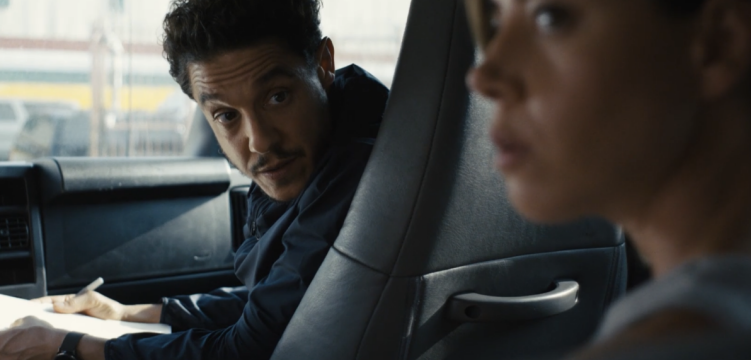
The Harvest (2023) ☆☆1/2(2.5/4): A Hmong family with issues

Caylee So’s “The Harvest” is another recent American independent film intended as a modest but realistic slice of Asian American immigrant life. Although it is a bit too generic in terms of story and character, the movie mostly works as a window to the lives of the people of specific cultural/ethnical background, and I just wish it could go deeper while dealing with that familiar generation conflict problem among Asian immigrant parents and their American kids. 

Doua Moua, who also wrote the screenplay besides serving as one of the producers of the film, plays Thai, a young Asian American man of Hmong descent. If you have ever watched Clint Eastwood’s “Gran Torino” (2008), you probably remember a bit about who Hmong people are and how many of them came to emigrate from Indochina to US around the time of the Vietnam War, and Moua actually played one of the Hmong characters in that film.

After the prologue scene where Thai’s calm narration tells a bit about how he was born, the film succinctly establishes his current family issue. While he has been living in San Francisco during last several years, he returns to his family home mainly because his father Cher (Perry Yung) is seriously ill due to his worsening kidney failure, and it is clear that Cher does not regard his son that highly as your typical stern Asian father.

While his mother Youa (Ying Yuen) is often busy with supporting the family instead of her husband, Thai comes to spend more time with his father as accompanying his routine visit to a local clinic for kidney dialysis, but, like his other family members, he soon gets frustrated with how his father refuses to accept the changes in his daily life due to his current illness. Apparently feeling less proud than before just because he is not healthy enough to support his family, Cher does not interact much with his son or his wife while behaving as if everything was still all right for him and his family as before, and he also quite distant to his adolescent daughter Sue (Chrisna Chhor), who has incidentally been hiding her private relationship with some black guy.

Because Thai is still unmarried, he is naturally asked about whether he has a girlfriend now when he and his family have a dinner together at one point. As an unmarried dude of Asian descent, I surely know and understand well how awkward and uncomfortable he feels about the question; I get similar questions whenever I happen to be around my family and relatives during the traditional holiday seasons, and I always respond to their nagging questions with a considerable degree of courteous vagueness.

As Thai continues to stay in his family house, the movie gradually presents the lives of others around him. At one evening party where he and his several old friends celebrate the upcoming marriage of a female friend of his, he and that young woman talk a bit with each other, and we come to sense something between them as observing their gentle interaction. When Thai and his father subsequently attend the following wedding, we get a glimpse into the cultural background of Thai and other Hmong people in his neighborhood, and there is a little interesting moment where Cher meets a bunch of elders for some conversation. As listening to them, you can feel those old traditions and values are still living inside them, though their next generations do not care that much in comparison.

Not so surprisingly, Cher expects his son to move to their family home as a dutiful son, but Thai is reluctant to say the least for good reasons. He still cares about his father despite their long estrangement, but he has a plan for his own life in San Francisco, and that makes him all the more conflicted. Besides, his younger sister will probably leave for college education once she gets graduated from her high school, and that means his father will be left alone by himself whenever his mother works outside.

The situation becomes more complicated as more issues come out among Thai and his family members. Now quite worried about his daughter’s future, Cher suddenly attempts a matchmaking for her without asking to Sue or Youa at all from the beginning, and that certainly makes both Sue and Youa quite frustrated and exasperated. It also turns out that Youa has her own issues behind her frequently cheerful façade, and we can only imagine how much she has tried to accept and tolerate her husband for years.

During its last act, Moua’s screenplay becomes rather contrived and blatant as throwing a series of jarring melodramatic moments which spell out its main characters’ feelings and thought a little too much, and that is where the movie stumbles more than once, but the main cast members of the film continue to hold the film together. With Moua diligently holding the center as required, Perry Yung, Ying Yuen, and Chrisna Chhor are believable in their respective supporting roles, and Yung is particularly good as ably embodying his character’s complex human aspects.

“The Harvest” is the second feature film of director Cayless So, who previous made a feature film debut in “In the Life of Music” (2018) before making several short films. I have not seen “In the Life of Music” yet, but she demonstrates here that she is a good filmmaker who knows how to handle story and characters thoughtfully and sensitively, and you can clearly discern how sincere and passionate she and Moua are about their film. Anyway, I am glad that Moua approached to me for giving a chance to watch the film several weeks ago, and, though I am not satisfied enough for recommendation, but I wish good luck on both him and So.

Posted in Movies | Tagged , , | 1 Comment

Hidden Blade (2023) ☆☆1/2(2.5/4): Too convoluted to care

I often felt frustrated and exhausted as watching Chinese spy noir thriller film “Hidden Blade”, which was released in South Korea yesterday. Although I enjoyed its period mood and details to some degree, I did not get much fun or entertainment while my mind constantly and busily struggled to make sense of its heavily convoluted narrative filled with various kinds of deception and manipulation, and I eventually became rather distant and bored as dully observing the movie trudging from one elusive conversation scene from another without much sense of focus or direction.

This is rather odd because the movie has Tony Leung, a great Hong Kong actor who can suggest many different things at once via his distinctive mix of natural charisma and subtle acting. Again, he instantly draws our attention right from his very first scene in the film, but he is usually one of mere plot elements here just like all of the other main cast members in the movie, and it is a shame that the movie seldom lets him function as the human center to hold for us amid lots of confusion and disorientation in the story.

Leung’s character, Director Ha, is the head of the Political Security Department in Shanghai for the puppet regime under the control of the Japanese Army in the middle of the World War II. Along with his right-hand guy Mr. Ye (Wang Yibo), Director Ha has successfully arrested a bunch of enemy agents, and that is why they are the members of a political inner circle led by Officer Watanabe (Hiroyuki Mori), who is charged with overseeing their department on behalf of the Japanese Army.

It looks like things will eventually work out well for the Japanese Army as well as Director Ha and other Chinese collaborators in Shanghai, but the situation becomes much more alarming after the Pearl Harbor Attack in 1941, and then there come two unexpected incidents. On one hand, a group of Japanese soldiers are ambushed and then killed at one night for a certain atrocious deed of theirs, and Director Ha and his subordinates must find and then eliminate whoever is behind this incident. On the other hand, a certain prominent enemy agent approaches for defection, and this agent reveals that there is a hidden spy around the top of the Political Security Department in Shanghai. Naturally, both Director Ha and Mr. Ye become all the more discreet than before, and we accordingly get a series of dry but tense conversation scenes where they and several other main characters are flatly talking about one thing but also seem to imply some other thing to each other while overseen by Officer Watanabe, who has nothing much to hide in contrast as often wearing his jaded imperialist heart on his sleeve.

The screenplay by director/writer Cheng Er brings more confusion via its non-chronological plot structure. As the story frequently flashes forward or backward throughout the film, the movie gets bogged down more by its increasingly convoluted storytelling, and we become more distant and disinterested as a result. The movie actually presents several certain key moments more than once, and we are supposed to regard them differently with more information revealed along the story, but they are no more than repetitive bookmarks for us because the movie merely replays them without much difference.

In technical aspects, the movie certainly spends its production budget well. Its period atmosphere and details are as fine as many other similar films ranging from Ang Lee’s “Lust, Caution” (2007) to Zhang Yimou’s “Cliff Walkers” (2021), and its only distracting element is the score which often feels quite heavy-handed while being influenced too much by Hans Zimmer and James Newton Howard’s score for “Dark Knight” (2008). Whenever any main character seems to look suspicious at any chance, the score becomes overpoweringly intense and brooding, and that goes on and on to our annoyance.

And Leung comes and goes with grace and authority as we can expect from him. While he rarely seems to be signifying anything, Leung ably conveys to us whatever is lurking beneath his phlegmatic poker face in the film, and he is particularly good when his character has a little private interview with the aforementioned defector. As supposedly looking casual and courteous on the surface, his character corners his interviewee bit by bit to our discomfort and amusement, and you can see that Leung can easily play Christoph Waltz’s character in Quentin Tarantino’s “Inglourious Basterds” (2009) if its Chinese remake version is ever planned.

In case of several other main cast members in the film, they dutifully fill their spots in the story. While Wang Yibo, Da Peng, and Erik Wang are solid in their respective parts, Zhou Xun, Jiang Shuying, and Zhang Jingyi are mostly stuck with their flat supporting roles, and Hiroyuki Mori has some fun with his haughty Japanese officer character.

In conclusion, “Hidden Blade” is a ponderous genre exercise whose flaws cannot be wholly compensated by its good elements including Leung’s invaluable presence. Because I feel like not processing and understanding everything in the film, I may have to give it another chance someday, but I also remember well how frustrated and distant I was to its story and characters without much emotional involvement, and I must confess that it is already being faded in my mind. Yes, it is surely better than “The Super Mario Bros. Movie” in comparison, but I would rather recommend “Lust, Caution” or “Cliff Walkers” instead, and I assure you that you will have a more productive time with either of them.

Posted in Movies | Tagged , , | Leave a comment

Piggy (2022) ☆☆☆(3/4): The butcher girl

“Piggy” is a little movie which will make you deeply uncomfortable from its very beginning. Dryly but chillingly illustrating its unforgettable adolescent heroine’s anger, fear, confusion, and frustration along the story, the movie will often unnerve you a lot for good reasons, and its compelling juxtaposition of its specific coming-of-age tale and familiar genre elements will leave a lasting impression on your mind.

At the beginning, the movie shows us another miserable day of its heroine. Sara (Laura Galán) is the daughter of a butcher couple living in some rural Spanish village, and we come to gather that she has been a social outcast to other local kids around her age due to her overweight appearance. When some good-looking boy happens to hang around with several girls outside her parent’s shop, she cannot help but look at them from the distance, and then she soon becomes a target for mean ridicule when three of these girls enter the shop. To make matters worse, her callous parents are totally oblivious to what is going on, and that makes Sara all the more frustrated and exasperated.

However, this turns out to be nothing compared to what she suffers later. When she is about to do some swimming alone at a pool outside the village, Sara is approached by those three girls, who commit something as vicious and cruel as what Carrie White suffers during the opening scene of “Carrie” (1976). In the end, Sara has no choice but to walk back to her village while only wearing her swimming suit, and that certainly adds more humiliation to this terrible and infuriating situation of hers.

And then something quite more shocking happens. When Sara was cruelly tormented by those three girls, there was a man in the pool, but he simply left by his shabby van without helping her at all. We already know how dangerous he actually is, because his first scene in the film shows him targeting two certain persons when the pool is much more crowded before Sara’ routine swimming time. When Sara comes to meet him again, he happens to be doing something horrible to one of those three girls, but Sara chooses to do nothing while certainly terrified by this stranger, who leaves Sara alone then shows a bit of kindness before eventually driving to somewhere.

Sara does not say anything about her disturbing incident to anyone around her, but her village is soon disturbed by the stranger’s horrible deeds. After a body is found in the pool, the parents of those three girls are all the more anxious because their daughters still do not return, but Sara still tells nothing, even when a young local police officer instantly senses that there is something fishy about her.

Once she belatedly realizes that there is something which will incriminate her in one way or another, Sara gets herself more involved in the case, and that is how she comes across the stranger again later in the story. During their little tense moment, both she and the stranger begin to feel something mutual between them, and her following awakening as a woman makes her aware a lot more of how frustrating it is for her to live with her annoying parents.

Now the movie feels like a morbidly twisted variation of Beauty and the Beast, but the screenplay by director/writer Carlota Pereda, which is developed on the 2018 short film of hers, wisely does not spell out its heroine’s gradual emotional growth and development along the story. Still not knowing or understanding her emotional need that much, Sara unwisely lets herself drawn more to the stranger, and, of course, the stranger turns out to be much more monstrous than expected, though he seems to be really attracted to Sara like she is to him.

During the last act, the movie drives its deeply confused heroine further into the dark and unpleasant realm of horror and cruelty. Although this part lasts a bit too long in my trivial opinion, the movie keeps holding our attention as its heroine eventually finds herself on the verge of embracing the darkness of her potential lover, and we are surely served with a series of gruesome moments to make us wince more than once.

Regardless of whether you like the movie or not, you will never forget the fearless lead performance by Laura Galán. Yes, her overweight appearance is certainly the first thing to draw your attention, but Galán impresses us much more while never hesitating to delve into not only Sara’s vulnerability but also the deep anger and confusion behind her passive appearance. Although the movie firmly maintains its detached attitude to Sara throughout most of its running time, Pereda and her cinematographer Rita Noriega further accentuates Sara’s emotional isolation and frustration via deftly utilizing the screen ratio of 1.33:1, and that is one of the main reasons why the movie can constantly have us on edge while also letting us understand more of Sara’s emotional confusion.

On the whole, “Piggy” is definitely not something you can watch on Sunday afternoon, but it is worthwhile to watch as a competent genre film which strikes us hard with its strong mix of adolescent character drama and horror thriller. It is not entirely flawless (Many of supporting characters in the film including Sara’s parents are a bit too superficial to care, for example), but what Pereda and Galán achieve here is quite indelible to say the least, and I sincerely hope that both of them will keep going after this interesting breakout of theirs.

Posted in Movies | Tagged , , , , , | Leave a comment

Renfield (2023) ☆☆☆(3/4): Now he gets sick of serving his master

“Renfield” is an amusing horror comedy film inspired by one of the most famous horror stories of all time: Bram Stocker’s “Dracula”. Instead of that infamous blood-sucking count, the movie focuses more on his daunted servant’s toxic relationship with the count, and it generates some nice bloody laughs as its long-suffering hero struggles for self-esteem as well as redemption.

The opening part of the film, which hilariously utilizes several scenes from Tod Browning’s “Dracula” (1931), quickly establishes our titular hero’s long relationship with his master. Since he became the servant of Dracula (Nicholas Cage) in the late 19th century, Renfield (Nicholas Hoult) has dutifully served his master as much as possible, but he has not been appreciated much by his master, who usually cares more about following his insatiable urge for more blood. Even when he and Renfield have to hide in an abandoned hospital building in New Orleans, Louisiana after he gets burned quite seriously in the middle of his latest peril, Dracula still demands a lot from his servant without showing any gratitude or appreciation at all, and Renfield has no choice but to try to obey to his master despite his longtime misery and unhappiness.

For getting any possible victim to be served to his master, Renfield joins a local support group consisting of people struggling with each own toxic relationship, and that is where he comes to have a sort of revelation while listening to those support group members and their sincere counselor. As seeing that he is not alone at all in case of dealing with problematic relationship, he feels a bit better than before, and he also begins to consider whether he can actually get himself freed from his master, though his master is certainly not so pleased when he senses that his servant is not as loyal and obedient as he had been for years.

Meanwhile, Renfield also gets himself into a big local trouble. While he is looking for any victim as fresh and innocent as his master desires, he happens to come across a local police officer named Rebecca Quincy (Awkwafina). For many years, this plucky female police officer has been quite determined to avenge her cop father’s death by a powerful drug organization, so she willingly goes all the way for justice when a good chance comes to her by coincidence, and that drug organization naturally attempts to eliminate her by any means necessary. Thanks to his superpower activated via eating bugs, Renfield saves not only Rebecca but also several innocent bystanders around him, and his violent but righteous act makes him all the more determined to get his own life outside Dracula’s toxic influence than before.

The screenplay by Ryan Ridley, which is developed from the story by co-producer Robert Kirkman, has some naughty absurd fun from Renfield’s attempt toward normal life. Nicholas Hoult, who has been usually good at playing quirky comic characters, willingly hurls himself into lots of absurdity, but he also plays his character as straight as possible for bringing some gravitas to the story as well as his character. We often laugh for his character’s comic struggles along the story, but we also come to root for him more than expected, and Hoult’s effective deadpan performance carries the film to the end even when it comes to lose some of its narrative momentum during its clumsy last act.

As Hoult’s grand evil counterpart, Nicholas Cage, who once appeared with Hoult in Gore Verbinski’s “The Weather Man” (2005), surely has a lot of bloody fun with his diabolically baroque character. As he did memorably in several other movies such as David Lynch’s “Wild at Heart” (1990), Cage goes for his own full-throttle mode to our delight and entertainment, but he also looks quite committed as usual, and you will admire how he takes a risk without not being afraid at all of looking as hammy as Bela Lugosi or Christopher Lee. In addition, you will be all the amused if you remember that he once appeared in a little movie called “Vampire’s Kiss” (1988) and later produced “Shadow of the Vampire” (2000), where he could have played the titular vampire but stepped aside for Willem Dafoe instead.

It is a shame that the movie does not bring much substance to the rest of the story, and many of its supporting performers are often not utilized well on the whole. While Awkwafina manages to fill her thankless supporting character with her own presence, Ben Schwartz tries to chew his scenes as much as Cage as one of the secondary villains in the film, but his result feels inconsequential compared to Cage’s dedicated overacting. In contrast, Shohreh Aghdashloo, a wonderful Iranian actress who has always been reliable since her unforgettable Oscar-nominated supporting turn in Vadim Perelman’s “House of Sand and Fog” (2003), handles her ruthless crime boss character with gusto, and you may wish that the movie utilized more of her talent.

Directed by Chris McKay, “Renfield” is a fairly enjoyable one-joke comedy horror film, but I must confess that I cannot help but think of several alternatives right now. If you are not so satisfied with how New Orleans does not look that vivid or colorful in the movie, I suggest you that you should check out Ana Lily Amirpour’s latest film “Mona Lisa and the Blood Moon” (2021), which does a far better of job of presenting New Orleans with palpably colorful mood and details. If you look for a truly hilarious movie about vampire, I instantly recommend Taika Waititi’s “What We Do in the Shadows” (2014), and I also urge you to check out the acclaimed TV sitcom series developed from this very funny comedy horror movie.

Nonetheless, I also must admit that I was amused enough when I watched “Renfield” today. Right before watching it, I had to endure the sheer mediocrity of “The Super Mario Bros. Movie” (2023), so I was certainly in the need of watching anything funny enough for me, and “Renfield” worked for me despite its several weak aspects. Yes, this is not exactly original, but I assure you that Cage and Hoult will not disappoint you at least.

Posted in Movies | Tagged , , , | Leave a comment

The Super Mario Bros. Movie (2023) ☆☆(2/4): Bland and uninspired to say the least

I report to you now that animation film “The Super Mario Bros. Movie” is not as horrible as I feared, but, alas, that is the only good thing I can possibly say about it. To be frank with you, I did not have much interest in Nintendo’s Mario video game franchise even when I was young and wild, but I understand how it has been so popular since it came out in the 1980s, so I actually kept my mind open a bit before watching the film itself. Unfortunately, the overall result is so bland and inspired to say the least that I could only have a bit of amusement from its few comic saving graces.

One of the biggest problems in the film is that it spends more of than its rather short running time (92 minutes) on building its fantasy world without much fun or style. Sure, it is nice to see that fantasy world of the Mario video game franchise recreated on the screen via computer animation, but the film lacks any sense of wit or intelligence even compared to that old TV animation series based on the Mario video game franchise. At that time when I watched that TV animation series on a foreign satellite channel, I was too young to understand English, but I had some fun with it as far as I remember, and it was certainly much better than that disastrous live-action version film made in 1993 (Even I could discern that it was really, really, really awful, despite being no more than 10 years old, by the way).

In case of our struggling Brooklyn plumbers Mario (voiced by Chris Pratt) and Luigi (voiced by Charlie Day), they do not show much personality beyond what we have been familiar with for many years. While the film makes a fun on their Italian American background via their ridiculously heavy-handed commercial, the brief laugh from that moment is quickly evaporated mainly because the performers behind their characters are curiously bland and colorless in their voice acting. While Chris Pratt, who is no stranger to comedy, is surprisingly much less spirited that usual, Charlie Day, who can be quite hilariously manic and if that is necessary, seems to be content with merely earning his paycheck, and, to make matters worse, there is not much chemistry between these two usually reliable comedy veterans.

Anyway, let’s talk a bit about the nearly barebone plot of the screenplay by Matthew Fogel. When an inexplicable big plumbing problem happens in the middle of Brooklyn during one evening, Mario and Luigi quickly go to the spot for proving and promoting their worth, but, what do you know, they accidentally come across a magical portal while trying to fix that plumbing problem. They soon get themselves sucked into that portal, and, after getting separated from Luigi, Mario finds himself landing on the Mushroom Kingdom led by Princess Peach (voiced by Anya Taylor-Joy).

For finding and saving Luigi, Mario goes to the palace where Princess Peach lives, and he comes to learn that Luigi was sent to a dark and barren region belonging to an evil turtle king named Bowser (voiced by Jack Black). Besides saving Luigi from Bowser, Mario must stop Bowser before Bowser conquers the Mushroom Kingdom and then tries to marry, yes, Princess Peach, so, along with Prince Peach and a mushroom guy named Toad (voiced by Keegan-Michael Key), he goes to the Jungle Kingdom for getting some military support from its gorilla king and his son.

What follows next is a string of action sequences packed with various stuffs to be recognized by the fans of the Mario video game franchise, but these action sequences mostly feel rather pedestrian on the whole. While often boosted by Brian Tyler’s overachieving score which frequently quotes the theme song of the Mario video game franchise as required, these action sequences are inherently deficient without any genuine sense of fun or entertainment, and you may want to play your Mario video game instead of enduring this dull and tedious mediocrity.

In case of comedy, the movie continues to underwhelm us in more than once. As the main villain character of the film, Jack Black surely has several moments to chew, but, like Day or Pratt, he does not seem to have much fun with his voice acting, and that deliberately horrible torch song performed by him in the middle of the film just sounds merely atrocious with generating much laugh for us. As a matter of fact, I winced more when it was performed again in the middle of the end credits.

At least, some other notable voice performers in the film manage to distinguish themselves a bit more in comparison, though they are also limited by their cardboard supporting roles. While Anya Taylor-Joy brings some pluck to her character, Keegan-Michael Key is frequently amusing in his deft delivery of silly comic lines, and the same thing can be said about Seth Rogen, who manages to energize the middle act of the film to some degree as the aggressively arrogant son of the ruler of the Jungle Kingdom.

In conclusion, “The Super Mario Bros. Movie”, which is directed by Aaron Horvth and Michael Jelenic, does not reach to the bottom represented by that 1993 live-action film version, but it ends up being more or less than a pointless teaser for whatever will come next in the future. Considering that it has had a considerable box office success since it was released in US a few weeks ago, I am sure that there will probably be a couple of sequels at least, and I can only wish that there will be some improvement in those possible sequels in the future. That will not be that difficult in my humble opinion, but who knows?

Posted in Movies | Tagged , , , , | Leave a comment

Riceboy Sleeps (2022) ☆☆☆(3/4): A Korean immigrant mother and her son

“Riceboy Sleeps”, which won the Rogers Best Canadian Film Award at the Toronto International Film Festival in last year, is a simple but sensitive drama about a Korean immigrant mother and her son. Calmly and thoughtfully following their little personal story, the movie gradually builds up its two main characters via a number of small but undeniably intimate moments to be appreciated, and it surely earns all the human emotions unfolded onto its rather melodramatic last act.

At the beginning, the movie succinctly establishes the life background of a young South Korean woman named So-young (Choi Seung-yoon) and her little son. Although she was abandoned when she was very young, So-young managed to survive as being moved from one orphanage to another during next several years. Around the time she entered adulthood, she met some college student while working at a diner, and she and that lad were supposed to marry sooner or later, but, alas, due to his mental illness, he eventually committed suicide at a hospital not long after their son was born.

Because of her disadvantaged status as an unmarried mother, So-young decided to immigrate to Canada, where she came to work at some factory while raising her little son. When he becomes 6 years old in 1990, So-young takes him to a local elementary school, but Dong-hyun (Dohyun Noel Hwang) is understandably afraid of being separated from his mother, and he certainly feels quite awkward as the only Asian kid in his classroom.

At least, he feels comfortable again when he is back at home with his mother, but Dong-hyun continues to struggle as often ridiculed and ostracized by his schoolmates. Not so surprisingly, he inadvertently gets himself into a trouble on one day, and his mother is naturally quite frustrated with how her son is unfairly treated by even those schoolteachers, who regard So-young and her son with condescension mixed with racial prejudice.

Nevertheless, So-young and her son keep going on during next several years, and the second act of the film, which is set in 1999, shows how things have been a bit better for them than before. While So-young is still working in the same factory, she has been quite close to a gentle employee who is incidentally a Korean adoptee, and it looks like they can live together someday if Dong-hyun, who is now played by Ethan Hwang, does not mind this at all.

As he grows up to become your average rebellious teenager, Dong-hyun has been rather distant to his mother while spending more time with his schoolmates, but he also becomes more aware of his racial identity and heritage than before. When he and his classmates are tasked with a presentation on each own family background, he naturally feels more curious about his father than before, but his mother still does not tell anything to him because she has been through with her life in South Korea for years.

However, there comes an unexpected matter which shakes her up to considerable degree, and this certainly affects her relationship with Dong-hyun. After she reveals her bad news to her son later, he struggles to process this bad news while causing another trouble at his school, and that consequently puts more distance between him and his mother.

Now this is surely a familiar setup for more melodrama to come, but the screenplay by director/writer/editor Andrew Shim, which is partially based on his own immigrant experience in Canada, patiently builds up its emotional momentum via a series of sincere human moments to cherish. In case of one particular scene between So-young and the aforementioned Korean employee who eventually proposes to her, it feels a bit too symbolic when So-young tells him a certain old folk tale, but her storytelling moment is accompanied with the genuine emotions from her serene face, and we are touched more by how this scene later resonates with the last scene between her and her son.

Shim and his cinematographer Christopher Lew shot the film on 16mm film, and the resulting grainy visual quality of the film effectively accentuates its period background. Presenting most of his film in 1:33 screen ratio, Shim often focuses more on his performers’ expressive faces, and his three main performers are all convincing in their respective roles. While Choi Seung-yoon’s understated performance gracefully carries the film along with small details and nuances to be observed, Dohyun Noel Hwang and Ethan Hwang are flawlessly connected with each other in their acting, and both of them respectively complement Choi well on the whole.

In conclusion, “Riceboy Sleep” is a slow but rewarding experience which can function as a window to a specific immigrant experience which comes to reveal more universal aspects than expected, and it is surely another interesting Asian immigrant drama film to be compared with Lee Isaac Chung’s “Minari” (2020), which is incidentally about a Korean immigrant family trying to settle in a remote area of Arkansas. Although this is only the second feature film after his small debut feature film “Daughter” (2019), Shim demonstrates here that he is a promising filmmaker with considerable potential, and it will be interesting to see what may come from him during next several years.

Posted in Movies | Tagged , | Leave a comment

Bruiser (2022) ☆☆☆(3/4): A young black man between two fathers

“Bruiser”, which is currently available on Disney+ in South Korea, is a familiar but engaging coming-of-age drama to be appreciated for good reasons. Although it stumbles a bit during its last act, the movie still holds our attention thanks to its competent direction and compelling performances, and it works as an interesting character drama about father and son relationship.

Jayln Hall, a young actor who recently made a lasting impression on us via his haunting supporting turn in Chinonye Chukwu’s harrowing drama film “Till” (2022), plays Darius, an African American middle-class teenager who returns to home from some prestigious private school as summer begins. Although he is not particularly excited about spending the summer at his home, Darius is fine to be with his parents Malcolm (Shamier Anderson) and Monica (Shinelle Azoroh), and there is a little warm moment as Monica lets her son have a bit of driving lesson while they are coming back to their home.

In contrast, Malcolm is not exactly warm or considerate to his son, though it is clear that, like Monica, he has done his best for raising their son together for years. He works as a used car salesman, and he is certainly proud of how he has supported his family for himself, though there comes a problem involved with the tuition for his son’s private school. Just because he believes he can take care of this problem alone, he does not tell anything to his son or his wife, and that makes his situation all the more stressful while there is no one to talk with him about that.

Meanwhile, Darius comes to have his own problem. On one day, he goes outside for hanging around with his childhood friends, and then he happens to fight with one of them just for a petty matter. Feeling quite humiliated about being beaten a lot, he eventually goes away, and that is how he comes to meet some guy living on a boat on the nearby river. Although this guy is a total stranger to him, Darius soon finds himself telling a lot about himself to this guy, and he also seems to be interested in befriending Darius.

Not so surprisingly, this guy turns out to be an old friend of Darius’ parents. Many years ago, Porter (Trevante Rhodes) was their best friend, but he left them without saying anything when Darius was born, although he is, yes, Darius’ biological father. After living here and there outside his hometown during next several years, he returned to his hometown at last, and, after meeting Darius, he soon contacts with Malcolm and Monica, who are understandably not so pleased about their old friend’s return.

What follows next is a tense meeting scene between Darius’ parents and their old friend. Porter says he simply wants to get to know his biological son more, so he requests the permission to be officially introduced to Darius, but Malcolm refuses because he is still angry and resentful for some old issues between him and Porter. Even when Monica tries to persuade him later, he is adamant about his position, and that certainly causes a strain on their long relationship.

Anyway, Malcolm and Monica later tell Darius about who Porter is, and Darius becomes more interested in Porter because, well, Porter is much easier for him to hang around with compared to Malcolm as your average carefree drifter. Shortly after clashing with Malcolm at one point, Darius instantly goes to Porter, and Porter is certainly glad to spend more time with his biological son, though their good time at a nearby amusement part does not end well when Darius’ parents finally come to take him back to their home.

This is indeed a typical family conflict we saw from many other similar films before, but the screenplay by director Miles Warren and his co-writer Ben Medina brings considerable depth and sensitivity to its story and characters besides specific details including the race of its main characters. While Darius’s conflict on how to be a man is the main center of the story, the conflict between Malcolm and Porter turns out to be a bit more complex than expected, and Monica provides a little female perspective at the fringe of the story, though she is rather underdeveloped compared to the three other main characters in the film.

Although the film becomes quite contrived during the last act where its main characters are driven further to more conflict, we still care about what is happening among its main characters thanks to the diligent efforts from its main cast members. Hall is believable in his character’s emotional struggle over the story, and that surely confirms his considerable potential and talent to us again. With Hall steadily occupying the middle spot, Shamier Anderson, who recently appeared in “John Wick: Chapter 4” (2022) as one of key supporting characters, and Trevante Rhodes, who also participated in the production of the film, are intense in each own way as their respective characters constantly clash with each other throughout the story, and Shinelle Azoroh brings some life and personality to her rather thankless supporting role.

On the whole, “Bruiser” succeeds as much as intended despite its several weak aspects, and Warren, who previously directed several short films, made a fairly commendable feature film debut here. This is surely a conventional stuff, but it is still interesting to watch for its strong elements including good performances to be savored, and I sincerely recommend you to give it a chance someday.

Posted in Movies | Tagged , , | Leave a comment

A House Made of Splinters (2022) ☆☆☆(3/4): They still have hope, though

Documentary film “A House of Made of Splinters”, which was Oscar-nominated early in this year, simply but closely observes the children and staff members of a special orphanage in Lysychansk of eastern Ukraine. As following how they live day by day, the documentary gives us a number of small but precious personal moments to linger on our mind, and we can only hope that things will get better for these children in the end despite the ongoing war in their country.

The documentary is assembled from what director/writer/cinematographer Simon Lereng Wilmont and his crew members shot at the orphanage during a period of two years. Although the documentary does not give much information on how this orphanage is run and managed by its staff members, we gradually get immersed in its small world nonetheless, and then we get to know a bit about some of the kids temporarily staying there.

As told to us from the beginning, they and many other kids in the orphanage are the children of many poor local families ruined by war, unemployment, and alcoholism. In one of the most poignant moments in the documentary, one little girl comes to befriend some other girl around her age, and you will be touched and saddened as watching one of them casually talking about her first drinking experience under her alcoholic parent.

Before the local court decides whether their parents can still have the rights to live with them, the kids are allowed to stay in the orphanage during next several months, and many of them are certainly not so willing to be with their parents. If their parents lose custody, they will have to wait until someone else comes as a foster parent, and they are going to be sent to some other orphanage if there is not any suitable foster parent even at the end of their staying period at the orphanage.

In case of a little girl named Eva, she is lucky to have someone willing to take care of her instead of her alcoholic mother. When that person eventually comes for her later, she is certainly delighted to say the least, and the staff members of the orphanage are happy to see her departure, though her empty spot will be soon filled by some other girl to come.

In case of a young boy named Kolya, we instantly sense that he is a troublemaker with issues. We see him admonished by one of the staff members for his little misbehavior, and that is just the beginning of his many small and big troubles. He is even caught by the police for running away from the orphanage at one point, but he does not seem to be that repentant about that, as bragging a bit about his little adventure outside the orphanage.

However, the staff members clearly discern that Kolya is as weak and vulnerable as many other kids in the orphanage. It is quite apparent to us that his alcoholic parents are not very good to him, but he still wants to go back to his family home along with his younger sister, and he is certainly glad to see his mother again when she visits the orphanage, though he points out right from the beginning that she still smells of alcohol.

As occasionally looking around the surrounding area of the orphanage, the documentary lets us sense more of how things were desperate for not only the kids and the staff members but the citizens of Lysychansk. Even before Russia invaded Ukraine in 2022, eastern Ukraine was ravaged by the conflict between Ukraine and the pro-Russia rebels, and everyone in Lysychansk were constantly aware of the ongoing war because their city was only 20 km (around 12 miles) from the frontline.

In the meantime, the documentary also recognizes some hope and optimism observed from the kids in the orphanage. There is one lively scene where several girls dance together while music is being played in the background, and then we get a little moving moment when Kolya, who becomes adjusted to his new environment a bit more than before, takes care of his younger sister for himself. Still rebellious as usual, he and two older boys smoke together while nobody is watching, and we observe more of their bond and fellowship when they try a bit of tattooing on their arms later.

I wish the documentary showed more of how much the staff members try their best for the kids in the orphanage, but that would probably interfere with its close focus on the kids. Thanks to its intimate approach to them and their daily life in the orphanage, we come to have more empathy and compassion toward not only Eva and Kolya but also many other kids around them, and it is certainly relieving to know that the kids in the orphanage were safely transferred to western Ukraine right after the Russian invasion.

Overall, “A House Made of Splinters” is a modest but solid documentary, and Wilmont, who received the Best Director Award in the World Cinema Documentary section when the documentary had its world premiere at the Sundance Film Festival early in last year, did a splendid job of presenting its unforgettable human subjects with enough care and attention. It may look less impressive than its fellow Oscar nominees such as “Fire of Love” (2022) or “Navalny” (2022), but it is still worthwhile to watch for not only what is about but also how it is about, and you will certainly come to wish the best for these kids in the documentary

Posted in Movies | Tagged , , , , | Leave a comment

Money Shot: The Pornhub Story (2023) ☆☆1/2(2.5/4): A mild, neutral documentary on Pornhub

Like many of you, I know a bit about Pornhub and several other online service companies associated with pornography. Although I did not use Pornhub much, I must confess that I have often used a certain well-known gay pornography production company as well as OnlyFans for merely exploring my sexual taste, and all I can say is here is that I have been more knowledgeable about what makes me sexually tick than before.

That is why I was quite interested in watching recent Netflix documentary film “Money shot: The Pornhub Story, but this documentary, which was released in last month, feels rather tame and unfocused on the whole. Frequently switching back and forth between two contrasting viewpoints, the documentary attempts to give us a balanced overview of online pornography industry, but I felt more like being jerked in one way or another throughout my viewing, and I wonder whether that was the point from the beginning.

At the beginning, the documentary shows and tells us how the technology advancement of the Internet seemed to promise a brave new world for many pornography industry workers in the early 2010s. Once they get verified on Pornhub or other similar online pornography service companies, they can earn more with more freedom as independent content producers, and several pornography performers interviewed in the documentary are eager to talk about how much they were excited by this new business possibility.

However, of course, as some of you remember, there came a big scandal for Pornhub in 2020. Shortly after an alarming article by New York Times journalist Nicholas Kristof was published, the backlash against Pornhub, which was already set in motion by a bunch of anti-pornography activists including Laila Mickelwait, became fiercer than ever in public. When several big credit card companies refused to provide their service to Pornhub as a consequence, the executives of MindGeek, which is its parent company, eventually decided to be more careful about those adult contents posted on Pornhub.

The documentary frankly recognizes how problematic Pornhub was from the beginning as promising lots of freedom (and pleasure) to its users. While most of those adult contents on Pornhub were consensually shot and then posted, there were also a considerable number of contents which were not so inappropriate in many aspects to say the least. Sure, Pornhub does have hundreds of employees monitoring and moderating the contents to be uploaded day by day, but there is certainly the limit in the ability of these employees. After all, who can possibly not be numbed by watching hundred hours of adult contents everyday?

And that is the main reason why lots of online sex crimes can happen on Pornhub and many other similar websites, and we hear about the certain horrible case of one teenager girl who was quite humiliated when some boy posted a video clip of her naked body on Pornhub. She certainly called Pornhub, but it took several weeks for Pornhub to erase everything associated with her just because it receives lots of cases like hers everyday. To make matters worse, she had to call Pornhub again and again because somebody always posted that video clip here and there.

Several anti-pornography figures interviewed in the documentary make some good points on how online pornography business can be exploitative, but then the documentary lets their opponents making equally persuasive counterarguments. For example, Mickelwait and many other anti-pornography activists have been associated with the conservative religious groups, and it is a shame that the documentary does not delve that much into this rather questionable aspect of these activists.

As far as I can see, the documentary seems to incline a bit toward pro-pornography, and it surely has a number of interesting figures who gladly talk more about how much they are proud of their sex work business – and how they felt hurt by the unfair backlash against them after the Pornhub scandal in 2020. Many of them had to endure a considerable financial setback because of that, and the sympathy of director Suzanne Hillinger is clearly with them as reflected by some intimate moments showing how they work day by day. Once their business option was shut down in Pornhub, many of them moved to OnlyFans, and they had a little sweet victory when OnlyFans later attempted to put more restraint on their adult contents later but then retreated at the last minute.

In conclusion, “Money Shot: The Pornhub Story” could be more focused as making a clearer stance on its main subject, but it will probably provoke lots of thoughts from you regardless of your personal opinion on pornography. In case of me, I cannot possibly make any neutral comment here, but I can tell you instead that I was amused a bit when I searched for more information on Google after watching the documentary. As soon as I typed “pornhub story”, lots of Pornhub contents appeared on the top of my Google search results, and the Wikipedia webpage of the documentary turned out to contain a lot more information compared to many other documentaries out there. That says a lot about how much the documentary has drawn public attention since it came out a month ago, and, despite my 2.5-star rating, maybe you should check it out right now.

Posted in Movies | Tagged , , , | Leave a comment

Kill Boksoon (2023) ☆☆1/2(2.5/4): It is hard to be both a killer and a mother…

South Korean film “Kill Boksoon”, which was released on Netflix at the end of last month, often seems to be confused about how it is about. While it looks like a violent black comedy about a strong heroine who struggles to balance herself between motherhood and her lethal profession, it also wants to be a grim action noir thriller film full of remorseless killings, and I was rather dissatisfied with its uneven gerne mix even while admiring the game efforts from its cast and crew members.

The story mainly revolves around Gil Bok-soon (Jeon Do-yeon) a female professional killer who has worked under a “company” led by Cha Min-kyu (Sol Kyung-gu). As shown from a flashback scene shown in the middle of the film, they happened to encounter each other when Bok-soon was a teenager, and, thanks to Min-kyu’s guidance and teaching, Bok-soon became the most successful professional killer in his company while Min-kyu made some aggressive expansion in his criminal business along with his sister/right-hand figure Min-hee (Esom).

However, things recently do not go that well in Bok-soon’s private life due to her adolescent daughter Jae-yeong (Kim Si-a), who has no idea on how her mother has earned her living out there. Mainly thanks to her nearly perfect success rate for many years, Bok-soon has been able to provide a very affluent environment for her dear daughter, but there is still some distance between her and her daughter, and she comes to feel more frustrated than before.

The early part of the movie has some fun with how Bok-soon manages to go back and forth between her profession and her private life. When she is with the mothers of her daughters’ schoolmates, she simply listens and agrees with them while not telling much about herself. When she happens to spend some time with her fellow professional killers who cannot help but envy her considerable success, she feels a bit more relaxed than before, and she even has a casual sex with one of them later.

Nevertheless, Bok-soon comes to feel really tired of balancing herself between two different worlds, and now she must make an important decision. Min-kyu wants to renew their contract, but she seriously considers retirement for spending more time with her daughter, and Min-kyu is not so pleased about that. In addition, he has to deal with a certain serious business problem with other companies under his leadership, and losing Bok-soon is the last thing he wants at right now, though his sister, who does not like Bok-soon at all, is glad to get rid of Bok-soon as soon as possible in contrast.

Meanwhile, there comes another job to be done by Bok-soon, but, what do you know, she feels quite conflicted about this job for understandable personal reasons, and that leads to a very complicated situation for both Bok-soon and Min-kyu. For maintaining the order of his criminal world as well as their close relationship, he is ready to do anything, but Bok-soon does not like this at all, and that naturally results in a serious conflict between them.

In addition, Bok-soon also finds herself in more conflict with her daughter, who causes a big trouble at her prestigious private school and will probably be expelled because of that. As Jae-yeong refuses to tell the motive behind her rather violent action at her school, the gap between her and her mother becomes more widened than before, and Bok-soon does not know what to do with this personal issue between her and her daughter, while also trying to survive her growing conflict with Min-kyu.

Now this looks like a solid setup for an engaging hybrid of action, comedy, and thriller, but the screenplay by Byun Sung-hyun, who previously directed “The Merciless” (2017) and “Kingmaker” (2022), does not advance much from that to my disappointment. While it seems to be quite serious in terms of story and characters, the movie still feels like an one-joke comedy stretched a bit too much, and that is not compensated much by a number of stylish moments doled out among the story.

Anyway, the main cast members of the film play straight to their materials for generating some amusement for us. Jeon Do-yeon, who has been mainly known for winning the Best Actress Award at the Cannes Film Festival for “Secret Sunshine” (2007), deftly handles a number of juicy comic moments besides looking credible in several key action scenes, and Sol Kyung-gu, who previously collaborated with Byun in “The Merciless” (2017) and “Kingmaker” (2022), is effective as Jeon’s counterpart as having his own deadpan comic moments. Although they are stuck in thankless supporting roles, Esom, who was unforgettable in “Microhabitat” (2018), Kim Si-a (Remember that little girl in “Miss Baek” (2018)?), and Koo Kyo-hwan manage to leave some impression at least, and I was also amused by the cameo appearance of a certain well-known South Korea actor during the opening scene.

In conclusion, “Kill Boksoon” is not wholly without entertaining elements, but it does not distinguish itself much as trying to imitate the mood and style of other similar films ranging from “Kill Bill: Vol. 1” (2003) and “Kill Bill: Vol.2” (2004) to “John Wick” (2014) and its several sequels. While it is not as sharp as required as a black comedy movie, it also feels curiously dampened as an action noir film, and that made me care less about its story and characters as observing it from the distance. As a genre exercise, it was fun to some degree, but it does not have much style and substance on the whole in my inconsequential opinion, and, folks, that is a big dissatisfaction.

Posted in Movies | Tagged , , , , , | Leave a comment