Retrograde (2022) ☆☆☆(3/4): The final months of the Afghan War

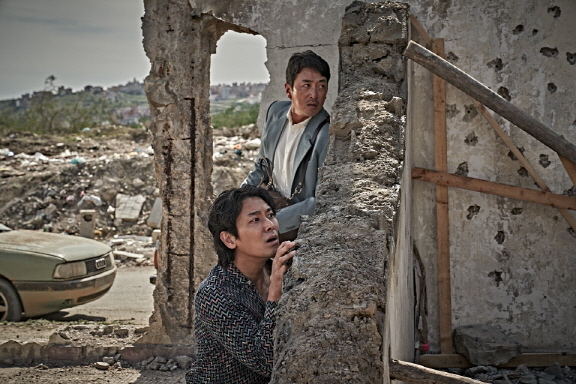
It is a sad and bitter experience to observe what is so vividly presented in Matthew Heineman’s latest documentary film “Retrograde”, which is currently available on Disney+ in South Korea. Closely following what happened during the final months of the Afghan War in 2021, the documentary reminds us of the sheer futility of this 20-year war, and it is really depressing to see how this war eventually threw Afghanistan back into another reign of terror by those cruel and barbaric religious fanatics.

After showing how the situation was utterly chaotic in Kabul right before its eventual fall by the Taliban military in 2021 August, the documentary goes back to how things were already falling apart for the US military as well as the Afghan government military. No matter how much they tried to get things back in control, the Taliban military continued to expand its territory here and there in Afghanistan, and the situation became gloomier when the US government was about to decide whether it would really withdraw all of its soldiers from Afghanistan.

In case of a young Afghan general named Sami Sadat and those soldiers under his command, they had struggled hard against those Taliban soldiers, and you can easily see how much he was respected and trusted by his soldiers as an exemplary leader, but they all knew too well that they would be quite vulnerable if the US government announced the total withdrawal from their country. In case of several US military officers who had worked with Sadat for years, they were willing to help Sadat as much as possible, but they eventually could not do anything at all when President Joe Biden officially confirmed their withdrawal from Afghanistan in 2001 May.

Once the US military left Afghanistan completely a few weeks later, Sadat and his soldiers had no choice but to defend their country and government for themselves, and we see how the circumstance became all the more frustrating and dauting from them. No matter how much he tried, he and his soldiers became more disadvantaged on the front line day by day, and they even did not get enough support from the Afghan government. Within next several weeks, many regions and cities in Afghanistan were occupied by the Taliban soldiers one by one, and now Sadat and his soldiers had to make their last stand in a city not so far from Kabul, but their government was already crumbling down as showing more incompetence and foolishness.

Meanwhile, we get to know a bit more about Sadat while following his increasingly desperate military efforts. As a strong-willed man of valor and integrity with considerable dedication to his men, he certainly came to worry more about what might happen to him as well as his men if all eventually fell down as he feared, but he still tried to maintain his leadership even things got all the worse for him and others, and we come to admire him more than before, though we all know too well how the story would end for him and many others in Afghanistan.

In the end, Sadat and his soldiers had to withdraw as being overmatched by their opponents, and that quickly led to the fall of Kabul only two days later. Heineman and his two co-cinematographers Tim Crucza and Oliver Sarbil put their cameras quite close to the consequent chaos in the city, and that often places us amid thousands of civilians attempting to escape from the Taliban military by any means necessary. Needless to say, everyone looks quite desperate and terrified, and there are a number of brief but undeniably haunting shots which will linger on your mind for good reasons.

Fortunately, Sadat managed to escape, and some of his men as well as his close family members also got away from Afghanistan, but the situation is not exactly good for him at present. Besides already having received a death sentence from the Taliban government, he is not even allowed to enter US, and now he is stuck in UK as an exile, though he still hopes that he and his comrades may return to Afghanistan someday.

The documentary mostly maintains its detached attitude, but its devastating chronicle of the last months of the Afghan War gradually has us reflect more on how wasteful and meaningless this war was in many aspects. It seemed to end the reign of terror by the Taliban government at first, and most of us were glad about that, but, as the US government screwed up many things just like it did in Iraq at the same time, the country was only left all the more damaged while eventually tumbling into another grim period of oppression and terror. Sure, it was supposed to be about capturing the man responsible for 9/11 as soon as possible, but, what do you know, the war did not help much that massive manhunt during next 10 years on the whole, and, above all, he was actually found and then eliminated in, surprise, Pakistan.

In conclusion, “Retrograde”, which was incidentally included in the shortlist for Best Documentary Oscar around the end of last year, is a solid piece of work, and Heineman, who has steadily impressed me since his Oscar-nominated documentary “Cartel Land” (2015), did an admirable job of filling his documentary with a considerable amount of verisimilitude. This is surely a feel-bad documentary, but it is still worthwhile to watch for its many harrowing human moments observed from another tragic historical moment in our time, and I assure you that you will not forget easily.

Posted in Movies | Tagged , , , , | Leave a comment

Guardians of the Galaxy Vol. 3 (2023) ☆☆☆(3/4): Save the Racoon

“Guardians of the Galaxy Vol. 3” is more or less than the extension of what we saw from the two previous films. This is another familiar product from Marvel Cinematic Universe (MCU), but it has some colorful style, personality, and sensitivity to distinguish itself to some degree, and the result is one of the more enjoyable MCU products during last several years.

Because I did not watch that Holiday special TV movie, it took some time for me to get used to how things have been changed for Peter Quill / Star-Lord (Chris Pratt) and his fellow members of Guardians of the Galaxy. They come to settle in a place called Nowhere for building their little headquarters, and we also get to know a bit about two new members Kraglin / On-Set Rocket (Sean Gun) and a telekinetic dog named Cosmo (voiced by Maria Bakalova).

This time, the main focus of the movie is Rocket (voiced by Bradley Cooper), a smart and sardonic racoon who has been rather depressed as reflecting more on his identity and past. As “Creep” performed Radiohead is played on the soundtrack, we come to feel more for his melancholic status, and that makes Quill’s current emotional issues with Gamora (Zoe Saldaña) look rather trivial in comparison. As many of you remember, Gamora was killed by her father many movies ago, but her alternative universe version came some time later, and, to Quill’s frustration, this Gamora is not particularly interested in being around Quill or any other member of Guardians of the Galaxy, because, well, she was not involved with them in her universe from the beginning.

Anyway, the situation soon becomes quite serious when it turns out that there is someone looking for Rocket. There is a powerful and ruthless villain who is revealed to be responsible for Rocket’s longtime miserable existence, and now this figure is quite determined to get Rocket back by any means necessary. When Rocket happens to be seriously injured due to a sudden attack, his colleagues are certainly ready to save him, even though that means they will take a considerable risk in one way or another.

While Quill and his several colleagues bounce from one adventure to another as expected, director/writer James Gunn, whose status has been more prominent since he made the two previous films, serves us a number of odd and colorful moments which often shine with quirky humor and personality. I like the action sequence unfolded inside a huge database center which virtually looks like one big giant organism, and Gunn tries some naughty fun when Quill and his several colleagues attempt to infiltrate inside this weird place. In addition, he deftly utilizes a bunch of recognizable pop songs during many of key moments in the film as usual, and you will certainly enjoy how these songs are delightfully used throughout the movie.

Meanwhile, the story occasionally goes back to Rocket’s past as his condition becomes all the more serious along the story. Via a series of flashback scenes, we come to learn more about his traumatic early years when he was incarcerated along with other animals not so different from him, and there is a poignant moment where they come to find some comfort from each other despite their gloomy circumstance. Thanks to the solid voice performance from Bradley Cooper, Rocket eventually comes to show more depth and personality along the story, and that is why one of the main reasons why the movie works even during its action-packed finale where lots of things get exploded across the screen as you can expect from your average MCU product.

The main weakness comes from its main villain character, and that is not entirely the fault of Chukwudi Iwuji, who really tries hard to chew every moment of his in the film in contrast to Jonathan Majors’ lackadaisical acting in “Ant-Man and the Wasp: Quantumania” (2023). His megalomaniac villain character, who may look a bit like Peter Weller’s cyborg hero in “Robocop” (1987) but reminds me instead of F. Murray Abraham’s alien villain character in “Star Trek: Insurrection” (1998) for a good reason, is another bland stock MCU villain from the beginning, and Iwuji’s deliberate overacting feels rather jarring instead of being mixed well along with many colorful aspects of the movie.

Despite that and several other weak elements including its overlong running time (150 minutes), the movie remains effective thanks to Gunn’s competent direction as well as the fluid ensemble performance from his main cast members, who easily slip into their respective roles as before. While Chris Pratt shows more spirit and energy compared to his joyless voice performance in “The Super Mario Bros. Movie” (2023), Zoe Saldaña, Karen Gillen, Dave Bautista, Pom Klementieff, and Vin Diesel are fun to watch as their characters struggle to work together despite many personality clashes among them, and Sean Gun, Will Poulter, Elizabeth Debicki, Maria Bakalova, and Sylvester Stallone manage to leave some impression although their supporting characters are not fully utilized on the whole as the movie is too busy with juggling its main characters.

Overall, “Guardians of the Galaxy Vol. 3” does not surpass its predecessors much, but it is still fairly entertaining enough for recommendation. As I said before many times, I have gotten quite tired about that seemingly endless supply of MCU movies these days, but “Guardians of the Galaxy Vol. 3” comes to enliven me a little as trying to do something different for a while, and that is a nice relief for now.

R
Posted in Movies | Tagged , , | 1 Comment

2001: A Space Odyssey (1968) ☆☆☆☆(4/4): A monumental masterpiece by Kubrick

It is fascinating to see how Stanley Kubrick’s “2001: A Space Odyssey” has remained a timeless masterpiece which dared to explore and present our endless sense of awe and curiosity toward the space out there. Although it has been nearly 55 years since it came out, the movie seldom feels old or dated at all mainly thanks to Kubrick’s sheer technical perfectionism coupled with his bold and peerless artistic ambition, and you will still be amazed and curious about how the hell it could be made at that time, even though you may often scratch your head about many questions raised from the movie itself.

Most of those questions revolve around that spotlessly smooth black monolith which appears more than once throughout the film. While the movie does not show or tell much about its alien origin at all, we come to gather that this alien object is a sort of facilitator for the next big step of evolution for the humanity as shown from the first act of the movie, which is incidentally set at in the middle of some prehistoric time. Although there is not any dialogue here during this part, Kubrick holds our attention nonetheless via his succinct but undeniably compelling visual storytelling, and we come to observe and then understand how a bunch of primitives have been quite desperate due to food and hunger before the monolith suddenly appears right in front of them at one night.

As watching the primitives getting scared at first and then finding themselves somehow being under the uncanny influence of the monolith, you naturally wonder what is really going on, but Kubrick’s sublime mix of visual and sound firmly commands your full attention. With the unsettling chorus performance from “Requiem for Soprano, Mezzo-Soprano, 2 Mixed Choirs and Orchestra” by György Ligeti on the soundtrack, everything during this scene eventually culminates to a striking moment of precise alignment, which resonates with the similar composition of the opening scene accompanied with Richard Strauss’ “Also sprach Zarathustra”.

Thanks to the monolith, the primitives can jump onto the next of their evolution, and this subsequently leads to one of the greatest flash forward moments in the movie history. We are suddenly thrust into the middle of an advanced space exploration era which is still beyond our reach even at present, and then the movie gives us another mesmerizing scene as playing Johann Strauss II’s “The Blue Danube” on the soundtrack. As Strauss’s classic music swells, a spaceship from the Earth is slowly but beautifully heading toward the landing space in the middle of a big space station, and you will be surprised more how everything looks quite realistic detail by detail. The special effects in the film may look and feel old-fashioned at times, but they are flawlessly and realistically mixed into the screen due to the painstaking efforts of Kubrick and his crew members including cinematographer Geoffrey Unsworth, and, not so surprisingly, Kubrick received his only Oscar for the special effects of his film.

While the movie has been well-known for its effective utilization of various pieces of classic music including the aforementioned ones, Kubrick actually hired Alex North, who has been regarded as one of the great Hollywood film composers, to write the original score at first. While North’s score, which has been available thanks to the 1993 re-recording version from his colleague/friend Jerry Goldsmith as well as the original recording version released in 2007, is not bad at all, it is easy to see why Kubrick eventually chose to throw away North’s score. While sounding considerably impressive on its own, North’s rejected score, which would be later utilized in his two Oscar-nominated scores (“The Shoes of the Fisherman” (1968) and “Dragonslayer” (1981)) often tries to illustrate or dictate what we should feel, and that is naturally bound to clash with Kubrick’s cold and detached storytelling. Having those various pieces of classic music under his total artistic control, Kubrick powerfully pushes his film onto the level of sheer transcendence, and it is no wonder that “The Blue Danube” and several other pieces of classic music have been inseparable from each own specific moment in the film since it came out.

After its second act ends with another striking moment with the monolith at a certain spot on the Moon, Kubrick and Clarke’s screenplay jumps onto its most dramatic act, though its narrative pacing is still slow and leisurely as establishing the three main characters in a big spaceship being sent to Jupiter. While their three fellow human crews members are put into cryogenic hibernation, Dr. David Bowman (Keir Dullea) and Dr. Frank Poole (Gary Lockwood) serve as the pilots of the spaceship, but almost everything in the spaceship is controlled by HAL 9000 (voiced by Douglas Rain), an artificial intelligence computer who eventually becomes murderous after trying to struggle with a little but significant logical matter put upon it right from the beginning of the space journey (“Well, I don’t think there is any question about it. It can only be attributable to human error. This sort of thing has cropped up before, and it has always been due to human error.”).

The resulting tension between HAL 9000 and the pilots of the ship is subtly but effectively presented by Kubrick. With its flat and monotonous voice, HAL 9000 becomes more and more ominous behind his cool confidence, and there is a wordlessly intense moment when it smartly detects what Dr. Bowman and Dr. Poole are planning at one point. While Dr. Bowman and Dr. Poole are careful enough to shut off the microphones when they have a private conversation inside an extravehicular activity (EVA) pod, HAL 9000 happens to be able to read their lips via the window of the pod, and Kubrick trusts us enough to let us gather everything in that silent moment and then get more disturbed by that red “eye” of HAL 9000.

While it is one of the most infamous movie villains of all time, HAL 9000 ironically comes to show more “feelings” compared to any of those human crew members in the spaceship. When it is being eventually shut off by Dr. Bowman, who manages to survive alone and then does what should be done for his survival and continuing his mission, it repeatedly begs for its life while sounding as flat as usual in his electronic voice, and that is the most poignant moment in the entire film. Yes, HAL 9000 surely had it coming, but, like many movie monsters such as Dr. Hannibal Lector or Norman Bates, it simply follows its own twisted logics while trying to do the right thing, and you will surely feel sorry for it as observing its poignant last moment.

In case of the last act of the film, this part still dazzled and confounded me when I watched it at a big screening room yesterday (The movie was recently released in South Korean theaters along with Ridley Scott’s “Blade Runner” (1982), by the way). While this may be nothing but a series of showy lightshows unfolded onto the screen, you will still admire what Kubrick and his special effects technicians including Douglas Trumbull tried to achieve here – even when you are baffled a lot by what Dr. Bowman experiences at the end of his overwhelming journey across space and time.

As a matter of fact, Kubrick actually considered showing alien entities around that point, but he wisely chose not to do that. After all, it is highly likely that, if they really exist out there somewhere in our universe, alien entities are quite different from whatever we have imagined in one way or another for many years, and, as indirectly suggested in the film, their existence and intelligence may actually be beyond our meager perception.

On the whole, I cannot possibly say that I can understand and explain everything in “2001: A Space Odyssey”, but it has been one of my top favorite films since I watched it for the first time in 1996. At that time, I struggled to understand what it was all about (I feel a little sympathy toward Rock Hudson, who complained “Will someone tell me what the hell this is about?” at the Los Angeles premiere of the film in 1968), but, just like many of Kubrick’s works, it gradually grew on me during next several years, and I always watched it whenever I came across a chance to watch it at movie theater. Like many of memorable space films ranging from to Robert Zemeckis’ “Contact” (1997) to Alfonso Cuarón’s “Gravity” (2013), the movie makes us muse more and more on our tiny existence in the awe-inspiring vastness of the space out there, and that is certainly an achievement to be admired and cherished – even though it still stands enigmatically and monumentally in the middle of the movie history like the monolith itself does in the space.

Posted in Movies | Tagged , , , , | Leave a comment

Blade Runner (1982) ☆☆☆1/2(3.5/4): It still looks great, you know

Ridley Scott’s “Blade Runner”, whose “Final Cut” version is currently being shown in South Korean theaters, has firmly occupied its own space in the movie history for its unforgettable futuristic city, which is one of the best cases to be compared to Fritz Lang’s great silent film “Metropolis” (1927). I must confess that I still see lots of plot holes and problems here and there in the story, and I also think the movie does not go deep that into its ever-intriguing matters of identity and humanity, but we can all admit now that it has always been timeless for those awesome visual details observed here and there in its vivid and impressive futuristic background.

The main background of the film is Los Angeles in 2019, which, considering it is 2023 now, looks more like a SF fantasy world to us as a colorfully messy mixture of past, present, and future. While the city in the movie is pretty unrecognizable to us as filled with lots of towering buildings under the dark, gloomy, and polluted sky, its streets and alleys are filled with big video billboards and shiny neon signs just like many modern cities of the 2020s of our world, but there are lots of shabbiness around every corner of this city with constant doses of heavy rain, as reflected by one key scene set in a big crowded marker area filled with various kinds of languages and ethnicities. Although there are lots of flying vehicles in the sky, the computer technologies in the film look now visibly retrograde, and they look much more dated compared even to Stanley Kubrick’s “2001: A Space Odyssey” (1968), which I happened to watch right after “Blade Runner” at a local theater.

At the beginning of the film, the screenplay by Hampton Fancher and David Peoples, which is based on Philip K. Dick’s 1968 novel “Do Androids Dream of Electric Sheep?”, tells us a bit about “Replicants”, though it is often murky about what Replicants exactly are or how they are produced. Are they just biogenetically enhanced humanoids or actually robots with flesh and bone? All we can be sure about them is that 1) they are superior to human beings in many aspects, but 2) their lifespan is somehow limited to around 4 years, and 3) that is the main reason why a small group of Replicants led by Roy Batty (Rutger Hauer) sneaked into the Earth. Well aware of their impending mortality, these Replicants are quite determined to find any possible way for living longer, but that is not approved by the authorities on the Earth or a big powerful company which has made them and many other Replicants out there.

The authorities on the Earth have their own squad to handle those runaway replicants. They are called, yes, “Blade Runners”, and Rick Deckard (Harrison Ford) is one of them. Although he is officially retired, he is virtually forced to work again just because he was one of the best ones to track down and “retire” Replicants, but I must point out that he is not that smart or resourceful as far as I can see. Sure, he studiously keeps chasing throughout the film, but he seems to be in a situation way over head more than once. In the other words, he is no more than your average hard-boiled detective hero mired in constant anxiety and confusion, who comes with the territory in any kind of urbane noir flick.

Speaking of noir films, the story is surely shrouded in more darkness and murkiness than it is suggested by the moody landscapes of its city background. It looks like Eldon Tyrell (Joe Turkel), the CEO of that powerful Replicant company, has some secret plan behind his coldly benevolent appearance, and he shows something quite unexpected to Deckard via his secretary Rachel (Sean Young), who has had no idea about her true identity because of the implanted memories of her “past”. There is a sad, poignant scene where she visits Deckard for desperately proving her ‘humanity’, and that leads us to that longtime question surrounding Deckard: Is he also a Replicant just like her?

The movie doles out that interesting possibility along the story. During one early scene, Deckard’s boss, who is played M. Emmet Walsh with his usual sleazy aura, says that six Replicants escaped to the Earth but two of them subsequently got killed later. It is quite possible that one of those supposedly eliminated Replicant was Deckard, and you may wonder more about whether there is any connection between Deckard’s seemingly redundant dream scene and a certain little object shown in the finale.

Anyway, as Deckard doggedly continues to look for those runaway Replicants, Scott and his crew members including cinematographer Jordan Cronenweth steadily serve us a bunch of stunning visual moments to observe and savor. I probably watched the film more than five times, but I always found myself amazed and enthralled by what Scott and his crew members so vividly and mesmerizingly achieved on the screen, and that is further accentuated by Vangelis’ electronic score, which feels a bit dated at times but still works pretty well in the context. I remember the overwhelming opening shot of the city landscape full of tall towers and buildings under the grim sky, which eventually leads to the big and imposing pyramid building which is the headquarters of Tyrell’s company. I remember how this great moment of sheer awe and grandiosity is contrasted with the shabby and melancholic lair of a young but miserable scientist who gets himself involved with those runaway Replicants later in the story. And I also remember how tragically powerful it feels to see the death of those runaway Replicants in the story, who are, ironically, the most emotional figures in the film like HAL 9000 is in “2001: A Space Odyssey”.

As Harrison Ford’s understated lead performance dutifully carries the story amid lots of stunning sights, the other main cast members including Rutger Hauer, Sean Young, Daryl Hannah, William Sanderson, Brion James, Joe Turkel, Joanna Cassidy, James Hong, and Edward James Olmos inhabit their roles as convincingly as Ford. While Hauer makes a striking impression on us as the main antagonist of the story, Young, Hannah, and Cassidy are effective as futuristic noir female characters, and Olmos and Turkel ably suggest a lot about whatever their respective supporting characters are holding behind their back.

When it came out in the middle of 1982, “Blade Runner” unfortunately found itself overshadowed by the enormous success of Steven Spielberg’s “E.T. the Extra-Terrestrial” (1982), but it has gradually occupied in many moviegoers’ conscience during next four decades, and it eventually becomes as influential as “Metropolis” and many other notable futuristic city movies ranging from Terry Gilliam’s “Brazil” (1985) to Alex Proyas’ “Dark City” (1998). In case of Denis Villeneuve’s “Blade Runner 2049” (2017) which came out several years ago, it was certainly nice to see the extension of the futuristic world of “Blade Runner” on the screen, but that film is no more than a faithful homage to the visual greatness of “Blade Runner” as I reflect more on its equally clunky plot and thin characterization (Confession: I got myself carried away by the hyper-enthusiasm surrounding that film as writing my 3.5-star review at that time).

Despite some reservation I still have, “Blade Runner” is inarguably one of the best works from Scott, who has steadily worked during last 46 years since he debuted with “The Duelists” (1977). Although I did not like some of his films such as, yes, “Gladiator” (2000) and “Exodus: Gods and Kings” (2014), he also gave us “Alien” (1979), “Thelma & Louise” (1991), “Black Hawk Down” (2001), and “The Martian” (2015), and it is really impressive to see this legendary British filmmaker still working as usual although he will be 86 in this year. He is surely one of the best filmmakers of our time, and I can only hope that he will keep going during several years at least.

Posted in Movies | Tagged , , | Leave a comment

Dream (2023) ☆☆(2/4): A coach for a bunch of homeless soccer players

South Korean film “Dream” is definitely not for me. As a sports drama film, it is so generic that I was not surprised or moved enough in any possible way. As a tearjerker, it is so artificial that any of character in the film did not have enough human quality to make me care about them in any conceivable way. As a comedy film, it is so silly that I was quite annoyed more than once instead of amused enough in any plausible way.

Perhaps, I am not an ideal audience for the movie from the very beginning, After all, I did not like director/writer Lee Byeong-heon’s previous film “Extreme Job” (2019) enough for recommendation, and my opinion turned out to be quite minor because that film made a considerable local box office success at that time. Considering what I observed from other audiences around me when I watched “Dream” during this Sunday afternoon, I think it will be another hit for Lee, but I still do not think the movie is better than “Extreme Job” or his truly funny film “Cheer up, Mr. Lee” (2012).

During the first half hour of the film, you can easily see through what the movie is about as well as how it is about. We have a disgraced star soccer player named Hong-dae (Park Seo-joon) as the central character of the story, and it is not much of a spoiler to tell you that he will eventually come to redeem himself despite one very unfortunate incident which jeopardizes his professional athletic career to a considerable degree.

For improving his public image more, Hong-dea agrees to work as the new coach for a little soccer team consisting of homeless people. Because there will be an international soccer tournament for homeless people in Hungary, Hong-dea must prepare and train a bunch of homeless people a lot, but, not so surprisingly, these homeless people are not so good at playing soccer in one way or another.

Nevertheless, Hong-dae really has to make these homeless people into better soccer players mainly because of a young female documentary filmmaker named So-min (Lee Ji-eun). Although she knows too well that Hong-dea’s team is pretty hopeless from the beginning, So-min is already quite determined to make a powerful narrative to draw more attention from the public, and Hong-dae agrees to go along with So-min’s plan because, well, that may help improving his current public image.

So-min goes all the way for anything to generate any pity or sympathy from those potential viewers out there, and those homeless players in Hong-dea’s team certainly have each own sad personal story. When one of more skillful players in the team gets seriously injured at one point, So-min instantly sees a perfect opportunity for engaging melodrama, and she manages to persuade Hong-dea to let this guy remain in the team even though he may not play that well during the upcoming tournament.

The movie could be much funnier if it just leaned more toward satire, but it instead lets itself bogged down by more melodramatic elements while also failing to develop its main characters into human figures we can really care about. To be frank with you, I found its main characters too broad to care about, and I was also quite annoyed with a number of underdeveloped subplots including the one involved with Hong-dea’s criminal mother.

In the end, the movie attempts to pull our heartstrings during its last act where Hong-dae and his team eventually go to that international soccer tournament for homeless people, but it does not succeed much in my humble opinion. Yes, Hong-dae and his team certainly try as much as possible while playing against several mighty foreign teams one by one. Yes, they are quickly overwhelmed right from the beginning as your average underdog team. Yes, they somehow find a way to distinguish themselves even though there is still not much chance for them to prevail to the end of the tournament.

The main problem of the movie is that none of the main characters in the film is believable enough to earn our support or sympathy, though it is inspired by a true story to some degree. While Park Seo-joon has several big moments as you can expect from his character, his character is still no more than a superficial caricature on the whole. In case of Lee Ji-eun, she surely tries as much as possible with her thankless role, but she is ultimately wasted a lot as her character is swayed back and forth between satire and melodrama without any gravitas at all, and the same thing can be said about several supporting performers in the film including Kim Jong-soo, Jung Seung-gil, Lee Hyun-woo, Yang Hyun-min, Hong Ahn-pyo, Heo Joon-seok, and Ko Chang-seok, who is sadly wasted even though he somehow manages to leave some good impression on us at least.

Overall, “Dream” is a big disappointment compared to another recent South Korean sports drama film “Rebound” (2023), which is as conventional as “Dream” but did a lot better job at least. I believed in the main characters of “Rebound” right from the start, and that was the main reason why I could root for them even while clearly discerning several rote aspects of the film. In contrast, I did not believe much in the main characters of “Dream”, and I remained quite distant to its story and main characters even while observing some positive responses from the audiences around me from time to time. They might have enjoyed the film more than me, but I think both I and they will not remember it that much around the end of this year, and that is all I can say for now.

Posted in Movies | Tagged , , , | Leave a comment

Rye Lane (2023) ☆☆☆1/2(3.5/4): This eventful day of theirs

Raine Allen-Miller’s debut feature film “Rye Lane”, which is currently available on Disney+ in South Korea, is simply delightful from the beginning to the end. Yes, this is basically your typical “Boy-Meets-Girl” story on the surface, but the movie distinguishes itself to a considerable degree with lots of wit and style as well as an ample amount of life and personality, and you may want to revisit it just for savoring those funny and charming moments surrounding the two different main characters at its center.

Right from the opening scene showing many different bathrooms one by one, you can instantly sense something special about the movie, and it does not disappointment us at all with the following Meet Cute moment between Dom (David Jonsson) and Yas (Vivian Oparah). Dom is helplessly crying alone inside one of the booths of a gender-neutral bathroom at an art exhibition held in South London because he is still not recovering from his recent breakup with his ex-girlfriend, and then he finds himself in a more awkward situation when Yas happens to enter the bathroom. By coincidence, they later come across with each other again at the art exhibition, and then they are officially introduced to each other via their mutual acquaintance.

Although they are total strangers to each other, Yas and Dom gradually come to feel some mutual attraction between them, and, what do you know, they subsequently find themselves talking more with each other as walking around here and there in South London. Dom has been quite anxious and depressed because he is about to have a meeting with his ex-girlfriend and her new boyfriend who happens to be his best friend, and he confides to Yas about how he has been miserably letting himself stuck in his parents’ house without thinking much about what will be next for him. Feeling sorry for Dom because she also recently had a breakup with her ex-boyfriend, Yas decides to accompany him more than she thought at first. She willingly sits right next to him when he eventually faces his ex-girlfriend and her current boyfriend, and she even chooses to ignore an unexpected job opportunity just for talking more with him.

As Dom and Yas come to open themselves more to each other, the movie deftly establishes the vivid and colorful atmosphere around them. Allen-Miller and her cinematographer Olan Collardy frequently use extreme wide-angle lenses for emphasizing the heightened emotional status of Yas and Dom, and they also skillfully utilizes many distinctive locations in South London including Rye Lane Market, which are filled with vibrant colors and various persons to be observed (You will be surprised by the unexpected cameo appearance of a certain prominent British actor during one key scene – and how he manages not to overshadow the two lead performers of the film).

In addition, the movie gleefully wields its naughty sense of humor with lots of style and heart. We are amused by a series of cheerfully stylish flashback scenes which give more information about Yas and Dom’s respective problematic relationships, and you will also never forget that art exhibition which has the big photographs of many different human mouths. I do not know whether they are actually art or now, but they are strikingly silly and impressive in my trivial opinion.

The screenplay by Nathan Bryon and Tom Melia steadily keeps things rolling as its two main characters bounce from one narrative point to another. During its middle act, Dom and Yas find themselves in the house of her ex-boyfriend’s parents for a little hidden purpose, and the situation becomes all the more absurd when they later break into her ex-boyfriend’s residence.

Of course, there eventually comes a big moment of conflict between our two main characters, and that is naturally followed by a typical montage part showing the passage of time, but the movie is too smart and intelligent to succumb to its genre conventions. Sure, Yas and Dom come to realize that they really like each other more than they admit (Is this a spoiler, folks?), and they do not hesitate at all when one of them actively and humorously approaches to each other for confirming their love.

Like any other romantic comedy films, the movie depends a lot on the presence and talent of its two lead performers, and they effortlessly click with each other throughout the film while filling their roles with lots of human details to engage and touch us. Dexterously gliding along many different emotional modes, David Jonsson is alternatively funny and poignant in his witty performance, and Vivian Oparah flawlessly complements him with her equally engaging acting, and their comic/romantic chemistry is evident particularly when their characters face Dom’s ex-girlfriend and her current boyfriend – or when their characters come to do an impromptu musical performance later in the story. The movie also assembles a bunch of various supporting performers around Jonsson and Oparah, and they certainly bring some extra human colorfulness to the film.

In conclusion, “Rye Lane” is seemingly modest but quite refreshing for transcending its familiar gerne conventions in more than one way, and Allen-Miller, who previously made several short films before making a feature film debut here, surely demonstrates that she is another promising new talent to watch. In short, this is a small gem too good to miss, and I sincerely recommend you to check it out as soon as possible.

Posted in Movies | Tagged , | 1 Comment

We Feed People (2022) ☆☆☆(3/4): They feed Humanity

Today, I happened to watch two different documentary films which are currently available on Disney+ at present, and I must tell you that it was an interesting double feature show for me because both of the main subjects of these two different documentaries are celebrity chefs who have been quite popular in US in each own way. Both of these two documentaries were informative to me in one way or another because I did not know that much about either of their respective main subjects, but David Gelb’s “Wolfgang” is a bit dissatisfying because of its rather superficial presentation of the life and career of Wolfgang Puck, while Ron Howard’s “We Feed People” is relatively more engaging as vividly presenting only José Andrés’ ongoing humanitarian activity but also his indelible personality.

In 2010, Andrés was just one of many well-known celebrity chefs in US, but there came an unexpected experience which changed his life and career forever. After Haiti was hit by a massive earthquake, he volunteered to go there just for providing food to many local people affected by this immense catastrophe, and then he was quite surprised to see them not usually being able to get decent food there. He immediately decided to find any possible way to help them eat as well as possible, and that was the beginning of his non-governmental organization World Central Kitchen.

When Puerto Rico was hit by a big hurricane in 2017, Andrés did not hesitate at all, but, like he did in Haiti, he and his colleagues had to deal with many different problems right from the very beginning. He was determined to deliver and provide food to at least 500,000 people everyday, but then he and his colleagues had to secure lots of things first, including a considerable amount of food ingredients for their big cooking process.

Not so surprisingly, this daunting circumstance put lots of stress and strain on Andrés, who had to spend a lot of money without getting any financial help for a while. At one point, he was so stressed and exhausted that he had no choice but to go back to his family home in LA for some rest, but he soon returned because he could possibly let down others around him as well as those unfortunate people in Puerto Rico.

In the end, Andrés and the members of World Central Kitchen came to help numerous people in Puerto Rico, and their hard but valuable field experiences from Puerto Rico helped them a lot as they continue to work around the world during next several years. When there was a sudden big volcano eruption in Guatemala in 2018, they were fully prepared at that time, and they did much more than simply providing food to those local people to be helped by them. Because of a little lesson he came to learn in Haiti during that time, Andrés has always cared about the qualities of the food prepared by him and his colleagues, and that was appreciated a lot by many local people, who were certainly glad to receive some decent meal from them.

In case of a big hurricane disaster in the Bahamas in 2019, the situation was a bit more challenging for Andrés and his colleagues. First, they needed to secure a kitchen safe and clean enough for their cooking, but it turned out to be quite difficult to find any suitable spot for them as many buildings were considerably ruined by the hurricane. At one point, they attempted to clean an abandoned hotel restaurant kitchen which looked like the only option for them, but their efforts eventually turned out to be futile, and this certainly frustrated them a lot, though they subsequently found a fairly good alternative to everyone’s relief.

During the COVID-19 pandemic during next several years, Andrés and his colleagues became much busier than before as millions of people in US struggled to get any decent food in the middle of the lockdown period. While constantly cautious about any possibility of infection, they went here and there for helping many desperate people out there, and Andrés also actively worked with several notable American politicians including Nancy Pelosi and Joe Biden for more change and improvement.

Meanwhile, we also get to know about Andrés’ personal life. While he has been much more successful than he expected when he came from home country to US many years ago, he is your average down-to-earth family guy with lots of heart and spirit, and you can easily sense his sincere care and compassion, which have been one of the main forces behind his nongovernmental organization. As the global community is struck by much more climate disasters than before due to the ongoing climate change around the world, World Central Kitchen naturally becomes more important than ever, and Andrés and his colleagues are continuing to pursue their humanitarian cause even at this point.

On the whole, “We Feed People” is worthwhile to watch for several genuine moments of human decency and empathy, and Howard, who recently made a series of solid documentaries including “Pavarotti” (2019) whenever he was not making disposable feature films such as “Inferno” (2016), did a commendable job of presenting Andrés’ and his colleagues with enough care and respect. Although it does not show Andrés’ cooking skill as much as you might expect, you will come to admire him a lot as getting to know him a bit, and, as observing how he and his colleagues have passionately worked for years, you will also come to reflect more on the value of having a decent meal. Sure, the world will probably be far less convenient for many of us during the rest of the 21st century, but having a decent meal will still be an important human right for all of us no matter what will happen to us, right?

Posted in Movies | Tagged , , , , | Leave a comment

Wolfgang (2021) ☆☆1/2(2.5/4): He’s still cooking…

To be frank with you, I do not know much about how famous Wolfgang Puck has been during last four decades, so documentary film “Wolfgang”, which is currently available on Disney+, fills my blind spot to some degree. Here is a man who has been willingly devoted himself to his craft for many years while also having a string of impressive successes beyond his expectation, and the documentary would be more interesting if it simply lets us get to know more about who he is instead of focusing too much on the rather superficial details of his professional career.

After the quick summary on how successful Puck has been since he opened his first restaurant in the late 1980s, the documentary lets Puck talk about his humble beginning in Austria. He was born to an unmarried mother who subsequently married a coal miner, and it is clear to us that he still feels hurtful about his very unhappy childhood years. His stepfather was frequently abusive to his wife and her children, and Puck was already quite determined to leave his unhappy home and then prove himself someday even when he was only 14.

Having been interested in cooking since he was very young, Puck knew he wanted to be a chef, but the first years of his professional career were not so easy to say the least. At first, he was employed as a junior employee at a hotel restaurant, but he got fired just because he did not prepare enough potatoes, and that certainly humiliated him a lot. As a matter of fact, he even considered jumping into a river at one point, but he decided not to give up at any chance in the future, and this desperate determination of his eventually led him to more opportunities during next several years.

After learning a lot from a number of fine restaurants in France, Puck came to try his luck in US, but the circumstance was rather grim for him in many aspects. During that time, the American cuisine culture was far less sophisticated compared to the French one, and Puck certainly experienced lots of culture shock as trying to find any decent restaurant for him. He managed to get employed in some seemingly fancy French restaurant in LA, but he was horrified to see how this restaurant was lousy in many aspects. For example, nobody cared about getting fresh ingredients, and that surely added more bad reputation to this restaurant.

However, things got changed in the end when Puck later became the new chef after the previous one got fired due to one scathing review article on the restaurant. First, he focused on getting fresh ingredients for his cooking, and, fortunately for him, there was a nearby farm which could steadily provide him many different vegetables. In addition, he paid a lot of attention to the qualities of meat, and this also contributed a lot to the following improvement of the restaurant.

Around the time when the restaurant became much more popular and successful than before, Puck came across Barbara Lazaroff, who would marry him as constantly supporting and promoting his career. Motivated by Lazaroff’s sincere support, Puck eventually decided to walk away from the restaurant after seeing that he was not appreciated enough despite his considerable contribution to its amazing success, and he and his wife subsequently opened a restaurant of their own in West Hollywood. Although everything seemed to be messy and chaotic even on its opening day, their restaurant turned out to be quite successful right from the start, and this big breakthrough led him to much more fame and success. Via one prominent Hollywood agent who frequented his restaurant a lot, Puck began to appear on TV, and, thanks to his natural charm and charisma, he quickly became the most famous chef in US since Julia Child.

Since that point, Puck has kept going on while devoting a lot of himself to his craft and career, and he is still happily working as usual, but, as he frankly admits in the documentary, he did not pay much attention to his family life in the meantime. In case of Lazaroff, she does not have much bitterness about her husband or their eventual divorce in 2003, but she confides to us how unhappy she often was for being frequently under-appreciated during that time. Although she was crucial in many of her ex-husband’s successes, Puck was always the one who got all the attentions in public, and that inevitably caused more conflict and estrangement between them.

As entering his later years at present, Puck becomes more reflective about his life and career, and we see how he tries to make peace with his past in Austria while looking forward to the future. There is a little touching scene where he visits a family tomb along with his younger sister, and he also shows some regret on his absence at the time of his dear grandmother’s death. In addition, he interacts more with young chefs willing to learn more from him, and one of such people is one of his four children, who may have his own distinguished professional career someday.

“Wolfgang” is directed by David Gelb, who previously made “Jiro Dreams of Sushi” (2011), which is about one dedicated sushi master in Tokyo. Although it is not as good and satisfying as “Jiro Dreams of Sushi”, “Wolfgang” is still fairly enjoyable mainly due to Puck’s engaging presence as well as some delicious shots of cooking and dishes, and it is rather disappointing that the documentary did not go deeper into his life and personality. I did savor its tasty moments, but it could be richer and more insightful in my trivial opinion, so I will just let you decide whether you will watch it or not.

Posted in Movies | Tagged , , , , | Leave a comment

Peter Pan & Wendy (2023) ☆☆1/2(2.5/4): A pedestrian version from David Lowery

David Lowery’s latest film “Peter Pan & Wendy”, which was released on Disney+ yesterday, is surprisingly pedestrian to my surprise and disappointment. Because Lowery has impressed us a lot with a series of distinctive works such as “A Ghost Story” (2017) and “The Green Knight” (2021), we certainly had some expectation on what he could with that classic children’s story written by J. M. Barrie, but he just seems to be no more than a hired hand here instead of freely wielding his own artistic talent and creativity, and that is a big letdown to say the least.

The most disappointing thing about the movie is that it does not bring anything particularly new or refreshing to its very familiar story, which, as many of you know, has been adapted into variously different films for many years. Sure, there is always that classic Disney animation film “Peter Pan” (1953), but there are also a number of interesting variations ranging from Steven Spielberg’s “Hook” (1991) to P.J. Hogan’s “Peter Pan” (2003), and you may also appreciate Benh Zeitlin’s “Wendy” (2020) despite its flawed aspects.

Compared to these three notable movie adaptations of Barrie’s original story, “Peter Pan & Wendy” does not have much distinguish itself on the whole. Sure, Wendy in the film, played by Ever Anderson (She is the daughter of Milla Jovovich and Paul W.S. Anderson, by the way), has more pluck as a girl who will be more excited about having adventures than assuming a motherly role for the Lost Boys of Neverland, but the screenplay by Lowery and his co-writer Toby Halbrooks does not delve that deep into Wendy’s conflict about adulthood, and it duly depicts her awkward relationship with Peter Pan without any new insight to enliven these two well-known characters.

The movie also lacks freshness in case of Peter Pan. Although newcomer Alexander Molony is as likable and spirited as required by his role, his character feels more like a symbol rather than a living character in my inconsequential opinion. As poignantly reflected by Hogan’s 2003 movie, remaining young and innocent forever feels like a sad curse rather than a blessing to cherish, but Lowery’s version does not reflect on that much when Peter eventually says his goodbye to Wendy around the end of the story (This is not a spoiler to any of you, right?).

Moreover, Neverland in the film does not look that wondrous while feeling deficient in magic and wonder. You may enjoy a brief moment showing a bunch of mermaids with tentacles who look like much more glamorous cousins of Ursula in Disney animation film “The Little Mermaid” (1989), but, sadly, they do not appear again in the film. I also like the nearly wordless acting of Yara Shahidi, who easily steals the show from Anderson and Molony during her several key moments in the film. In addition, it is certainly nice to see Tiger Lily being played by Native American actress Alyssa Wapanatâhk, but this striking supporting character remains a mere plot element to the end, and that is another disappointment, though casting Wapanatâhk is much better than that criticized casting in Joe Wright’s “Pan” (2015).

In case of the Lost Boys, I am rather depressed to report to you that they are usually no less than background details just like Wendy’s two younger brothers, and that makes me a bit nostalgic about “Hook”. Yes, that film is still a bit too flawed for me to recommend, but it does not lack anything in case of those good child performers in the film, who are relatively more colorful in terms of appearance and personality.

Not so surprisingly, the most fun in the film comes from Captain Hook, and Jude Law, who incidentally has more hair on his head than usual, plays his petty but memorable villain character with campy gusto while also bringing extra gravitas to the story as demanded by a little more complex relationship between his character and Peter. Steadily standing by Law, Jim Gaffigan, who has been mainly known for his comic performances but has also shown more serious sides of his talent during last several years, brings an ample amount of humor and personality to his equally well-known supporting role like late Bob Hoskins did in “Hook”, and his solid acting here in the film confirms to me again that he is now one of those ever-reliable character actors to welcome in any kind of film.

Anyway, “Peter Pan & Wendy” is not a lousy product at all, and I enjoy its technical aspects including the jubilant score by Lowery’s frequent collaborator Daniel Hart, but, if you have admired Lowery’s previous works as much as I have, you will also observe that he could do better than this. After all, he already collaborated with Disney in “Pete’s Dragon” (2016), and his own distinctive cinematic style was not inhibited at all in that enjoyable film, which is also friendly and gentle enough for young audiences and their parents.

To be frank with you, I even doubt whether young audiences will really enjoy “Peter Pan & Wendy”, considering that it has several moments which may be a little too grim and intense for them. Because the kids are usually tougher than expected, my small concern is probably unnecessary, and I guess it is likelier that they will be more disappointed with the lack of unadulterated fun and excitement in the film, so I will gladly recommend them to watch Hogan’s 2003 version or “Pete’s Dragon” instead.

Posted in Movies | Tagged , | Leave a comment

Boston Strangler (2023) ☆☆1/2(2.5/4): A dry, middling true crime drama

“Boston Stranger”, which is currently available on Disney+, is a dry, middling true crime drama which does not distinguish itself much in its growing genre territory. While surely reminiscent of not only “Spotlight” (2015) but also “Zodiac” (2007), the movie somehow fails to generate enough interest for us despite its undeniably compelling (and chilling) real-life story, and you can only appreciate some good efforts on and behind the screen.

Keira Knightley plays Loretta McLaughlin, a young married woman who also worked as a reporter of Boston Record American in 1962. Although she and her husband already have three kids to raise at their suburban residence, that does not stop her at all, but she often gets frustrated because her chief editor Jack MacLaine (Chris Cooper) still does not allow her to do what she really wants to do as a reporter. She is eager to cover those criminal cases out there, but, not so surprisingly, she is usually instructed to handle the articles for housewives just because of the gender prejudice against her, and she certainly envies how Jean Cole (Carrie Coon), another female reporter at her workplace, is allowed to work outside with considerable success.

On one day, something happens to draw McLaughlin’s attention. She comes to notice that there are at least three murder cases which share a suspiciously similar pattern, so she decides to investigate these murder cases more, and, what do you know, she soon comes to realize the possibility of a serial killer prowling somewhere in the city. Although her chief editor is rather skeptical at first, he decides to publish her article about the serial killer anyway, and, what do you know, that turns out to be her first big break as drawing lots of attention from the public.

The situation becomes all the more serious as the Boston Police, who are incidentally not so pleased about McLaughlin’s reporting, start to be more active in the ongoing investigation, and McLaughlin is soon partnered with Cole, who turns out to be more helpful than expected as a seasoned professional who can easily access to off-the-record sources if that is necessary for their big task. While the serial killer, who is eventually named “the Boston Strangler”, continues to kill more women, both McLaughlin and Cole become more passionate about their job, and they even find themselves becoming considerable public figures because their newspaper subsequently promotes them as its two star reporters.

However, the more McLaughlin and Cole become involved with the case, the more they become frustrated and exasperated. The Boston Police turn out to be quite incompetent in their investigation to say the least, and McLaughlin later comes to learn that they even overlooked someone who can be the prime suspect just because they were not so eager to cooperate much with other police departments outside the city. Once McLaughlin delves more into this matter, the Boston Police eventually arrests that prime suspect in question, but there are still many things remaining unresolved or unanswered, and McLaughlin becomes more determined to get to the bottom of the case, though even Cole is not so willing to help or support her on that.

As McLaughlin continues to do more reporting by herself alone, director/writer Matt Ruskin’s screenplay gradually reveals how complicated the case actually was behind its supposedly clean-cut ending with the incarceration of that prime suspect. Although that prime suspect later turned out to be linked with the DNA evidence from the last victim, the movie suggests that the truth may be quite stranger than fiction, and we are chilled by how willing both the public and the Boston Police were to ignore many questions and problems just for getting the closure for the case as soon as possible.

This is certainly a fascinating true crime story, but the movie frequently gets itself compared with “Zodiac” and other true crime drama stuffs out there. Although Ruskin and his cinematographer Ben Kutchins did a good job of injecting a gloomy sense of anxiety and confusion into the screen, the result is no more than a pale imitation of what was so wonderfully achieved in “Zodiac”, and it also fails to reach to the sublime level of “Spotlight”, which is more restrained but much more powerful as it patiently and masterfully observes its main characters’ investigative reporting process.

Moreover, many of main characters in the film feel rather flat on the whole, and that often hinders the solid performances from some of them. While Knightley diligently carries the film as required, Carrie Coon, who has been one of the most dependable character actresses working in Hollywood since she drew the attention from me and others via her scene-stealing supporting turn in “Gone Girl” (2014), ably supports Knightley whenever that is necessary, and Alessandro Nivola manages to acquit himself well although he is stuck in a thankless supporting role like Bill Camp, Morgan Spector, David Dastmalchian, and Chris Cooper.

In conclusion, “Boston Stranger” is not a total waste of time at all, but it does not delve enough into its main subject, and I wonder whether its complex real-life story could be explored much more as it were a TV miniseries instead of a feature film. It surely tries to go further than “The Boston Stranger” (1967), and I admire that to some degree, but I doubt whether it will be remembered more than that little classic film which is actually a heavily fictional presentation of the case. Despite its questionable sensationalism, “The Boston Strangler” will linger on your mind longer than its colorless junior for good reasons, and maybe you should check it out first.

Posted in Movies | Tagged , , , , , | Leave a comment